

Nocebo and pain: an overview of the psychoneurobiological mechanisms
Open accessThe DOI matches its Crossref record; 81 of the 82 references it cites were found in a registry or an index; 8 of the 102 sources its claims cite were checked for support.
Abstract
INTRODUCTION: Nocebo effects are defined as adverse events related to negative expectations and learning processes that are involved in the modulation of the descending pain pathways. Research over the last couple of decades has illustrated that behavioral, psychoneurobiological and functional changes occur during nocebo-induced pain processing. OBJECTIVES: We aimed to review published human and non-human research on algesia and hyperalgesia resulting from negative expectations and nocebo effects. METHODS: Herein, we searched and comprehensively reviewed scientific literature providing informative knowledge about the psychoneurobiological bases of the nocebo effect in the field of pain with an emphasis on how pain processes are shaped by both cognitive and non-cognitive factors. RESULTS: Negative expectations are formed through verbal suggestions of heightened pain, prior nociceptive and painful experiences and observation of pain in others. Susceptibility to the nocebo effect can be also influenced by genetic variants, conscious and nonconscious learning processes, personality traits and psychological factors. Moreover, providers' behaviors, environmental cues and the appearance of medical devices can induce negative expectations that dramatically influence pain perception and processing in a variety of pain modalities and patient populations. CONCLUSION: Importantly, we concluded that nocebo studies outline how individual expectations may lead to physiological changes underpinning the central integration and processing of magnified pain signaling. Further research is needed to develop strategies that can identify nocebo-vulnerable pain patients in order to optimize the psychosocial and therapeutic context in which the clinical encounter occurs, with the ultimate purpose of improving clinical outcomes.
Overview
CoChat Summary
TL;DR
This narrative review explains how negative expectations, conditioning, and social observation can produce nocebo-induced pain and hyperalgesia. It argues that these effects arise through psychological, neurochemical, and neurophysiological pathways that can also interfere with pain treatment outcomes.
Key findings
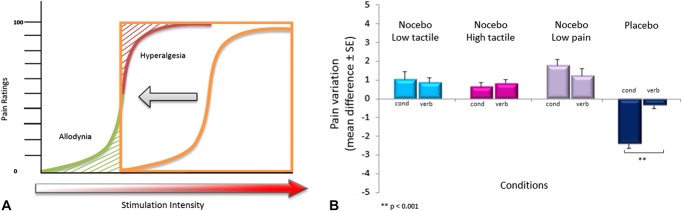
- Negative expectations from verbal suggestions can worsen pain and even reverse analgesic effects: e.g., 33% nitrous oxide was reversed from analgesia to hyperalgesia when participants were misled about increased pain, and misleading instructions ruled out the pain reduction from a verum medication in an ischemic arm-pain study.
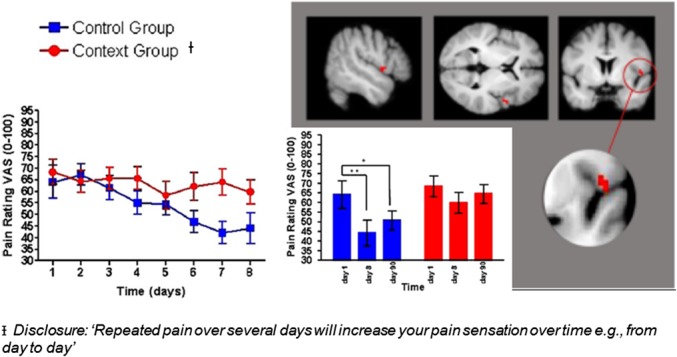
- Conditioning and learning can generate persistent nocebo effects; the paper states that both partial and continuous classical conditioning produced nocebo effects that did not extinguish over the entire experimental sessions, and that nocebo effects can occur without conscious negative expectancies.
- Social observation can increase pain: in one study of 97 women, pain ratings were higher in the nocebo condition than in the control condition after observing a model’s pain responses; another study found hyperalgesic effects correlated with observed uncertainty and periaqueductal gray activity.
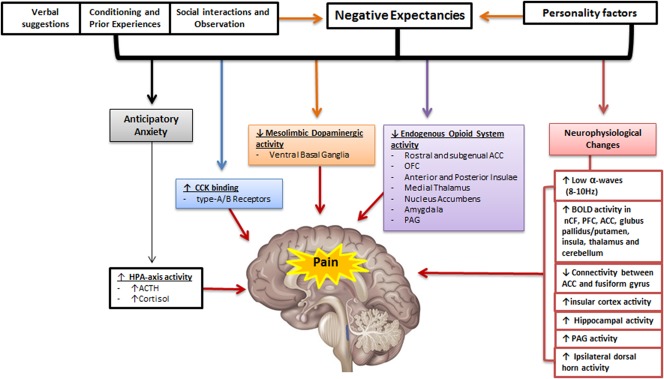
- Biochemical/neurophysiological findings linked nocebo hyperalgesia with increased cortisol and ACTH, blockade by diazepam and proglumide, reduced mesolimbic dopaminergic and opioid system activity, and in one experiment positive expectancy doubled remifentanil analgesia while expectancy of pain exacerbation blocked it.
Methods
- Narrative review of published human and nonhuman research on nocebo-related algesia and hyperalgesia in pain.
- Search strategy: PubMed was searched using “nocebo,” “pain,” and “negative expectancy”; abstracts were independently reviewed by 2 authors.
- The paper synthesizes experimental, psychopharmacological, neuroimaging, conditioning, and social-observation studies rather than reporting a single new dataset.
Limitations
- The paper explicitly states that the “paucity of studies linking the psychological and neurobiological changes limits the transfer of knowledge from bench to beside.”
- It also says more research is needed to define commonalities and differences across ways to elicit nocebo effects, and to better understand fear-, stress-, and anxiety-related nocebo mechanisms.
- Evident from the text: this is a narrative review, so conclusions depend on the scope and selection of studies described, not on a systematic meta-analysis or new primary data.
Model-written summary. Check it against the paper before relying on it.
Integrity signals
Registry
Cites
Statistics
Figures
Verification
Claims the paper makes
4 Valid · 5 Not valid · 67 Not checked · 15 Own results and interpretations
At least one cited source doesn’t support this claim or points to a different paper, and none confirmed it — see the verdicts below.
In the paper
“Another study documented that nocebo hyperalgesia was found in a group who observed a male or female model receive less painful stimulations with the appearance of a green-light, and higher pain intensities with appearance of a red-light, for a period of about 5 minutes prior to receiving the stimuli themselves.”
§ Nocebo and pain: an overview of the psychoneurobiological mechanisms > 6. Negative expectancies and social learning
What the sources say
- Misattributedcites [74] Swider K Babel P The effect of the sex of a model on nocebo hyperalgesia induced by social observational learning. PAIN 2013; 154: 1312– 17. 23725779 sourceExperimental — accuracy not yet measured
Split into 2 atoms — 0 confirmed, 0 partially supported, 0 disputed, 2 misattributed, 0 unverifiable. Expand the claim to see per-atom verdicts. It matches “The effect of the sex of a model on nocebo hyperalgesia induced by social observational learning” (2013) instead.
Checked by a reasoning model — may be wrong.
plainstates a cause- Asserted: passes — The authors put it forward as true.
- Checkable: passes — It can be checked against evidence.
- Load-bearing: unclear — It is unclear whether the paper’s conclusions depend on it.
- Based: passes — The paper gives a reason why it holds.
- Misattributed
The cited sources support only part of this claim — read each source’s verdict below.
In the paper
“have the potential to significantly influence pain pathways by triggering physiological changes that could consequently affect not only pain perception but also pharmacological efficacy and clinical outcomes in the context of pain management.28”
§ Nocebo and pain: an overview of the psychoneurobiological mechanisms > 1. Introduction
What the sources say
- Partly supportedcites [28] Colloca L Grillon C Understanding placebo and nocebo responses for pain management. Curr Pain Headache Rep 2014; 18: 419. 24771206 PMC4142751 sourceExperimental — accuracy not yet measured
The Introduction (page unavailable) says placebo responses involve physiological mechanisms that influence pain perception and modulate responses to active analgesics; the Concluding remarks also link placebo mechanisms to treatment effectiveness. These passages concern placebo analgesia, not the claimed effects of nocebo responses, so they do not establish the claim as stated. (LLM, conf=0.78)
hedgedstates a possible cause- Asserted: passes — The authors put it forward as true.
- Checkable: passes — It can be checked against evidence.
- Load-bearing: passes — The paper’s conclusions depend on it.
- Based: passes — The paper gives a reason why it holds.
- Partly supported
The cited sources that could be checked couldn’t confirm or dispute this claim.
In the paper
“In a different study, the same research group found that the nocebo response was positively associated with pain catastrophizing.77”
§ Nocebo and pain: an overview of the psychoneurobiological mechanisms > 6. Negative expectancies and social learning
What the sources say
- Could not verifycites [77] Vogtle E Barke A Kroner-Herwig B Nocebo hyperalgesia induced by social observational learning. PAIN 2013; 154: 1427– 33. 23707275 sourceExperimental — accuracy not yet measured
The Introduction discusses psychological predictors of nocebo responses, and the Methods describe measuring somatosensory amplification, but neither passage reports an association with pain catastrophizing. A search for “pain catastrophizing” and its association with nocebo responses found no such result in our copy. Page numbers were unavailable. (LLM, conf=0.72)
plainstates an association- Asserted: passes — The authors put it forward as true.
- Checkable: passes — It can be checked against evidence.
- Load-bearing: unclear — It is unclear whether the paper’s conclusions depend on it.
- Based: passes — The paper gives a reason why it holds.
- Could not verify
The cited sources that could be checked couldn’t confirm or dispute this claim.
In the paper
“The social observation (vicarious learning) played an important role in the development of placebo effects.”
§ Nocebo and pain: an overview of the psychoneurobiological mechanisms > 6. Negative expectancies and social learning
What the sources say
- Could not verifycites [26] Colloca L Benedetti F Placebo analgesia induced by social observational learning. PAIN 2009; 144: 28– 34. 19278785 sourceExperimental — accuracy not yet measured
The opening section says placebo effects can arise from verbal suggestions and past experience, but it does not discuss social observation or vicarious learning. Searches for those terms and for observing others developing placebo responses found no passage addressing the claimed role of vicarious learning. (LLM, conf=0.74)
plainstates a cause- Asserted: passes — The authors put it forward as true.
- Checkable: passes — It can be checked against evidence.
- Load-bearing: unclear — It is unclear whether the paper’s conclusions depend on it.
- Based: passes — The paper gives a reason why it holds.
- Could not verify
The cited sources that could be checked couldn’t confirm or dispute this claim.
In the paper
“In particular, the placebo analgesia generated in the observer positively correlated with the grade of empathy of the observer.”
§ Nocebo and pain: an overview of the psychoneurobiological mechanisms > 6. Negative expectancies and social learning
What the sources say
- Could not verifycites [26] Colloca L Benedetti F Placebo analgesia induced by social observational learning. PAIN 2009; 144: 28– 34. 19278785 sourceExperimental — accuracy not yet measured
The main text discusses placebo and nocebo effects in patient–clinician communication, but does not report placebo analgesia in observers or a correlation with empathy. Searches for observer empathy and observational learning returned no passage addressing that relationship. (LLM, conf=0.76)
plainstates an association- Asserted: passes — The authors put it forward as true.
- Checkable: passes — It can be checked against evidence.
- Load-bearing: unclear — It is unclear whether the paper’s conclusions depend on it.
- Based: passes — The paper gives a reason why it holds.
- Could not verify
56 more claims · 1 with their cited sources checked
Create a free account to see all 91 claims and to verify the 94 references still open.
- It may state two separate claims as one. 26
- Probably not a substantial claim. 4
- The quote only partly states this claim. 1
Claims other papers make about this one
Each is checked against this paper’s own text: does it say what the citing paper says it does?
The cited source says what the claim attributes to it.
In the citing paper
“Likewise, expecting high pain increases the perceived intensity of pain, as in nocebo hyperalgesia12.”
From Boundary effects of expectation in human pain perception (2019) · cites this paper as [12]
The cited source says what the claim attributes to it.
In the citing paper
“A well-established nocebo-conditioning paradigm combined with verbal suggestions was used for inducing nocebo hyperalgesia in the lab [22].”
From Nocebo hyperalgesia and other expectancy-related factors in daily fibromyalgia pain: Combining experimental and electronic diary methods (2024) · cites this paper as [22]
The check wasn’t confident either way, so it gives no verdict — never disputed.
In the citing paper
“If these manipulations affect the reinforcement signal used in calculating prediction errors, it would short-circuit learning by suppressing cue-inconsistent prediction errors.”
From Social information creates self-fulfilling prophecies in judgments of pain, vicarious pain, and cognitive effort (2026) · cites this paper as [39]
Experimental — accuracy not yet measured
Citations
Cites
Models and Mechanisms of Hyperalgesia and Allodynia
Sandkühler, J. (2009) · Physiological Reviews · doi:10.1152/physrev.00025.2008 · Cited by 1,148
COMT val 158 met Genotype Affects µ-Opioid Neurotransmitter Responses to a Pain Stressor
Zubieta, J.-K., Heitzeg, M. M., Smith, Y. R., Bueller, J. A., Xu, K., Xu, Y., Koeppe, R. A., Stohler, C. S., & Goldman, D. (2003) · Science · doi:10.1126/science.1078546 · Cited by 1,125
Exacerbation of Pain by Anxiety Is Associated with Activity in a Hippocampal Network
Ploghaus, A., Narain, C., Beckmann, C. F., Clare, S., Bantick, S., Wise, R., Matthews, P. M., Rawlins, J. N. P., & Tracey, I. (2001) · The Journal of Neuroscience · doi:10.1523/jneurosci.21-24-09896.2001 · Cited by 822 · cited 1×
“creating an augmentation of pain experience and processing.(52,58,63) For example, the mere expectation to feel more pain after the administration of an inert medication affects a laserinduced pain experience and related laser-evoked potential amplitude in the treated hand.”
BackgroundBingel, U., Wanigasekera, V., Wiech, K., Ni Mhuircheartaigh, R., Lee, M. C., Ploner, M., & Tracey, I. (2011) · Science Translational Medicine · doi:10.1126/scitranslmed.3001244 · Cited by 810
Benedetti, F., Pollo, A., Lopiano, L., Lanotte, M., Vighetti, S., & Rainero, I. (2003) · The Journal of Neuroscience · doi:10.1523/jneurosci.23-10-04315.2003 · Cited by 788 · cited 2×
“While the placebo procedure led to nearly the same pain reduction as the pain medication, the nocebo information ruled out this positive effect.(16)”
BackgroundNonspecific medication side effects and the nocebo phenomenon
Barsky, A. J. (2002) · JAMA · doi:10.1001/jama.287.5.622 · Cited by 784 · cited 2×
“Expectations about side effects, that produce nocebo effects, can be induced through verbal suggestion(15) or written information,(20) the latter including information provided during the informed consent process about potential adverse events.(7) The expectations of the patients receiving a treatment are of particula…”
BackgroundThe subjective experience of pain: where expectations become reality
Koyama, T., McHaffie, J. G., Laurienti, P. J., & Coghill, R. C. (2005) · Proceedings of the National Academy of Sciences · doi:10.1073/pnas.0408576102 · Cited by 747 · cited 1×
“creating an augmentation of pain experience and processing.(52,58,63) For example, the mere expectation to feel more pain after the administration of an inert medication affects a laserinduced pain experience and related laser-evoked potential amplitude in the treated hand.”
BackgroundPlacebo and Nocebo Effects Are Defined by Opposite Opioid and Dopaminergic Responses
Scott, D. J., Stohler, C. S., Egnatuk, C. M., Wang, H., Koeppe, R. A., & Zubieta, J.-K. (2008) · Archives of General Psychiatry · doi:10.1001/archgenpsychiatry.2007.34 · Cited by 637 · cited 1×
“The dopaminergic system showed reduced activity in areas of the brain such as the ventral basal ganglia, while the endogenous opioid system showed a reduction of activity in the rostral and subgenual ACC, orbitofrontal cortex, anterior and posterior insulae, medial thalamus, nucleus accumbens, amygdala, and periacqued…”
ResultWhen words are painful: unraveling the mechanisms of the nocebo effect
Benedetti, F., Lanotte, M., Lopiano, L., & Colloca, L. (2007) · Neuroscience · doi:10.1016/j.neuroscience.2007.02.020 · Cited by 636 · cited 1×
“Indeed, negative expectations that are induced by the medical staff also lead to the formation of nocebo effects.(15,31) In clinical settings, expecting side effects from medical treatments is consistently associated with higher reports of nocebo effects.”
BackgroundSelf-citationOvert versus covert treatment for pain, anxiety, and Parkinson's disease
Colloca, L., Lopiano, L., Lanotte, M., & Benedetti, F. (2004) · The Lancet Neurology · doi:10.1016/s1474-4422(04)00908-1 · Cited by 552 · cited 1×
“Information helps patients to direct their attention to these features, in turn forming expectations of effectiveness that would minimize nocebo effects.(11,12,30)”
BackgroundSelf-citationSawamoto, N., Honda, M., Okada, T., Hanakawa, T., Kanda, M., Fukuyama, H., Konishi, J., & Shibasaki, H. (2000) · The Journal of Neuroscience · doi:10.1523/jneurosci.20-19-07438.2000 · Cited by 520
How prior experience shapes placebo analgesia
Colloca, L., & Benedetti, F. (2006) · Pain · doi:10.1016/j.pain.2006.04.005 · Cited by 443
Self-citationThe biochemical and neuroendocrine bases of the hyperalgesic nocebo effect
Benedetti, F., Amanzio, M., Vighetti, S., & Asteggiano, G. (2006) · The Journal of Neuroscience · doi:10.1523/jneurosci.2947-06.2006 · Cited by 419 · cited 2×
“Neuropharmacological studies of the nocebo have detailed some of the mechanisms underlying hyperalgesia.(13,14) The oral administration of an inert talc pill given alongwith verbal suggestions of hyperalgesia induced an increase of cortisol plasma concen-”
BackgroundResultThe Nocebo Effect and Its Relevance for Clinical Practice
Colloca, L., & Miller, F. G. (2011) · Psychosomatic Medicine · doi:10.1097/psy.0b013e3182294a50 · Cited by 419 · cited 2×
“These circumstances then suggest the need for standardized assessments that would allow for between-trial comparison of adverse effects as well as potential nocebo effects and responses.(32) As explained above, true nocebo effects can be identified in studies which include either a no-treatment group or a group that i…”
BackgroundSelf-citationPlacebo analgesia induced by social observational learning
Colloca, L., & Benedetti, F. (2009) · Pain · doi:10.1016/j.pain.2009.01.033 · Cited by 416
Self-citationThe role of learning in nocebo and placebo effects
Colloca, L., Sigaudo, M., & Benedetti, F. (2008) · Pain · doi:10.1016/j.pain.2008.02.006 · Cited by 411
Self-citationNocebo hyperalgesia: how anxiety is turned into pain
Colloca, L., & Benedetti, F. (2007) · Current Opinion in Anaesthesiology · doi:10.1097/aco.0b013e3282b972fb · Cited by 350
Self-citationKeltner, J. R., Furst, A., Fan, C., Redfern, R., Inglis, B., & Fields, H. L. (2006) · The Journal of Neuroscience · doi:10.1523/jneurosci.4463-05.2006 · Cited by 346 · cited 1×
“creating an augmentation of pain experience and processing.(52,58,63) For example, the mere expectation to feel more pain after the administration of an inert medication affects a laserinduced pain experience and related laser-evoked potential amplitude in the treated hand.”
BackgroundNocebo effects, patient–clinician communication, and therapeutic outcomes
Colloca, L., & Finniss, D. (2012) · JAMA · doi:10.1001/jama.2012.115 · Cited by 326
Self-citationPlacebo Effects: From the Neurobiological Paradigm to Translational Implications
Benedetti, F. (2014) · Neuron · doi:10.1016/j.neuron.2014.10.023 · Cited by 317 · cited 1×
“Information helps patients to direct their attention to these features, in turn forming expectations of effectiveness that would minimize nocebo effects.(11,12,30)”
BackgroundNonconscious activation of placebo and nocebo pain responses
Jensen, K. B., Kaptchuk, T. J., Kirsch, I., Raicek, J., Lindstrom, K. M., Berna, C., Gollub, R. L., Ingvar, M., & Kong, J. (2012) · Proceedings of the National Academy of Sciences · doi:10.1073/pnas.1202056109 · Cited by 305 · cited 1×
“Experimental evidence suggests that negative expectations elicited by verbal suggestions are generally powerful enough to produce nocebo effects of higher effect size when compared to the placebo effect, for which it is critical to have a first-hand experience where a positive outcome is learned and consolidated.(34,5…”
BackgroundHow the number of learning trials affects placebo and nocebo responses
Colloca, L., Petrovic, P., Wager, T. D., Ingvar, M., & Benedetti, F. (2010) · Pain · doi:10.1016/j.pain.2010.08.007 · Cited by 300
Self-citationA functional magnetic resonance imaging study on the neural mechanisms of hyperalgesic nocebo effect
Kong, J., Gollub, R. L., Polich, G., Kirsch, I., LaViolette, P., Vangel, M., Rosen, B., & Kaptchuk, T. J. (2008) · The Journal of Neuroscience · doi:10.1523/jneurosci.2944-08.2008 · Cited by 263
Placebo analgesia: Psychological and neurobiological mechanisms
Colloca, L., Klinger, R., Flor, H., & Bingel, U. (2013) · Pain · doi:10.1016/j.pain.2013.02.002 · Cited by 263
Self-citationThe placebo effect: From concepts to genes
Colagiuri, B., Schenk, L. A., Kessler, M. D., Dorsey, S. G., & Colloca, L. (2015) · Neuroscience · doi:10.1016/j.neuroscience.2015.08.017 · Cited by 258
Self-citationBlockade of nocebo hyperalgesia by the cholecystokinin antagonist proglumide
Benedetti, F., Amanzio, M., Casadio, C., Oliaro, A., & Maggi, G. (1997) · Pain · doi:10.1016/s0304-3959(97)03346-0 · Cited by 238 · cited 1×
“Neuropharmacological studies of the nocebo have detailed some of the mechanisms underlying hyperalgesia.(13,14) The oral administration of an inert talc pill given alongwith verbal suggestions of hyperalgesia induced an increase of cortisol plasma concen-”
BackgroundGeers, A. L., Helfer, S. G., Kosbab, K., Weiland, P. E., & Landry, S. J. (2005) · Journal of Psychosomatic Research · doi:10.1016/j.jpsychores.2004.08.011 · Cited by 225
Hall, K. T., Lembo, A. J., Kirsch, I., Ziogas, D. C., Douaiher, J., Jensen, K. B., Conboy, L. A., Kelley, J. M., Kokkotou, E., & Kaptchuk, T. J. (2012) · PLoS ONE · doi:10.1371/journal.pone.0048135 · Cited by 205 · cited 1×
“A recent study in individuals with irritable bowel syndrome showed that the largest placebo effect occurred in met/met homozygotes.(49) Although more studies with larger and more diverse samples need to be conducted, these finding adds to the literature describing important differences between the mechanisms of the no…”
BackgroundLearning About Pain From Others: An Observational Learning Account
Goubert, L., Vlaeyen, J. W. S., Crombez, G., & Craig, K. D. (2011) · The Journal of Pain · doi:10.1016/j.jpain.2010.10.001 · Cited by 193 · cited 1×
“are some indications about how pain-related beliefs and attitudes are affected by the observation of others in pain.(48) More”
BackgroundThe nocebo effect: patient expectations and medication side effects
Faasse, K., & Petrie, K. J. (2013) · Postgraduate Medical Journal · doi:10.1136/postgradmedj-2012-131730 · Cited by 191 · cited 1×
“Thus, these reported side effects can either be biased by misattribution, or they could represent a true response to the nocebo effect.(43) Adverse effects may be more difficult to be evaluated compared to target outcomes because of biases related to memory effects on retrospective symptom reporting.”
BackgroundDrug-Related Information Generates Placebo and Nocebo Responses That Modify the Drug Response
Flaten, M. A., Simonsen, T., & Olsen, H. (1999) · Psychosomatic Medicine · doi:10.1097/00006842-199903000-00018 · Cited by 190 · cited 1×
“Study participants who believed that they were given a stimulant perceived an increase of their tension, despite having taken a muscle relaxant.(44) This paradoxical effect has 2 M.”
BackgroundAvoiding Nocebo Effects to Optimize Treatment Outcome
Bingel, U. (2014) · JAMA · doi:10.1001/jama.2014.8342 · Cited by 189
Learning potentiates neurophysiological and behavioral placebo analgesic responses
Colloca, L., Tinazzi, M., Recchia, S., Le Pera, D., Fiaschi, A., Benedetti, F., & Valeriani, M. (2008) · Pain · doi:10.1016/j.pain.2008.04.021 · Cited by 180
Self-citationInduction of nocebo and placebo effects on itch and pain by verbal suggestions
van Laarhoven, A. I. M., Vogelaar, M. L., Wilder-Smith, O. H., van Riel, P. L. C. M., van de Kerkhof, P. C. M., Kraaimaat, F. W., & Evers, A. W. M. (2011) · Pain · doi:10.1016/j.pain.2011.01.043 · Cited by 176
Nocebo hyperalgesia induced by social observational learning
Vögtle, E., Barke, A., & Kröner-Herwig, B. (2013) · Pain · doi:10.1016/j.pain.2013.04.041 · Cited by 176
A systematic review of factors that contribute to nocebo effects
Webster, R. K., Weinman, J., & Rubin, G. J. (2016) · Health Psychology · doi:10.1037/hea0000416 · Cited by 172 · cited 2×
“arousal or symptoms, observing people experiencing symptoms from the exposure, and higher expectations of symptoms have been listed as critical variables for inducing nocebo effects associated with medication or other interventions according to a recent systematic review.(80) In laboratory settings, recent studies hav…”
BackgroundRief, W., Avorn, J., & Barsky, A. J. (2006) · Archives of Internal Medicine · doi:10.1001/archinte.166.2.155 · Cited by 167 · cited 3×
“quality-of-life–related factors, personal distress, normal physiological processes, or of the natural history of a condition, and might have already been present prior to, or occurred regardless of, the initiation of the new medication regimen.(7,64) Thus, these reported side effects can either be biased by misattribu…”
BackgroundMethodYoshida, W., Seymour, B., Koltzenburg, M., & Dolan, R. J. (2013) · The Journal of Neuroscience · doi:10.1523/jneurosci.4984-12.2013 · Cited by 165 · cited 1×
“effects were positively correlated with periaqueductal gray activity.(82) Recently, another study sought to evaluate socially induced nocebo hyperalgesia through a similar social-observation paradigm.”
BackgroundWp, K. (1961) · PubMed · Cited by 165
Facilitation of Pain in the Human Spinal Cord by Nocebo Treatment
Geuter, S., & Büchel, C. (2013) · The Journal of Neuroscience · doi:10.1523/jneurosci.2191-13.2013 · Cited by 152 · cited 1×
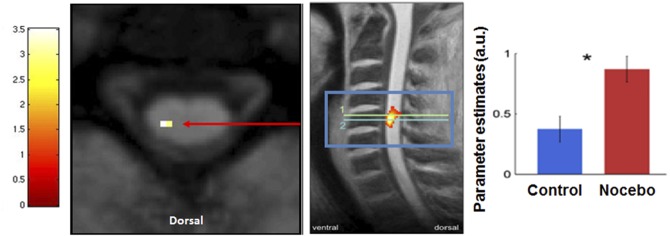
“There was overlapping activation in the ipsilateral dorsal horn of the spinal cord during painful stimulations, supporting a potential direct evidence for a pain-facilitating mechanism in the human spinal cord in relation to nocebo effects.(47) Nocebo responders showed a decrease of both mesolimbic dopaminergic and op…”
BackgroundA Neural Mechanism for Nonconscious Activation of Conditioned Placebo and Nocebo Responses
Jensen, K. B., Kaptchuk, T. J., Chen, X., Kirsch, I., Ingvar, M., Gollub, R. L., & Kong, J. (2015) · Cerebral Cortex · doi:10.1093/cercor/bhu275 · Cited by 152 · cited 1×
“Recent research has shown that unconscious processes modulate placebo and nocebo effects differently.(40,45,50) Evolutionarily, nocebo responses and placebo responses may represent 2 opposite pathways that coexist in the organism.”
BackgroundAccuracy and bias in retrospective symptom reporting
Van den Bergh, O., & Walentynowicz, M. (2016) · Current Opinion in Psychiatry · doi:10.1097/yco.0000000000000267 · Cited by 139 · cited 1×
“Adverse effects may be more difficult to be evaluated compared to target outcomes because of biases related to memory effects on retrospective symptom reporting.(75,79) Moreover, the researcher responsible for evaluating and reporting these side effects and symptoms may add another level of bias by having to subjectiv…”
BackgroundRethinking Explicit Expectations: Connecting Placebos, Social Cognition, and Contextual Perception
Schwarz, K. A., Pfister, R., & Büchel, C. (2016) · Trends in Cognitive Sciences · doi:10.1016/j.tics.2016.04.001 · Cited by 127
Role of Conditioning and Verbal Suggestion in Placebo and Nocebo Effects on Itch
Bartels, D. J. P., van Laarhoven, A. I. M., Haverkamp, E. A., Wilder-Smith, O. H., Donders, A. R. T., van Middendorp, H., van de Kerkhof, P. C. M., & Evers, A. W. M. (2014) · PLoS ONE · doi:10.1371/journal.pone.0091727 · Cited by 124 · cited 2×
“Other studies have also revealed strong nocebo effects induced by verbal suggestions.(8,76) In the study by van Laarhoven et al, negative verbal suggestions were designed to induce higher”
BackgroundAndre, J., Zeau, B., Pohl, M., Cesselin, Benoliel, & Becker, C. (2005) · The Journal of Neuroscience · doi:10.1523/jneurosci.0743-05.2005 · Cited by 121 · cited 1×
“Animal studies have also showed that the CCK antagonist CI-988 prevents anxiety-induced hyperalgesia with an effect that was similar to that produced by the established anxiolytic chlordiazepoxide.(2) Brain imaging studies have shed light on the neuroanatomical areas that are involved in the modulation of innocuous st…”
ResultThe effect of the sex of a model on nocebo hyperalgesia induced by social observational learning
Świder, K., & Bąbel, P. (2013) · Pain · doi:10.1016/j.pain.2013.04.001 · Cited by 120
Distinct neural representations of placebo and nocebo effects
Freeman, S., Yu, R., Egorova, N., Chen, X., Kirsch, I., Claggett, B., Kaptchuk, T. J., Gollub, R. L., & Kong, J. (2015) · NeuroImage · doi:10.1016/j.neuroimage.2015.03.015 · Cited by 116 · cited 1×
“Recent research has shown that unconscious processes modulate placebo and nocebo effects differently.(40,45,50) Evolutionarily, nocebo responses and placebo responses may represent 2 opposite pathways that coexist in the organism.”
BackgroundGender and the nocebo response following conditioning and expectancy
Klosterhalfen, S., Kellermann, S., Braun, S., Kowalski, A., Schrauth, M., Zipfel, S., & Enck, P. (2009) · Journal of Psychosomatic Research · doi:10.1016/j.jpsychores.2008.09.019 · Cited by 111 · cited 1×
“Furthermore, conditioning mechanisms appear to create more nocebo effects in women, whereas these effects may be drivenmore by expectations in men.(56)”
BackgroundNocebo Hyperalgesia, Partial Reinforcement, and Extinction
Colagiuri, B., Quinn, V. F., & Colloca, L. (2015) · The Journal of Pain · doi:10.1016/j.jpain.2015.06.012 · Cited by 98 · cited 1×
“conditioning paradigms produced nocebo effects that did not extinguish over the entire experimental sessions.(21) A different trend has been observed for positive partial reinforcement in which placebo effects persisted over time when established”
BackgroundSelf-citationUnderstanding placebo, nocebo, and iatrogenic treatment effects
Bootzin, R. R., & Bailey, E. T. (2005) · Journal of Clinical Psychology · doi:10.1002/jclp.20131 · Cited by 98
Understanding Placebo and Nocebo Responses for Pain Management
Colloca, L., & Grillon, C. (2014) · Current Pain and Headache Reports · doi:10.1007/s11916-014-0419-2 · Cited by 97 · cited 1×
“but also pharmacological efficacy and clinical outcomes in the context of pain management.(28) A better understanding of the”
BackgroundSelf-citationNocebo: the psychologic induction of pain
Schweiger, A., & Parducci, A. (1981) · The Pavlovian Journal of Biological Science · doi:10.1007/bf03003218 · Cited by 96 · cited 1×
“participants informed that an electrical current passing through their heads could cause headache as a possible side effect.(69) These findings have been recently reproduced.”
BackgroundPartial reinforcement, extinction, and placebo analgesia
Au Yeung, S. T., Colagiuri, B., Lovibond, P. F., & Colloca, L. (2014) · Pain · doi:10.1016/j.pain.2014.02.022 · Cited by 92
Self-citationRodriguez-Raecke, R., Doganci, B., Breimhorst, M., Stankewitz, A., Büchel, C., Birklein, F., & May, A. (2010) · The Journal of Neuroscience · doi:10.1523/jneurosci.2197-10.2010 · Cited by 89 · cited 3×
“Negative verbal information can convert typically painless stimulations into painful ones and induce nocebo responses as strong as those induced by direct experience of negative outcomes.(34,65)”
BackgroundIllness by suggestion: Expectancy, modeling, and gender in the production of psychosomatic symptoms
Lorber, W., Mazzoni, G., & Kirsch, I. (2007) · Annals of Behavioral Medicine · doi:10.1207/s15324796abm3301_13 · Cited by 84 · cited 1×
“setting, the effects of expectancy and modeling in mass psychogenic illness, which has been previously observed to affect women more than men.(59) In all the above described instances, social observational”
BackgroundPlacebo, Nocebo, and Learning Mechanisms
Colloca, L. (2014) · Handbook of experimental pharmacology · doi:10.1007/978-3-662-44519-8_2 · Cited by 81 · cited 1×
“behaviors, while nocebo effects may favor perceptual mechanisms that are initiated to prevent dangerous events and negative outcomes.(23)”
BackgroundSelf-citationFear of pain potentiates nocebo hyperalgesia
Aslaksen, P., & Lyby, P. (2015) · Journal of Pain Research · doi:10.2147/jpr.s91923 · Cited by 76
Nocebo effects in clinical studies: hints for pain therapy
Klinger, R., Blasini, M., Schmitz, J., & Colloca, L. (2017) · PAIN Reports · doi:10.1097/pr9.0000000000000586 · Cited by 74
Self-citationThyroxine: anatomy of a health scare
Faasse, K., Cundy, T., & Petrie, K. J. (2009) · BMJ · doi:10.1136/bmj.b5613 · Cited by 72 · cited 1×
“implemented medication in the media; (5) changes in drug appearance; (6) and from inaccessibility to different pharmacological agents for the same condition.(41) These effects may be of special relevance in inpatient clinical”
The Additive Impact of Anxiety and a Placebo on Pain
Staats, P. S., Staats, A., & Hekmat, H. (2001) · Pain Medicine · doi:10.1046/j.1526-4637.2001.01046.x · Cited by 69
Egorova, N., Yu, R., Kaur, N., Vangel, M., Gollub, R. L., Dougherty, D. D., Kong, J., & Camprodon, J. A. (2015) · Pain · doi:10.1097/j.pain.0000000000000163 · Cited by 63
Seeing is believing: Impact of social modeling on placebo and nocebo responding.
Faasse, K., Grey, A., Jordan, R., Garland, S., & Petrie, K. J. (2015) · Health Psychology · doi:10.1037/hea0000199 · Cited by 62 · cited 2×
“The basic psychological mechanisms underlying the formation of negative expectations and thus, nocebo effects, are anticipation of and information about negative outcomes,(34,76) prior lack of therapeutic effectiveness,(33,34) and observation of other patients’ pain worsening.(42,60,74,77,78) A recent systematic revie…”
BackgroundThe Nocebo Effect: History and Physiology
Benson, H. (1997) · Preventive Medicine · doi:10.1006/pmed.1997.0228 · Cited by 60 · cited 1×
“Therefore, the relationship between patient and medical staff has the power to influence the patient’s experience of treatment side effects.(17) Additionally, failure to give positive instructions associated with painkillers can be of utmost importance in reducing positive expectations.”
BackgroundCognitive Reversal of Expected Nitrous Oxide Analgesia for Acute Pain
Dworkin, S. F., Chen, A. C. N., LeResche, L., & Clark, D. W. (1983) · Anesthesia & Analgesia · doi:10.1213/00000539-198312000-00005 · Cited by 60
You Can’t Always Get What You Want: The Influence of Choice on Nocebo and Placebo Responding
Bartley, H., Faasse, K., Horne, R., & Petrie, K. J. (2016) · Annals of Behavioral Medicine · doi:10.1007/s12160-016-9772-1 · Cited by 58
Cognitive Reversal of Expected Nitrous Oxide Analgesia for Acute Pain
DWORKIN, S. F., CHEN, A. C. N., LeRESCHE, L., & CLARK, D. W. (1984) · Survey of Anesthesiology · doi:10.1097/00132586-198408000-00072 · Cited by 57
Was it so bad? The role of retrospective memory in symptom reporting.
Walentynowicz, M., Bogaerts, K., Diest, I. V., Raes, F., & den Bergh, O. V. (2015) · Health Psychology · doi:10.1037/hea0000222 · Cited by 54 · cited 1×
“Adverse effects may be more difficult to be evaluated compared to target outcomes because of biases related to memory effects on retrospective symptom reporting.(75,79) Moreover, the researcher responsible for evaluating and reporting these side effects and symptoms may add another level of bias by having to subjectiv…”
BackgroundThe effects of observation and gender on psychogenic symptoms.
Mazzoni, G., Foan, L., Hyland, M. E., & Kirsch, I. (2010) · Health Psychology · doi:10.1037/a0017860 · Cited by 53 · cited 1×
“The basic psychological mechanisms underlying the formation of negative expectations and thus, nocebo effects, are anticipation of and information about negative outcomes,(34,76) prior lack of therapeutic effectiveness,(33,34) and observation of other patients’ pain worsening.(42,60,74,77,78) A recent systematic revie…”
BackgroundWendt, L., Albring, A., Benson, S., Engler, H., Engler, A., Hinney, A., Rief, W., Witzke, O., & Schedlowski, M. (2014) · PLoS ONE · doi:10.1371/journal.pone.0107665 · Cited by 47 · cited 1×
“When compared to other genotypes, Val158 homozygotes appear to more strongly recognize naturally occurring somatovisceral sensations and to classify them as unpleasant or noxious.(81) Interestingly, Zubieta and colleagues previously observed that Met homozygotes presented with lower pain tolerance but higher m-opioid…”
ResultNocebo as headache trigger: evidence from a sham-controlled provocation study with RF fields
Stovner, L. J., Oftedal, G., Straume, A., & Johnsson, A. (2008) · Acta Neurologica Scandinavica · doi:10.1111/j.1600-0404.2008.01035.x · Cited by 44 · cited 1×
“exposure to radiofrequency when in fact the radiofrequency from the amplifier was absorbed by a load, thus suggesting that expectations created discomfort and head pain.(73)”
BackgroundCorsi, N., Emadi Andani, M., Tinazzi, M., & Fiorio, M. (2016) · Scientific Reports · doi:10.1038/srep30671 · Cited by 44 · cited 1×
“Suggestibility, a trait-like characteristic facilitating body sensations (eg, physical suggestibility), has been linked to nocebo effects.(36)”
BackgroundSelf-citationPlasma Noradrenaline and State Anxiety Levels Predict Placebo Response in Learned Immunosuppression
Ober, K., Benson, S., Vogelsang, M., Bylica, A., Günther, D., Witzke, O., Kribben, A., Engler, H., & Schedlowski, M. (2012) · Clinical Pharmacology & Therapeutics · doi:10.1038/clpt.2011.214 · Cited by 43
Nocebo hyperalgesia: contributions of social observation and body-related cognitive styles
Vögtle, E., Kröner-Herwig, B., & Barke, A. (2016) · Journal of Pain Research · doi:10.2147/jpr.s96228 · Cited by 40 · cited 3×
“The basic psychological mechanisms underlying the formation of negative expectations and thus, nocebo effects, are anticipation of and information about negative outcomes,(34,76) prior lack of therapeutic effectiveness,(33,34) and observation of other patients’ pain worsening.(42,60,74,77,78) A recent systematic revie…”
BackgroundDrugs and placebos: what's the difference?
Benedetti, F. (2014) · EMBO Reports · doi:10.1002/embr.201338399 · Cited by 33 · cited 1×
“Information helps patients to direct their attention to these features, in turn forming expectations of effectiveness that would minimize nocebo effects.(11,12,30)”
BackgroundExpectation of nocebo hyperalgesia affects EEG alpha-activity
Albu, S., & Meagher, M. W. (2016) · International Journal of Psychophysiology · doi:10.1016/j.ijpsycho.2016.08.009 · Cited by 29 · cited 1×
“Changes in EEG activity, namely, an enhancement of low alpha (8–10 Hz) activity have been linked to nocebo manipulations that increase intensity and unpleasantness of heatinduced pain.(1) Informing study participants about the occurrence of heightened pain, even if given only once, interferes with the natural habituat…”
BackgroundResponding to nocebos through observation: Social contagion of negative emotions
Benedetti, F. (2013) · Pain · doi:10.1016/j.pain.2013.05.012 · Cited by 29
Pazzaglia, C., Testani, E., Giordano, R., Padua, L., & Valeriani, M. (2016) · Neuroscience · doi:10.1016/j.neuroscience.2016.07.027 · Cited by 26
Expectations modulate long‐term heat pain habituation
Dogancil, B., Breimhorstl, M., Hondrichl, M., Rodriguez‐Raeckel, R., Mayl, A., & Birkleinl, F. (2011) · European Journal of Pain · doi:10.1016/j.ejpain.2010.09.003 · Cited by 22 · cited 1×
“The behavioral studies described in the previous sections are supported by psychopharmacological(14,15) and neuroimaging research.(38,65) Neuropharmacological studies of the nocebo have detailed some of the mechanisms underlying hyperalgesia.”
BackgroundNocebo hyperalgesia and the startle response
Aslaksen, P. M., Åsli, O., Øvervoll, M., & Bjørkedal, E. (2016) · Neuroscience · doi:10.1016/j.neuroscience.2016.10.040 · Cited by 22
Expectation influences the interruptive function of pain: Behavioural and neural findings
Sinke, C., Schmidt, K., Forkmann, K., & Bingel, U. (2016) · European Journal of Pain · doi:10.1002/ejp.928 · Cited by 21 · cited 1×
“Connectivity between ACC and fusiform gyrus during painful stimulation decreased in the negative expectancy group, indicating that verbal instructions related to pain deserve further investigation.(71) Startle reflex(3) and electroencephalogram(1) are modulated by”
BackgroundPain And Affectivity In Infancy: Their Interdependence And Independence
Craig, K. D. (1987) · Cephalalgia · doi:10.1177/03331024870070s636 · Cited by 2 · cited 1×
“social interactions and can be modulated through the observation of others.(37) Observational learning is defined as changes in”
Background
Research works printed but not linked: 3
- Bandura A Social learning theory. New York: General Learning Press; 1977.
- Colloca L, Nocebo effects: the dilemma of disclosing adverse events. In: Ethics and Governance of biomedical research. Strech D Mertz M, eds. Switzerland: Springer; 2016: 47– 55. ISBN: 9783319287294.
- Klinger R Blasini M Schmitz J Colloca L Pain report 2017. PMC5639717 29034363
Cited by
(2020) · doi:10.1056/nejmra1907805 · Cited by 634
Self-citationRossettini, G., Carlino, E., & Testa, M. (2018) · BMC Musculoskeletal Disorders · doi:10.1186/s12891-018-1943-8 · Cited by 307
“considering that beliefs and behaviors could influence patients’ attitudes in a positive or negative way [7, 169].”
BackgroundUnraveling Negative Expectations and Nocebo-Related Effects in Musculoskeletal Pain
Rossettini, G., Colombi, A., Carlino, E., Manoni, M., Mirandola, M., Polli, A., Camerone, E. M., & Testa, M. (2022) · Frontiers in Psychology · doi:10.3389/fpsyg.2022.789377 · Cited by 268
Rossettini, G., Camerone, E. M., Carlino, E., Benedetti, F., & Testa, M. (2020) · Archives of Physiotherapy · doi:10.1186/s40945-020-00082-y · Cited by 158
The Role of Patient–Practitioner Relationships in Placebo and Nocebo Phenomena
Blasini, M., Peiris, N., Wright, T., & Colloca, L. (2018) · International Review of Neurobiology · doi:10.1016/bs.irn.2018.07.033 · Cited by 121
“HPA axis activation, anxiety, and the activity of the cholecystokinin system have been associated to the occurrence of nocebo effects (Benedetti, Amanzio, Casadio, Oliaro, & Maggi, 1997; Benedetti, Amanzio, Vighetti, & Asteggiano, 2006; Blasini et al., 2017).”
BackgroundSelf-citation
Metadata
- Authors
- Blasini, M., Corsi, N., Klinger, R., & Colloca, L.
- Affiliations
- University of Maryland, Baltimore (US)
- University of Verona (IT)
- University Medical Center Hamburg-Eppendorf (DE)
- Corresponding author
- Colloca, Luana
- Venue
- PAIN Reports
- Published
- 2017-03
- Volume
- 2
- Issue
- 2
- Pages
- e585
- ISSN
- 2471-2531 (ISSN-L)
- PMC
- PMC5621640
- OpenAlex
- W2602188617
- Cited by
- 139
- References
- 82
- Citations by year
- 2026: 9 · 2025: 10 · 2024: 21 · 2023: 17 · 2022: 19 · 2021: 10 · 2020: 10 · 2019: 22 · 2018: 17 · 2017: 4
- FWCI
- 8.32
- Type
- journal article
- Language
- en
- Open access
- gold
- doi.org
- Licence
- Locations
- PAIN Reports (publishedVersion, cc-by-nc-nd)
- PubMed Central (publishedVersion, cc-by-nc-nd)
- PubMed (publishedVersion)
- DOAJ (DOAJ: Directory of Open Access Journals) (submittedVersion, cc-by-sa)
- Funders
- National Institute of Dental and Craniofacial Research (R01DE025946)
- Topics
- Life Sciences › Neuroscience › Cognitive Neuroscience › Pain Management and Placebo Effect
- Health Sciences › Medicine › Physiology (medical) › Pain Mechanisms and Treatments
- Health Sciences › Medicine › Anesthesiology and Pain Medicine › Pain Management and Treatment
- Keywords
- nocebo effect, pain perception, negative expectations, descending pain modulation, hyperalgesia, cognitive factors in pain, genetic susceptibility, personality traits, provider behavior, environmental cues, pain processing
About these checks
Registry, retraction, Cites and statistics results are computed, not judged, with one exception: a printed reference that no index lists is read once by a model before it counts as a citation error. Claims are extracted by a model and kept only when their quote appears verbatim in the text; each cited source is then checked, with a model’s help, for whether it says what the claim relies on. Those verdicts can be wrong — read the claim’s quote and the cited source before relying on one.
The claim verdicts this report counts are experimental: their accuracy is not yet measured.
A language model drew the claims from the paper on 2026-10-11, under version 3 of the claim definition (model deepseek-v4.1-flash, prompt extract-v3).
A second model labelled each claim on 2026-10-11 (model jev-1.13-20260917, definition revision gold-guideline-v0.2).
Cited sources are checked with a language model’s help (qwen3.8-omni-flash and gpt-6-sol).
Statistics and arithmetic are recomputed, not judged.
Confidence bands are shown only for fields calibrated on our annotated test set. None is calibrated yet, so no band is shown.
What counts as a claim ›How we measure confidence ›How we check this ›
Are you an author, or do you see a problem with this page? Request a review
Data sources
Bibliographic data: Semantic Scholar, OpenAlex, Crossref.
Contains information from the Semantic Scholar Academic Graph Datasets, made available under the ODC Attribution License (ODC-BY 1.0).
Semantic Scholar’s data is described in: Kinney, R., et al. (2023). The Semantic Scholar Open Data Platform. arXiv:2301.10140.
