

The Effects of Dietary Improvement on Symptoms of Depression and Anxiety: A Meta-Analysis of Randomized Controlled Trials
Open accessThe DOI matches its Crossref record; 59 of the 59 references it cites were found in a registry or an index.
Abstract
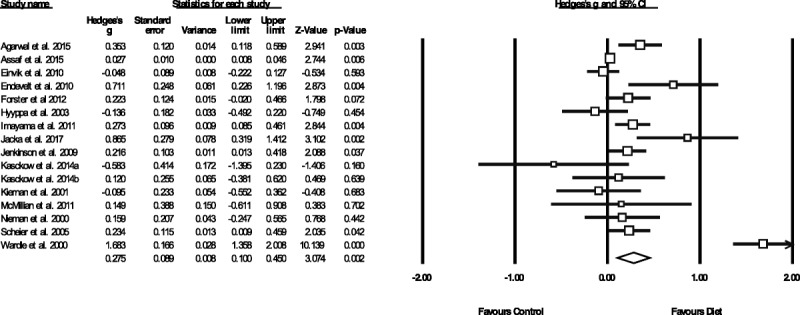
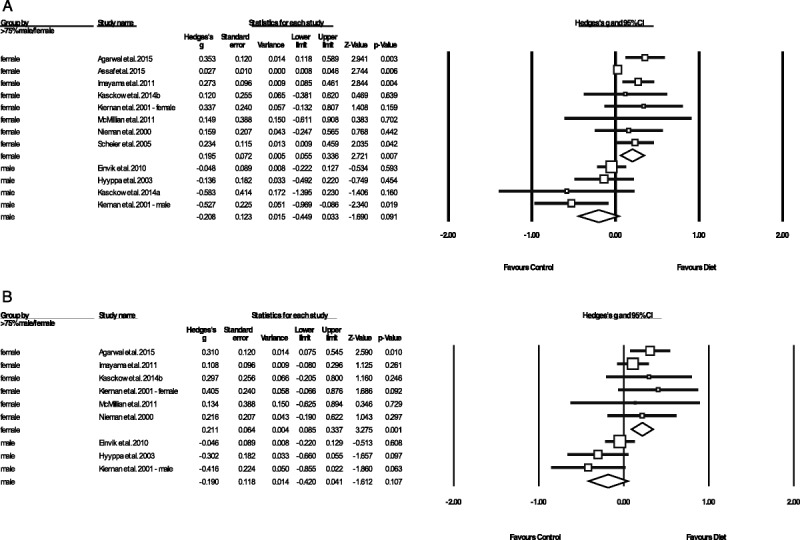
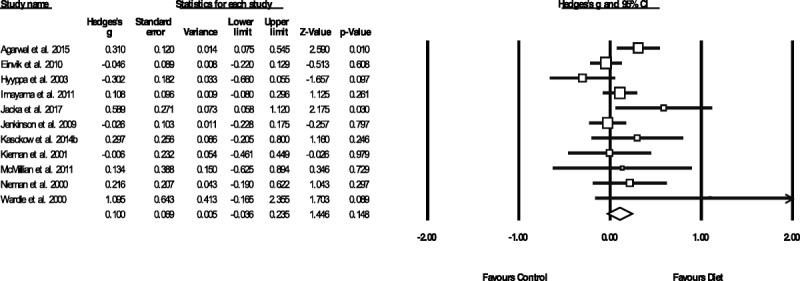
Objective: Poor diet can be detrimental to mental health. However, the overall evidence for the effects of dietary interventions on mood and mental well-being has yet to be assessed. We conducted a systematic review and meta-analysis examining effects of dietary interventions on symptoms of depression and anxiety. Methods: Major electronic databases were searched through March 2018 for all randomized controlled trials of dietary interventions reporting changes in symptoms of depression and/or anxiety in clinical and nonclinical populations. Random-effects meta-analyses were conducted to determine effect sizes (Hedges' g with 95% confidence intervals [CI]) for dietary interventions compared with control conditions. Potential sources of heterogeneity were explored using subgroups and meta-regression analyses. Results: Sixteen eligible randomized controlled trials (published in English) with outcome data for 45,826 participants were included; the majority of which examined samples with nonclinical depression ( n = 15 studies). Nonetheless, dietary interventions significantly reduced depressive symptoms ( g = 0.275, 95% CI = 0.10 to 0.45, p = .002). Similar effects were observed among high-quality trials ( g = 0.321, 95% CI = 0.12 to 0.53, p = .002) and when compared with both inactive ( g = 0.308, 95% CI = 0.02 to 0.60, p = .038) and active controls ( g = 0.174, 95% CI = 0.01 to 0.34, p = .035). No effect of dietary interventions was observed for anxiety ( k = 11, n = 2270, g = 0.100, 95% CI = −0.04 to 0.24, p = .148). Studies with female samples observed significantly greater benefits from dietary interventions, for symptoms of both depression and anxiety. Conclusions: Dietary interventions hold promise as a novel intervention for reducing symptoms of depression across the population. Future research is required to determine the specific components of dietary interventions that improve mental health, explore underlying mechanisms, and establish effective schemes for delivering these interventions in clinical and public health settings. Registration: PROSPERO Online Protocol: CRD42018091256.
Overview
The claims and statistics of this paper haven’t been checked yet.
Free: it reads the open-access text and checks the first 5 claims that cite a source we can check. Create a free account to check every claim.
Integrity signals
Registry
Cites
Statistics
Figures
Verification
Claims the paper makes
The claims and statistics of this paper haven’t been checked yet.
Free: it reads the open-access text and checks the first 5 claims that cite a source we can check. Create a free account to check every claim.
Claims other papers make about this one
Each is checked against this paper’s own text: does it say what the citing paper says it does?
The cited source says what the claim attributes to it.
In the citing paper
“while emerging trial data show that improving dietary habits can improve depressive symptoms (301).”
From Diet and the Microbiota–Gut–Brain Axis: Sowing the Seeds of Good Mental Health (2021) · cites this paper as [301]
In the citing paper
“Probiotics can increase microbiota diversity and therefore maximize the production of neuroactive compounds derived from fiber fermentation, such as short-chain fatty acids (SCFA), e.g., butyrate and acetate, therefore allowing the established dietary patterns to exert significant beneficial effect on brain function [11,75], as has been shown in previous interventional research [76].”
From Psychobiotic effects on anxiety are modulated by lifestyle behaviors: a randomized placebo-controlled trial on healthy adults (2023) · cites this paper as [76]
In the citing paper
“However, a recent meta-analysis of RCTs concluded that no effect of dietary interventions is observed for anxiety [162].”
From Separating the Signal from the Noise: How Psychiatric Diagnoses Can Help Discern Food Addiction from Dietary Restraint (2020) · cites this paper as [162]
Self-check
Percentages, sums and reported differences re-computed from the paper’s own numbers.
The self-check needs the paper’s full text.
Citations
Cites
Preferred Reporting Items for Systematic Reviews and Meta-Analyses: the PRISMA statement
Moher, D., Liberati, A., Tetzlaff, J., Altman, D. G., & for the PRISMA Group (2009) · BMJ · doi:10.1136/bmj.b2535 · Cited by 83,823
Preferred Reporting Items for Systematic Reviews and Meta-Analyses: The PRISMA Statement
Moher, D., Liberati, A., Tetzlaff, J., Altman, D. G., & The PRISMA Group (2009) · PLoS Medicine · doi:10.1371/journal.pmed.1000097 · Cited by 64,042
The CES-D Scale: A Self-Report Depression Scale for Research in the General Population
Radloff, L. S. (1977) · Applied Psychological Measurement · doi:10.1177/014662167700100306 · Cited by 53,267
The Hospital Anxiety and Depression Scale
Zigmond, A. S., & Snaith, R. P. (1983) · Acta Psychiatrica Scandinavica · doi:10.1111/j.1600-0447.1983.tb09716.x · Cited by 47,139
(1992) · PubMed · Cited by 33,716
Hamilton, M. (1960) · Journal of Neurology, Neurosurgery & Psychiatry · doi:10.1136/jnnp.23.1.56 · Cited by 32,817
A new depression scale designed to be sensitive to change
Montgomery, S. A., & Åsberg, M. (1979) · British Journal of Psychiatry · doi:10.1192/bjp.134.4.382 · Cited by 13,962
Overweight, Obesity, and Depression: A Systematic Review and Meta-analysis of Longitudinal Studies
Luppino, F. S., de Wit, L. M., Bouvy, P. F., Stijnen, T., Cuijpers, P., Penninx, B. W. J. H., & Zitman, F. G. (2010) · Archives of General Psychiatry · doi:10.1001/archgenpsychiatry.2010.2 · Cited by 4,322
Adipocytokines: mediators linking adipose tissue, inflammation and immunity
Tilg, H., & Moschen, A. R. (2006) · Nature Reviews Immunology · doi:10.1038/nri1937 · Cited by 3,188
The global prevalence of common mental disorders: a systematic review and meta-analysis 1980–2013
Steel, Z., Marnane, C., Iranpour, C., Chey, T., Jackson, J. W., Patel, V., & Silove, D. (2014) · International Journal of Epidemiology · doi:10.1093/ije/dyu038 · Cited by 2,846
Research works printed but not linked: 4
- Borenstein M Hedges L Higgins J Rothstein H Comprehensive Meta-Analysis Version 2. Englewood, NJ: Biostat; 2005: 104.
- Beck AT Steer RA Brown GK Beck Depression Inventory-II. San Antonio 1996; 78: 490– 8.
- Sheikh JI Yesavage JA Geriatric Depression Scale (GDS): recent evidence and development of a shorter version. J Aging Mental Health 1986; 5: 165– 73.
- Derogatis LR Spencer P Brief symptom inventory: BSI. Upper Saddle River, NJ: Pearson; 1993.
Cited by
Items 401–500 of 619
Golmohammadi, M., Kabiri, S. S., Sadeghi, F., Jam, S. A. M., Nachvak, S. M., & Attari, V. E. (2026) · BMC Nutrition · doi:10.1186/s40795-026-01305-4 · Cited by 2
“A meta-analysis of 16 intervention studies demonstrated the effectiveness of dietary interventions in reducing depressive symptoms [11].”
Putz, J. C., Wilding, M., Lackner, S., Narrath, M., Schlotmann, D., Sallmutter, M.-T., Tatzer, J., Brandstätter, A., Lang, J. D., Holasek, S., et al. (2026) · PLoS ONE · doi:10.1371/journal.pone.0350801 · Cited by 2
“This relationship is a central focus of the emerging field of “nutritional psychiatry,” which examines how macro-and micronutrients influence neurotransmitter synthesis and, in turn, affect the development and course of psychiatric disorders [58,70,71].”
Wetenschappelijk bewijs leefstijlgeneeskunde
Molema, H., van Erk, M., van Winkelhof, M., Land, K. V. ’., Jong, J. C. K., van Ommen, B., Pijl, H., Cahn, W., Deenik, J., Maljaars, J., et al. (2019) · TNO Repository · Cited by 6
Nutrition and Mental Health—How the Food We Eat Can Affect Our Mood
Eaton, M., Firth, J., & Sarris, J. J. (2020) · Frontiers for Young Minds · doi:10.3389/frym.2020.00115 · Cited by 2
Self-citationCritiquing the Critique: Resisting Commonplace Criticisms of Antidepressants in Online Platforms
Sthamann, E., & McMullen, L. M. (2021) · Qualitative Health Research · doi:10.1177/10497323211040768 · Cited by 2
“, increasing the intake of healthy foods) has also provided evidence of the reduction of symptoms of depression (Firth et al., 2019).”
BackgroundHow African Americans With Severe Mental Illness and Trauma Experience Diet and Exercise
Sheehan, L. L., Sayer, J., Siddiqi, M., Qin, S., & Glover, L. (2023) · Journal of Human Services · doi:10.52678/001c.74364 · Cited by 2
“Finally, previous research has shown that both physical activity and a nutritious diet can mitigate symptoms of mental illness (Firth et al., 2019; Rosenbaum et al., 2014, 2015).”
BackgroundDiagnostic et traitement de la dépression à l’adolescence
Korczak, D. J., Westwell-Roper, C. Y., & Sassi, R. B. (2023) · Canadian Medical Association Journal · doi:10.1503/cmaj.220966-f · Cited by 4
Li, Y., Mo, T., & Yao, Y. (2023) · Chinese Science Bulletin (Chinese Version) · doi:10.1360/tb-2023-0601 · Cited by 3
Diet and Depression during Peri- and Post-Menopause: A Scoping Review Protocol
Bodnaruc, A. M., Duquet, M., Prud’homme, D., & Giroux, I. (2023) · Methods and Protocols · doi:10.3390/mps6050091 · Cited by 2
Melo, V. D. S., Bandeira, M. D. S., Torres, M. T. P., dos Santos, N. T. Q., Baptista, K. R. D. C., da Silva, E. A., Marques, M. R. D. C., Barboza, K. R. M., Gomes, C. M. D. C. P., & Tecchio, J. V. S. (2023) · Editora Científica Digital eBooks · doi:10.37885/230914410 · Cited by 2
Behavioral interventions of dietary changes to reduce depressive symptoms: a meta-analysis
Eissenstat, S. J., Gao, N., Kim, B., Brody, R. A., & Hauck, E. (2023) · Journal of Public Health · doi:10.1007/s10389-023-02157-z · Cited by 2
“Meta-studies suggest the effectiveness of an anti-inflammatory dietary pattern for depression (Firth et al. 2019; Thomas-Odenthal et al. 2020), but they combine intervention types, incorporating both controlled dietary interventions and behavioral interventions that individualize diet plans.”
Integrative Interventions for Improving Outcomes in Depression: A Narrative Review
Halma, M. T. J., Plothe, C., & Marik, P. E. (2024) · Psychology International · doi:10.3390/psycholint6020033 · Cited by 2
“There is emerging evidence that suggests a link between diet and mental well-being, indicating that dietary improvements may positively affect symptoms of depression [71,238].”
BackgroundHepsomali, P., Kagami‐Katsuyama, H., Coxon, C., Honma, N., Kinoshita, K., Hattori, H., & Nishihira, J. (2024) · Nutrition Bulletin · doi:10.1111/nbu.12695 · Cited by 2
da Silva, W. T., Castelo, P. M., Pereira, L. J., Pardi, V., Murata, R. M., Andrade, E. F., & Pereira, A. (2024) · PLoS ONE · doi:10.1371/journal.pone.0307870 · Cited by 2
“In these cases, individuals may take dietary supplements believing that they will improve their anxiety and depression levels, and this improvement may occur even without a physiological mechanism to justify the outcome [49].”
BackgroundReddan, J. M., Gauci, S., Young, L. M., Kennedy, G., Rowsell, R., Minihane, A. M., Scholey, A. B., & Pipingas, A. (2024) · British Journal Of Nutrition · doi:10.1017/s0007114524002204 · Cited by 3
SunGold Kiwifruit and Psychological Health (GoKiPH): A Randomised Controlled Crossover Trial
Billows, M., Kakoschke, N., & Zajac, I. T. (2025) · Nutrients · doi:10.3390/nu17081375 · Cited by 2
“…that further research is required to distil the constituents and mechanisms of action of dietary interventions to develop more targeted and cost-effective treatments and, importantly, to conceive low-intensity treatments that offer self-agency to individuals with mental health conditions [6,39].”
InfluentialMcInerney, A. M., & Deschênes, S. S. (2025) · Journal of Health Psychology · doi:10.1177/13591053251334444 · Cited by 2
“While diet has been shown to impact depressive symptoms longitudinally for people with (Koning et al., 2023) and without (Firth et al., 2019) diabetes, it is possible that a nutrition measure focussed on fruit and vegetable consumption is too narrow to capture the scope of dietary influence (e.g.…”
The intervention effect of comprehensive precision nursing in elderly patients with type 2 diabetes
Gao, H., Han, Y., Deng, D., & Liu, L. (2025) · Australian Journal on Ageing · doi:10.1111/ajag.70047 · Cited by 2
“29 This indicates that this nursing model not only positively impacts blood sugar control but also reduces anxiety and depression through regular psychological counselling, health education and emotional management.”
Multifaceted Clinical Spectrum of Vitamin B12 Deficiency - a Case Report and Literature Review
Pustelnik, E., Pikora, K., Hartman, M., Kurzeja, M., Czuwara, J., & Laguna, P. J. (2025) · Journal of Blood Medicine · doi:10.2147/jbm.s524466 · Cited by 2
“36,37”
Mohammadi, M. R., Mostafavi, S., & Khalkhali, A. (2022) · Nutrition & Food Science · doi:10.1108/nfs-04-2022-0127 · Cited by 2
Logan, A. C., & Lowry, C. A. (2022) · Challenges · doi:10.3390/challe13020051 · Cited by 3
“, high-fat, high-sugar discretionary foods and takeaways), while replacing these with high-fiber, nutrient-dense alternatives, such as vegetables” [85].”
BackgroundSharma, S., Patnaik, L., & Sahu, T. (2023) · Journal of Education and Health Promotion · doi:10.4103/jehp.jehp_1149_22 · Cited by 5
“[13] Avoiding alcohol has a huge impact on reducing the stress of mental illness, as many researchers in different geographic regions have found.”
BackgroundImportance of the Microbiota in Early Life and Influence on Future Health
Collins, J. M., Cryan, J. F., & O’Mahony, S. M. (2024) · Elsevier eBooks · doi:10.1016/b978-0-323-99971-7.00017-5 · Cited by 3
Hypólito, T. M. (2021) · Digital Library of Theses and Dissertations (Universidade de São Paulo) · doi:10.11606/t.6.2021.tde-24062021-193148 · Cited by 3
Płeska, K., Wojtania, J., Łepik, M., Uszok, Z., Rosiak, K., Reguła, K., Waloch, K., Piaszczyński, S., Czajka, A., & Szymański, B. (2024) · Quality in Sport · doi:10.12775/qs.2024.15.51715 · Cited by 1
“Following such dietary habits is linked to an increase in pro-inflammatory cytokines, as well as worse symptoms of depression (58).”
BackgroundCholila, N., Hurin’in, N. M., & Damayanti, T. Y. F. (2024) · Indonesian Midwifery and Health Sciences Journal · doi:10.20473/imhsj.v8i4.2024.351-370 · Cited by 1
Burk‐Leaver, E., Zivalich, C., Sunshine, J. E., Lowry, C. A., & Erlandson, K. M. (2024) · Journal of the Association of Nurses in AIDS Care · doi:10.1097/jnc.0000000000000509 · Cited by 1
Sağlık Bilimlerinde Akademik Araştırma ve Değerlendirmeler II
BİLGİLİ, A., Yıldırım, K., FIRAT, M., Kavurmacı, M., Yıldız, B. C. D., Sarıaslan, A., Yıldız, İ., Pala, A. İ., Temiz, Ö., Öztürk, G., et al. (2024) · Özgür Yayınları eBooks · doi:10.58830/ozgur.pub566 · Cited by 1
Factores de protección para la calidad de vida en ostomizados desde las redes de apoyo en Colombia
López, M. A., Patiño, N. V. H., Imbacuan, D. F. P., & Andrade, M. C. P. (2024) · Avances en Enfermería · doi:10.15446/av.enferm.v42n2.116339 · Cited by 1
Wu, M., Zhang, Y., Mawditt, C., & Liao, J. (2025) · Journal of Affective Disorders · doi:10.1016/j.jad.2024.12.112 · Cited by 1
Dentisterie inspirée et inspirante : Dr Cloé Brami & Médecine intégrative
Mocquot, C. (2025) · HEGEL - HEpato-GastroEntérologie Libérale · doi:10.3917/heg.151.0073 · Cited by 1
Snider, E. M., Gou, C. Y., Chen, L., Martin, A., Ito, K. E., Hunt, D. M., & Cheng, A. L. (2025) · PM&R · doi:10.1002/pmrj.13416 · Cited by 1
Wasserman, D. (2025) · Neuropsychiatrie · doi:10.1007/s40211-025-00545-3 · Cited by 1
Trofimiuk, E., Agata, F., Oniszczuk, H., Car, H., & Bożena, M. (2025) · Journal of Pharmacy and Pharmacology · doi:10.1093/jpp/rgaf082 · Cited by 1
Turner, M., O’Shea, M., Thurston, L., Jinnette, R., Beaconsfield, A., Mahoney, S., Ashtree, D. N., Bryan, M., Saunders, D., John, T., et al. (2025) · Mental health and physical activity · doi:10.1016/j.mhpa.2025.100730 · Cited by 1
Self-citationDiet quality, eating behaviour, and mental health outcomes of prostate cancer survivors
Wright, H. H., Linton, C., Broadbent, S., Rune, K. T., Davis, C., Zhang, A., & Keech, J. J. (2025) · Journal of Cancer Survivorship · doi:10.1007/s11764-025-01932-z · Cited by 1
“The Mediterranean-style diet is a high-quality plant-based dietary pattern associated with improved cardiometabolic, mental health outcomes, and overall functioning [2, 3, 27].”
Tirani, S. A., Grigorian, A., Lotfi, K., Shahdadian, F., Hajhashemy, Z., Rouhani, P., & Saneei, P. (2025) · BMC Psychiatry · doi:10.1186/s12888-025-07643-0 · Cited by 1
“The present study found a stronger relationship between healthy dietary patterns and anxiety in females, possibly due to higher mood disorder prevalence in women, sex differences in metabolism, and sociocultural factors influencing diet and health behaviours [48].”
Hao, W., Shan, Y., Kimura, T., Ukawa, S., Ohira, H., Okabayashi, S., Wakai, K., Ando, M., & Tamakoshi, A. (2025) · Frontiers in Nutrition · doi:10.3389/fnut.2025.1698581 · Cited by 1
What Causes Depression during Menopause: A Contemporary Review
Goel, M., & Shea, A. K. (2025) · Current Obstetrics and Gynecology Reports · doi:10.1007/s13669-025-00453-x · Cited by 1
“Ethnically and socioeconomically underprivileged women may also 1 3 meta-analysis of 30 studies involving 3501 women noted a significant benefit of Cognitive Behavioural Therapy (CBT) and Mindfulness-Based Interventions (MBI) on reducing depression and anxiety symptoms [87].”
Gamage, E., Lane, M. M., Mohebbi, M., Lotfaliany, M., Ashtree, D. N., Jacka, F. N., Orr, R., O’Neil, A., Dawson, S. L., & Marx, W. (2025) · British Journal Of Nutrition · doi:10.1017/s0007114525105886 · Cited by 1
“…adulthood (26) , (b) diet quality is generally decreased in young adulthood (27,28) and (c) dietary improvement reduces symptoms of depression (29) , implementing dietary strategies (e.g. increasing polyphenol intake) during this life stage offers a window of opportunity to reduce the…”
Self-citationYao, S., Wang, G., Peng, T., Zhang, L., Ma, F., & Chi, P. (2026) · Frontiers in Human Neuroscience · doi:10.3389/fnhum.2025.1706793 · Cited by 1
Zhu, J., Lu, J., Tang, L., Jin, H., Liu, C., Yuan, X., Luo, H., He, Z., Song, J., & Luo, S. (2026) · Frontiers in Nutrition · doi:10.3389/fnut.2025.1693936 · Cited by 1
Shi, Y., Longqi, Z., Zhang, J., & Dong, X. (2026) · General Hospital Psychiatry · doi:10.1016/j.genhosppsych.2026.01.015 · Cited by 1
Aucoin, M., Barbaro, D., LaChance, L., & Cooley, K. (2026) · Neuropsychobiology · doi:10.1159/000550697 · Cited by 1
“While there is significant evidence suggesting an antidepressant effect of dietary counselling [7], the research on diet change as a treatment for anxiety disorders is less established.”
Khalil, A. I., Eswi, A., Abdelshakor, E., & Samra, O. M. A. (2026) · Frontiers in Psychiatry · doi:10.3389/fpsyt.2025.1701580 · Cited by 1
“…have also been identi fi ed as key determinants of the effectiveness and uptake of mindfulness and resilience programs in healthcare settings (52) Furthermore, spiritual and religious practices such as prayer, contemplation, and re fl ective rituals — which are deeply embedded in both Saudi…”
Li, M., Wang, K., Liu, J., Jia, J., Yuan, H., Kong, D., & Li, W. (2026) · Medicine · doi:10.1097/md.0000000000047516 · Cited by 1
“[7] Therefore, understanding the causal links between”
Bracone, F., Castelnuovo, A. F. D., Costanzo, S., Gialluisi, A., Ruggiero, E., Cerletti, C., Donati, M. B., de Gaetano, G., Iacoviello, L., & Bonaccio, M. (2026) · Clinical Nutrition · doi:10.1016/j.clnu.2026.106627 · Cited by 1
Microglial Lipid Droplet Accumulation: A Pathological Nexus Between Obesity and Depression
Liu, X., Chen, J., Xie, Y., Zhang, P. F., Yuan, Z., Yi, Y., & Pan, Z. (2026) · Journal of Integrative Neuroscience · doi:10.31083/jin47039 · Cited by 1
Gilmour, A., Campbell, S., Brotto, G., Green, J. E., Bayes, J., Garcia, S. L., Leonard, J., Chang, J. P., Aucoin, M., Su, K., et al. (2026) · Nutritional Psychiatry · doi:10.1016/j.nupsyc.2026.100020 · Cited by 1
Fujii, T., Seo, T., & Nogami, Y. (2026) · Nutritional Psychiatry · doi:10.1016/j.nupsyc.2026.100019 · Cited by 1
Tien, D. S. Y., Hockey, M., Muller, K., Milton, T., Putkonen, L., Mohebbi, M., Yao, C. K., Jacka, F. N., Kratochvil, D., Haddad, P. M., et al. (2026) · British Journal Of Nutrition · doi:10.1017/s0007114526107272 · Cited by 1
Self-citationAkbaraly, T. N., Norton, J. L., Mura, T., Jaussent, I., Lassale, C. M., Jacka, F. N., O'Neil, A. E., Mika Kivimaki, B., & Ashtree, D. N. (2026) · European Journal of Nutrition · doi:10.1007/s00394-026-03986-w · Cited by 1
Self-citationShahini, N., Fotovat, N., Bagheri, H., Kashani, L., & Bagheri, Y. (2026) · Scientific Reports · doi:10.1038/s41598-026-48616-x · Cited by 1
“Elevated levels of inflammatory markers such as cytokines and C-reactive protein (CRP) have consistently been reported in individuals with schizophrenia and depression, suggesting a state of persistent low-grade inflammation that may contribute to symptom severity and chronicity 13,14 .”
Furman, C. R., Pokowitz, E. L., Peddireddy, S., Bylinsky, I., Zhang, J. D., Worth, I. A., Sonneville, K. R., & Gearhardt, A. N. (2026) · Nutrients · doi:10.3390/nu18121852 · Cited by 1
Almarzooqi, S., Yassin, L. K., AlNuaimi, F., Alketbi, S., Skrabulyte-Barbulescu, J., AlAhbabi, N., Alremeithi, D., Almarashda, R., Almazrouei, S., Shehab, S., et al. (2026) · Translational Psychiatry · doi:10.1038/s41398-026-04305-x · Cited by 1
“Nevertheless, nutritional research indicates that high-fi ber diets can increase SCFA-producing bacteria and alter microbial metabolic activity, supporting the biologic plausibility of microbiome-mediated effects on mood [138].”
InfluentialGurrieri, R., Hedrih, V., & Morphew-Lu, E. (2026) · Nutrients · doi:10.3390/nu18162601 · Cited by 1
“A growing body of research has highlighted the possible influence of nutrition on psychological processes, brain function, and psychopathological outcomes, including mood, cognition, behavior, and emotional regulation [5–12].”
HOW CAN WE USE NEUROTRANSMITTERS IN EMOTION AND REWARD SYSTEM TO STUDY DEPRESSION?
Zhang, P. (2019) · LIFE International Journal of Health and Life-Sciences · doi:10.20319/lijhls.2019.53.4162 · Cited by 1
“…improvement like consumption of low-fat vegan and nutritious food to have a positive effect on mood and help depressive patients to recover faster (Firth et al., 2019) as many foods are a rich source of monoamines precursors, which are the chemicals that are essential for synthesising…”
BackgroundDepression in the elderly and psychobiotics
Vaghef‐Mehrabany, E., Ebrahimi‐Mameghani, M., Sanayei, M., & Vaghef‐Mehrabany, L. (2021) · Elsevier eBooks · doi:10.1016/b978-0-12-817990-1.00044-5 · Cited by 3
Leefstijl – relevant voor lichaam én psyche
Deenik, J., & Kooiman, C. G. (2021) · Bohn Stafleu van Loghum eBooks · doi:10.1007/978-90-368-2683-9_13 · Cited by 1
Role of Diet in Depression in Young People: Recommendations for Implementation in Practice
Yung, A. R., Hockey, M., Grosman, A., & Rocks, T. (2022) · Psychiatric Annals · doi:10.3928/00485713-20220127-01 · Cited by 1
Kauffman, B. Y., Kotov, R., Garey, L., Ruggero, C. J., Luft, B. J., & Zvolensky, M. J. (2022) · Health Behavior Research · doi:10.4148/2572-1836.1107 · Cited by 1
“Thus, although extant work has found weight loss to be associated with improvements in depressive symptoms (Dixon et al., 2003; Firth et al., 2019) and sleep problems (Hudgel et al., 2018), this may not generalize to WTC responders.”
BackgroundMartland, R., Jolley, S., & Harding, H. (2023) · Psychiatry Research Communications · doi:10.1016/j.psycom.2023.100131 · Cited by 1
Palupi, K. C., Sitoayu, L., Mulyani, E. Y., Handi, L., & Durotunisa, S. I. (2023) · Jurnal Pengabdian Masyarakat AbdiMas · doi:10.47007/abd.v9i05.6670 · Cited by 1
ABORDAGENS EMERGENTES NA PSIQUIATRIA: EXPLORANDO NOVAS PERSPECTIVAS DE DIAGNÓSTICO E TRATAMENTO
dos Santos, E. V. R., Silva, A. B. A. D. A., Piccini, A. P., de Vilhena, L. P., Brígido, J. V. C. B., Melo, R. P. D. S., de Souza, T. M. G., D’Umbra, I. C., Silva, C. C., & Marques, G. L. P. (2023) · Revista Ibero-Americana de Humanidades, Ciências e Educação · doi:10.51891/rease.v9i7.10687 · Cited by 2
Kurinna, O. G., & Chernova, V. M. (2023) · Modern Gastroenterology · doi:10.30978/mg-2023-4-77 · Cited by 1
“ятливий вплив на функціонування мозку [21].”
Global and Epidemiological Perspectives on Diet and Mood
Dawson, S. L., Travica, N., & Jacka, F. N. (2024) · Elsevier eBooks · doi:10.1016/b978-0-323-99971-7.00007-2 · Cited by 1
Self-citationTalib, M., Papazova, A., & Nicolis, H. (2024) · Revue Medicale de Bruxelles · doi:10.30637/2024.23-016 · Cited by 1
Seah, M.-Y., Tham, X. C., Aloweni, F. B. A. B., Kua, S. M. Y., Tham, W. Y., & Lim, S. H. (2024) · Heliyon · doi:10.1016/j.heliyon.2024.e35450 · Cited by 1
“Hence, the absence of clear, understandable guidance in medical dietary management can escalate anxiety and stress among patients, underscoring the critical need for easy-to-use tools and applications to aid in effective diet management [35].”
Testing for Thyroid Peroxidase and Antineuronal Antibodies in Depression and Schizophrenia
Steiner, J., Stoecker, W., Teegen, B., Dobrowolny, H., Meyer-Lotz, G., Borucki, K., Guest, P. C., & Bernstein, H. (2021) · Methods in molecular biology · doi:10.1007/978-1-0716-1558-4_13 · Cited by 1
Editorial Comment on Firth et al. (2019)
Kop, W. J., & Chapman, B. P. (2020) · Psychosomatic Medicine · doi:10.1097/psy.0000000000000805 · Cited by 1
From observation to intervention: time to put ‘food and mood’ to the test
Bradfield, J., Buckner, L., Amati, F., Burridge, J., & Ray, S. (2021) · BMJ Nutrition Prevention & Health · doi:10.1136/bmjnph-2021-000301 · Cited by 1
(2021) · Psychosomatic Medicine · doi:10.1097/psy.0000000000000914 · Cited by 1
“(1,2) to correct an estimated effect size for one of the 16 studies included in the meta-analysis.”
BackgroundFirth, J., Marx, W., Carney, R., Teasdale, S. B., Solmi, M., Stubbs, B., Schuch, F. B., Carvalho, A. F., Jacka, F. N., & Sarris, J. J. (2020) · Psychosomatic Medicine · doi:10.1097/psy.0000000000000806 · Cited by 1
Self-citationWest, R., Fat, L. N., & Jackson, S. E. (2025) · Qeios · doi:10.32388/ny0zs1 · Cited by 1
de Carvalho, P. R., Vieira, T. F. B., Lourenço, T. R., Martins, L., & Costa, A. C. M. (2020) · ID on line REVISTA DE PSICOLOGIA · doi:10.14295/idonline.v14i53.2857
The role of nutrition in respiratory disease and COVID-19 management
Pereko, K. K. A., Mensah, E. D., Acquaye, V. A., Nsiah-Asamoah, C. N. A., Chadaré, F. J., Intiful, F. D., Setorglo, J., Enyan, N. I. E., & Dai-Kosi, A. D. (2021) · Elsevier eBooks · doi:10.1016/b978-0-12-824289-6.00011-8
Diet choices: psychological impacts and influences
Larcombe, S. J. (2026) · Warwick Research Archive Portal (University of Warwick) · doi:10.82444/warw.33825049
Dietary Inflammation and Mental Health
Teasdale, S. B., Samad, H. A., Firth, J., & Marx, W. (2021) · Springer eBooks · doi:10.1007/978-3-030-71229-7_25
Self-citationGriffen, K., Lederman, O., Morell, R., Fibbins, H., Curtis, J., Ward, P. B., & Teasdale, S. B. (2021) · The Journal of Mental Health Training Education and Practice · doi:10.1108/jmhtep-12-2020-0086
Self-citationRelationship between a poor diet, anxiety, and depressive symptoms in adolescents
Dean, J. (2020) · CSUN ScholarWorks (California State University, Northridge)
Young, C., Rocks, T., Opie, R., Berk, M., & O'Neil, A. E. (2022) · Psychiatric Annals · doi:10.3928/00485713-20220126-02
Knudsen, J. K. (2021) · VBN Forskningsportal (Aalborg Universitet) · doi:10.54337/aau455013245
Campion, J. (2022) · Oxford University Press eBooks · doi:10.1093/med/9780198861478.003.0051
Chopra, C., Mandalika, S., & Kinger, N. (2022) · The Indian Journal of Nutrition and Dietetics · doi:10.21048/ijnd.2022.59.4.29444
تقييم الحالة الغذائية والنفسية لمرضى الفصام بمستشفى الصحه النفسيه بنها
قنديل, ع. (1999) · Mağallaẗ Al-Iqtiṣād Al-Manzilī - Ǧāmiʿaẗ Al-Munūfiyyaẗ · doi:10.21608/mkas.2022.140206.1137
Six Ways to Well-Being (6W-WeB)
Basarkod, G., Ciarrochi, J., & Sahdra, B. K. (2022) · Springer eBooks · doi:10.1007/978-3-030-77644-2_67-1
Six Ways to Well-Being (6W-WeB)
Basarkod, G., Ciarrochi, J., & Sahdra, B. K. (2023) · Springer eBooks · doi:10.1007/978-3-030-77644-2_67-2
Visser, M., & Brouwer, I. A. (2023) · Bohn Stafleu van Loghum eBooks · doi:10.1007/978-90-368-2868-0_46
Sport und gesunder Lebensstil im Kindes- und Jugendalter
Kothgassner, O. D., & Plener, P. L. (2022) · Springer Reference Medizin · doi:10.1007/978-3-662-49289-5_77-1
Gulesce, S. A., Ersoy, B., Yüksel, D., & Baysal, G. (2023) · Journal of Biomedical Research & Environmental Sciences · doi:10.37871/jbres1765
Psychiatric Nutrition What You Eat, Your Mind
ÇAKIR, T., & ÖZDOĞAN, Y. (2023) · doi:10.59287/pcshs.380
Bodnaruc, A. M., Vincent, C., Soto, C., Duquet, M., Prud’homme, D., & Giroux, I. (2023) · Methods and Protocols · doi:10.3390/mps6050078
“For example, in 2019, at least eight systematic reviews have been published on the topic of dietary patterns and depression [73–80], out of which only three had prospective protocol registrations [73,74,77].”
BackgroundThe Concept of Joyful Foods According to the Islamic Perspectives
Jaafar, M. H., Satari, H., Salleh, M. K. M., Hassannudin, M. I. A., & Akademi Pengajian Bahasa, C. N. S. (2023) · Idealogy Journal · doi:10.24191/idealogy.v8i1.410
Saúde Mental: interfaces, desafios e cuidados em pesquisa - Volume 3
Klauss, J., & Almeida, F. A. D. (2023) · Editora Científica Digital eBooks · doi:10.37885/978-65-5360-482-7
Herbal Medicine for the Management of Anxiety, Depression, and Insomnia
Otimenyin, S. O. (2023) · Springer eBooks · doi:10.1007/978-981-99-7703-1_13 · Cited by 3
Vaqué-Crusellas, C., Ribot, B., Corominas, A., Prat, G., Vila‐Martí, A., Torres‐Moreno, M., Serra, M., & Boreu, Q. F. (2024) · Cureus · doi:10.7759/cureus.64691
“Furthermore, our intervention consisted of offering culinary sessions weekly rather than daily, which could be insufficient to change their regular routines [16].”
BackgroundDepression and Suicide Among College Students
Hayes, J. A. (2024) · Emerald Group Publishing Limited eBooks · doi:10.1108/978-1-83549-194-220241004
Worried Sick: Anxiety and Stress Among College Students
Hayes, J. A. (2024) · Emerald Group Publishing Limited eBooks · doi:10.1108/978-1-83549-194-220241005
Sport und gesunder Lebensstil im Kindes- und Jugendalter
Kothgassner, O. D., & Plener, P. L. (2024) · Springer Reference Medizin · doi:10.1007/978-3-662-66744-6_77
Depression Among Fast Food And Traditional Food Users In Adults
Rahman, A. U., Ahmed, M., Khan, S. H., Tara, T., & Khan, A. (2024) · National Journal of Life and Health Sciences · doi:10.62746/njlhs.v3n2.61
Metadata
- Authors
- Firth, J., Marx, W., Dash, S., Carney, R., Teasdale, S. B., Solmi, M., Stubbs, B., Schuch, F. B., Carvalho, A. F., Jacka, F., & Sarris, J.
- Affiliations
- Barwon Health (AU)
- Western Sydney University (AU)
- University of Manchester (GB)
- Corresponding author
- Firth, Joseph
- ORCID
- Venue
- Psychosomatic Medicine
- Published
- 2019-04
- Volume
- 81
- Issue
- 3
- Pages
- 265-280
- ISSN
- 0033-3174 (ISSN-L)
- 1534-7796
- PMC
- PMC6455094
- OpenAlex
- W2932483450
- Cited by
- 566
- References
- 59
- Citations by year
- 2026: 73 · 2025: 87 · 2024: 80 · 2023: 82 · 2022: 77 · 2021: 81 · 2020: 61 · 2019: 24
- FWCI
- 9.93
- Type
- journal article
- Language
- en
- Update notices
- correction (2021-02-01)
- Open access
- hybrid
- doi.org
- Licence
- Locations
- Psychosomatic Medicine (publishedVersion, cc-by-nc-nd)
- Europe PMC (PubMed Central) (publishedVersion, cc-by-nc-nd)
- PubMed Central (publishedVersion, cc-by-nc-nd)
- PubMed (publishedVersion)
- Research Explorer (The University of Manchester) (publishedVersion, other-oa)
- Victoria University Research Repository (Victoria University) (submittedVersion, cc-by-nc-nd)
- Minerva Access (University of Melbourne) (submittedVersion, cc-by-nc-nd)
- Deakin Research Online (Deakin University) (submittedVersion)
- Figshare (submittedVersion, cc-by-nc-nd)
- Padua Research Archive (University of Padova) (submittedVersion)
- Funders
- Wilson Foundation
- Eli Lilly and Company
- Pfizer
- Sanofi
- Geelong Region Medical Research Foundation
- David and Elaine Potter Foundation
- South Eastern Sydney Local Health District
- National Institute for Health and Care Research (APP1125000, ICA-CL-2017-03-001, NIHR-INF-0685)
- Department of Health and Social Care
- Australian Rotary Health
- Meat and Livestock Australia
- Deakin University
- University of Melbourne
- Servier
- Fernwood Foundation
- Medical Research Council
- National Health and Medical Research Council (1125000, 1108125)
- Brain and Behaviour Research Institute, University of Wollongong
- Cilag
- Topics
- Health Sciences › Medicine › Public Health, Environmental and Occupational Health › Nutritional Studies and Diet
- Health Sciences › Medicine › Psychiatry and Mental health › Mental Health Treatment and Access
- Health Sciences › Nursing › Nutrition and Dietetics › Nutrition, Health and Food Behavior
- Keywords
- dietary intervention, depression, anxiety, depressive symptoms, mental health, diet and mood, sex differences
- MeSH terms
- Anxiety Disorders, Depressive Disorder, Humans, Randomized Controlled Trials as Topic
About these checks
Registry, retraction, Cites and statistics results are computed, not judged, with one exception: a printed reference that no index lists is read once by a model before it counts as a citation error. Claims are extracted by a model and kept only when their quote appears verbatim in the text; each cited source is then checked, with a model’s help, for whether it says what the claim relies on. Those verdicts can be wrong — read the claim’s quote and the cited source before relying on one.
Statistics and arithmetic are recomputed, not judged.
Confidence bands are shown only for fields calibrated on our annotated test set. None is calibrated yet, so no band is shown.
What counts as a claim ›How we measure confidence ›How we check this ›
Are you an author, or do you see a problem with this page? Request a review
Data sources
Bibliographic data: Semantic Scholar, OpenAlex, Crossref.
Contains information from the Semantic Scholar Academic Graph Datasets, made available under the ODC Attribution License (ODC-BY 1.0).
Semantic Scholar’s data is described in: Kinney, R., et al. (2023). The Semantic Scholar Open Data Platform. arXiv:2301.10140.
