

The Effects of Dietary Improvement on Symptoms of Depression and Anxiety: A Meta-Analysis of Randomized Controlled Trials
Open accessThe DOI matches its Crossref record; 59 of the 59 references it cites were found in a registry or an index.
Abstract
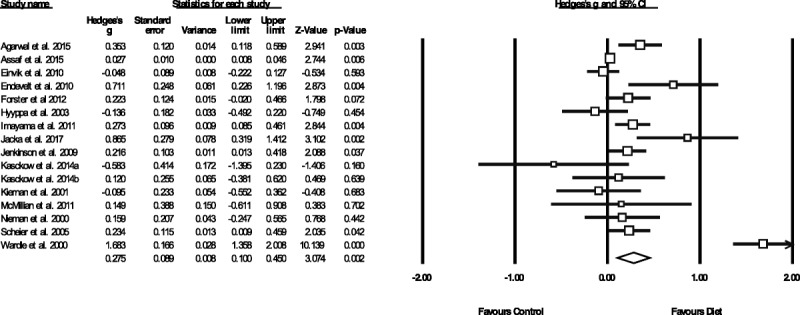
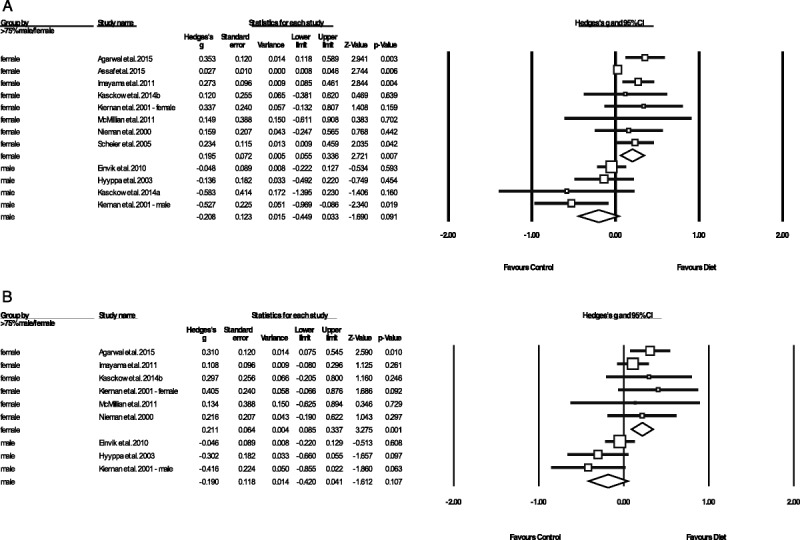
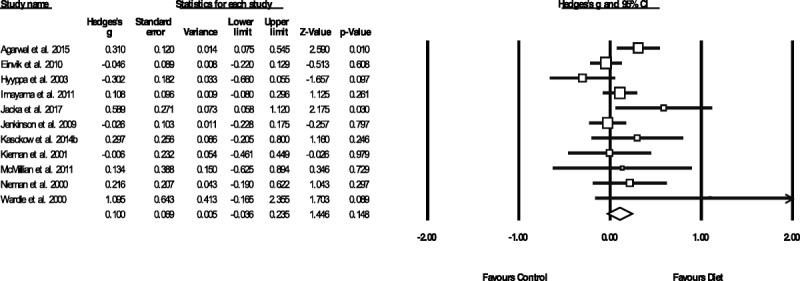
Objective: Poor diet can be detrimental to mental health. However, the overall evidence for the effects of dietary interventions on mood and mental well-being has yet to be assessed. We conducted a systematic review and meta-analysis examining effects of dietary interventions on symptoms of depression and anxiety. Methods: Major electronic databases were searched through March 2018 for all randomized controlled trials of dietary interventions reporting changes in symptoms of depression and/or anxiety in clinical and nonclinical populations. Random-effects meta-analyses were conducted to determine effect sizes (Hedges' g with 95% confidence intervals [CI]) for dietary interventions compared with control conditions. Potential sources of heterogeneity were explored using subgroups and meta-regression analyses. Results: Sixteen eligible randomized controlled trials (published in English) with outcome data for 45,826 participants were included; the majority of which examined samples with nonclinical depression ( n = 15 studies). Nonetheless, dietary interventions significantly reduced depressive symptoms ( g = 0.275, 95% CI = 0.10 to 0.45, p = .002). Similar effects were observed among high-quality trials ( g = 0.321, 95% CI = 0.12 to 0.53, p = .002) and when compared with both inactive ( g = 0.308, 95% CI = 0.02 to 0.60, p = .038) and active controls ( g = 0.174, 95% CI = 0.01 to 0.34, p = .035). No effect of dietary interventions was observed for anxiety ( k = 11, n = 2270, g = 0.100, 95% CI = −0.04 to 0.24, p = .148). Studies with female samples observed significantly greater benefits from dietary interventions, for symptoms of both depression and anxiety. Conclusions: Dietary interventions hold promise as a novel intervention for reducing symptoms of depression across the population. Future research is required to determine the specific components of dietary interventions that improve mental health, explore underlying mechanisms, and establish effective schemes for delivering these interventions in clinical and public health settings. Registration: PROSPERO Online Protocol: CRD42018091256.
Overview
The claims and statistics of this paper haven’t been checked yet.
Free: it reads the open-access text and checks the first 5 claims that cite a source we can check. Create a free account to check every claim.
Integrity signals
Registry
Cites
Statistics
Figures
Verification
Claims the paper makes
The claims and statistics of this paper haven’t been checked yet.
Free: it reads the open-access text and checks the first 5 claims that cite a source we can check. Create a free account to check every claim.
Claims other papers make about this one
Each is checked against this paper’s own text: does it say what the citing paper says it does?
The cited source says what the claim attributes to it.
In the citing paper
“while emerging trial data show that improving dietary habits can improve depressive symptoms (301).”
From Diet and the Microbiota–Gut–Brain Axis: Sowing the Seeds of Good Mental Health (2021) · cites this paper as [301]
In the citing paper
“Probiotics can increase microbiota diversity and therefore maximize the production of neuroactive compounds derived from fiber fermentation, such as short-chain fatty acids (SCFA), e.g., butyrate and acetate, therefore allowing the established dietary patterns to exert significant beneficial effect on brain function [11,75], as has been shown in previous interventional research [76].”
From Psychobiotic effects on anxiety are modulated by lifestyle behaviors: a randomized placebo-controlled trial on healthy adults (2023) · cites this paper as [76]
In the citing paper
“However, a recent meta-analysis of RCTs concluded that no effect of dietary interventions is observed for anxiety [162].”
From Separating the Signal from the Noise: How Psychiatric Diagnoses Can Help Discern Food Addiction from Dietary Restraint (2020) · cites this paper as [162]
Self-check
Percentages, sums and reported differences re-computed from the paper’s own numbers.
The self-check needs the paper’s full text.
Citations
Cites
Preferred Reporting Items for Systematic Reviews and Meta-Analyses: the PRISMA statement
Moher, D., Liberati, A., Tetzlaff, J., Altman, D. G., & for the PRISMA Group (2009) · BMJ · doi:10.1136/bmj.b2535 · Cited by 83,823
Preferred Reporting Items for Systematic Reviews and Meta-Analyses: The PRISMA Statement
Moher, D., Liberati, A., Tetzlaff, J., Altman, D. G., & The PRISMA Group (2009) · PLoS Medicine · doi:10.1371/journal.pmed.1000097 · Cited by 64,042
The CES-D Scale: A Self-Report Depression Scale for Research in the General Population
Radloff, L. S. (1977) · Applied Psychological Measurement · doi:10.1177/014662167700100306 · Cited by 53,267
The Hospital Anxiety and Depression Scale
Zigmond, A. S., & Snaith, R. P. (1983) · Acta Psychiatrica Scandinavica · doi:10.1111/j.1600-0447.1983.tb09716.x · Cited by 47,139
(1992) · PubMed · Cited by 33,716
Hamilton, M. (1960) · Journal of Neurology, Neurosurgery & Psychiatry · doi:10.1136/jnnp.23.1.56 · Cited by 32,817
A new depression scale designed to be sensitive to change
Montgomery, S. A., & Åsberg, M. (1979) · British Journal of Psychiatry · doi:10.1192/bjp.134.4.382 · Cited by 13,962
Overweight, Obesity, and Depression: A Systematic Review and Meta-analysis of Longitudinal Studies
Luppino, F. S., de Wit, L. M., Bouvy, P. F., Stijnen, T., Cuijpers, P., Penninx, B. W. J. H., & Zitman, F. G. (2010) · Archives of General Psychiatry · doi:10.1001/archgenpsychiatry.2010.2 · Cited by 4,322
Adipocytokines: mediators linking adipose tissue, inflammation and immunity
Tilg, H., & Moschen, A. R. (2006) · Nature Reviews Immunology · doi:10.1038/nri1937 · Cited by 3,188
The global prevalence of common mental disorders: a systematic review and meta-analysis 1980–2013
Steel, Z., Marnane, C., Iranpour, C., Chey, T., Jackson, J. W., Patel, V., & Silove, D. (2014) · International Journal of Epidemiology · doi:10.1093/ije/dyu038 · Cited by 2,846
Research works printed but not linked: 4
- Borenstein M Hedges L Higgins J Rothstein H Comprehensive Meta-Analysis Version 2. Englewood, NJ: Biostat; 2005: 104.
- Beck AT Steer RA Brown GK Beck Depression Inventory-II. San Antonio 1996; 78: 490– 8.
- Sheikh JI Yesavage JA Geriatric Depression Scale (GDS): recent evidence and development of a shorter version. J Aging Mental Health 1986; 5: 165– 73.
- Derogatis LR Spencer P Brief symptom inventory: BSI. Upper Saddle River, NJ: Pearson; 1993.
Cited by
Diet and depression: Exploring the biological mechanisms of action
Marx, W., Lane, M., Hockey, M., Aslam, H., Berk, M., Walder, K., Borsini, A., Firth, J., Pariante, C. M., Berding, K., et al. (2021) · Molecular Psychiatry · doi:10.1038/s41380-020-00925-x · Cited by 685
Self-citationMalhi, G. S., Bell, E., Bassett, D., Boyce, P., Bryant, R., Hazell, P., Hopwood, M., Lyndon, B., Mulder, R., Porter, R., et al. (2021) · Australian & New Zealand Journal of Psychiatry · doi:10.1177/0004867420979353 · Cited by 614
“Premature mortality is increased in bipolar disorder, partly related to an increased rate of cardiovascular disease (Correll et al., 2017; Cunningham et al., 2014; Druss et al., 2011; Firth et al., 2019b).”
BackgroundNutritional psychiatry: Towards improving mental health by what you eat
Adan, R. A. H., van der Beek, E. M., Buitelaar, J. K., Cryan, J. F., Hebebrand, J., Higgs, S., Schellekens, H., & Dickson, S. L. (2019) · European Neuropsychopharmacology · doi:10.1016/j.euroneuro.2019.10.011 · Cited by 454
Diet and the Microbiota–Gut–Brain Axis: Sowing the Seeds of Good Mental Health
Berding, K., Vlckova, K., Marx, W., Schellekens, H., Stanton, C., Clarke, G., Jacka, F., Dinan, T. G., & Cryan, J. F. (2021) · Advances in Nutrition · doi:10.1093/advances/nmaa181 · Cited by 451
Self-citationMaj, M., Stein, D. J., Parker, G., Zimmerman, M., Fava, G. A., De Hert, M., Demyttenaere, K., McIntyre, R. S., Widiger, T., & Wittchen, H. (2020) · World Psychiatry · doi:10.1002/wps.20771 · Cited by 435
Microbiota-Gut-Brain Axis: New Therapeutic Opportunities
Long-Smith, C., O'Riordan, K. J., Clarke, G., Stanton, C., Dinan, T. G., & Cryan, J. F. (2020) · Annual Review of Pharmacology and Toxicology · doi:10.1146/annurev-pharmtox-010919-023628 · Cited by 419
Diet, Stress and Mental Health
Bremner, J., Moazzami, K., Wittbrodt, M., Nye, J., Lima, B., Gillespie, C., Rapaport, M., Pearce, B., Shah, A., & Vaccarino, V. (2020) · Nutrients · doi:10.3390/nu12082428 · Cited by 377
“Studies in populations without the diagnosis of depression on the effects of dietary interventions have been mixed [11,61].”
BackgroundDepression's Unholy Trinity: Dysregulated Stress, Immunity, and the Microbiome
Cruz-Pereira, J. S., Rea, K., Nolan, Y. M., O'Leary, O. F., Dinan, T. G., & Cryan, J. F. (2020) · Annual Review of Psychology · doi:10.1146/annurev-psych-122216-011613 · Cited by 320
“However, reports have also linked the consumption ofWestern diets with cognitive and mood disorders ( Jacka et al. 2010, Kanoski & Davidson 2011), while the Mediterranean diet has been associated with better cognitive function (Feart et al. 2010, Firth et al. 2019, Lassale et al. 2019).”
BackgroundLane, M. M., Gamage, E., Travica, N., Dissanayaka, T., Ashtree, D. N., Gauci, S., Lotfaliany, M., O’Neil, A., Jacka, F. N., & Marx, W. (2022) · Nutrients · doi:10.3390/nu14132568 · Cited by 320
Self-citationNutrition and behavioral health disorders: depression and anxiety
Kris-Etherton, P. M., Petersen, K. S., Hibbeln, J. R., Hurley, D., Kolick, V., Peoples, S., Rodriguez, N., & Woodward-Lopez, G. (2021) · Nutrition Reviews · doi:10.1093/nutrit/nuaa025 · Cited by 318
“However, a recent systematic review and meta-analysis of 11 RCTs (n1⁄4 2270) showed no effect of dietary interventions on anxiety.(18) Therefore, heterogeneity exists in the results of clinical trials investigating the effect of dietary patterns on anxiety, likely because many of the studies did not include participan…”
BackgroundResultFrancis, H. M., Stevenson, R. J., Chambers, J. R., Gupta, D., Newey, B., & Lim, C. K. (2019) · PLOS ONE · doi:10.1371/journal.pone.0222768 · Cited by 277
“Furthermore, meta-analysis of RCTs conducted in older adults found no difference between studies using an active versus an inactive control group [9].”
BackgroundMethodJayedi, A., Soltani, S., Abdolshahi, A., & Shab-Bidar, S. (2020) · British Journal of Nutrition · doi:10.1017/s0007114520002330 · Cited by 246
Irritable bowel syndrome and mental health comorbidity — approach to multidisciplinary management
Staudacher, H. M., Black, C. J., Teasdale, S. B., Mikocka-Walus, A., & Keefer, L. (2023) · Nature Reviews Gastroenterology & Hepatology · doi:10.1038/s41575-023-00794-z · Cited by 249
Self-citationFirth, J., Teasdale, S. B., Allott, K., Siskind, D., Marx, W., Cotter, J., Veronese, N., Schuch, F., Smith, L., Solmi, M., et al. (2019) · World Psychiatry · doi:10.1002/wps.20672 · Cited by 214
Self-citationMarx, W., Manger, S. H., Blencowe, M., Murray, G., Ho, F. Y.-Y., Lawn, S., Blumenthal, J. A., Schuch, F., Stubbs, B., Ruusunen, A., et al. (2023) · The World Journal of Biological Psychiatry · doi:10.1080/15622975.2022.2112074 · Cited by 179
“Meta-analyses of clinical trials that use whole of diet interventions have provided preliminary evidence that they significantly reduced depressive symptoms albeit in small and largely non-clinical populations (e.g. without current diagnosis of MDD) (Firth et al. 2019a).”
BackgroundInfluentialSelf-citationVlaicu, P. A., Untea, A. E., Varzaru, I., Sărăcilă, M., & Oancea, A. G. (2023) · Foods · doi:10.3390/foods12214001 · Cited by 214
“Moreover, oxidative stress can contribute to the development of cardiovascular diseases, such as atherosclerosis and hypertension [144,145].”
BackgroundAn integrative collaborative care model for people with mental illness and physical comorbidities
Ee, C., Lake, J., Firth, J., Hargraves, F., de Manincor, M., Meade, T., Marx, W., & Sarris, J. J. (2020) · International Journal of Mental Health Systems · doi:10.1186/s13033-020-00410-6 · Cited by 197
Self-citationGutted! Unraveling the Role of the Microbiome in Major Depressive Disorder
Bastiaanssen, T. F. S., Cussotto, S., Claesson, M. J., Clarke, G., Dinan, T. G., & Cryan, J. F. (2020) · Harvard Review of Psychiatry · doi:10.1097/hrp.0000000000000243 · Cited by 159
Sarris, J., Thomson, R., Hargraves, F., Eaton, M., de Manincor, M., Veronese, N., Solmi, M., Stubbs, B., Yung, A. R., & Firth, J. (2020) · BMC Medicine · doi:10.1186/s12916-020-01813-5 · Cited by 146
Self-citationMediterranean diet and depression: a population-based cohort study
Yin, W., Löf, M., Chen, R., Hultman, C. M., Fang, F., & Sandin, S. (2021) · International Journal of Behavioral Nutrition and Physical Activity · doi:10.1186/s12966-021-01227-3 · Cited by 167
“, through individual and group counselling on healthy diets) is associated with improved depressive symptoms, particularly in female populations [16].”
BackgroundBerding, K., Bastiaanssen, T. F. S., Moloney, G. M., Boscaini, S., Strain, C. R., Anesi, A., Long-Smith, C., Mattivi, F., Stanton, C., Clarke, G., et al. (2023) · Molecular Psychiatry · doi:10.1038/s41380-022-01817-y · Cited by 153
“At the same time, extensive observational data across many different countries and cultures now link healthy dietary patterns to reduced risk of common mental illnesses [6–8] and emerging trial data suggest that improving dietary habits can improve depressive symptoms [9, 10].”
BackgroundImmuno-metabolic depression: from concept to implementation
Penninx, B. W. J. H., Lamers, F., Jansen, R., Berk, M., Khandaker, G. M., Picker, L. D., & Milaneschi, Y. (2024) · The Lancet Regional Health - Europe · doi:10.1016/j.lanepe.2024.101166 · Cited by 171
Ortega, M. A., Álvarez-Mon, M. Á., Montero, C. G., Fraile‐Μartinez, O., Monserrat, J., Martinez-Rozas, L., Rodríguez–Jiménez, R., Álvarez‐Mon, M., & Lahera, G. (2023) · Molecular Psychiatry · doi:10.1038/s41380-023-01964-w · Cited by 152
“Because of that, dietary interventions have demonstrated their usefulness in multiple diseases characterized by an altered gut microbiota like mental disorders [278 – 280].”
BackgroundGut-Brain Axis: Role of Microbiome, Metabolomics, Hormones, and Stress in Mental Health Disorders
Verma, A., Inslicht, S. S., & Bhargava, A. (2024) · Cells · doi:10.3390/cells13171436 · Cited by 163
“Additionally, maintaining a balanced diet, ensuring proper nutrition, minimizing stress, and prioritizing ample sleep are also advised [158–161].”
BackgroundAssociation between anxiety and hypertension in adults: A systematic review and meta-analysis
Lim, L.-F., Solmi, M., & Cortese, S. (2021) · Neuroscience & Biobehavioral Reviews · doi:10.1016/j.neubiorev.2021.08.031 · Cited by 134
Self-citationDiet, Sleep, and Mental Health: Insights from the UK Biobank Study
Hepsomali, P., & Groeger, J. A. (2021) · Nutrients · doi:10.3390/nu13082573 · Cited by 144
Solomou, S., Logue, J., Reilly, S., & Algorta, G. P. (2022) · Health Education Research · doi:10.1093/her/cyac035 · Cited by 143
“for symptoms of depression in both clinical and non-clinical populations [26].”
BackgroundVodovotz, Y., Barnard, N. D., Hu, F. B., Jakicic, J. M., Lianov, L. S., Loveland, D., Buysse, D. J., Szigethy, E., Finkel, T., Sowa, G., et al. (2020) · Frontiers in Medicine · doi:10.3389/fmed.2020.585744 · Cited by 140
“Short-term dietary interventions have been shown to improve depression scores in both normal individuals (59) and those with depressive symptoms, the latter finding in both young (60) and general (61) populations.”
BackgroundBrain foods - the role of diet in brain performance and health
Ekstrand, B., Scheers, N., Rasmussen, M. K., Young, J. F., Ross, A. B., & Landberg, R. (2021) · Nutrition Reviews · doi:10.1093/nutrit/nuaa091 · Cited by 101
Gut microbiota, nutrition, and mental health
Merlo, G., Bachtel, G., & Sugden, S. G. (2024) · Frontiers in Nutrition · doi:10.3389/fnut.2024.1337889 · Cited by 130
Firth, J., Veronese, N., Cotter, J., Shivappa, N., Hébert, J. R., Ee, C., Smith, L., Stubbs, B., Jackson, S. E., & Sarris, J. J. (2019) · Frontiers in Psychiatry · doi:10.3389/fpsyt.2019.00350 · Cited by 115
Self-citationBizzozero‐Peroni, B., Martínez‐Vizcaíno, V., Fernández‐Rodríguez, R., Jiménez‐López, E., de Arenas‐Arroyo, S. N., Saz‐Lara, A., Goñi, V. D., & Mesas, A. E. (2024) · Nutrition Reviews · doi:10.1093/nutrit/nuad176 · Cited by 115
Diagnosis and management of depression in adolescents
Korczak, D. J., Westwell-Roper, C. Y., & Sassi, R. B. (2023) · Canadian Medical Association Journal · doi:10.1503/cmaj.220966 · Cited by 114
Gut microbiota variations in patients diagnosed with major depressive disorder—A systematic review
Knudsen, J. K., Bundgaard‐Nielsen, C., Hjerrild, S., Nielsen, R. E., Leutscher, P., & Sørensen, S. (2021) · Brain and Behavior · doi:10.1002/brb3.2177 · Cited by 97
Dziedzic, A., Maciak, K., Bliźniewska-Kowalska, K. M., Gałecka, M., Kobierecka, W., & Saluk, J. (2024) · Nutrients · doi:10.3390/nu16071054 · Cited by 108
Lifestyle medicine for depression: A meta-analysis of randomized controlled trials
Wong, V. W.-H., Ho, F. Y.-Y., Shi, N.-K., Sarris, J., Chung, K.-F., & Yeung, W.-F. (2021) · Journal of Affective Disorders · doi:10.1016/j.jad.2021.02.012 · Cited by 90
Self-citationGianfredi, V., Dinu, M., Nucci, D., Eussen, S. J. P. M., Amerio, A., Schram, M. T., Schaper, N. C., & Odone, A. (2022) · Nutrition Reviews · doi:10.1093/nutrit/nuac058 · Cited by 99
van Zonneveld, S. M., van den Oever, E. J., Haarman, B. C. M., Grandjean, E. L., Nuninga, J. O., van de Rest, O., & Sommer, I. E. (2024) · Nutrients · doi:10.3390/nu16162646 · Cited by 94
“Conversely, diets high in processed foods, refined carbohydrates, and saturated fats have been associated with increased inflammation and a higher risk of neurological and psychiatric disorders [27].”
BackgroundEmerging Role of Flavonoids as the Treatment of Depression
Pannu, A. S., Sharma, P. C., Thakur, V. K., & Goyal, R. K. (2021) · Biomolecules · doi:10.3390/biom11121825 · Cited by 99
Freijy, T. M., Cribb, L., Oliver, G., Metri, N., Opie, R., Jacka, F. N., Hawrelak, J. A., Rucklidge, J. J., Ng, C. H., & Sarris, J. J. (2023) · Frontiers in Neuroscience · doi:10.3389/fnins.2022.1097278 · Cited by 101
Self-citationNutrition-based interventions for mood disorders
Martins, L. B., Tibães, J. R. B., Sanches, M., Jacka, F. N., Berk, M., & Teixeira, A. L. (2021) · Expert Review of Neurotherapeutics · doi:10.1080/14737175.2021.1881482 · Cited by 85
Self-citationXu, Y., Zeng, L., Zou, K., Shan, S., Wang, X., Xiong, J., Zhao, L., Zhang, L., & Cheng, G. (2021) · Translational Psychiatry · doi:10.1038/s41398-021-01590-6 · Cited by 83
“We found meta-analyses focusing on the following exposures or interventions: alternate healthy eating index (AHEI) or AHEI2000 [21], vegetarian diet [22], dietary inflammatory index (DII) [23], Mediterranean diet [24], healthy dietary pattern [25, 26], western diet [27], very low-calorie diet [28], and ultra-processed…”
BackgroundOrtega, M. A., Fraile‐Μartinez, O., Montero, C. G., Álvarez-Mon, M. Á., Lahera, G., Monserrat, J., Llavero-Valero, M., Gutiérrez-Rojas, L., Molina, R., Rodríguez–Jiménez, R., et al. (2022) · Nutrients · doi:10.3390/nu14153099 · Cited by 90
“What the evidence seems to indicate is that dietary interventions can aid in the alleviation of depressive symptoms, but most of these results have been obtained in patients without a clinical diagnosis of depression [65], so once again it should be understood that MDD is a complex and multifactorial disorder in which…”
ResultLiwinski, T., & Lang, U. E. (2023) · Nutrients · doi:10.3390/nu15173859 · Cited by 92
“The latest systematic review and meta-analysis, comprising 16 randomized controlled trials (RCTs) with a total of 45,826 non-clinically depressed participants, found that interventions based on whole-dietary interventions led to a reduction in depressive symptoms compared to control conditions, whether active or nonac…”
BackgroundDietch, D., Kerr‐Gaffney, J., Hockey, M., Marx, W., Ruusunen, A. A., Young, A. H., Berk, M., & Mondelli, V. (2023) · BJPsych Open · doi:10.1192/bjo.2023.36 · Cited by 86
Self-citationThe Mediterranean Diet and the Western Diet in Adolescent Depression-Current Reports
Zielińska, M., Łuszczki, E., Michońska, I., & Dereń, K. (2022) · Nutrients · doi:10.3390/nu14204390 · Cited by 84
“Increased pro-inflammatory markers have been found to predict depression symptoms in children and adolescents, and unhealthy eating behavior can exacerbate depression symptoms by increasing inflammation [64].”
BackgroundThe Role of Probiotics and Their Metabolites in the Treatment of Depression
Jach, M. E., Serefko, A., Szopa, A., Sajnaga, E., Golczyk, H., Santos, L. S., Borowicz, K. K., & Sieniawska, E. (2023) · Molecules · doi:10.3390/molecules28073213 · Cited by 90
From bugs to brain: unravelling the GABA signalling networks in the brain–gut–microbiome axis
Belelli, D., Lambert, J. J., Wan, M. L. Y., Monteiro, A. R., Nutt, D. J., & Swinny, J. D. (2024) · Brain · doi:10.1093/brain/awae413 · Cited by 83
Lifestyle interventions for mental health
Manger, S. (2019) · Australian Journal of General Practice · doi:10.31128/ajgp-06-19-4964 · Cited by 83
Diet quality, stress and common mental health problems: A cohort study of 121,008 adults
Schweren, L., Larsson, H., Vinke, P. C., Li, L., Kvalvik, L. G., Vásquez, A. A., Haavik, J., & Hartman, C. A. (2020) · Clinical Nutrition · doi:10.1016/j.clnu.2020.06.016 · Cited by 82
Nutritional Psychiatry: From Concept to the Clinic
Sarris, J. J. (2019) · Drugs · doi:10.1007/s40265-019-01134-9 · Cited by 77
Self-citationBourke, M., Wang, H., McNaughton, S. A., Thomas, G., Firth, J., Trott, M., & Cairney, J. (2025) · Clinical Psychology Review · doi:10.1016/j.cpr.2025.102585 · Cited by 78
Self-citationLee, M. F., Eather, R., & Best, T. (2021) · BMJ Nutrition Prevention & Health · doi:10.1136/bmjnph-2021-000332 · Cited by 80
“4 20 However, the evidence of the association between plant-based dietary patterns and depression is inconsistent and conflicting.”
Mendelian randomisation for nutritional psychiatry
Carnegie, R., Zheng, J., Sallis, H., Jones, H. J., Wade, K. H., Evans, J., Zammit, S., Munafo, M. R., & Martin, R. M. (2019) · The Lancet Psychiatry · doi:10.1016/s2215-0366(19)30293-7 · Cited by 73
Flux, M. C., & Lowry, C. A. (2020) · Neurobiology of Disease · doi:10.1016/j.nbd.2019.104578 · Cited by 65
Fast food consumption and suicide attempts among adolescents aged 12–15 years from 32 countries
Jacob, L., Stubbs, B., Firth, J., Smith, L., Haro, J. M., & Koyanagi, A. (2020) · Journal of Affective Disorders · doi:10.1016/j.jad.2020.01.130 · Cited by 69
Self-citationLifestyle behaviors, psychological distress, and well-being: A daily diary study
Anderson, A. R., & Fowers, B. J. (2020) · Social Science & Medicine · doi:10.1016/j.socscimed.2020.113263 · Cited by 73
Diet and Mental Health During Emerging Adulthood: A Systematic Review
Collins, S., Dash, S. R., Allender, S. E., Jacka, F. N., & Hoare, E. (2020) · Emerging Adulthood · doi:10.1177/2167696820943028 · Cited by 75
“Dietary change is also efficacious in improving depressive symptoms and clinical depression (Firth et al., 2019; Jacka et al., 2017).”
BackgroundSelf-citationWhatnall, M. C., Patterson, A. J., Siew, Y. Y., KAY‐LAMBKIN, F. J., & Hutchesson, M. (2019) · International Journal of Environmental Research and Public Health · doi:10.3390/ijerph16214099 · Cited by 80
“However, there is now more evidence emerging from cohort and intervention studies, and the overall evidence supports that a link exists [50,51].”
BackgroundToward precision interventions and metrics of inflammaging
Franceschi, C., Olivieri, F., Moskalev, A., Ivanchenko, M., & Santoro, A. (2025) · Nature Aging · doi:10.1038/s43587-025-00938-7 · Cited by 72
“Processed foods that are high in sugar and saturated fats are known to trigger inflammatory pathways, whereas whole foods, which are abundant in vitamins, minerals and antioxidants, help to counteract these effects 76 .”
Onaolapo, O. J., & Onaolapo, A. Y. (2021) · World Journal of Clinical Cases · doi:10.12998/wjcc.v9.i28.8295 · Cited by 66
Wiss, D., & Brewerton, T. (2020) · Nutrients · doi:10.3390/nu12102937 · Cited by 63
Circulating metabolites modulated by diet are associated with depression
van der Spek, A., Stewart, I. D., Kühnel, B., Pietzner, M., Alshehri, T., Gauß, K. F., Hysi, P. G., MahmoudianDehkordi, S., Heinken, A., Luik, A. I., et al. (2023) · Molecular Psychiatry · doi:10.1038/s41380-023-02180-2 · Cited by 74
“Large meta-analysis of clinical trials suggests that dietary interventions signi fi cantly reduce depressive symptoms, particularly in women [11] and the risk of several cardio-vascular diseases [12 – 14] that cluster strongly with depression [15].”
BackgroundNutrition, Epigenetics, and Major Depressive Disorder: Understanding the Connection
Ortega, M. A., Fraile‐Μartinez, O., Montero, C. G., Álvarez-Mon, M. Á., Lahera, G., Monserrat, J., Llavero-Valero, M., Mora, F., Rodríguez–Jiménez, R., Fernández-Rojo, S., et al. (2022) · Frontiers in Nutrition · doi:10.3389/fnut.2022.867150 · Cited by 64
“(175) including 45,826 participants show that dietary interventions may be of great aid for the prevention and amelioration of depressive symptoms.”
BackgroundNutrition and bipolar disorder: a systematic review
Gabriel, F. C., Oliveira, M., Martella, B. D. M., Berk, M., Brietzke, E., Jacka, F. N., & Lafer, B. (2023) · Nutritional Neuroscience · doi:10.1080/1028415x.2022.2077031 · Cited by 59
“and the dense interactions between foods and their constituents, while supplementation of individual nutrients is not equivalent to dietary consumption [100] and should likely be considered a separate construct.”
BackgroundSelf-citationKoochakpoor, G., Salari-Moghaddam, A., Keshteli, A. H., Afshar, H., Esmaillzadeh, A., & Adibi, P. (2021) · Nutrition Journal · doi:10.1186/s12937-021-00670-z · Cited by 58
“Briefly, the questionnaire contained five categories of foods and dishes: [1] mixed dishes (cooked or canned, 29 items) [2]; carbohydrate-based foods (different types of bread, cakes, biscuits and potato, 10 items) [3]; dairy products (dairies, butter and cream, 9 items) [4]; fruits and vegetables (22 items); and [5]…”
BackgroundEditorial: Lifestyle Psychiatry
Firth, J., Ward, P. B., & Stubbs, B. (2019) · Frontiers in Psychiatry · doi:10.3389/fpsyt.2019.00597 · Cited by 65
Self-citationExercise and Depressive Disorder
Bueno‐Antequera, J., & Munguía‐Izquierdo, D. (2020) · Advances in experimental medicine and biology · doi:10.1007/978-981-15-1792-1_18 · Cited by 61
Teasdale, S. B., Mörkl, S., & Mueller‐Stierlin, A. S. (2020) · Brain Behavior & Immunity - Health · doi:10.1016/j.bbih.2020.100070 · Cited by 78
Self-citationMiguel, C., Amarnath, A., Akhtar, A., Malik, A., Baranyi, G., Barbui, C., Karyotaki, E., & Cuijpers, P. (2023) · Occupational and Environmental Medicine · doi:10.1136/oemed-2022-108698 · Cited by 55
“43 Mental health promotion through physical activity and lifestyle interventions could be a promising option due to their potential impact on physical health, particularly for workers with sedentary jobs.”
Mörkl, S., Stell, L., Buhai, D.-V., Schweinzer, M., Wagner‐Skacel, J., Vajda, C., Lackner, S., Bengesser, S., Lahousen, T., Painold, A., et al. (2021) · Nutrients · doi:10.3390/nu13030822 · Cited by 62
Self-citationOftedal, S., Fenton, S., Hansen, V., Whatnall, M. C., Ashton, L., Haslam, R. L., Hutchesson, M., & Duncan, M. J. (2023) · Journal of American College Health · doi:10.1080/07448481.2023.2194426 · Cited by 59
Dietary patterns and internalizing symptoms in children and adolescents: A meta-analysis
Orlando, L., Savel, K. A., Madigan, S. L., Colasanto, M., & Korczak, D. J. (2021) · Australian & New Zealand Journal of Psychiatry · doi:10.1177/00048674211031486 · Cited by 56
“Although there is evidence in adult populations that improvements to dietary pattern can improve symptoms of depression (Firth et al., 2019), the reverse may also be true, such that children and adolescents with depression are less likely to engage in healthy eating behaviors.”
BackgroundPsychological Distress and Self-Management in CKD: A Cross-Sectional Study
Cardol, C. K., Meuleman, Y., van Middendorp, H., van der Boog, P. J. M., Hilbrands, L. B., Navis, G. J., Sijpkens, Y. W. J., Sont, J. K., Evers, A. W. M., & van Dijk, S. (2023) · Kidney Medicine · doi:10.1016/j.xkme.2023.100712 · Cited by 58
Gómez‐Gómez, I., Bellón, J. Á., Resurrección, D. M., Cuijpers, P. J., Moreno-Peral, P., Rigabert, A., Maderuelo-Fernández, J. Á., & Motrico, E. (2020) · Preventive Medicine · doi:10.1016/j.ypmed.2020.106067 · Cited by 53
Herselman, M. F., Bailey, S., & Bobrovskaya, L. (2022) · International Journal of Molecular Sciences · doi:10.3390/ijms23042013 · Cited by 55
“Observational studies in humans have shown an inverse association between polyphenol intake and depression risk [135].”
BackgroundExploring the Impact of Flavonoids on Symptoms of Depression: A Systematic Review and Meta-Analysis
Alì, S., Corbi, G., Maes, M. H. J., Scapagnini, G., & Davinelli, S. (2021) · Antioxidants · doi:10.3390/antiox10111644 · Cited by 53
“A meta-analysis of 16 RCTs that involved some type of diet improvement showed that diet interventions overall reduced depressive symptoms [14].”
MethodHachuła, M., Kosowski, M., Zielańska, K., Basiak, M., & Okopień, B. (2023) · International Journal of Environmental Research and Public Health · doi:10.3390/ijerph20032122 · Cited by 54
“The first studies conducted on the population of patients with undiagnosed depression gave very diverse results [40].”
Phenolic Acids as Antidepressant Agents
Cordeiro, M. L. D. S., Aquino-Martins, V. G. D. Q., da Silva, A. P., Rocha, H. A. O., Soares-Rachetti, V. D. P., & Scortecci, K. C. (2022) · Nutrients · doi:10.3390/nu14204309 · Cited by 56
“The evidence that a combination of healthy dietary practices as well as specific nutritional interventions can reduce the risk of developing depression and combat symptoms in depressed patients [119,130] reinforces the potential of nutraceuticals as a nonpharmacological alternative that could help in the treatment of…”
BackgroundDepression and Anxiety Are Associated With Cardiovascular Health in Young Adults
Patterson, S., Marcus, M., Goetz, M., Vaccarino, V., & Gooding, H. C. (2022) · Journal of the American Heart Association · doi:10.1161/jaha.122.027610 · Cited by 50
“38 A recent meta-analysis of 65 randomized controlled trials of interventions to improve sleep demonstrated that improving sleep is associated with improved mental health over-all, as well as depression and anxiety specifically.”
The relationship of gastroesophageal reflux with nutritional habits and mental disorders
Özenoğlu, A., Anul, N., & Özçelikçi, B. (2023) · Human Nutrition & Metabolism · doi:10.1016/j.hnm.2023.200203 · Cited by 47
Effectiveness of dietary interventions in mental health treatment: A rapid review of reviews
Burrows, T. L., Teasdale, S. B., Rocks, T., Whatnall, M. C., Schindlmayr, J., Plain, J., Latimer, G., Roberton, M., Harris, D. M., & Forsyth, A. K. (2022) · Nutrition & Dietetics · doi:10.1111/1747-0080.12754 · Cited by 52
“36,37 Dietary intervention can take on a prevention or treatment focus, which is important in the mental health space given the association between diet and mental health is likely to be a bidirectional one.”
BackgroundSelf-citationThe Economics of Treatment for Depression
Stecher, C. D., Cloonan, S., & Domino, M. E. (2023) · Annual Review of Public Health · doi:10.1146/annurev-publhealth-061022-040533 · Cited by 51
The depressogenic potential of added dietary sugars
Reis, D. J., Ilardi, S. S., Namekata, M. S., Wing, E. K., & Fowler, C. H. (2019) · Medical Hypotheses · doi:10.1016/j.mehy.2019.109421 · Cited by 46
“Dietary interventions, such as those designed to improve nutrition or reduce weight, have been found to reduce depressive symptoms [12].”
BackgroundMorales-Torres, R., Carrasco-Gubernatis, C., Grasso-Cladera, A., Cosmelli, D., Parada, F. J., & Palacios-García, I. (2023) · Nutrients · doi:10.3390/nu15071706 · Cited by 44
“, butyrate and acetate, therefore allowing the established dietary patterns to exert significant beneficial effect on brain function [11,75], as has been shown in previous interventional research [76].”
ResultMerino del Portillo, M., Clemente-Suárez, V. J., Ruisoto, P., Jimenez, M., Ramos-Campo, D. J., Beltran-Velasco, A. I., Martínez-Guardado, I., Rubio-Zarapuz, A., Navarro-Jiménez, E., & Tornero-Aguilera, J. F. (2024) · Metabolites · doi:10.3390/metabo14100549 · Cited by 44
“However, studies that only included women found significantly greater benefits from dietary interventions for both depressive and anxiety symptoms [42].”
BackgroundResultInfluentialAbedpoor, N., Taghian, F., & Hajibabaie, F. (2022) · Molecular Neurobiology · doi:10.1007/s12035-022-02835-1 · Cited by 47
“Therefore, current studies focus on physical activity and dietary interventions in managing depressive symptoms [21].”
BackgroundExploring the Impact of Emotional Eating Among University Students: A Literature Review
Alexatou, O., Papadopoulou, S. Κ., Mentzelou, M., Deligiannidou, G.-E., Dakanalis, A., & Giaginis, C. (2025) · Medical Sciences · doi:10.3390/medsci13020056 · Cited by 49
“In this aspect, the effect of nutritional consumption on physical health has been widely investigated; however, novel investigations have suggested that nutritional habits may similarly affect or may be influenced by mental health [6,7].”
Meal kits in the family setting: Impacts on family dynamics, nutrition, social and mental health
Fraser, K., Love, P., Campbell, K. J., Ball, K., & Opie, R. (2021) · Appetite · doi:10.1016/j.appet.2021.105816 · Cited by 47
Brinsley, J., O'Connor, E. J., Singh, B., McKeon, G., Curtis, R., Ferguson, T., Gosse, G., Willems, I., Marent, P.-J., Szeto, K., et al. (2025) · Journal of Medical Internet Research · doi:10.2196/56975 · Cited by 47
“Concurrently, there is increasing evidence for the role of lifestyle interventions in preventing, managing, and treating mental illness [7-9].”
Self-citationNeuroinflammation and Natural Antidepressants: Balancing Fire with Flora
Figueiredo Godoy, A. C., Frota, F. F., Araújo, L. P., Valenti, V. E., Pereira, E. D. S. B. M., Detregiachi, C. R. P., Galhardi, C. M., Caracio, F. C., Haber, R. S. A., Fornari Laurindo, L., et al. (2025) · Biomedicines · doi:10.3390/biomedicines13051129 · Cited by 32
“Although rigorous trials remain necessary to pinpoint optimal protocols, strategic nutritional interventions hold considerable promise for curtailing the depressive spiral and advancing patient-centered treatment paradigms in MDD [184].”
Morris, G., Puri, B. K., Maes, M. H. J., OLIVE, L. S., Berk, M., & Carvalho, A. F. (2020) · Progress in Neuro-Psychopharmacology and Biological Psychiatry · doi:10.1016/j.pnpbp.2020.109858 · Cited by 45
Self-citationPolańska, K., Kałużny, P., Aubert, A. M., Bernard, J. Y., Duijts, L., Marroun, H. E., Hanke, W., Hébert, J. R., Heude, B., Jankowska, A., et al. (2020) · Biological Psychiatry · doi:10.1016/j.biopsych.2020.10.008 · Cited by 50
“Moreover, a meta-analysis of randomized controlled trials revealed that dietary interventions in adults can significantly reduce symptoms of depression and anxiety (14).”
The role of diet in managing menopausal symptoms: A narrative review
Yelland, S., Steenson, S., Creedon, A., & Stanner, S. A. (2023) · Nutrition Bulletin · doi:10.1111/nbu.12607 · Cited by 49
Wiss, D. A. (2022) · Current Addiction Reports · doi:10.1007/s40429-022-00411-0 · Cited by 43
Papadopoulou, S. Κ., Pavlidou, E., Dakanalis, A., Antasouras, G., Vorvolakos, T., Mentzelou, M., Serdari, A., Pandi, A.-L., Spanoudaki, M., Alexatou, O., et al. (2023) · Nutrients · doi:10.3390/nu15173853 · Cited by 46
Diet and depression-from confirmation to implementation
Berk, M., & Jacka, F. N. (2019) · JAMA · doi:10.1001/jama.2019.0273 · Cited by 40
Self-citationMood Disorders: The Gut Bacteriome and Beyond
McGuinness, A. J., Loughman, A., Foster, J. A., & Jacka, F. N. (2023) · Biological Psychiatry · doi:10.1016/j.biopsych.2023.08.020 · Cited by 41
“A healthy dietary pattern has consistently been shown to associate with reduced risk for depression (82,83), and dietary interventions have been shown to improve depressive symptoms (84), even in moderate-to-severe MDD (85,86).”
BackgroundSelf-citationThe gut–brain–circadian axis in anxiety and depression: a critical review
Bautista, J., Hidalgo‐Tinoco, C., Delgado, M. D. C., Viteri-Recalde, J., Guerra-Guerrero, A., & López‐Cortés, A. (2025) · Frontiers in Psychiatry · doi:10.3389/fpsyt.2025.1697200 · Cited by 48
Przybylko, G., Morton, D. P., Kent, L. M., Morton, J. K., Hinze, J. S., Beamish, P., & Renfrew, M. E. (2021) · BMC Psychology · doi:10.1186/s40359-021-00577-8 · Cited by 43
“Additionally, the potential “compounding effects” of combining diet and exercise together, warrants further investigation of a more integrated approach using multiple lifestyle modifications [32].”
Background
Metadata
- Authors
- Firth, J., Marx, W., Dash, S., Carney, R., Teasdale, S. B., Solmi, M., Stubbs, B., Schuch, F. B., Carvalho, A. F., Jacka, F., & Sarris, J.
- Affiliations
- Barwon Health (AU)
- Western Sydney University (AU)
- University of Manchester (GB)
- Corresponding author
- Firth, Joseph
- ORCID
- Venue
- Psychosomatic Medicine
- Published
- 2019-04
- Volume
- 81
- Issue
- 3
- Pages
- 265-280
- ISSN
- 0033-3174 (ISSN-L)
- 1534-7796
- PMC
- PMC6455094
- OpenAlex
- W2932483450
- Semantic Scholar
- c1c88e8751c33ee5bfdbee79057029d2b6266717
- Cited by
- 566
- References
- 59
- Citations by year
- 2026: 73 · 2025: 87 · 2024: 80 · 2023: 82 · 2022: 77 · 2021: 81 · 2020: 61 · 2019: 24
- FWCI
- 9.93
- Type
- journal article
- Language
- en
- Update notices
- correction (2021-02-01)
- Open access
- hybrid
- doi.org
- Licence
- Locations
- Psychosomatic Medicine (publishedVersion, cc-by-nc-nd)
- Europe PMC (PubMed Central) (publishedVersion, cc-by-nc-nd)
- PubMed Central (publishedVersion, cc-by-nc-nd)
- PubMed (publishedVersion)
- Research Explorer (The University of Manchester) (publishedVersion, other-oa)
- Victoria University Research Repository (Victoria University) (submittedVersion, cc-by-nc-nd)
- Minerva Access (University of Melbourne) (submittedVersion, cc-by-nc-nd)
- Deakin Research Online (Deakin University) (submittedVersion)
- Figshare (submittedVersion, cc-by-nc-nd)
- Padua Research Archive (University of Padova) (submittedVersion)
- Funders
- Wilson Foundation
- Eli Lilly and Company
- Pfizer
- Sanofi
- Geelong Region Medical Research Foundation
- David and Elaine Potter Foundation
- South Eastern Sydney Local Health District
- National Institute for Health and Care Research (APP1125000, ICA-CL-2017-03-001, NIHR-INF-0685)
- Department of Health and Social Care
- Australian Rotary Health
- Meat and Livestock Australia
- Deakin University
- University of Melbourne
- Servier
- Fernwood Foundation
- Medical Research Council
- National Health and Medical Research Council (1125000, 1108125)
- Brain and Behaviour Research Institute, University of Wollongong
- Cilag
- Topics
- Health Sciences › Medicine › Public Health, Environmental and Occupational Health › Nutritional Studies and Diet
- Health Sciences › Medicine › Psychiatry and Mental health › Mental Health Treatment and Access
- Health Sciences › Nursing › Nutrition and Dietetics › Nutrition, Health and Food Behavior
- Keywords
- dietary intervention, depression, anxiety, depressive symptoms, mental health, diet and mood, sex differences
- MeSH terms
- Anxiety Disorders, Depressive Disorder, Humans, Randomized Controlled Trials as Topic
About these checks
Registry, retraction, Cites and statistics results are computed, not judged, with one exception: a printed reference that no index lists is read once by a model before it counts as a citation error. Claims are extracted by a model and kept only when their quote appears verbatim in the text; each cited source is then checked, with a model’s help, for whether it says what the claim relies on. Those verdicts can be wrong — read the claim’s quote and the cited source before relying on one.
Statistics and arithmetic are recomputed, not judged.
Confidence bands are shown only for fields calibrated on our annotated test set. None is calibrated yet, so no band is shown.
What counts as a claim ›How we measure confidence ›How we check this ›
Are you an author, or do you see a problem with this page? Request a review
Data sources
Bibliographic data: Semantic Scholar, OpenAlex, Crossref.
Contains information from the Semantic Scholar Academic Graph Datasets, made available under the ODC Attribution License (ODC-BY 1.0).
Semantic Scholar’s data is described in: Kinney, R., et al. (2023). The Semantic Scholar Open Data Platform. arXiv:2301.10140.
