

The Effects of Dietary Improvement on Symptoms of Depression and Anxiety: A Meta-Analysis of Randomized Controlled Trials
Open accessThe DOI matches its Crossref record; 59 of the 59 references it cites were found in a registry or an index.
Abstract
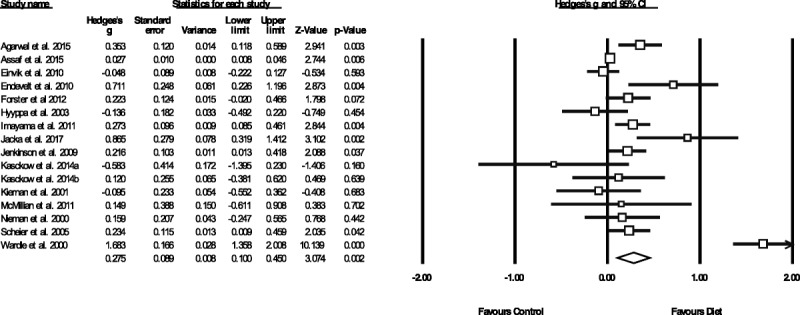
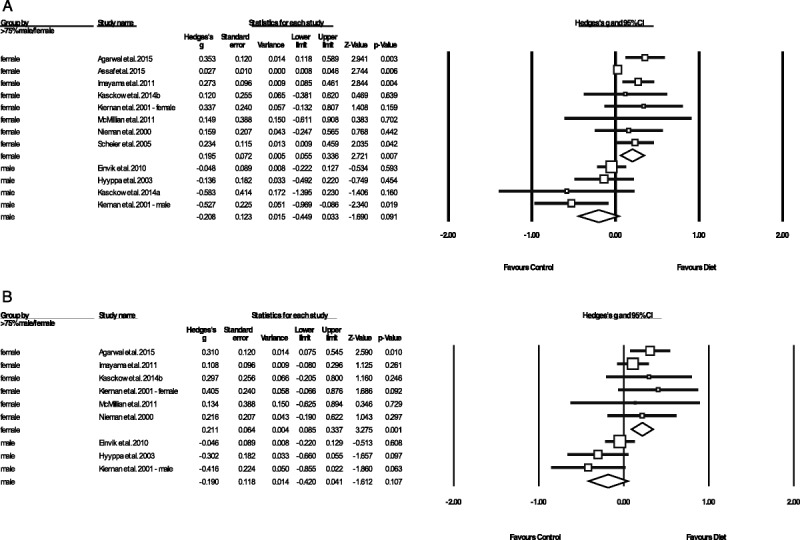
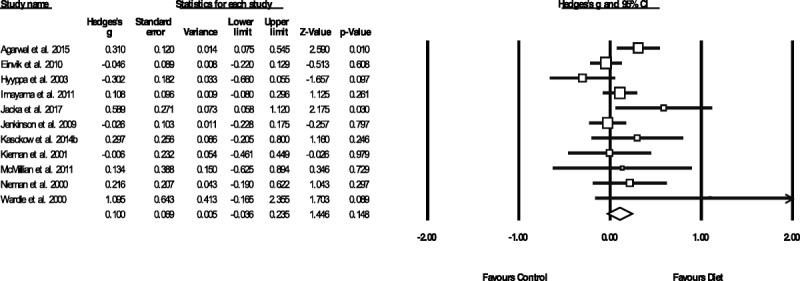
Objective: Poor diet can be detrimental to mental health. However, the overall evidence for the effects of dietary interventions on mood and mental well-being has yet to be assessed. We conducted a systematic review and meta-analysis examining effects of dietary interventions on symptoms of depression and anxiety. Methods: Major electronic databases were searched through March 2018 for all randomized controlled trials of dietary interventions reporting changes in symptoms of depression and/or anxiety in clinical and nonclinical populations. Random-effects meta-analyses were conducted to determine effect sizes (Hedges' g with 95% confidence intervals [CI]) for dietary interventions compared with control conditions. Potential sources of heterogeneity were explored using subgroups and meta-regression analyses. Results: Sixteen eligible randomized controlled trials (published in English) with outcome data for 45,826 participants were included; the majority of which examined samples with nonclinical depression ( n = 15 studies). Nonetheless, dietary interventions significantly reduced depressive symptoms ( g = 0.275, 95% CI = 0.10 to 0.45, p = .002). Similar effects were observed among high-quality trials ( g = 0.321, 95% CI = 0.12 to 0.53, p = .002) and when compared with both inactive ( g = 0.308, 95% CI = 0.02 to 0.60, p = .038) and active controls ( g = 0.174, 95% CI = 0.01 to 0.34, p = .035). No effect of dietary interventions was observed for anxiety ( k = 11, n = 2270, g = 0.100, 95% CI = −0.04 to 0.24, p = .148). Studies with female samples observed significantly greater benefits from dietary interventions, for symptoms of both depression and anxiety. Conclusions: Dietary interventions hold promise as a novel intervention for reducing symptoms of depression across the population. Future research is required to determine the specific components of dietary interventions that improve mental health, explore underlying mechanisms, and establish effective schemes for delivering these interventions in clinical and public health settings. Registration: PROSPERO Online Protocol: CRD42018091256.
Overview
The claims and statistics of this paper haven’t been checked yet.
Free: it reads the open-access text and checks the first 5 claims that cite a source we can check. Create a free account to check every claim.
Integrity signals
Registry
Cites
Statistics
Figures
Verification
Claims the paper makes
The claims and statistics of this paper haven’t been checked yet.
Free: it reads the open-access text and checks the first 5 claims that cite a source we can check. Create a free account to check every claim.
Claims other papers make about this one
Each is checked against this paper’s own text: does it say what the citing paper says it does?
The cited source says what the claim attributes to it.
In the citing paper
“while emerging trial data show that improving dietary habits can improve depressive symptoms (301).”
From Diet and the Microbiota–Gut–Brain Axis: Sowing the Seeds of Good Mental Health (2021) · cites this paper as [301]
In the citing paper
“Probiotics can increase microbiota diversity and therefore maximize the production of neuroactive compounds derived from fiber fermentation, such as short-chain fatty acids (SCFA), e.g., butyrate and acetate, therefore allowing the established dietary patterns to exert significant beneficial effect on brain function [11,75], as has been shown in previous interventional research [76].”
From Psychobiotic effects on anxiety are modulated by lifestyle behaviors: a randomized placebo-controlled trial on healthy adults (2023) · cites this paper as [76]
In the citing paper
“However, a recent meta-analysis of RCTs concluded that no effect of dietary interventions is observed for anxiety [162].”
From Separating the Signal from the Noise: How Psychiatric Diagnoses Can Help Discern Food Addiction from Dietary Restraint (2020) · cites this paper as [162]
Self-check
Percentages, sums and reported differences re-computed from the paper’s own numbers.
The self-check needs the paper’s full text.
Citations
Cites
Preferred Reporting Items for Systematic Reviews and Meta-Analyses: the PRISMA statement
Moher, D., Liberati, A., Tetzlaff, J., Altman, D. G., & for the PRISMA Group (2009) · BMJ · doi:10.1136/bmj.b2535 · Cited by 83,823
Preferred Reporting Items for Systematic Reviews and Meta-Analyses: The PRISMA Statement
Moher, D., Liberati, A., Tetzlaff, J., Altman, D. G., & The PRISMA Group (2009) · PLoS Medicine · doi:10.1371/journal.pmed.1000097 · Cited by 64,042
The CES-D Scale: A Self-Report Depression Scale for Research in the General Population
Radloff, L. S. (1977) · Applied Psychological Measurement · doi:10.1177/014662167700100306 · Cited by 53,267
The Hospital Anxiety and Depression Scale
Zigmond, A. S., & Snaith, R. P. (1983) · Acta Psychiatrica Scandinavica · doi:10.1111/j.1600-0447.1983.tb09716.x · Cited by 47,139
(1992) · PubMed · Cited by 33,716
Hamilton, M. (1960) · Journal of Neurology, Neurosurgery & Psychiatry · doi:10.1136/jnnp.23.1.56 · Cited by 32,817
A new depression scale designed to be sensitive to change
Montgomery, S. A., & Åsberg, M. (1979) · British Journal of Psychiatry · doi:10.1192/bjp.134.4.382 · Cited by 13,962
Overweight, Obesity, and Depression: A Systematic Review and Meta-analysis of Longitudinal Studies
Luppino, F. S., de Wit, L. M., Bouvy, P. F., Stijnen, T., Cuijpers, P., Penninx, B. W. J. H., & Zitman, F. G. (2010) · Archives of General Psychiatry · doi:10.1001/archgenpsychiatry.2010.2 · Cited by 4,322
Adipocytokines: mediators linking adipose tissue, inflammation and immunity
Tilg, H., & Moschen, A. R. (2006) · Nature Reviews Immunology · doi:10.1038/nri1937 · Cited by 3,188
The global prevalence of common mental disorders: a systematic review and meta-analysis 1980–2013
Steel, Z., Marnane, C., Iranpour, C., Chey, T., Jackson, J. W., Patel, V., & Silove, D. (2014) · International Journal of Epidemiology · doi:10.1093/ije/dyu038 · Cited by 2,846
Research works printed but not linked: 4
- Borenstein M Hedges L Higgins J Rothstein H Comprehensive Meta-Analysis Version 2. Englewood, NJ: Biostat; 2005: 104.
- Beck AT Steer RA Brown GK Beck Depression Inventory-II. San Antonio 1996; 78: 490– 8.
- Sheikh JI Yesavage JA Geriatric Depression Scale (GDS): recent evidence and development of a shorter version. J Aging Mental Health 1986; 5: 165– 73.
- Derogatis LR Spencer P Brief symptom inventory: BSI. Upper Saddle River, NJ: Pearson; 1993.
Cited by
Items 101–200 of 619
Dietary intake, food addiction and nutrition knowledge in young people with mental illness
Teasdale, S. B., Burrows, T. L., Hayes, T., Hsia, C. Y., Watkins, A., Curtis, J., & Ward, P. B. (2019) · Nutrition & Dietetics · doi:10.1111/1747-0080.12550 · Cited by 44
Self-citationHockey, M., McGuinness, A. J., Marx, W., Rocks, T., Jacka, F. N., & Ruusunen, A. A. (2019) · Critical Reviews in Food Science and Nutrition · doi:10.1080/10408398.2019.1703641 · Cited by 42
Self-citationKnox, J., Morgan, P. J., KAY‐LAMBKIN, F. J., Wilson, J. W., Wallis, K., Mallise, C. A., Barclay, B., & Young, M. D. (2022) · Current Psychology · doi:10.1007/s12144-022-04017-7 · Cited by 43
“Multiple reviews have indicated that physical activity is an effective strategy for treating depression (Cooney et al., 2013; Josefsson et al., 2014; Schuch et al., 2016), and the evidence for interventions based on improving diet and sleep is growing (Firth et al., 2019; Gee et al., 2019).”
BackgroundNutrition Provides the Essential Foundation for Optimizing Mental Health
Rucklidge, J. J., Johnstone, J. M., & Kaplan, B. J. (2021) · Evidence-Based Practice in Child and Adolescent Mental Health · doi:10.1080/23794925.2021.1875342 · Cited by 40
“…2011), psychosis (Firth et al., 2017), ADHD (Rucklidge et al., 2009) or antisocial behaviors (Benton, 2007), reporting modest to low benefit from a single nutrient approach, with many single nutrients found to be ineffective as a primary treat-ment of mental illness (Firth, Teasdale, et al., 2019).”
BackgroundNew Molecular Targets for Antidepressant Drugs
Kornhuber, J., & Gulbins, E. (2021) · Pharmaceuticals · doi:10.3390/ph14090894 · Cited by 42
“Mediterranean and other healthy diets have preventive and therapeutic effects on future [125,126] and current [127] depressive episodes.”
BackgroundMcCallum, S. M., Calear, A. L., Cherbuin, N., Farrer, L. M., Gulliver, A., Shou, Y., Dawel, A., & Batterham, P. J. (2021) · Journal of Affective Disorders Reports · doi:10.1016/j.jadr.2021.100214 · Cited by 42
“Results for dietary interventions are less conclusive with mixed effects on depression and anxiety symptoms (Firth et al., 2019).”
BackgroundMueller‐Stierlin, A. S., Cornet, S., Peisser, A., Jaeckle, S., Lehle, J., Mörkl, S., & Teasdale, S. B. (2022) · Nutrients · doi:10.3390/nu14132616 · Cited by 42
“, Mediterranean or avoiding a pro-inflammatory diet, protects against incident depression, with 33% and 24% reduction, respectively [19,39], and RCTs have demonstrated that dietary improvement reduces depressive symptoms, particularly in people with clinical depression [20].”
BackgroundSelf-citationDiet interventions for depression: Review and recommendations for practice
Staudacher, H. M., Teasdale, S. B., Cowan, C. S. M., Opie, R., Jacka, F. N., & Rocks, T. (2024) · Australian & New Zealand Journal of Psychiatry · doi:10.1177/00048674241289010 · Cited by 41
Self-citationSystematic reviews and meta-analysis in nutrition research
Kelley, G. A., & Kelley, K. S. (2019) · British Journal Of Nutrition · doi:10.1017/s0007114519002241 · Cited by 38
“) may be necessary if the outcome of interest is assessed using different scales, for example, the effects of dietary improvement on symptoms of depression and anxiety, given that depression and anxiety outcomes were assessed using different scales(80).”
MethodBlondal, B. S., Geirsdóttir, Ó. G., Halldorsson, T. I., Beck, A. M., Jónsson, P. V., & Ramel, A. (2022) · Clinical Nutrition ESPEN · doi:10.1016/j.clnesp.2022.01.010 · Cited by 40
Grigolon, R. B., Trevizol, A. P., Gerchman, F., Bambokian, A. D., Magee, T., McIntyre, R. S., Gomes, F. A., Brietzke, E., & Mansur, R. B. (2021) · Journal of Affective Disorders · doi:10.1016/j.jad.2021.03.032 · Cited by 35
Associations between diet quality and anxiety and depressive disorders: A systematic review
Eliby, D., Simpson, C. A., Lawrence, A. S., Schwartz, O., Haslam, N., & Simmons, J. G. (2023) · Journal of Affective Disorders Reports · doi:10.1016/j.jadr.2023.100629 · Cited by 47
Sochacka, K., Kotowska, A., & Lachowicz, S. (2024) · Nutrients · doi:10.3390/nu16071039 · Cited by 38
“A balanced diet following a rational eating pattern, stress reduction, and adequate sleep are also recommended [18].”
BackgroundInfluentialEaton, M., Probst, Y., Foster, T., Messore, J., & Robinson, L. D. (2024) · Appetite · doi:10.1016/j.appet.2024.107361 · Cited by 36
“…may be partially explained by bidirectional relationships between eating behaviour and mental health and well-being, including depression, (Firth et al., 2019; Jacka et al., 2017; Puccio et al., 2016, 2017) anxiety, (Devonport, Nicholls, & Fullerton, 2019; Puccio et al., 2016) stress…”
BackgroundDiet quality and depression risk: A systematic review and meta-analysis of prospective studies
Molero, P., Lorenzi, F. D., Gędek, A., Strater, C., Popescu, E., Ortuño, F., van der Does, W. A. J., Martínez‐González, M. Á., & Molendijk, M. L. (2025) · Journal of Affective Disorders · doi:10.1016/j.jad.2025.03.162 · Cited by 36
Dietary modification in the treatment of schizophrenia spectrum disorders: A systematic review
Aucoin, M., LaChance, L., Clouthier, S. N., & Cooley, K. (2020) · World Journal of Psychiatry · doi:10.5498/wjp.v10.i8.187 · Cited by 38
O’Neill, S., Minehan, M., Knight-Agarwal, C. R., & Turner, M. R. (2022) · Nutrients · doi:10.3390/nu14071398 · Cited by 36
“[18] considered the impact of dietary intervention on mental well-being and concluded that there is support for dietary interventions to be used to aid in reducing depression.”
BackgroundResultInfluential“Maybe it’s Not Just the Food?” A Food and Mood Focus Group Study
Lee, M. F., Angus, D. J., Walsh, H., & Sargeant, S. J. E. (2023) · International Journal of Environmental Research and Public Health · doi:10.3390/ijerph20032011 · Cited by 38
“Systematic reviews and meta-analyses support these clinical findings [10,15,16], but the evidence is uncertain due to a large reliance on observational studies, high levels of unexplained heterogeneity, and risk of bias inherent in nutrition-related research [8,17].”
BackgroundLifestyle medicine for anxiety symptoms: A meta-analysis of randomized controlled trials
Wong, V. W.-H., Ho, F. Y., Shi, N.-K., Sarris, J. J., Ng, C. H., & Tam, O. K.-Y. (2022) · Journal of Affective Disorders · doi:10.1016/j.jad.2022.04.151 · Cited by 42
Self-citationGrigolon, R. B., Ceolin, G., Deng, Y., Bambokian, A., Koning, E., Fabe, J., Lima, M. C. D., Gerchman, F., Soares, C. N., Brietzke, E. M., et al. (2022) · Menopause The Journal of The North American Menopause Society · doi:10.1097/gme.0000000000002098 · Cited by 37
Neuroinflammation and Natural Antidepressants: Balancing Fire with Flora
Figueiredo Godoy, A. C., Frota, F. F., Araújo, L. P., Valenti, V. E., Pereira, E. D. S. B. M., Detregiachi, C. R. P., Galhardo, C. M., Caracio, F. C., Haber, R. S. A., Fornari Laurindo, L., et al. (2025) · doi:10.20944/preprints202504.0573.v2 · Cited by 33
Bayes, J., Schloss, J. M., & Sibbritt, D. W. (2023) · British Journal Of Nutrition · doi:10.1017/s000711452300168x · Cited by 32
“A recent systematic review and meta-analysis published in 2019 assessed the effect of dietary improvement on the symptoms of depression and anxiety (32) .”
BackgroundInfluentialGuzek, D., Kołota, A., Lachowicz, K., Skolmowska, D., Stachoń, M., & Głąbska, D. (2023) · Nutrients · doi:10.3390/nu15040951 · Cited by 38
“[8] indicated that dietary interventions may be effective in reducing symptoms of depression across the population and in spite of the fact that little is known about necessary components of effective dietary intervention to improve mental health—nor about the mechanism—diet can already be defined as a promising thera…”
BackgroundWasserman, D. (2024) · World Psychiatry · doi:10.1002/wps.21185 · Cited by 31
Edible Mushrooms as a Potential Component of Dietary Interventions for Major Depressive Disorder
Fijałkowska, A., Jędrejko, K., Sułkowska‐Ziaja, K., Ziaja, M., Kała, K., & Muszyńska, B. (2022) · Foods · doi:10.3390/foods11101489 · Cited by 34
“Of note, these effects were mainly observed among female participants [42].”
BackgroundDziedziak, M., Mytych, A., Szyller, H. P., Lasocka, M., Augustynowicz, G., Szydziak, J., Hrapkowicz, A., Dyda, M., Braksator, J., & Pytrus, T. (2025) · Biomedicines · doi:10.3390/biomedicines13092104 · Cited by 31
“Therefore, further research should be conducted to clarify the impact of diet on mental health [125].”
Limited dietary interventions in rural Australian communities: A systematic review
Alston, L. V., & Partridge, S. R. (2020) · Nutrition & Dietetics · doi:10.1111/1747-0080.12612 · Cited by 30
Klonizakis, M., Bugg, A., Hunt, B., Theodoridis, X., Bogdanos, D. P., & Grammatikopoulou, M. G. (2021) · Nutrients · doi:10.3390/nu13093034 · Cited by 30
“For instance, meta-analyses of RCTs reveal that the MedD can be an effective complementary therapy in patients with cancers [90], mental health problems [91], or diabetes [86,92,93] diagnoses.”
BackgroundSympathetic Neural Control in Humans with Anxiety‐Related Disorders
Bigalke, J. A., & Carter, J. R. (2021) · Comprehensive physiology · doi:10.1002/cphy.c210027 · Cited by 37
Jiménez‐López, E., Mesas, A. E., Visier‐Alfonso, M. E., Pascual‐Morena, C., Martínez‐Vizcaíno, V., Herrera-Gutiérrez, E., & López‐Gil, J. F. (2024) · European Child & Adolescent Psychiatry · doi:10.1007/s00787-023-02351-0 · Cited by 31
“The absence of a diet-anxiety association is supported by some systematic reviews and meta-analyses of randomized controlled trials in which dietary interventions significantly reduced depressive but not anxiety symptoms in adults [47, 48].”
Ortega, M. A., Fraile‐Μartinez, O., Montero, C. G., Díaz, R., López-González, L., Monserrat, J., Barrena-Blázquez, S., Álvarez-Mon, M. Á., Lahera, G., & Álvarez‐Mon, M. (2024) · Military Medical Research · doi:10.1186/s40779-024-00577-w · Cited by 39
“According to the meta-analysis by Firth et al. [328], which included 45,826 people, nutritional interventions can be quite useful for the prevention and relief of symptoms of depression.”
Przybylko, G., Morton, D. P., Morton, J. K., Renfrew, M. E., & Hinze, J. S. (2021) · The Journal of Positive Psychology · doi:10.1080/17439760.2021.1897868 · Cited by 32
“However, there is growing literature demonstrating that the tenants of lifestyle medicine also benefit mental health and wellbeing (Firth et al., 2020; Firth et al., 2019; Jacka et al., 2017; Morton, 2018).”
BackgroundKamath, S., Sokolenko, E., Clark, S. R., Cross, C., Scott, J. S., Wardill, H. R., Margolis, K. G., Forsythe, P., Burnet, P. W. J., Dinan, T. G., et al. (2025) · Nature Mental Health · doi:10.1038/s44220-025-00498-0 · Cited by 28
“Increased dietary fiber intake or adherence to Mediterranean diets, rich in polyphenols and fer-mentable substrates, have been linked to improved mental health outcomes, likely mediated by enhanced SCFA production 45 .”
Zavala, G. A., Ainscough, T., & Jimenez‐Moreno, C. (2022) · Nutrition Bulletin · doi:10.1111/nbu.12568 · Cited by 30
Gamage, E., Orr, R., Travica, N., Lane, M. M., Dissanayaka, T. D., Kim, J. H., Grosso, G., Godos, J., & Marx, W. (2023) · Neuroscience & Biobehavioral Reviews · doi:10.1016/j.neubiorev.2023.105225 · Cited by 32
Self-citationDrew, R. J., Morgan, P. J., Pollock, E. R., & Young, M. D. (2020) · Obesity Reviews · doi:10.1111/obr.13014 · Cited by 32
Dharmayani, P. N. A., Mishra, G. D., & Mihrshahi, S. (2022) · European Journal of Nutrition · doi:10.1007/s00394-022-02926-8 · Cited by 28
“A meta-analysis of randomised controlled trials suggests greater benefits from dietary interventions by adhering to high-fibre and nutrient-dense alternatives, such as vegetables, to reduce depression symptoms among women samples [19].”
BackgroundMagzal, F., Turroni, S., Fabbrini, M., Barone, M., Schorr, A. V., Ofran, A., & Tamir, S. (2023) · Frontiers in Nutrition · doi:10.3389/fnut.2023.1234549 · Cited by 27
Okubo, R., Matsuoka, Y., Sawada, N., Mimura, M., Kurotani, K., Nozaki, S., Shikimoto, R., & Tsugane, S. (2019) · Scientific Reports · doi:10.1038/s41598-019-43085-x · Cited by 30
Brunoni, A. R., Szlejf, C., Suemoto, C. K., Santos, I. S., Goulart, A. C., Viana, M. C., Koyanagi, A., Barreto, S. M., Moreno, A. B., Carvalho, A. F., et al. (2019) · Acta Psychiatrica Scandinavica · doi:10.1111/acps.13109 · Cited by 31
“Moreover, certain nutrient supplements and dietary interventions may be effective for depression treatment (45, 46); use of high doses of vitamin K might prevent development of depressive symptoms in late adulthood (47); and highly inflammatory diets may be associated with higher incidence of depressive symptoms (48).”
BackgroundSelf-citationThomas‐Odenthal, F., Molero, P., van der Does, W. A. J., & Molendijk, M. L. (2020) · PLoS ONE · doi:10.1371/journal.pone.0238131 · Cited by 29
“One of these meta-analyses [5] was included in this systematic review, while the other [12] was excluded because of crucial errors favoring the authors’ study hypotheses.”
BackgroundMethodInfluentialThe Interplay of Nutrition, the Gut Microbiota and Immunity and Its Contribution to Human Disease
Dawson, S. L., Todd, E., & Ward, A. C. (2025) · Biomedicines · doi:10.3390/biomedicines13020329 · Cited by 28
“Mediterranean dietary interventions have been shown to improve depressive symptoms in adults [178]; however, to date, very few published trials report associated changes in the gut microbiota.”
Does food intake mediate the association between mindful eating and change in depressive symptoms?
Winkens, L., Elstgeest, L., van Strien, T., Penninx, B., Visser, M., & Brouwer, I. (2020) · Public Health Nutrition · doi:10.1017/s1368980019003732 · Cited by 19
Parental depression and nutrition: findings from a cross-sectional household survey in Nepal
Adhikari, R. P., Williamson, R., Sparling, T. M., Ferguson, E., & Cunningham, K. (2020) · Public Health Nutrition · doi:10.1017/s1368980020000968 · Cited by 26
“systematic review of trials, to assess the effect of dietary interventions on anxiety and depression(52), but further”
Fan, Y., Zhao, L., Deng, Z., Li, M., Huang, Z., Zhu, M., & Xu, W. (2022) · Frontiers in Psychiatry · doi:10.3389/fpsyt.2022.936283 · Cited by 28
Blood plasma B vitamins in depression and the therapeutic response to electroconvulsive therapy
Ryan, K. M., Allers, K. A., Harkin, A., & McLoughlin, D. M. (2020) · Brain Behavior & Immunity - Health · doi:10.1016/j.bbih.2020.100063 · Cited by 31
Blampied, M., Bell, C., Gilbert, C., & Rucklidge, J. J. (2020) · Expert Review of Neurotherapeutics · doi:10.1080/14737175.2020.1740595 · Cited by 51
How Does Mental Health Impact Women's Heart Health?
O'Neil, A. E., Russell, J. D., & Murphy, B. M. (2020) · Heart Lung and Circulation · doi:10.1016/j.hlc.2020.05.111 · Cited by 25
Inflammation and diet: Focus on mental and cognitive health
Hepsomali, P., & Coxon, C. (2022) · Advances in Clinical and Experimental Medicine · doi:10.17219/acem/152350 · Cited by 26
Teasdale, S. B., Tripodi, E., Harman, A., Plain, J., & Burrows, T. L. (2023) · Journal of Human Nutrition and Dietetics · doi:10.1111/jhn.13203 · Cited by 26
“Further research suggests better effects on weight management 12,13 and clinical outcomes 14 are achieved when the dietary intervention is led by a dietitian compared to those delivered without dietitian/nutrition-ist professional involvement.”
BackgroundSelf-citationDing, Y., Wang, L., Chen, J., Zhao, J., & Guo, W. (2020) · Frontiers in Psychology · doi:10.3389/fpsyg.2020.00769 · Cited by 28
Korczak, D. J., Perruzza, S., Chandrapalan, M., Cost, K. T., Cleverley, K., Birken, C. S., & McCrindle, B. W. (2021) · Nutritional Neuroscience · doi:10.1080/1028415x.2021.1918981 · Cited by 26
“other mental health disorders, such as anxiety disorders, in keeping with previous research.(46)”
ResultHealthy Eating as a New Way of Life: A Qualitative Study of Successful Long-Term Diet Change
James, A., Lawrence, B. J., & O’Connor, M. (2022) · INQUIRY The Journal of Health Care Organization Provision and Financing · doi:10.1177/00469580221090397 · Cited by 28
Simkin, V., Hodsoll, J. P., & Veale, D. M. (2022) · Journal of Behavior Therapy and Experimental Psychiatry · doi:10.1016/j.jbtep.2022.101748 · Cited by 24
Polito, N. D., Stylianakis, A. A., Richardson, R., & Baker, K. (2023) · Nutrients · doi:10.3390/nu15010209 · Cited by 27
“A growing body of work is acknowledging the benefits of nutritional medicine in psychiatry to potentially reduce the onset and symptoms of various mental disorders [11,12], including depression and anxiety [13,14], with a healthy diet and other lifestyle factors such as regular exercise recommended in clinical guideli…”
BackgroundMcMaster, C. M., Fong, M., Franklin, J., & HART, S. G. E. (2021) · Nutrition Reviews · doi:10.1093/nutrit/nuaa105 · Cited by 25
A Microbiome-Driven Approach to Combating Depression During the COVID-19 Pandemic
Ghannoum, M. A., Ford, M., Bonomo, R. A., Gamal, A., & McCormick, T. S. (2021) · Frontiers in Nutrition · doi:10.3389/fnut.2021.672390 · Cited by 25
Gomes, A. P., Gonçalves, H., Vaz, J. D. S., Kieling, C., Rohde, L. A., Oliveira, I. O., & Soares, A. G. (2021) · Clinical Nutrition · doi:10.1016/j.clnu.2021.03.028 · Cited by 25
Associations between diet quality and depression, anxiety, and fatigue in multiple sclerosis
Saul, A., Taylor, B. V., Blizzard, L., Simpson, S., Oddy, W. H., Probst, Y., Black, L. J., Ponsonby, A., Broadley, S., Lechner‐Scott, J., et al. (2022) · Multiple Sclerosis and Related Disorders · doi:10.1016/j.msard.2022.103910 · Cited by 25
Teixeira, A. L., Martins, L. B., Berk, M., & Bauer, M. E. (2022) · Clinical Science · doi:10.1042/cs20211106 · Cited by 22
Ahmed, F., Arshad, M. T., Maqsood, S., Ikram, A., & Gnedeka, K. T. (2025) · Food Science & Nutrition · doi:10.1002/fsn3.70689 · Cited by 26
Predictors of Psychological Well-Being among Veterinary Medical Students
Hafen, M., Drake, A. A. S., & Elmore, R. G. (2022) · Journal of Veterinary Medical Education · doi:10.3138/jvme-2021-0133 · Cited by 22
Tcherni‐Buzzeo, M. (2022) · Aggressive Behavior · doi:10.1002/ab.22050 · Cited by 24
Amoako, M., Amoah-Agyei, F., Du, C., Fenton, J. I., & Tucker, R. M. (2023) · Nutrients · doi:10.3390/nu15061526 · Cited by 26
“The effects of dietary intake on physical health have been extensively studied, but more recent research suggests that dietary choices also affect or are influenced by mental health [2,3].”
BackgroundMarozoff, S., Veugelers, P. J., Dabravolskaj, J., Eurich, D. T., Ye, M., & Maximova, K. (2020) · Nutrients · doi:10.3390/nu12082437 · Cited by 23
“(RCTs) on the diet-depression relationship [9,10], RCTs included in both reviews focused on dietary interventions in relation to existing depression symptoms (i.”
BackgroundWhybird, G., Nott, Z. E., Savage, E., Korman, N., Suetani, S., Hielscher, E., Vilic, G., Tillston, S., Patterson, S., & Chapman, J. (2020) · International Journal of Mental Health · doi:10.1080/00207411.2020.1854023 · Cited by 25
“Regular exercise and healthy nutritional intake can reduce symptoms of depression (Firth et al., 2019; Opie et al., 2018; Schuch et al., 2016), anxiety (Firth et al., 2019; Stonerock et al., 2015) and psychotic disorders (Aucoin et al., 2020; Dauwan et al., 2016; Firth et al., 2018), improve…”
BackgroundGłąbska, D., Kołota, A., Lachowicz, K., Skolmowska, D., Stachoń, M., & Guzek, D. (2021) · Nutrients · doi:10.3390/nu13103662 · Cited by 23
“[15] and systematic review by Ljungberg et al.”
BackgroundAguilar‐Latorre, A., Algorta, G. P., Navarro-Guzmán, C., Serrano-Ripoll, M. J., & Oliván‐Blázquez, B. (2022) · Frontiers in Medicine · doi:10.3389/fmed.2022.954644 · Cited by 28
Houminer-Klepar, N., & Dopelt, K. (2025) · Foods · doi:10.3390/foods14091485 · Cited by 22
“These conditions have multifactorial etiologies involving genetic, neurobiological, environmental, and psychological components [6] and can be addressed through psychotherapeutic approaches, pharmacological interventions, and lifestyle modifications, including dietary changes [7].”
InfluentialBrinsley, J., Schmidt, M., Curtis, R., Simpson, C. E. M., Edwards, J. K., Eglitis, E., Gosse, G., Broad, M., Jardine, B., Taddeo, E., et al. (2025) · Scientific Reports · doi:10.1038/s41598-025-01053-8 · Cited by 25
Micek, A., Błaszczyk-Bębenek, E., Cebula, A., Godos, J., Konopka, K. W., Wąż, A., & Grosso, G. (2025) · Aging Clinical and Experimental Research · doi:10.1007/s40520-025-03071-y · Cited by 22
“Moreover, greater benefits were observed in females for both depression and anxiety [81].”
Bizzozero‐Peroni, B., Goñi, V. D., Fernández‐Rodríguez, R., Martínez‐Vizcaíno, V., Jiménez‐López, E., Visier‐Alfonso, M. E., Garrido‐Miguel, M., & Mesas, A. E. (2025) · Nutrition Reviews · doi:10.1093/nutrit/nuaf080 · Cited by 21
Tatta, J., Nijs, J., Elma, Ö., Malfliet, A., & Magnusson, D. (2022) · Physical Therapy · doi:10.1093/ptj/pzab296 · Cited by 22
Hwang, Y.-G., Pae, C., Lee, S., Yook, K.-H., & Park, C. I. (2023) · Frontiers in Nutrition · doi:10.3389/fnut.2023.1219743 · Cited by 22
Paris, T., Daly, R. M., Abbott, G., Sood, S., Freer, C. L., Ryan, M. C., & George, E. S. (2024) · Advances in Nutrition · doi:10.1016/j.advnut.2024.100169 · Cited by 21
“0.20) in our meta-analysis in those with metabolic conditions, was comparable with this previous meta-analysis in a broader, healthy population that reverse-coded the effects (hedges ¼ 0.246), where a positive hedges score represents a bene fi cial intervention effect [31].”
BackgroundResultInfluentialJonsson, K. R., Bailey, C. K., Corell, M., Löfstedt, P., & Adjei, N. K. (2024) · Child and Adolescent Psychiatry and Mental Health · doi:10.1186/s13034-024-00733-z · Cited by 26
“In contrast, a healthy diet, characterized by high intake of fruits, vegetables, whole grains, and lean proteins, have been associated with better mental health including lower levels of stress, anxiety, depression and higher lfe satisfaction [25, 27, 31].”
BackgroundTalib, M., Rachdi, M., Papazova, A., & Nicolis, H. (2024) · The Canadian Journal of Psychiatry · doi:10.1177/07067437241248070 · Cited by 22
Ashtree, D. N., Orr, R., Lane, M. M., Akbaraly, T. N., Bonaccio, M., Costanzo, S., Gialluisi, A., Grosso, G., Lassale, C. M., Martini, D., et al. (2025) · JMIR Research Protocols · doi:10.2196/65576 · Cited by 23
Self-citationHoare, E., Marx, W., Firth, J., McLeod, S., Jacka, F. N., Chrousos, G. P., Μanios, Y., & Moschonis, G. (2019) · European Psychiatry · doi:10.1016/j.eurpsy.2019.07.002 · Cited by 27
Self-citationAshton, M. M., Dean, O. M., Marx, W., Mohebbi, M., Berk, M., Malhi, G. S., Ng, C. H., Cotton, S., Dodd, S., Sarris, J. J., et al. (2019) · Australian & New Zealand Journal of Psychiatry · doi:10.1177/0004867419882497 · Cited by 21
“A new meta-analysis supports dietary change as an efficacious treatment for depressive symptoms (Firth et al., 2019).”
BackgroundSelf-citationA Possible Antidepressive Effect of Dietary Interventions: Emergent Findings and Research Challenges
Ceolin, G., Breda, V., Koning, E., Chinna‐Meyyappan, A., Gomes, F. A., Moreira, J. D., Gerchman, F., & Brietzke, E. M. (2022) · Current Treatment Options in Psychiatry · doi:10.1007/s40501-022-00259-1 · Cited by 23
Recent advances in biomimetic nanodelivery systems for the treatment of depression
Jiang, P., & Li, J. (2025) · Materials Today Bio · doi:10.1016/j.mtbio.2025.101781 · Cited by 24
“Stress, in particular, is a key environmental factor that can trigger depression and affect its incidence, severity, and course [39 – 41].”
Sheng, J., Caixia, C., Lamei, G., & Jian, Z. (2025) · Frontiers in Nutrition · doi:10.3389/fnut.2025.1611906 · Cited by 21
Association of habitual intake of fruits and vegetables with depressive symptoms: the AusDiab study
Radavelli‐Bagatini, S., Anokye, R., Bondonno, N. P., Sim, M., Bondonno, C. P., Stanley, M. J., Harms, C. A., Woodman, R. J., Magliano, D. J., Shaw, J. E., et al. (2021) · European Journal of Nutrition · doi:10.1007/s00394-021-02532-0 · Cited by 23
“Evidence shows that dietary interventions can reduce depressive symptoms [10].”
BackgroundGENA: A knowledge graph for nutrition and mental health
Dang, L. D., Phan, U., & Nguyen, N. T. H. (2023) · Journal of Biomedical Informatics · doi:10.1016/j.jbi.2023.104460 · Cited by 30
Liking of salt is associated with depression, anxiety, and stress
Ferraris, C., Scarlett, C. J., Bucher, T., & Beckett, E. (2023) · Chemical Senses · doi:10.1093/chemse/bjad038 · Cited by 22
O'Neil, A. E., Perez, J., Young, L. M., John, T., Turner, M., Saunders, D., Mahoney, S., Bryan, M., Ashtree, D. N., Jacka, F. N., et al. (2024) · The Lancet Regional Health - Western Pacific · doi:10.1016/j.lanwpc.2024.101142 · Cited by 27
“6 Such treatments are clinically ef fi cacious and cost-effectiveness when delivered in individual or group settings relative to sham, inactive, or comparator conditions like social support controls.”
Self-citationDiet and Neurocognition in Mood Disorders - An Overview of the Overlooked
Balanzá‐Martínez, V., Shansis, F., Tatay-Manteiga, A., & López-García, P. (2020) · Current Pharmaceutical Design · doi:10.2174/1381612826666200318152530 · Cited by 22
Association between sucrose and fiber intake and symptoms of depression in older people
Chrząstek, Z., Guligowska, A., Pigłowska, M., Sołtysik, B. K., & Kostka, T. (2020) · Nutritional Neuroscience · doi:10.1080/1028415x.2020.1819106 · Cited by 22
“toms severity and dietary habits was noticed in the literature [37].”
BackgroundRheenen, T. E. V., McIntyre, R. S., Balanzá‐Martínez, V., Berk, M., & Rossell, S. L. (2020) · Journal of Affective Disorders · doi:10.1016/j.jad.2020.09.104 · Cited by 20
Christensen, N., van Woerden, I., Aubuchon-Endsley, N. L., Fleckenstein, P., Olsen, J., & Blanton, C. A. (2021) · International Journal of Environmental Research and Public Health · doi:10.3390/ijerph182413377 · Cited by 20
“found 14 other randomized controlled trials, through March, of 2018 of dietary interventions reporting improvements in symptoms of depression and/or anxiety [6].”
BackgroundBrierley, M., Thompson, E. M., Albertella, L., & Fontenelle, L. F. (2021) · Psychosomatic Medicine · doi:10.1097/psy.0000000000000988 · Cited by 19
Endotoxemia coupled with heightened inflammation predicts future depressive symptoms
Madison, A. A., Andridge, R., Padin, A. C., Wilson, S. J., Bailey, M. T., Alfano, C. M., Povoski, S. P., Lipari, A. M., Agnese, D. M., Carson, W. E., et al. (2020) · Psychoneuroendocrinology · doi:10.1016/j.psyneuen.2020.104864 · Cited by 19
“In a recent meta-analysis of 16 randomized, controlled trials, depressive symptoms decreased among those who received plant-based, fiber-rich dietary interventions, and this effect was amplified in women (Firth et al., 2019).”
BackgroundPrzybylko, G., Morton, D. P., & Renfrew, M. E. (2021) · Frontiers in Psychology · doi:10.3389/fpsyg.2021.644337 · Cited by 21
“Extending these epidemiological observations, a recent meta-analysis of 15 RCTs (n = 45,826) also concluded that dietary interventions significantly reduced depressive symptoms across the population (Firth et al., 2019).”
BackgroundDolatkhah, N., Toopchizadeh, V., Barmaki, S., Salekzamani, Y., Najjari, A., Farshbaf‐Khalili, A., & Dolati, S. (2022) · European Journal of Nutrition · doi:10.1007/s00394-022-03017-4 · Cited by 23
“In their study, which were performed on female participants, women had more benefits than diet intervention in reducing depression and anxiety [32].”
BackgroundDiet and depression: future needs to unlock the potential
Marx, W., Lane, M. M., Hockey, M., Aslam, H., Walder, K. R., Borsini, A., Firth, J., Pariante, C. M., Berding, K., Cryan, J. F., et al. (2021) · Molecular Psychiatry · doi:10.1038/s41380-021-01360-2 · Cited by 21
Self-citationEffects of a group-based lifestyle medicine for depression: A pilot randomized controlled trial
Ip, A. K.-Y., Ho, F. Y., Yeung, W., Chung, K., Ng, C. H., Oliver, G., & Sarris, J. J. (2021) · PLoS ONE · doi:10.1371/journal.pone.0258059 · Cited by 20
“demonstrated that dietary interventions significantly reduced depressive symptoms [21].”
BackgroundSelf-citationChen, T., Chen, C., Fang, C., Cheng, Y., & Lin, K. (2022) · Journal of Affective Disorders · doi:10.1016/j.jad.2022.09.109 · Cited by 23
Matison, A. P., Flood, V. M., Lam, B. C. P., Lipnicki, D. M., Tucker, K. L., Preux, P., Guerchet, M., d’Orsi, E., Quialheiro, A., Rech, C. R., et al. (2024) · Journal of Affective Disorders · doi:10.1016/j.jad.2024.05.096 · Cited by 18
Alfaro-González, S., Garrido‐Miguel, M., Pascual‐Morena, C., Pozuelo‐Carrascosa, D. P., Fernández‐Rodríguez, R., Martínez‐Hortelano, J. A., Mesas, A. E., & Martínez‐Vizcaíno, V. (2025) · Nutrients · doi:10.3390/nu17020346 · Cited by 19
“Furthermore, different randomized controlled trials (RCTs) [53–56] have reported this positive relationship, but further RCTs are needed to confirm this association.”
Metadata
- Authors
- Firth, J., Marx, W., Dash, S., Carney, R., Teasdale, S. B., Solmi, M., Stubbs, B., Schuch, F. B., Carvalho, A. F., Jacka, F., & Sarris, J.
- Affiliations
- Barwon Health (AU)
- Western Sydney University (AU)
- University of Manchester (GB)
- Corresponding author
- Firth, Joseph
- ORCID
- Venue
- Psychosomatic Medicine
- Published
- 2019-04
- Volume
- 81
- Issue
- 3
- Pages
- 265-280
- ISSN
- 0033-3174 (ISSN-L)
- 1534-7796
- PMC
- PMC6455094
- OpenAlex
- W2932483450
- Semantic Scholar
- c1c88e8751c33ee5bfdbee79057029d2b6266717
- Cited by
- 566
- References
- 59
- Citations by year
- 2026: 73 · 2025: 87 · 2024: 80 · 2023: 82 · 2022: 77 · 2021: 81 · 2020: 61 · 2019: 24
- FWCI
- 9.93
- Type
- journal article
- Language
- en
- Update notices
- correction (2021-02-01)
- Open access
- hybrid
- doi.org
- Licence
- Locations
- Psychosomatic Medicine (publishedVersion, cc-by-nc-nd)
- Europe PMC (PubMed Central) (publishedVersion, cc-by-nc-nd)
- PubMed Central (publishedVersion, cc-by-nc-nd)
- PubMed (publishedVersion)
- Research Explorer (The University of Manchester) (publishedVersion, other-oa)
- Victoria University Research Repository (Victoria University) (submittedVersion, cc-by-nc-nd)
- Minerva Access (University of Melbourne) (submittedVersion, cc-by-nc-nd)
- Deakin Research Online (Deakin University) (submittedVersion)
- Figshare (submittedVersion, cc-by-nc-nd)
- Padua Research Archive (University of Padova) (submittedVersion)
- Funders
- Wilson Foundation
- Eli Lilly and Company
- Pfizer
- Sanofi
- Geelong Region Medical Research Foundation
- David and Elaine Potter Foundation
- South Eastern Sydney Local Health District
- National Institute for Health and Care Research (APP1125000, ICA-CL-2017-03-001, NIHR-INF-0685)
- Department of Health and Social Care
- Australian Rotary Health
- Meat and Livestock Australia
- Deakin University
- University of Melbourne
- Servier
- Fernwood Foundation
- Medical Research Council
- National Health and Medical Research Council (1125000, 1108125)
- Brain and Behaviour Research Institute, University of Wollongong
- Cilag
- Topics
- Health Sciences › Medicine › Public Health, Environmental and Occupational Health › Nutritional Studies and Diet
- Health Sciences › Medicine › Psychiatry and Mental health › Mental Health Treatment and Access
- Health Sciences › Nursing › Nutrition and Dietetics › Nutrition, Health and Food Behavior
- Keywords
- dietary intervention, depression, anxiety, depressive symptoms, mental health, diet and mood, sex differences
- MeSH terms
- Anxiety Disorders, Depressive Disorder, Humans, Randomized Controlled Trials as Topic
About these checks
Registry, retraction, Cites and statistics results are computed, not judged, with one exception: a printed reference that no index lists is read once by a model before it counts as a citation error. Claims are extracted by a model and kept only when their quote appears verbatim in the text; each cited source is then checked, with a model’s help, for whether it says what the claim relies on. Those verdicts can be wrong — read the claim’s quote and the cited source before relying on one.
Statistics and arithmetic are recomputed, not judged.
Confidence bands are shown only for fields calibrated on our annotated test set. None is calibrated yet, so no band is shown.
What counts as a claim ›How we measure confidence ›How we check this ›
Are you an author, or do you see a problem with this page? Request a review
Data sources
Bibliographic data: Semantic Scholar, OpenAlex, Crossref.
Contains information from the Semantic Scholar Academic Graph Datasets, made available under the ODC Attribution License (ODC-BY 1.0).
Semantic Scholar’s data is described in: Kinney, R., et al. (2023). The Semantic Scholar Open Data Platform. arXiv:2301.10140.
