

Early effectiveness of COVID-19 vaccination with BNT162b2 mRNA vaccine and ChAdOx1 adenovirus vector vaccine on symptomatic disease, hospitalisations and mortality in older adults in England
Open accessPreprint — published as 10.1136/bmj.n1088 · Paper page
The DOI matches its Crossref record; 26 of the 26 references it cites were found in a registry or an index.
Abstract
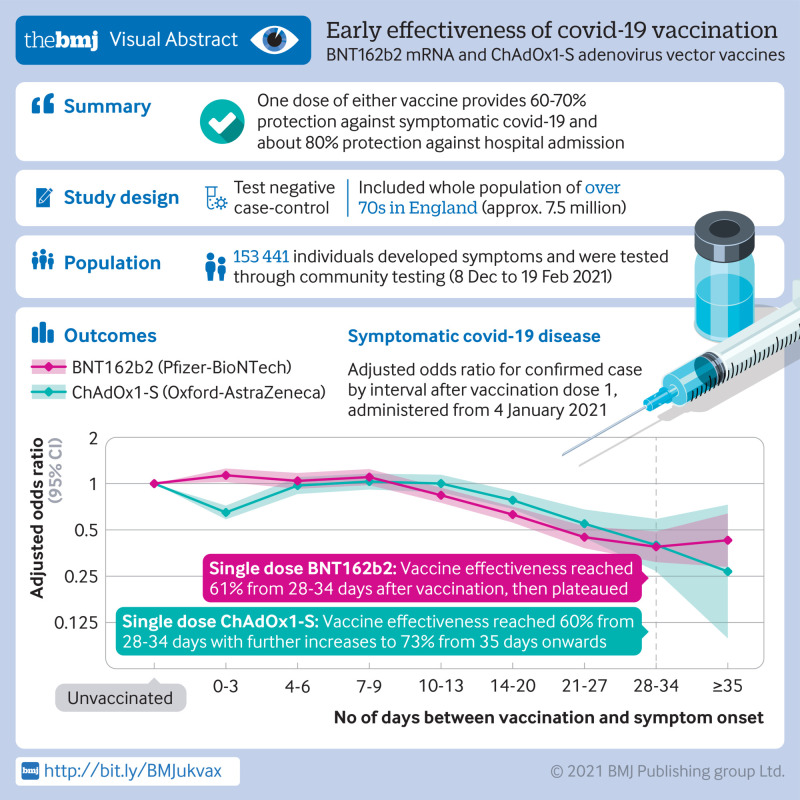
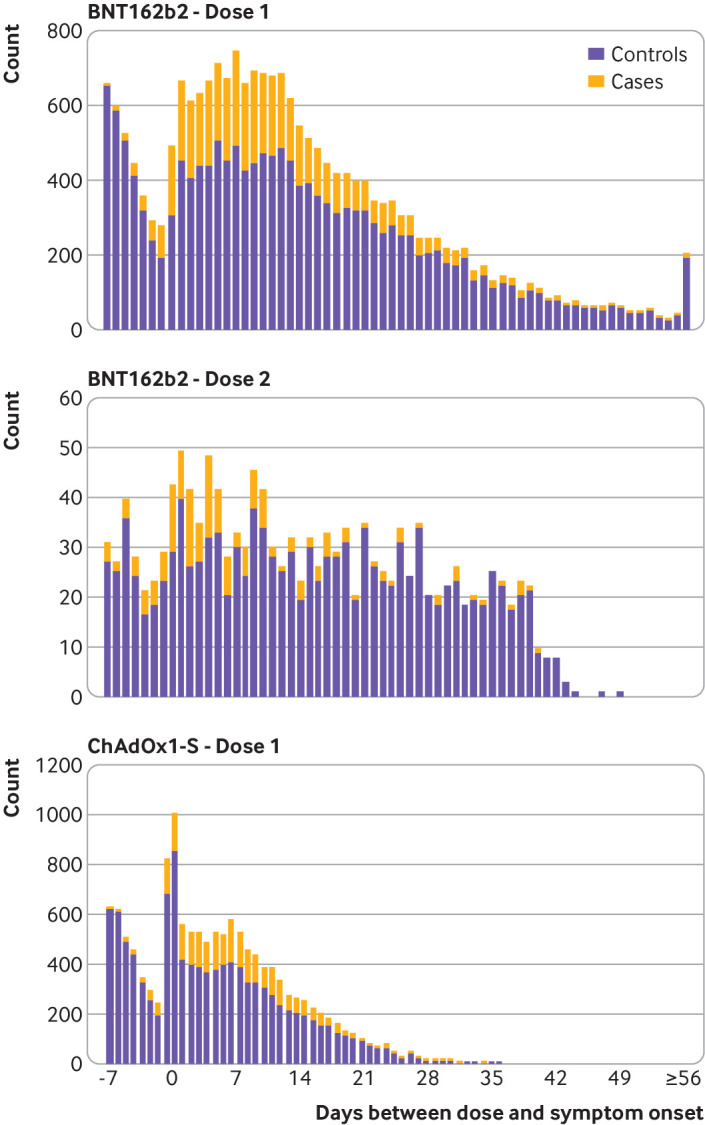
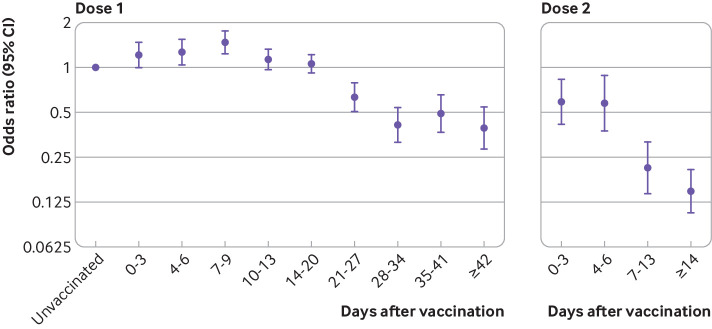
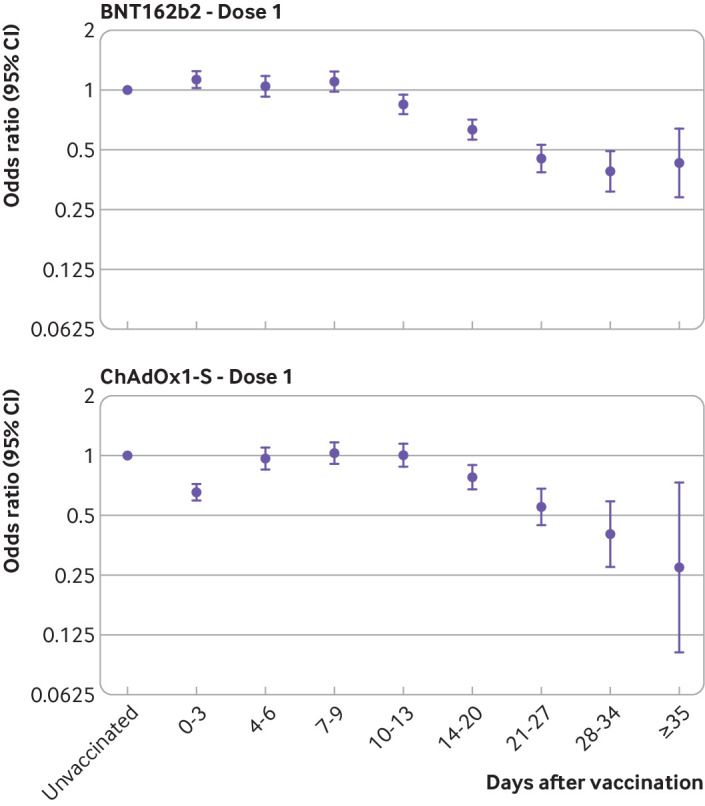
Objectives: To estimate the real-world effectiveness of the Pfizer/BioNTech BNT162b2 vaccine and Astrazeneca ChAdOx1 vaccine against Confirmed COVID-19, hospitalisations and deaths. To estimate effectiveness on the UK variant of concern. Design: Test negative case control design Setting: Community COVID-19 PCR testing in England Participants: All adults in England aged 70 years and older (over 7.5 million). All COVID-19 testing in the community among eligible individuals who reported symptoms between 8 th December 2020 and 19 th February 2021 was included in the analysis. Interventions: One and two doses of BNT162b2 vaccine. One dose of ChAdOx1 vaccine. Main outcome measures: Symptomatic PCR confirmed SARS-CoV-2 infection, hospitalisations and deaths with COVID-19. Results: Individuals aged >=80 years vaccinated with BNT162b2 prior to 4 th January, had a higher odds of testing positive in the first 9 days after vaccination (odds ratio up to 1.48, 95%CI 1.23-1.77), indicating that those initially targeted had a higher underlying risk of infection. Vaccine effectiveness was therefore estimated relative to the baseline post-vaccination period. Vaccine effects were noted from 10-13 days after vaccination, reaching an effectiveness of 70% (95% CI 59-78%) from 28-34 days, then plateauing. From 14 days after the second dose a vaccine effectiveness of 89% (95%CI: 85-93%) was seen. Individuals aged >=70 years vaccinated from 4 th January had a similar underlying risk of COVID-19 to unvaccinated individuals. With BNT162b2, vaccine effectiveness reached 61% (95%CI 51-69%) from 28-34 days after vaccination then plateaued. With the ChAdOx1 vaccine, vaccine effects were seen from 14-20 days after vaccination reaching an effectiveness of 60% (95%CI 41-73%) from 28-34 days and further increasing to 73% (95%CI 27-90%) from day 35 onwards. On top of the protection against symptomatic disease, cases who had been vaccinated with one dose of BNT162b2 had an additional 43% (95%CI 33-52%) lower risk of emergency hospitalisation and an additional 51% (95%CI 37-62%) lower risk of death. Cases who had been vaccinated with one dose of ChAdOx1 had an additional 37% (95% CI 3-59%) lower risk of emergency hospitalisation. There was insufficient follow-up to assess the effect of ChAdOx1 on mortality due to the later rollout of this vaccine. Combined with the effect against symptomatic disease, this indicates that a single dose of either vaccine is approximately 80% effective at preventing hospitalisation and a single dose of BNT162b2 is 85% effective at preventing death with COVID-19. Conclusion: Vaccination with either a single dose of BNT162b2 or ChAdOx1 COVID-19 vaccination was associated with a significant reduction in symptomatic SARS-CoV2 positive cases in older adults with even greater protection against severe disease. Both vaccines show similar effects. Protection was maintained for the duration of follow-up (>6 weeks). A second dose of BNT162b2 provides further protection against symptomatic disease but second doses of ChAdOx1 have not yet been rolled out in England. There is a clear effect of the vaccines against the UK variant of concern.
Overview
The claims and statistics of this paper haven’t been checked yet.
Free: it reads the open-access text and checks the first 5 claims that cite a source we can check. Create a free account to check every claim.
Integrity signals
Registry
Cites
Statistics
Figures
Verification
Claims the paper makes
The claims and statistics of this paper haven’t been checked yet.
Free: it reads the open-access text and checks the first 5 claims that cite a source we can check. Create a free account to check every claim.
Claims other papers make about this one
Each is checked against this paper’s own text: does it say what the citing paper says it does?
The source backs part of the claim, not all of it — or backs it for a different population, condition or comparison.
In the citing paper
“In the meantime, vaccine rollout in the UK has enabled planning subsequent gradual release of NPIs38,39.”
From Modeling vaccination rollouts, SARS-CoV-2 variants and the requirement for non-pharmaceutical interventions in Italy (2021) · cites this paper as [38]
Experimental — accuracy not yet measuredThe source backs part of the claim, not all of it — or backs it for a different population, condition or comparison.
In the citing paper
“more than 29 million people have received at least one vaccine dose as of 25 March, which has reduced deaths and hospital admissions38.”
From Modeling vaccination rollouts, SARS-CoV-2 variants and the requirement for non-pharmaceutical interventions in Italy (2021) · cites this paper as [38]
Experimental — accuracy not yet measuredThe cited source says what the claim attributes to it.
In the citing paper
“However, given that strong reductions in COVID hospitalisations after vaccination were observed in nationwide studies in Scotland12 and England,11 we believe that collider bias is unlikely to underlie the reduction in infections seen in our data.”
From Vaccine side-effects and SARS-CoV-2 infection after vaccination in users of the COVID Symptom Study app in the UK: a prospective observational study (2021) · cites this paper as [11]
In the citing paper
“The overall mean age of the vaccinated app users was higher than that of the general population (40·3 years)24 yet was lower than those of the samples within other UK COVID-19 effectiveness studies,11, 12 largely because of the presence of a small proportion of health-care workers among the participants of this study.”
From Vaccine side-effects and SARS-CoV-2 infection after vaccination in users of the COVID Symptom Study app in the UK: a prospective observational study (2021) · cites this paper as [11]
Self-check
Percentages, sums and reported differences re-computed from the paper’s own numbers.
The self-check needs the paper’s full text.
Citations
Cites
Safety and Efficacy of the BNT162b2 mRNA Covid-19 Vaccine
Polack, F. P., Thomas, S. J., Kitchin, N., Absalon, J., Gurtman, A., Lockhart, S., Perez, J. L., Pérez Marc, G., Moreira, E. D., Zerbini, C., et al. (2020) · New England Journal of Medicine · doi:10.1056/nejmoa2034577 · Cited by 14,592 · cited 2×
“6% in the early post-vaccination period.(6) Furthermore, with other vaccines an extended interval between the prime and booster doses typically provides a better immune response to the booster dose.”
BackgroundMethodVoysey, M., Clemens, S. A. C., Madhi, S. A., Weckx, L. Y., Folegatti, P. M., Aley, P. K., Angus, B., Baillie, V. L., Barnabas, S. L., Bhorat, Q. E., et al. (2021) · The Lancet · doi:10.1016/s0140-6736(20)32661-1 · Cited by 4,616 · cited 4×
“There are similarities between our results and those seen in the phase 3 clinical trials.(4, 5, 27) With BNT162b2, as in the trial, we begin to see a decline in the odds of testing positive among vaccinees from 10-13 days after the first dose.”
BackgroundResultInfluentialRNA-Based COVID-19 Vaccine BNT162b2 Selected for a Pivotal Efficacy Study
Walsh, E. E., Frenck, R., Falsey, A. R., Kitchin, N., Absalon, J., Gurtman, A., Lockhart, S., Neuzil, K., Mulligan, M. J., Bailey, R., et al. (2020) · doi:10.1101/2020.08.17.20176651 · Cited by 2,615
Estimated transmissibility and impact of SARS-CoV-2 lineage B.1.1.7 in England
Davies, N. G., Abbott, S., Barnard, R. C., Jarvis, C. I., Kucharski, A. J., Munday, J. D., Pearson, C. A. B., Russell, T. W., Tully, D. C., Washburne, A. D., et al. (2020) · doi:10.1101/2020.12.24.20248822 · Cited by 2,557 · cited 3×
“This study provides the first real world evidence of COVID-19 vaccine effectiveness against symptomatic COVID-19 in older people in the UK.”
BackgroundInfluentialFolegatti, P. M., Ewer, K. J., Aley, P. K., Angus, B., Becker, S., Belij-Rammerstorfer, S., Bellamy, D., Bibi, S., Bittaye, M., Clutterbuck, E. A., et al. (2020) · The Lancet · doi:10.1016/s0140-6736(20)31604-4 · Cited by 2,419
Ramasamy, M. N., Minassian, A. M., Ewer, K. J., Flaxman, A. L., Folegatti, P. M., Owens, D. R., Voysey, M., Aley, P. K., Angus, B., Babbage, G., et al. (2020) · The Lancet · doi:10.1016/s0140-6736(20)32466-1 · Cited by 1,324 · cited 2×
“(5) Efficacy results for older adults have not been reported but immune response was similar.(26) An analysis by duration of interval between doses suggested that a longer duration provided increased protection.”
BackgroundSinganayagam, A., Patel, M., Charlett, A., Lopez Bernal, J., Saliba, V., Ellis, J., Ladhani, S., Zambon, M., & Gopal, R. (2020) · Eurosurveillance · doi:10.2807/1560-7917.es.2020.25.32.2001483 · Cited by 846
Self-citationSafety and Efficacy of the BNT162b2 mRNA Covid-19 Vaccine
(2021) · New England Journal of Medicine · doi:10.1056/nejmc2036242 · Cited by 831
Neutralization of SARS-CoV-2 lineage B.1.1.7 pseudovirus by BNT162b2 vaccine-elicited human sera
Muik, A., Wallisch, A.-K., Sänger, B., Swanson, K. A., Mühl, J., Chen, W., Cai, H., Sarkar, R., Türeci, Ö., Dormitzer, P. R., et al. (2021) · doi:10.1101/2021.01.18.426984 · Cited by 515
Neutralization of SARS-CoV-2 lineage B.1.1.7 pseudovirus by BNT162b2 vaccine–elicited human sera
Muik, A., Wallisch, A.-K., Sänger, B., Swanson, K. A., Mühl, J., Chen, W., Cai, H., Maurus, D., Sarkar, R., Türeci, Ö., et al. (2021) · Science · doi:10.1126/science.abg6105 · Cited by 515 · cited 1×
“This is supported by recent evidence that sera from vaccinated individuals elicits equivalent neutralising titres to VOC 202012/01 and similar variants to that seen with previous strains.(32, 33)”
Result
Research works printed but not linked: 2
- Ramsay M. COVID-19: the green book, chapter 14a. Immunisation against infectious diseases: Public Health England,; 2020.
- 2021, Lancet, 396, 1979
Cited by
Menni, C., Klaser, K., May, A., Polidori, L., Capdevila, J., Louca, P., Sudre, C. H., Nguyen, L. H., Drew, D. A., Merino, J., et al. (2021) · The Lancet Infectious Diseases · doi:10.1016/s1473-3099(21)00224-3 · Cited by 1,031
Talic, S., Shah, S., Wild, H., Gasevic, D., Maharaj, A., Ademi, Z., Li, X., Xu, W., Mesa-Eguiagaray, I., Rostron, J., et al. (2021) · BMJ · doi:10.1136/bmj-2021-068302 · Cited by 787
Emary, K. R. W., Golubchik, T., Aley, P. K., Ariani, C. V., Angus, B., Bibi, S., Blane, B., Bonsall, D., Cicconi, P., Charlton, S., et al. (2021) · The Lancet · doi:10.1016/s0140-6736(21)00628-0 · Cited by 603
Immunological mechanisms of vaccine-induced protection against COVID-19 in humans
Sadarangani, M., Marchant, A., & Kollmann, T. R. (2021) · Nature Reviews Immunology · doi:10.1038/s41577-021-00578-z · Cited by 560
Vasileiou, E., Simpson, C. R., Shi, T., Kerr, S., Agrawal, U., Akbari, A., Bedston, S., Beggs, J., Bradley, D., Chuter, A., et al. (2021) · The Lancet · doi:10.1016/s0140-6736(21)00677-2 · Cited by 549
Self-citationMohammed, I., Nauman, A., Paul, P., Ganesan, S., Chen, K.-H., Jalil, S. M. S., Jaouni, S. H., Kawas, H., Khan, W. A., Vattoth, A. L., et al. (2022) · Human Vaccines & Immunotherapeutics · doi:10.1080/21645515.2022.2027160 · Cited by 406
Effect of Vaccination on Household Transmission of SARS-CoV-2 in England
Harris, R. J., Hall, J. A., Zaidi, A., Andrews, N. J., Dunbar, J. K., & Dabrera, G. (2021) · New England Journal of Medicine · doi:10.1056/nejmc2107717 · Cited by 355
Self-citationLustig, Y., Sapir, E., Regev-Yochay, G., Cohen, C., Fluss, R., Olmer, L., Indenbaum, V., Mandelboim, M., Doolman, R., Amit, S., et al. (2021) · The Lancet Respiratory Medicine · doi:10.1016/s2213-2600(21)00220-4 · Cited by 342
“…14–20 days after the first BNT162b2 dose 12 and 80% and 85% vaccine effectiveness at preventing hospitalisation and death for individuals older than 70 years at 28 days and onward following the first vaccine dose, 13 suggesting that significant protection is achieved after one vaccine dose.”
Cross-reactive CD4 + T cells enhance SARS-CoV-2 immune responses upon infection and vaccination
Loyal, L., Braun, J., Henze, L., Kruse, B., Dingeldey, M., Reimer, U., Kern, F., Schwarz, T., Mangold, M., Unger, C., et al. (2021) · Science · doi:10.1126/science.abh1823 · Cited by 297
Brosh-Nissimov, T., Orenbuch-Harroch, E., Chowers, M., Elbaz, M., Nesher, L., Stein, M., Maor, Y., Cohen, R., Hussein, K., Weinberger, M., et al. (2021) · Clinical Microbiology and Infection · doi:10.1016/j.cmi.2021.06.036 · Cited by 327
“As effectiveness of BNT162b2was studied in patientsmore than 7 days after the second dose in most clinical studies [2,4,5], either symptom onset, the first positive PCR test or the date of admission, whichever happened first, had to be more than 7 days after the second dose.”
InfluentialGiordano, G., Colaneri, M., Di Filippo, A., Blanchini, F., Bolzern, P., De Nicolao, G., Sacchi, P., Colaneri, P., & Bruno, R. (2021) · Nature Medicine · doi:10.1038/s41591-021-01334-5 · Cited by 192
Frater, J., Ewer, K. J., Ogbe, A., Pace, M., Adele, S., Adland, E., Alagaratnam, J., Aley, P. K., Ali, M., Ansari, M. A., et al. (2021) · The Lancet HIV · doi:10.1016/s2352-3018(21)00103-x · Cited by 229
Emerging SARS-CoV-2 Variants: A Review of Its Mutations, Its Implications and Vaccine Efficacy
Ramesh, S., Govindarajulu, M., Parise, R. S., Neel, L. T., Shankar, T., Patel, S., Lowery, P., Smith, F., Dhanasekaran, M., & Moore, T. (2021) · Vaccines · doi:10.3390/vaccines9101195 · Cited by 177
Sonabend, R., Whittles, L. K., Imai, N., Perez-Guzman, P. N., Knock, E. S., Rawson, T., Gaythorpe, K. A. M., Djaafara, B. A., Hinsley, W., FitzJohn, R. G., et al. (2021) · The Lancet · doi:10.1016/s0140-6736(21)02276-5 · Cited by 161
(2021) · doi:10.1016/j.vaccine.2021.04.002 · Cited by 101
Parry, H., McIlroy, G., Bruton, R. K., Ali, M., Stephens, C., Damery, S. L., Otter, A. D., McSkeane, T., Rolfe, H., Faustini, S. E., et al. (2021) · Blood Cancer Journal · doi:10.1038/s41408-021-00528-x · Cited by 121
Nationwide effectiveness of five SARS-CoV-2 vaccines in Hungary—the HUN-VE study
Vokó, Z., Kiss, Z., Surján, G., Surján, O., Barcza, Z., Pályi, B., Formanek-Balku, E., Molnár, G. A., Herczeg, R., Gyenesei, A., et al. (2021) · Clinical Microbiology and Infection · doi:10.1016/j.cmi.2021.11.011 · Cited by 143
Gorman, M. J., Patel, N., Guebre-Xabier, M., Zhu, A. L., Atyeo, C., Pullen, K. M., Loos, C., Goez-Gazi, Y., Carrion, R., Tian, J.-H., et al. (2021) · Cell Reports Medicine · doi:10.1016/j.xcrm.2021.100405 · Cited by 129
“Preliminary retrospective analysis of the first dose of the Pfizer/BNT162b2 before boosting suggested approximately a 52% protection from severe infection, whereas more-recent studies have suggested a single dose is 85% effective at preventing death.(5,46,47) In addition, recent results from Johnson and Johnson’s sing…”
Extended interval BNT162b2 vaccination enhances peak antibody generation in older peoplePreprint
Parry, H., Bruton, R., Stephens, C., et al. (2021) · medRxiv · doi:10.1101/2021.05.15.21257017 · Cited by 106
“Extended interval vaccination has been adopted in several countries and shown good clinical efficacy(4).”
BackgroundInfluentialSelf-citationVictora, C. G., Castro, M. C., Gurzenda, S., de Medeiros, A. C., de França, G. V. A., & Barros, A. J. D. (2021) · EClinicalMedicine · doi:10.1016/j.eclinm.2021.101036 · Cited by 154
(2021) · doi:10.1101/2021.03.19.21253960 · Cited by 101
Superior immunogenicity and effectiveness of the third compared to the second BNT162b2 vaccine dose
Lustig, Y., Gonen, T., Meltzer, L., Gilboa, M., Indenbaum, V., Cohen, C., Amit, S., Jaber, H., Doolman, R., Asraf, K., et al. (2022) · Nature Immunology · doi:10.1038/s41590-022-01212-3 · Cited by 100
“1): (1) the immunogenicity arm, in which serological tests of samples from vaccinated HCWs at three time points were assessed and compared (after receiving second dose, before receiving the third dose and after receiving the third dose); (2) the correlates of risk arm, in which antibody levels of breakthrough cases fo…”
MethodCharmet, T., Schaeffer, L., Grant, R., Galmiche, S., Chény, O., Von Platen, C., Maurizot, A., Rogoff, A., Omar, F., David, C., et al. (2021) · The Lancet Regional Health - Europe · doi:10.1016/j.lanepe.2021.100171 · Cited by 80
The success of SARS-CoV-2 vaccines and challenges ahead
Subbarao, K. (2021) · Cell Host & Microbe · doi:10.1016/j.chom.2021.06.016 · Cited by 102
Vaccine-induced immune thrombotic thrombocytopenia: what we know and do not know
Arepally, G. M., & Ortel, T. L. (2021) · Blood · doi:10.1182/blood.2021012152 · Cited by 118
Bauer, S., Contreras, S., Dehning, J., Linden, M., Iftekhar, E. N., Mohr, S., Olivera‐Nappa, Á., & Priesemann, V. (2021) · PLoS Computational Biology · doi:10.1371/journal.pcbi.1009288 · Cited by 80
Effectiveness of COVID‐19 vaccines: findings from real world studies
Henry, D. A., Jones, M., Stehlik, P., & Glasziou, P. (2021) · The Medical Journal of Australia · doi:10.5694/mja2.51182 · Cited by 91
“In England, investigators linked data from a national vaccine register to laboratory PCR swab results, emergency department admissions, demographic and ethnicity data, care home status and deaths, in subjects aged 70 years and over (Table).(7) The first part was a test negative case-control design, which”
BackgroundResultInfluentialParry, H., Bruton, R. K., Stephens, C., Brown, K. E., Amirthalingam, G., Otter, A. D., Hallis, B., Zuo, J., & Moss, P. A. H. (2021) · Immunity & Ageing · doi:10.1186/s12979-021-00246-9 · Cited by 73
Self-citationKing, H. A. D., Joyce, M. G., Lakhal-Naouar, I., Ahmed, A., Cincotta, C. M., Subra, C., Peachman, K. K., Hack, H. R., Chen, R. E., Thomas, P. V., et al. (2021) · Proceedings of the National Academy of Sciences · doi:10.1073/pnas.2106433118 · Cited by 67
Cari, L., Fiore, P., Alhosseini, M. N., Sava, G., & Nocentini, G. (2021) · Journal of Autoimmunity · doi:10.1016/j.jaut.2021.102685 · Cited by 68
Pritchard, E., Matthews, P., Stoesser, N., Eyre, D., Gethings, O., Vitha, K.-D., Jones, J., House, T., VanSteenhouse, H., Bell, I., et al. (2021) · medRxiv · doi:10.1101/2021.04.22.21255913 · Cited by 61
“Participants were asked about demographics, behaviours, and work, allowing us to control for a wide range of potential confounders that are unavailable in record linkage studies performed to date.(15)”
Wright, L., Steptoe, A., Mak, H. W., & Fancourt, D. E. (2021) · Journal of Epidemiology & Community Health · doi:10.1136/jech-2021-217179 · Cited by 69
“Early evidence from vaccine roll-out in Israel and the UK finds some increase in infection rates following first vaccination, 15 16 and infection rates have risen in Chile despite high vaccination rates.”
InfluentialCOVID ‐19: vaccination problems
Brüssow, H. (2021) · Environmental Microbiology · doi:10.1111/1462-2920.15549 · Cited by 80
“Furthermore, two out of 72 subjects enrolled did not seroconvert, and eight participants generated antibody titers considered insufficient for virus neutralization (Bernal et al., 2021; Manisty et al., 2021).”
BackgroundSelf-Testing as an Invaluable Tool in Fighting the COVID-19 Pandemic
Goggolidou, P., Hodges-Mameletzis, I., Purewal, S., Karakoula, A., & Warr, T. (2021) · Journal of Primary Care & Community Health · doi:10.1177/21501327211047782 · Cited by 58
Age-related heterogeneity in immune responses to SARS-CoV-2 vaccine BNT162b2
(2021) · doi:10.1101/2021.02.03.21251054 · Cited by 750
Kerr, S., Joy, M., Torabi, F., Bedston, S., Akbari, A., Agrawal, U., Beggs, J., Bradley, D., Chuter, A., Docherty, A. B., et al. (2022) · PLoS Medicine · doi:10.1371/journal.pmed.1003927 · Cited by 62
Self-citationCari, L., Alhosseini, M. N., Fiore, P., Pierno, S., Pacor, S., Bergamo, A., Sava, G., & Nocentini, G. (2021) · Journal of Autoimmunity · doi:10.1016/j.jaut.2021.102742 · Cited by 54
Bosaeed, M., Balkhy, H. H., Almaziad, S., Aljami, H. A., Alhatmi, H., Alanazi, H., Alahmadi, M., Jawhary, A., Alenazi, M. W., Almasoud, A., et al. (2021) · The Lancet Microbe · doi:10.1016/s2666-5247(21)00193-2 · Cited by 68
Hitchings, M., Ranzani, O., Torres, M. S. S., et al. (2021) · medRxiv · doi:10.1101/2021.04.07.21255081 · Cited by 49
Paredes, M. I., Lunn, S. M., Famulare, M., et al. (2021) · medRxiv · doi:10.1101/2021.09.29.21264272 · Cited by 48
Babicki, M., & Mastalerz–Migas, A. (2021) · Vaccines · doi:10.3390/vaccines9050503 · Cited by 55
“A worrying phenomenon is an increase in the number of persons who are concerned about the effectiveness of vaccination even though many reports prove that vaccination reduces the risk of symptomatic COVID-19, hospitalisation including death caused by SARS-CoV-2 infection [24].”
BackgroundRoberts, C. H., Brindle, H. E., Rogers, N. T., Eggo, R. M., Enria, L., & Lees, S. S. (2021) · Frontiers in Public Health · doi:10.3389/fpubh.2021.745630 · Cited by 53
Vaccine escape in a heterogeneous population: insights for SARS-CoV-2 from a simple model
Gog, J. R., Hill, E. M., Danon, L., & Thompson, R. N. (2021) · Royal Society Open Science · doi:10.1098/rsos.210530 · Cited by 55
“The effect of a single dose of the Oxford/AstraZeneca vaccine in those aged 80 and above who went on to become a symptomatic case was 37% protection against hospitalisation within 14 days of a positive test [17].”
Influentialde Figueiredo, A., Simas, C., & Larson, H. J. (2022) · Vaccine · doi:10.1016/j.vaccine.2022.10.051 · Cited by 48
“The factors most likely Survey question Values (recode in parenthesis) Baseline for regressions COVID-19 vaccination intent (response) If a new coronavirus (COVID-19) vaccine became publicly available, I would take it strongly agree (5), agree (4), do not know (3), disagree (2), strongly disagree (1) n/a socio-econo-d…”
BackgroundFabricius, D., Ludwig, C., Scholz, J. A. M., Rode, I., Tsamadou, C., Jacobsen, E., Winkelmann, M., Grempels, A., Lotfi, R., Janda, A., et al. (2021) · Vaccines · doi:10.3390/vaccines9080918 · Cited by 47
“Because of initially unclear efficacy at higher ages, the vaccine was primarily recommended for individuals aged < 65 years, while recent observations by Public Health England in March 2021 suggested reasonable effects at ages of 70 years and older as well [4].”
ResultMason, T. F. D., Whitston, M., Hodgson, J., Watkinson, R. E., Lau, Y.-S., Abdulrazeg, O., & Sutton, M. (2021) · BMC Medicine · doi:10.1186/s12916-021-02149-4 · Cited by 38
Peter, A. S., Roth, E. A., Schulz, S. R., Fraedrich, K., Steinmetz, T. D., Damm, D., Hauke, M., Richel, E., Mueller-Schmucker, S. M., Habenicht, K. M., et al. (2021) · European Journal of Immunology · doi:10.1002/eji.202149374 · Cited by 42
Emborg, H., Valentiner‐Branth, P., Schelde, A. B., Nielsen, K. F., Gram, M. A., Moustsen‐Helms, I. R., Chaine, M., Seidelin, U. H., & Nielsen, J. O. (2021) · medRxiv · doi:10.1101/2021.05.27.21257583 · Cited by 36
Higher COVID-19 Vaccination Rates Are Associated with Lower COVID-19 Mortality: A Global Analysis
Hoxha, I. S., Agahi, R., Bimbashi, A., Aliu, M., Raka, L., Bajraktari, I., Beqiri, P., & Adams, L. V. (2022) · Vaccines · doi:10.3390/vaccines11010074 · Cited by 42
Current COVID-19 treatments: Rapid review of the literature
Dong, Y., Shamsuddin, A., Campbell, H. J., & Τheodoratou, E. (2021) · Journal of Global Health · doi:10.7189/jogh.11.10003 · Cited by 41
PRINCIPLE Collaborative Group, Yu, L., Bafadhel, M., Dorward, J., Hayward, G., Saville, B. R., Gbinigie, O. A., van Hecke, O., Ogburn, E., Evans, P. H., et al. (2021) · medRxiv · doi:10.1101/2021.04.10.21254672 · Cited by 37
Carazo, S., Talbot, D. C., Boulianne, N., Brisson, M., Gilca, R., Deceuninck, G., Brousseau, N., Drolet, M., Ouakki, M., Sauvageau, C., et al. (2021) · Clinical Infectious Diseases · doi:10.1093/cid/ciab739 · Cited by 36
“HCWs are active and relatively young adults and these results may not apply to older adults[28,29].”
BackgroundShim, E. (2021) · International Journal of Environmental Research and Public Health · doi:10.3390/ijerph18147578 · Cited by 35
“First-dose and second-dose effectiveness values (Table 1) were based on estimates from prior studies where extended dose interval strategy was employed [28,29].”
MethodWei, J., Stoesser, N., Matthews, P., et al. (2021) · medRxiv · doi:10.1101/2021.04.22.21255911 · Cited by 30
“1%) participants without evidence of prior infection who received two doses of Pfizer-BioNTech, the median (IQR) duration between two doses was 31 (21-47) days, with 1,020 (54.”
BackgroundVLP-Based COVID-19 Vaccines: An Adaptable Technology against the Threat of New Variants
Prates-Syed, W. A., Chaves, L. C. S., Crema, K. P., Vuitika, L., Lira, A. A. D. L., Côrtes, N., Kersten, V., Guimarães, F. E. G., Sadraeian, M., da Silva, F. L. B., et al. (2021) · Vaccines · doi:10.3390/vaccines9121409 · Cited by 39
“However, recently, a new emerging variant (Delta) has become the highest global health concern as it was shown to affect immune responses [18,124,125] and is 55% more contagious than the Alpha variant [126].”
BackgroundAssessing the long-term safety and efficacy of COVID-19 vaccines
Majeed, A., Papaluca, M., & Molokhia, M. (2021) · Journal of the Royal Society of Medicine · doi:10.1177/01410768211013437 · Cited by 31
“In a study from England, a single dose of either the Pfizer-BioNTech or AstraZeneca vaccine was around 80% effective at preventing hospitalisation in people aged 80 years and over, three to four weeks after vaccine administration.(6) A Scottish study reported that the risk of hospitalisation was reduced by up to 85% a…”
BackgroundIHEANACHO, C. O., Eze, U. I. H., & Adida, E. A. (2021) · Bulletin of the National Research Centre/Bulletin of the National Research Center · doi:10.1186/s42269-021-00607-w · Cited by 31
Glampson, B., Brittain, J., Kaura, A., et al. (2021) · medRxiv · doi:10.1101/2021.04.08.21254580 · Cited by 13
Gobeil, P., Pillet, S., Boulay, I., Séguin, A., Makarkov, A. I., Heizer, G., Bhutada, K., Mahmood, A., Charland, N., Trépanier, S., et al. (2021) · medRxiv · doi:10.1101/2021.05.14.21257248 · Cited by 33
Hill, E., & Keeling, M. (2021) · Journal of the Royal Society Interface · doi:10.1101/2021.03.15.21253542 · Cited by 23
Cheng, C.-J., Lu, C., Chang, Y., Sun, Y., Chu, H., Lee, C., Liu, C.-H., Lin, C.-H., Lu, C.-J., & Li, C. (2021) · Vaccines · doi:10.3390/vaccines9121489 · Cited by 25
“While we were processing the review and extracting the data, in 5 July studies were accepted with their data changed in an online version [20,32,35,38,46,57] so that we need to constantly update the data accordingly before submission.”
MethodAllen, N., Brady, M., Riain, U. N., Conlon, N. P., Domegan, L. M., Martín, A. I. C., Walsh, C., Doherty, L., Higgins, E., Kerr, C., et al. (2022) · Frontiers in Medicine · doi:10.3389/fmed.2021.758118 · Cited by 35
Foo, O., Hiu, S. K. W., Teare, M. D., Syed, A. A., & Razvi, S. (2021) · Diabetes Obesity and Metabolism · doi:10.1111/dom.14523 · Cited by 30
Is a single COVID-19 vaccine dose enough in convalescents ?
Focosi, D., Baj, A., & Maggi, F. (2021) · Human Vaccines & Immunotherapeutics · doi:10.1080/21645515.2021.1917238 · Cited by 15
“The ongoing vaccination campaigns are suffering a bottleneck because of shortage of doses, with most currently licensed vaccines (BNT162b2, mRNA-1273 and AZD1222/ChAdOx) requiring two separate doses (prime-boost) in order to provide protection from symptomatic COVID-19.”
BackgroundInfluentialCOVID-19 vaccines for the European region: an unprecedented challenge
Kluge, H. H. P., & McKee, M. (2021) · The Lancet · doi:10.1016/s0140-6736(21)00709-1 · Cited by 24
Parry, H., Tut, G., Bruton, R., Faustini, S., Stephens, C., Saunders, P., Bentley, C., Hilyard, K., Brown, K., Amirthalingam, G., et al. (2021) · eLife · doi:10.7554/elife.69375 · Cited by 36
Self-citationBernal, J. A. L., Andrews, N., Gower, C., Stowe, J., Tessier, E., Simmons, R., & Ramsay, M. (2021) · medRxiv · doi:10.1101/2021.05.14.21257218 · Cited by 19
“7 variant as the dominant strain.(2, 10) Our study is the first to estimate for the effectiveness of ChAdOx1 against mortality and suggests that a single dose offers similar levels of protection to BNT162b2.”
BackgroundInfluentialSelf-citationRecent development of oral vaccines (Review)
Liu, Y., Lam, D. M., Luan, M., Zheng, W., & Ai, H. (2024) · Experimental and Therapeutic Medicine · doi:10.3892/etm.2024.12511 · Cited by 27
“Inactivated, adenovirus vector and mRNA vaccines currently possess protective effica‑ cies of 79.34% (53), 62‑90% (54) and 90% (55), respectively, all meeting the aforementioned requirements.”
InfluentialEarly approval of COVID-19 vaccines: Pros and cons
Rahman, M. A., & Islam, M. S. (2021) · Human Vaccines & Immunotherapeutics · doi:10.1080/21645515.2021.1944742 · Cited by 26
Overview of approved and upcoming vaccines for SARS-CoV-2: a living review
Alderson, J., Batchelor, V., O’Hanlon, M., Cifuentes, L., Richter, F. C., & Kopycinski, J. T. (2021) · Oxford Open Immunology · doi:10.1093/oxfimm/iqab010 · Cited by 22
Characteristics and outcomes of adverse events after COVID‐19 vaccination
Kewan, T. Z., Flores, M., Mushtaq, K., Alwakeel, M. I., Burton, R., Campbell, J., Perry, H., Al‐Jaghbeer, M. J., & Fadel, F. A. (2021) · Journal of the American College of Emergency Physicians Open · doi:10.1002/emp2.12565 · Cited by 20
Clemens, J. D., Aziz, A. B., Tadesse, B. T., Kang, S. S. Y., Marks, F., & Kim, J. H. (2021) · EClinicalMedicine · doi:10.1016/j.eclinm.2021.101253 · Cited by 19
Sinagra, G., Porcari, A., Merlo, M., Barillà, F., Basso, C., Ciccone, M. M., Curcio, A., Mancone, M., Mercuro, G., Muscoli, S., et al. (2021) · Giornale Ialiano di Cardiologia · doi:10.1714/3689.36747 · Cited by 12
“Giorni tra ultima vaccinazione e sintomi – – – – 20 (6-41) – 12-17 anni campione di vaccino soggetti tra ≥1 dose con età mediana 57 23”
Positivity rate: an indicator for the spread of COVID-19
Dallal, A. A., AlDallal, U., & Dallal, J. A. (2021) · Current Medical Research and Opinion · doi:10.1080/03007995.2021.1980868 · Cited by 20
Gene therapy avenues and COVID-19 vaccines
Abed, O. S. A. (2021) · Genes and Immunity · doi:10.1038/s41435-021-00136-6 · Cited by 23
Brüssow, H. (2021) · Microbial Biotechnology · doi:10.1111/1751-7915.13818 · Cited by 18
“Both vaccines were effective against the UK variant of concern (Bernal et al., 2021).”
BackgroundDesrichard, O., Moussaoui, L. S., & Ofosu, N. (2022) · Vaccines · doi:10.3390/vaccines10060936 · Cited by 15
Khan, A. A., Almuzaini, Y. S., Aburas, A., Alharbi, N. K., Alghnam, S. A., Al‐Tawfiq, J. A., Alahmari, A., Alsofayan, Y., Alamri, F. A., Garout, M. A., et al. (2022) · Journal of Infection and Public Health · doi:10.1016/j.jiph.2022.01.006 · Cited by 26
“Vaccination with either a single dose of BNT162b2 or ChAdOx1 COVID-19 vaccination was associated with a significant reduction in symptomatic SARS-CoV-2 positive cases in older adults with even greater protection against severe disease [62].”
COVID-19 vaccination: Why extend the interval between doses?
Quach, C., & Deeks, S. L. (2021) · Journal of the Association of Medical Microbiology and Infectious Disease Canada · doi:10.3138/jammi-2021-0323 · Cited by 16
Cazelles, B., Champagne, C., Nguyen-Van-Yen, B., Comiskey, C. M., Vergu, E., & Roche, B. (2021) · PLoS Computational Biology · doi:10.1371/journal.pcbi.1009211 · Cited by 17
Naik, B. R., Kumar, S. A., Rachegowda, N., Ullas, L. Y., Revanth, R., & Aluru, N. R. V. S. (2022) · Cureus · doi:10.7759/cureus.22087 · Cited by 18
Mild Symptomatic SARS-CoV-2 P.1 (B.1.1.28) Infection in a Fully Vaccinated 83-Year-Old Man
Fabiani, M., Margiotti, K., Viola, A., Mesoraca, A., & Giorlandino, C. (2021) · Pathogens · doi:10.3390/pathogens10050614 · Cited by 11
“It has been estimated that the Pfizer–BioNTech vaccine has 90% effectiveness after the second dose in individuals aged 80 years or older, and at least 97% effectiveness against symptomatic COVID-19 cases, hospitalizations, and deaths [10].”
BackgroundAdjuvantation helps to optimise COVID-19 vaccine candidate
Li, J., & Zhu, F. (2021) · The Lancet Infectious Diseases · doi:10.1016/s1473-3099(21)00094-3 · Cited by 20
Riley, S., Wang, H., Eales, O. D., Haw, D., Walters, C. E., Ainslie, K. E. C., Atchison, C. J., Fronterrè, C., Diggle, P. J., Ashby, D., et al. (2021) · medRxiv · doi:10.1101/2021.03.03.21252856 · Cited by 14
“Results from population studies indicate that one dose of either BNT162b2 mRNA or ChAdOx1 COVID-19 vaccines confers not only a reduction in risk of severe infection and hospitalisation but is also protective against symptomatic infection [11].”
Superior immunogenicity and effectiveness of the 3rd BNT162b2 vaccine dose
Lustig, Y., Gonen, T., Meltzer, L., et al. (2021) · medRxiv · doi:10.1101/2021.12.19.21268037 · Cited by 12
Biologics for Psoriasis During the COVID-19 Pandemic
Zeng, H., Wang, S., Chen, L., & Shen, Z. (2021) · Frontiers in Medicine · doi:10.3389/fmed.2021.759568 · Cited by 17
Victora, C., Castro, M., Gurzenda, S., et al. (2021) · medRxiv · doi:10.1101/2021.04.27.21256187 · Cited by 12
Lessons from the United Kingdom’s COVID‐19 vaccination strategy
Harnden, A., & Earnshaw, A. (2021) · The Medical Journal of Australia · doi:10.5694/mja2.51042 · Cited by 13
SARS-CoV-2 Vaccination and the Multi-Hit Hypothesis of Oncogenesis
Angues, R. V., & Bustos, Y. P. (2023) · Cureus · doi:10.7759/cureus.50703 · Cited by 14
“Consistently, two preprints based on the immunization programs in Israel (BNT162b1 vaccine) [43] and England (BNT162b1 and ChAdOx1 vaccines) [44] reported an initial surge in infection risk up to nine days following vaccination.”
BackgroundRuiz, P. L., Gunnes, N., Gran, J. M., Karlstad, Ø., Selmer, R. M., Dahl, J., Bøås, H., White, R. A., Hofman, A. C., Paulsen, T. H., et al. (2022) · Vaccine · doi:10.1016/j.vaccine.2022.10.085 · Cited by 20
“327 in older participants,[20] similar to the findings of a study from Israel.”
Korishettar, G., Chikkahonnaiah, P., Tulimilli, S. V., Dallavalasa, S., Byrappa, S. H., Madhunapantula, S. V., & Veeranna, R. P. (2022) · Vaccines · doi:10.3390/vaccines10071125 · Cited by 12
“In addition, most patients in the vaccinated groups (single dose or double dose) are completely asymptomatic and experience infection-associated severity very minimally [34].”
BackgroundCOVID-19 vaccination challenges: A mini-review
Afshar, Z. M., Barary, M., Hosseinzadeh, R., Karim, B., Ebrahimpour, S., Nazary, K., Sio, T. T. W., Sullman, M. J. M., Carson‐Chahhoud, K., Moudi, E., et al. (2022) · Human Vaccines & Immunotherapeutics · doi:10.1080/21645515.2022.2066425 · Cited by 15
“disease, especially between 3 weeks after the first dose to two weeks after the second dose, and the efficacy of one dose of this vaccine is greater than 70%.(83)”
BackgroundIncidence and severity of COVID-19 infection post-vaccination: a survey among Indian doctors
Parameswaran, A., Apsingi, S., Eachempati, K. K., Dannana, C. S., Jagathkar, G. M., Iyer, M., & Aribandi, H. (2022) · Infection · doi:10.1007/s15010-022-01758-2 · Cited by 14
SARS‐CoV‐2 vaccination in patients with inflammatory bowel disease
Prentice, R., Rentsch, C. A., Al‐Ani, A., Zhang, E., Johnson, D. F., Halliday, J., Bryant, R. V., Begun, J., Ward, M. G., Lewindon, P. J., et al. (2021) · GastroHep · doi:10.1002/ygh2.473 · Cited by 10
An outlook on antigen-specific adoptive immunotherapy for viral infections with a focus on COVID-19
Monzavi, S. M., Naderi, M., Ahmadbeigi, N., Kajbafzadeh, A. M., & Muhammadnejad, S. (2021) · Cellular Immunology · doi:10.1016/j.cellimm.2021.104398 · Cited by 9
Vygen-Bonnet, S., Schlaberg, J., & Koch, J. (2022) · Bundesgesundheitsblatt - Gesundheitsforschung - Gesundheitsschutz · doi:10.1007/s00103-022-03610-2 · Cited by 9
Ohaeri, C., Thomas, D. R., Salmon, J. E., Cottrell, S. L., Lyons, J., Akbari, A., Lyons, R. A., Torabi, F., Davies, G. I., & Williams, C. J. (2022) · Human Vaccines & Immunotherapeutics · doi:10.1080/21645515.2022.2127572 · Cited by 15
Self-citationSerisier, A., Beale, S., Boukari, Y., Hoskins, S., Nguyen, V. G., Byrne, T., Fong, W. L. E., Fragaszy, E., Geismar, C., Kovar, J., et al. (2022) · Vaccine · doi:10.1016/j.vaccine.2022.11.073 · Cited by 7
“Studies using data from Israel and the UK suggest an increased risk of symptomatic infection within 14 days of the first dose of a COVID-19 vaccine [13,14]; the reduction in risk of symptomatic infection is seen after 14 days.”
Meyer, E. D., Sandfort, M., Bender, J. K., Matysiak‐Klose, D., Dörre, A., Bojara, G., Beyrer, K., & Hellenbrand, W. (2022) · Influenza and Other Respiratory Viruses · doi:10.1111/irv.13051 · Cited by 10
Metadata
- Authors
- Bernal, J. L., Andrews, N., Gower, C., Stowe, J., Robertson, C., Tessier, E., Simmons, R., Cottrell, S., Roberts, R., O’Doherty, M., Brown, K., Cameron, C., Stockton, D., McMenamin, J., & Ramsay, M.
- Affiliations
- Public Health England (GB)
- University of Strathclyde (GB)
- Public Health Wales (GB)
- Public Health Agency (GB)
- Health Protection Scotland (GB)
- Corresponding author
- Bernal, Jamie Lopez
- ORCID
- Venue
- BMJ
- Publisher
- openRxiv
- Published
- 2021-03-02
- Volume
- 373
- Pages
- n1088-n1088
- ISSN
- 1756-1833 (ISSN-L)
- PMC
- PMC8116636
- OpenAlex
- W3160138987
- Cited by
- 1,389
- References
- 19
- Citations by year
- 2026: 17 · 2025: 74 · 2024: 183 · 2023: 289 · 2022: 481 · 2021: 342
- FWCI
- 102.76
- Type
- journal article
- Language
- en
- Open access
- hybrid
- doi.org
- Licence
- cc-by-nc
- Locations
- BMJ (publishedVersion, cc-by-nc)
- medRxiv (acceptedVersion, cc-by-nc-nd)
- PubMed Central (publishedVersion, cc-by-nc)
- PubMed (publishedVersion)
- Strathprints: The University of Strathclyde institutional repository (University of Strathclyde) (acceptedVersion)
- Funders
- Public Health England
- Topics
- Health Sciences › Medicine › Infectious Diseases › SARS-CoV-2 and COVID-19 Research
- Social Sciences › Health › Vaccine Coverage and Hesitancy
- Health Sciences › Medicine › Infectious Diseases › COVID-19 Clinical Research Studies
- Keywords
- COVID-19 vaccines, BNT162b2, ChAdOx1 nCoV-19 vaccine, vaccine effectiveness, older adults, SARS-CoV-2, COVID-19 hospitalization, COVID-19 mortality, breakthrough infection, B.1.1.7 variant, community-based testing, test-negative case-control, real-world effectiveness, second dose
- MeSH terms
- COVID-19, SARS-CoV-2, COVID-19 Vaccines, COVID-19 Testing, BNT162 Vaccine, ChAdOx1 nCoV-19, Aged, Aged, 80 and over, England, Female, Hospitalization, Humans, Male, Vaccination, Case-Control Studies, Treatment Outcome
About these checks
Registry, retraction, Cites and statistics results are computed, not judged, with one exception: a printed reference that no index lists is read once by a model before it counts as a citation error. Claims are extracted by a model and kept only when their quote appears verbatim in the text; each cited source is then checked, with a model’s help, for whether it says what the claim relies on. Those verdicts can be wrong — read the claim’s quote and the cited source before relying on one.
Statistics and arithmetic are recomputed, not judged.
Confidence bands are shown only for fields calibrated on our annotated test set. None is calibrated yet, so no band is shown.
What counts as a claim ›How we measure confidence ›How we check this ›
Are you an author, or do you see a problem with this page? Request a review
Data sources
Bibliographic data: Semantic Scholar, OpenAlex, Crossref.
Contains information from the Semantic Scholar Academic Graph Datasets, made available under the ODC Attribution License (ODC-BY 1.0).
Semantic Scholar’s data is described in: Kinney, R., et al. (2023). The Semantic Scholar Open Data Platform. arXiv:2301.10140.
