

The DOI matches its Crossref record; 66 of the 66 references it cites were found in a registry or an index.
A quantitative framework for characterizing the evolutionary history of mammalian gene expression
Open accessPublished version of a preprint
Abstract
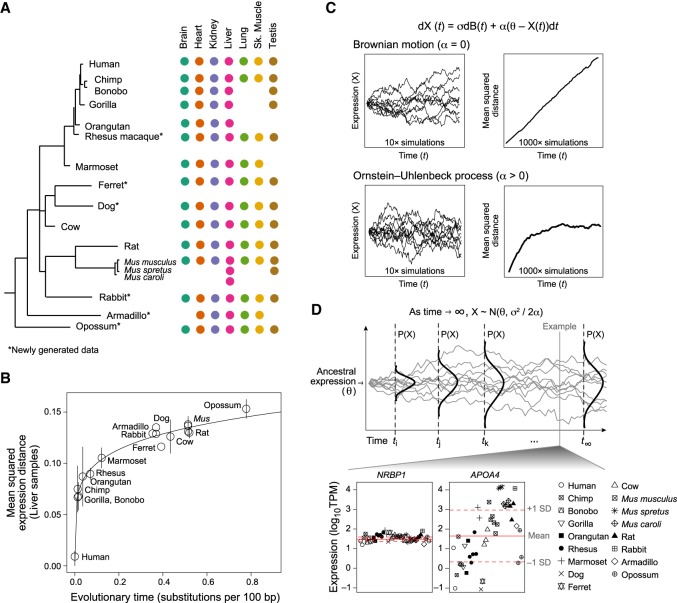
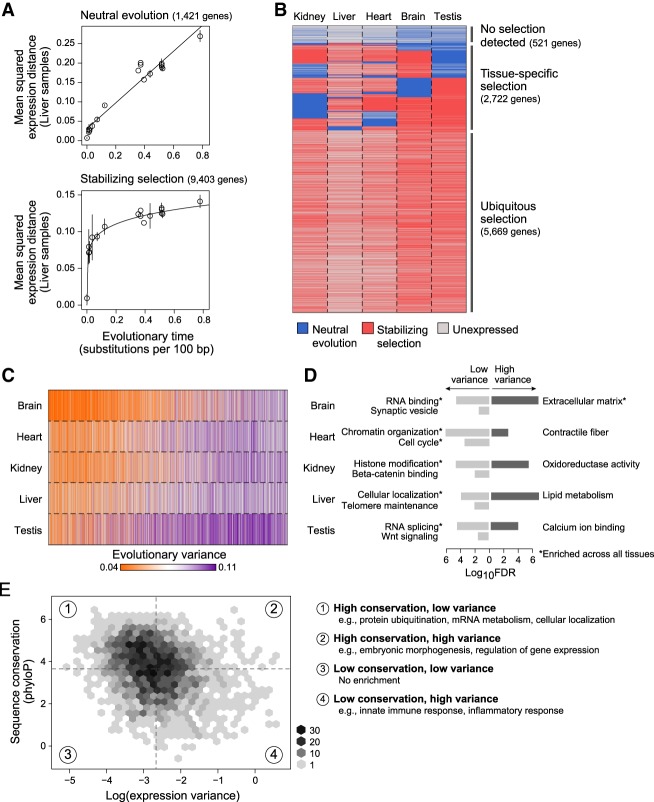
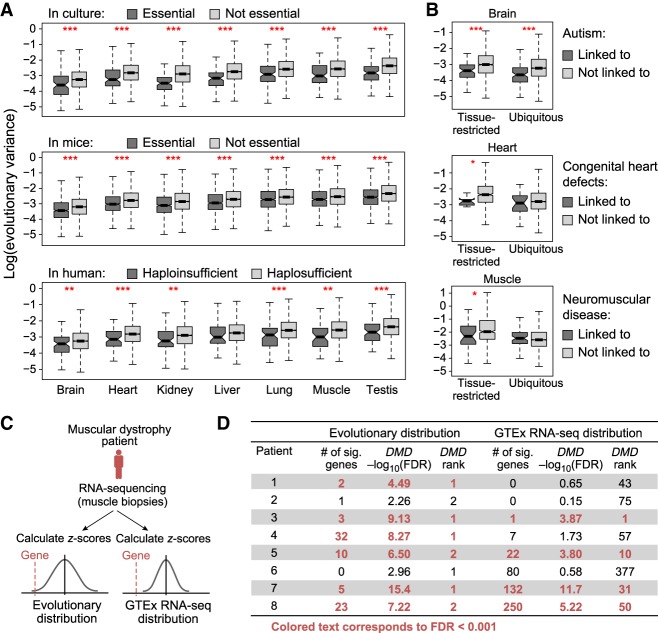
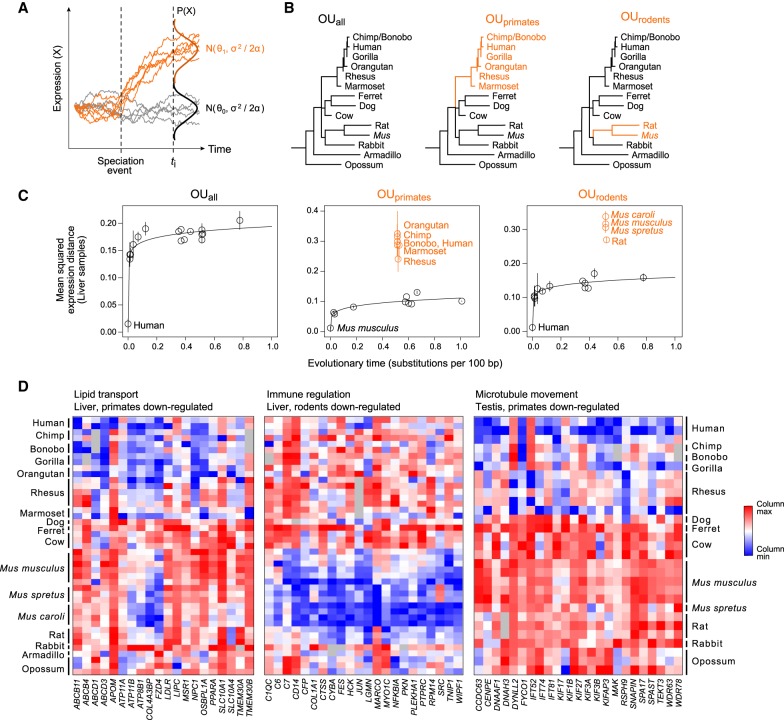
The evolutionary history of a gene helps predict its function and relationship to phenotypic traits. Although sequence conservation is commonly used to decipher gene function and assess medical relevance, methods for functional inference from comparative expression data are lacking. Here, we use RNA-seq across seven tissues from 17 mammalian species to show that expression evolution across mammals is accurately modeled by the Ornstein–Uhlenbeck process, a commonly proposed model of continuous trait evolution. We apply this model to identify expression pathways under neutral, stabilizing, and directional selection. We further demonstrate novel applications of this model to quantify the extent of stabilizing selection on a gene's expression, parameterize the distribution of each gene's optimal expression level, and detect deleterious expression levels in expression data from individual patients. Our work provides a statistical framework for interpreting expression data across species and in disease.
Overview
The claims and statistics of this paper haven’t been checked yet.
Run the check — free, no account needed. It reads the open-access text and checks the sources it cites.
Integrity signals
Registry
Cites
Statistics
Figures
Verification
Claims the paper makes
The claims and statistics of this paper haven’t been checked yet.
Run the check — free, no account needed. It reads the open-access text and checks the sources it cites.
Claims other papers make about this one
Each is checked against this paper’s own text: does it say what the citing paper says it does?
The cited source says what the claim attributes to it.
In the citing paper
“This is in accordance with previous reports showing high constraints of brain gene expression variance across evolution”
From Cross-Species Single-Cell Analysis Reveals Divergence of the Primate Microglia Program (2019) · cites this paper as Chen et al., 2019
Self-check
Percentages, sums and reported differences re-computed from the paper’s own numbers.
The self-check needs the paper’s full text.
Citations
Cites
STAR: ultrafast universal RNA-seq aligner
Dobin, A., Davis, C. A., Schlesinger, F., Drenkow, J., Zaleski, C., Jha, S., Batut, P., Chaisson, M., & Gingeras, T. R. (2013) · Bioinformatics · doi:10.1093/bioinformatics/bts635 · Cited by 51,709
Robinson, M. D., McCarthy, D. J., & Smyth, G. K. (2010) · Bioinformatics · doi:10.1093/bioinformatics/btp616 · Cited by 41,364
Richards, S., Aziz, N., Bale, S., Bick, D., Das, S., Gastier-Foster, J., Grody, W. W., Hegde, M., Lyon, E., Spector, E., et al. (2015) · Genetics in Medicine · doi:10.1038/gim.2015.30 · Cited by 32,594
RSEM: accurate transcript quantification from RNA-Seq data with or without a reference genome
Li, B., & Dewey, C. N. (2011) · BMC Bioinformatics · doi:10.1186/1471-2105-12-323 · Cited by 22,179
A scaling normalization method for differential expression analysis of RNA-seq data
Robinson, M. D., & Oshlack, A. (2010) · Genome Biology · doi:10.1186/gb-2010-11-3-r25 · Cited by 7,876
Evolutionarily conserved elements in vertebrate, insect, worm, and yeast genomes
Siepel, A., Bejerano, G., Pedersen, J. S., Hinrichs, A. S., Hou, M., Rosenbloom, K., Clawson, H., Spieth, J., Hillier, L. W., Richards, S., et al. (2005) · Genome Research · doi:10.1101/gr.3715005 · Cited by 3,971
Evolutionary Rate at the Molecular Level
KIMURA, M. (1968) · Nature · doi:10.1038/217624a0 · Cited by 3,747
GOrilla: a tool for discovery and visualization of enriched GO terms in ranked gene lists
Eden, E., Navon, R., Steinfeld, I., Lipson, D., & Yakhini, Z. (2009) · BMC Bioinformatics · doi:10.1186/1471-2105-10-48 · Cited by 3,356
King, M.-C., & Wilson, A. C. (1975) · Science · doi:10.1126/science.1090005 · Cited by 2,815
A comparative encyclopedia of DNA elements in the mouse genome
Yue, F., Cheng, Y., Breschi, A., Vierstra, J., Wu, W., Ryba, T., Sandstrom, R., Ma, Z., Davis, C., Pope, B. D., et al. (2014) · Nature · doi:10.1038/nature13992 · Cited by 1,781
Sequencing and comparison of yeast species to identify genes and regulatory elements
Kellis, M., Patterson, N. J., Endrizzi, M. G., Birren, B. W., & Lander, E. S. (2003) · Nature · doi:10.1038/nature01644 · Cited by 1,751
Comparative Genomics of the Eukaryotes
Rubin, G. M., Yandell, M. D., Wortman, J. R., Gabor, G. L., Miklos, Nelson, C. R., Hariharan, I. K., Fortini, M. E., Li, P. W., Apweiler, R., et al. (2000) · Science · doi:10.1126/science.287.5461.2204 · Cited by 1,698 · cited 1×
“Comparative genomicshas identified andannotated functional genetic elements by their evolutionary patterns across species (Rubin et al. 2000; Kellis et al. 2003; Siepel et al. 2005; Pollard et al. 2006; Lindblad-Toh et al. 2011).”
BackgroundClinGen — The Clinical Genome Resource
Rehm, H. L., Berg, J. S., Brooks, L. D., Bustamante, C. D., Evans, J. P., Landrum, M. J., Ledbetter, D. H., Maglott, D. R., Martin, C. L., Nussbaum, R. L., et al. (2015) · New England Journal of Medicine · doi:10.1056/nejmsr1406261 · Cited by 1,496
Phylogenetic comparative analysis: a modeling approach for adaptive evolution
Butler, M. A., & King, A. A. (2004) · The American Naturalist · doi:10.1086/426002 · Cited by 1,438
Genetic diagnosis by whole exome capture and massively parallel DNA sequencing
Choi, M., Scholl, U. I., Ji, W., Liu, T., Tikhonova, I. R., Zumbo, P., Nayır, A., Bakkaloğlu, A., Özen, S., Sanjad, S. A., et al. (2009) · Proceedings of the National Academy of Sciences · doi:10.1073/pnas.0910672106 · Cited by 1,385
Stabilizing selection and the comparative analysis of adaptation
Hansen, T. F. (1997) · Evolution · doi:10.1111/j.1558-5646.1997.tb01457.x · Cited by 1,361
The evolution of gene expression levels in mammalian organs
Brawand, D., Soumillon, M., Necsulea, A., Julien, P., Csárdi, G., Harrigan, P., Weier, M., Liechti, A., Aximu-Petri, A., Kircher, M., et al. (2011) · Nature · doi:10.1038/nature10532 · Cited by 1,248
Lewontin, R. C., & Hubby, J. L. (1966) · Genetics · doi:10.1093/genetics/54.2.595 · Cited by 1,221
Exome sequencing in sporadic autism spectrum disorders identifies severe de novo mutations
O'Roak, B. J., Deriziotis, P., Lee, C., Vives, L., Schwartz, J. J., Girirajan, S., Karakoc, E., MacKenzie, A. P., Ng, S. B., Baker, C., et al. (2011) · Nature Genetics · doi:10.1038/ng.835 · Cited by 1,203
A high-resolution map of human evolutionary constraint using 29 mammals
Broad Institute Sequencing Platform and Whole Genome Assembly Team, Lindblad-Toh, K., Baylor College of Medicine Human Genome Sequencing Center Sequencing Team, Genome Institute at Washington University, Garber, M., Zuk, O., Lin, M. F., Parker, B. J., Washietl, S., Kheradpour, P., et al. (2011) · Nature · doi:10.1038/nature10530 · Cited by 1,108
Self-citationEvolutionary Dynamics of Gene and Isoform Regulation in Mammalian Tissues
Merkin, J., Russell, C., Chen, P., & Burge, C. B. (2012) · Science · doi:10.1126/science.1228186 · Cited by 972
RNA-SeQC: RNA-seq metrics for quality control and process optimization
DeLuca, D. S., Levin, J. Z., Sivachenko, A., Fennell, T., Nazaire, M.-D., Williams, C., Reich, M., Winckler, W., & Getz, G. (2012) · Bioinformatics · doi:10.1093/bioinformatics/bts196 · Cited by 899
Intra- and Interspecific Variation in Primate Gene Expression Patterns
Enard, W., Khaitovich, P., Klose, J., Zöllner, S. K., Heißig, F., Giavalisco, P., Nieselt, K., Muchmore, E. A., Varki, A. P., Ravid, R., et al. (2002) · Science · doi:10.1126/science.1068996 · Cited by 845
Improving genetic diagnosis in Mendelian disease with transcriptome sequencing
Cummings, B. B., Marshall, J. L., Tukiainen, T., Lek, M., Donkervoort, S., Foley, A. R., Bolduc, V., Waddell, L. B., Sandaradura, S. A., O’Grady, G. L., et al. (2017) · Science Translational Medicine · doi:10.1126/scitranslmed.aal5209 · Cited by 831
Self-citationComprehensive comparative analysis of strand-specific RNA sequencing methods
Levin, J. Z., Yassour, M., Adiconis, X., Nusbaum, C., Thompson, D. A., Friedman, N., Gnirke, A., & Regev, A. (2010) · Nature Methods · doi:10.1038/nmeth.1491 · Cited by 753
Self-citationAmberger, J. S., & Hamosh, A. (2017) · Current Protocols in Bioinformatics · doi:10.1002/cpbi.27 · Cited by 741
Integrated physiology and systems biology of PPARα
Kersten, S. (2014) · Molecular Metabolism · doi:10.1016/j.molmet.2014.02.002 · Cited by 701
C. Genetics of Man Enzyme polymorphisms in man
Harris, H. (1966) · Proceedings of the Royal Society of London. Series B. Biological Sciences · doi:10.1098/rspb.1966.0032 · Cited by 611
Patterns of Positive Selection in Six Mammalian Genomes
Kosiol, C., Vinař, T., da Fonseca, R. R., Hubisz, M. J., Bustamante, C. D., Nielsen, R., & Siepel, A. (2008) · PLoS Genetics · doi:10.1371/journal.pgen.1000144 · Cited by 576
Origins and functional evolution of Y chromosomes across mammals
Cortez, D., Marín, R. M., Toledo‐Flores, D., Froidevaux, L., Liechti, A., Waters, P. D., Grützner, F., & Kaessmann, H. (2014) · Nature · doi:10.1038/nature13151 · Cited by 544
Aken, B. L., Achuthan, P., Akanni, W., Amode, M. R., Bernsdorff, F., Bhai, J., Billis, K., Carvalho-Silva, D., Cummins, C., Clapham, P., et al. (2017) · Nucleic Acids Research · doi:10.1093/nar/gkw1104 · Cited by 512
Forces shaping the fastest evolving regions in the human genome
Pollard, K. S., Salama, S. R., King, B., Kern, A. D., Dreszer, T., Katzman, S., Siepel, A., Pedersen, J. S., Bejerano, G., Baertsch, R., et al. (2006) · PLoS Genetics · doi:10.1371/journal.pgen.0020168 · Cited by 511
Receptor-mediated endocytosis: insights from the lipoprotein receptor system
Brown, M. S., & Goldstein, J. L. (1979) · Proceedings of the National Academy of Sciences · doi:10.1073/pnas.76.7.3330 · Cited by 506
Systematic changes in gene expression patterns following adaptive evolution in yeast
Ferea, T., Botstein, D., Brown, P. O., & Rosenzweig, R. F. (1999) · Proceedings of the National Academy of Sciences · doi:10.1073/pnas.96.17.9721 · Cited by 479
Positive Darwinian selection drives the evolution of several female reproductive proteins in mammals
Swanson, W. J., Yang, Z., Wolfner, M. F., & Aquadro, C. F. (2001) · Proceedings of the National Academy of Sciences · doi:10.1073/pnas.051605998 · Cited by 441
Gene expression divergence recapitulates the developmental hourglass model
Kalinka, A. T., Varga, K. M., Gerrard, D. T., Preibisch, S., Corcoran, D. L., Jarrells, J., Ohler, U., Bergman, C., & Tomančák, P. (2010) · Nature · doi:10.1038/nature09634 · Cited by 415
Measuring error rates in genomic perturbation screens: gold standards for human functional genomics
Hart, T., Brown, K. R., Sircoulomb, F., Rottapel, R., & Moffat, J. (2014) · Molecular Systems Biology · doi:10.15252/msb.20145216 · Cited by 398
SFARI Gene: an evolving database for the autism research community
Banerjee-Basu, S., & Packer, A. (2010) · Disease Models & Mechanisms · doi:10.1242/dmm.005439 · Cited by 357
A Neutral Model of Transcriptome Evolution
Khaitovich, P., Weiß, G., Lachmann, M., Hellmann, I., Enard, W., Muetzel, B., Wirkner, U., Ansorge, W. J., & Pääbo, S. (2004) · PLoS Biology · doi:10.1371/journal.pbio.0020132 · Cited by 344
The Genotype-Tissue Expression (GTEx) project
Lonsdale, J., Thomas, J., Salvatore, M., Phillips, R., Lo, E., Shad, S., Hasz, R., Walters, G., Garcia, F., Young, N., et al. (2013) · Nature Genetics · doi:10.1038/ng.2653 · Cited by 263
Mouse Genome Database (MGD)-2017: community knowledge resource for the laboratory mouse
Blake, J. A., Eppig, J. T., Kadin, J. A., Richardson, J. E., Smith, C. L., Bult, C. J., & the Mouse Genome Database Group (2016) · Nucleic Acids Research · doi:10.1093/nar/gkw1040 · Cited by 262
Guerra, R., Wang, J., Grundy, S. M., & Cohen, J. C. (1997) · Proceedings of the National Academy of Sciences · doi:10.1073/pnas.94.9.4532 · Cited by 242
Torgerson, D. G., Kulathinal, R. J., & Singh, R. S. (2002) · Molecular Biology and Evolution · doi:10.1093/oxfordjournals.molbev.a004021 · Cited by 231
Applications and Limitations of Mouse Models for Understanding Human Atherosclerosis
von Scheidt, M., Zhao, Y., Kurt, Z., Pan, C., Zeng, L., Yang, X., Schunkert, H., & Lusis, A. J. (2016) · Cell Metabolism · doi:10.1016/j.cmet.2016.11.001 · Cited by 230
Natural selection on gene expression
Gilad, Y., Oshlack, A., & Rifkin, S. A. (2006) · Trends in Genetics · doi:10.1016/j.tig.2006.06.002 · Cited by 218
Comparative genomics as a tool to understand evolution and diseasePreprint
Alföldi, J., & Lindblad‐Toh, K. (2013) · Genome Research · doi:10.1101/gr.157503.113 · Cited by 200
Self-citationConservation of core gene expression in vertebrate tissues
Chan, E. T., Quon, G. T., Chua, G., Babak, T., Trochesset, M., Zirngibl, R. A., Aubin, J., Ratcliffe, M. J., Wilde, A., Brudno, M., et al. (2009) · Journal of Biology · doi:10.1186/jbiol130 · Cited by 190
Optimization of gene expression by natural selection
Bedford, T., & Hartl, D. L. (2009) · Proceedings of the National Academy of Sciences · doi:10.1073/pnas.0812009106 · Cited by 189
From Mouse to Human: Evolutionary Genomics Analysis of Human Orthologs of Essential Genes
Georgi, B., Voight, B. F., & Bućan, M. (2013) · PLoS Genetics · doi:10.1371/journal.pgen.1003484 · Cited by 183
Signatures of positive selection in Toll-like receptor (TLR) genes in mammals
Areal, H., Abrantes, J., & Esteves, P. J. (2011) · BMC Evolutionary Biology · doi:10.1186/1471-2148-11-368 · Cited by 167
Gene Regulation in Primates Evolves under Tissue-Specific Selection Pressures
Blekhman, R., Oshlack, A., Chabot, A. E., Smyth, G. K., & Gilad, Y. (2008) · PLoS Genetics · doi:10.1371/journal.pgen.1000271 · Cited by 162
Evidence for widespread adaptive evolution of gene expression in budding yeast
Fraser, H. B., Moses, A. M., & Schadt, E. E. (2010) · Proceedings of the National Academy of Sciences · doi:10.1073/pnas.0912245107 · Cited by 154
Comparative RNA sequencing reveals substantial genetic variation in endangered primatesPreprint
Perry, G. H., Melsted, P., Marioni, J. C., Wang, Y., Bainer, R. O., Pickrell, J. K., Michelini, K., Zehr, S. M., Yoder, A. D., Stephens, M., et al. (2011) · Genome Research · doi:10.1101/gr.130468.111 · Cited by 149
Rohlfs, R. V., Harrigan, P., & Nielsen, R. (2013) · Molecular Biology and Evolution · doi:10.1093/molbev/mst190 · Cited by 141
Yanai, I., Graur, D., & Ophir, R. (2004) · OMICS A Journal of Integrative Biology · doi:10.1089/153623104773547462 · Cited by 132
Phylogenetic ANOVA: The Expression Variance and Evolution Model for Quantitative Trait Evolution
Rohlfs, R. V., & Nielsen, R. (2015) · Systematic Biology · doi:10.1093/sysbio/syv042 · Cited by 116
Identification of cis-suppression of human disease mutations by comparative genomics
Task Force for Neonatal Genomics, Jordan, D. M., Frangakis, S. G., Golzio, C., Cassa, C. A., Kurtzberg, J., Davis, E. E., Sunyaev, S. R., & Katsanis, N. (2015) · Nature · doi:10.1038/nature14497 · Cited by 115
Measurement errors should always be incorporated in phylogenetic comparative analysis
Silvestro, D., Kostikova, A., Litsios, G., Pearman, P. B., & Salamin, N. (2015) · Methods in Ecology and Evolution · doi:10.1111/2041-210x.12337 · Cited by 107
Toward a Neutral Evolutionary Model of Gene Expression
Khaitovich, P., Pääbo, S., & Weiß, G. (2005) · Genetics · doi:10.1534/genetics.104.037135 · Cited by 106
Phylogenetic Analysis of Glycolytic Enzyme Expression
Pierce, V. A., & Crawford, D. L. (1997) · Science · doi:10.1126/science.276.5310.256 · Cited by 104
Adaptive Evolution of Gene Expression in Drosophila
Nourmohammad, A., Rambeau, J., Held, T., Kováčová, V., Berg, J., & Lässig, M. (2017) · Cell Reports · doi:10.1016/j.celrep.2017.07.033 · Cited by 95
The non-human primate reference transcriptome resource (NHPRTR) for comparative functional genomics
Pipes, L., Li, S., Bozinoski, M., Palermo, R. E., Peng, X., Blood, P., Kelly, S. M., Weiss, J. M., Thierry‐Mieg, J., Thierry‐Mieg, D., et al. (2012) · Nucleic Acids Research · doi:10.1093/nar/gks1268 · Cited by 85
Genome‐wide analysis of alternative splicing evolution among Mus subspecies
Harr, B., & Turner, L. M. (2010) · Molecular Ecology · doi:10.1111/j.1365-294x.2009.04490.x · Cited by 62
Deleterious Mutations and Neutral Substitutions
Jukes, T. H., & King, J. L. (1971) · Nature · doi:10.1038/231114a0 · Cited by 57
Decoupling of evolutionary changes in transcription factor binding and gene expression in mammalsPreprint
Wong, E. S. W., Thybert, D., Schmitt, B. M., Stefflova, K., Odom, D. T., & Flicek, P. (2014) · Genome Research · doi:10.1101/gr.177840.114 · Cited by 46
Wang, D., Marsh, J., & Ayala, F. J. (1996) · Proceedings of the National Academy of Sciences · doi:10.1073/pnas.93.14.7103 · Cited by 41
Cited by
Sorted by citations
Cross-Species Single-Cell Analysis Reveals Divergence of the Primate Microglia Program
Geirsdottir, L., David, E., Keren-Shaul, H., Weiner, A., Bohlen, S. C., Neuber, J., Balic, A., Giladi, A., Sheban, F., Dutertre, C.-A., et al. (2019) · Cell · doi:10.1016/j.cell.2019.11.010 · Cited by 461
The evolution, evolvability and engineering of gene regulatory DNA
Vaishnav, E. D., de Boer, C. G., Molinet, J., Yassour, M., Fan, L., Adiconis, X., Thompson, D. A., Levin, J. Z., Cubillos, F. A., & Regev, A. (2022) · Nature · doi:10.1038/s41586-022-04506-6 · Cited by 292
Self-citationConservation, acquisition, and functional impact of sex-biased gene expression in mammals
Naqvi, S., Godfrey, A. K., Hughes, J. F., Goodheart, M. L., Mitchell, R. N., & Page, D. C. (2019) · Science · doi:10.1126/science.aaw7317 · Cited by 261
Evolution of neuronal cell classes and types in the vertebrate retina
Hahn, J., Monavarfeshani, A., Qiao, M., Kao, A. H., Kölsch, Y., Kumar, A., Kunze, V. P., Rasys, A. M., Richardson, R., Wekselblatt, J. B., et al. (2023) · Nature · doi:10.1038/s41586-023-06638-9 · Cited by 218
A comparison of gene expression and DNA methylation patterns across tissues and speciesPreprint
Blake, L. E., Roux, J., Hernando-Herraez, I., Banovich, N. E., García-Pérez, R., Hsiao, C. J., Eres, I. E., Chavarria, C., Marquès‐Bonet, T., & Gilad, Y. (2020) · Genome Research · doi:10.1101/gr.254904.119 · Cited by 132
Metadata
- Authors
- Chen, J., Swofford, R., Johnson, J., Cummings, B. B., Rogel, N., Lindblad-Toh, K., Haerty, W., Palma, F. D., & Regev, A.
- Affiliations
- Broad Institute (US)
- Earlham Institute (GB)
- University of East Anglia (GB)
- ORCID
- Venue
- Genome Research
- Publisher
- Cold Spring Harbor Laboratory
- Published
- 2018-12-14
- Volume
- 29
- Issue
- 1
- Pages
- 53-63
- ISSN
- 1088-9051 (ISSN-L)
- 1549-5469
- PMC
- PMC6314168
- OpenAlex
- W2949594216
- Cited by
- 128
- References
- 66
- Citations by year
- 2026: 18 · 2025: 18 · 2024: 18 · 2023: 14 · 2022: 13 · 2021: 24 · 2020: 16 · 2019: 5 · 2018: 2
- Type
- posted content
- Language
- en
- Open access
- bronze
- doi.org
- Locations
- Genome Research (publishedVersion)
- Europe PMC (PubMed Central) (publishedVersion, cc-by-nc)
- PubMed Central (publishedVersion, cc-by-nc)
- PubMed (publishedVersion)
- UEA Digital Repository (University of East Anglia) (acceptedVersion)
- Uppsala University Publications (Uppsala University) (submittedVersion, other-oa)
- DSpace@MIT (Massachusetts Institute of Technology) (submittedVersion, cc-by-nc)
- HighWire Press Open Archive (submittedVersion)
- Funders
- Howard Hughes Medical Institute
- Broad Institute
- Vetenskapsrådet
- National Institutes of Health (5rm1hg006193-10)
- Klarman Cell Observatory, Broad Institute
- Biotechnology and Biological Sciences Research Council (BBS/E/T/000PR9817, BBS/E/T/000PR5885, BBS/E/T/000PR9818, BB/CSP1720/1)
- National Human Genome Research Institute (RM1‐HG006193, T32HG002295)
- National Institute of Neurological Disorders and Stroke
- Topics
- Life Sciences › Biochemistry, Genetics and Molecular Biology › Genetics › Evolution and Genetic Dynamics
- Life Sciences › Biochemistry, Genetics and Molecular Biology › Molecular Biology › Genomics and Phylogenetic Studies
- Life Sciences › Biochemistry, Genetics and Molecular Biology › Molecular Biology › Bioinformatics and Genomic Networks
- Keywords
- gene expression evolution, Ornstein-Uhlenbeck process, stabilizing selection, directional selection, neutral selection, comparative transcriptomics, mammals
- MeSH terms
- Animals, Dogs, Gene Expression Regulation, Models, Genetic, Rabbits, Evolution, Molecular
About these checks
Registry, retraction, Cites and statistics results are computed, not judged, with one exception: a printed reference that no index lists is read once by a model before it counts as a citation error. Claims are extracted by a model and kept only when their quote appears verbatim in the text; each cited source is then checked, with a model’s help, for whether it says what the claim relies on. Those verdicts can be wrong — read the claim’s quote and the cited source before relying on one.
Statistics and arithmetic are recomputed, not judged.
Confidence bands are shown only for fields calibrated on our annotated test set. None is calibrated yet, so no band is shown.
What counts as a claim ›How we measure confidence ›How we check this ›
Are you an author, or do you see a problem with this page? Request a review
