

Sim-to-Real Transfer of Robotic Control with Dynamics Randomization
Open accessThe DOI matches its Crossref record; 50 of the 50 references it cites were found in a registry or an index; 2 of the 5 sources its claims cite were checked for support.
Abstract
Simulations are attractive environments for training agents as they provide an abundant source of data and alleviate certain safety concerns during the training process. But the behaviours developed by agents in simulation are often specific to the characteristics of the simulator. Due to modeling error, strategies that are successful in simulation may not transfer to their real world counterparts. In this paper, we demonstrate a simple method to bridge this “reality gap”. By randomizing the dynamics of the simulator during training, we are able to develop policies that are capable of adapting to very different dynamics, including ones that differ significantly from the dynamics on which the policies were trained. This adaptivity enables the policies to generalize to the dynamics of the real world without any training on the physical system. Our approach is demonstrated on an object pushing task using a robotic arm. Despite being trained exclusively in simulation, our policies are able to maintain a similar level of performance when deployed on a real robot, reliably moving an object to a desired location from random initial configurations. We explore the impact of various design decisions and show that the resulting policies are robust to significant calibration error.
Overview
CoChat Summary
TL;DR
The paper demonstrates that randomizing simulator dynamics during training lets recurrent policies transfer directly to a real 7-DOF Fetch arm for a puck-pushing task without any real-world training. The LSTM policy retained comparable performance in simulation and reality, while feedforward and non-randomized baselines transferred poorly or failed.
Key findings
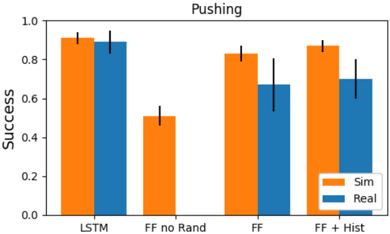
- The LSTM policy trained only in simulation achieved real-robot success of 0.89 ± 0.06 over 28 trials, comparable to its simulated success of 0.91 ± 0.03 over 100 randomized-dynamics trials.
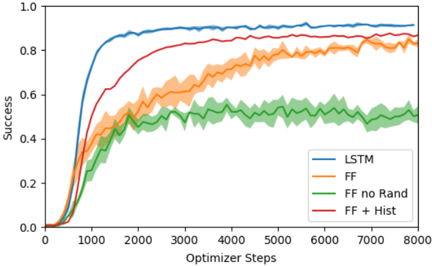
- Memoryless feedforward policies transferred worse: FF no Rand had sim 0.51 ± 0.05 and real 0.0 ± 0.0 (10 trials); FF had sim 0.83 ± 0.04 and real 0.67 ± 0.14 (12 trials); FF + Hist had sim 0.87 ± 0.03 and real 0.70 ± 0.10 (20 trials).
- Ablating randomization hurt real-robot success: fixed action timestep 0.29 ± 0.11 (17 trials), no observation noise 0.25 ± 0.12 (12 trials), fixed link mass 0.64 ± 0.10 (22 trials), fixed puck friction 0.48 ± 0.10 (27 trials), versus 0.89 ± 0.06 (28 trials) for all randomized parameters.
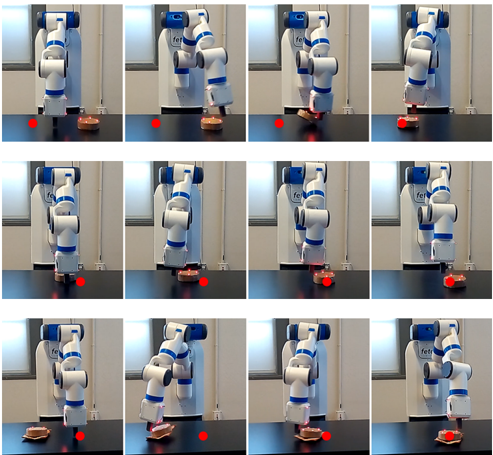
- When contact dynamics were altered by attaching a packet of chips to the puck, the LSTM policy achieved 0.91 ± 0.04 success, comparable to 0.89 ± 0.06 without the attachment.
Methods
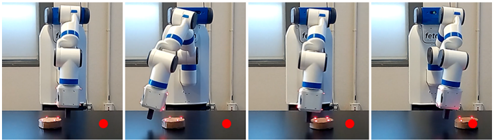
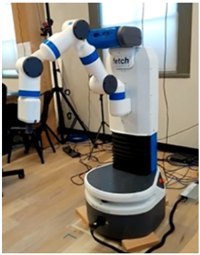
- Task: a 7-DOF Fetch Robotics arm pushed a puck to a randomly sampled target on a table; reward was binary (0 if puck within 0.07 m of target, otherwise -1). State was 52D (joint positions/velocities, gripper position, puck position/orientation/linear and angular velocities); action was 7D target joint-angle offsets. Simulation used MuJoCo with 0.002 s timestep and 20 simulation steps per control step; episodes were 100 control steps in simulation and 200 timesteps on the real robot.
- Dynamics randomization: at each episode start, 95 parameters were sampled and held fixed, including link masses, joint damping, puck mass/friction/damping, table height, controller gains, action timestep, and observation noise. Action timestep varied per step via Δt ∼ Δt0 + Exp(λ), with Δt0 = 0.04 s and λ fixed per episode; observation noise was Gaussian with standard deviation 5% of each feature’s running standard deviation; action exploration noise had standard deviation 0.01 rad.
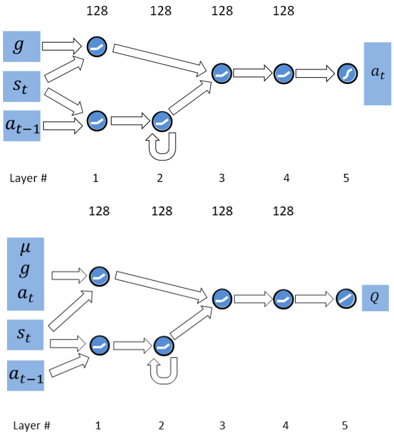
- Training and analysis: policies were trained with Recurrent Deterministic Policy Gradient (RDPG) and Hindsight Experience Replay (HER, k = 0.8), using an LSTM policy and an omniscient critic that received simulator dynamics parameters. ADAM used stepsize 5 × 10⁻⁴, batches of 128 episodes with 100 steps each, about 8000 update iterations, roughly 100 million samples, and about 8 hours on a 100-core cluster. Performance was compared across architectures and randomization ablations in simulation and on the real robot.
Limitations
- Stated: little calibration was performed to make simulation match the real robot, and the authors note that more extensive calibration would likely improve performance; they also state future work should extend to richer tasks and modalities such as vision.
- Evident from the text: evaluation is limited to a single puck-pushing task with a 7-DOF arm, and real-robot trials are small (10–28 trials per condition), so broader task and statistical generalization are not established.
- Evident from the text: the method relies on simulation-only training and does not test direct real-world fine-tuning or vision-based transfer.
Model-written summary. Check it against the paper before relying on it.
Integrity signals
Registry
Cites
Statistics
Figures
Verification
Claims the paper makes
1 Valid · 0 Not valid · 2 Not checked · 29 Own results and interpretations
The cited sources support only part of this claim — read each source’s verdict below.
In the paper
“Furthermore, it has been observed that DeepRL policies are prone to exploiting idiosyncrasies of the simulator to realize behaviours that are infeasible in the real world [2], [7].”
What the sources say
- Could not verifycites [2] [2] T. P. Lillicrap, J. J. Hunt, A. Pritzel, N. Heess, T. Erez, Y. Tassa, D. Silver, and D. Wierstra, 'Continuous control with deep reinforcement learning,' CoRR , vol. abs/1509.02971, 2015. [Online]. Available: http://arxiv.org/abs/1509.02971 - sourceExperimental — accuracy not yet measured
The Results (p. 4) describe testing DDPG in simulated physical environments, but do not report policies exploiting simulator quirks. Searches for simulator artifacts, unrealistic behavior, and real-world feasibility found no passage addressing the claimed tendency. (LLM, conf=0.72)
- Partly supportedcites [7] [7] N. Heess, D. TB, S. Sriram, J. Lemmon, J. Merel, G. Wayne, Y. Tassa, T. Erez, Z. Wang, S. M. A. Eslami, M. A. Riedmiller, and D. Silver, 'Emergence of locomotion behaviours in rich environments,' CoRR , vol. abs/1707.02286, 2017. [Online]. Available: http://arxiv.org/abs/1707.02286 - sourceExperimental — accuracy not yet measured
The Introduction (p. 1) says agents may find idiosyncratic solutions that work in one setting but are not robust across settings. The Results (p. 8) report that a simulated humanoid can exploit redundancies in the task specification, producing visually unsatisfactory gaits. Neither passage says the policies exploit quirks of the simulator or that their behaviours are infeasible in the real world. (LLM, conf=0.82)
plainstates a cause- Asserted: passes — The authors put it forward as true.
- Checkable: passes — It can be checked against evidence.
- Load-bearing: passes — The paper’s conclusions depend on it.
- Based: passes — The paper gives a reason why it holds.
- Could not verify
A result the paper reports from its own data — it cites no other source for it, so there is none to check. The quote shows it is in the paper.
In the paper
“We explore the impact of various design decisions and show that the resulting policies are robust to significant calibration error.”
- Also stated in: § B. Domain Randomization · p. 2 · plain
“Unlike previous methods which often require meticulous calibration of the simulation to closely conform to the physical system, our policies are able to adapt to significant calibration error.”
- Also stated in: § C. Non-prehensile Manipulation · p. 2 · plain
“The resulting policies are able accommodate large calibration errors when deployed on a real robot and also generalize to variability in the dynamics of the physical system.”
plain- Asserted: passes — The authors put it forward as true.
- Checkable: passes — It can be checked against evidence.
- Load-bearing: passes — The paper’s conclusions depend on it.
- Based: passes — The paper gives a reason why it holds.
- Also stated in: § B. Domain Randomization · p. 2 · plain
A result the paper reports from its own data — it cites no other source for it, so there is none to check. The quote shows it is in the paper.
In the paper
“The feedforward network trained without randomization is unable to perform the task under the real world dynamics.”
plainstates a cause- Asserted: passes — The authors put it forward as true.
- Checkable: passes — It can be checked against evidence.
- Load-bearing: passes — The paper’s conclusions depend on it.
- Based: passes — The paper gives a reason why it holds.
A result the paper reports from its own data — it cites no other source for it, so there is none to check. The quote shows it is in the paper.
In the paper
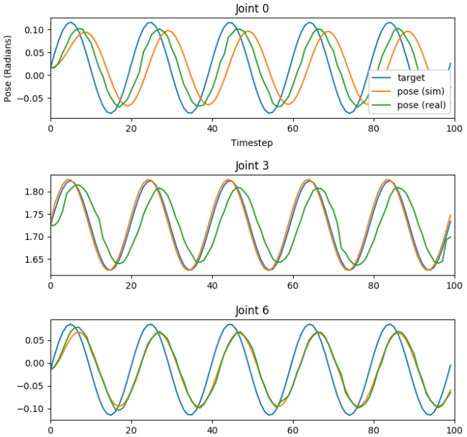
“Given the same target trajectory, the pose trajectories of the simulated and real robot differ significantly, with varying degrees of mismatch across joints.”
plainstates an association- Asserted: passes — The authors put it forward as true.
- Checkable: passes — It can be checked against evidence.
- Load-bearing: passes — The paper’s conclusions depend on it.
- Based: passes — The paper gives a reason why it holds.
A result the paper reports from its own data — it cites no other source for it, so there is none to check. The quote shows it is in the paper.
In the paper
“Policies trained without randomizing the action timestep and observation noise show particularly noticeable drops in performance.”
plainstates a cause- Asserted: passes — The authors put it forward as true.
- Checkable: passes — It can be checked against evidence.
- Load-bearing: passes — The paper’s conclusions depend on it.
- Based: passes — The paper gives a reason why it holds.
13 more claims
Create a free account to see all 32 claims and to verify the 3 references still open.
- It may state two separate claims as one. 9
- Probably not a substantial claim. 6
Claims other papers make about this one
Each is checked against this paper’s own text: does it say what the citing paper says it does?
The cited source doesn’t support the claim as written.
In the citing paper
“We instantiate SIMPLER on top of the SAPIEN physics simulator [68], but show in Section VI-D that our contributions are independent of the used simulator and can be reproduced in Isaac Sim [49].”
From Evaluating Real-World Robot Manipulation Policies in Simulation (2024) · cites this paper as [49]
Checked by a reasoning model — may be wrong.
Experimental — accuracy not yet measuredThe source backs part of the claim, not all of it — or backs it for a different population, condition or comparison.
In the citing paper
“Residual policy learning restores dynamic feasibility on the robot by learning small corrections to the retargeted reference, reusing the same residual formulation as physics refinement, so that the resulting policy transfers directly to hardware (Peng et al., 2018).”
From Dexterous Robot Manipulation from Human Demonstrations via Contact-Anchored Retargeting and Residual Policy Learning (2026) · cites this paper as Peng et al., 2018
Experimental — accuracy not yet measuredThe source backs part of the claim, not all of it — or backs it for a different population, condition or comparison.
In the citing paper
“Synthesis rollouts under domain randomization (Peng et al., 2018) produce additional dynamically feasible robot trajectories from each retargeted reference.”
From Dexterous Robot Manipulation from Human Demonstrations via Contact-Anchored Retargeting and Residual Policy Learning (2026) · cites this paper as Peng et al., 2018
Experimental — accuracy not yet measuredThe cited source says what the claim attributes to it.
In the citing paper
“Another is randomization of physical parameters that vary between simulation and reality, such that the controller becomes robust to a range of conditions that cover those that arise in physical deployment, without the necessity to precisely model these conditions a priori [21].”
From Learning quadrupedal locomotion over challenging terrain (2020) · cites this paper as [21]
The cited source says what the claim attributes to it.
In the citing paper
“Peng et al. [44] shows the effectiveness of memory-based policies (i.e., policies learnt by using past memory for future learning [95] [97]) to deal with the RG, introducing DR to generalise environment dynamics.”
From Crossing the Reality Gap: A Survey on Sim-to-Real Transferability of Robot Controllers in Reinforcement Learning (2021) · cites this paper as [44]
1 more claim about this paper
Create a free account to see every claim other papers make about this one.
Citations
Cites
Adam: A Method for Stochastic Optimization
Kingma, D. P., & Ba, J. (2014) · arXiv · doi:10.48550/arxiv.1412.6980 · Cited by 98,946
Human-level control through deep reinforcement learning
Mnih, V., Kavukcuoglu, K., Silver, D., Rusu, A. A., Veness, J., Bellemare, M. G., Graves, A., Riedmiller, M., Fidjeland, A. K., Ostrovski, G., et al. (2015) · Nature · doi:10.1038/nature14236 · Cited by 30,357 · cited 1×
“In simulated domains, agents have been developed to perform a diverse array of challenging tasks [1], [2], [3].”
BackgroundContinuous control with deep reinforcement learning
Lillicrap, T. P., Hunt, J. J., Pritzel, A., Heess, N., Erez, T., Tassa, Y., Silver, D., & Wierstra, D. (2015) · arXiv · doi:10.48550/arxiv.1509.02971 · Cited by 10,782
Domain-Adversarial Training of Neural Networks
Ganin, Y., Ustinova, E., Ajakan, H., Germain, P., Larochelle, H., Laviolette, F., Marchand, M., & Lempitsky, V. (2017) · Advances in Computer Vision and Pattern Recognition · doi:10.1007/978-3-319-58347-1_10 · Cited by 8,318
(1999) · Cited by 5,147
MuJoCo: A physics engine for model-based control
Todorov, E., Erez, T., & Tassa, Y. (2012) · 2012 IEEE/RSJ International Conference on Intelligent Robots and Systems · doi:10.1109/iros.2012.6386109 · Cited by 4,767 · cited 1×
“All simulations are performed using the MuJoCo physics engine [39] with a simulation timestep of 0.”
MethodMulti-Agent Actor-Critic for Mixed Cooperative-Competitive Environments
Lowe, R., Wu, Y., Tamar, A., Harb, J., Abbeel, P., & Mordatch, I. (2017) · arXiv · doi:10.48550/arxiv.1706.02275 · Cited by 3,377
Self-citationDomain randomization for transferring deep neural networks from simulation to the real world
Tobin, J., Fong, R., Ray, A., Schneider, J., Zaremba, W., & Abbeel, P. (2017) · 2017 IEEE/RSJ International Conference on Intelligent Robots and Systems (IROS) · doi:10.1109/iros.2017.8202133 · Cited by 3,124
Self-citationLevine, S., Pastor, P., Krizhevsky, A., Ibarz, J., & Quillen, D. (2018) · The International Journal of Robotics Research · doi:10.1177/0278364917710318 · Cited by 1,971
Andrychowicz, M., Wolski, F., Ray, A., Schneider, J., Fong, R., Welinder, P., McGrew, B., Tobin, J., Abbeel, P., & Zaremba, W. (2017) · arXiv · doi:10.48550/arxiv.1707.01495 · Cited by 1,355
Self-citation
Research works printed but not linked: 1
- [32] D. H. Ignasi Clavera and P. Abbeel, 'Policy transfer via modularity,' in IROS . IEEE, 2017. -
Cited by
Items 301–400 of 935
Domain Adaptation Through Task Distillation
Zhou, B., Kalra, N., & Krähenbühl, P. (2020) · Lecture notes in computer science · doi:10.1007/978-3-030-58574-7_40 · Cited by 17
“lation during training, similar to data augmentation in general deep learning. Domain randomization requires no real-world labels and are especially popular in transferring robotic manipulation tasks [1,22,35,50]. James et al. successfully use this technique to reduce the amount of real world training data for robot g…”
Tan, S., Guo, D., Liu, H., Zhang, X., & Sun, F. (2021) · Autonomous Robots · doi:10.1007/s10514-021-10014-9 · Cited by 15
“Also, as a not fully resolved task by the research community, there have been many existing works on improving sim-to-real transfer performance (Tobin et al. 2017; Peng et al. 2018; Chebotar et al. 2019; Jeong et al. 2020).”
BackgroundBridging the Model-Reality Gap With Lipschitz Network Adaptation
Zhou, S., Pereida, K., Zhao, W., & Schoellig, A. P. (2021) · IEEE Robotics and Automation Letters · doi:10.1109/lra.2021.3131698 · Cited by 15
Sim-and-Real Reinforcement Learning for Manipulation: A Consensus-based Approach
Liu, W., Niu, H., Pan, W., Herrmann, G., & Carrasco, J. (2023) · Proceedings - IEEE International Conference on Robotics and Automation/Proceedings · doi:10.1109/icra48891.2023.10161062 · Cited by 12
“ulation to the real world, the adoption problem becomes challenging as real-world environments contain unpredictable disturbances [8].”
BackgroundRobotic Manipulation in Dynamic Scenarios via Bounding-Box-Based Hindsight Goal Generation
Bing, Z., Álvarez, E., Cheng, L., Morin, F. O., Li, R., Su, X., Huang, K., & Knoll, A. (2021) · IEEE Transactions on Neural Networks and Learning Systems · doi:10.1109/tnnls.2021.3124366 · Cited by 16
“Some similar ideas can be found in [24], [18], [26], [12].”
BackgroundKim, D., Lee, H., Cha, J., & Park, J. (2025) · IEEE Robotics & Automation Magazine · doi:10.1109/mra.2024.3505784 · Cited by 12
“Action spaces that naturally lead to smooth and feasible actions reduce the risk of violating physical constraints.”
Cho, Y., Park, J.-H., Choi, J., & Chang, D. E. (2022) · IEEE/RSJ International Conference on Intelligent Robots and Systems (IROS) · doi:10.1109/iros47612.2022.9982168 · Cited by 19
“Sim-to-real transfer has been applied in various fields of robotics [10], [11], [12], but not yet in autonomous PCI without EM sensor.”
BackgroundMethodUsing Simulation Optimization to Improve Zero-shot Policy Transfer of Quadrotors
Gronauer, S., Kissel, M., Sacchetto, L., Korte, M., & Diepold, K. J. (2022) · IEEE/RSJ International Conference on Intelligent Robots and Systems (IROS) · doi:10.1109/iros47612.2022.9981229 · Cited by 17
“[21] pointed out that randomizing the latency of the controller and injecting sensor noise to the simulation are key components for a high success rate.”
BackgroundInfluentialPatiño, J. J., Encalada‐Dávila, Á., Sampietro, J., Tutivén, C., Saldarriaga, C. X., & Kao, I. (2023) · Mathematics · doi:10.3390/math11041021 · Cited by 13
“Meanwhile, other strategies have overcome the data hurdle by integrating ML with physical simulations [10,11] and employing sim-to-real techniques to transfer learned tasks from virtual to physical robots [12].”
BackgroundFeature Extraction for Effective and Efficient Deep Reinforcement Learning on Real Robotic Platforms
Böhm, P., Pounds, P., & Chapman, A. C. (2023) · Proceedings - IEEE International Conference on Robotics and Automation/Proceedings · doi:10.1109/icra48891.2023.10160862 · Cited by 13
“One way of dealing with this challenge is dynamics randomization [2], where robust policies are found by randomizing the simulation parameters during training.”
BackgroundMethodCherry-Picking with Reinforcement Learning
Zhang, Y., Ke, L., Deshpande, A., Gupta, A., & Srinivasa, S. S. (2023) · Robotics: Science and Systems · doi:10.15607/rss.2023.xix.021 · Cited by 24
Variance Reduced Domain Randomization for Reinforcement Learning With Policy Gradient
Jiang, Y., Li, C., Dai, W., Zou, J., & Xiong, H. (2023) · IEEE Transactions on Pattern Analysis and Machine Intelligence · doi:10.1109/tpami.2023.3330332 · Cited by 24
“For policy optimization under DR or meta-RL setting, Peng et al. [7] propose to combine the state and environment parameters as the input to the value function, namely DR with the combined state-dependent baseline (DRCS).”
BackgroundMethodDomain Randomization for Robust, Affordable and Effective Closed-Loop Control of Soft Robots
Tiboni, G., Protopapa, A., Tommasi, T., & Averta, G. (2023) · IEEE/RSJ International Conference on Intelligent Robots and Systems (IROS) · doi:10.1109/iros55552.2023.10342537 · Cited by 19
“Such approach has been widely investigated both for randomizing the visual appearance of the simulator [28], [29], [30], and its dynamics parameters [15], [16].”
BackgroundInfluentialDeep Reinforcement Learning for Autonomous Driving in Amazon Web Services DeepRacer
Petryshyn, B., Postupaiev, S., Bari, S. B., & Ostreika, A. (2024) · Information · doi:10.3390/info15020113 · Cited by 16
“Researchers commonly employ calibration techniques [4,5] to ensure integration between sensors and actuators, domain randomisation [6–8] to simulate a diverse range of real-world conditions and challenges, fine-tune using real-world data [9], and learn features through a mixture of simulation and…”
IndoorSim-to-OutdoorReal: Learning to Navigate Outdoors Without Any Outdoor Experience
Truong, J., Zitkovich, A., Chernova, S., Batra, D., Zhang, T., Tan, J., & Yu, W. (2024) · IEEE Robotics and Automation Letters · doi:10.1109/lra.2024.3385611 · Cited by 23
“…learning with photorealistic simulators, such as Habitat [9], [10], iGib-son [11], [40], or AI2-THOR [13], and techniques for reducing the sim2real gap [41], [42], [43], [44], [45], [46] to enable zero-shot sim2real transfer on wheeled and legged robots [1], [2], [3], [4], [5], [6], [7], [8].”
BackgroundVMP: Versatile Motion Priors for Robustly Tracking Motion on Physical Characters
Serifi, A., Grandia, R., Knoop, E., Groß, M. H., & Bächer, M. (2024) · Computer Graphics Forum · doi:10.1111/cgf.15175 · Cited by 43
“Recent progress in robotics in bridging the so-called sim-to-real gap [ZQW20] provides evidence that extended domain randomization [PAZA18] and the inclusion of actuator dynamics in the simulation [HLD ∗ 19] can facilitate real world deployment at the expense of presenting the RL algorithm with a…”
BackgroundExploring Constrained Reinforcement Learning Algorithms for Quadrupedal Locomotion
Lee, J., Schroth, L., Klemm, V., Bjelonic, M., Reske, A., & Hutter, M. (2024) · IEEE/RSJ International Conference on Intelligent Robots and Systems (IROS) · doi:10.1109/iros58592.2024.10801341 · Cited by 21
“Additional components to conventional PPO are highlighted. to enhance simulation fidelity (e.g., actuator modeling [3], hybrid simulator [4], [5]), and to robustify policies against domain shifts (e.g., dynamics randomization [6], [7], privileged training [8]).”
Reinforcement Learning for a Perched Landing in the Presence of Wind
Fletcher, L., Clarke, R. J., Richardson, T. S., & Hansen, M. (2021) · AIAA SciTech Forum · doi:10.2514/6.2021-1282 · Cited by 13
Fast-Learning Grasping and Pre-Grasping via Clutter Quantization and Q-map Masking
Ren, D., Ren, X., Wang, X., Digumarti, S. T., & Shi, G. (2021) · IEEE/RSJ International Conference on Intelligent Robots and Systems (IROS) · doi:10.1109/iros51168.2021.9636165 · Cited by 12
“Simulations are an attractive approach for training agents as they provide a good starting point and alleviate certain safety concerns during the training process for real-world applications [25].”
BackgroundLee, B., Saj, V., Benedict, M., et al. (2021) · AIAA AVIATION Forum · doi:10.2514/6.2021-3218 · Cited by 11
Yao, Q., Wang, J., Yang, S., Wang, C., Zhang, H., Zhang, Q., & Wang, D. (2022) · IEEE International Conference on Robotics and Biomimetics (ROBIO) · doi:10.1109/robio55434.2022.10011737 · Cited by 22
“Common solutions include domain adaptation [32] and randomization [33].”
BackgroundReal-Time Holding Control for Transfer Synchronization via Robust Multiagent Reinforcement Learning
Yu, X., Khani, A., Chen, J., Xu, H., & Mao, H. (2022) · IEEE Transactions on Intelligent Transportation Systems · doi:10.1109/tits.2022.3204805 · Cited by 13
“In reality, however, the training and testing domains are not exactly the same due to environment perturbations (e.g., different demand profiles) [48], [49].”
BackgroundReal-Time Model Predictive Control and System Identification Using Differentiable Simulation
Chen, S., Werling, K., Wu, A., & Liu, C. K. (2022) · IEEE Robotics and Automation Letters · doi:10.1109/lra.2022.3226027 · Cited by 18
“Recently, domain and dynamic randomization methods have been used to transfer policies from simulation to different target environments [16], [17], [18], [19].”
MethodChen, X., He, B., Yu, Y., Li, Q., Qin, Z. T., Shang, W., Ye, J., & Ma, C. (2023) · IEEE International Conference on Data Engineering (ICDE) · doi:10.1109/icde55515.2023.00260 · Cited by 20
“One popular way to learn the policy is learning/constructing an online system identification (OSI) module [14, 15, 31, 33, 34] to infer the environment parameters from interaction trajectories, and a context-aware policy to control an agent to perform adaptable behaviors for optimal performance according to the inferr…”
BackgroundMethodInfluentialSontakke, N., Chae, H., Lee, S. J., Huang, T., Hong, D. W., & Hal, S. (2023) · IEEE/RSJ International Conference on Intelligent Robots and Systems (IROS) · doi:10.1109/iros55552.2023.10342062 · Cited by 27
“Deep RL [17]–[19] has allowed researchers to make great strides in various fields of robotics, including navigation [20], [21], locomotion [22], [23], and manipulation [24], [25].”
BackgroundLearning Terrain-Adaptive Locomotion with Agile Behaviors by Imitating Animals
Li, T., Zhang, Y., Zhang, C., Zhu, Q., Sheng, J., Chi, W., Zhou, C. Y., & Han, L. (2023) · IEEE/RSJ International Conference on Intelligent Robots and Systems (IROS) · doi:10.1109/iros55552.2023.10342271 · Cited by 24
“domain randomization [32], [33], [34], and privileged learning [9], [10], [11], [12], [35], [28].”
Vid2Param: Modeling of Dynamics Parameters From Video
Asenov, M., Burke, M., Angelov, D., Davchev, T., Subr, K., & Ramamoorthy, S. (2019) · IEEE Robotics and Automation Letters · doi:10.1109/lra.2019.2959476 · Cited by 21
“We also employ domain randomization while training our model [28] and our work follows a similar line of reasoning to that of [29], which aims to align a simulator to real world observations as the model is being trained.”
MethodBalancing Reinforcement Learning Training Experiences in Interactive Information Retrieval
Chen, L., Tang, Z., & Yang, G. H. (2020) · International ACM SIGIR Conference on Research and Development in Information Retrieval (SIGIR) · doi:10.1145/3397271.3401200 · Cited by 15
“[8] randomized the mass and damping of robotic arms.”
BackgroundLobos-Tsunekawa, K., & Harada, T. (2020) · IEEE/RSJ International Conference on Intelligent Robots and Systems (IROS) · doi:10.1109/iros45743.2020.9341771 · Cited by 16
Robust Domain Randomised Reinforcement Learning through Peer-to-Peer Distillation
Zhao, C., & Hospedales, T. (2020) · arXiv · doi:10.48550/arxiv.2012.04839 · Cited by 11
“With domain randomisation, we first generate a random set of, or distribution over, domains with different properties such as observation function [25], dynamics [16], or both [1].”
Ball, P. J., Lu, C., Parker-Holder, J., & Roberts, S. (2021) · arXiv · doi:10.48550/arxiv.2104.05632 · Cited by 11
“Indeed, methods seeking to generalize to novel dynamics have also shown promise (Peng et al., 2018), by randomizing physical properties such as the mass of the agent.”
Cloud-Edge Training Architecture for Sim-to-Real Deep Reinforcement Learning
Cao, H., Theile, M., Wyrwal, F. G., & Caccamo, M. (2022) · IEEE/RSJ International Conference on Intelligent Robots and Systems (IROS) · doi:10.1109/iros47612.2022.9981565 · Cited by 16
“However, most of the sim-to-real approaches utilize domain randomization [15], [16], [17] or domain adaptation [18], [19] to improve the agents’ robustness in simulations, resulting in a successful direct real-world deployment.”
BackgroundTosa, Y., Omae, R., Matsumoto, R., Sumitani, S., & Harada, S. (2023) · Scientific Reports · doi:10.1038/s41598-023-34732-5 · Cited by 10
Performance Comparison of Typical Physics Engines Using Robot Models With Multiple Joints
Liao, C., Wang, Y., Ding, X., Ren, Y., Duan, X., & He, J. (2023) · IEEE Robotics and Automation Letters · doi:10.1109/lra.2023.3320019 · Cited by 15
“Domain randomization [2] is a typical method used to train policies that can adapt to various dynamic environments.”
Towards Fault-tolerant Quadruped Locomotion with Reinforcement Learning
Liu, D., Yin, J., & See, S. C. W. (2024) · IEEE Conference on Artificial Intelligence (CAI) · doi:10.1109/cai59869.2024.00257 · Cited by 18
SpecGuard: Specification Aware Recovery for Robotic Autonomous Vehicles from Physical Attacks
Dash, P., Chan, E., & Pattabiraman, K. (2024) · ACM SIGSAC Conference on Computer and Communications Security (CCS) · doi:10.1145/3658644.3690210 · Cited by 20
“We use domain randomization techniques [56] to inject noise such as wind, thrust, and friction to improve SpecGuard ’s robustness to environmental noise.”
Akki, S., & Chen, T. (2025) · IEEE Access · doi:10.1109/access.2025.3582523 · Cited by 19
“The final computed CoT for RL and MPC are 1 .”
Training a convolutional neural network for transportation sign detection using synthetic dataset
Le, H., Nguyen, M., Yan, W. Q., & Lo, S. (2021) · International Conference on Image and Vision Computing New Zealand (IVCNZ) · doi:10.1109/ivcnz54163.2021.9653398 · Cited by 10
Learning Efficient and Robust Multi-Modal Quadruped Locomotion: A Hierarchical Approach
Xu, S., Zhu, L., & Ho, C. P. (2022) · Proceedings - IEEE International Conference on Robotics and Automation/Proceedings · doi:10.1109/icra46639.2022.9811640 · Cited by 15
Væhrens, L., Álvarez, D. D., Berger, U., & Bøgh, S. (2022) · International Conference on Machine Learning and Applications · doi:10.1109/icmla55696.2022.00201 · Cited by 13
“The theory is described in [19], [20], and the randomization can be applied on two levels, namely the physical properties such as friction of the motors or the gravity.”
BackgroundKegeleirs, M., Ramos, D. G., Hasselmann, K., Garattoni, L., Francesca, G., & Birattari, M. (2024) · IEEE Robotics and Automation Letters · doi:10.1109/lra.2024.3360013 · Cited by 18
“Among the most prominent ones, domain randomization and [19],[20].”
BackgroundDeep Compliant Control for Legged Robots
Hartmann, A., Kang, D., Zargarbashi, F., Zamora, M., & Coros, S. (2024) · Proceedings - IEEE International Conference on Robotics and Automation/Proceedings · doi:10.1109/icra57147.2024.10611209 · Cited by 21
“Furthermore, to bridge the simulation-to-reality gap more efficiently, we integrated dynamics randomization [25] into the RL training.”
MethodBody Randomization Reduces the Sim-to-Real Gap for Compliant Quadruped Locomotion
Vandesompele, A., Urbain, G., Mahmud, H., wyffels, F., & Dambre, J. (2019) · Frontiers in Neurorobotics · doi:10.3389/fnbot.2019.00009 · Cited by 9
“Knowledge transfer can also be applied across models, for instance if knowledge obtained by a first robot is utilized by a second robot (Gupta et al., 2017) or if a model is trained in simulation and then applied to a physical robot (Peng et al., 2018).”
BackgroundInfluentialDropout’s Dream Land: Generalization from Learned Simulators to Reality
Wellmer, Z., & Kwok, J. T.-Y. (2021) · Lecture notes in computer science · doi:10.1007/978-3-030-86486-6_16 · Cited by 9
“Ran-domization has also proven useful when applied to the underlying dynamics of simulators [23].”
BackgroundKIcker: An Industrial Drive and Control Foosball System automated with Deep Reinforcement Learning
Blasi, S. D., Klöser, S., Müller, A., Reuben, R., Sturm, F., & Zerrer, T. (2021) · Journal of Intelligent & Robotic Systems · doi:10.1007/s10846-021-01389-z · Cited by 16
“With such domain randomization, successes have been achieved for a wide range of tasks like quadruple locomotion [34], dexterous in-hand manipulation [1] and robot manipulation [25].”
BackgroundLearning to Transfer Dynamic Models of Underactuated Soft Robotic Hands
Schramm, L., Sintov, A., & Boularias, A. (2020) · Proceedings - IEEE International Conference on Robotics and Automation/Proceedings · doi:10.1109/icra40945.2020.9197300 · Cited by 14
Reinforcement learning in robotic systems : A review on sim-to-real transfer
Tiwari, R., Khapre, S. P., & Singh, A. (2026) · Robotics and Autonomous Systems · doi:10.1016/j.robot.2025.105327 · Cited by 21
A survey on imitation learning for contact-rich tasks in robotics
Tsuji, T., Kato, Y., Solak, G., Zhang, H., Petrič, T., Nori, F., & Ajoudani, A. (2026) · The International Journal of Robotics Research · doi:10.1177/02783649261417694 · Cited by 76
Sim-on-Wheels: Physical World in the Loop Simulation for Self-Driving
Shen, Y., Chandaka, B., Lin, Z.-H., Zhai, A. J., Cui, H., Forsyth, D. A., & Wang, S. (2023) · IEEE Robotics and Automation Letters · doi:10.1109/lra.2023.3325689 · Cited by 17
“Simulated sensor inputs (as in [10], [11], [12], [13]) face a sim2real gap, despite significant literature on improving the realism of simulation (e.g. data-driven simulation in [14], [15], [17], [18]; dynamic models in [42], [43], [44]; environments in [16], [45], [46], [47]).”
BackgroundEnvironment Agnostic Representation for Visual Reinforcement learning
Choi, H., Lee, H., Jeong, S., & Min, D. (2023) · IEEE/CVF International Conference on Computer Vision (ICCV) · doi:10.1109/iccv51070.2023.00031 · Cited by 17
“Our results indicate that learning only vital features through self-supervised learning enables the efficient policy learning, which in turn improves sample efficiency.”
MethodResultInfluentialMüller, A., & Sabatelli, M. (2023) · IEEE International Conference on Intelligent Transportation Systems (ITSC) · doi:10.1109/itsc57777.2023.10421987 · Cited by 17
“To ensure that agents in real systems can deal with this robustly, noise is typically added to sensor signals during training [1][18][38].”
BackgroundRapid Motor Adaptation for Robotic Manipulator Arms
Liang, Y., Ellis, K., & Henriques, J. (2024) · IEEE Computer Society Conference on Computer Vision and Pattern Recognition/Proceedings - IEEE Computer Society Conference on Computer Vision and Pattern Recognition/Proceedings · doi:10.1109/cvpr52733.2024.01552 · Cited by 39
“Techniques such as Domain Randomization and Dynamic Randomization [4, 26, 30, 35] have been adopted widely to leverage massive computational resources to train policies across varied environmental parameters, aiming to cultivate robustness to environmental shifts in a model-agnostic manner.”
BackgroundPA-LOCO: Learning Perturbation-Adaptive Locomotion for Quadruped Robots
Xiao, Z., Zhang, X., Zhou, X. J., & Zhang, Q. (2024) · IEEE/RSJ International Conference on Intelligent Robots and Systems (IROS) · doi:10.1109/iros58592.2024.10801753 · Cited by 23
“One straightforward idea is to learn a robust locomotion control policy using reinforcement learning by the so-called domain randomization technique [4].”
Learning-based locomotion control fusing multimodal perception for a bipedal humanoid robot
Ji, C., Liu, D., Gao, W., & Zhang, S. (2025) · Biomimetic Intelligence and Robotics · doi:10.1016/j.birob.2025.100213 · Cited by 19
Watanabe, T., Kubo, A., Tsunoda, K., Matsuba, T., Akatsuka, S., Noda, Y., Kioka, H., Izawa, J., Ishii, S., & Nakamura, Y. (2025) · Scientific Reports · doi:10.1038/s41598-025-94163-2 · Cited by 18
Approaching Collaborative Manipulation by Pushing-Grasping Fusion
Phan, L. A. D., Phan, D. Q., Bui, T. T., Le, P. H., Tran, D. T., Lee, J., & Ngo, H. Q. T. (2025) · IEEE Access · doi:10.1109/access.2025.3574018 · Cited by 13
Wu, F., Nal, X., Jang, J., Zhu, W., Gu, Z., Wu, A., & Zhao, Y. (2025) · IEEE Robotics and Automation Letters · doi:10.1109/lra.2025.3592131 · Cited by 23
Vid2Sim: Realistic and Interactive Simulation from Video for Urban Navigation
Xie, Z., Liu, Z., Peng, Z., Wu, W., & Zhou, B. (2025) · IEEE Computer Society Conference on Computer Vision and Pattern Recognition/Proceedings - IEEE Computer Society Conference on Computer Vision and Pattern Recognition/Proceedings · doi:10.1109/cvpr52734.2025.00155 · Cited by 52
“Prior approaches often leverage domain randomization [45, 53, 55] and system identification [9, 43, 52] methods that enhance the agent’s robustness by simulating real-world noises and aligning agent dynamic model with the real-world settings.”
A Real-to-Sim-to-Real Approach to Robotic Manipulation with VLM-Generated Iterative Keypoint Rewards
Patel, S., Yin, X., Huang, W., Garg, S., Nayyeri, H., Fei-Fei, L., Lazebnik, S., & Li, Y. (2025) · Proceedings - IEEE International Conference on Robotics and Automation/Proceedings · doi:10.1109/icra55743.2025.11127585 · Cited by 53
Al-Sharman, M., Edes, L., Sun, B., Jayakumar, V., Tahir, H., Daoud, M. A., Emran, B. J., Rayside, D., & Melek, W. (2025) · IEEE Transactions on Automation Science and Engineering · doi:10.1109/tase.2025.3646982 · Cited by 28
“Furthermore, uncertainties of different driving styles are also considered in developing decision-making schemes for learning optimal crossing policy in multi-agent environments.”
Effective multi-user delay-constrained scheduling with deep recurrent reinforcement learning
Hu, P., Pan, L., Chen, Y., Fang, Z., & Huang, L. (2022) · ACM International Symposium on Theory, Algorithmic Foundations, and Protocol Design for Mobile Networks and Mobile Computing (MobiHoc) · doi:10.1145/3492866.3549712 · Cited by 11
“RSD4 also adopts a double-branch architecture from [24] to better utilize the memory mechanism of the RNN, and implements a delayed policy update frequency to further reduce the variance in value estimate.”
BackgroundMethodDeep Learning-Based NMPC for Local Motion Planning of Last-Mile Delivery Robot
Imad, M., Doukhi, O., Lee, D. J., Kim, J. C., & Kim, Y. J. (2022) · Sensors · doi:10.3390/s22218101 · Cited by 13
Flexible Formation Control Using Hausdorff Distance: A Multi-agent Reinforcement Learning Approach
Pan, C., Yan, Y., Zhang, Z., & Shen, Y. (2022) · European Signal Processing Conference (EUSIPCO) · doi:10.23919/eusipco55093.2022.9909889 · Cited by 9
“We successfully implemented our algorithm in a Mecanum wheel multi-vehicle system by randomizing physical dynamic parameters [31], including the mass of each agent, the friction of the ground and the obser-”
MethodReinforcement Learning for Autonomous Underwater Vehicles via Data-Informed Domain Randomization
Lu, W., Cheng, K. D., & Hu, M. (2023) · Applied Sciences · doi:10.3390/app13031723 · Cited by 9
Learning Robotic Milling Strategies Based on Passive Variable Operational Space Interaction Control
Hathaway, J., Rastegarpanah, A., & Stolkin, R. (2023) · IEEE Transactions on Automation Science and Engineering · doi:10.1109/tase.2023.3279718 · Cited by 10
“These have been demonstrated extensively for various interaction control tasks [6], [7], [8], [9], however, applications for destructive tasks remain limited.”
BackgroundKalman Filter-Based One-Shot Sim-to-Real Transfer Learning
Dong, Q., Zeng, P., Wan, G., He, Y., & Dong, X. (2023) · IEEE Robotics and Automation Letters · doi:10.1109/lra.2023.3333661 · Cited by 11
“Within the DR method, dynamic adjustment is exclusively applied to the timestep parameter to address dynamic delays [20].”
BackgroundMethodKim, M., Han, J., Kim, J., & Kim, B. (2023) · IEEE/RSJ International Conference on Intelligent Robots and Systems (IROS) · doi:10.1109/iros55552.2023.10341657 · Cited by 30
Gong, C., Xu, J., & Lin, Y. S. (2024) · Energy Technology · doi:10.1002/ente.202301512 · Cited by 14
“It is important to note that the related literature shows that dynamic randomization helps agents to better deal with variable [34–36].”
BackgroundControl of A Polyol Process Using Reinforcement Learning
Zhu, W., Rendall, R., Castillo, I., Wang, Z., Chiang, L. H., Hayot, P., & Romagnoli, J. A. (2021) · IFAC-PapersOnLine · doi:10.1016/j.ifacol.2021.08.291 · Cited by 11
“Such two branch architecture is adopted from Peng’s work Peng et al. (2018), which shows great performance comparing to other structures.”
MethodA framework for tool cognition in robots without prior tool learning or observation
Tee, K. P., Cheong, S., Li, J., & Ganesh, G. (2022) · Nature Machine Intelligence · doi:10.1038/s42256-022-00500-9 · Cited by 14
“39 ) is a promising avenue for future investigation.”
BackgroundMPR-RL: Multi-Prior Regularized Reinforcement Learning for Knowledge Transfer
Yang, Q., Stork, J. A., & Stoyanov, T. (2022) · IEEE Robotics and Automation Letters · doi:10.1109/lra.2022.3184805 · Cited by 12
Li, H., Yu, W., Zhang, T., & Wensing, P. M. (2022) · IEEE/RSJ International Conference on Intelligent Robots and Systems (IROS) · doi:10.1109/iros47612.2022.9981967 · Cited by 17
“In general, nevertheless, RL remains subject to sim-toreal transfer difficulty due to the inaccurate modeling of the robot dynamics and demands sim-to-real transfer techniques such as dynamics randomization [10], [11], [13], [14], which”
BackgroundLeveraging control priors in deep reinforcement learning for robotics
Rana, K. (2023) · Queensland University of Technology · doi:10.5204/thesis.eprints.238632 · Cited by 9
Human Motion Control of Quadrupedal Robots using Deep Reinforcement Learning
Kim, S., Sorokin, M., Lee, J., & Ha, S. (2022) · Robotics: Science and Systems XVIII · doi:10.15607/rss.2022.xviii.021 · Cited by 9
Review on Peg-in-Hole Insertion Technology Based on Reinforcement Learning
Shen, L., Su, J., & Zhang, X. (2023) · China Automation Congress (CAC) · doi:10.1109/cac59555.2023.10450390 · Cited by 11
“Domain randomization has been employed successfully in robot skill learning on several occasions [15], [49].”
MethodLearning-Based NMPC Adaptation for Autonomous Driving Using Parallelized Digital Twin
Allamaa, J. P., Patrinos, P., der Auweraer, H. D. V., & Son, T. D. (2024) · IEEE Transactions on Control Systems Technology · doi:10.1109/tcst.2024.3437163 · Cited by 10
“DR has been widely used in the field of robotics and autonomy [15], [16].”
MethodReinforcement Learning of Chaotic Systems Control in Partially Observable Environments
Weissenbacher, M., Borovykh, A., & Rigas, G. (2025) · Flow Turbulence and Combustion · doi:10.1007/s10494-024-00632-5 · Cited by 17
“This is consistent with the prevalence of LSTMs and GRUs in the RL literature, see for instance (Wijmans et al. 2023; Peng et al. 2018).”
Learning Agile Swimming: An End-to-End Approach Without CPGs
Lin, X., Liu, X., & Wang, Y. (2025) · IEEE Robotics and Automation Letters · doi:10.1109/lra.2025.3527757 · Cited by 19
“To this end, we employ the widely recognized domain randomization technique [23], [32].”
BackgroundMethodEnvironments That Boost Creativity: AI-Generated Living Geometry
Salingaros, N. A. (2025) · Multimodal Technologies and Interaction · doi:10.3390/mti9050038 · Cited by 13
“Sim2Real techniques were initially developed to address the so-called “reality gap” in robotics, helping robotic agents trained in simulated environments to perform tasks effectively in real-world settings [66,67].”
Dadiotis, I., Mittal, M., Tsagarakis, N. G., & Hutter, M. (2025) · Proceedings - IEEE International Conference on Robotics and Automation/Proceedings · doi:10.1109/icra55743.2025.11128166 · Cited by 33
“Model-based approaches, such as Trajectory Optimization (TO) [8], [9] and Model Predictive Control (MPC) [10]– [14], are frequently used to control dynamic mobile manipulators.”
A Survey on Learning Motion Planning and Control for Mobile Robots: Toward Embodied Intelligence
Wang, M., Niu, Y., Wang, B., Zhang, W., & Wang, C. (2026) · IEEE Transactions on Neural Networks and Learning Systems · doi:10.1109/tnnls.2026.3656889 · Cited by 16
“In addition to increasing the fidelity of the dynamics, it is essential to randomize controller delays and introduce sensor noise, as emphasized in [182].”
Learning from Scarce Information: Using Synthetic Data to Classify Roman Fine Ware Pottery
Jareño, S. J. N., van Helden, D. P., Mirkes, E. M., Tyukin, I., & Allison, P. M. (2021) · Entropy · doi:10.3390/e23091140 · Cited by 19
“In this article, we focus on domain randomization [37, 27, 43, 24] to reduce the gap by encouraging variability of simulation properties, such as object’s colour, illumination, noise, etc.”
BackgroundTransfer Reinforcement Learning for Autonomous Driving
Balakrishnan, A., Lee, J., Gaurav, A., Czarnecki, K., & Sedwards, S. (2021) · ACM Transactions on Modeling and Computer Simulation · doi:10.1145/3449356 · Cited by 8
“A large body of research exists for sim-to-real transfer of robotic control policies [1, 3, 10, 27], including end-to-end motion planning [42].”
BackgroundGeneralization in Multimodal Language Learning from Simulation
Eisermann, A., Lee, J. H., Weber, C., & Wermter, S. (2021) · International Joint Conference on Neural Networks (IJCNN) · doi:10.1109/ijcnn52387.2021.9534275 · Cited by 10
“RL with real robots however is costly and time-consuming, so many approaches are trained and evaluated in simulation before being transferred to the real world [14], [15].”
BackgroundImprovements in learning to control perched landings
Fletcher, L., Clarke, R., Richardson, T. S., & Hansen, M. (2022) · The Aeronautical Journal · doi:10.1017/aer.2022.48 · Cited by 8
“Sensor noise is simulated using a similar method as suggested by Peng et al. [21].”
BackgroundMethodInfluentialInfusing common-sensical prior knowledge into topological representations of learning robots
Ogawa, K., & Hartono, P. (2022) · Artificial Life and Robotics · doi:10.1007/s10015-022-00776-5 · Cited by 9
“For RL on physical robots, the mainstream approach has been to train the robot by simulation and then reuse that trained model in the real environment due to the high cost of learning in the real environment [6, 12, 13, 22, 24, 25].”
BackgroundMoosmann, M., Spenrath, F., Rosport, J., Melzer, P., Kraus, W., Bormann, R., & Huber, M. F. (2022) · IEEE/RSJ International Conference on Intelligent Robots and Systems (IROS) · doi:10.1109/iros47612.2022.9981082 · Cited by 10
Enayati, A. M. S., Dershan, R., Zhang, Z., Richert, D., & Najjaran, H. (2023) · IEEE Transactions on Artificial Intelligence · doi:10.1109/tai.2023.3299252 · Cited by 14
“Another solution to mitigate the sensitivity of RL is domain randomization, also known as dynamic variability [33], which promotes the generalizability of an RL agent by exciting with multiple varying model configurations [34], [35].”
BackgroundEnabling A Network AI Gym for Autonomous Cyber Agents
Li, L., Rami, J.-P. S. E., Taylor, A., Rao, J. H., & Kunz, T. (2022) · International Conference on Computational Science and Computational Intelligence (CSCI) · doi:10.1109/csci58124.2022.00034 · Cited by 19
“Additionally, RL/DRL methods are being applied in a growing number of real-world systems [4-7].”
BackgroundMethodHuang, X., Liao, Q., Ni, Y., Li, Z., Smith, L., Levine, S., Peng, X. B., & Sreenath, K. (2024) · IEEE/RSJ International Conference on Intelligent Robots and Systems (IROS) · doi:10.1109/iros58592.2024.10802517 · Cited by 12
“The policy uses a three-layer MLP with hidden sizes of [128 , 64 , 32] and ELU activation, optimized by PPO [24].”
Self-citationSadek, A., Bono, G., Chidlovskii, B., & Wolf, C. (2022) · Proceedings - IEEE International Conference on Robotics and Automation/Proceedings · doi:10.1109/icra46639.2022.9811833 · Cited by 17
Reinforcement Learning to Control Lift Coefficient Using Distributed Sensors on a Wind Tunnel Model
Guerra-Langan, A., Araujo-Estrada, S. A., & Windsor, S. P. (2022) · AIAA SciTech Forum · doi:10.2514/6.2022-0966 · Cited by 10
“The addition of noise and uncertainty on the simulation model could improve the performance of the controllers on the physical platform, helping bridge the reality gap in future work [41, 46, 47].”
BackgroundTowards Autonomous Grading In The Real World
Miron, Y., Ross, C., Goldfracht, Y., Tessler, C., & Castro, D. D. (2022) · IEEE/RSJ International Conference on Intelligent Robots and Systems (IROS) · doi:10.1109/iros47612.2022.9982114 · Cited by 10
“This is tackled by solving a robust objective using methods such as dynamics randomization [13] or adversarial training [14], [15].”
MethodEnd-to-End Reinforcement Learning for Torque Based Variable Height Hopping
Soni, R., Harnack, D., Isermann, H., Fushimi, S., Kumar, S., & Kirchner, F. (2023) · IEEE/RSJ International Conference on Intelligent Robots and Systems (IROS) · doi:10.1109/iros55552.2023.10342187 · Cited by 13
“Prior to developing the current approach, the more common technique of domain randomization [36] was also tested, which generated un-satisfying behavior transfer.”
MethodFPGA-Accelerated Sim-to-Real Control Policy Learning for Robotic Arms
Guo, C., & Luk, W. W. (2024) · IEEE Transactions on Circuits & Systems II Express Briefs · doi:10.1109/tcsii.2024.3353690 · Cited by 18
“Applications of DDPG in sim-to-real learning have been demonstrated in tasks such as object pushing [14] and the manipulation of deformable objects [15].”
MethodZero-Shot Transfer Learning of a Throwing Task via Domain Randomization
Park, S., Kim, J.-G., & Kim, H. J. (2020) · International Conference on Control, Automation and Systems (ICCAS) · doi:10.23919/iccas50221.2020.9268312 · Cited by 11
“If the source domain is the simulation and the target domain is the real-world robot, it is referred to as sim-to-real transfer [8].”
BackgroundHazardNet: Road Debris Detection by Augmentation of Synthetic Models
Choe, T. E., Wu, J., Lin, X., Kwon, K., & Park, M. (2023) · IEEE/CVF Conference on Computer Vision and Pattern Recognition Workshops (CVPRW) · doi:10.1109/cvprw59228.2023.00021 · Cited by 13
“As in [55], domain randomization has most commonly been applied to robot manipulation and control [1,23,36,50,65].”
MethodTagliabue, A., & How, J. P. (2024) · IEEE Robotics and Automation Letters · doi:10.1109/lra.2024.3386053 · Cited by 14
“Strategies that match the uncertainties between the training and deployment domains (Domain Randomization (DR) [4], [5], [9], [10]) improve robustness, but they create challenges in data-and computational efficiency by repeatedly querying a compute-heavy expert under different disturbances.”
BackgroundBenyamen, H., Chowdhury, M., & Keshmiri, S. (2024) · Journal of Dynamic Systems Measurement and Control · doi:10.1115/1.4065804 · Cited by 8
Reinforcement Learning for Semi-Active Vertical Dynamics Control with Real-World Tests
Ultsch, J., Pfeiffer, A., Ruggaber, J., Kamp, T., Brembeck, J., & Tobolář, J. (2024) · Applied Sciences · doi:10.3390/app14167066 · Cited by 8
Metadata
- Authors
- Peng, X. B., Andrychowicz, M., Zaremba, W., & Abbeel, P.
- Affiliations
- University of California, Berkeley (US)
- OpenAI (United States) (US)
- ORCID
- Abbeel, Pieter
- Venue
- 2018 IEEE International Conference on Robotics and Automation (ICRA)
- Publisher
- IEEE
- Published
- 2018-05
- Pages
- 3803-3810
- ISSN
- 1050-4729 (ISSN-L)
- OpenAlex
- W2767050701
- Cited by
- 1,309
- References
- 39
- Citations by year
- 2026: 149 · 2025: 167 · 2024: 155 · 2023: 158 · 2022: 159 · 2021: 197 · 2020: 178 · 2019: 109 · 2018: 34
- FWCI
- 52.88
- Type
- conference paper
- Language
- en
- Open access
- green
- arxiv.org
- Locations
- Proceedings - IEEE International Conference on Robotics and Automation/Proceedings (publishedVersion)
- arXiv (Cornell University) (submittedVersion)
- arXiv (Cornell University)
- Topics
- Physical Sciences › Computer Science › Artificial Intelligence › Reinforcement Learning in Robotics
- Physical Sciences › Engineering › Control and Systems Engineering › Robot Manipulation and Learning
- Physical Sciences › Computer Science › Artificial Intelligence › Domain Adaptation and Few-Shot Learning
- Keywords
- sim-to-real transfer, robot control, reality gap, object pushing, robot manipulators, policy generalization
About these checks
Registry, retraction, Cites and statistics results are computed, not judged, with one exception: a printed reference that no index lists is read once by a model before it counts as a citation error. Claims are extracted by a model and kept only when their quote appears verbatim in the text; each cited source is then checked, with a model’s help, for whether it says what the claim relies on. Those verdicts can be wrong — read the claim’s quote and the cited source before relying on one.
The claim verdicts this report counts are experimental: their accuracy is not yet measured.
A language model drew the claims from the paper on 2026-10-10, under version 3 of the claim definition (model deepseek-v4.1-flash, prompt extract-v3).
A second model labelled each claim on 2026-10-10 (model jev-1.13-20260917, definition revision gold-guideline-v0.2).
Cited sources are checked with a language model’s help (gpt-6-sol).
Statistics and arithmetic are recomputed, not judged.
Confidence bands are shown only for fields calibrated on our annotated test set. None is calibrated yet, so no band is shown.
What counts as a claim ›How we measure confidence ›How we check this ›
Are you an author, or do you see a problem with this page? Request a review
Data sources
Bibliographic data: Semantic Scholar, OpenAlex, Crossref.
Contains information from the Semantic Scholar Academic Graph Datasets, made available under the ODC Attribution License (ODC-BY 1.0).
Semantic Scholar’s data is described in: Kinney, R., et al. (2023). The Semantic Scholar Open Data Platform. arXiv:2301.10140.
