

Sim-to-Real Transfer of Robotic Control with Dynamics Randomization
Open accessThe DOI matches its Crossref record; 50 of the 50 references it cites were found in a registry or an index; 2 of the 5 sources its claims cite were checked for support.
Abstract
Simulations are attractive environments for training agents as they provide an abundant source of data and alleviate certain safety concerns during the training process. But the behaviours developed by agents in simulation are often specific to the characteristics of the simulator. Due to modeling error, strategies that are successful in simulation may not transfer to their real world counterparts. In this paper, we demonstrate a simple method to bridge this “reality gap”. By randomizing the dynamics of the simulator during training, we are able to develop policies that are capable of adapting to very different dynamics, including ones that differ significantly from the dynamics on which the policies were trained. This adaptivity enables the policies to generalize to the dynamics of the real world without any training on the physical system. Our approach is demonstrated on an object pushing task using a robotic arm. Despite being trained exclusively in simulation, our policies are able to maintain a similar level of performance when deployed on a real robot, reliably moving an object to a desired location from random initial configurations. We explore the impact of various design decisions and show that the resulting policies are robust to significant calibration error.
Overview
CoChat Summary
TL;DR
The paper demonstrates that randomizing simulator dynamics during training lets recurrent policies transfer directly to a real 7-DOF Fetch arm for a puck-pushing task without any real-world training. The LSTM policy retained comparable performance in simulation and reality, while feedforward and non-randomized baselines transferred poorly or failed.
Key findings
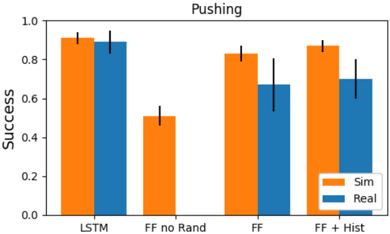
- The LSTM policy trained only in simulation achieved real-robot success of 0.89 ± 0.06 over 28 trials, comparable to its simulated success of 0.91 ± 0.03 over 100 randomized-dynamics trials.
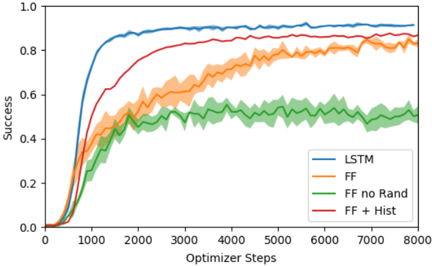
- Memoryless feedforward policies transferred worse: FF no Rand had sim 0.51 ± 0.05 and real 0.0 ± 0.0 (10 trials); FF had sim 0.83 ± 0.04 and real 0.67 ± 0.14 (12 trials); FF + Hist had sim 0.87 ± 0.03 and real 0.70 ± 0.10 (20 trials).
- Ablating randomization hurt real-robot success: fixed action timestep 0.29 ± 0.11 (17 trials), no observation noise 0.25 ± 0.12 (12 trials), fixed link mass 0.64 ± 0.10 (22 trials), fixed puck friction 0.48 ± 0.10 (27 trials), versus 0.89 ± 0.06 (28 trials) for all randomized parameters.
- When contact dynamics were altered by attaching a packet of chips to the puck, the LSTM policy achieved 0.91 ± 0.04 success, comparable to 0.89 ± 0.06 without the attachment.
Methods
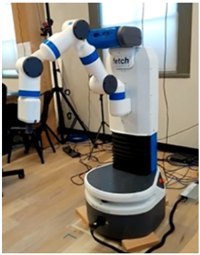
- Task: a 7-DOF Fetch Robotics arm pushed a puck to a randomly sampled target on a table; reward was binary (0 if puck within 0.07 m of target, otherwise -1). State was 52D (joint positions/velocities, gripper position, puck position/orientation/linear and angular velocities); action was 7D target joint-angle offsets. Simulation used MuJoCo with 0.002 s timestep and 20 simulation steps per control step; episodes were 100 control steps in simulation and 200 timesteps on the real robot.
- Dynamics randomization: at each episode start, 95 parameters were sampled and held fixed, including link masses, joint damping, puck mass/friction/damping, table height, controller gains, action timestep, and observation noise. Action timestep varied per step via Δt ∼ Δt0 + Exp(λ), with Δt0 = 0.04 s and λ fixed per episode; observation noise was Gaussian with standard deviation 5% of each feature’s running standard deviation; action exploration noise had standard deviation 0.01 rad.
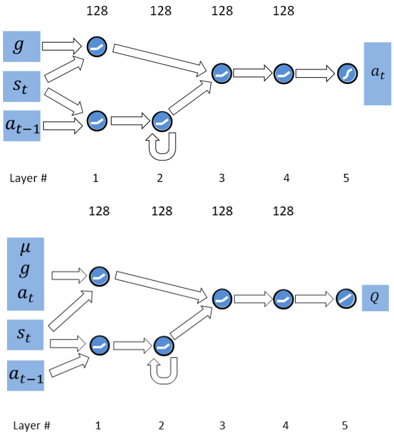
- Training and analysis: policies were trained with Recurrent Deterministic Policy Gradient (RDPG) and Hindsight Experience Replay (HER, k = 0.8), using an LSTM policy and an omniscient critic that received simulator dynamics parameters. ADAM used stepsize 5 × 10⁻⁴, batches of 128 episodes with 100 steps each, about 8000 update iterations, roughly 100 million samples, and about 8 hours on a 100-core cluster. Performance was compared across architectures and randomization ablations in simulation and on the real robot.
Limitations
- Stated: little calibration was performed to make simulation match the real robot, and the authors note that more extensive calibration would likely improve performance; they also state future work should extend to richer tasks and modalities such as vision.
- Evident from the text: evaluation is limited to a single puck-pushing task with a 7-DOF arm, and real-robot trials are small (10–28 trials per condition), so broader task and statistical generalization are not established.
- Evident from the text: the method relies on simulation-only training and does not test direct real-world fine-tuning or vision-based transfer.
Model-written summary. Check it against the paper before relying on it.
Integrity signals
Registry
Cites
Statistics
Figures
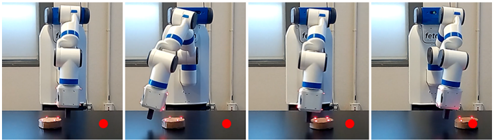
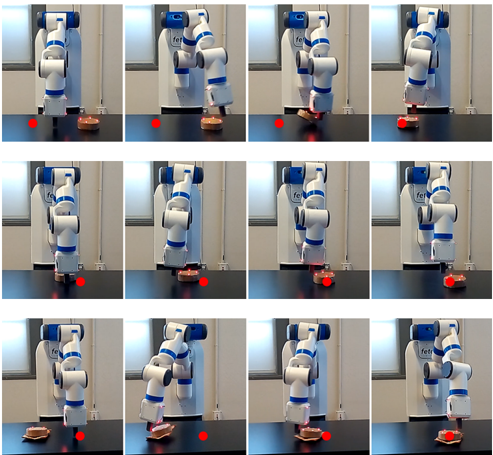
Verification
Claims the paper makes
1 Valid · 0 Not valid · 2 Not checked · 29 Own results and interpretations
The cited sources support only part of this claim — read each source’s verdict below.
In the paper
“Furthermore, it has been observed that DeepRL policies are prone to exploiting idiosyncrasies of the simulator to realize behaviours that are infeasible in the real world [2], [7].”
What the sources say
- Could not verifycites [2] [2] T. P. Lillicrap, J. J. Hunt, A. Pritzel, N. Heess, T. Erez, Y. Tassa, D. Silver, and D. Wierstra, 'Continuous control with deep reinforcement learning,' CoRR , vol. abs/1509.02971, 2015. [Online]. Available: http://arxiv.org/abs/1509.02971 - sourceExperimental — accuracy not yet measured
The Results (p. 4) describe testing DDPG in simulated physical environments, but do not report policies exploiting simulator quirks. Searches for simulator artifacts, unrealistic behavior, and real-world feasibility found no passage addressing the claimed tendency. (LLM, conf=0.72)
- Partly supportedcites [7] [7] N. Heess, D. TB, S. Sriram, J. Lemmon, J. Merel, G. Wayne, Y. Tassa, T. Erez, Z. Wang, S. M. A. Eslami, M. A. Riedmiller, and D. Silver, 'Emergence of locomotion behaviours in rich environments,' CoRR , vol. abs/1707.02286, 2017. [Online]. Available: http://arxiv.org/abs/1707.02286 - sourceExperimental — accuracy not yet measured
The Introduction (p. 1) says agents may find idiosyncratic solutions that work in one setting but are not robust across settings. The Results (p. 8) report that a simulated humanoid can exploit redundancies in the task specification, producing visually unsatisfactory gaits. Neither passage says the policies exploit quirks of the simulator or that their behaviours are infeasible in the real world. (LLM, conf=0.82)
plainstates a cause- Asserted: passes — The authors put it forward as true.
- Checkable: passes — It can be checked against evidence.
- Load-bearing: passes — The paper’s conclusions depend on it.
- Based: passes — The paper gives a reason why it holds.
- Could not verify
A result the paper reports from its own data — it cites no other source for it, so there is none to check. The quote shows it is in the paper.
In the paper
“We explore the impact of various design decisions and show that the resulting policies are robust to significant calibration error.”
- Also stated in: § B. Domain Randomization · p. 2 · plain
“Unlike previous methods which often require meticulous calibration of the simulation to closely conform to the physical system, our policies are able to adapt to significant calibration error.”
- Also stated in: § C. Non-prehensile Manipulation · p. 2 · plain
“The resulting policies are able accommodate large calibration errors when deployed on a real robot and also generalize to variability in the dynamics of the physical system.”
plain- Asserted: passes — The authors put it forward as true.
- Checkable: passes — It can be checked against evidence.
- Load-bearing: passes — The paper’s conclusions depend on it.
- Based: passes — The paper gives a reason why it holds.
- Also stated in: § B. Domain Randomization · p. 2 · plain
A result the paper reports from its own data — it cites no other source for it, so there is none to check. The quote shows it is in the paper.
In the paper
“The feedforward network trained without randomization is unable to perform the task under the real world dynamics.”
plainstates a cause- Asserted: passes — The authors put it forward as true.
- Checkable: passes — It can be checked against evidence.
- Load-bearing: passes — The paper’s conclusions depend on it.
- Based: passes — The paper gives a reason why it holds.
A result the paper reports from its own data — it cites no other source for it, so there is none to check. The quote shows it is in the paper.
In the paper
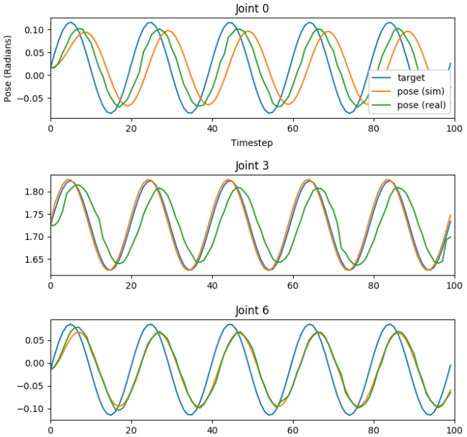
“Given the same target trajectory, the pose trajectories of the simulated and real robot differ significantly, with varying degrees of mismatch across joints.”
plainstates an association- Asserted: passes — The authors put it forward as true.
- Checkable: passes — It can be checked against evidence.
- Load-bearing: passes — The paper’s conclusions depend on it.
- Based: passes — The paper gives a reason why it holds.
A result the paper reports from its own data — it cites no other source for it, so there is none to check. The quote shows it is in the paper.
In the paper
“Policies trained without randomizing the action timestep and observation noise show particularly noticeable drops in performance.”
plainstates a cause- Asserted: passes — The authors put it forward as true.
- Checkable: passes — It can be checked against evidence.
- Load-bearing: passes — The paper’s conclusions depend on it.
- Based: passes — The paper gives a reason why it holds.
13 more claims
Create a free account to see all 32 claims and to verify the 3 references still open.
- It may state two separate claims as one. 9
- Probably not a substantial claim. 6
Claims other papers make about this one
Each is checked against this paper’s own text: does it say what the citing paper says it does?
The cited source doesn’t support the claim as written.
In the citing paper
“We instantiate SIMPLER on top of the SAPIEN physics simulator [68], but show in Section VI-D that our contributions are independent of the used simulator and can be reproduced in Isaac Sim [49].”
From Evaluating Real-World Robot Manipulation Policies in Simulation (2024) · cites this paper as [49]
Checked by a reasoning model — may be wrong.
Experimental — accuracy not yet measuredThe source backs part of the claim, not all of it — or backs it for a different population, condition or comparison.
In the citing paper
“Residual policy learning restores dynamic feasibility on the robot by learning small corrections to the retargeted reference, reusing the same residual formulation as physics refinement, so that the resulting policy transfers directly to hardware (Peng et al., 2018).”
From Dexterous Robot Manipulation from Human Demonstrations via Contact-Anchored Retargeting and Residual Policy Learning (2026) · cites this paper as Peng et al., 2018
Experimental — accuracy not yet measuredThe source backs part of the claim, not all of it — or backs it for a different population, condition or comparison.
In the citing paper
“Synthesis rollouts under domain randomization (Peng et al., 2018) produce additional dynamically feasible robot trajectories from each retargeted reference.”
From Dexterous Robot Manipulation from Human Demonstrations via Contact-Anchored Retargeting and Residual Policy Learning (2026) · cites this paper as Peng et al., 2018
Experimental — accuracy not yet measuredThe cited source says what the claim attributes to it.
In the citing paper
“Another is randomization of physical parameters that vary between simulation and reality, such that the controller becomes robust to a range of conditions that cover those that arise in physical deployment, without the necessity to precisely model these conditions a priori [21].”
From Learning quadrupedal locomotion over challenging terrain (2020) · cites this paper as [21]
The cited source says what the claim attributes to it.
In the citing paper
“Peng et al. [44] shows the effectiveness of memory-based policies (i.e., policies learnt by using past memory for future learning [95] [97]) to deal with the RG, introducing DR to generalise environment dynamics.”
From Crossing the Reality Gap: A Survey on Sim-to-Real Transferability of Robot Controllers in Reinforcement Learning (2021) · cites this paper as [44]
1 more claim about this paper
Create a free account to see every claim other papers make about this one.
Citations
Cites
Adam: A Method for Stochastic Optimization
Kingma, D. P., & Ba, J. (2014) · arXiv · doi:10.48550/arxiv.1412.6980 · Cited by 98,946
Human-level control through deep reinforcement learning
Mnih, V., Kavukcuoglu, K., Silver, D., Rusu, A. A., Veness, J., Bellemare, M. G., Graves, A., Riedmiller, M., Fidjeland, A. K., Ostrovski, G., et al. (2015) · Nature · doi:10.1038/nature14236 · Cited by 30,357 · cited 1×
“In simulated domains, agents have been developed to perform a diverse array of challenging tasks [1], [2], [3].”
BackgroundContinuous control with deep reinforcement learning
Lillicrap, T. P., Hunt, J. J., Pritzel, A., Heess, N., Erez, T., Tassa, Y., Silver, D., & Wierstra, D. (2015) · arXiv · doi:10.48550/arxiv.1509.02971 · Cited by 10,782
Domain-Adversarial Training of Neural Networks
Ganin, Y., Ustinova, E., Ajakan, H., Germain, P., Larochelle, H., Laviolette, F., Marchand, M., & Lempitsky, V. (2017) · Advances in Computer Vision and Pattern Recognition · doi:10.1007/978-3-319-58347-1_10 · Cited by 8,318
(1999) · Cited by 5,147
MuJoCo: A physics engine for model-based control
Todorov, E., Erez, T., & Tassa, Y. (2012) · 2012 IEEE/RSJ International Conference on Intelligent Robots and Systems · doi:10.1109/iros.2012.6386109 · Cited by 4,767 · cited 1×
“All simulations are performed using the MuJoCo physics engine [39] with a simulation timestep of 0.”
MethodMulti-Agent Actor-Critic for Mixed Cooperative-Competitive Environments
Lowe, R., Wu, Y., Tamar, A., Harb, J., Abbeel, P., & Mordatch, I. (2017) · arXiv · doi:10.48550/arxiv.1706.02275 · Cited by 3,377
Self-citationDomain randomization for transferring deep neural networks from simulation to the real world
Tobin, J., Fong, R., Ray, A., Schneider, J., Zaremba, W., & Abbeel, P. (2017) · 2017 IEEE/RSJ International Conference on Intelligent Robots and Systems (IROS) · doi:10.1109/iros.2017.8202133 · Cited by 3,124
Self-citationLevine, S., Pastor, P., Krizhevsky, A., Ibarz, J., & Quillen, D. (2018) · The International Journal of Robotics Research · doi:10.1177/0278364917710318 · Cited by 1,971
Andrychowicz, M., Wolski, F., Ray, A., Schneider, J., Fong, R., Welinder, P., McGrew, B., Tobin, J., Abbeel, P., & Zaremba, W. (2017) · arXiv · doi:10.48550/arxiv.1707.01495 · Cited by 1,355
Self-citation
Research works printed but not linked: 1
- [32] D. H. Ignasi Clavera and P. Abbeel, 'Policy transfer via modularity,' in IROS . IEEE, 2017. -
Cited by
Items 401–500 of 935
Continual Domain Randomization
Josifovski, J., Auddy, S., Malmir, M., Piater, J., Knoll, A., & Navarro-Guerrero, N. (2024) · IEEE/RSJ International Conference on Intelligent Robots and Systems (IROS) · doi:10.1109/iros58592.2024.10802060 · Cited by 22
“We use the Unity-based platform introduced in [26] for the simulation.”
Dynamics as Prompts: In-Context Learning for Sim-to-Real System Identifications
Zhang, X., Liu, S., Huang, P., Han, W. J., Lyu, Y., Xu, M., & Zhao, D. X. (2025) · IEEE Robotics and Automation Letters · doi:10.1109/lra.2025.3540391 · Cited by 16
“Learning (RL) allow robots to tackle complex tasks in areas such as object manipulation [1], [2] and locomotion for quadrupedal robots [3], [4] and humanoids [5].”
InfluentialSYNLOCO: Synthesizing Central Pattern Generator and Reinforcement Learning for Quadruped Locomotion
Zhang, X., Xiao, Z., Zhang, Q., & Pan, W. (2024) · IEEE Conference on Decision and Control (CDC) · doi:10.1109/cdc56724.2024.10886438 · Cited by 15
“realized the robot arm policy transfer by a domain randomization method that randomly changes the parameters of the model in training [27].”
VR-Robo: A Real-to-Sim-to-Real Framework for Visual Robot Navigation and Locomotion
Zhu, S., Mou, L., Li, D., Ye, B., Huang, R., & Zhao, H. (2025) · IEEE Robotics and Automation Letters · doi:10.1109/lra.2025.3575648 · Cited by 49
“Traditional simulator-based methods, such as domain randomization [19], [20], [21] and system identification [22], [23], aim to reduce the Sim-to-Real gap by aligning simulations with physical setups.”
Achieving Human Level Competitive Robot Table Tennis
DAmbrosio, D. B., Abeyruwan, S. W., Graesser, L., Işçen, A., Amor, H. B., Bewley, A., Reed, B. J., Reymann, K., Takayama, L. A., Tassa, Y., et al. (2025) · Proceedings - IEEE International Conference on Robotics and Automation/Proceedings · doi:10.1109/icra55743.2025.11127501 · Cited by 60
“Multiple techniques have been developed, including system identification [66], learning hybrid simulators [67], dynamics randomization [68] and learning from privileged information [69].”
AeroVerse-Review: Comprehensive survey on aerial embodied vision-and-language navigation
Yao, F., Liu, Y., Zhang, W., Zhu, Z., Li, C., Liu, N., Hu, P., Yue, Y., Wei, K., He, X. J., et al. (2025) · The Innovation Informatics · doi:10.59717/j.xinn-inform.2025.100015 · Cited by 26
Visual Navigation Subject to Embodied Mismatch
Liu, X., Guo, D., Liu, H., Zhang, X., & Sun, F. (2023) · IEEE Transactions on Cognitive and Developmental Systems · doi:10.1109/tcds.2023.3238840 · Cited by 9
“One promising approach is domain randomization which randomizes the parameters in the source domain [13], [45], or randomize the dynamics of the simulator [12] to generalize the learned policy to the real-world scenarios.”
BackgroundMethodRamezankhani, M., Harandi, M. T., Seethaler, R., & Milani, A. S. (2023) · International Journal of Computer Integrated Manufacturing · doi:10.1080/0951192x.2023.2257623 · Cited by 12
“Multi-fidelity learning, similar to sim-to-real TL (Peng et al. 2018), aims to overcome limited data obstacle by incorporating computationally inexpensive low-fidelity simulation data into the learning process.”
BackgroundForce Push: Robust Single-Point Pushing With Force Feedback
Heins, A., & Schoellig, A. P. (2024) · IEEE Robotics and Automation Letters · doi:10.1109/lra.2024.3414180 · Cited by 9
“RL with dynamics randomization is used in [17] to train a pushing policy, which is then transferred to a real robot arm with no fine-tuning.”
MethodDeep Model Predictive Optimization
Sacks, J., Rana, R., Huang, K., Spitzer, A., Shi, G., & Boots, B. (2024) · Proceedings - IEEE International Conference on Robotics and Automation/Proceedings · doi:10.1109/icra57147.2024.10611492 · Cited by 25
Yan, Y., Cao, H., Zhang, B., Ni, W., Wang, B., & Ma, X. (2024) · Drones · doi:10.3390/drones8090428 · Cited by 7
“A Long-Short Term Memory (LSTM) network [28] is a very suitable choice [12].”
Adaptive acquisition planning for visual inspection in remanufacturing using reinforcement learning
Kaiser, J.-P., Gäbele, J., Koch, D., Schmid, J., Stamer, F., & Lanza, G. (2024) · Journal of Intelligent Manufacturing · doi:10.1007/s10845-024-02478-0 · Cited by 13
Review of the techniques used in motor‐cognitive human‐robot skill transfer
Guan, Y. H., Wang, N., & Yang, C. (2021) · Cognitive Computation and Systems · doi:10.1049/ccs2.12025 · Cited by 8
Zhao, W., Fan, Y., Wang, H., Gemmeke, H., van Dongen, K. W. A., Hopp, T., & Hesser, J. (2022) · Physics in Medicine and Biology · doi:10.1088/1361-6560/acaeed · Cited by 9
Ahmic, K., Ultsch, J., Brembeck, J., & Winter, C. (2023) · Applied Sciences · doi:10.3390/app13063456 · Cited by 8
Unified Emulation-Simulation Training Environment for Autonomous Cyber Agents
Li, L., Rami, J.-P. S. E., Taylor, A., et al. (2023) · Lecture notes in computer science · doi:10.1007/978-3-031-36183-8_9 · Cited by 7
Debard, Q., Dibangoye, J., Canu, S., & Wolf, C. (2020) · Lecture notes in computer science · doi:10.1007/978-3-030-46133-1_3 · Cited by 12
“In robotics, where interactions with physical robots are slow (not faster than physical time) and expensive, this leads to the tendency of training from simulations, for instance [2][3] for robot navigation and [26] for grasping, and to the sim-to-real transfer problems [26].”
BackgroundZhang, X., Xiao, Z., Zhou, X. J., & Zhang, Q. (2024) · Optimal Control Applications and Methods · doi:10.1002/oca.3181 · Cited by 7
“29 Tan et al. analyzed the performance of domain randomization in quadruped locomotion.”
See-Touch-Predict: Active Exploration and Online Perception of Terrain Physics With Legged Robots
Lin, H., Li, H., & Gao, Y. (2025) · IEEE Robotics and Automation Letters · doi:10.1109/lra.2025.3541432 · Cited by 7
“Earlier works proposed domain randomization as a way to improve the generalization of policy by training it under a wide range of physical conditions and observation noise [12], [13], [14].”
Reinforcement learning for evaluating school safety designs in active shooter incidents
Liu, R., Wu, W., Becerik-Gerber, B., Lucas, G., Laboy, M. M., & Fannon, D. (2025) · Advanced Engineering Informatics · doi:10.1016/j.aei.2025.103575 · Cited by 10
Walk2Run: A Bio-Rhythm-Inspired Unified Control Framework for Humanoid Robot Walking and Running
Zhang, T., Wang, X., Chen, G., Liu, F., Zha, F., & Guo, W. (2025) · Journal of Bionic Engineering · doi:10.1007/s42235-025-00760-2 · Cited by 8
“To enhance generalization, techniques such as high-fidelity simulation [ 16, 17], domain randomization [18, 19], and teacher-student policy distillation [14, 20] have been proposed.”
Large-Dimensional Multibody Dynamics Simulation Using Contact Nodalization and Diagonalization
Lee, J., Lee, M., & Lee, D. (2022) · IEEE Transactions on Robotics · doi:10.1109/tro.2022.3226149 · Cited by 9
A General Locomotion Approach for a Novel Multi-legged Spherical Robot
Yang, D., Liu, Y., & Yu, Y. (2023) · Proceedings - IEEE International Conference on Robotics and Automation/Proceedings · doi:10.1109/icra48891.2023.10160881 · Cited by 5
Offline Model-Based Adaptable Policy Learning for Decision-Making in Out-of-Support Regions
Chen, X.-H., Luo, F.-M., Yu, Y., Li, Q., Qin, Z. T., Shang, W., & Ye, J. (2023) · IEEE Transactions on Pattern Analysis and Machine Intelligence · doi:10.1109/tpami.2023.3317131 · Cited by 8
“Online system identification (OSI) methods are to identify the environments automatically [30], [31], [32], [33], [34].”
BackgroundMethodInfluentialTransferring Meta-Policy From Simulation to Reality via Progressive Neural Network
Wei, M., Ju, H., Ai, T., Gómez, R., Nichols, E., & Li, G. (2024) · IEEE Robotics and Automation Letters · doi:10.1109/lra.2024.3370034 · Cited by 10
“…the generalization and feasibility of the policy in the real environment and address both the observation and/or dynamics discrepancies between simulation and reality by randomly adding bias and noise to the visual images and physical parameters when training the policy in simulation [10], [21].”
BackgroundLuo, Y., Li, W., Wang, P., Duan, H., Wei, W., & Sun, J. (2024) · IEEE Transactions on Cognitive and Developmental Systems · doi:10.1109/tcds.2024.3406730 · Cited by 10
“For example, forward transfer methods that train a model on one task and transfer it to a new task, include fine-tuning method [37], [38], [39], domain adaptation method [40], [41], [42], and randomization method [43], [44].”
AdaptAUG: Adaptive Data Augmentation Framework for Multi-Agent Reinforcement Learning
Yu, X., Tian, Y., Wang, L., Feng, P., Wu, W., & Shi, R. (2024) · Proceedings - IEEE International Conference on Robotics and Automation/Proceedings · doi:10.1109/icra57147.2024.10611035 · Cited by 13
“In robotics, domain randomization serves as a specialized form of data augmentation, facilitating the transition of reinforcement learning policies from simulations to real-world applications, although it often requires a physics simulator [15], [16].”
BackgroundMaximizing Quadruped Velocity by Minimizing Energy
Mahankali, S., Lee, C.-C., Margolis, G. B., Hong, Z.-W., & Agrawal, P. (2024) · Proceedings - IEEE International Conference on Robotics and Automation/Proceedings · doi:10.1109/icra57147.2024.10609983 · Cited by 11
Learning to Navigate Efficiently and Precisely in Real Environments
Bono, G., Poirier, H., Antsfeld, L., Monaci, G., Chidlovskii, B., & Wolf, C. (2024) · IEEE Computer Society Conference on Computer Vision and Pattern Recognition/Proceedings - IEEE Computer Society Conference on Computer Vision and Pattern Recognition/Proceedings · doi:10.1109/cvpr52733.2024.01689 · Cited by 14
“To close the gap, domain randomization methods [39, 49] treat the discrepancy between the domains as variability in the simulation parameters.”
MethodSim-to-Real Transfer for a Robotics Task: Challenges and Lessons Learned
Rothert, J. J., Lang, S., Seidel, M., & Hanses, M. (2024) · IEEE International Conference on Emerging Technologies and Factory Automation (ETFA) · doi:10.1109/etfa61755.2024.10711073 · Cited by 12
“Since most training is done in a simulation, a number of papers have focused on a sim-to-real transfer [6], [12], [13], [21], [22], [24], [25] to show how the trained policies can be deployed in the real world.”
BackgroundMethodNon-Prehensile Aerial Manipulation using Model-Based Deep Reinforcement Learning
Dimmig, C. A., & Kobilarov, M. (2024) · IEEE International Conference on Automation Science and Engineering (CASE) · doi:10.1109/case59546.2024.10711575 · Cited by 11
“This has motivated the use of DRL for pushing applications, often studied with fixed robotic arms, as in [9], [13].”
BackgroundMethodActive Robust Adversarial Reinforcement Learning Under Temporally Coupled Perturbations
Yang, J., Wang, Y., Dong, L., Xue, L., & Sun, C. (2024) · IEEE Transactions on Artificial Intelligence · doi:10.1109/tai.2024.3499938 · Cited by 8
“For instance, during the RL policy training, Peng et al. [30] randomize the dynamics of the simulator to improve robustness against model mismatch.”
From single-objective to multi-objective reinforcement learning-based model transformation
Eisenberg, M., & Wimmer, M. (2024) · Software & Systems Modeling · doi:10.1007/s10270-024-01233-6 · Cited by 8
Tang, Y., Qu, A., Jiang, X., Mo, B., Cao, S., Rodriguez, J., Koutsopoulos, H. N., Wu, C., & Zhao, J. (2024) · Smart Cities · doi:10.3390/smartcities7060141 · Cited by 10
“With DR, discrepancies between the source and target domains are modeled as variability in the source domain [24].”
Robotic Object Insertion with a Soft Wrist through Sim-to-Real Privileged Training
Fuchioka, Y., Beltran-Hernandez, C. C., Hải, N. T., & Hamaya, M. (2024) · IEEE/RSJ International Conference on Intelligent Robots and Systems (IROS) · doi:10.1109/iros58592.2024.10801575 · Cited by 17
“During teacher and student training, we apply domain randomization, a common technique in sim-to-real RL to enable robust transfer of policies to physical hardware [9].”
Awal, A., Hetzel, J., Gebel, R., & Pretz, J. (2025) · Physical Review Accelerators and Beams · doi:10.1103/physrevaccelbeams.28.034601 · Cited by 10
“The challenge in POMDPs lies in the agent’s need to infer the hidden state of the environment from the history of observations and actions.”
Commonsense Reasoning for Legged Robot Adaptation with Vision-Language Models
Chen, A. S., Lessing, A. M., Tang, A., Chada, G., Smith, L., Levine, S., & Finn, C. (2025) · Proceedings - IEEE International Conference on Robotics and Automation/Proceedings · doi:10.1109/icra55743.2025.11127234 · Cited by 30
“Each skill corresponds to a policy π i , which takes in a state s ∈ S and outputs a low-level action u .”
Coordinated Behavior for Sequential Cooperative Task Using Two-Stage Reward Assignment with Decay
Miyashita, Y., & Sugawara, T. (2020) · Lecture notes in computer science · doi:10.1007/978-3-030-63833-7_22 · Cited by 6
TAMPC: A Controller for Escaping Traps in Novel Environments
Zhong, S., Zhang, Z., Fazeli, N., & Berenson, D. (2020) · IEEE Robotics and Automation Letters · doi:10.1109/lra.2021.3057789 · Cited by 8
“This includes methods such as meta-learning [17], [18], domain randomization [19], [20], Sim-to-real [21], [22], and other transfer learning [23] methods.”
MethodLearning to Ground Objects for Robot Task and Motion Planning
Ding, Y. F., Zhang, X., Zhan, X., & Zhang, S. (2022) · IEEE Robotics and Automation Letters · doi:10.1109/lra.2022.3157566 · Cited by 11
Kinematics Learning of Massive Heterogeneous Serial Robots
Xing, D., Xia, W., & Xu, B. H. (2022) · Proceedings - IEEE International Conference on Robotics and Automation/Proceedings · doi:10.1109/icra46639.2022.9812021 · Cited by 6
Coupling Vision and Proprioception for Navigation of Legged Robots
Fu, Z., Kumar, A., Agarwal, A., Qi, H., Malik, J., & Pathak, D. (2022) · IEEE/CVF Conference on Computer Vision and Pattern Recognition Workshops (CVPRW) · doi:10.1109/cvprw56347.2022.00206 · Cited by 8
Output Feedback Tube MPC-Guided Data Augmentation for Robust, Efficient Sensorimotor Policy Learning
Tagliabue, A., & How, J. P. (2022) · IEEE/RSJ International Conference on Intelligent Robots and Systems (IROS) · doi:10.1109/iros47612.2022.9981888 · Cited by 9
“, Domain Randomization (DR) [14]) improve the robustness of the learned policy, but do not address the demonstration and computational efficiency challenges.”
BackgroundNon-blocking Asynchronous Training for Reinforcement Learning in Real-World Environments
Böhm, P., Pounds, P., & Chapman, A. C. (2022) · IEEE/RSJ International Conference on Intelligent Robots and Systems (IROS) · doi:10.1109/iros47612.2022.9981333 · Cited by 7
“One way of dealing with this challenge is dynamics randomization [8], where robust policies are found by randomizing the simulation parameters during training.”
BackgroundMethodM-EMBER: Tackling Long-Horizon Mobile Manipulation via Factorized Domain Transfer
Wu, B., Martín-Martín, R., & Fei-Fei, L. (2023) · Proceedings - IEEE International Conference on Robotics and Automation/Proceedings · doi:10.1109/icra48891.2023.10160934 · Cited by 16
REFORMA: Robust REinFORceMent Learning via Adaptive Adversary for Drones Flying under Disturbances
Hsu, H.-L., Meng, H., Luo, S., Dong, J., Tarokh, V., & Pajić, M. (2024) · Proceedings - IEEE International Conference on Robotics and Automation/Proceedings · doi:10.1109/icra57147.2024.10611002 · Cited by 6
Variational Auto-Regularized Alignment for Sim-to-Real Control
Hwasser, M., Kragić, D., & Antonova, R. (2020) · Proceedings - IEEE International Conference on Robotics and Automation/Proceedings · doi:10.1109/icra40945.2020.9197130 · Cited by 7
“This is achieved by either adding noise to observations [11], [12] or to simulation parameters [13], [14].”
BackgroundVision-Based Efficient Robotic Manipulation with a Dual-Streaming Compact Convolutional Transformer
Guo, H. Y., Song, M., Ding, Z., Yi, C., & Jiang, F. (2023) · Sensors · doi:10.3390/s23010515 · Cited by 8
“Previous investigations used Sim2Real [7,15,16], imitation learning [17–20], data augmentation [21,22], and other methods to overcome the barrier of data efficiency in real or simulated robot application, preliminarily attain satisfying accomplishments.”
MethodMulti-Object Navigation in real environments using hybrid policies
Sadek, A., Bono, G., Chidlovskii, B., Baskurt, A. M., & Wolf, C. (2023) · Proceedings - IEEE International Conference on Robotics and Automation/Proceedings · doi:10.1109/icra48891.2023.10161030 · Cited by 18
“To close the gap, domain randomization methods [31], [38] treat the discrepancy between the domains as variability in the simulation parameters.”
MethodScaling Simulation-to-Real Transfer by Learning Composable Robot Skills
Julian, R., Heiden, E., He, Z., Zhang, H., Schaal, S., Lim, J. J., Sukhatme, G. S., & Hausman, K. (2020) · Springer proceedings in advanced robotics · doi:10.1007/978-3-030-33950-0_24 · Cited by 10
“ithmic composition, and further exploring how to learn and plan in latent space effectively. We also plan to combine our method with other transfer learning techniques, such as dynamics randomization [20], to improve the transfer quality of embedded skill policies in future experiments. Our hope is to refine the method…”
BackgroundMethodTransfer of Robot Perception Module With Adversarial Learning
Sui, H., Shang, W., & Li, X. (2019) · IEEE Access · doi:10.1109/access.2019.2923541 · Cited by 6
Deep Q-Learning Algorithm for Solving Inverse Kinematics of Four-Link Manipulator
Blinov, D., Saveliev, A. I., & Shabanova, A. (2020) · Smart innovation, systems and technologies · doi:10.1007/978-981-15-5580-0_23 · Cited by 6
Learning from Synthetic Dataset for Crop Seed Instance SegmentationPreprint
Toda, Y., Okura, F., Ito, J., et al. (2019) · bioRxiv (Cold Spring Harbor Laboratory) · doi:10.1101/866921 · Cited by 6
Measuring Progress in Deep Reinforcement Learning Sample Efficiency
Dorner, F. E. (2021) · arXiv · doi:10.48550/arxiv.2102.04881 · Cited by 6
Oosedo, A., Wada, D., & Hisada, S. (2023) · ROBOMECH Journal · doi:10.1186/s40648-023-00260-0 · Cited by 6
“Therefore, it becomes essential to use memory-augmented policies [13, 14, 20], or input time series of states to policies [21, 22].”
BackgroundMethodInfluentialBenchmarking Smoothness and Reducing High-Frequency Oscillations in Continuous Control Policies
Christmann, G. H. G., Luo, Y., Mandala, H., & Chen, W.-C. (2024) · IEEE/RSJ International Conference on Intelligent Robots and Systems (IROS) · doi:10.1109/iros58592.2024.10802057 · Cited by 17
“We benchmark traditional RL environments using Gymnasium [13], and robotics application scenarios with Isaac Gym [14] and sim2real deployment to real hardware [24], [25].”
PolyFit: A Peg-in-hole Assembly Framework for Unseen Polygon Shapes via Sim-to-real Adaptation
Lee, G., Lee, J., Noh, S., Ko, M., Kim, K.-M., & Lee, K. (2024) · IEEE/RSJ International Conference on Intelligent Robots and Systems (IROS) · doi:10.1109/iros58592.2024.10802554 · Cited by 15
Yan, X., Feng, S., Sun, H., & Liu, H. X. (2025) · IEEE Transactions on Intelligent Transportation Systems · doi:10.1109/tits.2025.3571966 · Cited by 52
“As pointed out in various domains [17], [18], [19], [20], the sim-to-real gap could hinder and even mislead the training and testing process of an agent.”
Yonezawa, H., Yonezawa, A., & KAJIWARA, I. (2025) · Mechanical Systems and Signal Processing · doi:10.1016/j.ymssp.2025.113570 · Cited by 7
“The parameter set 𝜉 remains fixed throughout an episode and is resampled at the beginning of the next episode [8][32].”
InfluentialOpportunities challenges and roadmap for humanoid robots in construction
Uthai, T., You, H., Wang, M., Smith, K. E., Spackman, E., Ryan, Z., Li, S., & Du, J. (2025) · Scientific Reports · doi:10.1038/s41598-025-30252-6 · Cited by 20
Multi-Intersection Management for Connected Autonomous Vehicles by Reinforcement Learning
Jin, H., Wei, Y., Yang, Z., Liu, Z., & Fan, G. (2023) · IEEE International Conference on Distributed Computing Systems (ICDCS) · doi:10.1109/icdcs57875.2023.00014 · Cited by 6
“Therefore, we further augment SMAC’s robustness against such discrepancy between the training and execution environments via a domain randomization-based method [19] described in Section V-E1, and present the robustness test settings in Section V-E2 and results in Section V-E3.”
MethodReinforcement Learning of Bipedal Walking Using a Simple Reference Motion
Itahashi, N., Itoh, H., Fukumoto, H., & Wakuya, H. (2024) · Applied Sciences · doi:10.3390/app14051803 · Cited by 11
Yoo, T., & Choi, B. W. (2024) · Electronics · doi:10.3390/electronics13142857 · Cited by 9
“Peng et al. [17] proposed a simple method to bridge the simulation–reality gap by randomizing the dynamics of the simulator during training.”
MethodWang, S. J., Zhu, H., & Johnson, A. M. (2024) · Proceedings - IEEE International Conference on Robotics and Automation/Proceedings · doi:10.1109/icra57147.2024.10611059 · Cited by 12
Lee, Y., Song, S., Park, K.-Y., Koo, B.-M., & Baek, J. (2024) · IEEE Transactions on Instrumentation and Measurement · doi:10.1109/tim.2024.3507042 · Cited by 8
Neural Internal Model Control: Learning a Robust Control Policy Via Predictive Error Feedback
Gao, F., Yu, C., Wang, Y., & Wu, Y. (2025) · IEEE Robotics and Automation Letters · doi:10.1109/lra.2025.3573169 · Cited by 8
“Large-scale training with randomized dynamics and environmental parameters enables RL-based control methods to generalize across different conditions and environments [16], [17], allowing robots to perform reliably even in previously unseen and highly varying scenarios.”
Deng, Y., Hou, Z., Yang, W., & Xu, J. L. (2021) · Lecture notes in computer science · doi:10.1007/978-3-030-89098-8_38 · Cited by 5
Validate on Sim, Detect on Real - Model Selection for Domain Randomization
Leibovich, G., Jacob, G., Endrawis, S., Novik, G., & Tamar, A. (2022) · Proceedings - IEEE International Conference on Robotics and Automation/Proceedings · doi:10.1109/icra46639.2022.9811621 · Cited by 6
“have been proposed to alleviate the gap [11], among which Domain Randomization (DR) [20, 23, 33] is particularly popular.”
BackgroundLearning from Imperfect Demonstrations via Adversarial Confidence Transfer
Cao, Z., Wang, Z., & Sadigh, D. (2022) · Proceedings - IEEE International Conference on Robotics and Automation/Proceedings · doi:10.1109/icra46639.2022.9811891 · Cited by 10
“108 To learn a common latent space, domain randomization methods align the different dynamics by 109 randomizing the dynamics with hand-crafted augmentations [26, 27, 28], but they require that the 110 differences between two dynamics can be covered by the augmentations.”
MethodOffline Learning of Counterfactual Predictions for Real-World Robotic Reinforcement Learning
Jin, J., Graves, D., Haigh, C., Luo, J., & Jägersand, M. (2022) · Proceedings - IEEE International Conference on Robotics and Automation/Proceedings · doi:10.1109/icra46639.2022.9811963 · Cited by 20
“There are a number of prior works tackling each of the challenges, for example, training efficiency [15, 16], generalization [17, 18], safer online explorations [13, 19], sim-to-real transfer [20, 21] and learning from a sparse reward [22–24].”
BackgroundComparison of Different Domain Randomization Methods for Policy Transfer in Reinforcement Learning
Ma, M., Li, H., Hu, G., Liu, S., & Zhao, D. (2023) · IEEE Data Driven Control and Learning Systems Conference (DDCLS) · doi:10.1109/ddcls58216.2023.10166417 · Cited by 6
“• UDR: The collision time of UDR in the real world is shorter than that of ADR, indicating that the navigation strategy trained by UDR is safer, so the UDR method is more practical in tasks that pay more attention to safety.”
BackgroundMethodInfluentialLearning a data-efficient model for a single agent in homogeneous multi-agent systems
Gurevich, A., Bamani, E., & Sintov, A. (2023) · Neural Computing and Applications · doi:10.1007/s00521-023-08838-w · Cited by 5
“However, simulations rarely capture reality and the trained policies are usually poorly transferred [11].”
BackgroundLearning Responsive Humanoid Motion Skills From Graph-Powered Motion Matching
Wang, S., Piao, S., Leng, X., & He, Z. (2023) · IEEE Transactions on Consumer Electronics · doi:10.1109/tce.2023.3296249 · Cited by 7
“With the recent development of deep reinforcement learning, imitation learning can effectively reproduce and imitate various human actions [14], [16].”
BackgroundWheely: An Accessible Platform for Experimenting with Wheeled-Legged Quadrupedal Robots
Zhang, W., & Wang, K. (2023) · International Conference on Computer, Control and Robotics (ICCCR) · doi:10.1109/icccr56747.2023.10193993 · Cited by 5
“Trials were done in simulation [24] using Pybullet [25].”
MethodRL-PGO: Reinforcement Learning-Based Planar Pose-Graph Optimization
Kourtzanidis, N., & Sajad Saeedi, G. (2023) · IEEE Control Systems Letters · doi:10.1109/lcsys.2023.3340619 · Cited by 7
“The recurrent branch further allows the agent to make informed optimal decisions on the next actions from previous state and action pairs, by the internal state representation [38]: z t = z ( h t ) modelled by an LSTM.”
BackgroundUlhas, S. S., Kannapiran, S., & Berman, S. (2024) · IEEE Intelligent Vehicles Symposium · doi:10.1109/iv55156.2024.10588594 · Cited by 13
“Domain randomization has been successfully applied to bridge the gap between synthetic and real-world data for a variety of tasks, including quadrotor navigation [19] and object grasping [20]–[23].”
BackgroundCurriculum reinforcement learning-based drifting along a general path for autonomous vehicles
Yu, K., Fu, M., Tian, X., Yang, S., & Yang, Y. (2024) · Robotica · doi:10.1017/s026357472400119x · Cited by 7
Otto—Design and Control of an 8-DoF SEA-Driven Quadrupedal Robot
Scaldaferri, A., Tolomei, S., Iotti, F., Gambino, P., Pierallini, M., Angelini, F., & Garabini, M. (2025) · IEEE Open Journal of the Industrial Electronics Society · doi:10.1109/ojies.2025.3567112 · Cited by 5
“…form of random pushes applied to the bases of the robots, and by randomizing some robot parameters and other physics properties of the simulation [66], as shown in Table 3, to make the policy robust against modeling mismatches between the simulated and real robot, as well as against unmodeled…”
Using Reinforcement Learning and Simulation to Develop Autonomous Vehicle Control Strategies
Navarro, A., Genç, Ş., Rangarajan, P., Khalil, R., Goberville, N., Rojas, J. F., & Asher, Z. D. (2020) · SAE technical papers on CD-ROM/SAE technical paper series · doi:10.4271/2020-01-0737 · Cited by 6
“For a successful transfer to the real world, researchers use calibration [5, 33], domain randomization [34, 35, 36, 15], fine tuning with real world data [12], and learn features from a combination of simulation and real data [37, 38].”
BackgroundEvaluation of Domain Randomization Techniques for Transfer Learning
Grün, S., Höninger, S., Scheikl, P. M., Hein, B., & Kröger, T. (2019) · International Conference on Advanced Robotics (ICAR) · doi:10.1109/icar46387.2019.8981654 · Cited by 8
“This would allow us to evaluate the use of randomized robot dynamics as seen in [21].”
MethodRichard, A., Aravecchia, S., Schillaci, T., Geist, M., & Pradalier, C. (2021) · IEEE Robotics and Automation Letters · doi:10.1109/lra.2021.3065278 · Cited by 5
“Most of them rely either on Domain Randomization (DR) [9] or Domain Adaptation (DA) [10].”
BackgroundMethodForestry Crane Automation using Learning-based Visual Grasping Point Prediction
Gietler, H., Böhm, C., Ainetter, S., Schöffmann, C., Fraundorfer, F., Weiß, S., & Zangl, H. (2022) · IEEE Sensors Applications Symposium (SAS) · doi:10.1109/sas54819.2022.9881370 · Cited by 6
“[6] used RL for training in simulated environments and afterward transferred the results to reality.”
MethodProgress and challenges in adaptive robotics
Nolfi, S. (2022) · Frontiers in Robotics and AI · doi:10.3389/frobt.2022.1020462 · Cited by 5
“The parameters subjected to variations can include dynamic parameters of the robot and of the environment (Peng et al., 2018; Tan et al., 2018) and visual and rendering parameters such as texture and lighting (Sadeghi & Levine, 2017; Tobit et al., 2017).”
BackgroundCurriculum Adversarial Training for Robust Reinforcement Learning
Sheng, J., Zhai, P., Dong, Z., Kang, X., Chen, C., & Zhang, L. (2022) · International Joint Conference on Neural Networks (IJCNN) · doi:10.1109/ijcnn55064.2022.9892908 · Cited by 12
“In this section, we briefly summarize some popular robust methods for adversarial DRL. Domain randomization [15], [16], as a method to learn robust policy, regards the real domain as another variant of the simulation domain.”
MethodSet-valued rigid-body dynamics for simultaneous, inelastic, frictional impacts
Halm, M., & Posa, M. (2024) · The International Journal of Robotics Research · doi:10.1177/02783649241236860 · Cited by 16
“This may be particularly problematic for some robotic control policies, including model-based controllers which assume one particular model is correct (Wensing et al., 2022; Yang and Posa 2023), and learned policies trained on a single set of settings in a single simulator (Peng et al., 2018).”
Reinforcement Learning with Randomized Physical Parameters for Fault-Tolerant Robots
Okamoto, W., & Kawamoto, K. (2020) · Joint International Conference on Soft Computing and Intelligent Systems and International Symposium on Advanced Intelligent Systems (SCIS&ISIS) · doi:10.1109/scisisis50064.2020.9322775 · Cited by 8
“This study adds randomization to the RL framework, as demonstrated by Peng et al. [1] and Tan et al. [2].”
BackgroundMethodDomain Adaptation from Public Dataset to Robotic Perception Based on Deep Neural Network
Yi, C., Chen, H., Hu, X., & Xu, Y. (2020) · Chinese Automation Congress · doi:10.1109/cac51589.2020.9327112 · Cited by 5
“Xue et al used dynamics randomization to train recurrent policies to adapt to unfamiliar dynamics in a real robot [14].”
BackgroundRobust agents learn causal world models
Richens, J., & Everitt, T. (2024) · arXiv · doi:10.48550/arxiv.2402.10877 · Cited by 5
“Examples of interventionally generated shifts include translating objects in images (Engstrom et al., 2019), noising inputs and adversarial robustness (Hendrycks & Dietterich, 2019), and changes to the initial conditions or transition function in Markov decision processes (Peng et al., 2018).”
BackgroundMimicGen: A Data Generation System for Scalable Robot Learning using Human Demonstrations
Mandlekar, A., Nasiriany, S., Wen, B., Akinola, I., Narang, Y., Fan, L., Zhu, Y., & Fox, D. (2023) · arXiv · doi:10.48550/arxiv.2310.17596 · Cited by 226
“Another avenue for real world deployment is to generate data and train policies in simulation (where object poses are readily available) and then deploy simulation-trained agents in the real world [58–62] — this is left for future work.”
BackgroundMethodTransformable Quadruped Wheelchairs Capable of Autonomous Stair Ascent and Descent
Akamisaka, A., & Nagao, K. (2024) · Sensors · doi:10.3390/s24113675 · Cited by 5
“By randomizing the simulator dynamics during training, Peng et al. [28] developed a policy that is adaptable to a variety of dynamics, including those that differ significantly from the trained dynamics, and showed that it can be generalized to real-world dynamics without any physical training.”
BackgroundBalanced Domain Randomization for Safe Reinforcement Learning
Kang, C., Chang, W., & Choi, J. (2024) · Applied Sciences · doi:10.3390/app14219710 · Cited by 7
Robust Deep Reinforcement Learning with Adaptive Adversarial Perturbations in Action Space
Liu, Q., Kuang, Y., & Wang, J. (2024) · International Joint Conference on Neural Networks (IJCNN) · doi:10.1109/ijcnn60899.2024.10651543 · Cited by 19
“This mismatch can cause the policies to perform poorly or even fail when transferred to the real world [9]–[11].”
BackgroundSim2Real Transfer for Audio-Visual Navigation with Frequency-Adaptive Acoustic Field Prediction
Chen, C., Ramos, J., Tomar, A., & Grauman, K. L. (2024) · IEEE/RSJ International Conference on Intelligent Robots and Systems (IROS) · doi:10.1109/iros58592.2024.10802636 · Cited by 15
“State-of-the-art approaches in audio-visual navigation rely on reinforcement learning to train the navigation policy end-to-end [11], [17], which not only poses challenges for interpretation but also struggles to generalize to the real world due to various sim2real gaps.”
Local Policies Enable Zero-Shot Long-Horizon Manipulation
Dalal, M., Liu, M., Talbott, W. A., Chen, C., Pathak, D., Zhang, J., & Salakhutdinov, R. (2025) · Proceedings - IEEE International Conference on Robotics and Automation/Proceedings · doi:10.1109/icra55743.2025.11128407 · Cited by 37
“We outperform methods that use end-to-end sim2real transfer [48] as well as real world corrections [16].”
Fletcher, L., Clarke, R. J., Richardson, T. S., & Hansen, M. (2022) · AIAA SciTech Forum · doi:10.2514/6.2022-1288 · Cited by 4
A Framework for Few-Shot Policy Transfer Through Observation Mapping and Behavior Cloning
Shukla, Y., Kesari, B., Goel, S., Wright, R., & Sinapov, J. (2023) · IEEE/RSJ International Conference on Intelligent Robots and Systems (IROS) · doi:10.1109/iros55552.2023.10342477 · Cited by 6
Hu, Z., Yang, F., Lu, Z., & Chen, J. (2024) · IEEE Transactions on Industrial Informatics · doi:10.1109/tii.2024.3423423 · Cited by 6
“…dynamic, a classical Euler method is used to model their maneuver, which can be formulated by To construct the imaginary environment that can simulate the actual overtaking LC as realistically as possible, a simple and straightforward but also efficient solution to this problem is DR [32].”
MethodAflakian, A., Hathaway, J., Stolkin, R., & Rastegarpanah, A. (2024) · IEEE Access · doi:10.1109/access.2024.3432644 · Cited by 7
“Curriculum-based, or automatic DR has been employed with success in dexterous manipulation tasks as demonstrated by OpenAI in [17] and [18], reducing the trial and error procedure of defining an environment with suitable variation to ensure a robust policy, while improving the capability to learn…”
MethodLearning to Walk with Adaptive Feet
Scaldaferri, A., Angelini, F., & Garabini, M. (2024) · Robotics · doi:10.3390/robotics13080113 · Cited by 4
“We also applied domain randomization [39], considering additive component-wise scaled random noise, generating randomized reference commands (the angular velocity command is generated starting from a randomized heading direction) and applying random disturbances to the robots through interspersed…”
MethodSim-to-Real Grasp Detection with Global-to-Local RGB-D Adaptation
Ma, H., Qin, R., Shi, M., Gao, B., & Huang, D. (2024) · Proceedings - IEEE International Conference on Robotics and Automation/Proceedings · doi:10.1109/icra57147.2024.10611165 · Cited by 15
“Over the past decade, it has been extensively studied across various fields, such as robot control [22], robot manipulation [7] and autonomous driving [23].”
Background
Metadata
- Authors
- Peng, X. B., Andrychowicz, M., Zaremba, W., & Abbeel, P.
- Affiliations
- University of California, Berkeley (US)
- OpenAI (United States) (US)
- ORCID
- Abbeel, Pieter
- Venue
- 2018 IEEE International Conference on Robotics and Automation (ICRA)
- Publisher
- IEEE
- Published
- 2018-05
- Pages
- 3803-3810
- ISSN
- 1050-4729 (ISSN-L)
- OpenAlex
- W2767050701
- Cited by
- 1,309
- References
- 39
- Citations by year
- 2026: 149 · 2025: 167 · 2024: 155 · 2023: 158 · 2022: 159 · 2021: 197 · 2020: 178 · 2019: 109 · 2018: 34
- FWCI
- 52.88
- Type
- conference paper
- Language
- en
- Open access
- green
- arxiv.org
- Locations
- Proceedings - IEEE International Conference on Robotics and Automation/Proceedings (publishedVersion)
- arXiv (Cornell University) (submittedVersion)
- arXiv (Cornell University)
- Topics
- Physical Sciences › Computer Science › Artificial Intelligence › Reinforcement Learning in Robotics
- Physical Sciences › Engineering › Control and Systems Engineering › Robot Manipulation and Learning
- Physical Sciences › Computer Science › Artificial Intelligence › Domain Adaptation and Few-Shot Learning
- Keywords
- sim-to-real transfer, robot control, reality gap, object pushing, robot manipulators, policy generalization
About these checks
Registry, retraction, Cites and statistics results are computed, not judged, with one exception: a printed reference that no index lists is read once by a model before it counts as a citation error. Claims are extracted by a model and kept only when their quote appears verbatim in the text; each cited source is then checked, with a model’s help, for whether it says what the claim relies on. Those verdicts can be wrong — read the claim’s quote and the cited source before relying on one.
The claim verdicts this report counts are experimental: their accuracy is not yet measured.
A language model drew the claims from the paper on 2026-10-10, under version 3 of the claim definition (model deepseek-v4.1-flash, prompt extract-v3).
A second model labelled each claim on 2026-10-10 (model jev-1.13-20260917, definition revision gold-guideline-v0.2).
Cited sources are checked with a language model’s help (gpt-6-sol).
Statistics and arithmetic are recomputed, not judged.
Confidence bands are shown only for fields calibrated on our annotated test set. None is calibrated yet, so no band is shown.
What counts as a claim ›How we measure confidence ›How we check this ›
Are you an author, or do you see a problem with this page? Request a review
Data sources
Bibliographic data: Semantic Scholar, OpenAlex, Crossref.
Contains information from the Semantic Scholar Academic Graph Datasets, made available under the ODC Attribution License (ODC-BY 1.0).
Semantic Scholar’s data is described in: Kinney, R., et al. (2023). The Semantic Scholar Open Data Platform. arXiv:2301.10140.
