

Sim-to-Real Transfer of Robotic Control with Dynamics Randomization
Open accessThe DOI matches its Crossref record; 50 of the 50 references it cites were found in a registry or an index; 2 of the 5 sources its claims cite were checked for support.
Abstract
Simulations are attractive environments for training agents as they provide an abundant source of data and alleviate certain safety concerns during the training process. But the behaviours developed by agents in simulation are often specific to the characteristics of the simulator. Due to modeling error, strategies that are successful in simulation may not transfer to their real world counterparts. In this paper, we demonstrate a simple method to bridge this “reality gap”. By randomizing the dynamics of the simulator during training, we are able to develop policies that are capable of adapting to very different dynamics, including ones that differ significantly from the dynamics on which the policies were trained. This adaptivity enables the policies to generalize to the dynamics of the real world without any training on the physical system. Our approach is demonstrated on an object pushing task using a robotic arm. Despite being trained exclusively in simulation, our policies are able to maintain a similar level of performance when deployed on a real robot, reliably moving an object to a desired location from random initial configurations. We explore the impact of various design decisions and show that the resulting policies are robust to significant calibration error.
Overview
CoChat Summary
TL;DR
The paper demonstrates that randomizing simulator dynamics during training lets recurrent policies transfer directly to a real 7-DOF Fetch arm for a puck-pushing task without any real-world training. The LSTM policy retained comparable performance in simulation and reality, while feedforward and non-randomized baselines transferred poorly or failed.
Key findings
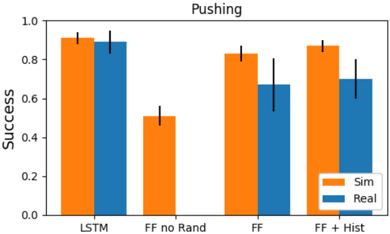
- The LSTM policy trained only in simulation achieved real-robot success of 0.89 ± 0.06 over 28 trials, comparable to its simulated success of 0.91 ± 0.03 over 100 randomized-dynamics trials.
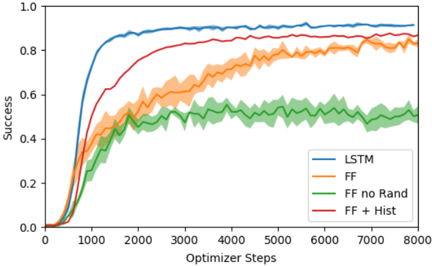
- Memoryless feedforward policies transferred worse: FF no Rand had sim 0.51 ± 0.05 and real 0.0 ± 0.0 (10 trials); FF had sim 0.83 ± 0.04 and real 0.67 ± 0.14 (12 trials); FF + Hist had sim 0.87 ± 0.03 and real 0.70 ± 0.10 (20 trials).
- Ablating randomization hurt real-robot success: fixed action timestep 0.29 ± 0.11 (17 trials), no observation noise 0.25 ± 0.12 (12 trials), fixed link mass 0.64 ± 0.10 (22 trials), fixed puck friction 0.48 ± 0.10 (27 trials), versus 0.89 ± 0.06 (28 trials) for all randomized parameters.
- When contact dynamics were altered by attaching a packet of chips to the puck, the LSTM policy achieved 0.91 ± 0.04 success, comparable to 0.89 ± 0.06 without the attachment.
Methods
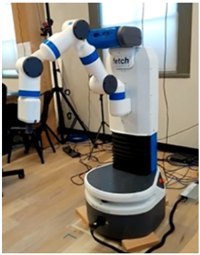
- Task: a 7-DOF Fetch Robotics arm pushed a puck to a randomly sampled target on a table; reward was binary (0 if puck within 0.07 m of target, otherwise -1). State was 52D (joint positions/velocities, gripper position, puck position/orientation/linear and angular velocities); action was 7D target joint-angle offsets. Simulation used MuJoCo with 0.002 s timestep and 20 simulation steps per control step; episodes were 100 control steps in simulation and 200 timesteps on the real robot.
- Dynamics randomization: at each episode start, 95 parameters were sampled and held fixed, including link masses, joint damping, puck mass/friction/damping, table height, controller gains, action timestep, and observation noise. Action timestep varied per step via Δt ∼ Δt0 + Exp(λ), with Δt0 = 0.04 s and λ fixed per episode; observation noise was Gaussian with standard deviation 5% of each feature’s running standard deviation; action exploration noise had standard deviation 0.01 rad.
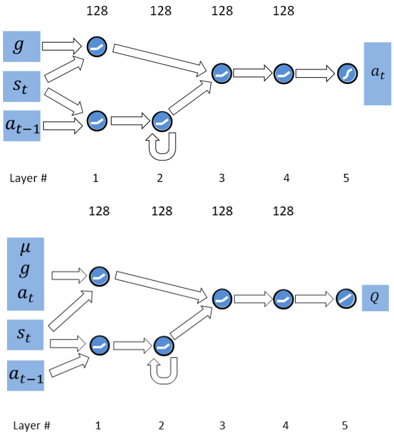
- Training and analysis: policies were trained with Recurrent Deterministic Policy Gradient (RDPG) and Hindsight Experience Replay (HER, k = 0.8), using an LSTM policy and an omniscient critic that received simulator dynamics parameters. ADAM used stepsize 5 × 10⁻⁴, batches of 128 episodes with 100 steps each, about 8000 update iterations, roughly 100 million samples, and about 8 hours on a 100-core cluster. Performance was compared across architectures and randomization ablations in simulation and on the real robot.
Limitations
- Stated: little calibration was performed to make simulation match the real robot, and the authors note that more extensive calibration would likely improve performance; they also state future work should extend to richer tasks and modalities such as vision.
- Evident from the text: evaluation is limited to a single puck-pushing task with a 7-DOF arm, and real-robot trials are small (10–28 trials per condition), so broader task and statistical generalization are not established.
- Evident from the text: the method relies on simulation-only training and does not test direct real-world fine-tuning or vision-based transfer.
Model-written summary. Check it against the paper before relying on it.
Integrity signals
Registry
Cites
Statistics
Figures
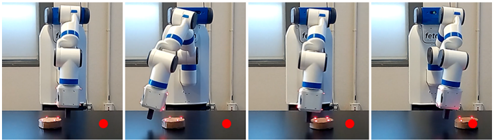
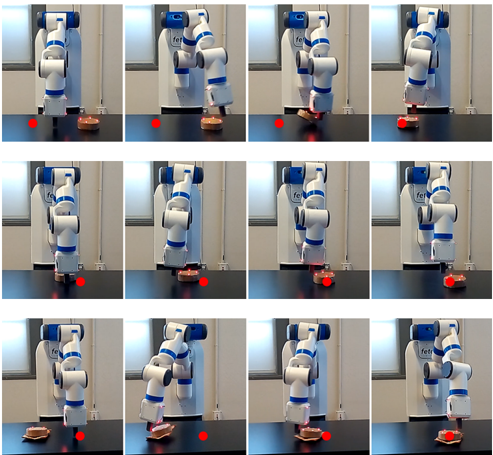
Verification
Claims the paper makes
1 Valid · 0 Not valid · 2 Not checked · 29 Own results and interpretations
The cited sources support only part of this claim — read each source’s verdict below.
In the paper
“Furthermore, it has been observed that DeepRL policies are prone to exploiting idiosyncrasies of the simulator to realize behaviours that are infeasible in the real world [2], [7].”
What the sources say
- Could not verifycites [2] [2] T. P. Lillicrap, J. J. Hunt, A. Pritzel, N. Heess, T. Erez, Y. Tassa, D. Silver, and D. Wierstra, 'Continuous control with deep reinforcement learning,' CoRR , vol. abs/1509.02971, 2015. [Online]. Available: http://arxiv.org/abs/1509.02971 - sourceExperimental — accuracy not yet measured
The Results (p. 4) describe testing DDPG in simulated physical environments, but do not report policies exploiting simulator quirks. Searches for simulator artifacts, unrealistic behavior, and real-world feasibility found no passage addressing the claimed tendency. (LLM, conf=0.72)
- Partly supportedcites [7] [7] N. Heess, D. TB, S. Sriram, J. Lemmon, J. Merel, G. Wayne, Y. Tassa, T. Erez, Z. Wang, S. M. A. Eslami, M. A. Riedmiller, and D. Silver, 'Emergence of locomotion behaviours in rich environments,' CoRR , vol. abs/1707.02286, 2017. [Online]. Available: http://arxiv.org/abs/1707.02286 - sourceExperimental — accuracy not yet measured
The Introduction (p. 1) says agents may find idiosyncratic solutions that work in one setting but are not robust across settings. The Results (p. 8) report that a simulated humanoid can exploit redundancies in the task specification, producing visually unsatisfactory gaits. Neither passage says the policies exploit quirks of the simulator or that their behaviours are infeasible in the real world. (LLM, conf=0.82)
plainstates a cause- Asserted: passes — The authors put it forward as true.
- Checkable: passes — It can be checked against evidence.
- Load-bearing: passes — The paper’s conclusions depend on it.
- Based: passes — The paper gives a reason why it holds.
- Could not verify
A result the paper reports from its own data — it cites no other source for it, so there is none to check. The quote shows it is in the paper.
In the paper
“We explore the impact of various design decisions and show that the resulting policies are robust to significant calibration error.”
- Also stated in: § B. Domain Randomization · p. 2 · plain
“Unlike previous methods which often require meticulous calibration of the simulation to closely conform to the physical system, our policies are able to adapt to significant calibration error.”
- Also stated in: § C. Non-prehensile Manipulation · p. 2 · plain
“The resulting policies are able accommodate large calibration errors when deployed on a real robot and also generalize to variability in the dynamics of the physical system.”
plain- Asserted: passes — The authors put it forward as true.
- Checkable: passes — It can be checked against evidence.
- Load-bearing: passes — The paper’s conclusions depend on it.
- Based: passes — The paper gives a reason why it holds.
- Also stated in: § B. Domain Randomization · p. 2 · plain
A result the paper reports from its own data — it cites no other source for it, so there is none to check. The quote shows it is in the paper.
In the paper
“The feedforward network trained without randomization is unable to perform the task under the real world dynamics.”
plainstates a cause- Asserted: passes — The authors put it forward as true.
- Checkable: passes — It can be checked against evidence.
- Load-bearing: passes — The paper’s conclusions depend on it.
- Based: passes — The paper gives a reason why it holds.
A result the paper reports from its own data — it cites no other source for it, so there is none to check. The quote shows it is in the paper.
In the paper
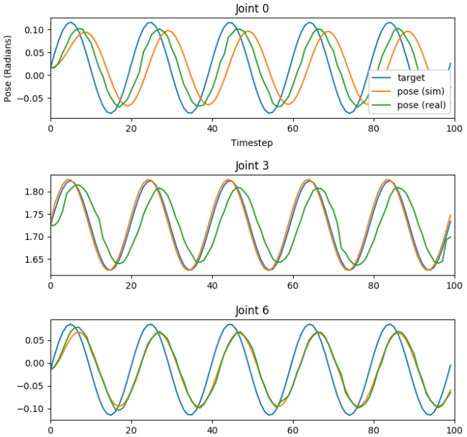
“Given the same target trajectory, the pose trajectories of the simulated and real robot differ significantly, with varying degrees of mismatch across joints.”
plainstates an association- Asserted: passes — The authors put it forward as true.
- Checkable: passes — It can be checked against evidence.
- Load-bearing: passes — The paper’s conclusions depend on it.
- Based: passes — The paper gives a reason why it holds.
A result the paper reports from its own data — it cites no other source for it, so there is none to check. The quote shows it is in the paper.
In the paper
“Policies trained without randomizing the action timestep and observation noise show particularly noticeable drops in performance.”
plainstates a cause- Asserted: passes — The authors put it forward as true.
- Checkable: passes — It can be checked against evidence.
- Load-bearing: passes — The paper’s conclusions depend on it.
- Based: passes — The paper gives a reason why it holds.
13 more claims
Create a free account to see all 32 claims and to verify the 3 references still open.
- It may state two separate claims as one. 9
- Probably not a substantial claim. 6
Claims other papers make about this one
Each is checked against this paper’s own text: does it say what the citing paper says it does?
The cited source doesn’t support the claim as written.
In the citing paper
“We instantiate SIMPLER on top of the SAPIEN physics simulator [68], but show in Section VI-D that our contributions are independent of the used simulator and can be reproduced in Isaac Sim [49].”
From Evaluating Real-World Robot Manipulation Policies in Simulation (2024) · cites this paper as [49]
Checked by a reasoning model — may be wrong.
Experimental — accuracy not yet measuredThe source backs part of the claim, not all of it — or backs it for a different population, condition or comparison.
In the citing paper
“Residual policy learning restores dynamic feasibility on the robot by learning small corrections to the retargeted reference, reusing the same residual formulation as physics refinement, so that the resulting policy transfers directly to hardware (Peng et al., 2018).”
From Dexterous Robot Manipulation from Human Demonstrations via Contact-Anchored Retargeting and Residual Policy Learning (2026) · cites this paper as Peng et al., 2018
Experimental — accuracy not yet measuredThe source backs part of the claim, not all of it — or backs it for a different population, condition or comparison.
In the citing paper
“Synthesis rollouts under domain randomization (Peng et al., 2018) produce additional dynamically feasible robot trajectories from each retargeted reference.”
From Dexterous Robot Manipulation from Human Demonstrations via Contact-Anchored Retargeting and Residual Policy Learning (2026) · cites this paper as Peng et al., 2018
Experimental — accuracy not yet measuredThe cited source says what the claim attributes to it.
In the citing paper
“Another is randomization of physical parameters that vary between simulation and reality, such that the controller becomes robust to a range of conditions that cover those that arise in physical deployment, without the necessity to precisely model these conditions a priori [21].”
From Learning quadrupedal locomotion over challenging terrain (2020) · cites this paper as [21]
The cited source says what the claim attributes to it.
In the citing paper
“Peng et al. [44] shows the effectiveness of memory-based policies (i.e., policies learnt by using past memory for future learning [95] [97]) to deal with the RG, introducing DR to generalise environment dynamics.”
From Crossing the Reality Gap: A Survey on Sim-to-Real Transferability of Robot Controllers in Reinforcement Learning (2021) · cites this paper as [44]
1 more claim about this paper
Create a free account to see every claim other papers make about this one.
Citations
Cites
Adam: A Method for Stochastic Optimization
Kingma, D. P., & Ba, J. (2014) · arXiv · doi:10.48550/arxiv.1412.6980 · Cited by 98,946
Human-level control through deep reinforcement learning
Mnih, V., Kavukcuoglu, K., Silver, D., Rusu, A. A., Veness, J., Bellemare, M. G., Graves, A., Riedmiller, M., Fidjeland, A. K., Ostrovski, G., et al. (2015) · Nature · doi:10.1038/nature14236 · Cited by 30,357 · cited 1×
“In simulated domains, agents have been developed to perform a diverse array of challenging tasks [1], [2], [3].”
BackgroundContinuous control with deep reinforcement learning
Lillicrap, T. P., Hunt, J. J., Pritzel, A., Heess, N., Erez, T., Tassa, Y., Silver, D., & Wierstra, D. (2015) · arXiv · doi:10.48550/arxiv.1509.02971 · Cited by 10,782
Domain-Adversarial Training of Neural Networks
Ganin, Y., Ustinova, E., Ajakan, H., Germain, P., Larochelle, H., Laviolette, F., Marchand, M., & Lempitsky, V. (2017) · Advances in Computer Vision and Pattern Recognition · doi:10.1007/978-3-319-58347-1_10 · Cited by 8,318
(1999) · Cited by 5,147
MuJoCo: A physics engine for model-based control
Todorov, E., Erez, T., & Tassa, Y. (2012) · 2012 IEEE/RSJ International Conference on Intelligent Robots and Systems · doi:10.1109/iros.2012.6386109 · Cited by 4,767 · cited 1×
“All simulations are performed using the MuJoCo physics engine [39] with a simulation timestep of 0.”
MethodMulti-Agent Actor-Critic for Mixed Cooperative-Competitive Environments
Lowe, R., Wu, Y., Tamar, A., Harb, J., Abbeel, P., & Mordatch, I. (2017) · arXiv · doi:10.48550/arxiv.1706.02275 · Cited by 3,377
Self-citationDomain randomization for transferring deep neural networks from simulation to the real world
Tobin, J., Fong, R., Ray, A., Schneider, J., Zaremba, W., & Abbeel, P. (2017) · 2017 IEEE/RSJ International Conference on Intelligent Robots and Systems (IROS) · doi:10.1109/iros.2017.8202133 · Cited by 3,124
Self-citationLevine, S., Pastor, P., Krizhevsky, A., Ibarz, J., & Quillen, D. (2018) · The International Journal of Robotics Research · doi:10.1177/0278364917710318 · Cited by 1,971
Andrychowicz, M., Wolski, F., Ray, A., Schneider, J., Fong, R., Welinder, P., McGrew, B., Tobin, J., Abbeel, P., & Zaremba, W. (2017) · arXiv · doi:10.48550/arxiv.1707.01495 · Cited by 1,355
Self-citation
Research works printed but not linked: 1
- [32] D. H. Ignasi Clavera and P. Abbeel, 'Policy transfer via modularity,' in IROS . IEEE, 2017. -
Cited by
Deep reinforcement learning for autonomous driving: A survey
Kiran, B. R., Sobh, I., Talpaert, V., Mannion, P., Sallab, A. A. A., Yogamani, S., & Perez, P. (2022) · IEEE Transactions on Intelligent Transportation Systems · doi:10.1109/tits.2021.3054625 · Cited by 2,342
“Authors in [118], randomized the dynamics of the simulator during training.”
BackgroundLearning agile and dynamic motor skills for legged robots
Hwangbo, J., Lee, J., Dosovitskiy, A., Bellicoso, D., Tsounis, V., Koltun, V., & Hutter, M. (2019) · Science Robotics · doi:10.1126/scirobotics.aau5872 · Cited by 1,482
Learning quadrupedal locomotion over challenging terrain
Lee, J., Hwangbo, J., Wellhausen, L., Koltun, V., & Hutter, M. (2020) · Science Robotics · doi:10.1126/scirobotics.abc5986 · Cited by 1,156
“Another is randomization of physical parameters that vary between simulation and reality, such that the controller becomes robust to a range of conditions that cover those that arise in physical deployment, without the necessity to precisely model these conditions a priori [21].”
Generalizing to unseen domains: A survey on domain generalization
Wang, J., Lan, C., Liu, C., Ouyang, Y., Qin, T., Lu, W., Chen, Y., Zeng, W., & Yu, P. (2022) · IEEE Transactions on Knowledge and Data Engineering · doi:10.1109/tkde.2022.3178128 · Cited by 1,046
“Similar techniques were also used in [26, 27, 28, 24] to strengthen the generalization capability of the models.”
Methodvon Rueden, L., Mayer, S., Beckh, K., Georgiev, B., Giesselbach, S., Heese, R., Kirsch, B., Walczak, M., Pfrommer, J., Pick, A., et al. (2021) · IEEE Transactions on Knowledge and Data Engineering · doi:10.1109/tkde.2021.3079836 · Cited by 793
“A promising direction to close the gap is domain adaptation, especially adversarial training [67], [137], or domain randomization [138].”
BackgroundSim-to-Real: Learning Agile Locomotion For Quadruped Robots
Tan, J., Zhang, T., Coumans, E., Iscen, A., Bai, Y., Hafner, D., Bohez, S., & Vanhoucke, V. (2018) · Robotics: Science and Systems XIV · doi:10.15607/rss.2018.xiv.010 · Cited by 735
Sim-to-Real: Learning Agile Locomotion For Quadruped Robots
Tan, J., Zhang, T., Coumans, E., Iscen, A., Bai, Y., Hafner, D., Bohez, S., & Vanhoucke, V. (2018) · arXiv · doi:10.48550/arxiv.1804.10332 · Cited by 734
Evaluation and accurate diagnoses of pediatric diseases using artificial intelligence
Liang, H., Tsui, B. Y., Ni, H., Valentim, C. C. S., Baxter, S. L., Liu, G., Cai, W., Kermany, D. S., Sun, X., Chen, J., et al. (2019) · Nature Medicine · doi:10.1038/s41591-018-0335-9 · Cited by 659
Challenges of real-world reinforcement learning: definitions, benchmarks and analysis
Dulac-Arnold, G., Levine, N., Mankowitz, D. J., Li, J., Paduraru, C., Gowal, S., & Hester, T. (2021) · Machine Learning · doi:10.1007/s10994-021-05961-4 · Cited by 645
“Domain randomization (Peng et al. 2018) involves explicitly training an agent on various perturbations of the environment and averaging these learning errors together during training.”
BackgroundEnd-to-End Autonomous Driving: Challenges and Frontiers
Chen, L., Wu, P., Chitta, K., Jaeger, B., Geiger, A., & Li, H. (2024) · IEEE Transactions on Pattern Analysis and Machine Intelligence · doi:10.1109/tpami.2024.3435937 · Cited by 610
“Domainrandomization[265], [266],[267]isalsoasimpleandeffectivesim-to-realtechnique forRLpolicylearning,whichisfurtheradaptedforend-to-end autonomousdriving[188],[268].”
Learning ambidextrous robot grasping policies
Mahler, J., Matl, M., Satish, V., Danielczuk, M., DeRose, B., McKinley, S., & Goldberg, K. (2019) · Science Robotics · doi:10.1126/scirobotics.aau4984 · Cited by 563
How to train your robot with deep reinforcement learning: Lessons we have learned
Ibarz, J., Tan, J., Finn, C., Kalakrishnan, M., Pastor, P., & Levine, S. (2021) · The International Journal of Robotics Research · doi:10.1177/0278364920987859 · Cited by 570
“In fact, most of the prior work used simulation (Brockman et al. 2016; Coumans and Bai 2016) to evaluate and benchmark the learning algorithms (H ¨ am ¨ al ¨ ainen et al. 2015; Heess et al. 2017; Yu et al. 2018; Peng et al. 2018a).”
BackgroundMethodInfluentialClosing the Sim-to-Real Loop: Adapting Simulation Randomization with Real World Experience
Chebotar, Y., Handa, A., Makoviychuk, V., Macklin, M., Issac, J., Ratliff, N., & Fox, D. (2019) · 2019 International Conference on Robotics and Automation (ICRA) · doi:10.1109/icra.2019.8793789 · Cited by 457
“[22] use randomization of physical parameters of the scene to learn a policy in simulation and transfer it to a real robot for pushing a puck to a target position.”
James, S., Wohlhart, P., Kalakrishnan, M., Kalashnikov, D., Irpan, A., Ibarz, J., Levine, S., Hadsell, R., & Bousmalis, K. (2019) · 2019 IEEE/CVF Conference on Computer Vision and Pattern Recognition (CVPR) · doi:10.1109/cvpr.2019.01291 · Cited by 420
“There have been more robotics works that do not use vision, but that apply domain randomization on physical properties of the simulator to aid transferability [40, 46, 1, 68, 43].”
BackgroundA Survey of Embodied AI: From Simulators to Research Tasks
Duan, J., Yu, S., Tan, H. L., Zhu, H., & Tan, C. (2022) · IEEE Transactions on Emerging Topics in Computational Intelligence · doi:10.1109/tetci.2022.3141105 · Cited by 420
“However, Sim2Real [27]–[29] and robotics in the physical world will not be covered in this paper.”
BackgroundInfluentialRLBench: The Robot Learning Benchmark & Learning Environment
James, S., Ma, Z., Arrojo, D. R., & Davison, A. J. (2020) · IEEE Robotics and Automation Letters · doi:10.1109/lra.2020.2974707 · Cited by 405
“…on-the-fly, meaning that you cam generate an infinite amount for your imitation learning algorithm. c) Sim-to-Real Transfer : Recently there has been a large amount of work in learning control policies in simulation and then transferring these to the real world [48], [49], [50], [51], [52], [53].”
BackgroundLearning Agile Robotic Locomotion Skills by Imitating Animals
Bin Peng, X., Coumans, E., Zhang, T., Lee, T.-W., Tan, J., & Levine, S. (2020) · Robotics: Science and Systems XVI · doi:10.15607/rss.2020.xvi.064 · Cited by 357
Lee, M. A., Zhu, Y., Srinivasan, K., Shah, P., Savarese, S., Fei-Fei, L., Garg, A., & Bohg, J. (2019) · 2019 International Conference on Robotics and Automation (ICRA) · doi:10.1109/icra.2019.8793485 · Cited by 349
Embodied intelligence via learning and evolution
Gupta, A., Savarese, S., Ganguli, S., & Fei-Fei, L. (2021) · Nature Communications · doi:10.1038/s41467-021-25874-z · Cited by 352
Ecoffet, A., Huizinga, J., Lehman, J., Stanley, K. O., & Clune, J. (2021) · Nature · doi:10.1038/s41586-020-03157-9 · Cited by 330
Recent advances on industrial data-driven energy savings: Digital twins and infrastructures
Teng, S. Y., Touš, M., Leong, W. D., How, B. S., Lam, H. L., & Máša, V. (2021) · Renewable and Sustainable Energy Reviews · doi:10.1016/j.rser.2020.110208 · Cited by 300
A Survey on Learning-Based Robotic Grasping
Kleeberger, K., Bormann, R., Kraus, W., & Huber, M. F. (2020) · Current Robotics Reports · doi:10.1007/s43154-020-00021-6 · Cited by 290
“Randomizations can also be applied to the dynamics of the system or environment [71] including gravity, mass of each link in the robot ’ s body, damping of each joint, pose of the robot base as well as mass, friction, and damping of the manipulated objects (dynamics randomization) for a robust…”
BackgroundDeep reinforcement learning: a survey
Wang, H.-N., Liu, N., Zhang, Y.-Y., Feng, D.-W., Huang, F., Li, D.-S., & Zhang, Y.-M. (2020) · Frontiers of Information Technology & Electronic Engineering · doi:10.1631/fitee.1900533 · Cited by 274
“Apart from Atari and simple agents in Mu-joco (e.g., half-cheetah, ant, and spider), DeepMimic (Peng et al., 2018a) further develops challenging mul-tiskilled agents including multiple characters (e.g., human, Atlas robot, bipedal dinosaur, and dragon) and a large variety of skills (e.g.,…”
BackgroundMethodInfluentialReview of machine learning methods in soft robotics
Kim, D., Kim, S.-H., Kim, T., Kang, B. B., Lee, M., Park, W., Ku, S., Kim, D., Kwon, J., Lee, H., et al. (2021) · PLOS ONE · doi:10.1371/journal.pone.0246102 · Cited by 256
A Survey on Deep Reinforcement Learning Algorithms for Robotic Manipulation
Han, D., Mulyana, B., Stankovic, V., & Cheng, S. (2023) · Sensors · doi:10.3390/s23073762 · Cited by 253
“[54] proposed using dynamics randomization to train recurrent policies in simulation and deploy them directly on a physical robot, achieving good performance on an object-pushing task without calibration.”
Towards Out-Of-Distribution Generalization: A Survey
Liu, J., Shen, Z., He, Y., Zhang, X., Xu, R., Yu, H., & Cui, P. (2021) · arXiv · doi:10.48550/arxiv.2108.13624 · Cited by 253
“The data augmentation methods for DG can be divided into randomization based augmentation [93], [94], [95], [96], [97], [98], gradient based augmentation [99], [100], [101] and generation based augmentation [102], [103], [104], [105].”
MethodInfluentialLearning Dexterous In-Hand Manipulation
OpenAI, Andrychowicz, M., Baker, B., Chociej, M., Jozefowicz, R., McGrew, B., Pachocki, J., Petron, A., Plappert, M., Powell, G., et al. (2018) · arXiv · doi:10.48550/arxiv.1808.00177 · Cited by 248
Self-citationMaking Sense of Vision and Touch: Learning Multimodal Representations for Contact-Rich Tasks
Lee, M. A., Zhu, Y., Zachares, P., Tan, M., Srinivasan, K., Savarese, S., Fei-Fei, L., Garg, A., & Bohg, J. (2020) · IEEE Transactions on Robotics · doi:10.1109/tro.2019.2959445 · Cited by 238
“e only on one task [20, 31], or require human demonstration and object CAD models [1]. There have been promising works that train manipulation policies in simulation and transfer them to a real robot [3, 10, 50]. However, only few works focused on contact-rich tasks [24] and none relied on haptic feedback in simulatio…”
BackgroundLearning for a Robot: Deep Reinforcement Learning, Imitation Learning, Transfer Learning
Hua, J., Zeng, L., Li, G., & Ju, Z. (2021) · Sensors · doi:10.3390/s21041278 · Cited by 229
“Weak pairwise constraints [104] 2018 Peng et al.”
BackgroundRoboTHOR: An Open Simulation-to-Real Embodied AI Platform
Deitke, M., Han, W., Herrasti, A., Kembhavi, A., Kolve, E., Mottaghi, R., Salvador, J., Schwenk, D., VanderBilt, E., Wallingford, M., et al. (2020) · 2020 IEEE/CVF Conference on Computer Vision and Pattern Recognition (CVPR) · doi:10.1109/cvpr42600.2020.00323 · Cited by 220
“The main approaches are based on randomization of the source domain to better generalize to the target domain [63, 29, 51, 44, 61], learning the mapping between some abstraction or higher order statistics of the source and target domains [27, 59, 19, 35, 76, 42, 78], interpolating between the source and the target dom…”
Reinforcement Learning for Robust Parameterized Locomotion Control of Bipedal Robots
Li, Z., Cheng, X., Peng, X. B., Abbeel, P., Levine, S., Berseth, G., & Sreenath, K. (2021) · 2021 IEEE International Conference on Robotics and Automation (ICRA) · doi:10.1109/icra48506.2021.9560769 · Cited by 219
Self-citationReal-world humanoid locomotion with reinforcement learning
Radosavovic, I., Xiao, T., Zhang, B., Darrell, T., Malik, J., & Sreenath, K. (2024) · Science Robotics · doi:10.1126/scirobotics.adi9579 · Cited by 212
“Our approach falls in the general family of techniques for sim-to-real transfer with domain randomization ( 28–31 ).”
MethodA soft robot that adapts to environments through shape change
Shah, D. S., Powers, J. P., Tilton, L. G., Kriegman, S., Bongard, J., & Kramer-Bottiglio, R. (2020) · Nature Machine Intelligence · doi:10.1038/s42256-020-00263-1 · Cited by 202
“Although many simulation to reality (“sim2real”) methods have been reported [35, 36, 24, 37, 25, 38, 39, 40, 41, 42, 43], none have documented the transfer from simulation to reality of shape-changing robots.”
BackgroundJi, G., Mun, J., Kim, H., & Hwangbo, J. (2022) · IEEE Robotics and Automation Letters · doi:10.1109/lra.2022.3151396 · Cited by 203
“Dynamics randomization is important for a successful sim-to-real transfer of policies trained in simulation [22].”
BackgroundSalvato, E., Fenu, G., Medvet, E., & Pellegrino, F. A. (2021) · IEEE Access · doi:10.1109/access.2021.3126658 · Cited by 200
“(g) The Fetch robot used for the pushing task of [44].”
BackgroundMethodBlind Bipedal Stair Traversal via Sim-to-Real Reinforcement Learning
Siekmann, J., Green, K., Warila, J., Fern, A., & Hurst, J. (2021) · arXiv · doi:10.48550/arxiv.2105.08328 · Cited by 193
Blind Bipedal Stair Traversal via Sim-to-Real Reinforcement Learning
Siekmann, J., Green, K., Warila, J., Fern, A., & Hurst, J. (2021) · Robotics: Science and Systems XVII · doi:10.15607/rss.2021.xvii.061 · Cited by 193
A Survey of Zero-shot Generalisation in Deep Reinforcement Learning
Kirk, R., Zhang, A., Grefenstette, E., & Rocktäschel, T. (2023) · Journal of Artificial Intelligence Research · doi:10.1613/jair.1.14174 · Cited by 193
Resource Management in Wireless Networks via Multi-Agent Deep Reinforcement Learning
Naderializadeh, N., Sydir, J. J., Simsek, M., & Nikopour, H. (2021) · IEEE Transactions on Wireless Communications · doi:10.1109/twc.2021.3051163 · Cited by 187
Learning quadrupedal locomotion on deformable terrain
Choi, S., Ji, G., Park, J., Kim, H., Mun, J., Lee, J. H., & Hwangbo, J. (2023) · Science Robotics · doi:10.1126/scirobotics.ade2256 · Cited by 176
Lin, G., Zhu, L., Li, J., Zou, X., & Tang, Y. (2021) · Computers and Electronics in Agriculture · doi:10.1016/j.compag.2021.106350 · Cited by 163
Deep learning for fabrication and maturation of 3D bioprinted tissues and organs
Ng, W. L., Chan, A., Ong, Y. S., & Chua, C. K. (2020) · Virtual and Physical Prototyping · doi:10.1080/17452759.2020.1771741 · Cited by 161
“which is widely practised for robotic control (Peng et al. 2018).”
BackgroundA Survey on Policy Search Algorithms for Learning Robot Controllers in a Handful of Trials
Chatzilygeroudis, K., Vassiliades, V., Stulp, F., Calinon, S., & Mouret, J.-B. (2020) · IEEE Transactions on Robotics · doi:10.1109/tro.2019.2958211 · Cited by 160
“Algorithms such as IT&E or the work in [146] use a form of directed exploration to create”
BackgroundMethodInfluentialDrive Like a Human: Rethinking Autonomous Driving with Large Language Models
Fu, D., Li, X., Wen, L., Dou, M., Cai, P., Shi, B., & Qiao, Y. (2024) · 2024 IEEE/CVF Winter Conference on Applications of Computer Vision Workshops (WACVW) · doi:10.1109/wacvw60836.2024.00102 · Cited by 173
“The modular approach involves a stack of interconnected components that handle various sub-tasks, such as perception [23, 24, 43], planning [21, 44], and control [30, 19].”
BackgroundEnd-to-End Active Object Tracking and Its Real-World Deployment via Reinforcement Learning
Luo, W., Sun, P., Zhong, F., Liu, W., Zhang, T., & Wang, Y. (2019) · IEEE Transactions on Pattern Analysis and Machine Intelligence · doi:10.1109/tpami.2019.2899570 · Cited by 235
“Using environment augmentation for improving the generalization of learned model has previously been explored in a large amount of work on robotics, including methods for obstacle avoidance [40], navigation [41], and robot manipulation [42], [43], [44], [45].”
MethodTransferring policy of deep reinforcement learning from simulation to reality for robotics
Ju, H., Juan, R., Gomez, R., Nakamura, K., & Li, G. (2022) · Nature Machine Intelligence · doi:10.1038/s42256-022-00573-6 · Cited by 147
Deep learning in robotics: survey on model structures and training strategies
Karoly, A. I., Galambos, P., Kuti, J., & Rudas, I. J. (2021) · IEEE Transactions on Systems, Man, and Cybernetics: Systems · doi:10.1109/tsmc.2020.3018325 · Cited by 146
Training instance segmentation neural network with synthetic datasets for crop seed phenotyping
Toda, Y., Okura, F., Ito, J., Okada, S., Kinoshita, T., Tsuji, H., & Saisho, D. (2020) · Communications Biology · doi:10.1038/s42003-020-0905-5 · Cited by 134
“An early attempt at domain randomization was made by generating the images using different camera positions, object location, and lighting conditions, which is similar to the technique applied to control robots 30 .”
MethodDeep Reinforcement Learning for Soft, Flexible Robots: Brief Review with Impending Challenges
Bhagat, S., Banerjee, H., Tse, Z. T. H., & Ren, H. (2019) · Robotics · doi:10.3390/robotics8010004 · Cited by 160
Robot Learning From Randomized Simulations: A Review
Muratore, F., Ramos, F., Turk, G., Yu, W., Gienger, M., & Peters, J. (2022) · Frontiers in Robotics and AI · doi:10.3389/frobt.2022.799893 · Cited by 128
“In contrast, Peng et al. (2018) combined model-free RL with recurrent NN policies that were trained using hindsight experience replay (Andrychowicz et al., 2017) in order to push an object by controlling a robotic arm.”
BackgroundReinforcement learning for versatile, dynamic, and robust bipedal locomotion control
Li, Z., Peng, X. B., Abbeel, P., Levine, S., Berseth, G., & Sreenath, K. (2024) · The International Journal of Robotics Research · doi:10.1177/02783649241285161 · Cited by 287
“These could potentially handle different contact sequences like walking, running, and jumping, but still rely on task-specific optimized trajectories.”
InfluentialSelf-citationA survey on model-based reinforcement learning
Luo, F.-M., Xu, T., Lai, H., Chen, X.-H., Zhang, W., & Yu, Y. (2024) · Science China Information Sciences · doi:10.1007/s11432-022-3696-5 · Cited by 148
“Tasks have different definitions in different scenarios, e.g., differences in reward functions [Finn et al., 2017a, Rothfuss et al., 2019], or parameters of dynamics [Peng et al., 2018, Zhang et al., 2018a].”
BackgroundHarmonious Lane Changing via Deep Reinforcement Learning
Wang, G., Hu, J., Li, Z., & Li, L. (2021) · IEEE Transactions on Intelligent Transportation Systems · doi:10.1109/tits.2020.3047129 · Cited by 128
BayesSim: Adaptive Domain Randomization Via Probabilistic Inference for Robotics Simulators
Ramos, F., Possas, R., & Fox, D. (2019) · Robotics: Science and Systems XV · doi:10.15607/rss.2019.xv.029 · Cited by 111
“Simulation parameters could vary from physical settings like damping, friction and object masses [25] to visual parameters like objects textures, shapes and etc [38].”
BackgroundKang, K., Belkhale, S., Kahn, G., Abbeel, P., & Levine, S. (2019) · 2019 International Conference on Robotics and Automation (ICRA) · doi:10.1109/icra.2019.8793735 · Cited by 119
“Other approaches have sought to improve transfer by minimizing the gap between simulation and reality, either by bringing the simulator closer to reality [16], [17], making reality closer to the simulator [18], [8], or randomizing visual [7], [19] or physical [20], [21], [22], [23] properties of the simulator.”
BackgroundSelf-citationSelf-Supervised Correspondence in Visuomotor Policy Learning
Florence, P., Manuelli, L., & Tedrake, R. (2020) · IEEE Robotics and Automation Letters · doi:10.1109/lra.2019.2956365 · Cited by 110
“While other works have shown that injecting noise into the dynamics either during imitation learning [33] or sim-to-real transfer [34] can alleviate cascading errors, we provide a simple method based only on data augmentation.”
BackgroundMechanism, Actuation, Perception, and Control of Highly Dynamic Multilegged Robots: A Review
He, J., & Gao, F. (2020) · Chinese Journal of Mechanical Engineering · doi:10.1186/s10033-020-00485-9 · Cited by 130
“Sim-to-real RL [3, 110] has recently been exploited for the control of multilegged robots.”
BackgroundMethodGeneralization in Reinforcement Learning by Soft Data Augmentation
Hansen, N., & Wang, X. (2021) · 2021 IEEE International Conference on Robotics and Automation (ICRA) · doi:10.1109/icra48506.2021.9561103 · Cited by 111
Adaptive guidance and integrated navigation with reinforcement meta-learning
Gaudet, B., Linares, R., & Furfaro, R. (2020) · Acta Astronautica · doi:10.1016/j.actaastro.2020.01.007 · Cited by 111
“In [6], the authors use a recurrent policy and value function in a modified deep deterministic policy gradient algorithm to learn a policy for a robotic manipulator arm that uses real camera images as observations.”
BackgroundSim-to-(Multi)-Real: Transfer of Low-Level Robust Control Policies to Multiple Quadrotors
Molchanov, A., Chen, T., Hönig, W., Preiss, J. A., Ayanian, N., & Sukhatme, G. S. (2019) · IEEE/RSJ International Conference on Intelligent Robots and Systems (IROS) · doi:10.1109/iros40897.2019.8967695 · Cited by 151
“[14] apply DR to the task of pushing an object to a target location using a Fetch arm.”
MethodLearning Variable Impedance Control for Contact Sensitive Tasks
Bogdanović, M., Khadiv, M., & Righetti, L. (2020) · IEEE Robotics and Automation Letters · doi:10.1109/lra.2020.3011379 · Cited by 116
“An approach often taken in sim-to-real research is to randomize robot parameters in the simulation to capture various types of unmodeled dynamics [20].”
BackgroundTowards Generalization in Target-Driven Visual Navigation by Using Deep Reinforcement Learning
Devo, A., Mezzetti, G., Costante, G., Fravolini, M. L., & Valigi, P. (2020) · IEEE Transactions on Robotics · doi:10.1109/tro.2020.2994002 · Cited by 107
“achieve sim-to-real transfer, which is successfully applied in other robotic tasks [50], [20].”
BackgroundAction robust reinforcement learning and applications in continuous control
Tessler, C., Efroni, Y., & Mannor, S. (2019) · arXiv · doi:10.48550/arxiv.1901.09184 · Cited by 108
Mohammed, M. Q., Kwek, L. C., & Chua, S. C. (2020) · IEEE Access · doi:10.1109/access.2020.3027923 · Cited by 128
“In addition, many studies have focused on transfer learning, such as using modular network architectures [156], [157] and randomizing visual appearance and robot dynamics [150], [158].”
BackgroundA survey on human-aware robot navigation
Möller, R., Furnari, A., Battiato, S., Härmä, A., & Farinella, G. M. (2021) · Robotics and Autonomous Systems · doi:10.1016/j.robot.2021.103837 · Cited by 140
“Peng et al. [138] demonstrated this by varying the dynamics of the simulation of a robot arm that is tasked with pushing an object - by varying their simulation properties, they trained a policy that was able to execute the task in a real setup as well.”
BackgroundMeta reinforcement learning for sim-to-real domain adaptation
Arndt, K., Hazara, M., Ghadirzadeh, A., & Kyrki, V. (2020) · 2020 IEEE International Conference on Robotics and Automation (ICRA) · doi:10.1109/icra40945.2020.9196540 · Cited by 97
DeXtreme: Transfer of Agile In-hand Manipulation from Simulation to Reality
Handa, A., Allshire, A., Makoviychuk, V., Petrenko, A., Singh, R., Liu, J., Makoviichuk, D., Wyk, K. V., Zhurkevich, A., Sundaralingam, B., et al. (2023) · Proceedings - IEEE International Conference on Robotics and Automation/Proceedings · doi:10.1109/icra48891.2023.10160216 · Cited by 282
“To help overcome this, we introduce various kinds of randomisations [15] into the simulated environment as listed in Table 3.”
MethodWon, D.-O., Müller, K., & Lee, S. (2020) · Science Robotics · doi:10.1126/scirobotics.abb9764 · Cited by 105
“(16) demonstrated an object-pushing task with a robotic arm using dynamics randomization.”
BackgroundLegged Robots that Keep on Learning: Fine-Tuning Locomotion Policies in the Real World
Smith, L., Kew, J. C., Peng, X. B., Ha, S., Tan, J., & Levine, S. (2022) · Proceedings - IEEE International Conference on Robotics and Automation/Proceedings · doi:10.1109/icra46639.2022.9812166 · Cited by 169
Self-citationLearning high-DOF reaching-and-grasping via dynamic representation of gripper-object interaction
She, Q., Hu, R., Xu, J., Liu, M., Xu, K., & Huang, H. F. (2022) · ACM Transactions on Graphics · doi:10.1145/3528223.3530091 · Cited by 117
Learning Human-to-Humanoid Real-Time Whole-Body Teleoperation
He, T., Luo, Z., Xiao, W., Zhang, C., Kitani, K., Liu, C., & Shi, G. (2024) · IEEE/RSJ International Conference on Intelligent Robots and Systems (IROS) · doi:10.1109/iros58592.2024.10801984 · Cited by 371
Learning Fast Adaptation With Meta Strategy Optimization
Yu, W., Tan, J., Bai, Y., Coumans, E., & Ha, S. (2020) · IEEE Robotics and Automation Letters · doi:10.1109/lra.2020.2974685 · Cited by 87
“Different techniques have been proposed to train robust policies, such as domain randomization [4], [14], [15], [17], adversarial perturbation [18], and”
MethodUnderwater Soft Robot Modeling and Control With Differentiable Simulation
Du, T., Hughes, J., Wah, S., Matusik, W., & Rus, D. L. (2021) · IEEE Robotics and Automation Letters · doi:10.1109/lra.2021.3070305 · Cited by 114
A Survey of Sim-to-Real Transfer Techniques Applied to Reinforcement Learning for Bioinspired Robots
Zhu, W. D., Guo, X., Owaki, D., Kutsuzawa, K., & Hayashibe, M. (2021) · IEEE Transactions on Neural Networks and Learning Systems · doi:10.1109/tnnls.2021.3112718 · Cited by 112
“(c1) and (c2) Models of a robot arm made by Fetch Robotics (IEEE image credit: [20]). can be obtained with high success rate when combining with fundamental RL frameworks.”
BackgroundZheng, J., Li, K., Mhaisen, N., Ni, W., Tovar, E., & Guizani, M. (2022) · IEEE Internet of Things Journal · doi:10.1109/jiot.2022.3176739 · Cited by 87
Sim2real transfer for reinforcement learning without dynamics randomization
Kaspar, M., Munoz Osorio, J. D., & Bock, J. (2020) · 2020 IEEE/RSJ International Conference on Intelligent Robots and Systems (IROS) · doi:10.1109/iros45743.2020.9341260 · Cited by 87
Hybrid Robotic Grasping With a Soft Multimodal Gripper and a Deep Multistage Learning Scheme
Liu, F., Sun, F., Fang, B., Li, X., Sun, S., & Liu, H. (2023) · IEEE Transactions on Robotics · doi:10.1109/tro.2023.3238910 · Cited by 96
“Learning grasping policies through simulations can alleviate the problem of data collection, but the simulation-to-real-world (sim-to-real) transfer still remains challenging [13], [17], [18],”
BackgroundGNM: A General Navigation Model to Drive Any Robot
Shah, D., Sridhar, A., Bhorkar, A., Hirose, N., & Levine, S. (2023) · 2023 IEEE International Conference on Robotics and Automation (ICRA) · doi:10.1109/icra48891.2023.10161227 · Cited by 85
Robot Cooking With Stir-Fry: Bimanual Non-Prehensile Manipulation of Semi-Fluid Objects
Liu, J., Chen, Y.-T., Dong, Z., Wang, S., Calinon, S., Li, M., & Chen, F. (2022) · IEEE Robotics and Automation Letters · doi:10.1109/lra.2022.3153728 · Cited by 115
“A large sim2real gap will cause the policy learned in the simulator to be meaningless in the physical world [23].”
BackgroundMeta-Reinforcement Learning for Robotic Industrial Insertion Tasks
Schoettler, G., Nair, A., Ojea, J. A., Levine, S., & Solowjow, E. (2020) · IEEE/RSJ International Conference on Intelligent Robots and Systems (IROS) · doi:10.1109/iros45743.2020.9340848 · Cited by 119
“on a wide distribution of tasks in simulation assuming that the real world task is captured in that distribution [24], [25], [26], [27].”
BackgroundBøhn, E., Coates, E. M., Reinhardt, D. P., & Johansen, T. A. (2023) · IEEE Transactions on Neural Networks and Learning Systems · doi:10.1109/tnnls.2023.3263430 · Cited by 105
“A common approach to achieve this effect is to use a recurrent NN (RNN) [23], [36].”
BackgroundAn empirical investigation of the challenges of real-world reinforcement learning
Dulac-Arnold, G., Levine, N., Mankowitz, D. J., Li, J., Paduraru, C., Gowal, S., & Hester, T. (2020) · arXiv · doi:10.48550/arxiv.2003.11881 · Cited by 78
“Much of the recent work on transferring learned policies from simulation to the real system also focuses on this area, as the underlying differences between the systems are not observable [Andrychowicz et al. 2018; Peng et al. 2018].”
BackgroundScheikl, P. M., Tagliabue, E., Gyenes, B., Wagner, M., Dall’Alba, D., Fiorini, P., & Mathis-Ullrich, F. (2022) · IEEE Robotics and Automation Letters · doi:10.1109/lra.2022.3227873 · Cited by 91
“Index Terms —Computer vision for medical robotics, reinforcement learning, surgical robotics: Laparoscopy.”
BackgroundData-Efficient Domain Randomization With Bayesian Optimization
Muratore, F., Eilers, C., Gienger, M., & Peters, J. (2021) · IEEE Robotics and Automation Letters · doi:10.1109/lra.2021.3052391 · Cited by 77
“In contrast, [7] combined model-free RL with recurrent neural network policies trained on experience replay in order to push an object by controlling a robotic arm.”
BackgroundData-efficient Domain Randomization with Bayesian Optimization
Muratore, F., Eilers, C., Gienger, M., & Peters, J. (2020) · arXiv · doi:10.48550/arxiv.2003.02471 · Cited by 77
Simulation to scaled city: zero-shot policy transfer for traffic control via autonomous vehicles
Jang, K., Vinitsky, E., Chalaki, B., Remer, B., Beaver, L. E., Malikopoulos, A. A., & Bayen, A. M. (2019) · ACM/IEEE International Conference on Cyber-Physical Systems (ICCPS) · doi:10.1145/3302509.3313784 · Cited by 89
“include re-learning a portion of the controller[18], adding noise to the dynamics model [15], and learning a model of the true dynamics that can be used to correctly execute the desired trajectory of the simulation-trained controller [3].”
The Role of Physics-Based Simulators in Robotics
Liu, C. K., & Negruţ, D. (2020) · Annual Review of Control Robotics and Autonomous Systems · doi:10.1146/annurev-control-072220-093055 · Cited by 104
Cai, M., Wang, Q., Qi, Z., Jin, D., Wu, X., Xu, T., & Zhang, L. (2022) · IEEE Transactions on Cybernetics · doi:10.1109/tcyb.2022.3199213 · Cited by 83
“To include these uncertainties in the model, an appealing method to improve the robustness of a control policy is the randomization technique, which has been applied in many applications [38].”
BackgroundMethodNot Only Rewards but Also Constraints: Applications on Legged Robot Locomotion
KIM, Y. H., Oh, H., Lee, J., Choi, J., Ji, G., Jung, M., Youm, D., & Hwangbo, J. (2024) · IEEE Transactions on Robotics · doi:10.1109/tro.2024.3400935 · Cited by 128
“Domain randomization [23] is done during training for some possible physical properties that can cause a sim-to-real gap.”
BackgroundAdapting Object Detectors with Conditional Domain Normalization
Su, P., Wang, K., Zeng, X., Tang, S., Chen, D., Qiu, D., & Wang, X. (2020) · Lecture notes in computer science · doi:10.1007/978-3-030-58621-8_24 · Cited by 109
“It has achieved noticeable progress in various machine learning tasks, from image classification [23, 24, 27], semantic segmentation [37, 40, 48], object detection [34, 47] to reinforcement learning [20, 29, 39].”
BackgroundWhere Reinforcement Learning Meets Process Control: Review and Guidelines
Faria, R. D. R., Capron, B. D. O., Secchi, A. R., & de Souza, M. B., Jr. (2022) · Processes · doi:10.3390/pr10112311 · Cited by 85
“The problem with this is generalization to unseen scenarios, which is often observed in robot control (e.g., see [8,54]).”
BackgroundNICO++: Towards Better Benchmarking for Domain Generalization
Zhang, X., He, Y., Xu, R., Han, Y., Shen, Z., & Cui, P. (2023) · IEEE Computer Society Conference on Computer Vision and Pattern Recognition/Proceedings - IEEE Computer Society Conference on Computer Vision and Pattern Recognition/Proceedings · doi:10.1109/cvpr52729.2023.01539 · Cited by 134
“, 2020], and data augmentation methods [Yue et al., 2019; Tobin et al., 2017; Peng et al., 2018; Khirodkar et al., 2019; Tremblay et al., 2018; Prakash et al., 2019; Shankar et al., 2018; Volpi et al., 2018; Zhou et al., 2020].”
MethodRisk Averse Robust Adversarial Reinforcement Learning
Pan, X., Seita, D., Gao, Y., & Canny, J. (2019) · 2019 International Conference on Robotics and Automation (ICRA) · doi:10.1109/icra.2019.8794293 · Cited by 69
“These simulation-to-real techniques have grown popular, including domain randomization [10], [36] and dynamics randomization [37].”
MethodMaximum Entropy RL (Provably) Solves Some Robust RL Problems
Eysenbach, B., & Levine, S. (2021) · arXiv · doi:10.48550/arxiv.2103.06257 · Cited by 69
Robust High-Speed Running for Quadruped Robots via Deep Reinforcement Learning
Bellegarda, G., Chen, Y., Liu, Z., & Nguyen, Q. (2022) · IEEE/RSJ International Conference on Intelligent Robots and Systems (IROS) · doi:10.1109/iros47612.2022.9982132 · Cited by 96
“Previous works [8], [36], [39] have shown that a memory-enabled network (i.e. LSTM) has higher proficiency to deal with partially observable environments.”
BackgroundMethodHigh-speed quadrupedal locomotion by imitation-relaxation reinforcement learning
Jin, Y., Liu, X., Shao, Y., Wang, H., & Yang, W. (2022) · Nature Machine Intelligence · doi:10.1038/s42256-022-00576-3 · Cited by 83
Adapting Rapid Motor Adaptation for Bipedal Robots
Kumar, A., Li, Z., Zeng, J., Pathak, D., Sreenath, K., & Malik, J. (2022) · IEEE/RSJ International Conference on Intelligent Robots and Systems (IROS) · doi:10.1109/iros47612.2022.9981091 · Cited by 148
Assessing Transferability From Simulation to Reality for Reinforcement Learning
Muratore, F., Gienger, M., & Peters, J. (2021) · IEEE Transactions on Pattern Analysis and Machine Intelligence · doi:10.1109/tpami.2019.2952353 · Cited by 65
“From the listed approaches [10, 33, 15] were able to cross the reality gap without acquiring samples from the real world.”
BackgroundMethodInfluentialDeep Learning in Diverse Intelligent Sensor Based Systems
Zhu, Y., Wang, M., Yin, X., Zhang, J., Meijering, E. H. W., & Hu, J. (2022) · Sensors · doi:10.3390/s23010062 · Cited by 84
Dai, Q., Zhang, J., Li, Q., Wu, T., Dong, H., Liu, Z., Tan, P., & Wang, H. (2022) · Lecture notes in computer science · doi:10.1007/978-3-031-19842-7_22 · Cited by 119
Metadata
- Authors
- Peng, X. B., Andrychowicz, M., Zaremba, W., & Abbeel, P.
- Affiliations
- University of California, Berkeley (US)
- OpenAI (United States) (US)
- ORCID
- Abbeel, Pieter
- Venue
- 2018 IEEE International Conference on Robotics and Automation (ICRA)
- Publisher
- IEEE
- Published
- 2018-05
- Pages
- 3803-3810
- ISSN
- 1050-4729 (ISSN-L)
- OpenAlex
- W2767050701
- Cited by
- 1,309
- References
- 39
- Citations by year
- 2026: 149 · 2025: 167 · 2024: 155 · 2023: 158 · 2022: 159 · 2021: 197 · 2020: 178 · 2019: 109 · 2018: 34
- FWCI
- 52.88
- Type
- conference paper
- Language
- en
- Open access
- green
- arxiv.org
- Locations
- Proceedings - IEEE International Conference on Robotics and Automation/Proceedings (publishedVersion)
- arXiv (Cornell University) (submittedVersion)
- arXiv (Cornell University)
- Topics
- Physical Sciences › Computer Science › Artificial Intelligence › Reinforcement Learning in Robotics
- Physical Sciences › Engineering › Control and Systems Engineering › Robot Manipulation and Learning
- Physical Sciences › Computer Science › Artificial Intelligence › Domain Adaptation and Few-Shot Learning
- Keywords
- sim-to-real transfer, robot control, reality gap, object pushing, robot manipulators, policy generalization
About these checks
Registry, retraction, Cites and statistics results are computed, not judged, with one exception: a printed reference that no index lists is read once by a model before it counts as a citation error. Claims are extracted by a model and kept only when their quote appears verbatim in the text; each cited source is then checked, with a model’s help, for whether it says what the claim relies on. Those verdicts can be wrong — read the claim’s quote and the cited source before relying on one.
The claim verdicts this report counts are experimental: their accuracy is not yet measured.
A language model drew the claims from the paper on 2026-10-10, under version 3 of the claim definition (model deepseek-v4.1-flash, prompt extract-v3).
A second model labelled each claim on 2026-10-10 (model jev-1.13-20260917, definition revision gold-guideline-v0.2).
Cited sources are checked with a language model’s help (gpt-6-sol).
Statistics and arithmetic are recomputed, not judged.
Confidence bands are shown only for fields calibrated on our annotated test set. None is calibrated yet, so no band is shown.
What counts as a claim ›How we measure confidence ›How we check this ›
Are you an author, or do you see a problem with this page? Request a review
Data sources
Bibliographic data: Semantic Scholar, OpenAlex, Crossref.
Contains information from the Semantic Scholar Academic Graph Datasets, made available under the ODC Attribution License (ODC-BY 1.0).
Semantic Scholar’s data is described in: Kinney, R., et al. (2023). The Semantic Scholar Open Data Platform. arXiv:2301.10140.
