

Sim-to-Real Transfer of Robotic Control with Dynamics Randomization
Open accessThe DOI matches its Crossref record; 50 of the 50 references it cites were found in a registry or an index; 2 of the 5 sources its claims cite were checked for support.
Abstract
Simulations are attractive environments for training agents as they provide an abundant source of data and alleviate certain safety concerns during the training process. But the behaviours developed by agents in simulation are often specific to the characteristics of the simulator. Due to modeling error, strategies that are successful in simulation may not transfer to their real world counterparts. In this paper, we demonstrate a simple method to bridge this “reality gap”. By randomizing the dynamics of the simulator during training, we are able to develop policies that are capable of adapting to very different dynamics, including ones that differ significantly from the dynamics on which the policies were trained. This adaptivity enables the policies to generalize to the dynamics of the real world without any training on the physical system. Our approach is demonstrated on an object pushing task using a robotic arm. Despite being trained exclusively in simulation, our policies are able to maintain a similar level of performance when deployed on a real robot, reliably moving an object to a desired location from random initial configurations. We explore the impact of various design decisions and show that the resulting policies are robust to significant calibration error.
Overview
CoChat Summary
TL;DR
The paper demonstrates that randomizing simulator dynamics during training lets recurrent policies transfer directly to a real 7-DOF Fetch arm for a puck-pushing task without any real-world training. The LSTM policy retained comparable performance in simulation and reality, while feedforward and non-randomized baselines transferred poorly or failed.
Key findings
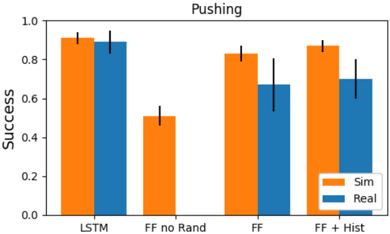
- The LSTM policy trained only in simulation achieved real-robot success of 0.89 ± 0.06 over 28 trials, comparable to its simulated success of 0.91 ± 0.03 over 100 randomized-dynamics trials.
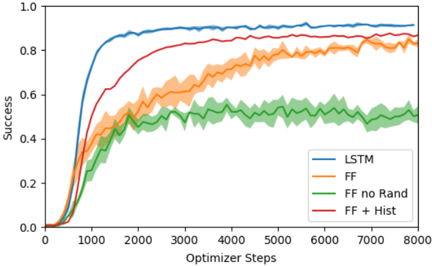
- Memoryless feedforward policies transferred worse: FF no Rand had sim 0.51 ± 0.05 and real 0.0 ± 0.0 (10 trials); FF had sim 0.83 ± 0.04 and real 0.67 ± 0.14 (12 trials); FF + Hist had sim 0.87 ± 0.03 and real 0.70 ± 0.10 (20 trials).
- Ablating randomization hurt real-robot success: fixed action timestep 0.29 ± 0.11 (17 trials), no observation noise 0.25 ± 0.12 (12 trials), fixed link mass 0.64 ± 0.10 (22 trials), fixed puck friction 0.48 ± 0.10 (27 trials), versus 0.89 ± 0.06 (28 trials) for all randomized parameters.
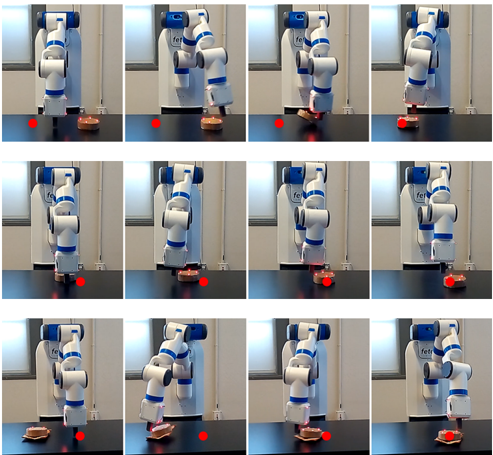
- When contact dynamics were altered by attaching a packet of chips to the puck, the LSTM policy achieved 0.91 ± 0.04 success, comparable to 0.89 ± 0.06 without the attachment.
Methods
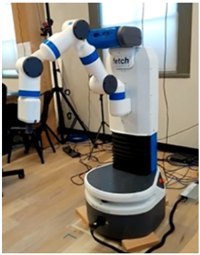
- Task: a 7-DOF Fetch Robotics arm pushed a puck to a randomly sampled target on a table; reward was binary (0 if puck within 0.07 m of target, otherwise -1). State was 52D (joint positions/velocities, gripper position, puck position/orientation/linear and angular velocities); action was 7D target joint-angle offsets. Simulation used MuJoCo with 0.002 s timestep and 20 simulation steps per control step; episodes were 100 control steps in simulation and 200 timesteps on the real robot.
- Dynamics randomization: at each episode start, 95 parameters were sampled and held fixed, including link masses, joint damping, puck mass/friction/damping, table height, controller gains, action timestep, and observation noise. Action timestep varied per step via Δt ∼ Δt0 + Exp(λ), with Δt0 = 0.04 s and λ fixed per episode; observation noise was Gaussian with standard deviation 5% of each feature’s running standard deviation; action exploration noise had standard deviation 0.01 rad.
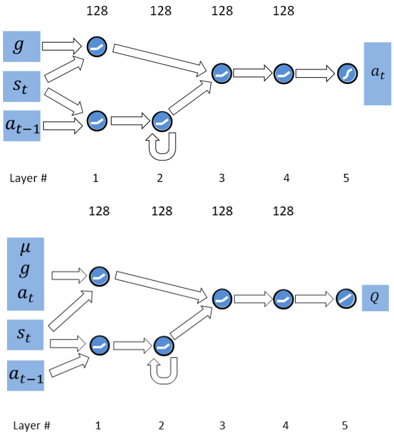
- Training and analysis: policies were trained with Recurrent Deterministic Policy Gradient (RDPG) and Hindsight Experience Replay (HER, k = 0.8), using an LSTM policy and an omniscient critic that received simulator dynamics parameters. ADAM used stepsize 5 × 10⁻⁴, batches of 128 episodes with 100 steps each, about 8000 update iterations, roughly 100 million samples, and about 8 hours on a 100-core cluster. Performance was compared across architectures and randomization ablations in simulation and on the real robot.
Limitations
- Stated: little calibration was performed to make simulation match the real robot, and the authors note that more extensive calibration would likely improve performance; they also state future work should extend to richer tasks and modalities such as vision.
- Evident from the text: evaluation is limited to a single puck-pushing task with a 7-DOF arm, and real-robot trials are small (10–28 trials per condition), so broader task and statistical generalization are not established.
- Evident from the text: the method relies on simulation-only training and does not test direct real-world fine-tuning or vision-based transfer.
Model-written summary. Check it against the paper before relying on it.
Integrity signals
Registry
Cites
Statistics
Figures
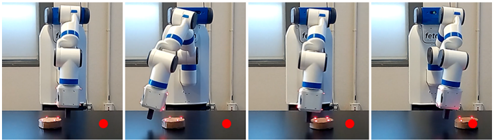
Verification
Claims the paper makes
1 Valid · 0 Not valid · 2 Not checked · 29 Own results and interpretations
The cited sources support only part of this claim — read each source’s verdict below.
In the paper
“Furthermore, it has been observed that DeepRL policies are prone to exploiting idiosyncrasies of the simulator to realize behaviours that are infeasible in the real world [2], [7].”
What the sources say
- Could not verifycites [2] [2] T. P. Lillicrap, J. J. Hunt, A. Pritzel, N. Heess, T. Erez, Y. Tassa, D. Silver, and D. Wierstra, 'Continuous control with deep reinforcement learning,' CoRR , vol. abs/1509.02971, 2015. [Online]. Available: http://arxiv.org/abs/1509.02971 - sourceExperimental — accuracy not yet measured
The Results (p. 4) describe testing DDPG in simulated physical environments, but do not report policies exploiting simulator quirks. Searches for simulator artifacts, unrealistic behavior, and real-world feasibility found no passage addressing the claimed tendency. (LLM, conf=0.72)
- Partly supportedcites [7] [7] N. Heess, D. TB, S. Sriram, J. Lemmon, J. Merel, G. Wayne, Y. Tassa, T. Erez, Z. Wang, S. M. A. Eslami, M. A. Riedmiller, and D. Silver, 'Emergence of locomotion behaviours in rich environments,' CoRR , vol. abs/1707.02286, 2017. [Online]. Available: http://arxiv.org/abs/1707.02286 - sourceExperimental — accuracy not yet measured
The Introduction (p. 1) says agents may find idiosyncratic solutions that work in one setting but are not robust across settings. The Results (p. 8) report that a simulated humanoid can exploit redundancies in the task specification, producing visually unsatisfactory gaits. Neither passage says the policies exploit quirks of the simulator or that their behaviours are infeasible in the real world. (LLM, conf=0.82)
plainstates a cause- Asserted: passes — The authors put it forward as true.
- Checkable: passes — It can be checked against evidence.
- Load-bearing: passes — The paper’s conclusions depend on it.
- Based: passes — The paper gives a reason why it holds.
- Could not verify
A result the paper reports from its own data — it cites no other source for it, so there is none to check. The quote shows it is in the paper.
In the paper
“We explore the impact of various design decisions and show that the resulting policies are robust to significant calibration error.”
- Also stated in: § B. Domain Randomization · p. 2 · plain
“Unlike previous methods which often require meticulous calibration of the simulation to closely conform to the physical system, our policies are able to adapt to significant calibration error.”
- Also stated in: § C. Non-prehensile Manipulation · p. 2 · plain
“The resulting policies are able accommodate large calibration errors when deployed on a real robot and also generalize to variability in the dynamics of the physical system.”
plain- Asserted: passes — The authors put it forward as true.
- Checkable: passes — It can be checked against evidence.
- Load-bearing: passes — The paper’s conclusions depend on it.
- Based: passes — The paper gives a reason why it holds.
- Also stated in: § B. Domain Randomization · p. 2 · plain
A result the paper reports from its own data — it cites no other source for it, so there is none to check. The quote shows it is in the paper.
In the paper
“The feedforward network trained without randomization is unable to perform the task under the real world dynamics.”
plainstates a cause- Asserted: passes — The authors put it forward as true.
- Checkable: passes — It can be checked against evidence.
- Load-bearing: passes — The paper’s conclusions depend on it.
- Based: passes — The paper gives a reason why it holds.
A result the paper reports from its own data — it cites no other source for it, so there is none to check. The quote shows it is in the paper.
In the paper
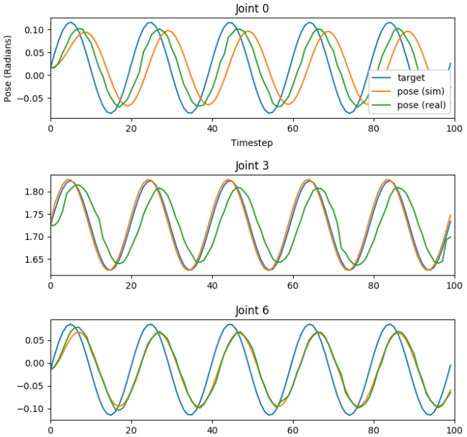
“Given the same target trajectory, the pose trajectories of the simulated and real robot differ significantly, with varying degrees of mismatch across joints.”
plainstates an association- Asserted: passes — The authors put it forward as true.
- Checkable: passes — It can be checked against evidence.
- Load-bearing: passes — The paper’s conclusions depend on it.
- Based: passes — The paper gives a reason why it holds.
A result the paper reports from its own data — it cites no other source for it, so there is none to check. The quote shows it is in the paper.
In the paper
“Policies trained without randomizing the action timestep and observation noise show particularly noticeable drops in performance.”
plainstates a cause- Asserted: passes — The authors put it forward as true.
- Checkable: passes — It can be checked against evidence.
- Load-bearing: passes — The paper’s conclusions depend on it.
- Based: passes — The paper gives a reason why it holds.
13 more claims
Create a free account to see all 32 claims and to verify the 3 references still open.
- It may state two separate claims as one. 9
- Probably not a substantial claim. 6
Claims other papers make about this one
Each is checked against this paper’s own text: does it say what the citing paper says it does?
The cited source doesn’t support the claim as written.
In the citing paper
“We instantiate SIMPLER on top of the SAPIEN physics simulator [68], but show in Section VI-D that our contributions are independent of the used simulator and can be reproduced in Isaac Sim [49].”
From Evaluating Real-World Robot Manipulation Policies in Simulation (2024) · cites this paper as [49]
Checked by a reasoning model — may be wrong.
Experimental — accuracy not yet measuredThe source backs part of the claim, not all of it — or backs it for a different population, condition or comparison.
In the citing paper
“Residual policy learning restores dynamic feasibility on the robot by learning small corrections to the retargeted reference, reusing the same residual formulation as physics refinement, so that the resulting policy transfers directly to hardware (Peng et al., 2018).”
From Dexterous Robot Manipulation from Human Demonstrations via Contact-Anchored Retargeting and Residual Policy Learning (2026) · cites this paper as Peng et al., 2018
Experimental — accuracy not yet measuredThe source backs part of the claim, not all of it — or backs it for a different population, condition or comparison.
In the citing paper
“Synthesis rollouts under domain randomization (Peng et al., 2018) produce additional dynamically feasible robot trajectories from each retargeted reference.”
From Dexterous Robot Manipulation from Human Demonstrations via Contact-Anchored Retargeting and Residual Policy Learning (2026) · cites this paper as Peng et al., 2018
Experimental — accuracy not yet measuredThe cited source says what the claim attributes to it.
In the citing paper
“Another is randomization of physical parameters that vary between simulation and reality, such that the controller becomes robust to a range of conditions that cover those that arise in physical deployment, without the necessity to precisely model these conditions a priori [21].”
From Learning quadrupedal locomotion over challenging terrain (2020) · cites this paper as [21]
The cited source says what the claim attributes to it.
In the citing paper
“Peng et al. [44] shows the effectiveness of memory-based policies (i.e., policies learnt by using past memory for future learning [95] [97]) to deal with the RG, introducing DR to generalise environment dynamics.”
From Crossing the Reality Gap: A Survey on Sim-to-Real Transferability of Robot Controllers in Reinforcement Learning (2021) · cites this paper as [44]
1 more claim about this paper
Create a free account to see every claim other papers make about this one.
Citations
Cites
Adam: A Method for Stochastic Optimization
Kingma, D. P., & Ba, J. (2014) · arXiv · doi:10.48550/arxiv.1412.6980 · Cited by 98,946
Human-level control through deep reinforcement learning
Mnih, V., Kavukcuoglu, K., Silver, D., Rusu, A. A., Veness, J., Bellemare, M. G., Graves, A., Riedmiller, M., Fidjeland, A. K., Ostrovski, G., et al. (2015) · Nature · doi:10.1038/nature14236 · Cited by 30,357 · cited 1×
“In simulated domains, agents have been developed to perform a diverse array of challenging tasks [1], [2], [3].”
BackgroundContinuous control with deep reinforcement learning
Lillicrap, T. P., Hunt, J. J., Pritzel, A., Heess, N., Erez, T., Tassa, Y., Silver, D., & Wierstra, D. (2015) · arXiv · doi:10.48550/arxiv.1509.02971 · Cited by 10,782
Domain-Adversarial Training of Neural Networks
Ganin, Y., Ustinova, E., Ajakan, H., Germain, P., Larochelle, H., Laviolette, F., Marchand, M., & Lempitsky, V. (2017) · Advances in Computer Vision and Pattern Recognition · doi:10.1007/978-3-319-58347-1_10 · Cited by 8,318
(1999) · Cited by 5,147
MuJoCo: A physics engine for model-based control
Todorov, E., Erez, T., & Tassa, Y. (2012) · 2012 IEEE/RSJ International Conference on Intelligent Robots and Systems · doi:10.1109/iros.2012.6386109 · Cited by 4,767 · cited 1×
“All simulations are performed using the MuJoCo physics engine [39] with a simulation timestep of 0.”
MethodMulti-Agent Actor-Critic for Mixed Cooperative-Competitive Environments
Lowe, R., Wu, Y., Tamar, A., Harb, J., Abbeel, P., & Mordatch, I. (2017) · arXiv · doi:10.48550/arxiv.1706.02275 · Cited by 3,377
Self-citationDomain randomization for transferring deep neural networks from simulation to the real world
Tobin, J., Fong, R., Ray, A., Schneider, J., Zaremba, W., & Abbeel, P. (2017) · 2017 IEEE/RSJ International Conference on Intelligent Robots and Systems (IROS) · doi:10.1109/iros.2017.8202133 · Cited by 3,124
Self-citationLevine, S., Pastor, P., Krizhevsky, A., Ibarz, J., & Quillen, D. (2018) · The International Journal of Robotics Research · doi:10.1177/0278364917710318 · Cited by 1,971
Andrychowicz, M., Wolski, F., Ray, A., Schneider, J., Fong, R., Welinder, P., McGrew, B., Tobin, J., Abbeel, P., & Zaremba, W. (2017) · arXiv · doi:10.48550/arxiv.1707.01495 · Cited by 1,355
Self-citation
Research works printed but not linked: 1
- [32] D. H. Ignasi Clavera and P. Abbeel, 'Policy transfer via modularity,' in IROS . IEEE, 2017. -
Cited by
Items 201–300 of 935
Chen, W., Xu, J. L., Xiang, F., Yuan, X., Su, H., & Chen, R. (2024) · IEEE Transactions on Robotics · doi:10.1109/tro.2024.3352969 · Cited by 52
“Sim2Real addresses this problem by enabling robots to be trained in simulation and transferring the learned policies to real robots with minimal or zero real-world data [7], [8], [9].”
BackgroundCaT: Constraints as Terminations for Legged Locomotion Reinforcement Learning
Chane-Sane, E., Léziart, P., Flayols, T., Stasse, O., Souères, P., & Mansard, N. (2024) · IEEE/RSJ International Conference on Intelligent Robots and Systems (IROS) · doi:10.1109/iros58592.2024.10802334 · Cited by 62
“While some approaches attempt to train RL locomotion policies directly on physical quadruped robots by leveraging sample-efficient RL techniques [22], [23], a popular approach entails training policies in simulation before transferring them to the real world [24], [25], [26], [27].”
Deep Reinforcement Learning for Zero-Shot Coverage Path Planning With Mobile Robots
Carvalho, J. P., & Aguiar, A. P. (2025) · IEEE/CAA Journal of Automatica Sinica · doi:10.1109/jas.2024.125064 · Cited by 27
“We also use domain randomization (DR), which is commonly used in robotics [36] to bridge the Sim2Real gap.”
Vision-Guided Quadrupedal Locomotion in the Wild with Multi-Modal Delay Randomization
Imai, C. S., Zhang, M., Zhang, Y., Kierebiński, M., Yang, R., Qin, Y., & Wang, X. (2022) · IEEE/RSJ International Conference on Intelligent Robots and Systems (IROS) · doi:10.1109/iros47612.2022.9981072 · Cited by 49
Learning a Single Near-hover Position Controller for Vastly Different Quadcopters
Zhang, D., Loquercio, A., Wu, X., Kumar, A., Malik, J., & Mueller, M. W. (2023) · Proceedings - IEEE International Conference on Robotics and Automation/Proceedings · doi:10.1109/icra48891.2023.10160836 · Cited by 31
Testing the Safety of Self-driving Vehicles by Simulating Perception and Prediction
Wong, K., Zhang, Q., Liang, M., Yang, B., Liao, R., Sadat, A., & Urtasun, R. (2020) · Lecture notes in computer science · doi:10.1007/978-3-030-58574-7_19 · Cited by 24
“In domain randomization, researchers have successfully used random noise to bridge this gap during training [39, 48, 41, 36, 37].”
MethodRevolutionizing healthcare: Emerging frontiers in 3D bioprinting of tissues and organs
Ochieng, B. O., Arroyan, Y. N., Onyango, B., Kong, L., Wang, G., & Ye, Z. (2024) · European Polymer Journal · doi:10.1016/j.eurpolymj.2024.113210 · Cited by 28
Demonstration-Efficient Guided Policy Search via Imitation of Robust Tube MPC
Tagliabue, A., Kim, D.-K., Everett, M., & How, J. P. (2022) · Proceedings - IEEE International Conference on Robotics and Automation/Proceedings · doi:10.1109/icra46639.2022.9812122 · Cited by 33
“A well known strategy to compensate for the effects of covariate shifts between source and target domain is Domain Randomization (DR) [20], which modifies the transition probabilities of the source S by trying to ensure that the trajectory distribution in the modified training domain SDR matches the one encountered in…”
BackgroundMethodInfluentialAdversarial Domain Generalization with MixStyle
Fu, J. Y., Zhong, Y., & Yang, F. (2022) · International Conference on Advanced Robotics and Mechatronics (ICARM) · doi:10.1109/icarm54641.2022.9959388 · Cited by 27
“Moreover, one method [19] [20] is based on meta-learning and the other [21] [22] based on new data generated from limited training samples that can simulate complex environments.”
MethodKim, D., Berseth, G., Schwartz, M., & Park, J. (2023) · IEEE Robotics and Automation Letters · doi:10.1109/lra.2023.3304561 · Cited by 42
“However, since it is hard to completely imitate reality in the simulator, dynamics randomization is applied to train the robot robustly in a certain range of randomized parameters [17], [18].”
BackgroundEfficient Hybrid-Supervised Deep Reinforcement Learning for Person Following Robot
Pang, L., Zhang, Y., Coleman, S., & Cao, H. (2019) · Journal of Intelligent & Robotic Systems · doi:10.1007/s10846-019-01030-0 · Cited by 26
High-speed control and navigation for quadrupedal robots on complex and discrete terrain
Kim, H., Oh, H., Park, J., KIM, Y. H., Youm, D., Jung, M., Lee, M., & Hwangbo, J. (2025) · Science Robotics · doi:10.1126/scirobotics.ads6192 · Cited by 41
“It adapts to a wide range of environmental and robot variations, such as compliance ( 20 ), friction ( 21 ), base mass ( 22 ), density ( 23 ), joint damping ( 24 ), and motor friction ( 25 ).”
Safety robustness of reinforcement learning policies: A view from robust control
Xiong, H., & Diao, X. (2020) · Neurocomputing · doi:10.1016/j.neucom.2020.09.055 · Cited by 26
Simulation-Based Reinforcement Learning for Real-World Autonomous Driving
Osiński, B., Jakubowski, A., Ziecina, P., Milos, P., Galias, C., Homoceanu, S., & Michalewski, H. (2020) · Proceedings - IEEE International Conference on Robotics and Automation/Proceedings · doi:10.1109/icra40945.2020.9196730 · Cited by 120
Domain adversarial transfer for cross-domain and task-constrained grasp pose detection
Jing, X., Qian, K., Xu, X., Bai, J., & Zhou, B. (2021) · Robotics and Autonomous Systems · doi:10.1016/j.robot.2021.103872 · Cited by 23
Iterative residual tuning for system identification and sim-to-real robot learning
Allevato, A., Short, E. S., Pryor, M., & Thomaz, A. L. (2020) · Autonomous Robots · doi:10.1007/s10514-020-09925-w · Cited by 26
“…broadens the state distribution observed during training so that it is more likely to include those seen in the real world, has been shown (along with various extensions) to be effective for robust robot sim-to-real transfer (Peng et al. 2018; Tan et al. 2018; Pinto et al. 2017; Mehta et al. 2019).”
BackgroundRobotic Lever Manipulation using Hindsight Experience Replay and Shapley Additive Explanations
Remman, S. B., & Lekkas, A. M. (2021) · European Control Conference (ECC) · doi:10.23919/ecc54610.2021.9654850 · Cited by 27
Learning Suction Graspability Considering Grasp Quality and Robot Reachability for Bin-Picking
Jiang, P., Oaki, J., Ishihara, Y., Ooga, J., Han, H., Sugahara, A., Tokura, S., Eto, H., Komoda, K., & Ogawa, A. (2022) · Frontiers in Neurorobotics · doi:10.3389/fnbot.2022.806898 · Cited by 26
“In the future, we intend to conduct sim-to-real (Peng et al., 2018) or depth missing value prediction (Sajjan et al.”
MethodAxis-space framework for cable-driven soft continuum robot control via reinforcement learning
Wei, D., Zhou, J., Zhu, Y., Ma, J., & Ma, S. (2023) · Communications Engineering · doi:10.1038/s44172-023-00110-2 · Cited by 29
“Although many studies have focused on the simulation-to-real world transition to narrow the reality gap in various robot control problems 21 – 24 , there is still a long way to go before fi lling this gap.”
Transferring Generalizable Motor Primitives From Simulation to Real World
Hazara, M., & Kyrki, V. (2019) · IEEE Robotics and Automation Letters · doi:10.1109/lra.2019.2900768 · Cited by 29
“To compare to a common sim-to-real transfer approach, we implemented domain randomization (DR) [7] for the ball-in-cup task.”
Stochastic Grounded Action Transformation for Robot Learning in Simulation
Desai, S., Karnan, H., Hanna, J. P., Warnell, G., & Stone, A. P. (2020) · IEEE/RSJ International Conference on Intelligent Robots and Systems (IROS) · doi:10.1109/iros45743.2020.9340780 · Cited by 37
“[7] introduce a white-box DR algorithm that can learn”
BackgroundMethodReinforced Grounded Action Transformation for Sim-to-Real Transfer
Karnan, H., Desai, S., Hanna, J. P., Warnell, G., & Stone, P. (2020) · IEEE/RSJ International Conference on Intelligent Robots and Systems (IROS) · doi:10.1109/iros45743.2020.9341149 · Cited by 36
“Dynamics Randomization adds noise to the environment dynamics, which has led to success in finding robust policies for robotic manipulation tasks [9].”
BackgroundModel-Based Manipulation of Linear Flexible Objects: Task Automation in Simulation and Real World
Chang, P., & Padır, T. (2020) · Machines · doi:10.3390/machines8030046 · Cited by 29
“The research approach from simulation to real world implementation is widely applied in humanoid robot [46], mobile robot [47], robotic arm [48], etc.”
MethodADAPT: Zero-Shot Adaptive Policy Transfer for Stochastic Dynamical Systems
Harrison, J., Garg, A., Ivanovic, B., Zhu, Y., Savarese, S., Fei-Fei, L., & Pavone, M. (2017) · arXiv · doi:10.48550/arxiv.1707.04674 · Cited by 21
Blind spot detection for safe sim-to-real transfer
Ramakrishnan, R., Kamar, E., Dey, D., Horvitz, E., & Shah, J. (2020) · Journal of Artificial Intelligence Research · doi:10.1613/jair.1.11436 · Cited by 21
“Domain randomization represents one method of developing such robust policies (Tobin et al., 2017; Zhang et al., 2017; Peng et al., 2018; van Baar et al., 2018).”
MethodAMBF-RL: A real-time simulation based Reinforcement Learning toolkit for Medical Robotics
Varier, V. M., Rajamani, D. K., Tavakkolmoghaddam, F., Munawar, A., & Fischer, G. S. (2022) · International Symposium on Medical Robotics · doi:10.1109/ismr48347.2022.9807609 · Cited by 30
“Once a satisfactory RL model is trained, the model can be transferred onto the real robot (Sim2Real) [4].”
BackgroundMethodYang, W., Zhang, L., & Zhang, Z. (2022) · The Annals of Statistics · doi:10.1214/22-aos2225 · Cited by 104
Sim-to-Real Transfer for Quadrupedal Locomotion via Terrain Transformer
Lai, H., Zhang, W., He, X., Chen, Y., Tian, Z., Yu, Y. H., & Wang, J. (2023) · Proceedings - IEEE International Conference on Robotics and Automation/Proceedings · doi:10.1109/icra48891.2023.10160497 · Cited by 43
A Survey of Embodied Learning for Object-centric Robotic Manipulation
Zheng, Y., Yao, L., Su, Y., Zhang, Y., Wang, Y., Zhao, S., Zhang, Y., & Chau, L. (2025) · Machine Intelligence Research · doi:10.1007/s11633-025-1542-8 · Cited by 89
Wang, Z., Chen, C., & Dong, D. (2022) · IEEE Transactions on Neural Networks and Learning Systems · doi:10.1109/tnnls.2022.3160173 · Cited by 22
“For instance, IW-IES receives near-optimal return with only 40 generations, whereas Robust, Hist, and ES-MAML need to take more than 200 generations for achieving comparable performance.”
BackgroundInfluentialLearning Robotic Manipulation of Natural Materials With Variable Properties for Construction Tasks
Kalousdian, N. K., Łochnicki, G., Hartmann, V. N., Leder, S., Oguz, O. S., Menges, A., & Toussaint, M. (2022) · IEEE Robotics and Automation Letters · doi:10.1109/lra.2022.3159288 · Cited by 22
“…variability in the the training environment, and changes the learning goal to maximize the expected return across a distribution of environments C [10]. b) Curriculum Learning: When applying DR to the problem of building using materials with variable properties we quickly face the challenge of…”
InfluentialAutonomous Decision-Making for Aerobraking via Parallel Randomized Deep Reinforcement Learning
Falcone, G., & Putnam, Z. R. (2022) · IEEE Transactions on Aerospace and Electronic Systems · doi:10.1109/taes.2022.3221697 · Cited by 21
“Studies focusing on generalization are booming and one particular research direction attempts to tackle generalization is domain randomization (DR), which consists of randomizing the environment and the dynamics across a distribution of parameters [50], [51], [52], [53].”
BackgroundLearning to Drive by Watching YouTube Videos: Action-Conditioned Contrastive Policy Pretraining
Zhang, Q., Peng, Z., & Zhou, B. (2022) · Lecture notes in computer science · doi:10.1007/978-3-031-19809-0_7 · Cited by 62
“Visual and physical attributes of the environment and the agent can be randomized through domain randomization [35,2,28].”
BackgroundOne-Layer Real-Time Optimization Using Reinforcement Learning: A Review with Guidelines
Faria, R. D. R., Capron, B. D. O., de Souza, M. B., Jr., & Secchi, A. R. (2023) · Processes · doi:10.3390/pr11010123 · Cited by 26
Kadokawa, Y., Zhu, L., Tsurumine, Y., & Matsubara, T. (2023) · Robotics and Autonomous Systems · doi:10.1016/j.robot.2023.104425 · Cited by 29
Robotic Table Tennis: A Case Study into a High Speed Learning System
D’Ambrosio, D. B., Jaitly, N., Sindhwani, V., Oslund, K., Xu, P., Lazic, N., Shankar, A., Ding, T., Abelian, J., Coumans, E., et al. (2023) · Robotics: Science and Systems · doi:10.15607/rss.2023.xix.006 · Cited by 43
“Domain randomization [77, 15, 41, 75] is also supported for many physical parameters.”
BackgroundA Hybrid Learning Method for System Identification and Optimal Control
Schubnel, B., Carrillo, R. E., Alet, P., & Hutter, A. (2020) · IEEE Transactions on Neural Networks and Learning Systems · doi:10.1109/tnnls.2020.3016906 · Cited by 22
“Our approach in this paper is close to domain randomization and to the approach followed in [11] and [9].”
MethodWada, D., Araujo-Estrada, S. A., & Windsor, S. P. (2022) · IEEE Robotics and Automation Letters · doi:10.1109/lra.2022.3205442 · Cited by 23
“The value function was designed to observe the full conditions because it was used only during training and the dynamic parameters of the simulator were known [19], [35].”
BackgroundMethodInfluentialThe New Agronomists: Language Models are Experts in Crop Management
Wu, J., Lai, Z., Chen, S., Tao, R., Pan, Z., & Hovakimyan, N. (2024) · IEEE/CVF Conference on Computer Vision and Pattern Recognition Workshops (CVPRW) · doi:10.1109/cvprw63382.2024.00543 · Cited by 47
“To enhance the robustness of our trained management policies against the challenges posed by the sim-to-real gap , we plan to incorporate domain and dynamics randomization techniques, as suggested in previous studies [54, 66].”
Wada, D., Araujo-Estrada, S. A., & Windsor, S. P. (2021) · Aerospace · doi:10.3390/aerospace8010018 · Cited by 18
“This approach is referred to as domain randomization [27].”
Sim-to-real: Six-legged Robot Control with Deep Reinforcement Learning and Curriculum Learning
Qin, B., Gao, Y., & Bai, Y. (2019) · 2019 4th International Conference on Robotics and Automation Engineering (ICRAE) · doi:10.1109/icrae48301.2019.9043822 · Cited by 18
“Previous studies on sim-to-real have been carried out [20,21,22].”
BackgroundA Survey on Sim-to-Real Transfer Methods for Robotic Manipulation
Pitkevich, A. V., & Makarov, I. (2024) · IEEE International Symposium on Intelligent Systems and Informatics (SISY) · doi:10.1109/sisy62279.2024.10737545 · Cited by 17
State reconstruction in a nonlinear vehicle suspension system using deep neural networks
Yong, H., Seo, J., Kim, J., & Choi, J. (2021) · Nonlinear Dynamics · doi:10.1007/s11071-021-06598-7 · Cited by 16
“There exist evidences to use trained algorithms from simulations for real situations without any additional training by maintaining a good transferability via domain randomization [21,26].”
BackgroundWang, Q., Sánchez, F. R., McCarthy, R., Bulens, D. C., McGuinness, K., O'Connor, N. E., Wüthrich, M., Widmaier, F., Bauer, S., & Redmond, S. J. (2022) · Expert Systems · doi:10.1111/exsy.13205 · Cited by 25
“To account for simulator modelling errors, and to improve the policies ability to generalize to the real robot, sim-to-real approaches often employ domain randomization 23,24 or domain adaptation 26,27 techniques.”
MethodLearning to Throw With a Handful of Samples Using Decision Transformers
Monastirsky, M., Azulay, O., & Sintov, A. (2022) · IEEE Robotics and Automation Letters · doi:10.1109/lra.2022.3229266 · Cited by 27
“However, simulationsrarelycapturerealityandthetrainedpoliciesare usuallypoorlytransferred[11].”
BackgroundSensorless Speed Control of Ultrasonic Motors Using Deep Reinforcement Learning
Mustafa, A., Sasamura, T., & Morita, T. (2023) · IEEE Sensors Journal · doi:10.1109/jsen.2023.3340872 · Cited by 18
“To address this issue, recurrent networks can be introduced to incorporate information from past states and actions [29], [30].”
BackgroundMethodLearning Agile Bipedal Motions on a Quadrupedal Robot
Li, Y., Li, J., Fu, W., & Wu, Y. (2024) · Proceedings - IEEE International Conference on Robotics and Automation/Proceedings · doi:10.1109/icra57147.2024.10611442 · Cited by 37
“Sim-to-real transfer: Domain randomization is a powerful technique to bridge the sim-to-real gap when deploying a policy trained in simulation to a real robot [36], [37], [38].”
BackgroundNooshiri, N., Bean, C. J., Dahm, T., Grigoli, F., Kristjánsdóttir, S., Obermann, A., & Wiemer, S. (2021) · Geophysical Journal International · doi:10.1093/gji/ggab511 · Cited by 18
Siame-se(3): regression in se(3) for end-to-end visual servoing
Felton, S., Fromont, É., & Marchand, É. (2021) · Proceedings - IEEE International Conference on Robotics and Automation/Proceedings · doi:10.1109/icra48506.2021.9561488 · Cited by 27
“Indeed, it has been shown that networks trained in simulated environments tend to transfer poorly to real world situations [35], [31], and that”
BackgroundBehavior Self-Organization Supports Task Inference for Continual Robot Learning
Hafez, M. B., & Wermter, S. (2021) · IEEE/RSJ International Conference on Intelligent Robots and Systems (IROS) · doi:10.1109/iros51168.2021.9636297 · Cited by 23
“This includes approaches based on meta-learning [5]–[7], imitation learning [8]–[10], and transfer learning [11], [12].”
MethodDAPPER: Label-Free Performance Estimation after Personalization for Heterogeneous Mobile Sensing
Gong, T., Kim, Y., Orzikulova, A., Liu, Y., Hwang, S. J., Shin, J., & Lee, S.-J. (2023) · Proceedings of the ACM on Interactive Mobile Wearable and Ubiquitous Technologies · doi:10.1145/3596256 · Cited by 23
Learning Robotic Powder Weighing from Simulation for Laboratory Automation
Kadokawa, Y., Hamaya, M., & Tanaka, K. (2023) · IEEE/RSJ International Conference on Intelligent Robots and Systems (IROS) · doi:10.1109/iros55552.2023.10342463 · Cited by 26
“This study applies a DR technique [26] to obtain the dumping policy to adjust the amount of powder on the spoon in the simulator.”
BackgroundMethodReproducible Pruning System on Dynamic Natural Plants for Field Agricultural Robots
Katyara, S., Ficuciello, F., Caldwell, D. G., Chen, F., & Siciliano, B. (2021) · Springer proceedings in advanced robotics · doi:10.1007/978-3-030-71356-0_1 · Cited by 26
“e, object pushing is suggested in [14].”
Domain randomization-enhanced deep learning models for bird detection
Mao, X., Chow, J. K., Tan, P. S., Liu, K.-F., Wu, J., Su, Z., Cheong, Y. H., Ooi, G. L., Pang, C. C., & Wang, Y.-H. (2021) · Scientific Reports · doi:10.1038/s41598-020-80101-x · Cited by 20
“Domain randomization, which makes use of virtual objects and/or environments to augment the data variability for model training, are found to be effective in building models that are generalized to different complex real-world circumstances 42 .”
BackgroundCausal Reasoning in Simulation for Structure and Transfer Learning of Robot Manipulation Policies
Lee, T. E., Zhao, J. A., Sawhney, A. S., Girdhar, S., & Kroemer, O. (2021) · Proceedings - IEEE International Conference on Robotics and Automation/Proceedings · doi:10.1109/icra48506.2021.9561439 · Cited by 50
“Our work is a form of simulation-to-reality transfer of controllers [1], [5], [20], [21].”
BackgroundOta, K., Jha, D. K., Romeres, D., van Baar, J., Smith, K. A., Semitsu, T., Oiki, T., Sullivan, A., Nikovski, D. N., & Tenenbaum, J. B. (2021) · IEEE Robotics and Automation Letters · doi:10.1109/lra.2021.3068887 · Cited by 23
“environment to the real world [10], [14]–[16].”
Hebecker, M., Lambrecht, J., & Schmitz, M. (2021) · IEEE/ASME International Conference on Advanced Intelligent Mechatronics · doi:10.1109/aim46487.2021.9517356 · Cited by 22
“C. Learning in Simulation and Sim-to-Real Transfer 1) Transfer of Robotic Control with Dynamics Randomization: An application of a DRL agent in mobile robotics comprises the control in order to push a puck to a target position [20].”
MethodWada, D., Araujo-Estrada, S. A., & Windsor, S. P. (2021) · Aerospace · doi:10.3390/aerospace8090258 · Cited by 18
“In robotics, approaches such as domain randomisation have been used [21].”
BackgroundMethodLearning Contact-Rich Assembly Skills Using Residual Admittance Policy
Spector, O., & Zacksenhouse, M. (2021) · IEEE/RSJ International Conference on Intelligent Robots and Systems (IROS) · doi:10.1109/iros51168.2021.9636547 · Cited by 21
“(4) Adding domain randomization, and in particular, randomly distributed friction coefficients, during training in simulations [34].”
BackgroundZhou, S., Helwa, M. K., Schoellig, A. P., Sarabakha, A., & Kayacan, E. (2019) · European Control Conference (ECC) · doi:10.23919/ecc.2019.8796140 · Cited by 18
“One of them is simto-real [17], [18], where the low-cost data from a simulation is exploited for accelerating the training on physical robots.”
BackgroundFORGE: Force-Guided Exploration for Robust Contact-Rich Manipulation Under Uncertainty
Noseworthy, M., Tang, B., Wen, B., Handa, A., Kessens, C. C., Roy, N., Fox, D., Ramos, F. T., Narang, Y., & Akinola, I. (2025) · IEEE Robotics and Automation Letters · doi:10.1109/lra.2025.3551637 · Cited by 55
“Instead, dynamics randomization randomizes parameters such as part friction/stiffness [10], [24], [25], [26], [27], controller gains [12], [24], or F/T observation scale [12], [15].”
InfluentialA Survey of Data Augmentation in Domain Generalization
Zhong, Y., Zhou, W., & Wang, Z. (2025) · Neural Processing Letters · doi:10.1007/s11063-025-11747-9 · Cited by 33
Josifovski, J., Malmir, M., Klarmann, N., Žagar, B. L., Navarro-Guerrero, N., & Knoll, A. (2022) · IEEE/RSJ International Conference on Intelligent Robots and Systems (IROS) · doi:10.1109/iros47612.2022.9981951 · Cited by 34
“We select three parameters that are commonly used in Sim2Real transfer in robotics [20] [34], [11], i.”
BackgroundMethodInfluentialFerrandis, J. D. A., Moura, J., & Vijayakumar, S. (2023) · IEEE/RSJ International Conference on Intelligent Robots and Systems (IROS) · doi:10.1109/iros55552.2023.10341629 · Cited by 29
“planar pushing, generally following one of two approaches: model-based via Model Predictive Control (MPC) [3], [7], or model-free via Reinforcement Learning (RL) [8]–[11].”
BackgroundMethodInfluentialMulti-User Delay-Constrained Scheduling With Deep Recurrent Reinforcement Learning
Hu, P., Chen, Y., Pan, L., Fang, Z., Xiao, F., & Huang, L. (2024) · IEEE/ACM Transactions on Networking · doi:10.1109/tnet.2024.3359911 · Cited by 19
“Additionally, RSD4 adopts a double-branch architecture from [31] to better utilize the memory mechanism of the RNN and implements a delayed policy update frequency to further reduce the variance in value estimates.”
MethodCyberDemo: Augmenting Simulated Human Demonstration for Real-World Dexterous Manipulation
Wang, J., Qin, Y., Kuang, K., Korkmaz, Y., Gurumoorthy, A., Su, H., & Wang, X. (2024) · IEEE Computer Society Conference on Computer Vision and Pattern Recognition/Proceedings - IEEE Computer Society Conference on Computer Vision and Pattern Recognition/Proceedings · doi:10.1109/cvpr52733.2024.01700 · Cited by 48
“By pre-training in simulated environments, the manipulation policy can better generalize to new objects with novel geometries and contact patterns.”
Calibration-Free Monocular Vision-Based Robot Manipulations With Occlusion Awareness
Luo, Y., Dong, K., Zhao, L., Sun, Z., Cheng, E., Kan, H., Zhou, C. Q., & Song, B. (2021) · IEEE Access · doi:10.1109/access.2021.3082947 · Cited by 20
“By randomizing the dynamics parameters such as link mass [22], static and dynamic friction [23], dynamic gap between a simulated robot and a real robot can be largely narrowed.”
BackgroundContext is Everything: Implicit Identification for Dynamics Adaptation
Evans, B., Thankaraj, A., & Pinto, L. (2022) · Proceedings - IEEE International Conference on Robotics and Automation/Proceedings · doi:10.1109/icra46639.2022.9812119 · Cited by 51
Sim-to-Real Transfer of Robotic Assembly with Visual Inputs Using CycleGAN and Force Control
Yuan, C., Shi, Y., Feng, Q., Chang, C., Liu, M., Chen, Z., Knoll, A., & Zhang, J. (2022) · IEEE International Conference on Robotics and Biomimetics (ROBIO) · doi:10.1109/robio55434.2022.10011878 · Cited by 21
“Thus, sim-to-real methods are proposed [5] to address the aforementioned concerns.”
BackgroundMethodEnd-to-End Deep Learning for Robotic Following
Pierre, J. M. (2018) · International Conference on Mechatronics Systems and Control Engineering (ICMSCE) · doi:10.1145/3185066.3185084 · Cited by 14
“In addition, in order to learn how to deal with situations where real-world data collection with enough diversity may be not be feasible, it would be interesting to explore deep learning techniques beyond supervised learning such as unsupervised domain adaptation [21], domain randomization [22], and dynamics randomiza…”
BackgroundA Comprehensive Survey of Data Augmentation in Visual Reinforcement Learning
Ma, G., Ding, Z., Yuan, Z., Wang, X., Yuan, B., & Tao, D. (2025) · International Journal of Computer Vision · doi:10.1007/s11263-025-02472-w · Cited by 72
“In addition, this survey does not cover a similar topic named domain randomization (DR) [57, 58], which aims to solve the sim-to-real problem in robot control by tuning the physical simulator’s parameter distribution toward the reality as closely as possible [59].”
Force-Vision Sensor Fusion Improves Learning-Based Approach for Self-Closing Door Pulling
Sun, Y., Zhang, L., & Ma, O. (2021) · IEEE Access · doi:10.1109/access.2021.3118594 · Cited by 14
“This is known as simulation to reality (Sim2Real) transfer [28], [29], which is still an open research problem.”
BackgroundFighter Pilot Behavior Cloning
Sandstrom, V., Luotsinen, L. J., & Oskarsson, D. (2022) · International Conference on Unmanned Aircraft Systems (ICUAS) · doi:10.1109/icuas54217.2022.9836131 · Cited by 17
Dexterous Manipulation from Images: Autonomous Real-World RL via Substep Guidance
Xu, K., Hu, Z., Doshi, R., Rovinsky, A., Kumar, V., Gupta, A. K., & Levine, S. (2023) · Proceedings - IEEE International Conference on Robotics and Automation/Proceedings · doi:10.1109/icra48891.2023.10161493 · Cited by 36
Unsupervised Cross-Modal Alignment for Multi-person 3D Pose Estimation
Kundu, J. N., Revanur, A., Waghmare, G., Venkatesh, R., & Babu, R. V. (2020) · Lecture notes in computer science · doi:10.1007/978-3-030-58601-0_3 · Cited by 18
“Our idea of creating artificial samples stems from the concept of domain randomization [44,55] which is shown to be effective for generalizing deep models to unseen target environments.”
BackgroundLearning Affordance Space in Physical World for Vision-based Robotic Object Manipulation
Wu, H., Zhang, Z., Cheng, H., Yang, K., Liu, J., & Guo, Z. (2020) · Proceedings - IEEE International Conference on Robotics and Automation/Proceedings · doi:10.1109/icra40945.2020.9196783 · Cited by 19
“Due to the extreme convenience of obtaining a large amount of annotated data from the simulation environment, many works [14], [20], [21], [32] in robotic object manipulation use a simulator to generate training samples.”
BackgroundFlowFrontNet: Improving Carbon Composite Manufacturing with CNNs
Stieber, S., Schröter, N., Schiendorfer, A., Hoffmann, A., & Reif, W. (2021) · Lecture notes in computer science · doi:10.1007/978-3-030-67667-4_25 · Cited by 17
“Simulation is a proven remedy for the lack of data [13] which is our focus in this paper.”
BackgroundMethodA Novel Hybrid Approach for Fault-Tolerant Control of UAVs based on Robust Reinforcement Learning
Sohège, Y., Quiñones-Grueiro, M., & Provan, G. M. (2021) · Proceedings - IEEE International Conference on Robotics and Automation/Proceedings · doi:10.1109/icra48506.2021.9562097 · Cited by 21
“The optimization criterion is formulated as follows [24]”
BackgroundSimulation to Real: Learning Energy-Efficient Slithering Gaits for a Snake-Like Robot
Bing, Z., Cheng, L., Huang, K., & Knoll, A. (2022) · IEEE Robotics & Automation Magazine · doi:10.1109/mra.2022.3204237 · Cited by 15
“, friction, mass, and damping coefficients) during the training phase [21].”
BackgroundSchepper, T. D., Camelo, M., Famaey, J., & Latré, S. (2020) · International Journal of Network Management · doi:10.1002/nem.2100 · Cited by 19
Visual-Force-Tactile Fusion for Gentle Intricate Insertion Tasks
Jin, P., Huang, B., Lee, W. W., Li, T., & Yang, W. (2024) · IEEE Robotics and Automation Letters · doi:10.1109/lra.2024.3379803 · Cited by 20
“Others train policies in simulation and then transfer them to the real world using domain randomization to bridge the gap between the two environments [21], [27].”
BackgroundControlling diverse robots by inferring Jacobian fields with deep networks
Li, S., Zhang, A., Chen, B., Matusik, H., Liu, C., Rus, D. L., & Sitzmann, V. (2025) · Nature · doi:10.1038/s41586-025-09170-0 · Cited by 37
“We apply domain randomization techniques [53, 54, 55] to the input images during training.”
Physical AI: Evolution, Progress, Challenges, and Prospects
Wu, E., Liu, Y., Xu, T., Ren, L.-X., Qin, Y.-M., Wei, M.-Y., He, X., Yuan, D.-Y., Hou, W.-C., Ma, Z.-W., et al. (2026) · Journal of Computer Science and Technology · doi:10.1007/s11390-026-6258-x · Cited by 24
Gupta, K., Mukherjee, D., & Najjaran, H. (2021) · SN Computer Science · doi:10.1007/s42979-021-00934-9 · Cited by 20
“Moreover, there is an added challenge of transferring the learnt policies from simulation to the real world, often dubbed as sim-to-real [18, 88, 98, 113], while ensuring safety and collaboration in human–robot collaboration models [82].”
BackgroundAsynchronous Reinforcement Learning for Real-Time Control of Physical Robots
Yuan, Y., & Mahmood, A. R. (2022) · Proceedings - IEEE International Conference on Robotics and Automation/Proceedings · doi:10.1109/icra46639.2022.9811771 · Cited by 30
Learning Interpretable, High-Performing Policies for Autonomous Driving
Paleja, R., Niu, Y., Silva, A., Ritchie, C., Choi, S., & Gombolay, M. (2022) · Robotics: Science and Systems · doi:10.15607/rss.2022.xviii.068 · Cited by 33
“Few works have attempted to learn an interpretable model directly; rather, prior work has attempted policy distillation to a decision tree [18, 8, 58] or imitation learning via a decision tree across trajectories generated via a deep model [7], leaving much to be desired.”
BackgroundChen, Y., Zeng, C., Wang, Z., Lu, P., & Yang, C. (2022) · Robotica · doi:10.1017/s0263574722001230 · Cited by 17
“Domain randomization [4, 5] randomizes the visual information or dynamic parameters in the simulated environment, which is a popular method in zero-shot sim-to-real transfer.”
BackgroundMethodMarker-Embedded Tactile Image Generation via Generative Adversarial Networks
Kim, W. D., Yang, S.-H., Kim, W., Kim, J.-J., Kim, C.-H., & Kim, J. (2023) · IEEE Robotics and Automation Letters · doi:10.1109/lra.2023.3284370 · Cited by 17
“Similar to data-driven methods in other robotic applications [17], [18], the performance and efficiency of data-driven methods in vision-based tactile sensor applications can be increased through simulations.”
ScanBot: Autonomous Reconstruction via Deep Reinforcement Learning
Cao, H., Xi, X., Wu, G., Hu, R., & Liu, L. (2023) · ACM Transactions on Graphics · doi:10.1145/3592113 · Cited by 15
“Bolstered by deep neural networks, it has unleashed its potential for solving a wide range of real-world tasks such as games [Hessel et al. 2018; Silver et al. 2018] and robot control [Akkaya et al. 2019; Gu et al. 2017; Peng et al. 2018b].”
BackgroundSimulation-based Learning of the Peg-in-Hole Process Using Robot-Skills
Lämmle, A., Tenbrock, P. G., Bálint, B., Nägele, F., Kraus, W., Váncza, J., & Huber, M. F. (2022) · IEEE/RSJ International Conference on Intelligent Robots and Systems (IROS) · doi:10.1109/iros47612.2022.9982212 · Cited by 15
Stable skill improvement of quadruped robot based on privileged information and curriculum guidance
Jiang, H. X., Chen, T., Cao, J., Bi, J. Q., Lu, G., Zhang, G., Rong, X., & Li, Y. (2023) · Robotics and Autonomous Systems · doi:10.1016/j.robot.2023.104550 · Cited by 17
Sim2real gap is non-monotonic with robot complexity for morphology-in-the-loop flapping wing design
Rosser, K., Kok, J. M., Chahl, J., & Bongard, J. (2020) · Proceedings - IEEE International Conference on Robotics and Automation/Proceedings · doi:10.1109/icra40945.2020.9196539 · Cited by 18
“A fixed morphology robot platform design is then produced and characterised as a simulation model, allowing control policies to be developed that achieve a desired task in simulation and then subsequently transferred to reality [14], [27], [18], [25], [12], a process known as sim2real transfer.”
BackgroundKim, T., & Lee, J.-H. (2020) · IEEE Access · doi:10.1109/access.2020.3015245 · Cited by 15
Analysis of coordinated behavior structures with multi-agent deep reinforcement learning
Miyashita, Y., & Sugawara, T. (2020) · Applied Intelligence · doi:10.1007/s10489-020-01832-y · Cited by 14
“problem solving behavior in many sophisticated application domains [8, 9, 14, 15, 17].”
BackgroundSafe control of nonlinear systems in LPV framework using model-based reinforcement learning
Bao, Y., & Velni, J. M. (2022) · International Journal of Control · doi:10.1080/00207179.2022.2029945 · Cited by 15
“To guarantee safety, inspired by the sim-to-real transfer of control with dynamics randomisation (Peng et al., 2018), we train the RL agents on the random dynamics from the identified BNN model without interacting with the real system.”
MethodYao, Q., Wang, J., Wang, D., Yang, S., Zhang, H., Wang, Y., & Wu, Z. (2021) · IEEE/RSJ International Conference on Intelligent Robots and Systems (IROS) · doi:10.1109/iros51168.2021.9636738 · Cited by 19
“Common solutions include domain adaptation [20] and randomization [21], and in our HTC structure we adopt the latter.”
MethodevoBOT – Design and Learning-Based Control of a Two-Wheeled Compound Inverted Pendulum Robot
Klokowski, P., Eßer, J., Gramse, N., Pschera, B., Plitt, M., Feldmeier, F., Bajpai, S., Jestel, C., Bach, N., Urbann, O., et al. (2023) · IEEE/RSJ International Conference on Intelligent Robots and Systems (IROS) · doi:10.1109/iros55552.2023.10342128 · Cited by 17
“Instead of randomizing visual components of the simulator, Peng et al. [23] introduce dynamics randomization focusing the randomization on parameters related to robot or environment dynamics, such as link masses, joint damping, or friction.”
MethodMohiuddin, M. B., Boiko, I. M., Azzam, R., et al. (2024) · IET Control Theory and Applications · doi:10.1049/cth2.12712 · Cited by 12
ArrayBot: Reinforcement Learning for Generalizable Distributed Manipulation through Touch
Xue, Z., Zhang, H., Cheng, J., He, Z., Ju, Y., Lin, C., Zhang, G., & Xu, H. (2024) · Proceedings - IEEE International Conference on Robotics and Automation/Proceedings · doi:10.1109/icra57147.2024.10610350 · Cited by 29
“To strengthen the significance of our finding, we exempt the usage of domain randomization [37], which is accepted as a critical technique for the successful sim-to-real transfer of many RL-discovered policies [29], [3].”
MethodWeatherDG: LLM-Assisted Procedural Weather Generation for Domain-Generalized Semantic Segmentation
Qian, C., Guo, Y., Mo, Y., & Li, W. (2025) · IEEE Robotics and Automation Letters · doi:10.1109/lra.2025.3559821 · Cited by 41
“Previous methods commonly adopt simulators [12], [13], [14] or image translation models [15], [16] to generate new samples.”
Metadata
- Authors
- Peng, X. B., Andrychowicz, M., Zaremba, W., & Abbeel, P.
- Affiliations
- University of California, Berkeley (US)
- OpenAI (United States) (US)
- ORCID
- Abbeel, Pieter
- Venue
- 2018 IEEE International Conference on Robotics and Automation (ICRA)
- Publisher
- IEEE
- Published
- 2018-05
- Pages
- 3803-3810
- ISSN
- 1050-4729 (ISSN-L)
- OpenAlex
- W2767050701
- Cited by
- 1,309
- References
- 39
- Citations by year
- 2026: 149 · 2025: 167 · 2024: 155 · 2023: 158 · 2022: 159 · 2021: 197 · 2020: 178 · 2019: 109 · 2018: 34
- FWCI
- 52.88
- Type
- conference paper
- Language
- en
- Open access
- green
- arxiv.org
- Locations
- Proceedings - IEEE International Conference on Robotics and Automation/Proceedings (publishedVersion)
- arXiv (Cornell University) (submittedVersion)
- arXiv (Cornell University)
- Topics
- Physical Sciences › Computer Science › Artificial Intelligence › Reinforcement Learning in Robotics
- Physical Sciences › Engineering › Control and Systems Engineering › Robot Manipulation and Learning
- Physical Sciences › Computer Science › Artificial Intelligence › Domain Adaptation and Few-Shot Learning
- Keywords
- sim-to-real transfer, robot control, reality gap, object pushing, robot manipulators, policy generalization
About these checks
Registry, retraction, Cites and statistics results are computed, not judged, with one exception: a printed reference that no index lists is read once by a model before it counts as a citation error. Claims are extracted by a model and kept only when their quote appears verbatim in the text; each cited source is then checked, with a model’s help, for whether it says what the claim relies on. Those verdicts can be wrong — read the claim’s quote and the cited source before relying on one.
The claim verdicts this report counts are experimental: their accuracy is not yet measured.
A language model drew the claims from the paper on 2026-10-10, under version 3 of the claim definition (model deepseek-v4.1-flash, prompt extract-v3).
A second model labelled each claim on 2026-10-10 (model jev-1.13-20260917, definition revision gold-guideline-v0.2).
Cited sources are checked with a language model’s help (gpt-6-sol).
Statistics and arithmetic are recomputed, not judged.
Confidence bands are shown only for fields calibrated on our annotated test set. None is calibrated yet, so no band is shown.
What counts as a claim ›How we measure confidence ›How we check this ›
Are you an author, or do you see a problem with this page? Request a review
Data sources
Bibliographic data: Semantic Scholar, OpenAlex, Crossref.
Contains information from the Semantic Scholar Academic Graph Datasets, made available under the ODC Attribution License (ODC-BY 1.0).
Semantic Scholar’s data is described in: Kinney, R., et al. (2023). The Semantic Scholar Open Data Platform. arXiv:2301.10140.
