

Sim-to-Real Transfer of Robotic Control with Dynamics Randomization
Open accessThe DOI matches its Crossref record; 50 of the 50 references it cites were found in a registry or an index; 2 of the 5 sources its claims cite were checked for support.
Abstract
Simulations are attractive environments for training agents as they provide an abundant source of data and alleviate certain safety concerns during the training process. But the behaviours developed by agents in simulation are often specific to the characteristics of the simulator. Due to modeling error, strategies that are successful in simulation may not transfer to their real world counterparts. In this paper, we demonstrate a simple method to bridge this “reality gap”. By randomizing the dynamics of the simulator during training, we are able to develop policies that are capable of adapting to very different dynamics, including ones that differ significantly from the dynamics on which the policies were trained. This adaptivity enables the policies to generalize to the dynamics of the real world without any training on the physical system. Our approach is demonstrated on an object pushing task using a robotic arm. Despite being trained exclusively in simulation, our policies are able to maintain a similar level of performance when deployed on a real robot, reliably moving an object to a desired location from random initial configurations. We explore the impact of various design decisions and show that the resulting policies are robust to significant calibration error.
Overview
CoChat Summary
TL;DR
The paper demonstrates that randomizing simulator dynamics during training lets recurrent policies transfer directly to a real 7-DOF Fetch arm for a puck-pushing task without any real-world training. The LSTM policy retained comparable performance in simulation and reality, while feedforward and non-randomized baselines transferred poorly or failed.
Key findings
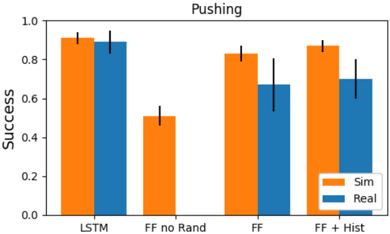
- The LSTM policy trained only in simulation achieved real-robot success of 0.89 ± 0.06 over 28 trials, comparable to its simulated success of 0.91 ± 0.03 over 100 randomized-dynamics trials.
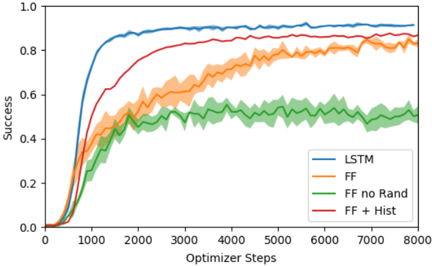
- Memoryless feedforward policies transferred worse: FF no Rand had sim 0.51 ± 0.05 and real 0.0 ± 0.0 (10 trials); FF had sim 0.83 ± 0.04 and real 0.67 ± 0.14 (12 trials); FF + Hist had sim 0.87 ± 0.03 and real 0.70 ± 0.10 (20 trials).
- Ablating randomization hurt real-robot success: fixed action timestep 0.29 ± 0.11 (17 trials), no observation noise 0.25 ± 0.12 (12 trials), fixed link mass 0.64 ± 0.10 (22 trials), fixed puck friction 0.48 ± 0.10 (27 trials), versus 0.89 ± 0.06 (28 trials) for all randomized parameters.
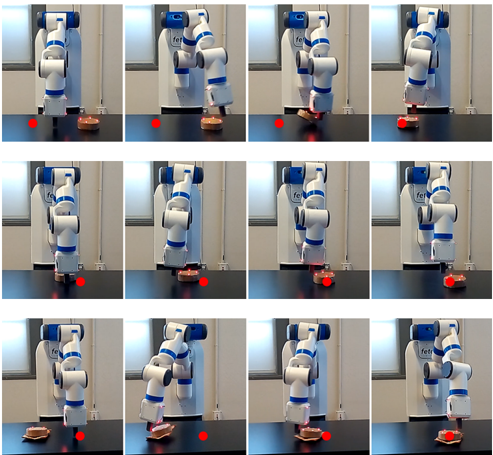
- When contact dynamics were altered by attaching a packet of chips to the puck, the LSTM policy achieved 0.91 ± 0.04 success, comparable to 0.89 ± 0.06 without the attachment.
Methods
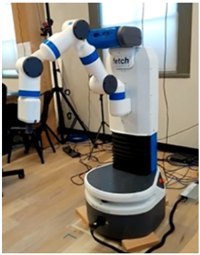
- Task: a 7-DOF Fetch Robotics arm pushed a puck to a randomly sampled target on a table; reward was binary (0 if puck within 0.07 m of target, otherwise -1). State was 52D (joint positions/velocities, gripper position, puck position/orientation/linear and angular velocities); action was 7D target joint-angle offsets. Simulation used MuJoCo with 0.002 s timestep and 20 simulation steps per control step; episodes were 100 control steps in simulation and 200 timesteps on the real robot.
- Dynamics randomization: at each episode start, 95 parameters were sampled and held fixed, including link masses, joint damping, puck mass/friction/damping, table height, controller gains, action timestep, and observation noise. Action timestep varied per step via Δt ∼ Δt0 + Exp(λ), with Δt0 = 0.04 s and λ fixed per episode; observation noise was Gaussian with standard deviation 5% of each feature’s running standard deviation; action exploration noise had standard deviation 0.01 rad.
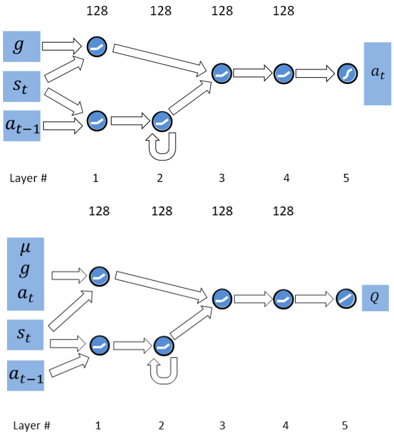
- Training and analysis: policies were trained with Recurrent Deterministic Policy Gradient (RDPG) and Hindsight Experience Replay (HER, k = 0.8), using an LSTM policy and an omniscient critic that received simulator dynamics parameters. ADAM used stepsize 5 × 10⁻⁴, batches of 128 episodes with 100 steps each, about 8000 update iterations, roughly 100 million samples, and about 8 hours on a 100-core cluster. Performance was compared across architectures and randomization ablations in simulation and on the real robot.
Limitations
- Stated: little calibration was performed to make simulation match the real robot, and the authors note that more extensive calibration would likely improve performance; they also state future work should extend to richer tasks and modalities such as vision.
- Evident from the text: evaluation is limited to a single puck-pushing task with a 7-DOF arm, and real-robot trials are small (10–28 trials per condition), so broader task and statistical generalization are not established.
- Evident from the text: the method relies on simulation-only training and does not test direct real-world fine-tuning or vision-based transfer.
Model-written summary. Check it against the paper before relying on it.
Integrity signals
Registry
Cites
Statistics
Figures
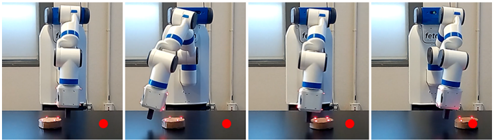
Verification
Claims the paper makes
1 Valid · 0 Not valid · 2 Not checked · 29 Own results and interpretations
The cited sources support only part of this claim — read each source’s verdict below.
In the paper
“Furthermore, it has been observed that DeepRL policies are prone to exploiting idiosyncrasies of the simulator to realize behaviours that are infeasible in the real world [2], [7].”
What the sources say
- Could not verifycites [2] [2] T. P. Lillicrap, J. J. Hunt, A. Pritzel, N. Heess, T. Erez, Y. Tassa, D. Silver, and D. Wierstra, 'Continuous control with deep reinforcement learning,' CoRR , vol. abs/1509.02971, 2015. [Online]. Available: http://arxiv.org/abs/1509.02971 - sourceExperimental — accuracy not yet measured
The Results (p. 4) describe testing DDPG in simulated physical environments, but do not report policies exploiting simulator quirks. Searches for simulator artifacts, unrealistic behavior, and real-world feasibility found no passage addressing the claimed tendency. (LLM, conf=0.72)
- Partly supportedcites [7] [7] N. Heess, D. TB, S. Sriram, J. Lemmon, J. Merel, G. Wayne, Y. Tassa, T. Erez, Z. Wang, S. M. A. Eslami, M. A. Riedmiller, and D. Silver, 'Emergence of locomotion behaviours in rich environments,' CoRR , vol. abs/1707.02286, 2017. [Online]. Available: http://arxiv.org/abs/1707.02286 - sourceExperimental — accuracy not yet measured
The Introduction (p. 1) says agents may find idiosyncratic solutions that work in one setting but are not robust across settings. The Results (p. 8) report that a simulated humanoid can exploit redundancies in the task specification, producing visually unsatisfactory gaits. Neither passage says the policies exploit quirks of the simulator or that their behaviours are infeasible in the real world. (LLM, conf=0.82)
plainstates a cause- Asserted: passes — The authors put it forward as true.
- Checkable: passes — It can be checked against evidence.
- Load-bearing: passes — The paper’s conclusions depend on it.
- Based: passes — The paper gives a reason why it holds.
- Could not verify
A result the paper reports from its own data — it cites no other source for it, so there is none to check. The quote shows it is in the paper.
In the paper
“We explore the impact of various design decisions and show that the resulting policies are robust to significant calibration error.”
- Also stated in: § B. Domain Randomization · p. 2 · plain
“Unlike previous methods which often require meticulous calibration of the simulation to closely conform to the physical system, our policies are able to adapt to significant calibration error.”
- Also stated in: § C. Non-prehensile Manipulation · p. 2 · plain
“The resulting policies are able accommodate large calibration errors when deployed on a real robot and also generalize to variability in the dynamics of the physical system.”
plain- Asserted: passes — The authors put it forward as true.
- Checkable: passes — It can be checked against evidence.
- Load-bearing: passes — The paper’s conclusions depend on it.
- Based: passes — The paper gives a reason why it holds.
- Also stated in: § B. Domain Randomization · p. 2 · plain
A result the paper reports from its own data — it cites no other source for it, so there is none to check. The quote shows it is in the paper.
In the paper
“The feedforward network trained without randomization is unable to perform the task under the real world dynamics.”
plainstates a cause- Asserted: passes — The authors put it forward as true.
- Checkable: passes — It can be checked against evidence.
- Load-bearing: passes — The paper’s conclusions depend on it.
- Based: passes — The paper gives a reason why it holds.
A result the paper reports from its own data — it cites no other source for it, so there is none to check. The quote shows it is in the paper.
In the paper
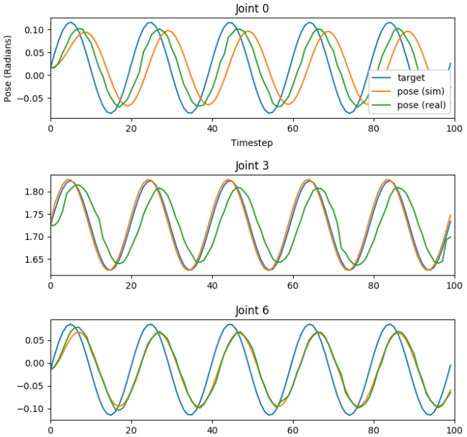
“Given the same target trajectory, the pose trajectories of the simulated and real robot differ significantly, with varying degrees of mismatch across joints.”
plainstates an association- Asserted: passes — The authors put it forward as true.
- Checkable: passes — It can be checked against evidence.
- Load-bearing: passes — The paper’s conclusions depend on it.
- Based: passes — The paper gives a reason why it holds.
A result the paper reports from its own data — it cites no other source for it, so there is none to check. The quote shows it is in the paper.
In the paper
“Policies trained without randomizing the action timestep and observation noise show particularly noticeable drops in performance.”
plainstates a cause- Asserted: passes — The authors put it forward as true.
- Checkable: passes — It can be checked against evidence.
- Load-bearing: passes — The paper’s conclusions depend on it.
- Based: passes — The paper gives a reason why it holds.
13 more claims
Create a free account to see all 32 claims and to verify the 3 references still open.
- It may state two separate claims as one. 9
- Probably not a substantial claim. 6
Claims other papers make about this one
Each is checked against this paper’s own text: does it say what the citing paper says it does?
The cited source doesn’t support the claim as written.
In the citing paper
“We instantiate SIMPLER on top of the SAPIEN physics simulator [68], but show in Section VI-D that our contributions are independent of the used simulator and can be reproduced in Isaac Sim [49].”
From Evaluating Real-World Robot Manipulation Policies in Simulation (2024) · cites this paper as [49]
Checked by a reasoning model — may be wrong.
Experimental — accuracy not yet measuredThe source backs part of the claim, not all of it — or backs it for a different population, condition or comparison.
In the citing paper
“Residual policy learning restores dynamic feasibility on the robot by learning small corrections to the retargeted reference, reusing the same residual formulation as physics refinement, so that the resulting policy transfers directly to hardware (Peng et al., 2018).”
From Dexterous Robot Manipulation from Human Demonstrations via Contact-Anchored Retargeting and Residual Policy Learning (2026) · cites this paper as Peng et al., 2018
Experimental — accuracy not yet measuredThe source backs part of the claim, not all of it — or backs it for a different population, condition or comparison.
In the citing paper
“Synthesis rollouts under domain randomization (Peng et al., 2018) produce additional dynamically feasible robot trajectories from each retargeted reference.”
From Dexterous Robot Manipulation from Human Demonstrations via Contact-Anchored Retargeting and Residual Policy Learning (2026) · cites this paper as Peng et al., 2018
Experimental — accuracy not yet measuredThe cited source says what the claim attributes to it.
In the citing paper
“Another is randomization of physical parameters that vary between simulation and reality, such that the controller becomes robust to a range of conditions that cover those that arise in physical deployment, without the necessity to precisely model these conditions a priori [21].”
From Learning quadrupedal locomotion over challenging terrain (2020) · cites this paper as [21]
The cited source says what the claim attributes to it.
In the citing paper
“Peng et al. [44] shows the effectiveness of memory-based policies (i.e., policies learnt by using past memory for future learning [95] [97]) to deal with the RG, introducing DR to generalise environment dynamics.”
From Crossing the Reality Gap: A Survey on Sim-to-Real Transferability of Robot Controllers in Reinforcement Learning (2021) · cites this paper as [44]
1 more claim about this paper
Create a free account to see every claim other papers make about this one.
Citations
Cites
Adam: A Method for Stochastic Optimization
Kingma, D. P., & Ba, J. (2014) · arXiv · doi:10.48550/arxiv.1412.6980 · Cited by 98,946
Human-level control through deep reinforcement learning
Mnih, V., Kavukcuoglu, K., Silver, D., Rusu, A. A., Veness, J., Bellemare, M. G., Graves, A., Riedmiller, M., Fidjeland, A. K., Ostrovski, G., et al. (2015) · Nature · doi:10.1038/nature14236 · Cited by 30,357 · cited 1×
“In simulated domains, agents have been developed to perform a diverse array of challenging tasks [1], [2], [3].”
BackgroundContinuous control with deep reinforcement learning
Lillicrap, T. P., Hunt, J. J., Pritzel, A., Heess, N., Erez, T., Tassa, Y., Silver, D., & Wierstra, D. (2015) · arXiv · doi:10.48550/arxiv.1509.02971 · Cited by 10,782
Domain-Adversarial Training of Neural Networks
Ganin, Y., Ustinova, E., Ajakan, H., Germain, P., Larochelle, H., Laviolette, F., Marchand, M., & Lempitsky, V. (2017) · Advances in Computer Vision and Pattern Recognition · doi:10.1007/978-3-319-58347-1_10 · Cited by 8,318
(1999) · Cited by 5,147
MuJoCo: A physics engine for model-based control
Todorov, E., Erez, T., & Tassa, Y. (2012) · 2012 IEEE/RSJ International Conference on Intelligent Robots and Systems · doi:10.1109/iros.2012.6386109 · Cited by 4,767 · cited 1×
“All simulations are performed using the MuJoCo physics engine [39] with a simulation timestep of 0.”
MethodMulti-Agent Actor-Critic for Mixed Cooperative-Competitive Environments
Lowe, R., Wu, Y., Tamar, A., Harb, J., Abbeel, P., & Mordatch, I. (2017) · arXiv · doi:10.48550/arxiv.1706.02275 · Cited by 3,377
Self-citationDomain randomization for transferring deep neural networks from simulation to the real world
Tobin, J., Fong, R., Ray, A., Schneider, J., Zaremba, W., & Abbeel, P. (2017) · 2017 IEEE/RSJ International Conference on Intelligent Robots and Systems (IROS) · doi:10.1109/iros.2017.8202133 · Cited by 3,124
Self-citationLevine, S., Pastor, P., Krizhevsky, A., Ibarz, J., & Quillen, D. (2018) · The International Journal of Robotics Research · doi:10.1177/0278364917710318 · Cited by 1,971
Andrychowicz, M., Wolski, F., Ray, A., Schneider, J., Fong, R., Welinder, P., McGrew, B., Tobin, J., Abbeel, P., & Zaremba, W. (2017) · arXiv · doi:10.48550/arxiv.1707.01495 · Cited by 1,355
Self-citation
Research works printed but not linked: 1
- [32] D. H. Ignasi Clavera and P. Abbeel, 'Policy transfer via modularity,' in IROS . IEEE, 2017. -
Cited by
Items 101–200 of 935
Adapting Rapid Motor Adaptation for Bipedal Robots
Kumar, A., Li, Z., Zeng, J., Pathak, D., Sreenath, K., & Malik, J. (2022) · IEEE/RSJ International Conference on Intelligent Robots and Systems (IROS) · doi:10.1109/iros47612.2022.9981091 · Cited by 152
Assessing Transferability From Simulation to Reality for Reinforcement Learning
Muratore, F., Gienger, M., & Peters, J. (2021) · IEEE Transactions on Pattern Analysis and Machine Intelligence · doi:10.1109/tpami.2019.2952353 · Cited by 65
“From the listed approaches [10, 33, 15] were able to cross the reality gap without acquiring samples from the real world.”
BackgroundMethodInfluentialDeep Learning in Diverse Intelligent Sensor Based Systems
Zhu, Y., Wang, M., Yin, X., Zhang, J., Meijering, E. H. W., & Hu, J. (2022) · Sensors · doi:10.3390/s23010062 · Cited by 84
Dai, Q., Zhang, J., Li, Q., Wu, T., Dong, H., Liu, Z., Tan, P., & Wang, H. (2022) · Lecture notes in computer science · doi:10.1007/978-3-031-19842-7_22 · Cited by 119
Robust and Versatile Bipedal Jumping Control through Reinforcement Learning
Li, Z., Peng, X. B., Abbeel, P., Levine, S., Berseth, G., & Sreenath, K. (2023) · Robotics: Science and Systems · doi:10.15607/rss.2023.xix.052 · Cited by 137
“4c) may not be sufficient, even when combined with observations of the robot’s current state besides the history encoder, which is analogous to [31, 34, 48].”
BackgroundMethodInfluentialSelf-citationLifelong Incremental Reinforcement Learning With Online Bayesian Inference
Wang, Z., Chen, C., & Dong, D. (2021) · IEEE Transactions on Neural Networks and Learning Systems · doi:10.1109/tnnls.2021.3055499 · Cited by 77
“Peng et al. [38] embedded the summary of past states and actions into the internal memory of a recurrent policy model, thus providing a mechanism for inferring the systems dynamics from the policy itself.”
BackgroundSplitNet: Sim2Sim and Task2Task Transfer for Embodied Visual Navigation
Gordon, D., Kadian, A., Parikh, D., Hoffman, J., & Batra, D. (2019) · 2019 IEEE/CVF International Conference on Computer Vision (ICCV) · doi:10.1109/iccv.2019.00111 · Cited by 57
Bi-Directional Domain Adaptation for Sim2Real Transfer of Embodied Navigation Agents
Truong, J., Chernova, S., & Batra, D. (2021) · IEEE Robotics and Automation Letters · doi:10.1109/lra.2021.3062303 · Cited by 62
“This question is studied under the umbrella of ‘sim2real transfer’ and has been a topic of much interest in the community [5], [8], [11], [16], [22], [25], [26].”
BackgroundA Sensorized Multicurved Robot Finger With Data-Driven Touch Sensing via Overlapping Light Signals
Piacenza, P., Behrman, K., Schifferer, B., Kymissis, I., & Ciocarlie, M. (2020) · IEEE/ASME Transactions on Mechatronics · doi:10.1109/tmech.2020.2975578 · Cited by 73
Transferring Dexterous Manipulation from GPU Simulation to a Remote Real-World TriFinger
Allshire, A., MittaI, M., Lodaya, V., Makoviychuk, V., Makoviichuk, D., Widmaier, F., Wüthrich, M., Bauer, S., Handa, A., & Garg, A. (2022) · IEEE/RSJ International Conference on Intelligent Robots and Systems (IROS) · doi:10.1109/iros47612.2022.9981458 · Cited by 102
“Challenges of Sim-to-Real Our method relies on learning control policies using gradient-based optimisation combined with large-scale accelerated simulation, a proven method of learning a wide variety of complex robotic tasks [12, 13, 14, 15].”
MethodShi, H., Zhou, B., Zeng, H., Wang, F., Dong, Y., Li, J., Wang, K., Tian, H., & Meng, M. Q. ‐. (2022) · IEEE Robotics and Automation Letters · doi:10.1109/lra.2022.3145495 · Cited by 77
“a wide range of dynamic parameter settings [19].”
BackgroundZhu, H., Huang, M., & Zhang, Q. (2024) · Tunnelling and Underground Space Technology · doi:10.1016/j.tust.2023.105568 · Cited by 71
Rapidly Adaptable Legged Robots via Evolutionary Meta-Learning
Song, X., Yang, Y., Choromański, K., Caluwaerts, K., Gao, W., Finn, C., & Tan, J. (2020) · IEEE/RSJ International Conference on Intelligent Robots and Systems (IROS) · doi:10.1109/iros45743.2020.9341571 · Cited by 102
“Domain Randomization (DR) trains the policy with experiences collected from multiple dynamics, so that the learned policy can remain robust across a number of environments [43, 31, 35].”
BackgroundDeep Reinforcement Learning Techniques in Diversified Domains: A Survey
Gupta, S., Singal, G., & Garg, D. (2021) · Archives of Computational Methods in Engineering · doi:10.1007/s11831-021-09552-3 · Cited by 62
“To find a possible way out via bridging the reality gap from simulation to the real world, the authors of [150] randomized the dynamics of the simulator during training.”
BackgroundGenet: automatic curriculum generation for learning adaptation in networking
Xia, Z., Zhou, Y., Yan, F. Y., & Jiang, J. (2022) · ACM SIGCOMM Conference (SIGCOMM) · doi:10.1145/3544216.3544243 · Cited by 88
“Automatic generation of curricula also benefits generalization, particularly when used together with domain randomization [39].”
BackgroundHierarchical Reinforcement Learning for Precise Soccer Shooting Skills using a Quadrupedal Robot
Ji, Y., Li, Z., Sun, Y., Peng, X. B., Levine, S., Berseth, G., & Sreenath, K. (2022) · IEEE/RSJ International Conference on Intelligent Robots and Systems (IROS) · doi:10.1109/iros47612.2022.9981984 · Cited by 94
Self-citationInteractive Model Predictive Control for Robot Navigation in Dense Crowds
Chen, Y., Zhao, F., & Lou, Y. (2021) · IEEE Transactions on Systems Man and Cybernetics Systems · doi:10.1109/tsmc.2020.3048964 · Cited by 67
“However, traditional learningbased methods that rely simply on the offline training face the problem of generalization from simulation to the real world and cannot guarantee performance in the situation different from the training data [13].”
BackgroundMARL Sim2real Transfer: Merging Physical Reality With Digital Virtuality in Metaverse
Shi, H., Liu, G., Zhang, K., Zhou, Z., & Wang, J. (2022) · IEEE Transactions on Systems Man and Cybernetics Systems · doi:10.1109/tsmc.2022.3229213 · Cited by 66
“remarkable works [17], [18], [19], [20], [21], [22], [23], few of them focus on MARL sim2real transfer and its usage”
BackgroundMethodLigot, A., & Birattari, M. (2020) · Swarm Intelligence · doi:10.1007/s11721-019-00175-w · Cited by 55
“Although they do not directly cite the work of Jakobi, Peng et al. (2018) and Andrychow-icz et al. (2018) reintroduced his idea of applying random variation in the simulation models.”
BackgroundMethodGeneralization in Deep Reinforcement Learning for Robotic Navigation by Reward Shaping
Miranda, V. R. F., Neto, A. A., Freitas, G., & Mozelli, L. A. (2023) · IEEE Transactions on Industrial Electronics · doi:10.1109/tie.2023.3290244 · Cited by 79
“…some solutions have been proposed: increase the similarity between training and execution environments with data augmentation [2], use domain randomization or generate different environments along training [3], [4], and handle differences between environments with regularization techniques [5].”
BackgroundMethodA residual reinforcement learning method for robotic assembly using visual and force information
Zhang, Z., Wang, Y., Zhang, Z., Wang, L., Huang, H., & Cao, Q. (2023) · Journal of Manufacturing Systems · doi:10.1016/j.jmsy.2023.11.008 · Cited by 74
Mitrano, P., Mcconachie, D., & Berenson, D. (2021) · Science Robotics · doi:10.1126/scirobotics.abd8170 · Cited by 83
“However, these simulations can differ from real-world physics, and so at best, they provide a starting point from which sim-to-real methods can be used to transfer either a learned dynamics model ( 25 , 26 ) or a learned policy ( 27 , 28 ) to the real world.”
BackgroundSim-to-Real Transfer for Optical Tactile Sensing
Ding, Z., Lepora, N. F., & Johns, E. (2020) · 2020 IEEE International Conference on Robotics and Automation (ICRA) · doi:10.1109/icra40945.2020.9197512 · Cited by 53
Chen, B., Cai, Z., & Berges, M. E. (2020) · Frontiers in Built Environment · doi:10.3389/fbuil.2020.562239 · Cited by 63
“Aside from the common problems with sim-to-real transfer (Peng et al., 2018), such approach requires a high-fidelity model for each building and thus shifts the focus back to modeling (or model calibration) (Yang et al., 2015).”
BackgroundLearning-based legged locomotion: State of the art and future perspectives
Ha, S., Lee, J., van de Panne, M., Xie, Z., Yu, W., & Khadiv, M. (2025) · The International Journal of Robotics Research · doi:10.1177/02783649241312698 · Cited by 122
Learning Extreme Hummingbird Maneuvers on Flapping Wing Robots
Fei, F., Tu, Z., Zhang, J., & Deng, X. (2019) · Proceedings - IEEE International Conference on Robotics and Automation/Proceedings · doi:10.1109/icra.2019.8794100 · Cited by 55
“To help simulation-to-real transfer, we use the dynamics randomization technique [28].”
MethodTu, Z., Fei, F., & Deng, X. (2021) · IEEE Transactions on Robotics · doi:10.1109/tro.2021.3064882 · Cited by 50
A model-free deep reinforcement learning approach for control of exoskeleton gait patterns
Rose, L., Bazzocchi, M. C. F., & Nejat, G. (2021) · Robotica · doi:10.1017/s0263574721001600 · Cited by 52
Reinforcement Learning for Robotic Assembly Using Non-Diagonal Stiffness Matrix
Oikawa, M., Kusakabe, T., Kutsuzawa, K., Sakaino, S., & Tsuji, T. (2021) · IEEE Robotics and Automation Letters · doi:10.1109/lra.2021.3060389 · Cited by 62
Observational Overfitting in Reinforcement Learning
Song, X., Jiang, Y., Tu, S., Du, Y., & Neyshabur, B. (2019) · arXiv · doi:10.48550/arxiv.1912.02975 · Cited by 48
“For instance, in settings where g θ does matter, learning this separation and task-identification (Yu et al., 2017; Peng et al., 2018) could potentially help fast adaptation in meta-learning (Finn et al., 2017).”
BackgroundIndustReal: Transferring Contact-Rich Assembly Tasks from Simulation to Reality
Tang, B., Lin, M. A., Akinola, I., Handa, A., Sukhatme, G. S., Ramos, F. T., Fox, D., & Narang, Y. (2023) · Robotics: Science and Systems · doi:10.15607/rss.2023.xix.039 · Cited by 137
Libsignal: an open library for traffic signal control
Mei, H., Lei, X., Da, L., Shi, B., & Wei, H. (2023) · Machine Learning · doi:10.1007/s10994-023-06412-y · Cited by 58
“This makes LibSignal a possible testbed for Sim-to-Real transfer [32, 12], which is not covered by this paper.”
MethodNagatani, K., Abé, M., Osuka, K., Chun, P., Okatani, T., Nishio, M., Chikushi, S., Matsubara, T., Ikemoto, Y., & Asama, H. (2021) · Advanced Robotics · doi:10.1080/01691864.2021.1929471 · Cited by 46
“In the system, ‘domain randomization’ [11,12] will be utilized to change the parameters in the simulator, such as the number of robots, soil properties, and gravity.”
MethodVirtual to Real-World Transfer Learning: A Systematic Review
Ranaweera, M., & Mahmoud, Q. H. (2021) · Electronics · doi:10.3390/electronics10121491 · Cited by 53
“Examples are Autonomous MAV flight [41], motion planning [29], domain adaptation for improved robot grasping [30,31,35,45], multirobot transfer learning [24,32,53,65,66], mobile fulfilment systems [38] and autonomous driving [42–47].”
BackgroundMethodBaar, J. V., Sullivan, A., Cordorel, R., Jha, D., Romeres, D., & Nikovski, D. (2019) · 2019 International Conference on Robotics and Automation (ICRA) · doi:10.1109/icra.2019.8793561 · Cited by 45
“Since we are considering tasks involving (much) more complex dynamics, we instead follow a similar approach as [19], and perform randomization of appearance, physics and system parameters with model-free RL.”
MethodVirtual-to-Real Knowledge Transfer for Driving Behavior Recognition: Framework and a Case Study
Lu, C., Hu, F., Cao, D., Gong, J., Xing, Y., & Li, Z. (2019) · IEEE Transactions on Vehicular Technology · doi:10.1109/tvt.2019.2917025 · Cited by 44
DayDreamer: World Models for Physical Robot Learning
Wu, P., Escontrela, A., Hafner, D., Goldberg, K., & Abbeel, P. (2022) · arXiv · doi:10.48550/arxiv.2206.14176 · Cited by 76
“4 Related Work Existing work on robot learning commonly leverages large amounts of simulated experience before deploying to the real world (Rusu et al., 2016; Peng et al., 2018; OpenAI et al., 2018; Lee et al., 2020; Irpan et al., 2020; Kumar et al., 2021; Siekmann et al., 2021; Escontrela et al., 2022), leverage flee…”
BackgroundMethodInfluentialSelf-citationRupprecht, T., & Wang, Y. (2022) · Neural Networks · doi:10.1016/j.neunet.2022.05.013 · Cited by 60
Coupling Vision and Proprioception for Navigation of Legged Robots
Fu, Z., Kumar, A., Agarwal, A., Qi, H., Malik, J., & Pathak, D. (2022) · IEEE Computer Society Conference on Computer Vision and Pattern Recognition/Proceedings - IEEE Computer Society Conference on Computer Vision and Pattern Recognition/Proceedings · doi:10.1109/cvpr52688.2022.01676 · Cited by 103
“Recently, RL has been successfully used to learn such policies in simulation [21, 49, 56, 68] and in the real world with sim2real methods [25,29,59,61,75,75,77,85].”
MethodReinforcement Learning of CPG-Regulated Locomotion Controller for a Soft Snake Robot
Liu, X., Onal, C. D., & Fu, J. (2023) · IEEE Transactions on Robotics · doi:10.1109/tro.2023.3286046 · Cited by 56
Domínguez-Barbero, C., García‐González, J., Sanz-Bobi, M. A., & García‐Cerrada, A. (2024) · Applied Energy · doi:10.1016/j.apenergy.2024.123435 · Cited by 68
Robust Convex Model Predictive Control for Quadruped Locomotion Under Uncertainties
Xu, S., Zhu, L., Zhang, H., & Ho, C. P. (2023) · IEEE Transactions on Robotics · doi:10.1109/tro.2023.3299527 · Cited by 53
“To solve this problem, dynamics randomization [39] is usually leveraged through nontrivially varying the parameters in simulation.”
MethodLearning Torque Control for Quadrupedal Locomotion
Chen, S., Zhang, B., Mueller, M. W., Rai, A., & Sreenath, K. (2023) · IEEE-RAS International Conference on Humanoid Robots (Humanoids) · doi:10.1109/humanoids57100.2023.10375154 · Cited by 82
“, dynamics randomization [34], can be viewed as external forces applied to the robot [37], [51].”
BackgroundLim, V., Huang, H., Chen, L. Y., Wang, J., Ichnowski, J., Seita, D., Laskey, M., & Goldberg, K. Y. (2022) · Proceedings - IEEE International Conference on Robotics and Automation/Proceedings · doi:10.1109/icra46639.2022.9811651 · Cited by 117
Vision-Based Robotic Object Grasping—A Deep Reinforcement Learning Approach
Chen, Y., Cai, Y.-R., & Cheng, M.-Y. (2023) · Machines · doi:10.3390/machines11020275 · Cited by 56
“Peng, X.B.; Andrychowicz, M.; Zaremba, W.; Abbeel, P. Sim-to-Real Transfer of Robotic Control with Dynamics Randomization.”
MethodWhy Generalization in RL is Difficult: Epistemic POMDPs and Implicit Partial Observability
Ghosh, D., Rahme, J., Kumar, A., Zhang, A., Adams, R. P., & Levine, S. (2021) · arXiv · doi:10.48550/arxiv.2107.06277 · Cited by 41
Flappy Hummingbird: An Open Source Dynamic Simulation of Flapping Wing Robots and Animals
Fei, F., Tu, Z., Yang, Y., Zhang, J., & Deng, X. (2019) · Proceedings - IEEE International Conference on Robotics and Automation/Proceedings · doi:10.1109/icra.2019.8794089 · Cited by 49
“Dynamics randomization [21] is used during training, where we randomize the physical parameters of the vehicle slightly to improve the robustness of training and ensure simulation to the real world transfer.”
MethodSimulation-driven machine learning for robotics and automation
El-Shamouty, M., Kleeberger, K., Lämmle, A., & Huber, M. F. (2019) · tm - Technisches Messen · doi:10.1515/teme-2019-0072 · Cited by 51
“However, ML models trained with simulation data fail when directly transferred to real robots due to the reality gap between the simulated and real-world environments [24].”
MethodMonocular Camera-Based Complex Obstacle Avoidance via Efficient Deep Reinforcement Learning
Ding, J., Gao, L., Liu, W., Piao, H., Pan, J., Du, Z., Yang, X., & Yin, B. (2022) · IEEE Transactions on Circuits and Systems for Video Technology · doi:10.1109/tcsvt.2022.3203974 · Cited by 42
“To overcome this problem, [35], [44] and [46] introduce random noise during the training process to simulate real sensor data.”
Self-Supervised Tumor Segmentation With Sim2Real Adaptation
Zhang, X., Xie, W., Huang, C., Zhang, Y., Chen, X., Tian, Q. C., & Wang, Y. (2023) · IEEE Journal of Biomedical and Health Informatics · doi:10.1109/jbhi.2023.3240844 · Cited by 53
“To improve the generalisation ability, domain randomization [46], [47] is often adopted.”
MethodIizuka, R., Xia, J., & Yokoya, N. (2023) · IEEE Transactions on Geoscience and Remote Sensing · doi:10.1109/tgrs.2023.3344670 · Cited by 50
“A popular technique in DG is style randomization (SR) [16], [17], [18], [19], [20], which increases the input space by introducing variability in image style.”
MethodZhu, W. D., Guo, X., Fang, Y., & Zhang, X. (2019) · IEEE Transactions on Neural Networks and Learning Systems · doi:10.1109/tnnls.2019.2955699 · Cited by 36
“By contrast, in recent work [24], an interesting method is proposed to identify the system through simulation.”
MethodDomain Randomization for Demand Response of an Electric Water Heater
Peirelinck, T., Hermans, C., Spiessens, F., & Deconinck, G. (2020) · IEEE Transactions on Smart Grid · doi:10.1109/tsg.2020.3024656 · Cited by 43
“, modelling differences, we include variability in the former [11].”
BackgroundInfluentialSim2Real2Sim: Bridging the Gap Between Simulation and Real-World in Flexible Object Manipulation
Chang, P., & Padır, T. (2020) · IEEE International Conference on Robotic Computing (IRC) · doi:10.1109/irc.2020.00015 · Cited by 54
“Research approach - from simulation to real-world implementation is widely applied in humanoid robot [16], mobile robot [17], robotic arm [18], etc.”
BackgroundReality-Assisted Evolution of Soft Robots through Large-Scale Physical Experimentation: A Review
Howison, T., Hauser, S., Hughes, J., & Iida, F. (2020) · Artificial Life · doi:10.1162/artl_a_00330 · Cited by 43
“2018 [87] Robotic arm C MuJoCo DNN 1 1 (b) Model-free Khazanov et al.”
Nassehi, A., Colledani, M., Kádár, B., & Lutters, E. (2022) · CIRP Annals · doi:10.1016/j.cirp.2022.05.002 · Cited by 42
Feriani, A., Wu, D., Xu, Y. T., Li, J., Jang, S., Hossain, E., Liu, X., & Dudek, G. (2022) · IEEE Journal on Selected Areas in Communications · doi:10.1109/jsac.2022.3191114 · Cited by 46
“Hence, our proposed RL framework is trained using dynamic changes in the environment, thereby leading to better generalization as reported in [60].”
MethodLatent Imagination Facilitates Zero-Shot Transfer in Autonomous Racing
Brunnbauer, A., Berducci, L., Brandstatter, A., Lechner, M., Hasani, R., Rus, D., & Grosu, R. (2022) · 2022 International Conference on Robotics and Automation (ICRA) · doi:10.1109/icra46639.2022.9811650 · Cited by 36
“In order to learn more robust policies [15], other works refined the”
BackgroundWang, J., Hu, C., & Zhu, Y. (2021) · IEEE Robotics and Automation Letters · doi:10.1109/lra.2021.3092647 · Cited by 39
“Recently, deep reinforcement learning (DRL) has exhibited a wide range of successes for complex locomotion behaviors [11], [12], [18]–[20].”
BackgroundTowards Human-Robot Collaborative Surgery: Trajectory and Strategy Learning in Bimanual Peg Transfer
Hu, Z. J., Wang, Z., Huang, Y., Sena, A., y Baena, F. R., & Burdet, E. (2023) · IEEE Robotics and Automation Letters · doi:10.1109/lra.2023.3285478 · Cited by 39
“sim-to-sim before implementing sim-to-real [24].”
Optimizing Bipedal Locomotion for The 100m Dash With Comparison to Human Running
Crowley, D., Dao, J., Duan, H., Green, K., HURST, J. W., & Fern, A. (2023) · Proceedings - IEEE International Conference on Robotics and Automation/Proceedings · doi:10.1109/icra48891.2023.10160436 · Cited by 55
“Dynamics randomization and memory-based recurrent network controllers have been shown to be a powerful combination for transferring learned controllers to the real world [19–21].”
Deep Learning based Food Instance Segmentation using Synthetic Data
Park, D., Lee, J., Lee, J., & Lee, K. (2021) · International Conference on Ubiquitous Robots (UR) · doi:10.1109/ur52253.2021.9494704 · Cited by 37
Sample-efficient Reinforcement Learning in Robotic Table Tennis
Tebbe, J., Krauch, L., Gao, Y., & Zell, A. (2021) · Proceedings - IEEE International Conference on Robotics and Automation/Proceedings · doi:10.1109/icra48506.2021.9560764 · Cited by 59
“Often most of the learning phase is done in simulation and afterwards applied to the real world [13], [14], [15].”
BackgroundAdjacency Constraint for Efficient Hierarchical Reinforcement Learning
Zhang, T., Guo, S., Tan, T., Hu, X., & Chen, F. (2022) · IEEE Transactions on Pattern Analysis and Machine Intelligence · doi:10.1109/tpami.2022.3192418 · Cited by 83
“This simulates some common real-world scenarios such as in robotics, where the stochasticity in state transitions is often induced by the noise in the environment or in the sensors and actuators of the robots [42].”
BackgroundManiSkill: Generalizable Manipulation Skill Benchmark with Large-Scale Demonstrations
Mu, T., Ling, Z., Xiang, F., Yang, D., Li, X., Tao, S., Huang, Z., Jia, Z., & Su, H. (2021) · arXiv · doi:10.48550/arxiv.2107.14483 · Cited by 34
“Moreover, the complexity of articulated objects forbids augmenting objects by simply varying physical parameters as in sim2real [23, 24].”
BackgroundGao, J., Li, Y., Chen, Y., He, Y., & Guo, J. (2024) · IEEE Transactions on Instrumentation and Measurement · doi:10.1109/tim.2024.3379048 · Cited by 46
“This is mainly due to significant challenges such as the impact of hydrodynamic parameters [31], underwater vision simulation [32], and the challenge of effectively transferring strategies to real-world environments [33].”
BackgroundModel-Based Generalization Under Parameter Uncertainty Using Path Integral Control
Abraham, I., Handa, A., Ratliff, N., Lowrey, K., Murphey, T. D., & Fox, D. (2020) · IEEE Robotics and Automation Letters · doi:10.1109/lra.2020.2972836 · Cited by 63
“Learning robot tasks in physics simulators and applying the learned skills to the real world (also known as sim-toreal) has been studied quite extensively [1], [2], [3], [4].”
BackgroundReal–Sim–Real Transfer for Real-World Robot Control Policy Learning with Deep Reinforcement Learning
Liu, N., Cai, Y., Lu, T., Wang, R., & Wang, S. (2020) · Applied Sciences · doi:10.3390/app10051555 · Cited by 42
“As the dynamics of a simulated robot may differ from its real-world counterpart, domain randomization is also explored in dynamics [43,44].”
BackgroundSim-to-Real Learning for Bipedal Locomotion Under Unsensed Dynamic Loads
Dao, J., Green, K., Duan, H., Fern, A., & HURST, J. W. (2022) · Proceedings - IEEE International Conference on Robotics and Automation/Proceedings · doi:10.1109/icra46639.2022.9811783 · Cited by 41
Variable Impedance Skill Learning for Contact-Rich Manipulation
Yang, Q., Dürr, A., Topp, E. A., Stork, J. A., & Stoyanov, T. (2022) · IEEE Robotics and Automation Letters · doi:10.1109/lra.2022.3187276 · Cited by 48
“The learned policies can then be transferred to the real system via domain adaptation [13] and dynamics randomization [14], [15].”
BackgroundShi, Y., Yuan, C., Tsitos, A., Cong, L., Hadjar, H., Chen, Z., & Zhang, J. (2023) · IEEE Transactions on Cognitive and Developmental Systems · doi:10.1109/tcds.2023.3237734 · Cited by 40
“Although domain randomization [34], [40], [50] makes it easier to transfer a policy from simulation to real environments, researchers [49] have found that it requires manually defining randomized physics parameters near reasonable physical values of the real setup, which needs fine calibration and…”
BackgroundZero-Shot Sim-to-Real Transfer of Tactile Control Policies for Aggressive Swing-Up Manipulation
Bi, T., Sferrazza, C., & D’Andrea, R. (2021) · IEEE Robotics and Automation Letters · doi:10.1109/lra.2021.3084880 · Cited by 45
“This dynamics randomization [2] also greatly aids in the successful transfer from simulation to reality.”
Sim-to-Real Transfer of Accurate Grasping with Eye-In-Hand Observations and Continuous Control
Yan, M., Frosio, I., Tyree, S., & Kautz, J. (2017) · arXiv · doi:10.48550/arxiv.1712.03303 · Cited by 31
“differences accumulate over time in the case of an open-loop controller, our choice of a closed-loop controller corrects execution errors online, leading to a stable and accurate system as shown in Section 4, without requiring any dynamic domain adaptation as in [12].”
BackgroundInfluentialInterchangeable Reinforcement-Learning Flight Controller for Fixed-Wing UASs
Chowdhury, M., & Keshmiri, S. (2024) · IEEE Transactions on Aerospace and Electronic Systems · doi:10.1109/taes.2024.3351608 · Cited by 36
“Dynamic randomization is shown to be an effective method in reducing the controller’s reliance on the dynamics model’s fidelity and closing the reality-gap in [20], [26], [28], [29], [30], [31], [32], and [33].”
MethodDROID: Minimizing the Reality Gap Using Single-Shot Human Demonstration
Tsai, Y.-Y., Xu, H., Ding, Z., Zhang, C., Johns, E., & Huang, B. (2021) · IEEE Robotics and Automation Letters · doi:10.1109/lra.2021.3062311 · Cited by 39
“Recently, it has achieved significant progress for sim-to-real transfer in robotics [4]–[7], [21], [24]–[28].”
BackgroundDoorGym: A Scalable Door Opening Environment And Baseline Agent
Urakami, Y., Hodgkinson, A., Carlin, C., Leu, R., Rigazio, L., & Abbeel, P. (2019) · arXiv · doi:10.48550/arxiv.1908.01887 · Cited by 30
“Peng et al, 2017 [16] used domain randomization to enable zero-shot policy transfer from simulation to the real world.”
BackgroundSelf-citationLucchi, M., Zindler, F., Mühlbacher-Karrer, S., & Pichler, H. (2020) · IEEE/RSJ International Conference on Intelligent Robots and Systems (IROS) · doi:10.1109/iros45743.2020.9340956 · Cited by 40
“Subsequently, latest advancements use domain randomization to train models in simulation and deploy them on the real robots, with [9], [10] or without [11], [12], [13], [14] some additional fine tuning involved.”
MethodLearning from Simulation, Racing in Reality
Chisari, E., Liniger, A., Rupenyan, A., Gool, L. V., & Lygeros, J. (2021) · Proceedings - IEEE International Conference on Robotics and Automation/Proceedings · doi:10.1109/icra48506.2021.9562079 · Cited by 46
“This has been demonstrated on real robots for several robotics applications [8, 9, 10, 11, 12, 13, 14, 15, 16, 17], in areas like robot manipulation, quadcopters, and wheeled robots.”
Bayesian Meta-Learning for Few-Shot Policy Adaptation Across Robotic Platforms
Ghadirzadeh, A., Chen, X., Poklukar, P., Finn, C., Björkman, M., & Kragić, D. (2021) · IEEE/RSJ International Conference on Intelligent Robots and Systems (IROS) · doi:10.1109/iros51168.2021.9636628 · Cited by 57
Grounded action transformation for sim-to-real reinforcement learning
Hanna, J. P., Desai, S., Karnan, H., Warnell, G., & Stone, P. (2021) · Machine Learning · doi:10.1007/s10994-021-05982-z · Cited by 46
“, 1996) or to randomize the simulator parameters (Peng et al., 2017; Molchanov et al., 2019; OpenAI et al., 2018).”
BackgroundEßer, J., Bach, N., Jestel, C., Urbann, O., & Kerner, S. (2022) · IEEE Robotics & Automation Magazine · doi:10.1109/mra.2022.3207664 · Cited by 47
“First, domain randomization turns out to be a popular method often adopted for successful sim-to-real transfer [84], [102], [113], which is likely due to its simple implementation that can be easily adopted for most robotics problems.”
BackgroundMethodTagliabue, A., & How, J. P. (2024) · IEEE Transactions on Robotics · doi:10.1109/tro.2024.3431988 · Cited by 47
“Approaches employed to compensate for these gaps and generate a robust policy, such as domain randomization (DR)[21],[22],introduceadditionalchallenges,suchastheneed toapplydisturbancesormodelchangesduringtraining.”
BackgroundMethodInfluentialBitcoin Options Pricing Using LSTM-Based Prediction Model and Blockchain Statistics
Li, L., Ali, A., Liu, J., Liu, J., & Han, Z. (2019) · IEEE International Conference on Blockchain (Blockchain) · doi:10.1109/blockchain.2019.00018 · Cited by 36
“Experimented with various datasets and flexible designs of network layers, LSTM has shown promising performance in robot control [20, 21] and sequence prediction [19].”
BackgroundTowards Fully-Synthetic Training for Industrial Applications
Mayershofer, C., Ge, T., & Fottner, J. (2021) · Springer eBooks · doi:10.1007/978-981-33-4359-7_53 · Cited by 50
“The basic idea of DA is to transfer a model trained in the source domain to the target domain [22].”
BackgroundPositioning of the Robotic Arm Using Different Reinforcement Learning Algorithms
Lindner, T., Milecki, A., & Wyrwał, D. (2021) · International Journal of Control Automation and Systems · doi:10.1007/s12555-020-0069-6 · Cited by 31
“During each trajectory rollout, all the experience tuples ( s t , a t , r t , s t + 1 ) are saved and stored in a finite-sized cache, where s t indicates a state in time t , a t – action in time t , r t – reward in time t , s t is a next a state in time t + 1.”
BackgroundBio-Inspired Rhythmic Locomotion for Quadruped Robots
Sheng, J., Chen, Y., Fang, X., Zhang, W., Song, R., Zheng, Y., & Li, Y. (2022) · IEEE Robotics and Automation Letters · doi:10.1109/lra.2022.3177289 · Cited by 30
Approximating gradients for differentiable quality diversity in reinforcement learning
Tjanaka, B., Fontaine, M. C., Togelius, J., & Nikolaidis, S. (2022) · Genetic and Evolutionary Computation Conference (GECCO) · doi:10.1145/3512290.3528705 · Cited by 76
Decomposing the Generalization Gap in Imitation Learning for Visual Robotic Manipulation
Xie, A., Lee, L., Xiao, T., & Finn, C. (2024) · 2024 IEEE International Conference on Robotics and Automation (ICRA) · doi:10.1109/icra57147.2024.10611331 · Cited by 28
“Simulation can also be a useful tool for understanding the scaling relationship between data diversity and policy performance, as diversity in simulation comes at a much lower cost [23], [24], [25], [26].”
BackgroundDecomposing the Generalization Gap in Imitation Learning for Visual Robotic Manipulation
Xie, A., Lee, L., Xiao, T., & Finn, C. (2023) · arXiv · doi:10.48550/arxiv.2307.03659 · Cited by 28
Reinforcement Learning-Based Algorithm to Avoid Obstacles by the Anthropomorphic Robotic Arm
Lindner, T., & Milecki, A. (2022) · Applied Sciences · doi:10.3390/app12136629 · Cited by 30
iTD3-CLN: Learn to navigate in dynamic scene through Deep Reinforcement Learning
Jiang, H., Esfahani, M. A., Wu, K., Wan, K.-W., Heng, K.-K., Wang, H., & Jiang, X. (2022) · Neurocomputing · doi:10.1016/j.neucom.2022.06.102 · Cited by 31
Learning to use chopsticks in diverse gripping styles
Yang, Z., Yin, K., & Liu, L. (2022) · ACM Transactions on Graphics · doi:10.1145/3528223.3530057 · Cited by 42
“For learning object relocation, we gradually increase the episode length to facilitate policy learning similar to [Peng et al. 2018a].”
MethodInfluentialBalaji, B., Mallya, S., Genc, S., Gupta, S., Dirac, L., Khare, V., Roy, G., Sun, T., Tao, Y., Townsend, B., et al. (2019) · arXiv · doi:10.48550/arxiv.1911.01562 · Cited by 27
“Prior sim2real works use a fixed number of simulation steps [2], [23], [60], [61].”
BackgroundMethodInfluentialSim-to-Real: Mapless Navigation for USVs Using Deep Reinforcement Learning
Wang, N., Wang, Y., Zhao, Y., Wang, Y., & Li, Z. (2022) · Journal of Marine Science and Engineering · doi:10.3390/jmse10070895 · Cited by 35
Reinforcement Learning With Vision-Proprioception Model for Robot Planar Pushing
Lin, C., Liang, H., Ruppel, P., Shi, Y., Görner, M., Hendrich, N., & Zhang, J. (2022) · Frontiers in Neurorobotics · doi:10.3389/fnbot.2022.829437 · Cited by 41
“A model-free method like RL can be used to get actions directly from the ground truth state (Peng et al., 2018), or raw pixel images (Zadaianchuk et al.”
MethodHan, J. I., Lee, J.-H., Choi, H. S., Kim, J., & Choi, J. (2022) · IEEE Transactions on Neural Systems and Rehabilitation Engineering · doi:10.1109/tnsre.2022.3196468 · Cited by 31
“real robot through sim-to-real transfer [35].”
Digital Twin (DT)-CycleGAN: Enabling Zero-Shot Sim-to-Real Transfer of Visual Grasping Models
Liu, D., Chen, Y., & Wu, Z. (2023) · IEEE Robotics and Automation Letters · doi:10.1109/lra.2023.3254460 · Cited by 43
“Sim-to-Real transfer has been widely adopted in robotics [5], and a variety of approaches have been developed to deal with the reality gap problem [5], [23], [24], [25].”
BackgroundResidual Policy Learning for Shared Autonomy
Schaff, C., & Walter, M. R. (2020) · Robotics: Science and Systems · doi:10.15607/rss.2020.xvi.072 · Cited by 62
“ity. While similar model-free shared autonomy methods have been shown to be applicable to real hardware [41], future work will explore recent results in sim-to-real transfer for complex control tasks [38, 50] as a means of extending our method to physical robots. Further, while we tested our algorithm in environments…”
MethodGym-Ignition: Reproducible Robotic Simulations for Reinforcement Learning
Ferigo, D., Traversaro, S., Metta, G., & Pucci, D. (2020) · IEEE/SICE International Symposium on System Integration (SII) · doi:10.1109/sii46433.2020.9025951 · Cited by 42
“…to characterize from real-world data and then using their models in simulation [9], [10], [11], massively random-izing simulation parameters [12], [13], imitating behaviour from experts or existing controllers [14], [15], and applying hierarchical architecture to decompose complex tasks…”
MethodA Multi-Critic Reinforcement Learning Method: An Application to Multi-Tank Water Systems
Martinez-Piazuelo, J., Ochoa, D. E., Quijano, N., & Giraldo, L. F. (2020) · IEEE Access · doi:10.1109/access.2020.3025194 · Cited by 26
Metadata
- Authors
- Peng, X. B., Andrychowicz, M., Zaremba, W., & Abbeel, P.
- Affiliations
- University of California, Berkeley (US)
- OpenAI (United States) (US)
- ORCID
- Abbeel, Pieter
- Venue
- 2018 IEEE International Conference on Robotics and Automation (ICRA)
- Publisher
- IEEE
- Published
- 2018-05
- Pages
- 3803-3810
- ISSN
- 1050-4729 (ISSN-L)
- OpenAlex
- W2767050701
- Cited by
- 1,309
- References
- 39
- Citations by year
- 2026: 149 · 2025: 167 · 2024: 155 · 2023: 158 · 2022: 159 · 2021: 197 · 2020: 178 · 2019: 109 · 2018: 34
- FWCI
- 52.88
- Type
- conference paper
- Language
- en
- Open access
- green
- arxiv.org
- Locations
- Proceedings - IEEE International Conference on Robotics and Automation/Proceedings (publishedVersion)
- arXiv (Cornell University) (submittedVersion)
- arXiv (Cornell University)
- Topics
- Physical Sciences › Computer Science › Artificial Intelligence › Reinforcement Learning in Robotics
- Physical Sciences › Engineering › Control and Systems Engineering › Robot Manipulation and Learning
- Physical Sciences › Computer Science › Artificial Intelligence › Domain Adaptation and Few-Shot Learning
- Keywords
- sim-to-real transfer, robot control, reality gap, object pushing, robot manipulators, policy generalization
About these checks
Registry, retraction, Cites and statistics results are computed, not judged, with one exception: a printed reference that no index lists is read once by a model before it counts as a citation error. Claims are extracted by a model and kept only when their quote appears verbatim in the text; each cited source is then checked, with a model’s help, for whether it says what the claim relies on. Those verdicts can be wrong — read the claim’s quote and the cited source before relying on one.
The claim verdicts this report counts are experimental: their accuracy is not yet measured.
A language model drew the claims from the paper on 2026-10-10, under version 3 of the claim definition (model deepseek-v4.1-flash, prompt extract-v3).
A second model labelled each claim on 2026-10-10 (model jev-1.13-20260917, definition revision gold-guideline-v0.2).
Cited sources are checked with a language model’s help (gpt-6-sol).
Statistics and arithmetic are recomputed, not judged.
Confidence bands are shown only for fields calibrated on our annotated test set. None is calibrated yet, so no band is shown.
What counts as a claim ›How we measure confidence ›How we check this ›
Are you an author, or do you see a problem with this page? Request a review
Data sources
Bibliographic data: Semantic Scholar, OpenAlex, Crossref.
Contains information from the Semantic Scholar Academic Graph Datasets, made available under the ODC Attribution License (ODC-BY 1.0).
Semantic Scholar’s data is described in: Kinney, R., et al. (2023). The Semantic Scholar Open Data Platform. arXiv:2301.10140.
