

Sim-to-Real Transfer of Robotic Control with Dynamics Randomization
Open accessThe DOI matches its Crossref record; 50 of the 50 references it cites were found in a registry or an index; 2 of the 5 sources its claims cite were checked for support.
Abstract
Simulations are attractive environments for training agents as they provide an abundant source of data and alleviate certain safety concerns during the training process. But the behaviours developed by agents in simulation are often specific to the characteristics of the simulator. Due to modeling error, strategies that are successful in simulation may not transfer to their real world counterparts. In this paper, we demonstrate a simple method to bridge this “reality gap”. By randomizing the dynamics of the simulator during training, we are able to develop policies that are capable of adapting to very different dynamics, including ones that differ significantly from the dynamics on which the policies were trained. This adaptivity enables the policies to generalize to the dynamics of the real world without any training on the physical system. Our approach is demonstrated on an object pushing task using a robotic arm. Despite being trained exclusively in simulation, our policies are able to maintain a similar level of performance when deployed on a real robot, reliably moving an object to a desired location from random initial configurations. We explore the impact of various design decisions and show that the resulting policies are robust to significant calibration error.
Overview
CoChat Summary
TL;DR
The paper demonstrates that randomizing simulator dynamics during training lets recurrent policies transfer directly to a real 7-DOF Fetch arm for a puck-pushing task without any real-world training. The LSTM policy retained comparable performance in simulation and reality, while feedforward and non-randomized baselines transferred poorly or failed.
Key findings
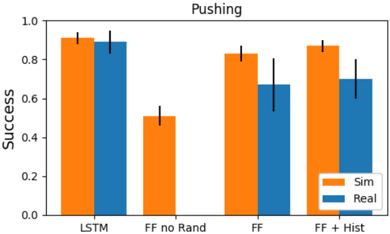
- The LSTM policy trained only in simulation achieved real-robot success of 0.89 ± 0.06 over 28 trials, comparable to its simulated success of 0.91 ± 0.03 over 100 randomized-dynamics trials.
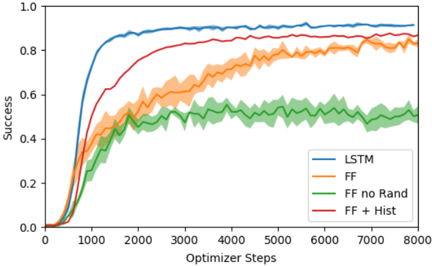
- Memoryless feedforward policies transferred worse: FF no Rand had sim 0.51 ± 0.05 and real 0.0 ± 0.0 (10 trials); FF had sim 0.83 ± 0.04 and real 0.67 ± 0.14 (12 trials); FF + Hist had sim 0.87 ± 0.03 and real 0.70 ± 0.10 (20 trials).
- Ablating randomization hurt real-robot success: fixed action timestep 0.29 ± 0.11 (17 trials), no observation noise 0.25 ± 0.12 (12 trials), fixed link mass 0.64 ± 0.10 (22 trials), fixed puck friction 0.48 ± 0.10 (27 trials), versus 0.89 ± 0.06 (28 trials) for all randomized parameters.
- When contact dynamics were altered by attaching a packet of chips to the puck, the LSTM policy achieved 0.91 ± 0.04 success, comparable to 0.89 ± 0.06 without the attachment.
Methods
- Task: a 7-DOF Fetch Robotics arm pushed a puck to a randomly sampled target on a table; reward was binary (0 if puck within 0.07 m of target, otherwise -1). State was 52D (joint positions/velocities, gripper position, puck position/orientation/linear and angular velocities); action was 7D target joint-angle offsets. Simulation used MuJoCo with 0.002 s timestep and 20 simulation steps per control step; episodes were 100 control steps in simulation and 200 timesteps on the real robot.
- Dynamics randomization: at each episode start, 95 parameters were sampled and held fixed, including link masses, joint damping, puck mass/friction/damping, table height, controller gains, action timestep, and observation noise. Action timestep varied per step via Δt ∼ Δt0 + Exp(λ), with Δt0 = 0.04 s and λ fixed per episode; observation noise was Gaussian with standard deviation 5% of each feature’s running standard deviation; action exploration noise had standard deviation 0.01 rad.
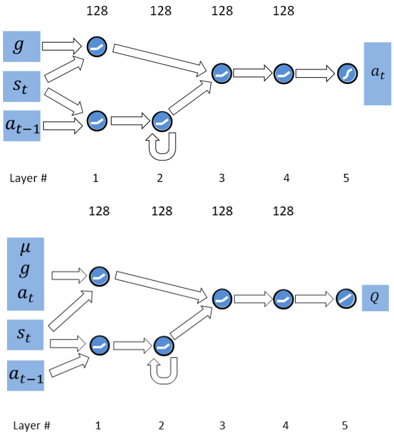
- Training and analysis: policies were trained with Recurrent Deterministic Policy Gradient (RDPG) and Hindsight Experience Replay (HER, k = 0.8), using an LSTM policy and an omniscient critic that received simulator dynamics parameters. ADAM used stepsize 5 × 10⁻⁴, batches of 128 episodes with 100 steps each, about 8000 update iterations, roughly 100 million samples, and about 8 hours on a 100-core cluster. Performance was compared across architectures and randomization ablations in simulation and on the real robot.
Limitations
- Stated: little calibration was performed to make simulation match the real robot, and the authors note that more extensive calibration would likely improve performance; they also state future work should extend to richer tasks and modalities such as vision.
- Evident from the text: evaluation is limited to a single puck-pushing task with a 7-DOF arm, and real-robot trials are small (10–28 trials per condition), so broader task and statistical generalization are not established.
- Evident from the text: the method relies on simulation-only training and does not test direct real-world fine-tuning or vision-based transfer.
Model-written summary. Check it against the paper before relying on it.
Integrity signals
Registry
Cites
Statistics
Figures
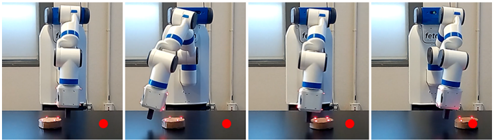
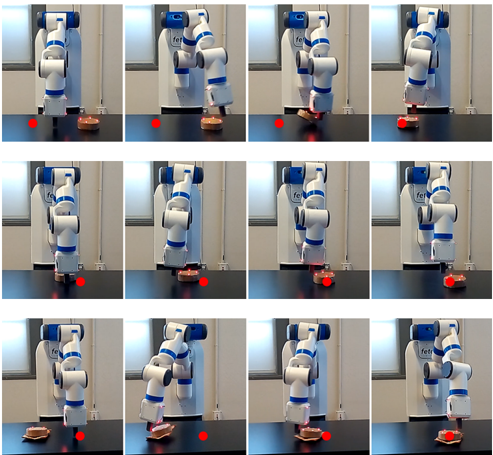
Verification
Claims the paper makes
1 Valid · 0 Not valid · 2 Not checked · 29 Own results and interpretations
The cited sources support only part of this claim — read each source’s verdict below.
In the paper
“Furthermore, it has been observed that DeepRL policies are prone to exploiting idiosyncrasies of the simulator to realize behaviours that are infeasible in the real world [2], [7].”
What the sources say
- Could not verifycites [2] [2] T. P. Lillicrap, J. J. Hunt, A. Pritzel, N. Heess, T. Erez, Y. Tassa, D. Silver, and D. Wierstra, 'Continuous control with deep reinforcement learning,' CoRR , vol. abs/1509.02971, 2015. [Online]. Available: http://arxiv.org/abs/1509.02971 - sourceExperimental — accuracy not yet measured
The Results (p. 4) describe testing DDPG in simulated physical environments, but do not report policies exploiting simulator quirks. Searches for simulator artifacts, unrealistic behavior, and real-world feasibility found no passage addressing the claimed tendency. (LLM, conf=0.72)
- Partly supportedcites [7] [7] N. Heess, D. TB, S. Sriram, J. Lemmon, J. Merel, G. Wayne, Y. Tassa, T. Erez, Z. Wang, S. M. A. Eslami, M. A. Riedmiller, and D. Silver, 'Emergence of locomotion behaviours in rich environments,' CoRR , vol. abs/1707.02286, 2017. [Online]. Available: http://arxiv.org/abs/1707.02286 - sourceExperimental — accuracy not yet measured
The Introduction (p. 1) says agents may find idiosyncratic solutions that work in one setting but are not robust across settings. The Results (p. 8) report that a simulated humanoid can exploit redundancies in the task specification, producing visually unsatisfactory gaits. Neither passage says the policies exploit quirks of the simulator or that their behaviours are infeasible in the real world. (LLM, conf=0.82)
plainstates a cause- Asserted: passes — The authors put it forward as true.
- Checkable: passes — It can be checked against evidence.
- Load-bearing: passes — The paper’s conclusions depend on it.
- Based: passes — The paper gives a reason why it holds.
- Could not verify
A result the paper reports from its own data — it cites no other source for it, so there is none to check. The quote shows it is in the paper.
In the paper
“We explore the impact of various design decisions and show that the resulting policies are robust to significant calibration error.”
- Also stated in: § B. Domain Randomization · p. 2 · plain
“Unlike previous methods which often require meticulous calibration of the simulation to closely conform to the physical system, our policies are able to adapt to significant calibration error.”
- Also stated in: § C. Non-prehensile Manipulation · p. 2 · plain
“The resulting policies are able accommodate large calibration errors when deployed on a real robot and also generalize to variability in the dynamics of the physical system.”
plain- Asserted: passes — The authors put it forward as true.
- Checkable: passes — It can be checked against evidence.
- Load-bearing: passes — The paper’s conclusions depend on it.
- Based: passes — The paper gives a reason why it holds.
- Also stated in: § B. Domain Randomization · p. 2 · plain
A result the paper reports from its own data — it cites no other source for it, so there is none to check. The quote shows it is in the paper.
In the paper
“The feedforward network trained without randomization is unable to perform the task under the real world dynamics.”
plainstates a cause- Asserted: passes — The authors put it forward as true.
- Checkable: passes — It can be checked against evidence.
- Load-bearing: passes — The paper’s conclusions depend on it.
- Based: passes — The paper gives a reason why it holds.
A result the paper reports from its own data — it cites no other source for it, so there is none to check. The quote shows it is in the paper.
In the paper
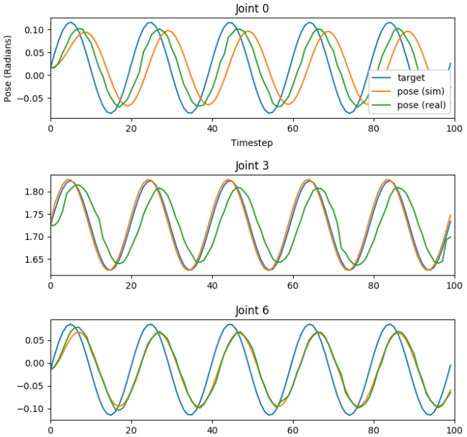
“Given the same target trajectory, the pose trajectories of the simulated and real robot differ significantly, with varying degrees of mismatch across joints.”
plainstates an association- Asserted: passes — The authors put it forward as true.
- Checkable: passes — It can be checked against evidence.
- Load-bearing: passes — The paper’s conclusions depend on it.
- Based: passes — The paper gives a reason why it holds.
A result the paper reports from its own data — it cites no other source for it, so there is none to check. The quote shows it is in the paper.
In the paper
“Policies trained without randomizing the action timestep and observation noise show particularly noticeable drops in performance.”
plainstates a cause- Asserted: passes — The authors put it forward as true.
- Checkable: passes — It can be checked against evidence.
- Load-bearing: passes — The paper’s conclusions depend on it.
- Based: passes — The paper gives a reason why it holds.
13 more claims
Create a free account to see all 32 claims and to verify the 3 references still open.
- It may state two separate claims as one. 9
- Probably not a substantial claim. 6
Claims other papers make about this one
Each is checked against this paper’s own text: does it say what the citing paper says it does?
The cited source doesn’t support the claim as written.
In the citing paper
“We instantiate SIMPLER on top of the SAPIEN physics simulator [68], but show in Section VI-D that our contributions are independent of the used simulator and can be reproduced in Isaac Sim [49].”
From Evaluating Real-World Robot Manipulation Policies in Simulation (2024) · cites this paper as [49]
Checked by a reasoning model — may be wrong.
Experimental — accuracy not yet measuredThe source backs part of the claim, not all of it — or backs it for a different population, condition or comparison.
In the citing paper
“Residual policy learning restores dynamic feasibility on the robot by learning small corrections to the retargeted reference, reusing the same residual formulation as physics refinement, so that the resulting policy transfers directly to hardware (Peng et al., 2018).”
From Dexterous Robot Manipulation from Human Demonstrations via Contact-Anchored Retargeting and Residual Policy Learning (2026) · cites this paper as Peng et al., 2018
Experimental — accuracy not yet measuredThe source backs part of the claim, not all of it — or backs it for a different population, condition or comparison.
In the citing paper
“Synthesis rollouts under domain randomization (Peng et al., 2018) produce additional dynamically feasible robot trajectories from each retargeted reference.”
From Dexterous Robot Manipulation from Human Demonstrations via Contact-Anchored Retargeting and Residual Policy Learning (2026) · cites this paper as Peng et al., 2018
Experimental — accuracy not yet measuredThe cited source says what the claim attributes to it.
In the citing paper
“Another is randomization of physical parameters that vary between simulation and reality, such that the controller becomes robust to a range of conditions that cover those that arise in physical deployment, without the necessity to precisely model these conditions a priori [21].”
From Learning quadrupedal locomotion over challenging terrain (2020) · cites this paper as [21]
The cited source says what the claim attributes to it.
In the citing paper
“Peng et al. [44] shows the effectiveness of memory-based policies (i.e., policies learnt by using past memory for future learning [95] [97]) to deal with the RG, introducing DR to generalise environment dynamics.”
From Crossing the Reality Gap: A Survey on Sim-to-Real Transferability of Robot Controllers in Reinforcement Learning (2021) · cites this paper as [44]
1 more claim about this paper
Create a free account to see every claim other papers make about this one.
Citations
Cites
Adam: A Method for Stochastic Optimization
Kingma, D. P., & Ba, J. (2014) · arXiv · doi:10.48550/arxiv.1412.6980 · Cited by 98,946
Human-level control through deep reinforcement learning
Mnih, V., Kavukcuoglu, K., Silver, D., Rusu, A. A., Veness, J., Bellemare, M. G., Graves, A., Riedmiller, M., Fidjeland, A. K., Ostrovski, G., et al. (2015) · Nature · doi:10.1038/nature14236 · Cited by 30,357 · cited 1×
“In simulated domains, agents have been developed to perform a diverse array of challenging tasks [1], [2], [3].”
BackgroundContinuous control with deep reinforcement learning
Lillicrap, T. P., Hunt, J. J., Pritzel, A., Heess, N., Erez, T., Tassa, Y., Silver, D., & Wierstra, D. (2015) · arXiv · doi:10.48550/arxiv.1509.02971 · Cited by 10,782
Domain-Adversarial Training of Neural Networks
Ganin, Y., Ustinova, E., Ajakan, H., Germain, P., Larochelle, H., Laviolette, F., Marchand, M., & Lempitsky, V. (2017) · Advances in Computer Vision and Pattern Recognition · doi:10.1007/978-3-319-58347-1_10 · Cited by 8,318
(1999) · Cited by 5,147
MuJoCo: A physics engine for model-based control
Todorov, E., Erez, T., & Tassa, Y. (2012) · 2012 IEEE/RSJ International Conference on Intelligent Robots and Systems · doi:10.1109/iros.2012.6386109 · Cited by 4,767 · cited 1×
“All simulations are performed using the MuJoCo physics engine [39] with a simulation timestep of 0.”
MethodMulti-Agent Actor-Critic for Mixed Cooperative-Competitive Environments
Lowe, R., Wu, Y., Tamar, A., Harb, J., Abbeel, P., & Mordatch, I. (2017) · arXiv · doi:10.48550/arxiv.1706.02275 · Cited by 3,377
Self-citationDomain randomization for transferring deep neural networks from simulation to the real world
Tobin, J., Fong, R., Ray, A., Schneider, J., Zaremba, W., & Abbeel, P. (2017) · 2017 IEEE/RSJ International Conference on Intelligent Robots and Systems (IROS) · doi:10.1109/iros.2017.8202133 · Cited by 3,124
Self-citationLevine, S., Pastor, P., Krizhevsky, A., Ibarz, J., & Quillen, D. (2018) · The International Journal of Robotics Research · doi:10.1177/0278364917710318 · Cited by 1,971
Andrychowicz, M., Wolski, F., Ray, A., Schneider, J., Fong, R., Welinder, P., McGrew, B., Tobin, J., Abbeel, P., & Zaremba, W. (2017) · arXiv · doi:10.48550/arxiv.1707.01495 · Cited by 1,355
Self-citation
Research works printed but not linked: 1
- [32] D. H. Ignasi Clavera and P. Abbeel, 'Policy transfer via modularity,' in IROS . IEEE, 2017. -
Cited by
Items 701–800 of 935
Robotic Visual Functions Required for Picking Tasks
Yamazaki, K. (2020) · Journal of the Robotics Society of Japan · doi:10.7210/jrsj.38.538
Automatische Programmierung von Produktionsmaschinen
Eiling, F., & Huber, M. F. (2020) · Springer eBooks · doi:10.1007/978-3-662-62377-0_4 · Cited by 1
“Moderne Techniken wie Domain-Randomisierung können dem aber effizient entgegenwirken (Chebotar et al. 2019; Peng et al. 2018; Tobin et al. 2017).”
BackgroundLearning-based Manipulation with Explicit and Implicit Dynamics Parameters for Multiple Environments
Murooka, T., Hamaya, M., von Drigalski, F., et al. (2021) · Journal of the Robotics Society of Japan · doi:10.7210/jrsj.39.177
Martinez-Lorenzo, J. A., Hudack, J., Jing, Y., Shaham, M., Liang, Z., Bashit, A. A., Wu, Y., Zhang, W., Skopin, M., Heredia‐Juesas, J., et al. (2022) · Robotics · doi:10.3390/robotics11050094 · Cited by 1
Monolithic vs. hybrid controller for multi-objective Sim-to-Real learning
Dag, A., Angleraud, A., Yang, W., Strokina, N., Pieters, R., Lanz, M., & Kämäräinen, J. (2021) · IEEE/RSJ International Conference on Intelligent Robots and Systems (IROS) · doi:10.1109/iros51168.2021.9636426 · Cited by 1
“[16] show that by adding randomness to system dynamics during training the performance in real world tasks is improved.”
Gong, P. L., Shi, D., Xue, C., & Chen, X. (2021) · International Conference on Innovation in Artificial Intelligence (ICIAI) · doi:10.1145/3461353.3461373 · Cited by 1
“Sim to real[13] is a branch of transfer learning.”
BackgroundArai, S. (2021) · Journal of the Robotics Society of Japan · doi:10.7210/jrsj.39.625
Cheng, Y., Zhao, P., Wang, F., Block, D. J., & Hovakimyan, N. (2022) · IEEE Robotics and Automation Letters · doi:10.1109/lra.2022.3169309 · Cited by 36
“6b shows the results under ten scenarios with randomly increased mass and inertia through a scale of [2, 5].”
BackgroundMethodReinforcement Learning and Adaptive Control
Chowdhary, G. V., Joshi, G., & Havens, A. (2020) · Springer eBooks · doi:10.1007/978-1-4471-5102-9_100064-1
Mounsif, M., Lengagne, S., Thuilot, B., & Adouane, L. (2021) · Lecture notes in electrical engineering · doi:10.1007/978-3-030-92442-3_10
Use of Embedding Spaces for Transferring Robot Skills in Diverse Sensor Settings
Ninomiya, K., Hirokawa, M., & Suzuki, K. (2021) · International Conference on Machine Learning and Applications · doi:10.1109/icmla52953.2021.00091
Human-Agent Collaboration Strategies for Vision-Grounded Instruction Following
Chao, G.-L., & Lane, I. R. (2021) · IEEE Workshop on Automatic Speech Recognition and Understanding (ASRU) · doi:10.1109/asru51503.2021.9688143
Force-prediction Scheme for Precise Grip-lifting Movements
Koskinopoulou, M., Falco, P., & Trahanias, P. E. (2022) · International Conference on Automation, Robotics and Applications · doi:10.1109/icara55094.2022.9738532
“Sim-to-Real Transfer Learning , as it is often termed, offers a great potential to bridge the gap between simulation and real data in machine learning process control [16].”
BackgroundReinforcement Learning and Adaptive Control
Chowdhary, G. V., Joshi, G., & Havens, A. (2021) · Springer eBooks · doi:10.1007/978-3-030-44184-5_100064
Data-Centric Learning Method for Synthetic Data Augmentation and Object Detection
Park, Y., Kim, H., Park, Y. J., Lee, C., & Lee, J.-S. (2022) · JOIV International Journal on Informatics Visualization · doi:10.30630/joiv.6.1-2.939 · Cited by 1
“Some models, such as GraspGAN [8], were trained with additional behavioral information on top of the segmentation information on existing data.”
MethodConcurrent Policy Blending and System Identification for Generalized Assistive Control
Bhan, L., Quiñones-Grueiro, M., & Biswas, G. (2022) · Proceedings - IEEE International Conference on Robotics and Automation/Proceedings · doi:10.1109/icra46639.2022.9811672
Off Environment Evaluation Using Convex Risk Minimization
Katdare, P., Liu, S., & Campbell, K. D. (2022) · Proceedings - IEEE International Conference on Robotics and Automation/Proceedings · doi:10.1109/icra46639.2022.9812026
“log10 SampleSize L 1 E rr o r [10, 10] [20, 20]”
BackgroundAccelerating Robot Reinforcement Learning with Samples of Different Simulation Precision
Zhao, Y. B., Zhai, Y., Luo, J., Feng, D., Ding, B., & Li, Z. (2021) · IEEE International Conference on High Performance Computing and Communications; IEEE International Conference on Smart City; IEEE International Conference on Data Science and Systems (HPCC/SmartCity/DSS) · doi:10.1109/hpcc-dss-smartcity-dependsys53884.2021.00080
Bridging the Reality Gap via Progressive Bayesian Optimisation
Chen, Y., & Rosendo, A. (2022) · Lecture notes in networks and systems · doi:10.1007/978-3-031-15226-9_17
Dynamics-Aligned Transfer Reinforcement Learning For Autonomous Underwater Vehicle Control
Cheng, K. D., Lu, W., Xiong, H., et al. (2022) · International Conference on Advanced Robotics and Mechatronics (ICARM) · doi:10.1109/icarm54641.2022.9959635
“Peng et al. [11] used the method of domain randomization to randomize the physical parameters in the environment, let the agent learn the control policy in the simulation, and successfully transferred the control policy to the real robot.”
MethodA Monte Carlo Framework for Incremental Improvement of Simulation Fidelity
Lyons, D. M., Finocchiaro, J., Novitzky, M. M., et al. (2023) · Lecture notes in networks and systems · doi:10.1007/978-3-031-22216-0_40
Towards Autonomous Grading in the Real World
Miron, Y., Goldfracht, Y., & Castro, D. D. (2023) · Lecture notes in computer science · doi:10.1007/978-3-031-25069-9_8
NICO Challenge: Out-of-Distribution Generalization for Image Recognition Challenges
Zhang, X., He, Y. H., Wang, T., Qi, J., Yu, H., Wang, Z., Peng, J., Xu, R., Shen, Z., Niu, Y., et al. (2023) · Lecture notes in computer science · doi:10.1007/978-3-031-25075-0_29 · Cited by 5
Harada, S., Tosa, Y., Omae, R., et al. (2023) · Research Square · doi:10.21203/rs.3.rs-2607884/v1
It’s Just Semantics: How to Get Robots to Understand the World the Way We Do
Chung, J. J., Förster, J., Wulkop, P., Ott, L., Lawrance, N., & Siegwart, R. (2023) · Springer proceedings in advanced robotics · doi:10.1007/978-3-031-25555-7_1
Adapt to Non-stationary Environments via Multi-teacher and Single-Student Process
Yue, W., Zhou, Y., & Kou, G. (2022) · 2022 International Conference on Computers and Artificial Intelligence Technologies (CAIT) · doi:10.1109/cait56099.2022.10072083
“[18] performs DR to attempt to cover the distribution of environmental information in the real world.”
BackgroundLearning from Hindsight Demonstrations
Shao, M., Jiang, F., Liu, S., Han, K., & Zhao, D. (2023) · Communications in computer and information science · doi:10.1007/978-981-99-1642-9_41
Artificial cognitive functions towards AI-enabled collaborative robots
Zouganeli, E., & Lentzas, A. (2023) · International Conference on PErvasive Technologies Related to Assistive Environments (PETRA) · doi:10.1145/3594806.3594836
“Learning is a core cognitive function [16].”
Brain activities for Open Intelligence : Application of Brain Science for Behavior Adaptation
Shimoda, S. (2023) · Journal of the Robotics Society of Japan · doi:10.7210/jrsj.41.591
Contact Force and Material Removal Simulation for a Virtual Robotic Polishing Platform
Xiao, M., Luo, X., & Ding, Y. (2023) · Lecture notes in computer science · doi:10.1007/978-981-99-6486-4_44
Kouvelis, P., Liu, Y., & Turcic, D. (2023) · SSRN Electronic Journal · doi:10.2139/ssrn.4617964
A Novel Framework for Adaptive Quadruped Robot Locomotion Learning in Uncertain Environments
Li, M., Guo, B., Zhao, K., Xu, R., Liu, S., Mao, S., Zhou, S., Xu, Q., & Yu, Z. (2024) · Lecture notes in computer science · doi:10.1007/978-981-99-9896-8_10 · Cited by 1
A Virtual-Physical Interaction Framework for Mobile Robotics Testbeds
Liao, C., Ding, X., Duan, X., & He, J. (2023) · China Automation Congress (CAC) · doi:10.1109/cac59555.2023.10451913
“Domain randomization [14] is a typical method used to train policies that can adapt to various dynamic environments.”
MethodZuo, G., Wang, Y., Huang, G. M., & Yu, S. (2023) · China Automation Congress (CAC) · doi:10.1109/cac59555.2023.10451571 · Cited by 2
Robotic Odor Source Localization via End-to-End Recurrent Deep Reinforcement Learning
Wang, L., & Pang, S. (2023) · IEEE International Conference on Robotic Computing (IRC) · doi:10.1109/irc59093.2023.00014 · Cited by 1
“Some existing techniques, e.g., transfer learning [40], [41], can be applied to mitigate the sim-to-real gap; 2) multiple search agents.”
MethodFallooh, N. H., Sadiq, A. T., Abbas, E. I., & Hashim, I. A. (2024) · BIO Web of Conferences · doi:10.1051/bioconf/20249700010
“A transition function, reward function, discount factor, collection of states, and set of actions make up an MDP, which is a mathematical description of an environment [20].”
BackgroundDomain-Randomized Curriculum for Robust Reinforcement Learning In Bus OperationsPreprint
Tang, Y., Qu, A., Jiang, X., et al. (2024) · SSRN Electronic Journal · doi:10.2139/ssrn.4849646
Robust Deep RL-Based Aerial Transportation of Suspended Loads
Panetsos, F., Karras, G. C., & Kyriakopoulos, K. J. (2024) · Mediterranean Conference on Control and Automation (MED) · doi:10.1109/med61351.2024.10566261
“Moreover, since the Q-function is solely used throughout the simulation, the known randomized parameters of Table I are also provided as input in order to boost the training procedure, as proposed in [20].”
MethodDevelopment of Aero AI for Initial Flight Shape Design of Small Fixed-Wing UAV
Ye, Y.-L., Tseng, S.-T., Huang, C., et al. (2024) · IEEE International Conference on Electronic Communications, Internet of Things and Big Data (ICEIB) · doi:10.1109/iceib61477.2024.10602606
“However, when they are validated in unstructured environments, they lack performance and stability if the simulated model is inaccurate [4].”
BackgroundBeigomi, B., & Zhu, Z. H. (2024) · Proceedings - IEEE International Conference on Robotics and Automation/Proceedings · doi:10.1109/icra57147.2024.10610017 · Cited by 5
Dynamics Adaptive Safe Reinforcement Learning with a Misspecified Simulator
Xue, R., Zhang, Z., Li, L., Chen, F., Li, Y.-C., Yu, Y., & Yuan, L. (2024) · Lecture notes in computer science · doi:10.1007/978-3-031-70368-3_5 · Cited by 1
“Domain randomization creates augmented environments with different physical parameters to enhance policy generalization [29, 33], but it necessitates expert knowledge of simulators and the training complexity scales with the number of variations.”
BackgroundProgressively Learning to Reach Remote Goals by Continuously Updating Boundary Goals
Shao, M., Zhu, H., Zhao, D., Han, K., Jiang, F., Liu, S., & Zhang, W. (2024) · IEEE Transactions on Neural Networks and Learning Systems · doi:10.1109/tnnls.2024.3428323
“R EINFORCEMENT learning (RL) has been successfully applied in many fields, ranging from traditional Go games [1], [2] and modern video games [3], [4], [5], [6] to recommendation systems [7] and complex robotics tasks [8], [9], [10].”
Asymmetric Actor-Critic for Adapting to Changing Environments in Reinforcement Learning
Yue, W., Zhou, Y., Zhang, X., Hua, Y., Li, M., Fan, Z., Wang, Z., & Kou, G. (2024) · Lecture notes in computer science · doi:10.1007/978-3-031-72341-4_22 · Cited by 1
Enhancing Visual Generalization in Reinforcement Learning with Cycling Augmentation
Sun, S., Lyu, J., Li, L., Guo, J., Yan, M., Liu, R., & Li, X. (2024) · Lecture notes in computer science · doi:10.1007/978-3-031-72341-4_27 · Cited by 1
Synthetic Data Generation with Reinforcement Learning for Fault Diagnosis of Rolling Bearings
Komatsu, T., Htun, K. M., Liu, Z., et al. (2024) · 2022 IEEE 18th International Conference on Automation Science and Engineering (CASE) · doi:10.1109/case59546.2024.10711317
“The proposed framework is inspired by methods researched in the fields of robotics and computer vision [8] [9] [10] [11] [12].”
BackgroundMethodDomain Randomization-free Sim-to-Real : An Attention-Augmented Memory Approach for Robotic Tasks
Qu, J., Otsubo, S., Yamanokuchi, T., Matsubara, T., & Miwa, S. (2024) · IEEE/RSJ International Conference on Intelligent Robots and Systems (IROS) · doi:10.1109/iros58592.2024.10801944 · Cited by 1
Embodiment Randomization for Cross Embodiment Navigation
Putta, P., Aggarwal, G., Mottaghi, R., Batra, D., Yokoyama, N., Truong, J., & Majumdar, A. (2024) · IEEE/RSJ International Conference on Intelligent Robots and Systems (IROS) · doi:10.1109/iros58592.2024.10802792 · Cited by 6
“[11]’s method of randomization in low-level control systems and adapt it to a complex, high-level navigation task.”
Sim-to-Real Image Transfer for RL-Based Bin Picking
Park, I. J., & Han, H. (2024) · International Conference on Information and Communication Technology Convergence (ICTC) · doi:10.1109/ictc62082.2024.10826807
López-Francos, I. G., Lipkis, R., Vlastos, P. G., & Agogino, A. (2025) · AIAA SciTech Forum · doi:10.2514/6.2025-1343 · Cited by 2
Hörger, T., Dresia, K., Waxenegger-Wilfing, G., & Schlechtriem, S. (2025) · AIAA SciTech Forum · doi:10.2514/6.2025-2636 · Cited by 2
TGRL: A Trajectory-Guided Reinforcement Learning Approach for Robust Autonomous Racing
Sun, Y., Qu, D., Zuo, Z., Zhang, H., Xu, L. J., Ren, X., & Wang, X. (2024) · China Automation Congress (CAC) · doi:10.1109/cac63892.2024.10865358
Prediction for Dynamical Systems via Transfer Learning
Du, Z., Oymak, S., & Pasqualetti, F. (2024) · IEEE Conference on Decision and Control (CDC) · doi:10.1109/cdc56724.2024.10886118 · Cited by 1
“Controllers can be trained more robust by adding randomness to the simulation environments [3], [4], [10].”
A Deep Reinforcement Learning Approach for Bipedal Robots Based on a Guiding Channel
Wang, J., Li, J., & Zhang, S. (2025) · Lecture notes in electrical engineering · doi:10.1007/978-981-96-3576-4_19
Inductive biases for zero-shot systematic generalization in language-informed reinforcement learning
Dijujin, N. H., Rohani, S. R. R., Samiei, M., & Baghshah, M. S. (2025) · Machine-mediated learning · doi:10.1007/s10994-025-06764-7 · Cited by 1
“Further analyses are stated in Discussions, Section 5.”
Gao, S., & Bezzo, N. (2025) · Journal of Intelligent & Robotic Systems · doi:10.1007/s10846-025-02250-3
“Subsequently, we discuss the conformal mapping techniques used in robotic applications.”
General-Purpose Sim2Real Protocol for Marker-Based Visuotactile Sensing
Xu, J. L., Su, H., Chen, R., & Hou, Z. (2025) · Research on intelligent manufacturing · doi:10.1007/978-981-96-2657-1_3
Sim-to-Real Transfer for Estimation over Wireless Networks
Agarwal, S., Asija, A., Kaul, S. K., & Anand, S. (2025) · ACM Transactions on Cyber-Physical Systems · doi:10.1145/3736419 · Cited by 3
“Unlike domain randomization, domain adaptation needs a substantial amount of data from the target domain.”
InfluentialDDIRNet: Robust Radar Emitter Recognition via Single Domain Generalization
Wu, H., Li, X., Junjie, H., et al. (2025) · Journal of Systems Engineering and Electronics · doi:10.23919/jsee.2025.000053
Efficient Sim2Real Training Using PPO and A2C for 6-DoF Robot Control
Nguyen-Phan-Duc, A., Phan-Trung, K., Dang-Le-Bao, C., & Le‐Trung, Q. (2024) · RIVF International Conference on Computing and Communication Technologies (RIVF) · doi:10.1109/rivf64335.2024.11009091 · Cited by 1
Comprehensive Review of Contact Estimation Methods for Legged Robots
Thema, M., Medeiros, V. S., & Becker, M. (2025) · Brazilian Conference on Robotics (CROS) · doi:10.1109/cros66186.2025.11066135
“While simulators have helped minimize this issue, generating realistic and diverse synthetic data remains a substantial bottleneck [27].”
Deep Reinforcement Learning Based Dynamic Controller for Trajectory Tracking of Mobile Robots
Ndlovu, H., & Wang, C. (2025) · 2025 5th International Conference on Computer, Control and Robotics (ICCCR) · doi:10.1109/icccr65461.2025.11072639
Multi-dimensional digital twin for cable assembly by synthetic data and reinforcement learning
Choi, M.-H., Kim, K., Moon, J., Kim, M., & Um, J. (2025) · International Journal of Computer Integrated Manufacturing · doi:10.1080/0951192x.2025.2534600
“Such an approach not only facilitates safe and cost-effective learning but also enables the experimentation with a diverse range of scenarios Peng et al. (2018).”
Learning Accurate and Robust Velocity Tracking for Quadrupedal Robots
Zhu, C., Zhang, Z., Liu, W., Li, S., & Liu, Y. (2025) · Journal of Field Robotics · doi:10.1002/rob.70028 · Cited by 3
“Peng et al. (2018b) implicitly embedded system identification function in the policy learning process.”
Reinforcement Learning for Bipedal Jumping: Integrating Actuator Limits and Coupled Tendon Dynamics
Zhu, Y., Jiang, X., Ma, X., Tang, J., Li, Q., & Zhang, J. (2025) · Mathematics · doi:10.3390/math13152466
Multi-Agent Reinforcement Learning for Operational Index Decision-Making of Multiple Unit Processes
Yao, Y., & Ding, J. (2025) · Chinese Control and Decision Conference (CCDC) · doi:10.1109/ccdc65474.2025.11090210
“On the other hand, domain randomization [17] is a technique commonly used in simulation-based learning systems to improve the generalization ability of models in environments with variabilities and uncertainties.”
UAV Path Planning in Sudden Obstacle Environment Based on Reinforcement Learning
Huang, J., Han, J., Qian, F., et al. (2024) · International Conference on Mechatronics and Computer Technology Engineering (MCTE) · doi:10.1109/mcte62870.2024.11117567
“In this kind of problem, it is necessary to find an optimal path from the current position to the target position to minimize the flight time of UAV, obtain the shortest flight distance or minimum energy consumption[2].”
Ilboudo, W. E. L., Kobayashi, T., & Matsubara, T. (2025) · The International Journal of Robotics Research · doi:10.1177/02783649251358844 · Cited by 2
“This work primarily focuses on reinforcement learning challenges where we have uncertainty about the true transition distribution or dynamics of the environment, i.e. dynamics randomization (Peng et al. (2018)).”
BackgroundHybrid Gradient-Based Policy Optimization for Sample-Efficient Policy Learning in Autonomous Systems
Tseng, K.-Y., Shamma, J. S., & Dullerud, G. E. (2025) · Proceedings of the ... American Control Conference/Proceedings of the American Control Conference · doi:10.23919/acc63710.2025.11107826
“Robust PPO is trained with the dynamics randomization technique [17], with the deviation of m and I are sampled from the uniform distributions ∆ m = ± 30% and ∆ I = ± 30% .”
From Simulation to Reality: Reinforcement Learning for Real-Time Extreme Vehicle Control
Suplin, V., & Yechiel, O. (2025) · Proceedings of the ... American Control Conference/Proceedings of the American Control Conference · doi:10.23919/acc63710.2025.11107607
“To achieve agent robustness, we employ domain randomization [15] by varying the environment parameters, thereby creating a wide range of scenarios in which the agent must operate.”
Fine-Tuning Hard-to-Simulate Objectives for Quadruped Locomotion: A Case Study on Total Power Saving
Nai, R., You, J., Cao, L., Cui, H., Zhang, S., Xu, H., & Gao, Y. (2025) · Proceedings - IEEE International Conference on Robotics and Automation/Proceedings · doi:10.1109/icra55743.2025.11128263 · Cited by 3
“The current successes of learning-based approaches heavily depend on the sim-to-real transfer paradigm [11], [12], where policies trained in simulations are directly applied to real-world robots [13], [14], [15], [16], [17], [18], [19], [20].”
Duolingo: Dynamics Utilization for Online Translation of Actions
Vemuri, K., Wu, A., Thareja, A., Chen, Z. Q., Good, I., Lipton, J. I., & Gupta, A. (2025) · Proceedings - IEEE International Conference on Robotics and Automation/Proceedings · doi:10.1109/icra55743.2025.11127601
“We compare DUOLINGO’s ability to perform transfer learning in the three previously mentioned MuJoCo environments against various baselines: SAC [8], PPO [32], Recurrent-PPO [26], and Recurrent-SAC [22].”
HEROES: Unreal Engine-based Human and Emergency Robot Operation Education System
Chaudhary, A., Tiwari, K., & Bera, A. (2025) · Proceedings - IEEE International Conference on Robotics and Automation/Proceedings · doi:10.1109/icra55743.2025.11128532 · Cited by 3
Byrd, M., Crandell, J. L., Das, M., Inman, J., Wright, R., & Ha, S. (2025) · Proceedings - IEEE International Conference on Robotics and Automation/Proceedings · doi:10.1109/icra55743.2025.11127672 · Cited by 4
“Domain randomization has also shown great success in deploying trained policies on actual robots, such as performing sim-to-real transfer for a quadrupedal robot in [22] and improving performance for a robotic manipulator in [19].”
Machine Learning-Assisted Stochastic Kriging Metamodel for Offline Simulation Online Application
Zhang, H., He, J., Righter, R., Shen, Z. M., & Zheng, Z. (2026) · INFORMS journal on computing · doi:10.1287/ijoc.2023.0130
Context-Aware Gaussian Process for Physics-Informed Reinforcement Learning With Heterogeneous Data
Wannawas, N., Han, J., Narayan, J., & Srikarun, B. (2025) · IEEE Access · doi:10.1109/access.2025.3608262 · Cited by 1
“Such use of transition histories appears in several other studies which use different function approximators such as feedforward neural networks [48], multi-head neural networks [49], and recurrent neural networks (RNN) [23], [50] to process the histories and learn latent features that represent…”
ArcGen: Generalizing Neural Backdoor Detection Across Diverse Architectures
Yang, Z., Luo, C., He, D., Li, Y., & Li, Y. (2025) · IEEE Transactions on Information Forensics and Security · doi:10.1109/tifs.2025.3610254 · Cited by 1
“The first technique is domain randomization, which counters overfitting to specific domains by augmenting training data with randomized domain information [40], [41], [42], [43].”
MPC-Guided Reinforcement Learning for Enhanced Bipedal Walking Stability on Uneven Terrain
Wu, C., Jia, L., Sun, X., & Gong, Y. (2025) · International Conference on Intelligent Computing and Robotics (ICICR) · doi:10.1109/icicr65456.2025.00048
“By incorporating additional techniques such as domain randomization [22,23], curriculum learning, privileged learning [24], and teacher student policies [4], robots can rapidly learn walking strategies for complex terrains [25].”
Robust Grasping Force Control With Noise-Tolerant DNN
Liu, M., Yan, J., & Huang, R. (2025) · Intelligent control and learning systems · doi:10.1007/978-981-96-9144-9_9
Васильевич, К. В., & Олейникова, С. А. (2025) · Программные системы и вычислительные методы · doi:10.7256/2454-0714.2025.3.75996
Fundamentals of applied robotics: an integrated guide on control, programming and training
Zamora, Y. M., Cuestab, M. A., Reynac, T. A., & Salazard, J. B. (2025) · Prohominum · doi:10.47606/acven/ph0383
Liu, Y.-R., Chen, X., Xiao, S., Yang, X., Qi, X., Zhou, L., Yu, Y., & Huang, F. (2025) · Machine Learning · doi:10.1007/s10994-025-06846-6
“The accuracy of the environment model is crucial for optimizing downstream policies in sequential decision-making tasks (Peng et al., 2018; OpenAI et al., 2019; Yu et al., 2020; Chen et al., 2023a).”
Agile and Versatile Bipedal Robot Tracking Control Through Reinforcement Learning
Han, Z., Li, J., Ye, L., Liu, H., & Liang, B. (2025) · Lecture notes in computer science · doi:10.1007/978-981-95-2098-5_33
Osmanca, M. S. (2025) · Journal of Polytechnic · doi:10.2339/politeknik.1783547
Learning human-to-robot handovers through 3D scene reconstruction
Wu, Y., Pang, Y. L., Cavallaro, A., & Oh, C. (2025) · IEEE RO-MAN · doi:10.1109/ro-man63969.2025.11217579 · Cited by 1
“To mitigate these challenges, policies are often trained in simulated environments and then transferred to the real world [35], [36], [5].”
Stoev, P., Chikurtev, D., Krastev, S., Yumer, D., & Karkov, B. (2025) · WSEAS TRANSACTIONS ON SYSTEMS AND CONTROL · doi:10.37394/23203.2025.20.45
Kapusi, T. P., Erdei, T. I., Abdullah, M., Husi, G., & Hajdú, A. (2025) · Robotics · doi:10.3390/robotics14120175
“Approaches such as those as Tobin et al. and Peng et al. demonstrated that randomizing textures, lighting, and dynamics enables robust transfer of trained policies to real robots [1,12].”
LoopSR: Looping Sim-and-Real for Lifelong Policy Adaptation of Legged Robots
Wu, P., Xie, W., Cao, J., Lai, H., & Zhang, W. (2025) · IEEE/RSJ International Conference on Intelligent Robots and Systems (IROS) · doi:10.1109/iros60139.2025.11246873 · Cited by 6
Learning Symmetric Legged Locomotion via State Distribution Symmetrization
Zhu, C., Zhang, Z., Li, S., et al. (2025) · IEEE/RSJ International Conference on Intelligent Robots and Systems (IROS) · doi:10.1109/iros60139.2025.11246183
“To ensure successful simulation-to-reality transfer of the learned policy, it is necessary to incorporate noise and delays into the observations [22].”
Robust Reinforcement Learning based on Momentum Adversarial Training
Li, H., Liu, H., Sheng, J., Zhang, L., & Dong, Z. (2025) · IEEE/RSJ International Conference on Intelligent Robots and Systems (IROS) · doi:10.1109/iros60139.2025.11246765
“To mitigate the sim-to-real gap, domain randomization introduces environmental variations [9], yet it relies on heuristics and struggles with unforeseen disturbances.”
Huang, D., Li, Z., & Hu, C. (2025) · IEEE/RSJ International Conference on Intelligent Robots and Systems (IROS) · doi:10.1109/iros60139.2025.11246499
“Reach stage: For the reach stage, the distance reward is defined as a function that combines the dense reward specific to the current stage with the sparse reward carried over from the preceding approach stage [26].”
Leung, B., Haomachai, W., Pedersen, J. W., Risi, S., & Manoonpong, P. (2025) · IEEE/RSJ International Conference on Intelligent Robots and Systems (IROS) · doi:10.1109/iros60139.2025.11247433 · Cited by 1
“This approach demonstrated the possibility of rapidly transforming a randomly initialized network into a functional one and adapting to leg damages not seen during the evolution of the plasticity rules.”
Khalifa, W., Essam, M. A., Ghazy, M. R., et al. (2025) · Scientific Reports · doi:10.1038/s41598-025-23496-9
GRAM: Generalization in Deep RL With a Robust Adaptation Module
Queeney, J., Cai, X., Schperberg, A. V., Corcodel, R., Benosman, M., & How, J. P. (2025) · IEEE Robotics and Automation Letters · doi:10.1109/lra.2025.3641155 · Cited by 8
“See [4] for details. a) Benchmark comparison: We compare the performance of GRAM against popular deep RL methods for generalization in legged locomotion: robust RL using adversarial training [7], contextual RL using a teacher-student architecture [2], [3], [4], and domain randomization [37].”
Priya, A., Tiwari, R., Agrawal, P., & Kumar, S. (2025) · Intelligent Service Robotics · doi:10.1007/s11370-025-00673-3 · Cited by 2
“…this problem, there are different methods available like using data augmentation to decrease the differences between training and testing environments [12], domain randomization is used during training for different combination of environments and obstacles to make agent aware with it [13, 14].”
Gated Multi-modal Fusion for Vision-Based Locomotion Control of Quadruped Robots
Dong, J., Xu, Y., & Dong, F. (2025) · Lecture notes in electrical engineering · doi:10.1007/978-981-95-4045-7_33
ADR-PNAS: A Novel Sim-to-Real Transfer Approach for Robotic Manipulation Tasks
Nong, Y., Zhang, H.-T., & Sun, J.-Q. (2025) · IEEE Transactions on Robotics · doi:10.1109/tro.2025.3644950
“More recent methods, such as dynamics randomization (DR2) [11], randomized-to-canonical adaptation networks (RCAN) [12], and ensemble Received 10 June 2025; revised 14 November 2025; accepted 1 December 2025.”
Learning Perceptive Legged Robot Locomotion in the Real World: A Systematic Review
Kurniawan, I. T., Zhu, W. D., Owaki, D., & Hayashibe, M. (2025) · IEEE Robotics & Automation Magazine · doi:10.1109/mra.2025.3639794 · Cited by 1
“Domain randomization is a technique commonly employed to address this sim-to-real gap [93].”
Learning to Communicate over an Unknown Shared Network
Agarwal, S., Asija, A., Kaul, S. K., Bhattacharya, A., & Anand, S. (2026) · ACM Transactions on Cyber-Physical Systems · doi:10.1145/3786203 · Cited by 1
“We conclude in Section 10.”
InfluentialGeneralization and Exploitation: Meta-GSAC for Multi-Task UAV Path Planning and Obstacle Avoidance
Huang, J., Bai, S., Huai, L., Cui, Y., Li, B., & Wan, K. (2025) · Drones · doi:10.3390/drones10010014
“Techniques include data augmentation [19], domain randomization [20], environment generation [21], and goal optimization [22].”
Sim-to-Real Deployment of a Sinusoidal Policy for Snake Robots
Sangryeong, S., Ryu, D., Lee, W., et al. (2025) · International Conference on Control, Automation and Systems (ICCAS) · doi:10.23919/iccas66577.2025.11301402
“The learned policy, trained in simulation with domain randomization, was transferred to the physical robot using Sim-to-Real transfer techniques based on dynamics randomization [8].”
Metadata
- Authors
- Peng, X. B., Andrychowicz, M., Zaremba, W., & Abbeel, P.
- Affiliations
- University of California, Berkeley (US)
- OpenAI (United States) (US)
- ORCID
- Abbeel, Pieter
- Venue
- 2018 IEEE International Conference on Robotics and Automation (ICRA)
- Publisher
- IEEE
- Published
- 2018-05
- Pages
- 3803-3810
- ISSN
- 1050-4729 (ISSN-L)
- OpenAlex
- W2767050701
- Cited by
- 1,309
- References
- 39
- Citations by year
- 2026: 149 · 2025: 167 · 2024: 155 · 2023: 158 · 2022: 159 · 2021: 197 · 2020: 178 · 2019: 109 · 2018: 34
- FWCI
- 52.88
- Type
- conference paper
- Language
- en
- Open access
- green
- arxiv.org
- Locations
- Proceedings - IEEE International Conference on Robotics and Automation/Proceedings (publishedVersion)
- arXiv (Cornell University) (submittedVersion)
- arXiv (Cornell University)
- Topics
- Physical Sciences › Computer Science › Artificial Intelligence › Reinforcement Learning in Robotics
- Physical Sciences › Engineering › Control and Systems Engineering › Robot Manipulation and Learning
- Physical Sciences › Computer Science › Artificial Intelligence › Domain Adaptation and Few-Shot Learning
- Keywords
- sim-to-real transfer, robot control, reality gap, object pushing, robot manipulators, policy generalization
About these checks
Registry, retraction, Cites and statistics results are computed, not judged, with one exception: a printed reference that no index lists is read once by a model before it counts as a citation error. Claims are extracted by a model and kept only when their quote appears verbatim in the text; each cited source is then checked, with a model’s help, for whether it says what the claim relies on. Those verdicts can be wrong — read the claim’s quote and the cited source before relying on one.
The claim verdicts this report counts are experimental: their accuracy is not yet measured.
A language model drew the claims from the paper on 2026-10-10, under version 3 of the claim definition (model deepseek-v4.1-flash, prompt extract-v3).
A second model labelled each claim on 2026-10-10 (model jev-1.13-20260917, definition revision gold-guideline-v0.2).
Cited sources are checked with a language model’s help (gpt-6-sol).
Statistics and arithmetic are recomputed, not judged.
Confidence bands are shown only for fields calibrated on our annotated test set. None is calibrated yet, so no band is shown.
What counts as a claim ›How we measure confidence ›How we check this ›
Are you an author, or do you see a problem with this page? Request a review
Data sources
Bibliographic data: Semantic Scholar, OpenAlex, Crossref.
Contains information from the Semantic Scholar Academic Graph Datasets, made available under the ODC Attribution License (ODC-BY 1.0).
Semantic Scholar’s data is described in: Kinney, R., et al. (2023). The Semantic Scholar Open Data Platform. arXiv:2301.10140.
