

An Introduction to Deep Learning for the Physical Layer
Open accessThe DOI matches its Crossref record; 90 of the 92 references it cites were found in a registry or an index, and 2 are not checked yet; 8 of the 32 sources its claims cite were checked for support.
Abstract
We present and discuss several novel applications of deep learning for the physical layer. By interpreting a communications system as an autoencoder, we develop a fundamental new way to think about communications system design as an end-to-end reconstruction task that seeks to jointly optimize transmitter and receiver components in a single process. We show how this idea can be extended to networks of multiple transmitters and receivers and present the concept of radio transformer networks as a means to incorporate expert domain knowledge in the machine learning model. Lastly, we demonstrate the application of convolutional neural networks on raw IQ samples for modulation classification which achieves competitive accuracy with respect to traditional schemes relying on expert features. This paper is concluded with a discussion of open challenges and areas for future investigation.
Verified 2026-11-19 · 2 references not checked yet
Overview
CoChat Summary
TL;DR
The paper introduces deep learning for the physical layer by treating a communications system as an autoencoder that jointly learns transmitter and receiver implementations end-to-end. It also extends this idea to multi-user interference channels, proposes radio transformer networks (RTNs) to inject expert domain knowledge, and shows CNNs on raw IQ samples can outperform expert-feature modulation classifiers.
Key findings
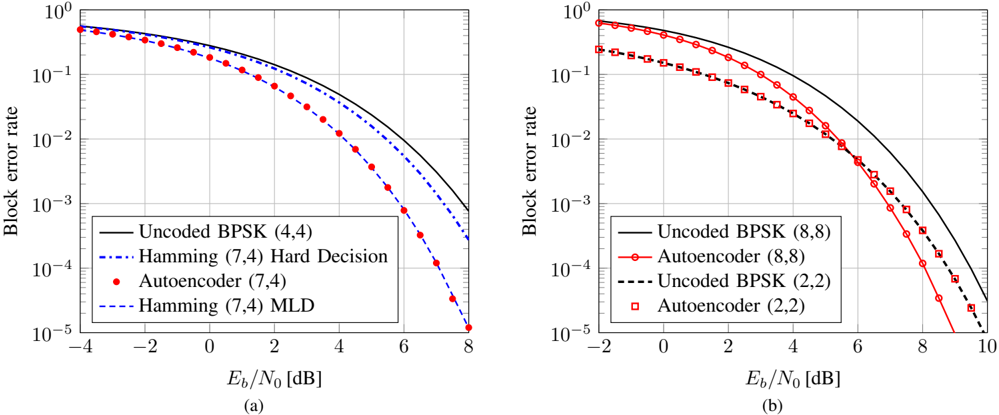
- A learned autoencoder for a (7,4) system at rate R = 4/7 achieves the same block error rate (BLER) as a Hamming (7,4) code with maximum likelihood decoding, while an (8,8) autoencoder outperforms uncoded BPSK over the full E_b/N_0 range, indicating learned joint coding and modulation.
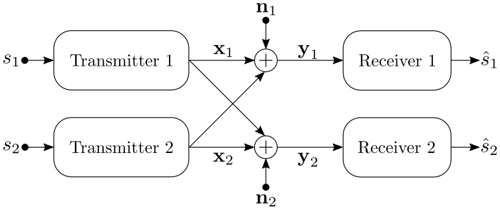
- For the two-user AWGN interference channel, the autoencoder matches time-sharing for (1,1) and (2,2), but achieves gains of about 0.7 dB for (4,4) and 1 dB for (4,8) at a BLER of 10^-3.
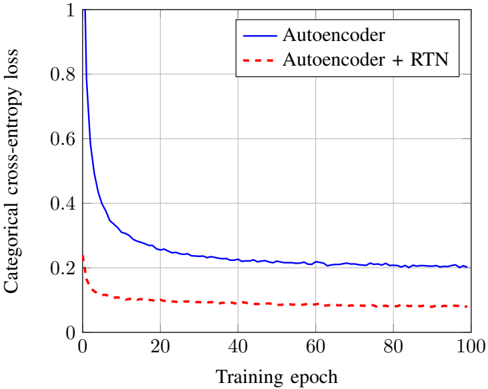
- An autoencoder (8,4) with an RTN over a multipath fading channel with L = 3 Rayleigh taps outperforms differential BPSK with maximum likelihood sequence estimation and a Hamming (7,4) code, whereas the plain autoencoder struggles to match it; RTNs also show faster training convergence.
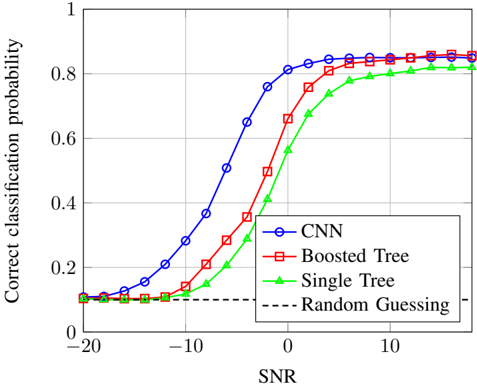
- For modulation classification on 1.2M sequences of 128 complex-valued IQ samples across ten modulation schemes and SNRs from -20 dB to 18 dB, the CNN outperforms a boosted expert-feature classifier by around 4 dB in the low-to-medium SNR range, with almost identical high-SNR performance; a single tree is about 6 dB worse at medium SNR and 3.5% worse at high SNR.
Methods
- The transmitter, channel, and receiver are represented as one deep neural network trained as an autoencoder: one-hot message input, dense layers, normalization layer for transmit constraints, additive noise channel layer, and softmax receiver output, trained with categorical cross-entropy using SGD/Adam at learning rate 0.001 and fixed E_b/N_0 = 7 dB.
- The autoencoder concept is extended to multiple transmitter-receiver pairs in a two-user interference channel, with dynamic loss weights α_t per mini-batch to balance the two cross-entropy losses; performance is compared against 2^{2k/n}-QAM with time-sharing.
- RTNs combine a learned parameter estimator, a differentiable parametric transform, and a discriminative network; the paper demonstrates phase-offset compensation and multipath inverse filtering. For modulation classification, a VGG-like CNN with 324,330 trainable parameters is trained on the RML2016.10b dataset.
Limitations
- The paper states that scalability to large message sets M is a major challenge: for k = 100 bits, training complexity is prohibitive because the autoencoder must see at least every message once.
- The paper states that optimal data representations, loss functions, training SNR, and hyperparameters are not well understood; training at one SNR does not necessarily generalize to others, and no common communications benchmarks or datasets comparable to MNIST or ImageNet exist.
- The paper states that end-to-end learning over real channels requires system identification because backpropagation assumes a known channel transfer function; complex-valued neural networks are not supported by current DL libraries. Evident from the text: the reported results are simulation-based, use small (n,k) settings, assume known channel models during training, and the paper explicitly leaves detailed performance comparisons for various channel types and parameters to future work.
Model-written summary. Check it against the paper before relying on it.
Integrity signals
Registry
Cites
Statistics
Figures






Verification
Claims the paper makes
6 Valid · 4 Not valid · 18 Not checked · 65 Own results and interpretations
Every source the paper cites for this claim was checked and supports it.
In the paper
“For instance in [22], it was shown that training with a single codeword is sufficient since the structure of the code is embedded in the NN through the Tanner graph.”
What the sources say
- Supportedcites [22] [22] E. Nachmani, Y. Be'ery, and D. Burshtein, 'Learning to decode linear codes using deep learning,' in Proc. IEEE Annu. Allerton Conf. Commun., Control, and Computing (Allerton) , 2016, pp. 341-346. - source
The Introduction says the decoder uses a Tanner graph representing the code and that one codeword suffices for training. Section III explains the precise condition: over a binary memoryless symmetric channel, the decoder’s error rate is independent of the transmitted codeword, so training can use noisy versions of a single codeword. (LLM, conf=0.91)
boostedstates a cause- Asserted: passes — The authors put it forward as true.
- Checkable: passes — It can be checked against evidence.
- Load-bearing: unclear — It is unclear whether the paper’s conclusions depend on it.
- Based: passes — The paper gives a reason why it holds.
- Supported
A result the paper reports from its own data — it cites no other source for it, so there is none to check. The quote shows it is in the paper.
In the paper
“We study the use of NNs on complex-valued IQ samples for the problem of modulation classification and show that convolutional neural networks (CNNs), which are the cornerstone of most DL systems for computer vision, can outperform traditional classification techniques based on expert features.”
plainstates a cause- Asserted: passes — The authors put it forward as true.
- Checkable: passes — It can be checked against evidence.
- Load-bearing: passes — The paper’s conclusions depend on it.
- Based: passes — The paper gives a reason why it holds.
The paper states this without a source or data behind it here, so there is nothing to check it against. The quote shows it is in the paper.
In the paper
“Training at low SNR for instance does not allow for the discovery of structure important in higher SNR scenarios.”
plainstates a cause- Asserted: passes — The authors put it forward as true.
- Checkable: passes — It can be checked against evidence.
- Load-bearing: unclear — It is unclear whether the paper’s conclusions depend on it.
- Based: unclear — It is unclear why the paper says it holds.
A result the paper reports from its own data — it cites no other source for it, so there is none to check. The quote shows it is in the paper.
In the paper
“Another advantage of RTNs is faster training convergence which can be seen from Fig. 10 that compares the validation loss of the autoencoder with and without RTN as a function of the training epochs.”
plainstates a cause- Asserted: passes — The authors put it forward as true.
- Checkable: passes — It can be checked against evidence.
- Load-bearing: unclear — It is unclear whether the paper’s conclusions depend on it.
- Based: passes — The paper gives a reason why it holds.
A result the paper reports from its own data — it cites no other source for it, so there is none to check. The quote shows it is in the paper.
In the paper
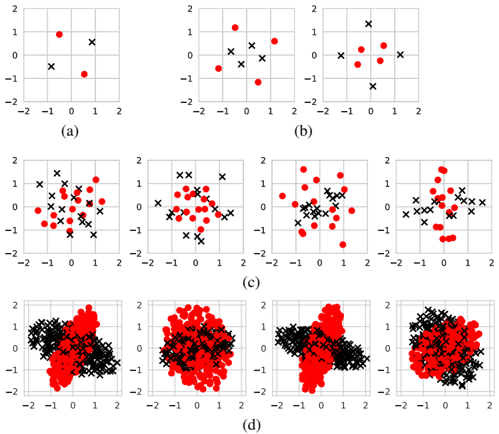
“Similarly, Fig. 4b shows a (4 , 2) system which leads to a rotated 16-PSK constellation.”
plainstates a cause- Asserted: passes — The authors put it forward as true.
- Checkable: passes — It can be checked against evidence.
- Load-bearing: unclear — It is unclear whether the paper’s conclusions depend on it.
- Based: passes — The paper gives a reason why it holds.
39 more claims
Create a free account to see all 93 claims and to verify the 4 references still open.
- Probably not a substantial claim. 29
- It may state two separate claims as one. 24
Self-check
Percentages, sums and reported differences re-computed from the paper’s own numbers.
Each contradiction between two passages listed here was confirmed by an independent check.
Rated minor: it would not touch a result — a value no result rests on, a p-value that stays on the same side of the significance level, or a conflict that is clerical, resolved elsewhere in the paper, or outside its own findings.
In the paper
§ A. Autoencoders for end-to-end communications systems · p. 5
“Similarly, Fig. 4b shows a (4 , 2) system which leads to a rotated 16-PSK constellation.”
§ A. Autoencoders for end-to-end communications systems · p. 6
“Figure 4: Constellations produced by autoencoders using parameters ( n, k ) : (a) (2 , 2) (b) (2 , 4) , (c) (2 , 4) with average power constraint, (d) (7 , 4) 2-dimensional t-SNE embedding of received symbols.”
Citations
Cites
Very Deep Convolutional Networks for Large-Scale Image Recognition
Simonyan, K., & Zisserman, A. (2014) · arXiv · doi:10.48550/arxiv.1409.1556 · Cited by 114,148 · cited 1×
“dense/fully-connected layers and terminated with a dense softmax layer for our classifier (similar to a VGG architecture [55]).”
BackgroundAdam: A Method for Stochastic Optimization
Kingma, D. P., & Ba, J. (2014) · arXiv · doi:10.48550/arxiv.1412.6980 · Cited by 98,946 · cited 4×
“Training was done at a fixed value of Eb/N0 = 7 dB (see Section IV-B) using Adam [46] with learning rate 0.”
BackgroundMethodInfluentialA Mathematical Theory of Communication
Shannon, C. E. (1948) · Bell System Technical Journal · doi:10.1002/j.1538-7305.1948.tb01338.x · Cited by 88,486
Scikit-learn: Machine Learning in Python
Pedregosa, F., Varoquaux, G., Gramfort, A., Michel, V., Thirion, B., Grisel, O., Blondel, M., Müller, A., Nothman, J., Louppe, G., et al. (2012) · arXiv · doi:10.48550/arxiv.1201.0490 · Cited by 71,016 · cited 1×
“11, we compare the classification accuracy of the CNN against that of extreme gradient boosting7 with 1000 estimators, as well as a single scikit-learn decision tree [56], operating on a mix of 16 analog and cumulant expert features as proposed in [53] and [57].”
Method(2014) · Cited by 33,419
(2008) · Journal of Machine Learning Research · Cited by 33,051
Human-level control through deep reinforcement learning
Mnih, V., Kavukcuoglu, K., Silver, D., Rusu, A. A., Veness, J., Bellemare, M. G., Graves, A., Riedmiller, M., Fidjeland, A. K., Ostrovski, G., et al. (2015) · Nature · doi:10.1038/nature14236 · Cited by 30,357
(2007) · Electronics: A First Course · doi:10.4324/9780080477527-64 · Cited by 24,923
Pan, S. J., & Yang, Q. (2010) · IEEE Transactions on Knowledge and Data Engineering · doi:10.1109/tkde.2009.191 · Cited by 23,387 · cited 1×
“learning [64] is one appealing candidate for adapting an endto-end communications system trained on a statistical model to”
BackgroundMultilayer feedforward networks are universal approximators
Hornik, K., Stinchcombe, M., & White, H. (1989) · Neural Networks · doi:10.1016/0893-6080(89)90020-8 · Cited by 21,728 · cited 1×
“Third, it has been shown that NNs are universal function approximators [13] and recent work has shown a remarkable”
Background
Research works printed but not linked: 2
- [35] I. Goodfellow, Y. Bengio, and A. Courville, Deep Learning . MIT Press, 2016. -
- [52] J. Estaran et al. , 'Artificial neural networks for linear and non-linear impairment mitigation in high-baudrate IM/DD systems,' in Proc. 42nd European Conf. Optical Commun. (ECOC) . VDE, 2016, pp. 1-3. -
Cited by
Items 1,501–1,600 of 2,995
Deep Neural Network Based Precoding for Wiretap Channels With Finite Alphabet Inputs
Gümüş, M., & Duman, T. M. (2021) · IEEE Wireless Communications Letters · doi:10.1109/lwc.2021.3076398 · Cited by 5
Machine learning for decoding linear block codes: case of multi-class logistic regression model
Idrissi, I. C. E., Nouh, S., Bellfkih, E. M., Alaoui, S. E. K., & Marzak, A. (2021) · Indonesian Journal of Electrical Engineering and Computer Science · doi:10.11591/ijeecs.v24.i1.pp538-547 · Cited by 5
“A novel approach has been presented by Tim O’Shea [5] in the design of communication by using DL for the physical layer.”
MethodDesign of An End-to-End Autoencoder for Maritime Communication System towards Internet of Vessels
Li, J., Lin, B., Wu, N., & Fu, X. (2021) · International Conference on Security, Pattern Analysis, and Cybernetics (SPAC) · doi:10.1109/spac53836.2021.9539897 · Cited by 6
Image Processing with Deep Learning: Surface Defect Detection of Metal Gears through Deep Learning
Balcıoğlu, Y. S., Sezen, B., Gök, M. Ş., & Tunca, S. (2022) · Materials Evaluation · doi:10.32548/2022.me-04230 · Cited by 8
Neural Network Architecture for LLR Computation in 5G Systems and Related Business Aspects
Vankayala, S. K., Kumar, S., Shenoy, K. G., Thirumulanathan, D., Yoon, S., & Kommineni, I. (2021) · International Symposium on Wireless Personal Multimedia Communications (WPMC) · doi:10.1109/wpmc52694.2021.9700456 · Cited by 5
Mendonça, M. O. K., Diniz, P. S. R., & Ferreira, T. N. (2022) · IEEE Latin-American Conference on Communications · doi:10.1109/latincom56090.2022.10000572 · Cited by 5
“In recent years, several works have investigated strategies of applying the concept of ML and DL to solve problems related to performance, robustness, and detection in communication systems, particularly in aspects related to the physical layer [6]–[9].”
BackgroundHow Secure are Multicarrier Communication Systems Against Signal Exploitation Attacks?
Nooraiepour, A., Hamidouche, K., Bajwa, W. U., & Mandayam, N. B. (2018) · IEEE Military Communications Conference (MILCOM) · doi:10.1109/milcom.2018.8599849 · Cited by 5
“The main contribution of this paper is to investigate the LPE characteristics of NC-OFDM systems assuming the presence of an adversary capable of utilizing machine learning tools [17].”
BackgroundDeep Learning-Based Decision Region for MIMO Detection
Faghani, T., Shojaeifard, A., Wong, K., & Aghvami, A. H. (2019) · IEEE International Symposium on Personal, Indoor and Mobile Radio Communications (PIMRC) · doi:10.1109/pimrc.2019.8904346 · Cited by 5
Wang, Y., Wang, S., & Liu, L. (2019) · IET Communications · doi:10.1049/iet-com.2019.0687 · Cited by 6
“It has achieved several successes, especially in auto-encoders, signal classification and indoor localisation [24–26].”
BackgroundPseudo Code Length Detection in Direct Sequence Spread Spectrum Signal Using Deep Learning
Jin, H., & Kim, S. C. (2019) · International Conference on Information and Communication Technology Convergence (ICTC) · doi:10.1109/ictc46691.2019.8939874 · Cited by 5
“In the field of communication, a method of applying the deep learning by interpreting the communications system as an autoencoder has been suggested, and this method opens a new horizon of the deep learning in communications [1].”
MethodLi, Y., Yang, B., Li, Y., & Gao, W. (2020) · Future Generation Computer Systems · doi:10.1016/j.future.2019.12.047 · Cited by 6
RetractedAn Adaptive Deep Learning Algorithm Based Autoencoder for Interference Channels
Wu, D., Nekovee, M., & Wang, Y. (2020) · Lecture notes in computer science · doi:10.1007/978-3-030-45778-5_23 · Cited by 8
Deep Learning Based Massive-MIMO Decoder
Kumar, S., Singh, A. K., & Mahapatra, R. (2019) · IEEE International Conference on Advanced Networks and Telecommunications Systems · doi:10.1109/ants47819.2019.9118152 · Cited by 5
“In [4], a deep auto encoder based communication system has been proposed in which whole transmitter-channel-receiver system is assumed as a single end-to-end DL system and optimized for minimum possible bit-error-rate (BER).”
BackgroundModel-aided distributed shallow learning for OFDM receiver in IEEE 802.11 channel model
Ouameur, M. A., Lê, A. D. T., & Massicotte, D. (2020) · Wireless Networks · doi:10.1007/s11276-020-02412-1 · Cited by 5
“In [4], the authors have pioneered a fundamentally new way, using auto-encoders, to think about communication systems design as an end-to-end reconstruction task that seeks to jointly optimize the transmitter and the receiver components in a single process.”
BackgroundDeep Learning Based Diversity Combining for Generic Noise and Interference
Ahmed, I., & Allen, E. (2020) · IEEE Vehicular Technology Conference · doi:10.1109/vtc2020-spring48590.2020.9129375 · Cited by 5
“It has been shown in [10] that the transmitters and receivers can be implemented with DNN blocks for a given channel model by optimizing conventional performance metrics, e.”
BackgroundVariational Auto-encoders application in wireless Vehicle-to-Everything communications
Hamdan, M. Q., & Hamdi, K. A. (2020) · IEEE Vehicular Technology Conference · doi:10.1109/vtc2020-spring48590.2020.9128376 · Cited by 6
“Tim O’Shea et al [1] proposed an innovative elucidation has been used to transfer the design of classical communication system of separated processes at source and sink respectively to one end to end process using the Auto-Encodes (AEs).”
BackgroundMethodMulti-Label Neural Decoders for Block Codes
Leung, C. T., Bhat, R. V., & Motani, M. (2020) · International Conference on Communications · doi:10.1109/icc40277.2020.9148786 · Cited by 6
On Deep Learning Solutions for Joint Transmitter and Noncoherent Receiver Design in MU-MIMO Systems
Xue, S., Ma, Y., Yi, N., & Tafazolli, R. (2020) · IEEE International Symposium on Personal, Indoor and Mobile Radio Communications (PIMRC) · doi:10.1109/pimrc48278.2020.9217173 · Cited by 5
“The noise effect has been well studied in [10], our focus is mainly on the channel ambiguity which should be well addressed in the proposed approaches.”
BackgroundMachine Learning (ML) In a 5G Standalone (SA) Self Organizing Network (SON)
Sridharan, S. (2020) · International Journal of Computer Trends and Technology · doi:10.14445/22312803/ijctt-v68i11p105 · Cited by 5
“O’Shea & Hoydis (2017) examined that the deep learning approach is associated with categorization of modulation to achieve competitive precision.”
BackgroundMumtaz, M. Z., Khurram, M., Adnan, M., & Fazil, A. (2021) · International Bhurban Conference on Applied Sciences and Technology (IBCAST) · doi:10.1109/ibcast51254.2021.9393285 · Cited by 5
“In [6], the authors have implemented CNN for 10 modulation classes with just 2 convolution layers.”
MethodClassification Model of Wireless Signals Based on Higher-order Statistics
Shi, F., Jing, X., He, Y., Kadoch, M., & Cheriet, M. (2020) · IEEE International Symposium on Broadband Multimedia Systems and Broadcasting (BMSB) · doi:10.1109/bmsb49480.2020.9379916 · Cited by 5
“With the rapid development of deep learning technology, more and more deep learning methods have been proposed in image processing to solve problems and achieve good experimental results and successful industrial applications [1].”
BackgroundDeep intelligent spectral labelling and receiver signal distribution for optical links
Xu, T., Xu, T., & Darwazeh, I. (2021) · Optics Express · doi:10.1364/oe.422849 · Cited by 5
“In wireless communications, AI [5,6] has solved many traditionally remaining challenges in signal detection, modulation identification, channel estimation, channel coding, sensing and localization.”
BackgroundAdversarial, yet Friendly Signal Design for Secured Wireless Communication
Seo, J., Park, S., & Kang, J. (2021) · IEEE Wireless Communications and Networking Conference · doi:10.1109/wcnc49053.2021.9417250 · Cited by 6
“Most in-phase and quadrature-phase (IQ) based signal classifiers take a signal snapshot x and try to output the most probable class, or modulation scheme, y [11], [15], [17].”
BackgroundReinforce Security: A Model-Free Approach Towards Secure Wiretap Coding
Fritschek, R., Schaefer, R. F., & Wunder, G. (2021) · International Conference on Communications · doi:10.1109/icc42927.2021.9500799 · Cited by 6
“In particular, one of the first approaches looked at end-to-end learning of these communication systems, by utilizing the so-called autoencoder approach [1].”
Deep Learning Based MIMO Transmission with Precoding and Radio Transformer Networks
Cui, W., Dong, A., Cao, Y., Zhang, C., Yu, J., & Li, S. (2021) · Procedia Computer Science · doi:10.1016/j.procs.2021.04.078 · Cited by 5
BLER performance evaluation of an enhanced channel autoencoder
Njoku, J. N., Morocho-Cayamcela, M. E., & Lim, W. (2021) · Computer Communications · doi:10.1016/j.comcom.2021.05.026 · Cited by 5
End-to-end Waveform Learning Through Joint Optimization of Pulse and Constellation Shaping
Aoudia, F. A., & Hoydis, J. (2021) · IEEE Globecom Workshops (GC Wkshps) · doi:10.1109/gcwkshps52748.2021.9681990 · Cited by 5
Self-citationRiftNet Reconstruction Model for Radio Frequency Domain Waveform Representation and Synthesis
Carmack, J. M., & Kuzdeba, S. (2021) · IEEE World AI IoT Congress (AIIoT) · doi:10.1109/aiiot52608.2021.9454242 · Cited by 5
“Some prior RF work has involved encoder and decoder architectures, including across a channel [17] and through adversarial means [18], but it has been relatively limited compared to the vast research being conducted in other domains.”
ResultDeep Learning-Based Signal Detection with Soft Information for MISO-NOMA Systems
Zhu, P., Wang, X., Jia, X., & Xu, Y. (2021) · IEEE Vehicular Technology Conference · doi:10.1109/vtc2021-fall52928.2021.9625378 · Cited by 5
“In recent years, with the potential of deep learning recognized by the community, more and more scholars began to apply deep learning to the field of wireless communication [6], such as channel estimation [7], [8], constellation design [9], modulation recognition [10] and signal detection [11], [12].”
BackgroundCustom Convolutional Layer Designs for CNN Based Automatic Modulation Classification Solution
Guo, Y., Zhu, L., & Zhu, Z. (2021) · IEEE International Conference on Computer and Communications (ICCC) · doi:10.1109/iccc54389.2021.9674725 · Cited by 5
“As demonstrated in [10], CNN is able to achieve superior performance compared against some of the traditional algorithms.”
ResultA Pruning Neural Network for Automatic Modulation Classification
Zhang, Z., & Tu, Y. (2021) · International Conference on Dependable Systems and Their Applications (DSA) · doi:10.1109/dsa52907.2021.00029 · Cited by 5
“Based on the paper [13], which was proposed a convolution neural network (CNN)-based AMC method applying the in-phase and quadrature (IQ) component of signals, we use constellation diagrams (CD) with feature enhancement to train network, which is called contour stellar image (CSI).”
MethodA Novel Average Autoencoder-Based Amplify-and-Forward Relay Networks With Hardware Impairments
Gupta, A. K., & Sellathurai, M. (2022) · IEEE Transactions on Cognitive Communications and Networking · doi:10.1109/tccn.2022.3164901 · Cited by 5
End-to-end learning for fiber-optic communication systems
Jovanovic, O., Ros, F. D., Yankov, M. P., & Zibar, D. (2022) · Elsevier eBooks · doi:10.1016/b978-0-32-385227-2.00012-7 · Cited by 5
MIND: Maximum Mutual Information Based Neural Decoder
Tonello, A. M., & Letizia, N. A. (2022) · IEEE Communications Letters · doi:10.1109/lcomm.2022.3207379 · Cited by 5
“In such a case, a learning strategy turns out to be an attractive solution and it can be enabled by recent advances in machine learning for communications [3]–[5].”
BackgroundDeep Learning based MIMO detection in 6G Wireless Communication System
Mishra, P., Amin, M. U., & Singh, G. K. (2023) · International Conference on Computational Intelligence and Knowledge Economy (ICCIKE) · doi:10.1109/iccike58312.2023.10131868 · Cited by 6
“Deep learning supported sparse code multiple access techniques [24] have been implemented at the physical layer [25] based on the MIMO communication system [26] and communication over the air [27].”
MethodDuan, C., & Zhang, J. (2023) · Digital Signal Processing · doi:10.1016/j.dsp.2023.104196 · Cited by 5
Implementation Of Deep Learning For Fake News Classification In Bahasa Indonesia
Widhi, E. P., Fudholi, D. H., & Hidayat, S. (2023) · Journal Research of Social Science Economics and Management · doi:10.59141/jrssem.v3i02.546 · Cited by 5
Blind Interactive Learning of Modulation Schemes: Multi-Agent Cooperation Without Co-Design
Sahai, A., Sanz, J., Subramanian, V., Tran, C., & Vodrahalli, K. (2020) · IEEE Access · doi:10.1109/access.2020.2984218 · Cited by 6
“Thus, as alluded to in [20] and [21], one might believe that bringing deep learning into wireless communication is a worthwhile”
BackgroundDesign of Capacity-Approaching Low-Density Parity-Check Codes using Recurrent Neural NetworksPreprint
Nisioti, E., & Thomos, N. (2020) · arXiv (Cornell University) · doi:10.48550/arxiv.2001.01249 · Cited by 5
“In [20], an endto-end communication system was viewed as an autoencoder, thus allowing for the encoding and decoding process to be jointly optimized.”
MethodDeep Learning for Wireless CommunicationsPreprint
Erpek, T., O’Shea, T. J., Sagduyu, Y. E., Shi, Y., & Clancy, T. C. (2020) · arXiv (Cornell University) · doi:10.48550/arxiv.2005.06068 · Cited by 13
“plexity of such capacity-achieving schemes is typically high to be realized in practical systems. Recently, deep learning-based end-to-end communication systems have been developed for single antenna [15], [16], multiple antenna [17], and multiuser [15], [18] systems to improve the performance of the traditional appro…”
BackgroundInfluentialSelf-citationData Science and Machine Learning
(2022) · doi:10.5121/csit.2022.1215 · Cited by 5
Spiking Neural Networks for Detecting Satellite-Based Internet-of-Things SignalsPreprint
Dakic, K., Homssi, B. A., Walia, S., & Al‐Hourani, A. (2023) · doi:10.36227/techrxiv.22358719.v1 · Cited by 5
End‐to‐End Autoencoder Communications with Optimized Interference Suppression *
Davaslıoğlu, K., Erpek, T., & Sagduyu, Y. E. (2024) · Wiley eBooks · doi:10.1002/9781394170944.ch8 · Cited by 5
Automatic Modulation Classification with Neural Networks via Knowledge Distillation
Wang, S., & Liu, C. (2022) · Electronics · doi:10.3390/electronics11193018 · Cited by 5
“A DL-based (or processing block) that does not require a mathematically tractable model and channel might be able to optimize the function of a communications system better [1], so deep learning is useful for solving the problem of new modulation recognition.”
BackgroundCooperative Channel Capacity Learning
Letizia, N. A., Tonello, A. M., & Poor, H. V. (2023) · IEEE Communications Letters · doi:10.1109/lcomm.2023.3282307 · Cited by 10
“INTRODUCTION Data-driven models for physical layer communications [1] have recently seen a surge of interest.”
BackgroundZhou, X., Lin, Z., Gu, R., Ni, W., & Jamalipour, A. (2023) · IEEE Internet of Things Journal · doi:10.1109/jiot.2023.3329566 · Cited by 5
“Data-driven DL has displayed stronger robustness to real-world imperfections [27].”
BackgroundNOMA System Performance Improvement Using Chaos and Deep Learning
Yin, H., & Ren, H. (2024) · IEEE Transactions on Circuits and Systems I Regular Papers · doi:10.1109/tcsi.2024.3431470 · Cited by 4
“Along with the rapid development of artificial intelligence (AI), it has been widely used in the wireless communication field to improve the system performance [32], [33], [34], [35], [36], [37], [38].”
A new generative AI based for modelling free space optical links
Upadhya, A., & Goel, A. (2024) · Journal of Optics · doi:10.1007/s12596-024-02006-6 · Cited by 5
“Besides, the performance in terms of accuracy of DL networks has been very intriguing in the past [2, 3].”
Dynamic convolution for image matching
Soloviev, I., Kovalchuk, A. V., & Klinshov, V. V. (2024) · The European Physical Journal Special Topics · doi:10.1140/epjs/s11734-024-01373-2 · Cited by 4
“Conventional convolution architectures typically use several different convolution layers in sequence [22].”
Distributed Multiuser Precoding via Unfolding WMMSE for Multicell MIMO Downlinks
Yi, C., Xu, W., Sun, Y., Ng, D. W. K., & Wang, Z. (2024) · IEEE Transactions on Cognitive Communications and Networking · doi:10.1109/tccn.2024.3511956 · Cited by 9
“The DL-based precoding designs leverage the data-driven techniques to improve the performance of conventional optimization methods [24], [25].”
Predicting the stress-strain behavior of gravels with a hybrid deep learning approach
Li, D., Liu, J., Zou, D., Xu, K., Ning, F., & Cui, G. (2025) · Transportation Geotechnics · doi:10.1016/j.trgeo.2025.101492 · Cited by 4
Dual-mode Index Modulation based on Affine Frequency Division Multiplexing
Anoop, A., Thomas, C. K., Kala, S., Benifa, J. V. B., & Saad, W. (2025) · Physical Communication · doi:10.1016/j.phycom.2025.102628 · Cited by 4
High SNR SCMA Detection via Transfer Learning From Low SNR Region
Zheng, Y., Hou, X., Xin, J., Wang, H., Jiang, M., & Zhang, S. (2025) · IEEE Internet of Things Journal · doi:10.1109/jiot.2025.3559731 · Cited by 4
“Deep learning (DL) techniques have been successfully applied in wireless communications, such as channel estimation, modulation classification and multiuser detection (MUD) [18].”
Mutual Information Neural-Estimation-Driven Constellation Shaping Design and Performance Analysis
Ji, X., Wang, Q., Qian, L., & Kam, P. (2025) · Entropy · doi:10.3390/e27040451 · Cited by 4
“To address the above issues, effective deep learning (DL)-based signal processing strategies have been explored for many optimization tasks [15].”
GNN-Based Auto-Encoder for Short Linear Block Codes: A DRL Approach
Tian, K., Yue, C., She, C., Vucetic, B. S., & Li, Y. (2025) · IEEE Transactions on Communications · doi:10.1109/tcomm.2025.3565602 · Cited by 5
“Recently, DL has been used for the global optimization of “auto-encoder” channel coding systems with jointly designed encoder and decoder [21], [22], [23], [24], [25].”
InfluentialLuckshan, C., Gayan, S., İnaltekin, H., Zhang, R., & Akman, D. (2025) · Sensors · doi:10.3390/s25103192 · Cited by 6
“These methods have already demonstrated remarkable capabilities in channel estimation, equalization, and signal detection, making them a viable solution for future wireless systems [29–32].”
Zhang, M., Ma, J., Zhang, Z., & Zhou, F. (2025) · Sensors · doi:10.3390/s25134000 · Cited by 4
Optical Neuromorphic Technology Catalyzes the Next‐Generation Mobile Communication Technology
Song, X., Fu, Z., Wang, J., Wang, D., Li, N., Hu, Z., & Xu, X. (2025) · Advanced Intelligent Systems · doi:10.1002/aisy.202500344 · Cited by 4
“[35], an autoencoder implementation over an additive white Gaussian noise (AWGN) channel, as shown in Figure 5 , illustrates this paradigm: both transmitter and receiver signal processing are fully implemented through NNs.”
InfluentialNan, 迟. C., Zengyi, 徐. X., Jianyang, 施. S., Yingjun, 周. Z., Xianhao, 林. L., Zhilan, 卢. L., Fujie, 李. L., Yunkai, 汪. W., & Xinyi, 刘. L. (2025) · Acta Optica Sinica · doi:10.3788/aos250933 · Cited by 4
Omondi, G., & Olwal, T. O. (2025) · Journal of Information and Intelligence · doi:10.1016/j.jiixd.2025.08.004 · Cited by 5
Adaptive Multimodal Modulation Recognition With Feature Enhancement Under Low SNR Conditions
Guo, L., Wu, D., Yang, W., Liu, J., Cheng, K., & Tu, J. (2025) · IEEE Transactions on Cognitive Communications and Networking · doi:10.1109/tccn.2025.3626423 · Cited by 4
“The normalized quadrature component can be further formulated as Experimental results [3], [5] indicate that the I/Q signal-based recognition models achieve up to 90% recognition accuracy in additive white Gaussian noise.”
MLD-Net: A Multi-Level Knowledge Distillation Network for Automatic Modulation Recognition
Zhang, X. “., Zhang, L. W., Zhang, M., Zhang, Z., Li, P., Shi, X., & Zhou, F. (2025) · Sensors · doi:10.3390/s25237143 · Cited by 4
Mengistu, T. M., Faisal, K. M., Kim, T., Ullah, A., & Choi, W. (2025) · Computer Science Review · doi:10.1016/j.cosrev.2025.100870 · Cited by 6
AI-driven Optimization Techniques in Next Generation Wireless Communication Networks and Systems
Ibikunle, F. A. (2026) · Center of Artificial Intelligence · doi:10.65591/1btq4207 · Cited by 6
“Machine learning (ML) forms the foundation of many AI-driven optimization frameworks in wireless networks and encompasses supervised, unsupervised, and reinforcement learning paradigms, each suited to different optimization tasks [17].”
Large-Model AI for Near-Field Beam Prediction: A CNN–GPT2 Framework for 6G XL-MIMO
Liu, W., Pan, C., Ren, H., Zhang, W., Wang, C., & Wang, J. (2026) · IEEE Transactions on Wireless Communications · doi:10.1109/twc.2026.3682058 · Cited by 4
“As a result, directly feeding such raw signals directly into sequence models is typically inefficient and hinders effective learning of temporal dependencies [44].”
Deep Learning for IoT Communications : Invited Presentation
Thompson, W. L., & Talley, M. F. (2019) · Conference on Information Sciences and Systems · doi:10.1109/ciss.2019.8693025 · Cited by 4
“While two of the seminal papers for this type of research was Oshea et al and Dorner et al, there are still a great amount of research to be done.”
BackgroundInfluentialLearning based Network Adaptation in 5G NR
Ramanath, S. (2019) · International Conference on Communication Systems & Networks (COMSNETS) · doi:10.1109/comsnets.2019.8711383 · Cited by 4
Computer-aided diagnosis of digestive tract tumor based on deep learning for medical images
Zhang, G., Pan, J., & Xing, C. (2022) · Network Modeling Analysis in Health Informatics and Bioinformatics · doi:10.1007/s13721-021-00343-1 · Cited by 4
“The first layer is a visible layer, which is composed of binary or true-valued visible layer units; the second layer is a hidden layer, which is composed of some hidden layer units in a binary state (Oshea and Hoydis 2017).”
BackgroundDeep learning-based transceiver design for multi-user MIMO systems
Zhang, T., Yu, J., Dong, A., & Qiu, J. Y. (2022) · Internet of Things · doi:10.1016/j.iot.2022.100512 · Cited by 5
Autoencoder-Optimized Geometric Constellation Shaping for Unamplified Coherent Optical Links
Oliveira, B. M., Neves, M. S., Guiomar, F. P., Medeiros, M. C. R., & Monteiro, P. P. (2022) · Conference on Lasers and Electro-Optics · doi:10.1364/cleo_si.2022.sw4e.7 · Cited by 4
“On the note of GCS optimization in a constrained system, few recent works have proposed the usage of autoencoders [6], designed for joint optimization of the transmitter and receiver through end-to-end deep learning.”
BackgroundMethodMachine Learning With Gaussian Process Regression For Time-Varying Channel Estimation
Simeon, R., Kim, T., & Perrins, E. S. (2022) · International Conference on Communications · doi:10.1109/icc45855.2022.9838448 · Cited by 4
“Deep learning for wireless communications systems has recently received plenty of research interest due to the generalized ability to learn unknown or complex channel models and nonlinearities, and the realizations made possible by modern computing architectures [4].”
BackgroundNN-Based 8FSK Demodulator for the Covert Channel
Grzesiak, K., & Piotrowski, Z. (2022) · Sensors · doi:10.3390/s22197181 · Cited by 4
“The idea of the use of a neural network in the demodulation process and, generally, in the physical layer of wireless communication [7] is not quite new.”
BackgroundResearch On Deep Learning Based End-To-End Wireless Communication System Technology
Lü, R., Jiang, H., & Hu, L. T. (2022) · IEEE Advanced Information Management, Communicates, Electronic and Automation Control Conference (IMCEC) · doi:10.1109/imcec55388.2022.10019964 · Cited by 5
“Taking the (7,4) wireless autoencoder [12] as an example, a end-to-end wireless communication system has been build with the MATLAB deep learning toolbox, communication toolbox, statistics and machine learning toolbox.”
MethodDeep Learning Based Channel Estimation for MIMO-OFDM System with Modified ResNet Model
Silpa, C., Vani, A., & Naidu, K. R. (2023) · Indian Journal of Science and Technology · doi:10.17485/ijst/v16i2.2154 · Cited by 7
Turbo AI, Part V: Verifying AI-Enhanced Channel Estimation for RAN from System Level
Chen, Y., Wesemann, S., & Wild, T. (2023) · Joint European Conference on Networks and Communications & 6G Summit (EuCNC/6G Summit) · doi:10.1109/eucnc/6gsummit58263.2023.10188274 · Cited by 5
“The finding of autoencoders for end-to-end wireless communications [3]– [4] conceptually proposed a brand new PHY architecture for 6G wireless communications or even a next long-term evolution for 6G itself.”
BackgroundCombinatorial neural network signal modulation recognition algorithm based on attention mechanism
Zhang, Y., Lu, M.-F., & Wang, Y. (2023) · International Seminar on Artificial Intelligence, Networking and Information Technology (AINIT) · doi:10.1109/ainit59027.2023.10212466 · Cited by 4
“Signal modulation recognition, also known as automatic modulation recognition (AMR), is the modulation method identification of modulated signals[1], and then demodulates the signal to obtain useful information.”
BackgroundAdapting to Nonlinear Transmitters With Hybrid Model Training for Neural Receivers
Nielsen, M. H., de Carvalho, E., & Shen, M. (2023) · IEEE Transactions on Cognitive Communications and Networking · doi:10.1109/tccn.2023.3307948 · Cited by 5
“Deep learning end-to-end trained systems have been proposed as excellent solutions to the problems faced in 6G communication, such as adaptation to dynamically changing channels [9], [10], [11].”
BackgroundConstellation shaping optimization for nonlinearity mitigation in CAP UVLC system
Jia, J., Zhang, J., & Chi, N. (2023) · Science China Information Sciences · doi:10.1007/s11432-022-3643-y · Cited by 4
Deep Neural Networks Based End-to-End DOA Estimation System
Ando, D. A., Kase, Y., Nishimura, T., Sato, T., Ohgane, T., Ogawa, Y., & Hagiwara, J. (2023) · IEICE Transactions on Communications · doi:10.1587/transcom.2023cep0006 · Cited by 4
“Recently, artificial intelligence techniques, especially deep learning, applied to the field of communication systems has become a trending research topic [7].”
BackgroundZhang, Q., Chen, G., Liu, B., Zhi, X., Zhan, S., Zhang, J., Cao, B., & Li, Z. (2023) · Optics Communications · doi:10.1016/j.optcom.2023.129938 · Cited by 5
DeDA: Deep Directed Accumulator
Zhang, H., Wang, R., Hu, R., Zhang, J., & Li, J. (2023) · Lecture notes in computer science · doi:10.1007/978-3-031-43895-0_72 · Cited by 8
“Ill-posed medical image reconstruction problems rely heavily on carefully designed regularization priors and inserting the prior knowledge of a physical equation [51] describing the inverse problem has been proven very effective.”
BackgroundWu, H., Geng, X., Chen, Z., & Zhao, Y. (2023) · International Journal of Communication Systems · doi:10.1002/dac.5644 · Cited by 4
“In recent decades, some works that incorporate deep learning into wireless communication have been roughly investigated 21 and show superior potential in modulation recognition, 22 signal detection, 23,24 channel estimation, 25,26 channel state information feedback, 27,28 localization, 29 and…”
BackgroundJoint Interference Cancellation and Signal Detection Using Latent Space Representations in VAE
Wong, C. Y. X., Jaward, M. H., Baskaran, V. M., Liang, S.-N., Hin, C. C. C., & Sim, M. L. (2023) · IEEE Transactions on Consumer Electronics · doi:10.1109/tce.2023.3324979 · Cited by 4
“Deep Learning-based approaches have been proposed for signal detection [10], [11], [12] and are well-suited to be optimized for imperfections such as Rayleigh fading and additive white Gaussian noise (AWGN).”
Lin, J., Jing, Y., & Yu, X. (2023) · IEEE Transactions on Wireless Communications · doi:10.1109/twc.2023.3343310 · Cited by 5
“P OSITIONING is an important topic for wireless systems [1], [2] and there have been many early studies on positioning with antenna arrays and multiple access points [3], [4], [5], [6], [7], [8], [9], [10], [11], [12].”
BackgroundSharma, E., Shakeel, I., Deo, R. C., Davey, C. P., & Salcedo‐Sanz, S. (2023) · International Symposium on Communications and Information Technologies · doi:10.1109/iscit57293.2023.10376079 · Cited by 4
“ECCs ensure safe and reliable transmission of data over the noisy channel by detecting and correcting bit errors [16].”
BackgroundMethodInfluentialImproved Syndrome-based Neural Decoder for Linear Block Codes
Rovella, G. D. B., & Benammar, M. (2023) · Globecom · doi:10.1109/globecom54140.2023.10436980 · Cited by 6
Real-Time AI-Enabled CSI Feedback Experimentation with Open RAN
Cheng, H., Johari, P., Arfaoui, M. A., Periard, F., Pietraski, P. J., Zhang, G., & Melodia, T. (2024) · Annual Conference on Wireless On-demand Network Systems and Services (WONS) · doi:10.23919/wons60642.2024.10449603 · Cited by 4
“Deep Learning (DL) was first introduced into the physical layer in [5].”
BackgroundClassification-Based Transfer Learning for Blind Adaptive Receiver Beamforming
Wentz, M., Capper, J., Kurien, B. G., Forsythe, K. W., & Chowdhury, K. R. (2024) · IEEE Consumer Communications and Networking Conference · doi:10.1109/ccnc51664.2024.10454656 · Cited by 6
“Interest has been growing in machine learning (ML) techniques for RF physical layer processing, including interference suppression [2], [3].”
Xu, Q. M., Gao, R., Cheng, Z., Wang, F., Cui, Y., Yang, F., Li, Z., Chang, H., Liu, J., Guo, D., et al. (2024) · Optics Express · doi:10.1364/oe.519842 · Cited by 4
D’Andrea, C., Jornet, J. M., Singh, A., Sen, P., Ghassemlooy, Z. F., Zvánovec, S., Teli, S. R., & Gholami, A. (2024) · Springer eBooks · doi:10.1007/978-3-031-42567-7_3 · Cited by 7
Dynamic Online Modulation Recognition using Incremental Learning
Owfi, A., Abbasi, A., Afghah, F., Ashdown, J., & Turck, K. (2024) · 2012 International Conference on Computing, Networking and Communications (ICNC) · doi:10.1109/icnc59896.2024.10556007 · Cited by 4
“In modulation recognition, DL models have demonstrated higher accuracy than traditional methods, particularly in scenarios characterized by significant noise, fading, and impairments [2].”
MethodLow‐complexity channel estimation for V2X systems using feed‐forward neural networks
Mehr, P. T., Koufos, K., Haloui, K. E., & Dianati, M. (2024) · IET Communications · doi:10.1049/cmu2.12788 · Cited by 4
“The authors in [7] proposed the use of an autoencoder to model the communication system as a black box with all communication processes performed by the neural network.”
Luna‐Rivera, J. M., Rabadan, J. A., Rufo, J., Gutierrez, C. A., Guerra, V., & Pérez‐Jiménez, R. (2024) · Photonics · doi:10.3390/photonics11070616 · Cited by 4
Robust Modulation Classification in the Presence of Realistic Propagation in Rural Environment
Anis, M. A., Elgamel, S. A., Elshafey, M. A., & Aboelazm, M. A. (2024) · International Telecommunications Conference (ITC-Egypt) · doi:10.1109/itc-egypt61547.2024.10620527 · Cited by 4
Communication Under Mixed Gaussian-Impulsive Channel: An End-to-End Framework
Zhao, C., Wang, J., Huang, W. G., Chen, X., & Qi, T. (2024) · IEEE International Conference on Machine Learning for Communication and Networking (ICMLCN) · doi:10.1109/icmlcn59089.2024.10624769 · Cited by 4
“DL has also been employed in the physical layer of communication systems and shown great potential, such as DL based signal detection algorithm [10], model-driven block-wise DL optimization schemes [11], end-to-end global optimization communication systems [12], [13].”
MethodAn Autoencoder-Based Constellation Design for AirComp in Wireless Federated Learning
Mu, Y., Wei, X., & Shen, C. (2024) · International Conference on Communications · doi:10.1109/icc51166.2024.10622489 · Cited by 6
“Previous research has explored the concept of treating the communication system as an autoencoder to jointly optimize the transceiver [8], while others have investigated the use of autoencoders for constellation design [3], [9], [10].”
BackgroundDDPG-E2E: A Novel Policy Gradient Approach for End-to-End Communication Systems
Zhang, B., Huynh, N. V., Hoang, D. T., Nguyen, D. N., & Pham, Q. (2024) · IEEE Transactions on Cognitive Communications and Networking · doi:10.1109/tccn.2024.3485648 · Cited by 5
“The DL-based approach interprets the end-to-end (E2E) communication system as a neural network (NN)-based auto-encoder over an interference channel [4], where both the transmitter and the receiver are represented as NNs, as depicted in Fig.”
InfluentialGhost Module and Transformer-Based Lightweight End-to-End Communication Without Pilots
Zhang, M., Zeng, R., Tan, J., Wang, J., & Song, J. (2025) · IEEE Communications Letters · doi:10.1109/lcomm.2025.3540838 · Cited by 4
“Apart from enhancing individual modules, a new DL-based end-to-end (E2E) paradigm has been proposed, where both the transmitter and receiver are modeled by deep neural networks (DNNs), allowing joint optimization of the transceiver and enabling adaptation to specific channel environments [6].”
Ren, B., Su, Z., Teh, K. C., An, H., Gunawan, E., & Kot, A. C. (2025) · IEEE Transactions on Vehicular Technology · doi:10.1109/tvt.2025.3543800 · Cited by 4
Quantum-Classical Autoencoder Architectures for End-to-End Radio Communication
Tabi, Z., Bakó, B., Nagy, D., Vaderna, P., Kallus, Z., Hága, P., & Zimborás, Z. (2025) · IEEE Access · doi:10.1109/access.2025.3566207 · Cited by 6
“Building on these results, we take a slightly different approach and introduce a hybrid quantum-classical”
Metadata
- Authors
- O'Shea, T., & Hoydis, J.
- Affiliations
- Nokia (France) (FR)
- Venue
- IEEE Transactions on Cognitive Communications and Networking
- Published
- 2017-12
- Volume
- 3
- Issue
- 4
- Pages
- 563-575
- ISSN
- 2332-7731 (ISSN-L)
- OpenAlex
- W2734408173
- Semantic Scholar
- 78989616eeeac55b202e3e4205225e7135054185
- Cited by
- 2,980
- References
- 69
- Citations by year
- 2026: 307 · 2025: 327 · 2024: 305 · 2023: 368 · 2022: 432 · 2021: 409 · 2020: 406 · 2019: 322 · 2018: 95 · 2017: 9
- FWCI
- 122.29
- Type
- journal article
- Language
- en
- Open access
- green
- arxiv.org
- Locations
- IEEE Transactions on Cognitive Communications and Networking (publishedVersion)
- arXiv (Cornell University) (submittedVersion)
- arXiv (Cornell University)
- Topics
- Physical Sciences › Computer Science › Artificial Intelligence › Wireless Signal Modulation Classification
- Physical Sciences › Engineering › Electrical and Electronic Engineering › Advanced Wireless Communication Techniques
- Physical Sciences › Engineering › Electrical and Electronic Engineering › Advanced Wireless Communication Technologies
- Keywords
- end-to-end reconstruction, domain knowledge integration, convolutional neural networks, automatic modulation classification, IQ samples
About these checks
Registry, retraction, Cites and statistics results are computed, not judged, with one exception: a printed reference that no index lists is read once by a model before it counts as a citation error. Claims are extracted by a model and kept only when their quote appears verbatim in the text; each cited source is then checked, with a model’s help, for whether it says what the claim relies on. Those verdicts can be wrong — read the claim’s quote and the cited source before relying on one.
The claim verdicts this report counts are experimental: their accuracy is not yet measured.
A language model drew the claims from the paper on 2026-11-07, under version 3 of the claim definition (model deepseek-v4.1-flash, prompt extract-v3).
A second model labelled each claim on 2026-11-07 (model jev-1.13-20260917, definition revision gold-guideline-v0.2).
Cited sources are checked with a language model’s help (gpt-6-sol).
Statistics and arithmetic are recomputed, not judged.
Confidence bands are shown only for fields calibrated on our annotated test set. None is calibrated yet, so no band is shown.
What counts as a claim ›How we measure confidence ›How we check this ›
Are you an author, or do you see a problem with this page? Request a review
Data sources
Bibliographic data: Semantic Scholar, OpenAlex, Crossref.
Contains information from the Semantic Scholar Academic Graph Datasets, made available under the ODC Attribution License (ODC-BY 1.0).
Semantic Scholar’s data is described in: Kinney, R., et al. (2023). The Semantic Scholar Open Data Platform. arXiv:2301.10140.
