

An Introduction to Deep Learning for the Physical Layer
Open accessThe DOI matches its Crossref record; 90 of the 92 references it cites were found in a registry or an index, and 2 are not checked yet; 8 of the 32 sources its claims cite were checked for support.
Abstract
We present and discuss several novel applications of deep learning for the physical layer. By interpreting a communications system as an autoencoder, we develop a fundamental new way to think about communications system design as an end-to-end reconstruction task that seeks to jointly optimize transmitter and receiver components in a single process. We show how this idea can be extended to networks of multiple transmitters and receivers and present the concept of radio transformer networks as a means to incorporate expert domain knowledge in the machine learning model. Lastly, we demonstrate the application of convolutional neural networks on raw IQ samples for modulation classification which achieves competitive accuracy with respect to traditional schemes relying on expert features. This paper is concluded with a discussion of open challenges and areas for future investigation.
Verified 2026-11-19 · 2 references not checked yet
Overview
CoChat Summary
TL;DR
The paper introduces deep learning for the physical layer by treating a communications system as an autoencoder that jointly learns transmitter and receiver implementations end-to-end. It also extends this idea to multi-user interference channels, proposes radio transformer networks (RTNs) to inject expert domain knowledge, and shows CNNs on raw IQ samples can outperform expert-feature modulation classifiers.
Key findings
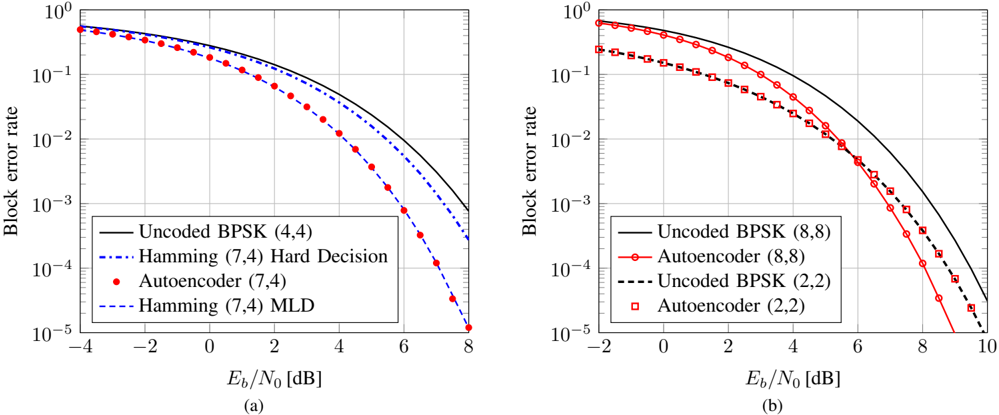
- A learned autoencoder for a (7,4) system at rate R = 4/7 achieves the same block error rate (BLER) as a Hamming (7,4) code with maximum likelihood decoding, while an (8,8) autoencoder outperforms uncoded BPSK over the full E_b/N_0 range, indicating learned joint coding and modulation.
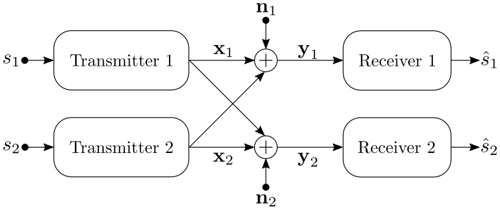
- For the two-user AWGN interference channel, the autoencoder matches time-sharing for (1,1) and (2,2), but achieves gains of about 0.7 dB for (4,4) and 1 dB for (4,8) at a BLER of 10^-3.
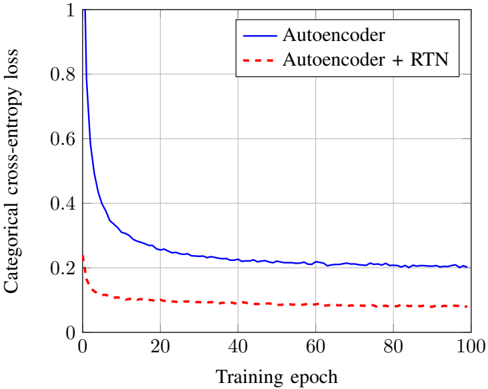
- An autoencoder (8,4) with an RTN over a multipath fading channel with L = 3 Rayleigh taps outperforms differential BPSK with maximum likelihood sequence estimation and a Hamming (7,4) code, whereas the plain autoencoder struggles to match it; RTNs also show faster training convergence.
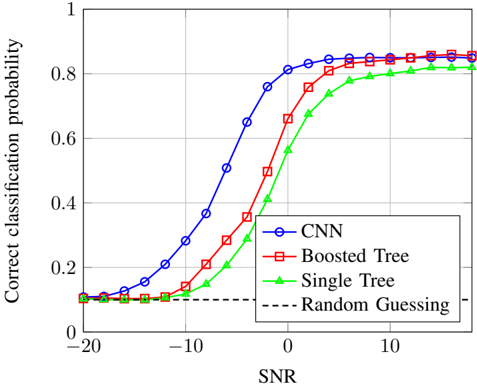
- For modulation classification on 1.2M sequences of 128 complex-valued IQ samples across ten modulation schemes and SNRs from -20 dB to 18 dB, the CNN outperforms a boosted expert-feature classifier by around 4 dB in the low-to-medium SNR range, with almost identical high-SNR performance; a single tree is about 6 dB worse at medium SNR and 3.5% worse at high SNR.
Methods
- The transmitter, channel, and receiver are represented as one deep neural network trained as an autoencoder: one-hot message input, dense layers, normalization layer for transmit constraints, additive noise channel layer, and softmax receiver output, trained with categorical cross-entropy using SGD/Adam at learning rate 0.001 and fixed E_b/N_0 = 7 dB.
- The autoencoder concept is extended to multiple transmitter-receiver pairs in a two-user interference channel, with dynamic loss weights α_t per mini-batch to balance the two cross-entropy losses; performance is compared against 2^{2k/n}-QAM with time-sharing.
- RTNs combine a learned parameter estimator, a differentiable parametric transform, and a discriminative network; the paper demonstrates phase-offset compensation and multipath inverse filtering. For modulation classification, a VGG-like CNN with 324,330 trainable parameters is trained on the RML2016.10b dataset.
Limitations
- The paper states that scalability to large message sets M is a major challenge: for k = 100 bits, training complexity is prohibitive because the autoencoder must see at least every message once.
- The paper states that optimal data representations, loss functions, training SNR, and hyperparameters are not well understood; training at one SNR does not necessarily generalize to others, and no common communications benchmarks or datasets comparable to MNIST or ImageNet exist.
- The paper states that end-to-end learning over real channels requires system identification because backpropagation assumes a known channel transfer function; complex-valued neural networks are not supported by current DL libraries. Evident from the text: the reported results are simulation-based, use small (n,k) settings, assume known channel models during training, and the paper explicitly leaves detailed performance comparisons for various channel types and parameters to future work.
Model-written summary. Check it against the paper before relying on it.
Integrity signals
Registry
Cites
Statistics
Figures






Verification
Claims the paper makes
6 Valid · 4 Not valid · 18 Not checked · 65 Own results and interpretations
Every source the paper cites for this claim was checked and supports it.
In the paper
“For instance in [22], it was shown that training with a single codeword is sufficient since the structure of the code is embedded in the NN through the Tanner graph.”
What the sources say
- Supportedcites [22] [22] E. Nachmani, Y. Be'ery, and D. Burshtein, 'Learning to decode linear codes using deep learning,' in Proc. IEEE Annu. Allerton Conf. Commun., Control, and Computing (Allerton) , 2016, pp. 341-346. - source
The Introduction says the decoder uses a Tanner graph representing the code and that one codeword suffices for training. Section III explains the precise condition: over a binary memoryless symmetric channel, the decoder’s error rate is independent of the transmitted codeword, so training can use noisy versions of a single codeword. (LLM, conf=0.91)
boostedstates a cause- Asserted: passes — The authors put it forward as true.
- Checkable: passes — It can be checked against evidence.
- Load-bearing: unclear — It is unclear whether the paper’s conclusions depend on it.
- Based: passes — The paper gives a reason why it holds.
- Supported
A result the paper reports from its own data — it cites no other source for it, so there is none to check. The quote shows it is in the paper.
In the paper
“We study the use of NNs on complex-valued IQ samples for the problem of modulation classification and show that convolutional neural networks (CNNs), which are the cornerstone of most DL systems for computer vision, can outperform traditional classification techniques based on expert features.”
plainstates a cause- Asserted: passes — The authors put it forward as true.
- Checkable: passes — It can be checked against evidence.
- Load-bearing: passes — The paper’s conclusions depend on it.
- Based: passes — The paper gives a reason why it holds.
The paper states this without a source or data behind it here, so there is nothing to check it against. The quote shows it is in the paper.
In the paper
“Training at low SNR for instance does not allow for the discovery of structure important in higher SNR scenarios.”
plainstates a cause- Asserted: passes — The authors put it forward as true.
- Checkable: passes — It can be checked against evidence.
- Load-bearing: unclear — It is unclear whether the paper’s conclusions depend on it.
- Based: unclear — It is unclear why the paper says it holds.
A result the paper reports from its own data — it cites no other source for it, so there is none to check. The quote shows it is in the paper.
In the paper
“Another advantage of RTNs is faster training convergence which can be seen from Fig. 10 that compares the validation loss of the autoencoder with and without RTN as a function of the training epochs.”
plainstates a cause- Asserted: passes — The authors put it forward as true.
- Checkable: passes — It can be checked against evidence.
- Load-bearing: unclear — It is unclear whether the paper’s conclusions depend on it.
- Based: passes — The paper gives a reason why it holds.
A result the paper reports from its own data — it cites no other source for it, so there is none to check. The quote shows it is in the paper.
In the paper
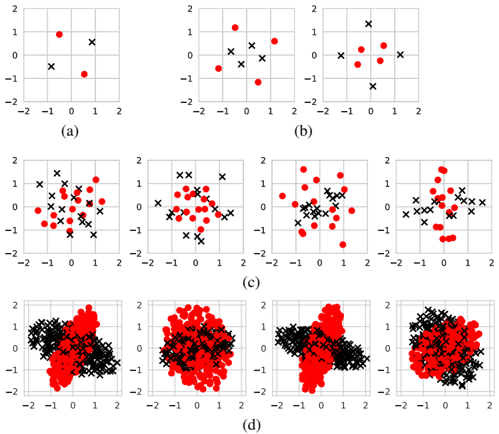
“Similarly, Fig. 4b shows a (4 , 2) system which leads to a rotated 16-PSK constellation.”
plainstates a cause- Asserted: passes — The authors put it forward as true.
- Checkable: passes — It can be checked against evidence.
- Load-bearing: unclear — It is unclear whether the paper’s conclusions depend on it.
- Based: passes — The paper gives a reason why it holds.
39 more claims
Create a free account to see all 93 claims and to verify the 4 references still open.
- Probably not a substantial claim. 29
- It may state two separate claims as one. 24
Self-check
Percentages, sums and reported differences re-computed from the paper’s own numbers.
Each contradiction between two passages listed here was confirmed by an independent check.
Rated minor: it would not touch a result — a value no result rests on, a p-value that stays on the same side of the significance level, or a conflict that is clerical, resolved elsewhere in the paper, or outside its own findings.
In the paper
§ A. Autoencoders for end-to-end communications systems · p. 5
“Similarly, Fig. 4b shows a (4 , 2) system which leads to a rotated 16-PSK constellation.”
§ A. Autoencoders for end-to-end communications systems · p. 6
“Figure 4: Constellations produced by autoencoders using parameters ( n, k ) : (a) (2 , 2) (b) (2 , 4) , (c) (2 , 4) with average power constraint, (d) (7 , 4) 2-dimensional t-SNE embedding of received symbols.”
Citations
Cites
Very Deep Convolutional Networks for Large-Scale Image Recognition
Simonyan, K., & Zisserman, A. (2014) · arXiv · doi:10.48550/arxiv.1409.1556 · Cited by 114,148 · cited 1×
“dense/fully-connected layers and terminated with a dense softmax layer for our classifier (similar to a VGG architecture [55]).”
BackgroundAdam: A Method for Stochastic Optimization
Kingma, D. P., & Ba, J. (2014) · arXiv · doi:10.48550/arxiv.1412.6980 · Cited by 98,946 · cited 4×
“Training was done at a fixed value of Eb/N0 = 7 dB (see Section IV-B) using Adam [46] with learning rate 0.”
BackgroundMethodInfluentialA Mathematical Theory of Communication
Shannon, C. E. (1948) · Bell System Technical Journal · doi:10.1002/j.1538-7305.1948.tb01338.x · Cited by 88,486
Scikit-learn: Machine Learning in Python
Pedregosa, F., Varoquaux, G., Gramfort, A., Michel, V., Thirion, B., Grisel, O., Blondel, M., Müller, A., Nothman, J., Louppe, G., et al. (2012) · arXiv · doi:10.48550/arxiv.1201.0490 · Cited by 71,016 · cited 1×
“11, we compare the classification accuracy of the CNN against that of extreme gradient boosting7 with 1000 estimators, as well as a single scikit-learn decision tree [56], operating on a mix of 16 analog and cumulant expert features as proposed in [53] and [57].”
Method(2014) · Cited by 33,419
(2008) · Journal of Machine Learning Research · Cited by 33,051
Human-level control through deep reinforcement learning
Mnih, V., Kavukcuoglu, K., Silver, D., Rusu, A. A., Veness, J., Bellemare, M. G., Graves, A., Riedmiller, M., Fidjeland, A. K., Ostrovski, G., et al. (2015) · Nature · doi:10.1038/nature14236 · Cited by 30,357
(2007) · Electronics: A First Course · doi:10.4324/9780080477527-64 · Cited by 24,923
Pan, S. J., & Yang, Q. (2010) · IEEE Transactions on Knowledge and Data Engineering · doi:10.1109/tkde.2009.191 · Cited by 23,387 · cited 1×
“learning [64] is one appealing candidate for adapting an endto-end communications system trained on a statistical model to”
BackgroundMultilayer feedforward networks are universal approximators
Hornik, K., Stinchcombe, M., & White, H. (1989) · Neural Networks · doi:10.1016/0893-6080(89)90020-8 · Cited by 21,728 · cited 1×
“Third, it has been shown that NNs are universal function approximators [13] and recent work has shown a remarkable”
Background
Research works printed but not linked: 2
- [35] I. Goodfellow, Y. Bengio, and A. Courville, Deep Learning . MIT Press, 2016. -
- [52] J. Estaran et al. , 'Artificial neural networks for linear and non-linear impairment mitigation in high-baudrate IM/DD systems,' in Proc. 42nd European Conf. Optical Commun. (ECOC) . VDE, 2016, pp. 1-3. -
Cited by
On the Road to 6G: Visions, Requirements, Key Technologies, and Testbeds
Wang, C.-X., You, X., Gao, X., Zhu, X., Li, Z., Zhang, C., Wang, H., Huang, Y., Chen, Y., Haas, H., et al. (2023) · IEEE Communications Surveys & Tutorials · doi:10.1109/comst.2023.3249835 · Cited by 2,336
Towards 6G wireless communication networks: vision, enabling technologies, and new paradigm shifts
You, X., Wang, C.-X., Huang, J., Gao, X., Zhang, Z., Wang, M., Huang, Y., Zhang, C., Jiang, Y., Wang, J., et al. (2021) · Science China Information Sciences · doi:10.1007/s11432-020-2955-6 · Cited by 2,027
Deep Learning in Mobile and Wireless Networking: A Survey
Zhang, C., Patras, P., & Haddadi, H. (2019) · IEEE Communications Surveys & Tutorials · doi:10.1109/comst.2019.2904897 · Cited by 1,768
Over-the-Air Deep Learning Based Radio Signal Classification
O'Shea, T. J., Roy, T., & Clancy, T. C. (2018) · IEEE Journal of Selected Topics in Signal Processing · doi:10.1109/jstsp.2018.2797022 · Cited by 1,607
Self-citationDeep Learning Enabled Semantic Communication Systems
Xie, H., Qin, Z., Li, G. Y., & Juang, B.-H. (2021) · IEEE Transactions on Signal Processing · doi:10.1109/tsp.2021.3071210 · Cited by 1,602
“In the communication area, some pioneering works have been carried on DL based E2E physical layer communication systems, which merge the blocks in traditional communication systems [17]–[23].”
BackgroundInfluentialDeep Joint Source-Channel Coding for Wireless Image Transmission
Bourtsoulatze, E., Burth Kurka, D., & Gunduz, D. (2019) · IEEE Transactions on Cognitive Communications and Networking · doi:10.1109/tccn.2019.2919300 · Cited by 1,476
“Our design is inspired by the recent successful application of deep NNs (DNNs), and autoencoders, in particular, to the problem of image compression [6], [8], as well as by the first promising results in the design of end-to-end communication systems using autoencoder architectures [9], [10].”
Influential6G and Beyond: The Future of Wireless Communications Systems
Akyildiz, I. F., Kak, A., & Nie, S. (2020) · IEEE Access · doi:10.1109/access.2020.3010896 · Cited by 1,385
“An autoencoder-based communication system is proposed to reconstruct the transmitted signals from channel impairment based on trained deep neural networks in an end-to-end manner [81].”
BackgroundArtificial Neural Networks-Based Machine Learning for Wireless Networks: A Tutorial
Chen, M., Challita, U., Saad, W., Yin, C., & Debbah, M. (2019) · IEEE Communications Surveys & Tutorials · doi:10.1109/comst.2019.2926625 · Cited by 1,117
“Finally, the introductory literature on ML for wireless networks such as in [3], [32], and [50]–[62], is largely sparse and fragmented and provides very scarce details on the role of ANNs, hence, making it difficult to understand the intrinsic details of this broad and far reaching area.”
BackgroundMethodResultInfluentialUnderstanding O-RAN: Architecture, Interfaces, Algorithms, Security, and Research Challenges
Polese, M., Bonati, L., D’Oro, S., Basagni, S., & Melodia, T. (2023) · IEEE Communications Surveys & Tutorials · doi:10.1109/comst.2023.3239220 · Cited by 1,077
“Typical examples of real-time control include scheduling, beam management, and feedback-less detection of physical layer parameters (e.g., modulation and coding scheme, interference recognition) [9].”
BackgroundMeta-Learning in Neural Networks: A Survey
Hospedales, T. M., Antoniou, A., Micaelli, P., & Storkey, A. J. (2021) · IEEE Transactions on Pattern Analysis and Machine Intelligence · doi:10.1109/tpami.2021.3079209 · Cited by 886
Meta-Learning in Neural Networks: A Survey
Hospedales, T., Antoniou, A., Micaelli, P., & Storkey, A. (2020) · arXiv · doi:10.48550/arxiv.2004.05439 · Cited by 886
“For example by learning coding systems that exceed the best hand designed codes for realistic channels [280].”
Massive MIMO is a reality—What is next?
Björnson, E., Sanguinetti, L., Wymeersch, H., Hoydis, J., & Marzetta, T. L. (2019) · Digital Signal Processing · doi:10.1016/j.dsp.2019.06.007 · Cited by 797
Self-citationEdge artificial intelligence for 6g: vision, enabling technologies, and applications
Letaief, K. B., Shi, Y., Lu, J., & Lu, J. (2022) · IEEE Journal on Selected Areas in Communications · doi:10.1109/jsac.2021.3126076 · Cited by 829
“Specifically, DL provides a novel way to design 6G air interface by optimizing the radio environment [14], communication algorithms [15], hardware, and applications in a unified way [16], [17].”
MethodDeep Learning-Based Channel Estimation
Soltani, M., Pourahmadi, V., Mirzaei, A., & Sheikhzadeh, H. (2019) · IEEE Communications Letters · doi:10.1109/lcomm.2019.2898944 · Cited by 780
Deep Learning for Intelligent Wireless Networks: A Comprehensive Survey
Mao, Q., Hu, F., & Hao, Q. (2018) · IEEE Communications Surveys & Tutorials · doi:10.1109/comst.2018.2846401 · Cited by 789
“O’Shea and Hoydis [51] proposed a novel idea which treats the physical layer as an end-to-end autoencoder.”
BackgroundNoor-A-Rahim, M., Liu, Z., Lee, H., Khyam, M. O., He, J., Pesch, D., Moessner, K., Saad, W., & Poor, H. V. (2022) · Proceedings of the IEEE · doi:10.1109/jproc.2022.3173031 · Cited by 737
Data-Driven Deep Learning for Automatic Modulation Recognition in Cognitive Radios
Wang, Y., Liu, M., Yang, J., & Gui, G. (2019) · IEEE Transactions on Vehicular Technology · doi:10.1109/tvt.2019.2900460 · Cited by 706
“Paper [13] proposed that a convolutional neural network (CNN) trained on IQ samples could be applied to extract features automatically and effectively classify modulated signals; however, it is difficult to distinguish between 16QAM and 64QAM using this method.”
MethodInfluentialSemantic Communications for Future Internet: Fundamentals, Applications, and Challenges
Yang, W., Du, H., Liew, Z. Q., Lim, W. Y. B., Xiong, Z., Niyato, D., Chi, X., Shen, X., & Miao, C. (2023) · IEEE Communications Surveys & Tutorials · doi:10.1109/comst.2022.3223224 · Cited by 670
“Following the success of DL in the individual block optimization in the physical layer [46], [47], [48], [49], [50], DL-based end-to-end communication systems have emerged as another potential direction to outperform the conventional communication structure in block error rate (BLER) and BER performance [51], [52], [5…”
Deep Learning in Physical Layer Communications
Qin, Z., Ye, H., Li, G. Y., & Juang, B.-H. F. (2019) · IEEE Wireless Communications · doi:10.1109/mwc.2019.1800601 · Cited by 692
Deep Learning in Physical Layer Communications
Qin, Z., Ye, H., Li, G. Y., & Juang, B.-H. F. (2018) · arXiv · doi:10.48550/arxiv.1807.11713 · Cited by 692
Wireless Networks Design in the Era of Deep Learning: Model-Based, AI-Based, or Both?
Zappone, A., Di Renzo, M., & Debbah, M. (2019) · arXiv · doi:10.48550/arxiv.1902.02647 · Cited by 685
“The work in [161] paved the way for many subsequent studies that exploited ANNs at the physical layer of wireless devices.”
BackgroundWireless Networks Design in the Era of Deep Learning: Model-Based, AI-Based, or Both?
Zappone, A., Di Renzo, M., & Debbah, M. (2019) · IEEE Transactions on Communications · doi:10.1109/tcomm.2019.2924010 · Cited by 684
“The work in [161] paved the way for many subsequent studies that exploited ANNs at the physical layer of wireless devices.”
BackgroundApplication of Machine Learning in Wireless Networks: Key Techniques and Open Issues
Sun, Y., Peng, M., Zhou, Y., Huang, Y., & Mao, S. (2019) · IEEE Communications Surveys & Tutorials · doi:10.1109/comst.2019.2924243 · Cited by 678
“In [29] and [30], the applications of deep learning in the physical layer are summarized.”
BackgroundSemantic Communication Systems for Speech Transmission
Weng, Z., & Qin, Z. (2021) · IEEE Journal on Selected Areas in Communications · doi:10.1109/jsac.2021.3087240 · Cited by 663
“systems has been developed in [12] in order to address the bottlenecks in traditional block-wise communication systems, that is sub-optimal, since the conventional signal processing is hard to capture many imperfections and non-linearities in the practical channel environment.”
BackgroundQuantum Machine Learning for 6G Communication Networks: State-of-the-Art and Vision for the Future
Nawaz, S. J., Sharma, S. K., Wyne, S., Patwary, M. N., & Asaduzzaman, M. (2019) · IEEE Access · doi:10.1109/access.2019.2909490 · Cited by 658
“Furthermore, a DL based end-to-end system design, referred to as auto-encoder, to jointly optimize both transmitter and receiver components in a point-to-point communication scenario has been proposed in [19].”
BackgroundModulation Classification Based on Signal Constellation Diagrams and Deep Learning
Peng, S., Jiang, H., Wang, H., Alwageed, H., Zhou, Y., Sebdani, M. M., & Yao, Y.-D. (2019) · IEEE Transactions on Neural Networks and Learning Systems · doi:10.1109/tnnls.2018.2850703 · Cited by 632
“In [7], [9], and [12], adaptation of DL to the complex temporal signal domain is studied.”
Unsupervised Machine Learning for Networking: Techniques, Applications and Research Challenges
Usama, M., Qadir, J., Raza, A., Arif, H., Yau, K.-L. A., Elkhatib, Y., Hussain, A., & Al-Fuqaha, A. (2019) · IEEE Access · doi:10.1109/access.2019.2916648 · Cited by 575
Future Intelligent and Secure Vehicular Network Toward 6G: Machine-Learning Approaches
Tang, F., Kawamoto, Y., Kato, N., & Liu, J. (2020) · Proceedings of the IEEE · doi:10.1109/jproc.2019.2954595 · Cited by 620
“The communication blocks are sliced with isolated communication functions, and the radio is configured step-by-step as a functions chain [16].”
BackgroundDeep learning for wireless physical layer: Opportunities and challenges
Wang, T., Wen, C.-K., Wang, H., Gao, F., Jiang, T., & Jin, S. (2017) · China Communications · doi:10.1109/cc.2017.8233654 · Cited by 606
6G Wireless Communications Networks: A Comprehensive Survey
Alsabah, M., Naser, M. A., Mahmmod, B. M., Abdulhussain, S. H., Eissa, M. R., Al-Baidhani, A., Noordin, N. K., Sait, S. M., Al-Utaibi, K. A., & Hashim, F. (2021) · IEEE Access · doi:10.1109/access.2021.3124812 · Cited by 575
Thirty Years of Machine Learning: The Road to Pareto-Optimal Wireless Networks
Wang, J., Jiang, C., Zhang, H., Ren, Y., Chen, K.-C., & Hanzo, L. (2020) · IEEE Communications Surveys & Tutorials · doi:10.1109/comst.2020.2965856 · Cited by 486
“In [324], O’Shea and Hoydis used a DNN to represent a simple communication system with one transmitter and one receiver that can be trained as a”
MethodDeep Learning Methods for Improved Decoding of Linear Codes
Nachmani, E., Marciano, E., Lugosch, L., Gross, W. J., Burshtein, D., & Be'ery, Y. (2018) · IEEE Journal of Selected Topics in Signal Processing · doi:10.1109/jstsp.2017.2788405 · Cited by 545
Kibria, M. G., Nguyen, K., Villardi, G. P., Zhao, O., Ishizu, K., & Kojima, F. (2018) · IEEE Access · doi:10.1109/access.2018.2837692 · Cited by 526
Wireless Image Transmission Using Deep Source Channel Coding With Attention Modules
Xu, J., Ai, B., Chen, W., Yang, A., Sun, P., & Rodrigues, M. (2022) · IEEE Transactions on Circuits and Systems for Video Technology · doi:10.1109/tcsvt.2021.3082521 · Cited by 511
Samuel, N., Diskin, T., & Wiesel, A. (2019) · IEEE Transactions on Signal Processing · doi:10.1109/tsp.2019.2899805 · Cited by 515
Massive MIMO Detection Techniques: A Survey
Albreem, M. A., Juntti, M., & Shahabuddin, S. (2019) · IEEE Communications Surveys & Tutorials · doi:10.1109/comst.2019.2935810 · Cited by 505
“A survey of machine learning techniques utilized in communication systems can be found in [155].”
BackgroundDeep Learning for an Effective Nonorthogonal Multiple Access Scheme
Gui, G., Huang, H., Song, Y., & Sari, H. (2018) · IEEE Transactions on Vehicular Technology · doi:10.1109/tvt.2018.2848294 · Cited by 505
“Paper [32] came to an initial conclusion that introducing radio transformer networks (RTNs) to integrate expert knowledge into the DL model can further improve the end-to-end training performance.”
BackgroundA Lite Distributed Semantic Communication System for Internet of Things
Xie, H., & Qin, Z. (2021) · IEEE Journal on Selected Areas in Communications · doi:10.1109/jsac.2020.3036968 · Cited by 497
“Inspired by the autoencoder in DL techniques, an end-to-end (E2E) communication system has been proposed to merge the signal processing blocks in traditional communication [14].”
MethodDeepJSCC-f: Deep Joint Source-Channel Coding of Images With Feedback
Kurka, D. B., & Gunduz, D. (2020) · IEEE Journal on Selected Areas in Information Theory · doi:10.1109/jsait.2020.2987203 · Cited by 470
“This was later extended to the joint design of the encoder and the decoder using an autoencoder structure [26].”
MethodModel-Driven Deep Learning for Physical Layer Communications
He, H., Jin, S., Wen, C.-K., Gao, F., Li, G. Y., & Xu, Z. (2019) · IEEE Wireless Communications · doi:10.1109/mwc.2019.1800447 · Cited by 481
“[9] T.”
BackgroundMethodInfluentialModel-Driven Deep Learning for MIMO Detection
He, H., Wen, C.-K., Jin, S., & Li, G. Y. (2020) · IEEE Transactions on Signal Processing · doi:10.1109/tsp.2020.2976585 · Cited by 454
“Recently, it has been applied in physical layer communications [11]–[13], such as channel estimation [14]–[16], CSI feedback [17], signal detection [18]–[26], channel coding [27], [28], and end-to-end transceiver design [29], [30].”
BackgroundSamuel, N., Diskin, T., & Wiesel, A. (2017) · 2017 IEEE 18th International Workshop on Signal Processing Advances in Wireless Communications (SPAWC) · doi:10.1109/spawc.2017.8227772 · Cited by 429
Shlezinger, N., Whang, J., Eldar, Y. C., & Dimakis, A. G. (2023) · Proceedings of the IEEE · doi:10.1109/jproc.2023.3247480 · Cited by 368
Deep Learning for Physical-Layer 5G Wireless Techniques: Opportunities, Challenges and Solutions
Huang, H., Guo, S., Gui, G., Yang, Z., Zhang, J., Sari, H., & Adachi, F. (2020) · IEEE Wireless Communications · doi:10.1109/mwc.2019.1900027 · Cited by 431
“A large number of models, such as the joint spatial division multiplexing (JSDM)-based massive MIMO model, relies heavily on channel state information (CSI), and their performance can deteriorate in imperfect and nonlinear scenarios [4].”
BackgroundMethodInfluential5G-Advanced Toward 6G: Past, Present, and Future
Chen, W., Lin, X., Lee, J., Toskala, A., Sun, S., Chiasserini, C. F., & Liu, L. (2023) · IEEE Journal on Selected Areas in Communications · doi:10.1109/jsac.2023.3274037 · Cited by 408
“There exists work in end-to-end physical layer design which aims to jointly train the transmitter and the receiver, while catering to simpler additive white Gaussian noise (AWGN) [188] or Rayleigh block fading channel [189] scenarios.”
BackgroundMorocho-Cayamcela, M. E., Lee, H., & Lim, W. (2019) · IEEE Access · doi:10.1109/access.2019.2942390 · Cited by 418
“The optimization of a large non-linear NN with many degrees of freedom for a simple high-level objective has been attempted in [61].”
BackgroundYe, H., Liang, L., Li, G. Y., & Juang, B.-H. (2020) · IEEE Transactions on Wireless Communications · doi:10.1109/twc.2020.2970707 · Cited by 413
“Inspired by this methodology, end-to-end learning based communication systems have been investigated in several prior works [14]–[18], where both the transmitter and the receiver are represented by deep neural networks (DNNs), as shown in Fig.”
BackgroundMethodResultInfluentialAutomatic Modulation Classification: A Deep Learning Enabled Approach
Meng, F., Chen, P., Wu, L., & Wang, X. (2018) · IEEE Transactions on Vehicular Technology · doi:10.1109/tvt.2018.2868698 · Cited by 413
“recognition is proposed in [28], [29], and the simulations with a dataset called RML2016.”
BackgroundContour Stella Image and Deep Learning for Signal Recognition in the Physical Layer
Lin, Y., Tu, Y., Dou, Z., Chen, L., & Mao, S. (2021) · IEEE Transactions on Cognitive Communications and Networking · doi:10.1109/tccn.2020.3024610 · Cited by 409
“Classical DL models designed for computer vision (CV), such as AlexNet [29], VGG [30], generative adversarial networks (GANs) [29], and many other DL techniques [8] (e.”
BackgroundMethodEnd-to-End Deep Learning of Optical Fiber Communications
Karanov, B., Chagnon, M., Thouin, F., Eriksson, T. A., Bulow, H., Lavery, D., Bayvel, P., & Schmalen, L. (2018) · Journal of Lightwave Technology · doi:10.1109/jlt.2018.2865109 · Cited by 417
“We implement the complete fiber-optic communication system and transmission chain including transmitter, receiver and channel as a complete end-to-end ANN, as suggested in [18], [19].”
BackgroundMethodInfluentialKulin, M., Kazaz, T., Moerman, I., & De Poorter, E. (2018) · IEEE Access · doi:10.1109/access.2018.2818794 · Cited by 364
Neural Network Detection of Data Sequences in Communication Systems
Farsad, N., & Goldsmith, A. (2018) · IEEE Transactions on Signal Processing · doi:10.1109/tsp.2018.2868322 · Cited by 358
“A recent survey of machine learning techniques applied to communication systems can be found in [26].”
BackgroundLearning Task-Oriented Communication for Edge Inference: An Information Bottleneck Approach
Shao, J., Mao, Y., & Zhang, J. (2022) · IEEE Journal on Selected Areas in Communications · doi:10.1109/jsac.2021.3126087 · Cited by 338
Intelligence and Learning in O-RAN for Data-Driven NextG Cellular Networks
Bonati, L., D'Oro, S., Polese, M., Basagni, S., & Melodia, T. (2021) · IEEE Communications Magazine · doi:10.1109/mcom.101.2001120 · Cited by 318
“, modulation and coding scheme, and interference recognition) [12].”
BackgroundWhite Paper on Broadband Connectivity in 6G
Rajatheva, N., Atzeni, I., Björnson, E., Bourdoux, A., Buzzi, S., Doré, J., Erküçük, S., Fuentes, M., Guan, K., Hu, Y., et al. (2020) · e-space (Manchester Metropolitan University) · doi:10.48550/arxiv.2004.14247 · Cited by 261
“End-to-end optimization of a communication system using ML is introduced in [115], where the system is interpreted as an autoencoder that jointly optimizes the transmitter and receiver components in a single process to minimize the end-to-end reconstruction error.”
MethodComplex-Valued Networks for Automatic Modulation Classification
Tu, Y., Lin, Y., Hou, C., & Mao, S. (2020) · IEEE Transactions on Vehicular Technology · doi:10.1109/tvt.2020.3005707 · Cited by 313
Lin, Y., Tu, Y., & Dou, Z. (2020) · IEEE Transactions on Vehicular Technology · doi:10.1109/tvt.2020.2983143 · Cited by 314
“10a dataset [10].”
MethodInfluentialWang, Y., Gui, G., Gacanin, H., Ohtsuki, T., Dobre, O. A., & Poor, H. V. (2021) · IEEE Journal on Selected Areas in Communications · doi:10.1109/jsac.2021.3087243 · Cited by 304
“Moreover, DL has been also applied into signal identifi-cation [21]–[24] and SEI [25]–[34], and the previously proposed DL-based SEI methods [25], [26] adopted real-valued neural network (RVNN) trained on the two-dimension matrix, consisting of the in-phase and quadrature (IQ) components of complex…”
MethodExposing the Fingerprint: Dissecting the Impact of the Wireless Channel on Radio Fingerprinting
Al-Shawabka, A., Restuccia, F., D'Oro, S., Jian, T., Costa Rendon, B., Soltani, N., Dy, J., Ioannidis, S., Chowdhury, K., & Melodia, T. (2020) · IEEE INFOCOM 2020 - IEEE Conference on Computer Communications · doi:10.1109/infocom41043.2020.9155259 · Cited by 302
“In the wireless domain, we have seen groundbreaking advances in CNN-based modulation classification [15, 30, 31] and radio fingerprinting [13, 14, 16].”
MethodArtificial Intelligence-Enabled Cellular Networks: A Critical Path to Beyond-5G and 6G
Shafin, R., Liu, L., Chandrasekhar, V., Chen, H., Reed, J., & Zhang, J. C. (2020) · IEEE Wireless Communications · doi:10.1109/mwc.001.1900323 · Cited by 308
“End-to-end learning Supervised Autoencoder [3]”
MethodInfluentialLopez-Perez, D., De Domenico, A., Piovesan, N., Xinli, G., Bao, H., Qitao, S., & Debbah, M. (2022) · IEEE Communications Surveys & Tutorials · doi:10.1109/comst.2022.3142532 · Cited by 282
A Comprehensive Review on Fake News Detection With Deep Learning
Mridha, M. F., Keya, A. J., Hamid, M. A., Monowar, M. M., & Rahman, M. S. (2021) · IEEE Access · doi:10.1109/access.2021.3129329 · Cited by 281
“DEEP LEARNING APPROACH FOR FAKE NEWS DETECTION Deep learning models have seen exceptional growth in recent times owing to their promising success in several fields, including communication and networking [125], [126], computer vision [127], [128], intelligent transportation [129], speech recognition [130], as well as…”
BackgroundPower Allocation in Multi-User Cellular Networks: Deep Reinforcement Learning Approaches
Meng, F., Chen, P., Wu, L., & Cheng, J. (2020) · IEEE Transactions on Wireless Communications · doi:10.1109/twc.2020.3001736 · Cited by 288
“These methods are usually modelfree and data-driven [11], [12], and the solutions are obtained through data learning instead of model-oriented analysis and design.”
MethodImoize, A. L., Adedeji, O., Tandiya, N., & Shetty, S. (2021) · Sensors · doi:10.3390/s21051709 · Cited by 281
Adversarial Attacks in Modulation Recognition With Convolutional Neural Networks
Lin, Y., Zhao, H., Ma, X., Tu, Y., & Wang, M. (2021) · IEEE Transactions on Reliability · doi:10.1109/tr.2020.3032744 · Cited by 290
“…the wireless signal to adapt to different channel qualities, the link rate can be ensured as close as possible to the channel capacity, and the modulation recognition technology eliminates the need for the transmitter to occupy additional resources for broadcast modulation mode and coding rate [7].”
BackgroundEnd-to-End Deep Learning Model for Corn Leaf Disease Classification
Amin, H., Darwish, A., Hassanien, A. E., & Soliman, M. (2022) · IEEE Access · doi:10.1109/access.2022.3159678 · Cited by 273
Robust Semantic Communications With Masked VQ-VAE Enabled Codebook
Hu, Q., Zhang, G., Qin, Z., Cai, Y., Yu, G., & Li, G. Y. (2023) · IEEE Transactions on Wireless Communications · doi:10.1109/twc.2023.3265201 · Cited by 282
“With the development of deep neural networks (DNNs) [3] and end-to-end learning [4], [5], [6], semantic communications, which extract and transmit the task-related meanings of data [7], [8], [9], [10], have emerged as a key technology and received great attention.”
BackgroundZhang, F., Luo, C., Xu, J., & Luo, Y. (2021) · IEEE Communications Letters · doi:10.1109/lcomm.2021.3102656 · Cited by 272
Machine learning for wireless communications in the Internet of Things: A comprehensive survey
Jagannath, J., Polosky, N., Jagannath, A., Restuccia, F., & Melodia, T. (2019) · Ad Hoc Networks · doi:10.1016/j.adhoc.2019.101913 · Cited by 288
Overview of Deep Learning-Based CSI Feedback in Massive MIMO Systems
Guo, J., Wen, C.-K., Jin, S., & Li, G. Y. (2022) · IEEE Transactions on Communications · doi:10.1109/tcomm.2022.3217777 · Cited by 278
“invariance to shifts in the input [16].”
BackgroundLess Data, More Knowledge: Building Next-Generation Semantic Communication Networks
Chaccour, C., Saad, W., Debbah, M., Han, Z., & Vincent Poor, H. (2025) · IEEE Communications Surveys & Tutorials · doi:10.1109/comst.2024.3412852 · Cited by 259
“One could argue that recent AI-based transmitter and receiver designs (e.g., using autoencoders [12]) are efficient in jointly learning transmitter and receiver implementations as well as signal encodings without any prior knowledge.”
OFDM-Autoencoder for End-to-End Learning of Communications Systems
Felix, A., Cammerer, S., Dorner, S., Hoydis, J., & Ten Brink, S. (2018) · 2018 IEEE 19th International Workshop on Signal Processing Advances in Wireless Communications (SPAWC) · doi:10.1109/spawc.2018.8445920 · Cited by 283
Self-citationDeep-Learning-Based Wireless Resource Allocation With Application to Vehicular Networks
Liang, L., Ye, H., Yu, G., & Li, G. Y. (2020) · Proceedings of the IEEE · doi:10.1109/jproc.2019.2957798 · Cited by 282
“Recently, adaptation of machine learning tools to address difficult problems in wireless communications and networking has gained momentum, ranging from physical layer design [10]–[15], resource allocation [16], [17], networking [18], caching [19], to edge computing [20].”
BackgroundDeep CM-CNN for Spectrum Sensing in Cognitive Radio
Liu, C., Wang, J., Liu, X., & Liang, Y.-C. (2019) · IEEE Journal on Selected Areas in Communications · doi:10.1109/jsac.2019.2933892 · Cited by 280
LightAMC: Lightweight Automatic Modulation Classification via Deep Learning and Compressive Sensing
Wang, Y., Yang, J., Liu, M., & Gui, G. (2020) · IEEE Transactions on Vehicular Technology · doi:10.1109/tvt.2020.2971001 · Cited by 273
“In the F-AMC methods [1], [15], [17], CNN is trained on the fixed SNR, and they are only useful for the IQ samples with the corresponding SNR.”
MethodAn Iterative BP-CNN Architecture for Channel Decoding
Liang, F., Shen, C., & Wu, F. (2018) · IEEE Journal of Selected Topics in Signal Processing · doi:10.1109/jstsp.2018.2794062 · Cited by 276
“[21].”
ComNet: Combination of Deep Learning and Expert Knowledge in OFDM Receivers
Gao, X., Jin, S., Wen, C.-K., & Li, G. Y. (2018) · IEEE Communications Letters · doi:10.1109/lcomm.2018.2877965 · Cited by 272
Towards Optimal Power Control via Ensembling Deep Neural Networks
Liang, F., Shen, C., Yu, W., & Wu, F. (2020) · IEEE Transactions on Communications · doi:10.1109/tcomm.2019.2957482 · Cited by 268
“Inspired by its success in many areas, researchers have begun to study whether deep learning can help improve the design of communication algorithms [29].”
BackgroundDeep Unfolding for Communications Systems: A Survey and Some New Directions
Balatsoukas-Stimming, A., & Studer, C. (2019) · 2019 IEEE International Workshop on Signal Processing Systems (SiPS) · doi:10.1109/sips47522.2019.9020494 · Cited by 266
“In recent years, neural networks (NNs) have been proposed to replace a range of signal processing tasks in communications systems [2]–[6].”
BackgroundDeep Learning-Based Channel Estimation for Doubly Selective Fading Channels
Yang, Y., Gao, F., Ma, X., & Zhang, S. (2019) · IEEE Access · doi:10.1109/access.2019.2901066 · Cited by 264
“There are two reasons promoting the applications of DL in various areas [15].”
BackgroundWireless Semantic Communications for Video Conferencing
Jiang, P., Wen, C.-K., Jin, S., & Li, G. Y. (2023) · IEEE Journal on Selected Areas in Communications · doi:10.1109/jsac.2022.3221968 · Cited by 255
“DL can address many challenging issues [5], [6], [7], [8], [9] in communication systems, such as nonlinear interference, insufficient pilots, channel estimation, channel coding, channel state information (CSI) feedback, and autoencoderbased communication systems.”
BackgroundLearning Optimal Resource Allocations in Wireless Systems
Eisen, M., Zhang, C., Chamon, L. F. O., Lee, D. D., & Ribeiro, A. (2019) · IEEE Transactions on Signal Processing · doi:10.1109/tsp.2019.2908906 · Cited by 253
Sankhe, K., Belgiovine, M., Zhou, F., Angioloni, L., Restuccia, F., D'Oro, S., Melodia, T., Ioannidis, S., & Chowdhury, K. (2020) · IEEE Transactions on Cognitive Communications and Networking · doi:10.1109/tccn.2019.2949308 · Cited by 256
Channel Agnostic End-to-End Learning Based Communication Systems with Conditional GAN
Ye, H., Li, G. Y., Juang, B.-H. F., & Sivanesan, K. (2018) · 2018 IEEE Globecom Workshops (GC Wkshps) · doi:10.1109/glocomw.2018.8644250 · Cited by 244
DeepRx: Fully Convolutional Deep Learning Receiver
Honkala, M., Korpi, D., & Huttunen, J. M. J. (2021) · IEEE Transactions on Wireless Communications · doi:10.1109/twc.2021.3054520 · Cited by 234
“lation scheme or waveform, have also been widely studied [3], [22]–[24].”
5G MIMO Data for Machine Learning: Application to Beam-Selection Using Deep Learning
Klautau, A., Batista, P., Gonzalez-Prelcic, N., Wang, Y., & Heath, R. W. (2018) · 2018 Information Theory and Applications Workshop (ITA) · doi:10.1109/ita.2018.8503086 · Cited by 235
“The success in other domains motivates the application of DL to communication problems [4]– [12].”
BackgroundModel-Free Training of End-to-End Communication Systems
Aoudia, F. A., & Hoydis, J. (2019) · IEEE Journal on Selected Areas in Communications · doi:10.1109/jsac.2019.2933891 · Cited by 236
“A limitation of the original approach [2] is the requirement of a differentiable channel model to train the transmitter, by backpropagating the gradient through the channel layers.”
BackgroundMethodInfluentialSelf-citationModel-Aided Deep Learning Method for Path Loss Prediction in Mobile Communication Systems at 2.6 GHz
Thrane, J., Zibar, D., & Christiansen, H. L. (2020) · IEEE Access · doi:10.1109/access.2020.2964103 · Cited by 229
End-to-End Learning of Communications Systems Without a Channel Model
Aoudia, F. A., & Hoydis, J. (2018) · 2018 52nd Asilomar Conference on Signals, Systems, and Computers · doi:10.1109/acssc.2018.8645416 · Cited by 220
Self-citationTrainable ISTA for Sparse Signal Recovery
Ito, D., Takabe, S., & Wadayama, T. (2019) · IEEE Transactions on Signal Processing · doi:10.1109/tsp.2019.2912879 · Cited by 223
Xu, X., Zhang, X., & Zhang, T. (2022) · Remote Sensing · doi:10.3390/rs14041018 · Cited by 221
“Recently, there have been great breakthroughs of deep learning (DL) in several fields, including computer vision (CV), natural language processing (NLP), communications, and networking [5,6].”
BackgroundDeep Learning for Beamspace Channel Estimation in Millimeter-Wave Massive MIMO Systems
Wei, X., Hu, C., & Dai, L. (2021) · IEEE Transactions on Communications · doi:10.1109/tcomm.2020.3027027 · Cited by 207
“…wireless big data and provide some improved solutions to some complicated problems in wireless communications, such as low density parity check (LDPC) decoding [20], sparse code multiple access (SCMA) codebook design [21], end-to-end communications [22], and hybrid precoding for massive MIMO [23].”
BackgroundGunduz, D., de Kerret, P., Sidiropoulos, N. D., Gesbert, D., Murthy, C. R., & van der Schaar, M. (2019) · IEEE Journal on Selected Areas in Communications · doi:10.1109/jsac.2019.2933969 · Cited by 214
“An autoencoder is trained for coding and modulation over an additive white Gaussian noise channel in [40], and it is shown to have a performance very close to conventional coding and modulation scheme in short blocklengths.”
BackgroundMethodDeep-Learning-Based Joint Resource Scheduling Algorithms for Hybrid MEC Networks
Jiang, F., Wang, K., Dong, L., Pan, C., Xu, W., & Yang, K. (2020) · IEEE Internet of Things Journal · doi:10.1109/jiot.2019.2954503 · Cited by 211
“In specific, we first adopt the LS-FCM algorithm in Section III-B to obtain the locations of the UAVs and GVs.”
BackgroundInfluentialMassive MIMO Channel Estimation With an Untrained Deep Neural Network
Balevi, E., Doshi, A., & Andrews, J. G. (2020) · IEEE Transactions on Wireless Communications · doi:10.1109/twc.2019.2962474 · Cited by 206
“The introduction of techniques from deep learning points to a potential remedy, since these techniques have been recently used for other challenging communication theory problems without closed-form solutions [13]–[16].”
MethodDeep Learning for Wireless Communications: An Emerging Interdisciplinary Paradigm
Dai, L., Jiao, R., Adachi, F., Poor, H. V., & Hanzo, L. (2020) · IEEE Wireless Communications · doi:10.1109/mwc.001.1900491 · Cited by 196
“dl-bAsed trAnsceIver desIgn In contrast to the DL-based receiver design which only optimizes the receiver using DNN, a more revolutionary paradigm has been proposed recently to jointly design the whole point-topoint communication system (including both the transmitter and the receiver) as a single end-toend autoencode…”
BackgroundMethodInfluentialDeep Learning Based MIMO Communications
O'Shea, T. J., Erpek, T., & Clancy, T. C. (2017) · arXiv · doi:10.48550/arxiv.1707.07980 · Cited by 205
“Recent results in physical layer learning for the Single Input Single Output (SISO) channel [17] have shown that autoencoders [13] can readily match the performance of near-optimal existing baseline modulation and coding schemes by using an autoencoder to jointly learn the system.”
BackgroundResultInfluentialSelf-citationData Augmentation for Deep Learning-Based Radio Modulation Classification
Huang, L., Pan, W., Zhang, Y., Qian, L., Gao, N., & Wu, Y. (2020) · IEEE Access · doi:10.1109/access.2019.2960775 · Cited by 202
“Specifically, the proposed augmentation methods successfully reduce the confusion between QAM16 and QAM64 and solve the short-time observation problem presented in [39].”
MethodDeep Source-Channel Coding for Sentence Semantic Transmission With HARQ
Jiang, P., Wen, C.-K., Jin, S., & Li, G. Y. (2022) · IEEE Transactions on Communications · doi:10.1109/tcomm.2022.3180997 · Cited by 199
“Deep learning (DL) has been utilized in the physical layer of communications [1]–[3].”
Automatic Modulation Classification Based on Deep Residual Networks With Multimodal Information
Qi, P., Zhou, X., Zheng, S., & Li, Z. (2021) · IEEE Transactions on Cognitive Communications and Networking · doi:10.1109/tccn.2020.3023145 · Cited by 199
“A CNNs designed for classifying 10 modulation types in [39].”
BackgroundMethodInfluential
Metadata
- Authors
- O'Shea, T., & Hoydis, J.
- Affiliations
- Nokia (France) (FR)
- Venue
- IEEE Transactions on Cognitive Communications and Networking
- Published
- 2017-12
- Volume
- 3
- Issue
- 4
- Pages
- 563-575
- ISSN
- 2332-7731 (ISSN-L)
- OpenAlex
- W2734408173
- Semantic Scholar
- 78989616eeeac55b202e3e4205225e7135054185
- Cited by
- 2,980
- References
- 69
- Citations by year
- 2026: 307 · 2025: 327 · 2024: 305 · 2023: 368 · 2022: 432 · 2021: 409 · 2020: 406 · 2019: 322 · 2018: 95 · 2017: 9
- FWCI
- 122.29
- Type
- journal article
- Language
- en
- Open access
- green
- arxiv.org
- Locations
- IEEE Transactions on Cognitive Communications and Networking (publishedVersion)
- arXiv (Cornell University) (submittedVersion)
- arXiv (Cornell University)
- Topics
- Physical Sciences › Computer Science › Artificial Intelligence › Wireless Signal Modulation Classification
- Physical Sciences › Engineering › Electrical and Electronic Engineering › Advanced Wireless Communication Techniques
- Physical Sciences › Engineering › Electrical and Electronic Engineering › Advanced Wireless Communication Technologies
- Keywords
- end-to-end reconstruction, domain knowledge integration, convolutional neural networks, automatic modulation classification, IQ samples
About these checks
Registry, retraction, Cites and statistics results are computed, not judged, with one exception: a printed reference that no index lists is read once by a model before it counts as a citation error. Claims are extracted by a model and kept only when their quote appears verbatim in the text; each cited source is then checked, with a model’s help, for whether it says what the claim relies on. Those verdicts can be wrong — read the claim’s quote and the cited source before relying on one.
The claim verdicts this report counts are experimental: their accuracy is not yet measured.
A language model drew the claims from the paper on 2026-11-07, under version 3 of the claim definition (model deepseek-v4.1-flash, prompt extract-v3).
A second model labelled each claim on 2026-11-07 (model jev-1.13-20260917, definition revision gold-guideline-v0.2).
Cited sources are checked with a language model’s help (gpt-6-sol).
Statistics and arithmetic are recomputed, not judged.
Confidence bands are shown only for fields calibrated on our annotated test set. None is calibrated yet, so no band is shown.
What counts as a claim ›How we measure confidence ›How we check this ›
Are you an author, or do you see a problem with this page? Request a review
Data sources
Bibliographic data: Semantic Scholar, OpenAlex, Crossref.
Contains information from the Semantic Scholar Academic Graph Datasets, made available under the ODC Attribution License (ODC-BY 1.0).
Semantic Scholar’s data is described in: Kinney, R., et al. (2023). The Semantic Scholar Open Data Platform. arXiv:2301.10140.
