

An Introduction to Deep Learning for the Physical Layer
Open accessThe DOI matches its Crossref record; 90 of the 92 references it cites were found in a registry or an index, and 2 are not checked yet; 8 of the 32 sources its claims cite were checked for support.
Abstract
We present and discuss several novel applications of deep learning for the physical layer. By interpreting a communications system as an autoencoder, we develop a fundamental new way to think about communications system design as an end-to-end reconstruction task that seeks to jointly optimize transmitter and receiver components in a single process. We show how this idea can be extended to networks of multiple transmitters and receivers and present the concept of radio transformer networks as a means to incorporate expert domain knowledge in the machine learning model. Lastly, we demonstrate the application of convolutional neural networks on raw IQ samples for modulation classification which achieves competitive accuracy with respect to traditional schemes relying on expert features. This paper is concluded with a discussion of open challenges and areas for future investigation.
Verified 2026-11-19 · 2 references not checked yet
Overview
CoChat Summary
TL;DR
The paper introduces deep learning for the physical layer by treating a communications system as an autoencoder that jointly learns transmitter and receiver implementations end-to-end. It also extends this idea to multi-user interference channels, proposes radio transformer networks (RTNs) to inject expert domain knowledge, and shows CNNs on raw IQ samples can outperform expert-feature modulation classifiers.
Key findings
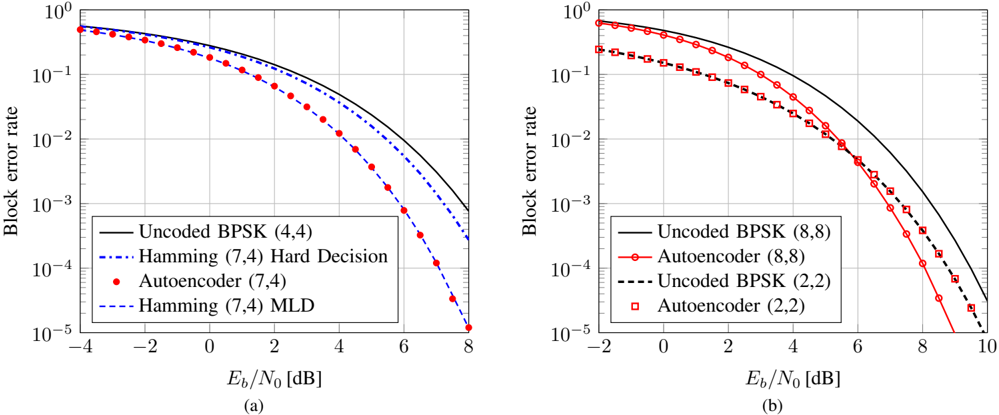
- A learned autoencoder for a (7,4) system at rate R = 4/7 achieves the same block error rate (BLER) as a Hamming (7,4) code with maximum likelihood decoding, while an (8,8) autoencoder outperforms uncoded BPSK over the full E_b/N_0 range, indicating learned joint coding and modulation.
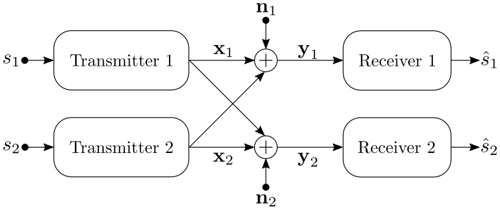
- For the two-user AWGN interference channel, the autoencoder matches time-sharing for (1,1) and (2,2), but achieves gains of about 0.7 dB for (4,4) and 1 dB for (4,8) at a BLER of 10^-3.
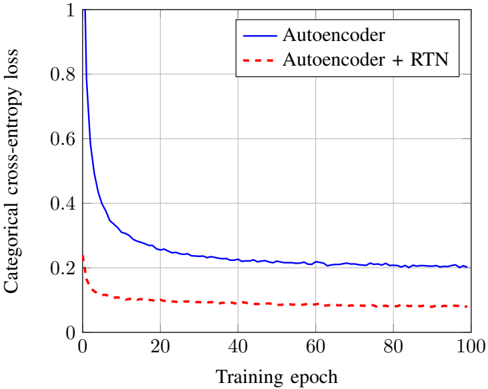
- An autoencoder (8,4) with an RTN over a multipath fading channel with L = 3 Rayleigh taps outperforms differential BPSK with maximum likelihood sequence estimation and a Hamming (7,4) code, whereas the plain autoencoder struggles to match it; RTNs also show faster training convergence.
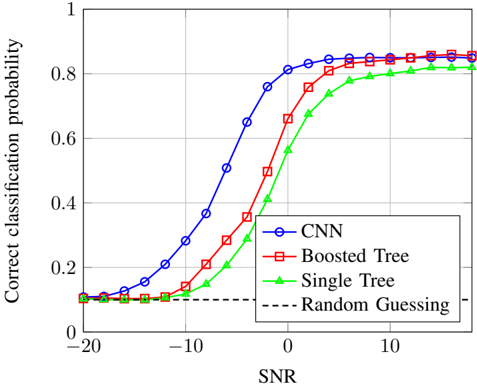
- For modulation classification on 1.2M sequences of 128 complex-valued IQ samples across ten modulation schemes and SNRs from -20 dB to 18 dB, the CNN outperforms a boosted expert-feature classifier by around 4 dB in the low-to-medium SNR range, with almost identical high-SNR performance; a single tree is about 6 dB worse at medium SNR and 3.5% worse at high SNR.
Methods
- The transmitter, channel, and receiver are represented as one deep neural network trained as an autoencoder: one-hot message input, dense layers, normalization layer for transmit constraints, additive noise channel layer, and softmax receiver output, trained with categorical cross-entropy using SGD/Adam at learning rate 0.001 and fixed E_b/N_0 = 7 dB.
- The autoencoder concept is extended to multiple transmitter-receiver pairs in a two-user interference channel, with dynamic loss weights α_t per mini-batch to balance the two cross-entropy losses; performance is compared against 2^{2k/n}-QAM with time-sharing.
- RTNs combine a learned parameter estimator, a differentiable parametric transform, and a discriminative network; the paper demonstrates phase-offset compensation and multipath inverse filtering. For modulation classification, a VGG-like CNN with 324,330 trainable parameters is trained on the RML2016.10b dataset.
Limitations
- The paper states that scalability to large message sets M is a major challenge: for k = 100 bits, training complexity is prohibitive because the autoencoder must see at least every message once.
- The paper states that optimal data representations, loss functions, training SNR, and hyperparameters are not well understood; training at one SNR does not necessarily generalize to others, and no common communications benchmarks or datasets comparable to MNIST or ImageNet exist.
- The paper states that end-to-end learning over real channels requires system identification because backpropagation assumes a known channel transfer function; complex-valued neural networks are not supported by current DL libraries. Evident from the text: the reported results are simulation-based, use small (n,k) settings, assume known channel models during training, and the paper explicitly leaves detailed performance comparisons for various channel types and parameters to future work.
Model-written summary. Check it against the paper before relying on it.
Integrity signals
Registry
Cites
Statistics
Figures






Verification
Claims the paper makes
6 Valid · 4 Not valid · 18 Not checked · 65 Own results and interpretations
Every source the paper cites for this claim was checked and supports it.
In the paper
“For instance in [22], it was shown that training with a single codeword is sufficient since the structure of the code is embedded in the NN through the Tanner graph.”
What the sources say
- Supportedcites [22] [22] E. Nachmani, Y. Be'ery, and D. Burshtein, 'Learning to decode linear codes using deep learning,' in Proc. IEEE Annu. Allerton Conf. Commun., Control, and Computing (Allerton) , 2016, pp. 341-346. - source
The Introduction says the decoder uses a Tanner graph representing the code and that one codeword suffices for training. Section III explains the precise condition: over a binary memoryless symmetric channel, the decoder’s error rate is independent of the transmitted codeword, so training can use noisy versions of a single codeword. (LLM, conf=0.91)
boostedstates a cause- Asserted: passes — The authors put it forward as true.
- Checkable: passes — It can be checked against evidence.
- Load-bearing: unclear — It is unclear whether the paper’s conclusions depend on it.
- Based: passes — The paper gives a reason why it holds.
- Supported
A result the paper reports from its own data — it cites no other source for it, so there is none to check. The quote shows it is in the paper.
In the paper
“We study the use of NNs on complex-valued IQ samples for the problem of modulation classification and show that convolutional neural networks (CNNs), which are the cornerstone of most DL systems for computer vision, can outperform traditional classification techniques based on expert features.”
plainstates a cause- Asserted: passes — The authors put it forward as true.
- Checkable: passes — It can be checked against evidence.
- Load-bearing: passes — The paper’s conclusions depend on it.
- Based: passes — The paper gives a reason why it holds.
The paper states this without a source or data behind it here, so there is nothing to check it against. The quote shows it is in the paper.
In the paper
“Training at low SNR for instance does not allow for the discovery of structure important in higher SNR scenarios.”
plainstates a cause- Asserted: passes — The authors put it forward as true.
- Checkable: passes — It can be checked against evidence.
- Load-bearing: unclear — It is unclear whether the paper’s conclusions depend on it.
- Based: unclear — It is unclear why the paper says it holds.
A result the paper reports from its own data — it cites no other source for it, so there is none to check. The quote shows it is in the paper.
In the paper
“Another advantage of RTNs is faster training convergence which can be seen from Fig. 10 that compares the validation loss of the autoencoder with and without RTN as a function of the training epochs.”
plainstates a cause- Asserted: passes — The authors put it forward as true.
- Checkable: passes — It can be checked against evidence.
- Load-bearing: unclear — It is unclear whether the paper’s conclusions depend on it.
- Based: passes — The paper gives a reason why it holds.
A result the paper reports from its own data — it cites no other source for it, so there is none to check. The quote shows it is in the paper.
In the paper
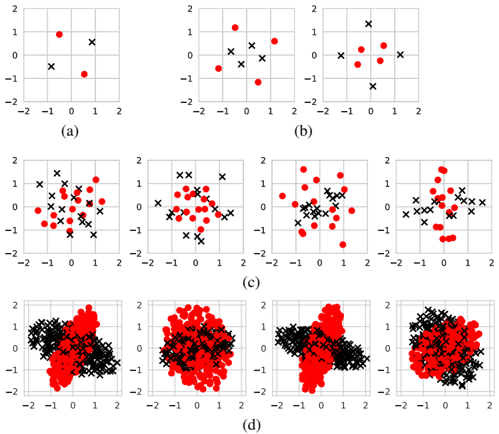
“Similarly, Fig. 4b shows a (4 , 2) system which leads to a rotated 16-PSK constellation.”
plainstates a cause- Asserted: passes — The authors put it forward as true.
- Checkable: passes — It can be checked against evidence.
- Load-bearing: unclear — It is unclear whether the paper’s conclusions depend on it.
- Based: passes — The paper gives a reason why it holds.
39 more claims
Create a free account to see all 93 claims and to verify the 4 references still open.
- Probably not a substantial claim. 29
- It may state two separate claims as one. 24
Self-check
Percentages, sums and reported differences re-computed from the paper’s own numbers.
Each contradiction between two passages listed here was confirmed by an independent check.
Rated minor: it would not touch a result — a value no result rests on, a p-value that stays on the same side of the significance level, or a conflict that is clerical, resolved elsewhere in the paper, or outside its own findings.
In the paper
§ A. Autoencoders for end-to-end communications systems · p. 5
“Similarly, Fig. 4b shows a (4 , 2) system which leads to a rotated 16-PSK constellation.”
§ A. Autoencoders for end-to-end communications systems · p. 6
“Figure 4: Constellations produced by autoencoders using parameters ( n, k ) : (a) (2 , 2) (b) (2 , 4) , (c) (2 , 4) with average power constraint, (d) (7 , 4) 2-dimensional t-SNE embedding of received symbols.”
Citations
Cites
Very Deep Convolutional Networks for Large-Scale Image Recognition
Simonyan, K., & Zisserman, A. (2014) · arXiv · doi:10.48550/arxiv.1409.1556 · Cited by 114,148 · cited 1×
“dense/fully-connected layers and terminated with a dense softmax layer for our classifier (similar to a VGG architecture [55]).”
BackgroundAdam: A Method for Stochastic Optimization
Kingma, D. P., & Ba, J. (2014) · arXiv · doi:10.48550/arxiv.1412.6980 · Cited by 98,946 · cited 4×
“Training was done at a fixed value of Eb/N0 = 7 dB (see Section IV-B) using Adam [46] with learning rate 0.”
BackgroundMethodInfluentialA Mathematical Theory of Communication
Shannon, C. E. (1948) · Bell System Technical Journal · doi:10.1002/j.1538-7305.1948.tb01338.x · Cited by 88,486
Scikit-learn: Machine Learning in Python
Pedregosa, F., Varoquaux, G., Gramfort, A., Michel, V., Thirion, B., Grisel, O., Blondel, M., Müller, A., Nothman, J., Louppe, G., et al. (2012) · arXiv · doi:10.48550/arxiv.1201.0490 · Cited by 71,016 · cited 1×
“11, we compare the classification accuracy of the CNN against that of extreme gradient boosting7 with 1000 estimators, as well as a single scikit-learn decision tree [56], operating on a mix of 16 analog and cumulant expert features as proposed in [53] and [57].”
Method(2014) · Cited by 33,419
(2008) · Journal of Machine Learning Research · Cited by 33,051
Human-level control through deep reinforcement learning
Mnih, V., Kavukcuoglu, K., Silver, D., Rusu, A. A., Veness, J., Bellemare, M. G., Graves, A., Riedmiller, M., Fidjeland, A. K., Ostrovski, G., et al. (2015) · Nature · doi:10.1038/nature14236 · Cited by 30,357
(2007) · Electronics: A First Course · doi:10.4324/9780080477527-64 · Cited by 24,923
Pan, S. J., & Yang, Q. (2010) · IEEE Transactions on Knowledge and Data Engineering · doi:10.1109/tkde.2009.191 · Cited by 23,387 · cited 1×
“learning [64] is one appealing candidate for adapting an endto-end communications system trained on a statistical model to”
BackgroundMultilayer feedforward networks are universal approximators
Hornik, K., Stinchcombe, M., & White, H. (1989) · Neural Networks · doi:10.1016/0893-6080(89)90020-8 · Cited by 21,728 · cited 1×
“Third, it has been shown that NNs are universal function approximators [13] and recent work has shown a remarkable”
Background
Research works printed but not linked: 2
- [35] I. Goodfellow, Y. Bengio, and A. Courville, Deep Learning . MIT Press, 2016. -
- [52] J. Estaran et al. , 'Artificial neural networks for linear and non-linear impairment mitigation in high-baudrate IM/DD systems,' in Proc. 42nd European Conf. Optical Commun. (ECOC) . VDE, 2016, pp. 1-3. -
Cited by
Items 1,801–1,900 of 2,995
Luo, Y., & Hu, J. (2022) · Digital Communications and Networks · doi:10.1016/j.dcan.2022.04.035 · Cited by 4
Clothing Nanometer Antimite and Antibacterial Based on Deep Learning Technology
Liu, H. (2022) · Journal of Nanomaterials · doi:10.1155/2022/4916197 · Cited by 3
“Its accuracy is competitive compared to traditional schemes relying on expert features [2].”
BackgroundPerformance Analysis of OFDM-IM Using DLD
Anusha, C., & Anuradha, S. (2022) · Lecture notes in networks and systems · doi:10.1007/978-981-19-0095-2_15 · Cited by 3
RNN-Based Sequence to Sequence Decoder for Run-Length Limited Codes in Visible Light Communication
Luo, X., & Yang, H. (2022) · Sensors · doi:10.3390/s22134843 · Cited by 3
“Deep learning (DL) techniques have achieved great success and have been employed in many areas of communication recently [7,8].”
BackgroundBiomechanics of Volleyball Players’ Run-Up and Take-Off Link under Deep Learning
Hu, L., Liu, L., & Zhao, K. (2022) · Computational Intelligence and Neuroscience · doi:10.1155/2022/8409626 · Cited by 3
“Based on this, they applied it to networks withmultiple senders and receivers and introduced it into machine learning models [4].”
MethodRetractedOne-Take: Gathering Distributed Sensor Data Through Dominant Symbols for Fast Classification
Oostvogels, J., Michiels, S., & Hughes, D. (2022) · ACM/IEEE International Conference on Information Processing in Sensor Networks (IPSN) · doi:10.1109/ipsn54338.2022.00034 · Cited by 3
Dynamic Optimization Method of Wireless Network Routing Based on Deep Learning Strategy
Wang, P., Qin, J., Li, J., Wu, M., Zhou, S., & Feng, L. (2022) · Mobile Information Systems · doi:10.1155/2022/4964672 · Cited by 3
“Users can also manage, configure, query, publish monitoring tasks through the management center, and collect data and return it to WSN [18].”
BackgroundInfluentialSimulation of Transmission System of Crawler Self-propelled Rotary Tiller Based on Deep Learning
Wu, L., & Wu, Y. Q. (2022) · Computational Intelligence and Neuroscience · doi:10.1155/2022/6078223 · Cited by 3
“By deciphering the correspondence framework as an autoencoder, an essentially new methodology is fostered that treats the correspondence framework plan as a start-to-finish reproduction task [4].”
MethodRetractedDeep Learning for Spectral Filling in Radio Frequency Applications
Setzler, M., Coda, E., Rounds, J., Vann, M., & Girard, M. (2022) · Sensor Signal Processing for Defence (SSPD) · doi:10.1109/sspd54131.2022.9896184 · Cited by 3
“Neural networks have also been trained to demodulate RF signals [18, 26, 1, 12, 19, 13], and even for end-to-end communications systems, although success of these efforts has been mixed [7, 20].”
BackgroundCapacity and Achievable Rates of Fading Few-mode MIMO IM/DD Optical Fiber Channels
Yankov, M. P., Ros, F. D., Forchhammer, S. O., & Grüner-Nielsen, L. (2022) · International Conference on Communications · doi:10.1109/icc45855.2022.9838629 · Cited by 3
“Both of these optimizations can be efficiently approached with an autoencoder (AE) [16].”
BackgroundYang, X., & Lu, Z. (2022) · BioMed Research International · doi:10.1155/2022/7126659 · Cited by 3
“The communication technology was regarded as a basic coding method, and the design of the communication system is regarded as a point-to-point combination so that the transmission and reception links can be optimally solved [6].”
MethodRetractedEnd-to-end Deep Learning for VCSEL’s Nonlinear Digital Pre-Distortion
Minelli, L., Forghieri, F., & Gaudino, R. (2022) · Italian Conference on Optics and Photonics (ICOP) · doi:10.1109/icop56156.2022.9911760 · Cited by 3
“The E2E system, working at a sample-per-symbol (sps) ratio equal to 2, emulates the behavior of the considered communication link in the form of an autoencoder [16] neural network, keeping fixed the ANN CH coefficients, to jointly optimize the DPD and the post-equalizer.”
QoE-Oriented Open Radio Access Networks for Virtual Reality Applications
Kougioumtzidis, G., Vlahov, A., Poulkov, V. K., Zaharis, Z. D., & Lazaridis, P. I. (2022) · International Symposium on Wireless Personal Multimedia Communications (WPMC) · doi:10.1109/wpmc55625.2022.10014946 · Cited by 3
“The beam selection is ML-assisted, based on user feedback and environmental context, such as the existence of obstacles [15]”
MethodModulation Format Recognition Based on Coordinate Transformation and Combination in VLC System
Gao, W., Xu, C., Xu, Z., Jin, R. Z., & Chi, N. (2022) · Asia Communications and Photonics Conference · doi:10.1109/acp55869.2022.10088940 · Cited by 3
“Timothy O'Shea proposed a CNN, trained by IQ samples, which can automatically extract sample features and automatically complete modulation format recognition [6].”
MethodBeck, E., Shin, B.-S., Wang, S., Wiedemann, T., Shutin, D., & Dekorsy, A. (2023) · Electronics · doi:10.3390/electronics12081908 · Cited by 3
Li, Z., Huang, C., Jia, J., Li, G., Shen, W., Shi, J., Li, Z., Shen, C., Zhang, J., & Chi, N. (2023) · Optical Fiber Communication Conference · doi:10.1364/ofc.2023.w2b.26 · Cited by 3
Comprehensive survey of human-activity detection and recognition with time-series model
Ishwarya, K., & Nithya, A. A. (2023) · AIP conference proceedings · doi:10.1063/5.0126232 · Cited by 3
Edge Processing: A LoRa-Based LCDT System for Smart Building With Energy and Delay Constraints
Shilpa, B., Gupta, H. P., & Jha, R. K. (2023) · IEEE Systems Man and Cybernetics Magazine · doi:10.1109/msmc.2022.3204848 · Cited by 3
“Several DL models for wireless communication systems were developed in the existing research works [12], [13], [14], [15], [16].”
BackgroundMethodCSI Feedback Model Based on Multi-Source Characterization in FDD Systems
Pan, F., Zhao, X., Zhang, B., Xiang, P., Hu, M., & Gao, X. (2023) · Sensors · doi:10.3390/s23198139 · Cited by 3
Efficient data transmission over 5G Networks with improved accuracy using 802.11p
Bagade, S., Budati, A. K., & Rao, L. K. (2023) · Multimedia Tools and Applications · doi:10.1007/s11042-023-17156-1 · Cited by 3
“Despite these efforts, packet interference cannot be entirely avoided using IEEE 802.11p [14–18].”
Channel Fading-Robust Pre-Coders for Low Complexity Few-Mode IM/DD Short Reach Fiber Communications
Yankov, M. P., Ros, F. D., Forchhammer, S. O., & Grüner-Nielsen, L. (2023) · Journal of Lightwave Technology · doi:10.1109/jlt.2023.3325157 · Cited by 3
Liu, X., Zhang, J., Zhu, M., Zhang, J., Tong, W., Xin, Z., Hua, B., Cai, Y., Lei, M., Liu, B., et al. (2023) · Optics Letters · doi:10.1364/ol.505468 · Cited by 3
Overview on Deep learning aided channel Equalizer Techniques
Hanoon, S. S., Khazaal, H. F., & Jamel, T. M. (2023) · International Conference on Advanced Computer Applications (ACA) · doi:10.1109/aca57612.2023.10346778 · Cited by 3
“DL has been used in communication systems, particularly for the physical layer, due to its excellent capacity for learning, recognizing patterns, and making predictions [12].”
BackgroundChannel Aware Adversarial Attacks are Not Robust
Sinha, S., & Soysal, A. (2023) · IEEE Military Communications Conference (MILCOM) · doi:10.1109/milcom58377.2023.10356294 · Cited by 3
“The target classifier at the legitimate receiver is the VTCNN2 classifier [22].”
BackgroundRiSi: Spectro-temporal RAN-agnostic Modulation Identification for OFDMA Signals
Kurmantayev, D., Kwun, D., Kim, H., & Yoon, S. W. (2024) · IEEE International Symposium on a World of Wireless, Mobile and Multimedia Networks (WoWMoM) · doi:10.1109/wowmom60985.2024.00042 · Cited by 3
Deep Learning based Modeling of Wireless Communication Channel with Fading
Lee, Y., Ma, X., Lang, A. S. I. D., Valderrama, E. F., & Andrew, C. L. (2024) · International Wireless Communications and Mobile Computing Conference (IWCMC) · doi:10.1109/iwcmc61514.2024.10592504 · Cited by 9
“Recently, several pure data-driven approaches to channel modeling using deep learning neural networks have been proposed [5]-[9].”
BackgroundEnd-to-end Physical Layer Optimization Scheme Based on Deep Learning Autoencoder
Ye, P., Jia, X., Yang, X., & Hu, H. (2019) · IEEE Advanced Information Technology, Electronic and Automation Control Conference (IAEAC) · doi:10.1109/iaeac47372.2019.8998077 · Cited by 4
“The work [5] claim that deep learning is an effective tool for dealing with physical layer communication, and verify the feasibility of deep learning in modulation pattern recognition, channel estimation, channel detection.”
BackgroundA Stacked Autoencoder Method for the PAPR Reduction in VLC Systems
Hao, L., & Li, C. (2020) · Asia-Pacific Conference on Image Processing, Electronics and Computers (IPEC) · doi:10.1109/ipec49694.2020.9115123 · Cited by 3
“In most cases, ReLU [22] is adopted as the activation function except the last hidden layer of the decoder.”
Data-Driven Solutions for Digital Communications
Branchevsky, D., Casado, A. V., Grayver, E., Belhouchat, A., Baney, D. M., & Braun, A. (2020) · IEEE Aerospace Conference (AERO) · doi:10.1109/aero47225.2020.9172510 · Cited by 3
“In order to test our learnable transmit and receive constellations, we create a differentiable channel in the form of a neural network, as shown in [7][8].”
BackgroundMethodChaudhari, H. R., Najlah, C. P., & Sameer, S. M. (2020) · IEEE 5G World Forum (5GWF) · doi:10.1109/5gwf49715.2020.9221454 · Cited by 3
“An end-to-end wireless communication system that jointly optimizes the transmitter and receiver using the DL based autoencoder network instead of individual optimization is proposed in [4].”
BackgroundMethodMassive MIMO Data Detection Using 1-dimensional Convolutional Neural Network
Tiba, I. N., Kulimushia, B. B., & Kajuna, C. K. (2020) · IEEE/CIC International Conference on Communications in China (ICCC) · doi:10.1109/iccc49849.2020.9238781 · Cited by 3
“On the other hand, after the success of deep learning (DL) in several physical layer applications [7], deep neural network (DNN) based MIMO detectors are also reported.”
BackgroundNeural Network Approaches to Point Lattice Decoding
Corlay, V., Boutros, J. J., Ciblat, P., & Brunel, L. (2022) · IEEE Transactions on Information Theory · doi:10.1109/tit.2022.3147834 · Cited by 4
Multi-modem Implementation Method Based on Deep Autoencoder Network
Peng, W., Ruimin, L., Wang, S., & Xie, S. (2021) · Lecture notes of the Institute for Computer Sciences, Social Informatics and Telecommunications Engineering · doi:10.1007/978-3-030-69072-4_40 · Cited by 3
Multi-Task Learning Aided Joint Constellation Design and Multiuser Detection for GF-NOMA
Ma, Z., Wu, W. R., Gao, F., & Shen, X. (2021) · International Conference on Communications · doi:10.1109/icc42927.2021.9500861 · Cited by 3
“Besides, the average BLER of the proposed network keeps decreasing as SNR increases, while there are error floors in the average BLER of the E2E method.”
BackgroundMethodInfluentialMulti-antenna-Enabled Technologies for IoT-Driven Smart Cities
Kothari, M., Mistry, Z., Kamat, A., & Ragavendran, U. (2021) · EAI/Springer Innovations in Communication and Computing · doi:10.1007/978-3-030-82715-1_3 · Cited by 3
Domain Knowledge aided Neural Network for Wireless Channel Estimation
Chakraborty, S., & Saha, D. (2021) · Globecom · doi:10.1109/globecom46510.2021.9685669 · Cited by 5
“We used a moderate range of SNR [3, 5, 8, 12, 15, 20] dB for training.”
BackgroundMethodFPGA Implementation of Radio Frequency Neural Networks
Bhatia, A., Robinson, J., Carmack, J. M., & Kuzdeba, S. (2022) · IEEE Annual Computing and Communication Workshop and Conference (CCWC) · doi:10.1109/ccwc54503.2022.9720784 · Cited by 3
Pourmır, M. R., Monsefi, R., & Hodtani, G. A. (2022) · International Journal of Wireless & Mobile Networks · doi:10.5121/ijwmn.2022.14501 · Cited by 3
“Iterative detection algorithms [6-7], successive detection (SD) [8-9] and successive interference cancellation (SIC) [10] show high performance with medium complexity.”
BackgroundAdaptive Loss Function Design Algorithm for Input Data Distribution in Autoencoder
Rheey, J., Choi, D., & Park, H. (2022) · International Conference on Information and Communication Technology Convergence (ICTC) · doi:10.1109/ictc55196.2022.9952422 · Cited by 3
“The autoencoder can be used for resource allocation, anomaly detection, malware classification, and increasing efficiency of end-to-end communications [2]–[5].”
MethodParamNet: A Multi-Layer Parametric Network for Joint Channel Estimation and Symbol Detection
Choqueuse, V., Frunză, A., Belouchrani, A., Azou, S., & Morel, P. (2022) · European Signal Processing Conference (EUSIPCO) · doi:10.23919/eusipco55093.2022.9909961 · Cited by 4
“Recently, several studies have investigated the use of Deep Learning (DL) techniques to address some physical-layer problems [12], [13].”
BackgroundNeural Network Approaches for Data Estimation in Unique Word OFDM Systems
Baumgartner, S., Bognár, G., Lang, O. E., & Huemer, M. (2023) · IEEE Transactions on Vehicular Technology · doi:10.1109/tvt.2023.3325367 · Cited by 6
“is a focus of current research [2]–[11].”
Flexible FSK Learning Demodulator
Gorday, P., Erdöl, N., & Zhuang, H. (2018) · IEEE Annual Ubiquitous Computing, Electronics & Mobile Communication Conference (UEMCON) · doi:10.1109/uemcon.2018.8796649 · Cited by 3
“Like the authors of [4], we, too, are hopeful that ANN and DL applications may overcome some of the stumbling blocks of the physical layer, introduce a common demodulator architecture for a wide range of modulation formats, and open the venue for other creative new designs.”
BackgroundNeural Networks for PAPR Reduction in Optical OFDM Signal Transmission
Zhang, W., Hajomer, A. A. E., Yang, X., & Hu, W. (2019) · International Conference on Transparent Optical Networks · doi:10.1109/icton.2019.8840567 · Cited by 3
“In communication networks, NNs have been widely investigated to design the optimal signal processing and detection schemes to compensate the complex channel losses, and to ensure a reliable data transmission [5], where the NNs are applied for channel estimation [6,7], channel equalization [8,9,10] and end-to-end autoe…”
BackgroundPorselvi, R., & Murugan, M. (2019) · Telecommunication Systems · doi:10.1007/s11235-019-00620-5 · Cited by 3
Spatial Resource Allocation in Massive MIMO Communications : From Cellular to Cell-Free
Chien, T. V. (2019) · Linköping studies in science and technology. Dissertations · doi:10.3384/diss.diva-162582 · Cited by 18
“A seminal result is the existence of a single hidden layer neural network with a finite number of neurons (please see Figure 8 for an example) that can approximate any continuous function f(x) on a compact domain [71,72].”
BackgroundOn Channel Classification by Using DTMB Signal
Jin, M., Xiong, J., Liu, B., & Xiao, L. (2020) · IEEE International Symposium on Broadband Multimedia Systems and Broadcasting (BMSB) · doi:10.1109/bmsb49480.2020.9379455 · Cited by 3
“In wireless communication, there have been many approaches based on machine learning (ML) or deep learning (DL) for classification and recognition problems [1].”
MethodPredicting Bit Error Rate from Meta Information using Random Forests and Partial Data Augmentation
Yu, J., Xu, Y., Saad, H., & Buehrer, R. M. (2021) · IEEE SoutheastCon · doi:10.1109/southeastcon45413.2021.9401920 · Cited by 3
“The work [10] summarizes the literature concerning classifying or learning the modulation parameters using neural networks in a cognitive radio system.”
BackgroundYang, Y., Hong, Y., & Park, J. (2022) · IET Radar Sonar & Navigation · doi:10.1049/rsn2.12227 · Cited by 3
Neural Network Based Single-Carrier Frequency Domain Equalization
Baumgartner, S., Lang, O. E., & Huemer, M. (2022) · Lecture notes in computer science · doi:10.1007/978-3-031-25312-6_34 · Cited by 3
A Deep Learning Approach for Wi-Fi Based People LocalizationPreprint
Khalili, A. M., Soliman, A., & Asaduzzaman, M. (2018) · Preprints.org · doi:10.20944/preprints201809.0213.v1 · Cited by 6
Hybrid Beamforming/Combining for Millimeter Wave MIMO: A Machine Learning ApproachPreprint
Tao, J., Xing, J., Chen, J., Zhang, C., & Fu, S. (2019) · arXiv (Cornell University) · doi:10.48550/arxiv.1910.06585 · Cited by 3
“A channel autoencoder-based deep learning technique for optimizing the transmitter, receiver, and signal representation was first introduced in [40], but without considerations for large-scale MIMO HB systems.”
MethodApplication of Reinforcement Learning for 5G Scheduling Parameter OptimizationPreprint
Habiby, A. A. M., & Thoppu, A. (2019) · arXiv (Cornell University) · doi:10.48550/arxiv.1911.07608 · Cited by 3
Channel Coding with Deep Learning
Xu, S. (2019) · Wiley eBooks · doi:10.1002/9781119562306.ch14 · Cited by 3
Amirabadi, M. A. (2019) · arXiv (Cornell University) · doi:10.48550/arxiv.1912.12232 · Cited by 3
“This technique is used for auto encoding (and combating dispersion) [22-23] or constellation shaping (and combating nonlinearity) [24, 25] in Fiber OC.”
MethodLarge‐scale Wireless Spectrum Monitoring
Rajendran, S., & Pollin, S. (2020) · Wiley eBooks · doi:10.1002/9781119551539.ch16 · Cited by 3
Frequency-Time Division based Deep Learning for OFDM Channel EstimationPreprint
Yang, A., Sun, P., Rakesh, T., Sun, B., & Qin, F. (2021) · arXiv (Cornell University) · Cited by 3
Grassmannian Constellation Design for Noncoherent MIMO Systems Using AutoencodersPreprint
Fu, X., & Ruyet, D. L. (2021) · arXiv (Cornell University) · doi:10.48550/arxiv.2109.00621 · Cited by 4
“Thus, AE technique is known to be an approach to design constellations, as the output of transmitter neural network can be deemed as the transmitted symbols [6].”
BackgroundFreire, P. J., Prilepsky, J. E., Osadchuk, Y., Turitsyn, S. K., & Aref, V. (2021) · arXiv (Cornell University) · Cited by 3
Devipriya, S., & Martin Leo Manickam, J. (2021) · Research Square · doi:10.21203/rs.3.rs-698387/v1 · Cited by 3
Yahia, I. G. B., Altman, Z., Balcerzak, J., Slimen, Y. B., & Bertin, E. (2021) · Wiley eBooks · doi:10.1002/9781119765554.ch15 · Cited by 3
Towards More Reliable Deep Learning-Based Link Adaptation for WiFi 6Preprint
Hussien, M. (2021) · doi:10.36227/techrxiv.13211687.v2 · Cited by 3
Haq, S. A. U., Gizzini, A. K., Shrey, S., Darak, S. J., Saurabh, S., & Chafii, M. (2022) · doi:10.36227/techrxiv.20443917 · Cited by 3
A review of applications of supervised learning to future networks
Bilson, S., & Thompson, A. (2022) · doi:10.47120/npl.ms40 · Cited by 3
Spiking Neural Networks for Detecting Satellite-Based Internet-of-Things SignalsPreprint
Dakic, K., Homssi, B. A., Walia, S., & Al‐Hourani, A. (2023) · doi:10.36227/techrxiv.22358719 · Cited by 4
IRS‐Aided Mobile Edge Computing: From Optimization to Learning
Hu, X., Wong, K., Masouros, C., & Jin, S. (2023) · Wiley eBooks · doi:10.1002/9781119913122.ch10 · Cited by 5
Sparse Array Design for Direction Finding Using Deep Learning
Mishra, K. V., Elbir, A. M., & Ichige, K. (2023) · Wiley eBooks · doi:10.1002/9781394191048.ch6 · Cited by 3
A C&W-based Attack Algorithm for End-to-End Communication Systems
Qiuyu, C., Man, F., Te-er, B., & Hai-bo, M. (2021) · IEEE International Conference on Computer and Communications (ICCC) · doi:10.1109/iccc54389.2021.9674538 · Cited by 2
Hybrid Deep Learning for Channel Estimation and Power Assignment for MISO-NOMA System
Gaballa, M., Abbod, M., & Al-nasur, S. J. (2023) · International Conference on IT Innovation and Knowledge Discovery (ITIKD) · doi:10.1109/itikd56332.2023.10099781 · Cited by 2
“In our channel approximation phase, the suggested DL scheme based on LSTM network includes 4 layers, where every layer is provided with numerous neurons, and the weighted sum will be the input to a nonlinear function [12].”
BackgroundMethodUtilizing Unsupervised Learning for Improving ML Channel State Feedback in Cellular Networks
Flowers, B., Sawant, A., Wang, R., & Zhang, D. (2023) · IEEE Vehicular Technology Conference · doi:10.1109/vtc2023-spring57618.2023.10199181 · Cited by 2
“AEs [8] and feedback models [9] have attracted numerous studies of their application to wireless communications; however, this work is more specifically concerned with the application of AEs for CSF [1] that is a more recently emerging area.”
BackgroundChannel Modeling for Free Space Optical Communication Using Generative Adhversarial Network
Yuvaraj, G., Anvesh, N., Lakshmi, A. V., & Reddy, S. S. (2024) · International Conference on Intelligent Technologies (CONIT) · doi:10.1109/conit61985.2024.10627619 · Cited by 3
“Furthermore, autoencoder-based end-to-end (E2E) learning has been effectively used in wireless and optical communications [3], [4] where differentiable channels are necessary [5], as a potent and promising global optimization approach.”
BackgroundUsing Deep Learning to Combat Pilot Jamming in SISO OFDM-based Wireless Networks
Fadul, M. K. M., & Reising, D. R. (2024) · IEEE Military Communications Conference (MILCOM) · doi:10.1109/milcom61039.2024.10773873 · Cited by 2
Channel estimation enhancement in vehicular communication using deep neural network
Shukla, D., Prakash, A., & Tripathi, R. K. (2025) · Sadhana · doi:10.1007/s12046-024-02659-w · Cited by 2
“Its potential is discussed in [4] where several promising applications in physical layer communications have been introduced.”
Arian, A. B., Nazary, M. N., Karimi, A. Z., & Obiad, M. (2025) · International Journal of Environmental Science and Technology · doi:10.1007/s13762-025-06371-y · Cited by 3
“Moreover, deep neural networks offer the potential to improve the accuracy of networks, making them suitable for tackling complex problems in development and ecological footprint studies (Oshea & Hoydis 2017).”
Xiao, Q., Ding, C., Xu, T., Shu, C., & Huang, C. (2025) · Photonics Research · doi:10.1364/prj.551798 · Cited by 2
Energy-based jamming pattern open set recognition via spiking wavelet transformer
Zhong, X., Cui, J., & Ji, Z. (2025) · PLoS ONE · doi:10.1371/journal.pone.0325381 · Cited by 2
MaxMB: A Signal Detector for OFDM Receiver Based on Multi-Axis Attention and MBConv
Wang, X., Lu, Y., Zhang, R., Pan, G., Ai, B., & Niyato, D. T. (2025) · IEEE Transactions on Vehicular Technology · doi:10.1109/tvt.2025.3584885 · Cited by 3
Comparative Analysis of Machine Learning Algorithms for Antenna Alignments
Bataineh, M. A., Abu-Abdoun, D. I., & Ahmad, M. A. (2025) · IEEE Access · doi:10.1109/access.2025.3585952 · Cited by 3
Semenov, V., & Semenova, E. V. (2025) · Cybernetics and Systems Analysis · doi:10.1007/s10559-025-00803-w · Cited by 2
“Automatic modulation classification plays an important role in various practical applications, from non-cooperative communications to software-defined radio, where the characteristics of received signals are unknown [9–12].”
InfluentialGANs-based channel modeling for non-line-of-sight solar blind ultraviolet communications
Cao, F., Yang, T., Ai, Y., Sun, H.-H., & Zhang, Z. (2025) · Optics & Laser Technology · doi:10.1016/j.optlastec.2025.113597 · Cited by 3
A Quantization-Aware DL-Based Channel Estimation Algorithm for OFDM Systems
Coutinho, F. D. L., Pereira, S. S., Silva, H. S., Georgieva, P., & Oliveira, A. S. R. (2025) · IEEE Access · doi:10.1109/access.2025.3604259 · Cited by 2
Model-Based Learning for Joint Channel Estimation and Hybrid MIMO Precoding
Klaimi, N., Bedoui, A., Elvira, C., Mary, P., & Magoarou, L. L. (2025) · IEEE International Workshop on Signal Processing Advances in Wireless Communications (SPAWC) · doi:10.1109/spawc66079.2025.11143375 · Cited by 2
“Purely data-driven methods, such as deep learning, have shown potential in handling complex wireless communication problems [5].”
Chen, S., Tan, C. W., & Poor, H. V. (2025) · IEEE Transactions on Wireless Communications · doi:10.1109/twc.2025.3605329 · Cited by 4
“AI-native wireless networks [1], [2], [3], [4], [5], which integrate artificial intelligence (AI) across all layers of the network stack, present a promising solution for enhancing communication efficiency in large-scale systems.”
Deep Learning-Based FDD Massive MIMO-RSMA against Time-Varying Channels
Zhang, H., Wang, X., Shi, X., & Wang, J. (2025) · IEEE/CIC International Conference on Communications in China (ICCC) · doi:10.1109/iccc65529.2025.11148597 · Cited by 2
“However, only the joint design of CSI feedback and hybrid precoding in MaMIMO-RSMA system, rather than independent design for each module, can harness the full potential of deep learning to the greatest extent [11].”
Signal Modulation Recognition Based on Multi-Feature Extraction
Song, B., n, K. S., Zhu, W. H., & Su, Y. J. (2025) · IEEE International Conference on Communication Software and Networks · doi:10.1109/iccsn66511.2025.11172498 · Cited by 2
DNN-Based Joint I/O Relation Estimation and Detection in Zak-OTFS
Nazir, N. B., & Chockalingam, A. (2025) · IEEE Vehicular Technology Conference · doi:10.1109/vtc2025-spring65109.2025.11174773 · Cited by 2
Power Efficient Joint Channel Coding and Frequency Modulation With Deep Learning
Chang, B., Shen, Y., Wang, C., & Kim, H.-S. (2025) · IEEE Transactions on Cognitive Communications and Networking · doi:10.1109/tccn.2025.3620387 · Cited by 2
“A early work [12] introduced an autoencoder-based approach that learns a new (7,4) code.”
End-to-End Constellation Mapping and Demapping for Integrated Sensing and Communications
Yu, J., Bai, J., Huang, J., Wang, X., Feng, J., Xia, F., & Zheng, Z. (2025) · Electronics · doi:10.3390/electronics14204070 · Cited by 2
Wang, Z., & Xu, Z. (2025) · Sensors · doi:10.3390/s25206488 · Cited by 3
End-to-end optimization based on residual neural networks for improved optical fiber communication
Alnaseri, O., Ala’anzy, M. A., & Saeed, N. (2025) · ICT Express · doi:10.1016/j.icte.2025.10.010 · Cited by 2
A Deep Learning-Based Codebook Design Method With MED Constraints for Uplink SCMA Systems
Zheng, Y., Hou, X., Wang, H., & Zhang, S. (2025) · IEEE Internet of Things Journal · doi:10.1109/jiot.2025.3629706 · Cited by 4
“In [19], an innovative approach was proposed to model an end-to-end communications system as an autoencoder for joint learning at both transmitter and receiver.”
Long, K., Bai, Q., & Xia, G. (2025) · Physical Communication · doi:10.1016/j.phycom.2025.102921 · Cited by 2
Ahmed-Ade, F., Akpan, V. A., & Ogolo, E. O. (2025) · American Journal of Embedded Systems and Applications · doi:10.11648/j.ajesa.20251101.13 · Cited by 2
Learning Zero Constellations for Binary MOCZ in Fading Channels
Perre, A. J., Huggins, P., & Şahin, A. (2025) · IEEE International Symposium on Personal, Indoor and Mobile Radio Communications (PIMRC) · doi:10.1109/pimrc62392.2025.11275414 · Cited by 4
“For example, the authors in [10] interpret communication as a deep learning (DL) problem and demonstrate the applicability of various network architectures for transceiver design and modulation classification.”
Deep Learning-Based Transceiver Design for Terahertz Communication
Che, B., He, Q., Chen, Z., & Quek, T. Q. S. (2025) · IEEE Transactions on Wireless Communications · doi:10.1109/twc.2025.3630190 · Cited by 2
“For example, [8] selected DNN based AE, while [7] utilized convolutional neural network (CNN).”
InfluentialWen, Z., Zhai, Z., Wang, Y., Li, Q., Zhang, W., & Shao, H. (2025) · IEEE Transactions on Mobile Computing · doi:10.1109/tmc.2025.3633287 · Cited by 2
CPMNet: an enhanced residual network for continuous phase modulation signal detection
He, Y., Cao, N., Lü, H., Hu, C., & Guo, Y. (2026) · Digital Signal Processing · doi:10.1016/j.dsp.2026.105914 · Cited by 2
Shalu, & Singh, B. (2026) · Engineering Applications of Artificial Intelligence · doi:10.1016/j.engappai.2026.113910 · Cited by 2
Deep learning approach for hybrid beamforming design in MU-MISO mmWave systems
Ghaith, E., Mekkawy, T., Abouelfadl, A. A., & Mahran, A. M. (2026) · Scientific Reports · doi:10.1038/s41598-026-35247-5 · Cited by 2
Free space optical turbulent channel estimation based on the deep combined CNN and BiLSTM network
Mohammed, N. A., Valizadeh, M., & Amirani, M. C. (2026) · Journal of Optical Communications · doi:10.1515/joc-2026-0012 · Cited by 3
“In [4], an introduction to the application of deep learning in physical layer communications was provided, providing the basis for its application in channel estimation.”
Ma, J., Li, J., Zhao, S., Li, H., Dai, J. Y., Wang, J., & Cheng, Q. (2026) · IEEE Transactions on Cognitive Communications and Networking · doi:10.1109/tccn.2026.3668838 · Cited by 3
“O’Shea and Hoydis [22] first applied convolutional neural networks directly to raw I/Q signals, demonstrating performance substantially superior to traditional AMC methods.”
Metadata
- Authors
- O'Shea, T., & Hoydis, J.
- Affiliations
- Nokia (France) (FR)
- Venue
- IEEE Transactions on Cognitive Communications and Networking
- Published
- 2017-12
- Volume
- 3
- Issue
- 4
- Pages
- 563-575
- ISSN
- 2332-7731 (ISSN-L)
- OpenAlex
- W2734408173
- Semantic Scholar
- 78989616eeeac55b202e3e4205225e7135054185
- Cited by
- 2,980
- References
- 69
- Citations by year
- 2026: 307 · 2025: 327 · 2024: 305 · 2023: 368 · 2022: 432 · 2021: 409 · 2020: 406 · 2019: 322 · 2018: 95 · 2017: 9
- FWCI
- 122.29
- Type
- journal article
- Language
- en
- Open access
- green
- arxiv.org
- Locations
- IEEE Transactions on Cognitive Communications and Networking (publishedVersion)
- arXiv (Cornell University) (submittedVersion)
- arXiv (Cornell University)
- Topics
- Physical Sciences › Computer Science › Artificial Intelligence › Wireless Signal Modulation Classification
- Physical Sciences › Engineering › Electrical and Electronic Engineering › Advanced Wireless Communication Techniques
- Physical Sciences › Engineering › Electrical and Electronic Engineering › Advanced Wireless Communication Technologies
- Keywords
- end-to-end reconstruction, domain knowledge integration, convolutional neural networks, automatic modulation classification, IQ samples
About these checks
Registry, retraction, Cites and statistics results are computed, not judged, with one exception: a printed reference that no index lists is read once by a model before it counts as a citation error. Claims are extracted by a model and kept only when their quote appears verbatim in the text; each cited source is then checked, with a model’s help, for whether it says what the claim relies on. Those verdicts can be wrong — read the claim’s quote and the cited source before relying on one.
The claim verdicts this report counts are experimental: their accuracy is not yet measured.
A language model drew the claims from the paper on 2026-11-07, under version 3 of the claim definition (model deepseek-v4.1-flash, prompt extract-v3).
A second model labelled each claim on 2026-11-07 (model jev-1.13-20260917, definition revision gold-guideline-v0.2).
Cited sources are checked with a language model’s help (gpt-6-sol).
Statistics and arithmetic are recomputed, not judged.
Confidence bands are shown only for fields calibrated on our annotated test set. None is calibrated yet, so no band is shown.
What counts as a claim ›How we measure confidence ›How we check this ›
Are you an author, or do you see a problem with this page? Request a review
Data sources
Bibliographic data: Semantic Scholar, OpenAlex, Crossref.
Contains information from the Semantic Scholar Academic Graph Datasets, made available under the ODC Attribution License (ODC-BY 1.0).
Semantic Scholar’s data is described in: Kinney, R., et al. (2023). The Semantic Scholar Open Data Platform. arXiv:2301.10140.
