

The DOI matches its Crossref record; 34 of the 34 references it cites were found in a registry or an index.
Current state and prospects of artificial intelligence in allergy
Abstract
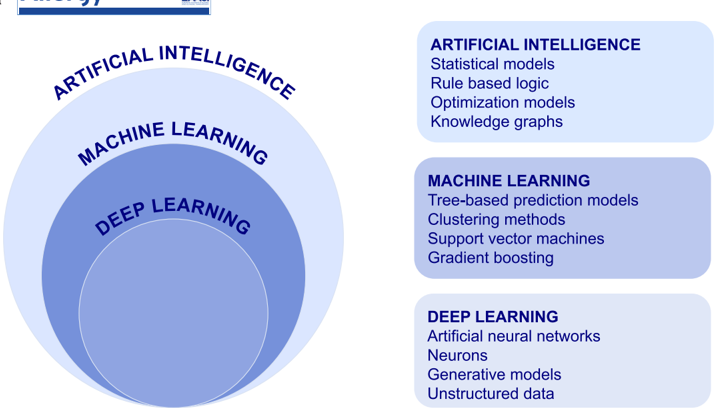
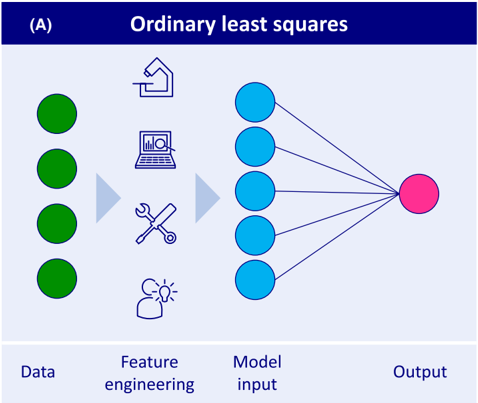
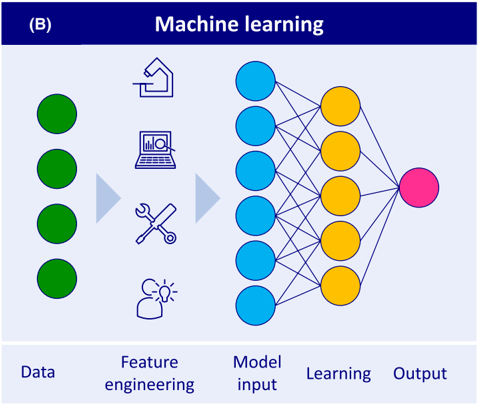
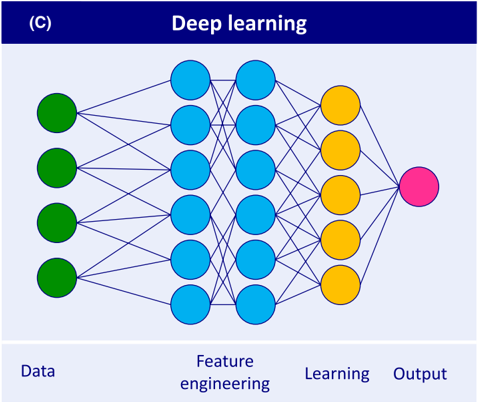
The field of medicine is witnessing an exponential growth of interest in artificial intelligence (AI), which enables new research questions and the analysis of larger and new types of data. Nevertheless, applications that go beyond proof of concepts and deliver clinical value remain rare, especially in the field of allergy. This narrative review provides a fundamental understanding of the core concepts of AI and critically discusses its limitations and open challenges, such as data availability and bias, along with potential directions to surmount them. We provide a conceptual framework to structure AI applications within this field and discuss forefront case examples. Most of these applications of AI and machine learning in allergy concern supervised learning and unsupervised clustering, with a strong emphasis on diagnosis and subtyping. A perspective is shared on guidelines for good AI practice to guide readers in applying it effectively and safely, along with prospects of field advancement and initiatives to increase clinical impact. We anticipate that AI can further deepen our knowledge of disease mechanisms and contribute to precision medicine in allergy.
Overview
The claims and statistics of this paper haven’t been checked yet.
Run the check — free, no account needed. It reads the open-access text and checks the sources it cites.
Integrity signals
Registry
Cites
Statistics
Figures

Verification
Claims the paper makes
The claims and statistics of this paper haven’t been checked yet.
Run the check — free, no account needed. It reads the open-access text and checks the sources it cites.
Claims other papers make about this one
Each is checked against this paper’s own text: does it say what the citing paper says it does?
In the citing paper
“AI-powered clustering algorithms can categorize patients into distinct phenotypes based on their allergic profiles, reaction severities, and immunological markers [239].”
From Pollen–Food Allergy Syndrome: Allergens, Clinical Insights, Diagnostic and Therapeutic Challenges (2024) · cites this paper as [239]
In the citing paper
“Artificial intelligence (AI) and machine learning (ML) are transforming the field of allergy diagnostics by leveraging their ability to analyze complex and multidimensional data sets with speed and precision [239].”
From Pollen–Food Allergy Syndrome: Allergens, Clinical Insights, Diagnostic and Therapeutic Challenges (2024) · cites this paper as [239]
Self-check
Percentages, sums and reported differences re-computed from the paper’s own numbers.
The self-check needs the paper’s full text.
Citations
Cites
LeCun, Y., Bengio, Y., & Hinton, G. (2015) · Nature · doi:10.1038/nature14539 · Cited by 84,126
A Comprehensive Survey on Transfer Learning
Zhuang, F., Qi, Z., Duan, K., Xi, D., Zhu, Y., Zhu, H., Xiong, H., & He, Q. (2021) · Proceedings of the IEEE · doi:10.1109/jproc.2020.3004555 · Cited by 6,678
Moons, K. G. M., Altman, D. G., Reitsma, J. B., Ioannidis, J. P. A., Macaskill, P., Steyerberg, E. W., Vickers, A. J., Ransohoff, D. F., & Collins, G. S. (2015) · Annals of Internal Medicine · doi:10.7326/m14-0698 · Cited by 5,147
The future of digital health with federated learning
Rieke, N., Hancox, J., Li, W., Milletarì, F., Roth, H. R., Albarqouni, S., Bakas, S., Galtier, M. N., Landman, B. A., Maier-Hein, K., et al. (2020) · npj Digital Medicine · doi:10.1038/s41746-020-00323-1 · Cited by 4,015
Rajpurkar, P., Chen, E., Banerjee, O., & Topol, E. J. (2022) · Nature Medicine · doi:10.1038/s41591-021-01614-0 · Cited by 3,212
Artificial intelligence in healthcare
Yu, K.-H., Beam, A. L., & Kohane, I. S. (2018) · Nature Biomedical Engineering · doi:10.1038/s41551-018-0305-z · Cited by 2,817
A Survey on Explainable Artificial Intelligence (XAI): Toward Medical XAI
Tjoa, E., & Guan, C. (2021) · IEEE Transactions on Neural Networks and Learning Systems · doi:10.1109/tnnls.2020.3027314 · Cited by 2,524
Review of Deep Learning Algorithms and Architectures
Shrestha, A., & Mahmood, A. (2019) · IEEE Access · doi:10.1109/access.2019.2912200 · Cited by 1,883
Privacy in the age of medical big data
Price, W. N., & Cohen, I. G. (2019) · Nature Medicine · doi:10.1038/s41591-018-0272-7 · Cited by 1,522
Big data and machine learning algorithms for health-care delivery
Ngiam, K. Y., & Khor, I. W. (2019) · The Lancet Oncology · doi:10.1016/s1470-2045(19)30149-4 · Cited by 1,424
Research works printed but not linked: 180
- 10.1016/S2589-7500(20)30292-2 · DOI · Paper page
- 10.1016/J.IJMEDINF.2022.104828 · DOI · Paper page
- 10.1136/SVN-2017-000101 · DOI · Paper page
- 10.1007/s11936-019-0728-1 · DOI · Paper page
- 10.1186/S12911-019-1004-8/FIGURES/12 · DOI
- 10.1038/NMETH.4642 · DOI · Paper page
- 10.1109/TNNLS.2020.2979670 · DOI · Paper page
- 10.1016/J.INFFUS.2020.09.006 · DOI
- 10.1001/JAMAINTERNMED.2018.7117 · DOI · Paper page
- 10.1001/JAMA.2017.18152 · DOI · Paper page
- 10.1111/AOS.13613 · DOI · Paper page
- 10.1118/1.4967345 · DOI
- 10.1001/JAMAINTERNMED.2022.4969 · DOI
- 10.1093/AJE/KWZ189 · DOI
- 10.1007/S10278-018-0132-5/TABLES/6 · DOI
- 10.2214/AJR.19.21872 · DOI
- 10.1016/J.CHAOS.2020.110059 · DOI · Paper page
- 10.1007/s10916-020-01582-x · DOI
- 10.1016/J.COMPBIOMED.2021.104359 · DOI
- 10.1016/J.HELIYON.2020.E04639 · DOI
- 10.1109/ICDAR.1995.598994 · DOI
- 10.1145/2939672.2939785 · DOI · Paper page
- Ke G, 2017, LightGBM: a highly efficient gradient boosting decision tree, Adv Neural Inf Process Syst, 30, 3147
- 10.3389/FPED.2018.00258 · DOI
- 10.1371/JOURNAL.PONE.0227091 · DOI
- 10.1016/J.JACI.2013.11.042 · DOI
- 10.1017/CBO9780511499531 · DOI
- MacQueenJ.Some methods for classification and analysis of multivariate observations.Proceedings of the Berkeley Symposium on Mathematical Statistics and Probability Source: Project Euclid Journals – Open Access Supplement1967.
- 10.1002/WICS.101 · DOI · Paper page
- 10.1007/BF02289565/METRICS · DOI
- 10.1016/J.MEDIA.2019.03.009 · DOI · Paper page
- 10.1145/3477600 · DOI
- 10.1038/s41591-018-0213-5 · DOI · Paper page
- 10.1136/BJOPHTHALMOL-2018-313173 · DOI · Paper page
- 10.1038/s41591-018-0300-7 · DOI · Paper page
- 10.1098/RSIF.2017.0387 · DOI · Paper page
- JordonJ SzpruchL HoussiauF et al.Synthetic data – what why and how?doi:10.48550/arxiv.2205.03257 · DOI
- 10.1186/S40537-019-0197-0/FIGURES/33 · DOI
- 10.3389/FIMMU.2021.647536/BIBTEX · DOI
- 10.1038/S41586-021-03583-3 · DOI · Paper page
- High‐tech partnership refines artificial intelligence in health care. Accessed December 12 2022.https://www.nature.com/articles/d43978‐022‐00127‐9
- 10.1186/S12911-020-01332-6 · DOI · Paper page
- 10.1109/ACCESS.2021.3127881 · DOI · Paper page
- 10.48550/arxiv.1705.07874 · DOI · Paper page
- RibeiroMT SinghS GuestrinC.Why should I trust you? Explaining the predictions of any classifier.NAACL‐HLT 2016 ‐ 2016 Conference of the North American Chapter of the Association for Computational Linguistics: Human Language Technologies Proceedings of the Demonstrations Session(pp. 97–101)2016. doi:10.48550/arxiv.1602.04938 · DOI · Paper page
- Zhou B, 2016, Learning deep features for discriminative localization, Proc IEEE Conf Comput Vis Pattern Recognit, 2921
- 10.1002/CLT2.12076 · DOI
- 10.1162/NECO.1996.8.7.1341 · DOI
- 10.1016/j.aci.2018.12.004 · DOI
- 10.1001/JAMA.2019.16489 · DOI
- 10.1056/NEJMRA1814259/SUPPL_FILE/NEJMRA1814259_DISCLOSURES.PDF · DOI
- 10.1016/J.PRRV.2021.06.002 · DOI
- 10.1038/s41746-021-00521-5 · DOI · Paper page
- 10.1016/J.ACRA.2021.09.002 · DOI · Paper page
- 10.1016/J.ARTMED.2022.102256 · DOI
- 10.1016/S2589-7500(20)30219-3 · DOI · Paper page
- 10.1259/BJR.20220878 · DOI · Paper page
- 10.1371/JOURNAL.PDIG.0000102 · DOI
- 10.1055/S-0041-1740630/ID/JR21020001-8 · DOI
- 10.1016/J.INS.2021.12.018 · DOI
- Jordon J, 2019, PATE‐GAN: Generating Synthetic Data with Differential Privacy Guarantees
- 10.1145/3457607 · DOI · Paper page
- EPRS | European parliamentary research service. Artificial Intelligence in Healthcare2022. doi:10.2861/568473 · DOI
- DaelVJ EkechiC GardnerA et al.Addressing racial and ethnic inequities in data‐driven health technologies.2022;53. doi:10.25561/94902 · DOI
- 10.2967/jnumed.121.262567 · DOI
- 10.7326/M18-1376/SUPPL_FILE/M18-1376_SUPPLEMENT.PDF · DOI
- BriggsE HollménJ.Mitigating discrimination in clinical machine learning decision support using algorithmic processing techniques.Lecture Notes in Computer Science (Including Subseries Lecture Notes in Artificial Intelligence and Lecture Notes in Bioinformatics)(pp. 19–33)2020. doi:10.1007/978-3-030-61527-7_2/FIGURES/1 · DOI
- 10.1145/3278721.3278779 · DOI · Paper page
- 10.1145/3411764.3445261 · DOI · Paper page
- 10.1147/JRD.2019.2942287 · DOI · Paper page
- 10.48550/arxiv.1711.01134 · DOI
- 10.1007/S13347-022-00506-6/METRICS · DOI
- 10.2471/BLT.19.237487 · DOI · Paper page
- 10.1001/JAMA.2019.4914 · DOI · Paper page
- 10.1016/J.JAIP.2022.01.047 · DOI
- 10.1186/s12916-019-1426-2 · DOI · Paper page
- 10.1159/000511930 · DOI
- 10.1038/S41746-020-00333-Z · DOI · Paper page
- 10.1080/17476348.2021.1894133 · DOI
- 10.1002/CLT2.12170 · DOI
- 10.1016/J.COMPBIOMED.2018.10.035 · DOI
- 10.1136/BMJRESP-2019-000524 · DOI
- 10.1038/s41467-022-35088-6 · DOI
- 10.1016/j.jaci.2015.12.771 · DOI
- 10.1371/JOURNAL.PONE.0218253 · DOI
- 10.1016/J.JACI.2020.02.031 · DOI
- 10.1542/PEDS.2020-0421 · DOI
- 10.1111/ALL.13502 · DOI
- 10.1371/JOURNAL.PONE.0247784 · DOI
- 10.1034/J.1399-3038.13.S.15.3.X · DOI
- 10.1109/IPAS50080.2020.9334929 · DOI
- 10.1016/J.COMPBIOMED.2022.105807 · DOI
- 10.1504/IJMEI.2020.105656 · DOI
- 10.1007/978-3-030-52791-4_3 · DOI · Paper page
- 10.1038/S41598-020-64937-X · DOI
- 10.1111/ALL.12397 · DOI
- 10.1016/J.JACI.2021.02.034 · DOI
- 10.1136/BMJHCI-2021-100423 · DOI
- 10.1016/j.neunet.2019.01.012 · DOI · Paper page
- 10.1111/NYAS.13218 · DOI
- 10.1016/J.AJEM.2018.06.062 · DOI
- 10.1111/ACEM.13655 · DOI
- 10.1016/J.CHEST.2020.12.051 · DOI
- 10.1016/J.JAIP.2018.02.004 · DOI
- 10.1080/02770903.2020.1802746 · DOI
- 10.1016/j.jaci.2019.12.231 · DOI
- 10.1371/JOURNAL.PONE.0255261 · DOI · Paper page
- 10.2147/JAA.S377631 · DOI
- 10.1186/S13601-020-00366-3/METRICS · DOI
- 10.1080/17476348.2019.1554438 · DOI
- 10.2196/26993 · DOI
- 10.1109/EMBC44109.2020.9175679 · DOI
- 10.1109/SMARTCOMP.2019.00043 · DOI · Paper page
- 10.2147/JAA.S285742 · DOI
- 10.1111/ALL.15632 · DOI
- 10.3389/FDGTH.2022.750226/FULL · DOI
- 10.3390/S23062964 · DOI
- 10.1159/000436968 · DOI
- 10.1007/S10661-019-7428-X/METRICS · DOI
- 10.1007/S00484-020-02047-Z/METRICS · DOI
- 10.1007/s12016-018-8712-1 · DOI
- 10.1136/thx.2007.093187 · DOI
- 10.1164/ajrccm-conference.2010.181.1_MeetingAbstracts.A6242 · DOI
- 10.1016/j.jaci.2013.05.041 · DOI · Paper page
- 10.1016/j.jaci.2019.10.026 · DOI
- 10.1164/rccm.202003-0820OC · DOI
- 10.1016/j.jaip.2021.02.007 · DOI
- 10.1016/j.jaci.2011.02.002 · DOI
- 10.1164/rccm.201312-2206ED · DOI
- 10.1109/MIS.2015.60 · DOI
- 10.1164/rccm.201810-1956CI · DOI
- 10.1016/j.jaci.2018.10.059 · DOI
- 10.1513/AnnalsATS.201811-837OC · DOI
- 10.1164/rccm.202108-1821OC · DOI
- HaiderS CustovicA.Breaking Down Silos in Asthma Research: the Case for an Integrated Approach.Innovations2019. · DOI
- 10.1016/S2352-4642(22)00304-2 · DOI
- 10.1111/bjd.17879 · DOI
- 10.1111/cea.14139 · DOI
- 10.1111/bjd.19885 · DOI
- 10.1111/bjd.20767 · DOI
- 10.1164/rccm.201307-1198OC · DOI
- 10.1111/cea.13993 · DOI
- 10.1111/cea.14068 · DOI
- 10.1371/journal.pmed.1001748 · DOI
- 10.1111/cea.13485 · DOI
- 10.1007/S11882-015-0542-0 · DOI
- 10.1111/ALL.13745 · DOI
- 10.1007/S12016-020-08787-5/FIGURES/6 · DOI
- 10.1016/J.JACI.2019.05.031 · DOI
- 10.1164/RCCM.201808-1543OC/SUPPL_FILE/DISCLOSURES.PDF · DOI
- 10.1111/ALL.13640 · DOI
- 10.1111/PAI.13620 · DOI
- 10.1164/rccm.202009-3696OC · DOI
- 10.1111/ALL.15390 · DOI
- 10.1016/J.CELREP.2021.108975 · DOI
- 10.3390/JPM12101635/S1 · DOI
- 10.1111/ALL.14632 · DOI · Paper page
- 10.1038/s41591-023-02327-2 · DOI
- 10.1007/S12257-020-0049-Y · DOI
- 10.1111/ALL.13771 · DOI
- 10.1111/ALL.15412 · DOI
- 10.1093/DATABASE/BAAA010 · DOI · Paper page
- 10.3390/CHILDREN8050376 · DOI
- 10.1016/J.ANAI.2022.05.025 · DOI
- 10.1016/J.XCRM.2022.100857 · DOI
- TanoliZ Vähä‐KoskelaM AittokallioT.Artificial intelligence machine learning and drug repurposing in cancer.2021. doi:10.1080/17460441.2021.1883585 · DOI
- 10.1007/S10462-021-10058-4/TABLES/2 · DOI
- 10.1002/WCMS.1568 · DOI
- 10.1016/J.SEMCANCER.2019.12.011 · DOI
- 10.1002/ADTP.202000034 · DOI
- 10.1016/J.CSBJ.2020.03.025 · DOI
- 10.1016/J.JID.2018.09.018 · DOI
- 10.1136/svn-2019-000323 · DOI
- 10.1016/j.cbpa.2019.10.003 · DOI
- 10.1136/svn-2019-000290 · DOI
- 10.1159/000518032 · DOI
- 10.1155/2022/4653923 · DOI · Paper page
- 10.1016/S2589-7500(20)30102-3 · DOI · Paper page
- 10.1016/S2589-7500(21)00076-5 · DOI · Paper page
- 10.1093/JAMIA/OCAA088 · DOI · Paper page
Cited by
Sorted by citations
Pollen–Food Allergy Syndrome: Allergens, Clinical Insights, Diagnostic and Therapeutic Challenges
Haidar, L., Bănărescu, C. F., Uța, C., Moldovan, S. I., Zimbru, E.-L., Zimbru, R.-I., Ciurariu, E., Georgescu, M., & Panaitescu, C. (2024) · Applied Sciences · doi:10.3390/app15010066 · Cited by 21
Artificial intelligence in the transition of allergy: a valuable tool from childhood to adulthood
Indolfi, C., Klain, A., Dinardo, G., Decimo, F., & Miraglia del Giudice, M. (2024) · Frontiers in Medicine · doi:10.3389/fmed.2024.1469161 · Cited by 5
Metadata
- Authors
- van Breugel, M., Fehrmann, R. S. N., Bügel, M., Rezwan, F. I., Holloway, J. W., Nawijn, M. C., Fontanella, S., Custovic, A., & Koppelman, G. H.
- Affiliations
- Department of Pediatric Pulmonology and Pediatric Allergology, Beatrix Children's Hospital University Medical Center Groningen, University of Groningen Groningen the Netherlands
- Department of Medical Oncology University Medical Center Groningen, University of Groningen Groningen the Netherlands
- MIcompany Amsterdam the Netherlands
- Human Development and Health, Faculty of Medicine University of Southampton Southampton UK
- Groningen Research Institute for Asthma and COPD (GRIAC) University Medical Center Groningen, University of Groningen Groningen the Netherlands
- National Heart and Lung Institute Imperial College London London UK
- Venue
- Allergy
- Publisher
- Wiley
- Published
- 2023-08-16
- Volume
- 78
- Issue
- 10
- Pages
- 2623-2643
- ISSN
- 0105-4538
- 1398-9995
- Cited by
- 43
- References
- 34
- Language
- en
About these checks
Registry, retraction, Cites and statistics results are computed, not judged, with one exception: a printed reference that no index lists is read once by a model before it counts as a citation error. Claims are extracted by a model and kept only when their quote appears verbatim in the text; each cited source is then checked, with a model’s help, for whether it says what the claim relies on. Those verdicts can be wrong — read the claim’s quote and the cited source before relying on one.
Statistics and arithmetic are recomputed, not judged.
Confidence bands are shown only for fields calibrated on our annotated test set. None is calibrated yet, so no band is shown.
What counts as a claim ›How we measure confidence ›How we check this ›
Are you an author, or do you see a problem with this page? Request a review
