

The DOI matches its Crossref record; 95 of the 95 references it cites were found in a registry or an index.
The role of polyphenols in modern nutrition
Open accessAbstract
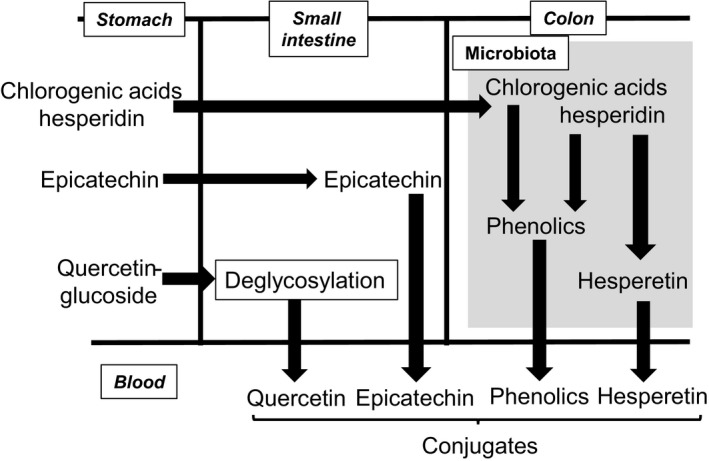
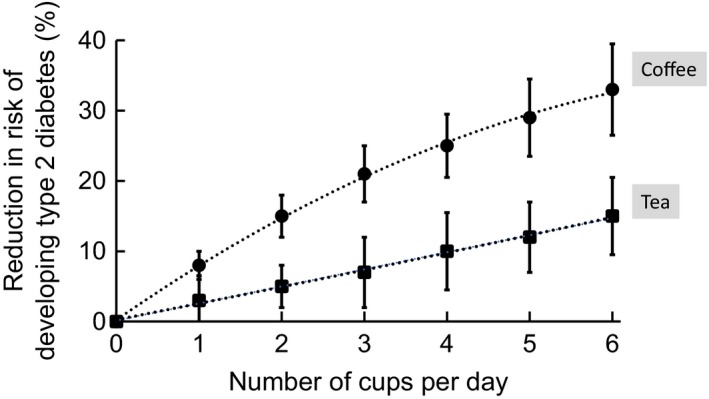
Abstract Polyphenols are found in plant‐based foods and beverages, notably apples, berries, citrus fruit, plums, broccoli, cocoa, tea and coffee and many others. There is substantial epidemiological evidence that a diet high in polyphenol‐rich fruit, vegetables, cocoa and beverages protects against developing cardiovascular disease and type 2 diabetes. The absorption and metabolism of these compounds have been well described and, for many, the gut microbiota play a critical role in absorption; taking into consideration the parent compound and the metabolites from colon bacteria catabolism, more than 80% of a dose can be absorbed and ultimately excreted in the urine. Common polyphenols in the diet are flavanols (cocoa, tea, apples, broad beans), flavanones (hesperidin in citrus fruit), hydroxycinnamates (coffee, many fruits), flavonols (quercetin in onions, apples and tea) and anthocyanins (berries). Many intervention studies, mechanistic in vitro data and epidemiological studies support a role for polyphenols against the development of chronic diseases. For example, flavanols decrease endothelial dysfunction, lower blood pressure and cholesterol, and modulate energy metabolism. Coffee and tea both reduce the risk of developing type 2 diabetes, through action of their constituent polyphenols. Despite extensive research, the exact mechanisms of action of polyphenols in the human body have not been decisively proven, but there is strong evidence that some targets such as nitric oxide metabolism, carbohydrate digestion and oxidative enzymes are important for health benefits. Consumption of polyphenols as healthy dietary components is consistent with the advice to eat five or more portions of fruit and vegetables per day, but it is currently difficult to recommend what ‘doses’ of specific polyphenols should be consumed to derive maximum benefit.
Overview
The claims and statistics of this paper haven’t been checked yet.
Run the check — free, no account needed. It reads the open-access text and checks the sources it cites.
Integrity signals
Registry
Cites
Statistics
Figures
Verification
Claims the paper makes
The claims and statistics of this paper haven’t been checked yet.
Run the check — free, no account needed. It reads the open-access text and checks the sources it cites.
Claims other papers make about this one
Each is checked against this paper’s own text: does it say what the citing paper says it does?
In the citing paper
“Often polyphenols act synergistically with other nutrients to influence glucose homeostasis and cellular processes”
From Mediterranean diet nutrients to turn the tide against insulin resistance and related diseases (2020) · cites this paper as [232]
In the citing paper
“it is uncertain whether isolated supplements would have the maximum effect without eating a variety of whole foods, as in the MedDiet eating pattern [232]”
From Mediterranean diet nutrients to turn the tide against insulin resistance and related diseases (2020) · cites this paper as [232]
In the citing paper
“However, despite representing a novel treatment paradigm for IR and IR-related diseases, polyphenol-based synthetic supplements may have several drawbacks [232].”
From Mediterranean diet nutrients to turn the tide against insulin resistance and related diseases (2020) · cites this paper as [232]
Self-check
Percentages, sums and reported differences re-computed from the paper’s own numbers.
The self-check needs the paper’s full text.
Citations
Cites
Dietary Intake and Bioavailability of Polyphenols
Scalbert, A., & Williamson, G. (2000) · The Journal of Nutrition · doi:10.1093/jn/130.8.2073s · Cited by 3,658 · cited 1×
“Polyphenols belong to the latter and are a diverse group of molecules that are consumed in all diets (Scalbert & Williamson 2000).”
BackgroundSelf-citationDel Rio, D., Rodriguez-Mateos, A., Spencer, J. P. E., Tognolini, M., Borges, G., & Crozier, A. (2013) · Antioxidants & Redox Signaling · doi:10.1089/ars.2012.4581 · Cited by 2,601
Hertog, M. G. L. (1995) · Archives of Internal Medicine · doi:10.1001/archinte.1995.00430040053006 · Cited by 1,853
Phenol-Explorer: an online comprehensive database on polyphenol contents in foods
Neveu, V., Pérez‐Jiménez, J., Vos, F., Crespy, V., Chaffaut, L. D., Mennen, L. I., Knox, C., Eisner, R., Cruz, J., Wishart, D. S., et al. (2010) · Database · doi:10.1093/database/bap024 · Cited by 1,442
Hooper, L., Kroon, P. A., Rimm, E. B., Cohn, J. S., Harvey, I., Le Cornu, K. A., Ryder, J. J., Hall, W. L., & Cassidy, A. (2008) · The American Journal of Clinical Nutrition · doi:10.1093/ajcn/88.1.38 · Cited by 1,097
Absorption of dietary quercetin glycosides and quercetin in healthy ileostomy volunteers
Hollman, P. C. H., de Vries, J., van Leeuwen, S., Mengelers, M. J. B., & Katan, M. (1995) · American Journal of Clinical Nutrition · doi:10.1093/ajcn/62.6.1276 · Cited by 956
Ding, M., Bhupathiraju, S. N., Chen, M., van Dam, R. M., & Hu, F. B. (2014) · Diabetes Care · doi:10.2337/dc13-1203 · Cited by 511 · cited 1×
“Data from systematic reviews and meta-analyses show that the reduction in risk is ~8% for each cup of coffee consumed per day and that this is independent of whether the coffee is decaffeinated or not (Bhupathiraju et al. 2013; Ding et al. 2014).”
BackgroundDietary intake of 337 polyphenols in French adults
Pérez‐Jiménez, J., Fezeu, L., Touvier, M., Arnault, N., Manach, C., Herçberg, S., Galan, P., & Scalbert, A. (2011) · American Journal of Clinical Nutrition · doi:10.3945/ajcn.110.007096 · Cited by 435
Mullen, W., Edwards, C. A., & Crozier, A. (2006) · British Journal Of Nutrition · doi:10.1079/bjn20061809 · Cited by 421
Possible effects of dietary polyphenols on sugar absorption and digestion
Williamson, G. (2012) · Molecular Nutrition & Food Research · doi:10.1002/mnfr.201200511 · Cited by 389
Cited by
Sorted by citations
Items 401–500 of 549
The impact of food and nutraceuticals on human fertility
Farina, M., Maugeri, A., Rapisarda, A., & Navarra, M. (2025) · Food Nutrition · doi:10.1016/j.fnutr.2025.100021 · Cited by 2
Phytochemicals and food safety: natural approaches for microbial control and toxin inactivation
Mazumder, S., Bhattacharya, D., Edinur, H. A., Lahiri, D., & Nag, M. (2025) · Elsevier eBooks · doi:10.1016/b978-0-443-26494-8.00037-9 · Cited by 2
Berezina, E. A., & Kriger, O. V. (2025) · Vestnik MGTU · doi:10.21443/1560-9278-2025-28-4/2-588-601 · Cited by 2
Tiscornia, C., Lorca‐Ponce, E., Estremadoyro, C., Aicardi, V., & Vásquez, F. (2026) · Antioxidants · doi:10.3390/antiox15020204 · Cited by 2
“The species is functionally dioecious, with male and female flowers borne on separate individuals, although incomplete dioecy has been reported, suggesting an ongoing evolutionary transition from hermaphroditism [8,9].”
Yılmaz, A., Park, H.-J., Ahn, E., & Bae, J. (2026) · International Journal of Molecular Sciences · doi:10.3390/ijms27093930 · Cited by 4
“Many studies use concentrations that are not achievable through dietary intake, and circulating forms in vivo frequently consist of conjugated metabolites rather than the parent compounds [190,196].”
InfluentialBIOACTIVE COMPOUNDS, ANTIOXIDANT ACTIVITY AND LIPID CONTENT OF VARIOUS AVOCADO FRUITS
(2022) · Carpathian Journal of Food Science and Technology · doi:10.34302/crpjfst/2022.14.2.4 · Cited by 2
Reyzov, M., Eftimov, M., Gancheva, S., Todorova, M. S., Zhelyazkova-Savova, M., Tzaneva, M. A., & Valcheva-Kuzmanova, S. (2022) · Acta Alimentaria · doi:10.1556/066.2022.00063 · Cited by 2
Kantureyeva, G. O., Мурзабаев, Б., & Raisov, B. О. (2023) · Izdenister natigeler · doi:10.37884/4-2023/30 · Cited by 2
The role of polyphenols in atopic dermatitis: a literature review
Alverina, A. C., & Susanto, M. (2024) · World Nutrition Journal · doi:10.25220/wnj.v07.i2.0013 · Cited by 2
Thomas, D. G., Dyer, P., & Andrews, C. J. (2024) · Journal of Applied Animal Nutrition · doi:10.1163/2049257x-20231001 · Cited by 2
Фанилевич, Г. И., Beylerli, O., Ilyasova, T., & Wang, C. (2024) · Current Hypertension Reviews · doi:10.2174/0115734021334958240903072642 · Cited by 2
Novel Dithiocarbamic Flavanones with Antioxidant Properties—A Structure–Activity Relationship Study
Birsa, M. L., & Sârbu, L. G. (2024) · International Journal of Molecular Sciences · doi:10.3390/ijms252413698 · Cited by 2
“Among these, there are antioxidants that are acquired through dietary sources [8–11].”
Martin, V. V., Dillemans, M., & Laurence, V. N. (2021) · Journal of Probiotics & Health · doi:10.35248/2329-8901.21.9.233 · Cited by 2
Role of Antioxidants Derived from Herbal Medicines: Potential Anticancerous Agents
Ahmad, Q. Z., Rahman, A. U., Nafees, H., & Zaki, Z. (2021) · Springer eBooks · doi:10.1007/978-981-16-4935-6_3 · Cited by 2
Stilbenoids as dietary regulators of the cancer epigenome
Beetch, M., Harandi‐Zadeh, S., Shen, K., & Stefañska, B. (2019) · Elsevier eBooks · doi:10.1016/b978-0-12-816843-1.00021-7 · Cited by 2
Rola kawy w zapobieganiu otępieniu
Zakład Badawczo-Leczniczy Chorób Zwyrodnieniowych CUN, I. M. D. I. K. I. M. M., Barczak, A. K., & Oddział Alzheimerowski, K. N. (2019) · Pediatria i Medycyna Rodzinna · doi:10.15557/pimr.2019.0058 · Cited by 1
“Działanie to przypisywane jest kwaso-wi chlorogenowemu, jednemu z głównych składników kawy (Reis et al. , 2018; Williamson, 2017), ale również samej ko-feinie; stężenie obu substancji wzrasta w procesie palenia kawy (Santos i Lima, 2016).”
RuiRui, Y. A. N. G., XiaoLu, J. I. N., & Qiu, W. E. N. (2020) · Scientia Sinica Vitae · doi:10.1360/ssv-2020-0046 · Cited by 2
Research on the Iron Content in Plant-based Beverages
Volkova, D. A., Smotraeva, I. V., & Balanov, P. E. (2021) · IOP Conference Series Earth and Environmental Science · doi:10.1088/1755-1315/666/4/042030 · Cited by 2
Tea and Wellness throughout Life
Mason, P., & Bond, T. (2021) · Nutrition and Food Technology Open Access · doi:10.16966/2470-6086.172 · Cited by 2
“In general [61], polyphenol-rich diets boost levels of beneficial bacteria, including Lactobacillus, Faecali bacteria and Bacteroides, and decrease potentially pathogenic species such as E.”
BackgroundBatar, N., Öztürk, E. S., Sevdin, S., & Yıldız, N. (2022) · Bariatric Surgical Practice and Patient Care · doi:10.1089/bari.2021.0071 · Cited by 2
“27 There is a broad consensus on the positive effect of the ‘‘Mediterranean diet,’’ which is rich in dietary fiber, antioxidants, polyphenols, cereals, and healthy fat sources on in-flammatory markers, and a protective effect against chronic diseases and inflammation is suggested by adherence to the…”
Pollen and bee bread and liver health
Zakaria, Z., Othman, Z. A., Suleiman, J. B., Nna, V. U., & Mohamed, M. (2022) · Elsevier eBooks · doi:10.1016/b978-0-323-85400-9.00017-4 · Cited by 2
Volodina, S. O., Nekrasova, E. V., Thi, L. V., Ochagova, A. Y., Владимировна, Т. О., & Volodin, V. V. (2023) · chemistry of plant raw material · doi:10.14258/jcprm.20230312150 · Cited by 2
Vieux, F., Maillot, M., & Drewnowski, A. (2024) · Nutrients · doi:10.3390/nu16081118 · Cited by 2
Hawana, S., & Alraei, R. G. (2019) · Journal of Nutrition & Food Sciences · doi:10.4172/2155-9600.1000749 · Cited by 2
Food Sources of Antidiabetic Phenolic Compounds
Hoda, M., Hemaiswarya, S., & Doble, M. (2019) · Springer eBooks · doi:10.1007/978-981-13-8997-9_3 · Cited by 2
Gupta, S. (2020) · DR-NTU (Nanyang Technological University) · doi:10.32657/10356/138687 · Cited by 2
An investigation on the production and stability of chickpea bean sprout beverage
Liu, C., Guo, Y., Cheng, Y., & Qian, H. (2019) · Journal of Food Processing and Preservation · doi:10.1111/jfpp.14143 · Cited by 1
Role of polyphenols in Alzheimer’s disease
Khan, A., Suvaiv, S., Maurya, S. K., Anas, M., Khan, A. A., Samad, A., Yadav, A., & Maaz, M. (2023) · Journal of Phytonanotechnology and Pharmaceutical Sciences · doi:10.54085/jpps.2023.3.1.2 · Cited by 1
Lopes, A. C., D’ÁVILA, C. M. D. S., Mendes, T. D. O., Livinalli, I. C., Bertoncelli, A. C. Z., BORBA, A. K., Viana, A. R., Krause, L. M. F., & Cadoná, F. C. (2024) · International Journal of Health Science · doi:10.22533/at.ed.15947924210810 · Cited by 1
The Impact of Polyphenols on Nutrition and Health
Adal, E., & Aktar, T. (2024) · Turkish Journal of Agriculture - Food Science and Technology · doi:10.24925/turjaf.v12is4.2920-2926.7229 · Cited by 1
Das, S., Goswami, M., Paul, R. K., Yeasin, M., Sarkar, A., Maiti, C. S., Panja, S., Dutta, M., Saikia, J., & Karak, T. (2025) · Food Research International · doi:10.1016/j.foodres.2025.117337 · Cited by 1
Dzib-Cauich, D. A., Caamal, K. G. R., Gutiérrez, E. D. J. C., Can‐Herrera, L. A., Portillo-Salgado, R., Cabal‐Prieto, A., Ramírez‐Rivera, E. D. J., & Oney‐Montalvo, J. E. (2025) · BIOtecnia · doi:10.18633/biotecnia.v27.2695 · Cited by 1
“Studies have shown that a diet rich in these compounds helps prevent chronic degenerative conditions, such as cardiovascular diseases and type 2 diabetes (Williamson, 2017).”
Kabir, S., Noman, M. A. A., Nijhum, A. B., Hossain, M. I., Robin, M. A., Rahman, S., Rana, J., Rahman, A., Karmoker, P., & Mazumder, M. A. R. (2026) · NFS Journal · doi:10.1016/j.nfs.2026.100264 · Cited by 1
Recent trends in postharvest handling, preservation, processing and application of bee pollen
Alemayhu, A., Hailegiorgis, S. M., & Woldemariam, H. W. (2026) · Discover Food · doi:10.1007/s44187-026-00908-x · Cited by 1
Cho, M. S., Lee, Y., Kim, K. D., Choi, M., Park, S. Q., Lee, S.-H., Nam, H.-S., & Lee, Y. (2026) · Life · doi:10.3390/life16040615 · Cited by 1
Bhuiyan, M. N. I. (2026) · Food biomacromolecules. · doi:10.1002/fob2.70068 · Cited by 1
Chen, W., Liu, R., Yan, F., Lu, Q., Xiaoling, Z., Tang, C., Zhang, M., Liu, C., Liu, X., Huang, Y., et al. (2026) · Journal of Future Foods · doi:10.1016/j.jfutfo.2026.05.001 · Cited by 1
Derbyshire, E. J., Abellán-Alemán, J. A., & Aslam, N. (2026) · Nutrients · doi:10.3390/nu18121968 · Cited by 1
“Polyphenols are widely distributed in an array of plant foods but are predominantly found in fruits such as grapes and other berries, cocoa, vegetables, tea, coffee, and other plant foods [64].”
Bayode, M. T., Oguntuase, S. S., Chimezie, J., Okiti, A. F., Oyedeji, E., Ajayi, I., & Adesanya, J. A. (2026) · Frontiers in Natural Products · doi:10.3389/fntpr.2026.1879559 · Cited by 1
Nutrition science past and future: Celebrating a multidisciplined approach
Williams, C. M. (2017) · Nutrition Bulletin · doi:10.1111/nbu.12272 · Cited by 1
Functional Foods and Dietary Supplements
Kuesten, C. L., & Hu, C. (2020) · Springer eBooks · doi:10.1007/978-3-030-14504-0_153 · Cited by 2
PAZZINATO, K., & Cardoso, C. K. D. S. (2019) · Revista de Ciências Médicas · doi:10.24220/2318-0897v28n2a4457 · Cited by 1
Olivera‐Nappa, Á., Contreras, S., Tevy, M. F., Medina-Ortiz, D., Leschot, A., Pilar Vigil, P., & Conca, C. (2022) · Frontiers in Nutrition · doi:10.3389/fnut.2022.831696 · Cited by 1
Effectiveness of food concentrate phenolic compounds of apples in experimental membrane pathologies
Fylymonenko, V. P., Galuzinska, L. V., Kravchenko, G., Кравченко, В. М., Брюханова, Т. О., Малоштан, Л. М., & Литкін, Д. В. (2022) · Regulatory Mechanisms in Biosystems · doi:10.15421/022209 · Cited by 1
“Currently, researchers pay a lot of attention to studies and use of polyphenol natural complexes of plant origin, which reveal a wide range of biological activities (Williamson, 2017).”
BackgroundAktivitas Antivirus Polifenol sebagai Profilaksis dan Terapi Potensial dalam Penanganan Covid-19
Tjahyanto, T., Eldy, E., Felicia, C., Jessica, K. J. K., & Larissa, O. (2022) · Jurnal Health Sains · doi:10.46799/jhs.v3i2.428 · Cited by 1
“Selanjutnya penelitian tentang polifenol berkembang dan dikenal sebagai obat yang melindungi sel-sel dari kerusakan akibat radikal bebas secara umum (Williamson, 2017).”
BackgroundInfluentialNew Trends from Plant Secondary Metabolism in the Pharmaceutical Industry
Oliveira, H., Pérez-Gregório, R., Fernandes, I., Soares, S., de Freitas, V. A. P., & Dias, R. (2023) · Springer eBooks · doi:10.1007/978-3-031-18587-8_25 · Cited by 1
Performances of four Romanian prune cultivars grafted on two rootstocks under the Trident canopy
Iliescu, L. M., Stan, E. G., Peticilă, A. G., MIHAI, C. A., & Stănică, F. (2023) · Acta Horticulturae · doi:10.17660/actahortic.2023.1384.21 · Cited by 1
Polifenoller ve sportif performans üzerindeki etkileri
Tuşat, E., & Parlak, E. (2024) · Toros University Journal of Food Nutrition and Gastronomy · doi:10.58625/jfng-2300 · Cited by 1
Chronotropic, Inotropic, and Lusitropic Effects of Flavonoids
Noguchi, K., Ueda, C., Umeda, S., Kanae, H., Seki, M., Hamaguchi, S., Namekata, I., & Tanaka, H. (2025) · Biological and Pharmaceutical Bulletin · doi:10.1248/bpb.b25-00486 · Cited by 1
Free radicals and coffee polyphenols: Potential applications in toxicity
Merzouk, A. S., & Merzouk, H. (2020) · Elsevier eBooks · doi:10.1016/b978-0-12-819092-0.00036-4 · Cited by 2
Polyphenols and Nutrition: Nanotherapeutic and Immunomodulatory Implications in Cancer
Sherwani, F. A. (2021) · Springer eBooks · doi:10.1007/978-981-16-4935-6_9 · Cited by 1
Role of drinking coffee in the prevention of dementia
Zakład Badawczo-Leczniczy Chorób Zwyrodnieniowych CUN, I. M. D. I. K. I. M. M., Barczak, A. K., & Oddział Alzheimerowski, K. N. (2021) · Psychiatria i Psychologia Kliniczna · doi:10.15557/pipk.2021.0016
The BBSRC‐DRINC Research Programme: Successes and future perspectives
Buttriss, J. L. (2022) · Nutrition Bulletin · doi:10.1111/nbu.12591 · Cited by 1
Anti-noncommunicable diseases attributes of pineapple (Ananas comosus): a concise review
Kumalawati, D. A., Nurkolis, F., Wewengkang, D. S., Permatasari, H. K., Rotinsulu, H., Taslim, N. A., Joseph, V., & Samtiya, M. (2022) · Food Research · doi:10.26656/fr.2017.6(6).887 · Cited by 1
“Seeing the benefits of polyphenols as shown in Table 2, polyphenols are empirically proven to be anti-noncommunicable diseases such as diabetes, obesity, heart disease, cancer, hypertension, and other non-communicable diseases (Cheng et al., 2017; Grosso et al., 2017; Omodanisi et al., 2017; Williamson, 2017; Castro-B…”
BackgroundBarin, A., Das, R. K., Bastani, N. E., Iversen, P. O., & Duttaroy, A. K. (2023) · Research Square · doi:10.21203/rs.3.rs-3043226/v1 · Cited by 1
Barola, A., Bahukhandi, A., Kabdwal, N. C., & Kapoor, T. (2024) · Wiley eBooks · doi:10.1002/9781394186631.ch19 · Cited by 1
Soltani, V., Movahed, A., Bargahi, A., Khamisipour, G., Ostovar, A., Daneshi, A., & Akbarzadeh, S. (2018) · Iranian South Medical Journal · doi:10.29252/ismj.21.2.92
da Silva, C. P. (2018) · Digital Library of Theses and Dissertations (Universidade de São Paulo) · doi:10.11606/t.6.2018.tde-24042018-125449
Interazione caffè-microbiota intestinale: una revisione della letteratura
Condelli, S., & Savio, M. (2018) · PNEI REVIEW · doi:10.3280/pnei2018-002009
Uses and Regulatory Guidelines for Nutraceuticals in China
Sun, J., Jiang, Z., Wang, F., & Gong, L. (2019) · Springer eBooks · doi:10.1007/978-3-030-04624-8_60
Soares, M. J. (2018) · Digital Library of Theses and Dissertations (Universidade de São Paulo) · doi:10.11606/d.6.2018.tde-16102018-142246
“Os compostos não absorvidos no estômago seguem para o intestino delgado, onde os ácidos hidroxicinâmicos livres provenientes dos alimentos são rapidamente absorvidos (Figura 11) (98, 126, 132, 133).”
BackgroundNutritional science: Diet, lifestyle and health
Macdonald, I. A. (2019) · Nutrition Bulletin · doi:10.1111/nbu.12391
Electrical bioimpedance spectroscopy measurement of polyphenols in three Colombian passifloras
Carmona-Hernández, J. C., Cabrera-López, J. J., González-Correa, C. H., & Velasco-Medina, J. (2019) · Journal of Physics Conference Series · doi:10.1088/1742-6596/1272/1/012016
Lutsky, E., FEDOROVICH, S. V., Vyalkov, V. V., & Sundyreva, M. A. (2020) · BIO Web of Conferences · doi:10.1051/bioconf/20202502013
Beneficial effects of polyphenols in metabolic syndrome—a review
Reyzov, M., & Valcheva-Kuzmanova, S. (2021) · Scripta Scientifica Medica · doi:10.14748/ssm.v0i0.7578
“10 Scripta Scientifica Medica, 2021;53(3):9-20 Medical University of Varna Beneficial Effects of Polyphenols in Metabolic Syndrome—a Review”
BackgroundInfluentialAn investigation of the voltammetric behaviour of antioxidants in flavonoids
Ramsarup, L.-A. (2020) · doi:10.51415/10321/3603
COVID-19 Pandemic and Mental Illness: Impact of Gut Microbiota
Rishi, P., Kaur, A., & Kaur, H. (2021) · Springer eBooks · doi:10.1007/978-981-16-5105-2_20
Острые дистрофии миокарда при обострении холецистита
Bk, P., Шелепин, А. А., & Stepanov, N. V. (2001) · Вестник Российского университета дружбы народов. Серия: Медицина
Petrov, N. A., Sidorova, Y., Kochetkova, A. A., & Mazo, V. K. (2022) · KnE Life Sciences · doi:10.18502/kls.v7i1.10128
Functional Foods and Dietary Supplements
Kuesten, C. L., & Hu, C. (2019) · Springer eBooks · doi:10.1007/978-3-319-75388-1_153-1
Camiletti, O. F., & Grosso, N. R. (2022) · Elsevier eBooks · doi:10.1016/b978-0-12-823960-5.00016-0
Application of Liquid Chromatography in Food Analysis
(2020) · MDPI eBooks · doi:10.3390/books978-3-03943-363-6
Akinjayeju, O. (2022) · International Journal of Food Science Nutrition and Dietetics · doi:10.19070/2326-3350-22000100
Kotik, M., Javůrková, H., Brodsky, K., & Pelantová, H. (2021) · Research Square · doi:10.21203/rs.3.rs-957579/v1
SCREENING OF CONTAINS OF ANTIOXIDANTS IN TRADITIONAL WINES OF THE TRANSCARPATHIAN REGION
Pomazanova, A. I., Sukhareva, O. Y., & Sukharev, S. (2022) · Scientific Bulletin of the Uzhhorod University Series «Chemistry» · doi:10.24144/2414-0260.2022.1.99-104
“Серед антиоксидантів одними із найбільш поширених є поліфеноли [7-9], основними джерелами яких є фрукти, ягоди та овочі [1012].”
Nutrazeutika in Prävention und Gesundheitsförderung
Buchart, K. (2022) · Springer eBooks · doi:10.1007/978-3-662-64744-8_6
Agnissan, A. A., Akakpo-Akue, J., Dakia, P. A., Bognean, D. G. G., Disseka, W. K., Djaman, A. J., & Brou, K. (2022) · European Journal of Food Science and Technology · doi:10.37745/ejfst.2013/vol10n41023
Buchart, K. (2022) · Springer eBooks · doi:10.1007/978-3-662-64744-8_5
Design and validation of a self-reported dietary polyphenol intake frequency questionnaire.
Guzmán, C., & Jara, F. F. (2023) · Nutrición Hospitalaria · doi:10.20960/nh.04491
Adhikari, D., Biswas, J., De, B., & Pathak, B. K. (2023) · Current Traditional Medicine · doi:10.2174/2215083810666230823094940
Ferrari, I. V., & Patrizio, P. (2023) · Preprints.org · doi:10.20944/preprints202312.1353.v1
Universitāte, L., & Salmiņa, A. (2024) · Elementum · doi:10.22364/lu.szk.4.rk.14
“Neskatoties uz bioloģisko aktivitāti, polifenolu izmantošanas iespējas ierobežo to ne-stabilitāte, ko izraisa dažādi ārējie faktori [Williamson 2017: 226–235; González et al. 2020: 129].”
Sociālo tīklu loma profesionālo sportistu karjeras attīstībā
Universitāte, L., & Straume, M. (2024) · doi:10.22364/lu.szk.4.rk.15
Universitāte, L., & padome, L. S. (2024) · doi:10.22364/lu.szk.4.rk
Functional Foods and Dietary Supplements
Kuesten, C. L., & Hu, C. (2024) · Springer eBooks · doi:10.1007/978-3-319-75388-1_153-2
Seher, S. S., & Ali, N. A. (2024) · Advances in medical diagnosis, treatment, and care (AMDTC) book series · doi:10.4018/979-8-3693-1986-4.ch008 · Cited by 1
Polyphenols of Triberry in Dietary Supplements and Health Care
Poltronieri, P., Sasikala, S., & Narasimhan, S. (2024) · Wiley eBooks · doi:10.1002/9781394203932.ch19
Dietary components as epigenetic modifiers and their roles in cancer prevention
Thakur, C., & Saran, U. (2024) · Elsevier eBooks · doi:10.1016/b978-0-443-13209-4.00010-6
French Paradox: A Role for Akt Activation
Gallyas, F., Bock-Marquette, I., Tóth, K., & Halmosi, R. (2024) · Advances in biochemistry in health and disease · doi:10.1007/978-3-031-62806-1_20
Bee pollen, from the flower to the harvest, and its potential therapeutic properties
Serri, E., Galosi, L., Rossi, G., Cerbo, A. D., Roncarati, A., & Angorini, A. (2024) · Elsevier eBooks · doi:10.1016/b978-0-443-13510-1.00006-2
Towards natural polymers and nanoparticles as nanotherapies to combat COVID-19
Mapengo, C. R. (2024) · Elsevier eBooks · doi:10.1016/b978-0-443-18757-5.00004-9
Polyphenol effects in pathologies related to cerebral stroke
Romero-Bernal, M., González-Díaz, Á., Nájar, A. M., del Río, C., & Montaner, J. (2025) · Elsevier eBooks · doi:10.1016/b978-0-443-13821-8.00006-8
Birsa, M. L., & Sârbu, L. G. (2025) · Molecules · doi:10.3390/molecules30112280
Wilson, D. W., Griffiths, K., Meester, F. D., Takahashi, T., Rb, S., Buttar, H. S., & Sak, K. (2025) · Elsevier eBooks · doi:10.1016/b978-0-443-22300-6.00009-7
Comprehensive review on nutritional values of Urtica simensis Hochst. ex A. Rich
Sume, B. W., Asres, K., & Seyoum, G. (2025) · CABI Agriculture and Bioscience · doi:10.1079/ab.2025.0067
Stegmüller, S., Huber, M., Rahn, C., Bakuradze, T., Galan, J., & Richling, E. (2025) · International Journal of Molecular Sciences · doi:10.3390/ijms26199417
“Polyphenols have been demonstrated to impact triglyceride metabolism via several mechanisms, including the activation of AMP-activated protein kinase (AMPK) and the inhibition of de novo lipogenesis [26,27].”
The Mediterranean diet and its effects on fatigue
Arslan, S., & Aydın, A. (2025) · Elsevier eBooks · doi:10.1016/b978-0-443-24080-5.00050-3
Anti-inflammatory and antioxidant properties of secondary metabolites in metabolic health
Rehman, K., & Akash, M. S. H. (2025) · Elsevier eBooks · doi:10.1016/b978-0-443-44135-6.00015-2
Functional Foods in Cancer Prevention: Mechanisms, Evidence, and Future Directions
Kudalkar, S., Arya, S., & Pradhan, M. (2025) · International Journal of Research and Review · doi:10.52403/ijrr.20251138
Metadata
- Authors
- Williamson, G.
- Affiliations
- University of Leeds (GB)
- Corresponding author
- Williamson, G.
- ORCID
- Williamson, G.
- Venue
- Nutrition Bulletin
- Publisher
- Wiley
- Published
- 2017-08-15
- Volume
- 42
- Issue
- 3
- Pages
- 226-235
- ISSN
- 1467-3010 (ISSN-L)
- 1471-9827
- PMC
- PMC5601283
- OpenAlex
- W2749105166
- Cited by
- 551
- References
- 95
- Citations by year
- 2026: 62 · 2025: 55 · 2024: 54 · 2023: 61 · 2022: 79 · 2021: 71 · 2020: 71 · 2019: 62 · 2018: 32 · 2017: 3
- FWCI
- 5.25
- Type
- journal article
- Language
- en
- Open access
- hybrid
- doi.org
- Licence
- Locations
- Nutrition Bulletin (publishedVersion, cc-by)
- Europe PMC (PubMed Central) (publishedVersion, cc-by)
- PubMed Central (publishedVersion, cc-by)
- PubMed (publishedVersion)
- White Rose Research Online (University of Leeds, The University of Sheffield, University of York) (acceptedVersion)
- Funders
- European Research Council (POLYTRUE? 322467)
- Biotechnology and Biological Sciences Research Council (DRINC BB/M027406/1)
- Topics
- Health Sciences › Medicine › Biochemistry (medical) › Phytochemicals and Antioxidant Activities
- Health Sciences › Medicine › Public Health, Environmental and Occupational Health › Nutritional Studies and Diet
- Health Sciences › Nursing › Nutrition and Dietetics › Pomegranate: compositions and health benefits
- Keywords
- polyphenols, dietary polyphenols, cardiovascular disease, type 2 diabetes, gut microbiota, flavan-3-ols, flavonoids, hydroxycinnamic acids, anthocyanins, Theobroma cacao, tea, coffee, fruit and vegetable intake, endothelial dysfunction, nitric oxide, oxidative enzymes, chronic disease prevention
About these checks
Registry, retraction, Cites and statistics results are computed, not judged, with one exception: a printed reference that no index lists is read once by a model before it counts as a citation error. Claims are extracted by a model and kept only when their quote appears verbatim in the text; each cited source is then checked, with a model’s help, for whether it says what the claim relies on. Those verdicts can be wrong — read the claim’s quote and the cited source before relying on one.
Statistics and arithmetic are recomputed, not judged.
Confidence bands are shown only for fields calibrated on our annotated test set. None is calibrated yet, so no band is shown.
What counts as a claim ›How we measure confidence ›How we check this ›
Are you an author, or do you see a problem with this page? Request a review
