

The DOI matches its Crossref record; 6 of the 6 references it cites were found in a registry or an index.
The nuclear DICER–circular RNA complex drives the deregulation of the glioblastoma cell microRNAome
Abstract
A novel circRNA withholds the microRNA assembly line by arresting the manufacturing foreman in the nucleus of a cancer cell.
Overview
The claims and statistics of this paper haven’t been checked yet.
Run the check — free, no account needed. It reads the open-access text and checks the sources it cites.
Integrity signals
Registry
Cites
Statistics
Figures
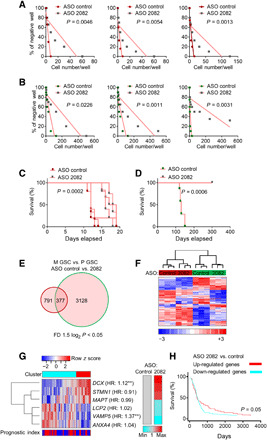
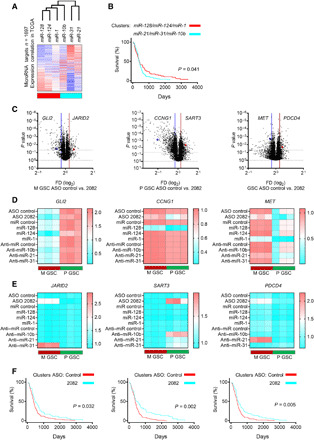
Verification
Claims the paper makes
The claims and statistics of this paper haven’t been checked yet.
Run the check — free, no account needed. It reads the open-access text and checks the sources it cites.
Claims other papers make about this one
Each is checked against this paper’s own text: does it say what the citing paper says it does?
The source backs part of the claim, not all of it — or backs it for a different population, condition or comparison.
In the citing paper
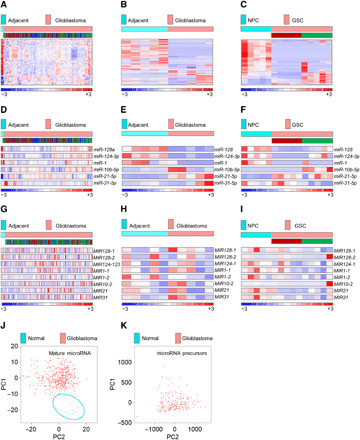
“(better outcomes: miR-128-3p, miR-124-3p, and miR-1; worse”
From MiR-128-3p – a gray eminence of the human central nervous system (2024) · cites this paper as [45]
Experimental — accuracy not yet measuredThe source backs part of the claim, not all of it — or backs it for a different population, condition or comparison.
In the citing paper
“MicroRNAs particularly enriched in the normal brain, such as miR-128-3p, are almost universally suppressed in glioblastoma cells, regardless of their cellular subtype.45,126,130,211”
From MiR-128-3p – a gray eminence of the human central nervous system (2024) · cites this paper as [45]
Experimental — accuracy not yet measuredThe cited source says what the claim attributes to it.
In the citing paper
“What is more, a correlation of expression between genes and microRNAs (according to The Cancer Genome Atlas glioblastoma dataset) revealed a correlation signature of ∼1700 genes that were either positively or negatively associated with microRNAs”
From MiR-128-3p – a gray eminence of the human central nervous system (2024) · cites this paper as [45]
The cited source says what the claim attributes to it.
In the citing paper
“and stratified the samples into two clusters with the power of outcome prediction”
From MiR-128-3p – a gray eminence of the human central nervous system (2024) · cites this paper as [45]
In the citing paper
“The miR-128-3p depletion in glioblastoma tissue and cells is most likely caused by the disrupted activity of microRNA processing machinery45”
From MiR-128-3p – a gray eminence of the human central nervous system (2024) · cites this paper as [45]
In the citing paper
“Interestingly, among targets of the same miR-128-3p that play a role in maintaining neuronal tissue-specific gene expression are also those that drive cancer-specific microRNAome signature in brain tumors45 (Figure S2A).”
From MiR-128-3p – a gray eminence of the human central nervous system (2024) · cites this paper as [45]
In the citing paper
“worse outcomes miR-10b-5p, miR-31-5p, and miR-21-5p).45”
From MiR-128-3p – a gray eminence of the human central nervous system (2024) · cites this paper as [45]
Self-check
Percentages, sums and reported differences re-computed from the paper’s own numbers.
The self-check needs the paper’s full text.
Citations
Cites
Circular RNAs in the Mammalian Brain Are Highly Abundant, Conserved, and Dynamically Expressed
Rybak-Wolf, A., Stottmeister, C., Glažar, P., Jens, M., Pino, N., Giusti, S., Hanan, M., Behm, M., Bartok, O., Ashwal-Fluss, R., et al. (2015) · Molecular Cell · doi:10.1016/j.molcel.2015.03.027 · Cited by 2,423
Enuka, Y., Lauriola, M., Feldman, M. E., Sas-Chen, A., Ulitsky, I., & Yarden, Y. (2016) · Nucleic Acids Research · doi:10.1093/nar/gkv1367 · Cited by 757 · cited 2×
“CircRNAs have been shown to be long lived in vivo when compared to their linear counterparts, given that the bulk of RNA turnover involves exonucleases ( 17 ).”
MicroRNA-21 Targets a Network of Key Tumor-Suppressive Pathways in Glioblastoma Cells
Papagiannakopoulos, T., Shapiro, A., & Kosik, K. S. (2008) · Cancer Research · doi:10.1158/0008-5472.can-08-1305 · Cited by 705
Direct Conversion of Fibroblasts to Neurons by Reprogramming PTB-Regulated MicroRNA Circuits
Xue, Y., Ouyang, K., Huang, J., Zhou, Y., Ouyang, H., Li, H., Wang, G., Wu, Q., Wei, C., Bi, Y., et al. (2013) · Cell · doi:10.1016/j.cell.2012.11.045 · Cited by 562
Differentiation therapy revisited
de Thé, H. (2018) · Nature reviews. Cancer · doi:10.1038/nrc.2017.103 · Cited by 462
MicroRNAs as Regulators of Differentiation and Cell Fate Decisions
Ivey, K. N., & Srivastava, D. (2010) · Cell Stem Cell · doi:10.1016/j.stem.2010.06.012 · Cited by 449
Research works printed but not linked: 46
- 10.1093/nar/gkz097 · DOI · Paper page
- 10.1016/j.cell.2013.03.043 · DOI · Paper page
- 10.1016/S0092-8674(03)01018-3 · DOI · Paper page
- 10.1038/nature09092 · DOI · Paper page
- 10.1038/nature03702 · DOI
- 10.1007/978-3-030-14366-4_1 · DOI
- 10.1016/j.cell.2019.06.024 · DOI · Paper page
- 10.1073/pnas.1221478110 · DOI
- 10.1126/science.1254257 · DOI · Paper page
- 10.1016/j.celrep.2017.05.040 · DOI · Paper page
- 10.1016/j.ccell.2015.07.013 · DOI
- 10.1016/j.celrep.2016.05.018 · DOI
- 10.1016/j.cell.2018.05.022 · DOI
- 10.1038/nature11928 · DOI · Paper page
- 10.1038/nature11993 · DOI · Paper page
- 10.1038/onc.2017.361 · DOI
- 10.1186/1741-7015-6-14 · DOI · Paper page
- 10.1158/0008-5472.CAN-13-2650 · DOI · Paper page
- 10.1038/s41467-019-08390-z · DOI · Paper page
- 10.1016/j.stemcr.2017.04.024 · DOI
- 10.1093/nar/gkv328 · DOI
- 10.1371/journal.pone.0028446 · DOI
- 10.18632/oncotarget.14755 · DOI
- 10.1158/0008-5472.CAN-18-2170 · DOI
- 10.3892/ijo.2017.3946 · DOI
- 10.1016/j.yexcr.2013.07.031 · DOI
- 10.15252/emmm.201505495 · DOI
- 10.1186/1756-9966-27-85 · DOI
- 10.1038/nrc.2017.99 · DOI
- 10.1136/jclinpath-2011-200496 · DOI
- 10.1371/journal.pgen.1006095 · DOI
- 10.1038/s41580-018-0059-1 · DOI
- 10.1002/1878-0261.12468 · DOI
- M. Zhao, S. Wang, Q. Li, Q. Ji, P. Guo, X. Liu, MALAT1: A long non-coding RNA highly associated with human cancers. Oncol. Lett. 16, 19–26 (2018).
- 10.3390/ncrna5010025 · DOI
- 10.1016/j.celrep.2015.04.016 · DOI
- 10.1016/j.molcel.2010.02.018 · DOI
- 10.1007/978-1-4939-7562-4_6 · DOI
- 10.1158/0008-5472.CAN-08-2629 · DOI · Paper page
- 10.1073/pnas.1314085111 · DOI · Paper page
- 10.1038/nmeth.2089 · DOI · Paper page
- 10.1093/neuonc/now247 · DOI
- 10.1371/journal.pone.0101239 · DOI
- 10.5114/fn.2018.74657 · DOI
- 10.1016/j.molcel.2018.11.035 · DOI
- 10.1016/j.ccr.2009.12.020 · DOI · Paper page
Cited by
Sorted by citations
MiR-128-3p – a gray eminence of the human central nervous system
Kiel, K., Król, S. K., Bronisz, A., & Godlewski, J. (2024) · Molecular Therapy Nucleic Acids · doi:10.1016/j.omtn.2024.102141 · Cited by 15
Self-citation
Metadata
- Authors
- Bronisz, A., Rooj, A. K., Krawczyński, K., Peruzzi, P., Salińska, E., Nakano, I., Purow, B., Chiocca, E. A., & Godlewski, J.
- Affiliations
- Department of Neurosurgery, Brigham and Women’s Hospital, Harvard Medical School, Boston, MA, USA.
- Department of Neurochemistry, Mossakowski Medical Research Centre of Polish Academy of Sciences, Warsaw, Poland.
- Department of Neurosurgery, University of Alabama, Birmingham, AL, USA.
- Department of Neurology, University of Virginia, Charlottesville, VA, USA.
- Venue
- Science Advances
- Published
- 2020-12-18
- Volume
- 6
- Issue
- 51
- ISSN
- 2375-2548
- PMC
- PMC7744081
- Cited by
- 48
- References
- 6
- Language
- en
- Funders
- National Cancer Institute (1R01 CA176203-01A1, R01NS11614)
- National Science Center Poland (2018/29/B/NZ1/01016)
About these checks
Registry, retraction, Cites and statistics results are computed, not judged, with one exception: a printed reference that no index lists is read once by a model before it counts as a citation error. Claims are extracted by a model and kept only when their quote appears verbatim in the text; each cited source is then checked, with a model’s help, for whether it says what the claim relies on. Those verdicts can be wrong — read the claim’s quote and the cited source before relying on one.
Statistics and arithmetic are recomputed, not judged.
Confidence bands are shown only for fields calibrated on our annotated test set. None is calibrated yet, so no band is shown.
What counts as a claim ›How we measure confidence ›How we check this ›
Are you an author, or do you see a problem with this page? Request a review
How to cite
Cite CoChat for the checks on this page, and the paper for its own findings.
- This page
- CoChat. (2026). Citation check: The nuclear DICER–circular RNA complex drives the deregulation of the glioblastoma cell microRNAome. https://app.cochat.ai/papers/10.1126/sciadv.abc0221
- The paper
- Bronisz, A., Rooj, A. K., Krawczyński, K., Peruzzi, P., Salińska, E., Nakano, I., Purow, B., Chiocca, E. A., & Godlewski, J. (2020). The nuclear DICER–circular RNA complex drives the deregulation of the glioblastoma cell microRNAome. Science Advances. https://doi.org/10.1126/sciadv.abc0221
