

The DOI matches its Crossref record; 14 of the 14 references it cites were found in a registry or an index.
Neutralization of SARS-CoV-2 lineage B.1.1.7 pseudovirus by BNT162b2 vaccine–elicited human sera
Open accessPublished version of a preprint
Abstract
Vaccine protects against B1.1.7 variant: The severe acute respiratory syndrome coronavirus 2 (SARS-CoV-2) B1.1.7 (VOC 202012/01) variant that emerged in late 2020 in the United Kingdom has many changes in the spike protein gene. Three of these are associated with enhanced infectivity and transmissibility, and there are concerns that B.1.1.7 might compromise the effectiveness of the vaccine. Muik et al. compared the neutralization efficacy of sera from 40 subjects immunized with the BioNTech-Pfizer mRNA vaccine BNT162b2 against a pseudovirus bearing the Wuhan reference strain or the lineage B.1.1.7 spike protein (see the Perspective by Altmann et al. ). Serum was derived from 40 subjects in two age groups 21 days after the booster shot. The vaccine remained effective against B.1.1.7 with a slight but significant decrease in neutralization that was more apparent in participants under 55 years of age. Thus, the vaccine provides a significant “cushion” of protection against this variant. Science , this issue p. 1152 ; see also p. 1103
Overview
The claims and statistics of this paper haven’t been checked yet.
Run the check — free, no account needed. It reads the open-access text and checks the sources it cites.
Integrity signals
Registry
Cites
Statistics
Figures
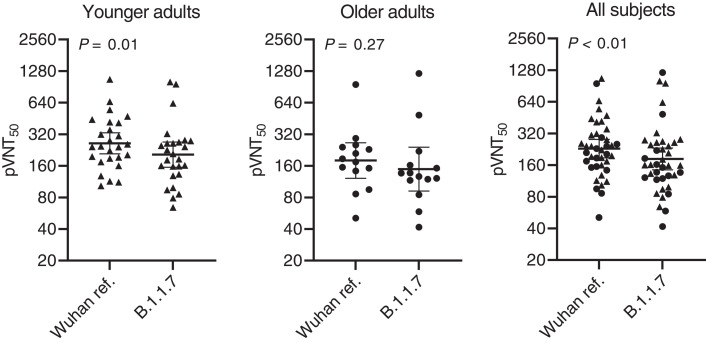
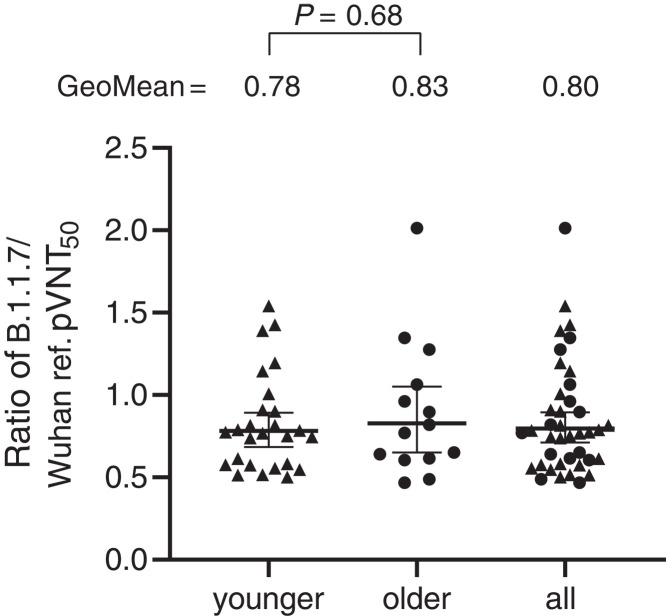
Verification
Claims the paper makes
The claims and statistics of this paper haven’t been checked yet.
Run the check — free, no account needed. It reads the open-access text and checks the sources it cites.
Claims other papers make about this one
Each is checked against this paper’s own text: does it say what the citing paper says it does?
The cited source says what the claim attributes to it.
In the citing paper
“Together with recent reports of the preserved neutralization of SARS-CoV-2 with key S mutations found in the B.1.1.7 and the B.1.351lineage 39,40 , and neutralization of pseudovirus bearing the full set of mutations of B.1.1.7 S 41 , our data indicate broad BNT162b2-elicited immune recognition 2,13,14 .”
From BNT162b2 vaccine induces neutralizing antibodies and poly-specific T cells in humans (2021) · cites this paper as [39]
In the citing paper
“Neutralizing activity of the two mRNA vaccines against the B.1.351 variant has also been observed to be lower, by a factor of 8.6 (mRNA-1273 vaccine [Moderna]) or 6.5 (BNT-162b2 vaccine [Pfizer]) on pseudovirus neutralization assay, than activity against the D614G virus, whereas no difference was evident against the N510Y.V1 (B.1.1.7)–like mutant.19,28,29”
From Efficacy of the ChAdOx1 nCoV-19 Covid-19 Vaccine against the B.1.351 Variant (2021) · cites this paper as [28]
In the citing paper
“As for the ramifications of our findings for the protective efficacy of current SARS-CoV-2 vaccines, the neutralizing activity of sera from vaccinated individuals against B.1.1.7 is largely intact and no adverse effects on current vaccines are expected (Fig. 4c), consistent with conclusions that were reached by other studies 34,40,41 .”
From Antibody resistance of SARS-CoV-2 variants B.1.351 and B.1.1.7 (2021) · cites this paper as [41]
In the citing paper
“In general, the impact of B.1.1.7 mutations on neutralizing antibody titers is moderate.15, 16, 17, 18,20,24”
From Impact of SARS-CoV-2 variants on the total CD4+ and CD8+ T cell reactivity in infected or vaccinated individuals (2021) · cites this paper as [17]
In the citing paper
“Our finding that entry driven by the S protein of the B.1.1.7 variant can be efficiently inhibited by antibodies induced upon infection and vaccination is in agreement with those of Muik and colleagues, who reported that pseudoparticles bearing the B.1.1.7 S protein are efficiently neutralized by sera from BNT162b2-vaccinated individuals (Muik et al., 2021).”
From SARS-CoV-2 variants B.1.351 and P.1 escape from neutralizing antibodies (2021) · cites this paper as Muik et al., 2021
In the citing paper
“The Pfizer Cominarty (also termed BNT162b2) vaccine-elicited human sera neutralizes SARS-CoV-2 lineage B.1.1.7 pseudovirus, with slightly reduced titers in some vaccinees, when compared to the Wuhan reference strain 26,27 .”
From Sensitivity of infectious SARS-CoV-2 B.1.1.7 and B.1.351 variants to neutralizing antibodies (2021) · cites this paper as [26]
In the citing paper
“and to elicit strong antibody responses, effectively neutralizing the parental strain as well as diverse SARS-CoV-2 VOCs (13–15).”
From Neutralization of SARS-CoV-2 Omicron by BNT162b2 mRNA vaccine–elicited human sera (2022) · cites this paper as [13]
In the citing paper
“The neutralization activity of sera collected from both mRNA-1273 and BNT162b2 vaccinated individuals was largely preserved against the B.1.1.7 variant relative to prior variants.”
From The dawn of mRNA vaccines: the COVID-19 case (2021) · cites this paper as [77]
Self-check
Percentages, sums and reported differences re-computed from the paper’s own numbers.
The self-check needs the paper’s full text.
Citations
Cites
Safety and Efficacy of the BNT162b2 mRNA Covid-19 Vaccine
Polack, F. P., Thomas, S. J., Kitchin, N., Absalon, J., Gurtman, A., Lockhart, S., Perez, J. L., Pérez Marc, G., Moreira, E. D., Zerbini, C., et al. (2020) · New England Journal of Medicine · doi:10.1056/nejmoa2034577 · Cited by 14,592
Self-citationStarr, T. N., Greaney, A. J., Hilton, S. K., Ellis, D., Crawford, K. H. D., Dingens, A. S., Navarro, M. J., Bowen, J. E., Tortorici, M. A., Walls, A. C., et al. (2020) · Cell · doi:10.1016/j.cell.2020.08.012 · Cited by 1,956 · cited 1×
“One of these mutations, N501Y, was of particular concern because it is located in the receptor binding site, the spike with this mutation binds more tightly to its cellular receptor, ACE-2 (4); and virus with this mutation has an increased host range that includes mice (5).”
BackgroundMapping the Antigenic and Genetic Evolution of Influenza Virus
Smith, D. J., Lapedes, A. S., de Jong, J. C., Bestebroer, T. M., Rimmelzwaan, G. F., Osterhaus, A. D. M. E., & Fouchier, R. A. M. (2004) · Science · doi:10.1126/science.1097211 · Cited by 1,868
Volz, E., Mishra, S., Chand, M., Barrett, J. C., Johnson, R., Geidelberg, L., Hinsley, W. R., Laydon, D. J., Dabrera, G., O’Toole, Á., et al. (2021) · doi:10.1101/2020.12.30.20249034 · Cited by 1,611 · cited 1×
“7 was detected in the United Kingdom (2), and it subsequently increased in prevalence, showed enhanced transmissibility, and spread to other countries and continents (3).”
BackgroundAssessing transmissibility of SARS-CoV-2 lineage B.1.1.7 in England
The COVID-19 Genomics UK (COG-UK) consortium, Volz, E., Mishra, S., Chand, M., Barrett, J. C., Johnson, R., Geidelberg, L., Hinsley, W. R., Laydon, D. J., Dabrera, G., et al. (2021) · Nature · doi:10.1038/s41586-021-03470-x · Cited by 1,611
BNT162b2 vaccine induces neutralizing antibodies and poly-specific T cells in humans
Sahin, U., Muik, A., Vogler, I., Derhovanessian, E., Kranz, L. M., Vormehr, M., Quandt, J., Bidmon, N., Ulges, A., Baum, A., et al. (2021) · Nature · doi:10.1038/s41586-021-03653-6 · Cited by 919
Self-citationBNT162b2 induces SARS-CoV-2-neutralising antibodies and T cells in humans
Sahin, U., Muik, A., Vogler, I., Derhovanessian, E., Kranz, L. M., Vormehr, M., Quandt, J., Bidmon, N., Ulges, A., Baum, A., et al. (2020) · doi:10.1101/2020.12.09.20245175 · Cited by 914 · cited 2×
“Further, 19 pseudoviruses, each bearing a SARS-CoV-2 S with a different mutation found in circulating strains, were also neutralized as efficiently as nonmutant SARS-CoV-2 S bearing pseudoviruses by BNT162b2-immune sera (7).”
BackgroundMethodSelf-citationAdaptation of SARS-CoV-2 in BALB/c mice for testing vaccine efficacy
Gu, H., Chen, Q., Yang, G., He, L., Fan, H., Deng, Y.-Q., Wang, Y., Teng, Y., Zhao, Z., Cui, Y., et al. (2020) · Science · doi:10.1126/science.abc4730 · Cited by 762 · cited 1×
“One of these mutations, N501Y, was of particular concern because it is located in the receptor binding site, the spike with this mutation binds more tightly to its cellular receptor, ACE-2 (4); and virus with this mutation has an increased host range that includes mice (5).”
BackgroundBNT162b vaccines protect rhesus macaques from SARS-CoV-2
Vogel, A. B., Kanevsky, I., Che, Y., Swanson, K. A., Muik, A., Vormehr, M., Kranz, L. M., Walzer, K. C., Hein, S., Güler, A., et al. (2021) · Nature · doi:10.1038/s41586-021-03275-y · Cited by 694
Self-citationCase, J. B., Rothlauf, P. W., Chen, R. E., Liu, Z., Zhao, H., Kim, A. S., Bloyet, L.-M., Zeng, Q., Tahan, S., Droit, L., et al. (2020) · Cell Host & Microbe · doi:10.1016/j.chom.2020.06.021 · Cited by 410
Cited by
Sorted by citations
Items 401–500 of 518
Boedecker-Lips, S. C., Klimpke, P., Kraus, D., Runkel, S., Galle, P. R., Koch, M., & Weinmann‐Menke, J. (2021) · Pathogens · doi:10.3390/pathogens10040429 · Cited by 5
“show that vaccination are also effective here at least in prevention of severe courses of COVID-19 disease [23,24].”
BackgroundA SARS‐CoV‐2 Neutralization Assay Using Single Molecule Arrays
Gilboa, T., Cohen, L., Cheng, C., Lazarovits, R., Uwamanzu‐Nna, A., Han, I., Griswold, K., Barry, N., Thompson, D. B., Kohman, R. E., et al. (2021) · Angewandte Chemie · doi:10.1002/ange.202110702 · Cited by 5
Mehew, J., Johnson, R., Roberts, D. J., Griffiths, A., & Harvala, H. (2022) · Transfusion Medicine · doi:10.1111/tme.12868 · Cited by 4
Verkhivker, G. M. (2022) · International Journal of Molecular Sciences · doi:10.3390/ijms23031646 · Cited by 5
“7 lineage will not escape BNT162b2-mediated protection [55].”
BackgroundDiversidad genómica en SARS-CoV-2: Mutaciones y variantes
Aguilar–Gamboa, F. R., Suclupe-Campos, D. O., Vega-Fernández, J. A., & Silva-Díaz, H. (2021) · Revista del Cuerpo Médico Hospital Nacional Almanzor Aguinaga Asenjo · doi:10.35434/rcmhnaaa.2021.144.1465 · Cited by 5
Zak, A. J., Hoang, T., Yee, C. M., Rizvi, S. M., Prabhu, P., & Wen, F. (2023) · International Journal of Molecular Sciences · doi:10.3390/ijms241914622 · Cited by 5
“As a result, pseudoviruses [67–69] or VLPs [21,35,36,70] have been used as virus surrogates in neutralization assays.”
Rapid monitoring of SARS-CoV-2 variants of concern through high-resolution melt analysis
Diotallevi, A., Buffi, G., Barocci, S., Ceccarelli, M., Bencardino, D., Andreoni, F., Orlandi, C., Ferri, M., Vandini, D., Menzo, S., et al. (2023) · Scientific Reports · doi:10.1038/s41598-023-48929-1 · Cited by 5
Global research on RNA vaccines for COVID-19 from 2019 to 2023: a bibliometric analysis
Chen, Z., Liu, Z., Feng, Y., Shi, A., Wu, L., Sang, Y., & Li, C. (2024) · Frontiers in Immunology · doi:10.3389/fimmu.2024.1259788 · Cited by 7
Adaptation of the Vaccine Prophylaxis Strategy to Variants of the SARS-CoV-2 Virus
Gulova, S. M., Veselkina, U. S., & Astrakhantseva, I. V. (2025) · Vaccines · doi:10.3390/vaccines13070761 · Cited by 6
Impffortschritt in Deutschland und der Welt: Chancen und Risiken
Grimm, V., Lembcke, F. K., & Schwarz, M. (2021) · Wirtschaftsdienst · doi:10.1007/s10273-021-2894-5 · Cited by 5
“Aktuelle Studi- en deuten darauf hin, dass die Impfstoffe von BioNTech/ Pfi zer und Moderna die Zahl schwerer Infektionsverläufe reduzieren, auch solche, die durch die Mutationen B.1.1.7 und B.1.351 ausgelöst werden (Muik et al., 2021; Wang et al., 2021a; Xie et al., 2021; Dagan et al., 2021).”
BackgroundInfluentialCoronavirus Disease Update on Epidemiology, Virology, and Prevention.
Banava, S., Gansky, S. A., & Reddy, M. S. (2021) · PubMed · Cited by 5
Périnet, S., Cadieux, G., Mercure, S.-A., Drouin, M., & Allard, R. (2022) · JAMA Network Open · doi:10.1001/jamanetworkopen.2021.47042 · Cited by 5
“(%) Residents of Montreal (n = 11 794) Residents of other regions (n = 585) Region of residence not available (n = 1109) Total (n = 13 488) Age, mean (SD) [range], y 43 (8) [16-93] 44 (8) [21-69] 41 (10) [20-76] 43 (8) [16-93] Age group”
Takagi, A., & Matsui, M. (2021) · Microbiology Spectrum · doi:10.1128/spectrum.01659-21 · Cited by 5
L’Huillier, A. G., Ardura, M. I., Chaudhuri, A., Danziger‐Isakov, L. A., Dulek, D. E., Green, M., Michaels, M. G., Posfay-Barbe, K. M., Vásquez, L., & Benden, C. (2021) · Pediatric Transplantation · doi:10.1111/petr.14031 · Cited by 5
Kulus, J., Kulus, M., Stefańska, K., Sobolewski, J., Piotrowska‐Kempisty, H., Mozdziak, P. E., & Kempisty, B. (2021) · Vaccines · doi:10.3390/vaccines9060639 · Cited by 6
“In addition, many other virus variants have been described, including A475V, L452R, V483A, F490L and N234Q, which are less infectious but more resistant to antibodies, which may be important for vaccine efficacy and should be carefully studied [82].”
BackgroundHogan, C. A., Sbihi, H., Jassem, A. N., Prystajecky, N., Tyson, J. R., Lee, T. D., Tsang, F., Ng, C., Janz, L., Romney, M. G., et al. (2021) · medRxiv · doi:10.1101/2021.03.23.21253520 · Cited by 5
Ssemaganda, A., Nguyen, H. M., Nuhu, F., Jahan, N., Card, C. M., Kiazyk, S. A. K., Severini, G., Keynan, Y., Su, R., Ji, H., et al. (2021) · bioRxiv (Cold Spring Harbor Laboratory) · doi:10.1101/2021.05.07.442971 · Cited by 5
Sun, Y., Dong, W., Tian, L., Rao, Y., Qin, C., Jaramillo, S. A., Settles, E. W., Ma, S., Zhang, J., Kang, Y., et al. (2021) · bioRxiv (Cold Spring Harbor Laboratory) · doi:10.1101/2021.06.07.447286 · Cited by 5
“This strain can render SARS-CoV-2 to escape protection from COVID180 19 antibodies or existing vaccines (31).”
BackgroundBrentville, V. A., Vankemmelbeke, M., Metheringham, R. L., Symonds, P., Cook, K., Urbanowicz, R. A., Tsoleridis, T., Coleman, C., Chang, K.-C., Skinner, A., et al. (2021) · bioRxiv (Cold Spring Harbor Laboratory) · doi:10.1101/2021.06.18.448932 · Cited by 5
“In other reports, higher cross-reactivity is retained against the Alpha variant, which has fewer significant mutations within the RBD sequence [60,63].”
BackgroundGenome wide screen of RNAi molecules against SARS-CoV-2 creates a broadly potent prophylaxisPreprint
Yogev, O., Weissbrod, O., Battistoni, G., Bressan, D., Naamti, A., Falciatori, I., Berkyurek, A. C., Rasnic, R., Hosmillo, M. D. T., Ilan, S., et al. (2022) · bioRxiv (Cold Spring Harbor Laboratory) · doi:10.1101/2022.04.12.488010 · Cited by 5
Kuzmina, A., Atari, N., Ottolenghi, A., Korovin, D., Cohen-Lass, I., Rosental, B., Rosenberg, E., Mandelboim, M., & Taube, R. (2022) · bioRxiv (Cold Spring Harbor Laboratory) · doi:10.1101/2022.04.26.489630 · Cited by 5
“Early major variants of concern (VOC) included Alpha [15] and Beta 55 [16, 17] [18-28], that were then dominated by the Delta SARS-CoV-2 that led to severe clinical 56 COVID19 symptoms [29-31].”
BackgroundMuik, A., Lui, B. G., Bacher, M., Wallisch, A.-K., Toker, A., Couto, C. I. C., Güler, A., Mampilli, V., Schmitt, G. J., Mottl, J., et al. (2022) · bioRxiv (Cold Spring Harbor Laboratory) · doi:10.1101/2022.09.21.508818 · Cited by 5
“The relative luciferase units induced by a defined volume of a SARS-CoV-2 wild-type strain S glycoprotein pseudovirus reference batch previously described in Muik et al., 2021 (37), that corresponds to an infectious titer of 200 transducing units (TU) per mL, was used as a comparator.”
MethodSelf-citationINSIGHT OF PANDEMIC COVID-19: DEVELOPMENTS AND CHALLENGES
Muneer, M. A., Arshad, M., Abbas, G., Arshad, M., Munir, K., Iqbal, A., Mustafa, A., Amin, Q., Khan, M. A., Qureshi, R. A., et al. (2023) · Pakistan Journal of Science · doi:10.57041/pjs.v75i1.831 · Cited by 4
Lyski, Z. L., Porter, C., Uhrlaub, J. L., Ellingson, K., Jeddy, Z., Gwynn, L. A., Rivers, P. S., Sprissler, R. S., Hegmann, K. T., Coughlin, M. M., et al. (2023) · Open Forum Infectious Diseases · doi:10.1093/ofid/ofad431 · Cited by 4
Putra, W. F. (2022) · Jurnal Kedokteran Meditek · doi:10.36452/jkdoktmeditek.v28i1.2243 · Cited by 6
Kobayashi, T., & Nishiura, H. (2022) · Mathematical Biosciences & Engineering · doi:10.3934/mbe.2022348 · Cited by 4
Subunit vaccine raised against the SARS‐CoV‐2 spike of Delta and Omicron variants
Sheng, F., Fan, Z., Zhou, K., Ma, S., Liang, M., Zhang, H., Xie, Y., Ha, Z., Jin, N., & Lu, H. (2023) · Journal of Medical Virology · doi:10.1002/jmv.29160 · Cited by 4
Ahmed, N., Athavale, A., Tripathi, A. H., Subramaniam, A., Upadhyay, S. K., Pandey, A. K., Rai, R. C., & Awasthi, A. (2023) · Scandinavian Journal of Immunology · doi:10.1111/sji.13345 · Cited by 4
Ng, D., Pinharanda, A., Vogt, M. C., et al. (2021) · PLoS ONE · doi:10.1371/journal.pone.0257464 · Cited by 4
Neutralization assays for SARS-CoV-2
Mukhopadhyay, L., Gupta, N., Yadav, P. D., & Aggarwal, N. (2022) · The Indian Journal of Medical Research · doi:10.4103/ijmr.ijmr_2544_21 · Cited by 5
Lu, H., Xia, M., Qin, Z., Lu, S., Guan, R., Yang, Y., Miao, C., & Chen, T. (2022) · International Journal of Environmental Research and Public Health · doi:10.3390/ijerph19137814 · Cited by 5
“Variant strains have been found in many countries and regions [2,3], such as India, the United States, France, and Germany, and more studies have shown that variant strains are associated with higher mortality [4].”
BackgroundTwo Years of Evolutionary Dynamics of SARS-CoV-2 in Mexico, With Emphasis on the Variants of Concern
Flores-Alanis, A., Delgado, G., Espinosa-Camacho, L. F., Rodríguez‐Gómez, F., Cruz‐Rangel, A., Sandner-Miranda, L., Cravioto, A., & Morales-Espinosa, R. (2022) · Frontiers in Microbiology · doi:10.3389/fmicb.2022.886585 · Cited by 4
“, 2021), which has been associated with a reduction in the efficacy of both vaccine-induced and natural immunity (Muik et al., 2021; Wang et al., 2021b).”
BackgroundEfficient Inactivation of Enveloped Viruses Using a Nanoparticle-Based Photodynamic Method
Zhang, G., Kuang, L., Liu, Y., et al. (2023) · ACS Applied Nano Materials · doi:10.1021/acsanm.3c02880 · Cited by 3
SARS-CoV-2 vaccination efficacy on hospitalisation and variants
Rozencwajg, S., Blet, A., Lamer, A., et al. (2021) · Anaesthesia Critical Care & Pain Medicine · doi:10.1016/j.accpm.2021.100874 · Cited by 3
Detecting Intact Virus Using Exogenous Oligonucleotide Labels
Carey, T. R., Kozminsky, M., Hall, J. C., et al. (2022) · Analytical Chemistry · doi:10.1021/acs.analchem.2c00835 · Cited by 3
Zhang, T., Wang, Z., Yang, J., & Xu, X. (2023) · Journal of Medical Virology · doi:10.1002/jmv.28563 · Cited by 3
“new waves of transmission occurred and decline in the effectiveness of the first‐generation vaccines have been observed.(3,4) Therefore, optimized vaccines and vaccination strategies, which show advantages in protecting against continu-”
BackgroundEfficacy of COVID-19 Vaccines against the Omicron Variant of SARS-CoV-2: A Review
Rajsri, K. S., Singh, M., & Rao, M. (2023) · Exploratory Research and Hypothesis in Medicine · doi:10.14218/erhm.2023.00023 · Cited by 2
Soon, H. I., Abdullah, A. A., Nishizaki, H., Mashor, . Y., Kamarudin, L. M., Mohamed‐Hussein, Z., Mohamed, Z., & Ang, W. C. (2024) · International Journal of ADVANCED AND APPLIED SCIENCES · doi:10.21833/ijaas.2024.06.023 · Cited by 3
Ge, A., Rioux, M. L., & Kelvin, A. A. (2021) · bioRxiv (Cold Spring Harbor Laboratory) · doi:10.1101/2021.03.25.437035 · Cited by 3
Safety of mRNA-Based Vaccines for SARS CoV-2
Barda, B., & Cerny, A. (2021) · Chemical Research in Toxicology · doi:10.1021/acs.chemrestox.1c00129 · Cited by 2
Zhao, S., Lou, J., Cao, L., Zheng, H., Chong, K. C., Chen, Z., Chan, R. W. Y., Zee, B. C.-Y., Chan, P. K. S., & Wang, M. H. (2021) · BMC Infectious Diseases · doi:10.1186/s12879-021-06729-w · Cited by 2
Reggiani, A., Rugna, G., & Bonilauri, P. (2022) · Frontiers in Veterinary Science · doi:10.3389/fvets.2022.1085613 · Cited by 2
“In any case, even though a second wave was due to Alpha, no significant reduction in vaccine efficacy was linked to this variant (22).”
BackgroundJaishwal, P., Gyaneshwari, U., Jha, K., Pandey, B., Yadav, T. P., & Singh, S. P. (2024) · MedComm – Future Medicine · doi:10.1002/mef2.90 · Cited by 2
Host cell entry efficiency and neutralization sensitivity of the SARS-CoV-2 MC.10.1 variant
Zhang, L., Kempf, A. M., Nehlmeier, I., Chen, N., Graichen, L., Moldenhauer, A.-S., Stankov, M. V., Happle, C., Schulz, S. R., Dopfer‐Jablonka, A., et al. (2025) · Virology · doi:10.1016/j.virol.2025.110675 · Cited by 2
Hossain, M. E., Rahman, M. M., Alam, M. S., Sarmin, M., Karim, Y., Hasan, M., Hoque, A. F., Hasan, M. M., Rahman, M. Z., Chisti, M. J., et al. (2021) · Frontiers in Microbiology · doi:10.3389/fmicb.2021.792514 · Cited by 2
“In addition to N501Y, there is some evidence that the B.1.1.7 variant is unlikely to escape recognition by antibodies generated by prior infection or the vaccines (Collier et al., 2021; Muik et al., 2021).”
BackgroundInfluentialGriffin, A. J., O’Donnell, K. L., Shifflett, K., Lavik, J., Russell, P. M., Zimmerman, M. K., Relich, R. F., & Marzi, A. (2022) · Scientific Reports · doi:10.1038/s41598-022-07960-4 · Cited by 2
Innovation-driven trend shaping COVID-19 vaccine development in China
Zhang, Y., Zhao, Y., Liang, H., Xu, Y. M., Zhou, C., Yao, Y., Wang, H., & Yang, X. (2023) · Frontiers of Medicine · doi:10.1007/s11684-023-1034-6 · Cited by 2
Yi, C., Sun, X., Lin, Y., Gu, C., Ding, L., Lu, X. P., Yang, Z. Y., Zhang, Y., Ma, L., Gu, W., et al. (2021) · Research Square · doi:10.21203/rs.3.rs-497595/v1 · Cited by 2
Immunogenicity and Safety of BNT162b2 mRNA Vaccine in Chinese Adults: A Randomized Clinical TrialPreprint
Hui, A., Li, J., Zhu, L., Tang, R., Ye, H., Lin, M., Ge, L., Wang, X., Peng, F., Wu, Z., et al. (2022) · SSRN Electronic Journal · doi:10.2139/ssrn.4114061 · Cited by 2
Self-citationChamie-Quintero, J. J., Hibberd, J. A., & Scheim, D. E. (2022) · OSF Preprints (OSF Preprints) · doi:10.31219/osf.io/h7zbg · Cited by 2
Osuna‐Martínez, U., Aviña‐Padilla, K., Olimón-Andalón, V., Angulo‐Rojo, C., Guadrón‐Llanos, A. M., Rivas-Ferreira, J. C., Urrea, F., & Calderón-Zamora, L. (2022) · bioRxiv (Cold Spring Harbor Laboratory) · doi:10.1101/2022.10.11.511826 · Cited by 2
“Even with the new development of vaccines and their distribution worldwide, it is likely that we should consider the constant interaction with new, possibly more infectious variants as the "new normality" [20,33,34].”
BackgroundWan, L., Xie, B., Shuda, M., et al. (2024) · bioRxiv (Cold Spring Harbor Laboratory) · doi:10.1101/2024.10.22.619692 · Cited by 2
“Current RNA-based vaccines for severe acute respiratory syndrome coronavirus 2 (SARS-CoV-2) rely on generating neutralizing antibodies to spike (S) entry protein ( 20-23 ).”
BackgroundNandakishore, P., Liu, M., Prakash, R., Gourneni, S., Sukumaran, R., Berman, J. M., Iyer, S., & Glorioso, C. A. (2021) · medRxiv · doi:10.1101/2021.12.06.21267388 · Cited by 2
“7 variant does not appear to raise concerns 19 regarding the vaccine’s efficacy in real world or antibody neutralization 20 studies [4] [5](7,8).”
BackgroundTreatment and therapeutic agents
Akhtar, I. N. (2021) · Elsevier eBooks · doi:10.1016/b978-0-12-824409-8.00002-3 · Cited by 1
Vaccine-induced immune responses against SARS-CoV-2 infections
Garg, M. K., Maralakunte, M., Kumar, Y., Bhujade, H., Sehgal, I. P., Suri, V., & Garg, S. (2021) · Exploration of Immunology · doi:10.37349/ei.2021.00024 · Cited by 1
“Gam-COVIDVac (Sputnik V) [97] Recombinant adenovirus GS 1011 viral particles, 2 doses IM 21 days 100% after 21 days of 1st dose 87.”
MethodTuning the loading position of mRNA onto ionizable neo-liposomes to improve endosomal escape
Qin, Z., Qu, Y., Tian, W., Tao, P., Yang, L., Zhao, R., Ying, Q., Liu, H., Lu, Y., Jiang, Y., et al. (2026) · Cell Biomaterials · doi:10.1016/j.celbio.2025.100339 · Cited by 1
Vaccins COVID-19 : une course contre la montre
Peiffer‐Smadja, N., Rozencwajg, S., Kherabi, Y., Yazdanpanah, Y., & Montravers, P. (2021) · Anesthésie & Réanimation · doi:10.1016/j.anrea.2021.04.006 · Cited by 1
“7 par les sérums immunitaires BNT162b2 rend peu probable l'échappement du variant britannique à la protection médiée par le vaccin BioNTech-Pfizer [15].”
InfluentialSECCION I. Antecedentes de infección por SARS-CoV-2/COVID-19
Trujillo, C. H. S. (2021) · Infectio · doi:10.22354/in.v25i4.971 · Cited by 1
Çimen, A. N., Torabfam, G. Ç., Tok, Y., Yücebağ, E., Arslan, N., Sarıbal, D., Güney-Esken, G., Doğan, Ö., Kuşkucu, M. A., Mete, B., et al. (2024) · Bioanalysis · doi:10.1080/17576180.2024.2411920 · Cited by 1
The impact of SARS-CoV-2 variants on IBD management
Segal, J. P., Kumar, A., Raine, T., et al. (2021) · The Lancet. Gastroenterology & hepatology · doi:10.1016/s2468-1253(21)00075-3 · Cited by 1
Viruses, variants and vaccines
Cowan, D. A., Burton, S. G., Rybicki, E. P., Wiliamson, A.-L., Dorrington, R. A., & Pepper, M. S. (2021) · South African Medical Journal · doi:10.7196/samj.2021.v111i5.15578 · Cited by 1
COVID-19, the Pandemic, and Challenges Associated with Vaccines
Wang, L. (2021) · Open Access Journal of Biogeneric Science and Research · doi:10.46718/jbgsr.2021.09.000228
Marineci, C. D., Valeanu, A., Negreș, S., et al. (2021) · Farmacist ro · doi:10.26416/farm.198.1.2021.4353 · Cited by 1
An Overview of COVID-19 and Its Vaccines
Rehman, N., & Pandey, A. (2021) · Biology Bulletin Reviews · doi:10.1134/s2079086421070069 · Cited by 1
Impact of B.1.617 and RBD SARS-CoV-2 variants on vaccine efficacy: An in-silico approach
Ranjan, P., Neha, N., Devi, C., Jain, G., Mallick, C. B., & Das, P. K. (2022) · Indian Journal of Medical Microbiology · doi:10.1016/j.ijmmb.2022.03.009 · Cited by 1
“7 (alpha) variant does not seem to be a major burden for available vaccines [18,19].”
BackgroundCurrent strategies and future perspectives in COVID-19 therapy
Aravind, S. R., Mathew, K. A., Madathil, B. K., Mini, S., & John, A. P. (2022) · Elsevier eBooks · doi:10.1016/b978-0-323-89972-7.00011-8 · Cited by 1
Série Informação para ação na Covid-19 | Fiocruz
Machado, C. V., Pereira, A. M. M., & de Freitas, C. M. (2022) · Série Informação para ação na Covid-19 | Fiocruz eBooks · doi:10.7476/9786557081594.0001 · Cited by 1
Can we Succeed in the Fight Against SARS-CoV-2 with its Emerging New Variants?
Tavakol, S., Tavakol, H., Alavijeh, M. S., & Seifalian, A. M. (2022) · Current Pharmaceutical Design · doi:10.2174/1381612828666220506142117 · Cited by 1
COVID-19 Vaccine Clinical Trials: A Bird’s Eye Perspective
Chennakesavulu, P. V., Cuddapah, G. V., Keesara, M. R., Inampudi, J. V., Arremsetty, A., Moka, S., & Miryala, S. (2022) · Cureus · doi:10.7759/cureus.28066 · Cited by 1
İslam, M. M., Ademoğlu, E., BAYRAM, S., et al. (2022) · Journal of Experimental and Clinical Medicine · doi:10.52142/omujecm.39.2.46 · Cited by 1
LE VIRUS SARS-COV-2 ET SES VARIANTS
MONETTI, M., Pozzetto, B., PLOTTON, C., & GOCKO, X. (2021) · EXERCER · doi:10.56746/exercer.2021.171.118 · Cited by 1
Chancen und Grenzen mathematischer Modelle in der Pandemiebewältigung
Meyer‐Hermann, M. (2022) · Springer eBooks · doi:10.1007/978-3-662-65688-4_4 · Cited by 1
Review of: "Efficacy of the ChAdOx1 nCoV-19 Covid-19 Vaccine against the B.1.351 Variant"
Lundstrom, K. H. (2021) · Qeios · doi:10.32388/8itiky · Cited by 1
“In pseudovirus assays the activity against B.1.351 was 6,5-fold and 8.6-fold lower for BNT162b2 [11] and mRNA-1273 [12], respectively, compared to the SARS-CoV-2 D614G mutant.”
ResultInfluentialTakagi, A., & Matsui, M. (2021) · bioRxiv (Cold Spring Harbor Laboratory) · doi:10.1101/2021.09.21.461322 · Cited by 1
Nasal prevention of SARS-CoV-2 infection by intranasal influenza-based boost vaccinationPreprint
Zhou, R., Wang, P., Wong, Y.-C., Xu, H., Lau, S.-Y., Liu, L., Mok, B. W.-Y., Peng, Q., Liu, N., Woo, K. F., et al. (2021) · bioRxiv (Cold Spring Harbor Laboratory) · doi:10.1101/2021.10.21.465252 · Cited by 1
“167) from India have become challenges for passive immunotherapy and 492 vaccine-induced protection (19, 44).”
BackgroundMerluza, J., Ung, J., Makowski, K., Robinson, A., Manguiat, K., Mueller, N., Audet, J., Chen, J. C.-Y., Strong, J. E., Wood, H., et al. (2022) · bioRxiv (Cold Spring Harbor Laboratory) · doi:10.1101/2022.09.13.507876 · Cited by 1
Design and Development of mRNA Vaccines to Combat the COVID ‐19 Pandemic
Tombácz, I. (2024) · Wiley eBooks · doi:10.1002/9783527838394.ch8 · Cited by 1
Duration of SARS-CoV-2 Infectivity
Seitz, T., Hasan, K., Christoph, W., & Laferl, H. (2021) · Journal of Cellular Immunology · doi:10.33696/immunology.3.093
Impact of new UK (B.1.1.7) SARS-Cov-2 variant on interacting with ACE2 and host immune response
Paniri, A., Hosseini, M. M., & Akhavan‐Niaki, H. (2021) · Gene Reports · doi:10.1016/j.genrep.2021.101342
“7 variant is more virulent and there are concerns about vaccine efficacy on this variant (Leung et al., 2021; Collier et al., 2021; Wang et al., 2021; Volz et al., 2021; Muik et al., 2021).”
InfluentialPopulation Impact of SARS-CoV-2 Variants with Enhanced Transmissibility and/or Partial Immune EscapePreprint
Bushman, M., Kahn, R. J., Taylor, B. P., Lipsitch, M., & Hanage, W. P. (2021) · SSRN Electronic Journal · doi:10.2139/ssrn.3924614
Are Vaccines Effective in Preventing Variant COVID 19 Disease? A Case of Vaccinated Variant COVID 19
Ertürk, B., Ertürk, Z. K., & Ertürk, Ç. (2021) · Ankara Medical Journal · doi:10.5505/amj.2021.79926
Matsunaga, T., Higashidate, Y., Inazawa, N., Ando, S., & Takahashi, M. (2021) · Cureus · doi:10.7759/cureus.19140
BARREIRA HEMATOENCEFÁLICA, EIXO GASTROINTESTINAL-SNC E INFECÇÃO PELO SARS-COV2
Arnholdt, A. C. V. (2021) · doi:10.22533/at.ed.30721041111
A PESSOA COM DEFICIÊNCIA VISUAL NO CONTEXTO DA PANDEMIA DO COVID-19
Figueiredo, E. L. A., Brandolin, F., Oliveira, I. J. D. A. S., Figueiredo, J. R. M., de Oliveira, J. T. M., & Abade, M. L. (2021) · doi:10.22533/at.ed.30721041115
Insights into Molecular Mechanisms Underlying COVID-19 Pathogenesis and Potential Therapeutics
Ravula, S., Mullaguri, S. C., Akula, S., Silveri, R., & Kancha, R. K. (2021) · Indian Journal of Pharmaceutical Sciences · doi:10.36468/pharmaceutical-sciences.839
“7 also thus indicating their potential to control the pandemic[97,98].”
BackgroundPRÁXIS DA FISIOTERAPIA NA SINDEMIA POR COVID-19: CONTEXTUALIZAÇÃO E PROGNOSE
Pereira, C. M. D. S., Oliveira, I. J. D. A. S., de Oliveira, J. T. M., Fraga, M. C., de Lima, R. P., Ribeiro, S. D. S., & de Souza, M. F. (2021) · doi:10.22533/at.ed.30721041114
FATORES GENÉTICOS E EPIGENÉTICOS RELACIONADOS À COVID-19
Colete, C. C. F. A., Martins, L. M., & Mangiavacchi, P. M. (2021) · doi:10.22533/at.ed.3072104112
Curcio, F. S., da Costa, H. M. V., Rangel, T. L. V., Mangiavacchi, B. M., & Dellatorre, R. D. S. Z. (2021) · doi:10.22533/at.ed.3072104119
Nunes, C. D. R., Curcio, F. S., & Borges, T. R. B. (2021) · doi:10.22533/at.ed.3072104115
Rangel, T. L. V., Curcio, F. S., & da Costa, H. M. V. (2021) · doi:10.22533/at.ed.3072104114
Local occurrence and fast spread of B.1.1.7 lineage: A glimpse into Friuli Venezia Giulia
Mio, C., Secco, C. D., Marzinotto, S., Bruno, C., Pimpo, S., Betto, E., Bertoni, M., Pipan, C., Sozio, E., Tascini, C., et al. (2021) · PLoS ONE · doi:10.1371/journal.pone.0261229
A COVID-19 megelőzésére szolgáló vakcinák összetétele, működési elve
Deli, G., Pataki, Á., Emődy-Kiss, B., Takács, E., Papp, S., & Fent, J. (2020) · Honvédorvos · doi:10.29068/ho.2020.3-4.5-23
“Az eredmények a Pfizer oltás hatékonyságát jelentik [53].”
A systematic review of the variants of Sars-Cov-2
Qureshi, M. F., & Qureshi, S. (2022) · International Journal of Science and Research Archive · doi:10.30574/ijsra.2022.5.2.0050
Verkhivker, G. M., Agajanian, S., Kassab, R., & Krishnan, K. (2022) · bioRxiv (Cold Spring Harbor Laboratory) · doi:10.1101/2022.04.11.487920
Ogura, W., Ohtsuka, K., Matsuura, S., Okuyama, T., Matsushima, S., Yamasaki, S., Miyagi, H., Sekiguchi, K., Ohnishi, H., & Watanabe, T. (2022) · Viruses · doi:10.3390/v14050956
“[22] measured the neutralization efficacy of sera from 40 healthy German individuals immunized with the BNT162b2 vaccine and a 50% inhibitory dilution factor using pseudovirus according to the same meth that was used in the current study.”
MethodMedel-Ramírez, C., Medel-López, H., & Lara-Mérida, J. (2021) · SSRN Electronic Journal · doi:10.2139/ssrn.3973264
SARS-CoV-2 vaccination efficacy on hospitalisation and variants
Rozencwajg, S., Blet, A., Lamer, A., Boisson, M., Clavier, T., & Abou-Arab, O. (2021) · Anaesthesia Critical Care & Pain Medicine · doi:10.1016/j.accpm.2021.100867 · Cited by 1
Huang, X., Li, Z., Luo, L., Ju, X., Huang, S., Liu, J., Zhang, P., Chi, T., Ma, P., Huang, C., et al. (2022) · Research Square · doi:10.21203/rs.3.rs-1566705/v1
Metadata
- Authors
- Muik, A., Wallisch, A.-K., Sänger, B., Swanson, K. A., Mühl, J., Chen, W., Cai, H., Maurus, D., Sarkar, R., Türeci, Ö., Dormitzer, P. R., & Şahin, U.
- Affiliations
- BioNTech (Germany) (DE)
- Pfizer (United States) (US)
- Johannes Gutenberg University Mainz (DE)
- Corresponding author
- Şahin, Uğur
- ORCID
- Venue
- Science
- Published
- 2021-03-12
- Volume
- 371
- Issue
- 6534
- Pages
- 1152-1153
- ISSN
- 0036-8075 (ISSN-L)
- 1095-9203
- PMC
- PMC7971771
- OpenAlex
- W3123108673
- Semantic Scholar
- a28b6633cf65c49f1251702b8e3e3c1b85e19236
- Cited by
- 515
- References
- 12
- Citations by year
- 2026: 4 · 2025: 8 · 2024: 17 · 2023: 34 · 2022: 152 · 2021: 298
- FWCI
- 39.63
- Type
- journal article
- Language
- en
- Open access
- hybrid
- doi.org
- Licence
- Locations
- Science (publishedVersion, cc-by)
- bioRxiv (Cold Spring Harbor Laboratory) (acceptedVersion)
- PubMed Central (publishedVersion, cc-by)
- PubMed (publishedVersion)
- Funders
- Pfizer
- Topics
- Health Sciences › Medicine › Infectious Diseases › SARS-CoV-2 and COVID-19 Research
- Life Sciences › Agricultural and Biological Sciences › Animal Science and Zoology › Animal Virus Infections Studies
- Life Sciences › Biochemistry, Genetics and Molecular Biology › Molecular Biology › vaccines and immunoinformatics approaches
- Keywords
- SARS-CoV-2, B.1.1.7 lineage, BNT162b2, mRNA vaccines, neutralizing antibodies, spike protein mutations, vaccine escape, pseudovirus neutralization
- MeSH terms
- COVID-19, SARS-CoV-2, COVID-19 Vaccines, BNT162 Vaccine, Adult, Aged, Antibodies, Viral, China, Female, United Kingdom, Humans, Male, Middle Aged, Neutralization Tests, Young Adult, Antibodies, Neutralizing, Spike Glycoprotein, Coronavirus
About these checks
Registry, retraction, Cites and statistics results are computed, not judged, with one exception: a printed reference that no index lists is read once by a model before it counts as a citation error. Claims are extracted by a model and kept only when their quote appears verbatim in the text; each cited source is then checked, with a model’s help, for whether it says what the claim relies on. Those verdicts can be wrong — read the claim’s quote and the cited source before relying on one.
Statistics and arithmetic are recomputed, not judged.
Confidence bands are shown only for fields calibrated on our annotated test set. None is calibrated yet, so no band is shown.
What counts as a claim ›How we measure confidence ›How we check this ›
Are you an author, or do you see a problem with this page? Request a review
