

The Candida albicans toxin candidalysin mediates distinct epithelial inflammatory responses through p38 and EGFR-ERK pathways
Open accessThe DOI matches its Crossref record; 97 of the 97 references it cites were found in a registry or an index.
Abstract
The fungal pathogen Candida albicans secretes the peptide toxin candidalysin, which damages epithelial cells and drives an innate inflammatory response mediated by the epidermal growth factor receptor (EGFR) and mitogen-activated protein kinase (MAPK) pathways and the transcription factor c-Fos. In cultured oral epithelial cells, candidalysin activated the MAPK p38, which resulted in heat shock protein 27 (Hsp27) activation, IL-6 release, and EGFR phosphorylation without affecting the induction of c-Fos. p38 activation was not triggered by EGFR but by two nonredundant pathways involving MAPK kinases (MKKs) and the kinase Src, which differentially controlled p38 signaling outputs. Whereas MKKs mainly promoted p38-dependent release of IL-6, Src promoted p38-mediated phosphorylation of EGFR in a ligand-independent fashion. In parallel, candidalysin also activated the EGFR-ERK pathway in a ligand-dependent manner, resulting in c-Fos activation and release of the neutrophil-activating chemokines G-CSF and GM-CSF. In mice, early clearance events of oral C. albicans infection required p38 but not c-Fos. These findings delineate how candidalysin activates the pathways downstream of the MAPKs p38 and ERK that differentially contribute to immune activation during C. albicans infection.
Overview
The claims and statistics of this paper haven’t been checked yet.
Free: it reads the open-access text and checks the first 5 claims that cite a source we can check. Create a free account to check every claim.
Integrity signals
Registry
Cites
Statistics
Figures
Verification
Claims the paper makes
The claims and statistics of this paper haven’t been checked yet.
Free: it reads the open-access text and checks the first 5 claims that cite a source we can check. Create a free account to check every claim.
Self-check
Percentages, sums and reported differences re-computed from the paper’s own numbers.
The self-check needs the paper’s full text.
Citations
Cites
QuPath: Open source software for digital pathology image analysis
Bankhead, P., Loughrey, M. B., Fernández, J. A., Dombrowski, Y., McArt, D. G., Dunne, P. D., McQuaid, S., Gray, R. T., Murray, L. J., Coleman, H. G., et al. (2017) · Scientific Reports · doi:10.1038/s41598-017-17204-5 · Cited by 8,908
Hidden Killers: Human Fungal Infections
Brown, G. D., Denning, D. W., Gow, N. A. R., Levitz, S. M., Netea, M. G., & White, T. C. (2012) · Science Translational Medicine · doi:10.1126/scitranslmed.3004404 · Cited by 4,284
Activation and function of the MAPKs and their substrates, the MAPK-activated protein kinases
Cargnello, M., & Roux, P. P. (2011) · Microbiology and Molecular Biology Reviews · doi:10.1128/mmbr.00031-10 · Cited by 3,274
CELLULAR FUNCTIONS REGULATED BY SRC FAMILY KINASES
Thomas, S. M., & Brugge, J. S. (1997) · Annual Review of Cell and Developmental Biology · doi:10.1146/annurev.cellbio.13.1.513 · Cited by 2,498 · cited 1×
“In addition, phosphorylation of SFKs at a canonical site in the Src activation loop, Tyr416, (55) did not occur following candidalysin stimulation (fig.”
BackgroundOlayioye, M. A. (2000) · The EMBO Journal · doi:10.1093/emboj/19.13.3159 · Cited by 2,434 · cited 1×
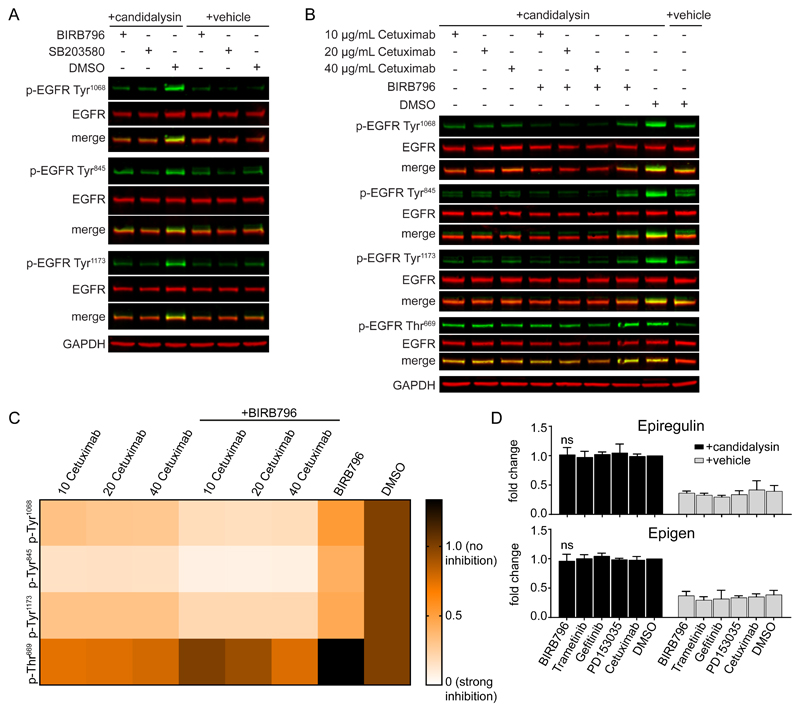
“Tyr1068 and Tyr1173 are autophosphorylation sites, and attenuation of their phosphorylation by p38 inhibitors indicates that p38 may modulate EGFR dimer formation (39,78) or EGFR trafficking (78).”
Epidermal Growth Factor Receptor Cell Proliferation Signaling Pathways
Wee, P., & Wang, Z. (2017) · Cancers · doi:10.3390/cancers9050052 · Cited by 2,027 · cited 1×
“However, although activation of MAPK cascades is highly complex and interconnected (25, 26), EGFR is generally considered to activate the ERK1/2 pathway and not p38, whereas p38 can signal upstream of EGFR (27, 28).”
BackgroundActivation and signaling of the p38 MAP kinase pathway
ZARUBIN, T., & HAN, J. (2005) · Cell Research · doi:10.1038/sj.cr.7290257 · Cited by 1,707
ERK1/2 MAP kinases: Structure, function, and regulation
Roskoski, R. (2012) · Pharmacological Research · doi:10.1016/j.phrs.2012.04.005 · Cited by 1,650 · cited 1×
“MNK1/2 can be phosphorylated by both p38 and ERK1/2 (73); however, ERK1/2 inhibition had no effect on IL-6 release, indicating that MNK1/2 are not involved in IL-6 release by candidalysin.”
BackgroundIndependent Human MAP-Kinase Signal Transduction Pathways Defined by MEK and MKK Isoforms
Dérijard, B., Raingeaud, J., Barrett, T., Wu, I.-H., Han, J., Ulevitch, R. J., & Davis, R. J. (1995) · Science · doi:10.1126/science.7839144 · Cited by 1,555
Targeting PI3K/Akt/mTOR Signaling in Cancer
Porta, C., Paglino, C., & Mosca, A. (2014) · Frontiers in Oncology · doi:10.3389/fonc.2014.00064 · Cited by 1,485
p38 MAP-Kinases pathway regulation, function and role in human diseases
Cuenda, A., & Rousseau, S. (2007) · Biochimica et Biophysica Acta (BBA) - Molecular Cell Research · doi:10.1016/j.bbamcr.2007.03.010 · Cited by 1,400 · cited 18×
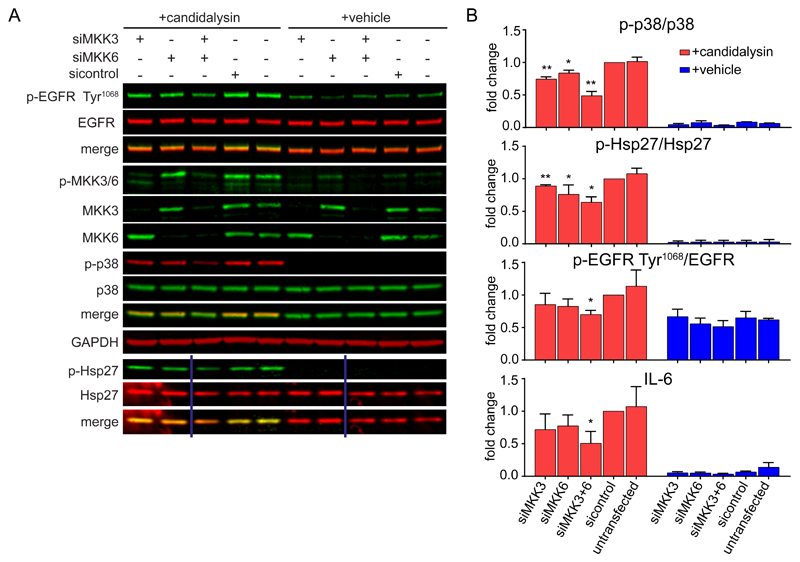
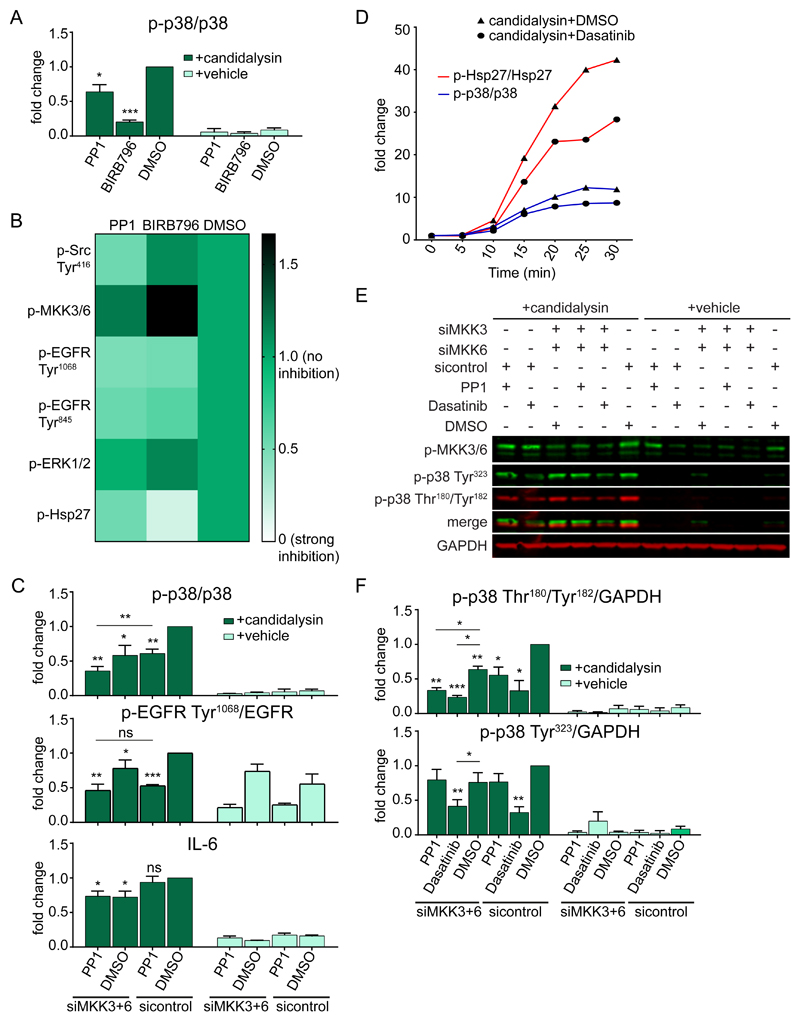
“E, Representative immunoblot showing phosphorylation of MKK3/6 and p38 on Tyr323 and Thr180/Tyr182 from TR146 cells transfected for 72 h with siRNA for MKK3 and MKK6 and/or treated with PP1 or Dasatinib prior to candidalysin stimulation for 30 min.”
BackgroundInfluentialGrowth of Candida albicans hyphae
Sudbery, P. E. (2011) · Nature Reviews Microbiology · doi:10.1038/nrmicro2636 · Cited by 1,110 · cited 1×
“The yeast-to-hypha transition is the major virulence determinant for mucosal infections (5,6).”
BackgroundMammalian cell size is controlled by mTOR and its downstream targets S6K1 and 4EBP1/eIF4E
Fingar, D. C., Salama, S., Tsou, C., Harlow, E., & Blenis, J. (2002) · Genes & Development · doi:10.1101/gad.995802 · Cited by 1,093
Crystal structure of the tyrosine kinase domain of the human insulin receptor
Hubbard, S. R., Wei, L., & Hendrickson, W. A. (1994) · Nature · doi:10.1038/372746a0 · Cited by 1,080
O'Hare, T., Walters, D. K., Stoffregen, E. P., Jia, T., Manley, P. W., Mestan, J., Cowan-Jacob, S. W., Lee, F. Y., Heinrich, M. C., Deininger, M. W. N., et al. (2005) · Cancer Research · doi:10.1158/0008-5472.can-05-0259 · Cited by 1,036
Targeting PI3K/mTOR Signaling in Cancer
Arcaro, A. (2014) · Frontiers in Oncology · doi:10.3389/fonc.2014.00084 · Cited by 1,024
Conti, H. R., Shen, F., Nayyar, N., Stocum, E., Sun, J. N., Lindemann, M. J., Ho, A. W., Hai, J. H., Yu, J. J., Jung, J. W., et al. (2009) · Journal of Experimental Medicine · doi:10.1084/jem.20081463 · Cited by 1,024 · cited 1×
“Sham (PBS)-infected WT mice and Il17ra-/- mice were used as controls for infection clearance, respectively (63).”
MethodSelf-citationA Comprehensive Review on MAPK: A Promising Therapeutic Target in Cancer
Braicu, C., Buse, M., Busuioc, C., Drula, R., Gulei, D., Raduly, L., Rusu, A., Irimie, A., Atanasov, A. G., Slaby, O., et al. (2019) · Cancers · doi:10.3390/cancers11101618 · Cited by 944 · cited 1×
“However, while activation of MAPK cascades is highly complex and interconnected (25,26), Nikou et al.”
BackgroundCandidalysin is a fungal peptide toxin critical for mucosal infection
Moyes, D. L., Wilson, D., Richardson, J. P., Mogavero, S., Tang, S. X., Wernecke, J., Höfs, S., Gratacap, R. L., Robbins, J., Runglall, M., et al. (2016) · Nature · doi:10.1038/nature17625 · Cited by 942 · cited 8×
“In its pore-forming capacity, candidalysin causes membrane destabilization, calcium influx, as well as the release of lactate dehydrogenase (LDH), alarmins, and antimicrobial peptides (AMPs) such as S100A9 and beta-defensin 3 (BD3) (20,21).”
BackgroundMethodInfluentialSelf-citationMembrane proteins and proteomics: Un amour impossible?
Santoni, V., Molloy, M., & Rabilloud, T. (2000) · Electrophoresis · doi:10.1002/(sici)1522-2683(20000401)21:6<1054::aid-elps1054>3.0.co;2-8 · Cited by 852
Hise, A. G., Tomalka, J., Ganesan, S., Patel, K., Hall, B. A., Brown, G. D., & Fitzgerald, K. A. (2009) · Cell Host & Microbe · doi:10.1016/j.chom.2009.05.002 · Cited by 568
Mechanism of p38 MAP kinase activation in vivo
Brancho, D., Tanaka, N., Jaeschke, A., Ventura, J.-J., Kelkar, N., Tanaka, Y., Kyuuma, M., Takeshita, T., Flavell, R. A., & Davis, R. J. (2003) · Genes & Development · doi:10.1101/gad.1107303 · Cited by 490
Inhibition of p38 MAP kinase as a therapeutic strategy
Lee, J. C., Kumar, S., Griswold, D. E., Underwood, D. C., Votta, B. J., & Adams, J. L. (2000) · Immunopharmacology · doi:10.1016/s0162-3109(00)00206-x · Cited by 455
Goedert, M. (1997) · The EMBO Journal · doi:10.1093/emboj/16.12.3563 · Cited by 420 · cited 16×
“E, Representative immunoblot showing phosphorylation of MKK3/6 and p38 on Tyr323 and Thr180/Tyr182 from TR146 cells transfected for 72 h with siRNA for MKK3 and MKK6 and/or treated with PP1 or Dasatinib prior to candidalysin stimulation for 30 min.”
BackgroundInfluentialMoyes, D. L., Runglall, M., Murciano, C., Shen, C., Nayar, D., Thavaraj, S., Kohli, A., Islam, A., Mora-Montes, H., Challacombe, S. J., et al. (2010) · Cell Host & Microbe · doi:10.1016/j.chom.2010.08.002 · Cited by 372 · cited 8×
“albicans hyphae, there is a sustained activation of all three MAPK pathways that results in c-Fos transcription factor activation, the release of inflammatory mediators such as interleukin-6 (IL-6) and the neutrophil-attracting chemokines granulocyte colony-stimulating factor (G-CSF) and granulocyte-macrophage colony-…”
BackgroundMethodInfluentialSelf-citationPost-transcriptional regulation of gene expression in innate immunity
Carpenter, S., Ricci, E. P., Mercier, B. C., Moore, M. J., & Fitzgerald, K. A. (2014) · Nature Reviews Immunology · doi:10.1038/nri3682 · Cited by 367 · cited 1×
“In addition, the lack of transcriptional regulation of IL6by p38 indicates that other pathways, such as NF-κB, may promote the induction of IL6 expression (7) or posttranscriptional modifications (77) by candidalysin.”
BackgroundCuenda, A. (1997) · The EMBO Journal · doi:10.1093/emboj/16.2.295 · Cited by 362
The EGF receptor as central transducer of heterologous signalling systems
Zwick, E., Hackel, P. O., Prenzel, N., & Ullrich, A. (1999) · Trends in Pharmacological Sciences · doi:10.1016/s0165-6147(99)01373-5 · Cited by 343
c-fos regulates neuronal excitability and survival
Zhang, J., Zhang, D., McQuade, J. S., Behbehani, M., Tsien, J. Z., & Xu, M. (2002) · Nature Genetics · doi:10.1038/ng859 · Cited by 327 · cited 1×
“In order to elucidate the functional role of c-Fos in the superficial oral epithelium during OPC, we crossed Fosfl/fl mice (62) to a strain expressing the Cre recombinase under the control of the murine keratin 13 (K13) promoter (hereafter termed FosK13) (14).”
BackgroundMitogen-activated protein kinase pathways defend against bacterial pore-forming toxins
Huffman, D. L., Abrami, L., Sasik, R., Corbeil, J., van der Goot, F. G., & Aroian, R. V. (2004) · Proceedings of the National Academy of Sciences · doi:10.1073/pnas.0404073101 · Cited by 316
Alternative p38 activation pathway mediated by T cell receptor-proximal tyrosine kinases
Salvador, J. M., Mittelstadt, P. R., Guszczynski, T., Copeland, T. D., Yamaguchi, H., Appella, E., Fornace, A. J., & Ashwell, J. D. (2005) · Nature Immunology · doi:10.1038/ni1177 · Cited by 306
BIRB796 Inhibits All p38 MAPK Isoforms in Vitro and in Vivo
Kuma, Y., Sabio, G., Bain, J., Shpiro, N., Márquez, R., & Cuenda, A. (2005) · Journal of Biological Chemistry · doi:10.1074/jbc.m414221200 · Cited by 304
Kumar, S., Jiang, M. S., Adams, J. L., & Lee, J. C. (1999) · Biochemical and Biophysical Research Communications · doi:10.1006/bbrc.1999.1454 · Cited by 299 · cited 1×
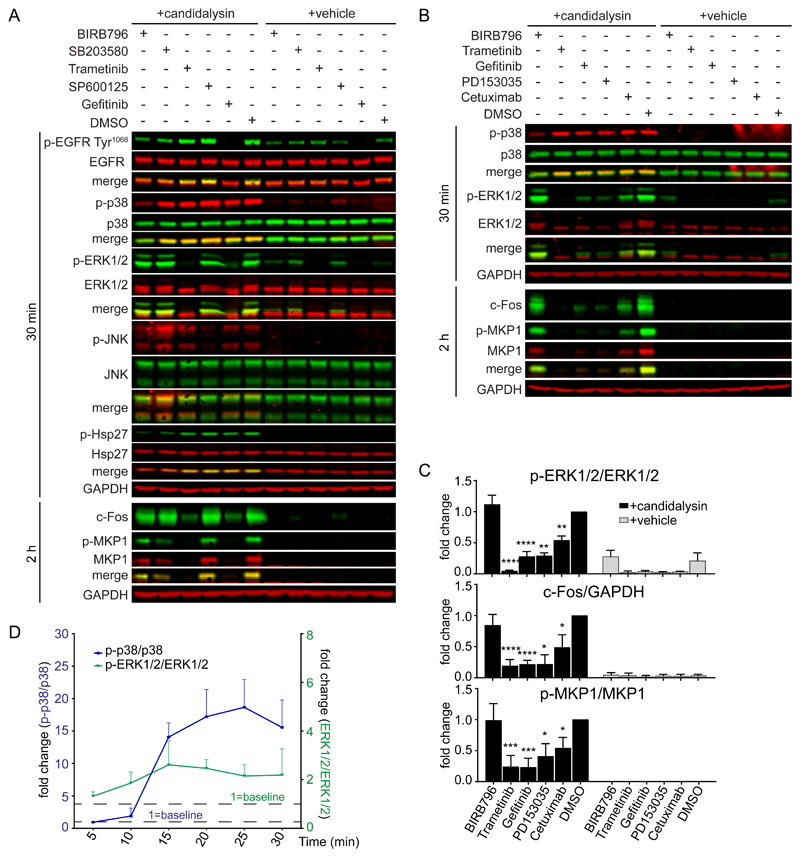
“We pretreated the cells with EGFR inhibitors (Gefitinib and PD153035), an EGFR ligand-binding neutralizing antibody (Cetuximab), a MEK1/2 inhibitor of the ERK1/2 pathway (Trametinib), a JNK inhibitor (SP600125), a p38α, β inhibitor (SB203580), or a p38α, β, γ, δ inhibitor (BIRB796) (22,30) prior to stimulating them wi…”
BackgroundOral-resident natural Th17 cells and γδ T cells control opportunistic Candida albicans infections
Conti, H. R., Peterson, A. C., Brane, L., Huppler, A. R., Hernández-Santos, N., Whibley, N., Garg, A. V., Simpson-Abelson, M. R., Gibson, G. A., Mamo, A. J., et al. (2014) · Journal of Experimental Medicine · doi:10.1084/jem.20130877 · Cited by 254
Self-citationRojas, M., Yao, S., & Lin, Y.-Z. (1996) · Journal of Biological Chemistry · doi:10.1074/jbc.271.44.27456 · Cited by 235
Candidalysin: discovery and function in Candida albicans infections
Naglik, J. R., Gaffen, S. L., & Hube, B. (2019) · Current Opinion in Microbiology · doi:10.1016/j.mib.2019.06.002 · Cited by 229
Self-citationVerma, A. H., Richardson, J. P., Zhou, C., Coleman, B. M., Moyes, D. L., Ho, J., Huppler, A. R., Ramani, K., McGeachy, M. J., Mufazalov, I. A., et al. (2017) · Science Immunology · doi:10.1126/sciimmunol.aam8834 · Cited by 218
Self-citationMouse model of oropharyngeal candidiasis
Solis, N. V., & Filler, S. G. (2012) · Nature Protocols · doi:10.1038/nprot.2012.011 · Cited by 208 · cited 2×
“Given that c-Fos is activated in the presence of candidalysin (20), and in order to assess its independence from p38 in vivo, we examined its role in a standard mouse OPC model (61).”
BackgroundCandidalysin activates innate epithelial immune responses via epidermal growth factor receptor
Ho, J., Yang, X., Nikou, S.-A., Kichik, N., Donkin, A., Ponde, N. O., Richardson, J. P., Gratacap, R. L., Archambault, L. S., Zwirner, C. P., et al. (2019) · Nature Communications · doi:10.1038/s41467-019-09915-2 · Cited by 186
Self-citationKorting, H. C., Ollert, M., Georgii, A., & Fröschl, M. (1988) · Journal of Clinical Microbiology · doi:10.1128/jcm.26.12.2626-2631.1988 · Cited by 180
Zhu, W., Phan, Q. T., Boontheung, P., Solis, N. V., Loo, J. A., & Filler, S. G. (2012) · Proceedings of the National Academy of Sciences · doi:10.1073/pnas.1117676109 · Cited by 180 · cited 2×
“Two previous in vivo studies using the same murine OPC model employed here showed that EGFR inhibition leads to decreased fungal burden (24,95), with EGFR having dual functions: a disease-promoting role enhancing fungal endocytosis by the adhesin Als3 (95) and a disease-protecting role mediating immune responses after…”
BackgroundDifferential activation of p38MAPK isoforms by MKK6 and MKK3
Rémy, G., Risco, A. M., Iñesta-Vaquera, F., González‐Terán, B., Sabio, G., Davis, R. J., & Cuenda, A. (2009) · Cellular Signalling · doi:10.1016/j.cellsig.2009.11.020 · Cited by 178 · cited 16×
“E, Representative immunoblot showing phosphorylation of MKK3/6 and p38 on Tyr323 and Thr180/Tyr182 from TR146 cells transfected for 72 h with siRNA for MKK3 and MKK6 and/or treated with PP1 or Dasatinib prior to candidalysin stimulation for 30 min.”
BackgroundInfluentialConti, H. R., Bruno, V. M., Childs, E. E., Daugherty, S., Hunter, J. P., Mengesha, B. G., Saevig, D. L., Hendricks, M. R., Coleman, B. M., Brane, L., et al. (2016) · Cell Host & Microbe · doi:10.1016/j.chom.2016.10.001 · Cited by 177
Self-citationEpithelial Cells Are Sensitive Detectors of Bacterial Pore-forming Toxins
Ratner, A. J., Hippe, K. R., Aguilar, J. L., Bender, M. H., Nelson, A. L., & Weiser, J. N. (2006) · Journal of Biological Chemistry · doi:10.1074/jbc.m511431200 · Cited by 174
EphA2 is an epithelial cell pattern recognition receptor for fungal β-glucans
Swidergall, M., Solis, N. V., Lionakis, M. S., & Filler, S. G. (2017) · Nature Microbiology · doi:10.1038/s41564-017-0059-5 · Cited by 167 · cited 1×
“albicans, and knockdown of EphA2 is associated with suppressed EGFR phosphorylation and MEK1/2 activation (3, 44).”
BackgroundCandida albicans–epithelial interactions and induction of mucosal innate immunity
Naglik, J. R., König, A., Hube, B., & Gaffen, S. L. (2017) · Current Opinion in Microbiology · doi:10.1016/j.mib.2017.10.030 · Cited by 163
Self-citationMnk kinase pathway: Cellular functions and biological outcomes
Joshi, S. (2014) · World Journal of Biological Chemistry · doi:10.4331/wjbc.v5.i3.321 · Cited by 159 · cited 1×
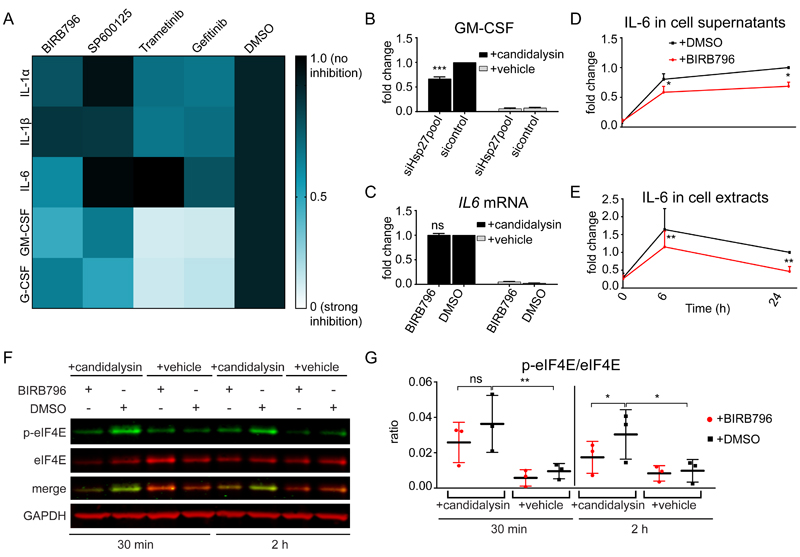
“To assess this, we investigated the involvement of p38 signaling in controlling the initiation of IL-6 translation through the MAPK-interacting protein kinases 1 and 2 (MNK1/2) and the eukaryotic initiation factor 4E (eIF4E) (34,35).”
Gonzalez, M. R., Bischofberger, M., Frêche, B., Ho, S., Parton, R. G., & van der Goot, F. G. (2011) · Cellular Microbiology · doi:10.1111/j.1462-5822.2011.01600.x · Cited by 149
Extracellular HSP27 acts as a signaling molecule to activate NF-κB in macrophages
Salari, S., Seibert, T., Chen, Y., Hu, T., Shi, C., Zhao, X., Cuerrier, C. M., Raizman, J. E., & O’Brien, E. R. (2012) · Cell Stress and Chaperones · doi:10.1007/s12192-012-0356-0 · Cited by 140
Tanno, M., Bassi, R., Gorog, D. A., Saurin, A. T., Jiang, J., Heads, R. J., Martin, J. L., Davis, R. J., Flavell, R. A., & Marber, M. S. (2003) · Circulation Research · doi:10.1161/01.res.0000083490.43943.85 · Cited by 139
Heat shock proteins in human cancer
Sarto, C., Binz, P.-A., & Mocarelli, P. (2000) · Electrophoresis · doi:10.1002/(sici)1522-2683(20000401)21:6<1218::aid-elps1218>3.0.co;2-h · Cited by 139
Candida albicans Yeast and Hyphae are Discriminated by MAPK Signaling in Vaginal Epithelial Cells
Moyes, D. L., Murciano, C., Runglall, M., Islam, A., Thavaraj, S., & Naglik, J. R. (2011) · PLoS ONE · doi:10.1371/journal.pone.0026580 · Cited by 127 · cited 2×
“Protein concentration was determined by BCA (Perbio Science) and 5 μg of nuclear extract was used to assess DNA binding activity of the c-Fos transcription factor using the TransAM transcription factor ELISA system (Active Motif) as previously described (7,8,20) and according to the manufacturer’s protocol.”
BackgroundMethodSelf-citationCandida albicans Pathogenicity and Epithelial Immunity
Naglik, J. R., Richardson, J. P., & Moyes, D. L. (2014) · PLoS Pathogens · doi:10.1371/journal.ppat.1004257 · Cited by 118 · cited 1×
“albicans yeast cells transiently activate all three MAPK pathways [c-Jun N-terminal kinase (JNK), extracellular signal−regulated kinases 1 and 2 (ERK1/2), and p38] and the activation of the transcriptional factor c-Jun, but this is not sufficient to induce inflammatory responses (7,9).”
BackgroundSelf-citationThe Missing Link between Candida albicans Hyphal Morphogenesis and Host Cell Damage
Wilson, D., Naglik, J. R., & Hube, B. (2016) · PLOS Pathogens · doi:10.1371/journal.ppat.1005867 · Cited by 116 · cited 1×
“The yeast-to-hypha transition is the major virulence determinant for mucosal infections (5,6).”
BackgroundSelf-citationTong, J., Taylor, P., & Moran, M. F. (2014) · Molecular & Cellular Proteomics · doi:10.1074/mcp.m114.038596 · Cited by 112
IL-1 Coordinates the Neutrophil Response to C. albicans in the Oral Mucosa
Altmeier, S., Toska, A., Sparber, F., Teijeira, A., Halin, C., & LeibundGut-Landmann, S. (2016) · PLOS Pathogens · doi:10.1371/journal.ppat.1005882 · Cited by 112
Li, X., Huang, Y., Jiang, J., & Frank, S. J. (2008) · Cellular Signalling · doi:10.1016/j.cellsig.2008.08.006 · Cited by 110 · cited 1×
“EGFR phosphorylation on Thr669 is under the exclusive control of ERK1/2 (40,41), whereas Ser1046/1047 phosphorylation is triggered exclusively by p38 (42,43) (fig.”
BackgroundMoyes, D. L., Shen, C., Murciano, C., Runglall, M., Richardson, J. P., Arno, M., Aldecoa-Otalora, E., & Naglik, J. R. (2014) · The Journal of Infectious Diseases · doi:10.1093/infdis/jit824 · Cited by 106 · cited 1×
“albicans (64,65), Hsp27 phosphorylation was not previously known to occur during murine OPC infection.”
BackgroundSelf-citationMogavero, S., Sauer, F. M., Brunke, S., Allert, S., Schulz, D., Wisgott, S., Jablonowski, N., Elshafee, O., Krüger, T., Kniemeyer, O., et al. (2021) · Cellular Microbiology · doi:10.1111/cmi.13378 · Cited by 104 · cited 1×
“Therefore, it appears that epithelial cells can discriminate between the synthetic and natural forms of candidalysin, likely as a result of how the toxin is presented to the cell, whether it contacts the entire epithelial surface or is secreted into an invasion pocket (72).”
BackgroundSelf-citationPore-forming toxins activate MAPK p38 by causing loss of cellular potassium
Kloft, N., Busch, T., Neukirch, C., Weis, S., Boukhallouk, F., Bobkiewicz, W., Cibis, I., Bhakdi, S., & Husmann, M. (2009) · Biochemical and Biophysical Research Communications · doi:10.1016/j.bbrc.2009.05.121 · Cited by 101
Adachi, S., Shimizu, M., Shirakami, Y., Yamauchi, J., Natsume, H., Matsushima‐Nishiwaki, R., To, S., Weinstein, I. B., Moriwaki, H., & Kozawa, O. (2009) · Carcinogenesis · doi:10.1093/carcin/bgp166 · Cited by 101 · cited 1×
“The Ser1046/1047 site is associated with EGFR ubiquitylation and subsequent degradation (42, 43).”
BackgroundCandida–Epithelial Interactions
Richardson, J., Ho, J., & Naglik, J. (2018) · Journal of Fungi · doi:10.3390/jof4010022 · Cited by 98
Self-citationIL-36 and IL-1/IL-17 Drive Immunity to Oral Candidiasis via Parallel Mechanisms
Verma, A. H., Zafar, H., Ponde, N. O., Hepworth, O. W., Sihra, D., Aggor, F. E. Y., Ainscough, J. S., Ho, J., Richardson, J. P., Coleman, B. M., et al. (2018) · The Journal of Immunology · doi:10.4049/jimmunol.1800515 · Cited by 98
Self-citationNishimura, M., Shin, M.-S., Singhirunnusorn, P., Suzuki, S., Kawanishi, M., Koizumi, K., Saiki, I., & Sakurai, H. (2009) · Molecular and Cellular Biology · doi:10.1128/mcb.00375-09 · Cited by 94 · cited 1×
“EGFR phosphorylation on Thr669 is under the exclusive control of ERK1/2 (40, 41), whereas Ser1046/1047 phosphorylation is triggered exclusively by p38 (fig.”
BackgroundMultiple Activation Mechanisms of p38α Mitogen-activated Protein Kinase
Kang, Y. J., Seit-Nebi, A., Davis, R. J., & Han, J. (2006) · Journal of Biological Chemistry · doi:10.1074/jbc.m606800200 · Cited by 90
Tanaka, T., Zhou, Y., Ozawa, T., Okizono, R., Banba, A., Yamamura, T., Oga, E., Muraguchi, A., & Sakurai, H. (2017) · Journal of Biological Chemistry · doi:10.1074/jbc.m117.811299 · Cited by 86 · cited 1×
“However, although activation of MAPK cascades is highly complex and interconnected (25, 26), EGFR is generally considered to activate the ERK1/2 pathway and not p38, whereas p38 can signal upstream of EGFR (27, 28).”
BackgroundActivation of EphA2-EGFR signaling in oral epithelial cells by Candida albicans virulence factors
Swidergall, M., Solis, N. V., Millet, N., Huang, M. Y., Lin, J., Phan, Q. T., Lazarus, M. D., Wang, Z., Yeaman, M. R., Mitchell, A. P., et al. (2021) · PLOS Pathogens · doi:10.1371/journal.ppat.1009221 · Cited by 83 · cited 1×
“albicans, and knockdown of EphA2 is associated with suppressed EGFR phosphorylation and MEK1/2 activation (3,44).”
BackgroundSato, K., Nagao, T., Iwasaki, T., Nishihira, Y., & Fukami, Y. (2003) · Genes to Cells · doi:10.1046/j.1356-9597.2003.00691.x · Cited by 73 · cited 1×
“3C and 5B), including a site that has been shown previously to also be a direct target of Src (56, 92, 93).”
BackgroundSwidergall, M., Solis, N. V., Wang, Z., Phan, Q. T., Marshall, M. E., Lionakis, M. S., Pearlman, E., & Filler, S. G. (2019) · Cell Reports · doi:10.1016/j.celrep.2019.06.020 · Cited by 73
Yuan, J., & Rozengurt, E. (2007) · Journal of Cellular Biochemistry · doi:10.1002/jcb.21439 · Cited by 72
Zhuang, S., Yan, Y., Han, J., & Schnellmann, R. G. (2005) · Journal of Biological Chemistry · doi:10.1074/jbc.m413300200 · Cited by 70
The Aryl Hydrocarbon Receptor Governs Epithelial Cell Invasion during Oropharyngeal Candidiasis
Solis, N. V., Swidergall, M., Bruno, V. M., Gaffen, S. L., & Filler, S. G. (2017) · mBio · doi:10.1128/mbio.00025-17 · Cited by 69
Self-citationWestman, J., Plumb, J. D., Licht, A., Yang, M., Allert, S., Naglik, J. R., Hube, B., Grinstein, S., & Maxson, M. E. (2022) · Cell Reports · doi:10.1016/j.celrep.2021.110187 · Cited by 66
Self-citationTrautwein-Weidner, K., Gladiator, A., Kirchner, F. R., Becattini, S., Rülicke, T., Sallusto, F., & LeibundGut-Landmann, S. (2015) · PLOS Pathogens · doi:10.1371/journal.ppat.1005164 · Cited by 65
Optimization of an oral mucosa in vitro model based on cell line TR146
Lin, G. C., Leitgeb, T., Vladetic, A., Friedl, H.-P., Rhodes, N., Rossi, A., Roblegg, E., & Neuhaus, W. (2020) · Tissue Barriers · doi:10.1080/21688370.2020.1748459 · Cited by 60 · cited 1×
“To delineate host mechanisms of MAPK activation in response to candidalysin, we used TR146 cells, a tractable OEC model with high ultrastructural similarity to normal human buccal epithelium (29).”
MethodMikami, F., Gu, H., Jono, H., Andalibi, A., Kai, H., & Li, J.-D. (2005) · Journal of Biological Chemistry · doi:10.1074/jbc.m503941200 · Cited by 56 · cited 1×
“Among these, we focused on SFKs in p38 activation because Src can act as an upstream activator of MKK3/6 (51,53,54,91) and is associated with EGFR phosphorylation in response to C.”
BackgroundCandidalysin Is a Potent Trigger of Alarmin and Antimicrobial Peptide Release in Epithelial Cells
Ho, J., Wickramasinghe, D. N., Nikou, S.-A., Hube, B., Richardson, J. P., & Naglik, J. R. (2020) · Cells · doi:10.3390/cells9030699 · Cited by 56
Self-citationOksvold, M. P., Thien, C. B. F., Widerberg, J., Chantry, A., Huitfeldt, H. S., & Langdon, W. Y. (2003) · Oncogene · doi:10.1038/sj.onc.1207117 · Cited by 52 · cited 2×
“The Ser1046/1047 site is associated with EGFR ubiquitylation and subsequent degradation (42,43).”
BackgroundMueller, K. L., Powell, K., Madden, J. M., Eblen, S. T., & Boerner, J. L. (2012) · Translational Oncology · doi:10.1593/tlo.12163 · Cited by 50 · cited 1×
“3C and 5B), including a site that has been shown previously to also be a direct target of Src (56, 92, 93).”
BackgroundRegulation of the Maintenance of Peripheral T-Cell Anergy by TAB1-Mediated p38α Activation
Ohkusu‐Tsukada, K., Tominaga, N., Udono, H., & Yui, K. (2004) · Molecular and Cellular Biology · doi:10.1128/mcb.24.16.6957-6966.2004 · Cited by 49
EGFR-RAS-MAPK signaling is confined to the plasma membrane and associated endorecycling protrusions
Surve, S., Watkins, S. C., & Sorkin, A. D. (2021) · The Journal of Cell Biology · doi:10.1083/jcb.202107103 · Cited by 44 · cited 1×
“p38-dependent EGFR phosphorylation is associated with clathrin-mediated EGFR endocytosis (28,79–81) and the endocytosed receptor does not contribute to ERK1/2 signaling (82), suggesting therefore that p38 inhibition may”
BackgroundReales‐Calderón, J. A., Sylvester, M., Strijbis, K., Jensen, O. N., Nombela, C., Molero, G., & Gil, C. (2013) · Journal of Proteomics · doi:10.1016/j.jprot.2013.06.026 · Cited by 43 · cited 1×
“albicans (64,65), Hsp27 phosphorylation was not previously known to occur during murine OPC infection.”
BackgroundHSP27: An Anti‐Inflammatory and Immunomodulatory Stress Protein Acting to Dampen Immune Function
Miller‐Graziano, C. L., De, A. K., Laudański, K., Herrmann, T. L., & Bandyopadhyay, S. (2008) · Novartis Foundation symposium · doi:10.1002/9780470754030.ch15 · Cited by 42
Fenini, G., Grossi, S., Gehrke, S., Beer, H., Satoh, T. K., Contassot, E., & French, L. E. (2017) · Journal of Investigative Dermatology · doi:10.1016/j.jid.2017.10.037 · Cited by 42 · cited 1×
“The p38 MAPKs comprise a family of serine-threonine protein kinases that are important in mediating intracellular signaling and cytokine production during environmental stress and infections (22,23).”
BackgroundYamauchi, J., Tsujimoto, G., Kaziro, Y., & Itoh, H. (2001) · Journal of Biological Chemistry · doi:10.1074/jbc.m011752200 · Cited by 40 · cited 1×
“Among these, we focused on SFKs in p38 activation because Src can act as an upstream activator of MKK3/6 (51,53,54,91) and is associated with EGFR phosphorylation in response to C.”
BackgroundKoo, S., Kejariwal, D., Shehri, T. A., Dhar, A., & Lilić, D. (2016) · United European Gastroenterology Journal · doi:10.1177/2050640616684404 · Cited by 39 · cited 1×
“OPC is highly prevalent in infants, patients with HIV/AIDS, diabetes, and iatrogenic or autoimmune-induced dry mouth (1–3) and is associated with an increased risk of esophageal cancer (4).”
BackgroundMechanism of p38 MAPK–induced EGFR endocytosis and its crosstalk with ligand-induced pathways
Pérez-Verdaguer, M., Zhang, T., Paulo, J. A., Gygi, S. P., Watkins, S. C., Sakurai, H., & Sorkin, A. D. (2021) · The Journal of Cell Biology · doi:10.1083/jcb.202102005 · Cited by 37
Innate lymphoid cells: new players in IL-17-mediated antifungal immunity
Gladiator, A., & LeibundGut-Landmann, S. (2013) · PLoS Pathogens · doi:10.1371/journal.ppat.1003763 · Cited by 35
Differential Roles of Grb 2 and AP ‐2 in p38 MAPK ‐ and EGF ‐Induced EGFR Internalization
Grandal, M. V., Grøvdal, L. M., Henriksen, L., Andersen, M. H., Holst, M. R., Madshus, I. H., & van Deurs, B. (2011) · Traffic · doi:10.1111/j.1600-0854.2011.01322.x · Cited by 34
Jones, T. C. (1996) · Medical Oncology · doi:10.1007/bf02990842 · Cited by 33
BANK1 Controls CpG-Induced IL-6 Secretion via a p38 and MNK1/2/eIF4E Translation Initiation Pathway
Wu, Y., Kumar, R., Haque, M. S., Castillejo-López, C., & Alarcón-Riquelme, M. E. (2013) · The Journal of Immunology · doi:10.4049/jimmunol.1301203 · Cited by 33
Soeda, A., Lathia, J. D., Williams, B. J., Wu, Q., Gallagher, J., Androutsellis‐Theotokis, A., Giles, A. J., Yang, C., Zhuang, Z., Gilbert, M. R., et al. (2017) · Oncotarget · doi:10.18632/oncotarget.16741 · Cited by 32
MKK6 deficiency promotes cardiac dysfunction through MKK3-p38γ/δ-mTOR hyperactivation
Romero-Becerra, R., Mora, A., Manieri, E., Nikolić, I., Santamans, A. M., Montalvo-Romeral, V., Cruz, F. M., Rodríguez, E., León, M., Leiva‐Vega, L., et al. (2022) · eLife · doi:10.7554/elife.75250 · Cited by 31
Venu, V. K. P., Adijiang, A., Seibert, T., Chen, Y., Shi, C., Batulan, Z., & O’Brien, E. R. (2017) · The FASEB Journal · doi:10.1096/fj.201601188r · Cited by 27 · cited 1×
“Although no direct link has been yet found between candidalysin-induced Hsp27 phosphorylation and GM-CSF release, studies implicate nuclear factor B (NF-B) in stimulating the transcription of Csf2 (encodes GM-CSF) downstream of Hsp27 in macrophages (67, 69).”
BackgroundRole of Src Signal Transduction Pathways in Scatter Factor-mediated Cellular Protection
Fan, S., Meng, Q., Laterra, J., & Rosen, E. M. (2008) · Journal of Biological Chemistry · doi:10.1074/jbc.m807497200 · Cited by 26
López‐Santalla, M., Salvador‐Bernáldez, M., González‐Álvaro, I., Castañeda, S., Ortiz, A. M., García-García, M. I., Kremer, L., Roncal, F., Mulero, J., Martínez‐A, C., et al. (2011) · Arthritis & Rheumatism · doi:10.1002/art.30375 · Cited by 17
Jia, G., Wang, R., Yi, Y., & Dai, H. (2020) · Journal of Molecular Neuroscience · doi:10.1007/s12031-020-01517-8 · Cited by 8 · cited 2×
“3C and 5B), including a site that has been shown previously to also be a direct target of Src (56, 92, 93).”
Background
Research works printed but not linked: 1
- Mikami F Epidermal growth factor receptor acts as a negative regulator for bacterium nontypeable Haemophilus influenzae-induced Toll-like receptor 2 expression via an Src-dependent p38 mitogen-activated protein kinase signaling pathway J Biol Chem 2005 280 36185 36194 16115866
Cited by
Commensalism and pathogenesis of Candida albicans at the mucosal interface
Schille, T. B., Sprague, J. L., Naglik, J. R., Brunke, S., & Hube, B. (2025) · Nature Reviews Microbiology · doi:10.1038/s41579-025-01174-x · Cited by 88
Self-citationIs Candida albicans a contributor to cancer? A critical review based on the current evidence
Wang, X., Zhang, W., Wu, W., Wu, S., Young, A., & Yan, Z. (2023) · Microbiological Research · doi:10.1016/j.micres.2023.127370 · Cited by 44
Talapko, J., Meštrović, T., Dmitrović, B., Juzbašić, M., Matijević, T., Bekić, S., Erić, S., Flam, J., Belić, D., Erić, A. P., et al. (2023) · Microorganisms · doi:10.3390/microorganisms11061476 · Cited by 47
PIEZO1 activates non-canonical EGFR internalization and signaling
Pardo-Pastor, C., & Rosenblatt, J. (2023) · Science Advances · doi:10.1126/sciadv.adi1328 · Cited by 42
“This could expand previous findings that SFKs activate p38 in response to radiation and to Candida infections to promote survival and infection clearance (58, 59), respectively, via ligand independent EGFR signaling.”
Sprague, J. L., Schille, T. B., Allert, S., Trümper, V., Lier, A., Großmann, P., Priest, E. L., Tsavou, A., Panagiotou, G., Naglik, J. R., et al. (2024) · PLoS Pathogens · doi:10.1371/journal.ppat.1012031 · Cited by 38
Self-citation
Metadata
- Authors
- Nikou, S.-A., Zhou, C., Griffiths, J. S., Kotowicz, N. K., Coleman, B. M., Green, M. J., Moyes, D. L., Gaffen, S. L., Naglik, J. R., & Parker, P. J.
- Affiliations
- King's College London (GB)
- University of Pittsburgh (US)
- The Francis Crick Institute (GB)
- Corresponding author
- Naglik, Julian R.
- Parker, Peter J.
- ORCID
- Venue
- Science Signaling
- Published
- 2022-04-05
- Volume
- 15
- Issue
- 728
- Pages
- eabj6915-eabj6915
- ISSN
- 1937-9145 (ISSN-L)
- 1945-0877
- PMC
- PMC7612652
- OpenAlex
- W4224015814
- Cited by
- 65
- References
- 96
- Citations by year
- 2026: 15 · 2025: 21 · 2024: 15 · 2023: 11 · 2022: 3
- FWCI
- 6.11
- Type
- journal article
- Language
- en
- Open access
- hybrid
- doi.org
- Licence
- cc-by
- Locations
- Science Signaling (publishedVersion, cc-by)
- PubMed (publishedVersion)
- PubMed Central (acceptedVersion, cc-by)
- Funders
- Wellcome Trust (FC001130, 214229/Z/18/Z, 214229)
- Francis Crick Institute (10009, CC1061, 10130)
- Cancer Research UK (FC001130)
- National Institute for Health and Care Research (IS‐BRC-1215‐20006)
- National Institutes of Health (5r37de022550-12)
- National Institute of Dental and Craniofacial Research (R37-DE022550, R01DE022550)
- Topics
- Health Sciences › Medicine › Infectious Diseases › Antifungal resistance and susceptibility
- Life Sciences › Biochemistry, Genetics and Molecular Biology › Molecular Biology › Fungal and yeast genetics research
- Life Sciences › Biochemistry, Genetics and Molecular Biology › Molecular Biology › Protein Kinase Regulation and GTPase Signaling
- Keywords
- Candida albicans, candidalysin, mycotoxins, epithelial inflammation, p38 MAPK, c-fos, HSP27, interleukin-6, granulocyte colony-stimulating factor, GM-CSF, MAPK kinase, Src kinase, oral epithelial cells, innate immune response, neutrophil activation, oral candidiasis
- MeSH terms
- Animals, Candida albicans, Fungal Proteins, Phosphorylation, MAP Kinase Signaling System, p38 Mitogen-Activated Protein Kinases, Mice, ErbB Receptors
About these checks
Registry, retraction, Cites and statistics results are computed, not judged, with one exception: a printed reference that no index lists is read once by a model before it counts as a citation error. Claims are extracted by a model and kept only when their quote appears verbatim in the text; each cited source is then checked, with a model’s help, for whether it says what the claim relies on. Those verdicts can be wrong — read the claim’s quote and the cited source before relying on one.
Statistics and arithmetic are recomputed, not judged.
Confidence bands are shown only for fields calibrated on our annotated test set. None is calibrated yet, so no band is shown.
What counts as a claim ›How we measure confidence ›How we check this ›
Are you an author, or do you see a problem with this page? Request a review
Data sources
Bibliographic data: Semantic Scholar, OpenAlex, Crossref.
Contains information from the Semantic Scholar Academic Graph Datasets, made available under the ODC Attribution License (ODC-BY 1.0).
Semantic Scholar’s data is described in: Kinney, R., et al. (2023). The Semantic Scholar Open Data Platform. arXiv:2301.10140.
