

Biogeochemical Forces Shape the Composition and Physiology of Polymicrobial Communities in the Cystic Fibrosis Lung
Open accessThe DOI matches its Crossref record; 97 of the 97 references it cites were found in a registry or an index.
Abstract
The cystic fibrosis (CF) lung contains thick mucus colonized by opportunistic pathogens which adapt to the CF lung environment over decades. The difficulty associated with sampling airways has impeded a thorough examination of the biochemical microhabitats these pathogens are exposed to. An indirect approach is to study the responses of microbial communities to these microhabitats, facilitated by high-throughput sequencing of microbial DNA and RNA from sputum samples. Microbial metagenomes and metatranscriptomes were sequenced from multiple CF patients, and the reads were assigned taxonomy and function through sequence homology to NCBI and the Kyoto Encyclopedia of Genes and Genomes (KEGG) database hierarchies. For a comparison, saliva microbial metagenomes from the Human Microbiome Project (HMP) were also analyzed. These analyses identified that functions encoded and expressed by CF microbes were significantly enriched for amino acid catabolism, folate biosynthesis, and lipoic acid biosynthesis. The data indicate that the community uses oxidative phosphorylation as a major energy source but that terminal electron acceptors were diverse. Nitrate reduction was the most abundant anaerobic respiratory pathway, and genes for nitrate reductase were largely assigned to Pseudomonas and Rothia. Although many reductive pathways of the nitrogen cycle were present, the cycle was incomplete, because the oxidative pathways were absent. Due to the abundant amino acid catabolism and incomplete nitrogen cycle, the CF microbial community appears to accumulate ammonia. This finding was verified experimentally using a CF bronchiole culture model system. The data also revealed abundant sensing and transport of iron, ammonium, zinc, and other metals along with a low-oxygen environment. This study reveals the core biochemistry and physiology of the CF microbiome. IMPORTANCE The cystic fibrosis (CF) microbial community is complex and adapts to the environmental conditions of the lung over the lifetime of a CF patient. This analysis illustrates the core functions of the CF microbial community in the context of CF lung biochemistry. There are many studies of the metabolism and physiology of individual microbes within the CF lung, but none that collectively analyze data from the whole microbiome. Understanding the core metabolism of microbes that inhabit the CF lung can provide new targets for novel therapies. The fundamental processes that CF pathogens rely on for survival may represent an Achilles heel for this pathogenic community. Novel therapies that are designed to disrupt understudied survival strategies of the CF microbial community may succeed against otherwise untreatable or antibiotic-resistant microbes.
Overview
The claims and statistics of this paper haven’t been checked yet.
Free: it reads the open-access text and checks the first 5 claims that cite a source we can check. Create a free account to check every claim.
Integrity signals
Registry
Cites
Statistics
Figures
Verification
Claims the paper makes
The claims and statistics of this paper haven’t been checked yet.
Free: it reads the open-access text and checks the first 5 claims that cite a source we can check. Create a free account to check every claim.
Claims other papers make about this one
Each is checked against this paper’s own text: does it say what the citing paper says it does?
The cited source says what the claim attributes to it.
In the citing paper
“Interestingly, an increase in iron and iron-related proteins is found in the lungs of CF patients (Hunter et al., 2013; Quinn et al., 2014).”
From Iron at the Centre of Candida albicans Interactions (2018) · cites this paper as Quinn et al., 2014
Self-check
Percentages, sums and reported differences re-computed from the paper’s own numbers.
The self-check needs the paper’s full text.
Citations
Cites
1 retracted
Hunter, R. C., Klepac-Ceraj, V., Lorenzi, M. M., Grotzinger, H., Martin, T. R., & Newman, D. K. (2012) · American Journal of Respiratory Cell and Molecular Biology · doi:10.1165/rcmb.2012-0088oc · Cited by 168 · cited 4×
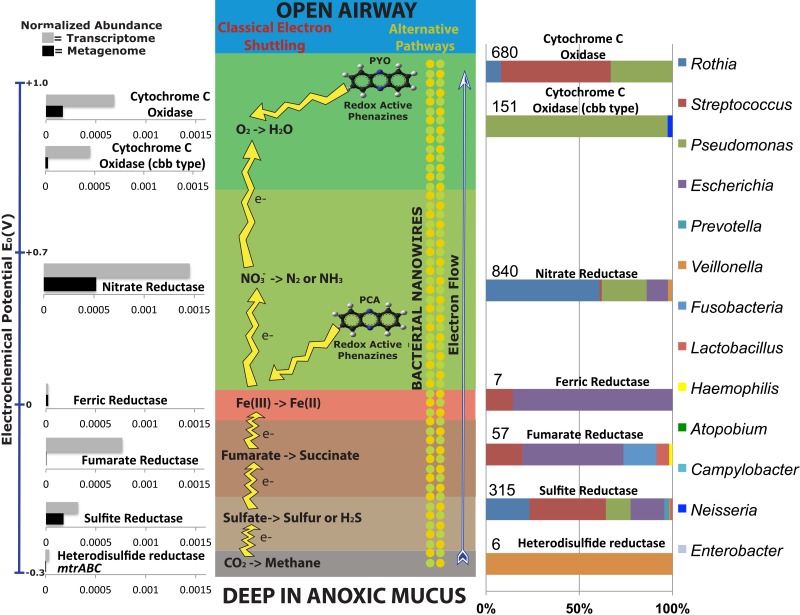
“Phenazines and nanowires are included as alternative electron shuttles (14, 71).”
BackgroundInfluentialRetractedStructure, function and diversity of the healthy human microbiome
The Human Microbiome Project Consortium (2012) · Nature · doi:10.1038/nature11234 · Cited by 11,726
Neutrophil Extracellular Traps Kill Bacteria
Brinkmann, V., Reichard, U., Goosmann, C., Fauler, B., Uhlemann, Y., Weiss, D. S., Weinrauch, Y., & Zychlinsky, A. (2004) · Science · doi:10.1126/science.1092385 · Cited by 10,268 · cited 1×
“Nucleotide metabolism may reflect the abundance of free DNA in CF sputum (41), which is believed to come from neutrophil extracellular traps (42, 43) and bacterial biofilms (44).”
BackgroundQuality control and preprocessing of metagenomic datasets
Schmieder, R., & Edwards, R. (2011) · Bioinformatics · doi:10.1093/bioinformatics/btr026 · Cited by 5,072
A Rapid, Simple Spectrophotometric Method for Simultaneous Detection of Nitrate and Nitrite
Miranda, K. M., Espey, M. G., & Wink, D. A. (2001) · Nitric Oxide · doi:10.1006/niox.2000.0319 · Cited by 3,860 · cited 1×
“nitrite levels were measured using the Greiss reagent (89), and ammonia”
MethodThe Microbial Engines That Drive Earth's Biogeochemical Cycles
Falkowski, P. G., Fenchel, T., & Delong, E. F. (2008) · Science · doi:10.1126/science.1153213 · Cited by 3,379 · cited 3×
“Reduction of nitrogen oxide species (NOx) is one of the most energetically favorable pathways of anaerobic respiration in the microbial world (63).”
BackgroundInfluentialExtracellular DNA Required for Bacterial Biofilm Formation
Whitchurch, C. B., Tolker-Nielsen, T., Ragas, P. C., & Mattick, J. S. (2002) · Science · doi:10.1126/science.295.5559.1487 · Cited by 2,203 · cited 1×
“Nucleotide metabolism may reflect the abundance of free DNA in CF sputum (41), which is believed to come from neutrophil extracellular traps (42, 43) and bacterial biofilms (44).”
BackgroundGorby, Y. A., Yanina, S., McLean, J. S., Rosso, K. M., Moyles, D., Dohnalkova, A., Beveridge, T. J., Chang, I. S., Kim, B. H., Kim, K. S., et al. (2006) · Proceedings of the National Academy of Sciences · doi:10.1073/pnas.0604517103 · Cited by 1,749 · cited 1×
“, bacterial appendages that can serve as nanowires (69) (Fig.”
BackgroundEstablishment of infection: lessons from a versatile opportunist
Lyczak, J. B., Cannon, C. L., & Pier, G. B. (2000) · Microbes and Infection · doi:10.1016/s1286-4579(00)01259-4 · Cited by 1,341
Topographical Continuity of Bacterial Populations in the Healthy Human Respiratory Tract
Charlson, E. S., Bittinger, K., Haas, A. R., Fitzgerald, A. S., Frank, I., Yadav, A., Bushman, F. D., & Collman, R. G. (2011) · American Journal of Respiratory and Critical Care Medicine · doi:10.1164/rccm.201104-0655oc · Cited by 1,144 · cited 1×
“Furthermore, healthy human sputum samples are primarily saliva, as healthy lungs have little mucus and sputum, and saliva contains large amounts of some of the same microbes that are in CF sputum (40, 90, 91).”
Background
Cited by
Global biogeography of microbial nitrogen-cycling traits in soil
Nelson, M. B., Martiny, A. C., & Martiny, J. B. H. (2016) · Proceedings of the National Academy of Sciences · doi:10.1073/pnas.1601070113 · Cited by 569
Specialized metabolites from the microbiome in health and disease
Sharon, G., Garg, N., Debelius, J., Knight, R., Dorrestein, P. C., & Mazmanian, S. K. (2014) · Cell Metabolism · doi:10.1016/j.cmet.2014.10.016 · Cited by 544
“gested a gradient of different communities, and hence of which biochemical pathways were operational, based on oxygen availability (Quinn et al., 2014).”
InfluentialFunctional effects of the microbiota in chronic respiratory disease
Budden, K. F., Shukla, S. D., Rehman, S. F., Bowerman, K. L., Keely, S., Hugenholtz, P., Armstrong-James, D. P. H., Adcock, I. M., Chotirmall, S. H., Chung, K. F., et al. (2019) · The Lancet Respiratory Medicine · doi:10.1016/s2213-2600(18)30510-1 · Cited by 446
Cystic fibrosis lung environment and Pseudomonas aeruginosa infection
Bhagirath, A. Y., Li, Y., Somayajula, D., Dadashi, M., Badr, S., & Duan, K. (2016) · BMC Pulmonary Medicine · doi:10.1186/s12890-016-0339-5 · Cited by 378
Gradients and consequences of heterogeneity in biofilms
Jo, J., Price-Whelan, A., & Dietrich, L. E. P. (2022) · Nature Reviews Microbiology · doi:10.1038/s41579-022-00692-2 · Cited by 319
The Microbiome and Human Biology
Knight, R., Callewaert, C., Marotz, C., Hyde, E. R., Debelius, J. W., McDonald, D., & Sogin, M. L. (2017) · Annual Review of Genomics and Human Genetics · doi:10.1146/annurev-genom-083115-022438 · Cited by 373
Piggyback-the-Winner in host-associated microbial communities
Silveira, C. B., & Rohwer, F. L. (2016) · npj Biofilms and Microbiomes · doi:10.1038/npjbiofilms.2016.10 · Cited by 341
“surfaces.(31,32) Independent of electron acceptor availability, dehydration of deep mucosal layers because of high mucin concentration is a strong growth limitation, making this area virtually microbial-free.”
BackgroundSelf-citationGut Microbiota Metabolism and Interaction with Food Components
Vernocchi, P., Del Chierico, F., & Putignani, L. (2020) · International Journal of Molecular Sciences · doi:10.3390/ijms21103688 · Cited by 227
“Several specialized metabolites show connections with biosynthetic pathways that are unique to an organism or to their class, and by metagenome and metatranscriptome sequencing, combination is possible in order to assign taxonomy and functions [6].”
BackgroundThe Microbiome in Cystic Fibrosis
Huang, Y. J., & LiPuma, J. J. (2016) · Clinics in Chest Medicine · doi:10.1016/j.ccm.2015.10.003 · Cited by 166
Chan, B. K., Stanley, G., Kortright, K. E., Vill, A. C., Modak, M., Ott, I. M., Sun, Y. H., Würstle, S. M., Grun, C. N., Kazmierczak, B. I., et al. (2025) · Nature Medicine · doi:10.1038/s41591-025-03678-8 · Cited by 183
“While PsA is currently the most prevalent pathogen observed in CF adult sputum, polymicrobial infections (for example, S. aureus ) are common and evident by studying CF lung microbiome utilizing culture-independent techniques that detect multiple pathogens 26,27 .”
Cowley, E. S., Kopf, S. H., LaRiviere, A., Ziebis, W., & Newman, D. K. (2015) · mBio · doi:10.1128/mbio.00767-15 · Cited by 165
“Regardless, samples with reduced reduction potentials had a higher concentration of ammonium, potentially indicating a fermentative source of ammonium (31); even lower potentials could correspond to acetogenesis (56).”
BackgroundMethodDePas, W. H., Starwalt-Lee, R., Van Sambeek, L., Ravindra Kumar, S., Gradinaru, V., & Newman, D. K. (2016) · mBio · doi:10.1128/mbio.00796-16 · Cited by 137
Nguyen, A. T., & Oglesby-Sherrouse, A. G. (2016) · Applied Microbiology and Biotechnology · doi:10.1007/s00253-016-7596-3 · Cited by 136
“Many factors impact the makeup of the bacterial population that inhabits this environment, including changes in nutrient availability and the host immune system (Quinn et al. 2014).”
BackgroundFeigelman, R., Kahlert, C. R., Baty, F., Rassouli, F., Kleiner, R. L., Kohler, P. P., Brutsche, M. H., & von Mering, C. (2017) · Microbiome · doi:10.1186/s40168-017-0234-1 · Cited by 142
Metagenomic Approaches to Analyze Antimicrobial Resistance: An Overview
de Abreu, V. A. C., Perdigão, J., & de Almeida, S. S. (2021) · Frontiers in Genetics · doi:10.3389/fgene.2020.575592 · Cited by 145
“, 2021), and biogeographical and biogeochemical processes (Quinn et al., 2014; Kuang et al., 2016; Roose-Amsaleg and Laverman, 2016; Liu et al., 2018).”
BackgroundInflammation: A Double-Edged Sword in the Response to Pseudomonas aeruginosa Infection
Lin, C. K., & Kazmierczak, B. I. (2017) · Journal of Innate Immunity · doi:10.1159/000455857 · Cited by 132
Iron at the Centre of Candida albicans Interactions
Fourie, R., Kuloyo, O. O., Mochochoko, B. M., Albertyn, J., & Pohl, C. H. (2018) · Frontiers in Cellular and Infection Microbiology · doi:10.3389/fcimb.2018.00185 · Cited by 118
Understanding human health through metatranscriptomics
Ojala, T., Kankuri, E. M., & Kankainen, M. (2023) · Trends in Molecular Medicine · doi:10.1016/j.molmed.2023.02.002 · Cited by 120
Microbial, host and xenobiotic diversity in the cystic fibrosis sputum metabolome
Quinn, R. A., Phelan, V. V., Whiteson, K. L., Garg, N., Bailey, B. A., Lim, Y. W., Conrad, D. J., Dorrestein, P. C., & Rohwer, F. L. (2016) · The ISME Journal · doi:10.1038/ismej.2015.207 · Cited by 104
“, 2015), a potentially important link between sphingolipids and the host response to the hypoxic CF lung that drives microbial physiology (Quinn et al., 2014).”
BackgroundMethodResultSelf-citationLiu, S., Rodriguez, J. S., Munteanu, V., Ronkowski, C., Sharma, N. K., Alser, M., Andreace, F., Blekhman, R., Błaszczyk, D., Chikhi, R., et al. (2025) · Nature Reviews Methods Primers · doi:10.1038/s43586-024-00376-6 · Cited by 115
Line, L., Alhede, M., Kolpen, M., Kühl, M., Ciofu, O., Bjarnsholt, T., Moser, C. E., Toyofuku, M., Nomura, N., Høiby, N., et al. (2014) · Frontiers in Microbiology · doi:10.3389/fmicb.2014.00554 · Cited by 101
“…unable to stimulate anoxic growth of the late isolate, alternative anoxic growth may occur by arginine fermentation (Vander Wauven et al., 1984) and survival could be facilitated by pyruvate fermentation (Eschbach et al., 2004) and phenazine redox cycling (Glasser et al., 2014; Quinn et al., 2014).”
BackgroundQuinn, R. A., Whiteson, K., Lim, Y.-W., Salamon, P., Bailey, B., Mienardi, S., Sanchez, S. E., Blake, D. R., Conrad, D., & Rohwer, F. L. (2014) · The ISME Journal · doi:10.1038/ismej.2014.234 · Cited by 101
“, 2010), and previously demonstrated to accumulate in WinCF capillary tubes after the growth of CF microbes (Quinn et al., 2014).”
InfluentialSelf-citationA Commensal Bacterium Promotes Virulence of an Opportunistic Pathogen via Cross-Respiration
Stacy, A., Fleming, D., Lamont, R. J., Rumbaugh, K. P., & Whiteley, M. (2016) · mBio · doi:10.1128/mbio.00782-16 · Cited by 93
“Many other human infections are also polymicrobial in nature, such as wounds (6), abscesses (7), and the lungs of cystic fibrosis patients (8).”
BackgroundThe cystic fibrosis lower airways microbial metagenome
Losada, P. M., Chouvarine, P., Dorda, M., Hedtfeld, S., Mielke, S., Schulz, A., Wiehlmann, L., & Tümmler, B. (2016) · ERJ Open Research · doi:10.1183/23120541.00096-2015 · Cited by 100
Ecological networking of cystic fibrosis lung infections
Quinn, R. A., Whiteson, K., Lim, Y. W., Zhao, J., Conrad, D. J., LiPuma, J. J., Rohwer, F. L., & Widder, S. (2016) · npj Biofilms and Microbiomes · doi:10.1038/s41522-016-0002-1 · Cited by 100
“Amino acids are known to be a principle carbon source for CF pathogens 75–78 and their metabolism has been shown to accumulate waste products such as ammonia.(30) The results of the read mapping of these pathways supports the idea that amino acid metabolism is a fundamental property of the Climax Community (Pseudomona…”
BackgroundSelf-citationBernarde, C., Keravec, M., Mounier, J., Gouriou, S., Rault, G., Férec, C., Barbier, G., & Héry-Arnaud, G. (2015) · PLoS ONE · doi:10.1371/journal.pone.0124124 · Cited by 97
“Because the physicochemical microenvironment influences CF airway microbiota composition [17], it may be hypothesized that ivacaftor treatment, by inducing changes in ion flux and improving ventilation capacity, leads to a shift in microbial communities.”
Nelson, C. E., Huang, W., Brewer, L. K., Nguyen, A. T., Kane, M. A., Wilks, A., & Oglesby-Sherrouse, A. G. (2019) · Journal of Bacteriology · doi:10.1128/jb.00754-18 · Cited by 86
“Acetyl-CoA may instead be converted to L-ornithine, a precursor of pyoverdine siderophore syn- June 2019 Volume 201 Issue 12 e00754-18 jb.asm.org 6 thesis (22), which is consistent with the modest but significant increases in proteins that synthesize L-ornithine from glutamate and acetyl-CoA (ArgA, ArgB, ArgC, and Aru…”
BackgroundLayeghifard, M., Li, H., Wang, P. W., Donaldson, S. L., Coburn, B. A., Clark, S. T., Caballero, J. D., Zhang, Y., Tullis, D. E., Yau, Y. C. W., et al. (2019) · npj Biofilms and Microbiomes · doi:10.1038/s41522-018-0077-y · Cited by 94
Cystic fibrosis lung microbiome: Opportunities to reconsider management of airway infection
Caverly, L. J., Zhao, J., & LiPuma, J. J. (2015) · Pediatric Pulmonology · doi:10.1002/ppul.23243 · Cited by 86
“Recent metagenomic and metatranscriptomic analyses of CF respiratory samples provide compelling evidence of microbial anaerobic respiration in the CF lung, suggesting that anaerobes not only reside in the airways but play a role in CF lung disease.(43) Although CF patients with or without anaerobes identified by deep…”
BackgroundNiche partitioning of a pathogenic microbiome driven by chemical gradients
Quinn, R. A., Comstock, W. J., Zhang, T., Morton, J. T., Silva, R., Tran, A., Aksenov, A. A., Nothias-Scaglia, L.-F., Wangpraseurt, D., Melnik, A. V., et al. (2018) · Science Advances · doi:10.1126/sciadv.aau1908 · Cited by 81
“aeruginosa growth by denitrification was outcompeted by anaerobes, even when nitrate was available in the WinCF medium (31).”
BackgroundSelf-citationSosinski, L. M., Christian Martin, H., Neugebauer, K. A., Ghuneim, L.-A. J., Guzior, D. V., Castillo-Bahena, A., Mielke, J., Thomas, R. G., McClelland, M., Conrad, D., et al. (2021) · Journal of Cystic Fibrosis · doi:10.1016/j.jcf.2021.11.003 · Cited by 82
Self-citationNitrogen Cycling Potential of a Grassland Litter Microbial Community
Albright, M., Berlemont, R., Martiny, A. C., & Martiny, J. B. H. (2015) · Applied and Environmental Microbiology · doi:10.1128/aem.02222-15 · Cited by 81
Neutrophilic proteolysis in the cystic fibrosis lung correlates with a pathogenic microbiome
Quinn, R. A., Adem, S., Mills, R. H., Comstock, W. J., Goldasich, L. D., Humphrey, G., Aksenov, A. A., Melnik, A., Silva, R., Ackermann, G. L., et al. (2019) · Microbiome · doi:10.1186/s40168-019-0636-3 · Cited by 79
Self-citationBiomarkers for cystic fibrosis drug development
Muhlebach, M. S., Clancy, J., Heltshe, S. L., Ziady, A. G., Kelley, T., Accurso, F. J., Pilewski, J. M., Mayer-Hamblett, N., Joseloff, E., & Sagel, S. D. (2016) · Journal of Cystic Fibrosis · doi:10.1016/j.jcf.2016.10.009 · Cited by 77
“Further, metabolic activities in CF samples show less patient-to-patient variation than the total microbiome and differ from results in other pulmonary conditions [74], and metabolic profiles of bacteria are dynamic with adaptation to the lung disease [75].”
Selective pressures during chronic infection drive microbial competition and cooperation
Baishya, J., & Wakeman, C. A. (2019) · npj Biofilms and Microbiomes · doi:10.1038/s41522-019-0089-2 · Cited by 70
Whiley, R. A., Fleming, E. V., Makhija, R., & Waite, R. D. (2015) · PLoS ONE · doi:10.1371/journal.pone.0115513 · Cited by 73
“Given the heterogeneity of sites within a single CF lung and between patients both in terms of environmental factors and microbial composition [24,34] it is clear that a deeper knowledge of the nature of interactive behaviour within the communities is required if we are to understand CF microbial community dynamics an…”
BackgroundMahboubi, M. A., Carmody, L. A., Foster, B. K., Kalikin, L. M., VanDevanter, D. R., & LiPuma, J. J. (2015) · Journal of Clinical Microbiology · doi:10.1128/jcm.02299-15 · Cited by 66
“The concern that anaerobic species merely represent contamination from the upper airway has been further assuaged by a study that identified anaerobic species in deep tissue samples of lung resected from a child with CF (27) and by other recent work that provides evidence of microbial anaerobic respiration in CF airwa…”
BackgroundCystic Fibrosis Airway Microbiome: Overturning the Old, Opening the Way for the New
O’Toole, G. A. (2017) · Journal of Bacteriology · doi:10.1128/jb.00561-17 · Cited by 65
The cystic fibrosis lung microenvironment alters antibiotic activity: causes and effects
den Bossche, S. V., Broe, E. D., Coenye, T., Braeckel, E. V., & Crabbé, A. (2021) · European Respiratory Review · doi:10.1183/16000617.0055-2021 · Cited by 65
SutA is a bacterial transcription factor expressed during slow growth in Pseudomonas aeruginosa
Babin, B. M., Bergkessel, M., Sweredoski, M. J., Moradian, A., Hess, S. Y., Newman, D. K., & Tirrell, D. A. (2016) · Proceedings of the National Academy of Sciences · doi:10.1073/pnas.1514412113 · Cited by 65
“aeruginosa can generate energy in this environment by using nitrate as the terminal electron acceptor for respiration (9), levels of nitrate may be too low or too variable for nitrate respiration to represent the sole energy source in anoxic zones.”
BackgroundJaggi, T. K., Agarwal, R., Tiew, P. Y., Shah, A., Lydon, E., Hage, C. A., WATERER, G. W., Langelier, C., Delhaès, L., & Chotirmall, S. H. (2024) · European Respiratory Journal · doi:10.1183/13993003.00803-2024 · Cited by 64
Deciphering the Ecology of Cystic Fibrosis Bacterial Communities: Towards Systems-Level Integration
Bevivino, A., Bacci, G., Dřevínek, P., Nelson, M. T., Hoffman, L. R., & Mengoni, A. (2019) · Trends in Molecular Medicine · doi:10.1016/j.molmed.2019.07.008 · Cited by 67
“, all microorganisms colonizing a defined environment as well as their genomic content and the surrounding environmental conditions) [17].”
BackgroundCystic Fibrosis: Overview of the Current Development Trends and Innovative Therapeutic Strategies
Almughem, F. A., Aldossary, A. M., Tawfik, E. A., Alomary, M. N., Alharbi, W. S., Alshahrani, M. Y., & Alshehri, A. A. (2020) · Pharmaceutics · doi:10.3390/pharmaceutics12070616 · Cited by 59
Fouhy, F., Ronan, N. J., O’Sullivan, Ó., McCarthy, Y., Walsh, A. M., Murphy, D. M., Daly, M., Flanagan, E., Fleming, C., McCarthy, M. M., et al. (2017) · Scientific Reports · doi:10.1038/s41598-017-06880-y · Cited by 55
Ecological Succession of Polymicrobial Communities in the Cystic Fibrosis Airways
Khanolkar, R. A., Clark, S. T., Wang, P. W., Hwang, D. M., Yau, Y. C. W., Waters, V. J., & Guttman, D. S. (2020) · mSystems · doi:10.1128/msystems.00809-20 · Cited by 52
“position, the functional microbial metagenome is less variable (31).”
BackgroundMetabolic Modeling of Cystic Fibrosis Airway Communities Predicts Mechanisms of Pathogen Dominance
Henson, M. A., Orazi, G., Phalak, P., & O’Toole, G. A. (2019) · mSystems · doi:10.1128/msystems.00026-19 · Cited by 53
Lumacaftor/ivacaftor changes the lung microbiome and metabolome in cystic fibrosis patients
Neerincx, A. H., Whiteson, K., Phan, J. L., Brinkman, P., Abdel‐Aziz, M. I., Weersink, E. J. M., Altenburg, J., Majoor, C. J., der Zee, A. H. M., & Bos, L. D. J. (2021) · ERJ Open Research · doi:10.1183/23120541.00731-2020 · Cited by 52
“Lastly, it can be postulated that Pseudomonas aeruginosa is challenged by the changing regional environment due to improved CFTR function [9] and improved killing capacity of macrophages [27], but adapts to the new circumstances [17, 28].”
Self-citationScott, J. E., & O’Toole, G. A. (2019) · Journal of Bacteriology · doi:10.1128/jb.00115-19 · Cited by 48
Bacci, G., Mengoni, A., Fiscarelli, E. V., Segata, N., Taccetti, G., Dolce, D., Paganin, P., Morelli, P., Assanti, V. T. G., Alessandri, A. D., et al. (2017) · International Journal of Molecular Sciences · doi:10.3390/ijms18081654 · Cited by 47
“The metabolic pathway distribution described in this work was in accordance with the one described in other studies [19,32], with pathways related to amino acid catabolism, nucleotide metabolism, and stress responses reporting high values in both normal/mild and severe patients.”
ResultThe airway microbiota in early cystic fibrosis lung disease
Frayman, K. B., Armstrong, D., Grimwood, K., & Ranganathan, S. (2017) · Pediatric Pulmonology · doi:10.1002/ppul.23782 · Cited by 49
Einarsson, G. G., Ronan, N. J., Mooney, D., McGettigan, C., Mullane, D., NíChróinín, M., Shanahan, F., Murphy, D. M., McCarthy, M. J. H., McCarthy, Y., et al. (2021) · Journal of Cystic Fibrosis · doi:10.1016/j.jcf.2020.12.023 · Cited by 45
Decreased efficacy of antimicrobial agents in a polymicrobial environment
O’Brien, T. J., Figueroa, W., & Welch, M. (2022) · The ISME Journal · doi:10.1038/s41396-022-01218-7 · Cited by 48
Bos, L. D. J., Meinardi, S., Blake, D. R., & Whiteson, K. (2016) · Journal of Breath Research · doi:10.1088/1752-7163/10/4/047103 · Cited by 45
Self-citationComplex and unexpected outcomes of antibiotic therapy against a polymicrobial infection
Ghuneim, L.-A. J., Raghuvanshi, R., Neugebauer, K. A., Guzior, D. V., Christian Martin, H., Schena, B., Feiner, J., Castillo-Bahena, A., Mielke, J., McClelland, M., et al. (2022) · The ISME Journal · doi:10.1038/s41396-022-01252-5 · Cited by 41
“described in CF sputum [31], when the microbiome alpha diversity increases the metabolome diversity decreases, likely reflecting consumption of different metabolites by a more diverse microbiome (Fig.”
BackgroundSelf-citationSpero, M. A., & Newman, D. K. (2018) · mBio · doi:10.1128/mbio.01400-18 · Cited by 39
“Transcription of the nar operon is activated under hypoxic/anoxic conditions and further stimulated by the presence of nitrate (25), so it is unsurprising that nar gene expression (26, 27) and the metabolic products of nitrate respiration have been detected in CF patient sputum (21, 28) and that Nar antibodies have be…”
BackgroundPossible role of anaerobes in the pathogenesis of nontuberculous mycobacterial infection
Yamasaki, K., Mukae, H., Kawanami, T., Fukuda, K., Noguchi, S., Akata, K., Naito, K., Oda, K., Ogoshi, T., Nishida, C., et al. (2015) · Respirology · doi:10.1111/resp.12536 · Cited by 38
Effect of Shear Stress on Pseudomonas aeruginosa Isolated from the Cystic Fibrosis Lung
Dingemans, J., Monsieurs, P., Yu, S., Crabbé, A., Förstner, K. U., Malfroot, A., Cornélis, P., & Houdt, R. V. (2016) · mBio · doi:10.1128/mbio.00813-16 · Cited by 42
“However, a recent study has shown that nitrate levels in ASM (identical to the ASM used here, except for the addition of 3 g/ml ferritin) are comparable to those found in CF sputum samples (in the low millimolar range) (51).”
ResultLuo, Y., McAuley, D. F., Fulton, C. R., Sá‐Pessoa, J., McMullan, R., & Lundy, F. T. (2021) · PLoS ONE · doi:10.1371/journal.pone.0249547 · Cited by 40
“Indeed the polymicrobial nature of biofilms associated with infections such as cystic fibrosis [3,4] and chronic wounds [5] is increasingly recognised as an important contributor to disease pathogenesis.”
BackgroundHarrison, F., McNally, A., da Silva, A. C., Heeb, S., & Diggle, S. P. (2017) · The ISME Journal · doi:10.1038/ismej.2017.103 · Cited by 41
“A plethora of data on the chemical and microbial ecology of chronic infection is now available, providing abundant material for researchers wishing to study the natural history of pathogens in the lab (for example, for CF: Yang et al., 2011; Folkesson et al., 2012; Quinn et al., 2014; Cowley et al., 2015; Kyle et al.,…”
BackgroundWidder, S., Zhao, J., Carmody, L. A., Zhang, Q., Kalikin, L. M., Schloss, P. D., & LiPuma, J. J. (2021) · The ISME Journal · doi:10.1038/s41396-021-01129-z · Cited by 38
“Nitrogen metabolism is a critical feature of CF airway community activity with denitrification and nitrogen cycling playing critical roles in sustaining mixed bacterial populations in vivo [48].”
BackgroundKramer, R., Sauer‐Heilborn, A., Welte, T., Jáuregui, R., Brettar, I., Guzmán, C. A., & Höfle, M. G. (2015) · PLoS ONE · doi:10.1371/journal.pone.0117436 · Cited by 31
“Studies on the biogeochemical role of these taxa could improve the understanding of the functioning of polymicrobial assemblages in the CF lung as demonstrated recently by a study including metatransciptome analyses [32].”
BackgroundInfluentialMulti-Omics Study of Keystone Species in a Cystic Fibrosis Microbiome
Silveira, C. B., Güemes, A. G. C., Uranga, C., Baker, J. L., Edlund, A., Rohwer, F. L., & Conrad, D. J. (2021) · International Journal of Molecular Sciences · doi:10.3390/ijms222112050 · Cited by 31
Self-citationSalehi, B., Dimitrijević, M., Aleksić, A., Neffe‐Skocińska, K., Zielińska, D., Kołożyn‐Krajewska, D., Sharifi‐Rad, J., Stojanović-Radić, Z. Z., Prabu, S. M., Rodrigues, C. F., et al. (2020) · Critical Reviews in Food Science and Nutrition · doi:10.1080/10408398.2020.1760202 · Cited by 34
“For instance, although cystic fibrosis has for quite some time been viewed as an illness with great Mendelian legacy, the lung microbiome assumes an imperative job in long haul guess (Quinn et al. 2014).”
BackgroundRetractedPneumocystis jirovecii in Patients With Cystic Fibrosis: A Review
Bonnet, P. L., Gal, S. L., Calderón, E. J., Delhaès, L., Quinio, D., Robert-Gangneux, F., Ramel, S., & Nevez, G. (2020) · Frontiers in Cellular and Infection Microbiology · doi:10.3389/fcimb.2020.571253 · Cited by 24
Hardouin, P., Chiron, R., Marchandin, H., Armengaud, J., & Grenga, L. (2021) · Genes · doi:10.3390/genes12060892 · Cited by 24
“The much more extensive interpatient variation observed in terms of taxonomic composition of the microbiome as compared to functional abundances was corroborated by the comprehensive view of the major physiological processes activated by microbes in the CF lung [46].”
BackgroundVernocchi, P., CHIERICO, F. D., Quagliariello, A., Ercolini, D., Lucidi, V., & Putignani, L. (2017) · Nutrients · doi:10.3390/nu9121342 · Cited by 23
“Quinn reported also high abundance of folate synthesis in CF patients [65].”
BackgroundInfluentialBéquignon, É., Dupuy, L., Escabasse, V., Zerah-Lancner, F., Bassinet, L., Honoré, I., Legendre, M., du Mayne, M. D., Crestani, B., Escudier, E., et al. (2019) · Journal of Clinical Medicine · doi:10.3390/jcm8091495 · Cited by 22
“aeruginosa, which induce after amino acid degradation a high level of ammonia in cystic fibrosis sputum, which can influence the sputum pH [24].”
BackgroundInfluentialO’Brien, T. J., & Welch, M. (2019) · Frontiers in Microbiology · doi:10.3389/fmicb.2019.02713 · Cited by 26
Kristensen, M., Groot, K. M. D. W., Berkers, G., Chu, M. L. J. N., Arp, K., Ghijsen, S. C., Heijerman, H. G. M., Arets, H. G. M., Majoor, C. J., Janssens, H. M., et al. (2021) · Journal of Personalized Medicine · doi:10.3390/jpm11050350 · Cited by 22
“Pathophysiological factors in CF which can influence airway microbiota composition include altered chloride transport resulting in dehydrated airways surfaces, decreased bicarbonate ion transport leading to dense immovable mucus, lowered pH in airway surface fluid disrupting innate immune function, and decreased oxyge…”
BackgroundPookhao, N., Sohn, M. B., Li, Q., Jenkins, I., Du, R., Jiang, H., & An, L. (2014) · Bioinformatics · doi:10.1093/bioinformatics/btu635 · Cited by 25
Bishop, S. L., Drikic, M., Wacker, S., Chen, Y. Y., Kozyrskyj, A. L., & Lewis, I. A. (2022) · Mucosal Immunology · doi:10.1038/s41385-022-00553-4 · Cited by 19
Quinn, R. A., Whiteson, K., Lim, Y.-W., Salamon, P., Bailey, B., Mienardi, S., Sanchez, S. E., Blake, D. R., Conrad, D., & Rohwer, F. L. (2015) · The ISME Journal · doi:10.1038/ismej.2014.266 · Cited by 19
Self-citationAnsari, M. A., & Alomary, M. N. (2024) · Microbial Pathogenesis · doi:10.1016/j.micpath.2024.106729 · Cited by 18
The intestinal virome in children with cystic fibrosis differs from healthy controls
Coffey, M. J., Low, I., Stelzer‐Braid, S., Wemheuer, B., Garg, M., Thomas, T., Jaffé, A., Rawlinson, W. D., & Ooi, C. Y. (2020) · PLoS ONE · doi:10.1371/journal.pone.0233557 · Cited by 18
Gallagher, T. M., Phan, J. L., Oliver, A. S., Chase, A. B., England, W., Wandro, S., Hendrickson, C. L., Riedel, S. F., & Whiteson, K. (2019) · Journal of Bacteriology · doi:10.1128/jb.00478-18 · Cited by 17
Self-citationWillsey, G. G., Eckstrom, K. M., LaBauve, A. E., Hinkel, L. A., Schutz, K. C., Meagher, R. J., LiPuma, J. J., & Wargo, M. J. (2019) · Journal of Bacteriology · doi:10.1128/jb.00074-19 · Cited by 19
O’Brien, T. J., & Welch, M. (2019) · Future Microbiology · doi:10.2217/fmb-2019-0200 · Cited by 19
Mechanisms of chlorate toxicity and resistance in Pseudomonas aeruginosa
Spero, M. A., Jones, J., Lomenick, B., Chou, T., & Newman, D. K. (2022) · Molecular Microbiology · doi:10.1111/mmi.14972 · Cited by 12
“…that nitrate respiration is an important metabolism that supports P. aeruginosa growth and survival during infection (Beckmann et al., 2005; Kolpen et al., 2014; Palmer, Brown, et al., 2007; Quinn et al., 2014), becoming resistant to chlorate could hinder pathogen fitness in such environments.”
BackgroundInfluentialHardouin, P., Pible, O., Marchandin, H., Culotta, K., Armengaud, J., Chiron, R., & Grenga, L. (2022) · Frontiers in Microbiology · doi:10.3389/fmicb.2022.975883 · Cited by 11
“Our understanding of the polymicrobial characteristics of CF airway infections and, more generally, of the CF respiratory microbiome is driven by pioneering studies applying next-generation sequencing (NGS)-based strategies (van der Gast et al., 2011; Quinn et al., 2014; Coburn et al., 2015; Feigelman et al., 2017).”
The contribution of respiratory microbiome analysis to a treatable traits model of care
Taylor, S., O’Farrell, H. E., Simpson, J. L., Yang, I. A., & Rogers, G. B. (2018) · Respirology · doi:10.1111/resp.13411 · Cited by 12
Emerging cellular and molecular interactions between the lung microbiota and lung diseases
Li, X., & Meng, X. (2021) · Critical Reviews in Microbiology · doi:10.1080/1040841x.2021.1992345 · Cited by 11
“2013), such as the amino acid catabolism, folate, and bile acid biosynthesis, nitrate reduction, and lipoic acid biosynthesis pathways (Quinn et al. 2014; Reen et al. 2016).”
BackgroundInfluentialComstock, W. J., Huh, E., Weekes, R., Watson, C., Xu, T., Dorrestein, P. C., & Quinn, R. A. (2017) · Journal of Visualized Experiments · doi:10.3791/55532 · Cited by 12
Self-citationKaushik, K. S., Ratnayeke, N., Katira, P., & Gordon, V. D. (2015) · Journal of The Royal Society Interface · doi:10.1098/rsif.2015.0018 · Cited by 11
Pienkowska, K., Wiehlmann, L., & Tümmler, B. (2017) · Microbes and Infection · doi:10.1016/j.micinf.2017.12.002 · Cited by 10
Enns, C. B., Harding, J. C. S., & Loewen, M. E. (2019) · American Journal of Physiology-Gastrointestinal and Liver Physiology · doi:10.1152/ajpgi.00348.2018 · Cited by 10
“This viscous mucous impairs ciliary movement and clearance, resulting in the formation of mucous plaques which have been shown to contribute to colonization of Pseudomonas aeruginosa in the airways (6, 32, 52).”
BackgroundPseudomonas aeruginosa transcriptome analysis of metal restriction in ex vivo cystic fibrosis sputum
Neff, S. L., Doing, G., Reiter, T. E., Hampton, T. H., Greene, C. S., & Hogan, D. A. (2024) · Microbiology Spectrum · doi:10.1128/spectrum.03157-23 · Cited by 9
“They also identified a relatively high abundance of siderophore transporter genes in the CF samples (72).”
BackgroundGut Microbiome and Diet Interaction
Ogidi, O. I., & Felagha, I. (2024) · Advances in medical diagnosis, treatment, and care (AMDTC) book series · doi:10.4018/979-8-3693-5528-2.ch012 · Cited by 10
Metabolomics: A Promising Tool to Study Disease Biomarkers and Host-Pathogen Interactions
Megha, M., Preeti, & Prasad, T. (2021) · Springer eBooks · doi:10.1007/978-981-16-0691-5_22 · Cited by 9
Kim, J. H., Spero, M., Lebig, E. G., Lonergan, Z. R., Trindade, I. B., Newman, D. K., & Martins‐Green, M. M. (2023) · Advances in Wound Care · doi:10.1089/wound.2023.0036 · Cited by 10
Wargo, M. J. (2019) · mBio · doi:10.1128/mbio.00883-19 · Cited by 10
“Microbial metabolism, including from anaerobes, has received quite a bit of attention in the CF microbiology community, and anaerobic metabolism has been suggested to impact the CF lung microbiota and has been linked to patient stability and exacerbation (30).”
BackgroundBucki, R., & Janmey, P. A. (2016) · Current Opinion in Colloid & Interface Science · doi:10.1016/j.cocis.2016.08.006 · Cited by 8
Gestal, M. C., Oates, A. E., Akob, D. M., Criss, A. K., Speakers, H.-M. R., Fidel, P. L., Watnick, P. I., Young, V. B., Zackular, J. P., Casadevall, A., et al. (2024) · mSphere · doi:10.1128/msphere.00256-24 · Cited by 7
Neutrophil extracellular traps as the main source of eDNA
Cieśluk, M., Piktel, E., Wątek, M., Durnaś, B., Wollny, T., Król, G., & Bucki, R. (2017) · Medical Studies · doi:10.5114/ms.2017.68709 · Cited by 7
Conceptual Exchanges for Understanding Free-Living and Host-Associated Microbiomes
Pfister, C. A., Light, S. H., Bohannan, B. J. M., Schmidt, T. M., Martiny, A. C., Hynson, N. A., Devkota, S., David, L. A., & Whiteson, K. (2022) · mSystems · doi:10.1128/msystems.01374-21 · Cited by 8
“Evidence for active microbial metabolism across the oxygen gradient has been accumulating, from fermentation products produced by facultative anaerobes found in CF breath samples (55) to the potential for nitrate reduction and an accumulation of ammonium (56) and nitrous oxide production indicative of denitrification…”
BackgroundSelf-citationMicrobiome in Chronic Lung Diseases
Mammen, M. J., & Sethi, S. (2017) · Barcelona Respiratory Network · doi:10.23866/brnrev:2017-m0042 · Cited by 5
Dickson, R. P., & Cox, M. J. (2019) · European Respiratory Society eBooks · doi:10.1183/2312508x.10015418 · Cited by 8
98 The cystic fibrosis lower airways microbial metagenome
Losada, P. M., Chouvarine, P., Dorda, M., Hedtfeld, S., Mielke, S., Schulz, A., Wiehlmann, L., & Tümmler, B. (2016) · Journal of Cystic Fibrosis · doi:10.1016/s1569-1993(16)30337-x · Cited by 7
Gonzalez, C. T., Christian Martin, H., Crane, M., Gutierrez, K., Thomas, J. F., Remisoski, L., Okros, M., Fu, Y., Guzior, D. V., Finkhouse, D., et al. (2025) · The ISME Journal · doi:10.1093/ismejo/wraf125 · Cited by 4
“…was reacted with 150 μ L of Griess reagent (0.1% N-(1-naphthyl)ethylenediamine-dihydrochloride, 1% sulphanilic acid, 3% H 3 PO 4 ), and measured at an absorbance wavelength of 548 nm with Synergy HTX multi-mode plate reader using Gen5 software (BioTek Instruments Inc., Winooski, VT, USA) [ 6, 14].”
InfluentialSelf-citationMathuria, A., Chaudhary, A., Sharma, H., & Mani, I. (2024) · Springer eBooks · doi:10.1007/978-981-97-1844-3_9 · Cited by 8
Tuncay, R. M., & Sancak, Y. C. (2023) · Turkish Journal of Agriculture - Food Science and Technology · doi:10.24925/turjaf.v11i2.355-362.5817 · Cited by 4
“common colonizer of warm-blooded animals and human mucocutaneous membranes (Schleifer and Bell, 2009; Marker et al., 2013; Quinn et al., 2014).”
Background
Metadata
- Authors
- Quinn, R. A., Lim, Y. W., Maughan, H., Conrad, D., Rohwer, F., & Whiteson, K. L.
- Affiliations
- San Diego State University (US)
- Ronin Institute (US)
- University of California San Diego (US)
- Venue
- mBio
- Publisher
- American Society for Microbiology
- Published
- 2014-05
- Volume
- 5
- Issue
- 2
- Pages
- e00956-13
- ISSN
- 2150-7511 (ISSN-L)
- 2161-2129
- PMC
- PMC3967525
- OpenAlex
- W1997791706
- Cited by
- 115
- References
- 97
- Citations by year
- 2026: 3 · 2025: 2 · 2024: 6 · 2023: 4 · 2022: 6 · 2021: 14 · 2020: 8 · 2019: 18 · 2018: 5 · 2017: 14 · 2016: 16 · 2015: 12 · 2014: 7
- FWCI
- 13.11
- Type
- journal article
- Language
- en
- Open access
- gold
- doi.org
- Licence
- cc-by-nc-sa
- creativecommons.org/licenses/by-nc-sa/3.0/ (vor)
- journals.asm.org/non-commercial-tdm-license (tdm)
- Locations
- mBio (publishedVersion, cc-by-nc-sa)
- Europe PMC (PubMed Central) (publishedVersion, cc-by-nc-sa)
- PubMed Central (publishedVersion, cc-by-nc-sa)
- PubMed (publishedVersion)
- DOAJ (DOAJ: Directory of Open Access Journals) (submittedVersion, cc-by-sa)
- eScholarship (California Digital Library) (submittedVersion)
- Funders
- Cystic Fibrosis Foundation
- National Institutes of Health
- National Institute of General Medical Sciences (R01GM095384)
- Topics
- Health Sciences › Medicine › Pulmonary and Respiratory Medicine › Cystic Fibrosis Research Advances
- Life Sciences › Biochemistry, Genetics and Molecular Biology › Molecular Biology › Bacterial biofilms and quorum sensing
- Health Sciences › Medicine › Microbiology (medical) › Infections and bacterial resistance
- Keywords
- polymicrobial communities, opportunistic pathogens, metagenomics, metatranscriptomics, amino acid catabolism, folate biosynthesis, lipoic acid biosynthesis, oxidative phosphorylation, nitrate reduction, ammonia accumulation, Pseudomonas, Rothia, antibiotic resistance
- MeSH terms
- Bacterial Infections, Cystic Fibrosis, Humans, Lung, Sputum, Metabolic Networks and Pathways, Metagenome, Biota, High-Throughput Nucleotide Sequencing, Transcriptome
About these checks
Registry, retraction, Cites and statistics results are computed, not judged, with one exception: a printed reference that no index lists is read once by a model before it counts as a citation error. Claims are extracted by a model and kept only when their quote appears verbatim in the text; each cited source is then checked, with a model’s help, for whether it says what the claim relies on. Those verdicts can be wrong — read the claim’s quote and the cited source before relying on one.
Statistics and arithmetic are recomputed, not judged.
Confidence bands are shown only for fields calibrated on our annotated test set. None is calibrated yet, so no band is shown.
What counts as a claim ›How we measure confidence ›How we check this ›
Are you an author, or do you see a problem with this page? Request a review
Data sources
Bibliographic data: Semantic Scholar, OpenAlex, Crossref.
Contains information from the Semantic Scholar Academic Graph Datasets, made available under the ODC Attribution License (ODC-BY 1.0).
Semantic Scholar’s data is described in: Kinney, R., et al. (2023). The Semantic Scholar Open Data Platform. arXiv:2301.10140.
