

Effectiveness of physical activity interventions for improving depression, anxiety and distress: an overview of systematic reviews
Open accessThe DOI matches its Crossref record; 140 of the 141 references it cites were found in a registry or an index.
Abstract
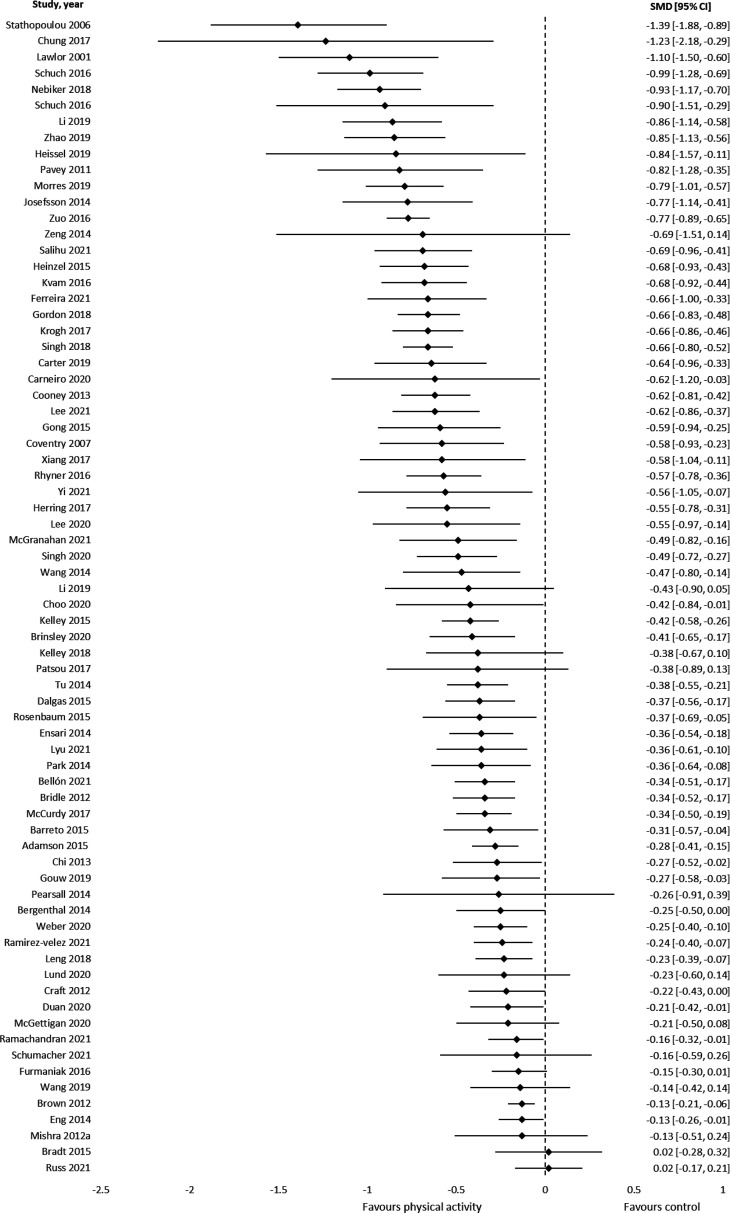
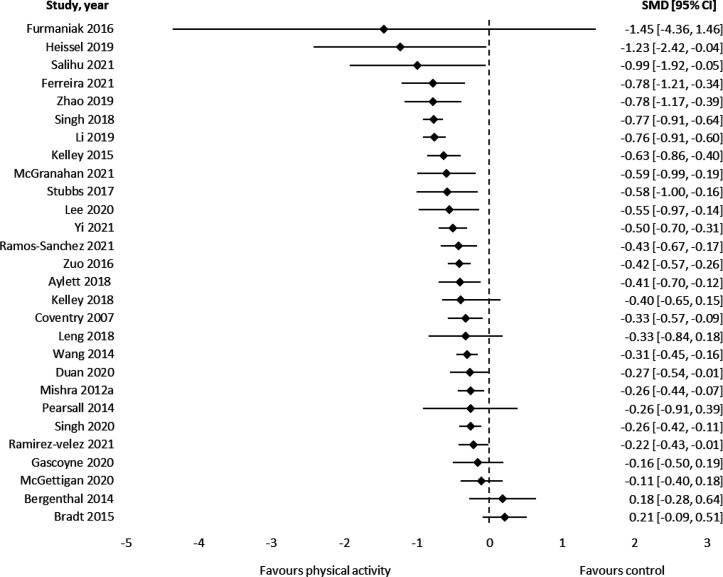
Objective: To synthesise the evidence on the effects of physical activity on symptoms of depression, anxiety and psychological distress in adult populations. Design: Umbrella review. Data sources: Twelve electronic databases were searched for eligible studies published from inception to 1 January 2022. Eligibility criteria for selecting studies: Systematic reviews with meta-analyses of randomised controlled trials designed to increase physical activity in an adult population and that assessed depression, anxiety or psychological distress were eligible. Study selection was undertaken in duplicate by two independent reviewers. Results: Ninety-seven reviews (1039 trials and 128 119 participants) were included. Populations included healthy adults, people with mental health disorders and people with various chronic diseases. Most reviews (n=77) had a critically low A MeaSurement Tool to Assess systematic Reviews score. Physical activity had medium effects on depression (median effect size=−0.43, IQR=−0.66 to –0.27), anxiety (median effect size=−0.42, IQR=−0.66 to –0.26) and psychological distress (effect size=−0.60, 95% CI −0.78 to –0.42), compared with usual care across all populations. The largest benefits were seen in people with depression, HIV and kidney disease, in pregnant and postpartum women, and in healthy individuals. Higher intensity physical activity was associated with greater improvements in symptoms. Effectiveness of physical activity interventions diminished with longer duration interventions. Conclusion and relevance: Physical activity is highly beneficial for improving symptoms of depression, anxiety and distress across a wide range of adult populations, including the general population, people with diagnosed mental health disorders and people with chronic disease. Physical activity should be a mainstay approach in the management of depression, anxiety and psychological distress. PROSPERO registration number: CRD42021292710.
Overview
The claims and statistics of this paper haven’t been checked yet.
Free: it reads the open-access text and checks the first 5 claims that cite a source we can check. Create a free account to check every claim.
Integrity signals
Registry
Cites
Statistics
Figures
Verification
Claims the paper makes
The claims and statistics of this paper haven’t been checked yet.
Free: it reads the open-access text and checks the first 5 claims that cite a source we can check. Create a free account to check every claim.
Claims other papers make about this one
Each is checked against this paper’s own text: does it say what the citing paper says it does?
The cited source doesn’t support the claim as written.
In the citing paper
“Because we simultaneously assessed more than 200 studies, credible intervals were narrower than those in most existing meta-analyses.13”
From Effect of exercise for depression: systematic review and network meta-analysis of randomised controlled trials (2024) · cites this paper as [13]
Checked by a reasoning model — may be wrong.
Experimental — accuracy not yet measuredThe source backs part of the claim, not all of it — or backs it for a different population, condition or comparison.
In the citing paper
“challenges remain regarding how to optimise exercise design to improve adherence rates 28 .”
From Effect of exercise on depression and anxiety symptoms: systematic umbrella review with meta-meta-analysis (2026) · cites this paper as [28]
Experimental — accuracy not yet measuredThe source backs part of the claim, not all of it — or backs it for a different population, condition or comparison.
In the citing paper
“physical activity is known to boost mood and reduce symptoms of depression and anxiety, which are often associated with loneliness.71”
From A Longitudinal Study of Loneliness Before the End of the COVID-19 Pandemic: Trajectories, Predictors, and Impact on Chinese Adolescent Mental Health (2024) · cites this paper as [71]
Experimental — accuracy not yet measuredThe source backs part of the claim, not all of it — or backs it for a different population, condition or comparison.
In the citing paper
“Our review included more studies than many existing reviews on exercise for depression.13 22 27 28”
From Effect of exercise for depression: systematic review and network meta-analysis of randomised controlled trials (2024) · cites this paper as [13]
Experimental — accuracy not yet measuredThe source backs part of the claim, not all of it — or backs it for a different population, condition or comparison.
In the citing paper
“our study and the study by Singh et al13 both found that effects were stronger with vigorous intensity exercise compared with light and moderate exercise.”
From Effect of exercise for depression: systematic review and network meta-analysis of randomised controlled trials (2024) · cites this paper as [13]
Experimental — accuracy not yet measured
5 more claims about this paper
Create a free account to see every claim other papers make about this one.
Self-check
Percentages, sums and reported differences re-computed from the paper’s own numbers.
The self-check needs the paper’s full text.
Citations
Cites
The PRISMA 2020 statement: An updated guideline for reporting systematic reviews
Page, M. J., McKenzie, J. E., Bossuyt, P. M., Boutron, I., Hoffmann, T. C., Mulrow, C. D., Shamseer, L., Tetzlaff, J. M., Akl, E. A., Brennan, S. E., et al. (2021) · BMJ · doi:10.1136/bmj.n71 · Cited by 108,283
Bias in meta-analysis detected by a simple, graphical test
Egger, M., Smith, G. D., Schneider, M., & Minder, C. (1997) · BMJ · doi:10.1136/bmj.315.7109.629 · Cited by 56,722
Shea, B. J., Reeves, B. C., Wells, G., Thuku, M., Hamel, C., Moran, J., Moher, D., Tugwell, P., Welch, V., Kristjansson, E., et al. (2017) · BMJ · doi:10.1136/bmj.j4008 · Cited by 10,636 · cited 2×
“29”
Background(1985) · Europe PMC (PubMed Central) · Cited by 9,143
The PRISMA 2020 statement: an updated guideline for reporting systematic reviews
Page, M. J., McKenzie, J., Bossuyt, P., Boutron, I., Hoffmann, T., mulrow, C., Shamseer, L., Tetzlaff, J., Akl, E., Brennan, S. E., et al. (2020) · doi:10.31222/osf.io/v7gm2_v1 · Cited by 8,090
Santomauro, D. F., Mantilla Herrera, A. M., Shadid, J., Zheng, P., Ashbaugh, C., Pigott, D. M., Abbafati, C., Adolph, C., Amlag, J. O., Aravkin, A. Y., et al. (2021) · The Lancet · doi:10.1016/s0140-6736(21)02143-7 · Cited by 5,444
The PRISMA 2020 statement: an updated guideline for reporting systematic reviews
Page, M. J., McKenzie, J., Bossuyt, P., Boutron, I., Hoffmann, T., mulrow, C., Shamseer, L., Tetzlaff, J., Akl, E., Brennan, S. E., et al. (2020) · doi:10.31222/osf.io/v7gm2 · Cited by 5,177
Qiu, J., Shen, B., Zhao, M., Wang, Z., Xie, B., & Xu, Y. (2020) · General Psychiatry · doi:10.1136/gpsych-2020-100213 · Cited by 4,307
Cipriani, A., Furukawa, T. A., Salanti, G., Chaimani, A., Atkinson, L. Z., Ogawa, Y., Leucht, S., Ruhe, H. G., Turner, E. H., Higgins, J. P. T., et al. (2018) · The Lancet · doi:10.1016/s0140-6736(17)32802-7 · Cited by 3,541
Cooney, G. M., Dwan, K., Greig, C. A., Lawlor, D. A., Rimer, J., Waugh, F. R., McMurdo, M., & Mead, G. E. (2013) · Cochrane Database of Systematic Reviews · doi:10.1002/14651858.cd004366.pub6 · Cited by 1,834
Research works printed but not linked: 2
- Oxford Centre for Evidence-Based Medicine. Levels of evidence (March 2009). University of Oxford, 2022.
- Ramírez-Vélez R, Zambom-Ferraresi F, García-Hermoso A, et al. Evidence-based exercise recommendations to improve mental wellbeing in women with breast cancer during active treatment: a systematic review and meta-analysis. Cancers (Basel) 2021; 13: 264. 10.3390/cancers13020264 33445739 PMC7828164 · DOI
Cited by
Items 901–999 of 999
Marschin, V., & Herbert, C. (2026) · Frontiers in Sports and Active Living · doi:10.3389/fspor.2026.1774292
“Meta-analytic findings indicate that even small increases in PA are associated with improvements in anxiety and psychological distress across healthy and clinical adult populations (10, 11).”
InfluentialPatient preferences for the integration of exercise for depression into mental health care
Dregney, T. M., Kaja, S. M., Eadeh, H., Adkins-Hempel, M., Uebelacker, L. A., Sylvia, L. G., Abrantes, A. M., & Busch, A. M. (2026) · Translational Behavioral Medicine · doi:10.1093/tbm/ibag041
Banerjee, A., & Kumar, S. (2026) · Frontiers in Physiology · doi:10.3389/fphys.2026.1886722
Kształtowanie ciała, kształtowanie umysłu: samoocena ciała i emocje w treningu siłowym
Wołpiuk‐Ochocińska, A. (2026) · Przegląd Psychologiczny · doi:10.31648/przegldpsychologiczny.12893
Wang, Y. (2026) · Mindfulness · doi:10.1007/s12671-026-02912-9
“…meta-analysis in BMJ and an umbrella review in the British Journal of Sports Medicine—con-clude that exercise is an effective treatment, with benefits observed across diverse modalities (e.g., walking/jogging, yoga, strength training) and populations (Noetel et al., 2024; Singh et al., 2023).”
Gao, Y., Zhang, J., Ma, J., & Lyu, Z. (2026) · Frontiers in Psychiatry · doi:10.3389/fpsyt.2026.1871522
“…interventions reported bene fi ts for depression, anxiety, and distress across adult populations, but the underlying evidence base included non-clinical, symptom-de fi ned, medically mixed, and stress-related samples that are not interchangeable with formally diagnosed psychiatric disorders (15).”
邹承光, & Li, G. (2026) · ALPHA PSYCHIATRY · doi:10.31083/ap49487
“For example, one review paper re-ported that physical-activity interventions improve depressive symptoms across diverse adult populations, and a recent meta-analysis found higher daily step counts to be associated with a lower risk of depression [4,5].”
Dietary Determinants of Mental Well-Being Among Cardiometabolic High-Risk Adults in Hungary
Ulambayar, B., Shehab, B., Sárváry, A., & Nagy, A. C. (2026) · Nutrients · doi:10.3390/nu18132086
“…another important behavioral determinant of mental well-being, with regular activity associated with reduced depression and anxiety through neurobiological mechanisms including neurotrophic factor expression, hypothalamic–pituitary–adrenal axis modulation, and systemic inflammation reduction [10].”
Kita, N., Filipiak, Z. M., Nowak, A., Wabiszczewicz, Ł., Dudziak, P. M., Masłowski, M., Sokołowska, A., Golińska, M., Wasilewska, N., & Woźniak, T. (2026) · International Journal of Innovative Technologies in Social Science · doi:10.31435/ijitss.2(50).2026.5463
The association between weekly walking amount and self-rated health: depression as a mediator
Jang, Y., & Yeum, D. (2026) · Journal of Public Health · doi:10.1007/s10389-026-02846-5
AEROBIC VS RESISTANCE EXERCISE IN THE TREATMENT OF DEPRESSION: A NARRATIVE REVIEW
Marzec, A., Krupa, N., Marzec, N., Praska, W., Zajączkowska, J., Domańska, N., Galińska, D., Román, A. B., Cherek, M., & Wardecki, S. M. (2026) · International Journal of Innovative Technologies in Social Science · doi:10.31435/ijitss.2(50).2026.5903
Aparicio-Mera, R., Manzano-Carrasco, S., Hernández-Martín, A., Cuevas, R., & García‐Unanue, J. (2026) · Sports Medicine and Health Science · doi:10.1016/j.smhs.2026.07.004 · Cited by 1
Wang, K., Wenjun, X., Cao, S., & Liu, Y. C. (2026) · Frontiers in Public Health · doi:10.3389/fpubh.2026.1880248
“Meanwhile, walking, jogging, and strength training also show relatively prominent effects (47, 48), which is consistent with the ranking result of MBE in this study.”
Merellano-Navarro, E., Loyola-Arriagada, P., Morán-Toloza, A., Bruneau-Chávez, J., Giakoni-Ramírez, F., Gajardo-Herrera, D., Pena-Rojas, J., & Godoy-Cumillaf, A. E. R. (2026) · Frontiers in Public Health · doi:10.3389/fpubh.2026.1833793
Huang, N., Du, Y., Zheng, Y., & Wang, P. (2026) · Medicine · doi:10.1097/md.0000000000049694 · Cited by 1
“[37] Evidence from previous studies suggests that engagement in physical activities, particularly outdoor activities, and active social interactions may reduce the risk of depression and promote psychological resilience, [38,39] whereas depressive symptoms are strongly associated with SI.”
Luo, M., Nguyen, B., Clare, P. J., Nau, T., Chiu, S. K., García, L., Owen, K., Bauman, A. E., CHASTIN, S. F. M., Kolbe-Alexander, T. L., et al. (2026) · Research Square · doi:10.21203/rs.3.rs-10235118/v1
Małyszek, P., Papińska, J., Lengier, M., Świderska, M., Pastuszak, F. C., Zych, S., Świstak, S., Powęska, N., Buziak, J., & Pielacha, J. (2026) · International Journal of Innovative Technologies in Social Science · doi:10.31435/ijitss.3(51).2026.6240
Fondacaro, D. V., Borg, J., Camilleri, N., & Bonello, A. (2026) · Case Studies in Sport and Performance Psychology · doi:10.1123/csspp.2025-0040
Mancin, P., Valdesalici, A., Ghisi, M., Granziol, U., & Cerea, S. (2026) · International Journal of Sport and Exercise Psychology · doi:10.1080/1612197x.2026.2701823
Zheng, H., Yuan, M., Ling, Z., Chen, Y., Gao, Q., Huang, B., Fan, S., Li, Y., Wang, R., Zhu, Z., et al. (2026) · International Journal of Clinical Practice · doi:10.1155/ijcp/8816329 · Cited by 1
Orhan, B. E., Alkasasbeh, W. J., Karaçam, A., Branquinho, L., & Amawi, A. T. (2026) · Frontiers in Psychology · doi:10.3389/fpsyg.2026.1908692
“Consistent with this reasoning, physical activity produces medium-sized reductions in depressive, anxious, and distress symptoms across adult populations and is further associated with higher positively framed subjective well-being (Singh et al., 2023; Buecker et al., 2021).”
Gao, M., Yin, H., GAO, C., & Wang, H. (2026) · Medicine · doi:10.1097/md.0000000000049804
“[55] In addition, the visualization pattern in Figure 4 is consistent with the steeper gradient of the CRF in Figure 1, suggesting that improving cardiorespiratory function may lead to greater mental health benefits than focusing on strength alone.”
Watanabe, K., Inoue, A., Sakuraya, A., Imamura, K., Yoshikawa, T., & Tsutsumi, A. (2026) · Journal of Medical Internet Research · doi:10.2196/96072 · Cited by 1
“Physical activity interventions reduce symptoms of depression, anxiety, and psychological distress across diverse populations [7].”
Ballsport: Fußballturnier im Stadion
Kliem, B., Haupt, C., Kugelmann, D., Raschka, C., & Wild‐Bode, C. (2026) · Springer eBooks · doi:10.1007/978-3-662-72761-4_5
Ak, E. Y., & Ogul, Z. (2026) · Archives of Gynecology and Obstetrics · doi:10.1007/s00404-026-08517-w
Mohr, E., Ludwig‐Walz, H., Pieper, D., Guthold, R., Kaus, M., Pachanov, A., & Bujard, M. (2026) · EClinicalMedicine · doi:10.1016/j.eclinm.2026.104054
Bertuol, C., da Silva, K. S., Lopes, M. V. V., Alves, D. K., da Silva, C. S., do Amaral, M. B., Streb, A. R., & Duca, G. F. D. (2026) · International Journal of Behavioral Nutrition and Physical Activity · doi:10.1186/s12966-026-01950-9
“Among adults with depression or depressive symptoms, PA has gained prominence not only for its preventive effects but also as a treatment strategy [4–8].”
Albarrati, A., Albratty, M., Halawi, M., Abdelwahab, S. İ., & Nazer, R. I. (2026) · Geriatric Nursing · doi:10.1016/j.gerinurse.2026.104191
From awe to wellness: how awe encourages health-promoting lifestyles through authentic-self pursuit
Cheng, L., Zhang, R., Yu, X., Zhang, Y., Mao, J., & Wang, X. (2026) · The Journal of Positive Psychology · doi:10.1080/17439760.2026.2708043
Beyond Physical Activity Advice: Integrating Sleep Health Into Mental Health Nursing Practice
Lim, S. (2026) · Journal of Psychiatric and Mental Health Nursing · doi:10.1111/jpm.70179
Pedrosa, J. M. D. A., dos Santos, M. F., dos Santos, L. C., Rocha, N. P., & Miranda, V. P. N. (2026) · Revista Multidisciplinar do Nordeste Mineiro · doi:10.66104/qectnn64
Liu, C., Zhang, W., Wei, Y., Liao, Y., Li, G., & Kong, H. (2026) · International Urology and Nephrology · doi:10.1007/s11255-026-05306-x
Fabian, H., Verdaguer-Rodríguez, M., French, C., Machaczek, K. K., Brinsley, J., Scrivano, L., Firth, J., & Sawyer, C. S. (2026) · Mental health and physical activity · doi:10.1016/j.mhpa.2026.100807
Structured dance course intervention for psychological rehabilitation in cancer patients
Huan, G. (2026) · Psycho-Oncologie · doi:10.18282/po5779
Rønning, L., Anyan, F., Hjemdal, O., Skoog, J., Stene, J. M. A., Bøe, H. J., & Nordstrand, A. E. (2026) · Military Psychology · doi:10.1080/08995605.2026.2699498
The impact of physical activity on adolescent social anxiety: a growth curve model analysis
Qin, R., Wu, H., Zhou, J., Xia, H., & Wang, S. (2026) · Frontiers in Psychology · doi:10.3389/fpsyg.2026.1862581
Fu, Y., Wang, J., Liang, R., Li, C., & Sun, J. (2026) · BMC Psychology · doi:10.1186/s40359-026-05271-1
“Singh et al. [6] published the most comprehensive umbrella review to date, synthesizing 97 systematic reviews, and found that physical exercise yielded moderate ameliorative effects on depressive and anxiety symptoms, with these benefits remaining robust across varied populations, including healthy…”
Valente, A. P. S. R., Catão, A. M. L., Rodovalho, J. X., & Santos, S. A. D. F. (2026) · Aracê. · doi:10.56238/arev8n7-111
Tyagi, N., Malamouli, M., Rodgers, R. J., McAinch, A. J., & Patten, R. K. (2026) · Advanced Exercise and Health Science · doi:10.1016/j.aehs.2026.07.002
Wang, Y., Lyu, J., Hong, H., Wang, J., & Qiao, S. (2026) · Frontiers in Psychology · doi:10.3389/fpsyg.2026.1854312
“From a developmental adaptation perspective, PA may provide adolescents with opportunities for behavioral activation, physiological release, self-efficacy, and peer interaction, all of which are relevant to emotional adjustment and self-regulatory functioning (Singh et al., 2023).”
Kwon, H., & Kim, I. (2026) · Frontiers in Public Health · doi:10.3389/fpubh.2026.1878746
“…physical activity is associated with improved mental health, including lower symptoms of depression, anxiety, and psychological distress (16–18), and may contribute to better late-life cognitive function, although recent meta-analytic evidence suggests that this association is modest (19).”
Titscher, G., Albus, C., Boll-Klatt, A., Hilke, K., Kleinschmidt, J., Köllner, V., Princip, M., von Känel, R., & Herrmann‐Lingen, C. (2026) · Springer eBooks · doi:10.1007/978-3-662-72956-4_8
Psychophysiological responses to stride frequency manipulation in men and women
Karim, R. A., Glasgow, G., Baker, J., Byrne, J. M., Hohl, R., & Basset, F. A. (2026) · PLoS ONE · doi:10.1371/journal.pone.0355226
Järvensivu, L., Päivärinne, V., Oikarinen, N., Hakulinen, C. A., Rahkonen, O., & Lallukka, T. M. (2026) · Journal of Psychiatric Research · doi:10.1016/j.jpsychires.2026.08.003
Xia, Q., Yu, Q., Li, Y., You, Y., Mo, X., Zhang, Z., Baeken, C., Wei, L., & Wu, G. (2026) · International Journal of Clinical and Health Psychology · doi:10.1016/j.ijchp.2026.100712
“The observed reductions in depressive symptoms are consistent with prior evidence linking physical activity and exercise to more favorable mood-related outcomes (Noetel et al., 2024; Singh et al., 2023).”
Jones, L., Drach, L. L., DiBartolomeo, M., & Burger, K. J. (2026) · Springer eBooks · doi:10.1007/978-3-032-22664-8_21
Shaping the Body, Shaping the Mind: Body Esteem and Emotions in Gym Training
Wołpiuk‐Ochocińska, A. (2026) · Przegląd Psychologiczny · doi:10.31648/przegldpsychologiczny.12250
“Similar findings have been reported in recent studies, suggesting that the effects of physical activity on mental health may vary depending on contextual and psychological factors (Pearce et al., 2022; Singh et al., 2023).”
Soga, K., Kamijo, K., Kawamura, T., Uno, A., & Taki, Y. (2026) · Frontiers in Research Metrics and Analytics · doi:10.3389/frma.2026.1882045
Jeong, Y., & Lee, H. (2026) · The Journal of Cardiovascular Nursing · doi:10.1097/jcn.0000000000001373 · Cited by 1
Mind and Motion: A Systematic Review on Physical Activity and Mental Health in Indonesia
Bachtiar, F., Anwar, A., McKeon, G., Seale, H., Vancampfort, D., Pelupessy, D. C., Mastrogiovanni, C., & Rosenbaum, S. (2026) · Asia Pacific Journal of Public Health · doi:10.1177/10105395261471233
The long run: Fitness during childhood and adolescence and its association with adult depression
Smith, K. J., Magnussen, C. G., Cadenas‐Sánchez, C., Tomkinson, G. R., Blizzard, L., Sanderson, K., Dwyer, T., Venn, A., & Fraser, B. J. (2026) · Journal of Affective Disorders · doi:10.1016/j.jad.2026.122372
Rodionova, A. D. (2026) · Uchenye zapiski universiteta imeni P F Lesgafta · doi:10.5930/1994-4683-2026-8-171-177
Larsen, J. K., Hollands, G. J., Kremers, S., Vink, J. M., & Wiers, R. W. H. J. (2026) · Heliyon · doi:10.1016/j.heliyon.2026.e45317
Grabowski, J., Stępień, J., Waszak, P. M., Michalski, T., Meloni, R., Grabkowska, M., Macul-Sanewska, A., Rojek, J. J., Lorettu, L., Sagan, I., et al. (2026) · Medicina · doi:10.3390/medicina62081564
McGregor, B., Lee, V. Y., Edwards, K. M., Keep, M., & Lewis, S. C. (2026) · Journal of Sports Sciences · doi:10.1080/02640414.2026.2717025
“Research has shown that even a single bout of exercise can support emotional regulation and reduce symptoms of post-traumatic stress disorder, anxiety, and depression (Edwards et al., 2017; Oppizzi & Umberger, 2018; Singh et al., 2023), including following pregnancy loss (Hartmann & Girard, 2025).”
Wang, N., Chen, Y., Li, M., Yang, J., Chen, F., Shi, Y., Lv, R., & Lipowski, M. (2026) · Frontiers in Psychology · doi:10.3389/fpsyg.2026.1862222
Assessment of psychological distress, overview of instruments and studies conducted in Serbia
Terzić-Šupić, Z., & Tadic, M. (2026) · Medicinski podmladak · doi:10.5937/mp77-46665
“…groups targeted (10, 12, 18–21), consequences such as emotional (22), physical (23), social and economic consequences (24), as well as the treatments and interventions implemented, e.g., psychotherapy (22), pharmacological treatment (25), physical activity (26), and comparative studies (27).”
Murphy-Després, A., Alméras, N., Chartrand, D. J., Lemieux, I., Simard, S., Jalbert, L., LeBlanc, A., & Després, J. (2026) · Epidemiologia · doi:10.3390/epidemiologia7040117
“For instance, as reviewed by Dubash [36], there may be a lagged prospective effect of depressive symptoms on PA, although a considerable body of literature has also documented the rather rapid effects of PA on mental health [36,37].”
Exploring Lifestyle Correlates of Mental Health Among Low-Income Filipino Men in Rural Areas
Reyes, A. T., Serafica, R. C., Cacciata, M. C., Leyva, E. W. A., Kawi, J., & Evangelista, L. S. (2026) · American Journal of Men s Health · doi:10.1177/15579883261443705
“In addition, results of the study align with findings from rural India and Indonesia, where physical activity and biomedical interactions serve to protect individuals (Singh et al., 2023).”
Exercise is Medicine®: Bridging Healthcare and Fitness to Support Healthy Aging
Joy, E. A. (2026) · ACSMʼs Health & Fitness Journal · doi:10.1249/fit.0000000000001192
Tokay, B. (2026) · Acibadem Universitesi Saglik Bilimleri Dergisi · doi:10.31067/acusaglik.1930301
Ji, P., Wang, Y., Qiu, J., Li, Y., & Xia, X. (2026) · Behavioral Sciences · doi:10.3390/bs16091461 · Cited by 1
“Thus, physical activity may be connected not only with rumination or anxiety levels, but also with the strength of associations between negative cognition and negative emotional or stress responses (Noetel et al., 2024; Singh et al., 2023).”
Rivas, M. G., López‐González, Á. A., Carrasco, D. G., Busquets-Cortés, C., Cañellas, L. R., & Ramírez‐Manent, J. I. (2026) · Nutrients · doi:10.3390/nu18172754 · Cited by 1
khakshour, F., Tehran, M. H., Shahri, J. J., Zeynali, F., & Arab, F. L. (2026) · Health Science Reports · doi:10.1002/hsr2.73129
“Because psychological stress, anxiety, and depression are increasingly recognized as factors that can negatively influence hormonal balance and spermatogenesis, their management may indirectly support male reproductive health [57].”
Regan, C., Dickmeyer, A., O'Hara, R., Halpin, S. A., Smith, J. J., Morgan, P., Drew, R. J., McCreanor, V., Valkenborghs, S. R., Waters, E., et al. (2026) · BMJ Open · doi:10.1136/bmjopen-2026-122564
“Similarly, for the post-intervention measurement, participants were mailed the pedometer, log sheet and a paid reply package prior to their last session, and were asked to mail them once they have completed/ recorded their step count over 7 days, or return it at their last session.”
Asociación entre la actividad física y los niveles de estrés en doctorandos en educación
Lujano-Ortega, Y., Quispe, D. K. L., Yucra-Quispe, T., Callohuanca, E., Mamani, L. M. A., & Cortez, C. A. A. (2026) · Revista Vive · doi:10.33996/revistavive.v9i26.506
STEP als Baustein integrierter Versorgung in der psychologischen Sporttherapie
Heißel, A. (2026) · PiD - Psychotherapie im Dialog · doi:10.1055/a-2720-2310
Liu, Y., He, H., & Lan, J. (2026) · BMC Psychology · doi:10.1186/s40359-026-05432-2 · Cited by 1
“The pooled SMD was broadly consistent with a recent meta-analysis of exercise for anxiety in university students and with wider evidence on physical activity and anxiety [43, 44].”
de Oliveira, A. T., Molina, C. D. R., de Campos, V. A. S., Dantas, P. A. M., Galdino, L. H., Silva, Á. D. O., Carvalho, L. M., & Limongi, T. M. (2026) · Revista Multidisciplinar do Nordeste Mineiro · doi:10.66104/rjv13344
de Souza, P. C. F., Mora, T. A., Sanchez, T. A., & Conde, E. F. Q. (2026) · International Journal of Environmental Research and Public Health · doi:10.3390/ijerph23091124
Ramey, E. S. (2026) · Journal of Psychosocial Nursing and Mental Health Services · doi:10.3928/02793695-20260825-02
Hamdani, N., Saragiotto, B. T., Stubbs, P. W., Oliveira, J., Tiedemann, A., Sherrington, C., Santana, P., Ferretti, G. M., Verhagen, A. P., & Mehta, P. (2026) · The Journal of Frailty & Aging · doi:10.1016/j.tjfa.2026.100180
“Moreover, consistent engagement in physical activity is associated with a significant reduction in premature mortality [18,20] and reduces the risk of frailty [21].”
Halimi, S. (2026) · Médecine des Maladies Métaboliques · doi:10.1016/j.mmm.2026.08.003
A Bibliometric Analysis of Research on Depression and Exercise in Older Adults
Yuksel-Haji, C., Nacar, E., & Suner-Keklik, S. (2026) · European Journal of Multidisciplinary Health Sciences · doi:10.51754/ejmhs.1992421
Therapie und Prävention psychischer Störungen
Hengartner, M. P. (2026) · Angewandte Psychologie Kompakt · doi:10.1007/978-3-662-72845-1_5
Wang, J., Chen, J.-W., Shi-jun, J., & Zhu, K. (2026) · European Journal of Pediatrics · doi:10.1007/s00431-026-07371-x
Zegadło, K., Kuc, K. J., Dobrucki, M., Brzezicki, K., Jakubiak, P., Cieciora, A., Cieciora, M., Kawiorska, M., Surowiec, J., & Bełcikowska-Skowron, W. R. (2026) · International Journal of Innovative Technologies in Social Science · doi:10.31435/ijitss.3(51).2026.5944
Wierts, C. M., Brennan, C., Mann, T. F. D., & Rhodes, R. E. (2026) · Annals of Behavioral Medicine · doi:10.1093/abm/kaag053
Physical activity promotion by psychologists: recommendations for navigating the code of ethics
Dissanayake, I., Szuhany, K. L., Fassnacht, D. B., Ali, K., Lederman, O., Stubbs, B., Mazzucchelli, T. G., Kinnafick, F., Leach, M. M., Berle, D., et al. (2026) · Australian Psychologist · doi:10.1080/00050067.2026.2724053
Liu, M. (2026) · Frontiers in Pediatrics · doi:10.3389/fped.2026.1954434
“PA is also commonly associated with fewer depressive symptoms, although the strength and direction of this relationship may vary according to study design and population characteristics (59, 60).”
Zhang, Y., Hu, S., Liu, Y., He, H., Lan, J., & Qin, Z. (2026) · Frontiers in Psychology · doi:10.3389/fpsyg.2026.1939249
“Similarly, the fitted dose–response curve favored moderate rather than very high exposure, whereas other syntheses have reported benefits with greater weekly volume (Singh et al., 2023; Chekroud et al., 2018).”
Çiçek, G., Candan, D., Greco, F., Murfone, F., Prigitano, V., Tarsitano, M. G., & Emerenziani, G. P. (2026) · Women · doi:10.3390/women6030057
“Previous studies have shown that exercise positively affects stress, pain, and prostaglandin levels [13,22,23].”
Rens, E., Minne, A., & Coppens, E. (2026) · Mental Health & Prevention · doi:10.1016/j.mhp.2026.200563
Getting fit by doing good: Exercise, volunteering, and mental health at scale
Cotofan, M., Krekel, C., & Oparina, E. (2026) · Social Science & Medicine · doi:10.1016/j.socscimed.2026.119707
Vancini, R. L., de Lira, C. A. B., Andrade, M. S., Knechtle, B., & Arida, R. M. (2026) · Epilepsy & Behavior · doi:10.1016/j.yebeh.2026.111252
Psychologists’ physical activity promotion practices, barriers and facilitators: a scoping review
Dissanayake, I., Lamble, R., Wall, P. L., Fassnacht, D. B., Ali, K., Szuhany, K. L., White, R. L., Faulkner, G., Rosenbaum, S., Stubbs, B., et al. (2026) · Health Psychology Review · doi:10.1080/17437199.2026.2726379
Ogabor, J. O., Apie, M. A., Odok, A. O., Oyo-Ita, I. E., Osaji, N. N., Ahueansebhor, E., Odok, E. A., Adie, B. U., Ukpata, C. O., Ntino, M. O., et al. (2026) · Multidisciplinary Science Journal · doi:10.31893/multiscience.2027211
“An umbrella review of more than 1,000 trials reported consistent benefits across population groups, with stronger effects in clinical samples and in supervised or higher-intensity programs (Singh et al., 2023).”
Foo, L. H., Suhaimi, N. H. B., Sadimin, S. B., & Ong, M. M. A. (2026) · Proceedings of Singapore Healthcare · doi:10.1177/20101058261485607
Joss, D. (2026) · Current Treatment Options in Psychiatry · doi:10.1007/s40501-026-00395-y
Luo, R., Xue, J., & Han, X. (2026) · Quest · doi:10.1080/00336297.2026.2730231
Mechanisms of exercise-induced improvement in drug addiction via gut microbiota
Liao, S., Xueqiang, W. A. N. G., Zhang, T., & Jiong, L. U. O. (2026) · Journal of Zhejiang University (Medical Sciences) · doi:10.3724/zdxbyxb-2025-0859
Fukuti, P., Santi, T. D., Nascimento, A. G., de Oliveira, L. C., Garcia, L. A. Z., Konieczniak, E. M. M., Cabrelon, V., Carrijo, L. D. F., de Oliveira, M. C., Brañas, M. J. A. A., et al. (2026) · BMC Psychology · doi:10.1186/s40359-026-05391-8
Brief moderate-intensity cycling, momentary nervousness, and mathematics performance in young adults
Ouwehand, K., Mavilidi, M. F., van Nooijen, C. C. A., Lindemann, O., de Koster, M., Schmidt, M., Zou, L., Qian, Y., de Koning, B. B., & Paas, F. (2026) · Frontiers in Psychology · doi:10.3389/fpsyg.2026.1824734
Koh, S. W. C., Chuah, Y., Low, S. H., Boo, A. Y. Y., Soo, T., Lew, Y. J., Bauchner, H., & Goh, L. M. L. (2026) · Healthcare · doi:10.3390/healthcare14182947
Liu, C., Tan, W., Liu, Y., Nie, Y., Ma, W., Liang, J., Zeng, S., Wu, F., Du, K., & Hou, L. (2026) · Behavioral Sciences · doi:10.3390/bs16091630 · Cited by 1
“Physical activity interventions likewise improve depression, anxiety, and psychological distress across diverse adult populations (Singh et al., 2023).”
Akdoğan, O., Uyar, G. C., Bergerot, C. D., McCollom, J. W., Tuzcu, T. U., Yeşilbaş, E., Umunc, F., Başkurt, K., Savaş, G., Yıldırım, Ö. A., et al. (2026) · Supportive Care in Cancer · doi:10.1007/s00520-026-11216-6
Young minds in distress: Exploring the global rise in youth mental health diagnoses
Chiang, H., Chien, Y., & Gau, S. S. (2026) · Molecular Psychiatry · doi:10.1038/s41380-026-03884-x
Darroch, F., McKeon, G., Smith, S. V. M., Burzee, Z., Roberts, C., McGaughey, T., Hayhurst, L. M. C., & Rebar, A. L. (2026) · Psychology of sport and exercise · doi:10.1016/j.psychsport.2026.103260
Metadata
- Authors
- Singh, B., Olds, T., Curtis, R., Dumuid, D., Virgara, R., Watson, A., Szeto, K., O'Connor, E., Ferguson, T., Eglitis, E., Miatke, A., Simpson, C. E., & Maher, C.
- Affiliations
- University of South Australia (AU)
- Corresponding author
- Singh, Ben
- ORCID
- Venue
- British Journal of Sports Medicine
- Publisher
- BMJ
- Published
- 2023-02-16
- Volume
- 57
- Issue
- 18
- Pages
- 1203-1209
- ISSN
- 0306-3674 (ISSN-L)
- 1473-0480
- PMC
- PMC10579187
- OpenAlex
- W4321054304
- Cited by
- 1,049
- References
- 141
- Citations by year
- 2026: 347 · 2025: 331 · 2024: 295 · 2023: 75
- FWCI
- 37.39
- Type
- journal article
- Language
- en
- Open access
- hybrid
- doi.org
- Licence
- Locations
- British Journal of Sports Medicine (publishedVersion, cc-by-nc)
- PubMed Central (publishedVersion, cc-by-nc-sa)
- PubMed (publishedVersion)
- UniSA Research Outputs Repository (University of South Australia) (submittedVersion, other-oa)
- Adelaide Research & Scholarship (AR&S) (University of Adelaide) (submittedVersion, cc-by-nc)
- HighWire Press Open Archive (submittedVersion)
- Funders
- Australian National Health and Medical Research Council (APP1162166)
- Medical Research Future Fund Emerging Leader Grant (GNT1193862)
- NHMRC (APP1171981)
- Topics
- Health Sciences › Medicine › Public Health, Environmental and Occupational Health › Physical Activity and Health
- Social Sciences › Psychology › Experimental and Cognitive Psychology › Anxiety, Depression, Psychometrics, Treatment, Cognitive Processes
- Health Sciences › Medicine › Oncology › Cancer survivorship and care
- Keywords
- physical activity interventions, depression, anxiety, psychological distress, mental health, chronic disease, HIV, kidney disease, pregnancy, postpartum women, exercise intensity, intervention duration, adults
- MeSH terms
- Systematic Reviews as Topic, Adult, Anxiety, Mental Disorders, Chronic Disease, Depression, Female, Health Status, Humans, Pregnancy, Quality of Life
About these checks
Registry, retraction, Cites and statistics results are computed, not judged, with one exception: a printed reference that no index lists is read once by a model before it counts as a citation error. Claims are extracted by a model and kept only when their quote appears verbatim in the text; each cited source is then checked, with a model’s help, for whether it says what the claim relies on. Those verdicts can be wrong — read the claim’s quote and the cited source before relying on one.
Statistics and arithmetic are recomputed, not judged.
Confidence bands are shown only for fields calibrated on our annotated test set. None is calibrated yet, so no band is shown.
What counts as a claim ›How we measure confidence ›How we check this ›
Are you an author, or do you see a problem with this page? Request a review
Data sources
Bibliographic data: Semantic Scholar, OpenAlex, Crossref.
Contains information from the Semantic Scholar Academic Graph Datasets, made available under the ODC Attribution License (ODC-BY 1.0).
Semantic Scholar’s data is described in: Kinney, R., et al. (2023). The Semantic Scholar Open Data Platform. arXiv:2301.10140.
