

Effectiveness of physical activity interventions for improving depression, anxiety and distress: an overview of systematic reviews
Open accessThe DOI matches its Crossref record; 140 of the 141 references it cites were found in a registry or an index.
Abstract
Objective: To synthesise the evidence on the effects of physical activity on symptoms of depression, anxiety and psychological distress in adult populations. Design: Umbrella review. Data sources: Twelve electronic databases were searched for eligible studies published from inception to 1 January 2022. Eligibility criteria for selecting studies: Systematic reviews with meta-analyses of randomised controlled trials designed to increase physical activity in an adult population and that assessed depression, anxiety or psychological distress were eligible. Study selection was undertaken in duplicate by two independent reviewers. Results: Ninety-seven reviews (1039 trials and 128 119 participants) were included. Populations included healthy adults, people with mental health disorders and people with various chronic diseases. Most reviews (n=77) had a critically low A MeaSurement Tool to Assess systematic Reviews score. Physical activity had medium effects on depression (median effect size=−0.43, IQR=−0.66 to –0.27), anxiety (median effect size=−0.42, IQR=−0.66 to –0.26) and psychological distress (effect size=−0.60, 95% CI −0.78 to –0.42), compared with usual care across all populations. The largest benefits were seen in people with depression, HIV and kidney disease, in pregnant and postpartum women, and in healthy individuals. Higher intensity physical activity was associated with greater improvements in symptoms. Effectiveness of physical activity interventions diminished with longer duration interventions. Conclusion and relevance: Physical activity is highly beneficial for improving symptoms of depression, anxiety and distress across a wide range of adult populations, including the general population, people with diagnosed mental health disorders and people with chronic disease. Physical activity should be a mainstay approach in the management of depression, anxiety and psychological distress. PROSPERO registration number: CRD42021292710.
Overview
The claims and statistics of this paper haven’t been checked yet.
Free: it reads the open-access text and checks the first 5 claims that cite a source we can check. Create a free account to check every claim.
Integrity signals
Registry
Cites
Statistics
Figures
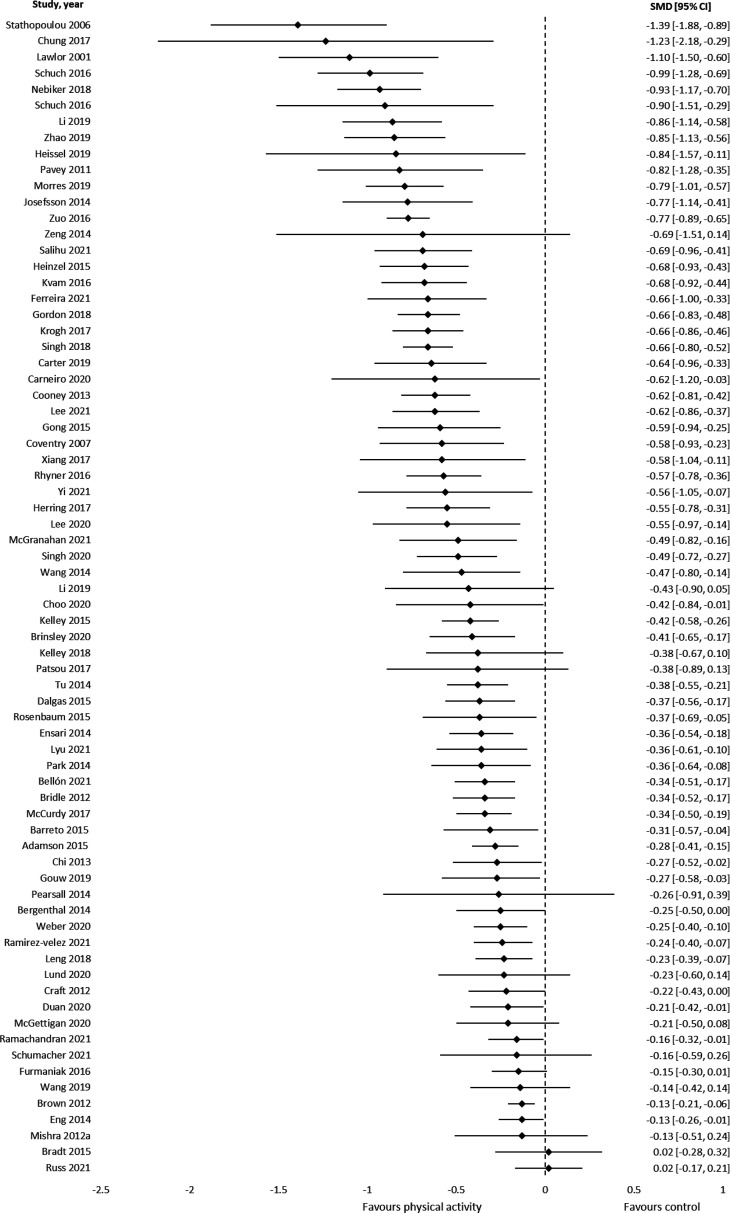
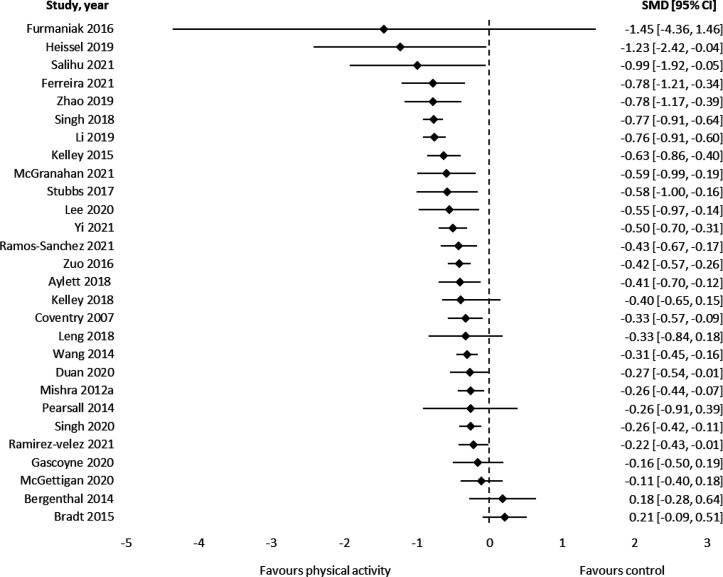
Verification
Claims the paper makes
The claims and statistics of this paper haven’t been checked yet.
Free: it reads the open-access text and checks the first 5 claims that cite a source we can check. Create a free account to check every claim.
Claims other papers make about this one
Each is checked against this paper’s own text: does it say what the citing paper says it does?
The cited source doesn’t support the claim as written.
In the citing paper
“Because we simultaneously assessed more than 200 studies, credible intervals were narrower than those in most existing meta-analyses.13”
From Effect of exercise for depression: systematic review and network meta-analysis of randomised controlled trials (2024) · cites this paper as [13]
Checked by a reasoning model — may be wrong.
Experimental — accuracy not yet measuredThe source backs part of the claim, not all of it — or backs it for a different population, condition or comparison.
In the citing paper
“challenges remain regarding how to optimise exercise design to improve adherence rates 28 .”
From Effect of exercise on depression and anxiety symptoms: systematic umbrella review with meta-meta-analysis (2026) · cites this paper as [28]
Experimental — accuracy not yet measuredThe source backs part of the claim, not all of it — or backs it for a different population, condition or comparison.
In the citing paper
“physical activity is known to boost mood and reduce symptoms of depression and anxiety, which are often associated with loneliness.71”
From A Longitudinal Study of Loneliness Before the End of the COVID-19 Pandemic: Trajectories, Predictors, and Impact on Chinese Adolescent Mental Health (2024) · cites this paper as [71]
Experimental — accuracy not yet measuredThe source backs part of the claim, not all of it — or backs it for a different population, condition or comparison.
In the citing paper
“Our review included more studies than many existing reviews on exercise for depression.13 22 27 28”
From Effect of exercise for depression: systematic review and network meta-analysis of randomised controlled trials (2024) · cites this paper as [13]
Experimental — accuracy not yet measuredThe source backs part of the claim, not all of it — or backs it for a different population, condition or comparison.
In the citing paper
“our study and the study by Singh et al13 both found that effects were stronger with vigorous intensity exercise compared with light and moderate exercise.”
From Effect of exercise for depression: systematic review and network meta-analysis of randomised controlled trials (2024) · cites this paper as [13]
Experimental — accuracy not yet measured
5 more claims about this paper
Create a free account to see every claim other papers make about this one.
Self-check
Percentages, sums and reported differences re-computed from the paper’s own numbers.
The self-check needs the paper’s full text.
Citations
Cites
The PRISMA 2020 statement: An updated guideline for reporting systematic reviews
Page, M. J., McKenzie, J. E., Bossuyt, P. M., Boutron, I., Hoffmann, T. C., Mulrow, C. D., Shamseer, L., Tetzlaff, J. M., Akl, E. A., Brennan, S. E., et al. (2021) · BMJ · doi:10.1136/bmj.n71 · Cited by 108,283
Bias in meta-analysis detected by a simple, graphical test
Egger, M., Smith, G. D., Schneider, M., & Minder, C. (1997) · BMJ · doi:10.1136/bmj.315.7109.629 · Cited by 56,722
Shea, B. J., Reeves, B. C., Wells, G., Thuku, M., Hamel, C., Moran, J., Moher, D., Tugwell, P., Welch, V., Kristjansson, E., et al. (2017) · BMJ · doi:10.1136/bmj.j4008 · Cited by 10,636 · cited 2×
“29”
Background(1985) · Europe PMC (PubMed Central) · Cited by 9,143
The PRISMA 2020 statement: an updated guideline for reporting systematic reviews
Page, M. J., McKenzie, J., Bossuyt, P., Boutron, I., Hoffmann, T., mulrow, C., Shamseer, L., Tetzlaff, J., Akl, E., Brennan, S. E., et al. (2020) · doi:10.31222/osf.io/v7gm2_v1 · Cited by 8,090
Santomauro, D. F., Mantilla Herrera, A. M., Shadid, J., Zheng, P., Ashbaugh, C., Pigott, D. M., Abbafati, C., Adolph, C., Amlag, J. O., Aravkin, A. Y., et al. (2021) · The Lancet · doi:10.1016/s0140-6736(21)02143-7 · Cited by 5,444
The PRISMA 2020 statement: an updated guideline for reporting systematic reviews
Page, M. J., McKenzie, J., Bossuyt, P., Boutron, I., Hoffmann, T., mulrow, C., Shamseer, L., Tetzlaff, J., Akl, E., Brennan, S. E., et al. (2020) · doi:10.31222/osf.io/v7gm2 · Cited by 5,177
Qiu, J., Shen, B., Zhao, M., Wang, Z., Xie, B., & Xu, Y. (2020) · General Psychiatry · doi:10.1136/gpsych-2020-100213 · Cited by 4,307
Cipriani, A., Furukawa, T. A., Salanti, G., Chaimani, A., Atkinson, L. Z., Ogawa, Y., Leucht, S., Ruhe, H. G., Turner, E. H., Higgins, J. P. T., et al. (2018) · The Lancet · doi:10.1016/s0140-6736(17)32802-7 · Cited by 3,541
Cooney, G. M., Dwan, K., Greig, C. A., Lawlor, D. A., Rimer, J., Waugh, F. R., McMurdo, M., & Mead, G. E. (2013) · Cochrane Database of Systematic Reviews · doi:10.1002/14651858.cd004366.pub6 · Cited by 1,834
Research works printed but not linked: 2
- Oxford Centre for Evidence-Based Medicine. Levels of evidence (March 2009). University of Oxford, 2022.
- Ramírez-Vélez R, Zambom-Ferraresi F, García-Hermoso A, et al. Evidence-based exercise recommendations to improve mental wellbeing in women with breast cancer during active treatment: a systematic review and meta-analysis. Cancers (Basel) 2021; 13: 264. 10.3390/cancers13020264 33445739 PMC7828164 · DOI
Cited by
Items 801–900 of 999
Chen, S., Cheah, K. S. L., Ali, S. K. B. S., Qu, H. M., & Wang, Z. L. (2026) · Frontiers in Psychiatry · doi:10.3389/fpsyt.2026.1737574 · Cited by 1
“Second, mental health outcomes form a core research category, including quality-of-life (148), depression (65), mental-health (59), anxiety (49), and stress (31), highlighting these practices ’ central objectives (13, 24, 44, 49, 90).”
Zhang, Y., Wu, J., Wang, R., Li, C., & Tao, Z. (2026) · Building and Environment · doi:10.1016/j.buildenv.2026.114367
Saha, S., Singh, M. K., & Obhrai, S. (2026) · IGI Global eBooks · doi:10.4018/979-8-3373-6157-4.ch002
Yaremenko, K., Greenslade, K., Niven, A. G., & Baker, G. (2026) · Health Psychology and Behavioral Medicine · doi:10.1080/21642850.2026.2629646
“Physical activity can be beneficial in protecting against the emergence of anxiety disorders (McDowell et al., 2019; Schuch et al., 2019), and in improving anxiety disorder symptoms (Ramos-Sanchez et al., 2021; Singh et al., 2023).”
Roldós, M. I., Orazem, J. P., & Aponte, J. (2026) · BMC Public Health · doi:10.1186/s12889-026-26591-2
“In this study most of the residents were of low income, and therefore, the association between disability and multiple comorbidities should be focused on when addressing strategies to increase HRQoL [37].”
Policy of Promoting Physical Activity in Schools : Stakeholders’ Prospective
Alothman, S., Aljubairi, M. S., Mousa, T. A., Shahin, M. A., Al-Ghaith, T. M., & Alghannam, A. F. (2026) · SAGE Open · doi:10.1177/21582440261423818
“It also leads to lower all-cause, cardiovascular, and non-cardiovascular mortality rates (Chastin et al., 2021; D. H. Lee et al., 2022), and improves cognitive function and mental health (Dzhambov et al., 2023; Schuch & Vancampfort, 2021; Singh et al., 2023).”
Kang, J., Kim, H. J., Nehs, C. J., & Yon, D. K. (2026) · Archives of Gerontology and Geriatrics · doi:10.1016/j.archger.2026.106187
Bretler, T., Shenaar‐Golan, V., Yatzkar, U., Vilner, Y., Reingewirtz, R., Even-Ezra, N., Beer, N., & Wiegler, K. B. (2026) · Child and Adolescent Psychiatry and Mental Health · doi:10.1186/s13034-026-01055-y · Cited by 4
“While pharmacotherapy is often provided as an initial treatment approach despite many side effects, other complementary approaches exist and can be considered [41].”
Redzovic, S. E., Moloudi, M., & Bonsaksen, T. (2026) · BMC Geriatrics · doi:10.1186/s12877-026-07015-7
“…substantial benefits of PA in reducing symptoms of depression, anxiety, and psychological distress across diverse adult populations—including the general population, individuals with diagnosed MH conditions, and those with chronic illnesses—highlighting its significant therapeutic potential [74].”
Ma, Y., Xu, Y., Liyou, W. U., Guo, J., & Chen, B. J. (2026) · Frontiers in Public Health · doi:10.3389/fpubh.2026.1768160
“These changes may be related to mental health problems, including anxiety and depression (3, 6–9).”
Pipitone, R. N., Banai, B., Walters, J., Dautrich, T., Schuller, K. L., Rosenthal, M. S., Provost, K., Hall, B., & Keeling, K. (2026) · Scientific Reports · doi:10.1038/s41598-026-39086-2
“We were also interested in looking at how alternatives to MC use could influence anxiety changes, as large scale studies on widely utilized activities such as exercise 27 and meditation 28 show positive outcomes.”
Jones, M., Schwenn, P., Metse, A. P., Watkins, A., Hermens, D. F., & Driver, C. (2026) · Social Science & Medicine · doi:10.1016/j.socscimed.2026.119131 · Cited by 1
Adauto, K. R. P., & Ayala-Mendívil, R. E. (2025) · Health Care & Global Health · doi:10.22258/hgh.2025.91.189
A systematic review of correlates of physical activity of LGBTQIA+ people
Silva, C. D., Ridgers, N. D., Mazzoli, E., Loughlin, N. M. O., & Barnett, L. M. (2026) · Journal of Sports Sciences · doi:10.1080/02640414.2026.2623566
“Regular physical activity (PA) participation is a key protective factor for overall health, enhancing physical well-being, mental health, and social connections (Allen et al., 2023; Fredriksen-Goldsen et al., 2015; Liang et al., 2022; Singh et al., 2023).”
Wang, J. (2026) · Frontiers in Psychology · doi:10.3389/fpsyg.2026.1780689
Brakenridge, C. L., Silverwood, A. J., Ashley, D. P., Healy, G. N., Goode, A. D., Parker, S. L., Brough, P. A., & Clark, B. (2026) · Work & Stress · doi:10.1080/02678373.2026.2633716
Zupkauskienė, J., Laucevičienė, I., Navickas, P., & Laucevičius, A. (2026) · Frontiers in Cardiovascular Medicine · doi:10.3389/fcvm.2026.1798233 · Cited by 1
“Aerobic exercise training (aET) is a well-established and effective health intervention for patients with MetS and mental health disorders (18, 19).”
Ma, T., Wang, L., & Dou, B. (2026) · Frontiers in Psychology · doi:10.3389/fpsyg.2026.1779799
RetractedXing, Z. (2026) · European Archives of Psychiatry and Clinical Neuroscience · doi:10.1007/s00406-026-02205-1 · Cited by 1
Intensity of physical activity, V̇O₂max, and mental health in women: Does motherhood matter?
Vallini, L., Souza, V. R. D. A., Vivan, L., de Lira, C. A. B., de Freitas, J. V. R., Costa, G. D. C. T., Vancini, R. L., Weiss, K., Rosemann, T. J., Knechtle, B., et al. (2026) · Acta Psychologica · doi:10.1016/j.actpsy.2026.106630
Cianchetti, C., Carta, M. G., & Perra, A. (2026) · Clinical Practice and Epidemiology in Mental Health · doi:10.2174/0117450179455271260220082810
Luo, Y., Chen, J., Yang, Q., Li, X., Li, M., Dong, W., Chen, J., & Lu, C. (2026) · Frontiers in Psychology · doi:10.3389/fpsyg.2026.1733845
Perunova, S., Kokina, I., & Krams, I. A. (2026) · Frontiers in Psychiatry · doi:10.3389/fpsyt.2026.1805126
Hwang, I.-W., Hae-Young, C., Yang, D., Lee, H., & Lee, J. M. (2026) · Journal of Physical Activity and Health · doi:10.1123/jpah.2025-0019
García-García, C., Moreno, L. G., Martínez, L. A., & Alacreu, M. (2026) · Frontiers in Sports and Active Living · doi:10.3389/fspor.2026.1702851
“Several studies have documented an association between PA and symptoms of depression or psychological stress in different populations (46–48).”
Vuković, V., Golubović, V., Mihajlović, M., Jovanović, D., & Rodić, B. (2025) · Education and Research in Health Sciences · doi:10.5937/erhs4-64120
Warne, S. J., Brown, L. R., Barker, K., Carstairs, S. A., Cunningham, K. B., Duggal, S., Evans, I., Martin, A., Murray, A., Özakinci, G., et al. (2026) · Research Square · doi:10.21203/rs.3.rs-9181132/v1
Martinez, L. S., Liedtke, G., & Schröder, J. (2026) · B&G Bewegungstherapie und Gesundheitssport · doi:10.1055/a-2802-8923
Positive effects of brief body exercises on mood: An interventional EMA study
Nitzpon, L., Rehder, J., Hohmann, R., Kunst, C., Gross, R., Nigg, C. R., Reichert, M., & Müller, M. (2026) · Neuroscience Applied · doi:10.1016/j.nsa.2026.106999
Dendaele, E. V. (2023) · theses.fr (ABES) · doi:10.70675/9637f65bz451fz4635z9787z588b03cb201b
ESSAFI, M. (2023) · theses.fr (ABES) · doi:10.70675/ca759d4fze254z4a2fzb1a7zc560b279e3fa · Cited by 1
Riglea, T., Sylvestre, M., Schnitzer, M. E., Sabiston, C. M., & O’Loughlin, J. L. (2026) · Journal of Affective Disorders · doi:10.1016/j.jad.2026.121767
Cherenack, E. M., Feaster, D. J., Kempf, M.-C., Collins, L. F., Floris-Moore, M., Chandran, A., Cohen, M. H., Philbin, M. M., Kassaye, S., Wilson, T. E., et al. (2026) · Journal of Health Psychology · doi:10.1177/13591053261436558
Guo, L., Shen, Y., Wen, J., an, K., Zhang, D., Zhao, X., Zhang, W., Zhu, J., & Qian, Y. (2026) · Psychological Medicine · doi:10.1017/s0033291726104097
“…physical activity, measured through either self-report or objective methods, can reduce the risk of mental illness, especially ameliorating depressive symptoms and enhancing population mental well-being (Chekroud et al., 2018; Harvey et al., 2018; Ibáñez Román et al., 2023; Singh et al., 2023).”
Burning for a warm glow: The impact of acute exercise on mood and prosocial behaviour
Cox, J., Whitman, K., Williams, C., Williams, T. B., Mayes, H. S., Hudson, L. C., Warren, J., & Costello, J. T. (2026) · Psychology of sport and exercise · doi:10.1016/j.psychsport.2026.103129
Xu, J., Parker, R., Bowman, K., Clayton, G., & Lawlor, D. A. (2026) · medRxiv · doi:10.64898/2026.04.10.26350507
Bertuol, C., Mielke, G. I., Alves, D. K., Streb, A. R., do Amaral, M. B., Lopes, M. V. V., da Silva, K. S., & Duca, G. F. D. (2026) · Journal of Behavioral Medicine · doi:10.1007/s10865-026-00636-8
“Lifestyle-based strategies, particularly those focused on promoting physical activity, have emerged as promising alternatives for managing depression (Heis-sel et al., 2023; Pearce et al., 2022; Recchia et al., 2022; Singh et al., 2023).”
Ali, Q., Ashfaq, U., Anum, S., Tahir, M., Usama, M., Mahmud, S. A., & Shakeel, H. (2026) · Bulletin of Faculty of Physical Therapy · doi:10.1186/s43161-026-00347-w
Kaplan, M., Çakar, F., Şimşek, H., Çelik, M., & Özer, M. Y. (2026) · BMC Sports Science Medicine and Rehabilitation · doi:10.1186/s13102-026-01699-5
Godoy-Cumillaf, A. E. R., Fuentes-Merino, P., de Souza-Lima, J., Parra-Saldías, M., Bastías, D. M. D., Farias-Valenzuela, C., Merellano-Navarro, E., Bruneau-Chávez, J., & Rodríguez‐Gutiérrez, E. (2026) · Journal of Clinical Medicine · doi:10.3390/jcm15093191
The impact of physical activities on positive emotions in children and adolescents: a meta-analysis
Zhao, Z., Feng, Z., Wang, T., Deng, J., & Liu, Y. (2026) · Frontiers in Psychology · doi:10.3389/fpsyg.2026.1792960
Hansson, S. E., Abrahamsen, F. E., Haakstad, G., Gjestvang, C., Jørgensen, R. J. G., Brown, W. J., & Haakstad, L. A. H. (2026) · BMC Psychiatry · doi:10.1186/s12888-026-08117-7
“Evidence shows that regular physical activity can reduce symptoms of depression and anxiety, prevent somatic diseases, enhance physical health and social functioning, and improve quality of life [5, 6].”
Adolescent Leisure-Time Physical Activity Types and Adult Mental Disorders
Miller, K., Fraser, B. J., Gall, S., Sanderson, K. A., Dwyer, T., Venn, A., & Cleland, V. J. (2026) · Journal of Physical Activity and Health · doi:10.1123/jpah.2025-0378
Martins, A., Fernandes, C. Y. P., Gonçalves, C. M., Queiroz, P. D. S., Neves, L. M., Filho, D. G. N., França, C. N., Schuch, F. B., Stubbs, B., Gualano, B., et al. (2026) · International Journal of Clinical Trials · doi:10.18203/2349-3259.ijct20261384
Mirzaei, T., Ravari, A., Raeisi, M., & Tabei, M. (2026) · International Journal of Yoga · doi:10.4103/ijoy.ijoy_32_25 · Cited by 1
“[20] It enhances mood, [21] alleviates anxiety and depression and reduces stress [22] – all common psychological concerns in the elderly.”
Krishnamurti, T., Rodriguez, S., Cope, L., Lemon, L. S., Gopalan, P. R., Nikolajski, C., Simhan, H. N., & Williams, K. R. (2026) · JMIR Human Factors · doi:10.2196/81638
“A review encompassing 19 systematic reviews and meta-analyses and 152 randomized controlled trials across 26 countries identified therapy-based or physical activity interventions as having a small to moderate effect on the severity of perinatal depression symptoms [18].”
de Oliveira, L. C., Gobbo, H. R., Barbosa, G. M., Semmer, L. V., & de Oliveira, G. V. (2026) · Trends in Psychology · doi:10.1007/s43076-026-00523-w
The Effects of Physical Activity on Adolescent Mental Health and Well- Being: A Scoping Review
Fintina, I. M., Tohănean, D. I., Balint, E., Turcu, I., & Olteanu, M. I. (2026) · Balneo and PRM Research Journal · doi:10.12680/balneo.2026.956
Exercise, cognition, and affective disorders
Tapia-de-Jesús, A., Buenrostro-Jáuregui, M. H., Ayala-Guzmán, C. I., & Mata-Luévanos, J. (2026) · Frontiers in Sports and Active Living · doi:10.3389/fspor.2026.1801197
“Protocol heterogeneity, interindividual variability, and the frequent treatment of cognition as a secondary outcome limit the precision of individualized recommendations and mechanistic causal inference (4, 5, 12).”
InfluentialSantana, D. D., Miranda, A. A. M., da Cruz, M. S., & Florindo, A. A. (2026) · The European Journal of Psychiatry · doi:10.1016/j.ejpsy.2026.100353
Yao, Y., Liu, A., Yao, L., Li, Y., Wu, H., Wang, C., Wu, F., Zhou, T., Qin, Y., Fan, C., et al. (2026) · Microchemical Journal · doi:10.1016/j.microc.2026.118369
Su, H., Li, L., Wu, J., Nguyen, M. C., Ding, H., Wei, C., & Zhang, Z. (2026) · BMC Sports Science Medicine and Rehabilitation · doi:10.1186/s13102-026-01728-3 · Cited by 1
“Furthermore, situating our findings within the broader mental health literature highlights the potential trans-diagnostic effects of exercise [52].”
Ge, H., Wang, J., Wu, D. Y., & Zhou, H. (2026) · Social Science & Medicine · doi:10.1016/j.socscimed.2026.119411
Torales, J. C., Vargas, M., Almirón, M., O’Higgins, M. G., Caycho-Rodríguez, T., Ventriglio, A., Castaldelli-Maia, J. M., & Barrios, I. (2026) · Revista Científica de la UCSA · doi:10.18004/ucsa/2409-8752/2026.013.01.086
“La práctica regular de actividad física se asocia consistentemente con beneficios psicológicos, incluyendo la disminución de síntomas depresivos y ansiosos, así como mejoras en el bienestar emocional general (Ji et al., 2022; Schrader et al., 2022; Singh et al., 2023).”
Yonemochi, T., Ina, K., Ina, H., Morizane, A., Kabeya, M., Nagasaka, M., Sakaguchi, A., Taniguchi, A., Nishiyama, S., & Ohta, Y. (2026) · Cureus · doi:10.7759/cureus.109144
“Although routine low-intensity physical exercise has no negative effect on renal function, it improves aerobic and functional capacity, positively impacting QOL [17].”
Leimhofer, J., Schreynemackers, S., Hegerl, U., Reich, H., Dominik, A., Heider, D., & Allenhof, C. (2026) · doi:10.2196/preprints.101756
Mac, R., Saliba‐Gustafsson, E. A., Anger, Å., Sundberg, C. J., Martinsson, L., Bergström, A., & Salomonsson, S. (2026) · PLoS ONE · doi:10.1371/journal.pone.0348234
Bonn, K., Wohlfarth, D., Timm, I., Bender, O., Ebner‐Priemer, U., & Giurgiu, M. (2026) · JMIR mhealth and uhealth · doi:10.2196/81502 · Cited by 1
“PA was found to exhibit a medium beneficial effect on stress in adults [26], although the association is characterized by a high degree of individual variability [27,28].”
Turhan, M. Ö. (2026) · Anadolu Kültürel Araştırmalar Dergisi · doi:10.63556/ankad.v10i2.401 · Cited by 1
Sánchez‐Conde, M., Montégut, L., Martín‐Pedraza, L., Martins, I., Luna, L., Martínez, M., Ryan, P., López-Otín, C., Kroemer, G., & Brañas, F. (2026) · The Journals of Gerontology Series A · doi:10.1093/gerona/glag136 · Cited by 1
Røynesdal, Ø. B., Smith, O. R. F., Roberts, G. C., van Nassau, F., Jelsma, J. G. M., Wyke, S., Gray, C. M., Pereira, H. V., Andersen, E., Silva, M. N., et al. (2026) · Psychology and Health · doi:10.1080/08870446.2026.2677081
“Considering the robust relationship between PA and mental health outcomes (e.g. Marquez et al., 2020; Singh et al., 2023), we added objectively measured PA as an additional intermediate variable as part of sensitivity analyses to estimate whether the indirect effect affected mental health through…”
The Therapeutic Potential of Mesenchymal Stem Cells in Post-Stroke Depression
Fan, M., Deng, Q., Li, Z., Wang, G., & Lu, M. (2026) · International Journal of Molecular Sciences · doi:10.3390/ijms27114796
“Moderate physical activity has been shown to have a protective effect against cerebrovascular accidents, such as strokes [126], and may prevent depression onset [127,128].”
Rééducation sous haute intensité : le CrossFit® au service des enfants avec paralysie cérébrale
Guedin, D. (2026) · Motricité Cérébrale · doi:10.1016/j.motcer.2026.04.003
Chen, K., & Xing, Y. (2026) · Frontiers in Psychology · doi:10.3389/fpsyg.2026.1832397 · Cited by 2
Sveaas, S. H., Brandtzæg, M., Smedslund, G., Rognlien, M. Ø., & Danielsen, K. K. (2026) · Frontiers in Sports and Active Living · doi:10.3389/fspor.2026.1708741 · Cited by 2
“In contrast, in various adult populations, higher exercise intensities are associated with greater improvements in symptoms of depression and anxiety (18, 19).”
Yang, L., Yuan, Z., & Chen, X. (2026) · Frontiers in Nutrition · doi:10.3389/fnut.2026.1797113 · Cited by 1
Chalimourdas, A., Hansen, D., Verboven, K., & Michiels, S. (2026) · European Archives of Oto-Rhino-Laryngology · doi:10.1007/s00405-026-10324-7
Zhang, G.-B., Zheng, H.-Y., & Zheng, W.-B. (2026) · World Journal of Psychiatry · doi:10.5498/wjp.116119
Behandling for eldre med generalisert angstlidelse – erfaringer og funn fra Solli DPS
Sirevåg, K., & Stavestrand, S. H. (2026) · Tidsskrift for Norsk psykologforening · doi:10.52734/mmku4265
Gao, X., Li, C., Silang, R., Zhou, W., & Shu, Y. (2026) · Frontiers in Psychology · doi:10.3389/fpsyg.2026.1843115
“High-level evidence suggests that physical activity reduces depression and anxiety in nonclinical adult populations and is effective for improving depression, anxiety, and distress across diverse adult groups (Rebar et al., 2015; Singh et al., 2023).”
Exercise-induced sweat suppresses depression-like behaviors in micePreprint
Yao, H., Xing, S., Liang, M., Fei, Q., Cao, J., Liang, T., Yang, B., Cui, C., Liu, H., & Cui, Q. (2026) · bioRxiv (Cold Spring Harbor Laboratory) · doi:10.64898/2026.06.02.728455
Could Exercise Referral Schemes Help Pay Off Fine Debt? A Qualitative Exploration
McKeon, G., Suzuki, E., Rosenbaum, S., Mastrogiovanni, C., Maroulis, V., Holmes, M., Lederman, O., & Wright, K. (2026) · Health & Social Care in the Community · doi:10.1155/hsc/4351453
Weber, M., Raab, A. M., Schmitt, K., Büsching, G., Marcin, T., Riegler, T. F., Spielmanns, M., Spielmanns, S., Lauber, E., Gioutsos, K., et al. (2026) · Zürcher Hochschule für Angewandte Wissenschaften digital collection (Zurich University of Applied Sciences) · doi:10.21256/zhaw-36565
The Digital Five Ways to Wellbeing Intervention: Long-Term Change in Life Satisfaction
Prydz, M. B., Røysamb, E., Czajkowski, N. O., & Nes, R. B. (2026) · Applied Research in Quality of Life · doi:10.1007/s11482-026-10628-0
“Further, being physically active is also widely documented to affect wellbeing (Firth et al., 2020; Lee et al., 2012; Sabe et al., 2022) and may reduce symptoms of depression, anxiety and psy - chological distress (Choi et al., 2019; Singh et al., 2023).”
Moyo, A., Munyombwe, T., Peer, N., Dubazana, S. E., Sithole, N., Maposa, I., & Govindasamy, D. (2026) · BMC Psychiatry · doi:10.1186/s12888-026-08281-w
“Even when full integration is not feasible, providing individual-level behavioural support in primary care, such as structured physical activity counselling or dietary guidance, remains a practical strategy to improve outcomes across both conditions [48, 49].”
Beauchemin, J. D., & Marlow, J. (2026) · Social Work in Mental Health · doi:10.1080/15332985.2026.2687639
“…regular positive social interactions, and participation in intellectually stimulating or creative activities (e.g. arts and crafts), all of which are associated with improved mental health among young adults (Alsubaie et al., 2019; Bone et al., 2023; Jonsdottir et al., 2010; Singh et al., 2023).”
Dang, Q., Yu, W., & Fan, Q. (2026) · Systems · doi:10.3390/systems14060674 · Cited by 1
Role of Vigorous Physical Activity in Mental Health: A Narrative Review
Stratakis, K., Todorovic, J., & SUPİC, Z. T. (2026) · Cureus · doi:10.7759/cureus.111007
Lubans, D. R., Blakemore, T., Smith, J. J., Rosenbaum, S., Teychenne, M., Morgan, P. J., Walker, F. R., Vella, S., Young, M. D., Eather, N., et al. (2026) · Mental Health and Physical Activity · doi:10.1016/j.mhpa.2026.100797
Jin, B., Zhang, X., Yan, T., Yao, M., Fei, J., Zheng, Y., Yang, H., & Li, H. (2026) · European Archives of Psychiatry and Clinical Neuroscience · doi:10.1007/s00406-026-02287-x
Nash, C. (2026) · Businesses · doi:10.3390/businesses6020035
“Other lifestyle changes found to be beneficial for reducing anxiety include: modifying employee sleep patterns (Alhashim et al., 2025), improving their diet (Merino Del Portillo et al., 2024), and employee engagement in physical exercise (B. Singh et al., 2023).”
Fat, L. N., West, R., & Jackson, S. E. (2026) · BMJ Public Health · doi:10.1136/bmjph-2025-004301
Líška, D. (2026) · Belianum. Vydavateľstvo Univerzity Mateja Bela v Banskej Bystrici eBooks · doi:10.24040/2026.9788055723365
Wang, X., & Wang, X. (2026) · Research Square · doi:10.21203/rs.3.rs-9984763/v1
Self-Directed and Community-Based Mental Health Management Strategies in the Digital Age
Lubis, A. N., & Nasution, M. F. A. (2026) · INTI JOURNAL. · doi:10.61453/intij.20260219
SAKAMOTO, Y., Amari, T., Oka, T., & Shimo, S. (2026) · Journal of Workplace Behavioral Health · doi:10.1080/15555240.2026.2690134
Buncuga, A., Maxwell, H., Peel, N., & Taylor, N. (2026) · Sport in Society · doi:10.1080/17430437.2026.2688827
Vint, J., & Asmundson, G. J. G. (2026) · Mental health and physical activity · doi:10.1016/j.mhpa.2026.100799
Hommery-Boucher, D., & Verret, C. (2026) · Apprendre et enseigner aujourd’hui Revue du Conseil pédagogique interdisciplinaire du Québec · doi:10.7202/1125831ar
Andrade, R. D. L. N. P., Canto, Y. E., Salas, R. J. A., Ramirez, C. R. C., & Gervasi, G. M. D. (2026) · Journal of Health Psychology · doi:10.1177/13591053261460700 · Cited by 1
Shao, Q., Zhang, X., LI, X., & Wang, J. (2026) · Frontiers in Public Health · doi:10.3389/fpubh.2026.1878144
Yang, X., Fu, X., Xiao, L., & Wu, Z. (2026) · Frontiers in Sports and Active Living · doi:10.3389/fspor.2026.1825077
The impact of physical activity on mental health in adults
Rafalski, J., Rafalski, J., Gliniecka, Z., Woźniak, W., Jagacka, A., Chlewicki, K., Demczak, A., Rachel, M., Sikora, W., & Michalik, G. (2026) · Humanities & Social Sciences Reviews · doi:10.18510/hssr.2026.14125
Specht, B., Garbaya, S., Schneider, R., Chavarriaga, R., Khadraoui, D., & Tayeb, Z. (2026) · medRxiv · doi:10.64898/2026.06.23.26356339
Madsen, L. S., Poulsen, D. V., Ryom, K., Oestergaard, L. G., Maribo, T., & Jessen, N. H. (2026) · Healthcare · doi:10.3390/healthcare14131861
“Physical activity supports mental health by reducing negative effects, fatigue, and stress, while enhancing energy, attention, and mood [35].”
Ulukan, H., Güreş, A., Temel, N. C., ESENKAYA, A., & Kılıç, G. S. (2026) · International Journal Of Eurasia Social Sciences · doi:10.70736/ijoess.2335
Junqua-Lamarque, T., Peralta, M., Blanchet, C., Ribeiro, T., Iglésias, B., Henriques‐Neto, D., & Marques, A. (2026) · Aging & Mental Health · doi:10.1080/13607863.2026.2695268
“Regular PA has been shown to decrease the risk of developing depression and to alleviate depressive symptoms (Pearce et al., 2022; Singh et al., 2023).”
Tu, C., Yang, X., Wang, Y., Hu, J. B., Hou, X., Bai, T., & Liu, L. (2026) · Frontiers in Public Health · doi:10.3389/fpubh.2026.1865206
Metadata
- Authors
- Singh, B., Olds, T., Curtis, R., Dumuid, D., Virgara, R., Watson, A., Szeto, K., O'Connor, E., Ferguson, T., Eglitis, E., Miatke, A., Simpson, C. E., & Maher, C.
- Affiliations
- University of South Australia (AU)
- Corresponding author
- Singh, Ben
- ORCID
- Venue
- British Journal of Sports Medicine
- Publisher
- BMJ
- Published
- 2023-02-16
- Volume
- 57
- Issue
- 18
- Pages
- 1203-1209
- ISSN
- 0306-3674 (ISSN-L)
- 1473-0480
- PMC
- PMC10579187
- OpenAlex
- W4321054304
- Semantic Scholar
- e1ee60d02a701d40ce44367f24240e1deee861ec
- Cited by
- 1,049
- References
- 141
- Citations by year
- 2026: 347 · 2025: 331 · 2024: 295 · 2023: 75
- FWCI
- 37.39
- Type
- journal article
- Language
- en
- Open access
- hybrid
- doi.org
- Licence
- Locations
- British Journal of Sports Medicine (publishedVersion, cc-by-nc)
- PubMed Central (publishedVersion, cc-by-nc-sa)
- PubMed (publishedVersion)
- UniSA Research Outputs Repository (University of South Australia) (submittedVersion, other-oa)
- Adelaide Research & Scholarship (AR&S) (University of Adelaide) (submittedVersion, cc-by-nc)
- HighWire Press Open Archive (submittedVersion)
- Funders
- Australian National Health and Medical Research Council (APP1162166)
- Medical Research Future Fund Emerging Leader Grant (GNT1193862)
- NHMRC (APP1171981)
- Topics
- Health Sciences › Medicine › Public Health, Environmental and Occupational Health › Physical Activity and Health
- Social Sciences › Psychology › Experimental and Cognitive Psychology › Anxiety, Depression, Psychometrics, Treatment, Cognitive Processes
- Health Sciences › Medicine › Oncology › Cancer survivorship and care
- Keywords
- physical activity interventions, depression, anxiety, psychological distress, mental health, chronic disease, HIV, kidney disease, pregnancy, postpartum women, exercise intensity, intervention duration, adults
- MeSH terms
- Systematic Reviews as Topic, Adult, Anxiety, Mental Disorders, Chronic Disease, Depression, Female, Health Status, Humans, Pregnancy, Quality of Life
About these checks
Registry, retraction, Cites and statistics results are computed, not judged, with one exception: a printed reference that no index lists is read once by a model before it counts as a citation error. Claims are extracted by a model and kept only when their quote appears verbatim in the text; each cited source is then checked, with a model’s help, for whether it says what the claim relies on. Those verdicts can be wrong — read the claim’s quote and the cited source before relying on one.
Statistics and arithmetic are recomputed, not judged.
Confidence bands are shown only for fields calibrated on our annotated test set. None is calibrated yet, so no band is shown.
What counts as a claim ›How we measure confidence ›How we check this ›
Are you an author, or do you see a problem with this page? Request a review
Data sources
Bibliographic data: Semantic Scholar, OpenAlex, Crossref.
Contains information from the Semantic Scholar Academic Graph Datasets, made available under the ODC Attribution License (ODC-BY 1.0).
Semantic Scholar’s data is described in: Kinney, R., et al. (2023). The Semantic Scholar Open Data Platform. arXiv:2301.10140.
