

The DOI matches its Crossref record; 75 of the 77 references it cites were found in a registry or an index.
Methylphenidate for attention-deficit/hyperactivity disorder in children and adolescents: Cochrane systematic review with meta-analyses and trial sequential analyses of randomised clinical trials
Open accessAbstract
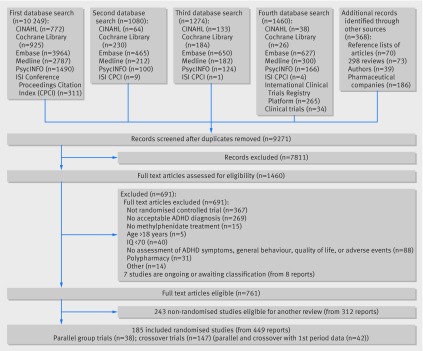
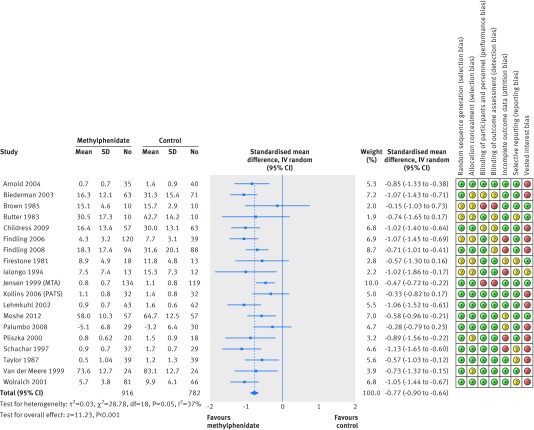
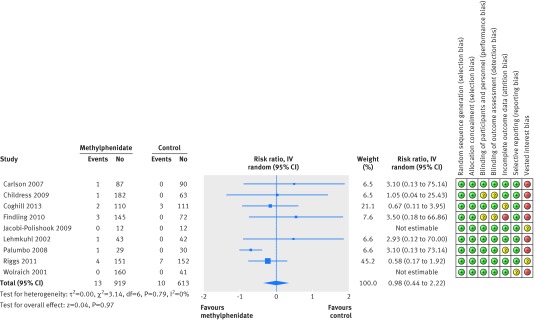
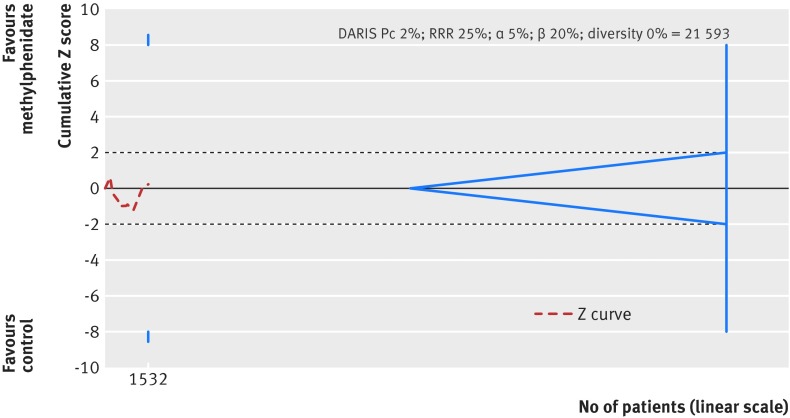
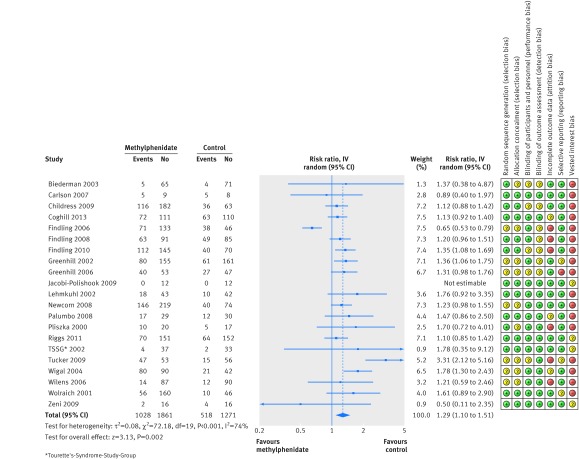
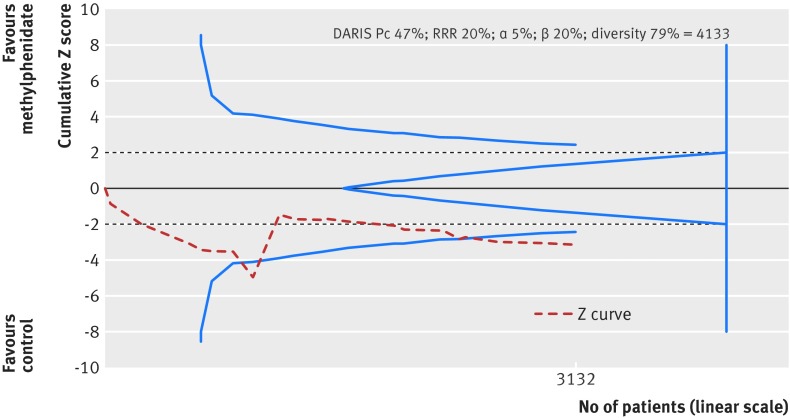
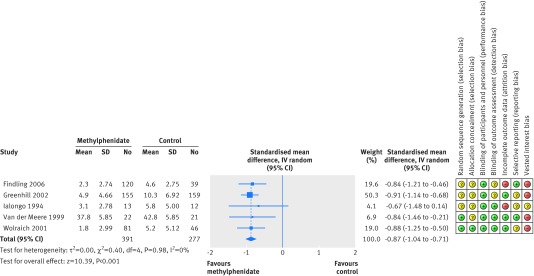
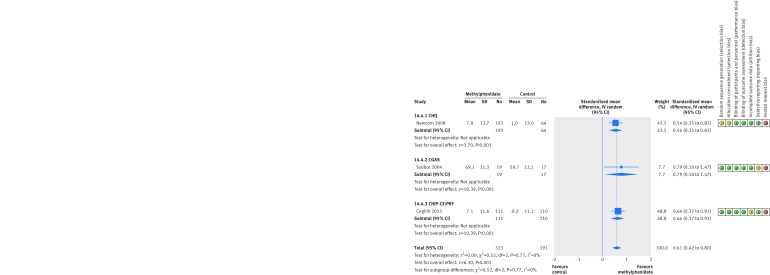
STUDY QUESTION: Is methylphenidate beneficial or harmful for the treatment of attention-deficit/hyperactivity disorder (ADHD) in children and adolescents? METHODS: Electronic databases were searched up to February 2015 for parallel and crossover randomised clinical trials comparing methylphenidate with placebo or no intervention in children and adolescents with ADHD. Meta-analyses and trial sequential analyses (TSA) were conducted. Quality was assessed using GRADE. Teachers, parents, and observers rated ADHD symptoms and general behaviour. STUDY ANSWER AND LIMITATIONS: The analyses included 38 parallel group trials (n=5111, median treatment duration 49 days) and 147 crossover trials (n=7134, 14 days). The average age across all studies was 9.7 years. The analysis suggested a beneficial effect of methylphenidate on teacher rated symptoms in 19 parallel group trials (standardised mean difference (SMD) -0.77, n=1698), corresponding to a mean difference of -9.6 points on the ADHD rating scale. There was no evidence that methylphenidate was associated with an increase in serious adverse events (risk ratio 0.98, nine trials, n=1532; TSA adjusted intervention effect RR 0.91). Methylphenidate was associated with an increased risk of non-serious adverse events (1.29, 21 trials, n=3132; TSA adjusted RR 1.29). Teacher rated general behaviour seemed to improve with methylphenidate (SMD -0.87, five trials, n=668) A change of 7 points on the child health questionnaire (CHQ) has been deemed a minimal clinically relevant difference. The change reported in a meta-analysis of three trials corresponds to a mean difference of 8.0 points on the CHQ (range 0-100 points), which suggests that methylphenidate may improve parent reported quality of life (SMD 0.61, three trials, n=514). 96.8% of trials were considered high risk of bias trials according to the Cochrane guidelines. All outcomes were assessed very low quality according to GRADE. WHAT THIS STUDY ADDS: The results suggest that among children and adolescents with a diagnosis of ADHD, methylphenidate may improve teacher reported symptoms of ADHD and general behaviour and parent reported quality of life. However, given the risk of bias in the included studies, and the very low quality of outcomes, the magnitude of the effects is uncertain. Methylphenidate is associated with an increased risk of non-serious but not serious adverse events. FUNDING, COMPETING INTERESTS, DATA SHARING: Region Zealand Research Foundation and Copenhagen Trial Unit. Competing interests are given in the full paper on bmj.com. Full data are available in the version of this review published in The Cochrane Library.
Overview
The claims and statistics of this paper haven’t been checked yet.
Run the check — free, no account needed. It reads the open-access text and checks the sources it cites.
Integrity signals
Registry
Cites
Statistics
Figures
Verification
Claims the paper makes
The claims and statistics of this paper haven’t been checked yet.
Run the check — free, no account needed. It reads the open-access text and checks the sources it cites.
Claims other papers make about this one
Each is checked against this paper’s own text: does it say what the citing paper says it does?
The source backs part of the claim, not all of it — or backs it for a different population, condition or comparison.
In the citing paper
“The most common prescribed drug for treatment of ADHD is methylphenidate (MPH) and it is believed that it can improve cognitive function through a dopaminergic effect (Storebø et al. 2015).”
From Crocus sativus L. Versus Methylphenidate in Treatment of Children with Attention-Deficit/Hyperactivity Disorder: A Randomized, Double-Blind Pilot Study (2019) · cites this paper as Storebø et al. 2015
Experimental — accuracy not yet measured
Self-check
Percentages, sums and reported differences re-computed from the paper’s own numbers.
The self-check needs the paper’s full text.
Citations
Cites
2 retracted
Immediate-release methylphenidate for attention deficit hyperactivity disorder (ADHD) in adults
Epstein, T., Patsopoulos, N. A., & Weiser, M. (2014) · Cochrane Database of Systematic Reviews · doi:10.1002/14651858.cd005041.pub2 · Cited by 65
RetractedImmediate-release methylphenidate for attention deficit hyperactivity disorder (ADHD) in adults
Epstein, T., Patsopoulos, N. A., & Weiser, M. (2016) · Cochrane Database of Systematic Reviews · doi:10.1002/14651858.cd005041.pub3 · Cited by 62
RetractedPreferred Reporting Items for Systematic Reviews and Meta-Analyses: the PRISMA statement
Moher, D., Liberati, A., Tetzlaff, J., Altman, D. G., & for the PRISMA Group (2009) · BMJ · doi:10.1136/bmj.b2535 · Cited by 83,823
Preferred reporting items for systematic reviews and meta-analyses: the PRISMA Statement.
(2009) · PubMed Central · Cited by 44,859
Preferred reporting items for systematic reviews and meta-analyses: The PRISMA statement
Moher, D., Liberati, A., Tetzlaff, J., Altman, D. G., & the PRISMA Group* (2009) · Annals of Internal Medicine · doi:10.7326/0003-4819-151-4-200908180-00135 · Cited by 37,554
PRISMA-P Group, Moher, D., Shamseer, L., Clarke, M., Ghersi, D., Liberati, A., Petticrew, M., Shekelle, P., & Stewart, L. A. (2015) · Systematic Reviews · doi:10.1186/2046-4053-4-1 · Cited by 26,223
Preferred Reporting Items for Systematic Reviews and Meta-Analyses: The PRISMA Statement
Moher, D., Liberati, A., Tetzlaff, J., & Altman, D. G. (2009) · Journal of Clinical Epidemiology · doi:10.1016/j.jclinepi.2009.06.005 · Cited by 19,575
Liberati, A., Altman, D. G., Tetzlaff, J., Mulrow, C., Gotzsche, P. C., Ioannidis, J. P. A., Clarke, M., Devereaux, P. J., Kleijnen, J., & Moher, D. (2009) · BMJ · doi:10.1136/bmj.b2700 · Cited by 17,648
Liberati, A., Altman, D. G., Tetzlaff, J., Mulrow, C., Gøtzsche, P. C., Ioannidis, J. P. A., Clarke, M., Devereaux, P. J., Kleijnen, J., & Moher, D. (2009) · Annals of Internal Medicine · doi:10.7326/0003-4819-151-4-200908180-00136 · Cited by 10,349
Cochrane Handbook for Systematic Reviews of Interventions
Higgins, J. P. T., Green, S., & Ben Van Den, A. (2020) · International Coaching Psychology Review · doi:10.53841/bpsicpr.2020.15.2.123 · Cited by 5,670
Research works printed but not linked: 2
- [27]Storebø O, Pedersen N, Krogh H, et al. Methylphenidate for attention deficit hyperactivity disorder (ADHD) in children and adolescents—assessment of harms in observational studies. Cochrane Database Syst Rev 2015; (In press). PMC6494554 29744873
- [59]Gluud C, Nikolova D, Klingenberg SL. Cochrane Hepato-Biliary About the Cochrane Collaboration (Cochrane Review Groups (CRGs). Cochrane Rev Groups 2015;1(Art.No:LIVER). www.cochranelibrary.com/about/cochrane-review-groups.html.
Cited by
Sorted by citations
ADHD in Children and Young People: Prevalence, Care Pathways, and Service Provision
Sayal, K., Prasad, V., Daley, D., Ford, T., & Coghill, D. (2018) · The Lancet Psychiatry · doi:10.1016/s2215-0366(17)30167-0 · Cited by 1,223
Catalá-López, F., Hutton, B., Núñez-Beltrán, A., Page, M. J., Ridao, M., Macías Saint-Gerons, D., Catalá, M. A., Tabarés-Seisdedos, R., & Moher, D. (2017) · PLOS ONE · doi:10.1371/journal.pone.0180355 · Cited by 396
Treatment strategies for ADHD: an evidence-based guide to select optimal treatment
Caye, A., Swanson, J. M., Coghill, D., & Rohde, L. A. (2019) · Molecular Psychiatry · doi:10.1038/s41380-018-0116-3 · Cited by 303
EEG power spectral slope differs by ADHD status and stimulant medication exposure in early childhood
Robertson, M. M., Furlong, S., Voytek, B., Donoghue, T., Boettiger, C. A., & Sheridan, M. A. (2019) · Journal of Neurophysiology · doi:10.1152/jn.00388.2019 · Cited by 205
“…that were medication naive, we next tested whether our observed electrophysiological group differences were modified by treatment with stimulant medications, which improve behavioral symptoms in children with ADHD and are the most common medicinal treatment for the disorder (Storebø et al. 2015).”
BackgroundCoghill, D., Banaschewski, T., Cortese, S., Asherson, P., Brandeis, D., Buitelaar, J., Daley, D., Danckaerts, M., Dittmann, R. W., Doepfner, M., et al. (2023) · European Child & Adolescent Psychiatry · doi:10.1007/s00787-021-01871-x · Cited by 180
Bellato, A., Arora, I., Hollis, C., & Groom, M. J. (2020) · Neuroscience & Biobehavioral Reviews · doi:10.1016/j.neubiorev.2019.11.001 · Cited by 179
Attention-Deficit/Hyperactivity Disorder
Banaschewski, T., Becker, K., Döpfner, M., Holtmann, M. H., Rösler, M., & Romanos, M. (2017) · Deutsches Ärzteblatt international · doi:10.3238/arztebl.2017.0149 · Cited by 217
Chang, Z., Ghirardi, L., Quinn, P. D., Asherson, P., D’Onofrio, B. M., & Larsson, H. (2019) · Biological Psychiatry · doi:10.1016/j.biopsych.2019.04.009 · Cited by 175
“Major questions and concerns remain, however, regarding the benefits and risks of ADHD medications (16, 19, 20).”
Real‐time f MRI neurofeedback in adolescents with attention deficit hyperactivity disorder
Alegria, A. A., Wulff, M., Brinson, H., Barker, G. J., Norman, L. J., Brandeis, D., Stahl, D., David, A. S., Taylor, E., Giampietro, V., et al. (2017) · Human Brain Mapping · doi:10.1002/hbm.23584 · Cited by 151
“…control) groups is comparable to typical parent-rated effect size of 0.6 for stimulant medication based on recent meta-analyses [Punja et al., 2016; Storebo et al., 2015], while the effect size for the pre-FU contrast reached almost 1 in the active group but only half of the effect size for the…”
BackgroundInfluentialCoghill, D., Banaschewski, T., Soutullo, C. A., Cottingham, M. G., & Zuddas, A. (2017) · European Child & Adolescent Psychiatry · doi:10.1007/s00787-017-0986-y · Cited by 136
van Lieshout, M., Luman, M., Twisk, J. W. R., van Ewijk, H., Groenman, A. P., Thissen, A. J. A. M., Faraone, S. V., Heslenfeld, D. J., Hartman, C. A., Hoekstra, P. J., et al. (2016) · European Child & Adolescent Psychiatry · doi:10.1007/s00787-016-0820-y · Cited by 128
“sleeping problems, decreased appetite) were evident [37, 38], indicating that, in line with our findings, the long-term effects of pharmacological treatment on functional outcomes of ADHD may need reconsideration [39].”
ResultHuß, M., Duhan, P., Gandhi, P., Chen, C., Spannhuth, C. W., & Kumar, V. (2017) · Neuropsychiatric Disease and Treatment · doi:10.2147/ndt.s130444 · Cited by 104
“69 As with treatment efficacy, the relationship between dose and AEs remains unclear.”
BackgroundTatlow‐Golden, M., Prihodová, L., Gavin, B. E., Cullen, W., & McNicholas, F. (2016) · BMC Family Practice · doi:10.1186/s12875-016-0516-x · Cited by 100
Rucklidge, J. J., Eggleston, M. J. F., Johnstone, J. M., Darling, K. A., & Frampton, C. M. (2017) · Journal of Child Psychology and Psychiatry · doi:10.1111/jcpp.12817 · Cited by 103
“Pharmacological treatments can reduce symptoms, but are often unsatisfactory due to side effects, failure to prevent or alter long-term course and discontinuance due to patient and family preferences (Storebø et al., 2015; Swanson et al., 2017).”
BackgroundVitamin D supplementation for chronic liver diseases in adults
Bjelaković, G., Nikolova, D., Bjelaković, M., & Gluud, C. N. (2017) · Cochrane Database of Systematic Reviews · doi:10.1002/14651858.cd011564.pub2 · Cited by 95
Self-citationBikic, A., Leckman, J., Christensen, T., Bilenberg, N., & Dalsgaard, S. (2018) · European Child and Adolescent Psychiatry · doi:10.1007/s00787-018-1151-y · Cited by 97
Methylphenidate for children and adolescents with attention deficit hyperactivity disorder (ADHD)
Storebø, O. J., Storm, M. R. O., Ribeiro, J. P., Skoog, M., Groth, C., Edemann-Callesen, H., Schaug, J. P., Rasmussen, P. D., Huus, C.-M. L., Zwi, M., et al. (2023) · Cochrane Database of Systematic Reviews · doi:10.1002/14651858.cd009885.pub3 · Cited by 118
Self-citationDoes methylphenidate improve academic performance? A systematic review and meta-analysis
Kortekaas-Rijlaarsdam, A. F., Luman, M., Sonuga-Barke, E., & Oosterlaan, J. (2019) · European Child & Adolescent Psychiatry · doi:10.1007/s00787-018-1106-3 · Cited by 99
“We found no effects of titration method (clinical titration prior to the trial or fixed dosages) which is also in line with findings from [61].”
ResultInfluentialSkott, E., Yang, L. L., Stiernborg, M., Söderström, Å., Rüegg, J., Schalling, M., Forsell, Y., Giacobini, M., & Lavebratt, C. (2020) · Brain Behavior and Immunity · doi:10.1016/j.bbi.2020.05.056 · Cited by 76
“Most patients with ADHD are treated with pharmacological agents for long periods, a treatment directed only against symptoms and frequently associated with negative side effects (Storebø, 2015; Castells et al., 2018).”
BackgroundSocial and Economic Costs of Attention-Deficit/Hyperactivity Disorder Across the Lifespan
Sciberras, E., Streatfeild, J., Ceccato, T., Pezzullo, L., Scott, J. G., Middeldorp, C. M., Hutchins, P., Paterson, R. S., Bellgrove, M. A., & Coghill, D. (2020) · Journal of Attention Disorders · doi:10.1177/1087054720961828 · Cited by 75
“While medication can reduce the symptoms of ADHD, the mental health and broader outcomes remain poorer than for individuals without ADHD (Fazel, 2015; Langberg & Becker 2012; Storebø et al., 2015).”
BackgroundChildress, A. C., Komolova, M., & Sallee, F. R. (2019) · Expert Opinion on Drug Metabolism & Toxicology · doi:10.1080/17425255.2019.1675636 · Cited by 82
“23), and that there is no evidence that MPH increases the risk of serious adverse events [136,137].”
BackgroundMan, K. K. C., Coghill, D., Chan, E. W., Lau, W. C. Y., Hollis, C., Liddle, E., Banaschewski, T., McCarthy, S., Neubert, A., Sayal, K., et al. (2016) · Translational Psychiatry · doi:10.1038/tp.2016.216 · Cited by 70
Emilsson, M., Gustafsson, P. A., Öhnström, G., & Marteinsdóttir, Í. (2016) · European Child & Adolescent Psychiatry · doi:10.1007/s00787-016-0919-1 · Cited by 79
“The finding of an association between adherence and experienced side effects is reasonable in the light of the high frequency of reported non-serious adverse events secondary to stimulant treatment [27], the high discontinuation rate due to adverse effects [56], and the reported relationship between experiences of adv…”
BackgroundSiebelink, N. M., Bögels, S. M., Speckens, A. E. M., Dammers, J. T., Wolfers, T., Buitelaar, J. K., & Greven, C. U. (2021) · Journal of Child Psychology and Psychiatry · doi:10.1111/jcpp.13430 · Cited by 67
Rationale for Dietary Antioxidant Treatment of ADHD
Verlaet, A. A. J., Maasakkers, C. M., Hermans, N., & Savelkoul, H. F. J. (2018) · Nutrients · doi:10.3390/nu10040405 · Cited by 70
“MPH is prescribed for chronic use to a large proportion of ADHD patients, but is linked to possible publication bias in reported efficacy.”
BackgroundInfluentialOh, S., Choi, J., Han, D. H., & Kim, E. (2024) · European Child & Adolescent Psychiatry · doi:10.1007/s00787-023-02174-z · Cited by 63
“In a previous meta-study, medicine was evaluated because it significantly reduced hyperactivity [49].”
Classics in Chemical Neuroscience: Methylphenidate
Wenthur, C. J. (2016) · ACS Chemical Neuroscience · doi:10.1021/acschemneuro.6b00199 · Cited by 69
Clinical and Experimental Factors Influencing the Efficacy of Neurofeedback in ADHD: A Meta-Analysis
Bussalb, A., Congedo, M., Barthélemy, Q., Ojeda, D., Acquaviva, E., Delorme, R., & Mayaud, L. (2019) · Frontiers in Psychiatry · doi:10.3389/fpsyt.2019.00035 · Cited by 60
Buck, J. M., Sanders, K. N., Wageman, C. R., Knopik, V. S., Stitzel, J. A., & O’Neill, H. C. (2019) · Neuropharmacology · doi:10.1016/j.neuropharm.2019.02.006 · Cited by 60
“Moreover, the therapeutic-like MPH-responsiveness observed in DNE mice is consistent with ADHD, since psychostimulants such as MPH exert therapeutic effects in ADHD patients (Franke et al., 2011; Castells et al., 2011; Baird et al., 2012; Storebø et al., 2015; Rezaei et al., 2016; Snitselaar et al., 2017).”
Holmskov, M., Storebø, O. J., Moreira-Maia, C. R., Ramstad, E., Magnusson, F. L., Krogh, H. B., Groth, C., Gillies, D., Zwi, M., Skoog, M., et al. (2017) · PLOS ONE · doi:10.1371/journal.pone.0178187 · Cited by 58
Self-citationCornu, C., Mercier, C., Ginhoux, T., Masson, S., Mouchet, J., Nony, P., Kassaï, B., Laudy, V., Berquin, P. C., Franc, N., et al. (2017) · European Child & Adolescent Psychiatry · doi:10.1007/s00787-017-1058-z · Cited by 53
Growing out of attention deficit hyperactivity disorder: Insights from the ‘remitted’ brain
Sudre, G. P., Mangalmurti, A., & Shaw, P. (2018) · Neuroscience & Biobehavioral Reviews · doi:10.1016/j.neubiorev.2018.08.010 · Cited by 55
“Psychostimulant medication has been most extensively studied and has clear efficacy (Chan et al., 2016; Storebø et al., 2015).”
Modafinil for the treatment of attention-deficit/hyperactivity disorder: A meta-analysis
Wang, S., Han, C., Lee, S.-J., Jun, T., Patkar, A. A., Masand, P. S., & Pae, C. (2016) · Journal of Psychiatric Research · doi:10.1016/j.jpsychires.2016.09.034 · Cited by 55
The Role of Circadian Rhythms in the Hypertension of Diabetes Mellitus and the Metabolic Syndrome
Lemmer, B., & Oster, H. (2018) · Current Hypertension Reports · doi:10.1007/s11906-018-0843-5 · Cited by 51
Tsai, M.-H., Hsu, J., & Huang, Y. (2016) · Current Psychiatry Reports · doi:10.1007/s11920-016-0711-4 · Cited by 57
ADHD in children and youth: Part 2—Treatment
Feldman, M. E., Charach, A., & Bélanger, S. A. (2018) · Paediatrics & Child Health · doi:10.1093/pch/pxy113 · Cited by 60
Baziar, S., Aqamolaei, A., Khadem, E., Mortazavi, S. H., Naderi, S., Sahebolzamani, E., Mortezaei, A., Jalilevand, S., Mohammadi, M.-R., Shahmirzadi, M., et al. (2019) · Journal of Child and Adolescent Psychopharmacology · doi:10.1089/cap.2018.0146 · Cited by 46
“The most common prescribed drug for treatment of ADHD is methylphenidate (MPH) and it is believed that it can improve cognitive function through a dopaminergic effect (Storebø et al. 2015).”
Neurocognitive, Autonomic, and Mood Effects of Adderall: A Pilot Study of Healthy College Students
Weyandt, L. L., White, T. L., Gudmundsdottir, B. G., Nitenson, A. Z., Rathkey, E. S., De Leon, K. A., & Bjorn, S. A. (2018) · Pharmacy · doi:10.3390/pharmacy6030058 · Cited by 43
“, amphetamine, methylphenidate) although questions remain regarding the magnitude of these effects given various methodological problems in the literature [10].”
BackgroundVitamin D supplementation for chronic liver diseases in adults
Bjelaković, M., Nikolova, D., Bjelaković, G., & Gluud, C. N. (2021) · Cochrane Database of Systematic Reviews · doi:10.1002/14651858.cd011564.pub3 · Cited by 49
Self-citationAttention-deficit/hyperactivity disorder medication and seizures
Wiggs, K. K., Chang, Z., Quinn, P. D., Hur, K., Gibbons, R. D., Dunn, D., Brikell, I., Larsson, H., & D'Onofrio, B. M. (2018) · Neurology · doi:10.1212/wnl.0000000000005213 · Cited by 46
Minder, F., Zuberer, A., Brandeis, D., & Drechsler, R. (2018) · European Child & Adolescent Psychiatry · doi:10.1007/s00787-018-1116-1 · Cited by 44
Attention Deficit Hyperactivity Disorder in Preschool-Age Children
Tandon, M., & Pergjika, A. (2017) · Child and Adolescent Psychiatric Clinics of North America · doi:10.1016/j.chc.2017.02.007 · Cited by 46
“This particular study found that it was underpowered to identify a difference in serious adverse events.(41)”
ADHD in childhood epilepsy: Clinical determinants of severity and of the response to methylphenidate
Rheims, S., Herbillon, V., Villeneuve, N., Auvin, S., Napuri, S., Cancès, C., Berquin, P. C., Castelneau, P., Tich, S. N. T., Villega, F., et al. (2016) · Epilepsia · doi:10.1111/epi.13420 · Cited by 39
Pliszka, S. R., Wilens, T. E., Bostrom, S., Arnold, V. K., Marraffino, A., Cutler, A. J., López, F. A., DeSousa, N. J., Sallee, F. R., Incledon, B., et al. (2017) · Journal of Child and Adolescent Psychopharmacology · doi:10.1089/cap.2017.0084 · Cited by 44
“…(Whalen et al. 2006; Sallee 2015; Faraone et al. 2017), clinical trials of stimulant-treated children with ADHD have primarily focused on improving symptoms during the school day and after-school homework time (Faraone and Buitelaar 2010; Coghill et al. 2013; Maldonado 2013; Storebø et al. 2015).”
BackgroundHändel, M. N., Rohde, J., Rimestad, M. L., Bandak, E., Birkefoss, K., Tendal, B., Lemcke, S., & Callesen, H. (2021) · Nutrients · doi:10.3390/nu13041226 · Cited by 29
Methylphenidate for ADHD in children and adolescents: throwing the baby out with the bathwater
Banaschewski, T., Buitelaar, J., Chui, C. S. L., Coghill, D., Cortese, S., Simonoff, E., & Wong, I. C. K. (2016) · Evidence Based Mental Health · doi:10.1136/eb-2016-102461 · Cited by 35
Non-diagnostic based approaches to helping children who could be labelled ADHD and their families
Timimi, S. B. (2017) · International Journal of Qualitative Studies on Health and Well-Being · doi:10.1080/17482631.2017.1298270 · Cited by 33
“Reviews of pharmacotherapy studies note the inadequate reporting of drug trial methodology, publication bias, limited reliability of results, inadequate data regarding adverse events, and lack of evidence of long term benefit (e.g. Storebø et al., 2015).”
BackgroundYan, L., Zhang, J., Yuan, Y., & Cortese, S. (2018) · Medicine · doi:10.1097/md.0000000000012623 · Cited by 34
Combined Modality Intervention for ADHD With Comorbid Reading Disorders: A Proof of Concept Study
Tannock, R., Frijters, J. C., Martinussen, R., White, E. J., Ickowicz, A., Benson, N. J., & Lovett, M. W. (2016) · Journal of Learning Disabilities · doi:10.1177/0022219416678409 · Cited by 34
“…children and adolescents with ADHD (i.e., inattentiveness, hyperactivity, impulsivity), particularly in the classroom as reported by teachers, without an increase in serious side effects, at least in the short term (for recent meta-analysis of randomized clinical trials, see Storebø et al., 2015).”
BackgroundResultInfluentialFuru, K., Karlstad, Ø., Zoëga, H., Martikainen, J. E., Bahmanyar, S., Kieler, H., & Pottegård, A. (2016) · Basic & Clinical Pharmacology & Toxicology · doi:10.1111/bcpt.12724 · Cited by 32
Children’s ADHD Interventions and Parenting Stress: A Meta-Analysis
Theule, J., Cheung, K., & Aberdeen, K. (2018) · Journal of Child and Family Studies · doi:10.1007/s10826-018-1137-x · Cited by 39
Mulvihill, A., Carroll, A., Dux, P. E., & Matthews, N. L. (2019) · Development and Psychopathology · doi:10.1017/s0954579418001670 · Cited by 39
“Methylphenidate is the drug most often prescribed to treat children with ADHD and is associated with improvements in teacher ratings of general behavior and ADHD symptoms (Storebø et al., 2015).”
BackgroundAttention-Deficit/Hyperactivity Disorder Medication Use in Adolescents: The Patient's Perspective
Kosse, R. C., Bouvy, M. L., Philbert, D., de Vries, T. W., & Koster, E. S. (2017) · Journal of Adolescent Health · doi:10.1016/j.jadohealth.2017.05.027 · Cited by 29
“However, the use of methylphenidate is also associated with adverse effects [8,9].”
BackgroundSchmid, J., Stadler, G., Dirk, J., Fiege, C., & Gawrilow, C. (2016) · Journal of Attention Disorders · doi:10.1177/1087054716629214 · Cited by 31
Is there a cluster of high theta-beta ratio patients in attention deficit hyperactivity disorder?
Bussalb, A., Collin, S., Barthélemy, Q., Ojeda, D., Bioulac, S., Blasco-Fontecilla, H., Brandeis, D., Purper‐Ouakil, D., Ros, T., & Mayaud, L. (2019) · Clinical Neurophysiology · doi:10.1016/j.clinph.2019.02.021 · Cited by 31
Verlaet, A. A. J., Ceulemans, B., Verhelst, H., West, D. V., Bruyne, T. D., Pieters, L. A. C., Savelkoul, H. F. J., & Hermans, N. (2017) · Trials · doi:10.1186/s13063-017-1879-6 · Cited by 27
“A recent review reports adverse effects, like insomnia and decreased appetite, in about 25% of patients using MPH [8].”
BackgroundCoghill, D., Joseph, A., Sikirica, V., Kosinski, M. R., Bliss, C. A., & Huß, M. (2017) · Journal of Attention Disorders · doi:10.1177/1087054717723984 · Cited by 29
Khaksarian, M., Ahangari, N., Masjedi‐Arani, A., Mirr, I., Jafari, H., Kordian, S., Nooripour, R., & Hassanvandi, S. (2021) · Iranian Journal of Psychiatry and Behavioral Sciences · doi:10.5812/ijpbs.108390 · Cited by 28
McCarthy, S., Neubert, A., Man, K. K. C., Banaschewski, T., Buitelaar, J., Carucci, S., Coghill, D., Danckaerts, M., Falissard, B., Garas, P., et al. (2018) · BMC Psychiatry · doi:10.1186/s12888-018-1884-7 · Cited by 25
“A Cochrane review published in 2015 examined the literature on the beneficial and harmful effects of methylphenidate on children and adolescents with ADHD [14].”
BackgroundPelsser, L., Frankena, K., Toorman, J., & Rodrigues Pereira, R. (2020) · Frontiers in Psychiatry · doi:10.3389/fpsyt.2020.00096 · Cited by 25
Diagnosis and Treatment Options for Preschoolers with Attention-Deficit/Hyperactivity Disorder
Wigal, S. B., Chappell, P. B., Palumbo, D. R., Lubaczewski, S. L., Ramaker, S., & Abbas, R. (2020) · Journal of Child and Adolescent Psychopharmacology · doi:10.1089/cap.2019.0116 · Cited by 30
“…patients, despite limited evidence to inform pharmacotherapy choices in this population (Pliszka 2007; Charach et al. 2013) compared with the large volume of evidence from trials conducted in school-aged children and adolescents (Otasowie et al. 2014; Storebo et al. 2015; Punja et al. 2016).”
BackgroundResultCervelló, X. C., Ramon, M., Cunill, R., Olivé, C., & Serrano, D. (2020) · Journal of Attention Disorders · doi:10.1177/1087054720903372 · Cited by 27
Mykletun, A., Widding‐Havneraas, T., Chaulagain, A., Lyhmann, I., Bjelland, I., Halmøy, A., Elwert, F., Butterworth, P., Markussen, S., Zachrisson, H. D., et al. (2021) · BMJ Open · doi:10.1136/bmjopen-2020-041698 · Cited by 26
Methylphenidate HCL for the treatment of ADHD in children and adolescents
Childress, A. C. (2016) · Expert Opinion on Pharmacotherapy · doi:10.1080/14656566.2016.1182986 · Cited by 23
“77 between teacher ratings of MPH and placebo in parallel group trials.[55] Crossover trials showed a large treatment effect with the standardized mean difference”
BackgroundGerlach, M., Banaschewski, T., Coghill, D., Rohde, L. A., & Romanos, M. (2017) · ADHD Attention Deficit and Hyperactivity Disorders · doi:10.1007/s12402-017-0220-2 · Cited by 23
Pittenger, C., Brennan, B. P., Koran, L. M., Mathews, C. A., Nestadt, G., Pato, M. T., Phillips, K. A., Rodríguez, C. I., Simpson, H. B., Skapinakis, P., et al. (2021) · Psychiatry Research · doi:10.1016/j.psychres.2021.113853 · Cited by 22
Boesen, K., Saiz, L. C., Erviti, J., Storebø, O. J., Gluud, C. N., Gøtzsche, P. C., & Jørgensen, K. J. (2017) · BMJ Evidence-Based Medicine · doi:10.1136/ebmed-2017-110716 · Cited by 22
Self-citationBorn which Way? ADHD, Situational Self-Control, and Responsibility
Koi, P. (2020) · Neuroethics · doi:10.1007/s12152-020-09439-3 · Cited by 24
Long-term methylphenidate intake in chronic fatigue syndrome
Blockmans, D., & Persoons, P. (2016) · Acta Clinica Belgica · doi:10.1080/17843286.2016.1200816 · Cited by 21
Lee, C., Chen, T., Gao, Q., Hua, C., Song, R., & Huang, X.-P. (2022) · Child Psychiatry & Human Development · doi:10.1007/s10578-022-01361-4 · Cited by 20
“The benefits of stimulant medications for attention problems in children with ADHD have been well-established [8–10].”
BackgroundMethylphenidate-induced obsessive-compulsive symptoms: A case report and review of literature
Grover, S., Jhanda, S., & Singla, N. (2016) · Journal of Pediatric Neurosciences · doi:10.4103/1817-1745.199461 · Cited by 20
“1 and a positive early response in approximately 70% of cases.[1] The most common side effects associated with methylphenidate are insomnia, headache, irritability, agitation, loss of appetite, nausea, and weight loss.”
BackgroundInfluentialHypertonic Saline in Bronchiolitis and Type I Error: A Trial Sequential Analysis
Harrison, W. N., Angoulvant, F., House, S. A., Gajdos, V., & Ralston, S. L. (2018) · PEDIATRICS · doi:10.1542/peds.2018-1144 · Cited by 22
Mercier, C., Roche, S., Gaillard, S., Kassaï, B., Arzimanoglou, A. A., Herbillon, V., Roy, P., & Rheims, S. (2016) · Epilepsy & Behavior · doi:10.1016/j.yebeh.2016.02.016 · Cited by 20
Darling, K. A., Eggleston, M. J. F., Retallick-Brown, H., & Rucklidge, J. J. (2019) · Journal of Child and Adolescent Psychopharmacology · doi:10.1089/cap.2019.0036 · Cited by 22
“However, long-term studies of medication for ADHD find that medications do not result in elimination of symptoms or improved academic performance (Advokat 2010; Currie et al. 2014; Storebø et al. 2015).”
Ramstad, E., Storebø, O. J., Gerner, T., Krogh, H. B., Holmskov, M., Magnusson, F. L., Maia, C. R. M., Skoog, M., Groth, C., Gillies, D. M., et al. (2018) · Scandinavian Journal of Child and Adolescent Psychiatry and Psychology · doi:10.21307/sjcapp-2018-003 · Cited by 19
Self-citationBanaschewski, T., Gerlach, M., Becker, K., Holtmann, M. H., Döpfner, M., & Romanos, M. (2016) · Zeitschrift für Kinder- und Jugendpsychiatrie und Psychotherapie · doi:10.1024/1422-4917/a000433 · Cited by 19
Rosi, E., Grazioli, S., Villa, F. M., Mauri, M., Gazzola, E., Pozzi, M., Molteni, M., & Nobile, M. (2020) · Nutrients · doi:10.3390/nu12061573 · Cited by 23
“The efficacy of stimulants and non-stimulants in reducing ADHD symptoms is well documented in children and adults [4,5].”
BackgroundRefining treatment choices for ADHD
Arnett, A. B., & Stein, M. A. (2018) · The Lancet Psychiatry · doi:10.1016/s2215-0366(18)30295-5 · Cited by 17
Influence of Drugs on Cognitive Functions
Juárez-Portilla, C. J., Molina‐Jiménez, T., Morin, J., Roldán-Roldán, G., & Zepeda, R. C. (2018) · InTech eBooks · doi:10.5772/intechopen.71842 · Cited by 18
“MPH (Ritalin©) is a psychostimulant approved for the treatment of attention deficit/hyperactivity disorder (ADD/ADHD) [106].”
BackgroundGrassi, G., Albani, G., Terenzi, F., Razzolini, L., & Ramat, S. (2021) · Neurological Sciences · doi:10.1007/s10072-021-05237-8 · Cited by 18
“Methylphenidate acts by inhibiting both the dopamine and the norepinephrine transporters (DAT and NET, despite this latter with a slightly lower affinity) [52].”
BackgroundChu, L., Zhu, P., Ma, C., Pan, L., Shen, L., Wu, D., Wang, Y., & Yu, G. (2022) · Frontiers in Pediatrics · doi:10.3389/fped.2021.813305 · Cited by 21
Pazoki, B., Zandi, N., Assaf, Z., Moghaddam, H. S., Zeinoddini, A., Mohammadi, M. R., & Akhondzadeh, S. (2022) · Advances in Integrative Medicine · doi:10.1016/j.aimed.2022.01.002 · Cited by 16
Zhang, Z., Chang, X., Zhang, W., Yang, S., & Zhao, G. (2023) · Journal of Attention Disorders · doi:10.1177/10870547231154897 · Cited by 18
“The most effective treatment for inattention is medication (Storebø et al., 2015), which may lead to less room for improvement in MBIs.”
BackgroundBehavioral, Neurochemical and Developmental Effects of Chronic Oral Methylphenidate: A Review
Senior, D., Ahmed, R., Arnavut, E., Carvalho, A. T. P., Lee, W. X., Blum, K., Komatsu, D. E., Hadjiargyrou, M., Badgaiyan, R. D., & Thanos, P. K. (2023) · Journal of Personalized Medicine · doi:10.3390/jpm13040574 · Cited by 15
Liang, Z. W., Ong, S. H., Xie, Y. H., Lim, C. G., & Fung, D. S. S. (2020) · The Journal of Alternative and Complementary Medicine · doi:10.1089/acm.2020.0009 · Cited by 14
Meppelink, R., de Bruin, E. I., Zoller, B. K., Oort, F. J., & Bögels, S. M. (2024) · Mindfulness · doi:10.1007/s12671-024-02305-w · Cited by 17
“Although medication for ADHD is widely used, it comes with disadvantages: severe side effects such as insomnia, loss of appetite, headache, anxiety, abdominal pain, and nervousness (e.g., Graham et al., 2011; Storebø et al., 2015).”
InfluentialIshizuya, A., Enomoto, M., Tachimori, H., Takahashi, H., Sugihara, G., Kitamura, S., & Mishima, K. (2021) · Scientific Reports · doi:10.1038/s41598-021-81416-z · Cited by 16
Does Methylphenidate Work in Children and Adolescents with Attention Deficit Hyperactivity Disorder?
Ribeiro, J. P., Arthur, E. J., Gluud, C. N., Simonsen, E. H., & Storebø, O. J. (2021) · Pediatric Reports · doi:10.3390/pediatric13030050 · Cited by 18
“This viewpoint provides an overview of the evidence since the 2015 Cochrane review by Storebø and colleagues [6,7].”
BackgroundSelf-citationVillalobos, J. A. L., Sacristán-Martín, A. M., Garrido-Redondo, M., Martínez‐Rivera, M. T., López-Sánchez, M. V., Rodríguez-Molinero, L., Camina-Gutiérrez, A. B., & Llano, J. A.-D. (2018) · Anales de Pediatría · doi:10.1016/j.anpedi.2018.04.016 · Cited by 14
The Effects of Extended-Release Stimulant Medication on Sleep in Children with ADHD.
Corkum, P. V., Begum, E. A., Rusak, B., Rajda, M., Shea, S. E., MacPherson, M., Williams, T., Spurr, K. F., & Davidson, F. (2020) · Europe PMC (PubMed Central) · Cited by 14
Shaw, P. (2016) · JAMA · doi:10.1001/jama.2016.3427 · Cited by 13
Lorenzo, R. D., Balducci, J., Cutino, A., Latella, E., Venturi, G., Rovesti, S., Filippini, T., & Ferri, P. (2023) · Medicina · doi:10.3390/medicina59020338 · Cited by 14
“In fact, the most widely used drugs are psychostimulants, used mainly for childhood treatment of severe ADHD [50], even if the prescription of these therapies is widely extended to late adolescence and adulthood [51,52].”
BackgroundMethylphenidate use and school performance among primary school children: a descriptive study
van der Schans, J., Çiçek, R., Vardar, S., Bos, J., de Vries, T. W., Hoekstra, P. J., & Hak, E. (2017) · BMC Psychiatry · doi:10.1186/s12888-017-1279-1 · Cited by 13
Roche, M., Mircher, C., Toulas, J., Prioux, E., Conte, M., Ravel, A., Falquero, S., Labidi, A., Stora, S., Durand, S., et al. (2021) · Journal of Intellectual Disability Research · doi:10.1111/jir.12832 · Cited by 13
Roy, S., Mandal, N., Ray, A., Roy, P., Bhattacharyya, A., & Saha, P. (2022) · Asian Journal of Psychiatry · doi:10.1016/j.ajp.2022.103133 · Cited by 12
L’effet de la méthylphénidate sur l’appétit et le poids
Khalil, R. B., Farès, N., Saliba, Y., Tamraz, J. C., & Richa, S. (2017) · L Encéphale · doi:10.1016/j.encep.2017.01.007 · Cited by 13
Grazioli, S., Rosi, E., Mauri, M., Crippa, A., Tizzoni, F., Tarabelloni, A., Villa, F. M., Chiapasco, F., Reimers, M., Gatti, E., et al. (2021) · Children · doi:10.3390/children8111008 · Cited by 12
“Hundreds of randomized controlled trials demonstrate that MPH treatment is, in general, effective, safe, and well-tolerated [13,14].”
BackgroundBrams, M., Childress, A. C., Greenbaum, M., Yu, M., Yan, B., Jaffee, M., & Robertson, B. (2018) · Journal of Child and Adolescent Psychopharmacology · doi:10.1089/cap.2017.0053 · Cited by 12
Sabbe, M., Sawchik, J., Gräfe, M., Wuillaume, F., Bruyn, S. D., Antwerpen, P. V., Hal, G. F. V., Desseilles, M., Hamdani, J., & Malonne, H. (2022) · Archives of Public Health · doi:10.1186/s13690-022-00816-3 · Cited by 14
Attention Deficit Hyperactivity Disorder (ADHD)
Miller, C. J. (2018) · Springer eBooks · doi:10.1007/978-3-319-33228-4_218 · Cited by 13
Metadata
- Authors
- Storebø, O. J., Krogh, H. B., Ramstad, E., Moreira-Maia, C. R., Holmskov, M., Skoog, M., Nilausen, T. D., Magnusson, F. L., Zwi, M., Gillies, D., Rosendal, S., Groth, C., Rasmussen, K. B., Gauci, D., Kirubakaran, R., Forsbøl, B., Simonsen, E., & Gluud, C.
- Affiliations
- University of Southern Denmark (DK)
- Region Zealand (DK)
- Copenhagen University Hospital (DK)
- Whittington Hospital (GB)
- Western Sydney Local Health District (AU)
- Capital Region of Denmark (DK)
- Herlev Hospital (DK)
- Ministry for Health (MT)
- Christian Medical College, Vellore (IN)
- University of Copenhagen (DK)
- Corresponding author
- Storebø, Ole Jakob
- ORCID
- Venue
- BMJ
- Publisher
- BMJ
- Published
- 2015-11-25
- Volume
- 351
- Pages
- h5203
- ISSN
- 1756-1833 (ISSN-L)
- PMC
- PMC4659414
- OpenAlex
- W2179260900
- Cited by
- 209
- References
- 77
- Citations by year
- 2026: 8 · 2025: 8 · 2024: 11 · 2023: 14 · 2022: 17 · 2021: 24 · 2020: 16 · 2019: 18 · 2018: 25 · 2017: 36 · 2016: 28 · 2015: 4
- FWCI
- 4.27
- Type
- journal article
- Language
- en
- Open access
- hybrid
- doi.org
- Licence
- Locations
- BMJ (publishedVersion, cc-by-nc)
- Europe PMC (PubMed Central) (publishedVersion, cc-by-nc)
- PubMed (publishedVersion)
- Research at the University of Copenhagen (University of Copenhagen) (publishedVersion, cc-by-nc)
- OAR@UM (University of Malta) (submittedVersion, other-oa)
- University of Southern Denmark Research Portal (University of Southern Denmark) (submittedVersion, cc-by-nc)
- Funders
- Gentofte Hospital
- Syddansk Universitet
- Region Sjælland
- Copenhagen Trial Unit, Centre for Clinical Intervention Research
- Topics
- Health Sciences › Medicine › Psychiatry and Mental health › Attention Deficit Hyperactivity Disorder
- Social Sciences › Psychology › Developmental and Educational Psychology › Behavioral and Psychological Studies
- Health Sciences › Medicine › Pediatrics, Perinatology and Child Health › Pharmaceutical studies and practices
- Keywords
- methylphenidate, attention deficit hyperactivity disorder, children, adolescents, ADHD symptoms, quality of life, adverse events, stimulant medication, teacher ratings, parent ratings, trial sequential analysis, risk of bias, quality of evidence, minimal clinically important difference, Child Health Questionnaire
- MeSH terms
- Adolescent, Central Nervous System Stimulants, Attention Deficit Disorder with Hyperactivity, Child, Drug Administration Schedule, Humans, Methylphenidate, Quality of Life, Randomized Controlled Trials as Topic, Treatment Outcome, Cross-Over Studies
About these checks
Registry, retraction, Cites and statistics results are computed, not judged, with one exception: a printed reference that no index lists is read once by a model before it counts as a citation error. Claims are extracted by a model and kept only when their quote appears verbatim in the text; each cited source is then checked, with a model’s help, for whether it says what the claim relies on. Those verdicts can be wrong — read the claim’s quote and the cited source before relying on one.
Statistics and arithmetic are recomputed, not judged.
Confidence bands are shown only for fields calibrated on our annotated test set. None is calibrated yet, so no band is shown.
What counts as a claim ›How we measure confidence ›How we check this ›
Are you an author, or do you see a problem with this page? Request a review
