

Real-world weight change, adherence, and discontinuation among patients with type 2 diabetes initiating glucagon-like peptide-1 receptor agonists in the UK
Open accessThe DOI matches its Crossref record; 31 of the 32 references it cites were found in a registry or an index; 22 of the 33 sources its claims cite were checked for support.
Abstract
This retrospective UK cohort study assessed weight change, adherence, and discontinuation among patients with T2D initiating injectable GLP-1 RAs.
Overview
CoChat Summary
## TL;DR
This retrospective cohort study of 589 UK patients with type 2 diabetes starting injectable GLP-1 receptor agonists found that real-world weight loss was modest and adherence was only moderate. By 24 months, 43.5% of patients with weight data lost at least 5% of baseline weight, while 59.2% were adherent and 64.7% had discontinued therapy.
## Key findings
- Among patients with weight measures available, 33.4% achieved clinically meaningful weight loss (≥5% of baseline weight) at 12 months and 43.5% at 24 months; mean weight change was −4.6 kg at 12 months and −5.2 kg at 24 months.
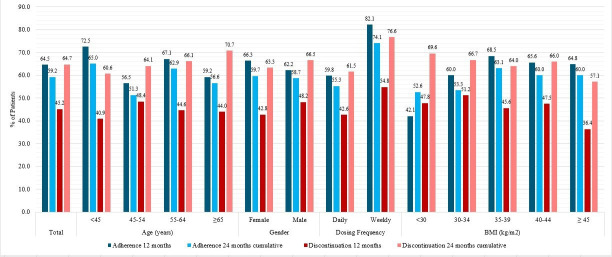
- Adherence declined from 64.5% at 12 months to 59.2% at 24 months (PDC ≥0.80 among patients with at least two fills).
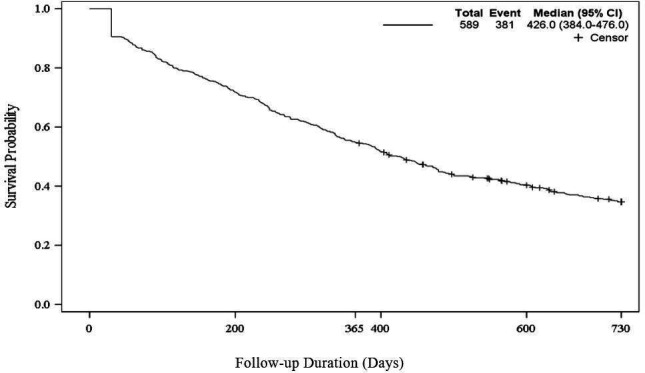
- Discontinuation was common: 45.2% at 12 months and 64.7% at 24 months, with a median time to discontinuation of 426 days (95% CI 384 to 476).
- Weekly dosing was associated with higher adherence but also higher discontinuation in adjusted models; at 24 months, 74.1% of weekly-dose patients were adherent versus 55.3% of daily-dose patients, while 76.6% of weekly-dose patients discontinued versus 61.5% of daily-dose patients.
## Methods
- Retrospective cohort study using the UK Clinical Practice Research Datalink (CPRD), spanning January 1, 2009 to December 31, 2017.
- Included 589 adults (≥18 years) with type 2 diabetes who initiated injectable GLP-1 RA monotherapy or GLP-1 RA plus metformin after a 12-month baseline period; weight analysis used patients with available weight measures, and adherence analysis required at least two GLP-1 RA fills.
- Main analyses were descriptive summaries plus bivariate and multivariable logistic regression for adherence/discontinuation, and Kaplan-Meier analysis for time to discontinuation; adherence was defined as PDC ≥0.80 and discontinuation as a >90-day gap between prescriptions.
## Limitations
- The paper states sample sizes were relatively small (589 total; 530 for adherence), and eligibility restrictions to avoid other antihyperglycemic agents reduced generalizability to the broader T2DM population.
- Weight data were available for only a fraction of the cohort, and the authors note the impact of lifestyle modifications on weight could not be ascertained.
- The paper says observational confounding may have influenced results; additionally, baseline comorbidities may be under-reported because they depended on Read codes, and findings may not apply to oral GLP-1 RAs or other populations.
Model-written summary. Check it against the paper before relying on it.
Integrity signals
Registry
Cites
Statistics
Figures
Verification
Claims the paper makes
12 Valid · 3 Not valid · 4 Not checked · 41 Own results and interpretations
Some cited sources support this claim and some don’t — read each source’s verdict below.
In the paper
“The results for discontinuation by dosing schedule (weekly vs daily) diverge from other real-world studies for reasons that are unclear.”
§ Real-world weight change, adherence, and discontinuation among patients with type 2 diabetes initiating glucagon-like peptide-1 receptor agonists in the UK > Discussion
What the sources say
- Partly supportedcites [23] Wilke T, Mueller S, Groth A, et al. Non-Persistence and Non-Adherence of patients with type 2 diabetes mellitus in therapy with GLP-1 receptor agonists: a retrospective analysis. Diabetes Ther 2016; 7: 105– 24. 10.1007/s13300-015-0149-4 26695499 PMC4801815 sourceExperimental — accuracy not yet measured
The Discussion (Study Objectives and Main Results; page unavailable) reports an earlier real-world study in which once-weekly treatment had higher adherence than once-daily treatment. But this paper’s own discontinuation analysis compares once-daily with twice-daily treatment, not weekly with daily treatment; it does not establish that weekly-versus-daily discontinuation results diverge from other studies. (LLM, conf=0.78)
- Disputedcites [25] Federici MO, McQuillan J, Biricolti G, et al. Utilization patterns of glucagon-like peptide-1 receptor agonists in patients with type 2 diabetes mellitus in Italy: a retrospective cohort study. Diabetes Ther 2018; 9: 789– 801. 10.1007/s13300-018-0396-2 29525885 PMC6104260 sourceExperimental — accuracy not yet measured
The Conclusions state that this study’s results are aligned with those from other countries, not that they diverge from other real-world studies. The paper reports lower persistence with twice-daily exenatide than with the weekly or other daily treatments. (LLM, conf=0.88)
Checked by a reasoning model — may be wrong.
- Not checked — no full text of the sourcecites [27] Malmenäs M, Bouchard JR, Langer J. Retrospective real-world adherence in patients with type 2 diabetes initiating once-daily liraglutide 1.8 Mg or twice-daily exenatide 10 μg. Clin Ther 2013; 35: 795– 807. 10.1016/j.clinthera.2013.03.021 23642290 source
plainstates an associationn = 589- Asserted: passes — The authors put it forward as true.
- Checkable: passes — It can be checked against evidence.
- Load-bearing: unclear — It is unclear whether the paper’s conclusions depend on it.
- Based: passes — The paper gives a reason why it holds.
- Partly supported
The cited sources support only part of this claim — read each source’s verdict below.
In the paper
“The few studies that have evaluated real-world effectiveness of GLP-1 RAs have yielded inconsistent results.”
§ Real-world weight change, adherence, and discontinuation among patients with type 2 diabetes initiating glucagon-like peptide-1 receptor agonists in the UK > Discussion
What the sources say
- Partly supportedcites [8] Guerci B, Charbonnel B, Gourdy P, et al. Efficacy and adherence of glucagon-like peptide-1 receptor agonist treatment in patients with type 2 diabetes mellitus in real-life settings. Diabetes Metab 2019; 45: 528– 35. 10.1016/j.diabet.2019.01.006 30677504 sourceExperimental — accuracy not yet measured
The Introduction (page unavailable) reports a gap between randomized-trial and real-world results, and Effectiveness and tolerability (page unavailable) reviews several real-world effectiveness studies. Neither passage establishes that the real-world studies themselves yielded inconsistent results; the reported discrepancy is between trial and real-world findings. (LLM, conf=0.83)
- Not checked yetcites [20] Nyeland ME, Ploug UJ, Richards A, et al. Evaluation of the effectiveness of liraglutide and sitagliptin in type 2 diabetes: a retrospective study in UK primary care. Int J Clin Pract 2015; 69: 281– 91. 10.1111/ijcp.12575 25302822 source
Checked before — its earlier verdict is held back until a new check runs.
- Partly supportedcites [28] Dhesi B, Chauhan H, Basu A. Audit of clinical practice in the use of incretin mimetic agents for the management of patients with type 2 diabetes. Practical Diabetes 2013; 30: 159– 62. 10.1002/pdi.1767 sourceExperimental — accuracy not yet measured
The Patients and methods section describes a clinical-practice audit of GLP-1 receptor agonists, so this paper is an example of a real-world effectiveness study. But it does not establish that such studies were few or that their results were inconsistent. Instead, the Discussion says its findings were in line with clinical trials, and the limitations passage says the direction of change was similar to published audits. (LLM, conf=0.80)
- Not checked — no full text of the sourcecites [29] Coleman CI, Pandya S, Wang L, et al. Treatment patterns, glycemic control and bodyweight with canagliflozin 300 mg versus GLP1RAs in Type II diabetes patients. J Comp Eff Res 2019; 8: 889– 905. 10.2217/cer-2019-0002 31167554 source
- Partly supportedcites [30] Thomsen RW, Baggesen LM, Søgaard M, et al. Early glycaemic control in metformin users receiving their first add-on therapy: a population-based study of 4,734 people with type 2 diabetes. Diabetologia 2015; 58: 2247– 53. 10.1007/s00125-015-3698-1 26277380 sourceExperimental — accuracy not yet measured
The Methods and Discussion describe a population-based study of real-world GLP-1 receptor agonist effectiveness, so this paper is an example of the kind of study mentioned. Our copy does not establish that there were few such studies or that their results were inconsistent; its Discussion instead says its observed glucose-lowering effects were comparable with those in randomised trials. No page numbers were provided for these passages. (LLM, conf=0.82)
plain- Asserted: passes — The authors put it forward as true.
- Checkable: passes — It can be checked against evidence.
- Load-bearing: unclear — It is unclear whether the paper’s conclusions depend on it.
- Based: passes — The paper gives a reason why it holds.
- Partly supported
Every source the paper cites for this claim was checked and supports it.
In the paper
“Participants in clinical trials tend to be more motivated and have resources and support to comply with the treatment regimens under investigation.”
§ Real-world weight change, adherence, and discontinuation among patients with type 2 diabetes initiating glucagon-like peptide-1 receptor agonists in the UK > Introduction
What the sources say
- Supportedcites [8] Guerci B, Charbonnel B, Gourdy P, et al. Efficacy and adherence of glucagon-like peptide-1 receptor agonist treatment in patients with type 2 diabetes mellitus in real-life settings. Diabetes Metab 2019; 45: 528– 35. 10.1016/j.diabet.2019.01.006 30677504 source
The Introduction (page not provided) says RCT participants tend to be more compliant, more motivated, and better supported financially and administratively. This supports the citing sentence's comparison of trial participants with real-world patients. (LLM, conf=0.93)
plainstates an association- Asserted: passes — The authors put it forward as true.
- Checkable: passes — It can be checked against evidence.
- Load-bearing: passes — The paper’s conclusions depend on it.
- Based: passes — The paper gives a reason why it holds.
- Supported
The cited sources support only part of this claim — read each source’s verdict below.
In the paper
“The finding that patients on weekly dosing regimens are more adherent than those on daily dosing regimens is also consistent with other studies using administrative and electronic medical records datasets across Europe and the USA.”
§ Real-world weight change, adherence, and discontinuation among patients with type 2 diabetes initiating glucagon-like peptide-1 receptor agonists in the UK > Discussion
What the sources say
- Supportedcites [8] Guerci B, Charbonnel B, Gourdy P, et al. Efficacy and adherence of glucagon-like peptide-1 receptor agonist treatment in patients with type 2 diabetes mellitus in real-life settings. Diabetes Metab 2019; 45: 528– 35. 10.1016/j.diabet.2019.01.006 30677504 source
In “Persistence and prescription patterns” (page unavailable), the review reports higher adherence for once-weekly dulaglutide than once-daily liraglutide (51.2% versus 38.2%). It also describes real-world adherence studies using claims databases and electronic medical records, with studies represented from Germany and the US. (LLM, conf=0.88)
- Partly supportedcites [24] Qiao Q, Ouwens MJ, Grandy S, et al. Adherence to GLP-1 receptor agonist therapy administered by once-daily or once-weekly injection in patients with type 2 diabetes in Germany. Diabetes Metab Syndr Obes 2016; 9: 201-5. 10.2147/DMSO.S99732 27418849 PMC4934555 sourceExperimental — accuracy not yet measured
The Conclusion reports better adherence with once-weekly than once-daily GLP-1 receptor agonist treatment, and the Discussion describes a consistent US administrative-claims study. The Methods identify this paper’s German data as a prescription-reimbursement database, not electronic medical records, so that dataset description is not supported for this study. (LLM, conf=0.82)
plainstates an association- Asserted: passes — The authors put it forward as true.
- Checkable: passes — It can be checked against evidence.
- Load-bearing: unclear — It is unclear whether the paper’s conclusions depend on it.
- Based: passes — The paper gives a reason why it holds.
- Supported
The cited sources support only part of this claim — read each source’s verdict below.
In the paper
“In these studies, mean weight change ranged from −1.0 kg to −3.78 kg over 6–12 months.”
§ Real-world weight change, adherence, and discontinuation among patients with type 2 diabetes initiating glucagon-like peptide-1 receptor agonists in the UK > Discussion
What the sources say
- Partly supportedcites [16] Nauck M, Frid A, Hermansen K, et al. Efficacy and safety comparison of liraglutide, glimepiride, and placebo, all in combination with metformin, in type 2 diabetes. Diabetes Care 2009; 32: 84– 90. 10.2337/dc08-1355 18931095 PMC2606836 sourceExperimental — accuracy not yet measured
The Results > Efficacy section reports mean weight losses of 1.8, 2.6, and 2.8 kg in the liraglutide groups over 26 weeks, supporting weight loss over approximately six months. It does not establish the claimed −1.0 to −3.78 kg range or a 12-month result; its 1.0 kg figure is weight gain in the glimepiride group. (LLM, conf=0.86)
- Not checked — no full text of the sourcecites [17] Garber A, Henry R, Ratner R, et al. Liraglutide versus glimepiride monotherapy for type 2 diabetes (LEAD-3 mono): a randomised, 52-week, phase III, double-blind, parallel-treatment trial. Lancet 2009; 373: 473– 81. 10.1016/S0140-6736(08)61246-5 18819705 source
- Partly supportedcites [18] Zinman B, Gerich J, Buse JB, et al. Efficacy and safety of the human glucagon-like peptide-1 analog liraglutide in combination with metformin and thiazolidinedione in patients with type 2 diabetes (LEAD-4 Met+TZD). Diabetes Care 2009; 32: 1224– 30. 10.2337/dc08-2124 19289857 PMC2699702 sourceExperimental — accuracy not yet measured
The Results > Efficacy passage (page unavailable) reports mean weight losses of 1.0 and 2.0 kg in the liraglutide groups, supporting the −1.0 kg end of the cited range. The paper does not report a −3.78 kg mean weight change or establish the full 6–12-month range attributed to these studies. (LLM, conf=0.88)
- Not checked — no full text of the sourcecites [19] Umpierrez G, Tofé Povedano S, Pérez Manghi F, et al. Efficacy and safety of dulaglutide monotherapy versus metformin in type 2 diabetes in a randomized controlled trial (AWARD-3). Diabetes Care 2014; 37: 2168– 76. 10.2337/dc13-2759 24842985 source
- Not checked yetcites [20] Nyeland ME, Ploug UJ, Richards A, et al. Evaluation of the effectiveness of liraglutide and sitagliptin in type 2 diabetes: a retrospective study in UK primary care. Int J Clin Pract 2015; 69: 281– 91. 10.1111/ijcp.12575 25302822 source
Checked before — its earlier verdict is held back until a new check runs.
plain- Asserted: passes — The authors put it forward as true.
- Checkable: passes — It can be checked against evidence.
- Load-bearing: passes — The paper’s conclusions depend on it.
- Based: passes — The paper gives a reason why it holds.
- Partly supported
19 more claims · 4 with their cited sources checked
Create a free account to see all 60 claims and to verify the 3 references still open.
- It may state two separate claims as one. 22
- Probably not a substantial claim. 13
- The quote only partly states this claim. 2
Claims other papers make about this one
Each is checked against this paper’s own text: does it say what the citing paper says it does?
The cited source doesn’t support the claim as written.
In the citing paper
“less than 30% of patients remain on treatment for more than a year6–8”
From GDF8 and activin A blockade protects against GLP-1–induced muscle loss while enhancing fat loss in obese male mice and non-human primates (2025) · cites this paper as [6]
Checked by a reasoning model — may be wrong.
Experimental — accuracy not yet measuredThe cited source says what the claim attributes to it.
In the citing paper
“One study found a 12-month discontinuation of 45.2% among patients with T2D.3”
From GLP-1 receptor agonist discontinuation among patients with obesity and/or type 2 diabetes (2024) · cites this paper as [3]
The cited source says what the claim attributes to it.
In the citing paper
“In real-world settings, up to half of those who initiate treatment with a GLP-1 receptor agonist have discontinued treatment after one year.14, 15, 16, 17”
The cited source says what the claim attributes to it.
In the citing paper
“Recent UK data [45] indicate intermediate persistence in a T2DM cohort (approximately 54.8% at 12 months and 35.3% at 24 months), with a median time to discontinuation of 426 days.”
From Adherence and Persistence with GLP-1-Based Therapies: International Real-World Evidence and the Role of Nutritional and Lifestyle Support—A Narrative Review (2026) · cites this paper as [45]
Citations
Cites
Liraglutide and Cardiovascular Outcomes in Type 2 Diabetes
Marso, S. P., Daniels, G. H., Brown-Frandsen, K., Kristensen, P., Mann, J. F. E., Nauck, M. A., Nissen, S. E., Pocock, S., Poulter, N. R., Ravn, L. S., et al. (2016) · New England Journal of Medicine · doi:10.1056/nejmoa1603827 · Cited by 7,629
Semaglutide and Cardiovascular Outcomes in Patients with Type 2 Diabetes
Marso, S. P., Bain, S. C., Consoli, A., Eliaschewitz, F. G., Jódar, E., Leiter, L. A., Lingvay, I., Rosenstock, J., Seufert, J., Warren, M. L., et al. (2016) · New England Journal of Medicine · doi:10.1056/nejmoa1607141 · Cited by 6,900
Data Resource Profile: Clinical Practice Research Datalink (CPRD)
Herrett, E., Gallagher, A. M., Bhaskaran, K., Forbes, H., Mathur, R., van Staa, T., & Smeeth, L. (2015) · International Journal of Epidemiology · doi:10.1093/ije/dyv098 · Cited by 2,667
Wing, R. R., Lang, W., Wadden, T. A., Safford, M., Knowler, W. C., Bertoni, A. G., Hill, J. O., Brancati, F. L., Peters, A., Wagenknecht, L., et al. (2011) · Diabetes Care · doi:10.2337/dc10-2415 · Cited by 1,828
9. Pharmacologic Approaches to Glycemic Treatment: Standards of Medical Care in Diabetes—2022
American Diabetes Association Professional Practice Committee (2022) · Diabetes Care · doi:10.2337/dc22-s009 · Cited by 1,555
Nauck, M., Frid, A., Hermansen, K., Shah, N. S., Tankova, T., Mitha, I. H., Zdravkovic, M., Düring, M., Matthews, D. R., & for the LEAD-2 Study Group (2009) · Diabetes Care · doi:10.2337/dc08-1355 · Cited by 1,129
Methods for evaluation of medication adherence and persistence using automated databases
Andrade, S. E., Kahler, K. H., Frech, F., & Chan, K. A. (2006) · Pharmacoepidemiology and Drug Safety · doi:10.1002/pds.1230 · Cited by 1,079
Garber, A., Henry, R., Ratner, R., Garcia-Hernandez, P. A., Rodriguez-Pattzi, H., Olvera-Alvarez, I., Hale, P. M., Zdravkovic, M., & Bode, B. (2009) · The Lancet · doi:10.1016/s0140-6736(08)61246-5 · Cited by 1,057
9. Pharmacologic Approaches to Glycemic Treatment: Standards of Medical Care in Diabetes—2021
American Diabetes Association (2021) · Diabetes Care · doi:10.2337/dc21-s009 · Cited by 972
Zinman, B., Gerich, J., Buse, J. B., Lewin, A., Schwartz, S., Raskin, P., Hale, P. M., Zdravkovic, M., Blonde, L., & the LEAD-4 Study Investigators (2009) · Diabetes Care · doi:10.2337/dc08-2124 · Cited by 848
Cited by
Semaglutide vs Tirzepatide for Weight Loss in Adults With Overweight or Obesity
Rodriguez, P. J., Goodwin Cartwright, B. M., Gratzl, S., Brar, R., Baker, C., Gluckman, T. J., & Stucky, N. L. (2024) · JAMA Internal Medicine · doi:10.1001/jamainternmed.2024.2525 · Cited by 334
Rodriguez, P. J., Goodwin Cartwright, B. M., Gratzl, S., Brar, R., Baker, C., Gluckman, T. J., & Stucky, N. L. (2023) · doi:10.1101/2023.11.21.23298775 · Cited by 334
“In fact, it’s likely that the weight reduction observed in our study was greater than that found in previous real-world studies because such studies ended before semaglutide and/or tirzepatide were available [34, 35].”
ResultCusi, K., Abdelmalek, M. F., Apovian, C. M., Balapattabi, K., Bannuru, R. R., Barb, D., Bardsley, J. K., Beverly, E. A., Corbin, K. D., ElSayed, N. A., et al. (2025) · Diabetes Care · doi:10.2337/dci24-0094 · Cited by 332
GLP-1 receptor agonist discontinuation among patients with obesity and/or type 2 diabetes
Do, D., Lee, T., Peasah, S. K., Good, C. B., Inneh, A., & Patel, U. (2024) · JAMA Network Open · doi:10.1001/jamanetworkopen.2024.13172 · Cited by 218
Jensen, S. B. K., Blond, M. B., Sandsdal, R. M., Olsen, L. M., Juhl, C. R., Lundgren, J. R., Janus, C., Stallknecht, B. M., Holst, J. J., Madsbad, S., et al. (2024) · eClinicalMedicine · doi:10.1016/j.eclinm.2024.102475 · Cited by 207
“19,39 Given the many people who initiate obesity pharmacotherapy worldwide but also terminate treatment again, 14 – 17 off-treatment assessments are imperative to elucidate the real-world potential of pharmacotherapy and are clinically relevant.”
BackgroundInsulin resistance in type 2 diabetes mellitus
Accili, D., Deng, Z., & Liu, Q. (2025) · Nature Reviews Endocrinology · doi:10.1038/s41574-025-01114-y · Cited by 163
“There are several reasons for this assertion: GLP1 receptor agonists do not reverse the fundamental impairment of insulin action, the durability of their direct effects on β-cells is limited 166 and adherence to treatment is a challenge 14,15,167–169 .”
Clinical Trial Landscape in NASH
Harrison, S. A., Loomba, R., Dubourg, J., Ratziu, V., & Noureddin, M. (2023) · Clinical Gastroenterology and Hepatology · doi:10.1016/j.cgh.2023.03.041 · Cited by 137
New and emerging treatments for metabolic dysfunction-associated steatohepatitis
Tincopa, M. A., Anstee, Q. M., & Loomba, R. (2024) · Cell Metabolism · doi:10.1016/j.cmet.2024.03.011 · Cited by 126
Tobaiqy, M., & Elkout, H. (2024) · International Journal of Clinical Pharmacy · doi:10.1007/s11096-023-01694-7 · Cited by 88
“Fatal outcomes were primarily the result of completed suicide and were more common in males in the 18–64 age group [29].”
BackgroundGLP-1 agonists for weight loss: pharmacology and clinical implications.
Moore, P. W., Malone, K., VanValkenburg, D., Rando, L. L., Williams, B. C., Matejowsky, H. G., Ahmadzadeh, S., Shekoohi, S., Cornett, E. M., & Kaye, A. D. (2023) · Advances in Therapy · doi:10.1007/s12325-022-02394-w · Cited by 86
“Patients with type 2 diabetes taking GLP-1 receptor agonists may benefit from additional support to maintain adherence and see optimal results in lowered HbA1c and weight loss [22].”
BackgroundBarb, D., Kalavalapalli, S., Leiva, E. G., Bril, F., Huot-Marchand, P., Dzen, L., Rosenberg, J. T., Junien, J., Broqua, P., Rocha, A. O., et al. (2025) · Journal of Hepatology · doi:10.1016/j.jhep.2024.12.045 · Cited by 116
Malik, M. E., Falkentoft, A. C., Jensen, J., Zahir, D., Parveen, S., Alhakak, A., Andersson, C., Petrie, M. C., Sattar, N., McMurray, J. J. V., et al. (2023) · The Lancet Regional Health - Europe · doi:10.1016/j.lanepe.2023.100617 · Cited by 67
White, G. E., Shu, I., Rometo, D., Arnold, J., Korytkowski, M., & Luo, J. (2023) · Obesity · doi:10.1002/oby.23622 · Cited by 66
“For example, one cohort study used UK claims data to examine body weight changes among 589 patients with type 2 diabetes initiating a GLP-1 agonist [20].”
MethodMastaitis, J. W., Gomez, D., Raya, J. G., Li, D., Min, S., Stec, M., Kleiner, S., McWilliams, T., Altarejos, J. Y., Murphy, A. J., et al. (2025) · Nature Communications · doi:10.1038/s41467-025-59485-9 · Cited by 53
“In addition, many patients do not stay on these treatments for more than a year and can rapidly regain much of their body weight, with almost all of the regained weight due to fat 3,6,10,36 .”
Gigliotti, L., Warshaw, H., Evert, A., Dawkins, C., Schwartz, J., Susie, C., Kushner, R., Subramanian, S., Handu, D., & Rozga, M. (2025) · Journal of the Academy of Nutrition and Dietetics · doi:10.1016/j.jand.2024.10.023 · Cited by 53
Time-dependent effect of GLP-1 receptor agonists on cardiovascular benefits: a real-world study
Piccini, S., Favacchio, G., Panico, C., Morenghi, E., Folli, F., Mazziotti, G., Lania, A. G., & Mirani, M. (2023) · Cardiovascular Diabetology · doi:10.1186/s12933-023-01800-z · Cited by 49
“7% of the subjects discontinued the treatment, at 12 and 24 months respectively [24].”
BackgroundAssociation between plausible genetic factors and weight loss from GLP1-RA and bariatric surgery
German, J., Cordioli, M., Tozzo, V., Urbut, S., Arumäe, K., Smit, R. A. J., Lee, J., Li, J. H., Janucik, A., Ding, Y., et al. (2025) · Nature Medicine · doi:10.1038/s41591-025-03645-3 · Cited by 65
“In line with previous work 30,53–56 , our main outcome of interest was the percentage change in body weight between 6 and 12 months after GLP1-RA treatment initiation as well as between 6 and 48 months after BS.”
Hedin, K. A., Zhang, H., Kruse, V., Rees, V. E., Bäckhed, F., Greiner, T. U., Vazquez-Uribe, R., & Sommer, M. O. A. (2023) · ACS Synthetic Biology · doi:10.1021/acssynbio.3c00455 · Cited by 46
Arvanitakis, K., Koufakis, T., Popovic, D. S., Maltese, G., Mustafa, O. G., Doumas, M. N., Γιουλεμέ, Ό., Kotsa, K., & Germanidis, G. S. (2023) · Current Obesity Reports · doi:10.1007/s13679-023-00506-3 · Cited by 41
Cardoso, P., Young, K., Nair, A. T. N., Hopkins, R., McGovern, A. P., Haider, E., Karunaratne, P., Donnelly, L. A., Mateen, B. A., Sattar, N. A., et al. (2024) · Diabetologia · doi:10.1007/s00125-024-06099-3 · Cited by 43
“The relative average equipoise between the two drug classes in our study is likely indicative of a diminished real-world response to GLP1-RA, a phenomenon also documented in other real-world studies [37, 38], which may relate to reduced real-world adherence to GLP1-RA [38].”
ResultSamuels, J. M., Ye, F., Irlmeier, R., Silver, H., Srivastava, G., & Spann, M. (2025) · Diabetes, Obesity and Metabolism · doi:10.1111/dom.70004 · Cited by 35
“Emerging data from European cohorts indicate that the real-world effectiveness of Glucagon-like peptide-1 receptor agonists (GLP1RAs) may fall short of trial-reported outcomes, 9,11,12 potentially due to lower rates of dose escalation and abbreviated treat-ment durations.”
Bellido, V., Padín, C. A., Catarig, A., Clark, A., Pittol, S. B., & Delgado, E. (2022) · Journal of Clinical Medicine · doi:10.3390/jcm11174938 · Cited by 25
“This weight reduction is a key consideration in terms of reducing CV risk, in view of the beneficial reductions in triglycerides, total cholesterol, and low-density lipoprotein cholesterol that are associated with a weight loss of 5–10% [37].”
BackgroundRosenfeld, R. M., Grega, M. L., Karlsen, M. C., Dabrh, A. M. A., Aurora, R. N., Bonnet, J. P., Donnell, L., Fitzpatrick, S. L., Frates, E. P., Joy, E. A., et al. (2025) · American Journal of Lifestyle Medicine · doi:10.1177/15598276251325488 · Cited by 55
Smits, M. M., & Holst, J. J. (2023) · Diabetes/Metabolism Research and Reviews · doi:10.1002/dmrr.3699 · Cited by 26
“38 Moreover, the discontinuation rate in the real ‐ world setting is very high, with up to 50% after 1 year, and 70% after 2 years in some studies 39 (although some patients discontinue treat-ment in the first few weeks 40 ).”
BackgroundWright, E. E., Roberts, G. J., Chuang, J. S., Nabutovsky, Y., Virdi, N., & Miller, E. (2024) · Diabetes Technology & Therapeutics · doi:10.1089/dia.2024.0015 · Cited by 22
“6,42,43 A recent investigation by Weiss et al. observed a discontinuation rate of 70.1% at 24 months.”
InfluentialKarakasis, P., Sagris, Μ., Patoulias, D., Koufakis, T., Theofilis, P., Klisic, A. N., Fragakis, N., El‐Tanani, M., & Rizzo, M. (2024) · Biomedicines · doi:10.3390/biomedicines12112503 · Cited by 24
“…overall adherence rates to GLP-1RAs in patients with OSA are comparable to those observed in the general population prescribed these medications [104]. these medications [ Reasons for low adherence rates may be severe gastrointestinal adverse events, parenteral route of administration, high…”
Obesity-related neuropathy: the new epidemic
Elafros, M. A., Reynolds, E. L., & Callaghan, B. C. (2024) · Current Opinion in Neurology · doi:10.1097/wco.0000000000001292 · Cited by 27
Alexander, G. C., Xiao, X., Dilek, S., Lewis, S. V., Deng, Q., Kim, M., Bolanle, D., Saldanha, I. J., & Mehta, H. B. (2026) · JAMA Internal Medicine · doi:10.1001/jamainternmed.2025.8222 · Cited by 30
Nielsen, J., Friedman, S., Nørgård, B. M., Knudsen, T., Kjeldsen, J., & Wod, M. (2025) · Inflammatory Bowel Diseases · doi:10.1093/ibd/izae276 · Cited by 20
Effect of GLP-1 receptor agonists on weight and cardiovascular outcomes: A review
Raza, F. A., Altaf, R., Bashir, T., Asghar, F., Altaf, R., Tousif, S., Goyal, A., Mohammed, A., Mohammad, M. F., Anan, M., et al. (2024) · Medicine · doi:10.1097/md.0000000000040364 · Cited by 37
“[44] Unexpectedly, trials on diabetic patients revealed impressive weight loss, [45] sparking researchers’ interest in the potential use of GLP-1 RA drugs as weight loss therapy.”
BackgroundKrentz, A. J., Jacob, S., Heiß, C., Sattar, N. A., Lim, S. K., Khunti, K., & Eckel, R. H. (2024) · Atherosclerosis · doi:10.1016/j.atherosclerosis.2024.118528 · Cited by 23
“However, some evidence from real-world diabetes practice suggests that the benefits of these agents may be lower than that reported in clinical trials [30].”
Jiménez, V., Sacristan, V., Jambrina, C., Jaén, M. L., Casana, E., MUÑOZ, S. A., Marcó, S., Molas, M., García, M., Grass, I., et al. (2024) · Molecular Therapy · doi:10.1016/j.ymthe.2024.10.023 · Cited by 16
McGill, J. B., Hirsch, I. B., Parkin, C. G., Aleppo, G., Levy, C. J., & Gavin, J. R. (2024) · Diabetes Therapy · doi:10.1007/s13300-024-01569-8 · Cited by 29
McKenzie, A. L., & Athinarayanan, S. J. (2024) · Diabetes Therapy · doi:10.1007/s13300-024-01547-0 · Cited by 14
“For example, real-world persistence of GLP-1 therapy at 1 year is approximately 50% [36].”
BackgroundGLP-1RA precision medicine in people with type 2 diabetes: current insights and future prospects
Cardoso, P., Dennis, J., & Pearson, E. R. (2026) · Journal of Clinical Investigation · doi:10.1172/jci194742 · Cited by 21
Azar, K., Mirzaei, A., Babapour, A.-R., & Fathnezhad‐Kazemi, A. (2024) · SAGE Open Medicine · doi:10.1177/20503121231221446 · Cited by 33
Maharjan, R., Lim, D. S., Baik, H. J., Park, H. E., Kim, M., Kim, K. H., & Jeong, S. H. (2024) · Journal of Pharmaceutical Investigation · doi:10.1007/s40005-024-00681-y · Cited by 14
“A prior study confirmed that the weight loss ≥ 5% could be considered as a benchmark for the patient compliance (Weiss et al. 2022).”
Wang, J., Bi, C., Xi, H., & Wei, F. (2024) · Frontiers in Pharmacology · doi:10.3389/fphar.2024.1455534 · Cited by 13
Brixner, D. I., Edelman, S. V., Sieradzan, R., & Gavin, J. R. (2024) · Diabetes Therapy · doi:10.1007/s13300-024-01598-3 · Cited by 16
“One retrospective cohort study showed that in individuals with T2D who were started on GLP-1 RA therapy, 35.5 and 40.8% were nonadherent and 45.2 and 64.7% had discontinued therapy at 12 and 24 months, respectively [10].”
BackgroundInfluentialBiology and Clinical Use of Glucagon-Like Peptide-1 Receptor Agonists in Vascular Protection
Yau, K., Odutayo, A., Dash, S., & Cherney, D. Z. I. (2023) · Canadian Journal of Cardiology · doi:10.1016/j.cjca.2023.07.007 · Cited by 22
Weng, J., Alizadeh, M. A., & Friedman, S. (2025) · Digestive Diseases and Sciences · doi:10.1007/s10620-025-09344-w · Cited by 16
Mousavi, A., Shojaei, S., Azarboo, A., Bahri, R. A., Mohammadi, S., Alilou, S., Yousefifar, S., Maleki, S., & Radkhah, H. (2025) · Eating and Weight Disorders - Studies on Anorexia Bulimia and Obesity · doi:10.1007/s40519-025-01770-z · Cited by 14
Body Composition Changes After Bariatric Surgery or Treatment With GLP-1 Receptor Agonists
Wang, Z., Wang, L., Zhang, X., Lowery, B. D., Shaffer, L. L., Chen, Y., Wells, Q. S., Flynn, C. R., Williams, B., Spann, M. D., et al. (2026) · JAMA Network Open · doi:10.1001/jamanetworkopen.2025.53323 · Cited by 25
Thornton, P., Reader, V., Digby, Z., Doedens, J. R., Lindsay, N. A., Clarke, N. P., & Watt, A. P. (2025) · Obesity · doi:10.1002/oby.24305 · Cited by 15
“Discontinuation of antiobesity drugs such as semaglutide often results in the rapid recovery of lost weight [22, 23], and the number of patients who discontinue GLP-1RA therapy within 2 years is substantial [24].”
Jeromson, S., Baranowski, B., Akcan, M., Waters, B. D., Eisner, K., Bellucci, A., Trang, S., Abolhassani, A., Tello‐Palencia, M. A., Schweitzer, A. M., et al. (2025) · The Journal of Physiology · doi:10.1113/jp289449 · Cited by 23
Tartaglia, E., Bucci, T., Rossi, M., Rigutini, A. G., Askarinejad, A., Alam, U., Nabrdalik, K., Boriani, G., & Lip, G. Y. H. (2025) · Cardiovascular Diabetology · doi:10.1186/s12933-025-02986-0 · Cited by 23
“These findings are consistent with previous real-world studies conducted among people with T2DM or obesity [13, 14].”
Wu, H., Lu, Z., Chen, R., Cai, Q., Wang, M., Zhang, L., & Zhu, Z. (2023) · Frontiers in Endocrinology · doi:10.3389/fendo.2023.1098032 · Cited by 15
“2% of patients with T2DM discontinued GLP-1 receptor agonists therapy at 12 months in the UK (16).”
BackgroundSeijas‐Amigo, J., Salgado‐Barreira, Á., Castelo-Dominguez, R., Pérez-Álvarez, M. T., Ponce-Piñón, B., Fernández-Silva, M., Rodríguez-Barreiro, M., Pereira-Pía, M., Iglesias-Moreno, J. M., Gago-García, M., et al. (2022) · Primary care diabetes · doi:10.1016/j.pcd.2023.05.004 · Cited by 16
Talay, L., Vickers, M., & Loftus, S. (2024) · Telemedicine Reports · doi:10.1089/tmr.2024.0031 · Cited by 13
Ulrich, F. S., Napoli, N., Nielsen, M. F., & Burden, A. M. (2026) · Diabetes, Obesity and Metabolism · doi:10.1111/dom.70535 · Cited by 10
“26 – 30 For instance, UK's NICE guidelines (NG28) for type 2 diabetes management recommend discontinuing GLP-1RA therapy after 6-months if a reduction of at least 1% in HbA1c and 3% in bodyweight was not achieved, 6 which may partly account for the high early discontinuation rates observed.”
Sørensen, K. K., Gerds, T. A., Køber, L., Fosbøl, E. L., Poulsen, H. E., Møller, A. L., Andersen, M. P., Pedersen‐Bjergaard, U., Torp-Pedersen, C. T., & Zareini, B. (2024) · Journal of Diabetes · doi:10.1111/1753-0407.70000 · Cited by 13
“33 These observational findings align with real-world adherence to other glucose-lowering medications.”
ResultAdherence to and Dropout from Liraglutide 3.0 mg Obesity Treatment in a Real-World Setting
Ko, H., Kim, J., & Lim, S. K. (2022) · Journal of Obesity & Metabolic Syndrome · doi:10.7570/jomes22029 · Cited by 12
Jiang, Y., Bai, H., Liu, G., Wang, S.-Y., Yin, L., Hou, Z.-T., Zhao, C., & Fan, G. (2024) · Frontiers in Endocrinology · doi:10.3389/fendo.2024.1347684 · Cited by 12
Miller, E., Chuang, J. S., Roberts, G. J., Nabutovsky, Y., Virdi, N., & Wright, E. E. (2024) · Diabetes Therapy · doi:10.1007/s13300-024-01619-1 · Cited by 9
Hirsch, I. B., Parkin, C. G., Cavaiola, T. S., & Bergenstal, R. M. (2024) · Diabetes Obesity and Metabolism · doi:10.1111/dom.15883 · Cited by 8
“40,77,78 In addition to diminished glycaemic control, many patients who discontinue GLP-1RA therapy regain the weight they had lost 79,80 and this has been linked to increased risk of major adverse cardiovascular events.”
Enrollment of Females in Randomized Trials for Glucagon-Like Peptide 1 Receptor Agonists
Rivera, F. B., Ybañez, M. J. C., Magalong, J. V., Prado, M. B., Aguirre, E. A., Cañares, A. P. T., Rubia, J. M. M., Hiyas, A. R., Pine, P. L. S., Lara-Breitinger, K. M., et al. (2024) · JACC Advances · doi:10.1016/j.jacadv.2024.101386 · Cited by 11
Treating class 2–3 obesity with glucagon‐like peptide‐1 agonists: A 2‐year real‐world cohort study
Abdel‐Bary, M., Brody, A., Schmitt, J., Prieto, K., Wetzel, A. N., & Juo, Y. (2025) · Diabetes Obesity and Metabolism · doi:10.1111/dom.16331 · Cited by 13
“17,21,22 We suspect the discrepancy Initial BMI, mean (SD), kg/m 2 44.6 (6.4) 44.6 (7.4) 44.5 (6.4) Initial HbA1c, mean (SD), mmol/mol 6.0 (0.9) Expressed as total weight loss percentage (TWL%). b 37 outliers excluded from analyses due to receiving bariatric surgery during follow-up. period of time…”
InfluentialTalay, L., Vickers, M., & Ruiz, L. (2024) · Obesities · doi:10.3390/obesities4030021 · Cited by 10
“Other studies have assessed weight-loss outcomes from standalone GLP-1 RA interventions [25,26]; GLP-1 RA-supported interventions on type 2 diabetes cohorts [27,28]; and GLP-1-RA supported interventions that have been publicly funded [15,29].”
BackgroundPandey, R. K., Jan, M., Mohammad, A., Jawaid, K. A., Naveed, M., Abid, M. A., Amir, A. B., Ahmed, S., Safiullah, M., Bhatti, M. I., et al. (2025) · Endocrinology, Diabetes & Metabolism · doi:10.1002/edm2.70134 · Cited by 9
Krishnan, A., Suryanarayanan, S., & Mansi, I. A. (2024) · Journal of Pharmacy Technology · doi:10.1177/87551225241266773 · Cited by 9
“17,18 The GLP-1RA medications also have increased cardiovascular protective effects with respect to improving lipid profile and systolic BP. 19-23 Current American Diabetes Association (ADA) guidelines regarding pharmacologic therapy of type 2 diabetes recommended use of metformin as first-line therapy, followed by (o…”
Lahooti, A., Rizvi, A., Canakis, A., Akagbosu, C., Johnson, K. E., Hassan, K., Lahooti, I., Abu-Hammour, M., Dawod, E., Dawod, Q. M., et al. (2024) · Obesity Surgery · doi:10.1007/s11695-024-07408-w · Cited by 10
Wright, E. E., Miller, E. M., Bindal, A., & Poon, Y. (2025) · Journal of Managed Care & Specialty Pharmacy · doi:10.18553/jmcp.2025.24253 · Cited by 10
Rasouli, N., Wilding, J. P. H., Kwan, A. Y. M., Paik, J. S., Sharma, P., & Peleshok, J. C. (2025) · Diabetes Therapy · doi:10.1007/s13300-025-01711-0 · Cited by 17
“The risk of metabolic abnormalities that can increase the risk of cardiovascular disease also increases with age [22].”
Waataja, J. J., Asp, A. J., & Billington, C. J. (2023) · Biomedicines · doi:10.3390/biomedicines11092452 · Cited by 11
“However, as observed with many T2DM medications, adherence is a major problem with GLP-1 RAs with reported discontinuation in real-world scenarios to be approximately 45% at 1 year [28,29] due to unwanted side effects [30], high cost [31], and unwillingness to follow the physician’s treatment advice [32].”
BackgroundMingrone, G., & Rajagopalan, H. (2024) · Diabetes Research and Clinical Practice · doi:10.1016/j.diabres.2024.111651 · Cited by 10
Gulati, K., Wijndaele, K., Webb, J., von Arx, L., Seif, M., Jennison, T., Geneidat, A., Wild, R., Wood, R. P., & Khunti, K. (2025) · Diabetes Obesity and Metabolism · doi:10.1111/dom.16201 · Cited by 9
“3 Indeed, in common with similar real-world studies conducted in UK primary care, 19,21 the current study identified a multimorbid T2D population with elevated BMI.”
Aneke-Nash, C. S., Hung, K. S., Wall‐Wieler, E., Zheng, F., & Sharaiha, R. Z. (2025) · BMJ Open Gastroenterology · doi:10.1136/bmjgast-2024-001704 · Cited by 9
“Lastly, we are unable to distinguish whether the gast-roparesis is permanent or transient, though this is a rich Open access for future research given the increasing prevalence of semaglutide use for the management of obesity.”
Metabolic Endoscopy: Should Gastroenterologists Be Treating Type 2 Diabetes?
Norton, B. C., Papaefthymiou, A., Telese, A., Mallik, R., Murino, A., Johnson, G., Murray, C. D., Makaronidis, J., & Haidry, R. J. (2024) · Gastrointestinal Disorders · doi:10.3390/gidisord6010013 · Cited by 7
“In addition, real-world efficacy data may be lower than clinical trials, and up to 45% discontinue therapy after one year [43].”
BackgroundPancreatic Islet Cell Hormones: Secretion, Function, and Diabetes Therapy
Ma, J., Mao, L., Yang, L., Xie, Q., Fan, R., Lu, X., Huang, X., Tong, N., & Duan, Z. (2025) · MedComm · doi:10.1002/mco2.70359 · Cited by 20
“Mechanistically, GLP-1RAs improve metabolic outcomes through multiple pathways: enhancing glucose-dependent insulin secretion, suppressing inappropriate glucagon release, and promoting satiety [234–236].”
Self-citationLuc, G., Dedieu, A., Canard, G., Cesard, A., Brunet, A., Furois, C., Leterrier, A., Daridon, B., Mendes, L., Brighen, E., et al. (2025) · Obesity Surgery · doi:10.1007/s11695-025-08258-w · Cited by 6
“Overall, weight loss induced by GLP-1 RAs appears more modest in real-life settings than in randomized studies for the reasons mentioned above [12].”
Manyari, Á. A. O., Alvarez, A. L. A., Manyari, J. D. O., Gonzalez, F., & Pouwels, S. (2025) · Obesity Surgery · doi:10.1007/s11695-025-08414-2 · Cited by 11
“In real-world studies, 1-year discontinuation rates ranged from 37% to 81%, mainly due to AEs, insufficient efficacy, insurance issues, drug shortages, and high costs [ 32–34].”
Samuels, S. L., Chajecki, A., Hu, P., Kayser, M., Weyman, K., Pan, B., Brown, E. A., Name, M. A. V., & Wolf, R. M. (2024) · Diabetes Obesity and Metabolism · doi:10.1111/dom.15430 · Cited by 6
“This is clinically important as weight/BMI usually increases with lowering HbA1c in clinical care of youth with T2D, because of less glycosuria, and is often accompanied by increased insulin administration.”
BackgroundResultInfluentialMetabolic and Bariatric Endoscopy: A Mini-Review
Norton, B. C., Telese, A., Papaefthymiou, A., Aslam, N., Makaronidis, J., Murray, C. D., & Haidry, R. J. (2023) · Life · doi:10.3390/life13091905 · Cited by 7
“…efficacy of semaglutide was confirmed within the STEP (Semaglutide Treatment Effect in People with Obesity) clinical trials, which showed a 12.4% placebo-subtracted mean weight loss percentage over 68 weeks [53,60–63]. all patients, have supply and cost issues, and rely on patient concordance [64].”
BackgroundInfluentialPharmacodynamic and pharmacokinetic profiles of a novel GLP-1 receptor biased agonist-SAL0112
Sun, J., Xiao, Y., Xing, W., Jiang, W., Hu, X., Li, H., Liu, Z., Jin, Q., Ren, P., Zhang, H., et al. (2024) · Biomedicine & Pharmacotherapy · doi:10.1016/j.biopha.2024.116965 · Cited by 9
Cost-Effectiveness of Semaglutide for Secondary Prevention of Cardiovascular Disease in US Adults
Hennessy, S. S., Penko, J. M., Bellows, B. K., Coxson, P. G., Boylan, R. D., Sims, K. D., Beatty, A. L., Inoue, K., Shi, I., Decker, S. R. D. R., et al. (2026) · JAMA Cardiology · doi:10.1001/jamacardio.2025.5243 · Cited by 9
Tackling obstructive sleep apnea with pharmacotherapeutics: expert guidance
Harding, C. D., Fuentes, A. L., & Malhotra, A. (2024) · Expert Opinion on Pharmacotherapy · doi:10.1080/14656566.2024.2365329 · Cited by 8
“For instance, whilst OSA is a chronic disease requiring life-long treatment, studies show that up to 70% of patients on GLP-1 receptor agonists stop using the drug at 2 years due to adverse effects and/or cost [51,52].”
BackgroundCardoso, P., Young, K., Hopkins, R., Mateen, B. A., Pearson, E. R., Hattersley, A. T., McKinley, T. J., Shields, B. M., & Dennis, J. (2025) · Diabetes Obesity and Metabolism · doi:10.1111/dom.16470 · Cited by 5
Pharmacological Management of Obesity: A Century of Expert Opinions in Cecil Textbook of Medicine
Manu, P., Lăcătușu, C.-M., Rogozea, L. M., & Cernea, S. (2022) · American Journal of Therapeutics · doi:10.1097/mjt.0000000000001524 · Cited by 12
Glucagon-Like Peptide 1 Receptor Agonists and the Deepening Health Equity Divide in America
Spinelli, K. J., & Oakes, A. H. (2025) · American Journal of Health Promotion · doi:10.1177/08901171251335507b · Cited by 5
Genetic architecture of obesity and advances in precision pharmacotherapy: a comprehensive review
Kavaja, F., Liehr, T., & Temaj, G. (2026) · Acta Biochimica Polonica · doi:10.3389/abp.2026.15484 · Cited by 6
Obesity management before and after pancreas transplantation
Abbasi, A. B., Posselt, A. M., Orandi, B. J., Odorico, J. S., & Stock, P. G. (2025) · Current Opinion in Organ Transplantation · doi:10.1097/mot.0000000000001226 · Cited by 6
Abdelmannan, D. K., AlBuflasa, M., Ajlouni, H. K., Zidan, M. A., Rahman, F., Farooqi, M. H., & Caballero, A. E. (2023) · Diabetes Research and Clinical Practice · doi:10.1016/j.diabres.2023.111045 · Cited by 5
Access to GLP-1s: Where Do Employers Fit in?
Imboden, M. T. (2025) · American Journal of Health Promotion · doi:10.1177/08901171251335507 · Cited by 4
Is weight cycling clinically harmful?
Magkos, F., & Stefan, N. (2026) · The Lancet Diabetes & Endocrinology · doi:10.1016/s2213-8587(26)00037-9 · Cited by 4
Talay, L., Vickers, M., & Alvi, O. (2024) · Diabetes Obesity and Metabolism · doi:10.1111/dom.15903 · Cited by 4
“Other real-world investigations have shown the effectiveness of GLP-1 RA-supported services on patients with diabetes, 21,22 but findings from the STEP-2 and SURMOUNT-2 RCTs have shown that diabetic cohorts cannot be compared with non-diabetic cohorts in weight-loss settings.”
Butt, M. D., Ong, S. C., Rafiq, A., Batool, N., Saifi, R. A., Yaseen, S., Kaukab, I., & Ramzan, B. (2024) · Journal of Pharmaceutical Policy and Practice · doi:10.1080/20523211.2024.2432462 · Cited by 6
“…the need for a multifaceted approach, integrating lifestyle interventions like dietary modifications, physical activity, and psychological support, as pharmacotherapy alone may be insufficient to induce significant weight loss in most patients with T2DM (Pleus et al., 2022; Weiss et al., 2022).”
Mental Health Factors in Semaglutide Discontinuation
Endo, M., & Kami, M. (2025) · JAMA Internal Medicine · doi:10.1001/jamainternmed.2024.8390 · Cited by 3
Gut Hormones and Inflammatory Bowel Disease
Weng, J., & Lo, C. C. (2025) · Biomolecules · doi:10.3390/biom15071013 · Cited by 7
“Over half of users experience gastrointestinal side effects, including nausea, vomiting, and diarrhea, which often lead to treatment discontinuation [166–168].”
Food Ease in the “Ozempic Era”
Greer, M. L. J. (2025) · Gastronomica The Journal of Food and Culture · doi:10.1525/gfc.2025.25.3.59 · Cited by 3
Tran, P., Long, T., Smith, J., Kuehl, M. W., Mahdy, T., & Banerjee, P. (2022) · Open Heart · doi:10.1136/openhrt-2022-002101 · Cited by 5
Lyu, Y. S., Ahn, H. Y., Hong, S., & Park, C. (2024) · Drug Design Development and Therapy · doi:10.2147/dddt.s492913 · Cited by 7
Hedin, K. A., Zhang, H., Kruse, V., Rees, V. E., Bäckhed, F., Greiner, T. U., Vazquez-Uribe, R., & Sommer, M. O. A. (2022) · bioRxiv (Cold Spring Harbor Laboratory) · doi:10.1101/2022.12.21.521368 · Cited by 3
Dziewierz, A., & Siudak, Z. (2026) · Nutrients · doi:10.3390/nu18111761 · Cited by 3
“Recent UK data [45] indicate intermediate persistence in a T2DM cohort (approximately 54.8% at 12 months and 35.3% at 24 months), with a median time to discontinuation of 426 days.”
InfluentialClarifying the real challenge: adherence, not efficacy, is the barrier to exercise as medicine
MacDonald, C., Bennekou, M., Midtgaard, J., Langberg, H., & Lieberman, D. E. (2025) · British Journal of Sports Medicine · doi:10.1136/bjsports-2025-110988 · Cited by 3
Mai, Z., Kornak, J., Dufault, S. M., Strand, M. W., Reikes, A., & Watanabe, J. H. (2025) · Annals of Pharmacotherapy · doi:10.1177/10600280251384637 · Cited by 2
Israel, A., Hassan, F., Merzon, E., Kurtam, J., Awad, J., Assalia, M., Green, I., Vinker, S., & Naffaa, M. E. (2026) · Therapeutic Advances in Musculoskeletal Disease · doi:10.1177/1759720x261425441 · Cited by 4
“10,14 Beyond their recognized effects on endocrine function and body weight, GLP-1RAs are increasingly recognized as immunomodulators.”
Harnessing the Incretin System with Multi-Agonists
Whyte, M., Heald, A. H., & Field, B. C. T. (2022) · EMJ Innovation · doi:10.33590/emjinnov/10115628 · Cited by 2
Six-year follow-up of an abstinence-based, food addiction recovery approach to weight management
Thompson, S. P., Briones, N., Blumkin, A. K., & Rabinowitz, B. (2025) · Frontiers in Psychiatry · doi:10.3389/fpsyt.2025.1584201 · Cited by 3
“The current study sheds light on an approach to weight loss that does not share the side effects (22), costs (23), nor required long-term continuation of GLP-1 medications (24).”
Tapper, E. B., Ryan, T., Zeng, N., Carter, R., Winer-Jones, J. P., Bonafede, M., & Kim, Y. (2025) · Journal of Comparative Effectiveness Research · doi:10.57264/cer-2024-0223 · Cited by 2
“Similar results were seen in an analysis of the UK Clinical Practice Research Datalink, in which 33.4% of patients with Type 2 diabetes who initiated a GLP-1 RA lost at least 5% of their body weight within a year [32] .”
InfluentialGLP1-receptor-agonisták a 2-es típusú diabetes vércukorcsökkentő kezelésében
Winkler, G. (2022) · Orvosi Hetilap · doi:10.1556/650.2022.32547 · Cited by 3
Metadata
- Authors
- Weiss, T., Yang, L., Carr, R. D., Pal, S., Sawhney, B., Boggs, R., Rajpathak, S., & Iglay, K.
- Affiliations
- Merck & Co., Inc., Rahway, NJ, USA (United States) (US)
- Complete HEOR Solutions, North Wales, Pennsylvania, USA
- Corresponding author
- Weiss, Tracey
- ORCID
- Venue
- BMJ Open Diabetes Research & Care
- Publisher
- BMJ
- Published
- 2022-01
- Volume
- 10
- Issue
- 1
- Pages
- e002517
- ISSN
- 2052-4897 (ISSN-L)
- PMC
- PMC8804648
- OpenAlex
- W4210809516
- Cited by
- 152
- References
- 32
- Citations by year
- 2026: 32 · 2025: 48 · 2024: 48 · 2023: 16 · 2022: 8
- FWCI
- 22.41
- Type
- journal article
- Language
- en
- Open access
- gold
- doi.org
- Licence
- Locations
- BMJ Open Diabetes Research & Care (publishedVersion, cc-by-nc)
- PubMed Central (publishedVersion, cc-by-nc)
- PubMed (publishedVersion)
- DOAJ (DOAJ: Directory of Open Access Journals) (submittedVersion, cc-by-sa)
- Funders
- Merck Sharp and Dohme (n/a)
- Topics
- Health Sciences › Medicine › Endocrinology, Diabetes and Metabolism › Diabetes Treatment and Management
- Health Sciences › Medicine › Pharmacology (medical) › Pharmacology and Obesity Treatment
- Health Sciences › Medicine › Family Practice › Medication Adherence and Compliance
- Keywords
- GLP-1 receptor agonists, type 2 diabetes, weight loss, medication adherence, treatment discontinuation, proportion of days covered, real-world effectiveness
- MeSH terms
- Glucagon-Like Peptide-1 Receptor Agonists, Diabetes Mellitus, Type 2, Female, United Kingdom, Humans, Hypoglycemic Agents, Middle Aged, Retrospective Studies
About these checks
Registry, retraction, Cites and statistics results are computed, not judged, with one exception: a printed reference that no index lists is read once by a model before it counts as a citation error. Claims are extracted by a model and kept only when their quote appears verbatim in the text; each cited source is then checked, with a model’s help, for whether it says what the claim relies on. Those verdicts can be wrong — read the claim’s quote and the cited source before relying on one.
The claim verdicts this report counts are experimental: their accuracy is not yet measured.
A language model drew the claims from the paper on 2026-10-10, under version 3 of the claim definition (model deepseek-v4.1-flash, prompt extract-v3).
A second model labelled each claim on 2026-10-10 (model jev-1.13-20260917, definition revision gold-guideline-v0.2).
Cited sources are checked with a language model’s help (gpt-6-sol).
Statistics and arithmetic are recomputed, not judged.
Confidence bands are shown only for fields calibrated on our annotated test set. None is calibrated yet, so no band is shown.
What counts as a claim ›How we measure confidence ›How we check this ›
Are you an author, or do you see a problem with this page? Request a review
Data sources
Bibliographic data: Semantic Scholar, OpenAlex, Crossref.
Contains information from the Semantic Scholar Academic Graph Datasets, made available under the ODC Attribution License (ODC-BY 1.0).
Semantic Scholar’s data is described in: Kinney, R., et al. (2023). The Semantic Scholar Open Data Platform. arXiv:2301.10140.
