

The frequency of diagnostic errors in outpatient care: estimations from three large observational studies involving US adult populations
Open accessThe DOI matches its Crossref record; 28 of the 28 references it cites were found in a registry or an index.
Abstract
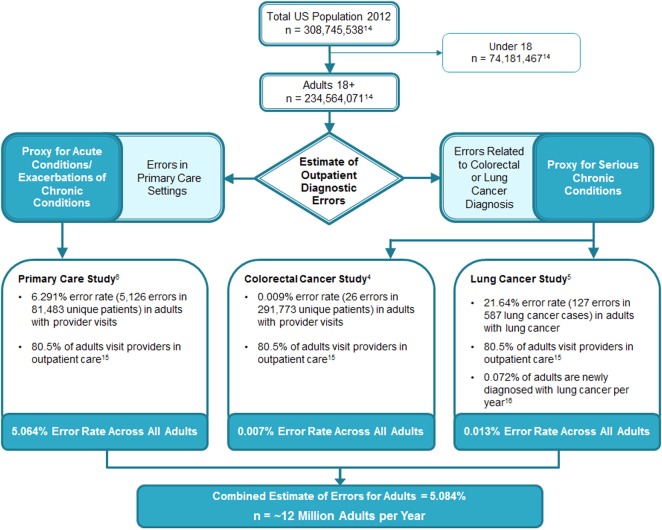
Background: The frequency of outpatient diagnostic errors is challenging to determine due to varying error definitions and the need to review data across multiple providers and care settings over time. We estimated the frequency of diagnostic errors in the US adult population by synthesising data from three previous studies of clinic-based populations that used conceptually similar definitions of diagnostic error. Methods: Data sources included two previous studies that used electronic triggers, or algorithms, to detect unusual patterns of return visits after an initial primary care visit or lack of follow-up of abnormal clinical findings related to colorectal cancer, both suggestive of diagnostic errors. A third study examined consecutive cases of lung cancer. In all three studies, diagnostic errors were confirmed through chart review and defined as missed opportunities to make a timely or correct diagnosis based on available evidence. We extrapolated the frequency of diagnostic error obtained from our studies to the US adult population, using the primary care study to estimate rates of diagnostic error for acute conditions (and exacerbations of existing conditions) and the two cancer studies to conservatively estimate rates of missed diagnosis of colorectal and lung cancer (as proxies for other serious chronic conditions). Results: Combining estimates from the three studies yielded a rate of outpatient diagnostic errors of 5.08%, or approximately 12 million US adults every year. Based upon previous work, we estimate that about half of these errors could potentially be harmful. Conclusions: Our population-based estimate suggests that diagnostic errors affect at least 1 in 20 US adults. This foundational evidence should encourage policymakers, healthcare organisations and researchers to start measuring and reducing diagnostic errors.
Overview
The claims and statistics of this paper haven’t been checked yet.
Free: it reads the open-access text and checks the first 5 claims that cite a source we can check. Create a free account to check every claim.
Integrity signals
Registry
Cites
Statistics
Figures
Verification
Claims the paper makes
The claims and statistics of this paper haven’t been checked yet.
Free: it reads the open-access text and checks the first 5 claims that cite a source we can check. Create a free account to check every claim.
Claims other papers make about this one
Each is checked against this paper’s own text: does it say what the citing paper says it does?
The source backs part of the claim, not all of it — or backs it for a different population, condition or comparison.
In the citing paper
“Approximately 5% of patients in U.S. outpatient settings suffer from diagnostic errors [8]”
From Toward Safer Diagnoses: A SEIPS-Based Narrative Review of Diagnostic Errors (2026) · cites this paper as [8]
Experimental — accuracy not yet measuredIn the citing paper
“The opportunity costs of not using our best available tools for disease detection and treatment are substantial-12 million people a year receive misdiagnoses in the United States, with about six million facing potential harm as a result. 17”
From Clinical applications of machine learning algorithms: beyond the black box (2019) · cites this paper as [17]
In the citing paper
“The opportunity costs of not using our best available tools for disease detection and treatment are substantial-12 million people a year receive misdiagnoses in the United States, with about six million facing potential harm as a result. 17”
From Clinical applications of machine learning algorithms: beyond the black box (2019) · cites this paper as [17]
Self-check
Percentages, sums and reported differences re-computed from the paper’s own numbers.
The self-check needs the paper’s full text.
Citations
Cites
Summary health statistics for U.S. adults: national health interview survey, 2012.
Blackwell, D. L., Lucas, J. W., & Clarke, T. C. (2014) · PubMed · Cited by 1,884
Incidence and Types of Adverse Events and Negligent Care in Utah and Colorado
Thomas, E. J., Studdert, D. M., Burstin, H. R., Orav, E. J., Zeena, T., Williams, E. J., Howard, K. M., Weiler, P. C., & Brennan, T. A. (2000) · Medical Care · doi:10.1097/00005650-200003000-00003 · Cited by 1,673
Self-citationClinical Reasoning in the Health Professions
Higgs, J., & Jones, M. A. (2000) · Cited by 920
Summary health statistics for U.S. adults: National Health Interview Survey, 2010.
Schiller, J. S., Lucas, J. W., Ward, B. W., & Peregoy, J. A. (2012) · PubMed · Cited by 760
Missed and delayed diagnoses in the ambulatory setting: a study of closed malpractice claims
Gandhi, T. K., Kachalia, A., Thomas, E. J., Puopolo, A. L., Yoon, C., Brennan, T. A., & Studdert, D. M. (2006) · Annals of Internal Medicine · doi:10.7326/0003-4819-145-7-200610030-00006 · Cited by 662 · cited 1×
“11 20 23 – 25 On the other hand, population-based studies have relied on medical record reviews, which are generally a gold standard for determining diagnostic error.”
BackgroundSelf-citationDiagnostic Error in Medicine: Analysis of 583 Physician-Reported Errors
Schiff, G. D. (2009) · Archives of Internal Medicine · doi:10.1001/archinternmed.2009.333 · Cited by 638 · cited 1×
“5 7 – 12 In many of these studies, lung cancer and CRC are the most common cancers for which diagnosis is delayed.”
BackgroundThe incidence of diagnostic error in medicine
Graber, M. L. (2013) · BMJ Quality & Safety · doi:10.1136/bmjqs-2012-001615 · Cited by 626
Types and Origins of Diagnostic Errors in Primary Care Settings
Singh, H., Giardina, T. D., Meyer, A. N. D., Forjuoh, S. N., Reis, M. D., & Thomas, E. J. (2013) · JAMA Internal Medicine · doi:10.1001/jamainternmed.2013.2777 · Cited by 559 · cited 2×
“Based on our previous work, 17 we estimated that about one-half of errors would have the potential to lead to severe harm.”
BackgroundSelf-citationMeasuring errors and adverse events in health care
Thomas, E. J., & Petersen, L. A. (2003) · Journal of General Internal Medicine · doi:10.1046/j.1525-1497.2003.20147.x · Cited by 455 · cited 1×
“11 20 23 – 25 On the other hand, population-based studies have relied on medical record reviews, which are generally a gold standard for determining diagnostic error.”
BackgroundSelf-citationThe Vanishing Nonforensic Autopsy
Shojania, K. G., & Burton, E. C. (2008) · New England Journal of Medicine · doi:10.1056/nejmp0707996 · Cited by 294
Cited by
High-performance medicine: the convergence of human and artificial intelligence
Topol, E. J. (2019) · Nature Medicine · doi:10.1038/s41591-018-0300-7 · Cited by 10,450
An overview of clinical decision support systems: Benefits, risks, and strategies for success
Sutton, R. T., Pincock, D., Baumgart, D. C., Sadowski, D. C., Fedorak, R. N., & Kroeker, K. I. (2020) · npj Digital Medicine · doi:10.1038/s41746-020-0221-y · Cited by 3,019
“52 We are now seeing diagnostic systems being developed with non-knowledge-based techniques like machine learning, which may pave the way for more accurate diagnosis.”
Background(2017) · OECD Health Working Papers · doi:10.1787/5a9858cd-en · Cited by 616
“It is estimated that about 5% of adult patients in the United States experience diagnostic errors in outpatient settings (Singh et al, 2014).”
BackgroundImproving the accuracy of medical diagnosis with causal machine learning
Richens, J. G., Lee, C. M., & Johri, S. (2020) · Nature Communications · doi:10.1038/s41467-020-17419-7 · Cited by 598
Clinical applications of machine learning algorithms: beyond the black box
Watson, D. S., Krutzinna, J., Bruce, I. N., Griffiths, C. E., McInnes, I. B., Barnes, M. R., & Floridi, L. (2019) · BMJ · doi:10.1136/bmj.l886 · Cited by 450
Bates, D. W., & Singh, H. (2018) · Health Affairs · doi:10.1377/hlthaff.2018.0738 · Cited by 440
Self-citationThe Application of Medical Artificial Intelligence Technology in Rural Areas of Developing Countries
Guo, J., & Li, B. (2018) · Health Equity · doi:10.1089/heq.2018.0037 · Cited by 401
“About half of these errors could potentially be harmful.(18) AI technology has been utilized to improve the quality of medical diagnosis, especially in radiology, due to the large volumes of medical image data.”
BackgroundThe Global Burden of Diagnostic Errors in Primary Care
Singh, H., Schiff, G. D., Graber, M. L., Onakpoya, I., & Thompson, M. J. (2017) · BMJ Quality & Safety · doi:10.1136/bmjqs-2016-005401 · Cited by 395
Self-citationThe potential of artificial intelligence to improve patient safety: a scoping review
Bates, D. W., Levine, D., Syrowatka, A., Kuznetsova, M., Craig, K. J. T., Rui, A., Jackson, G. P., & Rhee, K. (2021) · npj Digital Medicine · doi:10.1038/s41746-021-00423-6 · Cited by 323
Defining and Measuring Diagnostic Uncertainty in Medicine: A Systematic Review
Bhise, V., Rajan, S. S., Sittig, D. F., Morgan, R. O., Chaudhary, P., & Singh, H. (2018) · Journal of General Internal Medicine · doi:10.1007/s11606-017-4164-1 · Cited by 298
“Recent estimates suggest that at least 1 in 20 outpatients experience a diagnostic error (missed, delayed or incorrect diagnoses) each year, sometimes with devastating consequences.(20,21) Additionally, rising costs related to diagnostic testing have led to recommendations for cost-containment, requiring physicians to…”
BackgroundSelf-citationQuantum computing for healthcare: a review
Ur Rasool, R., Ahmad, H. F., Rafique, W., Qayyum, A., Qadir, J., & Anwar, Z. (2023) · Future Internet · doi:10.3390/fi15030094 · Cited by 242
Frequency and Types of Patient-Reported Errors in Electronic Health Record Ambulatory Care Notes
Bell, S. K., Delbanco, T., Elmore, J. G., Fitzgerald, P. S., Fossa, A., Harcourt, K., Leveille, S. G., Payne, T. H., Stametz, R. A., Walker, J., et al. (2020) · JAMA Network Open · doi:10.1001/jamanetworkopen.2020.5867 · Cited by 238
An innovative approach to health care delivery for patients with chronic conditions
Clarke, J. L., Bourn, S., Skoufalos, A., Beck, E. H., & Castillo, D. J. (2017) · Population Health Management · doi:10.1089/pop.2016.0076 · Cited by 211
“Serious gaps in care guidelines and processes continue to have an adverse impact on the quality and safety of care, particularly in outpatient settings.(5) Specifically, poor care coordination processes lead to failures in transmitting critical patient information, adverse drug interactions, conflicting treatment plan…”
BackgroundShi, Z., Miao, C., Schoepf, U. J., Savage, R. H., Dargis, D. M., Pan, C., Chai, X., Li, X. L., Xia, S., Zhang, X., et al. (2020) · Nature Communications · doi:10.1038/s41467-020-19527-w · Cited by 207
Advancing the science of measurement of diagnostic errors in healthcare: the Safer Dx framework
Singh, H., & Sittig, D. F. (2015) · BMJ Quality & Safety · doi:10.1136/bmjqs-2014-003675 · Cited by 195
Self-citationNewman‐Toker, D. E., Wang, Z., Zhu, Y., Nassery, N., Tehrani, A. S. S., Schaffer, A. C., Yu-Moe, C. W., Clemens, G. D., Fanai, M., & Siegal, D. (2020) · Diagnosis · doi:10.1515/dx-2019-0104 · Cited by 198
Safety of patient-facing digital symptom checkers
Fraser, H., Coiera, E., & Wong, D. (2018) · The Lancet · doi:10.1016/s0140-6736(18)32819-8 · Cited by 180
Newman-Toker, D. E., Schaffer, A. C., Yu-Moe, C. W., Nassery, N., Saber Tehrani, A. S., Clemens, G. D., Wang, Z., Zhu, Y., Fanai, M., & Siegal, D. (2019) · Diagnosis · doi:10.1515/dx-2019-0019 · Cited by 178
The Challenges in Defining and Measuring Diagnostic Error
Zwaan, L., & Singh, H. (2015) · Diagnosis · doi:10.1515/dx-2014-0069 · Cited by 173
“hospitals, the magnitude of harm from diagnostic error worldwide and in different health care settings remains to be accurately determined [2, 10, 11].”
BackgroundSelf-citationFundamentals of Diagnostic Error in Imaging
Itri, J. N., Tappouni, R. F. R., McEachern, R. O., Pesch, A. J., & Patel, S. H. (2018) · Radiographics · doi:10.1148/rg.2018180021 · Cited by 169
“Error and discrepancy in radiology: inevitable or avoidable? Insights Imaging 2017;8(1):171–182.”
BackgroundTextbook of Patient Safety and Clinical Risk Management
(2021) · Springer eBooks · doi:10.1007/978-3-030-59403-9 · Cited by 166
Improving Diagnosis in Health Care — The Next Imperative for Patient Safety
Singh, H., & Graber, M. L. (2015) · New England Journal of Medicine · doi:10.1056/nejmp1512241 · Cited by 164
Self-citationMeyer, A. N. D., Giardina, T. D., Spitzmueller, C., Shahid, U., Scott, T. M. T., & Singh, H. (2020) · Journal of Medical Internet Research · doi:10.2196/14679 · Cited by 161
“In light of evidence that approximately 1 in 20 US adults experience a diagnostic error every year (with half incurring severe or permanent harm) [13], the National Academies of Sciences, Engineering, and Medicine recommends the use of patient engagement tools, including symptom checkers and other…”
BackgroundSelf-citationBarnett, M. L., Boddupalli, D., Nundy, S., & Bates, D. W. (2019) · JAMA Network Open · doi:10.1001/jamanetworkopen.2019.0096 · Cited by 154
Quinn, M., Forman, J., Harrod, M., Winter, S., Fowler, K. E., Krein, S. L., Gupta, A., Saint, S., Singh, H., & Chopra, V. (2019) · Diagnosis · doi:10.1515/dx-2018-0036 · Cited by 113
Self-citationHautz, W. E., Kämmer, J. E., Hautz, S. C., Sauter, T. C., Zwaan, L., Exadaktylos, A. K., Birrenbach, T., Maier, V., Müller, M., & Schauber, S. K. (2019) · Scandinavian Journal of Trauma, Resuscitation and Emergency Medicine · doi:10.1186/s13049-019-0629-z · Cited by 139
Factors Associated With Potentially Missed Diagnosis of Appendicitis in the Emergency Department
Mahajan, P., Basu, T., Pai, C.-W., Singh, H., Petersen, N. J., Bellolio, F., Gadepalli, S. K., & Kamdar, N. S. (2020) · JAMA Network Open · doi:10.1001/jamanetworkopen.2020.0612 · Cited by 139
Self-citationGunderson, C. G., Bilan, V. P., Holleck, J. L., Nickerson, P., Cherry, B. M., Chui, P., Bastian, L. A., Grimshaw, A. A., & Rodwin, B. A. (2020) · BMJ Quality & Safety · doi:10.1136/bmjqs-2019-010822 · Cited by 130
Application of Electronic Trigger Tools to Identify Targets for Improving Diagnostic Safety
Murphy, D. R., Meyer, A. N., Sittig, D. F., Meeks, D. W., Thomas, E. J., & Singh, H. (2019) · BMJ Quality & Safety · doi:10.1136/bmjqs-2018-008086 · Cited by 129
Self-citationLiberman, A. L., & Newman-Toker, D. E. (2018) · BMJ Quality & Safety · doi:10.1136/bmjqs-2017-007032 · Cited by 110
Giardina, T. D., Haskell, H., Menon, S., Hallisy, J., Southwick, F. S., Sarkar, U., Royse, K. E., & Singh, H. (2018) · Health Affairs · doi:10.1377/hlthaff.2018.0698 · Cited by 98
Self-citationHuman–AI collectives most accurately diagnose clinical vignettes
Zöller, N., Berger, J., Lin, I., Fu, N., Komarneni, J., Barabucci, G., Laskowski, K., Shia, V., Harack, B., Chu, E. A., et al. (2025) · Proceedings of the National Academy of Sciences · doi:10.1073/pnas.2426153122 · Cited by 98
Clinical Applications of Machine Learning Algorithms: Beyond the Black BoxPreprint
Watson, D., Krutzinna, J. I., Bruce, I. N., Griffiths, C. E. M., McInnes, I. B., Barnes, M. R., & Floridi, L. (2019) · SSRN Electronic Journal · doi:10.2139/ssrn.3352454 · Cited by 95
Diagnostic errors related to acute abdominal pain in the emergency department
Medford-Davis, L., Park, E., Shlamovitz, G., Suliburk, J., Meyer, A. N., & Singh, H. (2016) · Emergency Medicine Journal · doi:10.1136/emermed-2015-204754 · Cited by 84
Self-citationImproving diagnosis by improving education: a policy brief on education in healthcare professions
Graber, M. L., Rencic, J., Rusz, D., Papa, F., Croskerry, P., Zierler, B., Harkless, G., Giuliano, M., Schoenbaum, S., Colford, C., et al. (2018) · Diagnosis · doi:10.1515/dx-2018-0033 · Cited by 81
“According to best estimates, one person in 20 will experience a diagnostic error each year in ambulatory clinics [3, 4].”
BackgroundMoving From Digitalization to Digitization in Cardiovascular Care
Steinhubl, S. R., & Topol, E. J. (2015) · Journal of the American College of Cardiology · doi:10.1016/j.jacc.2015.08.006 · Cited by 70
“adults is affected by an outpatient diagnostic error every year (26).”
BackgroundClinical Decision Support Systems for Diagnosis in Primary Care: A Scoping Review
Harada, T., Miyagami, T., Kunitomo, K., & Shimizu, T. (2021) · International Journal of Environmental Research and Public Health · doi:10.3390/ijerph18168435 · Cited by 89
“Estimates from diagnostic error rates in selected research studies indicate that 12 million Americans suffer from diagnostic errors in primary care alone each year [2,3].”
BackgroundHimawan, A., Vora, L. K., Permana, A. D., Sudir, S., Nurdin, A. R., Nislawati, R., Hasyim, R., Scott, C. J., & Donnelly, R. F. (2022) · Advanced Healthcare Materials · doi:10.1002/adhm.202202066 · Cited by 89
Reflection in Medical Diagnosis: A Literature Review
Mamede, S., & Schmidt, H. G. (2017) · Health Professions Education · doi:10.1016/j.hpe.2017.01.003 · Cited by 78
“The magnitude of the problem has been shown to be high, and the literature has associated errors with relying on intuitive judgments that are not sufficiently examined through analytic reasoning.(11,12) Second, the prominence achieved by dual-processing theories of reasoning and decision-making in the psychology liter…”
BackgroundPractice advisory: The utility of EEG theta/beta power ratio in ADHD diagnosis
Gloss, D. S., Varma, J. K., Pringsheim, T. M., & Nuwer, M. R. (2016) · Neurology · doi:10.1212/wnl.0000000000003265 · Cited by 89
Managing inappropriate utilization of laboratory resources
Cadamuro, J., Ibarz, M., Cornes, M. P., Nybo, M., Haschke‐Becher, E., Meyer, A., Lippi, G., & Šimundić, A.-M. (2018) · Diagnosis · doi:10.1515/dx-2018-0029 · Cited by 87
“estimated that diagnostic errors may occur in at least one in 20 US adults [17].”
BackgroundSelf-citationArtificial intelligence and sleep: Advancing sleep medicine
Watson, N. F., & Fernandez, C. (2021) · Sleep Medicine Reviews · doi:10.1016/j.smrv.2021.101512 · Cited by 85
Chase, H. S., Mitrani, L. R., Lu, G. G., & Fulgieri, D. J. (2017) · BMC Medical Informatics and Decision Making · doi:10.1186/s12911-017-0418-4 · Cited by 68
“In the outpatient setting, the overall missed diagnosis rate has been estimated to be 5% [5, 6] and has been reported to be as high as 20% for various cancers [7] and chronic kidney disease [8].”
BackgroundPre‐ and postanalytical errors in haematology
la Salle, B. D. (2019) · International Journal of Laboratory Hematology · doi:10.1111/ijlh.13007 · Cited by 83
Kostopoulou, O., Rosen, A., Round, T., Wright, E., Douiri, A., & Delaney, B. (2015) · British Journal of General Practice · doi:10.3399/bjgp15x683161 · Cited by 82
“1 Computerised diagnostic support systems (CDSSs) have not enjoyed similar success over more than four decades of development, 2 despite diagnostic error affecting large numbers of patients, 3 and being the commonest cause of litigation against general physicians.”
BackgroundHu, S., Song, D., Wan, S., Zhang, S., Luo, C., Li, N., Liu, G., Vasconcelos, J. D. G. E. S., de Carvalho, L. L. C., Neobísi, E., et al. (2025) · Frontiers in Public Health · doi:10.3389/fpubh.2025.1646802 · Cited by 83
Moy, E. M., Barrett, M. L., Coffey, R. M., Hines, A. L., & Newman‐Toker, D. E. (2014) · Diagnosis · doi:10.1515/dx-2014-0053 · Cited by 81
“Some patients hospitalized with AMI after a treat-andrelease ED visit likely represent missed opportunities for correct diagnosis and treatment [12].”
BackgroundMcGrath, T. A., McInnes, M. D. F., van Es, N., Leeflang, M. M. G., Korevaar, D. A., & Bossuyt, P. M. M. (2017) · Clinical Chemistry · doi:10.1373/clinchem.2017.271544 · Cited by 72
“6 Positive conclusion, inappropriately extrapolated to a wider population or setting 3 (3) 0–6 2 (2) 0–5”
BackgroundEstimation of Alveolar Bone Loss in Periodontitis Using Machine Learning
Tsoromokos, N., Parinussa, S., Claessen, F., Moin, D. A., & Loos, B. G. (2022) · International Dental Journal · doi:10.1016/j.identj.2022.02.009 · Cited by 78
Malpractice claims related to diagnostic errors in the hospital
Gupta, A. B., Snyder, A. M., Kachalia, A. B., Flanders, S. A., Saint, S. K., & Chopra, V. (2017) · BMJ Quality & Safety · doi:10.1136/bmjqs-2017-006774 · Cited by 76
Hernan, A. L., Giles, S. J., Fuller, J. D., Johnson, J. K., Walker, C. F., & Dunbar, J. (2015) · BMJ Quality & Safety · doi:10.1136/bmjqs-2015-004049 · Cited by 75
Bringing the clinical laboratory into the strategy to advance diagnostic excellence
Lubin, I. M., Astles, J. R., Shahangian, S., Madison, B. M., Parry, R. C., Schmidt, R. L., & Rubinstein, M. L. (2021) · Diagnosis · doi:10.1515/dx-2020-0119 · Cited by 73
“derived estimates from large observational studies of the US population to determine that one in 20 adults is affected by a diagnostic error during their lifetime [3].”
BackgroundMeasures to Improve Diagnostic Safety in Clinical Practice
Singh, H., Graber, M. L., & Hofer, T. P. (2016) · Journal of Patient Safety · doi:10.1097/pts.0000000000000338 · Cited by 73
“We have learned that diagnostic errors are common, affecting approximately 1 in 20 adults each year in the United States.(7) Yet, efforts to monitor and improve diagnostic performance are rarely, if ever part of initiatives to improve quality and safety.”
BackgroundInfluentialSelf-citationBell, S. K., Gerard, M., Fossa, A., Delbanco, T., Folcarelli, P. H., Sands, K. E., Sarnoff Lee, B., & Walker, J. (2017) · BMJ Quality & Safety · doi:10.1136/bmjqs-2016-006020 · Cited by 68
Accounting for diversity in AI for medicine
Fosch-Villaronga, E., Drukarch, H., Khanna, P., Verhoef, T., & Custers, B. (2022) · Computer Law & Security Review · doi:10.1016/j.clsr.2022.105735 · Cited by 50
Kakemam, E., Albelbeisi, A. H., Davoodabadi, S., Ghafari, M., Dehghandar, Z., & Raeissi, P. (2022) · BMC Health Services Research · doi:10.1186/s12913-022-07774-0 · Cited by 66
“The main medical procedures that substantially contribute to unsafe care and harm to patients: are medications error, nosocomial infections, unsafe surgeries, injections procedures, and diagnostic errors [11, 12].”
BackgroundBell, S. K., Folcarelli, P., Fossa, A., Gerard, M., Harper, M., Leveille, S., Moore, C., Sands, K. E., Sarnoff Lee, B., Walker, J., et al. (2021) · Journal of Patient Safety · doi:10.1097/pts.0000000000000494 · Cited by 65
“Examination of ambulatory risk reveals that care gaps are often multifactorial and include clinician factors, patient factors, visit factors, and communication issues, among other breakdowns.(8) Substantially reducing overall risk to clinicians and patients may therefore require involving patients, clinicians, and the…”
BackgroundReview of the Basics of Cognitive Error in Emergency Medicine: Still No Easy Answers
Hartigan, S., Brooks, M., Hartley, S., Miller, R., Santen, S., & Hemphill, R. (2020) · Western Journal of Emergency Medicine · doi:10.5811/westjem.2020.7.47832 · Cited by 54
Accuracy of the Safer Dx Instrument to Identify Diagnostic Errors in Primary Care
Al-Mutairi, A., Meyer, A. N. D., Thomas, E. J., Etchegaray, J. M., Roy, K. M., Davalos, M. C., Sheikh, S., & Singh, H. (2016) · Journal of General Internal Medicine · doi:10.1007/s11606-016-3601-x · Cited by 62
Self-citationEvaluation of Outcomes From a National Patient-initiated Second-opinion Program
Meyer, A. N. D., Singh, H., & Graber, M. L. (2015) · The American Journal of Medicine · doi:10.1016/j.amjmed.2015.04.020 · Cited by 63
“Recent estimates in US ambulatory care settings suggest that 1 in 20 patients will experience a diagnostic error annually.(18) Second, patients are increasingly becoming interested in becoming active partners in their care.”
BackgroundSelf-citationA Model for Clinical Decision-Making in Medicine
Croskerry, P. (2017) · Medical Science Educator · doi:10.1007/s40670-017-0499-9 · Cited by 64
“The overall number of deaths including non-hospital settings is unknown, but the diagnostic failure rate in the outpatient setting is put at about 5% (12 million US adults annually) [2] whereas the overall rate in the specialities is estimated at 10–15% [3].”
BackgroundBecerra, D., Androff, D. K., Messing, J. T., Castillo, J., & Cimino, A. N. (2015) · Social Work in Health Care · doi:10.1080/00981389.2014.982267 · Cited by 65
“Previous studies have found an estimated 11% error rate in prescription errors and an over 5% error rate among all adult outpatient diagnoses every year (Sandars & Esmail, 2003; Singh et al., 2014).”
BackgroundThe Abrupt Expansion of Ambulatory Telemedicine: Implications for Patient Safety
Khoong, E. C., Sharma, A. E., Gupta, K. B., Adler‐Milstein, J., & Sarkar, U. (2022) · Journal of General Internal Medicine · doi:10.1007/s11606-021-07329-9 · Cited by 62
Factors and impact of physicians’ diagnostic errors in malpractice claims in Japan
Watari, T., Tokuda, Y., Mitsuhashi, S., Otuki, K., Kono, K., Nagai, N., Onigata, K., & Kanda, H. (2020) · PLoS ONE · doi:10.1371/journal.pone.0237145 · Cited by 60
“[5] Another study estimated that 40,000 to 80,000 patient deaths that occur each year in the US are due to diagnostic errors.”
BackgroundDiagnostic Errors and the Bedside Clinical Examination
Clark, B. W., Derakhshan, A., & Desai, S. V. (2018) · Medical Clinics of North America · doi:10.1016/j.mcna.2017.12.007 · Cited by 60
“Observational studies suggest that primary care doctors miss about 12 million diagnoses each year, and that about half of these misses cause patients significant harm.(6) Advanced medical technology appears to make only a marginal impact on diagnostic accuracy.”
BackgroundSmith, S., Benbenek, M. M., Bakker, C., & Bockwoldt, D. (2022) · Journal of Advanced Nursing · doi:10.1111/jan.15414 · Cited by 58
“Estimates indicate that as many as one in 20 persons experience a diagnostic error in outpatient clinics annually (Singh et al., 2013, 2014), and that diagnostic error for hospitalized patients is associated with increased hospital mortality (Hautz et al., 2019; Sorinola et al., 2012).”
BackgroundCommunication breakdowns and diagnostic errors: a radiology perspective
Murphy, D. R., Singh, H., & Berlin, L. (2014) · Diagnosis · doi:10.1515/dx-2014-0035 · Cited by 51
Self-citationArtificial intelligence extension of the OSCAR‐IB criteria
Petzold, A., Albrecht, P., Balcer, L. J., Bekkers, E. J., Brandt, A. U., Calabresi, P. A., Deborah, O. G., Graves, J., Green, A., Keane, P. A., et al. (2021) · Annals of Clinical and Translational Neurology · doi:10.1002/acn3.51320 · Cited by 57
Abdar, M., Khosravi, A., Islam, S. M. S., Acharya, U. R., & Vasilakos, A. V. (2022) · IEEE Systems, Man, and Cybernetics Magazine · doi:10.1109/msmc.2022.3150144 · Cited by 55
Crowdsourcing Diagnosis for Patients With Undiagnosed Illnesses: An Evaluation of CrowdMed
Meyer, A. N. D., Longhurst, C., & Singh, H. (2016) · Journal of Medical Internet Research · doi:10.2196/jmir.4887 · Cited by 55
“Errors of clinical diagnosis affect at least 5% of US adults every year and approximately half of these errors could result in serious harm to the patients [1].”
Self-citationPatient harm due to diagnostic error of neuro-ophthalmologic conditions.
Stunkel, L., Sharma, R. A., Mackay, D. D., Wilson, B., Van Stavern, G. P., Newman, N. J., & Biousse, V. (2021) · Ophthalmology · doi:10.1016/j.ophtha.2021.03.008 · Cited by 54
Use of patient complaints to identify diagnosis-related safety concerns: a mixed-method evaluation
Giardina, T. D., Korukonda, S., Shahid, U., Vaghani, V., Upadhyay, D. K., Burke, G. F., & Singh, H. (2021) · BMJ Quality & Safety · doi:10.1136/bmjqs-2020-011593 · Cited by 54
Self-citationEbola US Patient Zero: lessons on misdiagnosis and effective use of electronic health records
Upadhyay, D. K., Sittig, D. F., & Singh, H. (2014) · Diagnosis · doi:10.1515/dx-2014-0064 · Cited by 54
“The incidence of diagnostic error is thought to be in the range of 10%– 15% [6]; in the US alone, approximately 12 million adults are estimated to be misdiagnosed annually in outpatient settings [7].”
BackgroundSelf-citationMohs surgery for the treatment of lentigo maligna and lentigo maligna melanoma – a systematic review
Sharma, A., Foulad, D. P., Doan, L., Lee, P. K., & Mesinkovska, N. A. (2019) · Journal of Dermatological Treatment · doi:10.1080/09546634.2019.1690624 · Cited by 51
AIoT: AI meets IoT and Web in Smart Healthcare
Talukder, A. K., & Haas, R. E. (2021) · ACM Web Science Conference (WebSci) · doi:10.1145/3462741.3466650 · Cited by 51
“serious diagnostic errors each year in the US alone [11].”
BackgroundStrzalkowski, P., Strzalkowska, A., Chhablani, J. K., Pfau, K., Errera, M., Roth, M., Schaub, F., Bechrakis, N. E., Hoerauf, H., Reiter, C., et al. (2024) · International Journal of Retina and Vitreous · doi:10.1186/s40942-024-00579-9 · Cited by 50
“Misdiagnosis by physicians occurs in approximately 5% of outpatients [26].”
BackgroundPersonalized Health Care and Public Health in the Digital Age
Chén, O. Y., & Roberts, B. (2021) · Frontiers in Digital Health · doi:10.3389/fdgth.2021.595704 · Cited by 51
“The diagnosis made by physicians are not always correct (20, 21).”
BackgroundLeveraging physiology and artificial intelligence to deliver advancements in health care
Zhang, A., Wu, Z., Wu, E., Wu, M. A., Snyder, M. P., Zou, J., & Wu, J. C. (2023) · Physiological Reviews · doi:10.1152/physrev.00033.2022 · Cited by 50
Shimizu, T., Nemoto, T., & Tokuda, Y. (2017) · International Journal of Medical Informatics · doi:10.1016/j.ijmedinf.2017.09.010 · Cited by 49
Cheraghi‐Sohi, S., Holland, F., Singh, H., Danczak, A., Esmail, A., Morris, R., Small, N., Williams, R., de Wet, C., Campbell, S., et al. (2021) · BMJ Quality & Safety · doi:10.1136/bmjqs-2020-012594 · Cited by 49
Self-citationIdentification of gastric cancer with convolutional neural networks: a systematic review
Zhao, Y., Hu, B. X., Wang, Y., Yin, X., Jiang, Y., & Zhu, X. (2022) · Multimedia Tools and Applications · doi:10.1007/s11042-022-12258-8 · Cited by 49
“The lack of access to primary health care and the correctness of diagnosis represent a major challenge for the global health care system [54, 55].”
BackgroundBell, S. K., Bourgeois, F. C., DesRoches, C. M., Dong, J., Harcourt, K., Liu, S. K., Lowe, E., McGaffigan, P., Ngo, L. H., Novack, S. A., et al. (2021) · BMJ Quality & Safety · doi:10.1136/bmjqs-2021-013672 · Cited by 49
Self-citationSwann, R., Lyratzopoulos, G., Rubin, G. P., Pickworth, E., & McPhail, S. (2019) · Cancer Epidemiology · doi:10.1016/j.canep.2019.101617 · Cited by 47
“Few studies have identified the harms that may result from diagnostic error, though one study has estimated that one half of such errors could be potentially harmful [8].”
BackgroundIncidentes de segurança do paciente na Atenção Primária à Saúde (APS) de Manaus, AM, Brasil
Aguiar, T. L., Lima, D. S., Moreira, M. A. B., dos Santos, L. F., & Ferreira, J. M. B. B. (2020) · Interface - Comunicação Saúde Educação · doi:10.1590/interface.190622 · Cited by 47
Ayisa, A. A., Azanaw, Y. G., & Yesuf, N. (2021) · Drug Healthcare and Patient Safety · doi:10.2147/dhps.s291012 · Cited by 47
Dhingra‐Kumar, N., Brusaferro, S., & Arnoldo, L. (2020) · Springer eBooks · doi:10.1007/978-3-030-59403-9_8 · Cited by 46
Verena: End-to-End Integrity Protection for Web Applications
Karapanos, N., Filios, A., Popa, R. A., & Čapkun, S. (2016) · IEEE Symposium on Security and Privacy (S&P) · doi:10.1109/sp.2016.58 · Cited by 46
“A recent study estimates that millions of people are missdiagnosed every year in the US with a half of these cases potentially causing severe harm [44].”
Sakamoto, T., Harada, Y., & Shimizu, T. (2024) · JMIR Formative Research · doi:10.2196/58666 · Cited by 46
Harada, Y., Katsukura, S., Kawamura, R., & Shimizu, T. (2021) · International Journal of Environmental Research and Public Health · doi:10.3390/ijerph18042086 · Cited by 44
Deconstructing the diagnostic reasoning of human versus artificial intelligence
Pelaccia, T., Forestier, G., & Wemmert, C. (2019) · Canadian Medical Association Journal · doi:10.1503/cmaj.190506 · Cited by 44
“This translates into more than 12 million misdiagnoses annually in the United States alone [18].”
BackgroundTeaching heuristics and mnemonics to improve generation of differential diagnoses
Leeds, F. S., Atwa, K. M., Cook, A. M., Conway, K., & Crawford, T. N. (2020) · Medical Education Online · doi:10.1080/10872981.2020.1742967 · Cited by 44
Ramessur, R., Raja, L., Kilduff, C. L. S., Kang, S., Li, J.-P. O., Thomas, P. B. M., & Sim, D. A. (2021) · Asia-Pacific Journal of Ophthalmology · doi:10.1097/apo.0000000000000406 · Cited by 45
“95,96 Autonomous systems carry the potential to reduce adverse events and medical errors.”
BackgroundClinical reasoning in real-world practice: a primer for medical trainees and practitioners
Ng, I. K., Goh, W. G. W., Teo, D. B. S., Chong, K. M., Tan, L. F., & Teoh, C. M. (2024) · Postgraduate Medical Journal · doi:10.1093/postmj/qgae079 · Cited by 43
Dubosh, N. M., Edlow, J. A., Goto, T., Camargo, C. A., & Hasegawa, K. (2019) · Annals of Emergency Medicine · doi:10.1016/j.annemergmed.2019.01.020 · Cited by 43
Li, H., Dong, S., Liao, Z., Yao, Y., Yuan, S., Cui, Y., & Li, G. (2020) · BMJ Open · doi:10.1136/bmjopen-2019-034681 · Cited by 43
Hernan, A. L., Giles, S. J., O'Hara, J. K., Fuller, J. D., Johnson, J. K., & Dunbar, J. (2015) · BMJ Quality & Safety · doi:10.1136/bmjqs-2015-004268 · Cited by 43
Cognitive Bias and Diagnostic Errors among Physicians in Japan: A Self-Reflection Survey
Watari, T., Tokuda, Y., Amano, Y., Onigata, K., & Kanda, H. (2022) · International Journal of Environmental Research and Public Health · doi:10.3390/ijerph19084645 · Cited by 43
“Estimates also indicate that economic losses caused by unnecessary testing, treatment, and deaths due to diagnostic errors amount to approximately 30% of the annual national healthcare expenditures in the United States [5].”
BackgroundDiagnostic Errors in a PICU: Insights From the Morbidity and Mortality Conference*
Cifra, C. L., Jones, K. L., Ascenzi, J. A., Bhalala, U. S., Bembea, M. M., Newman‐Toker, D. E., Fackler, J. C., & Miller, M. R. (2015) · Pediatric Critical Care Medicine · doi:10.1097/pcc.0000000000000398 · Cited by 42
“population (12 million) each year (9).”
Gleason, K. T., Davidson, P. M., Tanner, E. K., Baptiste, D., Rushton, C., Day, J., Sawyer, M., Baker, D., Paine, L., Himmelfarb, C. R. D., et al. (2017) · Diagnosis · doi:10.1515/dx-2017-0015 · Cited by 37
“Diagnostic errors, the most common and deadly of medical errors, affect an estimated 12 million people each year in the United States and cause serious morbidity or death in perhaps one third of cases [1, 2].”
BackgroundLukama, L., Aldous, C. M., Michelo, C., & Kalinda, C. (2023) · PLoS ONE · doi:10.1371/journal.pone.0281686 · Cited by 41
Metadata
- Authors
- Singh, H., Meyer, A. N. D., & Thomas, E. J.
- Affiliations
- Michael E. DeBakey VA Medical Center (US)
- Memorial Hermann (US)
- Corresponding author
- Singh, Hardeep
- Venue
- BMJ Quality & Safety
- Publisher
- BMJ
- Published
- 2014-04-17
- Volume
- 23
- Issue
- 9
- Pages
- 727-731
- ISSN
- 1475-3898 (ISSN-L)
- 2044-5415
- 2044-5423
- PMC
- PMC4145460
- OpenAlex
- W2154651644
- Cited by
- 677
- References
- 28
- Citations by year
- 2026: 61 · 2025: 67 · 2024: 70 · 2023: 77 · 2022: 75 · 2021: 89 · 2020: 68 · 2019: 41 · 2018: 34 · 2017: 32 · 2016: 26 · 2015: 26 · 2014: 8
- FWCI
- 31.48
- Type
- journal article
- Language
- en
- Open access
- hybrid
- doi.org
- Licence
- cc-by-nc
- Locations
- BMJ Quality & Safety (publishedVersion, cc-by-nc)
- PubMed Central (publishedVersion, cc-by-nc)
- PubMed (publishedVersion)
- HighWire Press Open Archive (submittedVersion)
- Funders
- National Institutes of Health (UL1TR000371, CIN13-413)
- Agency for Healthcare Research and Quality (R18HS017244, R18HS017820)
- Center for Innovations in Quality, Effectiveness and Safety (CIN 13–413, 13–413)
- National Cancer Institute (K23CA125585)
- National Center for Advancing Translational Sciences
- Topics
- Health Sciences › Medicine › Family Practice › Clinical Reasoning and Diagnostic Skills
- Health Sciences › Medicine › Public Health, Environmental and Occupational Health › Patient Safety and Medication Errors
- Health Sciences › Medicine › Family Practice › Primary Care and Health Outcomes
- Keywords
- diagnostic errors, outpatient care, missed diagnosis, primary care, return visits, colorectal cancer, lung cancer
- MeSH terms
- Adult, Ambulatory Care, Diagnostic Errors, Humans, Lung Neoplasms, United States, Colorectal Neoplasms
About these checks
Registry, retraction, Cites and statistics results are computed, not judged, with one exception: a printed reference that no index lists is read once by a model before it counts as a citation error. Claims are extracted by a model and kept only when their quote appears verbatim in the text; each cited source is then checked, with a model’s help, for whether it says what the claim relies on. Those verdicts can be wrong — read the claim’s quote and the cited source before relying on one.
Statistics and arithmetic are recomputed, not judged.
Confidence bands are shown only for fields calibrated on our annotated test set. None is calibrated yet, so no band is shown.
What counts as a claim ›How we measure confidence ›How we check this ›
Are you an author, or do you see a problem with this page? Request a review
Data sources
Bibliographic data: Semantic Scholar, OpenAlex, Crossref.
Contains information from the Semantic Scholar Academic Graph Datasets, made available under the ODC Attribution License (ODC-BY 1.0).
Semantic Scholar’s data is described in: Kinney, R., et al. (2023). The Semantic Scholar Open Data Platform. arXiv:2301.10140.
