

Fungal Biofilm Resistance
Open accessThe DOI matches its Crossref record; 186 of the 186 references it cites were found in a registry or an index.
Abstract
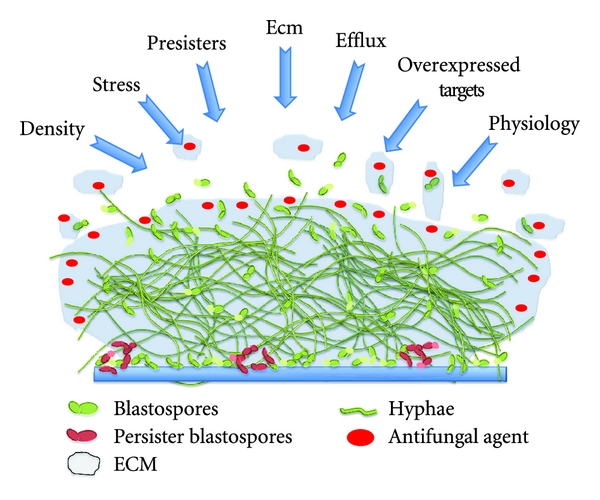
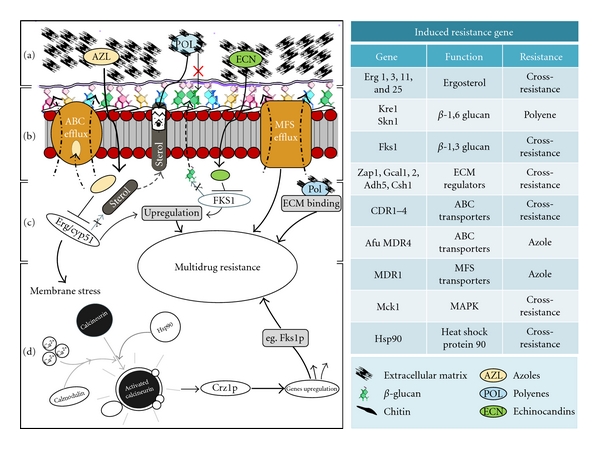
Fungal biofilm infections have become increasingly recognised as a significant clinical problem. One of the major reasons behind this is the impact that these have upon treatment, as antifungal therapy often fails and surgical intervention is required. This places a large financial burden on health care providers. This paper aims to illustrate the importance of fungal biofilms, particularly Candida albicans , and discusses some of the key fungal biofilm resistance mechanisms that include, extracellular matrix (ECM), efflux pump activity, persisters, cell density, overexpression of drug targets, stress responses, and the general physiology of the cell. The paper demonstrates the multifaceted nature of fungal biofilm resistance, which encompasses some of the newest data and ideas in the field.
Overview
The claims and statistics of this paper haven’t been checked yet.
Free: it reads the open-access text and checks the first 5 claims that cite a source we can check. Create a free account to check every claim.
Integrity signals
Registry
Cites
Statistics
Figures
Verification
Claims the paper makes
The claims and statistics of this paper haven’t been checked yet.
Free: it reads the open-access text and checks the first 5 claims that cite a source we can check. Create a free account to check every claim.
Claims other papers make about this one
Each is checked against this paper’s own text: does it say what the citing paper says it does?
The source backs part of the claim, not all of it — or backs it for a different population, condition or comparison.
In the citing paper
“Specific biofilm formation genes are being brought up regarding different roles in biofilm resistance: peroxisomal catalase (CTA1), the biosynthesis and degradation of tyrosine genes (ARO), the muscle creatine kinase (MSK), the heat shock protein 90 (HSP 90), the sphingolipid biosynthesis (SKN 1 and KRE1), SIR, RIF, and, finally, the extracellular matrix (ECM) regulators: zinc regulated genes (ZAP”
From Candida glabrata Biofilms: How Far Have We Come? (2017) · cites this paper as [130]
Experimental — accuracy not yet measuredThe source backs part of the claim, not all of it — or backs it for a different population, condition or comparison.
In the citing paper
“These include (in addition to Candida) members from Acremonium, Aspergillus, Cladosporium, Fusarium, and Pneumocystis (9, 20, 35, 42, 79, 160, 176).”
From Candida albicans Biofilms and Human Disease (2015) · cites this paper as [160]
Experimental — accuracy not yet measuredThe cited source says what the claim attributes to it.
In the citing paper
“C. albicans biofilms are resistant to standard antifungal drugs; not only do biofilms provide physical protection from drugs, cells in biofilms become intrinsically resistant to antimicrobial compounds because of their altered metabolic states and their constitutive upregulation of drug efflux pumps (7–10).”
From A Histone Deacetylase Complex Mediates Biofilm Dispersal and Drug Resistance in Candida albicans (2014) · cites this paper as [9]
The cited source says what the claim attributes to it.
In the citing paper
“Several general mechanisms of biofilm drug resistance are thought to confer resistance to multiple classes of antifungals in Candida species biofilms: the up-regulation of efflux pumps, cell wall composition, increased cell density and quorum sensing effect, presence of an extracellular matrix, changes in metabolism, the presence of persister cells, and cellular signalling and stress responses [”
From Candida glabrata Biofilms: How Far Have We Come? (2017) · cites this paper as [130]
The cited source says what the claim attributes to it.
In the citing paper
“It is well recognized that the inoculum size can affect susceptibility results [130,144,145,146,147].”
From Candida glabrata Biofilms: How Far Have We Come? (2017) · cites this paper as [130]
7 more claims about this paper
Create a free account to see every claim other papers make about this one.
Self-check
Percentages, sums and reported differences re-computed from the paper’s own numbers.
The self-check needs the paper’s full text.
Citations
Cites
Miller, M. B., & Bassler, B. L. (2001) · Annual Review of Microbiology · doi:10.1146/annurev.micro.55.1.165 · Cited by 5,105 · cited 1×
“provides the ability of microorganisms to communicate and coordinate their behaviour via the secretion of signalling molecules in a population-dependent manner [103].”
BackgroundCosterton, J. W., Lewandowski, Z., Caldwell, D. E., Korber, D. R., & Lappin-Scott, H. M. (1995) · Annual Review of Microbiology · doi:10.1146/annurev.mi.49.100195.003431 · Cited by 4,544
Biofilms: Microbial Life on Surfaces
Donlan, R. M. (2002) · Emerging Infectious Diseases · doi:10.3201/eid0809.020063 · Cited by 4,145 · cited 1×
“Estimates suggest that up to 80% of all microorganisms in the environment exist in biofilm communities [41].”
BackgroundABC Transporters: From Microorganisms to Man
Higgins, C. F. (1992) · Annual Review of Cell Biology · doi:10.1146/annurev.cb.08.110192.000435 · Cited by 3,985 · cited 1×
“The ABC transporters include a membrane pore composed of transmembrane segments and two ABCs on the cytosolic side of the membrane, which provide the energy source for the pump [128, 129].”
BackgroundLewis, K. (2010) · Annual Review of Microbiology · doi:10.1146/annurev.micro.112408.134306 · Cited by 1,858 · cited 1×
“Persister cells are “dormant variants of regular cells that form stochastically in microbial populations and are highly tolerant to antibiotics” [168].”
BackgroundChandra, J., Kuhn, D. M., Mukherjee, P. K., Hoyer, L. L., McCormick, T., & Ghannoum, M. A. (2001) · Journal of Bacteriology · doi:10.1128/jb.183.18.5385-5394.2001 · Cited by 1,578 · cited 5×
“, XTT-based assays) confirm that cells within biofilms are undergoing mitochondrial respiration during development [55, 58, 62, 65, 70].”
BackgroundMethodInfluentialMultidrug-resistance efflux pumps ? not just for resistance
Piddock, L. J. V. (2006) · Nature Reviews Microbiology · doi:10.1038/nrmicro1464 · Cited by 1,522 · cited 1×
“Their primary role may be for homeostasis within complex environments to protect themselves from acute toxicity [146], but within clinical environments exposure to azoles dugs may enhance the levels of efflux pump expression, therefore either contributing towards or inducing clinical resistance [139].”
BackgroundGenomic sequence of the pathogenic and allergenic filamentous fungus Aspergillus fumigatus
Nierman, W. C., Pain, A., Anderson, M. J., Wortman, J. R., Kim, H. S., Arroyo, J., Berriman, M., Abe, K., Archer, D. B., Bermejo, C., et al. (2005) · Nature · doi:10.1038/nature04332 · Cited by 1,391 · cited 1×
“fumigatus has 278 different MFS and 49 ABC transporters [140].”
BackgroundComparison of multiple methods for quantification of microbial biofilms grown in microtiter plates
Peeters, E., Nelis, H. J., & Coenye, T. (2008) · Journal of Microbiological Methods · doi:10.1016/j.mimet.2007.11.010 · Cited by 1,143 · cited 1×
“The oxidation reduction indicator Alamar blue has also been shown to be a reproducible and cheaper alternative to XTT in recent years, which merits further study [72, 73].”
BackgroundPierce, C. G., Uppuluri, P., Tristan, A. R., Wormley, F. L., Mowat, E., Ramage, G., & Lopez-Ribot, J. L. (2008) · Nature Protocols · doi:10.1038/nprot.2008.141 · Cited by 1,041 · cited 1×
“The recent interest in Aspergillus and Cryptococcus biofilms, as well as others like Pneumocystis, has led to further modifications of these, but in essence the platforms and techniques remain largely similar [67].”
BackgroundSelf-citation
Research works printed but not linked: 1
- Odds FC Candida and Candidosis 1988 2nd edition London, UK Bailliere Tindall
Cited by
Items 501–600 of 614
Mir, M. A. (2024) · King Khalid University journal of health sciences. · doi:10.4103/kkujhs.kkujhs_44_23 · Cited by 1
Green-Synthesized Nanoparticles: Characterization and Antifungal Mechanism of Action
Abass, S., Parveen, R., & Ahmad, S. (2024) · Springer eBooks · doi:10.1007/978-981-97-5165-5_13 · Cited by 1
Şahal, G., Dönmez, H. G., Woerdenbag, H. J., Taner, A., & Beksaç, M. S. (2025) · Pharmaceutics · doi:10.3390/pharmaceutics17101304 · Cited by 1
Candida glabrata biofilms: mechanisms of antifungal resistance and matrix role
Rodrigues, C. F. (2018) · Portuguese National Funding Agency for Science, Research and Technology (RCAAP Project by FCT) · Cited by 3
Domingues, N. (2014) · Americanae (AECID Library) · Cited by 1
de Jesus, R. S. (2013) · LA Referencia (Red Federada de Repositorios Institucionales de Publicaciones Científicas)
plays a role in biofilm formation and pathogenicity in the worm
Fiori, A., Govaert, G., Cammue, B. P. A., Karin, & Dijck, P. V. (2012)
Miconazole resistance in fungal biofilms : a molecular point of view
Vandenbosch, D. (2013) · Ghent University Academic Bibliography (Ghent University)
Gregório, C. F. M. (2015) · Portuguese National Funding Agency for Science, Research and Technology (RCAAP Project by FCT) · doi:10.34626/vtet-2121
Lopes, M. D. C. G. (2013) · Portuguese National Funding Agency for Science, Research and Technology (RCAAP Project by FCT)
McKenzie, K. (2014) · STAX · doi:10.48730/qks2-a542 · Cited by 1
Candida Biofilms and Some Strategies for Prevention
Sardi, J. D. C. O. (2014) · Clinical Microbiology Open Access · doi:10.4172/2327-5073.1000e115
“The mechanisms of resistance of the biofilm include extracellular matrix (ECM), efflux pump activity, persisters, cell density, overexpression of drug targets, stress responses, and the general physiology of the cell [8].”
BackgroundPós-Graduação, P. D., Eduardo, C., & Teixeira, C. (2014) · Cited by 1
Formation mechanisms and control of biofouling in submerged MBRs
Luo, J. (2015) · DR-NTU (Nanyang Technological University) · doi:10.32657/10356/62182
Frühzeitig und konsequent behandeln: Candidosen in der Chemotherapie
Nenoff, P. (2013) · Uro-News · doi:10.1007/s00092-013-0260-7
“Schlüsselfaktoren für die Resistenzmechanismen des Bio lms sind extrazelluläre Matrix, E uxpumpenaktivität, Persister, Zelldichte, Überexpression von Zielstrukturen der Antimykotika („drug targets“), Stress-Response und allgemeine zelluläre Physiologie der Zellen [40].”
BackgroundVenegas, M., & Alejandro, F. J. F. (2016) · Universidad de Chile
Antifungal Efficacy of a Citrus Fruit Extract against Candida albicans Cells
Kobric, D. J. (2012) · TSpace (University of Toronto)
Guimarães, C. M. D. D. S., Vila, T. V. M., & Bittencourt-Sampaio, S. (2016) · Springer eBooks · doi:10.1007/978-3-319-20251-8_20-1
Baptista, A. (2016) · Digital Library of Theses and Dissertations (Universidade de São Paulo) · doi:10.11606/t.85.2016.tde-22012016-105137
Synergistic activation of diclofenac, by three Phytochemicals; a study in candida albicans model
MORTALE, S. P., Halbandge, S. D., Bansode, B. S., & Karuppayil, S. M. (2017) · International Journal of Pharma and Bio Sciences · doi:10.22376/ijpbs.2017.8.3.b932-940
Rodríguez-Leguizamón, G. (2016) · Repositorio Institucional E-DocUR (Universidad Del Rosario) · doi:10.48713/10336_13785
Indigenous endomycorrhiza of iron and manganese contaminated soils in Indonesia
Akib, M. A., Nuddin, A., Prayudyaningsih, R., & Syatrawati, S. (2019) · International Journal of Current Research in Biosciences and Plant Biology · doi:10.20546/ijcrbp.2019.608.001
“However, the level of tolerance and resistance between groups of fungus is largely determined by the type of fungus and environment (Ramage et al., 2012; Domka et al., 2019).”
Sobkova, J., of the Ministry of Defense of Ukraine, Покас, О. В., & Filonenko, G. V. (2017) · Naukovì dopovìdì Nacìonalʹnogo unìversitetu bìoresursiv ì prirodokoristuvannâ Ukraïni · doi:10.31548/dopovidi2017.02.004
Use of Nanoparticles to Manage Candida Biofilms
Monteiro, D. R., Arias, L. S., Araujo, H. C., Caldeirão, A. C. M., Gulart, B. F., de Oliveira, J., dos Santos, M. B., Ramage, G., & Pessan, J. P. (2020) · Springer eBooks · doi:10.1007/978-981-15-0391-7_7 · Cited by 1
Self-citationManfiolli, A. O., dos Reis, T. F., de Assis, L. J., de Castro, P. A., Silva, L. P., Hori, J. I., Walker, L. A., Munro, C. A., Rajendran, R., Ramage, G., et al. (2020) · The Cell Surface · doi:10.1016/j.tcsw.2020.100035
Self-citationGeeraerts, S. L., Kampen, K. R., Rinaldi, G., Gupta, P., Planque, M., Cremer, K. D., Brucker, K. D., Vereecke, S., Verbelen, B., Vermeersch, P., et al. (2020) · Cancer Research · doi:10.1158/1538-7445.am2020-1789
In Silico Approaches for Prioritizing Drug Targets in Pathogens
Santana, M. P., Tosta, S. F. D. O., Jaiswal, A. K., Oliveira, L. D. C., Soares, S. D. C., Miyoshi, A., Alcantara, L. C. J., Azevedo, V., & Tiwari, S. (2020) · Sustainable agriculture reviews · doi:10.1007/978-3-030-53024-2_4
Currie, A. (2021) · Kent Academic Repository (University of Kent) · doi:10.22024/unikent/01.02.86837 · Cited by 1
Characterisation and formulation of natural cyclodecapeptides with anti-Candida activity
Masoudi, Y. (2021) · SUNScholar (Stellenbosch University)
Polymeric Carriers for Transporting Nucleic Acids—Contributions to the Field
Clima, L., Dascalu, A. I., Craciun, B. F., & Pinteala, M. (2021) · Springer eBooks · doi:10.1007/978-3-030-57456-7_7
Yadav, A. (2021) · bioRxiv (Cold Spring Harbor Laboratory) · doi:10.1101/2021.08.06.455387
“The majority of sessile cells [Ramage et al., 2012] and biofilms [Kuhn & Ghannoum, 2004] within candida species are less susceptible to antifungal medications than the planktonic cells.”
BackgroundReynolds, D. S. (2013) · The Research Repository @ WVU (West Virginia University) · doi:10.33915/etd.6494
Atividade in vitro de equinocandinas em biofilmes mistos de Candida spp. e Pseudomonas aeruginosa.
dos Santos, L. F. (2019) · Digital Library of Theses and Dissertations (Universidade de São Paulo) · doi:10.11606/d.42.2019.tde-09122021-134359
Fernandes, M. F. B. C. R. (2021) · eDiss (Georg-August-Universität Göttingen) · doi:10.53846/goediss-8881 · Cited by 3
Combating human fungal infections
Mir, M. A., Qadri, H., Aisha, S., & Shah, A. H. (2022) · Elsevier eBooks · doi:10.1016/b978-0-323-96127-1.00010-3 · Cited by 1
Guimarães, C. M. D. D. S., Vila, T. V. M., & Bittencourt-Sampaio, S. (2018) · Clinical approaches and procedures in cosmetic dermatology · doi:10.1007/978-3-319-16799-2_20
Coriandrum sativum L. (coriander) essential oil
Freires, I. A. (2014) · doi:10.47749/t/unicamp.2014.927264
Vila, T. V. M., Montelongo‐Jauregui, D., Romo, J. A., Wall, G., Pierce, C. G., & Lopez-Ribot, J. L. (2016) · Elsevier eBooks · doi:10.1016/b978-0-12-809633-8.12092-8
Frühzeitig und konsequent behandeln: Candidosen in der Chemotherapie
Nenoff, P. (2013) · Im Focus Onkologie · doi:10.1007/s15015-013-0536-5
Francisco, C. G., Braga, G. Ú. L., & Guimarães, L. H. S. (2022) · Journal of Applied Biology & Biotechnology · doi:10.7324/jabb.2022.100404
“To overcome this barrier, the use of high antifungal concentration is necessary for an effective control of the fungal growth, more than that required for the planktonic cells [18].”
BackgroundÓLEO ESSENCIAL DO ZINGIBER OFFICINALE ROSCOE FRENTE A INFECÇÕES FÚNGICAS: REVISÃO INTEGRATIVA
Pimentel, L. D. L., Oliveira, C. D. S., Leal, L. F. L. D. S., de Sá, M. D. C. A., & do Nascimento, J. M. L. (2022) · Revista Ibero-Americana de Humanidades, Ciências e Educação · doi:10.51891/rease.v8i6.6049
“…sugerem que, à medida que o biofilme muda de um fenótipo aderente para um biofilme complexo, são utilizados diferentes mecanismos de resistência, fazendo assim, com que se tornem necessários estudos de alternativas antifúngicas como é o caso do óleo essencial de gengibre (RAMAGE et al., 2012).”
BackgroundLocal Antibiotic Drug Delivery Systems for Musculoskeletal Infections
Burns, J. D., McNally, M., & Conway, J. D. (2022) · Springer eBooks · doi:10.1007/978-3-030-95794-0_8 · Cited by 1
Orak, F. (2022) · Kahramanmaraş Sütçü İmam Üniversitesi Tıp Fakültesi Dergisi · doi:10.17517/ksutfd.971050
Araújo, G. D. S., da Rocha, M. G., Aguiar, A. L. R., Costa, A. D. C., Martins, D. V., de Aguiar, L., Pereira, L. M. G., Pergentino, M. L. M., Lopes, R. G. P., da Graça-Filho, R. V., et al. (2022) · Editora In Vivo eBooks · doi:10.47242/978-65-87959-13-9-1
ATUALIDADES EM MICOLOGIA MÉDICA
Araújo, G. D. S., & Fonseca, X. M. Q. C. (2022) · Editora In Vivo eBooks · doi:10.47242/978-65-87959-13-9
da Graça-Filho, R. V., Martins, D. V., Aguiar, A. L. R., Costa, A. D. C., Araújo, G. D. S., de Aguiar, L., Pereira, L. M. G., da Rocha, M. G., Pergentino, M. L. M., Lopes, R. G. P., et al. (2022) · Editora In Vivo eBooks · doi:10.47242/978-65-87959-13-9-2
DERMATOFITOSE: CLÍNICA, DIAGNÓSTICO E TRATAMENTO
de Aguiar, L., Lopes, R. G. P., Aguiar, A. L. R., Costa, A. D. C., Martins, D. V., Araújo, G. D. S., Pereira, L. M. G., da Rocha, M. G., Pergentino, M. L. M., da Graça-Filho, R. V., et al. (2022) · Editora In Vivo eBooks · doi:10.47242/978-65-87959-13-9-3 · Cited by 1
Raile, P. N. (2020) · Digital Library of Theses and Dissertations (Universidade de São Paulo) · doi:10.11606/t.58.2020.tde-06102022-152230
Caspofungina no tratamento de infecção mista por Candida albicans e Staphylococcus aureus.
Scheunemann, G. S. (2020) · Digital Library of Theses and Dissertations (Universidade de São Paulo) · doi:10.11606/d.42.2020.tde-13012022-173246
El-Banna, T. E.-S., Sonbol, F., Al-Kharsawy, S. N., & Al-Madboly, L. A. (2022) · International Journal of Current Microbiology and Applied Sciences · doi:10.20546/ijcmas.2022.1107.004
In Vitro Enzymatic Virulence Factors of Dermatophytes Species Isolated From Clinical Specimens
Mohammadi, F., Gholamlou, A., Mirzadeh, M., Ghasemi, Z., & Aliyari, H. (2022) · Journal of Inflammatory Diseases · doi:10.32598/jid.26.1.8
“Biofilms are usually involved in the resistance of fungal agents to antifungals [28, 29].”
BackgroundKaushik, M., Sharma, A., Gupta, S., & Gulati, P. (2023) · BENTHAM SCIENCE PUBLISHERS eBooks · doi:10.2174/9789815080056123020008
Geeraerts, S. L., Kampen, K. R., Rinaldi, G., Gupta, P., Planque, M., Louros, N. N., Heylen, E., Cremer, K. D., Brucker, K. D., Vereecke, S., et al. (2023) · doi:10.1158/1535-7163.22521402.v1
Estudos moleculares de isolados clínicos do gênero Aspergillus de diferentes sítios anatômicos
da Fonseca, L. M. M. (2022) · Digital Library of Theses and Dissertations (Universidade de São Paulo) · doi:10.11606/d.60.2022.tde-25082023-100020
Miscellaneous CNS Fungal Infections
Shadab, M., Joji, R. M., Shahid, M., & Rais, N. (2023) · Springer eBooks · doi:10.1007/978-981-99-6445-1_17
Candida albicans - Epidemiology and Treatment
Behzadi, P. (2024) · IntechOpen eBooks · doi:10.5772/intechopen.1001505
Atividade antifúngica da madeira de Pinus elliottii tratada com nanopartículas de prata
Ferreira, G. V. G., Tamashiro, J. R., de Paiva, F. F. G., Yabunaka, K. C. B., Kinoshita, Â., & Moris, D. V. (2024) · Periódico Eletrônico Fórum Ambiental da Alta Paulista · doi:10.17271/1980082720220244811
Fernandes, B., Caligiorne, R. B., da Silva, T. A. M., Campolina, M. M., Santrer, E. L., Santiago, I. F., Assunção, C. B., de Souza, K. S. M., Valério, A. D., de Figueiredo, S. M., et al. (2024) · Preprints.org · doi:10.20944/preprints202405.1151.v1
Virulence Potential of Aspergillus flavus Isolated from Dogs
Munshed, S. A., & Jameel, F. A. R. (2024) · Journal of Animal Health and Production · doi:10.17582/journal.jahp/2024/12.s1.232.238
Shailaja, A., Bruce, T. F., Gerard, P. D., & Kerrigan, J. (2026) · Microorganisms · doi:10.1101/2025.05.12.651018
Chattha, G. M., Chattha, M. A., Beys‐da‐Silva, W. O., & Santi, L. (2025) · Journal of Drug Delivery Science and Technology · doi:10.1016/j.jddst.2025.107125 · Cited by 1
Biofilm characterisation of the maize rot-causing pathogen, Fusarium verticillioides
Peremore, C., Hof, C. V. ‘., Nkosi, C.-L., Tshiyoyo, K. S., Ratsoma, F. M., Kola, W., Malgas, S., Santana, Q. C., Wingfield, B. D., Steenkamp, E. T., et al. (2025) · Biofouling · doi:10.1080/08927014.2025.2512097 · Cited by 1
“Although many fungal and bacterial species have recorded comparable developmental stages for biofilm formation, filamentous fungal biofilm formation seems to differ from strain to strain (Mowat et al. 2009; Ramage et al. 2011, 2012; Peiqian et al. 2014).”
de Almeida, H. L., de Assis, T. M., Faria, E. C., & Gimenes, V. M. F. (2025) · Anais Brasileiros de Dermatologia (Versão em Português) · doi:10.1016/j.abdp.2025.501140
Ghosh, S., Sarkar, S., Garai, P., Maiti, A. K., Saha, N. C., & Banerjee, P. (2025) · Discover Applied Sciences · doi:10.1007/s42452-025-07493-1
Qasim, M. (2025) · European Archives of Oto-Rhino-Laryngology · doi:10.1007/s00405-025-09888-7
Arachidonic acid modulates fluconazole-induced responses in Candida albicans biofilmsPreprint
Fourie, R., Kuloyo, O. O., Ibe, C., Kemp, G., Naicker, P., Govender, I. S., Kruger, M., Sebolai, O. M., Albertyn, J., & Pohl, C. H. (2025) · bioRxiv (Cold Spring Harbor Laboratory) · doi:10.1101/2025.11.25.690624
Intravitreal rezafungin and anidulafungin in a rabbit model of Aspergillus fumigatus endophthalmitis
Zhang, Y., Zhou, Y., Tang, Y., & Wu, H. (2026) · Scientific Reports · doi:10.1038/s41598-026-53347-0
“…effective than L-AmB and VCZ (> 97%), which may reflect their primary action on cell-wall β-glucan synthesis rather than direct disruption of the mature biofilm matrix, whereas L-AmB and VCZ can more efficiently dismantle biofilms by damaging membranes or interfering with ergosterol synthesis 19 .”
Montedonico, A. E. (2012) · Cited by 1
TACKLING BIOFILM-RELATED OPPORTUNISTIC FUNGAL INFECTIONS
Ottaviano, E. (2021) · Archivio Istituzionale della Ricerca (Universita Degli Studi Di Milano) · doi:10.13130/ottaviano-emerenziana_phd2021-01-21
New strategies for combating Candida biofilms adhered to venous access devices
Reginatto, P. (2019) · Lume (Universidade Federal do Rio Grande do Sul)
Candida e biofilmes orais: impacto e terapêutica
Jesus, S. P. D. (2016) · Portuguese National Funding Agency for Science, Research and Technology (RCAAP Project by FCT)
Evaluation of the mode of action of novel metal-based antimicrobial compounds
Piatek, M. E. (2023) · Maynooth University ePrints and eTheses Archive (Maynooth University) · Cited by 1
Bergamo, V. Z. (2018) · LA Referencia (Red Federada de Repositorios Institucionales de Publicaciones Científicas)
Soares, C. M. (2024) · LA Referencia (Red Federada de Repositorios Institucionales de Publicaciones Científicas)
Determination of the antifungal action of zinc oxide nanoparticles on Cryptococcus neoformans
Santos, E. C. M. (2024) · LA Referencia (Red Federada de Repositorios Institucionales de Publicaciones Científicas)
Tomičić, Z., Tomičić, R., Možina, S. S., Bučar, F., Turek, I., & Raspor, P. (2022) · Institute of Food Technology in Novi Sad · Cited by 8
Medeiros, C. I. S., Gouveia, R. G., Gomes, V. T., Silva-Rodrigues, G., Vasconcelos, U., Filho, A. A. D. O., & Lima, E. D. O. (2026) · Biomédica · doi:10.7705/biomedica.7709
“Linalool (LIN; 3,7-dimethyl-1,6-octadien-3-ol) and nystatin were used as test substances.”
Synergistic antifungal activity of antiretrovirals with amphotericin B against Aspergillus species
Khan, A. A., Salama, E. A., & Seleem, M. N. (2026) · PLoS ONE · doi:10.1371/journal.pone.0344286
“Biofilm-associated antifungal resistance may contribute to therapeutic failure even in cases where isolates appear susceptible in standard in vitro assays [13,16].”
Analyse de l'écologie microbienne des conduites d'eau d'unités de soins dentaires
Costa, D. (2015) · theses.fr (ABES) · doi:10.70675/a2dc41b4zc93ez4fa9za3b0z92693dea83f5
Environmental adaptation of Candida albicans : the examples of persistence and chlamydosporulation
Denega, I. (2020) · theses.fr (ABES) · doi:10.70675/748584ddzf6f4z4124z9237z56d0535d3352
Invasive plants of France and Indonesia : a solution against C. albicans biofilms?
Desrini, S. (2023) · theses.fr (ABES) · doi:10.70675/c34fe8a1zd810z4358z952czadabb21dea2e
Shah, H. J., Pariyani, J. K., Shinde, K. V., Pandya, D. P., Dave, B. A., & Lokhande, M. M. (2026) · International Journal of Basic & Clinical Pharmacology · doi:10.18203/2319-2003.ijbcp20261111
De-Ávila-Arias, M., Fang, L., Hoyos, V. H., Ricardo, J. H., Cadena-Cruz, C., Villarreal-Camacho, J. L., & Mesa, N. F. (2026) · Archives of Oral Biology · doi:10.1016/j.archoralbio.2026.106603
Beyond roughness: Lateral surface architecture drives Candida albicans virulence on denture polymers
Montoya, C., Agrawal, C., Solanki, V., Dikin, D. A., Sousanieh, M., Su, F., & Orrego, S. (2026) · Dental Materials · doi:10.1016/j.dental.2026.04.030
Caspofungin-Based Red-Emissive Probes for Fluorescent Imaging of Pathogenic Fungi
Klausen, M., Sharma, R., Brown, J. L., Ramage, G., & Bradley, M. (2026) · JACS Au · doi:10.1021/jacsau.6c00209
Self-citationBehera, A. D., & Surajit, D. A. S. (2026) · Environmental Microbiology · doi:10.1111/1462-2920.70326 · Cited by 1
Marena, G. D., de Lima, L. C., do Nascimento, A. L. C. S., Carvalho, G. C., de Toledo, L. G., Chorilli, M., & Bauab, T. M. (2026) · Revista Iberoamericana de Micología · doi:10.1016/j.riam.2026.03.003
Paluch, E., Lamch, Ł., Nowak, E., Poniewierka, B., Bortkiewicz, O., Sałata, P., & Wilk, K. A. (2026) · Colloids and Surfaces B Biointerfaces · doi:10.1016/j.colsurfb.2026.116308
Wang, H., Li, Y., An, Y., Liu, P., Wang, J., Jiang, J., Wu, D., Wang, C., Yang, Y., Wang, H., et al. (2026) · Mycology: An International Journal on Fungal Biology · doi:10.1080/21501203.2026.2688585
Pimenta, G. R., Gualque, M. W. D. L., Siqueto, M. J., Silva, S. D. M., Regasini, L. O., Mendes‐Giannini, M. J. S., & Fusco‐Almeida, A. M. (2026) · Microbiology Spectrum · doi:10.1128/spectrum.00203-26
“The ECM distinguishes biofilms from planktonic cells and facilitates resistance through efflux pump induction and protective structuring (38, 39).”
InfluentialNovák, Á., Szabó, D., Gomba-Tóth, A., Molnár, N., Váczy, K. Z., & Karácsony, Z. (2026) · Journal of Fungi · doi:10.3390/jof12070539
“In C. albicans , biofilms consist of adhesion-competent yeast cells, filamentous hyphae, and an ECM composed of β -1,3-glucan, mannan, proteins, and extracellular DNA, which together confer enhanced resistance to antifungal agents and host immune defences [15,16].”
Monari, G. P. D. M., Coelho, A. A. D. F., de Sousa, D. S. M., Berretta, A. A., de Lima, J. A., Paula, C. R., da Rosa, C. F., dos Santos, F. S. M., Nogueira, M. R. S., Auler, M. E., et al. (2026) · Fitoterapia · doi:10.1016/j.fitote.2026.107412
Metadata
- Authors
- Ramage, G., Rajendran, R., Sherry, L., & Williams, C.
- Affiliations
- University of Glasgow (GB)
- Royal Hospital for Children (GB)
- Corresponding author
- Ramage, Gordon
- Venue
- International Journal of Microbiology
- Publisher
- Wiley
- Published
- 2012
- Volume
- 2012
- Pages
- 1-14
- ISSN
- 1687-918X (ISSN-L)
- 1687-9198
- PMC
- PMC3299327
- OpenAlex
- W2039886457
- Cited by
- 583
- References
- 185
- Citations by year
- 2026: 28 · 2025: 43 · 2024: 27 · 2023: 45 · 2022: 46 · 2021: 45 · 2020: 45 · 2019: 37 · 2018: 37 · 2017: 52 · 2016: 52 · 2015: 41 · 2014: 38 · 2013: 35 · 2012: 11
- FWCI
- 27.73
- Type
- journal article
- Language
- en
- Open access
- gold
- doi.org
- Locations
- International Journal of Microbiology (publishedVersion, cc-by)
- PubMed Central (publishedVersion, cc-by)
- PubMed (publishedVersion)
- ENLIGHTEN (Jurnal Bimbingan dan Konseling Islam) (acceptedVersion)
- DOAJ (DOAJ: Directory of Open Access Journals) (submittedVersion, cc-by-sa)
- Topics
- Health Sciences › Medicine › Infectious Diseases › Antifungal resistance and susceptibility
- Life Sciences › Biochemistry, Genetics and Molecular Biology › Molecular Biology › Fungal and yeast genetics research
- Life Sciences › Biochemistry, Genetics and Molecular Biology › Molecular Biology › Bacterial biofilms and quorum sensing
- Keywords
- fungal biofilms, antifungal resistance, Candida albicans, extracellular matrix, efflux pumps, persister cells, cell density, stress response, biofilm physiology
About these checks
Registry, retraction, Cites and statistics results are computed, not judged, with one exception: a printed reference that no index lists is read once by a model before it counts as a citation error. Claims are extracted by a model and kept only when their quote appears verbatim in the text; each cited source is then checked, with a model’s help, for whether it says what the claim relies on. Those verdicts can be wrong — read the claim’s quote and the cited source before relying on one.
Statistics and arithmetic are recomputed, not judged.
Confidence bands are shown only for fields calibrated on our annotated test set. None is calibrated yet, so no band is shown.
What counts as a claim ›How we measure confidence ›How we check this ›
Are you an author, or do you see a problem with this page? Request a review
Data sources
Bibliographic data: Semantic Scholar, OpenAlex, Crossref.
Contains information from the Semantic Scholar Academic Graph Datasets, made available under the ODC Attribution License (ODC-BY 1.0).
Semantic Scholar’s data is described in: Kinney, R., et al. (2023). The Semantic Scholar Open Data Platform. arXiv:2301.10140.
