

Fungal Biofilm Resistance
Open accessThe DOI matches its Crossref record; 186 of the 186 references it cites were found in a registry or an index.
Abstract
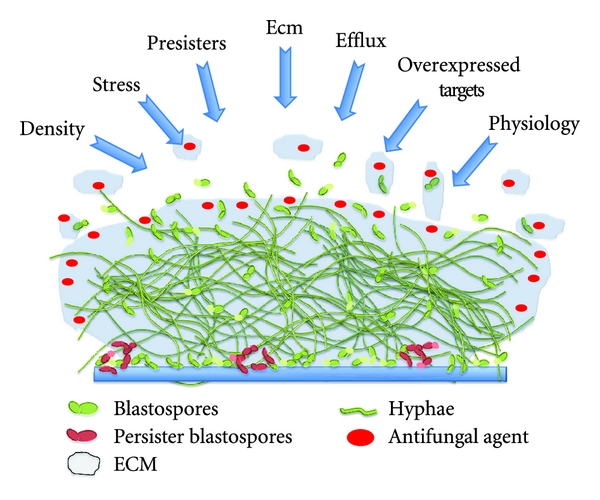
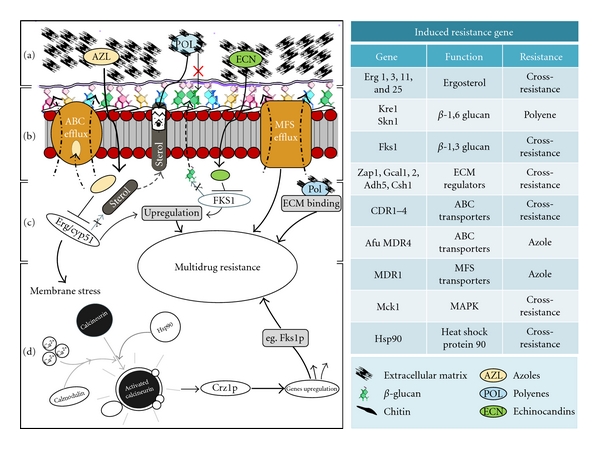
Fungal biofilm infections have become increasingly recognised as a significant clinical problem. One of the major reasons behind this is the impact that these have upon treatment, as antifungal therapy often fails and surgical intervention is required. This places a large financial burden on health care providers. This paper aims to illustrate the importance of fungal biofilms, particularly Candida albicans , and discusses some of the key fungal biofilm resistance mechanisms that include, extracellular matrix (ECM), efflux pump activity, persisters, cell density, overexpression of drug targets, stress responses, and the general physiology of the cell. The paper demonstrates the multifaceted nature of fungal biofilm resistance, which encompasses some of the newest data and ideas in the field.
Overview
The claims and statistics of this paper haven’t been checked yet.
Free: it reads the open-access text and checks the first 5 claims that cite a source we can check. Create a free account to check every claim.
Integrity signals
Registry
Cites
Statistics
Figures
Verification
Claims the paper makes
The claims and statistics of this paper haven’t been checked yet.
Free: it reads the open-access text and checks the first 5 claims that cite a source we can check. Create a free account to check every claim.
Claims other papers make about this one
Each is checked against this paper’s own text: does it say what the citing paper says it does?
The source backs part of the claim, not all of it — or backs it for a different population, condition or comparison.
In the citing paper
“Specific biofilm formation genes are being brought up regarding different roles in biofilm resistance: peroxisomal catalase (CTA1), the biosynthesis and degradation of tyrosine genes (ARO), the muscle creatine kinase (MSK), the heat shock protein 90 (HSP 90), the sphingolipid biosynthesis (SKN 1 and KRE1), SIR, RIF, and, finally, the extracellular matrix (ECM) regulators: zinc regulated genes (ZAP”
From Candida glabrata Biofilms: How Far Have We Come? (2017) · cites this paper as [130]
Experimental — accuracy not yet measuredThe source backs part of the claim, not all of it — or backs it for a different population, condition or comparison.
In the citing paper
“These include (in addition to Candida) members from Acremonium, Aspergillus, Cladosporium, Fusarium, and Pneumocystis (9, 20, 35, 42, 79, 160, 176).”
From Candida albicans Biofilms and Human Disease (2015) · cites this paper as [160]
Experimental — accuracy not yet measuredThe cited source says what the claim attributes to it.
In the citing paper
“C. albicans biofilms are resistant to standard antifungal drugs; not only do biofilms provide physical protection from drugs, cells in biofilms become intrinsically resistant to antimicrobial compounds because of their altered metabolic states and their constitutive upregulation of drug efflux pumps (7–10).”
From A Histone Deacetylase Complex Mediates Biofilm Dispersal and Drug Resistance in Candida albicans (2014) · cites this paper as [9]
The cited source says what the claim attributes to it.
In the citing paper
“Several general mechanisms of biofilm drug resistance are thought to confer resistance to multiple classes of antifungals in Candida species biofilms: the up-regulation of efflux pumps, cell wall composition, increased cell density and quorum sensing effect, presence of an extracellular matrix, changes in metabolism, the presence of persister cells, and cellular signalling and stress responses [”
From Candida glabrata Biofilms: How Far Have We Come? (2017) · cites this paper as [130]
The cited source says what the claim attributes to it.
In the citing paper
“It is well recognized that the inoculum size can affect susceptibility results [130,144,145,146,147].”
From Candida glabrata Biofilms: How Far Have We Come? (2017) · cites this paper as [130]
7 more claims about this paper
Create a free account to see every claim other papers make about this one.
Self-check
Percentages, sums and reported differences re-computed from the paper’s own numbers.
The self-check needs the paper’s full text.
Citations
Cites
Miller, M. B., & Bassler, B. L. (2001) · Annual Review of Microbiology · doi:10.1146/annurev.micro.55.1.165 · Cited by 5,105 · cited 1×
“provides the ability of microorganisms to communicate and coordinate their behaviour via the secretion of signalling molecules in a population-dependent manner [103].”
BackgroundCosterton, J. W., Lewandowski, Z., Caldwell, D. E., Korber, D. R., & Lappin-Scott, H. M. (1995) · Annual Review of Microbiology · doi:10.1146/annurev.mi.49.100195.003431 · Cited by 4,544
Biofilms: Microbial Life on Surfaces
Donlan, R. M. (2002) · Emerging Infectious Diseases · doi:10.3201/eid0809.020063 · Cited by 4,145 · cited 1×
“Estimates suggest that up to 80% of all microorganisms in the environment exist in biofilm communities [41].”
BackgroundABC Transporters: From Microorganisms to Man
Higgins, C. F. (1992) · Annual Review of Cell Biology · doi:10.1146/annurev.cb.08.110192.000435 · Cited by 3,985 · cited 1×
“The ABC transporters include a membrane pore composed of transmembrane segments and two ABCs on the cytosolic side of the membrane, which provide the energy source for the pump [128, 129].”
BackgroundLewis, K. (2010) · Annual Review of Microbiology · doi:10.1146/annurev.micro.112408.134306 · Cited by 1,858 · cited 1×
“Persister cells are “dormant variants of regular cells that form stochastically in microbial populations and are highly tolerant to antibiotics” [168].”
BackgroundChandra, J., Kuhn, D. M., Mukherjee, P. K., Hoyer, L. L., McCormick, T., & Ghannoum, M. A. (2001) · Journal of Bacteriology · doi:10.1128/jb.183.18.5385-5394.2001 · Cited by 1,578 · cited 5×
“, XTT-based assays) confirm that cells within biofilms are undergoing mitochondrial respiration during development [55, 58, 62, 65, 70].”
BackgroundMethodInfluentialMultidrug-resistance efflux pumps ? not just for resistance
Piddock, L. J. V. (2006) · Nature Reviews Microbiology · doi:10.1038/nrmicro1464 · Cited by 1,522 · cited 1×
“Their primary role may be for homeostasis within complex environments to protect themselves from acute toxicity [146], but within clinical environments exposure to azoles dugs may enhance the levels of efflux pump expression, therefore either contributing towards or inducing clinical resistance [139].”
BackgroundGenomic sequence of the pathogenic and allergenic filamentous fungus Aspergillus fumigatus
Nierman, W. C., Pain, A., Anderson, M. J., Wortman, J. R., Kim, H. S., Arroyo, J., Berriman, M., Abe, K., Archer, D. B., Bermejo, C., et al. (2005) · Nature · doi:10.1038/nature04332 · Cited by 1,391 · cited 1×
“fumigatus has 278 different MFS and 49 ABC transporters [140].”
BackgroundComparison of multiple methods for quantification of microbial biofilms grown in microtiter plates
Peeters, E., Nelis, H. J., & Coenye, T. (2008) · Journal of Microbiological Methods · doi:10.1016/j.mimet.2007.11.010 · Cited by 1,143 · cited 1×
“The oxidation reduction indicator Alamar blue has also been shown to be a reproducible and cheaper alternative to XTT in recent years, which merits further study [72, 73].”
BackgroundPierce, C. G., Uppuluri, P., Tristan, A. R., Wormley, F. L., Mowat, E., Ramage, G., & Lopez-Ribot, J. L. (2008) · Nature Protocols · doi:10.1038/nprot.2008.141 · Cited by 1,041 · cited 1×
“The recent interest in Aspergillus and Cryptococcus biofilms, as well as others like Pneumocystis, has led to further modifications of these, but in essence the platforms and techniques remain largely similar [67].”
BackgroundSelf-citation
Research works printed but not linked: 1
- Odds FC Candida and Candidosis 1988 2nd edition London, UK Bailliere Tindall
Cited by
Items 301–400 of 614
Brilhante, R. S., Pereira, V. S., de Oliveira, J. S., Rodrigues, A. M., Camargo, Z. P. D., Pereira‐Neto, W. D. A., do Nascimento, N. R. F., Maia, D. C. B. D. S. C., Cordeiro, R. D. A., Sidrim, J. J. C., et al. (2019) · Future Microbiology · doi:10.2217/fmb-2019-0146 · Cited by 15
Combating increased antifungal drug resistance in Cryptococcus, what should we do in the future?
Deng, H., Song, J., Huang, Y., Yang, C., Zang, X., Zhou, Y., Li, H., Dai, B., & Xue, X. (2023) · Acta Biochimica et Biophysica Sinica · doi:10.3724/abbs.2023011 · Cited by 15
“The biofilms formed by Cryptococcus are tolerant to the host immune system and antifungal agents [52,53].”
The Role of Biofilms in Contact Lens Associated Fungal Keratitis
Yi, J., Sun, Y., Zeng, C., Kostoulias, X., & Qu, Y. (2023) · Antibiotics · doi:10.3390/antibiotics12101533 · Cited by 16
Candida Biofilm Tolerance: Comparison of Planktonic and Biofilm Resistance Mechanisms
Dominguez, E. G., & Andes, D. R. (2017) · Springer eBooks · doi:10.1007/978-3-319-50409-4_6 · Cited by 18
Ceresa, C., Rinaldi, M., & Fracchia, L. (2017) · AIMS bioengineering · doi:10.3934/bioeng.2017.2.318 · Cited by 14
“[10] describe the resistance mechanisms, which include general physiological state of sessile cells, cell density, over-expression of drug targets, efflux pump mediated resistance, extracellular matrix, persister cells and tolerance against stress.”
BackgroundNovel antifungal activity of oligostyrylbenzenes compounds on Candida tropicalis biofilms
Quinteros, M. A., Galera, I. L. D., Tolosa, J., García-Martínez, J. C., Páez, P. L., & Paraje, M. G. (2020) · Medical Mycology · doi:10.1093/mmy/myaa046 · Cited by 14
The role of virulence factors inCandida albicanspathogenicity
Wibawa, T. (2016) · Journal of the Medical Sciences (Berkala Ilmu Kedokteran) · doi:10.19106/jmedsci004801201606 · Cited by 34
Costa, D., Mercier, A., Gravouil, K., Lesobre, J., Verdon, J., & Imbert, C. (2016) · Pathogens and Disease · doi:10.1093/femspd/ftw094 · Cited by 14
de Freitas, M. A., Andrade-Pinheiro, J. C., Alves, A. I. D. S., dos Santos, F. D. A. G., de Andrade, M. C. L., Sales, D. L., Nunes, M., Ribeiro, P. R. V., Coutinho, H. D. M., Morais‐Braga, M. F. B., et al. (2019) · The Science of The Total Environment · doi:10.1016/j.scitotenv.2019.134779 · Cited by 17
Amer, A. M., Charnock, C., & Nguyen, S. (2024) · International Journal of Pharmaceutics · doi:10.1016/j.ijpharm.2024.125088 · Cited by 14
Jamiu, A. T., Albertyn, J., Sebolai, O. M., Gcilitshana, O. M. N., & Pohl, C. H. (2021) · Medical Mycology · doi:10.1093/mmy/myab055 · Cited by 14
Leesombun, A., Thanapakdeechaikul, K., Suwannawiang, J., Mukto, P., Sungpradit, S., Bangphoomi, N., Changbunjong, T., Thongjuy, O., Weluwanarak, T., & Boonmasawai, S. (2022) · Antibiotics · doi:10.3390/antibiotics11121734 · Cited by 15
“Biofilm reduces the penetrability of antifungal agents, thus contributing to treatment failure and recurrent infection [39,40].”
BackgroundSousa, I. S., Vieira, T. D. P., Menna‐Barreto, R. F. S., Guimaraes, A. J., McCarron, P., McCann, M., Devereux, M. M., dos Santos, A. L. S., & Kneipp, L. F. (2023) · Journal of Fungi · doi:10.3390/jof9030356 · Cited by 13
“In fact, studies have shown that biofilm-forming cells are at least 1000-fold more resistant to antimicrobial drugs than planktonic cells [63].”
BackgroundFernandes, L., Costa, R. H. S., Silva, S. M., Henriques, M., Costa‐de‐Oliveira, S., & Rodrigues, M. E. (2023) · Microbiology Spectrum · doi:10.1128/spectrum.05124-22 · Cited by 15
Corrêa-Junior, D., de Andrade, I. B., Alves, V., Avellar-Moura, I., Rabello, V. B. D. S., Valdez, A. F., Nimrichter, L., Zancopé‐Oliveira, R. M., Araújo, G. R. D. S., Almeida‐Paes, R., et al. (2023) · Journal of Fungi · doi:10.3390/jof9070701 · Cited by 13
“In addition, they are characterized by an extracellular matrix that can impede the penetration and diffusion of antimicrobial substances [23].”
BackgroundMotamedi, M., Saharkhiz, M. J., Pakshir, K., Akbarabadi, S. A., Khordshami, M. A., Asadian, F., Zareshahrabadi, Z., & Zomorodian, K. (2020) · Current Medical Mycology · doi:10.18502/cmm.5.4.2162 · Cited by 15
“In recent decades, fungal biofilms have become of greater significance in the clinical context since these communities are associated with drastically enhanced ability to express resistance against most antifungal agents (39).”
BackgroundCarradori, S., Ammazzalorso, A., Filippis, B. D., Şahin, A. F., Akdemir, A., Орехова, А. В., Bonincontro, G., & Simonetti, G. (2022) · Antibiotics · doi:10.3390/antibiotics11101375 · Cited by 14
“fungi biofilm-related infections have also been increasingly studied [11], and in 2021 this compelled the WHO to compile the first fungal priority pathogen list (FPPL).”
BackgroundThe role of Mss11 in Candida albicans biofilm formation
Tsai, P.-W., Chen, Y.-T., Yang, C., Chen, H.-F., Tan, T.-S., Lin, T.-W., Hsieh, W., & Lan, C. (2014) · Molecular Genetics and Genomics · doi:10.1007/s00438-014-0846-0 · Cited by 14
“albicans from the defense mechanisms of its host and various antifungal agents, the biofilm provides a reservoir that facilitates persistent infection (Douglas 2003; Kuhn and Ghannoum 2004; Kumamoto and Vinces 2005; Nett and Andes 2006; Ramage et al. 2012; Bonhomme and d’Enfert 2013).”
BackgroundVila, T. V. M., Fonseca, B. B., da Cunha, M. M. L., dos Santos, G. R. C., Ishida, K., Barreto‐Bergter, E., de Souza, W., & Rozental, S. (2017) · Journal of Microscopy · doi:10.1111/jmi.12580 · Cited by 14
“…2017 The Authors Journal of Microscopy C© 2017 Royal Microscopical Society catheters, can become colonised with Candida spp. allowing the development of adherent biofilm structures from which cells can then detach and cause an acute fungemia and/or disseminated infection (Ramage et al., 2012).”
BackgroundInfluentialla Cruz-Claure, M. L. D., Llave, A. A. C., Ulloa, M. T., Benito‐Lama, M., Domínguez‐Álvarez, E., & Bastida, Á. (2019) · Microorganisms · doi:10.3390/microorganisms7120664 · Cited by 13
Whole slide imaging is a high-throughput method to assess Candida biofilm formation
Raas, M. W. D., Silva, T. P. D., Freitas, J. C. O., Campos, L. M., Fabri, R. L., & Melo, R. C. N. (2021) · Microbiological Research · doi:10.1016/j.micres.2021.126806 · Cited by 13
Rao, I. R., Punitha, P., Premalatha, B., Prasad, T. S., & Suresh, M. (2024) · Discover Chemistry. · doi:10.1007/s44371-024-00068-w · Cited by 12
Squitieri, D., Rizzo, S., Torelli, R., Mariotti, M., Sanguinetti, M., Cacaci, M., & Bugli, F. (2025) · Pharmaceuticals · doi:10.3390/ph19010008 · Cited by 12
Cai, T., Li, Z., Guo, P., Guo, J., Wang, R., Guo, D., Yu, J., Lü, X., Xia, X., & Shi, C. (2023) · Foodborne Pathogens and Disease · doi:10.1089/fpd.2023.0006 · Cited by 14
“Previous studies have found that 65% of bacterial infections are involved in biofilms (Ramage et al., 2012; Srey et al., 2013), which form a barrier that can prevent or lessen bacterial contact with antimicrobial agents, so they can render their inhabitants more resistant to disin-fectant, and also…”
A patent review of antibiofilm fungal drugs (2002-present)
Serafini, M. R., Santos, V. V., Torres, B. G. S., Azeredo, F. J., Savi, F. M., & Alves, I. A. (2021) · Critical Reviews in Biotechnology · doi:10.1080/07388551.2021.1874283 · Cited by 14
Zheng, S., Chang, W., Li, C., & Lou, H. (2016) · FEMS Yeast Research · doi:10.1093/femsyr/fow029 · Cited by 12
“(ATP-binding cassette) transporter CDR1, CDR2 and themajor facilitator MDR1 account for the resistance of young biofilms to azole antibiotics (Mukherjee et al. 2003; Ramage et al. 2012).”
BackgroundThe Role of Isocitrate Lyase (ICL1) in the Metabolic Adaptation of Candida albicans Biofilms
Ishola, O. A., Ting, S. Y., Tabana, Y., Ahmed, M. A., Yunus, M. A., Mohamed, R., Than, L. T. L., & Sandai, D. A. (2016) · Jundishapur Journal of Microbiology · doi:10.5812/jjm.38031 · Cited by 13
“Despite advancements in the management of hospital-acquired infections, Candida albicans, a commensal organism that helps maintain microbiota normalcy, is the fourth most common isolated nosocomial bloodstream pathogen, after Staphylococcus aureus, accounting for approximately 80% of candidemia cases with a 40% fatali…”
BackgroundFernandes, L., Gonçalves, B., Costa, R. H. S., Fernandes, Â., Gomes, A., Nogueira‐Silva, C., Silva, S. M., Rodrigues, M. E., & Henriques, M. (2022) · Healthcare · doi:10.3390/healthcare10091649 · Cited by 14
“Biofilms show high resilience to common antifungal agents and host immune responses, requiring long and intensive therapies and, in more severe cases, the removal of the infected device in order to avoid relapses [9,10].”
BackgroundKumar, D., & Kumar, A. (2023) · Microbial Drug Resistance · doi:10.1089/mdr.2022.0347 · Cited by 12
Ardakani, A. S., Benedicenti, S., Solimei, L., Shahabi, S., & Afrasiabi, S. (2024) · Pharmaceuticals · doi:10.3390/ph17091232 · Cited by 11
“Subsequently, the mixture was placed into a cast mold, polymerized, and subjected to bench curing as per standard protocols, involving water immersion at 100 ◦ C for a duration of 30 min.”
MethodAnversa, L., Lara, B. R., Romani, C. D., Saeki, E. K., Nascentes, G. A. N., Bonfietti, L. X., Melhem, M. D. S. C., Ruiz, L. D. S., Camargo, C. H., & Richini‐Pereira, V. B. (2021) · Journal of Water and Health · doi:10.2166/wh.2021.204 · Cited by 11
Hamzah, H., Siregar, K. A. A. K., Suffiana, Y., Yudhawan, I., & Nurwijayanto, A. (2022) · Food Research · doi:10.26656/fr.2017.6(1).560 · Cited by 14
“In the previous statement, the antimicrobial agents would be more difficult to penetrate the biofilm defences (Ramage et al., 2012; Hamzah et al., 2019).”
BackgroundMoreira, A., Silva, S., Botelho, C., Sampaio, P., Pais, C., & Henriques, M. (2015) · Mycopathologia · doi:10.1007/s11046-015-9925-y · Cited by 10
“One of them is the overexpression of drug target [32] and the presence of persister cells [33].”
BackgroundWang, N., Yan, T., Mei, X., Liu, J., Lei, Y., & Yang, C. (2024) · Skin Research and Technology · doi:10.1111/srt.13850 · Cited by 10
“18 Luciana et al. found that the formation of biofilm is associated with increased antifungal resistance in M. pachydermatis .”
BackgroundWhat ‘Omics can tell us about antifungal adaptation
Ribeiro, G. F., Denes, E., Heaney, H., & Childers, D. S. (2021) · FEMS Yeast Research · doi:10.1093/femsyr/foab070 · Cited by 11
Czaika, V. A., Nenoff, P., Glöckner, A., Fegeler, W., Becker, K., & Schmalreck, A. (2013) · International Journal of Microbiology · doi:10.1155/2013/703905 · Cited by 11
“orientalis), which are reported to form biofilms, catheterrelated blood-stream, and device-related infections [96–98].”
BackgroundMartínez, J. P., Blanes, R., Casanova, M., Valentín, E., Murgui, A., & Domínguez, Á. (2016) · FEMS Yeast Research · doi:10.1093/femsyr/fow075 · Cited by 10
Park, Y., Srikantha, T., Daniels, K. J., Jacob, M. R., Agarwal, A. K., Li, X., & Soll, D. R. (2017) · Antimicrobial Agents and Chemotherapy · doi:10.1128/aac.01319-17 · Cited by 10
Vanillin Inhibits Growth, Morphogenesis and Biofilm Formation byCandida albicans
Raut, J. S., Rajput, S. B., Shinde, R. B., Surwase, B. S., & Karuppayil, S. M. (2013) · Journal of Biologically Active Products from Nature · doi:10.1080/22311866.2013.817749 · Cited by 10
Brilhante, R. S. N., Brasil, J. A., de Oliveira, J. S., Pereira, V. S., Pereira‐Neto, W. D. A., Sidrim, J. J. C., & Rocha, M. F. G. (2020) · Biofouling · doi:10.1080/08927014.2020.1777285 · Cited by 10
“Cells in biofilms (sessile cells) exhibit unique phenotypic characteristics compared to their planktonic counterparts (Ramage et al. 2012).”
BackgroundLong Noncoding RNAs in Yeast Cells and Differentiated Subpopulations of Yeast Colonies and Biofilms
Wilkinson, D., Váchová, L., Hlaváček, O., Maršíková, J., Gilfillan, G. D., & Palková, Z. (2018) · Oxidative Medicine and Cellular Longevity · doi:10.1155/2018/4950591 · Cited by 10
Biofilm in food materials – A review
Shahid, S., Sheetal, Dasgupta, D., Pani, B., Singh, A. K., & Saji, V. S. (2025) · The Microbe · doi:10.1016/j.microb.2025.100518 · Cited by 10
In vitro study to assess modulation of Candida biofilm by Escherichia coli from vaginal strains
Díaz-Navarro, M., Irigoyen-von-Sierakowski, Á., Palomo, M., Escribano, P., Guinea, J., Burillo, A., Galar, A., Muñóz, P., & Guembe, M. (2023) · Biofilm · doi:10.1016/j.bioflm.2023.100116 · Cited by 10
Characterization of the Fusarium circinatum biofilm environmental response role
Ratsoma, F. M., Mokoena, N., Santana, Q. C., Wingfield, B. D., Steenkamp, E. T., & Motaung, T. E. (2024) · Journal of Basic Microbiology · doi:10.1002/jobm.202300536 · Cited by 10
“We also evaluated the various concentrations at which the two fungicides affect biofilm formation [41].”
BackgroundEffect of essential oils prepared from Thai culinary herbs on sessile Candida albicans cultures
Hovijitra, R. S., Choonharuangdej, S., & Srithavaj, T. (2016) · Journal of Oral Science · doi:10.2334/josnusd.15-0736 · Cited by 15
Oral Health: The Need for Both Conventional Microbial and Molecular Characterization
Friedman, E., Alizadeh, N., & Loewy, Z. G. (2017) · Microarrays · doi:10.3390/ht6030011 · Cited by 12
Rhamnolipids as a Tool for Eradication of Trichosporon cutaneum Biofilm
Maťátková, O., Kolouchová, I., Lokočová, K., Michailidu, J., Jaroš, P., Kulišová, M., Řezanka, T., & Masák, J. (2021) · Biomolecules · doi:10.3390/biom11111727 · Cited by 10
Bugli, F., Sterbini, F. P., Cacaci, M., Martini, C., Lancellotti, S., Stigliano, E., Torelli, R., Arena, V., Caira, M., Posteraro, P., et al. (2014) · Pathogens and Disease · doi:10.1111/2049-632x.12152 · Cited by 13
“, 2011), which generally are characterized by a spherical mass of hyphae or by bronchial casts containing mucus and mycelia (Ramage et al., 2012).”
BackgroundKnoflacher, M. (2024) · Springer eBooks · doi:10.1007/978-3-662-69423-7_6 · Cited by 9
An overview of synthesis and biological activities of 2-pyridone derivatives over the last decade
Das, L., & Sengupta, T. (2025) · Discover Applied Sciences · doi:10.1007/s42452-025-06849-x · Cited by 10
Antibiofilm activity of promethazine, deferiprone, and Manuka honey in an ex vivo wound model
Guedes, G. M. D. M., Freitas, A. S., Pinheiro, R. M., Pereira, V. C., Melgarejo, C. M. A., de Araújo, E. S., Ribeiro, K. V. C., Bandeira, S. P., Cordeiro, R. D. A., Rocha, M. F. G., et al. (2023) · Letters in Applied Microbiology · doi:10.1093/lambio/ovad119 · Cited by 10
Madhuri, M., Rudramurthy, S. M., & Roy, U. (2024) · Frontiers in Pharmacology · doi:10.3389/fphar.2024.1334419 · Cited by 8
Ultrasound-assisted treatment of sternocutaneous fistula in post-sternotomy cardiac surgery patients
Tewarie, L., Moza, A. K., Zayat, R., Autschbach, R., Goetzenich, A., & Menon, A. K. (2015) · European Journal of Cardio-Thoracic Surgery · doi:10.1093/ejcts/ezv007 · Cited by 8
“Compared with their planktonic counterparts, biofilm-resident bacteria exhibit an up to 1000-fold increase in resistance [12–14].”
BackgroundKamli, M. R., Sabir, J. S. M., Malik, M. A., & Ahmad, A. (2022) · Journal of Fungi · doi:10.3390/jof8121298 · Cited by 10
Update on the Fungal Biofilm Drug Resistance and Its Alternative Treatment
Tseung, K. S. Y. N. H., & Zhao, J. (2016) · Journal of Biosciences and Medicines · doi:10.4236/jbm.2016.45004 · Cited by 9
Carolis, E. D., Soldini, S., Rosa, M. L., Nucci, F. M., Posteraro, B., & Sanguinetti, M. (2019) · Frontiers in Microbiology · doi:10.3389/fmicb.2019.02046 · Cited by 10
“Notably, sessile and planktonic cells within Candida biofilms are different in their antifungal drug susceptibility profiles (Ramage et al., 2012), because biofilm growth would prompt the sessile cells to acquire a reduced susceptibility against antifungal agents (Silva et al.”
BackgroundFrom Biology to Drug Development: New Approaches to Combat the Threat of Fungal Biofilms
Pierce, C. G., Srinivasan, A., Ramasubramanian, A. K., & Lopez-Ribot, J. L. (2015) · ASM Press eBooks · doi:10.1128/9781555817466.ch19 · Cited by 8
Reduction ofCandida tropicalisbiofilm by photoactivation of aHeterophyllaea pustulataextract
Marioni, J., Arce, J. E., Cabrera, J. L., Paraje, M. G., & Montoya, S. C. N. (2016) · Pharmaceutical Biology · doi:10.1080/13880209.2016.1183683 · Cited by 12
“Although Candida albicans is the main exponent of these opportunistic fungi, in recent years Candida tropicalis has been isolated as one of the most prevalent pathogenic yeast species of the Candida-non-albicans group (Ramage et al. 2012; Silva et al. 2012).”
BackgroundSinoca, M., Maione, A., Gambino, E., Imparato, M., Galdiero, M., de Alteriis, E., Galdiero, E., & Guida, M. (2024) · Biomedicines · doi:10.3390/biomedicines12020389 · Cited by 7
“Other factors contributing to the failure of therapy are overexpression of efflux pumps and the presence of persistent cells in fungal biofilms [11,12].”
BackgroundKulig, K., Rudolphi-Skórska, E., Barbasz, A., Surowiec, M., Wronowska, E., Kowalik, K., Satała, D., Braś, G., Woźnicka, O., Karnas, E., et al. (2025) · Microbiology · doi:10.1099/mic.0.001565 · Cited by 7
“…extensive extracellular matrix and formed by microbial cells found in different morphological forms or physiological states, is considered as strongly associated with the development of tolerance to antifungal agents [21], and the production of EVs might play an important role in this phenomenon.”
De-la-Pinta, I., Marcos‐Arias, C., Sevillano, E., Eraso, E., & Quindós, G. (2026) · Microorganisms · doi:10.3390/microorganisms14020367 · Cited by 8
“The colonisation of the hospital environment by Candida species is not a random process of stochastic deposition; rather, it is a selective phenomenon in which the physic-ochemical properties of abiotic surfaces act as environmental filters, favouring species with specific cell wall traits [50,51].”
Endophytic fungi-bioinspired nanoparticles potential to control infectious disease
Khan, S., Mathur, A., & Khan, F. (2025) · Critical Reviews in Microbiology · doi:10.1080/1040841x.2025.2497795 · Cited by 9
“…of stress response, and the general state physiology of the cell are all components of the defense measures employed by fungal biofilm protection (Ramage et al. 2012). therefore, to enhance the effectiveness of innovative treatment methods for fungal infections, efforts are focused on…”
Synergic activity of oligostyrylbenzenes with amphotericin B against Candida tropicalis biofilms
Quinteros, M. A., Tolosa, J., García-Martínez, J. C., Páez, P. L., & Paraje, M. G. (2021) · Yeast · doi:10.1002/yea.3672 · Cited by 8
“Nonalbicans Candida species are becoming an important cause of fungemia, but the reasons for this rising prevalence have been difficult to elucidate (Desai et al., 2014; Kothavade et al., 2010; Ramage et al., 2012; Silva et al., 2012).”
BackgroundNew Insights in Dermatophytes: Microsporum spp. and Nannizzia spp.
Corrêa-Junior, D., Ramos, M. L. M., Almeida‐Paes, R., & Frasés, S. (2022) · Current Tropical Medicine Reports · doi:10.1007/s40475-022-00252-x · Cited by 9
Barros, I. L. E., Veiga, F. F., Jarros, I. C., Corrêa, J. L., dos Santos, R. S., Bruschi, M. L., Negri, M., & Svidzinski, T. I. E. (2022) · Anais da Academia Brasileira de Ciências · doi:10.1590/0001-3765202220210189 · Cited by 7
“…those of Gucwa et al. (2018) It is proven that the organization of fungi in the form of biofilm gives these microorganisms some advantages, among others, the resistance to antifungals that can reach up to 1000 times greater than their respective planktonic counterparts (Ramage et al. 2012).”
Backgroundde Mello, T. P., Aor, A. C., Barcellos, I. C., Pereira, M. M., McCann, M., Devereux, M. M., Branquinha, M. H., & dos Santos, A. L. S. (2023) · Future Microbiology · doi:10.2217/fmb-2022-0202 · Cited by 7
Mechanisms of Resistance to Antifungal Agents
Perlin, D. S. (2015) · ASM Press eBooks · doi:10.1128/9781555817381.ch130 · Cited by 10
Diagnostic of Fungal Infections Related to Biofilms
Sanguinetti, M., & Posteraro, B. (2016) · Advances in experimental medicine and biology · doi:10.1007/5584_2016_9 · Cited by 7
“Once a mature biofilm is formed within the human host through a medical device, the infection becomes recalcitrant to antimicrobial treatment (Ramage et al. 2012) and can develop into a chronic condition (Yousif et al. 2015).”
BackgroundInfluentialFormation, Resistance, and Pathogenicity of Fungal Biofilms: Current Trends and Future Challenges
Aguilar-Marcelino, L., Al‐Ani, L. K. T., Soares, F. E. D. F., Moreira, A. L. E., Téllez‐Téllez, M., Castañeda-Ramírez, G. S., Acosta-Urdapilleta, M. D. L., Díaz-Godínez, G., & Pineda-Alegría, J. A. (2021) · Fungal biology · doi:10.1007/978-3-030-60659-6_18 · Cited by 9
Kulišová, M., Rabochová, M., Lörinčík, J., Brányik, T., Hrudka, J., Scholtz, V., & Kolouchová, I. (2024) · Foods · doi:10.3390/foods13071054 · Cited by 10
Evidence for a Pneumocystis carinii Flo8-like transcription factor: insights into organism adhesion
Kottom, T. J., & LIMPER, A. H. (2015) · Medical Microbiology and Immunology · doi:10.1007/s00430-015-0428-8 · Cited by 7
“We and others have shown that Pc binding to extracellular matrix components of the lung, as well as lung epithelial cells, promotes expression of cell wall remodeling and mating regulatory pathways, as well as proliferation of the organism [4, 21, 26].”
Inhibitory activity of isoniazid and ethionamide against Cryptococcus biofilms
Cordeiro, R. D. A., Serpa, R., Marques, F. J. D. F., de Melo, C. V. S., Evangelista, A. J. D. J., Mota, V. F., Brilhante, R. S. N., Bandeira, T. D. J. P. G., Rocha, M. F. G., & Sidrim, J. J. C. (2015) · Canadian Journal of Microbiology · doi:10.1139/cjm-2015-0230 · Cited by 7
de Almeida-Apolonio, A. A., Cupozak-Pinheiro, W. J., Berres, V. M., Dantas, F. G. S., Svidzinski, T. I. E., de Oliveira, K. M. P., & Chang, M. R. (2018) · The Scientific World JOURNAL · doi:10.1155/2018/5764187 · Cited by 12
“The formation of biofilms contributes to the permanence of microorganisms in a host and helps protect against antimicrobials [31].”
BackgroundPhenotypic and genotypic variations in Candida albicans isolates from Romanian patients
Roșca, I., Bostănaru, A.-C., Minea, B., Năstasă, V., Gherghel, I., Panzaru, C. V., Mareș, M., & Moroti-Constantinescu, V. R. (2018) · Revista română de medicină de laborator · doi:10.2478/rrlm-2018-0023 · Cited by 8
“A biofilm is a structural microbial community attached to a surface and packed with a self-produced extra-cellular matrix [38].”
BackgroundRamos, L. S., Silva, L. N., Branquinha, M. H., & dos Santos, A. L. S. (2020) · Journal of Fungi · doi:10.3390/jof6040201 · Cited by 8
Chen, Y., Chen, F., & Lee, C. (2020) · Journal of Medical Microbiology · doi:10.1099/jmm.0.001283 · Cited by 7
Biofilm Formation in Aspergillus fumigatus: A Comparative Study of Strains from Different Origins
Cano-Pérez, M., Pérez, J. D. D. C., de la Pedrosa, E. G. G., & Gómez‐López, A. (2026) · Microorganisms · doi:10.3390/microorganisms14020272 · Cited by 6
ASPECTOS CLÍNICOS E FATORES DE VIRULÊNCIA DE Malassezia spp
da Rocha, M. G., Pergentino, M. L. M., Aguiar, A. L. R., Costa, A. D. C., Martins, D. V., Araújo, G. D. S., de Aguiar, L., Pereira, L. M. G., Lopes, R. G. P., da Graça-Filho, R. V., et al. (2022) · Editora In Vivo eBooks · doi:10.47242/978-65-87959-13-9-4 · Cited by 6
Fonseca, X. M. Q. C., Costa, A. D. C., Aguiar, A. L. R., Martins, D. V., Araújo, G. D. S., de Aguiar, L., Pereira, L. M. G., da Rocha, M. G., Pergentino, M. L. M., Lopes, R. G. P., et al. (2022) · Editora In Vivo eBooks · doi:10.47242/978-65-87959-13-9-5 · Cited by 6
O GÊNERO Trichosporon: ASPECTOS GERAIS
Pereira, L. M. G., Aguiar, A. L. R., Costa, A. D. C., Martins, D. V., Araújo, G. D. S., de Aguiar, L., da Rocha, M. G., Pergentino, M. L. M., Lopes, R. G. P., da Graça-Filho, R. V., et al. (2022) · Editora In Vivo eBooks · doi:10.47242/978-65-87959-13-9-6 · Cited by 6
Shaik, S., Lee, J., Karthik, R., Kim, Y., & Lee, J. (2025) · Chemical Engineering Journal · doi:10.1016/j.cej.2025.163091 · Cited by 7
Antifungal Biofilm Strategies: A Less Explored Area in Wound Management
Mirza, M. A., Aggarwal, G., Bharti, S., & Zakir, F. (2022) · Current Pharmaceutical Biotechnology · doi:10.2174/1389201023666220411100214 · Cited by 6
Lara, B. R., de Camargo, B. B., Paula, C. R., Monari, G. P. D. M., Garces, H. G., Arnoni, M. V., da Silveira, M., Gimenes, V. M. F., Leite, D. P., Bonfietti, L. X., et al. (2023) · Medical Mycology · doi:10.1093/mmy/myad022 · Cited by 6
Kumar, A., Francis, A., Hans, S., & Thakur, A. (2024) · Springer eBooks · doi:10.1007/978-981-97-4909-6_8 · Cited by 7
Yeast Biofilms in the Context of Human Health and Disease
Raut, J. S., Doke, S. K., & Karuppayil, S. M. (2017) · Springer eBooks · doi:10.1007/978-981-10-2621-8_6 · Cited by 6
Vaidyanathan, S., Soni, B. M., Hughes, P. L., Ramage, G., Sherry, L., Singh, G., & Mansour, P. (2013) · Case Reports in Infectious Diseases · doi:10.1155/2013/693480 · Cited by 11
“Microbial biofilms develop when organisms adhere to a surface and produce extracellular polymers that provide a structural matrix and facilitate further adhesion [3, 5, 14].”
BackgroundSelf-citationCandida albicans Mrv8, is involved in epithelial damage and biofilm formation
Costa, A. C. B. P., Back‐Brito, G. N., Mayer, F. L., Hube, B., & Wilson, D. (2020) · FEMS Yeast Research · doi:10.1093/femsyr/foaa033 · Cited by 6
“The mechanisms of biofilm antifungal resistance are not yet fully understood, but the resistant phenotype has been linked to overexpression of drug targets, higher cell density, heterogeneous populations of cells with different growth rates, expression of efflux pumps (CDR1– 2 and MDR1), extracellular matrix (especial…”
BackgroundThe Influence of Cellulose-Type Formulants on Anti-Candida Activity of the Tyrocidines
Masoudi, Y., van Rensburg, W., Barnard-Jenkins, B., & Rautenbach, M. (2021) · Antibiotics · doi:10.3390/antibiotics10050597 · Cited by 6
“This resistance appears to be multifactorial, involving both mechanisms similar to planktonic antifungal resistance and mechanisms specific to the biofilm lifestyle [6,7].”
BackgroundFungal Biofilms: In Vivo Models for Discovery of Anti-Biofilm Drugs
Nett, J. E., & Andes, D. R. (2015) · ASM Press eBooks · doi:10.1128/9781555817466.ch2 · Cited by 8
Costa-Orlandi, C. B., Bila, N. M., Bonatti, J. L. C., Vaso, C. O., dos Santos, M. B., Polaquini, C. R., Biasioli, M. M. S., Herculano, R. D., Regasini, L. O., Fusco‐Almeida, A. M., et al. (2023) · Pharmaceutics · doi:10.3390/pharmaceutics15051402 · Cited by 6
“The dose of an antifungal agent required to eradicate certain fungal biofilms can exceed the recommended therapeutic concentration [28].”
BackgroundUnder the lens: using Raman spectroscopy as a unique system in biofilm analyses
Bilal, Z., Tipping, W. J., Brown, J. L., & Faulds, K. (2025) · Critical Reviews in Microbiology · doi:10.1080/1040841x.2025.2555937 · Cited by 7
“…resistance in place, and the ability to colonize several sites within the body including the oral cavity, skin (chronic wounds), and the vagina (Ramage et al. 2012; Delaney et al. 2019). currently, there has been limited research carried out on fungal pathogens using Raman spectroscopy as a…”
Dowdy, H., Kumar, R. S., Almansour, A. I., Arumugam, N., Alaqeel, S. I., & Thangamani, S. (2022) · Pathogens and Disease · doi:10.1093/femspd/ftac013 · Cited by 6
Kalimuthu, S., Pudipeddi, A., Braś, G., Tanner, J. A., Rąpała‐Kozik, M., Leung, Y. Y., & Neelakantan, P. (2023) · Apmis · doi:10.1111/apm.13322 · Cited by 6
“show greater resistance to antifungals [45, 46].”
A critical review on anticandidal properties of marine plants
Priyanka, K. R., & Rajaram, R. (2023) · Regional Studies in Marine Science · doi:10.1016/j.rsma.2023.103258 · Cited by 7
Nature-derived gelatin-based antifungal nanotherapeutics for combatting Candida albicans biofilms
Nabawy, A. M., Makabenta, J. M., Park, J., Huang, R., Nayar, V., Patel, R., & Rotello, V. M. (2024) · Environmental Science Nano · doi:10.1039/d3en00372h · Cited by 6
Sørensen, S., Kvich, L., Xu, Y., Thomsen, T. R., Bjarnsholt, T., & Thaarup, I. C. (2025) · Biofilm · doi:10.1016/j.bioflm.2025.100256 · Cited by 5
“Fungal biofilm infections pose a significant burden on hospitals due to several predisposing factors in patients, such as immunosuppression, catheters, disruption of mucosal barriers, chemotherapy and the use of broad-spectrum antibiotics [1].”
Ebrahimi, A., & Dizaji, A. N. (2025) · ChemistrySelect · doi:10.1002/slct.202502074 · Cited by 5
Consequences of lysine auxotrophy for Candida albicans adherence and biofilm formation
Gabriel, I., & Rychłowski, M. (2017) · Acta Biochimica Polonica · doi:10.18388/abp.2016_1427 · Cited by 6
Antifungal Effect of Long Noncoding RNA 9708-1 in the Vulvovaginal Candidiasis Murine Model
Wu, Y., Jiang, L., Zhang, L., Liu, X., Yan, L., Luan, T., Rui, C., Mao, Z., Fan, C., Liu, Y., et al. (2021) · Mycopathologia · doi:10.1007/s11046-021-00530-8 · Cited by 5
“albicans was capable of avoiding adherence to abiotic and host surfaces [29], producing tissue-invading filaments (hyphae) [30], and resistance to antifungal therapy [31].”
BackgroundToyama, T., Ueda, N., Hamada, Y., Okuda, K., & Saito, T. (2021) · Journal of Orthopaedic Science · doi:10.1016/j.jos.2021.11.012 · Cited by 5
Metadata
- Authors
- Ramage, G., Rajendran, R., Sherry, L., & Williams, C.
- Affiliations
- University of Glasgow (GB)
- Royal Hospital for Children (GB)
- Corresponding author
- Ramage, Gordon
- Venue
- International Journal of Microbiology
- Publisher
- Wiley
- Published
- 2012
- Volume
- 2012
- Pages
- 1-14
- ISSN
- 1687-918X (ISSN-L)
- 1687-9198
- PMC
- PMC3299327
- OpenAlex
- W2039886457
- Cited by
- 583
- References
- 185
- Citations by year
- 2026: 28 · 2025: 43 · 2024: 27 · 2023: 45 · 2022: 46 · 2021: 45 · 2020: 45 · 2019: 37 · 2018: 37 · 2017: 52 · 2016: 52 · 2015: 41 · 2014: 38 · 2013: 35 · 2012: 11
- FWCI
- 27.73
- Type
- journal article
- Language
- en
- Open access
- gold
- doi.org
- Locations
- International Journal of Microbiology (publishedVersion, cc-by)
- PubMed Central (publishedVersion, cc-by)
- PubMed (publishedVersion)
- ENLIGHTEN (Jurnal Bimbingan dan Konseling Islam) (acceptedVersion)
- DOAJ (DOAJ: Directory of Open Access Journals) (submittedVersion, cc-by-sa)
- Topics
- Health Sciences › Medicine › Infectious Diseases › Antifungal resistance and susceptibility
- Life Sciences › Biochemistry, Genetics and Molecular Biology › Molecular Biology › Fungal and yeast genetics research
- Life Sciences › Biochemistry, Genetics and Molecular Biology › Molecular Biology › Bacterial biofilms and quorum sensing
- Keywords
- fungal biofilms, antifungal resistance, Candida albicans, extracellular matrix, efflux pumps, persister cells, cell density, stress response, biofilm physiology
About these checks
Registry, retraction, Cites and statistics results are computed, not judged, with one exception: a printed reference that no index lists is read once by a model before it counts as a citation error. Claims are extracted by a model and kept only when their quote appears verbatim in the text; each cited source is then checked, with a model’s help, for whether it says what the claim relies on. Those verdicts can be wrong — read the claim’s quote and the cited source before relying on one.
Statistics and arithmetic are recomputed, not judged.
Confidence bands are shown only for fields calibrated on our annotated test set. None is calibrated yet, so no band is shown.
What counts as a claim ›How we measure confidence ›How we check this ›
Are you an author, or do you see a problem with this page? Request a review
Data sources
Bibliographic data: Semantic Scholar, OpenAlex, Crossref.
Contains information from the Semantic Scholar Academic Graph Datasets, made available under the ODC Attribution License (ODC-BY 1.0).
Semantic Scholar’s data is described in: Kinney, R., et al. (2023). The Semantic Scholar Open Data Platform. arXiv:2301.10140.
