

Genetic Mechanisms of Immune Evasion in Colorectal Cancer
Open accessPublished version of a preprint
The DOI matches its Crossref record; 100 of the 103 references it cites were found in a registry or an index.
Abstract
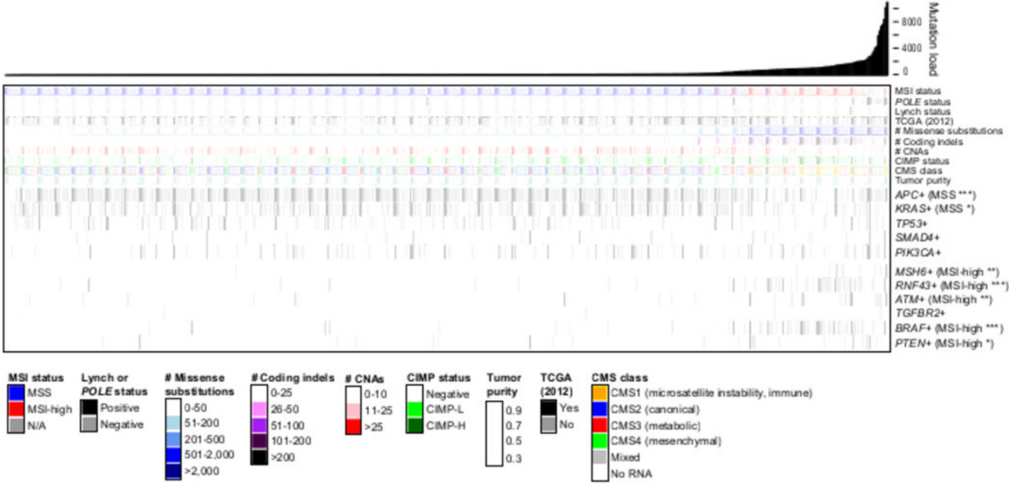
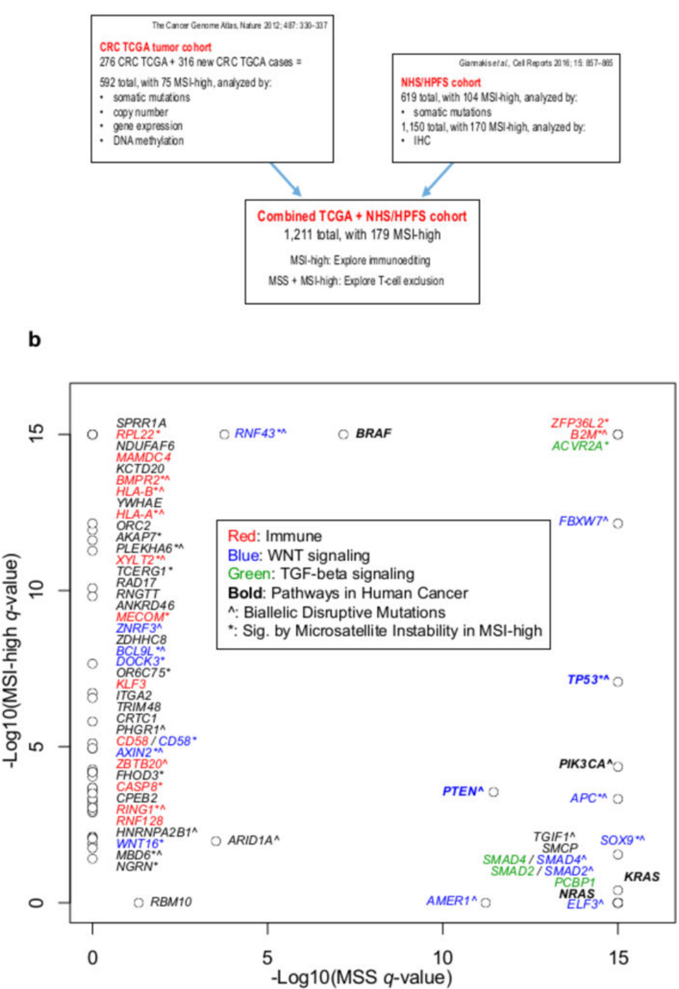
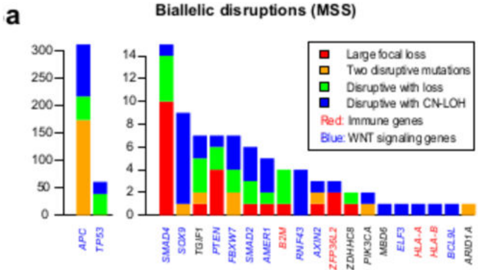
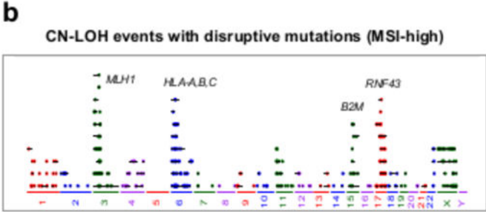
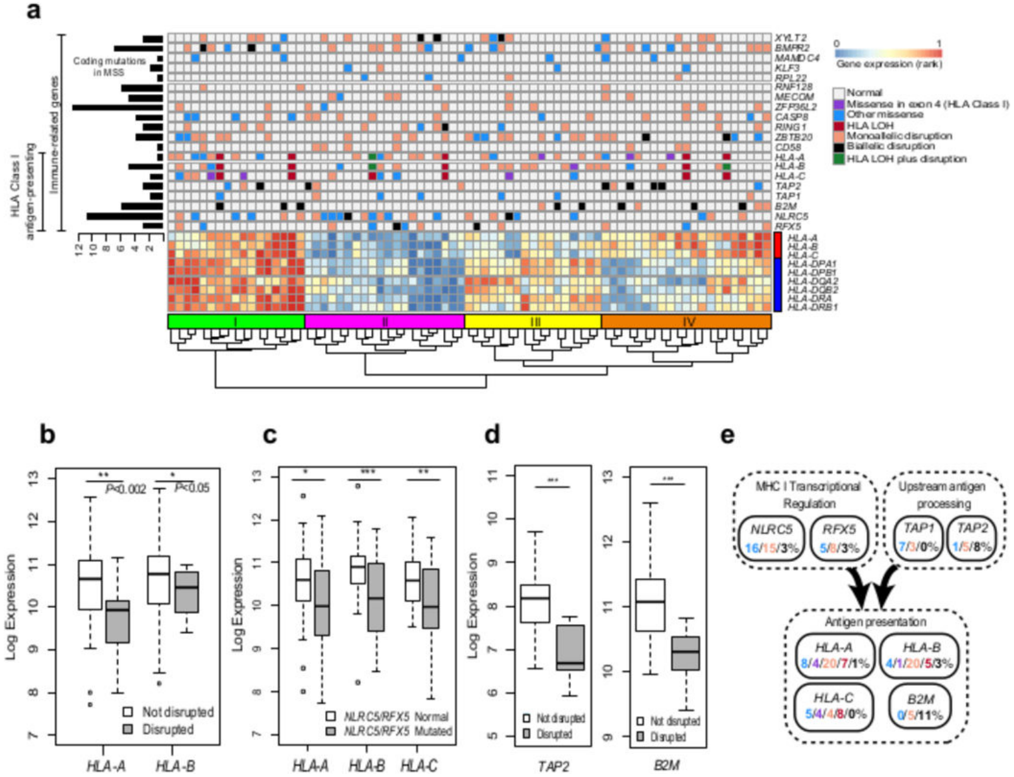
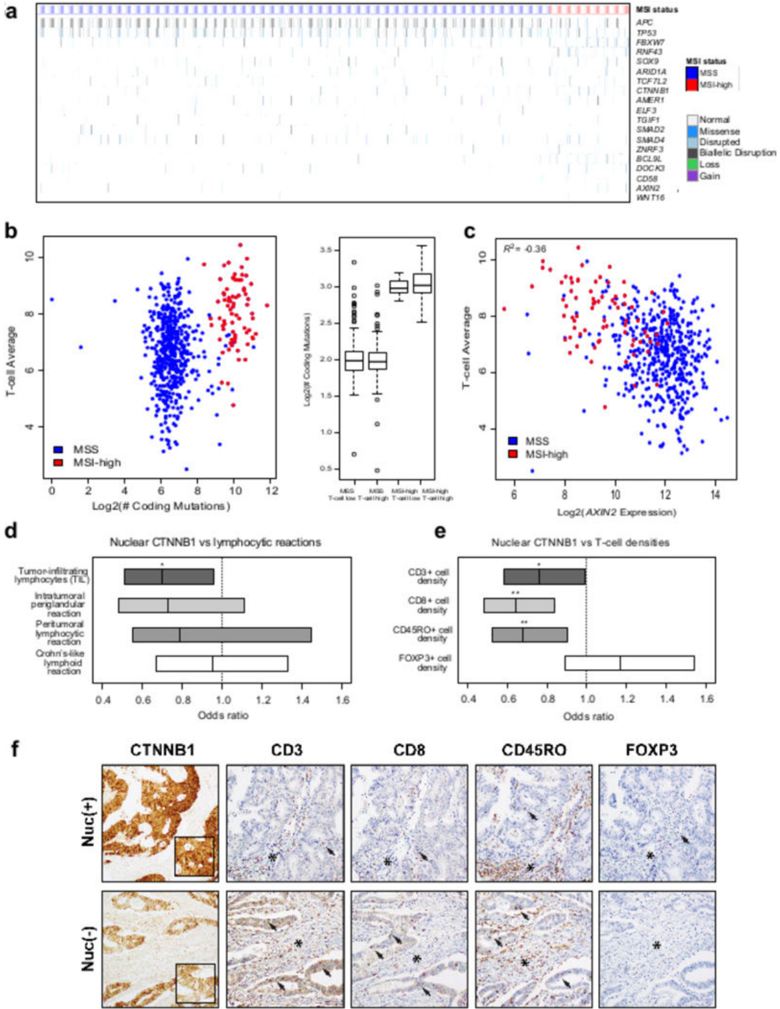
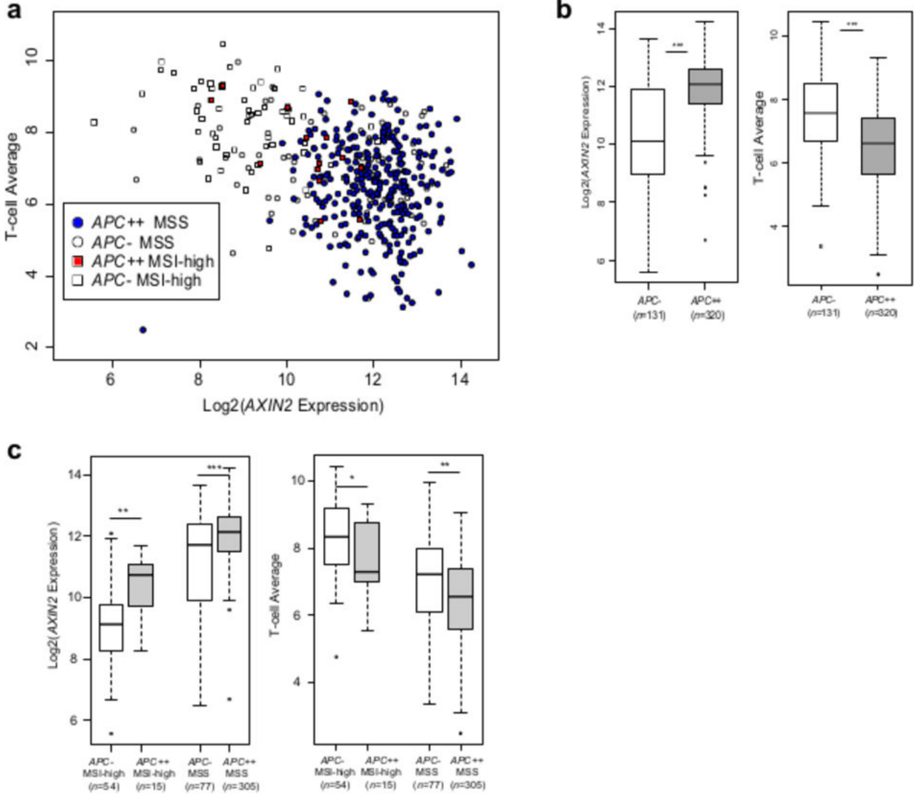
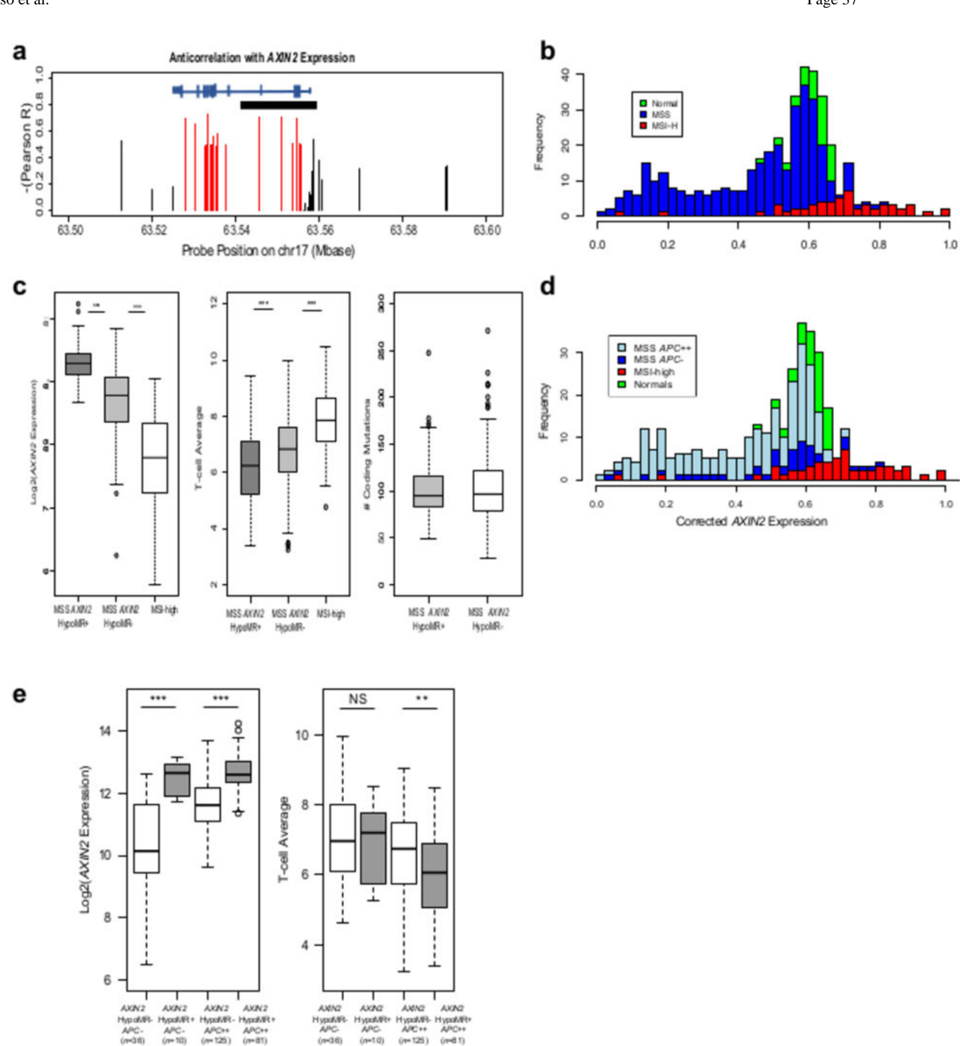
To understand the genetic drivers of immune recognition and evasion in colorectal cancer, we analyzed 1,211 colorectal cancer primary tumor samples, including 179 classified as microsatellite instability–high (MSI-high). This set includes The Cancer Genome Atlas colorectal cancer cohort of 592 samples, completed and analyzed here. MSI-high, a hypermutated, immunogenic subtype of colorectal cancer, had a high rate of significantly mutated genes in important immune-modulating pathways and in the antigen presentation machinery, including biallelic losses of B2M and HLA genes due to copy-number alterations and copy-neutral loss of heterozygosity. WNT/β-catenin signaling genes were significantly mutated in all colorectal cancer subtypes, and activated WNT/β-catenin signaling was correlated with the absence of T-cell infiltration. This large-scale genomic analysis of colorectal cancer demonstrates that MSI-high cases frequently undergo an immunoediting process that provides them with genetic events allowing immune escape despite high mutational load and frequent lymphocytic infiltration and, furthermore, that colorectal cancer tumors have genetic and methylation events associated with activated WNT signaling and T-cell exclusion. Significance: This multi-omic analysis of 1,211 colorectal cancer primary tumors reveals that it should be possible to better monitor resistance in the 15% of cases that respond to immune blockade therapy and also to use WNT signaling inhibitors to reverse immune exclusion in the 85% of cases that currently do not. Cancer Discov; 8(6); 730–49. ©2018 AACR. This article is highlighted in the In This Issue feature, p. 663
Overview
The claims and statistics of this paper haven’t been checked yet.
Free: it reads the open-access text and checks the first 5 claims that cite a source we can check. Create a free account to check every claim.
Integrity signals
Registry
Cites
Statistics
Figures

Verification
Claims the paper makes
The claims and statistics of this paper haven’t been checked yet.
Free: it reads the open-access text and checks the first 5 claims that cite a source we can check. Create a free account to check every claim.
Claims other papers make about this one
Each is checked against this paper’s own text: does it say what the citing paper says it does?
In the citing paper
“In primary CRC tumor samples, Wnt signaling reduced the frequency of tumor-infiltrating T cells, regardless of mutation load [196].”
From Drug Resistance in Colorectal Cancer: From Mechanism to Clinic (2022) · cites this paper as [196]
In the citing paper
“In addition, APC, as a gene that upregulates WNT signaling, is negatively correlated with the frequency of T cell infiltration [196,197,198].”
From Drug Resistance in Colorectal Cancer: From Mechanism to Clinic (2022) · cites this paper as [196]
Self-check
Percentages, sums and reported differences re-computed from the paper’s own numbers.
The self-check needs the paper’s full text.
Citations
Cites
Fast gapped-read alignment with Bowtie 2
Langmead, B., & Salzberg, S. L. (2012) · Nature Methods · doi:10.1038/nmeth.1923 · Cited by 56,400 · cited 1×
“org), using bowtie2 (90) to perform the realignment.”
MethodPD-1 and PD-L1 Immune Checkpoint Blockade to Treat Breast Cancer
Hartkopf, A. D., Taran, F.-A., Wallwiener, M., Walter, C. B., Krämer, B., Grischke, E.-M., & Brucker, S. Y. (2016) · Breast Care · doi:10.1159/000453569 · Cited by 30,845
The blockade of immune checkpoints in cancer immunotherapy
Pardoll, D. M. (2012) · Nature Reviews Cancer · doi:10.1038/nrc3239 · Cited by 13,838 · cited 1×
“A main mechanism by which cancers avoid immune attack is by triggering immune checkpoints that are inhibitory pathways crucial for limiting self-attack and minimizing collateral damage in normal tissues (70).”
BackgroundPD-1 Blockade in Tumors with Mismatch-Repair Deficiency
Le, D. T., Uram, J. N., Wang, H., Bartlett, B. R., Kemberling, H., Eyring, A. D., Skora, A. D., Luber, B. S., Azad, N. S., Laheru, D., et al. (2015) · New England Journal of Medicine · doi:10.1056/nejmoa1500596 · Cited by 9,377 · cited 3×
“We were particularly interested in applying this large multi-omic CRC cohort to understand drivers of immune infiltration, since recent advances in immunotherapy have necessitated a deeper consideration of the less frequent MSI-high CRC, which have been shown to respond to immune checkpoint blockade, while the much mo…”
BackgroundMethodThe cancer genome atlas pan-cancer analysis project
The Cancer Genome Atlas Research Network, Weinstein, J. N., Collisson, E. A., Mills, G. B., Shaw, K. R. M., Ozenberger, B. A., Ellrott, K., Shmulevich, I., Sander, C., & Stuart, J. M. (2013) · Nature Genetics · doi:10.1038/ng.2764 · Cited by 9,092 · cited 1×
“Precision medicine advances have been fueled by technological advances, such as targeted sequencing, and also by multi-omic sequencing efforts, such as The Cancer Genome Atlas (TCGA)(3), which are powered to provide guidance for targeting molecular observations in the form of estimates of the frequencies of drivers to…”
BackgroundComprehensive molecular characterization of human colon and rectal cancer
The Cancer Genome Atlas Network (2012) · Nature · doi:10.1038/nature11252 · Cited by 8,499
Mutational landscape determines sensitivity to PD-1 blockade in non–small cell lung cancer
Rizvi, N. A., Hellmann, M. D., Snyder, A., Kvistborg, P., Makarov, V., Havel, J. J., Lee, W., Yuan, J., Wong, P., Ho, T. S., et al. (2015) · Science · doi:10.1126/science.aaa1348 · Cited by 7,802
Mismatch repair deficiency predicts response of solid tumors to PD-1 blockade
Le, D. T., Durham, J. N., Smith, K. N., Wang, H., Bartlett, B. R., Aulakh, L. K., Lu, S., Kemberling, H., Wilt, C., Luber, B. S., et al. (2017) · Science · doi:10.1126/science.aan6733 · Cited by 6,645 · cited 4×
“We were particularly interested in applying this large multi-omic CRC cohort to understand drivers of immune infiltration, since recent advances in immunotherapy have necessitated a deeper consideration of the less frequent MSI-high CRC, which have been shown to respond to immune checkpoint blockade, while the much mo…”
BackgroundMethodInfluentialType, Density, and Location of Immune Cells Within Human Colorectal Tumors Predict Clinical Outcome
Galon, J., Costes, A., Sanchez-Cabo, F., Kirilovsky, A., Mlecnik, B., Lagorce-Pagès, C., Tosolini, M., Camus, M., Berger, A., Wind, P., et al. (2006) · Science · doi:10.1126/science.1129139 · Cited by 6,516 · cited 1×
“We denoted the average log-expression of twelve canonical T-cell-associated genes (CCL2, CCL3, CCL4, CXCL9, CXCL10, CD8A, HLA-DOB, HLA-DMB, HLA-DOA, GZMK, ICOS, and IRF1) as the “T-cell average” for each sample with expression data (45,92,93).”
BackgroundWnt/β-Catenin Signaling: Components, Mechanisms, and Diseases
MacDonald, B. T., Tamai, K., & He, X. (2009) · Developmental Cell · doi:10.1016/j.devcel.2009.06.016 · Cited by 5,583 · cited 1×
“We first considered biallelic disruptive mutations in APC, since APC loss results in increased nuclear CTNNB1 thereby driving expression of WNT target genes (68).”
Background
Cited by
Items 101–200 of 548
The Genomics of Colorectal Cancer in Populations with African and European Ancestry
Myer, P. A., Lee, J. K., Madison, R. W., Pradhan, K., Newberg, J. Y., Isasi, C. R., Klempner, S. J., Frampton, G. M., Ross, J. S., Venstrom, J. M., et al. (2022) · Cancer Discovery · doi:10.1158/2159-8290.cd-21-0813 · Cited by 94
Digestive cancers: mechanisms, therapeutics and management
Zhan, T., Betge, J., Schulte, N., Dreikhausen, L., Hirth, M., Li, M., Weidner, P., Leipertz, A., Teufel, A., & Ebert, M. P. A. (2025) · Signal Transduction and Targeted Therapy · doi:10.1038/s41392-024-02097-4 · Cited by 100
Yamamoto, H., & Imai, K. (2019) · Seminars in Oncology · doi:10.1053/j.seminoncol.2019.08.003 · Cited by 86
Dynamic single-cell RNA sequencing identifies immunotherapy persister cells following PD-1 blockade
Sehgal, K., Portell, A., Ivanova, E. V., Lizotte, P. H., Mahadevan, N. R., Greene, J. R., Vajdi, A., Gurjao, C., Teceno, T., Taus, L. J., et al. (2021) · Journal of Clinical Investigation · doi:10.1172/jci135038 · Cited by 74
Self-citationMHC/HLA Class I Loss in Cancer Cells
Garrido, F. (2019) · Advances in experimental medicine and biology · doi:10.1007/978-3-030-17864-2_2 · Cited by 86
Gunter, M. J., Alhomoud, S. J., Arnold, M., Brenner, H., Burn, J., Casey, G., Chan, A. T., Cross, A. J., Giovannucci, E. L., Hoover, R. N., et al. (2019) · Annals of Oncology · doi:10.1093/annonc/mdz044 · Cited by 81
Self-citationKleeman, S. O., Koelzer, V. H., Jones, H. J., Vazquez, E. G., Davis, H., East, J. E., Arnold, R., Koppens, M. A., Blake, A., Domingo, E., et al. (2020) · Gut · doi:10.1136/gutjnl-2019-319126 · Cited by 73
Role of Inflammation in the Development of Colorectal Cancer
Muthusami, S., Ramachandran, I. K., Babu, K. N., Krishnamoorthy, S., Guruswamy, A., Queimado, L., Chaudhuri, G., & Ramachandran, I. (2020) · Endocrine Metabolic & Immune Disorders - Drug Targets · doi:10.2174/1871530320666200909092908 · Cited by 88
Bu, M. T., Chandrasekhar, P., Ding, L., & Hugo, W. (2022) · Pharmacology & Therapeutics · doi:10.1016/j.pharmthera.2022.108211 · Cited by 84
“…through loss-of-function alterations in the JAK/STAT signaling pathway (Gao et al., 2016; Garcia-Diaz et al., 2017; Gettinger et al., 2017; Grasso et al., 2018, 2020; Kalbasi et al., 2020; Manguso et al., 2017; Pan et al., 2018; Patel et al., 2017; Sade-Feldman et al., 2017; Shin et al.,…”
BackgroundImmunotherapy for Microsatellite Stable Colorectal Cancers: Challenges and Novel Therapeutic Avenues
Şahin, İ. H., Ciombor, K. K., Diaz, L. A., Yu, J. B., & Kim, R. D. (2022) · American Society of Clinical Oncology Educational Book · doi:10.1200/edbk_349811 · Cited by 86
The impact of ARID1A mutation on molecular characteristics in colorectal cancer
Tokunaga, R., Xiu, J., Goldberg, R. M., Philip, P. A., Seeber, A., Battaglin, F., Arai, H., Lo, J. H., Naseem, M., Puccini, A., et al. (2020) · European Journal of Cancer · doi:10.1016/j.ejca.2020.09.006 · Cited by 76
Pavlovic, Z., Adams, J., Blazer, L. L., Gakhal, A. K., Jarvik, N., Steinhart, Z., Robitaille, M., Mascall, K. S., Pan, J., Angers, S., et al. (2018) · mAbs · doi:10.1080/19420862.2018.1515565 · Cited by 73
“Similarly, the realization that activation of Wnt-β -catenin signaling in tumor cells is associated with the absence of T cell infiltration 46,47 suggests important roles for this pathway in tumor immune evasion and the attractive possibility that targeting Wnt-FZD circuits within tumor cells could…”
BackgroundTherapeutic Targeting of the Colorectal Tumor Stroma
Fridman, W. H., Miller, I. S., Sautès‐Fridman, C., & Byrne, A. T. (2019) · Gastroenterology · doi:10.1053/j.gastro.2019.09.045 · Cited by 80
The Tumor Microenvironment in Colorectal Cancer Therapy
Pedrosa, L., Esposito, F., Thomson, T. M., & Maurel, J. (2019) · Cancers · doi:10.3390/cancers11081172 · Cited by 69
MHC Class I Deficiency in Solid Tumors and Therapeutic Strategies to Overcome It
Shklovskaya, E., & Rizos, H. (2021) · International Journal of Molecular Sciences · doi:10.3390/ijms22136741 · Cited by 78
WNT and β-Catenin in Cancer: Genes and Therapy
Jackstadt, R., Hodder, M. C., & Sansom, O. J. (2020) · Annual Review of Cancer Biology · doi:10.1146/annurev-cancerbio-030419-033628 · Cited by 64
Prognostic and Predictive Values of Mismatch Repair Deficiency in Non-Metastatic Colorectal Cancer
Jin, Z., & Sinicrope, F. A. (2021) · Cancers · doi:10.3390/cancers13020300 · Cited by 81
Cai, L., Chen, A., & Tang, D. (2024) · Immunology · doi:10.1111/imm.13785 · Cited by 96
“Therefore, MSS CRC patients are less sensitive to immune checkpoint inhibitor therapies, such as PD-1/PD-L1 inhibitors [17, 18].”
Amodio, V., Mauri, G., Reilly, N. M., Bianchi, A. S., Siena, S., Bardelli, A., & Germano, G. (2021) · Cancers · doi:10.3390/cancers13112638 · Cited by 74
Muto, S., Enta, A., Maruya, Y., Inomata, S., Yamaguchi, H., Mine, H., Takagi, H., Ozaki, Y., Watanabe, M., Inoue, T., et al. (2023) · Biomedicines · doi:10.3390/biomedicines11010190 · Cited by 73
Randrian, V., Evrard, C., & Tougeron, D. (2021) · Cancers · doi:10.3390/cancers13123063 · Cited by 65
circ5615 functions as a ceRNA to promote colorectal cancer progression by upregulating TNKS
Ma, Z., Han, C., Xia, W., Wang, S., Li, X., Fang, P., Yin, R. H., Xu, L., & Liu, Y. (2020) · Cell Death and Disease · doi:10.1038/s41419-020-2514-0 · Cited by 74
Shklovskaya, E., & Rizos, H. (2020) · International Journal of Molecular Sciences · doi:10.3390/ijms21197139 · Cited by 73
Immunotherapy for Colorectal Cancer: Mechanisms and Predictive Biomarkers
Carlsen, L., Huntington, K. E., & El‐Deiry, W. S. (2022) · Cancers · doi:10.3390/cancers14041028 · Cited by 74
Prognostic and Predictive Molecular Biomarkers in Advanced Colorectal Cancer
Martelli, V., Pastorino, A., & Sobrero, A. F. (2022) · Pharmacology & Therapeutics · doi:10.1016/j.pharmthera.2022.108239 · Cited by 73
Wang, W., Yuan, T., Ma, L., Zhu, Y., Bao, J., Zhao, X., Zhao, Y., Zong, Y., Zhang, Y., Yang, S., et al. (2022) · Advanced Science · doi:10.1002/advs.202105810 · Cited by 78
Huyghe, N. D., Benidovskaya, E., Stevens, P., & den Eynde, M. V. (2022) · Cancers · doi:10.3390/cancers14092241 · Cited by 69
Such, L., Zhao, F., Liu, D. H., Thier, B., Le‐Trilling, V. T. K., Sucker, A., Coch, C., Pieper, N., Howe, S., Bhat, H., et al. (2020) · Journal of Clinical Investigation · doi:10.1172/jci131572 · Cited by 70
Sahu, A., Köse, K., Kraehenbuehl, L., Byers, C., Holland, A., Tembo, T., Santella, A., Alfonso, A., Li, M., Cordova, M. A., et al. (2022) · Nature Communications · doi:10.1038/s41467-022-32738-7 · Cited by 74
Neoadjuvant immunotherapy for colorectal cancer: Right regimens, right patients, right directions?
Zhu, J., Lian, J., Xu, B., Pang, X., Ji, S., Zhao, Y., & Lu, H. (2023) · Frontiers in Immunology · doi:10.3389/fimmu.2023.1120684 · Cited by 74
Kim, J. H., Kim, S. Y., Baek, J. Y., Jun, Y., Ahn, J. B., Kim, H. S., Lee, K., Kim, J., Kim, T., Chang, W. J., et al. (2020) · Cancer Research and Treatment · doi:10.4143/crt.2020.218 · Cited by 84
Self-citationBergholz, J. S., Wang, Q., Kabraji, S. K., & Zhao, J. J. (2020) · Clinical Cancer Research · doi:10.1158/1078-0432.ccr-19-2300 · Cited by 62
Ros, J., Balconi, F., Baraibar, I., Gonzalez, N. S., Salvà, F., Tabernero, J. M., & Élez, E. (2023) · Frontiers in Oncology · doi:10.3389/fonc.2023.1112276 · Cited by 74
Current status and perspectives of immune checkpoint inhibitors for colorectal cancer
Hirano, H., Takashima, A., Hamaguchi, T., Shida, D., & Kanemitsu, Y. (2020) · Japanese Journal of Clinical Oncology · doi:10.1093/jjco/hyaa200 · Cited by 67
DNA Mismatch Repair Deficiency and Immune Checkpoint Inhibitors in Gastrointestinal Cancers
Bañobre, J. R., & Goel, A. (2018) · Gastroenterology · doi:10.1053/j.gastro.2018.11.071 · Cited by 62
Prognostic Factors for Checkpoint Inhibitor Based Immunotherapy: An Update With New Evidences
Yan, X., Zhang, S., Deng, Y., Wang, P., Hou, Q., & Xu, H. (2018) · Frontiers in Pharmacology · doi:10.3389/fphar.2018.01050 · Cited by 57
Kawazu, M., Ueno, T., Saeki, K., Sax, N., Togashi, Y., Kanaseki, T., Chida, K., Kishigami, F., Sato, K., Kojima, S., et al. (2021) · Gastroenterology · doi:10.1053/j.gastro.2021.10.010 · Cited by 61
Immunosuppressive niche engineering at the onset of human colorectal cancer
Gatenbee, C., Baker, A., Schenck, R. O., Strobl, M. A. R., West, J., Neves, M. P., Hasan, S. Y., Lakatos, E., Martinez, P., Cross, W. C. H., et al. (2022) · Nature Communications · doi:10.1038/s41467-022-29027-8 · Cited by 58
The Tumor Microenvironment of Colorectal Cancer Metastases: Opportunities in Cancer Immunotherapy
Kamal, Y., Schmit, S. L., Frost, H. R., & Amos, C. I. (2020) · Immunotherapy · doi:10.2217/imt-2020-0026 · Cited by 61
Lee, J. J., & Chu, E. (2018) · Clinical Colorectal Cancer · doi:10.1016/j.clcc.2018.06.004 · Cited by 58
“This signaling pathway is also dysregulated in CRC, and may play a role as an immune escape mechanism in CRC.(33,57) On this point, Grasso et al showed that activation of WNT/b-catenin pathway closely correlated with decreased intratumoral CD8þ T cell infiltration in CRC tumors.”
BackgroundInfluentialGrasso, C. S., Tsoi, J., Onyshchenko, M. I., Abril-Rodríguez, G., Ross‐Macdonald, P., Wind‐Rotolo, M., Champhekar, A. S., Medina, E., Torrejon, D. Y., Shin, D. S., et al. (2020) · Cancer Cell · doi:10.1016/j.ccell.2020.11.015 · Cited by 63
Self-citationGeng, Q., Li, L., Shen, Z., Zheng, Y., Wang, L., Xue, R., Xue, W., Peng, M., & Zhao, J. (2023) · British Journal of Cancer · doi:10.1038/s41416-022-02132-7 · Cited by 59
Targeting Myc-driven stress addiction in colorectal cancer
Saeed, H., Leibowitz, B. J., Zhang, L., & Yu, J. (2023) · Drug Resistance Updates · doi:10.1016/j.drup.2023.100963 · Cited by 62
Wang, Q., Yu, M., & Zhang, S. (2025) · Frontiers in Immunology · doi:10.3389/fimmu.2024.1440830 · Cited by 68
Self-citationOvercoming resistance to anti-PD1 and anti-PD-L1 treatment in gastrointestinal malignancies
Puccini, A., Battaglin, F., Iaia, M. L., Lenz, H., & Salem, M. E. (2020) · Journal for ImmunoTherapy of Cancer · doi:10.1136/jitc-2019-000404 · Cited by 55
Unraveling resistance to immunotherapy in MSI-high colorectal cancer
Heregger, R., Huemer, F., Steiner, M., Gonzalez-Martinez, A., Greil, R., & Weiss, L. (2023) · Cancers · doi:10.3390/cancers15205090 · Cited by 52
“However, the elevated mutation rate in these genes might be attributed to the inherent hypermutational status of dMMR/MSI-H cancer [55,56].”
BackgroundImmunotherapy of MSI Cancer: Facts and Hopes
Wilbur, H. C., Le, D. T., & Agarwal, P. (2023) · Clinical Cancer Research · doi:10.1158/1078-0432.ccr-21-1935 · Cited by 58
Carmona-Rodríguez, L., Martínez-Rey, D., Fernández-Aceñero, M. J., González-Martín, A., Paz-Cabezas, M., Rodríguez-Rodríguez, N., Pérez-Villamil, B., Sáez, M. E., Díaz-Rubio, E., Mira, E., et al. (2020) · Journal for ImmunoTherapy of Cancer · doi:10.1136/jitc-2019-000432 · Cited by 51
Ros, J., Baraibar, I., Gonzalez, N. S., Rodríguez-Castells, M., Salvà, F., Tabernero, J. M., & Élez, E. (2023) · Cancers · doi:10.3390/cancers15174245 · Cited by 64
Kong, S., Zhang, J., Wang, L., Li, W., Guo, H., Weng, Q., He, Q., Lou, H., Ding, L., & Yang, B. (2024) · Cancer Letters · doi:10.1016/j.canlet.2024.217432 · Cited by 71
Kleeman, S. O., & Leedham, S. J. (2020) · Cancers · doi:10.3390/cancers12113355 · Cited by 62
Zhang, H., Bi, Y., Wei, Y., Liu, J., Kuerban, K., & Ye, L. (2021) · Molecular Cancer Therapeutics · doi:10.1158/1535-7163.mct-20-0825 · Cited by 52
Salem, M. E., Battaglin, F., Goldberg, R. M., Puccini, A., Shields, A. F., Arguello, D., Korn, W. M., Marshall, J. L., Grothey, A. F., & Lenz, H. (2019) · The Oncologist · doi:10.1634/theoncologist.2019-0552 · Cited by 52
Väyrynen, J. P., Haruki, K., Lau, M. C., Väyrynen, S. A., Ugai, T., Akimoto, N., Zhong, R., Zhao, M. M., Costa, A. D., Borowsky, J., et al. (2022) · Cancer Immunology Research · doi:10.1158/2326-6066.cir-21-0772 · Cited by 54
Self-citationTargeting the Metabolic Rewiring in Pancreatic Cancer and Its Tumor Microenvironment
Yamamoto, K., Iwadate, D., Kato, H., Nakai, Y., Tateishi, K., & Fujishiro, M. (2022) · Cancers · doi:10.3390/cancers14184351 · Cited by 53
Recent advances in CAR-T cells therapy for colorectal cancer
Qin, X., Wu, F., Chen, C., & Li, Q. (2022) · Frontiers in Immunology · doi:10.3389/fimmu.2022.904137 · Cited by 53
Kavun, A., Veselovsky, E., Lebedeva, A., Belova, E., Kuznetsova, O. A., Yakushina, V. D., Grigoreva, T. V., Mileyko, V., Fedyanin, M. Y., & Ivanov, M. V. (2023) · Cancers · doi:10.3390/cancers15082288 · Cited by 62
Li, X., Wang, Y., Zhai, Z., Mao, Q., Chen, D., Xiao, L., Xu, S., Wu, Q., Chen, K., Hou, Q., et al. (2023) · Journal of Experimental & Clinical Cancer Research · doi:10.1186/s13046-023-02730-0 · Cited by 52
“More mutations might offer more opportunities for immunity against cancer [46], thus underscoring the better prognosis of NII.clusterA-PNI and No PNI patients than NII.clusterB-PNI patients.”
BackgroundComprehensive review of the resistance mechanisms of colorectal cancer classified by therapy type
Oh, J. M., Kim, S. W., Tsung, C., Kent, E. W., Jain, A., Ruff, S. M., & Zhang, H. (2025) · Frontiers in Immunology · doi:10.3389/fimmu.2025.1571731 · Cited by 56
“In agreeance with this fi nding, a large-scale genomic analysis revealed that B2M and HLA mutations were prevalent in MSI-high CRC primary tumor samples, providing a means of immunotherapeutic resistance (92).”
Why is immunotherapy effective (or not) in patients with MSI/MMRD tumors?
Nebot-Bral, L., Coutzac, C., Kannouche, P. L., & Chaput, N. (2018) · Bulletin du Cancer · doi:10.1016/j.bulcan.2018.08.007 · Cited by 52
Zheng, Y., Huang, G., Silva, T. C., Yang, Q., Jiang, Y., Koeffler, H. P., Lin, D., & Berman, B. P. (2021) · Nature Communications · doi:10.1038/s41467-021-22720-0 · Cited by 55
β-Catenin inhibition shapes tumor immunity and synergizes with immunotherapy in colorectal cancer
Wang, C., Yan, J., Yin, P., Gui, L., Ji, L., Ma, B., & Gao, W.-Q. (2020) · OncoImmunology · doi:10.1080/2162402x.2020.1809947 · Cited by 46
“These findings also contribute to the explanations for the correlation of active Wnt/β-catenin signaling with T cell exclusion observed in the tumor samples of colorectal cancer patients.(12) In the syngeneic model of colorectal cancer, β-catenin inhibition has only an impact on the infiltration of T and NK cells, but…”
BackgroundGharib, E., & Robichaud, G. A. (2024) · International Journal of Molecular Sciences · doi:10.3390/ijms25179463 · Cited by 65
Wedding of Molecular Alterations and Immune Checkpoint Blockade: Genomics as a Matchmaker
Fountzilas, E., Kurzrock, R., Vo, H. H., & Tsimberidou, A. M. (2021) · JNCI Journal of the National Cancer Institute · doi:10.1093/jnci/djab067 · Cited by 50
Väyrynen, J. P., Haruki, K., Väyrynen, S. A., Lau, M. C., Costa, A. D., Borowsky, J., Zhao, M. M., Ugai, T., Kishikawa, J., Akimoto, N., et al. (2021) · Journal for ImmunoTherapy of Cancer · doi:10.1136/jitc-2020-002297 · Cited by 55
Self-citationAgnostic-Histology Approval of New Drugs in Oncology: Are We Already There?
Hierro, C., Matos, I. G., Martín-Liberal, J., de Olza, M. O., & Garralda, E. (2019) · Clinical Cancer Research · doi:10.1158/1078-0432.ccr-18-3694 · Cited by 49
Chehrazi‐Raffle, A., Dorff, T. B., Pal, S. K., & Lyou, Y. (2021) · Cancers · doi:10.3390/cancers13040889 · Cited by 46
Recent advances in immunotherapies: from infection and autoimmunity, to cancer, and back again
Bucktrout, S. L., Bluestone, J. A., & Ramsdell, F. (2018) · Genome Medicine · doi:10.1186/s13073-018-0588-4 · Cited by 50
Cao, Q., Zhao, M., Su, Y., Liu, S., Lin, Y., Da, H., Yue, C., Liu, Y., Jing, D., Zhao, Q., et al. (2024) · Cancer Research · doi:10.1158/0008-5472.can-22-3705 · Cited by 55
Genomic instability as a driver and suppressor of anti-tumor immunity
Requesens, M., Foijer, F., Nijman, H. W., & de Bruyn, M. (2024) · Frontiers in Immunology · doi:10.3389/fimmu.2024.1462496 · Cited by 51
Merhi, M., Ahmad, F., Taib, N., Inchakalody, V. P., Shahab Uddin, M. S., Shablak, A., & Dermime, S. (2023) · Seminars in Cancer Biology · doi:10.1016/j.semcancer.2023.01.001 · Cited by 42
“While the TME of dMMR-MSI-H shows a very high tumor mutation burden (TMB), and a remarkably high level of immune cell infiltration, the microenvironment of the pMMR-MSI-L, on the other hand, is associated with Wnt signaling upregulation and poor antigenicity due to low TMB [233 – 235].”
Tumor-agnostic drug development in dMMR/MSI-H solid tumors
Bhamidipati, D., & Subbiah, V. (2023) · Trends in cancer · doi:10.1016/j.trecan.2023.07.002 · Cited by 50
Antitumor Immune Responses in B2M -Deficient Cancers
Torrejon, D. Y., Galvez, M., Abril-Rodríguez, G., Campbell, K. M., Medina, E., Vega-Crespo, A., Kalbasi, A. K., Comín-Anduix, B., & Ribas, A. (2023) · Cancer Immunology Research · doi:10.1158/2326-6066.cir-23-0139 · Cited by 49
Self-citationXie, Q., Liu, X., Liu, R., Pan, J., & Liang, J. (2024) · Molecular Cancer · doi:10.1186/s12943-024-02166-w · Cited by 49
“…immunoregulatory cytokines in TME (TAP1, LMP2 and tapasin) deficiencies in KRAS -mutated CRC, suggesting downregulated expression of MHC class I APM component mediates immune escape in KRAS mutations in CRC [36] and Grasso et al. have found MSI-high CRC displayed B2M and HLA genes deletion [37].”
Napolitano, S., Matrone, N., Muddassir, A. L., Martini, G., Sorokin, A., De Falco, V., Giunta, E. F., Ciardiello, D., Martinelli, E., Belli, V., et al. (2019) · Journal of Experimental & Clinical Cancer Research · doi:10.1186/s13046-019-1497-0 · Cited by 40
In Vivo Syngeneic Tumor Models with Acquired Resistance to Anti–PD-1/PD-L1 Therapies
Denis, M., Grasselly, C., Choffour, P., Wierinckx, A., Mathé, D., Chettab, K., Tourette, A., Talhi, N., Bourguignon, A., Birzele, F., et al. (2022) · Cancer Immunology Research · doi:10.1158/2326-6066.cir-21-0802 · Cited by 50
“Knowledge regarding tumor cell molecular alterations associated with anti – PD-1 acquired resistance remains limited, with a major focus on the role of tumor mutation burden (TMB) and neoantigenic depletion (45).”
BackgroundImmunotherapy Targeting PD-1/PD-L1 in Early-Stage Triple-Negative Breast Cancer
Yang, T.-L., Li, W., Huang, T., & Zhou, J. (2023) · Journal of Personalized Medicine · doi:10.3390/jpm13030526 · Cited by 50
Haruki, K., Kosumi, K., Li, P., Arima, K., Väyrynen, J. P., Lau, M. C., Twombly, T. S., Hamada, T., Glickman, J. N., Fujiyoshi, K., et al. (2020) · British Journal of Cancer · doi:10.1038/s41416-020-0780-3 · Cited by 41
Self-citationRelecom, A., Merhi, M., Inchakalody, V. P., Shahab Uddin, M. S., Rinchai, D., Bedognetti, D., & Dermime, S. (2021) · Journal of Experimental & Clinical Cancer Research · doi:10.1186/s13046-021-01872-3 · Cited by 44
DNA mismatch repair in cancer immunotherapy
Guan, J., & Li, G. (2023) · NAR Cancer · doi:10.1093/narcan/zcad031 · Cited by 44
Targeting the tumor microenvironment to overcome immune checkpoint blockade therapy resistance
Li, Y., Liu, J., Gao, L., Liu, Y., Meng, F., Li, X., & Qin, F. X.-F. (2019) · Immunology Letters · doi:10.1016/j.imlet.2019.03.006 · Cited by 44
Colon cancer and immunotherapy—can we go beyond microsatellite instability?
Breakstone, R. (2021) · Translational Gastroenterology and Hepatology · doi:10.21037/tgh.2020.03.08 · Cited by 42
Fang, X., Zhu, N., Zhong, C., Wang, L., Li, J., Weng, S., Hu, H., Dong, C., Li, D., Song, Y., et al. (2023) · EClinicalMedicine · doi:10.1016/j.eclinm.2023.102123 · Cited by 38
Cho, E. J., Kim, M., Jo, D., Kim, J., Oh, J., Chung, H. C., Lee, S.-H., Kim, D., Chun, S., Kim, J., et al. (2021) · Journal of Experimental & Clinical Cancer Research · doi:10.1186/s13046-021-02034-1 · Cited by 42
The role of neoantigens in tumor immunotherapy
Shang, S., Zhao, Y., Qian, K., Qin, Y., Zhang, X., Li, T., Shan, L., Wei, M., Xi, J., & Tang, B. (2022) · Biomedicine & Pharmacotherapy · doi:10.1016/j.biopha.2022.113118 · Cited by 39
Jiao, X., Wei, X. L., Li, S., Liu, C. X., Chen, H., Gong, J., Li, J., Zhang, X., Wang, X., Peng, Z., et al. (2021) · npj Precision Oncology · doi:10.1038/s41698-021-00172-5 · Cited by 39
Li, L., Deng, L., Meng, X., Gu, C., Li, M., Li, K., Zhang, X., Meng, Y. F., Xu, W., Zhao, L., et al. (2020) · Translational Oncology · doi:10.1016/j.tranon.2020.100916 · Cited by 34
Immunotherapy for the treatment of colorectal cancer
Lumish, M. A., & Cercek, A. (2021) · Journal of Surgical Oncology · doi:10.1002/jso.26357 · Cited by 38
Targeting Wnt Signaling in the Tumor Immune Microenvironment to Enhancing EpCAM CAR T-Cell therapy
Li, W., Zhou, Y., Wu, Z., Shi, Y., Tian, E., Zhu, Y., Wang, T., Dou, W., Meng, X., Chen, M., et al. (2021) · Frontiers in Pharmacology · doi:10.3389/fphar.2021.724306 · Cited by 36
Advances in immunotherapy for MMR proficient colorectal cancer
Lote, H., Starling, N., Pihlak, R., & Gerlinger, M. (2022) · Cancer Treatment Reviews · doi:10.1016/j.ctrv.2022.102480 · Cited by 39
Strategies for Heating Up Cold Tumors to Boost Immunotherapies
Zabransky, D. J., Yarchoan, M. M., & Jaffee, E. M. (2023) · Annual Review of Cancer Biology · doi:10.1146/annurev-cancerbio-061421-040258 · Cited by 38
Wang, Q., Shen, X., Chen, G., & Du, J. (2023) · International Journal of Cancer · doi:10.1002/ijc.34464 · Cited by 38
Paschen, A., Melero, I., & Ribas, A. (2021) · Annual Review of Cancer Biology · doi:10.1146/annurev-cancerbio-070220-111016 · Cited by 37
Self-citationGlaire, M. A., Ryan, N. A. J., Ijsselsteijn, M. E., Kedzierska, K., Obolenski, S., Ali, R., Crosbie, E. J., Bosse, T., de Miranda, N. F. C. C., & Church, D. N. (2022) · The Journal of Pathology · doi:10.1002/path.5894 · Cited by 36
Kim, S. Y., & Kim, T. W. (2020) · ESMO Open · doi:10.1136/esmoopen-2019-000634 · Cited by 35
Krieg, C., Weber, L. M., Fosso, B., Marzano, M., Hardiman, G., Olcina, M. M., Domingo, E., Aidy, S. E., Mallah, K., Robinson, M. D., et al. (2022) · Journal for ImmunoTherapy of Cancer · doi:10.1136/jitc-2022-004717 · Cited by 30
“72 The finding that immune responses can both promote the tumor development and be exploited to increase the efficacy of current anticancer treatments was also emphasized in a recently described dual oncogene mouse model of CRC.”
Ree, A. H., Benth, J. Š., Hamre, H. M., Kersten, C., Hofsli, E., Guren, M. G., Sørbye, H., Johansen, C., Negård, A., Bjørnetrø, T., et al. (2024) · British Journal of Cancer · doi:10.1038/s41416-024-02696-6 · Cited by 37
“ICB is, however, considered inef fi cacious for the majority of patients presenting MSS/MMR-pro fi cient CRC, which causes low tumour antigenicity [6] and unlike the majority of metastatic microsatellite-instable/ MMR-de fi cient CRC cases [2], often co-exists with high RAS/BRAF - driven oncogenic…”
BackgroundThe Emerging Role of Checkpoint Inhibition in Microsatellite Stable Colorectal Cancer
Hermel, D. J., & Sigal, D. S. (2019) · Journal of Personalized Medicine · doi:10.3390/jpm9010005 · Cited by 35
Keshinro, A. O., Vanderbilt, C., Kim, J. K., Fırat, C., Chen, C., Yaeger, R. D., Ganesh, K., Segal, N. H., Gönen, M., Shia, J., et al. (2021) · JCO Precision Oncology · doi:10.1200/po.20.00456 · Cited by 39
Zhao, L.-P., Hu, J.-H., Hu, D., Wang, H., Huang, C.-G., Luo, R., Zhou, Z.-H., Huang, X., Xie, T., & Lou, J.-S. (2022) · Biomedicine & Pharmacotherapy · doi:10.1016/j.biopha.2022.112949 · Cited by 37
Metadata
- Authors
- Grasso, C. S., Giannakis, M., Wells, D. K., Hamada, T., Mu, X. J., Quist, M., Nowak, J. A., Nishihara, R., Qian, Z. R., Inamura, K., Morikawa, T., Nosho, K., Abril-Rodriguez, G., Connolly, C., Escuin-Ordinas, H., Geybels, M. S., Grady, W. M., Hsu, L., Hu-Lieskovan, S., Huyghe, J. R., Kim, Y. J., Krystofinski, P., Leiserson, M. D. M., Montoya, D. J., Nadel, B. B., Pellegrini, M., Pritchard, C. C., Puig-Saus, C., Quist, E. H., Raphael, B. J., Salipante, S. J., Shin, D. S., Shinbrot, E., Shirts, B., Shukla, S., Stanford, J. L., Sun, W., Tsoi, J., Upfill-Brown, A., Wheeler, D. A., Wu, C. J., Yu, M., Zaidi, S. H., Zaretsky, J. M., Gabriel, S. B., Lander, E. S., Garraway, L. A., Hudson, T. J., Fuchs, C. S., Ribas, A., Ogino, S., & Peters, U.
- Affiliations
- University of California, Los Angeles (US)
- Broad Institute (US)
- Parker Institute for Cancer Immunotherapy (US)
- Dana-Farber Cancer Institute (US)
- Brigham and Women's Hospital (US)
- Harvard University (US)
- 1Department of Medicine, Division of Hematology-Oncology, University of California, Los Angeles, and the Jonsson Comprehensive Cancer Center, Los Angeles, California.
- Fred Hutch Cancer Center (US)
- University of Washington (US)
- Brown University (US)
- 13Department of Computer Science and Center for Computational Molecular Biology, Brown University, Providence, Rhode Island.
- Baylor College of Medicine (US)
- Ontario Institute for Cancer Research (CA)
- Corresponding author
- Grasso, Catherine S.
- ORCID
- Grasso, Catherine S.
- Giannakis, Marios
- Wells, Daniel K.
- Hamada, Tsuyoshi
- Mu, Xinmeng Jasmine
- Nowak, Jonathan A.
- Nishihara, Reiko
- Qian, Zhi Rong
- Inamura, Kentaro
- Morikawa, Teppei
- Connolly, Charles
- Escuin-Ordinas, Helena
- Grady, William M.
- Hsu, Li
- Huyghe, Jeroen R.
- Kim, Yeon Joo
- Krystofinski, Paige
- Leiserson, Mark D.M.
- Montoya, Dennis J.
- Nadel, Brian B.
- Pellegrini, Matteo
- Pritchard, Colin C.
- Puig-Saus, Cristina
- Salipante, Stephen J.
- Shin, Daniel Sanghoon
- Shinbrot, Eve
- Shirts, Brian
- Shukla, Sachet
- Stanford, Janet L.
- Sun, Wei
- Tsoi, Jennifer
- Upfill-Brown, Alexander
- Wheeler, David A.
- Wu, Catherine J.
- Yu, Ming
- Zaidi, Syed H.
- Zaretsky, Jesse M.
- Gabriel, Stacey B.
- Lander, Eric S.
- Garraway, Levi A.
- Hudson, Thomas J.
- Fuchs, Charles S.
- Ribas, Antoni
- Ogino, Shuji
- Peters, Ulrike
- Venue
- Cancer Discovery
- Published
- 2018-05-31
- Volume
- 8
- Issue
- 6
- Pages
- 730-749
- ISSN
- 2159-8274 (ISSN-L)
- 2159-8290
- PMC
- PMC5984687
- OpenAlex
- W2793126529
- Cited by
- 535
- References
- 103
- Citations by year
- 2026: 47 · 2025: 42 · 2024: 49 · 2023: 73 · 2022: 83 · 2021: 80 · 2020: 76 · 2019: 58 · 2018: 25
- FWCI
- 45.45
- Type
- journal article
- Language
- en
- Open access
- hybrid
- doi.org
- Licence
- cc-by
- Locations
- Cancer Discovery (publishedVersion, cc-by)
- PubMed (publishedVersion)
- PubMed Central (acceptedVersion)
- DSpace@MIT (Massachusetts Institute of Technology) (submittedVersion, cc-by-nc-sa)
- HAL (submittedVersion)
- eScholarship (California Digital Library) (submittedVersion)
- Funders
- HHS | National Institutes of Health (NIH) (U01 CA137088, K07 CA190673, 1R01CA194663-01, R35 CA197663, P01 CA168585, KL2 TR001100, U54 HG003067, 4T32CA009120-40, P01 CA87969, UM1 CA186107, P01 CA55075, UM1 CA167552, P50 CA127003, R35 CA197735, R01 CA151993)
- American Association for Cancer Research (AACR) (SU2C-AACR-DT22-17)
- HHS | NIH | National Cancer Institute (NCI) (5T32LM012424-03)
- HHS | NIH | National Institute of Arthritis and Musculoskeletal and Skin Diseases (NIAMS) (3P50AR063020-03S1)
- Dana-Farber/Harvard Cancer Center (DF/HCC) (Nodal Award)
- American Society of Clinical Oncology (ASCO) (Career Development Award)
- Topics
- Health Sciences › Medicine › Pathology and Forensic Medicine › Genetic factors in colorectal cancer
- Health Sciences › Medicine › Oncology › Cancer Immunotherapy and Biomarkers
- Life Sciences › Biochemistry, Genetics and Molecular Biology › Cancer Research › Cancer Genomics and Diagnostics
- Keywords
- colorectal cancer, immune evasion, microsatellite instability-high, Wnt/β-catenin signaling, T-cell exclusion, immunoediting, antigen presentation, beta2-microglobulin, HLA, copy-neutral loss of heterozygosity, copy number alterations, DNA methylation, immune checkpoint inhibitor resistance, tumor mutational burden, T cell infiltration
- MeSH terms
- beta 2-Microglobulin, HLA Antigens, Humans, Colorectal Neoplasms, Germ-Line Mutation, Tumor Escape, DNA Methylation, Loss of Heterozygosity, Microsatellite Instability, DNA Copy Number Variations, Wnt Signaling Pathway
About these checks
Registry, retraction, Cites and statistics results are computed, not judged, with one exception: a printed reference that no index lists is read once by a model before it counts as a citation error. Claims are extracted by a model and kept only when their quote appears verbatim in the text; each cited source is then checked, with a model’s help, for whether it says what the claim relies on. Those verdicts can be wrong — read the claim’s quote and the cited source before relying on one.
Statistics and arithmetic are recomputed, not judged.
Confidence bands are shown only for fields calibrated on our annotated test set. None is calibrated yet, so no band is shown.
What counts as a claim ›How we measure confidence ›How we check this ›
Are you an author, or do you see a problem with this page? Request a review
Data sources
Bibliographic data: Semantic Scholar, OpenAlex, Crossref.
Contains information from the Semantic Scholar Academic Graph Datasets, made available under the ODC Attribution License (ODC-BY 1.0).
Semantic Scholar’s data is described in: Kinney, R., et al. (2023). The Semantic Scholar Open Data Platform. arXiv:2301.10140.
