

Genetic Mechanisms of Immune Evasion in Colorectal Cancer
Open accessPublished version of a preprint
The DOI matches its Crossref record; 100 of the 103 references it cites were found in a registry or an index.
Abstract
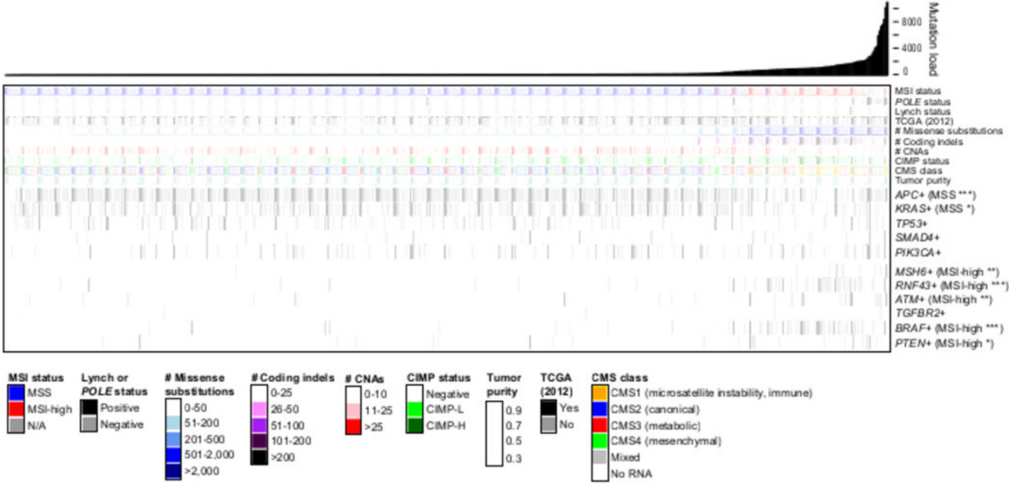
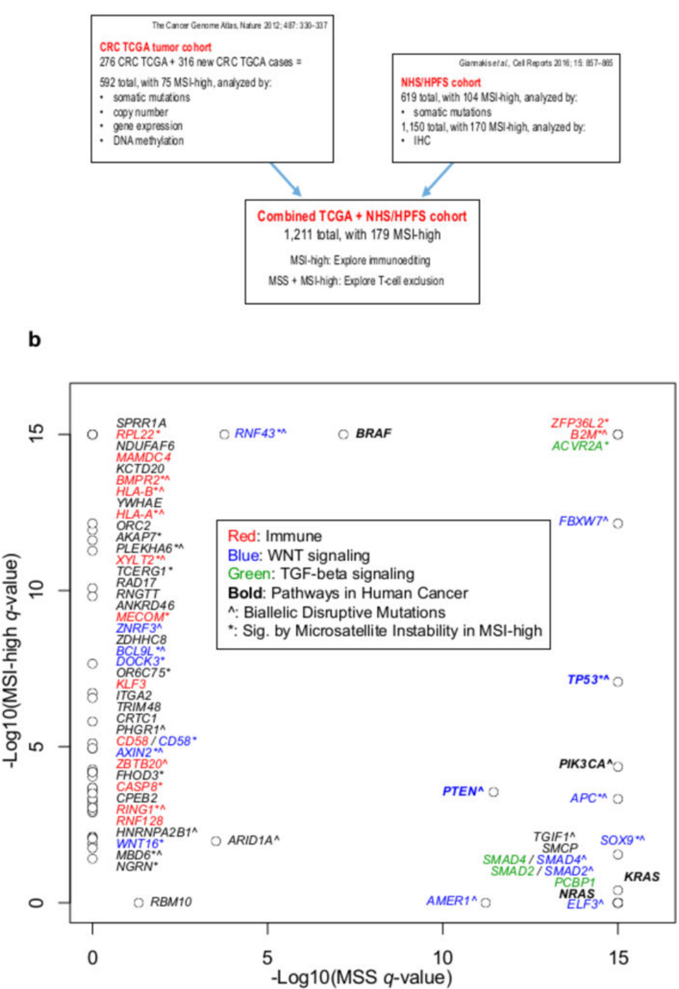
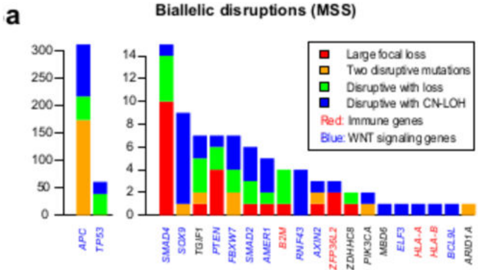
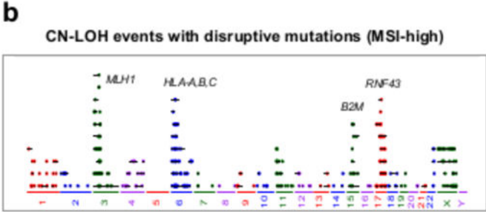
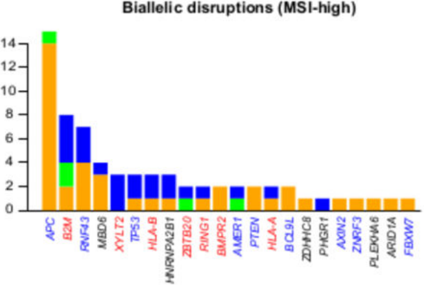
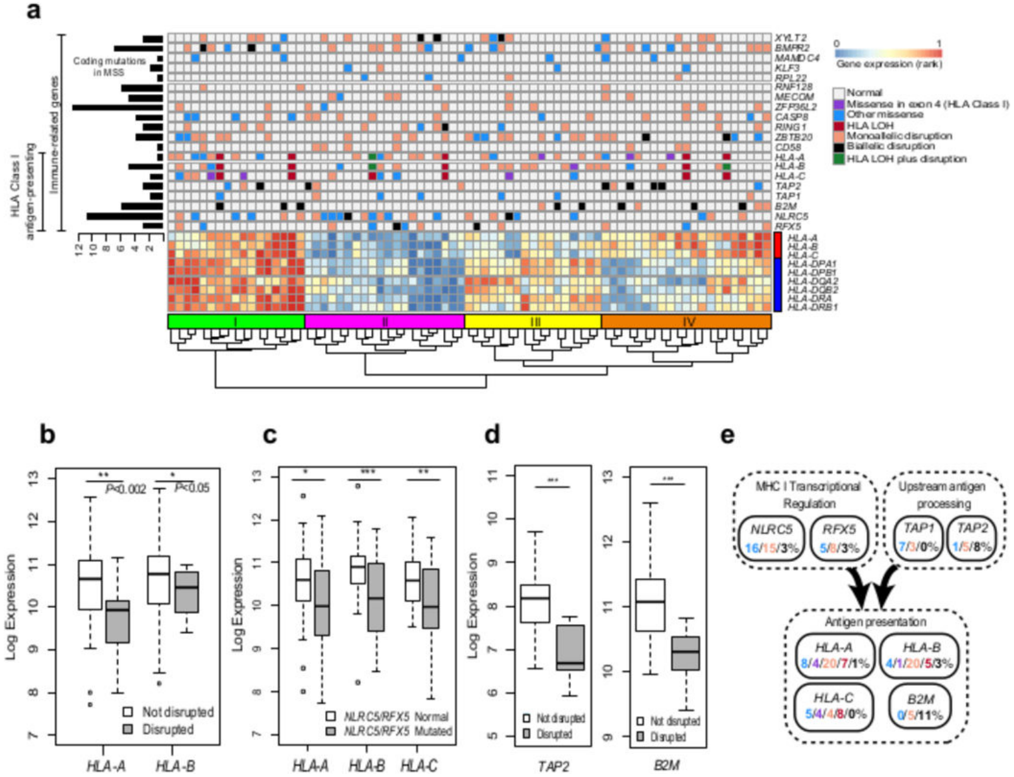
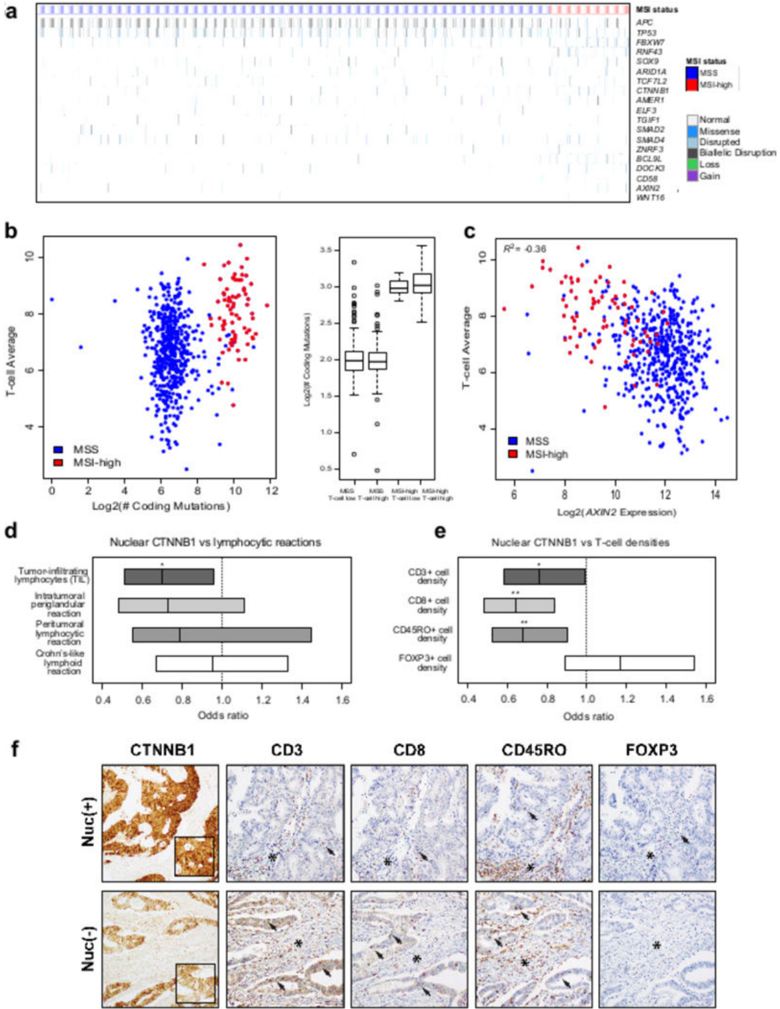
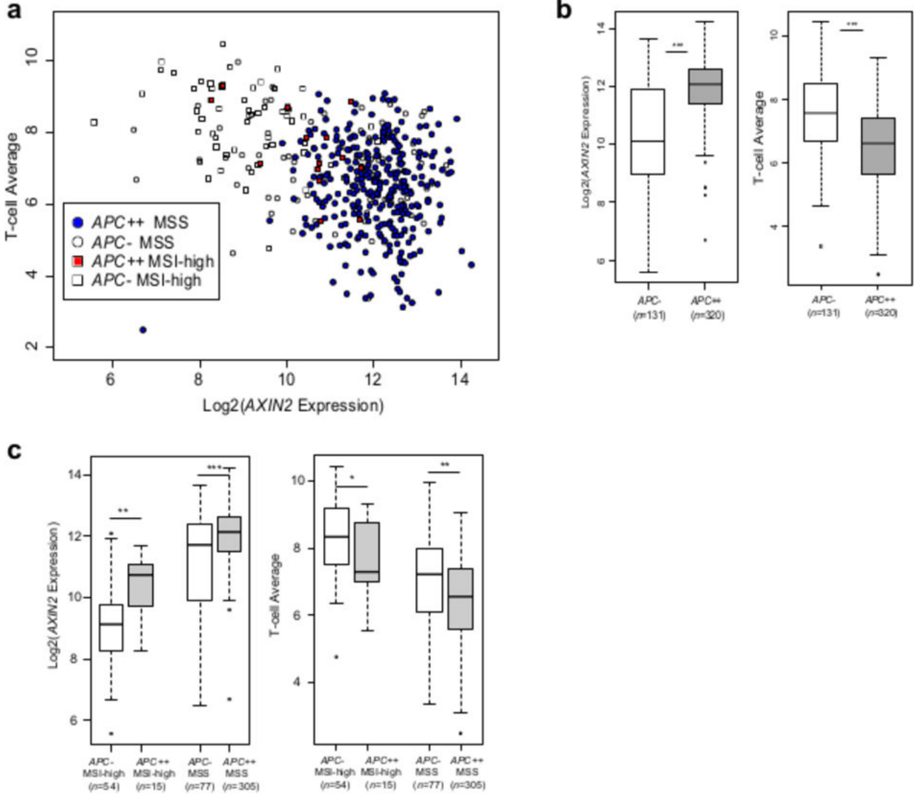
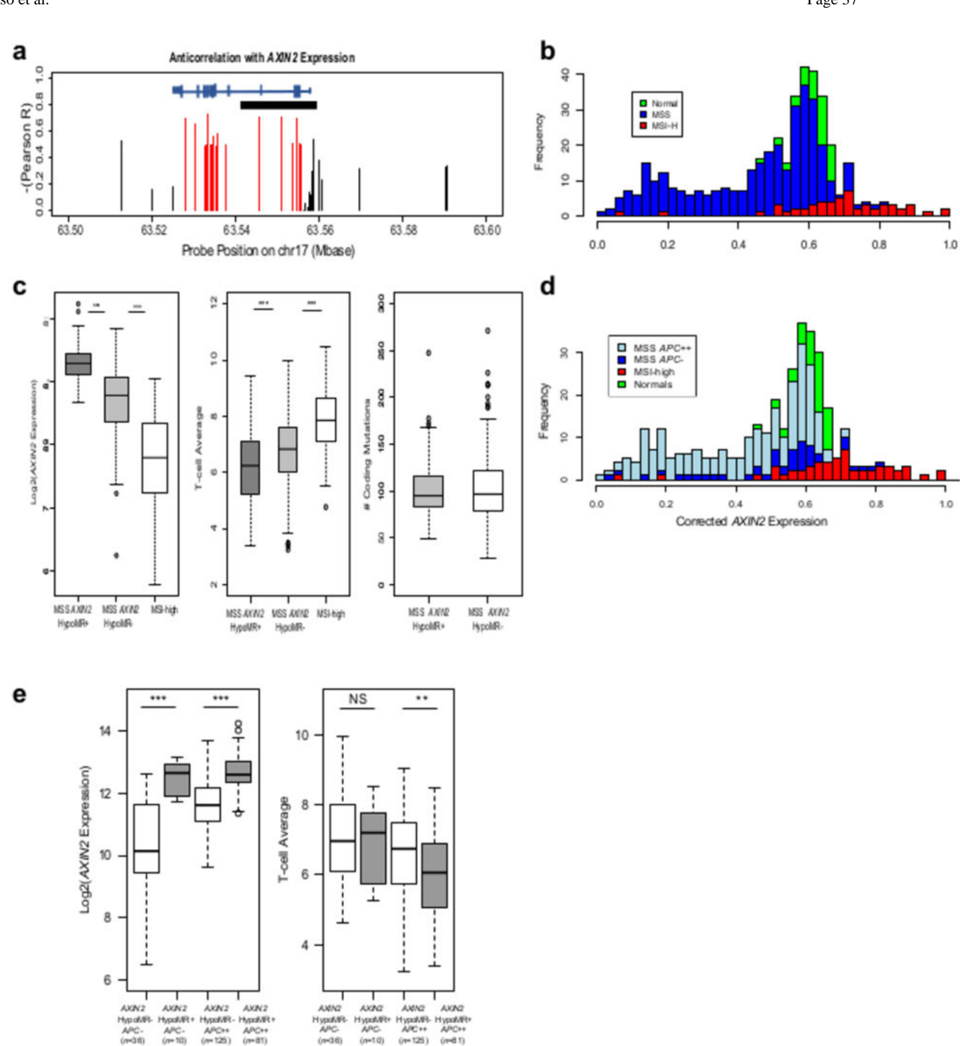
To understand the genetic drivers of immune recognition and evasion in colorectal cancer, we analyzed 1,211 colorectal cancer primary tumor samples, including 179 classified as microsatellite instability–high (MSI-high). This set includes The Cancer Genome Atlas colorectal cancer cohort of 592 samples, completed and analyzed here. MSI-high, a hypermutated, immunogenic subtype of colorectal cancer, had a high rate of significantly mutated genes in important immune-modulating pathways and in the antigen presentation machinery, including biallelic losses of B2M and HLA genes due to copy-number alterations and copy-neutral loss of heterozygosity. WNT/β-catenin signaling genes were significantly mutated in all colorectal cancer subtypes, and activated WNT/β-catenin signaling was correlated with the absence of T-cell infiltration. This large-scale genomic analysis of colorectal cancer demonstrates that MSI-high cases frequently undergo an immunoediting process that provides them with genetic events allowing immune escape despite high mutational load and frequent lymphocytic infiltration and, furthermore, that colorectal cancer tumors have genetic and methylation events associated with activated WNT signaling and T-cell exclusion. Significance: This multi-omic analysis of 1,211 colorectal cancer primary tumors reveals that it should be possible to better monitor resistance in the 15% of cases that respond to immune blockade therapy and also to use WNT signaling inhibitors to reverse immune exclusion in the 85% of cases that currently do not. Cancer Discov; 8(6); 730–49. ©2018 AACR. This article is highlighted in the In This Issue feature, p. 663
Overview
The claims and statistics of this paper haven’t been checked yet.
Free: it reads the open-access text and checks the first 5 claims that cite a source we can check. Create a free account to check every claim.
Integrity signals
Registry
Cites
Statistics
Figures

Verification
Claims the paper makes
The claims and statistics of this paper haven’t been checked yet.
Free: it reads the open-access text and checks the first 5 claims that cite a source we can check. Create a free account to check every claim.
Claims other papers make about this one
Each is checked against this paper’s own text: does it say what the citing paper says it does?
In the citing paper
“In primary CRC tumor samples, Wnt signaling reduced the frequency of tumor-infiltrating T cells, regardless of mutation load [196].”
From Drug Resistance in Colorectal Cancer: From Mechanism to Clinic (2022) · cites this paper as [196]
In the citing paper
“In addition, APC, as a gene that upregulates WNT signaling, is negatively correlated with the frequency of T cell infiltration [196,197,198].”
From Drug Resistance in Colorectal Cancer: From Mechanism to Clinic (2022) · cites this paper as [196]
Self-check
Percentages, sums and reported differences re-computed from the paper’s own numbers.
The self-check needs the paper’s full text.
Citations
Cites
Fast gapped-read alignment with Bowtie 2
Langmead, B., & Salzberg, S. L. (2012) · Nature Methods · doi:10.1038/nmeth.1923 · Cited by 56,400 · cited 1×
“org), using bowtie2 (90) to perform the realignment.”
MethodPD-1 and PD-L1 Immune Checkpoint Blockade to Treat Breast Cancer
Hartkopf, A. D., Taran, F.-A., Wallwiener, M., Walter, C. B., Krämer, B., Grischke, E.-M., & Brucker, S. Y. (2016) · Breast Care · doi:10.1159/000453569 · Cited by 30,845
The blockade of immune checkpoints in cancer immunotherapy
Pardoll, D. M. (2012) · Nature Reviews Cancer · doi:10.1038/nrc3239 · Cited by 13,838 · cited 1×
“A main mechanism by which cancers avoid immune attack is by triggering immune checkpoints that are inhibitory pathways crucial for limiting self-attack and minimizing collateral damage in normal tissues (70).”
BackgroundPD-1 Blockade in Tumors with Mismatch-Repair Deficiency
Le, D. T., Uram, J. N., Wang, H., Bartlett, B. R., Kemberling, H., Eyring, A. D., Skora, A. D., Luber, B. S., Azad, N. S., Laheru, D., et al. (2015) · New England Journal of Medicine · doi:10.1056/nejmoa1500596 · Cited by 9,377 · cited 3×
“We were particularly interested in applying this large multi-omic CRC cohort to understand drivers of immune infiltration, since recent advances in immunotherapy have necessitated a deeper consideration of the less frequent MSI-high CRC, which have been shown to respond to immune checkpoint blockade, while the much mo…”
BackgroundMethodThe cancer genome atlas pan-cancer analysis project
The Cancer Genome Atlas Research Network, Weinstein, J. N., Collisson, E. A., Mills, G. B., Shaw, K. R. M., Ozenberger, B. A., Ellrott, K., Shmulevich, I., Sander, C., & Stuart, J. M. (2013) · Nature Genetics · doi:10.1038/ng.2764 · Cited by 9,092 · cited 1×
“Precision medicine advances have been fueled by technological advances, such as targeted sequencing, and also by multi-omic sequencing efforts, such as The Cancer Genome Atlas (TCGA)(3), which are powered to provide guidance for targeting molecular observations in the form of estimates of the frequencies of drivers to…”
BackgroundComprehensive molecular characterization of human colon and rectal cancer
The Cancer Genome Atlas Network (2012) · Nature · doi:10.1038/nature11252 · Cited by 8,499
Mutational landscape determines sensitivity to PD-1 blockade in non–small cell lung cancer
Rizvi, N. A., Hellmann, M. D., Snyder, A., Kvistborg, P., Makarov, V., Havel, J. J., Lee, W., Yuan, J., Wong, P., Ho, T. S., et al. (2015) · Science · doi:10.1126/science.aaa1348 · Cited by 7,802
Mismatch repair deficiency predicts response of solid tumors to PD-1 blockade
Le, D. T., Durham, J. N., Smith, K. N., Wang, H., Bartlett, B. R., Aulakh, L. K., Lu, S., Kemberling, H., Wilt, C., Luber, B. S., et al. (2017) · Science · doi:10.1126/science.aan6733 · Cited by 6,645 · cited 4×
“We were particularly interested in applying this large multi-omic CRC cohort to understand drivers of immune infiltration, since recent advances in immunotherapy have necessitated a deeper consideration of the less frequent MSI-high CRC, which have been shown to respond to immune checkpoint blockade, while the much mo…”
BackgroundMethodInfluentialType, Density, and Location of Immune Cells Within Human Colorectal Tumors Predict Clinical Outcome
Galon, J., Costes, A., Sanchez-Cabo, F., Kirilovsky, A., Mlecnik, B., Lagorce-Pagès, C., Tosolini, M., Camus, M., Berger, A., Wind, P., et al. (2006) · Science · doi:10.1126/science.1129139 · Cited by 6,516 · cited 1×
“We denoted the average log-expression of twelve canonical T-cell-associated genes (CCL2, CCL3, CCL4, CXCL9, CXCL10, CD8A, HLA-DOB, HLA-DMB, HLA-DOA, GZMK, ICOS, and IRF1) as the “T-cell average” for each sample with expression data (45,92,93).”
BackgroundWnt/β-Catenin Signaling: Components, Mechanisms, and Diseases
MacDonald, B. T., Tamai, K., & He, X. (2009) · Developmental Cell · doi:10.1016/j.devcel.2009.06.016 · Cited by 5,583 · cited 1×
“We first considered biallelic disruptive mutations in APC, since APC loss results in increased nuclear CTNNB1 thereby driving expression of WNT target genes (68).”
Background
Cited by
Items 501–548 of 548
Li, X., Wang, Y., Zhai, Z., Mao, Q., Chen, D., Xiao, L., Xu, S., Wu, Q., Chen, K., Hou, Q., et al. (2023) · Figshare · doi:10.6084/m9.figshare.23930447
Cho, E. J., Kim, M., Jo, D., Kim, J., Oh, J.-H., Chung, H. C., Lee, S.-H., Kim, D., Chun, S.-M., Kim, J., et al. (2021) · Figshare · doi:10.6084/m9.figshare.14978121
Cho, E. J., Kim, M., Jo, D., Kim, J., Oh, J.-H., Chung, H. C., Lee, S.-H., Kim, D., Chun, S.-M., Kim, J., et al. (2021) · Figshare · doi:10.6084/m9.figshare.14978145
Cho, E. J., Kim, M., Jo, D., Kim, J., Oh, J.-H., Chung, H. C., Lee, S.-H., Kim, D., Chun, S.-M., Kim, J., et al. (2021) · Figshare · doi:10.6084/m9.figshare.14978136
Cho, E. J., Kim, M., Jo, D., Kim, J., Oh, J.-H., Chung, H. C., Lee, S.-H., Kim, D., Chun, S.-M., Kim, J., et al. (2021) · Figshare · doi:10.6084/m9.figshare.14978127
Cho, E. J., Kim, M., Jo, D., Kim, J., Oh, J.-H., Chung, H. C., Lee, S.-H., Kim, D., Chun, S.-M., Kim, J., et al. (2021) · Figshare · doi:10.6084/m9.figshare.14978103
Kerdivel, G., Amrouche, F., Calméjane, M.-A., Carallis, F., Hamroune, J., Hantel, C., Bertherat, J. Y., Assié, G., & Boeva, V. (2023) · Figshare · doi:10.6084/m9.figshare.23819895
Cho, E. J., Kim, M., Jo, D., Kim, J., Oh, J.-H., Chung, H. C., Lee, S.-H., Kim, D., Chun, S.-M., Kim, J., et al. (2021) · Figshare · doi:10.6084/m9.figshare.14978142
Cho, E. J., Kim, M., Jo, D., Kim, J., Oh, J.-H., Chung, H. C., Lee, S.-H., Kim, D., Chun, S.-M., Kim, J., et al. (2021) · Figshare · doi:10.6084/m9.figshare.14978106
Cho, E. J., Kim, M., Jo, D., Kim, J., Oh, J.-H., Chung, H. C., Lee, S.-H., Kim, D., Chun, S.-M., Kim, J., et al. (2021) · Figshare · doi:10.6084/m9.figshare.14978130
Cho, E. J., Kim, M., Jo, D., Kim, J., Oh, J.-H., Chung, H. C., Lee, S.-H., Kim, D., Chun, S.-M., Kim, J., et al. (2021) · Figshare · doi:10.6084/m9.figshare.14978133
Cho, E. J., Kim, M., Jo, D., Kim, J., Oh, J.-H., Chung, H. C., Lee, S.-H., Kim, D., Chun, S.-M., Kim, J., et al. (2021) · Figshare · doi:10.6084/m9.figshare.14978118
Hu, Z., Chen, S., Xie, D., Wang, J., & Zhou, D. (2023) · Research Square · doi:10.21203/rs.3.rs-3215481/v1
Cho, E. J., Kim, M., Jo, D., Kim, J., Oh, J.-H., Chung, H. C., Lee, S.-H., Kim, D., Chun, S.-M., Kim, J., et al. (2021) · Figshare · doi:10.6084/m9.figshare.14978112
Lu, J., Annunziata, F., Širvinskas, D., Omrani, O., Li, H., Rasa, S. M. M., Křepelová, A., Adam, L., & Neri, F. (2022) · Figshare · doi:10.6084/m9.figshare.21332884
Cho, E. J., Kim, M., Jo, D., Kim, J., Oh, J.-H., Chung, H. C., Lee, S.-H., Kim, D., Chun, S.-M., Kim, J., et al. (2021) · Figshare · doi:10.6084/m9.figshare.14978109
Ólafsson, S., Þórarinsson, Þ., Gudjonsson, S. A., Bustamante, M., Gunnarsdottir, H. S., Knútsdóttir, H., Jónsson, H., Magnusson, M. I., Söebech, E., Runarsdottir, H., et al. (2026) · Scientific Reports · doi:10.1038/s41598-026-39255-3
“Although not listed in IntOGen or COSMIC, mutations affecting the antigen presentation machinery are known to associate with MSI CRCs 4 .”
InfluentialOptimizing immunotherapy for gastrointestinal tract cancers: clinical progress and perspectives
Wang, Z.-X., Chen, F., He, M.-M., Wu, H., Qian, Z.-Y., Pan, Y., Chen, Y., & Xu, R. (2026) · Immunity & Inflammation · doi:10.1007/s44466-026-00025-5 · Cited by 4
“The phase 2 MAYA trial provided a proof-of-concept for this approach in pMMR/MSS mCRC using temozolomide [132].”
Self-citationRee, A. H., Bousquet, P. A., Visnovska, T., Lüders, T., Geisler, B. P., Wang, S., Bordin, D. L., Nilsen, H. L., Hamre, H. M., Kersten, C., et al. (2026) · British Journal of Cancer · doi:10.1038/s41416-026-03357-6 · Cited by 1
“However, most CRC cases are microsatellite-stable (MSS)/MMR-pro fi cient with inherently low immunogenicity [8], devoid of innate ICI responsiveness [9].”
Williams, C. M., Calderon, J. H., DiBlasi, V. R., Liu, L. J., Nuwayhid, S. J., Cevasco, H., Wang, W., Soni, R., Adler, C., D’Ambrosio, D. W., et al. (2026) · Scientific Reports · doi:10.1038/s41598-026-40894-9 · Cited by 1
“1, 2).”
Matboli, M., ELanwar, A., Ibrahim, W., Hassan, M. K., Ali, M. M., Khaled, R., Montaser, S., Keshk, S., Medhat, H., Shafei, M. M., et al. (2026) · BMC Cancer · doi:10.1186/s12885-026-15833-6
“Therefore, the identification of novel, minimally invasive molecular biomarkers remains a critical unmet need [7, 8].”
Mierke, C. T. (2026) · Elsevier eBooks · doi:10.1016/b978-0-443-30048-6.00002-4
Li, T., Quigley, L. T., Chan, K. F., Williams, D. S., Mielke, L. A., Behren, A., & Duarte, J. D. G. (2026) · Clinical & Translational Immunology · doi:10.1002/cti2.70097
“51 Consistent with the higher mutational burden characteristic of dMMR, significantly elevated overall TIL scores were observed in dMMR tumors compared to pMMR tumors in both all-stage and stage III analyses, with a substantially higher proportion of TIL-high tumors in the dMMR group ( P 0.0001 in…”
InfluentialShen, J., Ma, Y., Wang, Y., Yang, M., Liang, T., & Guo, L. (2026) · Biochemical Pharmacology · doi:10.1016/j.bcp.2026.118184 · Cited by 1
Anti-TIGIT therapies in digestive cancers: from immune evasion to precision immunotherapy
Matar, M., Yaghi, C., Prince, G., Masri, H. E., & Kourié, H. R. (2026) · Immunotherapy · doi:10.1080/1750743x.2026.2692829
Niyazova, S., Sers, C., Bläker, H., Horst, D. A., Schmitt, W., Karadeniz, Z., Schallenberg, S., Ballhausen, A., Modest, D. P., Krüger, C. M., et al. (2026) · OncoImmunology · doi:10.1080/2162402x.2026.2700837
Ryan, É. J., O’Reilly, M., Rogers, E. L., MacDermott, R., Cotter, M., Keane, F., McDermott, R., Martin, S., Sheahan, K. D., & Winter, D. (2026) · Lymphatics · doi:10.3390/lymphatics4030036
“Activated WNT/ β -catenin signalling correlates with absent T-cell infiltration, and in a large genomic analysis MSI-high colorectal cancers frequently acquired genetic events permitting immune escape despite high mutational load [61].”
Mo, J., Huang, W., Li, R., Xie, Y., & Chang, L. (2026) · Frontiers in Immunology · doi:10.3389/fimmu.2026.1831497
“…fi cient mismatch repair (pMMR) colorectal cancer (CRC)-which constitutes ~85% of cases-remains limited due to an immunologically “ cold ” tumor microenvironment (TME) characterized by low tumor mutational burden, scarce T-cell in fi ltration, and dominant immune evasion mechanisms (29 – 34).”
Diallo, A., Hart, S. D., Zavras, J. P., Palisoul, S. M., Kolling, F., Vaickus, L. J., Sun, J. E., Salas, L. A., Christensen, B. C., & Levy, J. J. (2026) · Research Square · doi:10.21203/rs.3.rs-9657747/v1
“45,46 In contrast, comparison with non-cancerous reference tissues confirmed that the deconvolution approach captured expected differences in cell-type composition: tumor samples showed reduced CD8⁺ T-cell proportions and elevated Treg fractions relative to both healthy colon and tumor-adjacent…”
Jeong, H.-E., Choi, H., Wan-Teck, L., Lim, S. B., & An, J. (2026) · Journal of Experimental & Clinical Cancer Research · doi:10.1186/s13046-026-03798-0 · Cited by 2
“In MSI-H colorectal tumors, these defects include recurrent B2M mutations arising under immune-selective pressure [3].”
Genomic landscape and clinical characteristics of ERBB2/HER2 -mutated colorectal cancers
Aksu, M., Peniche, P. Z., Baytar, D. K., Jambunathan, B., Jan, Y. J., Hsieh, R. W., Rahman, S., Krauss, J., Veenstra, C. M., & Şahin, İ. H. (2026) · The Oncologist · doi:10.1093/oncolo/oyag302
“44 In contrast, ERBB2/HER2 -amplified tumors demonstrated a genomically sparse interaction profile, with only 2 significant associations: relative mutual exclusivity with KRAS and co-occurrence with TP53 .”
Wang, Y., Malkin, D. M., & Lipkin, S. M. (2026) · International Journal of Cancer · doi:10.1002/ijc.70674 · Cited by 2
Ismail, M., Alabed, Z., Alhallaq, K., Al-Najjar, E., Mustafa, N., Aldroubi, Y., Hamdaneh, Y., & Esmail, A. (2026) · Cancers · doi:10.3390/cancers18162593 · Cited by 2
“Pancreatic cancer is characterized by dense desmoplastic stroma and profound myeloid suppression [97,118], whereas MSS colorectal cancer commonly demonstrates immune exclusion associated with WNT/ β -catenin signaling [225,226].”
Zhou, K., Lu, P., Xu, H., & Liang, X. (2026) · Journal of Immunology Research · doi:10.1155/jimr/5084171 · Cited by 1
“CRC exhibits two distinct molecular pathways of MHC I loss: β 2 ‑ microglobulin ( β 2 m) inactivation in MSI ‑ positive tumors and LMP7/TAP2 downregulation in MSI ‑ negative tumors [28].”
Spatial ecotype in tumor immune exclusion: from spatial architecture to therapeutic strategies
Ying, M., Zhang, L., Jia, M., Sun, X., Su, Y., Liu, C., Gong, M., Sun, T., & Zhang, B. (2026) · Molecular Cancer · doi:10.1186/s12943-026-02766-8 · Cited by 1
The microbiota-NK cell axis in colorectal cancer: a spatial and subset-centric framework
Wen, J., Gao, Y., Xu, M., Li, M., Dong, X., Zhao, M., Xuan, B., Meng, X., He, L., Zhang, W., et al. (2026) · Frontiers in Immunology · doi:10.3389/fimmu.2026.1934819
“Beyond these immune receptor genes, CRC susceptibility genes also shape this system (110).”
InfluentialLago, N. M., Ares, M., Maseda, A. C., Martelo, M. P., Covela, M., Montés, A. F., Gómez, J. D. L. C., Villarroel, P. G., López, M. R., Iruegas, M. E. P., et al. (2026) · ESMO Gastrointestinal Oncology · doi:10.1016/j.esmogo.2026.100411
Amjad, E., & Sokouti, B. (2026) · OBM Transplantation · doi:10.21926/obm.transplant.2603276
Vitali, A., Padlo, J., Caramel, C., Andersch, L., Hartmann, L. M., Kath, J., Grunewald, L., Schwiebert, S., Winkler, A., Talalai, E., et al. (2026) · Frontiers in Immunology · doi:10.3389/fimmu.2026.1901504
“In contrast, MHC class I de fi ciency in many adult cancers is frequently caused by more stable genetic alterations, most commonly involving deletion or mutations in the B2M gene (31) or defects in components of the antigen-processing machinery (32).”
Allal, B.-E., Abdelaziz, I., Djerdjouri, B., & Bounaama, A. (2026) · Computational Biology and Chemistry · doi:10.1016/j.compbiolchem.2026.109430
Cancer cell-intrinsic rewiring of the colorectal cancer secretome
Witsen, M., Foskolos, T., Dijkstra, J. J., Parra-Martinez, M., Catsman, J. J. I., van Royen, P. T., Ignacio, B. J., Bleijerveld, O. B., Kuiken, M. C., Vliet, A. V., et al. (2026) · iScience · doi:10.1016/j.isci.2026.117525
“35,36 Consistent with previous studies, 36 both primary and metastatic MSS-CRC show decreased T cell infiltration compared to MSI-CRC (Figure 3B).”
The Impact of SF3B1 Mutations on the Tumor Microenvironment and Response to Immunotherapy
Cho, K., & Lim, B. (2026) · Cancer Medicine · doi:10.1002/cam4.72318
“Importantly, recent evidence indicates that somatic mutations in cancer cells can drive immune cell infiltration and the reprogramming of the effector functions of residential immune cells [7, 8].”
Huang, X., Ye, M., Liang, Z., Yang, L., 黄维明, Qin, L., Xie, J., & Li, X. (2026) · Journal of Clinical Medicine · doi:10.3390/jcm15208022
Song, W., Tao, Y., Ji, X., Fu, W., Cai, X., & Shan, X. (2026) · Frontiers in Immunology · doi:10.3389/fimmu.2026.1942224
“…activated WNT/ b -catenin signaling and reduced immune in fi ltration have also been reported in human colorectal cancer and advanced thyroid cancer (48, 49), while pan-cancer analyses have linked WNT/ b -catenin hyperactivation to a non-T-cell-in fl amed phenotype across multiple tumor types (50).”
Lv, Y., Ding, Y., 赵, 紫., Song, S., Zang, D., Zhang, J., Ji, Y., & Zhong, J. (2026) · Critical Reviews in Oncology/Hematology · doi:10.1016/j.critrevonc.2026.105657
Requesens, M., Gneo, L., Tomasevic, T., van Rooij, N., Plat, A., Xi, M., O’Riordan-Moore, C., Kedzierska, K., Che, N., Glaire, M., et al. (2026) · EMBO Molecular Medicine · doi:10.1038/s44321-026-00538-x
Metadata
- Authors
- Grasso, C. S., Giannakis, M., Wells, D. K., Hamada, T., Mu, X. J., Quist, M., Nowak, J. A., Nishihara, R., Qian, Z. R., Inamura, K., Morikawa, T., Nosho, K., Abril-Rodriguez, G., Connolly, C., Escuin-Ordinas, H., Geybels, M. S., Grady, W. M., Hsu, L., Hu-Lieskovan, S., Huyghe, J. R., Kim, Y. J., Krystofinski, P., Leiserson, M. D. M., Montoya, D. J., Nadel, B. B., Pellegrini, M., Pritchard, C. C., Puig-Saus, C., Quist, E. H., Raphael, B. J., Salipante, S. J., Shin, D. S., Shinbrot, E., Shirts, B., Shukla, S., Stanford, J. L., Sun, W., Tsoi, J., Upfill-Brown, A., Wheeler, D. A., Wu, C. J., Yu, M., Zaidi, S. H., Zaretsky, J. M., Gabriel, S. B., Lander, E. S., Garraway, L. A., Hudson, T. J., Fuchs, C. S., Ribas, A., Ogino, S., & Peters, U.
- Affiliations
- University of California, Los Angeles (US)
- Broad Institute (US)
- Parker Institute for Cancer Immunotherapy (US)
- Dana-Farber Cancer Institute (US)
- Brigham and Women's Hospital (US)
- Harvard University (US)
- 1Department of Medicine, Division of Hematology-Oncology, University of California, Los Angeles, and the Jonsson Comprehensive Cancer Center, Los Angeles, California.
- Fred Hutch Cancer Center (US)
- University of Washington (US)
- Brown University (US)
- 13Department of Computer Science and Center for Computational Molecular Biology, Brown University, Providence, Rhode Island.
- Baylor College of Medicine (US)
- Ontario Institute for Cancer Research (CA)
- Corresponding author
- Grasso, Catherine S.
- ORCID
- Grasso, Catherine S.
- Giannakis, Marios
- Wells, Daniel K.
- Hamada, Tsuyoshi
- Mu, Xinmeng Jasmine
- Nowak, Jonathan A.
- Nishihara, Reiko
- Qian, Zhi Rong
- Inamura, Kentaro
- Morikawa, Teppei
- Connolly, Charles
- Escuin-Ordinas, Helena
- Grady, William M.
- Hsu, Li
- Huyghe, Jeroen R.
- Kim, Yeon Joo
- Krystofinski, Paige
- Leiserson, Mark D.M.
- Montoya, Dennis J.
- Nadel, Brian B.
- Pellegrini, Matteo
- Pritchard, Colin C.
- Puig-Saus, Cristina
- Salipante, Stephen J.
- Shin, Daniel Sanghoon
- Shinbrot, Eve
- Shirts, Brian
- Shukla, Sachet
- Stanford, Janet L.
- Sun, Wei
- Tsoi, Jennifer
- Upfill-Brown, Alexander
- Wheeler, David A.
- Wu, Catherine J.
- Yu, Ming
- Zaidi, Syed H.
- Zaretsky, Jesse M.
- Gabriel, Stacey B.
- Lander, Eric S.
- Garraway, Levi A.
- Hudson, Thomas J.
- Fuchs, Charles S.
- Ribas, Antoni
- Ogino, Shuji
- Peters, Ulrike
- Venue
- Cancer Discovery
- Published
- 2018-05-31
- Volume
- 8
- Issue
- 6
- Pages
- 730-749
- ISSN
- 2159-8274 (ISSN-L)
- 2159-8290
- PMC
- PMC5984687
- OpenAlex
- W2793126529
- Cited by
- 535
- References
- 103
- Citations by year
- 2026: 47 · 2025: 42 · 2024: 49 · 2023: 73 · 2022: 83 · 2021: 80 · 2020: 76 · 2019: 58 · 2018: 25
- FWCI
- 45.45
- Type
- journal article
- Language
- en
- Open access
- hybrid
- doi.org
- Licence
- cc-by
- Locations
- Cancer Discovery (publishedVersion, cc-by)
- PubMed (publishedVersion)
- PubMed Central (acceptedVersion)
- DSpace@MIT (Massachusetts Institute of Technology) (submittedVersion, cc-by-nc-sa)
- HAL (submittedVersion)
- eScholarship (California Digital Library) (submittedVersion)
- Funders
- HHS | National Institutes of Health (NIH) (U01 CA137088, K07 CA190673, 1R01CA194663-01, R35 CA197663, P01 CA168585, KL2 TR001100, U54 HG003067, 4T32CA009120-40, P01 CA87969, UM1 CA186107, P01 CA55075, UM1 CA167552, P50 CA127003, R35 CA197735, R01 CA151993)
- American Association for Cancer Research (AACR) (SU2C-AACR-DT22-17)
- HHS | NIH | National Cancer Institute (NCI) (5T32LM012424-03)
- HHS | NIH | National Institute of Arthritis and Musculoskeletal and Skin Diseases (NIAMS) (3P50AR063020-03S1)
- Dana-Farber/Harvard Cancer Center (DF/HCC) (Nodal Award)
- American Society of Clinical Oncology (ASCO) (Career Development Award)
- Topics
- Health Sciences › Medicine › Pathology and Forensic Medicine › Genetic factors in colorectal cancer
- Health Sciences › Medicine › Oncology › Cancer Immunotherapy and Biomarkers
- Life Sciences › Biochemistry, Genetics and Molecular Biology › Cancer Research › Cancer Genomics and Diagnostics
- Keywords
- colorectal cancer, immune evasion, microsatellite instability-high, Wnt/β-catenin signaling, T-cell exclusion, immunoediting, antigen presentation, beta2-microglobulin, HLA, copy-neutral loss of heterozygosity, copy number alterations, DNA methylation, immune checkpoint inhibitor resistance, tumor mutational burden, T cell infiltration
- MeSH terms
- beta 2-Microglobulin, HLA Antigens, Humans, Colorectal Neoplasms, Germ-Line Mutation, Tumor Escape, DNA Methylation, Loss of Heterozygosity, Microsatellite Instability, DNA Copy Number Variations, Wnt Signaling Pathway
About these checks
Registry, retraction, Cites and statistics results are computed, not judged, with one exception: a printed reference that no index lists is read once by a model before it counts as a citation error. Claims are extracted by a model and kept only when their quote appears verbatim in the text; each cited source is then checked, with a model’s help, for whether it says what the claim relies on. Those verdicts can be wrong — read the claim’s quote and the cited source before relying on one.
Statistics and arithmetic are recomputed, not judged.
Confidence bands are shown only for fields calibrated on our annotated test set. None is calibrated yet, so no band is shown.
What counts as a claim ›How we measure confidence ›How we check this ›
Are you an author, or do you see a problem with this page? Request a review
Data sources
Bibliographic data: Semantic Scholar, OpenAlex, Crossref.
Contains information from the Semantic Scholar Academic Graph Datasets, made available under the ODC Attribution License (ODC-BY 1.0).
Semantic Scholar’s data is described in: Kinney, R., et al. (2023). The Semantic Scholar Open Data Platform. arXiv:2301.10140.
