

Genetic Mechanisms of Immune Evasion in Colorectal Cancer
Open accessPublished version of a preprint
The DOI matches its Crossref record; 100 of the 103 references it cites were found in a registry or an index.
Abstract
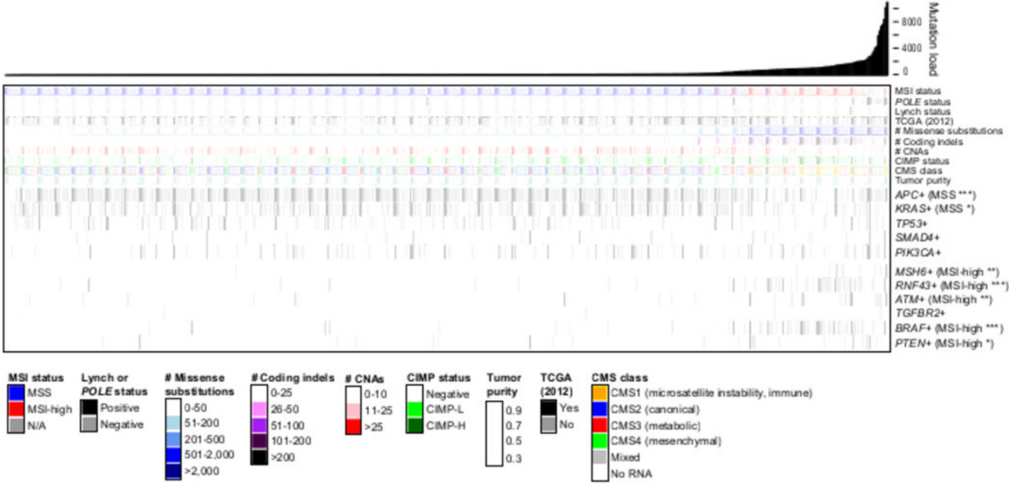
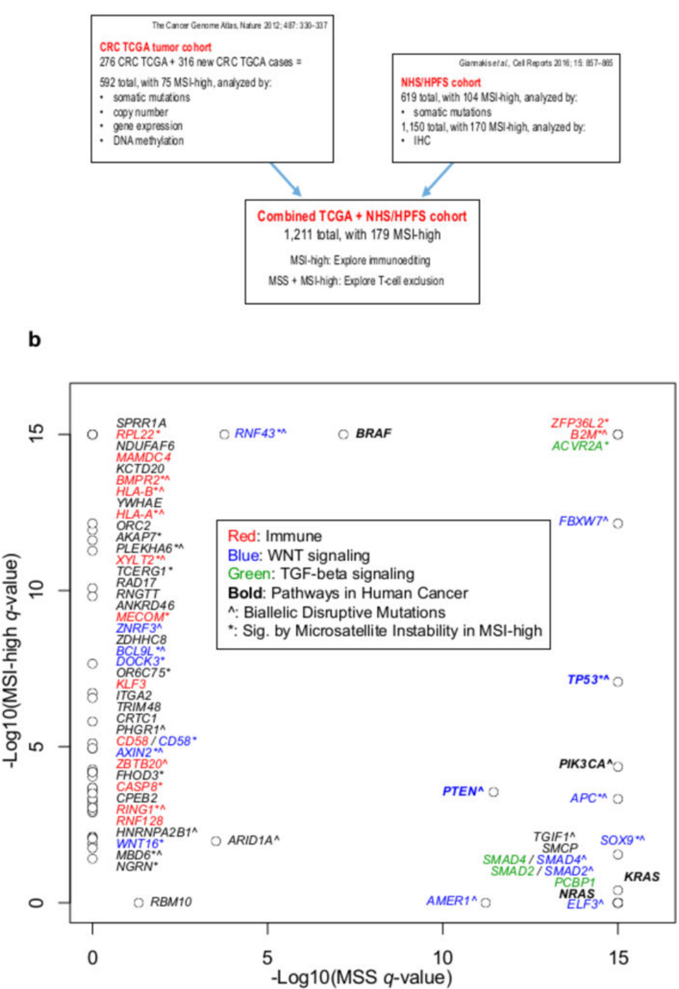
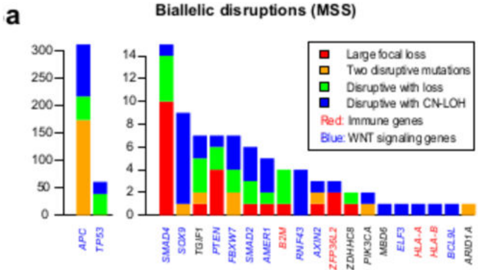
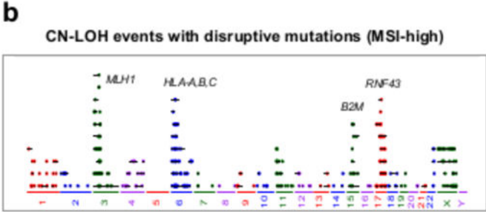
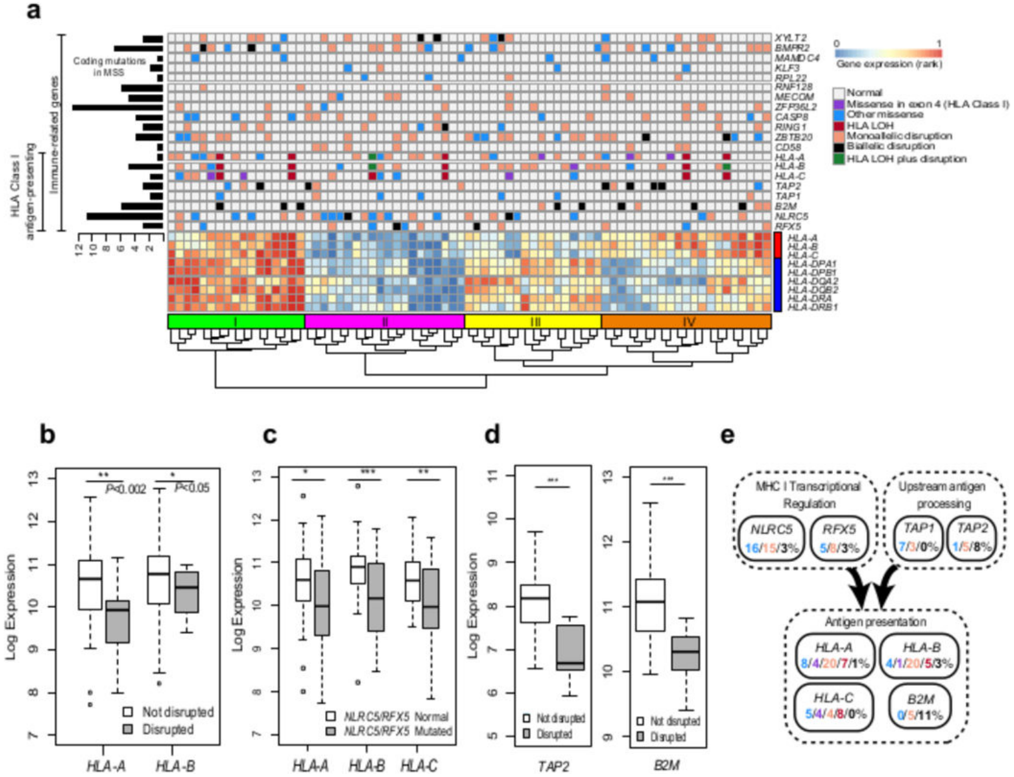
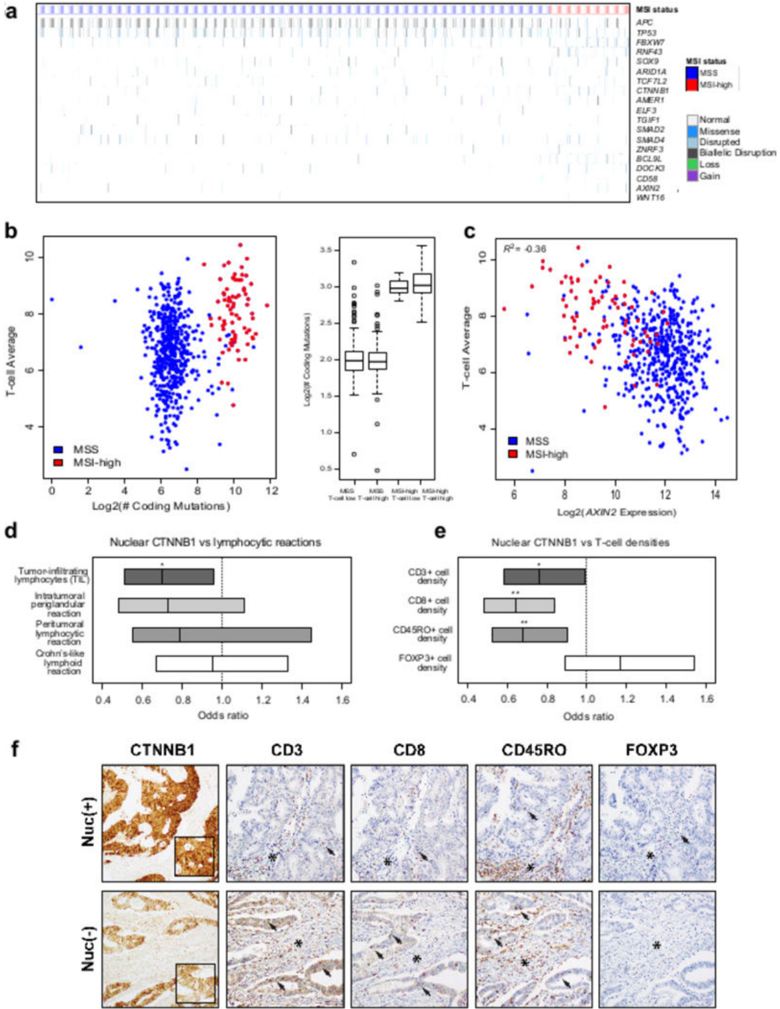
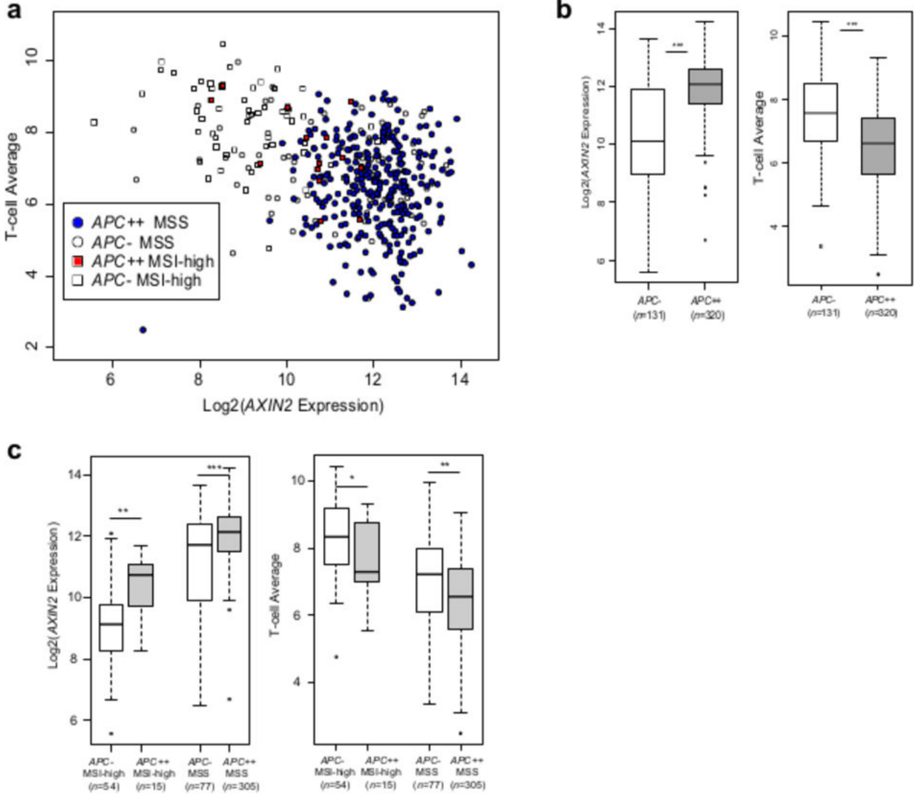
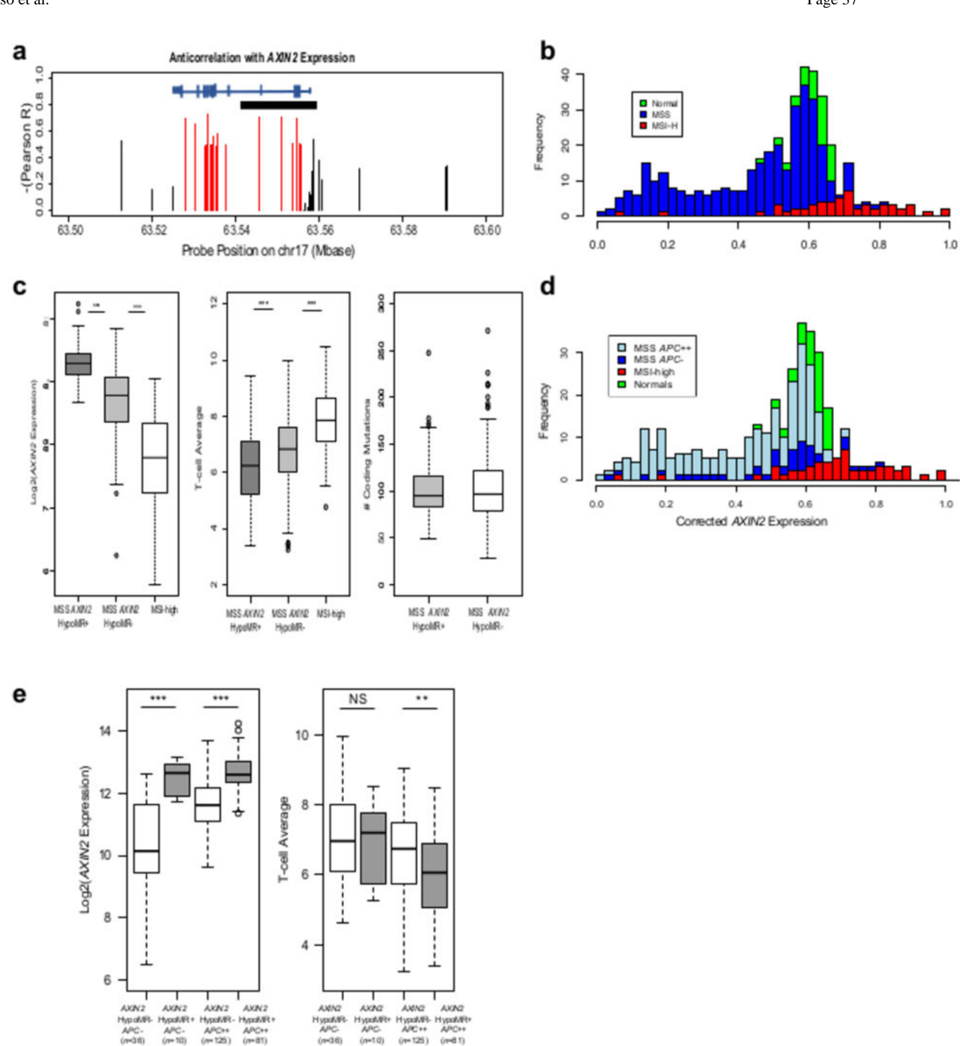
To understand the genetic drivers of immune recognition and evasion in colorectal cancer, we analyzed 1,211 colorectal cancer primary tumor samples, including 179 classified as microsatellite instability–high (MSI-high). This set includes The Cancer Genome Atlas colorectal cancer cohort of 592 samples, completed and analyzed here. MSI-high, a hypermutated, immunogenic subtype of colorectal cancer, had a high rate of significantly mutated genes in important immune-modulating pathways and in the antigen presentation machinery, including biallelic losses of B2M and HLA genes due to copy-number alterations and copy-neutral loss of heterozygosity. WNT/β-catenin signaling genes were significantly mutated in all colorectal cancer subtypes, and activated WNT/β-catenin signaling was correlated with the absence of T-cell infiltration. This large-scale genomic analysis of colorectal cancer demonstrates that MSI-high cases frequently undergo an immunoediting process that provides them with genetic events allowing immune escape despite high mutational load and frequent lymphocytic infiltration and, furthermore, that colorectal cancer tumors have genetic and methylation events associated with activated WNT signaling and T-cell exclusion. Significance: This multi-omic analysis of 1,211 colorectal cancer primary tumors reveals that it should be possible to better monitor resistance in the 15% of cases that respond to immune blockade therapy and also to use WNT signaling inhibitors to reverse immune exclusion in the 85% of cases that currently do not. Cancer Discov; 8(6); 730–49. ©2018 AACR. This article is highlighted in the In This Issue feature, p. 663
Overview
The claims and statistics of this paper haven’t been checked yet.
Free: it reads the open-access text and checks the first 5 claims that cite a source we can check. Create a free account to check every claim.
Integrity signals
Registry
Cites
Statistics
Figures

Verification
Claims the paper makes
The claims and statistics of this paper haven’t been checked yet.
Free: it reads the open-access text and checks the first 5 claims that cite a source we can check. Create a free account to check every claim.
Claims other papers make about this one
Each is checked against this paper’s own text: does it say what the citing paper says it does?
In the citing paper
“In primary CRC tumor samples, Wnt signaling reduced the frequency of tumor-infiltrating T cells, regardless of mutation load [196].”
From Drug Resistance in Colorectal Cancer: From Mechanism to Clinic (2022) · cites this paper as [196]
In the citing paper
“In addition, APC, as a gene that upregulates WNT signaling, is negatively correlated with the frequency of T cell infiltration [196,197,198].”
From Drug Resistance in Colorectal Cancer: From Mechanism to Clinic (2022) · cites this paper as [196]
Self-check
Percentages, sums and reported differences re-computed from the paper’s own numbers.
The self-check needs the paper’s full text.
Citations
Cites
Fast gapped-read alignment with Bowtie 2
Langmead, B., & Salzberg, S. L. (2012) · Nature Methods · doi:10.1038/nmeth.1923 · Cited by 56,400 · cited 1×
“org), using bowtie2 (90) to perform the realignment.”
MethodPD-1 and PD-L1 Immune Checkpoint Blockade to Treat Breast Cancer
Hartkopf, A. D., Taran, F.-A., Wallwiener, M., Walter, C. B., Krämer, B., Grischke, E.-M., & Brucker, S. Y. (2016) · Breast Care · doi:10.1159/000453569 · Cited by 30,845
The blockade of immune checkpoints in cancer immunotherapy
Pardoll, D. M. (2012) · Nature Reviews Cancer · doi:10.1038/nrc3239 · Cited by 13,838 · cited 1×
“A main mechanism by which cancers avoid immune attack is by triggering immune checkpoints that are inhibitory pathways crucial for limiting self-attack and minimizing collateral damage in normal tissues (70).”
BackgroundPD-1 Blockade in Tumors with Mismatch-Repair Deficiency
Le, D. T., Uram, J. N., Wang, H., Bartlett, B. R., Kemberling, H., Eyring, A. D., Skora, A. D., Luber, B. S., Azad, N. S., Laheru, D., et al. (2015) · New England Journal of Medicine · doi:10.1056/nejmoa1500596 · Cited by 9,377 · cited 3×
“We were particularly interested in applying this large multi-omic CRC cohort to understand drivers of immune infiltration, since recent advances in immunotherapy have necessitated a deeper consideration of the less frequent MSI-high CRC, which have been shown to respond to immune checkpoint blockade, while the much mo…”
BackgroundMethodThe cancer genome atlas pan-cancer analysis project
The Cancer Genome Atlas Research Network, Weinstein, J. N., Collisson, E. A., Mills, G. B., Shaw, K. R. M., Ozenberger, B. A., Ellrott, K., Shmulevich, I., Sander, C., & Stuart, J. M. (2013) · Nature Genetics · doi:10.1038/ng.2764 · Cited by 9,092 · cited 1×
“Precision medicine advances have been fueled by technological advances, such as targeted sequencing, and also by multi-omic sequencing efforts, such as The Cancer Genome Atlas (TCGA)(3), which are powered to provide guidance for targeting molecular observations in the form of estimates of the frequencies of drivers to…”
BackgroundComprehensive molecular characterization of human colon and rectal cancer
The Cancer Genome Atlas Network (2012) · Nature · doi:10.1038/nature11252 · Cited by 8,499
Mutational landscape determines sensitivity to PD-1 blockade in non–small cell lung cancer
Rizvi, N. A., Hellmann, M. D., Snyder, A., Kvistborg, P., Makarov, V., Havel, J. J., Lee, W., Yuan, J., Wong, P., Ho, T. S., et al. (2015) · Science · doi:10.1126/science.aaa1348 · Cited by 7,802
Mismatch repair deficiency predicts response of solid tumors to PD-1 blockade
Le, D. T., Durham, J. N., Smith, K. N., Wang, H., Bartlett, B. R., Aulakh, L. K., Lu, S., Kemberling, H., Wilt, C., Luber, B. S., et al. (2017) · Science · doi:10.1126/science.aan6733 · Cited by 6,645 · cited 4×
“We were particularly interested in applying this large multi-omic CRC cohort to understand drivers of immune infiltration, since recent advances in immunotherapy have necessitated a deeper consideration of the less frequent MSI-high CRC, which have been shown to respond to immune checkpoint blockade, while the much mo…”
BackgroundMethodInfluentialType, Density, and Location of Immune Cells Within Human Colorectal Tumors Predict Clinical Outcome
Galon, J., Costes, A., Sanchez-Cabo, F., Kirilovsky, A., Mlecnik, B., Lagorce-Pagès, C., Tosolini, M., Camus, M., Berger, A., Wind, P., et al. (2006) · Science · doi:10.1126/science.1129139 · Cited by 6,516 · cited 1×
“We denoted the average log-expression of twelve canonical T-cell-associated genes (CCL2, CCL3, CCL4, CXCL9, CXCL10, CD8A, HLA-DOB, HLA-DMB, HLA-DOA, GZMK, ICOS, and IRF1) as the “T-cell average” for each sample with expression data (45,92,93).”
BackgroundWnt/β-Catenin Signaling: Components, Mechanisms, and Diseases
MacDonald, B. T., Tamai, K., & He, X. (2009) · Developmental Cell · doi:10.1016/j.devcel.2009.06.016 · Cited by 5,583 · cited 1×
“We first considered biallelic disruptive mutations in APC, since APC loss results in increased nuclear CTNNB1 thereby driving expression of WNT target genes (68).”
Background
Cited by
Items 201–300 of 548
Díaz, M. B. N., Martín, M. J., & Gentili, C. (2022) · World Journal of Gastroenterology · doi:10.3748/wjg.v28.i26.3027 · Cited by 40
Phenotype molding of T cells in colorectal cancer by single‐cell analysis
Di, J., Liu, M., Fan, Y., Gao, P., Wang, Z., Jiang, B., & Su, X. (2020) · International Journal of Cancer · doi:10.1002/ijc.32856 · Cited by 37
Friedman, C. F., Manning‐Geist, B. L., Zhou, Q. C., Soumerai, T. E., Holland, A., Paula, A. D. C., Green, H., Ozsoy, M. A., Iasonos, A. E., Hollmann, T. J., et al. (2024) · Nature Medicine · doi:10.1038/s41591-024-02942-7 · Cited by 36
“In dMMR/MSI colorectal cancer and melanoma, genomic alterations in antigen-presenting machinery, including loss of beta-2-microglobulin and human leukocyte antigen (HLA) genes, are associated with resistance to checkpoint blockade 54–56 .”
Immunotherapy in colorectal cancer
Agarwal, P., Le, D. T., & Boland, P. M. (2021) · Advances in cancer research · doi:10.1016/bs.acr.2021.03.002 · Cited by 35
Snahnicanova, Z., Kasubova, I., Kalman, M., Grendar, M., Mikolajcik, P., Gabonova, E., Laca, L., Caprnda, M., Rodrigo, L., Ciccocioppo, R., et al. (2020) · Clinical and Experimental Medicine · doi:10.1007/s10238-019-00601-7 · Cited by 29
Neoadjuvant immunotherapy in mismatch-repair-proficient colon cancers
Tan, P. B., Verschoor, Y. L., van den Berg, J. G., Balduzzi, S., Kok, N. F. M., Ijsselsteijn, M. E., Moore, K., Jurdi, A. A., Tin, A., Kaptein, P., et al. (2025) · Nature · doi:10.1038/s41586-025-09679-4 · Cited by 42
“TCGA mutational status for CRC was obtained from analysis by Grasso et al. 80 , available as supplementary material (https://doi.org/10.1158/2159-8290.CD-17-1327).”
InfluentialGorzo, A., Galoș, D., Volovăț, S. R., Lungulescu, C. V., Burz, C. C., & Sur, D. G. (2022) · Life · doi:10.3390/life12020229 · Cited by 34
Targeting autophagy as a therapeutic strategy against pancreatic cancer
Yamamoto, K., Iwadate, D., Kato, H., Nakai, Y., Tateishi, K., & Fujishiro, M. (2022) · Journal of Gastroenterology · doi:10.1007/s00535-022-01889-1 · Cited by 29
Tran, T.-H., Kao, M., Liu, H., Hong, Y., Su, Y., & Huang, C. F. (2023) · Cell Communication and Signaling · doi:10.1186/s12964-023-01190-5 · Cited by 28
“Additionally, a preclinical study suggested that the inhibition of this pathway could sensitize CRC tumors to immunotherapy [40].”
BackgroundImmunotherapy for colorectal cancer: insight from inherited genetics
Tjader, N. P., & Toland, A. E. (2024) · Trends in cancer · doi:10.1016/j.trecan.2024.01.008 · Cited by 31
Zhang, M., Jiang, X. W., Jiang, S., Guo, Z., Zhou, Q., & He, J. (2019) · Cancer Management and Research · doi:10.2147/cmar.s228628 · Cited by 28
Shui, I. M., Liu, X. Q., Zhao, Q., Kim, S. T., Sun, Y. M., Yearley, J. H., Choudhury, T., Webber, A. L., Krepler, C., Cristescu, R., et al. (2022) · Journal for ImmunoTherapy of Cancer · doi:10.1136/jitc-2022-004879 · Cited by 30
The mechanisms on evasion of anti-tumor immune responses in gastric cancer
Wang, J., Liu, T., Huang, T., Shang, M., & Wang, X. (2022) · Frontiers in Oncology · doi:10.3389/fonc.2022.943806 · Cited by 37
Plattner, C., Lamberti, G., Blattmann, P., Kirchmair, A., Rieder, D., Loncova, Z., Sturm, G., Scheidl, S., Ijsselsteijn, M., Fotakis, G., et al. (2023) · iScience · doi:10.1016/j.isci.2023.108399 · Cited by 27
“Genomic characterization including CRC driver genes [49] and a 538 panel of immune-related genes frequently mutated in CRC [50] reaffirmed previously reported so539 matic alterations [50] and showed that the biobank is representative of CRC (Figure 2A, Supplemen540 tary Figure 1B).”
BackgroundImmune microenvironment and lymph node yield in colorectal cancer
Lee, S., Pankaj, A., Neyaz, A., Ono, Y., Rickelt, S., Ferrone, C. R., Ting, D. T., Patil, D. T., Yilmaz, Ö. H., Berger, D. L., et al. (2023) · British Journal of Cancer · doi:10.1038/s41416-023-02372-1 · Cited by 28
Immunogenomics of Colorectal Tumors: Facts and Hypotheses on an Evolving Saga
Catalano, I., Grassi, E., Bertotti, A., & Trusolino, L. (2019) · Trends in cancer · doi:10.1016/j.trecan.2019.10.006 · Cited by 28
Voutsadakis, I. A. (2019) · Targeted Oncology · doi:10.1007/s11523-019-00689-7 · Cited by 29
Wang, Z., Zhang, M., Luo, W., Zhang, Y., & Ji, H. (2021) · Journal of Medicinal Chemistry · doi:10.1021/acs.jmedchem.1c00046 · Cited by 29
Lazaridou, M., Massa, C., Handke, D., Mueller, A., Friedrich, M., Subbarayan, K., Tretbar, S., Dummer, R., Koelblinger, P., & Seliger, B. (2020) · Journal of Clinical Medicine · doi:10.3390/jcm9092690 · Cited by 28
Román, M. S., Torres-Jiménez, J., Pozas, J., Esteban-Villarrubia, J., Albarrán, V., Ballesteros, P. Á., Chamorro-Pérez, J., Rodriguez, D. I. R., Orejana, I., Martínez-Delfrade, Í., et al. (2023) · Cancers · doi:10.3390/cancers15030863 · Cited by 31
Hjazi, A. M., Nasir, F., Noor, R., Alsalamy, A., Zabibah, R. S., Romero‐Parra, R. M., Ullah, M. I., Mustafa, Y. F., Qasim, M. T., & Akram, S. V. (2023) · Pathology - Research and Practice · doi:10.1016/j.prp.2023.154616 · Cited by 54
Innocenti, F., Sibley, A. B., Patil, S., Etheridge, A. S., Jiang, C., Ou, F., Howell, S., Plummer, S. J., Casey, G., Bertagnolli, M. M., et al. (2020) · Clinical Cancer Research · doi:10.1158/1078-0432.ccr-20-2021 · Cited by 26
Shou, X., Li, Y., Hu, W., Ye, T., Wang, G., Xu, F., Sui, M., & Xu, Y. (2018) · Molecular Oncology · doi:10.1002/1878-0261.12427 · Cited by 33
Dahl, O., & Brydøy, M. (2019) · Acta Oncologica · doi:10.1080/0284186x.2018.1555375 · Cited by 24
Li, J., Zhang, H., Bei, S., Zhang, X., Li, H., Ye, L., & Feng, L. (2021) · Current Molecular Pharmacology · doi:10.2174/1874467214666210617163821 · Cited by 25
Yang, T., Sun, J., Wang, W., Li, D., Yang, X., Jia, A., Ma, Y., & Fan, Z. (2022) · Molecular and Cellular Biochemistry · doi:10.1007/s11010-022-04458-5 · Cited by 24
Yang, G., Yu, X., Weisenberger, D. J., Lü, T., & Liang, G. (2023) · Cancers · doi:10.3390/cancers15112934 · Cited by 28
Kerdivel, G., Amrouche, F., Calméjane, M.-A., Carallis, F., Hamroune, J., Hantel, C., Bertherat, J. Y., Assié, G., & Boeva, V. (2023) · Clinical Epigenetics · doi:10.1186/s13148-023-01534-5 · Cited by 28
“For example, it has been shown that the expression of HLA genes is lost in several cancer types and this loss contributes to the aggressiveness and the immune evasion of these tumors [13, 39].”
BackgroundWu, W., Li, H., Wang, Z., Dai, Z., Liang, X., Luo, P., Liu, K., Zhang, H., Zhang, N., Li, S., et al. (2023) · Heliyon · doi:10.1016/j.heliyon.2023.e23915 · Cited by 26
“In contrast, WNT signaling, MAPK signaling, and ERBB signaling were upregulated in cluster 2, which may result in resistance to immunotherapy [32,33].”
BackgroundColorectal cancer with BRAF V600E mutation: Trends in immune checkpoint inhibitor treatment
Liu, M., Liu, Q., Hu, K., Dong, Y., Sun, X., Zou, Z., Ji, D., Liu, T., & Yu, Y. (2024) · Critical Reviews in Oncology/Hematology · doi:10.1016/j.critrevonc.2024.104497 · Cited by 25
Martínez-Rey, D., Carmona‐Rodríguez, L., Fernández‐Aceñero, M. J., Mira, E., & Mañes, S. (2020) · Frontiers in Immunology · doi:10.3389/fimmu.2020.579552 · Cited by 21
Na, H. Y., Park, Y., Nam, S. K., Lee, K. S., Oh, H., Kim, D., Kang, S., Kim, W. H., & Lee, H. S. (2020) · Cancer Science · doi:10.1111/cas.14723 · Cited by 24
Cai, C., Long, J., Huang, Q., Han, Y., Peng, Y., Guo, C., Liu, S., Chen, Y., Shen, E., Long, K., et al. (2021) · Frontiers in Oncology · doi:10.3389/fonc.2021.615296 · Cited by 24
Dietary fiber as a wide pillar of colorectal cancer prevention and adjuvant therapy
Pedrosa, L. D. F., & Fabi, J. P. (2023) · Critical Reviews in Food Science and Nutrition · doi:10.1080/10408398.2022.2164245 · Cited by 24
Sui, Q., Zheng, J., Liu, D., Peng, J., Ou, Q., Tang, J., Li, Y., Kong, L.-H., Wu, J., Xiao, B., et al. (2019) · BMC Cancer · doi:10.1186/s12885-019-6399-1 · Cited by 20
Gil-Julio, H., Perea, F., Rodríguez-Nicolás, A., Cózar, J. M., Ramírez, A. R. G., Concha, Á., Garrido, F., Aptsiauri, N., & Ruiz‐Cabello, F. (2021) · International Journal of Molecular Sciences · doi:10.3390/ijms22147248 · Cited by 20
Tian, J., Wang, W., Zhu, J., Zhuang, Y., Qi, C., Cai, Z., Yan, W., Lu, W., & Shang, A. (2022) · Journal of Immunology Research · doi:10.1155/2022/4012920 · Cited by 20
Prevalence and Associations of Beta2-Microglobulin Mutations in MSI-H/dMMR Cancers
Liu, F., Zhong, F., Wu, H., Che, K., Shi, J., Wu, N., Fu, Y. S., Wang, Y., Hu, J. Y., Qian, X., et al. (2023) · The Oncologist · doi:10.1093/oncolo/oyac268 · Cited by 22
Spatial immunophenotypes predict clinical outcome in intrahepatic cholangiocarcinoma
Zhu, C., Ma, J., Zhu, K., Yu, L., Zheng, B., Rao, D., Zhang, S., Dong, L., Gao, Q., Zhang, X., et al. (2023) · JHEP Reports · doi:10.1016/j.jhepr.2023.100762 · Cited by 26
Pediatric Brain Tumours: Lessons from the Immune Microenvironment
Yao, B., Delaidelli, A., Vogel, H. S., & Sorensen, P. H. B. (2023) · Current Oncology · doi:10.3390/curroncol30050379 · Cited by 21
Homopolymer switches mediate adaptive mutability in mismatch repair-deficient colorectal cancer
Kayhanian, H., Cross, W. C. H., van der Horst, S. E. M., Barmpoutis, P., Lakatos, E., Caravagna, G., Zapata, L., van Hoeck, A., Middelkamp, S., Litchfield, K., et al. (2024) · Nature Genetics · doi:10.1038/s41588-024-01777-9 · Cited by 22
“While many of the genetic targets associated with immune escape (for example, HLA (human leukocyte antigen) complex and B2M (beta-2 microglobulin) mutations) have been characterized, the evolutionary trajectories MMRd tumors take to navigate their immune selection landscape remain unknown 8 .”
Innate Lymphoid Cells in Colorectal Cancers: A Double-Edged Sword
Huang, Q., Cao, W. H. J., Mielke, L. A., Seillet, C., Belz, G. T., & Jacquelot, N. (2020) · Frontiers in Immunology · doi:10.3389/fimmu.2019.03080 · Cited by 21
Immunity, immunotherapy, and rectal cancer: A clinical and translational science review
Otegbeye, E. E., Mitchem, J. B., Park, H., Chaudhuri, A. A., Kim, H. J., Mutch, M. G., & Ciorba, M. A. (2020) · Translational research · doi:10.1016/j.trsl.2020.12.002 · Cited by 23
Tissue-resident microbiota impacts colorectal cancer progression and prognosis
Shi, Z., Ren, H., Lin, C., Li, F., Wu, M., Yang, F., Luo, T., Nunes, L., Isaksson, A., Hammarström, K., et al. (2025) · Nature Communications · doi:10.1038/s41467-025-67047-2 · Cited by 27
“…CMS-featured pathways 9 , two well-established scoring systems that evaluate the abundance and activity of T-lymphocytes (T-cell score 79 and Immunoscore 80 ), cytokines involved in immunosuppression (IL-6, IL-10, and CXCL12), pathways and signatures related to anti-tumor immune (CD8…”
Hamfjord, J., Myklebust, T. Å., Larsen, I. K., Kure, E. H., Glimelius, B., Guren, T. K., Tveit, K. M., & Guren, M. G. (2021) · Cancer Epidemiology Biomarkers & Prevention · doi:10.1158/1055-9965.epi-21-0555 · Cited by 24
Seyhan, A. A., & Carini, C. (2022) · International Journal of Molecular Sciences · doi:10.3390/ijms24010041 · Cited by 24
Exploring Predictive and Prognostic Biomarkers in Colorectal Cancer: A Comprehensive Review
Ashouri, K., Wong, A., Mittal, P., Torres‐Gonzalez, L., Lo, J. H., Soni, S., Algaze, S. D., Khoukaz, T., Zhang, W., Yang, Y., et al. (2024) · Cancers · doi:10.3390/cancers16162796 · Cited by 24
“Additionally, MSI-H/dMMR CRCs have a favorable tumor microenvironment (TME) with increased tumor-infiltrating lymphocytes and decreased immunosuppressive cells like regulatory T cells (Tregs) and myeloid-derived suppressor cells (MDSCs) [71,72].”
BackgroundThe Cancer-Immune Set Point in Oesophageal Cancer
Power, R. F., Lowery, M. A., Reynolds, J. V., & Dunne, M. R. (2020) · Frontiers in Oncology · doi:10.3389/fonc.2020.00891 · Cited by 19
Iwasaki, A., Shinozaki‐Ushiku, A., Kunita, A., Yamazawa, S., Sato, Y., Yamashita, H., Fukayama, M., Seto, Y., & Ushiku, T. (2021) · The American Journal of Surgical Pathology · doi:10.1097/pas.0000000000001779 · Cited by 20
Ren, S.-N., Zhang, Z.-Y., Guo, R.-J., Wang, D., Chen, F., Chen, X., & Fang, X. (2023) · World Journal of Gastroenterology · doi:10.3748/wjg.v29.i13.1911 · Cited by 22
Chen, P., Yu, J., Luo, Q., Li, J., & Wang, W. (2023) · BMC Gastroenterology · doi:10.1186/s12876-023-03020-x · Cited by 20
“Many investigations have demonstrated that the formation and progression of malignancies is frequently associated by immune escape [26–29].”
BackgroundOvercoming malignant cell-based mechanisms of resistance to immune checkpoint blockade antibodies
Ajina, R., Zahavi, D. J., Zhang, Y., & Weiner, L. M. (2019) · Seminars in Cancer Biology · doi:10.1016/j.semcancer.2019.12.005 · Cited by 18
Abrahamsson, H., Jensen, B. V., Berven, L. L., Nielsen, D. L., Benth, J. Š., Johansen, J. S., Larsen, F. O., Johansen, J. S., & Ree, A. H. (2019) · International Journal of Cancer · doi:10.1002/ijc.32847 · Cited by 22
Complex dynamics of a tumor-immune system with antigenicity
Li, J., Xie, X. L., Chen, Y., & Zhang, D. (2021) · Applied Mathematics and Computation · doi:10.1016/j.amc.2021.126052 · Cited by 20
Blair, T. C., Alice, A. F., Zebertavage, L., Crittenden, M. R., & Gough, M. J. (2021) · Frontiers in Oncology · doi:10.3389/fonc.2021.653625 · Cited by 20
Castro, A., Zanetti, M., & Carter, H. K. (2021) · Annual Review of Biomedical Data Science · doi:10.1146/annurev-biodatasci-092820-112713 · Cited by 20
The role of CD8+ T-cells in colorectal cancer immunotherapy
He, T., Hu, C., Li, S., Fan, Y., Xie, F., Sun, X., Jiang, Q., Chen, W., Jia, Y., & Li, W. (2024) · Heliyon · doi:10.1016/j.heliyon.2024.e33144 · Cited by 26
“When MHC-I expression is reduced or absent, it can lead to tumor immune escape [30,31].”
BackgroundHan, S., Chok, A. Y., Peh, D. Y. Y., Ho, J. Z.-M., Tan, E., Koo, S., Tan, I. B., & Ong, C. J. (2022) · Frontiers in Genetics · doi:10.3389/fgene.2022.933475 · Cited by 23
Genetic immune escape in cancer: timing and implications for treatment
Martínez-Jiménez, F., & Chowell, D. (2024) · Trends in cancer · doi:10.1016/j.trecan.2024.11.002 · Cited by 18
Smeby, J., Sveen, A., Bergsland, C. H., Eilertsen, I. A., Danielsen, S. A., Eide, P. W., Hektoen, M., Guren, M. G., Nesbakken, A., Bruun, J., et al. (2019) · ESMO Open · doi:10.1136/esmoopen-2019-000523 · Cited by 22
SOD3 boosts T cell infiltration by normalizing the tumor endothelium and inducing laminin-α4
Carmona‐Rodríguez, L., Martínez-Rey, D., Mira, E., & Mañes, S. (2020) · OncoImmunology · doi:10.1080/2162402x.2020.1794163 · Cited by 19
Abu‐Yousif, A. O., Cvet, D., Gallery, M. A., Bannerman, B. M., Ganno, M. L., Smith, M. D., Lai, K. C., Keating, T. A., Stringer, B., Kamali, A., et al. (2020) · Molecular Cancer Therapeutics · doi:10.1158/1535-7163.mct-19-1102 · Cited by 18
Aasebø, K., Bruun, J., Bergsland, C. H., Nunes, L., Eide, G. E., Pfeiffer, P., Dahl, O., Glimelius, B. L. G., Lothe, R. A., & Sørbye, H. (2021) · British Journal of Cancer · doi:10.1038/s41416-021-01586-5 · Cited by 20
Clinicopathological and molecular characteristics of RSPO fusion-positive colorectal cancer
Hashimoto, T., Takayanagi, D., Yonemaru, J., Naka, T., Nagashima, K., Yatabe, Y., Shida, D., Hamamoto, R., Kleeman, S. O., Leedham, S. J., et al. (2022) · British Journal of Cancer · doi:10.1038/s41416-022-01880-w · Cited by 16
“Mutation profiles of the TCGA cohort were adapted from the study by Grasso et al [27].”
Genetic and immune landscape evolution in MMR‐ deficient colorectal cancer
Challoner, B. R., Woolston, A., Lau, D. K., Buzzetti, M., Fong, C., Barber, L. J., Anandappa, G., Crux, R., Assiotis, I., Fenwick, K., et al. (2023) · The Journal of Pathology · doi:10.1002/path.6228 · Cited by 21
Seliger, B. (2019) · Frontiers in Immunology · doi:10.3389/fimmu.2019.02043 · Cited by 19
Shen, Y., Guan, Y., Hummel, J. J., Shyu, C., & Mitchem, J. B. (2020) · BMC Cancer · doi:10.1186/s12885-020-6513-4 · Cited by 18
Lotsberg, M. L., Rayford, A. J., Thiery, J. P., Belleggia, G., Peters, S. D., Lorens, J. B., Chouaïb, S., Terry, S., & Engelsen, A. S. T. (2020) · Cancer Drug Resistance · doi:10.20517/cdr.2020.41 · Cited by 19
Cross, W., Nowinski, S., Cresswell, G., Mossner, M., Banerjee, A., Lu, B., Williams, M., Vlachogiannis, G., Gay, L., Baker, A., et al. (2020) · bioRxiv · doi:10.1101/2020.03.26.007138 · Cited by 5
Singer, M., Valerin, J. B., Zhang, Z., Zhang, Z., Dayyani, F., Yaghmai, V., Choi, A., Imagawa, D. K., & Abi‐Jaoudeh, N. (2025) · Cells · doi:10.3390/cells14030166 · Cited by 21
Garner, I., & Brown, R. (2022) · Cancers · doi:10.3390/cancers14061533 · Cited by 17
Diet and Food chemicals increasing the risk of colorectal cancer – literature review
Tudosie, M. S., Păuna, A. M., Stefani, C., & Staicu, I. M. (2022) · Journal of Mind and Medical Sciences · doi:10.22543/7674.91.p118124 · Cited by 18
“While some risk factors are related to the genetic predisposition, age, family history, there is strong evidence that the Western style diet, smoking, changes in gut microbiota and metabolic syndrome may play a significant role in carcinogenesis [12-14].”
BackgroundPrognostic value of primary tumor location in colorectal cancer: an updated meta-analysis
Gholamalizadeh, H., Zafari, N., Velayati, M., Fiuji, H., Maftooh, M., Ghorbani, E., Hassanian, S. M., Khazaei, M., Ferns, G. A., Nazari, E., et al. (2023) · Clinical and Experimental Medicine · doi:10.1007/s10238-023-01120-2 · Cited by 21
“Furthermore, immune evasion pathways are strongly activated in MSI-high tumors which are predominantly located on the right side [42].”
Koukourakis, I. M., Xanthopoulou, E. T., Sgouras, T. I., Kouroupi, M., Giatromanolaki, A. N., Kouloulias, V., TINIAKOS, D. G., & Zygogianni, A. G. (2023) · British Journal of Cancer · doi:10.1038/s41416-023-02459-9 · Cited by 16
“In a study by Grasso et al., 57% of colorectal carcinomas with high microsatellite instability had at least one mutation in HLA-A, B or C [17].”
BackgroundLim, W. C., Costa, M. E. M. D., Godefroy, K., Jacquet, E., Gragert, L. A., Rondof, W., Marchais, A., Nhiri, N., Dalfovo, D., Viard, M., et al. (2024) · Frontiers in Immunology · doi:10.3389/fimmu.2023.1265469 · Cited by 19
Checkpoint molecules on infiltrating immune cells in colorectal tumor microenvironment
Talaat, I. M., Elemam, N. M., Zaher, S., & Saber-Ayad, M. M. (2022) · Frontiers in Medicine · doi:10.3389/fmed.2022.955599 · Cited by 17
Marcucci, F., & Rumio, C. (2020) · Cellular and Molecular Life Sciences · doi:10.1007/s00018-020-03606-8 · Cited by 15
DOT1L affects colorectal carcinogenesis via altering T cell subsets and oncogenic pathway
Sun, D., Wang, W., Guo, F., Pitter, M. R., Du, W., Wei, S., Grove, S., Vatan, L., Chen, Y., Kryczek, I., et al. (2022) · OncoImmunology · doi:10.1080/2162402x.2022.2052640 · Cited by 16
Yin, H., Harrison, T. A., Thomas, S. S., Sather, C. L., Koehne, A. L., Malen, R. C., Reedy, A. M., Wurscher, M. A., Hsu, L., Phipps, A. I., et al. (2023) · Cancer Medicine · doi:10.1002/cam4.5429 · Cited by 16
Self-citationÉlez, E., Mulet-Margalef, N., Sansó, M., Ruíz‐Pace, F., Mancuso, F. M., Comas, R., Ros, J., Argilés, G., Martini, G., Sanz‐García, E., et al. (2022) · International Journal of Molecular Sciences · doi:10.3390/ijms24010118 · Cited by 14
Novel Immunotherapy Combinations
Bashir, B., & Wilson, M. A. (2019) · Current Oncology Reports · doi:10.1007/s11912-019-0851-x · Cited by 17
Discovery of chemical probes that suppress Wnt/β‐catenin signaling through high‐throughput screening
Yamaguchi, K., Nagatoishi, S., Tsumoto, K., & Furukawa, Y. (2020) · Cancer Science · doi:10.1111/cas.14297 · Cited by 15
Genomic and epigenomic biomarkers in colorectal cancer: From diagnosis to therapy
Bañobre, J. R., & Goel, A. (2021) · Advances in cancer research · doi:10.1016/bs.acr.2021.02.008 · Cited by 20
Sun, J., Zhao, X., Jiang, H., Yang, T., Li, D., Yang, X., Jia, A., Ma, Y., & Qian, Z. (2022) · Tissue and Cell · doi:10.1016/j.tice.2022.101817 · Cited by 15
Self-citationYang, Q., Huang, G., Li, L., Li, E., & Xu, L. (2021) · Journal of Immunology Research · doi:10.1155/2021/5964752 · Cited by 17
153P Determinants of tumour-immune evolutionary trajectory in colorectal cancer
Lakatos, E., Gunasri, V., Zapata, L., Househam, J., Heide, T., Trahearn, N., Swinyard, O., Cisneros, L. H., Lynn, C., Mossner, M., et al. (2024) · Nature Genetics · doi:10.1016/j.annonc.2024.05.163 · Cited by 31
“Immune evasion through genetic means (for example, mutations that hamper immune recognition of neoantigens) is common in CRCs 4,13 .”
Choo, J. R.-E., Sargsyan, A., Khachatryan, V., Lonardi, S., Pietrantonio, F., Sundar, R., Klempner, S. J., & Janjigian, Y. Y. (2026) · Nature Reviews Clinical Oncology · doi:10.1038/s41571-026-01134-1 · Cited by 18
“Established mechanisms of resistance include intratumoural MSI heterogeneity 130 , impaired antigen presentation 131 , interferon signalling defects 132 and cGAS–STING deficiencies 133 .”
El‐Hajjar, M., Gerhardt, L., Hong, M. M. Y., Krishnamoorthy, M., Figueredo, R., Zheng, X., Koropatnick, J. D., & Vareki, S. M. (2022) · Molecular Therapy · doi:10.1016/j.ymthe.2022.08.025 · Cited by 16
“37,38 Therefore, we compared B2M gene expression among pMMR and idMMR neuroblastoma cells.”
DUX4 is a common driver of immune evasion and immunotherapy failure in metastatic cancers
Pineda, J. M. B., & Bradley, R. K. (2024) · eLife · doi:10.7554/elife.89017 · Cited by 18
“These mechanisms include defects in Major Histocompatibility Complex (MHC) class I-mediated antigen presentation due to loss of B2M or HLA ( Grasso et al., 2018 ; Lee et al., 2020 ; McGranahan et al., 2016 ; Sade-Feldman et al., 2017 ; Sucker et al., 2014 ; Wolf et al., 2019 ), PTEN and LSD1…”
BackgroundChen, S., Xie, D., Li, Z., Wang, J., Hu, Z., & Zhou, D. (2024) · Communications Biology · doi:10.1038/s42003-024-06460-7 · Cited by 13
“…have been proposed, such as insuf fi cient immune cell in fi ltration 16 , PD-L1 overexpression off-setting therapy 17 , loss of an HLA haplotype 18,19 , somatic mutations in B2M gene or HLA alleles leading to dysfunctional neoantigen presentation 20,21 , high intra-tumor heterogeneity 22 , etc .”
BackgroundGenome instability and crosstalk with the immune response
Chabanon, R. M., Danlos, F. X., Ouali, K., & Postel-Vinay, S. C. (2025) · Genome Medicine · doi:10.1186/s13073-025-01509-6 · Cited by 21
“If variability in TMB may in part underlie these differences [197], impaired cytosolic immunity [13, 14], intra-tumour heterogeneity [220, 221], neoantigen clonality [222], co-occurring mutations [164], or unfavourable TME composition [223–225] can all drive resistance to ICB.”
Targeting IL-34/MCSF-1R Axis in Colon Cancer
Monteleone, G., Maresca, C., Colella, M., Pacifico, T., Congiu, D., Troncone, E., & Marafini, I. (2022) · Frontiers in Immunology · doi:10.3389/fimmu.2022.917955 · Cited by 13
Genomic and molecular alterations associated with primary resistance to immune checkpoint inhibitors
Malhotra, J. D., De, S., Nguyen, K., Lee, P. P., & Villaflor, V. M. (2024) · Cancer Immunology Immunotherapy · doi:10.1007/s00262-024-03825-z · Cited by 12
“A large analysis The Cancer Genome Atlas (TCGA) reported Wnt/β-catenin signaling genes were significantly mutated in all colorectal cancer subtypes, and activated Wnt/β-catenin was correlated with the absence of T-cell infiltration [54].”
BackgroundPuttonen, M., Isola, J. J., Ylinen, O., Böhling, T., Koljonen, V., & Sihto, H. J. (2022) · Scientific Reports · doi:10.1038/s41598-022-09490-5 · Cited by 13
Sun, X., Li, S., & Han, L. (2022) · Journal of Oncology · doi:10.1155/2022/3963883 · Cited by 15
Ugai, T., Shimizu, T., Kawamura, H., Ugai, S., Takashima, Y., Usui, G., Väyrynen, J. P., Okadome, K., Haruki, K., Akimoto, N., et al. (2023) · Clinical & Translational Immunology · doi:10.1002/cti2.1453 · Cited by 15
Self-citationLessons to Learn for Adequate Targeted Therapy Development in Metastatic Colorectal Cancer Patients
Oliveres, H., Pesántez, D., & Maurel, J. (2021) · International Journal of Molecular Sciences · doi:10.3390/ijms22095019 · Cited by 13
Yılmaz, O., Crabbe, A., Neyaz, A., Pankaj, A., Lee, S. H., Hosseini, S., Rickelt, S., Cerda, S. R., Zhao, Q., Leijssen, L. G. J., et al. (2022) · Histopathology · doi:10.1111/his.14719 · Cited by 13
Wang, D., Dai, J., Suo, C., Wang, S., Zhang, Y., & Chen, X. (2022) · Frontiers in Genetics · doi:10.3389/fgene.2022.1033214 · Cited by 15
Deep Functional and Molecular Characterization of a High-Risk Undifferentiated Pleomorphic Sarcoma
Berlow, N., Grasso, C. S., Quist, M. J., Cheng, M., Gandour‐Edwards, R. F., Hernandez, B. S., Michalek, J. E., Ryan, C. W., Spellman, P. T., Pal, R., et al. (2020) · Sarcoma · doi:10.1155/2020/6312480 · Cited by 11
Self-citation
Metadata
- Authors
- Grasso, C. S., Giannakis, M., Wells, D. K., Hamada, T., Mu, X. J., Quist, M., Nowak, J. A., Nishihara, R., Qian, Z. R., Inamura, K., Morikawa, T., Nosho, K., Abril-Rodriguez, G., Connolly, C., Escuin-Ordinas, H., Geybels, M. S., Grady, W. M., Hsu, L., Hu-Lieskovan, S., Huyghe, J. R., Kim, Y. J., Krystofinski, P., Leiserson, M. D. M., Montoya, D. J., Nadel, B. B., Pellegrini, M., Pritchard, C. C., Puig-Saus, C., Quist, E. H., Raphael, B. J., Salipante, S. J., Shin, D. S., Shinbrot, E., Shirts, B., Shukla, S., Stanford, J. L., Sun, W., Tsoi, J., Upfill-Brown, A., Wheeler, D. A., Wu, C. J., Yu, M., Zaidi, S. H., Zaretsky, J. M., Gabriel, S. B., Lander, E. S., Garraway, L. A., Hudson, T. J., Fuchs, C. S., Ribas, A., Ogino, S., & Peters, U.
- Affiliations
- University of California, Los Angeles (US)
- Broad Institute (US)
- Parker Institute for Cancer Immunotherapy (US)
- Dana-Farber Cancer Institute (US)
- Brigham and Women's Hospital (US)
- Harvard University (US)
- 1Department of Medicine, Division of Hematology-Oncology, University of California, Los Angeles, and the Jonsson Comprehensive Cancer Center, Los Angeles, California.
- Fred Hutch Cancer Center (US)
- University of Washington (US)
- Brown University (US)
- 13Department of Computer Science and Center for Computational Molecular Biology, Brown University, Providence, Rhode Island.
- Baylor College of Medicine (US)
- Ontario Institute for Cancer Research (CA)
- Corresponding author
- Grasso, Catherine S.
- ORCID
- Grasso, Catherine S.
- Giannakis, Marios
- Wells, Daniel K.
- Hamada, Tsuyoshi
- Mu, Xinmeng Jasmine
- Nowak, Jonathan A.
- Nishihara, Reiko
- Qian, Zhi Rong
- Inamura, Kentaro
- Morikawa, Teppei
- Connolly, Charles
- Escuin-Ordinas, Helena
- Grady, William M.
- Hsu, Li
- Huyghe, Jeroen R.
- Kim, Yeon Joo
- Krystofinski, Paige
- Leiserson, Mark D.M.
- Montoya, Dennis J.
- Nadel, Brian B.
- Pellegrini, Matteo
- Pritchard, Colin C.
- Puig-Saus, Cristina
- Salipante, Stephen J.
- Shin, Daniel Sanghoon
- Shinbrot, Eve
- Shirts, Brian
- Shukla, Sachet
- Stanford, Janet L.
- Sun, Wei
- Tsoi, Jennifer
- Upfill-Brown, Alexander
- Wheeler, David A.
- Wu, Catherine J.
- Yu, Ming
- Zaidi, Syed H.
- Zaretsky, Jesse M.
- Gabriel, Stacey B.
- Lander, Eric S.
- Garraway, Levi A.
- Hudson, Thomas J.
- Fuchs, Charles S.
- Ribas, Antoni
- Ogino, Shuji
- Peters, Ulrike
- Venue
- Cancer Discovery
- Published
- 2018-05-31
- Volume
- 8
- Issue
- 6
- Pages
- 730-749
- ISSN
- 2159-8274 (ISSN-L)
- 2159-8290
- PMC
- PMC5984687
- OpenAlex
- W2793126529
- Cited by
- 535
- References
- 103
- Citations by year
- 2026: 47 · 2025: 42 · 2024: 49 · 2023: 73 · 2022: 83 · 2021: 80 · 2020: 76 · 2019: 58 · 2018: 25
- FWCI
- 45.45
- Type
- journal article
- Language
- en
- Open access
- hybrid
- doi.org
- Licence
- cc-by
- Locations
- Cancer Discovery (publishedVersion, cc-by)
- PubMed (publishedVersion)
- PubMed Central (acceptedVersion)
- DSpace@MIT (Massachusetts Institute of Technology) (submittedVersion, cc-by-nc-sa)
- HAL (submittedVersion)
- eScholarship (California Digital Library) (submittedVersion)
- Funders
- HHS | National Institutes of Health (NIH) (U01 CA137088, K07 CA190673, 1R01CA194663-01, R35 CA197663, P01 CA168585, KL2 TR001100, U54 HG003067, 4T32CA009120-40, P01 CA87969, UM1 CA186107, P01 CA55075, UM1 CA167552, P50 CA127003, R35 CA197735, R01 CA151993)
- American Association for Cancer Research (AACR) (SU2C-AACR-DT22-17)
- HHS | NIH | National Cancer Institute (NCI) (5T32LM012424-03)
- HHS | NIH | National Institute of Arthritis and Musculoskeletal and Skin Diseases (NIAMS) (3P50AR063020-03S1)
- Dana-Farber/Harvard Cancer Center (DF/HCC) (Nodal Award)
- American Society of Clinical Oncology (ASCO) (Career Development Award)
- Topics
- Health Sciences › Medicine › Pathology and Forensic Medicine › Genetic factors in colorectal cancer
- Health Sciences › Medicine › Oncology › Cancer Immunotherapy and Biomarkers
- Life Sciences › Biochemistry, Genetics and Molecular Biology › Cancer Research › Cancer Genomics and Diagnostics
- Keywords
- colorectal cancer, immune evasion, microsatellite instability-high, Wnt/β-catenin signaling, T-cell exclusion, immunoediting, antigen presentation, beta2-microglobulin, HLA, copy-neutral loss of heterozygosity, copy number alterations, DNA methylation, immune checkpoint inhibitor resistance, tumor mutational burden, T cell infiltration
- MeSH terms
- beta 2-Microglobulin, HLA Antigens, Humans, Colorectal Neoplasms, Germ-Line Mutation, Tumor Escape, DNA Methylation, Loss of Heterozygosity, Microsatellite Instability, DNA Copy Number Variations, Wnt Signaling Pathway
About these checks
Registry, retraction, Cites and statistics results are computed, not judged, with one exception: a printed reference that no index lists is read once by a model before it counts as a citation error. Claims are extracted by a model and kept only when their quote appears verbatim in the text; each cited source is then checked, with a model’s help, for whether it says what the claim relies on. Those verdicts can be wrong — read the claim’s quote and the cited source before relying on one.
Statistics and arithmetic are recomputed, not judged.
Confidence bands are shown only for fields calibrated on our annotated test set. None is calibrated yet, so no band is shown.
What counts as a claim ›How we measure confidence ›How we check this ›
Are you an author, or do you see a problem with this page? Request a review
Data sources
Bibliographic data: Semantic Scholar, OpenAlex, Crossref.
Contains information from the Semantic Scholar Academic Graph Datasets, made available under the ODC Attribution License (ODC-BY 1.0).
Semantic Scholar’s data is described in: Kinney, R., et al. (2023). The Semantic Scholar Open Data Platform. arXiv:2301.10140.
