

Genetic Mechanisms of Immune Evasion in Colorectal Cancer
Open accessPublished version of a preprint
The DOI matches its Crossref record; 100 of the 103 references it cites were found in a registry or an index.
Abstract
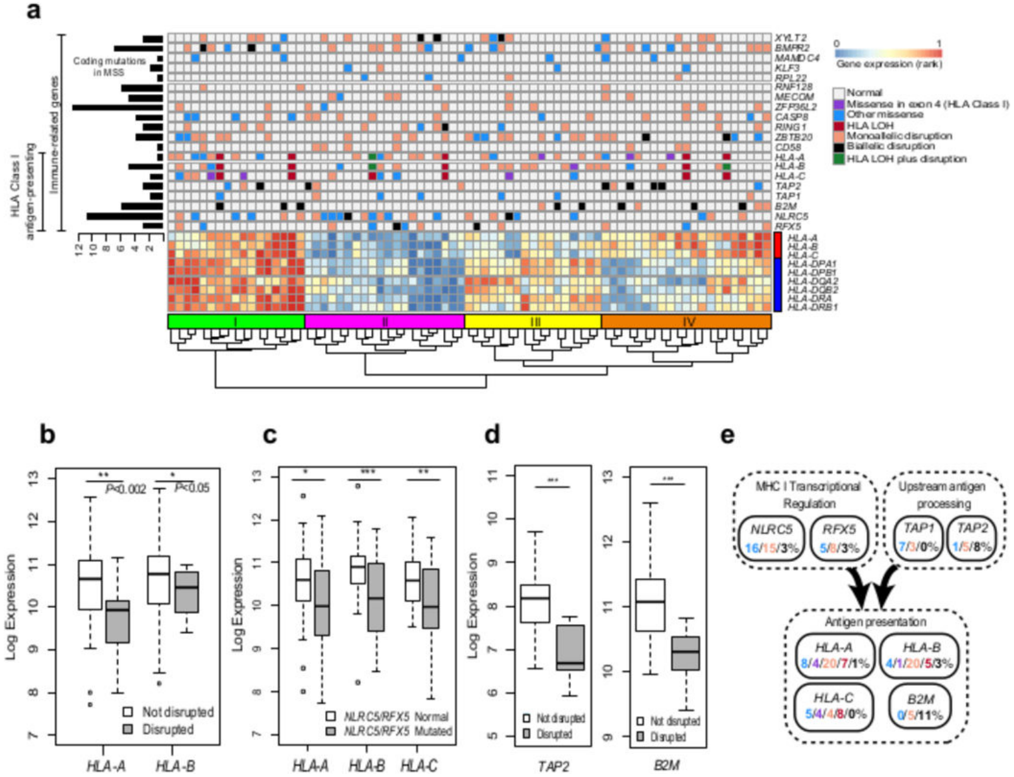
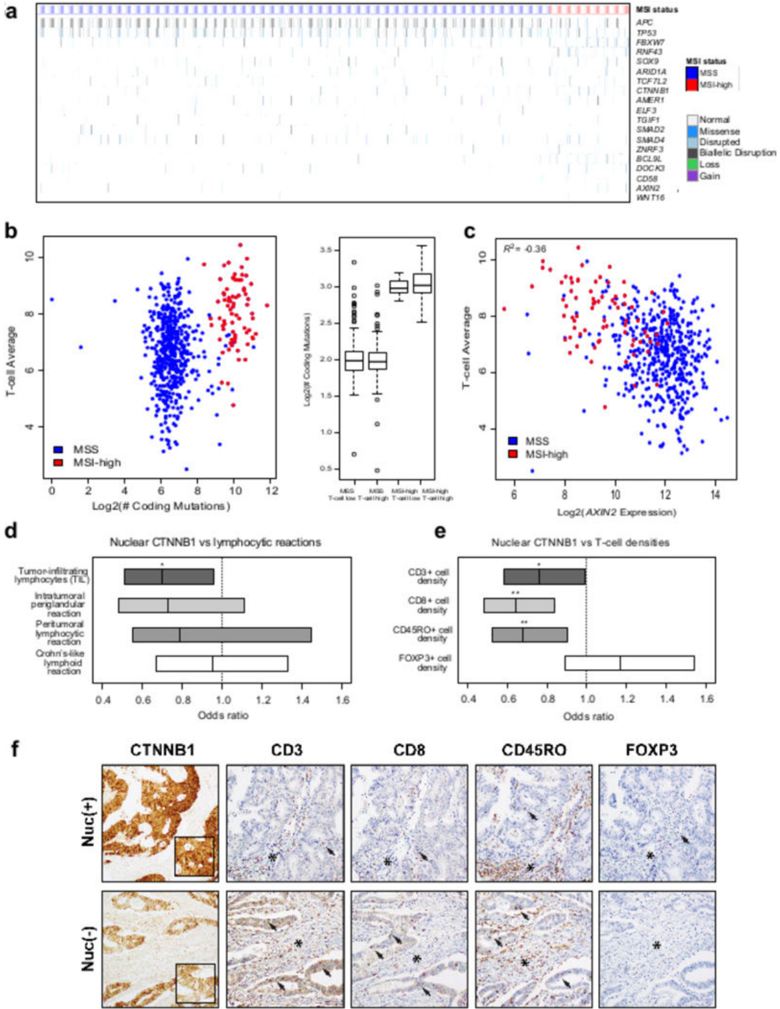
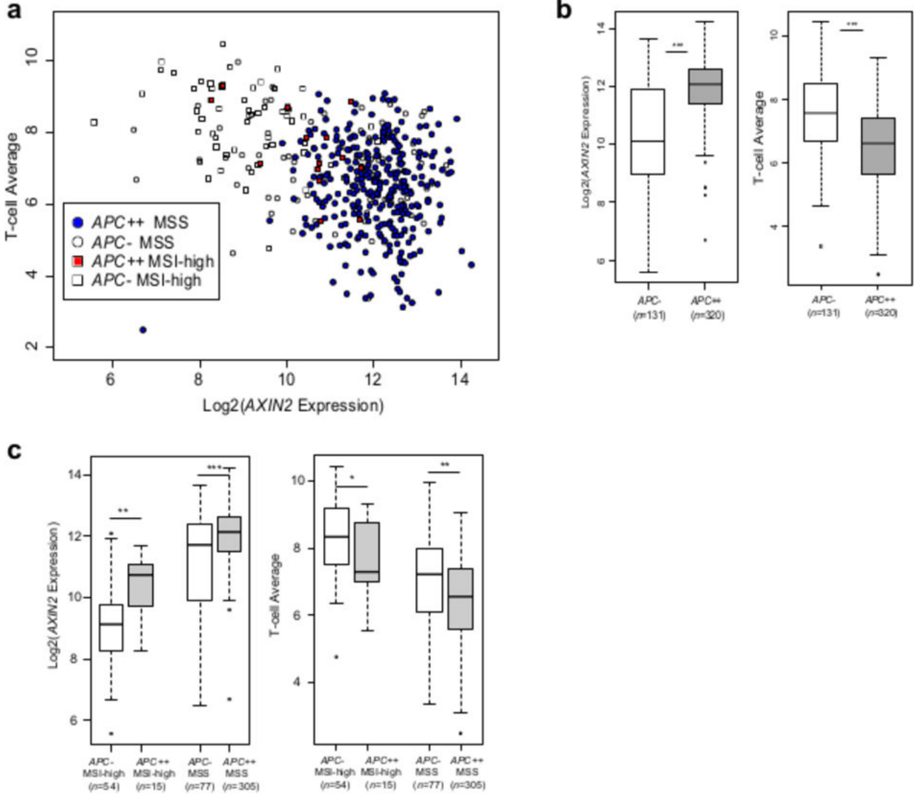
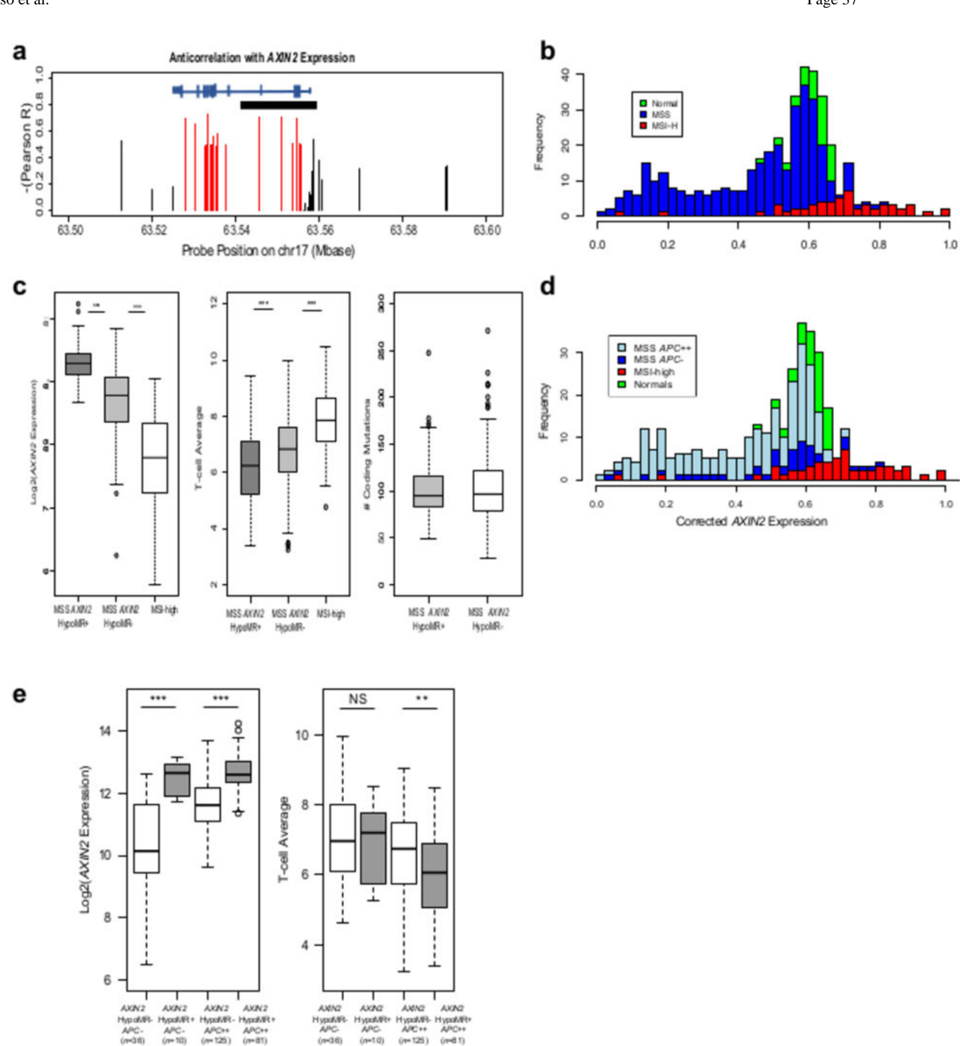
To understand the genetic drivers of immune recognition and evasion in colorectal cancer, we analyzed 1,211 colorectal cancer primary tumor samples, including 179 classified as microsatellite instability–high (MSI-high). This set includes The Cancer Genome Atlas colorectal cancer cohort of 592 samples, completed and analyzed here. MSI-high, a hypermutated, immunogenic subtype of colorectal cancer, had a high rate of significantly mutated genes in important immune-modulating pathways and in the antigen presentation machinery, including biallelic losses of B2M and HLA genes due to copy-number alterations and copy-neutral loss of heterozygosity. WNT/β-catenin signaling genes were significantly mutated in all colorectal cancer subtypes, and activated WNT/β-catenin signaling was correlated with the absence of T-cell infiltration. This large-scale genomic analysis of colorectal cancer demonstrates that MSI-high cases frequently undergo an immunoediting process that provides them with genetic events allowing immune escape despite high mutational load and frequent lymphocytic infiltration and, furthermore, that colorectal cancer tumors have genetic and methylation events associated with activated WNT signaling and T-cell exclusion. Significance: This multi-omic analysis of 1,211 colorectal cancer primary tumors reveals that it should be possible to better monitor resistance in the 15% of cases that respond to immune blockade therapy and also to use WNT signaling inhibitors to reverse immune exclusion in the 85% of cases that currently do not. Cancer Discov; 8(6); 730–49. ©2018 AACR. This article is highlighted in the In This Issue feature, p. 663
Overview
The claims and statistics of this paper haven’t been checked yet.
Free: it reads the open-access text and checks the first 5 claims that cite a source we can check. Create a free account to check every claim.
Integrity signals
Registry
Cites
Statistics
Figures

Verification
Claims the paper makes
The claims and statistics of this paper haven’t been checked yet.
Free: it reads the open-access text and checks the first 5 claims that cite a source we can check. Create a free account to check every claim.
Claims other papers make about this one
Each is checked against this paper’s own text: does it say what the citing paper says it does?
In the citing paper
“In primary CRC tumor samples, Wnt signaling reduced the frequency of tumor-infiltrating T cells, regardless of mutation load [196].”
From Drug Resistance in Colorectal Cancer: From Mechanism to Clinic (2022) · cites this paper as [196]
In the citing paper
“In addition, APC, as a gene that upregulates WNT signaling, is negatively correlated with the frequency of T cell infiltration [196,197,198].”
From Drug Resistance in Colorectal Cancer: From Mechanism to Clinic (2022) · cites this paper as [196]
Self-check
Percentages, sums and reported differences re-computed from the paper’s own numbers.
The self-check needs the paper’s full text.
Citations
Cites
Fast gapped-read alignment with Bowtie 2
Langmead, B., & Salzberg, S. L. (2012) · Nature Methods · doi:10.1038/nmeth.1923 · Cited by 56,400 · cited 1×
“org), using bowtie2 (90) to perform the realignment.”
MethodPD-1 and PD-L1 Immune Checkpoint Blockade to Treat Breast Cancer
Hartkopf, A. D., Taran, F.-A., Wallwiener, M., Walter, C. B., Krämer, B., Grischke, E.-M., & Brucker, S. Y. (2016) · Breast Care · doi:10.1159/000453569 · Cited by 30,845
The blockade of immune checkpoints in cancer immunotherapy
Pardoll, D. M. (2012) · Nature Reviews Cancer · doi:10.1038/nrc3239 · Cited by 13,838 · cited 1×
“A main mechanism by which cancers avoid immune attack is by triggering immune checkpoints that are inhibitory pathways crucial for limiting self-attack and minimizing collateral damage in normal tissues (70).”
BackgroundPD-1 Blockade in Tumors with Mismatch-Repair Deficiency
Le, D. T., Uram, J. N., Wang, H., Bartlett, B. R., Kemberling, H., Eyring, A. D., Skora, A. D., Luber, B. S., Azad, N. S., Laheru, D., et al. (2015) · New England Journal of Medicine · doi:10.1056/nejmoa1500596 · Cited by 9,377 · cited 3×
“We were particularly interested in applying this large multi-omic CRC cohort to understand drivers of immune infiltration, since recent advances in immunotherapy have necessitated a deeper consideration of the less frequent MSI-high CRC, which have been shown to respond to immune checkpoint blockade, while the much mo…”
BackgroundMethodThe cancer genome atlas pan-cancer analysis project
The Cancer Genome Atlas Research Network, Weinstein, J. N., Collisson, E. A., Mills, G. B., Shaw, K. R. M., Ozenberger, B. A., Ellrott, K., Shmulevich, I., Sander, C., & Stuart, J. M. (2013) · Nature Genetics · doi:10.1038/ng.2764 · Cited by 9,092 · cited 1×
“Precision medicine advances have been fueled by technological advances, such as targeted sequencing, and also by multi-omic sequencing efforts, such as The Cancer Genome Atlas (TCGA)(3), which are powered to provide guidance for targeting molecular observations in the form of estimates of the frequencies of drivers to…”
BackgroundComprehensive molecular characterization of human colon and rectal cancer
The Cancer Genome Atlas Network (2012) · Nature · doi:10.1038/nature11252 · Cited by 8,499
Mutational landscape determines sensitivity to PD-1 blockade in non–small cell lung cancer
Rizvi, N. A., Hellmann, M. D., Snyder, A., Kvistborg, P., Makarov, V., Havel, J. J., Lee, W., Yuan, J., Wong, P., Ho, T. S., et al. (2015) · Science · doi:10.1126/science.aaa1348 · Cited by 7,802
Mismatch repair deficiency predicts response of solid tumors to PD-1 blockade
Le, D. T., Durham, J. N., Smith, K. N., Wang, H., Bartlett, B. R., Aulakh, L. K., Lu, S., Kemberling, H., Wilt, C., Luber, B. S., et al. (2017) · Science · doi:10.1126/science.aan6733 · Cited by 6,645 · cited 4×
“We were particularly interested in applying this large multi-omic CRC cohort to understand drivers of immune infiltration, since recent advances in immunotherapy have necessitated a deeper consideration of the less frequent MSI-high CRC, which have been shown to respond to immune checkpoint blockade, while the much mo…”
BackgroundMethodInfluentialType, Density, and Location of Immune Cells Within Human Colorectal Tumors Predict Clinical Outcome
Galon, J., Costes, A., Sanchez-Cabo, F., Kirilovsky, A., Mlecnik, B., Lagorce-Pagès, C., Tosolini, M., Camus, M., Berger, A., Wind, P., et al. (2006) · Science · doi:10.1126/science.1129139 · Cited by 6,516 · cited 1×
“We denoted the average log-expression of twelve canonical T-cell-associated genes (CCL2, CCL3, CCL4, CXCL9, CXCL10, CD8A, HLA-DOB, HLA-DMB, HLA-DOA, GZMK, ICOS, and IRF1) as the “T-cell average” for each sample with expression data (45,92,93).”
BackgroundWnt/β-Catenin Signaling: Components, Mechanisms, and Diseases
MacDonald, B. T., Tamai, K., & He, X. (2009) · Developmental Cell · doi:10.1016/j.devcel.2009.06.016 · Cited by 5,583 · cited 1×
“We first considered biallelic disruptive mutations in APC, since APC loss results in increased nuclear CTNNB1 thereby driving expression of WNT target genes (68).”
Background
Cited by
Top 10 Challenges in Cancer Immunotherapy
Hegde, P. S., & Chen, D. S. (2020) · Immunity · doi:10.1016/j.immuni.2019.12.011 · Cited by 2,238
Cytotoxic CD8+ T cells in cancer and cancer immunotherapy
Raskov, H., Orhan, A., Christensen, J. P., & Gögenur, I. (2021) · British Journal of Cancer · doi:10.1038/s41416-020-01048-4 · Cited by 1,687
Tumour-intrinsic resistance to immune checkpoint blockade
Kalbasi, A., & Ribas, A. (2020) · Nature Reviews Immunology · doi:10.1038/s41577-019-0218-4 · Cited by 1,486
Self-citationConsensus guidelines for the definition, detection and interpretation of immunogenic cell death
Galluzzi, L., Vitale, I., Warren, S., Adjemian, S., Agostinis, P., Martinez, A. B., Chan, T. A., Coukos, G., Demaria, S., Deutsch, E., et al. (2020) · Journal for ImmunoTherapy of Cancer · doi:10.1136/jitc-2019-000337 · Cited by 1,119
“125 126 Of note, while the majority of ICD inducers are believed to have little impact on antigenicity and to operate by driving the correct spatiotemporal emission of DAMPs in the context of cell death (see Sources of ICD adjuvanticity ), at least some ICD-triggering regimens may also boost…”
Turning cold tumors into hot tumors by improving T-cell infiltration
Liu, Y.-T., & Sun, Z.-J. (2021) · Theranostics · doi:10.7150/thno.58390 · Cited by 827
Intratumoral heterogeneity in cancer progression and response to immunotherapy
Vitale, I., Shema, E., Loi, S., & Galluzzi, L. (2021) · Nature Medicine · doi:10.1038/s41591-021-01233-9 · Cited by 826
The clinical role of the TME in solid cancer
Giraldo, N. A., Sanchez-Salas, R., Peske, J. D., Vano, Y., Becht, E., Petitprez, F., Validire, P., Ingels, A., Cathelineau, X., Fridman, W. H., et al. (2019) · British Journal of Cancer · doi:10.1038/s41416-018-0327-z · Cited by 732
WNT/β-catenin pathway activation correlates with immune exclusion across human cancers
Luke, J. J., Bao, R., Sweis, R. F., Spranger, S., & Gajewski, T. F. (2019) · Clinical Cancer Research · doi:10.1158/1078-0432.ccr-18-1942 · Cited by 722
Genetic and biological hallmarks of colorectal cancer
Li, J., Ma, X., Chakravarti, D., Shalapour, S., & DePinho, R. A. (2021) · Genes & Development · doi:10.1101/gad.348226.120 · Cited by 573
Picard, E., Verschoor, C. P., Ma, G. W., & Pawelec, G. (2020) · Frontiers in Immunology · doi:10.3389/fimmu.2020.00369 · Cited by 522
Glioma progression is shaped by genetic evolution and microenvironment interactions
Varn, F. S., Johnson, K. C., Martinek, J., Huse, J. T., Nasrallah, M. P., Wesseling, P., Cooper, L. A. D., Malta, T. M., Wade, T. E., Sabedot, T. S., et al. (2022) · Cell · doi:10.1016/j.cell.2022.04.038 · Cited by 494
Synthetic lethality as an engine for cancer drug target discovery
Huang, A., Garraway, L. A., Ashworth, A., & Weber, B. (2020) · Nature Reviews Drug Discovery · doi:10.1038/s41573-019-0046-z · Cited by 469
Self-citationJoanito, I., Wirapati, P., Zhao, N., Nawaz, Z., Yeo, G., Lee, F., Eng, C. L. P., Macalinao, D. C., Kahraman, M., Srinivasan, H., et al. (2022) · Nature Genetics · doi:10.1038/s41588-022-01100-4 · Cited by 434
Autophagy in tumour immunity and therapy
Xia, H., Green, D. R., & Zou, W. (2021) · Nature Reviews Cancer · doi:10.1038/s41568-021-00344-2 · Cited by 404
Trujillo, J. A., Sweis, R. F., Bao, R., & Luke, J. J. (2018) · Cancer Immunology Research · doi:10.1158/2326-6066.cir-18-0277 · Cited by 393
Sahin, I. H., Akce, M., Alese, O., Shaib, W., Lesinski, G. B., El-Rayes, B., & Wu, C. (2019) · British Journal of Cancer · doi:10.1038/s41416-019-0599-y · Cited by 393
“These genetic alterations in components of the immune response included a biallelic loss of β2 microglobulin (β2M), an MHC class I component, and singlecopy loss events in HLA molecules, pointing to antigen presentation machinery defects.(33) Moreover, the authors also identified alterations in immune-response-related…”
BackgroundResultInfluentialSelf-citationGrasso, C. S., Tsoi, J., Onyshchenko, M., Abril-Rodriguez, G., Ross-Macdonald, P., Wind-Rotolo, M., Champhekar, A., Medina, E., Torrejon, D. Y., Shin, D. S., et al. (2020) · Cancer Cell · doi:10.1016/j.ccell.2020.08.005 · Cited by 390
Self-citationEmerging Cellular Therapies for Cancer
Guedan, S., Ruella, M., & June, C. H. (2019) · Annual Review of Immunology · doi:10.1146/annurev-immunol-042718-041407 · Cited by 386
Exploring immunotherapy in colorectal cancer
Weng, J., Li, S., Zhu, Z., Liu, Q., Zhang, R., Yang, Y., & Li, X. (2022) · Journal of Hematology & Oncology · doi:10.1186/s13045-022-01294-4 · Cited by 355
Extrachromosomal oncogene amplification in tumour pathogenesis and evolution
Verhaak, R. G. W., Bafna, V., & Mischel, P. S. (2019) · Nature Reviews Cancer · doi:10.1038/s41568-019-0128-6 · Cited by 329
Combined BRAF and MEK inhibition with PD-1 blockade immunotherapy in BRAF-mutant melanoma
Ribas, A., Lawrence, D., Atkinson, V., Agarwal, S., Miller, W. H., Carlino, M. S., Fisher, R., Long, G. V., Hodi, F. S., Tsoi, J., et al. (2019) · Nature Medicine · doi:10.1038/s41591-019-0476-5 · Cited by 323
Self-citationBiomarker-guided therapy for colorectal cancer: strength in complexity
Sveen, A., Kopetz, S., & Lothe, R. A. (2020) · Nature Reviews Clinical Oncology · doi:10.1038/s41571-019-0241-1 · Cited by 320
Therapeutic targeting of tumour myeloid cells
Barry, S. T., Gabrilovich, D. I., Sansom, O. J., Campbell, A. D., & Morton, J. P. (2023) · Nature Reviews Cancer · doi:10.1038/s41568-022-00546-2 · Cited by 305
Mechanisms of MHC-I Downregulation and Role in Immunotherapy Response
Taylor, B. C., & Balko, J. M. (2022) · Frontiers in Immunology · doi:10.3389/fimmu.2022.844866 · Cited by 298
Heterogeneity of the tumor immune microenvironment and its clinical relevance
Jia, Q., Wang, A., Yuan, Y., Zhu, B., & Long, H. (2022) · Experimental Hematology & Oncology · doi:10.1186/s40164-022-00277-y · Cited by 300
WNT/β-Catenin Signaling Pathway Regulating T Cell-Inflammation in the Tumor Microenvironment
Li, X., Xiang, Y., Li, F., Yin, C., Li, B., & Ke, X. (2019) · Frontiers in Immunology · doi:10.3389/fimmu.2019.02293 · Cited by 291
Idos, G. E., Kwok, J., Bonthala, N., Kysh, L., Gruber, S. B., & Qu, C. (2020) · Scientific Reports · doi:10.1038/s41598-020-60255-4 · Cited by 291
A few good peptides: MHC class I-based cancer immunosurveillance and immunoevasion
Dersh, D., Hollý, J., & Yewdell, J. W. (2021) · Nature Reviews Immunology · doi:10.1038/s41577-020-0390-6 · Cited by 278
Doran, S. L., Stevanović, S., Adhikary, S., Gartner, J. J., Jia, L., Kwong, M. L. M., Faquin, W. C., Hewitt, S. M., Sherry, R. M., Yang, J. C., et al. (2019) · Journal of Clinical Oncology · doi:10.1200/jco.18.02424 · Cited by 272
Peña-Romero, A. C., & Orenes-Piñero, E. (2022) · Cancers · doi:10.3390/cancers14071681 · Cited by 257
WNT as a Driver and Dependency in Cancer
Parsons, M. J., Tammela, T., & Dow, L. E. (2021) · Cancer Discovery · doi:10.1158/2159-8290.cd-21-0190 · Cited by 257
the Oesophageal Cancer Clinical and Molecular Stratification (OCCAMS) Consortium, Frankell, A. M., Jammula, S., Li, X., Contino, G., Killcoyne, S., Abbas, S., Perner, J., Bower, L., Devonshire, G., et al. (2019) · Nature Genetics · doi:10.1038/s41588-018-0331-5 · Cited by 231
Hamada, T., Zhang, X., Mima, K., Bullman, S., Sukawa, Y., Nowak, J. A., Kosumi, K., Masugi, Y., Twombly, T. S., Cao, Y., et al. (2018) · Cancer Immunology Research · doi:10.1158/2326-6066.cir-18-0174 · Cited by 232
Self-citationGenetic and epigenetic characteristics of inflammatory bowel disease-associated colorectal cancer
Rajamäki, K., Taira, A., Katainen, R., Välimäki, N., Kuosmanen, A., Plaketti, R.-M., Seppälä, T. T., Ahtiainen, M., Wirta, E.-V., Vartiainen, E., et al. (2021) · Gastroenterology · doi:10.1053/j.gastro.2021.04.042 · Cited by 230
The Prognostic Role of Macrophage Polarization in the Colorectal Cancer Microenvironment
Väyrynen, J. P., Haruki, K., Lau, M. C., Väyrynen, S. A., Zhong, R., Dias Costa, A., Borowsky, J., Zhao, M., Fujiyoshi, K., Arima, K., et al. (2021) · Cancer Immunology Research · doi:10.1158/2326-6066.cir-20-0527 · Cited by 228
Self-citationTrabucco, S. E., Gowen, K., Maund, S. L., Sanford, E., Fabrizio, D. A., Hall, M. J., Yakirevich, E., Gregg, J. P., Stephens, P. J., Frampton, G. M., et al. (2019) · The Journal of Molecular Diagnostics · doi:10.1016/j.jmoldx.2019.06.011 · Cited by 222
Michels, B. E., Mosa, M. H., Streibl, B. I., Zhan, T., Menche, C., Abou-El-Ardat, K., Darvishi, T., Członka, E., Wagner, S., Winter, J., et al. (2020) · Cell Stem Cell · doi:10.1016/j.stem.2020.04.003 · Cited by 222
Best practices for bioinformatic characterization of neoantigens for clinical utility
Richters, M. M., Xia, H., Campbell, K. M., Gillanders, W. E., Griffith, O. L., & Griffith, M. (2019) · Genome Medicine · doi:10.1186/s13073-019-0666-2 · Cited by 214
“In lung cancer and MSI-CRC, mutations or biallelic loss of B2M causes lack of class I HLA presentation [82, 83].”
BackgroundAllgäuer, M., Budczies, J., Christopoulos, P., Endris, V., Lier, A., Rempel, E., Volckmar, A.-L., Kirchner, M., von Winterfeld, M., Leichsenring, J., et al. (2018) · Translational Lung Cancer Research · doi:10.21037/tlcr.2018.08.14 · Cited by 212
Zhang, Y., Song, J., Zhao, Z., Yang, M., Chen, M., Liu, C., Ji, J., & Zhu, D. (2020) · Cancer Letters · doi:10.1016/j.canlet.2019.10.016 · Cited by 210
Battaglin, F., Naseem, M., Lenz, H., & Salem, M. E. (2018) · PubMed · Cited by 287
Ge, R., Wang, Z., & Cheng, L. (2022) · npj Precision Oncology · doi:10.1038/s41698-022-00272-w · Cited by 192
Beta2-microglobulin(B2M) in cancer immunotherapies: Biological function, resistance and remedy
Wang, H., Liu, B., & Wei, J. (2021) · Cancer Letters · doi:10.1016/j.canlet.2021.06.008 · Cited by 190
The genomic landscape of 2,023 colorectal cancers
Cornish, A. J., Gruber, A. J., Kinnersley, B., Chubb, D., Frangou, A., Caravagna, G., Noyvert, B., Lakatos, E., Wood, H. M., Thorn, S., et al. (2024) · Nature · doi:10.1038/s41586-024-07747-9 · Cited by 180
“Here driver mutations were defined as any potentially pathogenic coding variant called in 63 driver genes previously identified in MSS CRC 3,4,7,8 .”
InfluentialRodon, J., Argilés, G., Connolly, R. M., Vaishampayan, U., de Jonge, M., Garralda, E., Giannakis, M., Smith, D. C., Dobson, J. R., McLaughlin, M. E., et al. (2021) · British Journal of Cancer · doi:10.1038/s41416-021-01389-8 · Cited by 174
Self-citationMismatch Repair-Deficient Colorectal Cancer: Building on Checkpoint Blockade
Jin, Z., & Sinicrope, F. A. (2022) · Journal of Clinical Oncology · doi:10.1200/jco.21.02691 · Cited by 168
Pan-cancer association of HLA gene expression with cancer prognosis and immunotherapy efficacy
Schaafsma, E., Fugle, C. M., Wang, X., & Cheng, C. (2021) · British Journal of Cancer · doi:10.1038/s41416-021-01400-2 · Cited by 167
Drug Resistance in Colorectal Cancer: From Mechanism to Clinic
Wang, Q., Shen, X., Chen, G., & Du, J. (2022) · Cancers · doi:10.3390/cancers14122928 · Cited by 160
PAK4 inhibition improves PD-1 blockade immunotherapy
Abril-Rodriguez, G., Torrejon, D. Y., Liu, W., Zaretsky, J. M., Nowicki, T. S., Tsoi, J., Puig-Saus, C., Baselga-Carretero, I., Medina, E., Quist, M. J., et al. (2019) · Nature Cancer · doi:10.1038/s43018-019-0003-0 · Cited by 157
“Among the different oncogenic signaling pathways, there is compelling evidence from several studies that associate an active WNT/ β -catenin signaling pathway with immune exclusion and resistance to immune checkpoint blockade therapy 11–13 .”
Self-citationPD-1 and PD-L1 inhibitors in cold colorectal cancer: challenges and strategies
Lin, K. X., Istl, A. C., Quan, D., Skaro, A. I., Tang, E. S.-T., & Zheng, X. (2023) · Cancer Immunology Immunotherapy · doi:10.1007/s00262-023-03520-5 · Cited by 179
“The loss of peptides involved in antigen processing further damp-ens the immunogenicity of MSS tumors [33].”
BackgroundRational combinations of immunotherapy with radiotherapy in ovarian cancer
Herrera, F. G., Irving, M. B., Kandalaft, L. E., & Coukos, G. (2019) · The Lancet Oncology · doi:10.1016/s1470-2045(19)30401-2 · Cited by 162
Bortolomeazzi, M., Keddar, M. R., Montorsi, L., Acha-Sagredo, A., Benedetti, L., Temelkovski, D., Choi, S., Petrov, N., Todd, K., Wai, P., et al. (2021) · Gastroenterology · doi:10.1053/j.gastro.2021.06.064 · Cited by 146
Overcoming Genetically Based Resistance Mechanisms to PD-1 Blockade
Torrejon, D. Y., Abril-Rodriguez, G., Champhekar, A. S., Tsoi, J., Campbell, K. M., Kalbasi, A., Parisi, G., Zaretsky, J. M., Garcia-Diaz, A., Puig-Saus, C., et al. (2020) · Cancer Discovery · doi:10.1158/2159-8290.cd-19-1409 · Cited by 146
Self-citationDirect targeting of β ‐catenin in the Wnt signaling pathway: Current progress and perspectives
Wang, Z., Li, Z., & Ji, H. (2021) · Medicinal Research Reviews · doi:10.1002/med.21787 · Cited by 163
Beyaz, S., Chung, C., Mou, H., Bauer-Rowe, K. E., Xifaras, M. E., Ergin, I., Dohnalová, L., Biton, M., Shekhar, K., Eskiocak, O., et al. (2021) · Cell stem cell · doi:10.1016/j.stem.2021.08.007 · Cited by 155
Newey, A., Griffiths, B. L., Michaux, J., Pak, H. S., Stevenson, B. J., Woolston, A., Semiannikova, M., Spain, G., Barber, L. J., Matthews, N., et al. (2019) · Journal for ImmunoTherapy of Cancer · doi:10.1186/s40425-019-0769-8 · Cited by 145
Ballhausen, A., Przybilla, M. J., Jendrusch, M., Haupt, S., Pfaffendorf, E., Seidler, F., Witt, J., Hernandez Sanchez, A., Urban, K., Draxlbauer, M., et al. (2020) · Nature Communications · doi:10.1038/s41467-020-18514-5 · Cited by 139
NKG2A and HLA-E define an alternative immune checkpoint axis in bladder cancer
Salomé, B., Sfakianos, J. P., Ranti, D. L., Daza, J., Bieber, C., Charap, A., Hammer, C., Banchereau, R., Farkas, A. M., Ruan, D. F., et al. (2022) · Cancer Cell · doi:10.1016/j.ccell.2022.08.005 · Cited by 156
Deep convolutional neural networks for accurate somatic mutation detection
Sahraeian, S. M. E., Liu, R., Lau, B., Podesta, K., Mohiyuddin, M., & Lam, H. Y. K. (2019) · Nature Communications · doi:10.1038/s41467-019-09027-x · Cited by 136
Fibrinogen-like protein 1 (FGL1): the next immune checkpoint target
Qian, W., Zhao, M., Wang, R., & Li, H. (2021) · Journal of Hematology & Oncology · doi:10.1186/s13045-021-01161-8 · Cited by 144
A Wnt-Induced Phenotypic Switch in Cancer-Associated Fibroblasts Inhibits EMT in Colorectal Cancer
Mosa, M. H., Michels, B. E., Menche, C., Nicolas, A. M., Darvishi, T., Greten, F. R., & Farin, H. F. (2020) · Cancer Research · doi:10.1158/0008-5472.can-20-0263 · Cited by 130
The Clinical Impact of the Genomic Landscape of Mismatch Repair–Deficient Cancers
Germano, G., Amirouchene-Angelozzi, N., Rospo, G., & Bardelli, A. (2018) · Cancer Discovery · doi:10.1158/2159-8290.cd-18-0150 · Cited by 128
Beyond the Barrier: Unraveling the Mechanisms of Immunotherapy Resistance
Bell, H. N., & Zou, W. (2024) · Annual Review of Immunology · doi:10.1146/annurev-immunol-101819-024752 · Cited by 150
Chromosomal instability as a driver of cancer progression
Chen, X., Agustinus, A. S., Li, J., Bona, M. D., & Bakhoum, S. F. W. (2024) · Nature Reviews Genetics · doi:10.1038/s41576-024-00761-7 · Cited by 176
Immunogenic cell death in colon cancer prevention and therapy
Ruan, H., Leibowitz, B. J., Zhang, L., & Yu, J. (2020) · Molecular Carcinogenesis · doi:10.1002/mc.23183 · Cited by 132
Recent developments in immunotherapy for gastrointestinal tract cancers
Chong, X., Madeti, Y., Cai, J., Li, W., Cong, L., Lu, J., Mo, L., Liu, H., He, S., Yu, C., et al. (2024) · Journal of Hematology & Oncology · doi:10.1186/s13045-024-01578-x · Cited by 148
Evolutionary dynamics of neoantigens in growing tumors
Lakatos, E., Williams, M. J., Schenck, R. O., Cross, W. C. H., Househam, J., Zapata, L., Werner, B., Gatenbee, C., Robertson-Tessi, M., Barnes, C. P., et al. (2020) · Nature Genetics · doi:10.1038/s41588-020-0687-1 · Cited by 121
Li, Z., Song, W., Rubinstein, M., & Liu, D. (2018) · Journal of Hematology & Oncology · doi:10.1186/s13045-018-0684-3 · Cited by 119
Ganesh, S., Shui, X., Craig, K. P., Park, J., Wang, W., Brown, B. D., & Abrams, M. T. (2018) · Molecular Therapy · doi:10.1016/j.ymthe.2018.09.005 · Cited by 116
Immune Checkpoint Inhibition in Colorectal Cancer: Microsatellite Instability and Beyond
Cohen, R., Rousseau, B., Vidal, J., Colle, R., Diaz, L. A., & André, T. (2019) · Targeted Oncology · doi:10.1007/s11523-019-00690-0 · Cited by 131
Imperial, R. J. L., Ahmed, Z., Toor, O. M., Erdoğan, C., Khaliq, A. M., Case, P., Case, J., Kennedy, K. F., Cummings, L. S., Melton, N. M., et al. (2018) · Molecular Cancer · doi:10.1186/s12943-018-0923-9 · Cited by 137
Middha, S., Yaeger, R., Shia, J., Stadler, Z. K., King, S., Guercio, S., Paroder, V., Bates, D. D. B., Rana, S., Diaz, L. A., et al. (2019) · JCO Precision Oncology · doi:10.1200/po.18.00321 · Cited by 109
Feng, M., Jin, J. Q., Xia, L., Xiao, T., Mei, S., Wang, X., Huang, X., Chen, J., Liu, M., Chen, C., et al. (2019) · Science Advances · doi:10.1126/sciadv.aau5240 · Cited by 117
HLA class I loss in colorectal cancer: implications for immune escape and immunotherapy
Anderson, P., Aptsiauri, N., Ruiz-Cabello, F., & Garrido, F. (2021) · Cellular & Molecular Immunology · doi:10.1038/s41423-021-00634-7 · Cited by 107
Challenges and Therapeutic Opportunities in the dMMR/MSI-H Colorectal Cancer Landscape
Mulet-Margalef, N., Linares, J., Badia-Ramentol, J., Jimeno, M., Sanz, C., Mozo, J. L. M., & Calon, A. (2023) · Cancers · doi:10.3390/cancers15041022 · Cited by 124
Genetic immune escape landscape in primary and metastatic cancer
Martínez-Jiménez, F., Priestley, P., Shale, C., Baber, J., Rozemuller, E. H., & Cuppen, E. P. J. G. (2023) · Nature Genetics · doi:10.1038/s41588-023-01367-1 · Cited by 122
Hamada, T., Nowak, J. A., Milner, D. A., Song, M., & Ogino, S. (2019) · The Journal of Pathology · doi:10.1002/path.5236 · Cited by 106
Self-citationHypoxia-driven intratumor heterogeneity and immune evasion
Terry, S., Engelsen, A. S. T., Buart, S., El‐Sayed, W., Venkatesh, G. H., & Chouaïb, S. (2020) · Cancer Letters · doi:10.1016/j.canlet.2020.07.004 · Cited by 107
PTEN loss correlates with T cell exclusion across human cancers
Lin, Z., Huang, L., Li, S. L., Gu, J., Cui, X., & Zhou, Y. (2021) · BMC Cancer · doi:10.1186/s12885-021-08114-x · Cited by 106
Mutational and Antigenic Landscape in Tumor Progression and Cancer Immunotherapy
Vitale, I., Sistigu, A., Manic, G., Rudqvist, N.-P., Trajanoski, Z., & Galluzzi, L. (2019) · Trends in Cell Biology · doi:10.1016/j.tcb.2019.01.003 · Cited by 94
Intrinsic Resistance to Immune Checkpoint Blockade in a Mismatch Repair–Deficient Colorectal Cancer
Gurjao, C., Liu, D., Hofree, M., AlDubayan, S. H., Wakiro, I., Su, M.-J., Felt, K., Gjini, E., Brais, L. K., Rotem, A., et al. (2019) · Cancer Immunology Research · doi:10.1158/2326-6066.cir-18-0683 · Cited by 89
Self-citationDistinct Colorectal Cancer–Associated APC Mutations Dictate Response to Tankyrase Inhibition
Schatoff, E. M., Goswami, S., Zafra, M. P., Foronda, M., Shusterman, M., Leach, B. I., Katti, A., Diaz, B. J., & Dow, L. E. (2019) · Cancer Discovery · doi:10.1158/2159-8290.cd-19-0289 · Cited by 89
Zaidi, S. H. E., Harrison, T. A., Phipps, A. I., Steinfelder, R. S., Trinh, Q. M., Qu, C., Banbury, B. L., Georgeson, P., Grasso, C. S., Giannakis, M., et al. (2020) · Nature Communications · doi:10.1038/s41467-020-17386-z · Cited by 95
Self-citationImmune escape and resistance to immunotherapy in mismatch repair deficient tumors
Mestrallet, G., Brown, M., Bozkus, C. C., & Bhardwaj, N. (2023) · Frontiers in Immunology · doi:10.3389/fimmu.2023.1210164 · Cited by 97
Epidemiology, pathogenesis, biology and evolving management of MSI-H/dMMR cancers
Ambrosini, M., Manca, P., Nasca, V., Sciortino, C., Ghelardi, F., Seligmann, J. F., Taïeb, J., & Pietrantonio, F. (2025) · Nature Reviews Clinical Oncology · doi:10.1038/s41571-025-01015-z · Cited by 116
“1), which seem to be enriched in patients with Lynch syndrome 23,33,34 .”
Elevated neoantigen levels in tumors with somatic mutations in the HLA-A, HLA-B, HLA-C and B2M genes
Castro, A., Öztürk, K., Pyke, R. M., Su, X., Zanetti, M., & Carter, H. K. (2019) · BMC Medical Genomics · doi:10.1186/s12920-019-0544-1 · Cited by 96
Fujita, M., Yamaguchi, R., Hasegawa, T., Shimada, S., Arihiro, K., Hayashi, S., Maejima, K., Nakano, K., Fujimoto, A., Ono, A., et al. (2020) · EBioMedicine · doi:10.1016/j.ebiom.2020.102659 · Cited by 87
Väyrynen, J. P., Lau, M. C., Haruki, K., Väyrynen, S. A., Dias Costa, A., Borowsky, J., Zhao, M., Fujiyoshi, K., Arima, K., Twombly, T. S., et al. (2020) · Clinical Cancer Research · doi:10.1158/1078-0432.ccr-20-0071 · Cited by 83
“Given that mismatch repair deficiency is common in poorly differentiated tumors (28), we hypothesized that the increased burden of immunogenic neopeptides (29) in these tumors might be associated with higher immune cell densities.”
BackgroundSelf-citationAnagnostou, V., Bruhm, D. C., Niknafs, N., White, J. R., Shao, X. M., Sidhom, J.-W., Stein, J. E., Tsai, H., Wang, H., Belcaid, Z., et al. (2020) · Cell Reports Medicine · doi:10.1016/j.xcrm.2020.100139 · Cited by 89
Self-citationCD4 T Cell–Dependent Rejection of Beta-2 Microglobulin Null Mismatch Repair–Deficient Tumors
Germano, G., Lu, S., Rospo, G., Lamba, S., Rousseau, B., Fanelli, S., Stenech, D., Le, D. T., Hays, J. L., Totaro, M. G., et al. (2021) · Cancer Discovery · doi:10.1158/2159-8290.cd-20-0987 · Cited by 88
Lin, Y., Peng, L., Dong, L., Liu, D., Ma, J., Lin, J., Chen, X., Lin, P., Song, G., Zhang, M., et al. (2022) · Cancer Discovery · doi:10.1158/2159-8290.cd-21-1640 · Cited by 90
Roelands, J. P., van der Ploeg, M., Ijsselsteijn, M. E., Dang, H., Boonstra, J. J., Hardwick, J. C. H., Hawinkels, L. J. A. C., Morreau, H. M., & de Miranda, N. F. C. C. (2022) · Gut · doi:10.1136/gutjnl-2022-327608 · Cited by 97
Wu, W., Liu, Y., Zeng, S., Han, Y., & Shen, H. (2021) · Journal of Hematology & Oncology · doi:10.1186/s13045-021-01166-3 · Cited by 89
Ren, J., Li, N., Pei, S., Lian, Y., Li, L., Peng, Y., Liu, Q., Guo, J., Wang, X., Han, Y., et al. (2022) · Journal of Clinical Investigation · doi:10.1172/jci153167 · Cited by 90
Photoactivatable Silencing Extracellular Vesicle (PASEV) Sensitizes Cancer Immunotherapy
Lu, M., Xing, H., Shao, W., Zhang, T., Zhang, M., Wang, Y., Li, F., Weng, Y., Zheng, A., Huang, Y., et al. (2022) · Advanced Materials · doi:10.1002/adma.202204765 · Cited by 84
Li, J., Xiao, Z., Wang, D., Jia, L., Nie, S., Zeng, X., & Hu, W. (2023) · Molecular Cancer · doi:10.1186/s12943-023-01844-5 · Cited by 105
Fidelle, M., Yonekura, S., Picard, M., Cogdill, A., Hollebecque, A., Roberti, M. P., & Zitvogel, L. (2020) · Frontiers in Immunology · doi:10.3389/fimmu.2020.600886 · Cited by 81
Microsatellite instability: A 2024 update
Yamamoto, H., Watanabe, Y., Arai, H., Umemoto, K., Tateishi, K., & Sunakawa, Y. (2024) · Cancer Science · doi:10.1111/cas.16160 · Cited by 97
Filip, S., Vymetalkova, V. P., Petera, J., Vodičková, Ľ., Kubeček, O., John, S., Čečka, F., Krupova, M., Manethová, M., Červená, K., et al. (2020) · International Journal of Molecular Sciences · doi:10.3390/ijms21155255 · Cited by 98
Cooperation between chemotherapy and immunotherapy in gastroesophageal cancers
Davern, M., & Lysaght, J. (2020) · Cancer Letters · doi:10.1016/j.canlet.2020.09.014 · Cited by 83
Metadata
- Authors
- Grasso, C. S., Giannakis, M., Wells, D. K., Hamada, T., Mu, X. J., Quist, M., Nowak, J. A., Nishihara, R., Qian, Z. R., Inamura, K., Morikawa, T., Nosho, K., Abril-Rodriguez, G., Connolly, C., Escuin-Ordinas, H., Geybels, M. S., Grady, W. M., Hsu, L., Hu-Lieskovan, S., Huyghe, J. R., Kim, Y. J., Krystofinski, P., Leiserson, M. D. M., Montoya, D. J., Nadel, B. B., Pellegrini, M., Pritchard, C. C., Puig-Saus, C., Quist, E. H., Raphael, B. J., Salipante, S. J., Shin, D. S., Shinbrot, E., Shirts, B., Shukla, S., Stanford, J. L., Sun, W., Tsoi, J., Upfill-Brown, A., Wheeler, D. A., Wu, C. J., Yu, M., Zaidi, S. H., Zaretsky, J. M., Gabriel, S. B., Lander, E. S., Garraway, L. A., Hudson, T. J., Fuchs, C. S., Ribas, A., Ogino, S., & Peters, U.
- Affiliations
- University of California, Los Angeles (US)
- Broad Institute (US)
- Parker Institute for Cancer Immunotherapy (US)
- Dana-Farber Cancer Institute (US)
- Brigham and Women's Hospital (US)
- Harvard University (US)
- 1Department of Medicine, Division of Hematology-Oncology, University of California, Los Angeles, and the Jonsson Comprehensive Cancer Center, Los Angeles, California.
- Fred Hutch Cancer Center (US)
- University of Washington (US)
- Brown University (US)
- 13Department of Computer Science and Center for Computational Molecular Biology, Brown University, Providence, Rhode Island.
- Baylor College of Medicine (US)
- Ontario Institute for Cancer Research (CA)
- Corresponding author
- Grasso, Catherine S.
- ORCID
- Grasso, Catherine S.
- Giannakis, Marios
- Wells, Daniel K.
- Hamada, Tsuyoshi
- Mu, Xinmeng Jasmine
- Nowak, Jonathan A.
- Nishihara, Reiko
- Qian, Zhi Rong
- Inamura, Kentaro
- Morikawa, Teppei
- Connolly, Charles
- Escuin-Ordinas, Helena
- Grady, William M.
- Hsu, Li
- Huyghe, Jeroen R.
- Kim, Yeon Joo
- Krystofinski, Paige
- Leiserson, Mark D.M.
- Montoya, Dennis J.
- Nadel, Brian B.
- Pellegrini, Matteo
- Pritchard, Colin C.
- Puig-Saus, Cristina
- Salipante, Stephen J.
- Shin, Daniel Sanghoon
- Shinbrot, Eve
- Shirts, Brian
- Shukla, Sachet
- Stanford, Janet L.
- Sun, Wei
- Tsoi, Jennifer
- Upfill-Brown, Alexander
- Wheeler, David A.
- Wu, Catherine J.
- Yu, Ming
- Zaidi, Syed H.
- Zaretsky, Jesse M.
- Gabriel, Stacey B.
- Lander, Eric S.
- Garraway, Levi A.
- Hudson, Thomas J.
- Fuchs, Charles S.
- Ribas, Antoni
- Ogino, Shuji
- Peters, Ulrike
- Venue
- Cancer Discovery
- Published
- 2018-05-31
- Volume
- 8
- Issue
- 6
- Pages
- 730-749
- ISSN
- 2159-8274 (ISSN-L)
- 2159-8290
- PMC
- PMC5984687
- OpenAlex
- W2793126529
- Cited by
- 535
- References
- 103
- Citations by year
- 2026: 47 · 2025: 42 · 2024: 49 · 2023: 73 · 2022: 83 · 2021: 80 · 2020: 76 · 2019: 58 · 2018: 25
- FWCI
- 45.45
- Type
- journal article
- Language
- en
- Open access
- hybrid
- doi.org
- Licence
- cc-by
- Locations
- Cancer Discovery (publishedVersion, cc-by)
- PubMed (publishedVersion)
- PubMed Central (acceptedVersion)
- DSpace@MIT (Massachusetts Institute of Technology) (submittedVersion, cc-by-nc-sa)
- HAL (submittedVersion)
- eScholarship (California Digital Library) (submittedVersion)
- Funders
- HHS | National Institutes of Health (NIH) (U01 CA137088, K07 CA190673, 1R01CA194663-01, R35 CA197663, P01 CA168585, KL2 TR001100, U54 HG003067, 4T32CA009120-40, P01 CA87969, UM1 CA186107, P01 CA55075, UM1 CA167552, P50 CA127003, R35 CA197735, R01 CA151993)
- American Association for Cancer Research (AACR) (SU2C-AACR-DT22-17)
- HHS | NIH | National Cancer Institute (NCI) (5T32LM012424-03)
- HHS | NIH | National Institute of Arthritis and Musculoskeletal and Skin Diseases (NIAMS) (3P50AR063020-03S1)
- Dana-Farber/Harvard Cancer Center (DF/HCC) (Nodal Award)
- American Society of Clinical Oncology (ASCO) (Career Development Award)
- Topics
- Health Sciences › Medicine › Pathology and Forensic Medicine › Genetic factors in colorectal cancer
- Health Sciences › Medicine › Oncology › Cancer Immunotherapy and Biomarkers
- Life Sciences › Biochemistry, Genetics and Molecular Biology › Cancer Research › Cancer Genomics and Diagnostics
- Keywords
- colorectal cancer, immune evasion, microsatellite instability-high, Wnt/β-catenin signaling, T-cell exclusion, immunoediting, antigen presentation, beta2-microglobulin, HLA, copy-neutral loss of heterozygosity, copy number alterations, DNA methylation, immune checkpoint inhibitor resistance, tumor mutational burden, T cell infiltration
- MeSH terms
- beta 2-Microglobulin, HLA Antigens, Humans, Colorectal Neoplasms, Germ-Line Mutation, Tumor Escape, DNA Methylation, Loss of Heterozygosity, Microsatellite Instability, DNA Copy Number Variations, Wnt Signaling Pathway
About these checks
Registry, retraction, Cites and statistics results are computed, not judged, with one exception: a printed reference that no index lists is read once by a model before it counts as a citation error. Claims are extracted by a model and kept only when their quote appears verbatim in the text; each cited source is then checked, with a model’s help, for whether it says what the claim relies on. Those verdicts can be wrong — read the claim’s quote and the cited source before relying on one.
Statistics and arithmetic are recomputed, not judged.
Confidence bands are shown only for fields calibrated on our annotated test set. None is calibrated yet, so no band is shown.
What counts as a claim ›How we measure confidence ›How we check this ›
Are you an author, or do you see a problem with this page? Request a review
Data sources
Bibliographic data: Semantic Scholar, OpenAlex, Crossref.
Contains information from the Semantic Scholar Academic Graph Datasets, made available under the ODC Attribution License (ODC-BY 1.0).
Semantic Scholar’s data is described in: Kinney, R., et al. (2023). The Semantic Scholar Open Data Platform. arXiv:2301.10140.
