

Genetic Mechanisms of Immune Evasion in Colorectal Cancer
Open accessPublished version of a preprint
The DOI matches its Crossref record; 100 of the 103 references it cites were found in a registry or an index.
Abstract
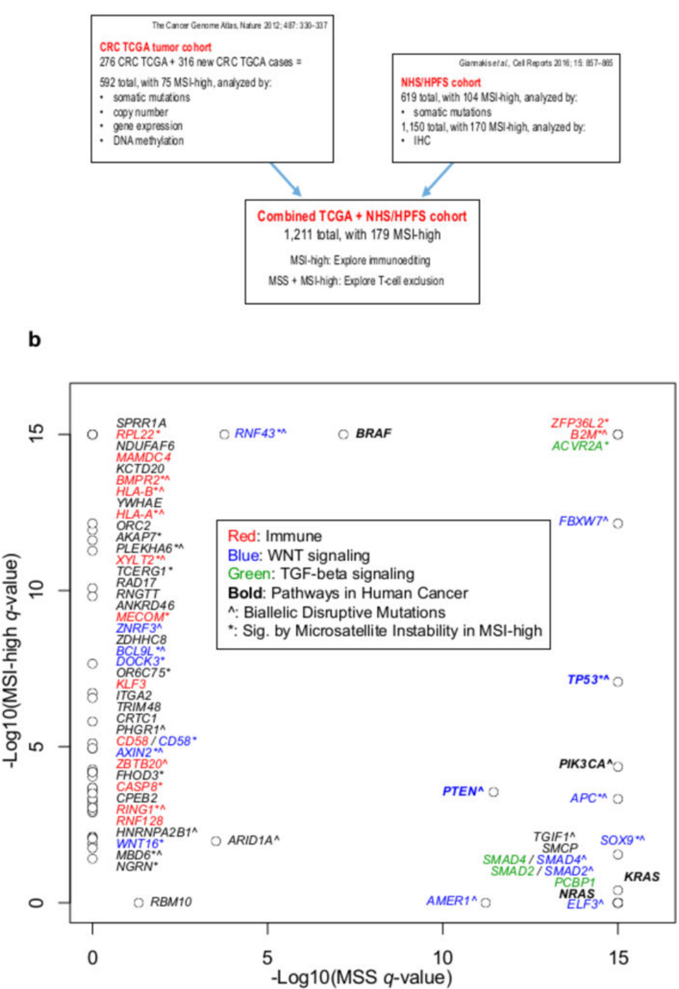
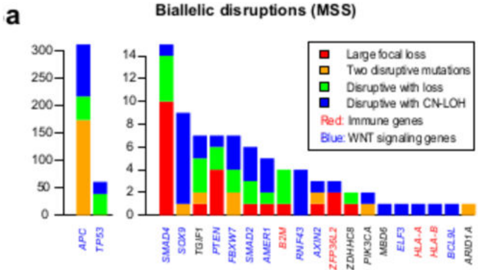
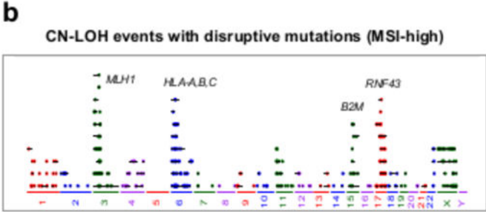
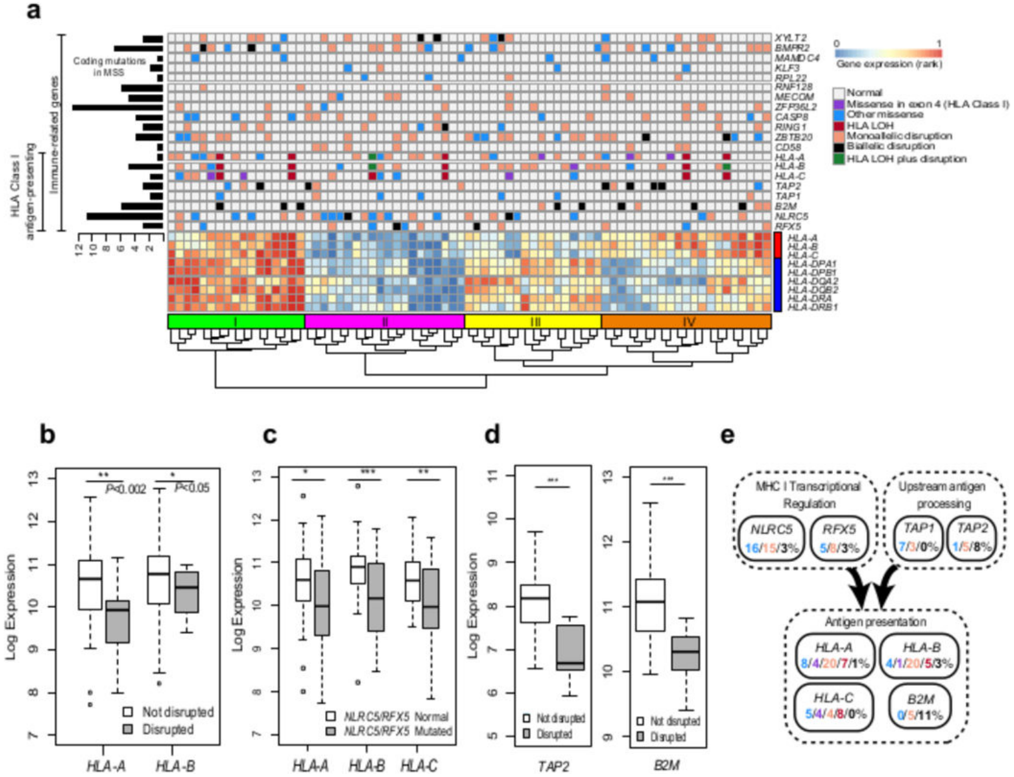
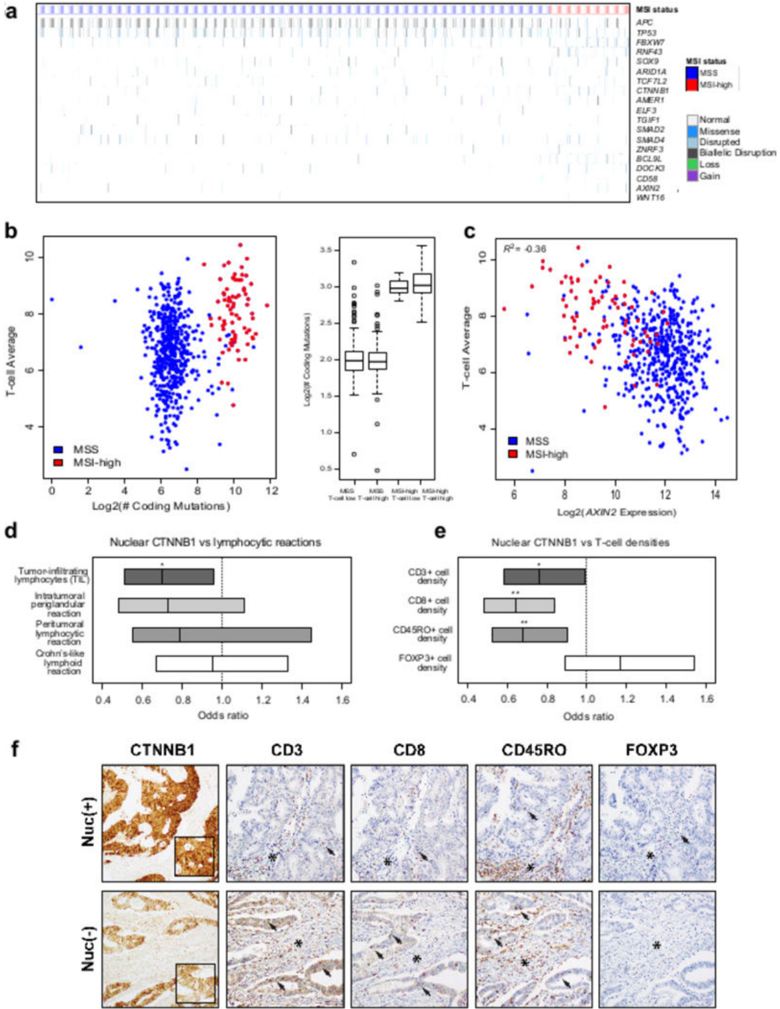
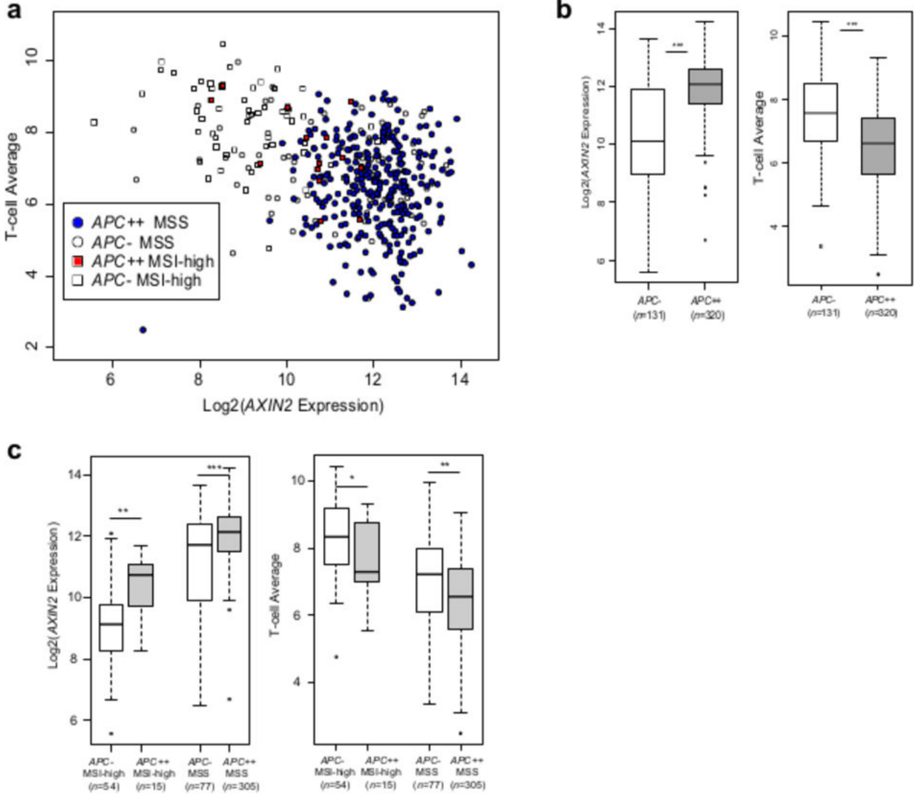
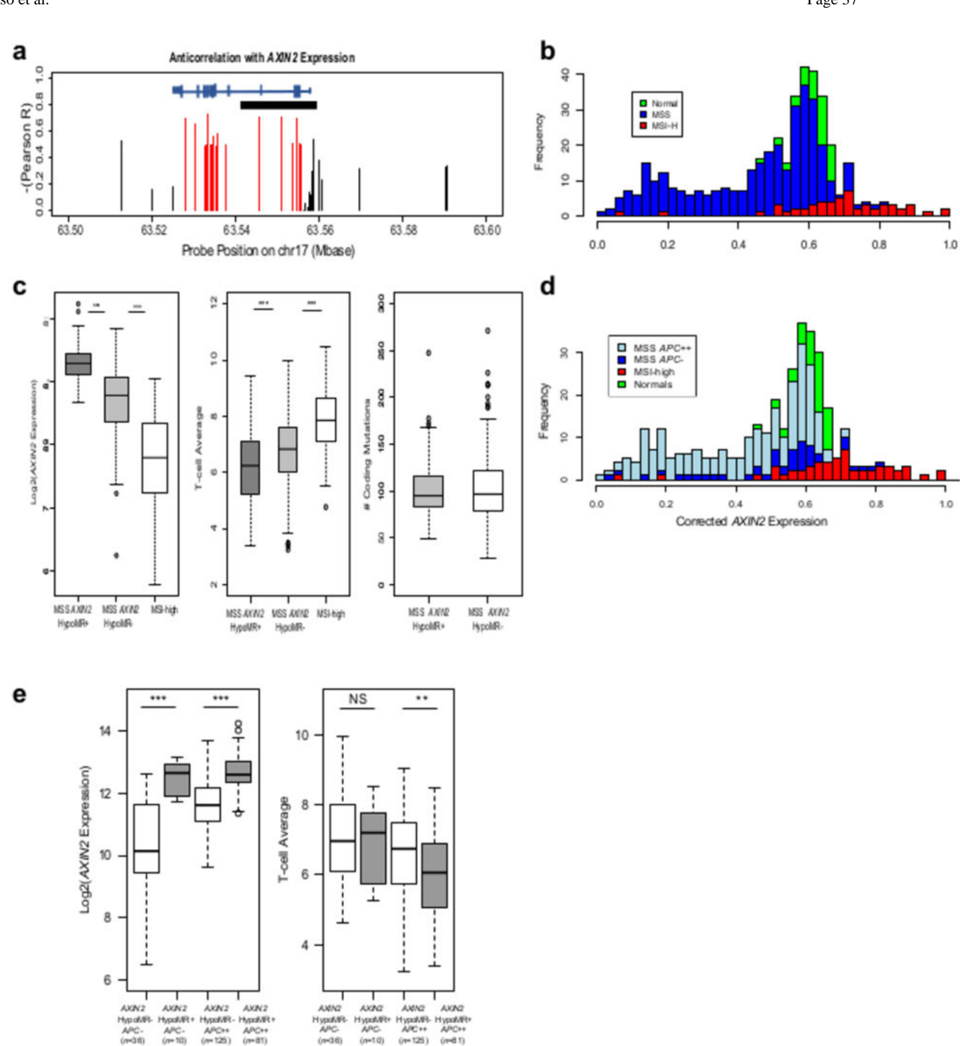
To understand the genetic drivers of immune recognition and evasion in colorectal cancer, we analyzed 1,211 colorectal cancer primary tumor samples, including 179 classified as microsatellite instability–high (MSI-high). This set includes The Cancer Genome Atlas colorectal cancer cohort of 592 samples, completed and analyzed here. MSI-high, a hypermutated, immunogenic subtype of colorectal cancer, had a high rate of significantly mutated genes in important immune-modulating pathways and in the antigen presentation machinery, including biallelic losses of B2M and HLA genes due to copy-number alterations and copy-neutral loss of heterozygosity. WNT/β-catenin signaling genes were significantly mutated in all colorectal cancer subtypes, and activated WNT/β-catenin signaling was correlated with the absence of T-cell infiltration. This large-scale genomic analysis of colorectal cancer demonstrates that MSI-high cases frequently undergo an immunoediting process that provides them with genetic events allowing immune escape despite high mutational load and frequent lymphocytic infiltration and, furthermore, that colorectal cancer tumors have genetic and methylation events associated with activated WNT signaling and T-cell exclusion. Significance: This multi-omic analysis of 1,211 colorectal cancer primary tumors reveals that it should be possible to better monitor resistance in the 15% of cases that respond to immune blockade therapy and also to use WNT signaling inhibitors to reverse immune exclusion in the 85% of cases that currently do not. Cancer Discov; 8(6); 730–49. ©2018 AACR. This article is highlighted in the In This Issue feature, p. 663
Overview
The claims and statistics of this paper haven’t been checked yet.
Free: it reads the open-access text and checks the first 5 claims that cite a source we can check. Create a free account to check every claim.
Integrity signals
Registry
Cites
Statistics
Figures

Verification
Claims the paper makes
The claims and statistics of this paper haven’t been checked yet.
Free: it reads the open-access text and checks the first 5 claims that cite a source we can check. Create a free account to check every claim.
Claims other papers make about this one
Each is checked against this paper’s own text: does it say what the citing paper says it does?
In the citing paper
“In primary CRC tumor samples, Wnt signaling reduced the frequency of tumor-infiltrating T cells, regardless of mutation load [196].”
From Drug Resistance in Colorectal Cancer: From Mechanism to Clinic (2022) · cites this paper as [196]
In the citing paper
“In addition, APC, as a gene that upregulates WNT signaling, is negatively correlated with the frequency of T cell infiltration [196,197,198].”
From Drug Resistance in Colorectal Cancer: From Mechanism to Clinic (2022) · cites this paper as [196]
Self-check
Percentages, sums and reported differences re-computed from the paper’s own numbers.
The self-check needs the paper’s full text.
Citations
Cites
Fast gapped-read alignment with Bowtie 2
Langmead, B., & Salzberg, S. L. (2012) · Nature Methods · doi:10.1038/nmeth.1923 · Cited by 56,400 · cited 1×
“org), using bowtie2 (90) to perform the realignment.”
MethodPD-1 and PD-L1 Immune Checkpoint Blockade to Treat Breast Cancer
Hartkopf, A. D., Taran, F.-A., Wallwiener, M., Walter, C. B., Krämer, B., Grischke, E.-M., & Brucker, S. Y. (2016) · Breast Care · doi:10.1159/000453569 · Cited by 30,845
The blockade of immune checkpoints in cancer immunotherapy
Pardoll, D. M. (2012) · Nature Reviews Cancer · doi:10.1038/nrc3239 · Cited by 13,838 · cited 1×
“A main mechanism by which cancers avoid immune attack is by triggering immune checkpoints that are inhibitory pathways crucial for limiting self-attack and minimizing collateral damage in normal tissues (70).”
BackgroundPD-1 Blockade in Tumors with Mismatch-Repair Deficiency
Le, D. T., Uram, J. N., Wang, H., Bartlett, B. R., Kemberling, H., Eyring, A. D., Skora, A. D., Luber, B. S., Azad, N. S., Laheru, D., et al. (2015) · New England Journal of Medicine · doi:10.1056/nejmoa1500596 · Cited by 9,377 · cited 3×
“We were particularly interested in applying this large multi-omic CRC cohort to understand drivers of immune infiltration, since recent advances in immunotherapy have necessitated a deeper consideration of the less frequent MSI-high CRC, which have been shown to respond to immune checkpoint blockade, while the much mo…”
BackgroundMethodThe cancer genome atlas pan-cancer analysis project
The Cancer Genome Atlas Research Network, Weinstein, J. N., Collisson, E. A., Mills, G. B., Shaw, K. R. M., Ozenberger, B. A., Ellrott, K., Shmulevich, I., Sander, C., & Stuart, J. M. (2013) · Nature Genetics · doi:10.1038/ng.2764 · Cited by 9,092 · cited 1×
“Precision medicine advances have been fueled by technological advances, such as targeted sequencing, and also by multi-omic sequencing efforts, such as The Cancer Genome Atlas (TCGA)(3), which are powered to provide guidance for targeting molecular observations in the form of estimates of the frequencies of drivers to…”
BackgroundComprehensive molecular characterization of human colon and rectal cancer
The Cancer Genome Atlas Network (2012) · Nature · doi:10.1038/nature11252 · Cited by 8,499
Mutational landscape determines sensitivity to PD-1 blockade in non–small cell lung cancer
Rizvi, N. A., Hellmann, M. D., Snyder, A., Kvistborg, P., Makarov, V., Havel, J. J., Lee, W., Yuan, J., Wong, P., Ho, T. S., et al. (2015) · Science · doi:10.1126/science.aaa1348 · Cited by 7,802
Mismatch repair deficiency predicts response of solid tumors to PD-1 blockade
Le, D. T., Durham, J. N., Smith, K. N., Wang, H., Bartlett, B. R., Aulakh, L. K., Lu, S., Kemberling, H., Wilt, C., Luber, B. S., et al. (2017) · Science · doi:10.1126/science.aan6733 · Cited by 6,645 · cited 4×
“We were particularly interested in applying this large multi-omic CRC cohort to understand drivers of immune infiltration, since recent advances in immunotherapy have necessitated a deeper consideration of the less frequent MSI-high CRC, which have been shown to respond to immune checkpoint blockade, while the much mo…”
BackgroundMethodInfluentialType, Density, and Location of Immune Cells Within Human Colorectal Tumors Predict Clinical Outcome
Galon, J., Costes, A., Sanchez-Cabo, F., Kirilovsky, A., Mlecnik, B., Lagorce-Pagès, C., Tosolini, M., Camus, M., Berger, A., Wind, P., et al. (2006) · Science · doi:10.1126/science.1129139 · Cited by 6,516 · cited 1×
“We denoted the average log-expression of twelve canonical T-cell-associated genes (CCL2, CCL3, CCL4, CXCL9, CXCL10, CD8A, HLA-DOB, HLA-DMB, HLA-DOA, GZMK, ICOS, and IRF1) as the “T-cell average” for each sample with expression data (45,92,93).”
BackgroundWnt/β-Catenin Signaling: Components, Mechanisms, and Diseases
MacDonald, B. T., Tamai, K., & He, X. (2009) · Developmental Cell · doi:10.1016/j.devcel.2009.06.016 · Cited by 5,583 · cited 1×
“We first considered biallelic disruptive mutations in APC, since APC loss results in increased nuclear CTNNB1 thereby driving expression of WNT target genes (68).”
Background
Cited by
Items 301–400 of 548
Yamamoto, K., Iwadate, D., Naito, E., Tateishi, K., & Fujishiro, M. (2023) · Current Opinion in Biotechnology · doi:10.1016/j.copbio.2023.103012 · Cited by 12
Identification and validation of cuproptosis and disulfidptosis related genes in colorectal cancer
Gong, X., Wu, Q., Tan, Z., Lin, S., Zhou, J., Lin, S., Wang, W., Han, Z., Xie, T., & Zhou, J. (2024) · Cellular Signalling · doi:10.1016/j.cellsig.2024.111185 · Cited by 14
Resident Memory T Cells in the Tumor Microenvironment
Williams, J. B., & Kupper, T. S. (2020) · Advances in experimental medicine and biology · doi:10.1007/978-3-030-49270-0_3 · Cited by 12
Association between germline variants and somatic mutations in colorectal cancer
Barfield, R., Qu, C., Steinfelder, R. S., Zeng, C., Harrison, T. A., Brezina, S., Buchanan, D. D., Campbell, P. T., Casey, G., Gallinger, S., et al. (2022) · Scientific Reports · doi:10.1038/s41598-022-14408-2 · Cited by 10
Self-citationLu, J. N., Annunziata, F., Širvinskas, D., Omrani, O., Li, H., Rasa, S. M. M., Křepelová, A., Adam, L., & Neri, F. (2022) · Journal of Biomedical Science · doi:10.1186/s12929-022-00867-2 · Cited by 11
Guo, M., Li, X., Li, J., & Li, B. (2023) · Heliyon · doi:10.1016/j.heliyon.2023.e17101 · Cited by 10
Immune evasion impacts the landscape of driver genes during cancer evolution
Gourmet, L. E., Sottoriva, A., Walker‐Samuel, S., Secrier, M., & Zapata, L. (2024) · Genome biology · doi:10.1186/s13059-024-03302-x · Cited by 13
“A study by Grasso et al. observed the role of genetic mechanisms of immune evasion in colorectal cancer [30].”
BackgroundTn Antigen Expression Defines an Immune Cold Subset of Mismatch-Repair Deficient Colorectal Cancer
Matsumoto, T., Okayama, H., Nakajima, S., Saito, K., Nakano, H., Endo, E., Kase, K., Ito, M., Yamauchi, N., Yamada, L., et al. (2020) · International Journal of Molecular Sciences · doi:10.3390/ijms21239081 · Cited by 12
Dąbrowska, M., Uram, Ł. S., Dąbrowski, M., & Sikora, E. (2021) · Mechanisms of Ageing and Development · doi:10.1016/j.mad.2021.111517 · Cited by 12
Genomic and transcriptomic analysis of Korean colorectal cancer patients
Jeon, S. A., Ha, Y. J., Kim, J.-H., Kim, J.-H., Kim, S.-K., Kim, S., Kim, S., & Kim, J. C. (2022) · Genes & Genomics · doi:10.1007/s13258-022-01275-4 · Cited by 13
Proceedings of the fourth international molecular pathological epidemiology (MPE) meeting
Campbell, P. T., Ambrosone, C. B., Nishihara, R., Aerts, H. J. W. L., Bondy, M. L., Chatterjee, N., García‐Closas, M., Giannakis, M., Golden, J. A., Heng, Y. J., et al. (2019) · Cancer Causes & Control · doi:10.1007/s10552-019-01177-z · Cited by 10
Self-citationPredictive Biomarkers: Progress on the Road to Personalized Cancer Immunotherapy
Emens, L. A. (2021) · JNCI Journal of the National Cancer Institute · doi:10.1093/jnci/djab068 · Cited by 11
Nygaard, V., Ree, A. H., Dagenborg, V. J., Børresen‐Dale, A., Edwin, B., Fretland, Å. A., Grzyb, K., Haugen, M. H., Mælandsmo, G. M., & Flatmark, K. (2023) · Cancer Research Communications · doi:10.1158/2767-9764.crc-22-0295 · Cited by 11
“with metastatic cancer, but with exception of the small subgroup of microsatellite instable (MSI) tumors, colorectal cancer remains a nonimmunogenic cancer that responds poorly to immunotherapy (2).”
InfluentialWu, R., Li, D., Zhang, S., Wang, J., Chen, K., Tuo, Z., Miyamoto, A., Yoo, K. H., Wei, W., Zhang, C., et al. (2024) · Journal of Cancer Research and Clinical Oncology · doi:10.1007/s00432-024-05640-6 · Cited by 12
“MSI-high tumors exhibit defects in the mismatch repair sys-tem, resulting in phenotypic hypermutation and the generation of immunogenic neoantigens (Grasso et al. 2018).”
BackgroundXu, C., Xia, P., Li, J., Lewis, K. B., Ciombor, K. K., Wang, L., Smith, J. J., Beauchamp, R. D., & Chen, X. (2024) · Cell Reports Medicine · doi:10.1016/j.xcrm.2024.101661 · Cited by 16
ALKhemeiri, N., Eljack, S., & Saber-Ayad, M. M. (2025) · Cells · doi:10.3390/cells14100745 · Cited by 11
“Grasso et al. conducted a cohort investigation on the potential immune evasion mechanism of 179 MSI-H/dMMR CRC patients [45].”
Lasabová, Z., Kalman, M., Holubeková, V., Grendár, M., Kašubová, I., Jašek, K., Meršaková, S., Malicherová, B., Baranenko, D., Adamek, M., et al. (2019) · Clinical and Experimental Medicine · doi:10.1007/s10238-019-00558-7 · Cited by 11
Li, J., Liu, T.-M., Li, L., & Jiang, C. (2022) · Anti-Cancer Drugs · doi:10.1097/cad.0000000000001437 · Cited by 10
Imaging α-GalCer–Activated iNKT Cells in a Hepatic Metastatic Environment
Babes, L., Shim, R., & Kubes, P. (2021) · Cancer Immunology Research · doi:10.1158/2326-6066.cir-21-0445 · Cited by 11
Biglycan as a potential regulator of tumorgenicity and immunogenicity in K-RAS-transformed cells
Subbarayan, K., Massa, C., Leisz, S., Steven, A., Bethmann, D., Biehl, K., Wickenhauser, C., & Seliger, B. (2022) · OncoImmunology · doi:10.1080/2162402x.2022.2069214 · Cited by 9
Abushukair, H. M., Ababneh, O. E., Zaitoun, S. M., & Saeed, A. (2022) · Cancer Treatment and Research Communications · doi:10.1016/j.ctarc.2022.100643 · Cited by 15
Wong, K. K. (2023) · Computational Biology and Chemistry · doi:10.1016/j.compbiolchem.2023.107897 · Cited by 11
Responsiveness to PD-1 Blockade in End-Stage Colon Cancer with Gene Locus 9p24.1 Copy-Number Gain
Ree, A. H., Nygaard, V., Russnes, H. G., Heinrich, D. A., Nygaard, V., Johansen, C., Bergheim, I. R., Hovig, E. J., Beiske, K., Negård, A., et al. (2019) · Cancer Immunology Research · doi:10.1158/2326-6066.cir-18-0777 · Cited by 9
Huffman, B. M., Rahma, O. E., Tyan, K., Li, Y. Y., Giobbie‐Hurder, A., Schlechter, B. L., Bockorny, B., Manos, M. P., Cherniack, A. D., Bagińska, J., et al. (2024) · Cancer Immunology Research · doi:10.1158/2326-6066.cir-23-1027 · Cited by 9
Self-citationTanegashima, T., Shiota, M., Toyosaki, K., Funakoshi, K., & Eto, M. (2025) · Cancer Immunology Immunotherapy · doi:10.1007/s00262-025-04223-9 · Cited by 10
Decoding Immunotherapy Response in Colorectal Cancer: Translational Insights Beyond MSI
Cataldi, C., Karaoğlan, B. B., Liotta, E., & Dosso, S. D. (2026) · Cancers · doi:10.3390/cancers18050852 · Cited by 11
“In colorectal cancer, transcriptomic and biomarker analyses have similarly associated WNT pathway activation and related molecular signatures with reduced immune infiltration and heterogeneous responses to immunotherapy, even within MSI-H/dMMR cohorts [78,79].”
Yao, S., Han, Y., Yang, M., Jin, K., & Lan, H. (2023) · Frontiers in Immunology · doi:10.3389/fimmu.2023.1241208 · Cited by 11
Overexpression of LBX2 associated with tumor progression and poor prognosis in colorectal cancer
Huang, X., Yang, Y., Yang, C., Li, H., Cheng, H., & Zheng, Y. (2020) · Oncology Letters · doi:10.3892/ol.2020.11489 · Cited by 10
Li, H., Ngan, H.-L., Liu, Y., Chan, H. H. Y., Poon, P. H. Y., Yeung, C. K., Peng, Y., Lam, W. Y., Li, B. X., He, Y., et al. (2020) · Cancers · doi:10.3390/cancers12102935 · Cited by 8
Myer, P. A., Kim, H., Blümel, A. M., Finnegan, E., Kel, A. E., Thompson, T. V., Greally, J. M., Prehn, J. H. M., O’Connor, D. P., Friedman, R. A., et al. (2022) · Gastro Hep Advances · doi:10.1016/j.gastha.2022.01.004 · Cited by 9
Meltzer, S., Negård, A., Bakke, K. M., Hamre, H. M., Kersten, C., Hofsli, E., Guren, M. G., Sørbye, H., Flatmark, K., & Ree, A. H. (2022) · British Journal of Cancer · doi:10.1038/s41416-022-02004-0 · Cited by 8
Liao, C., Yang, L., Lee, L., Lin, C., Wang, H., Ng, S., Yen, T., Fan, W., & Hsieh, C. (2021) · Oral Oncology · doi:10.1016/j.oraloncology.2021.105547 · Cited by 9
Lakatos, E., Gunasri, V., Zapata, L., Househam, J., Heide, T., Trahearn, N., Swinyard, O., Cisneros, L. H., Lynn, C., Mossner, M., et al. (2024) · bioRxiv (Cold Spring Harbor Laboratory) · doi:10.1101/2024.02.12.579956 · Cited by 8
“Immune evasion through genetic means (e.g. mutations that reduce the immune system’s ability to engage with neoantigens) has been thoroughly investigated and found to be common in CRCs 4,13 .”
BackgroundLee, S., Pankaj, A., Rickelt, S., Ting, D. T., Ferrone, C. R., Patil, D. T., Yilmaz, Ö. H., Berger, D. L., Deshpande, V., & Yilmaz, O. H. (2024) · American Journal of Clinical Pathology · doi:10.1093/ajcp/aqae066 · Cited by 8
Sun, J., Shi, S., Sun, C., Wang, J., Yang, X., Yang, Z., Xu, J., & Zhang, S. (2024) · Journal of Translational Medicine · doi:10.1186/s12967-024-05635-4 · Cited by 8
“Specific mechanisms include chromosome instability (CIN), microsatellite instability (MSI), and CpG island methylator phenotype (CIMP) [3–5].”
BackgroundDing, X., Li, X., Chen, F., Wang, H., & Jiang, Y. (2025) · MedComm – Oncology · doi:10.1002/mog2.70023 · Cited by 9
Liu, X., Yang, B., & Tang, D. (2025) · World Journal of Gastrointestinal Oncology · doi:10.4251/wjgo.v17.i10.109503 · Cited by 8
de Torres, C. S., Elias, E., Vaghi, C., Gonzalez, N. S., García, A., Alcaráz, A., Rodríguez-Castells, M., Baraibar, I., Ros, J., Salvà, F., et al. (2026) · Cancer Treatment Reviews · doi:10.1016/j.ctrv.2026.103089 · Cited by 10
Kobayashi, Y., Niida, A., Nagayama, S., Saeki, K., Haeno, H., Takahashi, K., Hayashi, S., Ozato, Y., Saito, H., Hasegawa, T., et al. (2023) · British Journal of Cancer · doi:10.1038/s41416-023-02395-8 · Cited by 9
“MSI-H CRCs contain a considerably larger number of insertions and deletions (INDELs) at homopolymer sites than MSS CRCs because of dMMR [9, 18].”
BackgroundResultInfluentialN6-methyladenosine-dependent signaling in colorectal cancer: Functions and clinical potential
Liu, S., Liu, M., Li, Y., & Song, Q. (2024) · Critical Reviews in Oncology/Hematology · doi:10.1016/j.critrevonc.2024.104360 · Cited by 9
Huang, H., Jin, H., Lei, R., He, Z., He, S., Chen, J., Saw, P. E., Qiu, Z., Ren, G., & Nie, Y. (2024) · Molecular Cancer Research · doi:10.1158/1541-7786.mcr-23-0334 · Cited by 7
“Translocation of β -catenin into the nucleus is mediated by β -catenin phosphorylation via a destruction complex that consists of GSK3, AXIN, APC, and CK1 α (34, 35).”
PD-1/PD-L1 antagonists in gastric cancer: Current studies and perspectives
Li, J., Zhang, X.-H., Bei, S., & Feng, L. (2019) · World Journal of Meta-Analysis · doi:10.13105/wjma.v7.i3.101 · Cited by 7
Pancreatic cancer hidden in plain sight
Maitra, A. (2020) · Nature · doi:10.1038/d41586-020-01103-3 · Cited by 8
Immune-Modulating Effects of Conventional Therapies in Colorectal Cancer
Kalanxhi, E., Meltzer, S., & Ree, A. H. (2020) · Cancers · doi:10.3390/cancers12082193 · Cited by 7
Recent Advances in β-catenin/BCL9 protein–protein Interaction Inhibitors
Zhang, H., Bao, Y., Liu, C., Li, J., Zhu, D., & Zhang, Q. (2021) · Future Medicinal Chemistry · doi:10.4155/fmc-2020-0357 · Cited by 8
SMO mutation predicts the effect of immune checkpoint inhibitor: From NSCLC to multiple cancers
Ji, W., Niu, X., Yu, Y., Li, Z., Gu, L., & Lu, S. (2022) · Frontiers in Immunology · doi:10.3389/fimmu.2022.955800 · Cited by 7
Fortis, S. P., Sofopoulos, M., Goulielmaki, M., Arnogiannaki, N., Ardavanis, A. S., Perez, S. A., Gritzapis, A. D., & Baxevanis, C. N. (2022) · Cancers · doi:10.3390/cancers14246208 · Cited by 9
Research progress on gut microbiota in colorectal cancer immunotherapy
Li, J., Yue, Y., Pan, J., & Liang, F. (2025) · Biochimica et Biophysica Acta (BBA) - Reviews on Cancer · doi:10.1016/j.bbcan.2025.189476 · Cited by 7
Yang, Q., Hong, K., Yu, L., Shi, P., Fang, Y., & Zhang, P. (2023) · Journal of Cancer · doi:10.7150/jca.90008 · Cited by 7
“Notably, cytotoxic T-lymphocyte-associated protein 4 (CTLA4) and PD-1 (PDCD1) genes serve as exemplars of immune checkpoint genes, and the application of antibody therapy to inhibit the CTLA4 or PD-1 checkpoints has been shown to unleash T-cells for tumor eradication [46].”
BackgroundYamaura, T., Miyoshi, H., Maekawa, H., Morimoto, T., Yamamoto, T., Kakizaki, F., Higasa, K., Kawada, K., Matsuda, F., Sakai, Y., et al. (2018) · Oncotarget · doi:10.18632/oncotarget.26495 · Cited by 6
“In this regard, some recent studies reported poor tumor cell purity in cancer tissue samples [12, 22, 23], one of which demonstrated low tumor cell contents that reduced the mutation frequency for key cancer mutations to < 5% [12].”
Hossam, N., Matboli, M., Shehata, H. H., Aboelhussein, M. M., Hassan, M. K., & Eissa, S. (2020) · Expert Review of Precision Medicine and Drug Development · doi:10.1080/23808993.2020.1816136 · Cited by 7
Tumor evolution-targeted nanomedicineEVT
Zhang, L., Yang, J., Tang, D., Zhang, H., Ding, J., & Xiao, H. (2022) · Scientia Sinica Chimica · doi:10.1360/ssc-2022-0158 · Cited by 7
MicroRNA-Assisted Hormone Cell Signaling in Colorectal Cancer Resistance
Massaro, C., Safadeh, E., Sgueglia, G., Stunnenberg, H. G., Altucci, L., & Dell’Aversana, C. (2020) · Cells · doi:10.3390/cells10010039 · Cited by 6
Predicting Methylation from Sequence and Gene Expression Using Deep Learning with Attention
Levy-Jurgenson, A., Tekpli, X., Kristensen, V. N., & Zohar Yakhini, B. (2019) · Lecture notes in computer science · doi:10.1007/978-3-030-18174-1_13 · Cited by 6
Current status of immunotherapy in gastrointestinal malignancies
Lorenzen, S., Lordick, F., Loosen, S. H., Tacke, F., Trautwein, C., Roderburg, C., Ettrich, T. J., Perkhofer, L., Reinacher‐Schick, A., & Stein, A. (2020) · Zeitschrift für Gastroenterologie · doi:10.1055/a-1071-8322 · Cited by 7
Palmieri, G., Rozzo, C., Colombino, M., Casula, M., Sini, M. C., Manca, A., Pisano, M., Doneddu, V., Paliogiannis, P., & Cossu, A. (2021) · Frontiers in Oncology · doi:10.3389/fonc.2021.666624 · Cited by 6
Genomic mechanisms of immune evasion in colorectal cancer: from discovery to clinical practice
Grasso, C. S., & Giannakis, M. (2018) · Oncotarget · doi:10.18632/oncotarget.26105 · Cited by 6
Self-citationTakahashi, N., Rajapakse, V. N., Pongor, L. S., Kumar, S., Tlemsani, C., Erwin-Cohen, R. A., Young, H. A., Hewitt, S. M., Wei, J. S., Khan, J. I., et al. (2020) · Molecular Case Studies · doi:10.1101/mcs.a005678 · Cited by 8
“Loss of JAK1 function has previously been implicated in primary and acquired immunotherapy resistance in melanoma (Zaretsky et al. 2016), colorectal cancer (Grasso et al. 2018), and endometrioid cancer (Gulhan et al. 2020).”
Mechanisms of Anti-PD Therapy Resistance in Digestive System Neoplasms
Wu, Y., Jiang, X., Yu, Z., Xing, Z., Ma, Y., & Qing, H. (2024) · Recent Patents on Anti-Cancer Drug Discovery · doi:10.2174/0115748928269276231120103256 · Cited by 6
Immuno-oncology recapitulates ontogeny: Modern cell and gene therapy for cancer
Carleton, N. M., Rosen, A. B. I., Das, J., & Lotze, M. T. (2025) · Molecular Therapy · doi:10.1016/j.ymthe.2025.03.042 · Cited by 5
Yao, N., Li, W., Duan, N., Han, F., Yu, G., & Qu, J. (2026) · Discover Oncology · doi:10.1007/s12672-026-04575-3 · Cited by 6
Chariou, P. L., Minnar, C. M., Tandon, M., Guest, M. R., Chari, R., Schlom, J., & Gameiro, S. R. (2024) · PLoS ONE · doi:10.1371/journal.pone.0287733 · Cited by 8
“These findings are in agreement with previously reported gene mutation analysis from melanoma [34,35], lung [36], and colon cancer [37] lesions from patients who developed resistance to ICB.”
Yang, W., Li, Z., Li, Y., He, W., & Yan, J. (2024) · ACS Nano · doi:10.1021/acsnano.4c05893 · Cited by 7
Kaufman, M. E., Vayani, O. R., Moore, K., Chlenski, A., Wu, T., Lee, S. M., Desai, A. V., He, C., Cohn, S. L., & Applebaum, M. A. (2024) · Cancer Research Communications · doi:10.1158/2767-9764.crc-24-0214 · Cited by 5
“Each tumor was also assigned a TCI score based on a published CD8 + T-cell gene signature (23), which has been validated in multiple tumor types (24, 25) and shown to correlate with response to immunotherapy using similar methods.”
MethodLi, R., Lin, Y., Shen, X., Guo, J.-Y., Zhang, Y., Tang, J.-D., Xie, L., & Hu, F.-D. (2025) · Frontiers in Oncology · doi:10.3389/fonc.2025.1636122 · Cited by 5
The Current State of Precision Medicine and Targeted-Cancer Therapies: Where Are We?
Seyhan, A. A. (2022) · Computer-aided drug discovery and design · doi:10.1007/978-3-030-95895-4_7 · Cited by 8
Guan, X., Cui, L., Ruan, Y., Fang, L., Dang, T., Zhang, Y., & Liu, C. (2024) · Discover Oncology · doi:10.1007/s12672-024-00955-9 · Cited by 5
“Generally, ARID1A has been identified as a specific tumor suppressor in CRC, and variations of ARID1A have been reported to be correlated the tumorigenesis and the poor prognosis of CRC [5, 6].”
BackgroundMartin, S. D., Elomaa, H., Väyrynen, J. P., Ahtiainen, M., Wirta, E., Böhm, J., Seppälä, T. T., Ristimaki, A. P., Tahkola, K., Mattila, A., et al. (2026) · British Journal of Cancer · doi:10.1038/s41416-025-03302-z · Cited by 7
“In MSI CRC, somatic mutations in B2M and HLA class I genes are frequently observed, along with up-and downregulation of genes involved in antigen processing and presentation [22, 23].”
Reprogramming T cell-myeloid crosstalk overcomes immune resistance in colorectal cancer
Mestrallet, G., Brown, M., Vaninov, N., Cho, N. W., Velazquez, L. G., Ananthanarayanan, A., Spitzer, M. H., Vabret, N., Bozkus, C. C., Samstein, R. M., et al. (2026) · Cell Reports Medicine · doi:10.1016/j.xcrm.2026.102786 · Cited by 12
Werner helicase as a therapeutic target in mismatch repair deficient colorectal cancer
Hao, S., Liu, Z., Lenz, H., Yu, J., & Zhang, L. (2025) · DNA repair · doi:10.1016/j.dnarep.2025.103831 · Cited by 7
Huyghe, N. D., Benidovskaya, E., Masoodi, T., Sinapi, I., Cuyper, A. D., Vempalli, F. R., Beyaert, S. P., Bouzin, C., Osorio, F. M., Ferraro, L., et al. (2025) · Cell Reports Medicine · doi:10.1016/j.xcrm.2025.102201 · Cited by 6
Tuomisto, A., Sirniö, P., Elomaa, H., Karjalainen, H., Äijälä, V. K., Kastinen, M., Tapiainen, V. V., Ahtiainen, M., Helminen, O., Wirta, E., et al. (2025) · Laboratory Investigation · doi:10.1016/j.labinv.2025.104213 · Cited by 5
Liu, M., Yan, W., Chen, D., Luo, J., Dai, L., Chen, H., & Chen, K. (2022) · Biology · doi:10.3390/biology11111575 · Cited by 6
mTOR inhibition suppresses Myc-driven polyposis by inducing immunogenic cell death
Leibowitz, B. J., Zhao, G., Xia, W., Wang, Y., Ruan, H., Zhang, L., & Yu, J. (2023) · Oncogene · doi:10.1038/s41388-023-02706-6 · Cited by 4
“Wnt/Myc signaling promotes proliferation and alters tumor cell metabolism and the tumor microenvironment (TME) [7, 8].”
Predicting mechanism of immune response in microsatellite instability colorectal cancer
Sun, P., Luan, Y., Cai, X., Liu, Q., Ren, P., Xin, P., Yu, Y., Song, B., Wang, Y., Chang, H., et al. (2024) · Heliyon · doi:10.1016/j.heliyon.2024.e28120 · Cited by 4
“…DM Beta), HLA-DOA (Major Histocompatibility Complex, Class I, DO Beta), GZMK (Granzyme K), ICOS (Inducible T Cell Costimulator), and IRF1 (Interferon Regulatory Factor 1), were identified based on about 1000 colorectal cancer samples by exploring the genetic drivers related to immune evasion [52].”
BackgroundAdvances in Immune Checkpoint Therapy in Hepatocellular Carcinoma
Huang, Y., & Yu, W. (2024) · British Journal of Hospital Medicine · doi:10.12968/hmed.2024.0375 · Cited by 8
Regulation of Natural Products on Wnt/β-Catenin Signaling Pathway in Diseases
Zheng, G., Lin, S., Wang, S., Yan, Y., & Zheng, D. (2025) · The American Journal of Chinese Medicine · doi:10.1142/s0192415x25500272 · Cited by 5
Cadherins down-regulation: towards a better understanding of their relevance in colorectal cancer.
Losi, L., Zanocco‐Marani, T., & Grande, A. (2020) · PubMed · doi:10.14670/hh-18-236 · Cited by 4
Yao, W., Li, X., Jia, Z., Gu, C., Jin, Z., Wang, J., Yuan, B., & Yang, J. (2021) · BioMed Research International · doi:10.1155/2021/1466255 · Cited by 4
In situ functional cell phenotyping reveals microdomain networks in colorectal cancer recurrence
Furman, S. A., Stern, A. M., Uttam, S., Taylor, D. L., Pullara, F., & Chennubhotla, S. C. (2021) · Cell Reports Methods · doi:10.1016/j.crmeth.2021.100072 · Cited by 7
“This result supports our working hypothesis that, within the evolving tumor microenvironment, the molecular signaling networks within each microdomain undergo a regulatory switch to confer a recurrence phenotype supported by cancer stem cell maintenance and immunosuppression (Augustin et al., 2016; Bienz and Clevers,…”
Wu, H., Chu, F., Li, L., Li, K., Xiao, X., Zhang, L., & Zhang, Y. (2022) · Journal of Oncology · doi:10.1155/2022/1600611 · Cited by 4
Hou, Q., & Xu, H. (2020) · Advances in experimental medicine and biology · doi:10.1007/978-981-15-3266-5_7 · Cited by 5
Liang, T., Tong, W., Ma, S., & Chang, P. (2020) · OncoImmunology · doi:10.1080/2162402x.2020.1773205 · Cited by 6
Lack of Association Between PDCD-1 Polymorphisms and Colorectal Cancer Risk: A Case-Control Study
Lin, J., Chen, H., Huang, Y., Tang, W., Zhang, S., & Chen, Y. (2022) · Immunological Investigations · doi:10.1080/08820139.2022.2069504 · Cited by 4
Garrido, F. (2019) · Advances in experimental medicine and biology · doi:10.1007/978-3-030-17864-2_1 · Cited by 4
Xu, X. J., Li, J., Zou, J., Feng, X., Zhang, C., Zheng, R., Duanmu, W., Saha-Mandal, A., Ming, Z., & Wang, E. (2018) · bioRxiv (Cold Spring Harbor Laboratory) · doi:10.1101/471912 · Cited by 4
Gatenbee, C., Baker, A., Schenck, R. O., Neves, M. P., Hasan, S. Y., Martinez, P., Cross, W. C. H., Jansen, M., Rodriguez‐Justo, M., Sottoriva, A., et al. (2019) · bioRxiv (Cold Spring Harbor Laboratory) · doi:10.1101/623959 · Cited by 5
Immunosuppressive niche engineering at the onset of human colorectal cancerPreprint
Gatenbee, C., Baker, A., Schenck, R. O., Strobl, M. A. R., West, J., Neves, M. P., Hasan, S., Lakatos, E., Martinez, P., Cross, W. C. H., et al. (2021) · Research Square · doi:10.21203/rs.3.rs-799879/v1 · Cited by 4
S100A14 as a Potential Biomarker of the Colorectal Serrated Neoplasia Pathway
Adam, P., Salée, C., Calvo, F. Q., Lavergne, A., Merli, A., Massot, C., Blétard, N., Somja, J., Baiwir, D., Mazzucchelli, G., et al. (2025) · International Journal of Molecular Sciences · doi:10.3390/ijms26157401 · Cited by 3
“Moreover, given the better outcomes of MSI-H tumors and that S100A14 regulates PD-L1 expression, it would be interesting to explore its potential as a prognostic biomarker for immunotherapy responses based on PD-L1 targeting [35].”
Wang, Q., & Ding, H. (2025) · Digestive Diseases and Sciences · doi:10.1007/s10620-025-09490-1 · Cited by 4
Balmaceda, N. B., & Kim, S. S. (2025) · Current Oncology Reports · doi:10.1007/s11912-024-01624-4 · Cited by 3
“Biallelic loss of the tumor suppressor, adenomatosis polyposis coli (APC), occurs in 20% of MSI-H cases and results in accumulation of β-catenin and subsequent activation of the WNT pathway [71].”
Multi-cellular phenotypic dynamics during the progression of an immunocompetent breast cancer model
Gsell, L., Watson, S. S., Sutevski, I., Massara, M., Soukup, K., Eroğlu, A., Mold, J. E., Cougnoux, A., Joyce, J. A., & Hausser, J. (2025) · iScience · doi:10.1016/j.isci.2025.113808 · Cited by 6
γδ T cells unveil invisible tumors
Koay, H., & Lynch, L. (2023) · Trends in Immunology · doi:10.1016/j.it.2023.01.011 · Cited by 3
Deng, L., Wang, L., Zhang, J., Zhao, L., Meng, Y. F., Zheng, J., Xu, W., Zhu, Z., & Huang, H. (2023) · Heliyon · doi:10.1016/j.heliyon.2023.e16922 · Cited by 5
Casual associations between blood metabolites and colon cancer
Hu, K.-Y., Cheng, Y., Shi, Z., Ren, F., & Xiao, G. (2024) · World Journal of Gastrointestinal Oncology · doi:10.4251/wjgo.v16.i5.1995 · Cited by 3
A hot and cold tumor‑related prognostic signature for stage II colorectal cancer
Zhou, M., Ge, X., Xu, X., Sheng, B., Wang, H., Shi, H., Liu, S., Tan, B., Xu, K., & Wang, J. (2024) · Oncology Letters · doi:10.3892/ol.2024.14552 · Cited by 3
“Previous studies have illustrated the association between the abnormal activa‑ tion of the tumor cell‑intrinsic oncogenic pathway and the absence of T‑cell infiltration in melanoma (26) and CRC (27).”
BackgroundMolekulare Prädiktoren in der Immunonkologie
Weichert, W. (2018) · Der Pathologe · doi:10.1007/s00292-018-0508-9 · Cited by 3
Deshpande, V., Lee, S., Crabbe, A., Pankaj, A., Neyaz, A., Ono, Y., Rickelt, S., Sonal, S., Ferrone, C. R., Ting, D. T., et al. (2023) · Journal of Clinical Pathology · doi:10.1136/jcp-2023-208895 · Cited by 4
Mestrallet, G., Brown, M., Vaninov, N., Cho, N. W., Velazquez, L. G., Ananthanarayanan, A., Spitzer, M. H., Vabret, N., Bozkus, C. C., Samstein, R. M., et al. (2025) · bioRxiv (Cold Spring Harbor Laboratory) · doi:10.1101/2025.02.12.637954 · Cited by 3
Schoenfeld, J. D., Azad, N. S., Gross, J., Chen, L., Overman, M. J., Kao, K. Z., Jackson, L., Brunnquell, D., Bu, X., Coppola, C., et al. (2024) · Clinical Cancer Research · doi:10.1158/1078-0432.ccr-24-0427 · Cited by 2
“18, 19) and MMR genes (Supplementary Fig.”
Self-citation
Metadata
- Authors
- Grasso, C. S., Giannakis, M., Wells, D. K., Hamada, T., Mu, X. J., Quist, M., Nowak, J. A., Nishihara, R., Qian, Z. R., Inamura, K., Morikawa, T., Nosho, K., Abril-Rodriguez, G., Connolly, C., Escuin-Ordinas, H., Geybels, M. S., Grady, W. M., Hsu, L., Hu-Lieskovan, S., Huyghe, J. R., Kim, Y. J., Krystofinski, P., Leiserson, M. D. M., Montoya, D. J., Nadel, B. B., Pellegrini, M., Pritchard, C. C., Puig-Saus, C., Quist, E. H., Raphael, B. J., Salipante, S. J., Shin, D. S., Shinbrot, E., Shirts, B., Shukla, S., Stanford, J. L., Sun, W., Tsoi, J., Upfill-Brown, A., Wheeler, D. A., Wu, C. J., Yu, M., Zaidi, S. H., Zaretsky, J. M., Gabriel, S. B., Lander, E. S., Garraway, L. A., Hudson, T. J., Fuchs, C. S., Ribas, A., Ogino, S., & Peters, U.
- Affiliations
- University of California, Los Angeles (US)
- Broad Institute (US)
- Parker Institute for Cancer Immunotherapy (US)
- Dana-Farber Cancer Institute (US)
- Brigham and Women's Hospital (US)
- Harvard University (US)
- 1Department of Medicine, Division of Hematology-Oncology, University of California, Los Angeles, and the Jonsson Comprehensive Cancer Center, Los Angeles, California.
- Fred Hutch Cancer Center (US)
- University of Washington (US)
- Brown University (US)
- 13Department of Computer Science and Center for Computational Molecular Biology, Brown University, Providence, Rhode Island.
- Baylor College of Medicine (US)
- Ontario Institute for Cancer Research (CA)
- Corresponding author
- Grasso, Catherine S.
- ORCID
- Grasso, Catherine S.
- Giannakis, Marios
- Wells, Daniel K.
- Hamada, Tsuyoshi
- Mu, Xinmeng Jasmine
- Nowak, Jonathan A.
- Nishihara, Reiko
- Qian, Zhi Rong
- Inamura, Kentaro
- Morikawa, Teppei
- Connolly, Charles
- Escuin-Ordinas, Helena
- Grady, William M.
- Hsu, Li
- Huyghe, Jeroen R.
- Kim, Yeon Joo
- Krystofinski, Paige
- Leiserson, Mark D.M.
- Montoya, Dennis J.
- Nadel, Brian B.
- Pellegrini, Matteo
- Pritchard, Colin C.
- Puig-Saus, Cristina
- Salipante, Stephen J.
- Shin, Daniel Sanghoon
- Shinbrot, Eve
- Shirts, Brian
- Shukla, Sachet
- Stanford, Janet L.
- Sun, Wei
- Tsoi, Jennifer
- Upfill-Brown, Alexander
- Wheeler, David A.
- Wu, Catherine J.
- Yu, Ming
- Zaidi, Syed H.
- Zaretsky, Jesse M.
- Gabriel, Stacey B.
- Lander, Eric S.
- Garraway, Levi A.
- Hudson, Thomas J.
- Fuchs, Charles S.
- Ribas, Antoni
- Ogino, Shuji
- Peters, Ulrike
- Venue
- Cancer Discovery
- Published
- 2018-05-31
- Volume
- 8
- Issue
- 6
- Pages
- 730-749
- ISSN
- 2159-8274 (ISSN-L)
- 2159-8290
- PMC
- PMC5984687
- OpenAlex
- W2793126529
- Cited by
- 535
- References
- 103
- Citations by year
- 2026: 47 · 2025: 42 · 2024: 49 · 2023: 73 · 2022: 83 · 2021: 80 · 2020: 76 · 2019: 58 · 2018: 25
- FWCI
- 45.45
- Type
- journal article
- Language
- en
- Open access
- hybrid
- doi.org
- Licence
- cc-by
- Locations
- Cancer Discovery (publishedVersion, cc-by)
- PubMed (publishedVersion)
- PubMed Central (acceptedVersion)
- DSpace@MIT (Massachusetts Institute of Technology) (submittedVersion, cc-by-nc-sa)
- HAL (submittedVersion)
- eScholarship (California Digital Library) (submittedVersion)
- Funders
- HHS | National Institutes of Health (NIH) (U01 CA137088, K07 CA190673, 1R01CA194663-01, R35 CA197663, P01 CA168585, KL2 TR001100, U54 HG003067, 4T32CA009120-40, P01 CA87969, UM1 CA186107, P01 CA55075, UM1 CA167552, P50 CA127003, R35 CA197735, R01 CA151993)
- American Association for Cancer Research (AACR) (SU2C-AACR-DT22-17)
- HHS | NIH | National Cancer Institute (NCI) (5T32LM012424-03)
- HHS | NIH | National Institute of Arthritis and Musculoskeletal and Skin Diseases (NIAMS) (3P50AR063020-03S1)
- Dana-Farber/Harvard Cancer Center (DF/HCC) (Nodal Award)
- American Society of Clinical Oncology (ASCO) (Career Development Award)
- Topics
- Health Sciences › Medicine › Pathology and Forensic Medicine › Genetic factors in colorectal cancer
- Health Sciences › Medicine › Oncology › Cancer Immunotherapy and Biomarkers
- Life Sciences › Biochemistry, Genetics and Molecular Biology › Cancer Research › Cancer Genomics and Diagnostics
- Keywords
- colorectal cancer, immune evasion, microsatellite instability-high, Wnt/β-catenin signaling, T-cell exclusion, immunoediting, antigen presentation, beta2-microglobulin, HLA, copy-neutral loss of heterozygosity, copy number alterations, DNA methylation, immune checkpoint inhibitor resistance, tumor mutational burden, T cell infiltration
- MeSH terms
- beta 2-Microglobulin, HLA Antigens, Humans, Colorectal Neoplasms, Germ-Line Mutation, Tumor Escape, DNA Methylation, Loss of Heterozygosity, Microsatellite Instability, DNA Copy Number Variations, Wnt Signaling Pathway
About these checks
Registry, retraction, Cites and statistics results are computed, not judged, with one exception: a printed reference that no index lists is read once by a model before it counts as a citation error. Claims are extracted by a model and kept only when their quote appears verbatim in the text; each cited source is then checked, with a model’s help, for whether it says what the claim relies on. Those verdicts can be wrong — read the claim’s quote and the cited source before relying on one.
Statistics and arithmetic are recomputed, not judged.
Confidence bands are shown only for fields calibrated on our annotated test set. None is calibrated yet, so no band is shown.
What counts as a claim ›How we measure confidence ›How we check this ›
Are you an author, or do you see a problem with this page? Request a review
Data sources
Bibliographic data: Semantic Scholar, OpenAlex, Crossref.
Contains information from the Semantic Scholar Academic Graph Datasets, made available under the ODC Attribution License (ODC-BY 1.0).
Semantic Scholar’s data is described in: Kinney, R., et al. (2023). The Semantic Scholar Open Data Platform. arXiv:2301.10140.
