

The DOI matches its Crossref record; 65 of the 67 references it cites were found in a registry or an index; none of the 66 sources its claims cite is checked for support yet.
Associations of Glycemic Index and Load With Coronary Heart Disease Events: A Systematic Review and Meta‐Analysis of Prospective Cohorts
Open accessAbstract
Background: Glycemic index ( GI ) and glycemic load ( GL ) have been associated with coronary heart disease ( CHD ) risk in some but not all cohort studies. We therefore assessed the association of GI and GL with CHD risk in prospective cohorts. Methods and Results: We searched MEDLINE , EMBASE , and CINAHL (through April 5, 2012) and identified all prospective cohorts assessing associations of GI and GL with incidence of CHD . Meta‐analysis of observational studies in epidemiology ( MOOSE ) methodologies were used. Relative measures of risk, comparing the group with the highest exposure (mean GI of cohorts=84.4 GI units, range 79.9 to 91; mean GL of cohorts=224.8, range 166 to 270) to the reference group (mean GI =72.3 GI units, range 68.1 to 77; mean GL =135.4, range 83 to 176), were pooled using random‐effects models, expressed as relative risk ( RR ) with heterogeneity assessed by χ 2 and quantified by I 2 . Subgroups included sex and duration of follow‐up. Ten studies (n=240 936) were eligible. Pooled analyses showed an increase in CHD risk for the highest GI quantile compared with the lowest, with RR =1.11 (95% confidence interval [ CI ] 0.99 to 1.24) and for GL , RR =1.27 (95% CI 1.09 to 1.49), both with evidence of heterogeneity (I 2 >42%, P <0.07). Subgroup analyses revealed only a significant modification by sex, with the female cohorts showing significance for GI RR =1.26 (95% CI 1.12 to 1.41) and for GL RR =1.55 (95% CI 1.18 to 2.03). Conclusions: High GI and GL diets were significantly associated with CHD events in women but not in men. Further studies are required to determine the relationship between GI and GL with CHD in men.
Overview
AI snapshot
Written from the paper’s full text.
TL;DR
This systematic review and meta-analysis of 10 prospective cohorts found that high glycemic load was significantly associated with increased coronary heart disease risk, while high glycemic index was not significant overall. The associations were significant in women but not in men.
Key findings
- Across 10 studies (n=240,936 for GL; n=233,655 for GI), 6 to 25 years of follow-up yielded 6,940 coronary events.
- Highest versus lowest GI exposure: RR=1.11 (95% CI 0.99 to 1.24), P=0.09, with heterogeneity I²=45%, P=0.05; removing the Grau et al. report on men gave RR=1.14 (95% CI 1.02 to 1.26), P=0.02, I²=30%.
- Highest versus lowest GL exposure: RR=1.27 (95% CI 1.09 to 1.49), P=0.002, with heterogeneity I²=43%, P=0.06.
- Sex significantly modified associations: women had GI RR=1.26 (95% CI 1.12 to 1.41) and GL RR=1.55 (95% CI 1.18 to 2.03); men had GI RR=0.96 (95% CI 0.84 to 1.11) and GL RR=1.08 (95% CI 0.93 to 1.26). Duration of follow-up was not a significant modifier.
Methods
- Systematic review and meta-analysis of prospective cohorts in healthy adults, following MOOSE guidelines; MEDLINE, EMBASE, and CINAHL were searched through April 5, 2012, for studies assessing GI or GL and incident CHD, MI, or CHD death.
- Eligible studies included 10 cohorts with 12 GI reports and 12 GL reports; all used Cox proportional hazards models except one study using restricted cubic spline models.
- Natural log-transformed relative risks comparing highest versus reference exposure were pooled using random-effects generic inverse variance models; heterogeneity was assessed by Cochrane’s Q and I², with a priori subgroups for sex and follow-up duration and publication bias tested by Begg’s and Egger’s tests.
Limitations
- The paper states limitations including the limited number of studies, inability to include potentially relevant studies because of missing data, heterogeneity in overall analyses, likely underpowered analyses in men, potential residual confounding or overadjustment, combining dietary data from multiple instruments, and a predominantly white population limiting racial diversity.
- The text makes evident that observational design cannot establish causality, and the sex-specific findings may be influenced by the larger female sample and underpowered male cohorts.
- One included study used restricted cubic splines and was identified as an outlier and contributor to heterogeneity, which the authors note may affect pooled estimates.
Model-written summary. Check it against the paper before relying on it.
Integrity signals
Registry
Cites
Statistics
Figures
Verification
Claims the paper makes
38 Not checked yet · 32 Own result · 8 Own method · 5 Own interpretation · 2 No basis given
A result the paper reports from its own data — it cites no other source for it, so there is none to check. The quote shows it is in the paper.
In the paper
“During 6 to 25 years of follow-up, 6940 coronary events were recorded.”
§ Associations of Glycemic Index and Load With Coronary Heart Disease Events: A Systematic Review and Meta-Analysis of Prospective Cohorts > Results > Cohort Characteristics
plain- Asserted: passes — The authors put it forward as true.
- Checkable: passes — It can be checked against evidence.
- Load-bearing: unclear — It is unclear whether the paper’s conclusions depend on it.
- Based: passes — The paper gives a reason why it holds.
A result the paper reports from its own data — it cites no other source for it, so there is none to check. The quote shows it is in the paper.
In the paper
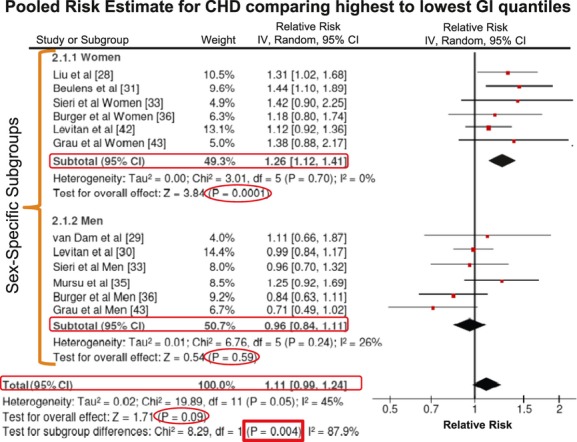
“Pooled analyses showed an increase in CHD risk for the highest GI quantile compared with the lowest, with RR=1.11 (95% confidence interval [CI] 0.99 to 1.24)”
- Also stated in: § Glycemic Index and Coronary Heart Disease · plain
“The CHD incidence rate was increased at the highest level of GI exposure (mean GI of 84.4 GI units, range 79.9 to 91) relative to the lowest (mean GI of 72.3 GI units, range 68.1 to 77), RR=1.11, 95% CI 0.99 to 1.24, and approached significance (P=0.09)”
§ Associations of Glycemic Index and Load With Coronary Heart Disease Events: A Systematic Review and Meta-Analysis of Prospective Cohorts > Abstract > Methods and Results
plaincorrelational- Asserted: passes — The authors put it forward as true.
- Checkable: passes — It can be checked against evidence.
- Load-bearing: passes — The paper’s conclusions depend on it.
- Based: passes — The paper gives a reason why it holds.
- Also stated in: § Glycemic Index and Coronary Heart Disease · plain
A result the paper reports from its own data — it cites no other source for it, so there is none to check. The quote shows it is in the paper.
In the paper
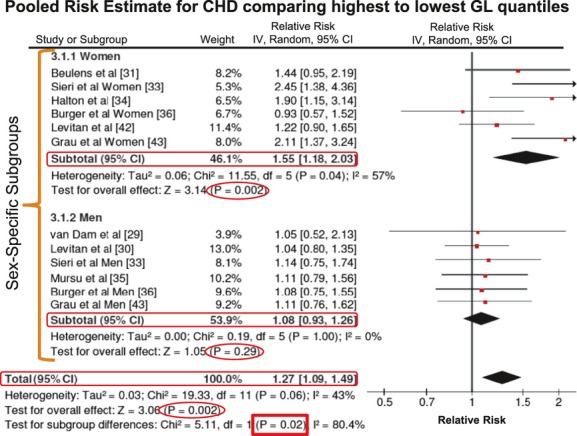
“The pooled risk estimation showed a significant increase in CHD risk (RR=1.27 [95% CI 1.09 to 1.49], P=0.002), with significant heterogeneity (I2=43%, P=0.06), for the highest level of GL exposure (mean GL of 224.8 GL units, range 166 to 270) relative to the lowest (mean GL of 135.4 GL units, range 83 to 176).”
§ Associations of Glycemic Index and Load With Coronary Heart Disease Events: A Systematic Review and Meta-Analysis of Prospective Cohorts > Results > Glycemic Load and Coronary Heart Disease
plain- Asserted: passes — The authors put it forward as true.
- Checkable: passes — It can be checked against evidence.
- Load-bearing: unclear — It is unclear whether the paper’s conclusions depend on it.
- Based: passes — The paper gives a reason why it holds.
In the paper
“The removal of Grau et al43 somewhat reduced the estimate of the association of GL with CHD (RR=1.21 [95% CI 1.05 to 1.38], P=0.007; I2=23%, P=0.23)”
§ Associations of Glycemic Index and Load With Coronary Heart Disease Events: A Systematic Review and Meta-Analysis of Prospective Cohorts > Results > Glycemic Load and Coronary Heart Disease
What the sources say
- Not checked yetcites Grau et al43
plaindirect- Asserted: passes — The authors put it forward as true.
- Checkable: passes — It can be checked against evidence.
- Load-bearing: unclear — It is unclear whether the paper’s conclusions depend on it.
- Based: passes — The paper gives a reason why it holds.
A result the paper reports from its own data — it cites no other source for it, so there is none to check. The quote shows it is in the paper.
In the paper
“Sensitivity analyses identified the Grau et al43 report on men as the largest contributor to heterogeneity.”
§ Associations of Glycemic Index and Load With Coronary Heart Disease Events: A Systematic Review and Meta-Analysis of Prospective Cohorts > Results > Glycemic Index and Coronary Heart Disease
plaincorrelational- Asserted: passes — The authors put it forward as true.
- Checkable: passes — It can be checked against evidence.
- Load-bearing: unclear — It is unclear whether the paper’s conclusions depend on it.
- Based: passes — The paper gives a reason why it holds.
A result the paper reports from its own data — it cites no other source for it, so there is none to check. The quote shows it is in the paper.
In the paper
“The effect was seen only in women with 26% increased relative risk of CHD for GI and 55% for GL.”
§ Associations of Glycemic Index and Load With Coronary Heart Disease Events: A Systematic Review and Meta-Analysis of Prospective Cohorts > Discussion
plaincorrelational- Asserted: passes — The authors put it forward as true.
- Checkable: passes — It can be checked against evidence.
- Load-bearing: passes — The paper’s conclusions depend on it.
- Based: passes — The paper gives a reason why it holds.
A result the paper reports from its own data — it cites no other source for it, so there is none to check. The quote shows it is in the paper.
In the paper
“with the female cohorts showing significance for GI RR=1.26 (95% CI 1.12 to 1.41)”
- Also stated in: § Glycemic Index and Coronary Heart Disease · plain
“The pooled female cohorts28,31,33,36,42,43 showed a larger, statistically significant association (ΔGI between mean of highest exposure and mean of reference=11.9±1.5 SE, RR=1.26 [95% CI 1.12 to 1.41])”
§ Associations of Glycemic Index and Load With Coronary Heart Disease Events: A Systematic Review and Meta-Analysis of Prospective Cohorts > Abstract > Methods and Results
plaincorrelational- Asserted: passes — The authors put it forward as true.
- Checkable: passes — It can be checked against evidence.
- Load-bearing: passes — The paper’s conclusions depend on it.
- Based: passes — The paper gives a reason why it holds.
- Also stated in: § Glycemic Index and Coronary Heart Disease · plain
A result the paper reports from its own data — it cites no other source for it, so there is none to check. The quote shows it is in the paper.
In the paper
“The pooled risk estimation showed a significant increase in CHD risk (RR=1.27 [95% CI 1.09 to 1.49], P=0.002), with significant heterogeneity (I2=43%, P=0.06), for the highest level of GL exposure (mean GL of 224.8 GL units, range 166 to 270) relative to the lowest (mean GL of 135.4 GL units, range 83 to 176).”
- Also stated in: § Discussion · boosted
“and a 27% increased relative risk of CHD for the highest versus the lowest quantile of GL.”
§ Associations of Glycemic Index and Load With Coronary Heart Disease Events: A Systematic Review and Meta-Analysis of Prospective Cohorts > Results > Glycemic Load and Coronary Heart Disease
boostedcorrelational- Asserted: passes — The authors put it forward as true.
- Checkable: passes — It can be checked against evidence.
- Load-bearing: passes — The paper’s conclusions depend on it.
- Based: passes — The paper gives a reason why it holds.
- Also stated in: § Discussion · boosted
None of the sources cited for this claim have been checked yet.
In the paper
“Sensitivity analyses identified the Grau et al43 and Sieri et al33 reports on women as the largest contributors to heterogeneity when removed individually.”
§ Associations of Glycemic Index and Load With Coronary Heart Disease Events: A Systematic Review and Meta-Analysis of Prospective Cohorts > Results > Glycemic Load and Coronary Heart Disease
What the sources say
- Not checked yetcites Grau et al43
- Not checked yetcites Sieri et al33
plaincorrelational- Asserted: passes — The authors put it forward as true.
- Checkable: passes — It can be checked against evidence.
- Load-bearing: unclear — It is unclear whether the paper’s conclusions depend on it.
- Based: passes — The paper gives a reason why it holds.
A result the paper reports from its own data — it cites no other source for it, so there is none to check. The quote shows it is in the paper.
In the paper
“whereas in the male cohorts,29,30,33,35,36,43 the association was not significant (ΔGL between mean of highest exposure and mean of reference=90.4±9.2 SE, RR=1.08 [95% CI 0.93 to 1.26]).”
§ Associations of Glycemic Index and Load With Coronary Heart Disease Events: A Systematic Review and Meta-Analysis of Prospective Cohorts > Results > Glycemic Load and Coronary Heart Disease
plain- Asserted: passes — The authors put it forward as true.
- Checkable: passes — It can be checked against evidence.
- Load-bearing: passes — The paper’s conclusions depend on it.
- Based: passes — The paper gives a reason why it holds.
- It may state two separate claims as one. 27
- The quote only partly states this claim. 1
- Probably not a substantial claim. 22
A result the paper reports from its own data — it cites no other source for it, so there is none to check. The quote shows it is in the paper.
In the paper
“The effect was seen only in women with 26% increased relative risk of CHD for GI and 55% for GL.”
§ Associations of Glycemic Index and Load With Coronary Heart Disease Events: A Systematic Review and Meta-Analysis of Prospective Cohorts > Discussion
plaincorrelational- Asserted: unclear — It is unclear whether the authors put it forward as true.
- Checkable: passes — It can be checked against evidence.
- Load-bearing: passes — The paper’s conclusions depend on it.
- Based: unclear — It is unclear why the paper says it holds.
It may state two separate claims as one. The quote only partly states this claim.
None of the sources cited for this claim have been checked yet.
In the paper
“Two reports28,34 on the Nurses' Health Study provided data on the GL exposure; only the report with the larger subject numbers and longer follow-up was included in the GL analyses.34,44”
§ Associations of Glycemic Index and Load With Coronary Heart Disease Events: A Systematic Review and Meta-Analysis of Prospective Cohorts > Results > Search Results
plain- Asserted: passes — The authors put it forward as true.
- Checkable: passes — It can be checked against evidence.
- Load-bearing: fails — The paper’s conclusions may not depend on it.
- Based: passes — The paper gives a reason why it holds.
Probably not a substantial claim. The paper’s conclusions may not depend on it. It may state two separate claims as one.
A result the paper reports from its own data — it cites no other source for it, so there is none to check. The quote shows it is in the paper.
In the paper
“The most common confounders adjusted for included age, BMI, and cigarette smoking, with full multivariate analyses outlined in Table 1.”
§ Associations of Glycemic Index and Load With Coronary Heart Disease Events: A Systematic Review and Meta-Analysis of Prospective Cohorts > Results > Cohort Characteristics
plain- Asserted: passes — The authors put it forward as true.
- Checkable: passes — It can be checked against evidence.
- Load-bearing: fails — The paper’s conclusions may not depend on it.
- Based: passes — The paper gives a reason why it holds.
Probably not a substantial claim. The paper’s conclusions may not depend on it.
A result the paper reports from its own data — it cites no other source for it, so there is none to check. The quote shows it is in the paper.
In the paper
“The removal of this study changed the risk estimate for the association of GI with CHD (RR=1.14 [95% CI 1.02 to 1.26], P=0.02) and also improved the precision of the estimate and eliminated much of the heterogeneity (I2=30%, P=0.16).”
§ Associations of Glycemic Index and Load With Coronary Heart Disease Events: A Systematic Review and Meta-Analysis of Prospective Cohorts > Results > Glycemic Index and Coronary Heart Disease
plaincorrelational- Asserted: passes — The authors put it forward as true.
- Checkable: passes — It can be checked against evidence.
- Load-bearing: unclear — It is unclear whether the paper’s conclusions depend on it.
- Based: passes — The paper gives a reason why it holds.
It may state two separate claims as one.
A result the paper reports from its own data — it cites no other source for it, so there is none to check. The quote shows it is in the paper.
In the paper
“All studies used Cox proportional hazard models for CHD risk estimation analyses, except for 1 study43 which used restricted cubic spline models.”
§ Associations of Glycemic Index and Load With Coronary Heart Disease Events: A Systematic Review and Meta-Analysis of Prospective Cohorts > Results > Cohort Characteristics
plain- Asserted: passes — The authors put it forward as true.
- Checkable: passes — It can be checked against evidence.
- Load-bearing: fails — The paper’s conclusions may not depend on it.
- Based: passes — The paper gives a reason why it holds.
Probably not a substantial claim. The paper’s conclusions may not depend on it.
In the paper
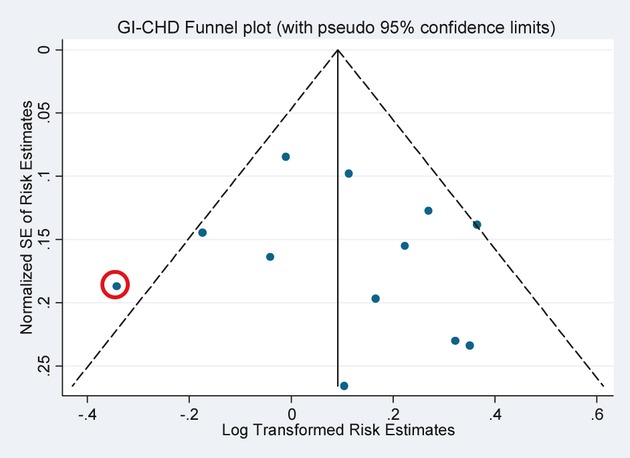
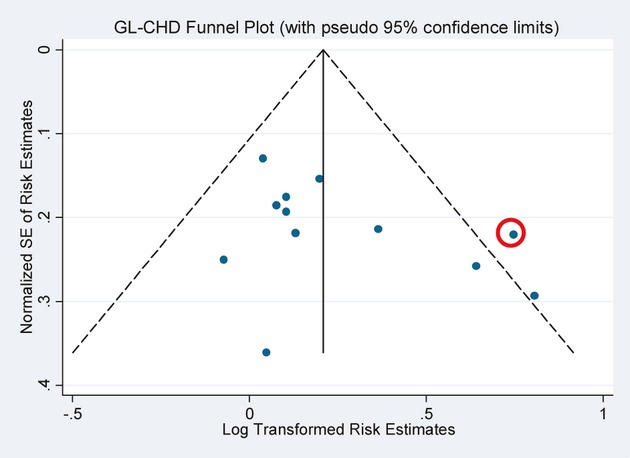
“in the visual inspection of the GI funnel plot, the Grau et al43 report on men appears to be an outlier”
§ Associations of Glycemic Index and Load With Coronary Heart Disease Events: A Systematic Review and Meta-Analysis of Prospective Cohorts > Results > Publication Bias
What the sources say
- Not checked yetcites Grau et al43
hedged- Asserted: passes — The authors put it forward as true.
- Checkable: passes — It can be checked against evidence.
- Load-bearing: fails — The paper’s conclusions may not depend on it.
- Based: passes — The paper gives a reason why it holds.
Probably not a substantial claim. The paper’s conclusions may not depend on it.
A result the paper reports from its own data — it cites no other source for it, so there is none to check. The quote shows it is in the paper.
In the paper
“The dietary patterns across the different quantiles of GL were similar between studies, with a trend of increasing carbohydrate and decreasing protein and fat content at higher GL quantiles (Table 2).”
§ Associations of Glycemic Index and Load With Coronary Heart Disease Events: A Systematic Review and Meta-Analysis of Prospective Cohorts > Results > Cohort Characteristics
plaincorrelational- Asserted: passes — The authors put it forward as true.
- Checkable: passes — It can be checked against evidence.
- Load-bearing: fails — The paper’s conclusions may not depend on it.
- Based: passes — The paper gives a reason why it holds.
Probably not a substantial claim. The paper’s conclusions may not depend on it. It may state two separate claims as one.
A result the paper reports from its own data — it cites no other source for it, so there is none to check. The quote shows it is in the paper.
In the paper
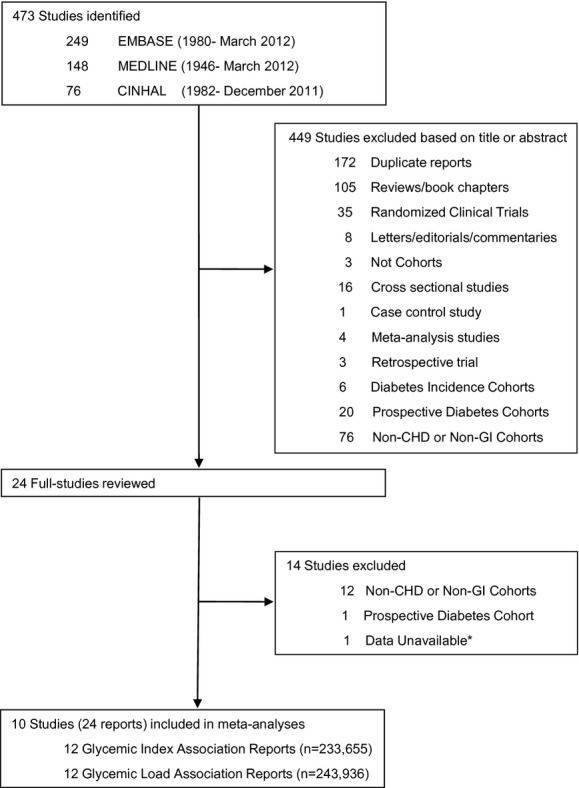
“Of the 10 studies identified, 12 GI and 12 GL reports with CHD risk estimation were included in our analyses, with a total of 233 65528–31,33,35,36,42,43 and 240 93628–31,33,34,35,36,42,43 subjects, respectively.”
§ Associations of Glycemic Index and Load With Coronary Heart Disease Events: A Systematic Review and Meta-Analysis of Prospective Cohorts > Results > Cohort Characteristics
plain- Asserted: passes — The authors put it forward as true.
- Checkable: passes — It can be checked against evidence.
- Load-bearing: unclear — It is unclear whether the paper’s conclusions depend on it.
- Based: passes — The paper gives a reason why it holds.
It may state two separate claims as one.
In the paper
“This study differed from the other studies of men in several respects. The proportion (54%) of smokers was almost twice that of the other studies, and BMI was somewhat lower (25.3 versus 26.1 kg/m2)”
§ Associations of Glycemic Index and Load With Coronary Heart Disease Events: A Systematic Review and Meta-Analysis of Prospective Cohorts > Discussion
What the sources say
- Not checked yetcites [43] Grau K Tetens I Bjornsbo KS Heitman BL Overall glycaemic index and glycaemic load of habitual diet and risk of heart disease. Public Health Nutr. 2011; 14: 109- 118. 20576198 source
plainSingle case- Asserted: passes — The authors put it forward as true.
- Checkable: passes — It can be checked against evidence.
- Load-bearing: passes — The paper’s conclusions depend on it.
- Based: passes — The paper gives a reason why it holds.
It may state two separate claims as one.
A result the paper reports from its own data — it cites no other source for it, so there is none to check. The quote shows it is in the paper.
In the paper
“The majority of the studies (7 of 10) used either a semiquantitative or quantitative Food Frequency Questionnaire (SFFQ or FFQ),28,30,31,33,34,36,42 but 3 used 4- or 7-day diet records or diet history interviews for food consumption patterns.29,35,43”
§ Associations of Glycemic Index and Load With Coronary Heart Disease Events: A Systematic Review and Meta-Analysis of Prospective Cohorts > Results > Cohort Characteristics
plain- Asserted: passes — The authors put it forward as true.
- Checkable: passes — It can be checked against evidence.
- Load-bearing: fails — The paper’s conclusions may not depend on it.
- Based: passes — The paper gives a reason why it holds.
Probably not a substantial claim. The paper’s conclusions may not depend on it. It may state two separate claims as one.
The paper states this without a source or data behind it here, so there is nothing to check it against. The quote shows it is in the paper.
In the paper
“All analyses were stratified by sex.”
§ Associations of Glycemic Index and Load With Coronary Heart Disease Events: A Systematic Review and Meta-Analysis of Prospective Cohorts > Results > Cohort Characteristics
plain- Asserted: passes — The authors put it forward as true.
- Checkable: passes — It can be checked against evidence.
- Load-bearing: fails — The paper’s conclusions may not depend on it.
- Based: passes — The paper gives a reason why it holds.
Probably not a substantial claim. The paper’s conclusions may not depend on it.
A result the paper reports from its own data — it cites no other source for it, so there is none to check. The quote shows it is in the paper.
In the paper
“All cohorts excluded those with documented CHD or major CHD risk factor at time of enrollment, with the exception of 1 that included a population 5% of whom had diabetes35 but adjusted for diabetes status.”
§ Associations of Glycemic Index and Load With Coronary Heart Disease Events: A Systematic Review and Meta-Analysis of Prospective Cohorts > Results > Cohort Characteristics
plain- Asserted: passes — The authors put it forward as true.
- Checkable: passes — It can be checked against evidence.
- Load-bearing: unclear — It is unclear whether the paper’s conclusions depend on it.
- Based: passes — The paper gives a reason why it holds.
It may state two separate claims as one.
A result the paper reports from its own data — it cites no other source for it, so there is none to check. The quote shows it is in the paper.
In the paper
“There was significant evidence of heterogeneity in the female subset but not in the male subset.”
§ Associations of Glycemic Index and Load With Coronary Heart Disease Events: A Systematic Review and Meta-Analysis of Prospective Cohorts > Results > Glycemic Load and Coronary Heart Disease
plain- Asserted: passes — The authors put it forward as true.
- Checkable: passes — It can be checked against evidence.
- Load-bearing: unclear — It is unclear whether the paper’s conclusions depend on it.
- Based: passes — The paper gives a reason why it holds.
It may state two separate claims as one.
A result the paper reports from its own data — it cites no other source for it, so there is none to check. The quote shows it is in the paper.
In the paper
“In all, 473 eligible studies were identified by the search.”
§ Associations of Glycemic Index and Load With Coronary Heart Disease Events: A Systematic Review and Meta-Analysis of Prospective Cohorts > Results > Search Results
plain- Asserted: passes — The authors put it forward as true.
- Checkable: passes — It can be checked against evidence.
- Load-bearing: fails — The paper’s conclusions may not depend on it.
- Based: passes — The paper gives a reason why it holds.
Probably not a substantial claim. The paper’s conclusions may not depend on it.
A result the paper reports from its own data — it cites no other source for it, so there is none to check. The quote shows it is in the paper.
In the paper
“A total of 10 studies with 12 GI reports28–31,33,35,36,42,43 and 12 GL reports28–31,33–36,42,43 were selected for analyses.”
§ Associations of Glycemic Index and Load With Coronary Heart Disease Events: A Systematic Review and Meta-Analysis of Prospective Cohorts > Results > Search Results
plain- Asserted: passes — The authors put it forward as true.
- Checkable: passes — It can be checked against evidence.
- Load-bearing: passes — The paper’s conclusions depend on it.
- Based: passes — The paper gives a reason why it holds.
Probably not a substantial claim. It may state two separate claims as one.
A result the paper reports from its own data — it cites no other source for it, so there is none to check. The quote shows it is in the paper.
In the paper
“All studies used the International Tables of Glycemic Index for assessing the GI of different foods; 328,29,34 used the 1995 iteration,45 630,31,33,36,42,43 used the 2002 iteration,46 and 135 used the 2008 iteration.”
§ Associations of Glycemic Index and Load With Coronary Heart Disease Events: A Systematic Review and Meta-Analysis of Prospective Cohorts > Results > Cohort Characteristics
plain- Asserted: passes — The authors put it forward as true.
- Checkable: passes — It can be checked against evidence.
- Load-bearing: fails — The paper’s conclusions may not depend on it.
- Based: passes — The paper gives a reason why it holds.
Probably not a substantial claim. The paper’s conclusions may not depend on it. It may state two separate claims as one.
A result the paper reports from its own data — it cites no other source for it, so there is none to check. The quote shows it is in the paper.
In the paper
“whereas the male cohorts29,30,33,35,36,43 showed no association (ΔGI between mean of highest exposure and mean of reference=12.2±1.7 SE, RR=0.96 [95% CI 0.84 to 1.11])”
§ Associations of Glycemic Index and Load With Coronary Heart Disease Events: A Systematic Review and Meta-Analysis of Prospective Cohorts > Results > Glycemic Index and Coronary Heart Disease
plain- Asserted: passes — The authors put it forward as true.
- Checkable: passes — It can be checked against evidence.
- Load-bearing: passes — The paper’s conclusions depend on it.
- Based: passes — The paper gives a reason why it holds.
It may state two separate claims as one.
A result the paper reports from its own data — it cites no other source for it, so there is none to check. The quote shows it is in the paper.
In the paper
“In general, the glycemic index and glycemic load data were in agreement, although the magnitude of the CHD risk was greater based on the difference between the extreme quantiles of glycemic load.”
§ Associations of Glycemic Index and Load With Coronary Heart Disease Events: A Systematic Review and Meta-Analysis of Prospective Cohorts > Discussion
plaincorrelational- Asserted: passes — The authors put it forward as true.
- Checkable: passes — It can be checked against evidence.
- Load-bearing: passes — The paper’s conclusions depend on it.
- Based: passes — The paper gives a reason why it holds.
It may state two separate claims as one.
In the paper
“We followed the meta-analysis of observational studies in epidemiology (MOOSE) guidelines for this report.32”
§ Associations of Glycemic Index and Load With Coronary Heart Disease Events: A Systematic Review and Meta-Analysis of Prospective Cohorts > Methods > Data Sources and Study Selection
What the sources say
- Not checked yetcites [32] Stroup DF Berlin JA Morton SC Olkin I Williamson GD Rennie D Moher D Becker BJ Sipe TA Thacker SB Meta-analysis of observational studies in epidemiology: a proposal for reporting. Meta-analysis of observational studies in epidemiology (MOOSE) group. JAMA. 2000; 283: 2008- 2012. 10789670 source
plain- Asserted: passes — The authors put it forward as true.
- Checkable: passes — It can be checked against evidence.
- Load-bearing: fails — The paper’s conclusions may not depend on it.
- Based: passes — The paper gives a reason why it holds.
Probably not a substantial claim. The paper’s conclusions may not depend on it.
What the paper did — it cites no source for this, so there is none to check. The quote shows it is in the paper.
In the paper
“Electronic databases (MEDLINE 1946-March, Week 4, 2012; EMBASE 1980–2012, Week 13; CINAHL 1982–December 2011) were searched by 2 individuals independently; searches were supplemented by manual searches through the reference lists of original publications and review articles.”
§ Associations of Glycemic Index and Load With Coronary Heart Disease Events: A Systematic Review and Meta-Analysis of Prospective Cohorts > Methods > Data Sources and Study Selection
plain- Asserted: passes — The authors put it forward as true.
- Checkable: passes — It can be checked against evidence.
- Load-bearing: fails — The paper’s conclusions may not depend on it.
- Based: passes — The paper gives a reason why it holds.
Probably not a substantial claim. The paper’s conclusions may not depend on it. It may state two separate claims as one.
What the paper did — it cites no source for this, so there is none to check. The quote shows it is in the paper.
In the paper
“Two reviewers (A.M., L.C.) independently reviewed and extracted relevant data employing a standardized pro forma sheet with the first author and year of publication used as study identifiers for convenience.”
§ Associations of Glycemic Index and Load With Coronary Heart Disease Events: A Systematic Review and Meta-Analysis of Prospective Cohorts > Methods > Data Extraction
plain- Asserted: passes — The authors put it forward as true.
- Checkable: passes — It can be checked against evidence.
- Load-bearing: fails — The paper’s conclusions may not depend on it.
- Based: passes — The paper gives a reason why it holds.
Probably not a substantial claim. The paper’s conclusions may not depend on it.
None of the sources cited for this claim have been checked yet.
In the paper
“Potential publication bias was assessed visually by inspecting funnel plots of effect size against the standard error and formally tested using Begg's and Egger's tests in STATA.39,40”
§ Associations of Glycemic Index and Load With Coronary Heart Disease Events: A Systematic Review and Meta-Analysis of Prospective Cohorts > Methods > Data Synthesis
What the sources say
- Not checked yetcites [39] Begg CB Mazumdar M Operating characteristics of a rank correlation test for publication bias. Biometrics. 1994; 50: 1088- 1101. 7786990 source
- Not checked yetcites [40] Egger M Davey Smith G Schneider M Minder C Bias in meta-analysis detected by a simple, graphical test. BMJ. 1997; 315: 629- 634. 9310563 PMC2127453 source
plain- Asserted: passes — The authors put it forward as true.
- Checkable: passes — It can be checked against evidence.
- Load-bearing: fails — The paper’s conclusions may not depend on it.
- Based: passes — The paper gives a reason why it holds.
Probably not a substantial claim. The paper’s conclusions may not depend on it. It may state two separate claims as one.
In the paper
“Regardless of P value, sensitivity analyses were performed to identify sources of heterogeneity.38”
§ Associations of Glycemic Index and Load With Coronary Heart Disease Events: A Systematic Review and Meta-Analysis of Prospective Cohorts > Methods > Data Synthesis
What the sources say
- Not checked yetcites [38] Higgins J Green S Cochrane handbook for systematic reviews of interventions version 5.0.0 [updated February 2008] 2008 The Cochrane Collaboration source
plain- Asserted: passes — The authors put it forward as true.
- Checkable: passes — It can be checked against evidence.
- Load-bearing: fails — The paper’s conclusions may not depend on it.
- Based: passes — The paper gives a reason why it holds.
Probably not a substantial claim. The paper’s conclusions may not depend on it.
In the paper
“Our a priori stratified analyses included sex and duration of follow-up, that is, whether studies were more or less than 10 years, consistent with the 10-year Framingham Risk Score41 approach, and analyzed using meta-regression in STATA.”
§ Associations of Glycemic Index and Load With Coronary Heart Disease Events: A Systematic Review and Meta-Analysis of Prospective Cohorts > Methods > Data Synthesis
What the sources say
- Not checked yetcites [41] Anderson KM Odell PM Wilson PW Kannel WB Cardiovascular disease risk profiles. Am Heart J. 1991; 121: 293- 298. 1985385 source
plain- Asserted: passes — The authors put it forward as true.
- Checkable: passes — It can be checked against evidence.
- Load-bearing: fails — The paper’s conclusions may not depend on it.
- Based: passes — The paper gives a reason why it holds.
Probably not a substantial claim. The paper’s conclusions may not depend on it. It may state two separate claims as one.
What the paper did — it cites no source for this, so there is none to check. The quote shows it is in the paper.
In the paper
“Titles and abstracts were initially reviewed to identify relevant reports by 2 independent reviewers (A.M., L.C., both investigators); reviewers conducted a subsequent full-text assessment of all studies in which there was uncertainty about the assessment of relevance. Disagreements regarding eligibility were resolved through discussion with 2 additional adjudicators (D.J.A.J/R.J.D.).”
§ Associations of Glycemic Index and Load With Coronary Heart Disease Events: A Systematic Review and Meta-Analysis of Prospective Cohorts > Methods > Data Sources and Study Selection
plain- Asserted: passes — The authors put it forward as true.
- Checkable: passes — It can be checked against evidence.
- Load-bearing: fails — The paper’s conclusions may not depend on it.
- Based: passes — The paper gives a reason why it holds.
Probably not a substantial claim. The paper’s conclusions may not depend on it. It may state two separate claims as one.
None of the sources cited for this claim have been checked yet.
In the paper
“As a result, SFAs per se no longer appeared to be associated with CHD, emphasizing the potentially deleterious effects of refined, rapidly absorbed carbohydrates.4,5”
§ Associations of Glycemic Index and Load With Coronary Heart Disease Events: A Systematic Review and Meta-Analysis of Prospective Cohorts > Introduction
What the sources say
- Not checked yetcites [4] Jakobsen MU O'Reilly EJ Heitmann BL Pereira MA Balter K Fraser GE Goldbourt U Hallmans G Knekt P Liu S Pietinen P Spiegelman D Stevens J Virtamo J Willett WC Ascherio A Major types of dietary fat and risk of coronary heart disease: a pooled analysis of 11 cohort studies. Am J Clin Nutr. 2009; 89: 1425- 1432. 19211817 PMC2676998 source
- Not checked yetcites [5] Siri-Tarino PW Sun Q Hu FB Krauss RM Meta-analysis of prospective cohort studies evaluating the association of saturated fat with cardiovascular disease. Am J Clin Nutr. 2010; 91: 535- 546. 20071648 PMC2824152 source
hedgedcorrelational- Asserted: passes — The authors put it forward as true.
- Checkable: passes — It can be checked against evidence.
- Load-bearing: passes — The paper’s conclusions depend on it.
- Based: passes — The paper gives a reason why it holds.
It may state two separate claims as one.
What the paper did — it cites no source for this, so there is none to check. The quote shows it is in the paper.
In the paper
“However, we were unable to include 2 studies in this analysis because of the expression of results as either the substitution of low GI carbohydrates for SFAs, rather than dietary GI analysis, or the incremental association of dietary GI with CHD rather than quantile presentation (ie, CHD risk per 5 GI unit increments).”
§ Associations of Glycemic Index and Load With Coronary Heart Disease Events: A Systematic Review and Meta-Analysis of Prospective Cohorts > Discussion
plain- Asserted: passes — The authors put it forward as true.
- Checkable: passes — It can be checked against evidence.
- Load-bearing: fails — The paper’s conclusions may not depend on it.
- Based: passes — The paper gives a reason why it holds.
Probably not a substantial claim. The paper’s conclusions may not depend on it.
In the paper
“Higher glycemic index diets tend to reduce circulating HDL-C concentrations and thus disproportionately increase CHD risk in women, especially when postmenopausal.51”
§ Associations of Glycemic Index and Load With Coronary Heart Disease Events: A Systematic Review and Meta-Analysis of Prospective Cohorts > Discussion
What the sources say
- Not checked yetcites [51] Matthews KA Meilahn E Kuller LH Kelsey SF Caggiula AW Wing RR Menopause and risk factors for coronary heart disease. N Engl J Med. 1989; 321: 641- 646. 2488072 source
hedgeddirect- Asserted: passes — The authors put it forward as true.
- Checkable: passes — It can be checked against evidence.
- Load-bearing: unclear — It is unclear whether the paper’s conclusions depend on it.
- Based: passes — The paper gives a reason why it holds.
It may state two separate claims as one.
A conclusion the paper draws from its own results — it cites no other source for it, so there is none to check. The quote shows it is in the paper.
In the paper
“High GI and GL diets were significantly associated with CHD events in women but not in men.”
§ Associations of Glycemic Index and Load With Coronary Heart Disease Events: A Systematic Review and Meta-Analysis of Prospective Cohorts > Abstract > Conclusions
plain- Asserted: passes — The authors put it forward as true.
- Checkable: passes — It can be checked against evidence.
- Load-bearing: passes — The paper’s conclusions depend on it.
- Based: passes — The paper gives a reason why it holds.
It may state two separate claims as one.
None of the sources cited for this claim have been checked yet.
In the paper
“Neither Begg's nor Egger's tests revealed significant evidence of publication bias in the overall analyses of GI and GL (P>0.115 for all).”
§ Associations of Glycemic Index and Load With Coronary Heart Disease Events: A Systematic Review and Meta-Analysis of Prospective Cohorts > Results > Publication Bias
What the sources say
- Not checked yetcites [39] Begg CB Mazumdar M Operating characteristics of a rank correlation test for publication bias. Biometrics. 1994; 50: 1088- 1101. 7786990 source
- Not checked yetcites [40] Egger M Davey Smith G Schneider M Minder C Bias in meta-analysis detected by a simple, graphical test. BMJ. 1997; 315: 629- 634. 9310563 PMC2127453 source
plain- Asserted: passes — The authors put it forward as true.
- Checkable: passes — It can be checked against evidence.
- Load-bearing: unclear — It is unclear whether the paper’s conclusions depend on it.
- Based: passes — The paper gives a reason why it holds.
It may state two separate claims as one.
A conclusion the paper draws from its own results — it cites no other source for it, so there is none to check. The quote shows it is in the paper.
In the paper
“High GI and GL diets were significantly associated with CHD events in women but not in men.”
§ Associations of Glycemic Index and Load With Coronary Heart Disease Events: A Systematic Review and Meta-Analysis of Prospective Cohorts > Abstract > Conclusions
plaincorrelational- Asserted: passes — The authors put it forward as true.
- Checkable: passes — It can be checked against evidence.
- Load-bearing: passes — The paper’s conclusions depend on it.
- Based: passes — The paper gives a reason why it holds.
It may state two separate claims as one.
None of the sources cited for this claim have been checked yet.
In the paper
“Other factors that in general may contribute to the increased CHD risk with high-GI diets are blood pressure and CRP, both of which may be raised by high-GI diets.52,55”
§ Associations of Glycemic Index and Load With Coronary Heart Disease Events: A Systematic Review and Meta-Analysis of Prospective Cohorts > Discussion
What the sources say
- Not checked yetcites [52] Levitan EB Cook NR Stampfer MJ Ridker PM Rexrode KM Buring JE Manson JE Liu S Dietary glycemic index, dietary glycemic load, blood lipids, and C-reactive protein. Metabolism. 2008; 57: 437- 443. 18249220 PMC2262400 source
- Not checked yetcites [55] Liu S Manson JE Buring JE Stampfer MJ Willett WC Ridker PM Relation between a diet with a high glycemic load and plasma concentrations of high-sensitivity C-reactive protein in middle-aged women. Am J Clin Nutr. 2002; 75: 492- 498. 11864854 source
hedgedconditional- Asserted: passes — The authors put it forward as true.
- Checkable: passes — It can be checked against evidence.
- Load-bearing: unclear — It is unclear whether the paper’s conclusions depend on it.
- Based: passes — The paper gives a reason why it holds.
It may state two separate claims as one.
None of the sources cited for this claim have been checked yet.
In the paper
“Because no studies have a time frame shorter than 6 years, it is not possible to determine whether the effect is early, possibly from alterations in clotting factors,60 or later due to reduction in the rate of atheroma formation secondary to oxidative damage.61”
§ Associations of Glycemic Index and Load With Coronary Heart Disease Events: A Systematic Review and Meta-Analysis of Prospective Cohorts > Discussion
What the sources say
- Not checked yetcites [60] Jarvi AE Karlstrom BE Granfeldt YE Bjorck IE Asp NG Vessby BO Improved glycemic control and lipid profile and normalized fibrinolytic activity on a low-glycemic index diet in type 2 diabetic patients. Diabetes Care. 1999; 22: 10- 18. 10333897 source
- Not checked yetcites [61] Hu Y Block G Norkus EP Morrow JD Dietrich M Hudes M Relations of glycemic index and glycemic load with plasma oxidative stress markers. Am J Clin Nutr. 2006; 84: 70- 76 quiz 266-267 16825683 source
plain- Asserted: passes — The authors put it forward as true.
- Checkable: passes — It can be checked against evidence.
- Load-bearing: passes — The paper’s conclusions depend on it.
- Based: passes — The paper gives a reason why it holds.
It may state two separate claims as one.
What the paper did — it cites no source for this, so there is none to check. The quote shows it is in the paper.
In the paper
“because of the time frame of published reports, the GI and GL data were still compiled from various data sources.”
§ Associations of Glycemic Index and Load With Coronary Heart Disease Events: A Systematic Review and Meta-Analysis of Prospective Cohorts > Discussion
plain- Asserted: passes — The authors put it forward as true.
- Checkable: passes — It can be checked against evidence.
- Load-bearing: fails — The paper’s conclusions may not depend on it.
- Based: passes — The paper gives a reason why it holds.
Probably not a substantial claim. The paper’s conclusions may not depend on it.
None of the sources cited for this claim have been checked yet.
In the paper
“The weaknesses of the present study include the limited number of studies, the inability to include potentially relevant studies44,47 because of lack of necessary data, and the heterogeneity in the overall analyses, especially in the likely underpowered analyses of men.”
§ Associations of Glycemic Index and Load With Coronary Heart Disease Events: A Systematic Review and Meta-Analysis of Prospective Cohorts > Discussion
What the sources say
- Not checked yetcites [44] Hardy DS Hoelscher DM Aragaki C Stevens J Steffen LM Pankow JS Boerwinkle E Association of glycemic index and glycemic load with risk of incident coronary heart disease among whites and African Americans with and without type 2 diabetes: the Atherosclerosis Risk in Communities study. Ann Epidemiol. 2010; 20: 610- 616. 20609341 PMC3085981 source
- Not checked yetcites [47] Jakobsen MU Dethlefsen C Joensen AM Stegger J Tjonneland A Schmidt EB Overvad K Intake of carbohydrates compared with intake of saturated fatty acids and risk of myocardial infarction: importance of the glycemic index. Am J Clin Nutr. 2010; 91: 1764- 1768. 20375186 source
plain- Asserted: passes — The authors put it forward as true.
- Checkable: passes — It can be checked against evidence.
- Load-bearing: unclear — It is unclear whether the paper’s conclusions depend on it.
- Based: passes — The paper gives a reason why it holds.
It may state two separate claims as one.
What the paper did — it cites no source for this, so there is none to check. The quote shows it is in the paper.
In the paper
“We further believe that our systematic review was strengthened by our efforts to acquire as much data as possible by contacting all study authors to include all relevant studies in our analyses.”
§ Associations of Glycemic Index and Load With Coronary Heart Disease Events: A Systematic Review and Meta-Analysis of Prospective Cohorts > Discussion
plaindirect- Asserted: passes — The authors put it forward as true.
- Checkable: passes — It can be checked against evidence.
- Load-bearing: fails — The paper’s conclusions may not depend on it.
- Based: passes — The paper gives a reason why it holds.
Probably not a substantial claim. The paper’s conclusions may not depend on it.
In the paper
“Conversely, acarbose, the α-glucosidase inhibitor that converts dietary carbohydrate to a low glycemic index form, has been shown to prevent hypertension and CHD events in the STOP NIDDM trial.56”
§ Associations of Glycemic Index and Load With Coronary Heart Disease Events: A Systematic Review and Meta-Analysis of Prospective Cohorts > Discussion
What the sources say
- Not checked yetcites [56] Chiasson JL Josse RG Gomis R Hanefeld M Karasik A Laakso M STOP-NIDDM Trial Research Group. Acarbose treatment and the risk of cardiovascular disease and hypertension in patients with impaired glucose tolerance: the STOP-NIDDM trial. JAMA. 2003; 290: 486- 494. 12876091 source
plaindirect- Asserted: passes — The authors put it forward as true.
- Checkable: passes — It can be checked against evidence.
- Load-bearing: unclear — It is unclear whether the paper’s conclusions depend on it.
- Based: passes — The paper gives a reason why it holds.
It may state two separate claims as one.
In the paper
“An earlier meta-analysis that assessed the effect of dietary GI on several health outcomes including diabetes, CHD, and cancer also concluded that low-GI diets were protective for diabetes, CHD, and colon and breast cancers.62”
§ Associations of Glycemic Index and Load With Coronary Heart Disease Events: A Systematic Review and Meta-Analysis of Prospective Cohorts > Discussion
What the sources say
- Not checked yetcites [62] Barclay AW Petocz P McMillan-Price J Flood VM Prvan T Mitchell P Brand-Miller JC Glycemic index, glycemic load, and chronic disease risk – a meta-analysis of observational studies. Am J Clin Nutr. 2008; 87: 627- 637. 18326601 source
plaindirect- Asserted: passes — The authors put it forward as true.
- Checkable: passes — It can be checked against evidence.
- Load-bearing: fails — The paper’s conclusions may not depend on it.
- Based: passes — The paper gives a reason why it holds.
Probably not a substantial claim. The paper’s conclusions may not depend on it.
What the paper did — it cites no source for this, so there is none to check. The quote shows it is in the paper.
In the paper
“The strength of our study included the use of random-effects models to allow assessment of heterogeneity to guide the sensitivity analyses.”
§ Associations of Glycemic Index and Load With Coronary Heart Disease Events: A Systematic Review and Meta-Analysis of Prospective Cohorts > Discussion
plaindirect- Asserted: passes — The authors put it forward as true.
- Checkable: passes — It can be checked against evidence.
- Load-bearing: passes — The paper’s conclusions depend on it.
- Based: passes — The paper gives a reason why it holds.
Probably not a substantial claim.
None of the sources cited for this claim have been checked yet.
In the paper
“In addition, meta-analyses of low-GI RCTs have shown beneficial effects on body weight and lipid profiles in obese and overweight subjects21 as well as on glycemic control in type 2 diabetic subjects.59”
§ Associations of Glycemic Index and Load With Coronary Heart Disease Events: A Systematic Review and Meta-Analysis of Prospective Cohorts > Discussion
What the sources say
- Not checked yetcites [21] Thomas D Elliott E Baur L Low glycaemic index or low glycaemic load diets for overweight and obesity. Cochrane Database Syst Rev. 2007 CD005105 17636786 PMC9022192
- Not checked yetcites [59] Thomas D Elliott EJ Low glycaemic index, or low glycaemic load, diets for diabetes mellitus. Cochrane Database Syst Rev. 2009 CD006296 19160276 PMC6486008
plaindirect- Asserted: passes — The authors put it forward as true.
- Checkable: passes — It can be checked against evidence.
- Load-bearing: unclear — It is unclear whether the paper’s conclusions depend on it.
- Based: passes — The paper gives a reason why it holds.
It may state two separate claims as one.
The paper relies on this without support.
Carbohydrates with differing physical form, particle size, chemical structure, and fiber content alter the rate of starch digestion and their physiological response.
“Carbohydrates with differing physical form, particle size, chemical structure, and fiber content alter the rate of starch digestion and their physiological response.”
The paper relies on this without support.
The observed associations between GI/GL and CHD in women reflect causal effects that would be modified by reducing GI/GL.
“We conclude that a reduction in the glycemic index and glycemic load may favorably affect CHD outcomes in women.”
Claims other papers make about this one
Each is checked against this paper’s own text: does it say what the citing paper says it does?
In the citing paper
“For instance, glycemic responses to carbohydrate consumption appear especially detrimental in women,89”
From Dietary and Policy Priorities for Cardiovascular Disease, Diabetes, and Obesity: A Comprehensive Review (2016) · cites this paper as [89]
In the citing paper
“Harms appear to be larger in women89, 167 and others predisposed to insulin resistance and atherogenic dyslipidemia, and smaller in men and in younger, lean individuals with high physical activity.”
From Dietary and Policy Priorities for Cardiovascular Disease, Diabetes, and Obesity: A Comprehensive Review (2016) · cites this paper as [89]
In the citing paper
“Consistent with this constellation of adverse effects, poor quality carbohydrates are associated with long-term weight gain, diabetes, and CVD.29, 89, 158, 167”
From Dietary and Policy Priorities for Cardiovascular Disease, Diabetes, and Obesity: A Comprehensive Review (2016) · cites this paper as [89]
In the citing paper
“A meta-analysis of 10 prospective cohort studies (n=296,849) (107) found increased GL associated with a 27% increased coronary heart disease (CHD) and MI risk (108).”
From Food Consumption and its Impact on Cardiovascular Disease: Importance of Solutions Focused on the Globalized Food System (2015) · cites this paper as [107]
Self-check
Percentages, sums and reported differences re-computed from the paper’s own numbers.
Each contradiction between two passages listed here was confirmed by an independent check.
Rated minor: it would not touch a result — a value no result rests on, a p-value that stays on the same side of the significance level, or a conflict that is clerical, resolved elsewhere in the paper, or outside its own findings.
In the paper
§ Associations of Glycemic Index and Load With Coronary Heart Disease Events: A Systematic Review and Meta-Analysis of Prospective Cohorts > Results > Glycemic Load and Coronary Heart Disease
“whereas in the male cohorts,29,30,33,35,36,43 the association was not significant (ΔGL between mean of highest exposure and mean of reference=90.4±9.2 SE, RR=1.08 [95% CI 0.93 to 1.26]).”
§ Associations of Glycemic Index and Load With Coronary Heart Disease Events: A Systematic Review and Meta-Analysis of Prospective Cohorts > Results > Glycemic Load and Coronary Heart Disease
“The figure is stratified by sex-specific subgroups with subtotal boxes in 3.1.1 and 3.1.2 summarizing the pooled analysis for women31,33,34,36,42,43 and for men,29,30,33,35,43 respectively.”
Citations
Cites
Bias in meta-analysis detected by a simple, graphical test
Egger, M., Smith, G. D., Schneider, M., & Minder, C. (1997) · BMJ · doi:10.1136/bmj.315.7109.629 · Cited by 56,722 · cited 4×
“134) tests approached significance for evidence of publication bias.(39,40) CHD indicates coronary heart disease; GL, glycemic load.”
BackgroundMethodInfluentialCochrane Handbook for Systematic Reviews of Interventions: Cochrane Book Series
(2008) · doi:10.1002/9780470712184 · Cited by 25,048
Meta-analysis of Observational Studies in Epidemiology<SUBTITLE>A Proposal for Reporting</SUBTITLE>
Stroup, D. F. (2000) · JAMA · doi:10.1001/jama.283.15.2008 · Cited by 20,623
Operating characteristics of a rank correlation test for publication bias
Begg, C. B., & Mazumdar, M. (1994) · Biometrics · doi:10.2307/2533446 · Cited by 16,955 · cited 4×
“134) tests approached significance for evidence of publication bias.(39,40) CHD indicates coronary heart disease; GL, glycemic load.”
BackgroundMethodInfluentialGlycemic index of foods: a physiological basis for carbohydrate exchange
Jenkins, D. J., Wolever, T. M., Taylor, R. H., Barker, H., Fielden, H., Baldwin, J. M., Bowling, A. C., Newman, H. C., Jenkins, A. L., & Goff, D. V. (1981) · The American Journal of Clinical Nutrition · doi:10.1093/ajcn/34.3.362 · Cited by 3,857 · cited 1×
“of a carbohydrate food compared with a reference carbohydrate food.(12) Over the last 3 decades, clinical trials have demonstrated that reducing the GI or glycemic load (GL), the product of GI and the available carbohydrate content of a food,(13) in the context of diets low in saturated fat, can improve CHD risk facto…”
BackgroundSelf-citationHigh-density lipoprotein cholesterol and cardiovascular disease. Four prospective American studies.
Gordon, D. J., Probstfield, J. L., Garrison, R. J., Neaton, J. D., Castelli, W. P., Knoke, J. D., Jacobs, D. R., Bangdiwala, S., & Tyroler, H. A. (1989) · Circulation · doi:10.1161/01.cir.79.1.8 · Cited by 3,162
International table of glycemic index and glycemic load values: 2002,
Foster-Powell, K., Holt, S. H., & Brand-Miller, J. C. (2002) · The American Journal of Clinical Nutrition · doi:10.1093/ajcn/76.1.5 · Cited by 3,080
Mensink, R. P., Zock, P. L., Kester, A. D., & Katan, M. B. (2003) · The American Journal of Clinical Nutrition · doi:10.1093/ajcn/77.5.1146 · Cited by 2,811
Cardiovascular disease risk profiles
Anderson, K. M., Odell, P. M., Wilson, P. W. F., & Kannel, W. B. (1991) · American Heart Journal · doi:10.1016/0002-8703(91)90861-b · Cited by 2,163
Overadjustment bias and unnecessary adjustment in epidemiologic studies.
Schisterman, E. F., Cole, S. R., & Platt, R. W. (2009) · Epidemiology · doi:10.1097/ede.0b013e3181a819a1 · Cited by 2,096 · cited 1×
“Another inherent limitation of observational analyses is the potential problem for residual confounding as well as the possibility of overadjusting, which remains an area of debate in epidemiology.(63) Perhaps, the most common limitation in meta-analyses of dietary studies is the combination of dietary data collected…”
Background
Cited by
Sorted by citations
Items 101–162 of 162
Freitas, D., Gómez‐Mascaraque, L. G., Feunteun, S. L., & Brodkorb, A. (2023) · Food Structure · doi:10.1016/j.foostr.2023.100355 · Cited by 11
Huang, M., Lo, K. K.-H., Li, J., Allison, M., Wu, W.-C., & Liu, S. (2021) · BMJ Nutrition Prevention & Health · doi:10.1136/bmjnph-2020-000198 · Cited by 8
Have new guidelines overlooked the role of diet composition?
Astrup, A. V., & Brand-Miller, J. C. (2014) · Nature Reviews Endocrinology · doi:10.1038/nrendo.2013.271 · Cited by 7
Jun, S., Lee, S., Lee, J., & Kim, J. (2022) · Nutrition Metabolism and Cardiovascular Diseases · doi:10.1016/j.numecd.2022.01.017 · Cited by 8
Efficacy of Isomaltulose Compared to Sucrose in Modulating Endothelial Function in Overweight Adults
de Groot, E., Schweitzer, L., & Theis, S. (2020) · Nutrients · doi:10.3390/nu12010141 · Cited by 7
Demangeat, A., Hornero‐Ramirez, H., Meynier, A., Sanoner, P., Atkinson, F. S., Nazare, J., & Vinoy, S. (2023) · Nutrients · doi:10.3390/nu15204401 · Cited by 8
“Specifically, diets with a high glycemic index (GI) and/or glycemic load are associated with an increased risk of T2D and cardiovascular events in adulthood [5–7].”
BackgroundGlycemic Index and Amylose Content of 25 Japonica Rice Italian Cultivar
Rondanelli, M., Haxhari, F., Gasparri, C., et al. (2023) · Starch - Stärke · doi:10.1002/star.202300031 · Cited by 6
Low Glycaemic Index Cereal Grain Functional Foods
Usman, M. A., Patil, P. J., Patil, D. N., Mehmood, A., Shah, H. A., Zahra, S. M., Ali, Z., & Nasreen, S. (2022) · Springer eBooks · doi:10.1007/978-3-031-05611-6_12 · Cited by 6
da Silva, E. Y. K., Carioca, A. A. F., Verde, S. M. M. L., Quintaneiro, E. D. C., & Damasceno, N. R. T. (2015) · Nutrition and Cancer · doi:10.1080/01635581.2015.1019638 · Cited by 5
Sánchez‐Aguadero, N., García‐Ortiz, L., Patino-Alonso, M. C., Mora‐Simón, S., Gómez-Marcos, M. Á., Alonso‐Domínguez, R., Sánchez-Salgado, B., & Recio-Rodriguez, J. I. (2016) · Trials · doi:10.1186/s13063-016-1649-x · Cited by 5
“(CVD) [5], while a reduction in dietary GI can favourably affect the incidence of coronary disease in women [6].”
BackgroundMixed Cooked Rice with Purple Sweet Potato is Potentially to be The Low Glycemic Index Food
Aritonang, E. Y., Siagian, A., & Izzati, F. (2017) · International Journal on Advanced Science Engineering and Information Technology · doi:10.18517/ijaseit.7.2.1033 · Cited by 5
Glycemic Index and Glycemic Load
Lo, Y. M. O. (2017) · Elsevier eBooks · doi:10.1016/b978-0-323-35868-2.00087-6 · Cited by 5
Tayyem, R., Ibrahim, M. O., Abdelrahim, D. N., Al-Shudifat, A.-E., Azab, M. A., Ghazzawi, H., & Bawadi, H. A. (2021) · Preventive Nutrition and Food Science · doi:10.3746/pnf.2021.26.4.400 · Cited by 4
Low-Glycemic Load Diets and Thyroid Function: A Narrative Review and Future Perspectives
Partsalaki, I., Markantes, G. Κ., & Michalaki, M. A. (2024) · Nutrients · doi:10.3390/nu16030347 · Cited by 4
“Randomized controlled trials have shown that low-GI/GL diets attenuate postprandial glucose concentrations, thereby improving long term glycemic control, other established cardiometabolic risk factors and adiposity [55]; thus, low GI/GL diets may reduce the risk of certain chronic diseases [56,57].”
BackgroundCossu, M., Chiavaroli, L., Dall’Asta, M., Francinelli, V., Scazzina, F., & Brighenti, F. (2017) · International Journal of Food Sciences and Nutrition · doi:10.1080/09637486.2017.1408060 · Cited by 4
“…choosing high-quality (high-fibre and low-GI) carbohydrates can help to control body weight and glycaemia (Slavin 2005; Wang et al. 2015), reducing the risk of type 2 diabetes (Livesey et al. 2013; Bhupathiraju et al. 2014) and cardiovascular disease (Ma et al. 2012; Mirrahimi et al. 2012).”
BackgroundSelf-citationSimple versus complex carbohydrates and health: A frequently neglected problem
Puddu, P. E., & Menotti, A. (2021) · Nutrition Metabolism and Cardiovascular Diseases · doi:10.1016/j.numecd.2021.03.001 · Cited by 4
Vinoy, S., Goletzke, J., Rakhshandehroo, M., Schweitzer, L., Flourakis, M., Körner, A., Alexy, U., van Schothorst, E. M., Ceriello, A., Zakrzewski-Fruer, J. K., et al. (2022) · European Journal of Nutrition · doi:10.1007/s00394-022-03047-y · Cited by 4
“Specifically, diets with a high GI and/ or glycaemic load (GL: the overall glycaemic impact of the carbohydrates in a diet) are associated with an increased risk of type 2 diabetes (T2D) [7] and cardiovascular events [8, 9] in adulthood.”
BackgroundGlycemic index and glycemic load in cardiovascular disease risk
Yadav, D., Mishra, M., Jadaun, P., Choi, E. H., Rajendran, P., & Kong, I. D. (2016) · Progress in nutrition · Cited by 4
Capurso, A., Crepaldi, G., & Capurso, C. A. (2018) · Practical issues in geriatrics · doi:10.1007/978-3-319-78084-9_8 · Cited by 4
Glycaemic index in chronic disease
Augustin, L. S. A. (2013) · Nutrafoods · doi:10.1007/s13749-013-0061-3 · Cited by 4
Self-citationDetermination of glycemic index of enteral formulas used in clinical practice
Tosatti, J. A. G., Bocardi, V. B., Jansen, A. K., Bernandes, H., & Silva, F. M. (2019) · International Journal of Food Sciences and Nutrition · doi:10.1080/09637486.2019.1634011 · Cited by 2
“…health benefits to LGI/ LGL diets (Augustin et al. 2015), including improved glycemic control in patients with DM (Brand-Miller et al. 2003), improved lipid profile (Goff et al. 2013), reduced risk of developing some cancers (Hu et al. 2013) and cardiovascular events (Mirrahimi et al. 2012).”
BackgroundA systems engineering approach to coronary heart disease
Mathews, M. J. (2015) · Cited by 2
Dietary Patterns for Cardiometabolic Risk Reduction: Moving from Evidence to Implementation
Chiavaroli, L., Glenn, A. J., Kavanagh, M. E., Kendall, C. W. C., & Sievenpiper, J. L. (2025) · Springer eBooks · doi:10.1007/978-3-031-82888-1_8 · Cited by 1
Self-citationRisk Factors of Cardiovascular Disease (CVD) - A Critical Scientific Review
Nayak, S., Khuntia, B. B., & Hasan, A. (2022) · International Journal of Ayurveda and Pharma Research · doi:10.47070/ijapr.v10i3.2312 · Cited by 2
Siri, G., Mahmoudinezhad, M., Alesaeidi, ., Farhangi, M. A., & Ardekani, A. M. (2022) · BMC Nutrition · doi:10.1186/s40795-022-00608-6 · Cited by 1
“Both Ma X. and Mirrahimi A. et al. reported that GI is in a direct association with cardio-metabolic risk factors such as high-density lipoprotein cholesterol (HDL-C) [23, 24].”
BackgroundInfluentialDeterminants of coronary heart disease among adults: a case-control study
Sudikno, S., Driyah, S., & Pradono, J. (2023) · Universa Medicina · doi:10.18051/univmed.2023.v42.41-51 · Cited by 1
El-Alameey, I. R., Aljohani, R. N., Allhebi, S. A., Alahmadi, H. A., & Alsakrani, R. K. (2024) · Open Access Macedonian Journal of Medical Sciences · doi:10.3889/oamjms.2024.11743 · Cited by 2
“Peripheral vascular disease can result in gangrene, amputation, and bruises or injuries that do not heal [12], [13], [14].”
BackgroundNutrition, Health and Dietary Trends
Sievenpiper, J. L., Riccardi, G., Ricordi, C., & Dembska, K. (2019) · Springer eBooks · doi:10.1007/978-3-030-23969-5_4 · Cited by 3
Self-citationRice: Prevention and Management of Type 2 Diabetes and Coronary Heart Disease
Bergman, C. J. (2020) · Springer eBooks · doi:10.1007/978-3-030-37510-2_9 · Cited by 1
Chiavaroli, L., Mirrahimi, A., Ireland, C., Mitchell, S. A., Sahye‐Pudaruth, S., Coveney, J., Olowoyeye, O. A., Patel, D. K., de Souza, R. J., Augustin, L. S. A., et al. (2024) · doi:10.32920/26521324.v1 · Cited by 1
Self-citationBarley- and Legume Products Beneficially Affect Metabolic Responses and Appetite Regulation
Johansson, E. (2014) · Lund University Publications (Lund University)
Challenges in measuring glycaemic index
Hätönen, K. A. (2014) · STM:n Hallinnonalan avoin julkaisuarkisto (Julkari)
Ryan, L., & Clarke, R. (2015) · Proceedings of The Nutrition Society · doi:10.1017/s0029665115003134
Evidence review of the food contents on carbohydrate and fats shelves of the food pyramid
McCarthy, A., & Long, J. (2015) · Lenus, The Irish Health Repository (Dr Steevens Hospital Library)
Cardiovascular Disease Prevention in Women
Russell, C. E., Rodríguez, F., & Foody, J. M. (2015) · Springer eBooks · doi:10.1007/978-3-642-37078-6_56
Which Rice and Why? A Healthier Choice
Lu, L. W. (2016) · Tuwhera (Auckland University of Technology)
Chapter 8 Nondigestible Carbohydrates Nutritional Aspects
Parrett, A., Harris, H. C., & Edwards, C. A. (2016) · CRC Press eBooks · doi:10.1201/9781315372822-9
Yu, D., Zhang, X., Xiang, Y., Yang, G., Li, H., Gao, Y., Zheng, W., & Shu, X. (2014)
Vieira, L. P. (2017) · Digital Library of Theses and Dissertations (Universidade de São Paulo) · doi:10.11606/t.5.2017.tde-11052017-150038
Adel, K. (2014) · Corpus Université Laval (Université Laval)
The Glycemic Index: What It Is and How It Can Be Applied to Retinal Health
Recio-Rodriguez, J. I., Alonso‐Domínguez, R., & Sánchez‐Aguadero, N. (2019) · Elsevier eBooks · doi:10.1016/b978-0-12-814639-2.00038-1
Wang, Y. (2019) · The Atrium (University of Guelph)
Glycemic Index Use on Food Labels
Philippou, E. (2016) · CRC Press eBooks · doi:10.1201/9781315371764-13
Glycemic Index, Glycemic Load, and Cancer Prevention
Philippou, E. (2016) · Figshare · doi:10.1201/9781315371764-15
Sievenpiper, J. L. (2020) · Nutrition Reviews · doi:10.1093/nutrit/nuaa054 · Cited by 1
Self-citationGuo, J., Lv, W., Jiang, S., Tang, Y., Long, Q., Yang, J., Wiley, J. A., & Parry, M. J. E. (2020) · doi:10.21203/rs.3.rs-76957/v1
“Hyperglycemia is associated with increased risk of vascular endothelial injury and hypertension (10), which might interpret the mechanism of the high risk of both T2DM and”
BackgroundDo We Really Need Carbohydrates? A Mini Review on Obesity and Diseases
Abushwereb, H. S. (2021) · Interventions in Obesity & Diabetes · doi:10.31031/iod.2021.05.000605
“several studies have raised the issue of the relationship between carbohydrate related factors (Glycemic Index (GI) and Glycemic Load (GL)) and chronic heart disease risk factors [16].”
BackgroundGlycemic Index, Glycemic Load, and Cancer Prevention
(2016) · CRC Press eBooks · doi:10.1201/9781315371764-8
Cardiovascular Disease Prevention in Women
Russell, C. E., Rodríguez, F., & Foody, J. M. (2014) · Springer eBooks · doi:10.1007/978-3-642-37393-0_56-1
Glycemic Index and Cardiovascular Disease Risk Prevention and Management
(2016) · CRC Press eBooks · doi:10.1201/9781315371764-6
Glycemic Index versus Wheat Fiber on Arterial Wall Damage in Diabetes: a randomized controlled trial
Jenkins, D. J. A., Chiavaroli, L., Mirrahimi, A., Mitchell, S. A., Faulkner, D. A., Sahye‐Pudaruth, S., Paquette, M. A., Coveney, J., Olowoyeye, O. A., Patel, D. K., et al. (2022) · doi:10.2337/figshare.21222365
Self-citationJenkins, D. J. A., Kendall, C. W. C., Vuksan, V. V. V., Faulkner, D. A., Augustin, L. S. A., Mitchell, S. A., Ireland, C., Srichaikul, K., Mirrahimi, A., Chiavaroli, L., et al. (2024) · doi:10.32920/26521303
Self-citationJenkins, D. J. A., Kendall, C. W. C., Vuksan, V. V. V., Faulkner, D. A., Augustin, L. S. A., Mitchell, S. A., Ireland, C., Srichaikul, K., Mirrahimi, A., Chiavaroli, L., et al. (2024) · doi:10.32920/26521303.v1
Self-citationChiavaroli, L., Mirrahimi, A., Ireland, C., Mitchell, S. A., Sahye‐Pudaruth, S., Coveney, J., Olowoyeye, O. A., Maraj, T., Patel, D. K., de Souza, R. J., et al. (2024) · doi:10.32920/26521318
Self-citationChiavaroli, L., Mirrahimi, A., Ireland, C., Mitchell, S. A., Sahye‐Pudaruth, S., Coveney, J., Olowoyeye, O. A., Maraj, T., Patel, D. K., de Souza, R. J., et al. (2024) · doi:10.32920/26521318.v1
Self-citationGlisemik İndeksin Azaltılmasında Geleneksel ve Teknolojik Yöntemler
Nakilcioğlu, E., Tiryaki, G., & Ötleş, S. (2025) · Yüzüncü Yıl Üniversitesi Fen Bilimleri Enstitüsü Dergisi · doi:10.53433/yyufbed.1498470
Starch: multilevel structures, digestion, and relationships with metabolic impact
Freitas, D. (2025) · Elsevier eBooks · doi:10.1016/b978-0-443-15700-4.00009-2
freitas, D. D. S. R. (2018) · theses.fr (ABES) · doi:10.70675/8e4fbaffz5dc4z4ffez9ae6zdead03f3409e
Glycemic Index and Load of Carbohydrates In Vivo Method
Geraldi, M. V., Maróstica, M. R., & Cazarin, C. B. B. (2026) · Methods and protocols in food science · doi:10.1007/978-1-0716-5116-2_18
Sex Differences in the Effects of Lifestyle Interventions on Cardiovascular Disease Risk
Andrews, R. R., Lindholm, M. E., Cohen, S., YUEN, A. D., Sparks, L. M., Day, N., Ushakumary, M. G., Fry, J. L., & Many, G. M. (2026) · Physiology in health and disease · doi:10.1007/978-3-032-26472-5_10
Liu, S., & Yang, B. (2026) · Journal of Nutrition · doi:10.1016/j.tjnut.2026.101815
Metadata
- Authors
- Mirrahimi, A., de Souza, R. J., Chiavaroli, L., Sievenpiper, J. L., Beyene, J., Hanley, A. J., Augustin, L. S. A., Kendall, C. W. C., & Jenkins, D. J. A.
- Affiliations
- St. Michael's Hospital (CA)
- Clinical Nutrition and Risk Factor Modification Center, St. Michael's Hospital, Toronto, Ontario, Canada
- University of Toronto (CA)
- ORCID
- Venue
- Journal of the American Heart Association
- Published
- 2012-09-26
- Volume
- 1
- Issue
- 5
- Pages
- e000752-e000752
- ISSN
- 2047-9980 (ISSN-L)
- PMC
- PMC3541617
- OpenAlex
- W2170277419
- Semantic Scholar
- 47eb7760657e667e37984e210aefe8411be10287
- Cited by
- 161
- References
- 67
- Citations by year
- 2026: 3 · 2025: 4 · 2024: 10 · 2023: 8 · 2022: 13 · 2021: 10 · 2020: 13 · 2019: 11 · 2018: 12 · 2017: 16 · 2016: 17 · 2015: 11 · 2014: 25 · 2013: 7
- FWCI
- 2.14
- Type
- journal article
- Language
- en
- Open access
- gold
- doi.org
- Licence
- cc-by-nc
- Locations
- Journal of the American Heart Association (publishedVersion, cc-by-nc)
- PubMed Central (publishedVersion, cc-by)
- PubMed (publishedVersion)
- Topics
- Health Sciences › Medicine › Public Health, Environmental and Occupational Health › Nutritional Studies and Diet
- Health Sciences › Nursing › Nutrition and Dietetics › Food composition and properties
- Health Sciences › Medicine › Endocrinology, Diabetes and Metabolism › Diet, Metabolism, and Disease
- Keywords
- glycemic index, glycemic load, coronary artery disease, cardiovascular risk, sex differences, prospective cohort
- MeSH terms
- Coronary Disease, Humans, Risk Factors, Incidence, Glycemic Index
About these checks
Registry, retraction, Cites and statistics results are computed, not judged, with one exception: a printed reference that no index lists is read once by a model before it counts as a citation error. Claims are extracted by a model and kept only when their quote appears verbatim in the text; each cited source is then checked, with a model’s help, for whether it says what the claim relies on. Those verdicts can be wrong — read the claim’s quote and the cited source before relying on one.
A language model drew the claims from the paper on 2026-10-10, under version 3 of the claim definition (model deepseek-v4.1-flash, prompt extract-v3).
A second model labelled each claim on 2026-10-10 (model jev-1.13-20260917, definition revision gold-guideline-v0.2).
Statistics and arithmetic are recomputed, not judged.
Confidence bands are shown only for fields calibrated on our annotated test set. None is calibrated yet, so no band is shown.
What counts as a claim ›How we measure confidence ›How we check this ›
Are you an author, or do you see a problem with this page? Request a review
