

Aerosolization of Mycobacterium tuberculosis by Tidal Breathing
Open accessPublished version of a preprint
The DOI matches its Crossref record; 28 of the 28 references it cites were found in a registry or an index.
Abstract
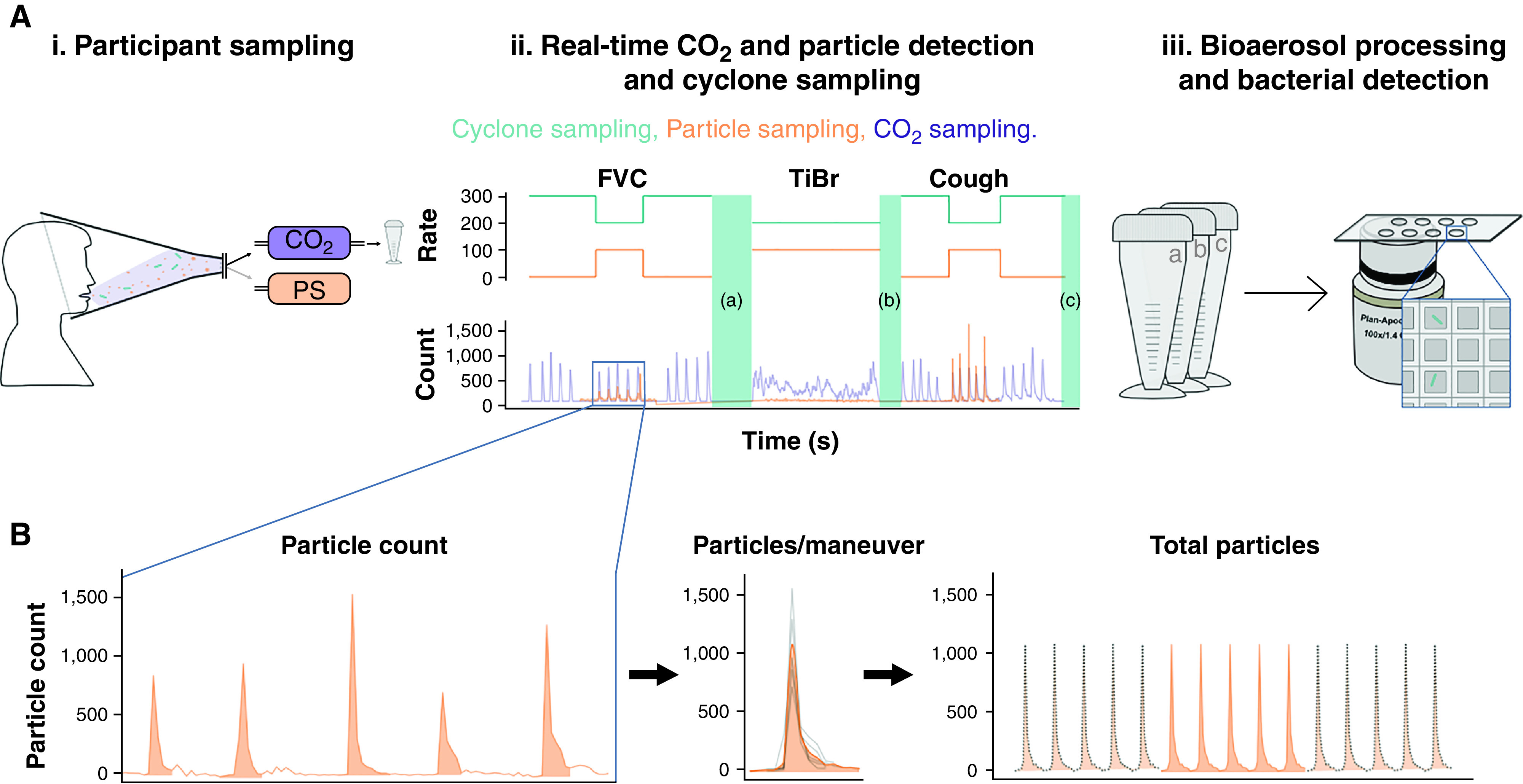
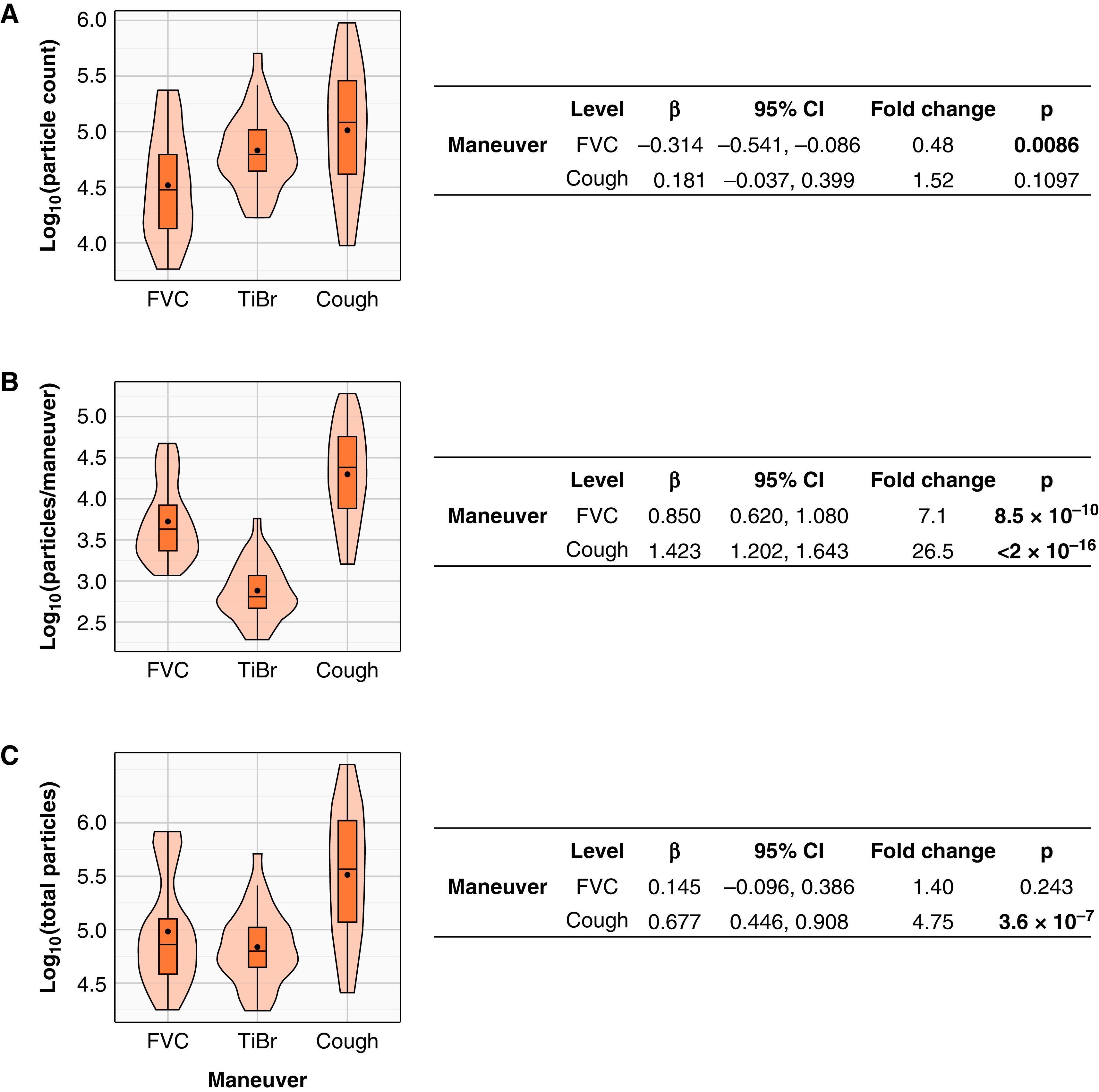
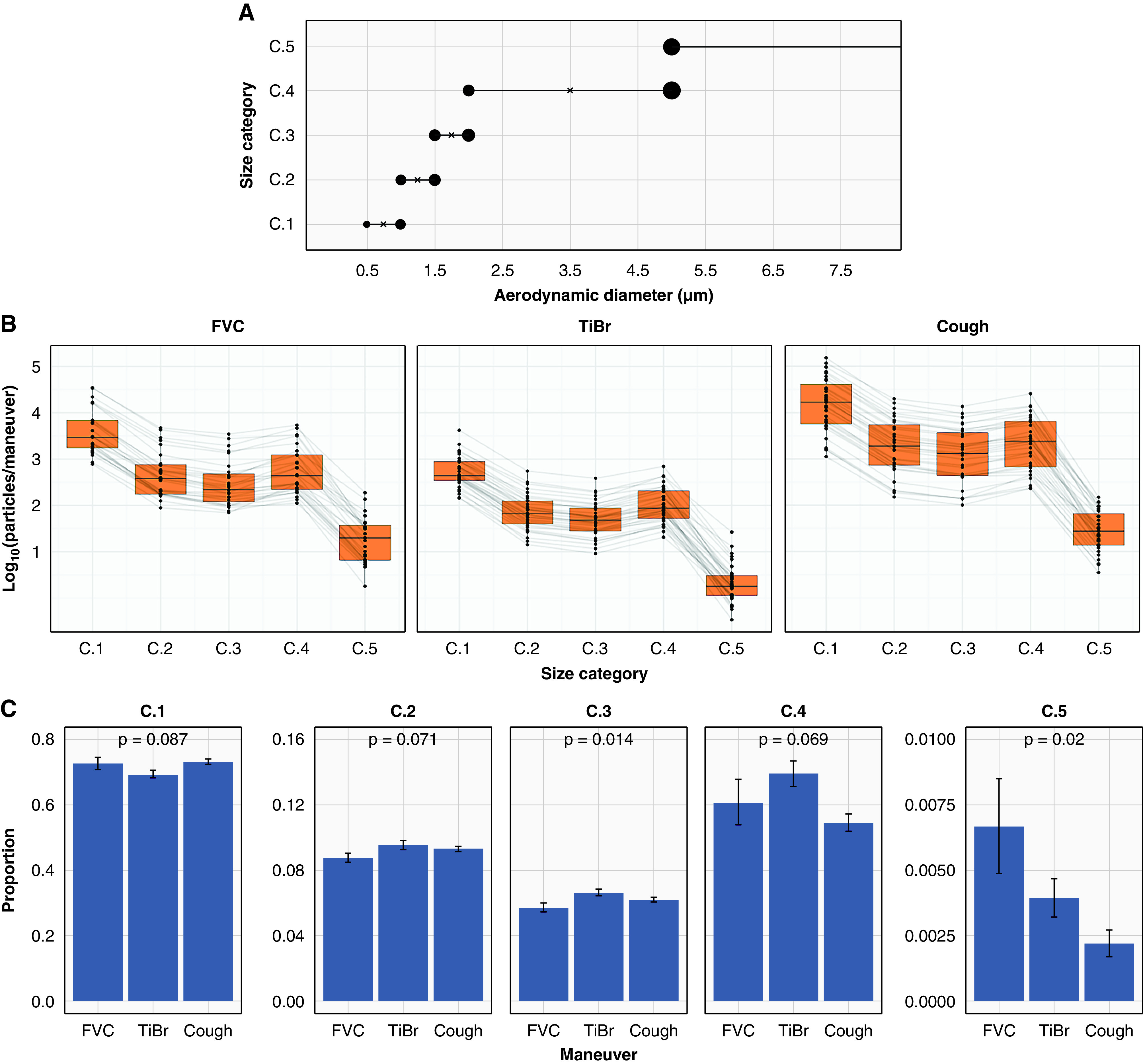
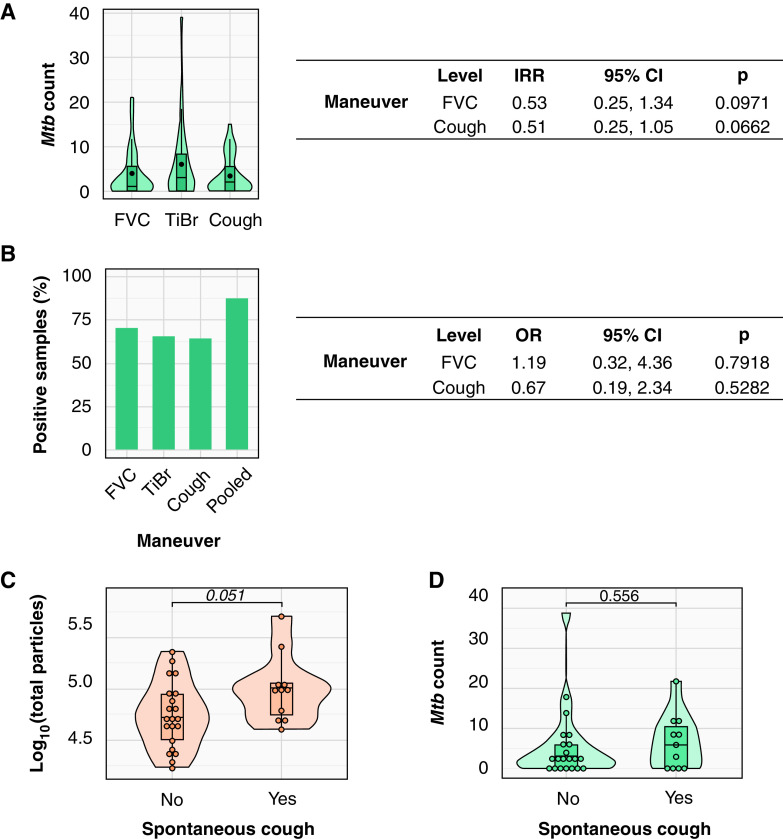
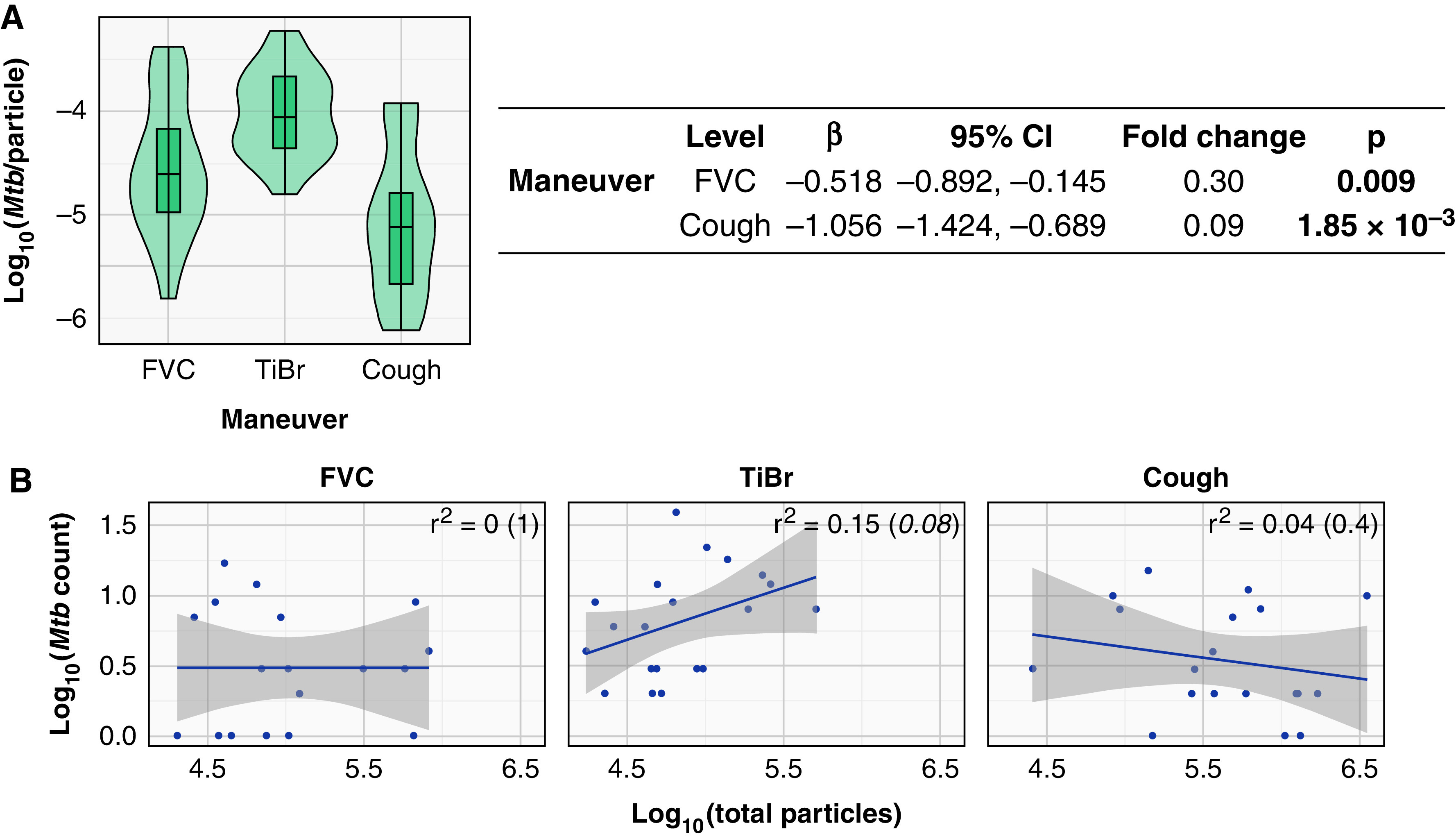
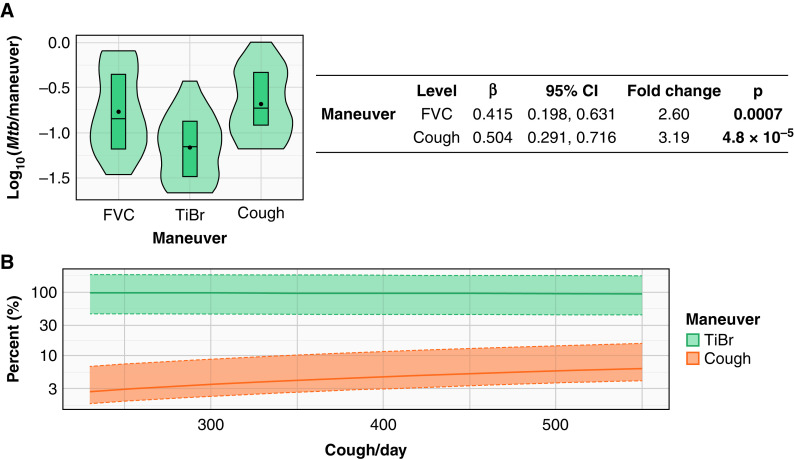
Rationale: Interrupting tuberculosis (TB) transmission requires an improved understanding of how and when the causative organism, Mycobacterium tuberculosis (Mtb), is aerosolized. Although cough is commonly assumed to be the dominant source of Mtb aerosols, recent evidence of cough-independent Mtb release implies the contribution of alternative mechanisms. Objectives: To compare the aerosolization of Mtb bacilli and total particulate matter from patients with TB during three separate respiratory maneuvers: tidal breathing (TiBr), FVC, and cough. Methods: Bioaerosol sampling and Mtb enumeration by live-cell, fluorescence microscopy were combined with real-time measurement of CO2 concentration and total particle counts from 38 patients with GeneXpert-positive TB before treatment initiation. Measurements and Main Results: For all maneuvers, the proportions of particles detected across five size categories were similar, with most particles falling between 0.5–5 μm. Although total particle counts were 4.8-fold greater in cough samples than either TiBr or FVC, all three maneuvers returned similar rates of positivity for Mtb. No correlation was observed between total particle production and Mtb count. Instead, for total Mtb counts, the variability between individuals was greater than the variability between sampling maneuvers. Finally, when modelled using 24-hour breath and cough frequencies, our data indicate that TiBr might contribute more than 90% of the daily aerosolized Mtb among symptomatic patients with TB. Conclusions: Assuming the number of viable Mtb organisms released offers a reliable proxy of patient infectiousness, our observations imply that TiBr and interindividual variability in Mtb release might be significant contributors to TB transmission among active cases.
Overview
The claims and statistics of this paper haven’t been checked yet.
Free: it reads the open-access text and checks the first 5 claims that cite a source we can check. Create a free account to check every claim.
Integrity signals
Registry
Cites
Statistics
Figures
Verification
Claims the paper makes
The claims and statistics of this paper haven’t been checked yet.
Free: it reads the open-access text and checks the first 5 claims that cite a source we can check. Create a free account to check every claim.
Claims other papers make about this one
Each is checked against this paper’s own text: does it say what the citing paper says it does?
The source backs part of the claim, not all of it — or backs it for a different population, condition or comparison.
In the citing paper
“Recent measurements of airborne M. tuberculosis yielded similar size distributions from coughing and speaking”
From Comparative Mask Protection against Inhaling Wildfire Smoke, Allergenic Bioaerosols, and Infectious Particles (2022) · cites this paper as [59]
Experimental — accuracy not yet measuredThe check wasn’t confident either way, so it gives no verdict — never disputed.
In the citing paper
“though the measurements were not designed to capture the very large particles associated with coughing only [59].”
From Comparative Mask Protection against Inhaling Wildfire Smoke, Allergenic Bioaerosols, and Infectious Particles (2022) · cites this paper as [59]
Experimental — accuracy not yet measured
Self-check
Percentages, sums and reported differences re-computed from the paper’s own numbers.
The self-check needs the paper’s full text.
Citations
Cites
R: A Language and Environment for Statistical Computing
R Core Team (2025) · doi:10.32614/r.manuals · Cited by 352,181
The Global Burden of Latent Tuberculosis Infection: A Re-estimation Using Mathematical Modelling
Houben, R. M. G. J., & Dodd, P. J. (2016) · PLOS Medicine · doi:10.1371/journal.pmed.1002152 · Cited by 2,054
Pai, M., Behr, M. A., Dowdy, D., Dheda, K., Divangahi, M., Boehme, C. C., Ginsberg, A., Swaminathan, S., Spigelman, M., Getahun, H., et al. (2016) · Nature Reviews Disease Primers · doi:10.1038/nrdp.2016.76 · Cited by 1,270
Morawska, L., Johnson, G. R., Ristovski, Z. D., Hargreaves, M., Mengersen, K., Corbett, S., Chao, C. Y. H., Li, Y., & Katoshevski, D. (2009) · Journal of Aerosol Science · doi:10.1016/j.jaerosci.2008.11.002 · Cited by 1,129 · cited 1×
“Size Stratification of Particles Enables More Specific Comparisons of Respiratory Maneuvers Particles of various sizes (including but not limited to microorganisms such asMtb bacilli) are aerosolized and may differ between respiratory maneuvers (13).”
BackgroundChao, C. Y. H., Wan, M. P., Morawska, L., Johnson, G. R., Ristovski, Z. D., Hargreaves, M., Mengersen, K., Corbett, S., Li, Y., Xie, X., et al. (2009) · Journal of Aerosol Science · doi:10.1016/j.jaerosci.2008.10.003 · Cited by 1,087
The role of particle size in aerosolised pathogen transmission: a review
Gralton, J., Tovey, E., McLaws, M.-L., & Rawlinson, W. D. (2011) · Journal of Infection · doi:10.1016/j.jinf.2010.11.010 · Cited by 665 · cited 1×
“Transmission by aerosol requires the aerosolization of particles from the site of infection (20).”
BackgroundThe Mechanism of Breath Aerosol Formation
Johnson, G. R., & Morawska, L. (2009) · Journal of Aerosol Medicine and Pulmonary Drug Delivery · doi:10.1089/jamp.2008.0720 · Cited by 434 · cited 4×
“Although the 261 absolute counts per category varied between manoeuvres, the proportional 262 compositions within each size category were conserved – an observation which 263 supports the inference that the mechanism of particle production is consistent across 264 the three respiratory manoeuvres (21, 22).”
BackgroundMethodInfluentialInhaling to mitigate exhaled bioaerosols
Edwards, D. A., Man, J. C., Brand, P., Katstra, J. P., Sommerer, K., Stone, H. A., Nardell, E., & Scheuch, G. (2004) · Proceedings of the National Academy of Sciences · doi:10.1073/pnas.0408159101 · Cited by 362 · cited 1×
“Together, these data suggest that variation in particle production alone is insuf fi cient evidence to identify infectious patients and that applications to reduce particle production seem unlikely to reduce infectiousness (25).”
BackgroundCough-generated Aerosols of Mycobacterium tuberculosis: A New Method to Study Infectiousness
Fennelly, K. P., Martyny, J. W., Fulton, K. E., Orme, I. M., Cave, D. M., & Heifets, L. B. (2004) · American Journal of Respiratory and Critical Care Medicine · doi:10.1164/rccm.200308-1101oc · Cited by 327 · cited 1×
“However, the absence in all studies of a comparator respiratory maneuver (17 – 19) has rendered impossible any assessment of alternative contributory mechanisms.”
BackgroundRapid detection of Mycobacterium tuberculosis in sputum with a solvatochromic trehalose probe
Kamariza, M., Shieh, P., Ealand, C. S., Peters, J. S., Chu, B., Rodriguez-Rivera, F. P., Babu Sait, M. R., Treuren, W. V., Martinson, N., Kalscheuer, R., et al. (2018) · Science Translational Medicine · doi:10.1126/scitranslmed.aam6310 · Cited by 165 · cited 1×
“For microscopic detection and quantification of putative viableMtb bacilli, bioaerosol samples were probed with DMN-tre, a fluorescent trehalose analogue which is incorporated into the mycomembrane of metabolically active organisms (14).”
Method
Research works printed but not linked: 2
- Dinkele R Gessner S McKerry A Leonard B Leukes J Seldon R et al. Cough-independent aerosolization of Mycobacterium tuberculosis suggests a significant role for tidal breathing in asymptomatic TB transmission Int J Tuberc Lung Dis 2021 25(10) S410 S411
- McPherson J Ushey K Gregory M RStudioTeam RStudio: integrated development environment for R. Boston, MA RStudio, PBC 2020
Cited by
Drug resistant tuberculosis: Implications for transmission, diagnosis, and disease management
Liebenberg, D., Gordhan, B. G., & Kana, B. D. (2022) · Frontiers in Cellular and Infection Microbiology · doi:10.3389/fcimb.2022.943545 · Cited by 184
“Recent evidence suggests that tubercle bacteria can also be spread by tidal breathing indicating that various respiratory manoeuvres, including singing and talking, could contribute to TB transmission (Williams et al., 2020; Dinkele et al., 2022).”
BackgroundTrajman, A., Campbell, J. R., Kunor, T., Ruslami, R., Amanullah, F., Behr, M. A., & Menzies, D. (2025) · The Lancet · doi:10.1016/s0140-6736(24)02479-6 · Cited by 174
Coussens, A. K., Zaidi, S. M. A., Allwood, B. W., Dewan, P. K., Gray, G., Kohli, M., Kredo, T., Marais, B. J., Marks, G. B., Martinez, L., et al. (2024) · The Lancet Respiratory Medicine · doi:10.1016/s2213-2600(24)00028-6 · Cited by 171
“The area of greatest diagnostic need is biomarkers for non-infectious subclinical and clinical TB to increase diagnostic confidence that radiographically evident disease is caused by Mtb, in absence of sputum/biopsy microbiological positivity.”
Self-citationEmery, J. C., Dodd, P. J., Banu, S., Frascella, B., Garden, F. L., Horton, K. C., Hossain, S. A. S., Law, I., van Leth, F., Marks, G. B., et al. (2023) · eLife · doi:10.7554/elife.82469 · Cited by 132
Mycobacterium tuberculosis Transmission in High-Incidence Settings—New Paradigms and Insights
Coleman, M. C., Martínez, L., Theron, G., Wood, R., & Marais, B. J. (2022) · Pathogens · doi:10.3390/pathogens11111228 · Cited by 143
“5 μm to 5 μm range with a minority of larger (5 μm to 20 μm) size [20,97].”
BackgroundInfluentialSelf-citationMycobacterium tuberculosis biology, pathogenicity and interaction with the host
Warner, D. F., Barczak, A. K., Gutierrez, M. G., & Mizrahi, V. (2025) · Nature Reviews Microbiology · doi:10.1038/s41579-025-01201-x · Cited by 102
“The bacillus scavenges inorganic phosphate, and assimilates sulfate for cysteine and mycothiol biosynthesis, supporting redox balance 96 .”
Self-citationBroger, T., Koeppel, L., Huerga, H., Miller, P., Gupta‐Wright, A., Blanc, F. –., Esmail, A., Reeve, B. W. P., Floridia, M., Kerkhoff, A. D., et al. (2023) · The Lancet Global Health · doi:10.1016/s2214-109x(23)00135-3 · Cited by 96
Self-citationImmunopathology in human tuberculosis
Scriba, T. J., Maseeme, M., Young, C., Taylor, L. J., & Leslie, A. J. (2024) · Science Immunology · doi:10.1126/sciimmunol.ado5951 · Cited by 62
“Several MMPs are implicated in the development of lung cavities in humans, including MMP-1, 3, 7, 8, 9, 12, 13, and the cysteine cathepsin K ( 14, 49, 50 ).”
A half-century of research on tuberculosis: Successes and challenges
Bloom, B. R. (2023) · The Journal of Experimental Medicine · doi:10.1084/jem.20230859 · Cited by 49
Horton, K. C., Richards, A. S., Emery, J. C., Esmail, H., & Houben, R. M. G. J. (2023) · Proceedings of the National Academy of Sciences · doi:10.1073/pnas.2221186120 · Cited by 46
Tuberculosis: An Update for the Clinician
Janssen, S., Murphy, M. Z., Upton, C. M., Allwood, B., & Diacon, A. H. (2025) · Respirology · doi:10.1111/resp.14887 · Cited by 51
Patterson, B., Dinkele, R., Gessner, S., Koch, A. S., Hoosen, Z., January, V., Leonard, B., McKerry, A., Seldon, R., Vazi, A., et al. (2024) · Proceedings of the National Academy of Sciences · doi:10.1073/pnas.2314813121 · Cited by 40
Self-citationExhaled Mycobacterium tuberculosis Predicts Incident Infection in Household Contacts
Williams, C., Muhammad, A. K., Sambou, B., Bojang, A. L., Jobe, A., Daffeh, G. K., Owolabi, O., Pan, D., Pareek, M., Barer, M. R., et al. (2022) · Clinical Infectious Diseases · doi:10.1093/cid/ciac455 · Cited by 35
“90% of aerosolized Mtb [4], potentially generated when small airways reopen during inhalation, rather than by shear forces created by coughing and sneezing [5].”
BackgroundNeuroimmune recognition and regulation in the respiratory system
Chen, J., Lai, X., Song, Y., & Su, X. (2024) · European Respiratory Review · doi:10.1183/16000617.0008-2024 · Cited by 34
“It was previously believed that M. tuberculosis primarily spreads through coughing, but recent research suggests that tidal breathing is also a potentially significant transmission route [90].”
BackgroundPersistent Mycobacterium tuberculosis bioaerosol release in a tuberculosis-endemic setting
Dinkele, R., Gessner, S., Patterson, B., McKerry, A., Hoosen, Z., Vazi, A., Seldon, R., Koch, A. S., Warner, D. F., & Wood, R. (2024) · iScience · doi:10.1016/j.isci.2024.110731 · Cited by 27
“This process was repeated at 2 weeks and 2 months after initial recruitment. we utilized our bioaerosol sampling platform 25 to investigate Mtb release in 89 randomly selected participants recruited into two consecutive cohorts: the first was a cross-sectional community survey comprising 39…”
BackgroundMethodInfluentialSelf-citationvan der Westhuizen, H., Dorward, J., Roberts, N. W., Greenhalgh, T., Ehrlich, R. I., Butler, C., & Tonkin-Crine, S. K. (2022) · PLOS Global Public Health · doi:10.1371/journal.pgph.0000292 · Cited by 22
“Furthermore, the dual applicability of airborne IPC measures to COVID-19 and TB, and potential transmission from asymptomatic patients for both disease warrants consideration of how airborne precautions could be better integrated [66, 67].”
BackgroundNduba, V., Njagi, L. N., Murithi, W. B., Mwongera, Z., Byers, J., Logioia, G., Peterson, G. J., Segnitz, R. M., Fennelly, K. P., Hawn, T. R., et al. (2024) · Nature Communications · doi:10.1038/s41467-024-52122-x · Cited by 20
“Given what we already know about infectiousness, this type of analysis would be better served with a formal DAG or at least conceptual framework, and then working through the various options or models.”
An overview of tuberculosis outbreaks reported in the years 2011–2020
Żukowska, L., Zygała-Pytlos, D., Struś, K., ZABOST, A. T., Kozińska, M., AUGUSTYNOWICZ-KOPEĆ, E. M., Dziadek, J., & Minias, A. E. (2023) · BMC Infectious Diseases · doi:10.1186/s12879-023-08197-w · Cited by 18
“Modern lineages are generally regarded as more worldwide spread than ancestral ones, which are considered more endemic [17, 18].”
BackgroundClinical Predictors of Pulmonary Tuberculosis Among South African Adults With HIV
Mendelsohn, S. C., Fiore-Gartland, A. J., Awany, D., Mulenga, H., Mbandi, S. K., Tameris, M. D., Walzl, G., Naidoo, K., Churchyard, G., Scriba, T. J., et al. (2021) · EClinicalMedicine · doi:10.1016/j.eclinm.2022.101328 · Cited by 19
Candidate transmission survival genome of Mycobacterium tuberculosis
Mishra, S., Singh, P. R., Hu, X., Quezada, L. A. L., Jinich, A., Jahn, R., Geurts, L., Shen, N., DeJesus, M. A., Hartman, T. E., et al. (2025) · Proceedings of the National Academy of Sciences · doi:10.1073/pnas.2425981122 · Cited by 17
A spotlight on the tuberculosis epidemic in South Africa
(2024) · Nature Communications · doi:10.1038/s41467-024-45491-w · Cited by 19
“In another signi fi cant advance, persons with active TB were shown to aerosolise M. tuberculosis by tidal breathing 23 .”
BackgroundWagner, J., Macher, J. M., Chen, W., & Kumagai, K. (2022) · International Journal of Environmental Research and Public Health · doi:10.3390/ijerph192315555 · Cited by 14
Kim, H., Choi, H., & Shin, S. J. (2023) · Frontiers in Immunology · doi:10.3389/fimmu.2023.1193058 · Cited by 16
“Frontiers in Immunology 03 a sustained low-dose of bacteria (21, 22).”
BackgroundTao, Y., Zhao, J., Cui, H. L., Liu, L., & He, L. (2024) · Acta Tropica · doi:10.1016/j.actatropica.2024.107176 · Cited by 13
Tuberculosis infection prevention and control
Sarkar, M. S. (2024) · Indian Journal of Tuberculosis · doi:10.1016/j.ijtb.2024.08.011 · Cited by 17
Drug-resistant tuberculosis: a priority pathogen for enhanced public health research and practice
Yapa, H. M., MacLean, E. L.-H., Menzies, N. A., Dodd, P. J., Dean, A. S., Mirzayev, F., Schumacher, S. G., Nguyen, L. N., Zignol, M., & Fox, G. J. (2025) · Clinical Microbiology Reviews · doi:10.1128/cmr.00064-25 · Cited by 11
Scriba, T. J., Dinkele, R., Warner, D. F., & Mizrahi, V. (2022) · The Journal of Experimental Medicine · doi:10.1084/jem.20221334 · Cited by 12
Self-citationSampath, P., Moorthy, M., Menon, A., Madhav, L., Janaki, A., Dhanapal, M., Natarajan, A. P., Hissar, S. S., Ranganathan, U. D., Ramaswamy, G., et al. (2023) · Frontiers in Immunology · doi:10.3389/fimmu.2023.1197805 · Cited by 10
“An interesting and shocking observation from TB aerobiology studies was the occurrence of MTB transmission even with tidal breathing (15).”
BackgroundWei, J., Li, J., Li, X., Du, W., Su, C., Sheng, X., Huang, Y., Wang, J., Niu, Q., Chen, G., et al. (2025) · Vaccines · doi:10.3390/vaccines13070669 · Cited by 9
“In the case of aerosol infection, it is essential to ensure uniform particle size of the aerosol, typically ≤ 5 µ m in diameter and common aerosol infection equipment can meet this standard [210].”
The tuberculogenic environment
Coleman, M. C., Calderwood, C., Magee, S., Underwood, F., Kunor, T., Timire, C., Velen, K., MacLean, E. L.-H., Pai, M., Khan, P. Y., et al. (2026) · The Lancet Global Health · doi:10.1016/s2214-109x(25)00478-4 · Cited by 11
Meiwes, L., Сергеевна, К. И., Chesov, D., Kulcitkaia, S., Dreyer, V., Hillemann, D., Dlamini, Q., Williams, C., Barer, M. R., Brinkmann, F., et al. (2024) · The Journal of Infectious Diseases · doi:10.1093/infdis/jiae282 · Cited by 9
Transmission of Mycobacterium Tuberculosis
Sarkar, M. S., & Sarkar, J. (2025) · Journal of the Association of Physicians of India · doi:10.59556/japi.73.1113 · Cited by 11
Kole, E. B., Jadhav, K., Sonar, Y. A., Kapse, M., Patil, S. A., Singh, A. K., Rojekar, S. V., Verma, R. K., MUJUMDAR, A. S., & Naik, J. (2025) · Drying Technology · doi:10.1080/07373937.2024.2437690 · Cited by 8
“[26,27] After residing in the alveolar sacs, the mycobacteria encounter the alveolar macrophages, monocytes, and dendritic cells.”
Mycobacterium tuberculosis transmission: the importance of precision
Dinkele, R., Khan, P. Y., & Warner, D. F. (2024) · The Lancet Infectious Diseases · doi:10.1016/s1473-3099(24)00154-3 · Cited by 10
Self-citationCommunity-Wide Active Case Finding for Tuberculosis: Time to Use the Evidence We Have
Coleman, M. C., Lowbridge, C., du Cros, P., & Marais, B. J. (2024) · Tropical Medicine and Infectious Disease · doi:10.3390/tropicalmed9090214 · Cited by 9
“As an airborne infection, Mtb is transmitted when small bacilli-containing aerosols are produced by an infectious person through coughing, breathing, laughing, talking, and singing and deposited in the distal airways through inhalation [6–8].”
BackgroundCheng, J., Nie, M., An, Y., Chen, Z., & Tong, Y. (2024) · Current Microbiology · doi:10.1007/s00284-024-04027-7 · Cited by 7
“Recent studies have indicated that patients have the capability to release bioaerosols containing viable Mtb solely through deep exhalation [6, 7].”
Limitations of Chest Radiography in Diagnosing Subclinical Pulmonary Tuberculosis in Canada
Long, R., Lau, A., Barrié, J., Winter, C., Armstrong, G. A., Egedahl, M. L., & Doroshenko, A. (2023) · Mayo Clinic Proceedings Innovations Quality & Outcomes · doi:10.1016/j.mayocpiqo.2023.03.003 · Cited by 7
“Mayo Clin Proc Inn Qual Out n June 2023;7(3):165-170 n https://d www.”
BackgroundRisch, P., Broger, T., Booi, Z., Tiseo, K., Kumar, H. S., van Schalkwyk, J., Heinrich, T., Willi, R., Botha, S. M., Sander, P., et al. (2025) · Journal of Clinical Microbiology · doi:10.1128/jcm.00546-25 · Cited by 6
“The inclusion of coughing was informed by evidence that cough events release higher concentrations of MTB compared to tidal breathing alone (27).”
Bergman, A., & Thomas, T. A. (2024) · Nursing Clinics of North America · doi:10.1016/j.cnur.2024.10.004 · Cited by 7
The host immune response to Mycobacterium tuberculosis determining protection or disease progression
Saraiva, M., Branchett, W. J., Rengarajan, J., & O’Garra, A. (2026) · Nature Immunology · doi:10.1038/s41590-026-02529-z · Cited by 6
“This Review will primarily focus on the immune response in pulmonary tuberculosis.”
Nelson, K., Churchyard, G., Cobelens, F. G. J., Hanekom, W. A., Hill, P. C., Lopman, B. A., Mave, V., Rangaka, M. X., Vekemans, J., White, R. G., et al. (2023) · The Lancet Microbe · doi:10.1016/s2666-5247(23)00112-x · Cited by 5
Yates, T., Karat, A. S., Bozzani, F. M., McCreesh, N., MacGregor, H., Beckwith, P. G., Govender, I., Colvin, C. J., Kielmann, K., & Grant, A. D. (2023) · Antimicrobial Stewardship & Healthcare Epidemiology · doi:10.1017/ash.2023.192 · Cited by 7
“34 While symptom-based administrative controls remain likely to reduce nosocomial transmission and the morbidity associated with late diagnosis, alternative approaches to screening are clearly needed.”
BackgroundHost–pathogen interactions in the context of tuberculosis infection and disease
Goletti, D., Aiello, A., Tientcheu, L. D., Muefong, C. N., Hu, T. H., Niewold, P., Joosten, S. A., Ong, C. W. M., & Sutherland, J. S. (2023) · European Respiratory Society eBooks · doi:10.1183/2312508x.10024022 · Cited by 5
Mycobacterial Phenolic Glycolipid Triggers ATP-Mediated Neuronal P2X3 Signaling and CoughPreprint
Naqvi, K. F., Warden, L. L., Dijk, J., Naik, D. K., Espinosa-Becerra, F., Okolie, I. M., Verhoeks, V. V. F., Rahlwes, K. C., Xavier, C. P., Codée, J. D. C., et al. (2025) · bioRxiv (Cold Spring Harbor Laboratory) · doi:10.1101/2025.05.01.651726 · Cited by 5
Li, D. (2025) · Knowledge-Based Systems · doi:10.1016/j.knosys.2025.114124 · Cited by 4
Administration of airborne pathogens in non-human primates
Creppy, J., Delache, B., Lemaître, J., Horvat, B., Vecellio, L., & Ducancel, F. (2024) · Inhalation Toxicology · doi:10.1080/08958378.2024.2412685 · Cited by 4
“However, coughing may not be the only source of tuberculosis transmission, as a South African team demonstrated in 2022 the presence of live mycobacteria in particles of 0.5 to 5 m m emitted during the simple breathing of tuberculosis patients (Dinkele et al. 2022).”
InfluentialInflammatory biomarkers of asymptomatic and symptomatic tuberculosis
Awany, D., Ariefdien, D. T., Mendelsohn, S. C., Rozot, V., Mulenga, H., Nyangu, S., Tameris, M. D., Moloantoa, T., Katona, A., Maruri, F., et al. (2026) · Nature Communications · doi:10.1038/s41467-026-75909-6 · Cited by 4
“Recent studies showed that symptoms,such ascoughing, arenot required for aerosol releaseof M. tuberculosis 8,9 , implying that individuals with asymptomatic TB may contribute to transmission of the pathogen.”
Tschan, Y., Sasamalo, M., Hiza, H. C., Fellay, J., Gagneux, S., Reither, K., Hella, J., & Portevin, D. (2024) · Microbiology Spectrum · doi:10.1128/spectrum.00426-24 · Cited by 4
“As a consequence, such individuals could also contribute to TB transmission through mere tidal breathing and without the need for coughing (6, 7).”
BackgroundIncipient and subclinical tuberculosis: a narrative review
Sarkar, M. S. (2025) · Monaldi Archives for Chest Disease · doi:10.4081/monaldi.2025.2982 · Cited by 7
Molecular Epidemiology of Mycobacterium tuberculosis in Mexico
Rodríguez‐Martínez, L. M., Chavelas-Reyes, J. L., Medina-Ramírez, C. F., Fuentes-Chávez, E., Muñoz-Troncoso, Z. S., Estrada-Vega, Á. G., Rodríguez-Díaz, E., Torres-Morales, D., Moreno‐Treviño, M. G., & Rodríguez-González, J. G. (2025) · Microorganisms · doi:10.3390/microorganisms13112453 · Cited by 3
“Various studies have shown that other activities such as talking, singing and even breathing can generate aerosols with enough bacillary charge to transmit the disease [86–88].”
Coughing Is Not Required to Transmit Mycobacterium tuberculosis : Another Nail in the Coffin
Dowdy, D. W. (2022) · American Journal of Respiratory and Critical Care Medicine · doi:10.1164/rccm.202204-0645ed · Cited by 3
“Justification for such studies comes from the inherent limitations and additional questions posed by previous studies, such as the Sleep Apnea cardiovascular Endpoints (SAVE) trial, which indicated limited benefit to cardiovascular outcomes from PAP therapy in patients with moderate/ severe OSA, although this study wa…”
BackgroundMethodMycobacterium tuberculosis Genes Needed for Intra-alveolar Resuscitation After Airborne TransmissionPreprint
Singh, P. R., Gengenbacher, M., Mishra, S., Jinich, A., Jiang, X., Tsang, F., Cristaldo, M., DeJesus, M., Rhee, K. Y., Kaner, R. J., et al. (2025) · bioRxiv (Cold Spring Harbor Laboratory) · doi:10.1101/2025.09.15.676370 · Cited by 3
Oubaasri, A., Mskini, F. Z. E., Labyad, A., Madkour, A., Mehdad, S., & Benaich, S. (2025) · The Open Public Health Journal · doi:10.2174/0118749445386757250328080921 · Cited by 2
From Exposure to Disease: Predicting Tuberculosis Progression
Araújo‐Pereira, M., Bhavaraju, R., Hatherill, M., Gupta, A., Ellner, J. J., Sterling, T. R., & Andrade, B. C. O. P. (2026) · Clinical Infectious Diseases · doi:10.1093/cid/ciag125 · Cited by 2
Chen, C., Hu, X., Horsburgh, C. R., Wu, W., Chen, C., Shao, Y., Jiang, H., Xu, Z., Jiang, J., Liu, Q., et al. (2026) · Nature Communications · doi:10.1038/s41467-026-73707-8 · Cited by 3
“The use of a Respiratory Aerosol Sampling Chamber to detect bioaerosols found that tidal breathing may be a signi fi cant contributor to transmission among people with tuberculosis 11 .”
Airflow constraints govern natural airborne transmission of tuberculosis
Naqvi, K. F., Guo, Y., Kulkarni, Y., Sapkota, D., Lu, P., Wang, S., Dias, B., Ektnitphong, V. A., Martín, A. E., Evers, B. M., et al. (2026) · mSphere · doi:10.1128/msphere.00228-26 · Cited by 2
Vaswani, S., & Shaikh, A. (2022) · Journal of Preventive Diagnostic and Treatment Strategies in Medicine · doi:10.4103/jpdtsm.jpdtsm_84_22 · Cited by 3
Cegielski, J. P., Ahmedov, S., Cheng, J., Dubick, C., Evans, E. E., Jensen, P. A., Kanchar, A., Kansal, A. R., Lin, C.-C., Liu, Y., et al. (2025) · International journal of infection control · doi:10.3396/ijic.v21.23851 · Cited by 1
“• Real-world data are urgently need to evaluate epidemiological models that extrapolate from highly controlled conditions to suggest tidal breathing, and asymptomatic individuals may account for a large proportion of transmitted infection (51, 65, 67).”
Koleri, J., Howady, F. S., Singh, J. P. N., Balushi, S. A., & Maslamani, M. A. (2026) · BMC Infectious Diseases · doi:10.1186/s12879-025-12173-x · Cited by 1
“However, it should be noted that recent studies showed that daily tidal breathing can generate higher bacillary count than cough per 24 hours [26].”
Doran, C. R., Sheku, M., Nakada, Y., Lopman, B. A., & Nelson, K. (2026) · BMC Infectious Diseases · doi:10.1186/s12879-026-12938-y · Cited by 1
“5 μm) [24, 29] Usually direct/indirect contact only, but small-particle aerosolized vomitus may be infectious [ household members are at particularly high risk due to their extended exposure to potentially infectious aerosols, and household transmission is epidemiologically relevant to quantify.”
Wang, R., Huang, C.-C., Becerra, M. C., Calderon, R. I., Contreras, C. C., Galea, J. T., Jiménez, J., Lecca, L. W., Yataco, R. M., Zhang, Z., et al. (2026) · Emerging infectious diseases · doi:10.3201/eid3204.251947 · Cited by 1
“…status of index patients and sex, bacille Calmette–Guérin scar, alcohol consumption, and body mass index category of household contacts. of cough ( 6 , 17 ); 1 study estimated that tidal breathing accounted for 93% of daily aerosolized M. tuberculosis ( 7 ), although participants were symptomatic.”
Epidemiology, diagnosis and treatment of asymptomatic tuberculosis: an expert review
Zaidi, S. M. A., Miller, C., Falzon, D., Coussens, A. K., Houben, R. M. G. J., & Esmail, H. (2026) · International Journal of Infectious Diseases · doi:10.1016/j.ijid.2026.109044 · Cited by 1
Mtshali, L. N., Olivier, S., Fehr, J., Zulu, T., Gareta, D., Baisley, K. J., Hanekom, W. A., Ndung’u, T., Leslie, A. J., & Wong, E. B. (2025) · medRxiv · doi:10.64898/2025.12.10.25341906 · Cited by 1
Aerobiology and Transmission of Mycobacterium tuberculosis
Patterson, B., Warner, D., & Wood, R. (2026) · Cold Spring Harbor Perspectives in Medicine · doi:10.1101/cshperspect.a041890 · Cited by 1
Self-citationMolecular epidemiology of tuberculosis in northern Australia
Meumann, E. M., & Bainomugisa, A. (2022) · Microbiology Australia · doi:10.1071/ma22037
New tricks for an old dog: opportunities for better tuberculosis control
Warner, D. F., & Wood, R. (2023) · Journal of the International AIDS Society · doi:10.1002/jia2.26081
“The importance of subclinical infections in TB transmission is reinforced by studies utilizing face-mask sampling [12] and aerosol capture [13] technologies to demonstrate, respectively, the capacity for cough-independent M.”
BackgroundSelf-citationLa lucha contra la tuberculosis: un enemigo que enfrentamos juntos
Ruíz, A. (2023) · Casos y Revisiones de Salud · doi:10.22201/fesz.26831422e.2023.5.1s.3
Hanekom, W. A., Archary, M., & Hawn, T. R. (2024) · Elsevier eBooks · doi:10.1016/b978-0-323-79525-8.00028-7
Aerosolmessung bei PCR SARS-CoV-2 positiven und negativen Kindern und Jugendlichen
Herrlich, L. (2025) · Publication Server of Goethe University Frankfurt am Main (Goethe University Frankfurt) · doi:10.21248/gups.92390
Dobos, K. M., & Henao-Tamayo, M. I. (2025) · The Conversation · doi:10.64628/aai.y9f4qkrmu
Tuberculosis Presenting as Incidental Pulmonary Nodules: A Clinical Case Series and Review
Han, W., Saggar, S., & Han, P. S. (2025) · Journal of Tuberculosis Research · doi:10.4236/jtr.2025.133011
Achar, J., Venter, R., van Schalkwyk, J., Booi, Z., Mahlobo, P. Z., Palmer, Z., de Sousa, N. R., Lönnroth, K., Seddon, J. A., Rothfuchs, A. G., et al. (2025) · Open Forum Infectious Diseases · doi:10.1093/ofid/ofaf593
“[24, 25], with the highest detection described in recent studies [25, 26] that employed droplet digital polymerase chain reaction (PCR), a research technique with high precision.”
Additional file 1 of An overview of tuberculosis outbreaks reported in the years 2011–2020
Żukowska, L., Zygała-Pytlos, D., Struś, K., ZABOST, A. T., Kozińska, M., Augustynowicz-Kopeć, E., Dziadek, J., & Minias, A. E. (2024) · Figshare · doi:10.6084/m9.figshare.26583858
Epidemiología Genómica de la Tuberculosis en la Comunidad Valenciana
Madrazo-Moya, C. F. (2024) · Repository of Digital Objects for Teaching Research and Culture (University of Valencia)
Diagnostic Biomarker Candidate Discovery using Metabolomics of the Latent Mycobacterium tuberculosis
Lee, J. J., Kim, Y. J., Park, E., Choi, K., & Eoh, H. (2025) · Journal of Bacteriology and Virology · doi:10.4167/jbv.2025.55.4.281
Gao, H., Cheng, M., Li, W., Lv, M., Han, Y., Yu, H., Xu, X., Lu, Z. C., Meng, D., Sun, L., et al. (2026) · Journal of environmental chemical engineering · doi:10.1016/j.jece.2026.121242
Spatiotemporal Environmental Health Modeling
Ren, J., & Tao, Y. (2025) · Springer eBooks · doi:10.1007/978-981-95-1038-2_8
Beams, A. B., Song, Y., McNichol, J., Jones, B. R., Sobkowiak, B., MacPherson, P., Nliwasa, M., Ndhlovu, V., Phiri, M. D., Cohen, T., et al. (2026) · Microbial Genomics · doi:10.1099/mgen.0.001674
“If this assumption does not hold in reality [47, 48], then our simulations may overestimate reductions in TB (cf. Fig.”
Santos-Júnior, P. F. D. S., Rodrigues-Junior, V. S., Silva, M., da Silva, E. C. D., Perelló, M. A., Czeczot, A. D. M., Bizarro, C. V., Machado, P., Basso, L. A., Cibulski, S. P., et al. (2026) · Bioorganic & Medicinal Chemistry Letters · doi:10.1016/j.bmcl.2026.130679
Evidence for asymptomatic TB transmission in rural South AfricaPreprint
Moosa, Y., Singh, U., Olivier, S., Culviner, P. H., Moodley, S., Brien, K., Myeza, N., Loubser, J., San, J. E., Giandhari, J., et al. (2026) · Research Square · doi:10.21203/rs.3.rs-9569436/v1
Ruswa, N., Günther, G., Mavhunga, F., Cobelens, F. G. J., & Claassens, M. M. (2026) · Tropical Medicine & International Health · doi:10.1111/tmi.70206 · Cited by 1
Meintjes, G., Ntusi, N., Burch, V., Seggie, J., Ntsekhe, M., & Setshedi, M. (2026) · South African Medical Journal · doi:10.7196/samj.2026.v116i6b.4729
Teles, R. M. B., Benabdessalem, C., Perrie, J., Wei, C., West, J., Silva, B. J. D. A., Andrade, P. R., Mansky, L. A., Divaka, P., Fischbacher, L. A., et al. (2026) · Nature Communications · doi:10.1038/s41467-026-76814-8
“Community-based surveys indicate that up to 80% of bacter-iologically con fi rmed pulmonary TB among exposed adults may be asymptomatic 89,90 , and viable bacilli can be released during normal tidal breathing 91 .”
Acosta, S. J., Bermudo, M. C., Čechová, L., Ondruš, M., Skouridou, V., & O’Sullivan, C. K. (2026) · ACS Infectious Diseases · doi:10.1021/acsinfecdis.6c00529
Single-Cell Measurement Revolution: A New Paradigm in Tuberculosis Diagnosis
Ni, D., & Liu, G. (2026) · ACS Measurement Science Au · doi:10.1021/acsmeasuresciau.6c00245
Liu, D., Zhao, P., Zhou, Y., He, Z., Lin, Z., Dai, G., Shen, S., Zhao, Y., Zhang, P., Chen, Y., et al. (2026) · Nature Communications · doi:10.1038/s41467-026-77825-1
“Studies have shown that, in severe cases, high concentrations of Z-DNA may indicate high bac-terialloadandrapidTBspread 4,23 .”
Metadata
- Authors
- Dinkele, R., Gessner, S., McKerry, A., Leonard, B., Leukes, J., Seldon, R., Warner, D. F., & Wood, R.
- Affiliations
- National Health Laboratory Service (ZA)
- University of Cape Town (ZA)
- Corresponding author
- Warner, Digby F.
- Wood, Robin
- ORCID
- Venue
- American Journal of Respiratory and Critical Care Medicine
- Publisher
- Oxford University Press (OUP)
- Published
- 2022-07
- Volume
- 206
- Issue
- 2
- Pages
- 206-216
- ISSN
- 1073-449X (ISSN-L)
- 1535-4970
- PMC
- PMC9887416
- OpenAlex
- W4280628980
- Cited by
- 83
- References
- 28
- Citations by year
- 2026: 16 · 2025: 24 · 2024: 17 · 2023: 13 · 2022: 12
- FWCI
- 8.19
- Type
- journal article
- Language
- en
- Open access
- hybrid
- doi.org
- Licence
- Locations
- American Journal of Respiratory and Critical Care Medicine (publishedVersion, cc-by-nc-nd)
- bioRxiv (Cold Spring Harbor Laboratory) (acceptedVersion, cc-by-nd)
- PubMed Central (publishedVersion, cc-by-nc-nd)
- PubMed (publishedVersion)
- Informationszentrum Lebenswissenschaften (ZB MED) (submittedVersion, cc-by-nc-nd)
- Funders
- South African Medical Research Council (MRC-RFA-UFSP-01-2013/CCAMP)
- Bill and Melinda Gates Foundation (R&D Project 261669)
- National Institute of Allergy and Infectious Diseases (R01AI093269)
- Eunice Kennedy Shriver National Institute of Child Health and Human Development (U01HD085531)
- Topics
- Health Sciences › Medicine › Infectious Diseases › Tuberculosis Research and Epidemiology
- Health Sciences › Medicine › Pulmonary and Respiratory Medicine › Infection Control and Ventilation
- Physical Sciences › Environmental Science › Health, Toxicology and Mutagenesis › Indoor Air Quality and Microbial Exposure
- Keywords
- Mycobacterium tuberculosis, aerosolization, tuberculosis transmission, tidal breathing, cough, forced vital capacity, bioaerosols, particle size distribution, interindividual variability, CO2 concentration
- MeSH terms
- Aerosols, Cough, Humans, Mycobacterium tuberculosis, Respiratory System, Sensitivity and Specificity, Sputum, Tuberculosis
About these checks
Registry, retraction, Cites and statistics results are computed, not judged, with one exception: a printed reference that no index lists is read once by a model before it counts as a citation error. Claims are extracted by a model and kept only when their quote appears verbatim in the text; each cited source is then checked, with a model’s help, for whether it says what the claim relies on. Those verdicts can be wrong — read the claim’s quote and the cited source before relying on one.
Statistics and arithmetic are recomputed, not judged.
Confidence bands are shown only for fields calibrated on our annotated test set. None is calibrated yet, so no band is shown.
What counts as a claim ›How we measure confidence ›How we check this ›
Are you an author, or do you see a problem with this page? Request a review
Data sources
Bibliographic data: Semantic Scholar, OpenAlex, Crossref.
Contains information from the Semantic Scholar Academic Graph Datasets, made available under the ODC Attribution License (ODC-BY 1.0).
Semantic Scholar’s data is described in: Kinney, R., et al. (2023). The Semantic Scholar Open Data Platform. arXiv:2301.10140.
