

Aerosolization of Mycobacterium tuberculosis by Tidal Breathing
Open accessPublished version of a preprint
The DOI matches its Crossref record; 28 of the 28 references it cites were found in a registry or an index.
Abstract
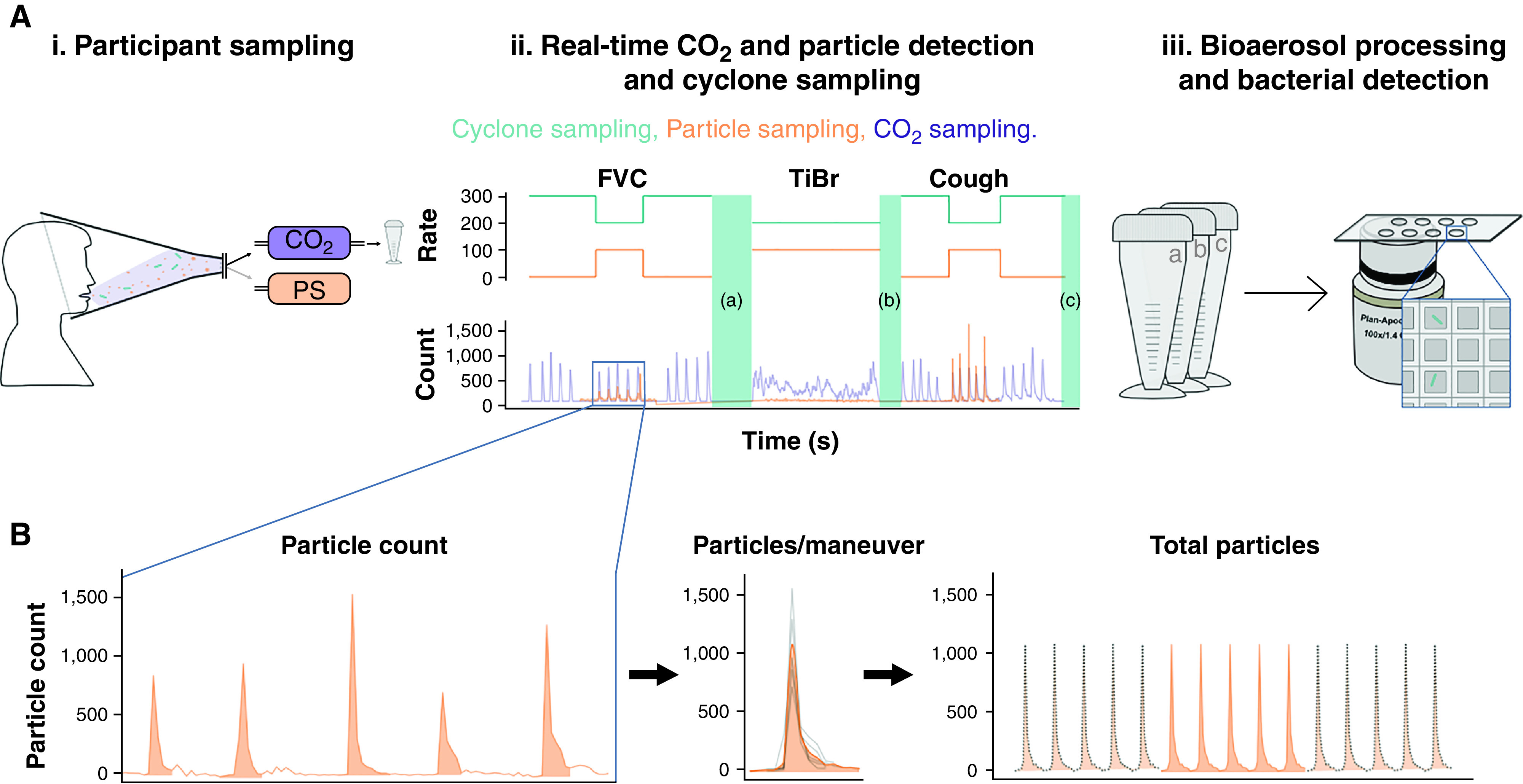
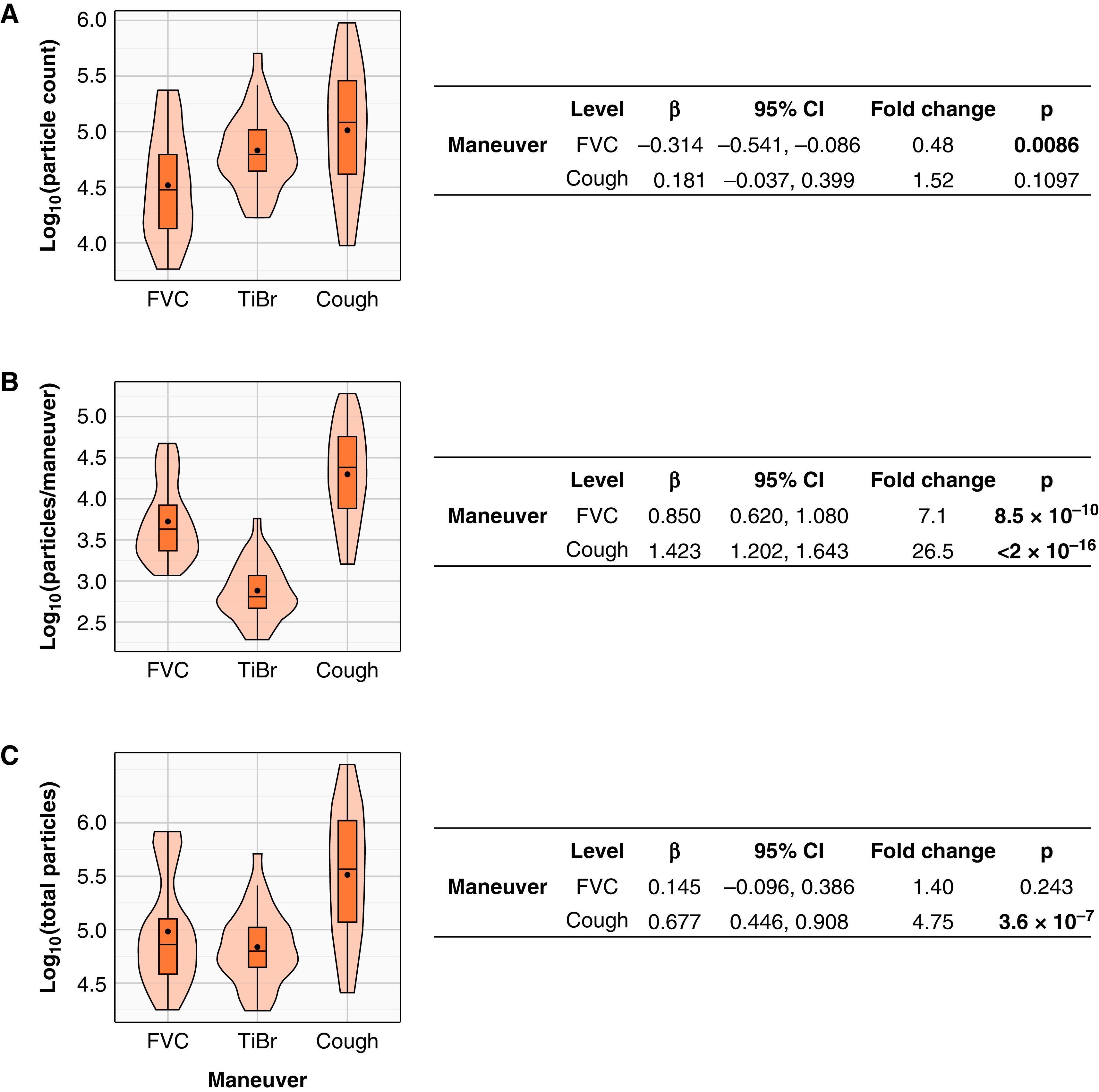
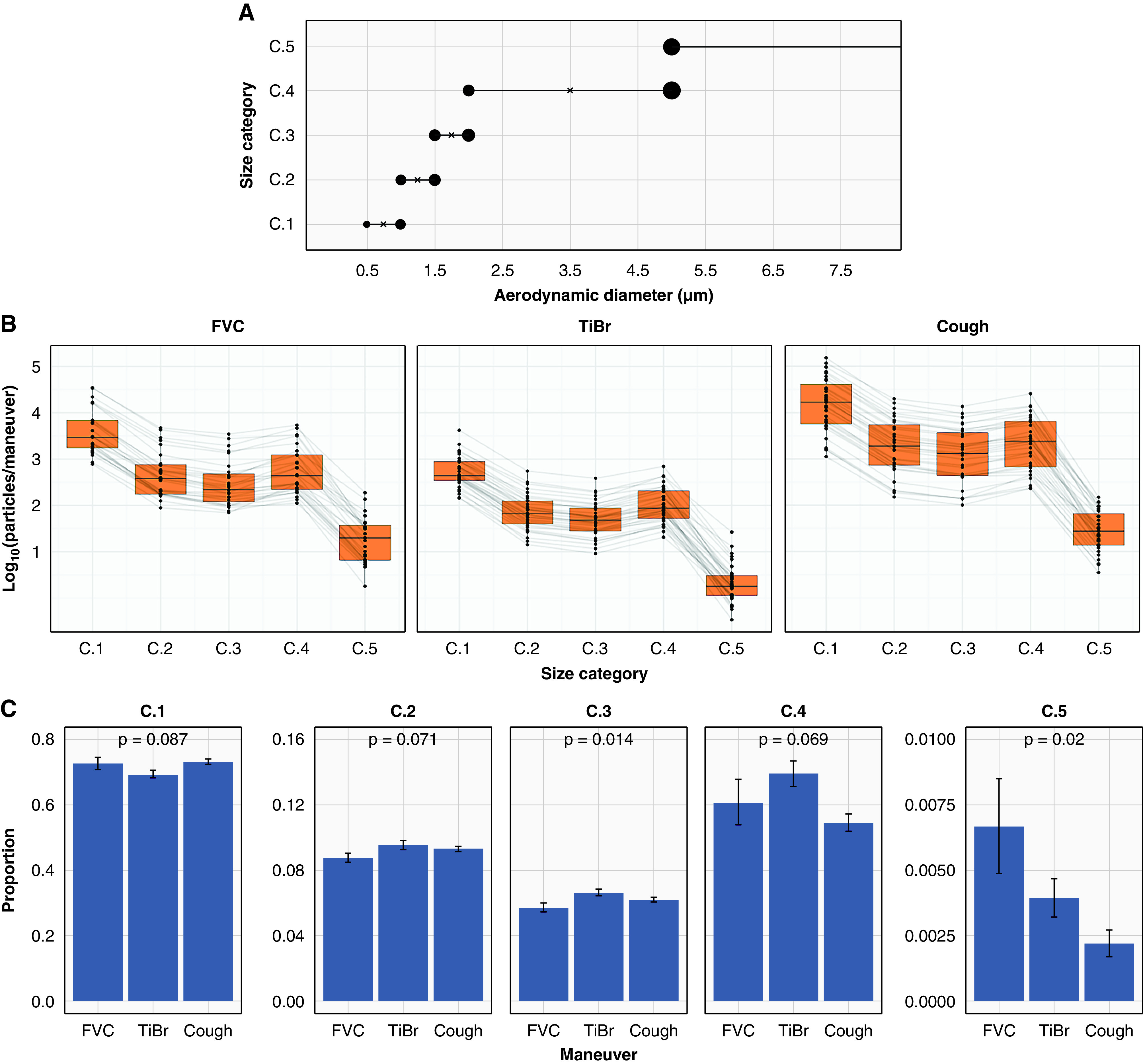
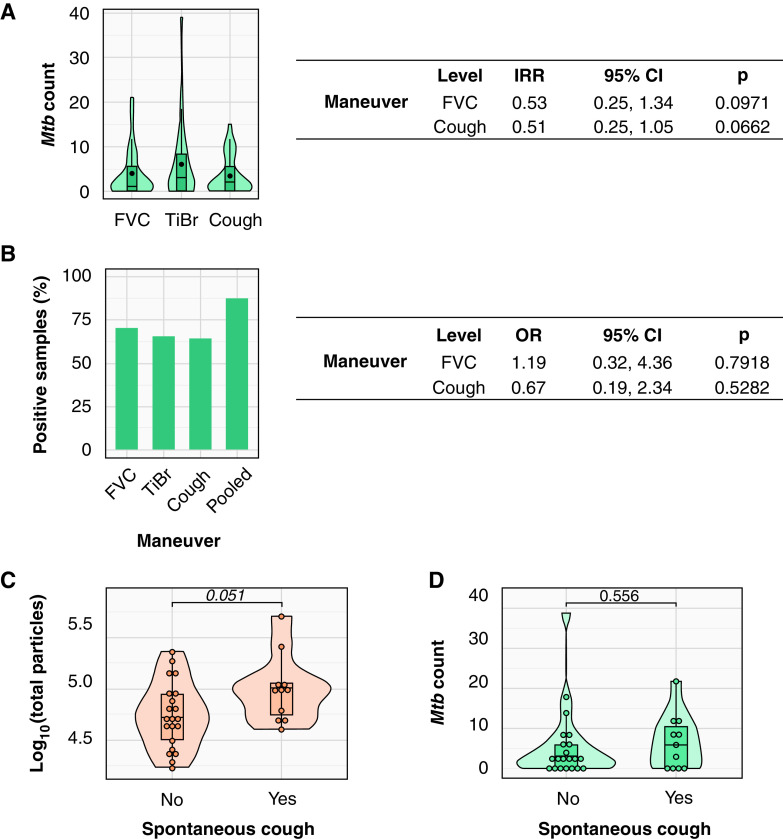
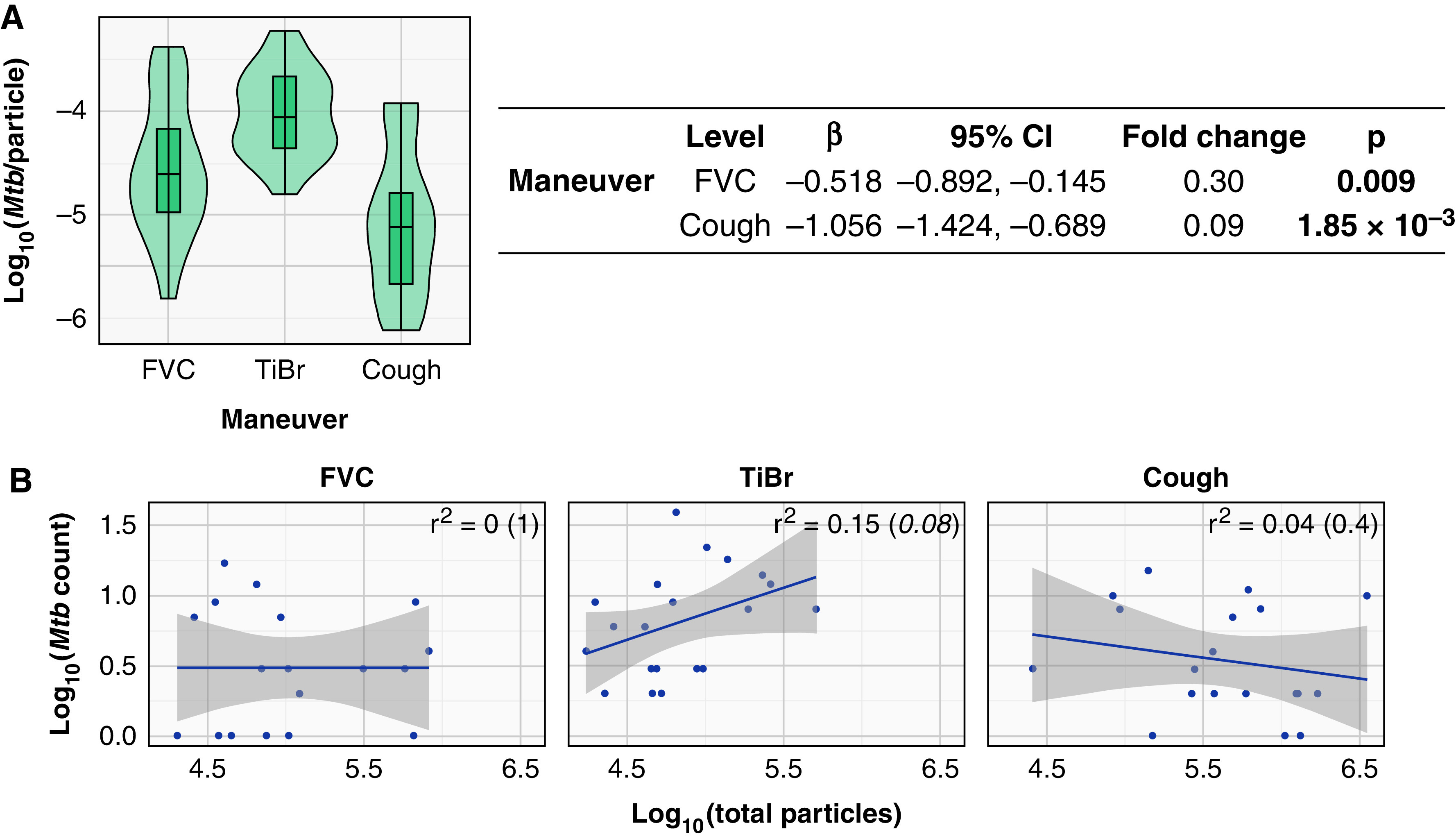
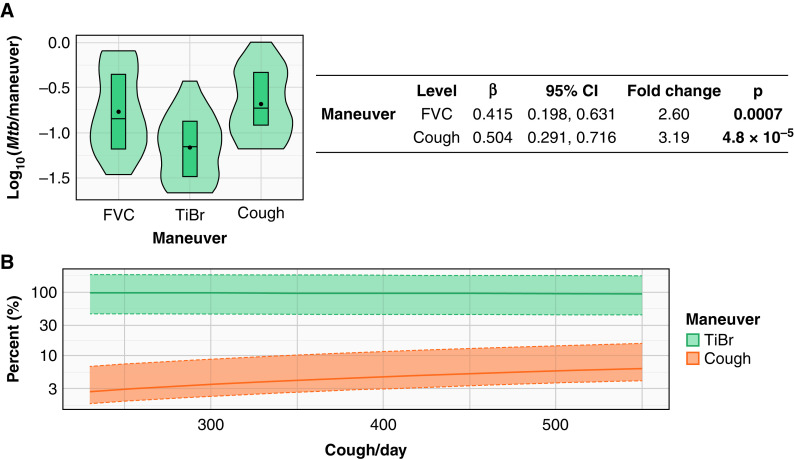
Rationale: Interrupting tuberculosis (TB) transmission requires an improved understanding of how and when the causative organism, Mycobacterium tuberculosis (Mtb), is aerosolized. Although cough is commonly assumed to be the dominant source of Mtb aerosols, recent evidence of cough-independent Mtb release implies the contribution of alternative mechanisms. Objectives: To compare the aerosolization of Mtb bacilli and total particulate matter from patients with TB during three separate respiratory maneuvers: tidal breathing (TiBr), FVC, and cough. Methods: Bioaerosol sampling and Mtb enumeration by live-cell, fluorescence microscopy were combined with real-time measurement of CO2 concentration and total particle counts from 38 patients with GeneXpert-positive TB before treatment initiation. Measurements and Main Results: For all maneuvers, the proportions of particles detected across five size categories were similar, with most particles falling between 0.5–5 μm. Although total particle counts were 4.8-fold greater in cough samples than either TiBr or FVC, all three maneuvers returned similar rates of positivity for Mtb. No correlation was observed between total particle production and Mtb count. Instead, for total Mtb counts, the variability between individuals was greater than the variability between sampling maneuvers. Finally, when modelled using 24-hour breath and cough frequencies, our data indicate that TiBr might contribute more than 90% of the daily aerosolized Mtb among symptomatic patients with TB. Conclusions: Assuming the number of viable Mtb organisms released offers a reliable proxy of patient infectiousness, our observations imply that TiBr and interindividual variability in Mtb release might be significant contributors to TB transmission among active cases.
Overview
The claims and statistics of this paper haven’t been checked yet.
Free: it reads the open-access text and checks the first 5 claims that cite a source we can check. Create a free account to check every claim.
Integrity signals
Registry
Cites
Statistics
Figures
Verification
Claims the paper makes
The claims and statistics of this paper haven’t been checked yet.
Free: it reads the open-access text and checks the first 5 claims that cite a source we can check. Create a free account to check every claim.
Claims other papers make about this one
Each is checked against this paper’s own text: does it say what the citing paper says it does?
The source backs part of the claim, not all of it — or backs it for a different population, condition or comparison.
In the citing paper
“Recent measurements of airborne M. tuberculosis yielded similar size distributions from coughing and speaking”
From Comparative Mask Protection against Inhaling Wildfire Smoke, Allergenic Bioaerosols, and Infectious Particles (2022) · cites this paper as [59]
Experimental — accuracy not yet measuredThe check wasn’t confident either way, so it gives no verdict — never disputed.
In the citing paper
“though the measurements were not designed to capture the very large particles associated with coughing only [59].”
From Comparative Mask Protection against Inhaling Wildfire Smoke, Allergenic Bioaerosols, and Infectious Particles (2022) · cites this paper as [59]
Experimental — accuracy not yet measured
Self-check
Percentages, sums and reported differences re-computed from the paper’s own numbers.
The self-check needs the paper’s full text.
Citations
Cites
R: A Language and Environment for Statistical Computing
R Core Team (2025) · doi:10.32614/r.manuals · Cited by 352,181
The Global Burden of Latent Tuberculosis Infection: A Re-estimation Using Mathematical Modelling
Houben, R. M. G. J., & Dodd, P. J. (2016) · PLOS Medicine · doi:10.1371/journal.pmed.1002152 · Cited by 2,054
Pai, M., Behr, M. A., Dowdy, D., Dheda, K., Divangahi, M., Boehme, C. C., Ginsberg, A., Swaminathan, S., Spigelman, M., Getahun, H., et al. (2016) · Nature Reviews Disease Primers · doi:10.1038/nrdp.2016.76 · Cited by 1,270
Morawska, L., Johnson, G. R., Ristovski, Z. D., Hargreaves, M., Mengersen, K., Corbett, S., Chao, C. Y. H., Li, Y., & Katoshevski, D. (2009) · Journal of Aerosol Science · doi:10.1016/j.jaerosci.2008.11.002 · Cited by 1,129 · cited 1×
“Size Stratification of Particles Enables More Specific Comparisons of Respiratory Maneuvers Particles of various sizes (including but not limited to microorganisms such asMtb bacilli) are aerosolized and may differ between respiratory maneuvers (13).”
BackgroundChao, C. Y. H., Wan, M. P., Morawska, L., Johnson, G. R., Ristovski, Z. D., Hargreaves, M., Mengersen, K., Corbett, S., Li, Y., Xie, X., et al. (2009) · Journal of Aerosol Science · doi:10.1016/j.jaerosci.2008.10.003 · Cited by 1,087
The role of particle size in aerosolised pathogen transmission: a review
Gralton, J., Tovey, E., McLaws, M.-L., & Rawlinson, W. D. (2011) · Journal of Infection · doi:10.1016/j.jinf.2010.11.010 · Cited by 665 · cited 1×
“Transmission by aerosol requires the aerosolization of particles from the site of infection (20).”
BackgroundThe Mechanism of Breath Aerosol Formation
Johnson, G. R., & Morawska, L. (2009) · Journal of Aerosol Medicine and Pulmonary Drug Delivery · doi:10.1089/jamp.2008.0720 · Cited by 434 · cited 4×
“Although the 261 absolute counts per category varied between manoeuvres, the proportional 262 compositions within each size category were conserved – an observation which 263 supports the inference that the mechanism of particle production is consistent across 264 the three respiratory manoeuvres (21, 22).”
BackgroundMethodInfluentialInhaling to mitigate exhaled bioaerosols
Edwards, D. A., Man, J. C., Brand, P., Katstra, J. P., Sommerer, K., Stone, H. A., Nardell, E., & Scheuch, G. (2004) · Proceedings of the National Academy of Sciences · doi:10.1073/pnas.0408159101 · Cited by 362 · cited 1×
“Together, these data suggest that variation in particle production alone is insuf fi cient evidence to identify infectious patients and that applications to reduce particle production seem unlikely to reduce infectiousness (25).”
BackgroundCough-generated Aerosols of Mycobacterium tuberculosis: A New Method to Study Infectiousness
Fennelly, K. P., Martyny, J. W., Fulton, K. E., Orme, I. M., Cave, D. M., & Heifets, L. B. (2004) · American Journal of Respiratory and Critical Care Medicine · doi:10.1164/rccm.200308-1101oc · Cited by 327 · cited 1×
“However, the absence in all studies of a comparator respiratory maneuver (17 – 19) has rendered impossible any assessment of alternative contributory mechanisms.”
BackgroundRapid detection of Mycobacterium tuberculosis in sputum with a solvatochromic trehalose probe
Kamariza, M., Shieh, P., Ealand, C. S., Peters, J. S., Chu, B., Rodriguez-Rivera, F. P., Babu Sait, M. R., Treuren, W. V., Martinson, N., Kalscheuer, R., et al. (2018) · Science Translational Medicine · doi:10.1126/scitranslmed.aam6310 · Cited by 165 · cited 1×
“For microscopic detection and quantification of putative viableMtb bacilli, bioaerosol samples were probed with DMN-tre, a fluorescent trehalose analogue which is incorporated into the mycomembrane of metabolically active organisms (14).”
MethodMycobacterium tuberculosis Sulfolipid-1 Activates Nociceptive Neurons and Induces Cough
Ruhl, C. R., Pasko, B. L., Khan, H. S., Kindt, L. M., Stamm, C. E., Franco, L. H., Hsia, C. C., Zhou, M., Davis, C. R., Qin, T., et al. (2020) · Cell · doi:10.1016/j.cell.2020.02.026 · Cited by 154
Williams, C. M., Abdulwhhab, M., Birring, S. S., De Kock, E., Garton, N. J., Townsend, E., Pareek, M., Al-Taie, A., Pan, J., Ganatra, R., et al. (2020) · The Lancet Infectious Diseases · doi:10.1016/s1473-3099(19)30707-8 · Cited by 142 · cited 5×
“201 Since we did not directly measure the frequency of spontaneous coughs, we estimated 202 24-hour Cough frequencies from published data (4), with a median of 466 coughs/day 203 (first quartile 234, last quartile 551).”
BackgroundMethodResultInfluentialMoyo, S., Ismail, F., der Walt, M. L. V., Ismail, N. A., Mkhondo, N., Dlamini, S. S., Mthiyane, T., Chikovore, J., Oladimeji, O., Mametja, D., et al. (2022) · The Lancet Infectious Diseases · doi:10.1016/s1473-3099(22)00149-9 · Cited by 132 · cited 2×
“For example, a recent national TB prevalence survey in South Africa (consistently among theWorld Health Organization’s annual list of high TB burden countries) reported that nearly 60% of individuals with bacteriologically confirmed pulmonary TB were asymptomatic (3).”
BackgroundAndrews, J. R., Morrow, C., Walensky, R. P., & Wood, R. (2014) · The Journal of Infectious Diseases · doi:10.1093/infdis/jiu138 · Cited by 123 · cited 1×
“…event number and velocity of bacillary release might ensure an important role for coughing in disease transmission in short contacts, for typical exposures in high-risk settings (on public transport, at workplaces, schools, etc. [15]), TiBr is expected to contribute signi fi cantly to TB prevalence.”
BackgroundSelf-citationIs cough really necessary for TB transmission?
Patterson, B., & Wood, R. (2019) · Tuberculosis · doi:10.1016/j.tube.2019.05.003 · Cited by 122
Self-citationSubmicron droplet formation in the human lung
Haslbeck, K., Schwarz, K., Hohlfeld, J. M., Seume, J. R., & Koch, W. (2010) · Journal of Aerosol Science · doi:10.1016/j.jaerosci.2010.02.010 · Cited by 114 · cited 1×
“In addition, we saw signi fi cant variation between participants, spanning two orders of magnitude, consistent with previous observations (24).”
ResultJones-López, E. C., Acuña-Villaorduña, C., Ssebidandi, M., Gaeddert, M., Kubiak, R. W., Ayakaka, I., White, L. F., Joloba, M., Okwera, A., & Fennelly, K. P. (2016) · Clinical Infectious Diseases · doi:10.1093/cid/ciw199 · Cited by 80
Detection of Mycobacterium tuberculosis bacilli in bio-aerosols from untreated TB patients
Patterson, B., Morrow, C., Singh, V., Moosa, A., Gqada, M., Woodward, J., Mizrahi, V., Bryden, W., Call, C., Patel, S., et al. (2018) · Gates Open Research · doi:10.12688/gatesopenres.12758.2 · Cited by 73
Self-citationTheron, G., Limberis, J. D., Venter, R., Smith, L., Pietersen, E., Esmail, A., Calligaro, G., Riele, J. T., de Kock, M., van Helden, P. D., et al. (2020) · Nature Medicine · doi:10.1038/s41591-020-0940-2 · Cited by 69 · cited 2×
“However, the absence in all studies of a comparator respiratory maneuver (17 – 19) has rendered impossible any assessment of alternative contributory mechanisms.”
BackgroundDonald, P. R., Diacon, A. H., Lange, C. G., Demers, A.-M., von Groote-Biddlingmeier, F., & Nardell, E. A. (2018) · The International Journal of Tuberculosis and Lung Disease · doi:10.5588/ijtld.18.0173 · Cited by 65 · cited 2×
“Given its importance in TB diagnosis, Cough 34 has unsurprisingly been central to TB transmission research (2).”
BackgroundDetection of Mycobacterium tuberculosis bacilli in bio-aerosols from untreated TB patients
Patterson, B., Morrow, C., Singh, V., Moosa, A., Gqada, M., Woodward, J., Mizrahi, V., Bryden, W., Call, C., Patel, S., et al. (2017) · Gates Open Research · doi:10.12688/gatesopenres.12758.1 · Cited by 63 · cited 1×
“However, considering the 49 challenges in identifying TB transmitters (6) and the lack of association between Mtb 50 detection and Cough frequency (4), an alternative must be considered: is TB 51 transmission primarily accomplished by Cough-independent means? 52 We have developed a platform combining non-invasive bioa…”
MethodSelf-citationDinkele, R., Gessner, S., McKerry, A., Leonard, B., Seldon, R., Koch, A. S., Morrow, C. D., Gqada, M., Kamariza, M., Bertozzi, C. R., et al. (2021) · PLoS Pathogens · doi:10.1371/journal.ppat.1009262 · Cited by 62 · cited 6×
“) and visualised as previously outlined, facilitating the detection of viableMtb bacilli (7).”
BackgroundMethodResultInfluentialSelf-citationWood, R., Morrow, C. D., Barry, C. E., Bryden, W. A., Call, C. J., Hickey, A. J., Rodes, C. E., Scriba, T. J., Blackburn, J. M., Issarow, C. M., et al. (2016) · PLoS ONE · doi:10.1371/journal.pone.0146658 · Cited by 58 · cited 1×
“To investigate these questions, we have developed a platform combining noninvasive bioaerosol capture technology and fl uorescence microscopy for the detection and enumeration of viable Mtb bacilli produced by con fi rmed TB patients (6 – 8).”
MethodSelf-citationWurie, F. B., Lawn, S. D., Booth, H., Sonnenberg, P., & Hayward, A. C. (2016) · Thorax · doi:10.1136/thoraxjnl-2015-207295 · Cited by 52
Tuberculosis transmission during the subclinical period: could unrelated cough play a part?
Esmail, H., Dodd, P. J., & Houben, R. M. G. J. (2018) · The Lancet Respiratory Medicine · doi:10.1016/s2213-2600(18)30105-x · Cited by 49 · cited 1×
“Cough has traditionally been considered the primary means of TB transmission (16).”
BackgroundCough-independent production of viable Mycobacterium tuberculosis in bioaerosol
Patterson, B., Bryden, W. A., Call, C. J., McKerry, A., Leonard, B., Seldon, R., Gqada, M., Dinkele, R., Gessner, S., Warner, D. F., et al. (2020) · Tuberculosis · doi:10.1016/j.tube.2020.102038 · Cited by 31 · cited 4×
“Because the cough-independent generation of bioaerosol from the peripheral lung is accentuated by deep exhalation, we employed a bronchiole burst maneuver (BBM) in that work (9).”
BackgroundMethodInfluentialSelf-citationAuld, S. C., Kasmar, A. G., Dowdy, D. W., Mathema, B., Gandhi, N. R., Churchyard, G., Rustomjee, R., & Shah, N. (2017) · The Journal of Infectious Diseases · doi:10.1093/infdis/jix353 · Cited by 20 · cited 1×
“However, the challenges in identifying TB transmitters (5) and the lack of association betweenMtb detection and cough frequency (4) suggest an additional possibility: that TB transmission might be accomplished by coughindependent means.”
BackgroundWurie, F. B., Lawn, S. D., Booth, H., Sonnenberg, P., & Hayward, A. C. (2015) · The Lancet · doi:10.1016/s0140-6736(15)00919-8 · Cited by 4 · cited 1×
“However, when extrapolated to daily estimates, the relatively high frequency of breathing compared to coughing suggests that, over time, TiBr might represent a major source ofMtb aerosols, as suggested previously (22, 26).”
Background
Research works printed but not linked: 2
- Dinkele R Gessner S McKerry A Leonard B Leukes J Seldon R et al. Cough-independent aerosolization of Mycobacterium tuberculosis suggests a significant role for tidal breathing in asymptomatic TB transmission Int J Tuberc Lung Dis 2021 25(10) S410 S411
- McPherson J Ushey K Gregory M RStudioTeam RStudio: integrated development environment for R. Boston, MA RStudio, PBC 2020
Cited by
Drug resistant tuberculosis: Implications for transmission, diagnosis, and disease management
Liebenberg, D., Gordhan, B. G., & Kana, B. D. (2022) · Frontiers in Cellular and Infection Microbiology · doi:10.3389/fcimb.2022.943545 · Cited by 184
“Recent evidence suggests that tubercle bacteria can also be spread by tidal breathing indicating that various respiratory manoeuvres, including singing and talking, could contribute to TB transmission (Williams et al., 2020; Dinkele et al., 2022).”
BackgroundTrajman, A., Campbell, J. R., Kunor, T., Ruslami, R., Amanullah, F., Behr, M. A., & Menzies, D. (2025) · The Lancet · doi:10.1016/s0140-6736(24)02479-6 · Cited by 174
Coussens, A. K., Zaidi, S. M. A., Allwood, B. W., Dewan, P. K., Gray, G., Kohli, M., Kredo, T., Marais, B. J., Marks, G. B., Martinez, L., et al. (2024) · The Lancet Respiratory Medicine · doi:10.1016/s2213-2600(24)00028-6 · Cited by 171
“The area of greatest diagnostic need is biomarkers for non-infectious subclinical and clinical TB to increase diagnostic confidence that radiographically evident disease is caused by Mtb, in absence of sputum/biopsy microbiological positivity.”
Self-citationEmery, J. C., Dodd, P. J., Banu, S., Frascella, B., Garden, F. L., Horton, K. C., Hossain, S. A. S., Law, I., van Leth, F., Marks, G. B., et al. (2023) · eLife · doi:10.7554/elife.82469 · Cited by 132
Mycobacterium tuberculosis Transmission in High-Incidence Settings—New Paradigms and Insights
Coleman, M. C., Martínez, L., Theron, G., Wood, R., & Marais, B. J. (2022) · Pathogens · doi:10.3390/pathogens11111228 · Cited by 143
“5 μm to 5 μm range with a minority of larger (5 μm to 20 μm) size [20,97].”
BackgroundInfluentialSelf-citation
Metadata
- Authors
- Dinkele, R., Gessner, S., McKerry, A., Leonard, B., Leukes, J., Seldon, R., Warner, D. F., & Wood, R.
- Affiliations
- National Health Laboratory Service (ZA)
- University of Cape Town (ZA)
- Corresponding author
- Warner, Digby F.
- Wood, Robin
- ORCID
- Venue
- American Journal of Respiratory and Critical Care Medicine
- Publisher
- Oxford University Press (OUP)
- Published
- 2022-07
- Volume
- 206
- Issue
- 2
- Pages
- 206-216
- ISSN
- 1073-449X (ISSN-L)
- 1535-4970
- PMC
- PMC9887416
- OpenAlex
- W4280628980
- Cited by
- 83
- References
- 28
- Citations by year
- 2026: 16 · 2025: 24 · 2024: 17 · 2023: 13 · 2022: 12
- FWCI
- 8.19
- Type
- journal article
- Language
- en
- Open access
- hybrid
- doi.org
- Licence
- Locations
- American Journal of Respiratory and Critical Care Medicine (publishedVersion, cc-by-nc-nd)
- bioRxiv (Cold Spring Harbor Laboratory) (acceptedVersion, cc-by-nd)
- PubMed Central (publishedVersion, cc-by-nc-nd)
- PubMed (publishedVersion)
- Informationszentrum Lebenswissenschaften (ZB MED) (submittedVersion, cc-by-nc-nd)
- Funders
- South African Medical Research Council (MRC-RFA-UFSP-01-2013/CCAMP)
- Bill and Melinda Gates Foundation (R&D Project 261669)
- National Institute of Allergy and Infectious Diseases (R01AI093269)
- Eunice Kennedy Shriver National Institute of Child Health and Human Development (U01HD085531)
- Topics
- Health Sciences › Medicine › Infectious Diseases › Tuberculosis Research and Epidemiology
- Health Sciences › Medicine › Pulmonary and Respiratory Medicine › Infection Control and Ventilation
- Physical Sciences › Environmental Science › Health, Toxicology and Mutagenesis › Indoor Air Quality and Microbial Exposure
- Keywords
- Mycobacterium tuberculosis, aerosolization, tuberculosis transmission, tidal breathing, cough, forced vital capacity, bioaerosols, particle size distribution, interindividual variability, CO2 concentration
- MeSH terms
- Aerosols, Cough, Humans, Mycobacterium tuberculosis, Respiratory System, Sensitivity and Specificity, Sputum, Tuberculosis
About these checks
Registry, retraction, Cites and statistics results are computed, not judged, with one exception: a printed reference that no index lists is read once by a model before it counts as a citation error. Claims are extracted by a model and kept only when their quote appears verbatim in the text; each cited source is then checked, with a model’s help, for whether it says what the claim relies on. Those verdicts can be wrong — read the claim’s quote and the cited source before relying on one.
Statistics and arithmetic are recomputed, not judged.
Confidence bands are shown only for fields calibrated on our annotated test set. None is calibrated yet, so no band is shown.
What counts as a claim ›How we measure confidence ›How we check this ›
Are you an author, or do you see a problem with this page? Request a review
Data sources
Bibliographic data: Semantic Scholar, OpenAlex, Crossref.
Contains information from the Semantic Scholar Academic Graph Datasets, made available under the ODC Attribution License (ODC-BY 1.0).
Semantic Scholar’s data is described in: Kinney, R., et al. (2023). The Semantic Scholar Open Data Platform. arXiv:2301.10140.
