

Impaired insulin-induced sympathetic neural activation and vasodilation in skeletal muscle in obese humans.
Open accessThe DOI matches its Crossref record; 31 of the 31 references it cites were found in a registry or an index; 12 of the 22 sources its claims cite were checked for support.
Abstract
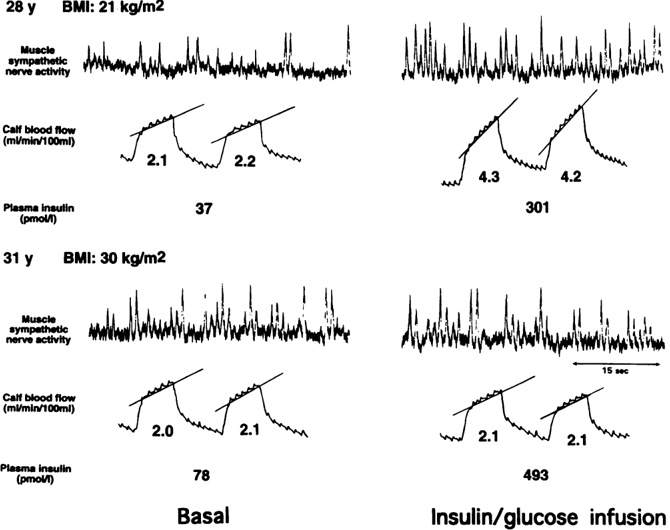
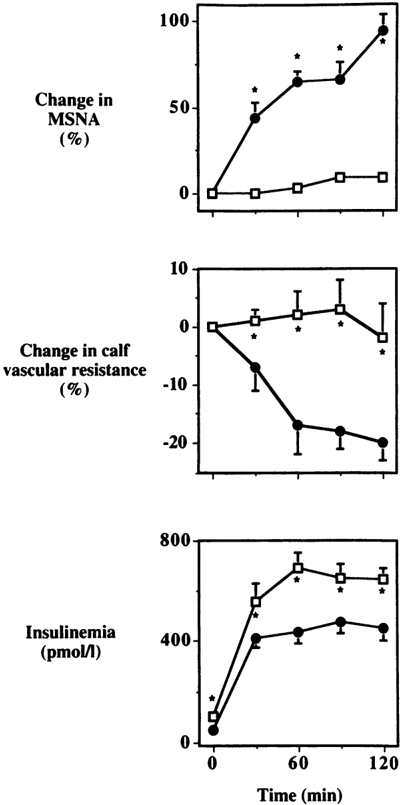
The sympathetic nervous system is an important regulatory mechanism of both metabolic and cardiovascular function, and altered sympathetic activity may play a role in the etiology and/or complications of obesity. In lean subjects, insulin evokes sympathetic activation and vasodilation in skeletal muscle. In obese subjects such vasodilation is impaired and, in turn, may contribute to insulin resistance. To examine the relationship between sympathetic and vasodilatory responses in skeletal muscle to hyperinsulinemia, we simultaneously measured muscle sympathetic nerve activity (MSNA) and calf blood flow at basal and during a 2-h hyperinsulinemic (6 pmol/kg per min) euglycemic clamp in eight lean and eight obese subjects. The major findings of this study are twofold: obese subjects had a 2.2 times higher fasting rate of MSNA, and euglycemic hyperinsulinemia, which more than doubled MSNA and increased calf blood flow by roughly 30% in lean subjects, had only a minor vasodilatory and sympathoexcitatory effect in obese subjects. In contrast, two non-insulin-sympathetic stimuli evoked comparably large increases in MSNA in lean and obese subjects. We conclude that insulin resistance in obese subjects is associated with increased fasting MSNA and a specific impairment of sympathetic neural responsiveness to physiological hyperinsulinemia in skeletal muscle tissue.
Overview
CoChat Summary
TL;DR
In obese humans, fasting muscle sympathetic nerve activity (MSNA) was about 2.2-fold higher than in lean subjects, but hyperinsulinemia failed to normally increase MSNA or calf blood flow. This suggests obesity-related insulin resistance includes a specific impairment of insulin’s sympathoexcitatory and vasodilatory effects in skeletal muscle.
Key findings
- Obese subjects had higher basal MSNA than lean subjects (37±5 vs 17±3 bursts/min), and euglycemic hyperinsulinemia increased MSNA burst frequency by only 9±3% in obese subjects versus 94±10% in lean subjects (P < 0.05 vs lean).
- In lean subjects, the 2-h hyperinsulinemic euglycemic clamp increased calf blood flow by 29±5% and decreased calf vascular resistance by 20±3%; in obese subjects it had no detectable effect on calf blood flow or calf vascular resistance.
- Non-insulin sympathetic stimuli produced comparable MSNA increases in both groups: peak Valsalva responses were 71±8 bursts/min in obese vs 67±4 in lean, and cold pressor responses were 54±6 vs 45±3 bursts/min (P > 0.1).
- Across all 16 subjects, fasting insulinemia correlated directly with fasting MSNA burst frequency (r = 0.56, P < 0.03), and fasting MSNA was inversely related to glucose uptake during the last 30 min of insulin/glucose infusion (r = 0.68, P < 0.004).
Methods
- Eight obese subjects (BMI 33.8±1.6 kg/m², age 38±3 yr) and eight age- and sex-matched lean healthy subjects (BMI 22.2±0.7 kg/m², age 37±3 yr) were studied; all were normotensive, had normal glucose tolerance, took no medication, and had no evidence of metabolic or cardiovascular disease.
- Protocol 1 used a 2-h hyperinsulinemic euglycemic clamp at 1 mU/kg per min (6 pmol/kg per min), with simultaneous MSNA measured by microneurography of the peroneal nerve and calf blood flow measured by venous occlusion plethysmography; non-insulin sympathetic responses were tested with a Valsalva maneuver and cold pressor test.
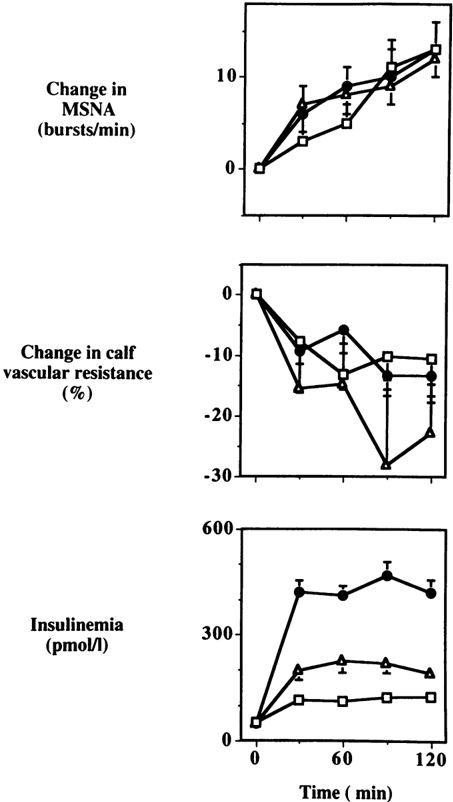
- Protocol 2 studied five lean subjects with low-dose 2-h hyperinsulinemic euglycemic clamps at 0.5 and 0.15 mU/kg per min; analysis used ANOVA for repeated measures, paired t tests with Bonferroni adjustment, unpaired t tests, and least-squares correlations, with P < 0.05 considered significant.
Limitations
- Stated: the paper says its data “do not elucidate the underlying mechanism of insulin-induced sympathetic activation and vasodilation,” and it offers two possible interpretations for the attenuated sympathetic response in obese subjects—resistance to insulin’s sympathoexcitatory effects versus high basal MSNA already near the maximal insulin-induced response.
- Evident: the main comparison included only eight subjects per group, and the low-dose insulin dose-response studies included only five lean subjects.
- Evident: obese subjects had significantly higher plasma insulin concentrations during the clamp than lean subjects (643±47 vs 449±48 pmol/liter at 120 min), so the groups were not compared at matched insulinemia; the paper also has no formal limitations section.
Model-written summary. Check it against the paper before relying on it.
Integrity signals
Registry
Cites
Statistics
Figures
Verification
Claims the paper makes
8 Valid · 2 Not valid · 6 Not checked · 53 Own results and interpretations
The cited sources that could be checked couldn’t confirm or dispute this claim.
In the paper
“Data in experimental animals regarding effects of insulin resistance and obesity on insulin-induced sympathetic responses are conflicting.”
What the sources say
- Not matchedcites [16] 16. Morgan, D. A., T. W. Balon, and A. L. Mark. 1991. High fructose diet promotes exaggerated sympathetic and pressor responses to hyperinsulinemia in rats. FASEB (Fed. Am. Soc. Exp. Biol.) J. 5:A1497. (Abstr.)
We searched by its title and found no matching paper.
- Could not verifycites [17] 17. Holt, S., D. A. York, and J. T. R. Fitzsimons. 1983. The effect of corticosterone, cold exposure and overfeeding with sucrose on brown adipose tissue of obese Zucker rats (fa/fa). Biochem. J. 214:215–223. sourceExperimental — accuracy not yet measured
The Discussion reports age-dependent responses to cold and impaired autonomic stimulation of brown-adipose-tissue thermogenesis after sucrose overfeeding in obese rats. It does not address insulin-induced sympathetic responses or say that findings on insulin resistance and obesity are conflicting. Searches for those terms found no decisive passage in our copy; page numbers were unavailable. (LLM, conf=0.73)
plain- Asserted: passes — The authors put it forward as true.
- Checkable: passes — It can be checked against evidence.
- Load-bearing: passes — The paper’s conclusions depend on it.
- Based: passes — The paper gives a reason why it holds.
- Not matched
The cited sources support only part of this claim — read each source’s verdict below.
In the paper
“In lean subjects, sympathetic activation evoked by acute elevation of plasma insulin to high physiological concentrations does not raise blood pressure (12–14)”
What the sources say
- Partly supportedcites [12] 12. Anderson, E. A., R. P. Hoffman, T. W. Balon, C. A. Sinkey, and A. L. Mark. 1991. Hyperinsulinemia produces both sympathetic neural activation and vasodilation in normal humans. J. Clin. Invest. 87:2246–2252. sourceExperimental — accuracy not yet measured
The Abstract and Conclusion (pages not provided) report that acute insulin infusion increased sympathetic nerve activity without increasing arterial pressure in normal humans. The Subjects section describes 14 healthy males with BMIs ranging from 21 to 32; it does not establish the result specifically for lean subjects. (LLM, conf=0.84)
- Not checked — no full text of the sourcecites [13] 13. Scherrer, U., P. Vollenweider, D. Randin, E. Jéquier, P. Nicod, and L. Tappy. 1993. Suppression of insulin induced sympathetic activation and vasodilation by dexamethasone in humans. Circulation. 88:388–394. source
- Supportedcites [14] 14. Vollenweider, P., L. Tappy, D. Randin, P. Schneiter, E. Jéquier, P. Nicod, and U. Scherrer. 1993. Differential effects of hyperinsulinemia and carbohydrate metabolism on sympathetic nerve activity and muscle blood flow in humans. J. Clin. Invest. 92:147–154. source
The Discussion (p. 6) says that, in lean healthy subjects, acute hyperinsulinemia at high physiological concentrations does not raise arterial pressure. It also describes insulin’s sympathetic activation and vasodilation as opposing effects that may explain this result. (LLM, conf=0.94)
plain- Asserted: passes — The authors put it forward as true.
- Checkable: passes — It can be checked against evidence.
- Load-bearing: passes — The paper’s conclusions depend on it.
- Based: passes — The paper gives a reason why it holds.
- Partly supported
The cited sources support only part of this claim — read each source’s verdict below.
In the paper
“suggesting that body fat may be an important determinant of resting sympathetic nerve activity in humans (26, 27).”
What the sources say
- Partly supportedcites [26] 26. Spraul, M., E. Ravussin, A. M. Fontvieille, R. Rising, D. E. Larson, and E. A. Anderson. 1993. Reduced sympathetic nervous activity. A potential mechanism predisposing to body weight gain. J. Clin. Invest. 92:1730–1735. sourceExperimental — accuracy not yet measured
The Abstract and Discussion report that fasting muscle sympathetic nerve activity was positively related to body fat in Caucasian men, but not in Pima Indian men. This supports a possible relationship in one studied group, not the broader suggestion that body fat determines resting sympathetic nerve activity in humans generally; the study also measured an association rather than establishing direction of causation. Page numbers are unavailable in our copy. (LLM, conf=0.86)
- Not matchedcites [27] 27. Randin, D., P. Vollenweider, L. Tappy, E. Jéquier, P. Nicod, and U. Scherrer. 1993. Sustained sympathetic activation in skeletal muscle in overweight humans. Diabetes. 42:94A. (Abstr.)
We searched by its title and found no matching paper.
hedgedstates a possible cause- Asserted: passes — The authors put it forward as true.
- Checkable: passes — It can be checked against evidence.
- Load-bearing: passes — The paper’s conclusions depend on it.
- Based: passes — The paper gives a reason why it holds.
- Partly supported
The cited sources support only part of this claim — read each source’s verdict below.
In the paper
“In lean healthy subjects, insulin-induced stimulation of muscle blood flow consistently is accompanied by a marked stimulation of sympathetic neural outflow to the same vascular bed (12-14).”
What the sources say
- Partly supportedcites [12] 12. Anderson, E. A., R. P. Hoffman, T. W. Balon, C. A. Sinkey, and A. L. Mark. 1991. Hyperinsulinemia produces both sympathetic neural activation and vasodilation in normal humans. J. Clin. Invest. 87:2246–2252. sourceExperimental — accuracy not yet measured
The Discussion reports that insulin increased muscle sympathetic nerve activity while causing forearm vasodilation in healthy subjects. But it explicitly says blood flow was measured in the forearm and nerve activity in the leg, so the study does not establish both effects in the same vascular bed. The Subjects section also reports BMI values up to 32, rather than an exclusively lean group. (LLM, conf=0.90)
- Not checked — no full text of the sourcecites [13] 13. Scherrer, U., P. Vollenweider, D. Randin, E. Jéquier, P. Nicod, and L. Tappy. 1993. Suppression of insulin induced sympathetic activation and vasodilation by dexamethasone in humans. Circulation. 88:388–394. source
- Supportedcites [14] 14. Vollenweider, P., L. Tappy, D. Randin, P. Schneiter, E. Jéquier, P. Nicod, and U. Scherrer. 1993. Differential effects of hyperinsulinemia and carbohydrate metabolism on sympathetic nerve activity and muscle blood flow in humans. J. Clin. Invest. 92:147–154. source
The Abstract (p. 1) reports that, in six healthy lean subjects, insulin/glucose infusion increased both muscle sympathetic nerve activity and calf blood flow. The Discussion (p. 6) likewise says both increased markedly during infusion, supporting the claimed accompanying responses in skeletal muscle. (LLM, conf=0.91)
boostedstates an association- Asserted: passes — The authors put it forward as true.
- Checkable: passes — It can be checked against evidence.
- Load-bearing: passes — The paper’s conclusions depend on it.
- Based: passes — The paper gives a reason why it holds.
- Partly supported
Every source the paper cites for this claim was checked and supports it.
In the paper
“findings in humans, showing that local intraarterial insulin infusion, in contrast to systemic intravenous infusion, did not have any stimulatory effect on sympathetic activity in skeletal muscle (15).”
What the sources say
- Supportedcites [15] 15. Lembo, G., R. Napoli, B. Capaldo, V. Rendina, G. Iaccarino, M. Volpe, B. Trimarco, and L. Saccá. 1992. Abnormal sympathetic overactivity evoked by insulin in the skeletal muscle of patients with essential hypertension. J. Clin. Invest. 90:24–29. source
The local-insulinization results report that intraarterial insulin left forearm norepinephrine balance, uptake, and release unchanged in both normotensive and hypertensive subjects. The Discussion contrasts this with an effect on muscle norepinephrine metabolism during systemic insulinization. Page numbers are unavailable in our copy. (LLM, conf=0.93)
plain- Asserted: passes — The authors put it forward as true.
- Checkable: passes — It can be checked against evidence.
- Load-bearing: passes — The paper’s conclusions depend on it.
- Based: passes — The paper gives a reason why it holds.
- Supported
44 more claims · 1 with their cited sources checked
Create a free account to see all 69 claims and every source verdict.
- Probably not a substantial claim. 13
- It may state two separate claims as one. 7
- The quote only partly states this claim. 2
Citations
Cites
Role of Insulin Resistance in Human Disease
Reaven, G. M. (1988) · Diabetes · doi:10.2337/diab.37.12.1595 · Cited by 12,154
Glucose clamp technique: a method for quantifying insulin secretion and resistance.
DeFronzo, R. A., Tobin, J. D., & Andres, R. (1979) · American Journal of Physiology-Endocrinology and Metabolism · doi:10.1152/ajpendo.1979.237.3.e214 · Cited by 7,425
Coated Charcoal Immunoassay of Insulin
HERBERT, V., LAU, K.-S., GOTTLIEB, C. W., & BLEICHER, S. J. (1965) · The Journal of Clinical Endocrinology & Metabolism · doi:10.1210/jcem-25-10-1375 · Cited by 2,968
Somatosensory, proprioceptive, and sympathetic activity in human peripheral nerves
Vallbo, A. B., Hagbarth, K. E., Torebjork, H. E., & Wallin, B. G. (1979) · Physiological Reviews · doi:10.1152/physrev.1979.59.4.919 · Cited by 1,507
Hyperinsulinemia produces both sympathetic neural activation and vasodilation in normal humans.
Anderson, E. A., Hoffman, R. P., Balon, T. W., Sinkey, C. A., & Mark, A. L. (1991) · Journal of Clinical Investigation · doi:10.1172/jci115260 · Cited by 1,075
Laakso, M., Edelman, S. V., Brechtel, G., & Baron, A. D. (1990) · Journal of Clinical Investigation · doi:10.1172/jci114644 · Cited by 930
Parati, G., Casadei, R., Groppelli, A., Di Rienzo, M., & Mancia, G. (1989) · Hypertension · doi:10.1161/01.hyp.13.6.647 · Cited by 899
General Characteristics of Sympathetic Activity in Human Muscle Nerves
Delius, W., Hagbarth, K. ‐., Hongell, A., & Wallin, B. G. (1972) · Acta Physiologica Scandinavica · doi:10.1111/j.1748-1716.1972.tb05157.x · Cited by 831
Mechanisms of insulin resistance in human obesity: evidence for receptor and postreceptor defects.
Kolterman, O. G., Insel, J., Saekow, M., & Olefsky, J. M. (1980) · Journal of Clinical Investigation · doi:10.1172/jci109790 · Cited by 664
Effects of the cold pressor test on muscle sympathetic nerve activity in humans.
Victor, R. G., Leimbach, W. N., Seals, D. R., Wallin, B. G., & Mark, A. L. (1987) · Hypertension · doi:10.1161/01.hyp.9.5.429 · Cited by 519
Cited by
Items 201–284 of 284
Apo E isoforms, insulin output and plasma lipid levels in essential hypertension
Dembińska‐Kieć, Kawecka‐Jaszcz, Kwaśniak, et al. (1998) · European Journal of Clinical Investigation · doi:10.1046/j.1365-2362.1998.00259.x · Cited by 6
Influence of nervous blockade on insulin-mediated glucose uptake in the human forearm
Lind, L., & Eriksson, M. B. (2003) · Metabolism · doi:10.1053/meta.2003.50069 · Cited by 6
The Sympathetic Nervous System in Hypertension
Seravalle, G., Mancia, G., & Grassi, G. M. (2018) · Contemporary Endocrinology · doi:10.1007/978-3-319-77048-2_14 · Cited by 7
Heusser, K., Tank, J., Diedrich, A., Fischer, A., Heise, T., & Jordan, J. (2023) · Frontiers in Neuroscience · doi:10.3389/fnins.2022.1107752 · Cited by 8
“Sympathetic excitation following glucose-mediated insulin release or during insulin infusion appears to be attenuated in insulin resistant states (Spraul et al., 1994; Vollenweider et al., 1994), which could also contribute to variability in MSNA in our patients.”
BackgroundCavalot, F. L., Russo, I., Mattiello, L., Anfossi, G., Massucco, P., Mularoni, E., Hahn, A., & Trovati, M. (1997) · Diabetologia · doi:10.1007/s001250050644 · Cited by 6
“On the other hand, insulin, through nitric oxide, exerts beneficial vasodilating [36–38] and platelet anti-aggregating [39, 40] properties, that are lost in the hyperinsulinaemic, insulin-resistant states [41, 42], inducing us to speculate that the resistance to beneficial vascular effects of insulin could also play a…”
BackgroundCardiovascular risks in obesity
Uchegbu, E., & Kopelman, P. G. (2002) · Journal of Endocrinological Investigation · doi:10.1007/bf03344056 · Cited by 6
Hypertension in diabetes: The role of the vasculature
Stern, N., & Marcus, Y. (2004) · Current Hypertension Reports · doi:10.1007/s11906-004-0082-9 · Cited by 6
“to enhance muscle blood flow, possibly because of a specific impairment of sympathetic neural responsiveness in skeletal muscle [ 45 ].”
BackgroundAutonomic Nervous System: Metabolic Function
Straznicky, N. E., Nestel, P. J., & Esler, M. (2009) · Elsevier eBooks · doi:10.1016/b978-008045046-9.00638-0 · Cited by 10
Young, B. E., Padilla, J., Shoemaker, J. K., Curry, T. B., Fadel, P. J., & Limberg, J. K. (2023) · American Journal of Physiology-Regulatory, Integrative and Comparative Physiology · doi:10.1152/ajpregu.00162.2022 · Cited by 5
Martín, P. B. P., Martín-Rincón, M., Morales‐Álamo, D., Pérez-Suárez, I., Perez‐Valera, M., Galván-Álvarez, V., Curtelín, D., de Pablos-Velasco, P. L., & Calbet, J. A. L. (2021) · Journal of Clinical Hypertension · doi:10.1111/jch.14392 · Cited by 5
Borne, A. T., Truett, A. A., Monteiro, M. P., Vólaufová, J., & West, D. B. (1999) · Obesity Research · doi:10.1002/j.1550-8528.1999.tb00392.x · Cited by 5
Insulin and Sympathoexcitation: It Is Not All in Your Head
Joyner, M. J., & Limberg, J. K. (2013) · Diabetes · doi:10.2337/db13-0613 · Cited by 5
“Even small increases in plasma insulin concentration (as low as one-fifth of that achieved after a mixed meal) (3) have marked and potentially long-lasting sympathoexcitatory effects (4).”
BackgroundThe Influence of Obesity on the Development of Non-Insulin-Dependent Diabetes Mellitus
Kolaczynski, J. W., & Goldstein, B. J. (2000) · Handbook of experimental pharmacology · doi:10.1007/978-3-642-59651-3_4 · Cited by 4
Sasaki, H., Kanai, S., Oyama, T., Miyashita, Y., Yamamura, S., & Shirai, K. (2006) · Journal of Atherosclerosis and Thrombosis · doi:10.5551/jat.13.149 · Cited by 5
Autonomic dysfunction in polycystic ovary syndrome
Adams, Z. H., Simpson, L. L., Hart, E. C., & Lord, R. N. (2025) · Autonomic Neuroscience · doi:10.1016/j.autneu.2025.103357 · Cited by 4
Dennis, P. A., Neal, J. M., Travis, E. A., Watkins, L. L., Calhoun, P. S., Dennis, M. F., & Beckham, J. C. (2018) · Journal of Psychophysiology · doi:10.1027/0269-8803/a000226 · Cited by 5
“…token, it is wellestablished that temporary insulin infusion stimulates sympathetic nervous system (SNS) activity but also vasodilation to enhance blood flow and in turn glucose perfusion to muscle cells (Anderson, Hoffman, Balon, Sinkey, & Mark, 1991; Rowe et al., 1981; Vollenweider et al., 1994).”
BackgroundInfluentialPATHOPHYSIOLOGY OF HYPERTENSION
Hilleman, D. E., & Lynch, J. D. (1999) · Anesthesiology Clinics of North America · doi:10.1016/s0889-8537(05)70115-2 · Cited by 6
Hypertension and Insulin Resistance
Natali, A., Taddei, S., & Ferrannini, E. (1997) · Humana Press eBooks · doi:10.1007/978-1-4757-3906-0_16 · Cited by 4
Body fatness, insulin sensitivity and muscle oxygen supply in adolescents
Arrowsmith, F., Ward, J. A., Rooney, K. B., Kriketos, A. D., Baur, L. A., & Thompson, C. H. (2002) · Clinical Science · doi:10.1042/cs1030391 · Cited by 4
The Sympatho-Adrenal System in the Metabolic Syndrome
Landsberg, L. (2008) · Humana Press eBooks · doi:10.1007/978-1-60327-116-5_6 · Cited by 3
“Subsequent application of microneurography by several groups clearly demonstrated increased MSNA in obese as compared with lean subjects ( 10 ,11) and a direct correla tion of MSNA with body mass index (9).”
BackgroundNeurovascular and hemodynamic responses to hyperinsulinemia in healthy postmenopausal women
Cardoso, C. G., Sakai, D., Pinto, L. G., Labes, E., de Gusmão, J. L., Abrahão, S. B., Tinucci, T., Mion, D., da Fonseca, Â. M., & Forjaz, C. L. M. (2007) · Maturitas · doi:10.1016/j.maturitas.2007.05.001 · Cited by 3
“Previous researches from us 4,5] and others [3,6–11] have reported that muscle ympathetic nerve activity, measured by microneuography, increases with hyperinsulinemia, while skin ympathetic activity does not change [11].”
BackgroundInfluentialRole of the Sympathetic Nervous System in Cardiovascular Disease
Lambert, G. W., & Esler, M. (2015) · Springer eBooks · doi:10.1007/978-981-4560-53-5_36-1 · Cited by 4
Jéquier, E., & Tappy, L. (1997) · Molecular Aspects of Medicine · doi:10.1016/s0098-2997(97)00045-9 · Cited by 5
Self-citationSchwab, M., Bloch, J., Duplain, H., Sartori, C. S., & Scherrer, U. (2008) · PubMed · Cited by 4
Self-citationZhang, Y., & Jing, Y. (2026) · Journal of Cachexia Sarcopenia and Muscle · doi:10.1002/jcsm.70165 · Cited by 2
“Furthermore, individuals with IR often exhibit impaired insulin-stimulated vasodilation in skeletal muscle, which may exacerbate bilateral functional asymmetry by compromising extremity-specific blood perfusion and local nutrient delivery [16, 17].”
The contribution of Swiss scientists to the assessment of energy metabolism
Montani, J., Schütz, Y., & Dulloo, A. G. (2018) · European Journal of Clinical Nutrition · doi:10.1038/s41430-018-0139-5 · Cited by 4
“Notably, they demonstrated that insulin resistance in obese subjects is associated with increased fasting skeletal muscle sympathetic activity together with a specific impairment of sympathetic neural responsiveness to hyperinsulinemia in this tissue [45].”
BackgroundDysfonctions du système nerveux sympathique et de la signalisation catécholaminergique chez l’obèse
Lafontan, M. (2013) · Obésité · doi:10.1007/s11690-013-0409-2 · Cited by 2
Gallo‐Villegas, J., Aristizábal, D., Segura, Á., & Correa, M. (2008) · Redalyc (Universidad Autónoma del Estado de México) · Cited by 5
Insulin and Insulin-Like Growth Factor I (IGF-I) Effects on Ca2+ and Nitric Oxide in Diabetes
Sowers, J. R. (1998) · Endocrine updates · doi:10.1007/978-1-4615-5569-8_8 · Cited by 2
Does microvascular dysfunction link obesity with insulin resistance and hypertension?
de Jongh, R. T., Serné, E. H., Eringa, E. C., IJzerman, R. G., & Stehouwer, C. D. A. (2006) · Expert Review of Endocrinology & Metabolism · doi:10.1586/17446651.1.2.181 · Cited by 2
Dietary Fats and Thermogenesis
Tremblay, A., & Bouchard, C. (1997) · Annals of the New York Academy of Sciences · doi:10.1111/j.1749-6632.1997.tb51851.x · Cited by 2
Ageing impairs insulin‐mediated vasodilatation but not forearm glucose uptake
Lind, L., FUGMANN, A., Millgård, J., Berne, C., & Lithell, H. (2001) · European Journal of Clinical Investigation · doi:10.1046/j.1365-2362.2001.00882.x · Cited by 2
Trahair, L. G., Wu, T., Feinle‐Bisset, C., et al. (2018) · Physiological Reports · doi:10.14814/phy2.13610 · Cited by 2
“…a blunting of the sympathetic response (assessed by muscle sympathetic nerve activity (MSNA) and plasma noradrenaline) to ingestion of oral glucose (Vollenweider et al. 1994; Straznicky et al. 2009), particularly in individuals with insulin resistance and the metabolic syndrome (Spraul et al. ª…”
BackgroundInfluentialThe effect of obesity on venous impedance and outflow measured by ultrasound
Wall, M. L. (2011) · University of Birmingham Institutional Research Archive (University of Birmingham) · Cited by 2
Blunted Coronary Vasoreactivity to Insulin Is an Early Alteration in Hypertension
Sundell, J., Laine, H. K., Luotolahti, M., Nuutila, P., Kalliokoski, K. K., Raitakari, O. T., & Knuuti, J. M. (2003) · Journal of Vascular Research · doi:10.1159/000068939 · Cited by 2
Galinier, M., Fourcade, J., Bovéda, S., Ley, N., Solera, S., Solera, M. L., Pirvu, O. M., MASSABUAU, P., Cabrol, P., Fauvel, J. M., et al. (1999) · Annals of Noninvasive Electrocardiology · doi:10.1111/j.1542-474x.1999.tb00217.x · Cited by 2
The Insulin Resistance Syndrome
Yki‐Järvinen, H. (2004) · Wiley eBooks · doi:10.1002/0470862092.d0410 · Cited by 6
Energy Metabolism and Sympathetic Activity in Patients with Insulin Resistance
Tappy, L., & Paquot, N. (1997) · Humana Press eBooks · doi:10.1007/978-1-4757-3906-0_12 · Cited by 2
Self-citationAn oral glucose tolerance test does not affect cerebral blood flow: role of NOS
Carter, K. J., Ward, A. T., Al‐Subu, A. M., Wilson, A. D., Zevin, E. L., Serlin, R. C., Eldridge, M. W., Wieben, O. E., & Schrage, W. G. (2023) · American Journal of Physiology-Regulatory, Integrative and Comparative Physiology · doi:10.1152/ajpregu.00169.2022 · Cited by 2
Effects of Insulin on the Vascular System
Steinbergr, H. O. (2005) · Humana Press eBooks · doi:10.1385/1-59259-908-7:001 · Cited by 1
“Similar decrements resistance have been observed by Anderson in the forearm (6,40) and by Vollenweider in the calf ( 29 ).”
BackgroundResultInfluentialHypertension and Insulin Resistance Syndrome
Landsberg, L. (2003) · Endocrine Practice · doi:10.4158/ep.9.s2.63 · Cited by 1
Cardiometabolic Risk Factors and the Metabolic Syndrome
Sakr, M., & Hamdy, O. (2015) · The Endocrine Society eBooks · doi:10.1210/mn1.9781936704842.ch14 · Cited by 1
Autonomic Nervous System: Metabolic Function☆
Straznicky, N. E., Lambert, É., Lambert, G. W., & Esler, M. D. (2016) · Elsevier eBooks · doi:10.1016/b978-0-12-809324-5.01819-8 · Cited by 1
Insulin and Blood Pressure Relationships
Nilsson, P. M., & Natali, A. (2023) · Updates in hypertension and cardiovascular protection · doi:10.1007/978-3-031-13009-0_8 · Cited by 3
Insulin regulation of muscle glucose metabolism: Role of pre‐receptorial mechanisms
Capaldo, B., & Saccà, L. (1995) · Diabetes/Metabolism Reviews · doi:10.1002/dmr.5610110405 · Cited by 1
Leptin and Cardiovascular Disease
(2006) · Springer eBooks · doi:10.1007/978-0-387-31416-7_10 · Cited by 1
Hedman, A. (2001) · Uppsala University Publications (Uppsala University)
Vascular Abnormalities in the Prediabetic State
Caballero, A. E., Lim, S. C., Horton, E. S., & Veves, A. (2001) · Humana Press eBooks · doi:10.1007/978-1-59259-091-9_4
Cardiovascular and metabolic control in obese children and adolescents
Dangardt, F. (2008) · Gothenburg University Publications Electronic Archive (Gothenburg University)
Neural mechanisms of sympathetic activation during hyperinsulinemia and obesity-induced hypertension
Bardgett, M. E. (2010) · UKnowledge (University of Kentucky)
Mechanisms of hypoglycaemia related sudden cardiac death in type 2 diabetes mellitus
Chow, E. (2015) · White Rose eTheses Online (University of Leeds, The University of Sheffield, University of York)
Vascular and Platelet Function in Insulin Resistance
Tamminen, M. (2004) · Helda - University of Helsinki Institutional Repository
G proteinαi2: a potential link between hypertension and insulin resistance?
Vollenweider, P. (2004) · Journal of Hypertension · doi:10.1097/00004872-200404000-00005
Self-citationInsulin resistance and impaired regulation of hemodynamic parameters
Valensi, P. E. (2003) · International Congress Series · doi:10.1016/s0531-5131(02)01273-6
El mecanismo molecular de la regulación de la contracción muscular
Padrón, R. (2008) · Archivos Venezolanos de Farmacología y Terapéutica · Cited by 2
Efeito do treinamento físico no controle autonômico e nas variáveis hemodinâmicas de crianças obesas
Ribeiro, M. M. (2006) · Digital Library of Theses and Dissertations (Universidade de São Paulo) · doi:10.11606/t.5.2006.tde-17102014-151226
The Role of Argininosuccinate Synthase Serine 328 Phosphorylation in Nitric Oxide Production
Thompson, R. J. (2012) · Digital Commons - University of South Florida (University of South Florida) · Cited by 1
A Comparative Study in Obese Metabolic Syndrome
Straznicky, S. E., Grima, M. T., Sari, C. I., Eikelis, N., Lambert, É., Nestel, P. J., Esler, M., Dixon, J. B., Chopra, R., Tilbrook, A. J., et al. (2012)
WAJCHENBERG, B. L., Mion, D., Forjaz, C. L. M., Cardoso, C. G., Ortega, K. C., Tinucci, T., Bao, S., Briscoe, V. J., Tate, D. B., & Davis, S. N. (2005)
Insulin action on large artery stiffness in normal and insulin resistant subjects
Westerbacka, J. (2001) · Helda - University of Helsinki Institutional Repository · Cited by 1
Scherrer, U., & Grassi, G. M. (2003) · Journal of Hypertension · doi:10.1097/00004872-200305000-00007
Self-citationGallo‐Villegas, J., Aristizábal, D., Segura, Á., & Correa, M. (2008)
Insulin's Role as a Vascular Hormone in Health and Disease
Cleland, S. J. (1998) · Enlighten: Theses (The University of Glasgow)
Exercise and Obesity: What Is a Reasonable Approach?
Tremblay, A. (1999) · Springer eBooks · doi:10.1007/978-4-431-68511-1_4
Role of the carotid body in metabolic disturbances
Ribeiro, M. J. (2016) · Portuguese National Funding Agency for Science, Research and Technology (RCAAP Project by FCT)
Bisquolo, V. A. F. (2004) · Digital Library of Theses and Dissertations (Universidade de São Paulo) · doi:10.11606/d.5.2004.tde-14102014-121242
Lansdown, A. (2016) · ORCA Online Research @Cardiff (Cardiff University)
Chifamba, J. (2016) · University of Zimbabwe Institutional Repository (University of Zimbabwe)
Fonseca, F. X. C. (2019) · Digital Library of Theses and Dissertations (Universidade de São Paulo) · doi:10.11606/t.5.2019.tde-07052019-111255
Syniachenko, О. V., Klymovytsky, F. V., Moroziuk, D. M., et al. (2020) · TRAUMA · doi:10.22141/1608-1706.2.21.2020.202231
Emiliano, A. B., He, Y., Higuchi, S., Nemr, R. A., Lopatinsky, N. R., & Schwartz, G. J. (2020) · bioRxiv (Cold Spring Harbor Laboratory) · doi:10.1101/2020.10.04.325787
Htein, T. W., Thant, Z., & Mar, O. (2021) · Asian Journal of Medical Sciences · doi:10.3126/ajms.v12i5.34248
Exercise and Protein Metabolism
(2007) · Nutrition in exercise and sport · doi:10.1201/9781420043815.ch2
Role of the Sympathetic Nervous System in Cardiovascular Disease
Lambert, G. W., & Esler, M. (2016) · Springer eBooks · doi:10.1007/978-981-287-206-7_36 · Cited by 1
“In humans, hyperinsulinemia is associated with elevation of the muscle sympathetic outflow (Gudbjornsdottir et al. 1996; Vollenweider et al. 1994), with the response being blunted in obese subjects (Vollenweider et al.”
BackgroundEffects of Insulin on the Vascular System
Sallar, A. S., & Steinberg, H. O. (2023) · Contemporary cardiology · doi:10.1007/978-3-031-13177-6_2
Fu, J., Yu, M. G., Li, Q., Park, K., & King, G. L. (2023) · Elsevier eBooks · doi:10.1016/b978-0-323-91707-0.00011-5
Effects of Insulin on the Vascular System
Steinberg, H. O. (2001) · Humana Press eBooks · doi:10.1007/978-1-59259-091-9_2
Sympathetic Nervous System Physiology and Pathophysiology in Coping with the Environment
Goldstein, D. S., & Eisenhofer, G. (2000) · Comprehensive physiology · doi:10.1002/j.2040-4603.2000.tb01507.x · Cited by 7
“…can explain the development of hypertension in obese individuals (76,77, 106), hypertensives who are obese do not have increased skeletal sympathetic traffic, compared with normotensives who are obese (74), and obese subjects appear to have attenuated sympathoneural responses to insulin (207).”
Yang, R., Cai, S., Dang, J., Huang, T., Li, J., Liu, Y. F., Zhu, K., Sun, Z., Yang, Y., Ma, J., et al. (2026) · Journal of Clinical Medicine · doi:10.3390/jcm15072712
Insulinorresistencia e hiperinsulinemia como factores de riesgo para enfermedad cardiovascular
Rojas, J., Bermúdez, V., Leal, E., Cano, R., Luti, Y., Acosta, L., Finol, F., Aparicio, D., Arráiz, N., Linares, S., et al. (2007) · Archivos Venezolanos de Farmacología y Terapéutica · Cited by 29
Metadata
- Authors
- Vollenweider, P., Randin, D., Tappy, L., Jéquier, E., Nicod, P., & Scherrer, U.
- Affiliations
- Centre Hospitalier Universitaire Vaudois (CH)
- Venue
- Journal of Clinical Investigation
- Published
- 1994-06-01
- Volume
- 93
- Issue
- 6
- Pages
- 2365-2371
- ISSN
- 0021-9738 (ISSN-L)
- PMC
- PMC294442
- OpenAlex
- W2063637050
- Cited by
- 285
- References
- 30
- Citations by year
- 2026: 2 · 2025: 1 · 2023: 8 · 2022: 4 · 2021: 5 · 2020: 8 · 2019: 9 · 2018: 6 · 2017: 5 · 2016: 11 · 2015: 10 · 2014: 5 · 2013: 3 · 2012: 14
- FWCI
- 7.91
- Type
- journal article
- Language
- en
- Open access
- bronze
- doi.org
- Locations
- Journal of Clinical Investigation (publishedVersion)
- PubMed Central (publishedVersion)
- PubMed (publishedVersion)
- IRIS (submittedVersion)
- SERVAL (Université de Lausanne) (submittedVersion)
- Funders
- National Science Foundation
- Schweizerischer Nationalfonds zur Förderung der Wissenschaftlichen Forschung (36280, 28668)
- Nestec
- Topics
- Health Sciences › Medicine › Endocrinology, Diabetes and Metabolism › Diabetes, Cardiovascular Risks, and Lipoproteins
- Health Sciences › Medicine › Physiology (medical) › Cardiovascular and exercise physiology
- Health Sciences › Medicine › Endocrinology, Diabetes and Metabolism › Adipokines, Inflammation, and Metabolic Diseases
- Keywords
- obesity, insulin resistance, muscle sympathetic nerve activity, skeletal muscle vasodilation, hyperinsulinemic-euglycemic clamp, calf blood flow, sympathetic nervous system, insulin signaling
- MeSH terms
- Adult, Blood Glucose, Female, Humans, Insulin, Male, Muscles, Obesity, Regional Blood Flow, Sympathetic Nervous System, Vascular Resistance, Vasodilation
About these checks
Registry, retraction, Cites and statistics results are computed, not judged, with one exception: a printed reference that no index lists is read once by a model before it counts as a citation error. Claims are extracted by a model and kept only when their quote appears verbatim in the text; each cited source is then checked, with a model’s help, for whether it says what the claim relies on. Those verdicts can be wrong — read the claim’s quote and the cited source before relying on one.
The claim verdicts this report counts are experimental: their accuracy is not yet measured.
A language model drew the claims from the paper on 2026-10-10, under version 3 of the claim definition (model deepseek-v4.1-flash, prompt extract-v3).
A second model labelled each claim on 2026-10-10 (model jev-1.13-20260917, definition revision gold-guideline-v0.2).
Cited sources are checked with a language model’s help (gpt-6-sol).
Statistics and arithmetic are recomputed, not judged.
Confidence bands are shown only for fields calibrated on our annotated test set. None is calibrated yet, so no band is shown.
What counts as a claim ›How we measure confidence ›How we check this ›
Are you an author, or do you see a problem with this page? Request a review
Data sources
Bibliographic data: Semantic Scholar, OpenAlex, Crossref.
Contains information from the Semantic Scholar Academic Graph Datasets, made available under the ODC Attribution License (ODC-BY 1.0).
Semantic Scholar’s data is described in: Kinney, R., et al. (2023). The Semantic Scholar Open Data Platform. arXiv:2301.10140.
