

Impaired insulin-induced sympathetic neural activation and vasodilation in skeletal muscle in obese humans.
Open accessThe DOI matches its Crossref record; 31 of the 31 references it cites were found in a registry or an index; 12 of the 22 sources its claims cite were checked for support.
Abstract
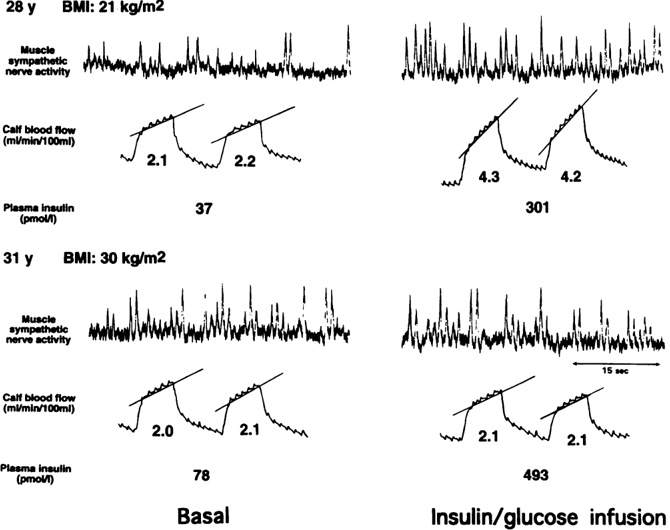
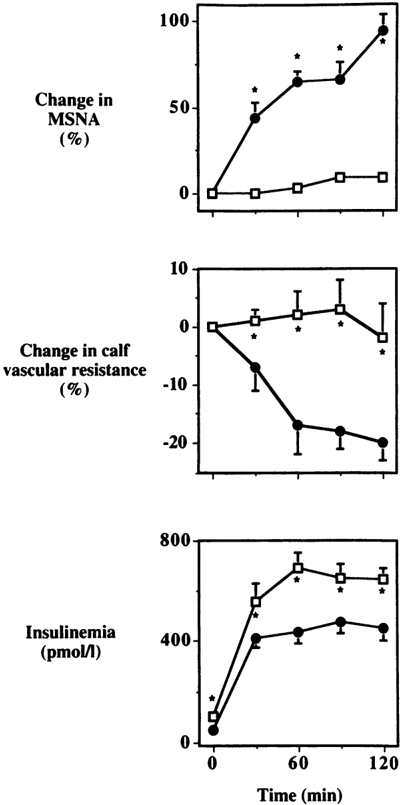
The sympathetic nervous system is an important regulatory mechanism of both metabolic and cardiovascular function, and altered sympathetic activity may play a role in the etiology and/or complications of obesity. In lean subjects, insulin evokes sympathetic activation and vasodilation in skeletal muscle. In obese subjects such vasodilation is impaired and, in turn, may contribute to insulin resistance. To examine the relationship between sympathetic and vasodilatory responses in skeletal muscle to hyperinsulinemia, we simultaneously measured muscle sympathetic nerve activity (MSNA) and calf blood flow at basal and during a 2-h hyperinsulinemic (6 pmol/kg per min) euglycemic clamp in eight lean and eight obese subjects. The major findings of this study are twofold: obese subjects had a 2.2 times higher fasting rate of MSNA, and euglycemic hyperinsulinemia, which more than doubled MSNA and increased calf blood flow by roughly 30% in lean subjects, had only a minor vasodilatory and sympathoexcitatory effect in obese subjects. In contrast, two non-insulin-sympathetic stimuli evoked comparably large increases in MSNA in lean and obese subjects. We conclude that insulin resistance in obese subjects is associated with increased fasting MSNA and a specific impairment of sympathetic neural responsiveness to physiological hyperinsulinemia in skeletal muscle tissue.
Overview
CoChat Summary
TL;DR
In obese humans, fasting muscle sympathetic nerve activity (MSNA) was about 2.2-fold higher than in lean subjects, but hyperinsulinemia failed to normally increase MSNA or calf blood flow. This suggests obesity-related insulin resistance includes a specific impairment of insulin’s sympathoexcitatory and vasodilatory effects in skeletal muscle.
Key findings
- Obese subjects had higher basal MSNA than lean subjects (37±5 vs 17±3 bursts/min), and euglycemic hyperinsulinemia increased MSNA burst frequency by only 9±3% in obese subjects versus 94±10% in lean subjects (P < 0.05 vs lean).
- In lean subjects, the 2-h hyperinsulinemic euglycemic clamp increased calf blood flow by 29±5% and decreased calf vascular resistance by 20±3%; in obese subjects it had no detectable effect on calf blood flow or calf vascular resistance.
- Non-insulin sympathetic stimuli produced comparable MSNA increases in both groups: peak Valsalva responses were 71±8 bursts/min in obese vs 67±4 in lean, and cold pressor responses were 54±6 vs 45±3 bursts/min (P > 0.1).
- Across all 16 subjects, fasting insulinemia correlated directly with fasting MSNA burst frequency (r = 0.56, P < 0.03), and fasting MSNA was inversely related to glucose uptake during the last 30 min of insulin/glucose infusion (r = 0.68, P < 0.004).
Methods
- Eight obese subjects (BMI 33.8±1.6 kg/m², age 38±3 yr) and eight age- and sex-matched lean healthy subjects (BMI 22.2±0.7 kg/m², age 37±3 yr) were studied; all were normotensive, had normal glucose tolerance, took no medication, and had no evidence of metabolic or cardiovascular disease.
- Protocol 1 used a 2-h hyperinsulinemic euglycemic clamp at 1 mU/kg per min (6 pmol/kg per min), with simultaneous MSNA measured by microneurography of the peroneal nerve and calf blood flow measured by venous occlusion plethysmography; non-insulin sympathetic responses were tested with a Valsalva maneuver and cold pressor test.
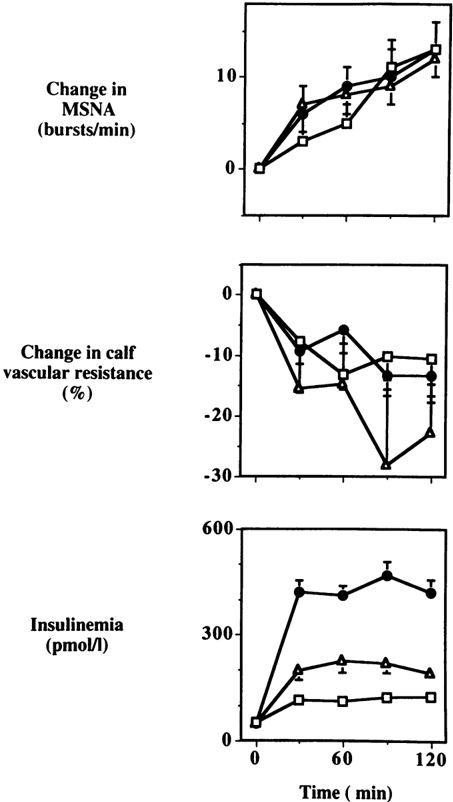
- Protocol 2 studied five lean subjects with low-dose 2-h hyperinsulinemic euglycemic clamps at 0.5 and 0.15 mU/kg per min; analysis used ANOVA for repeated measures, paired t tests with Bonferroni adjustment, unpaired t tests, and least-squares correlations, with P < 0.05 considered significant.
Limitations
- Stated: the paper says its data “do not elucidate the underlying mechanism of insulin-induced sympathetic activation and vasodilation,” and it offers two possible interpretations for the attenuated sympathetic response in obese subjects—resistance to insulin’s sympathoexcitatory effects versus high basal MSNA already near the maximal insulin-induced response.
- Evident: the main comparison included only eight subjects per group, and the low-dose insulin dose-response studies included only five lean subjects.
- Evident: obese subjects had significantly higher plasma insulin concentrations during the clamp than lean subjects (643±47 vs 449±48 pmol/liter at 120 min), so the groups were not compared at matched insulinemia; the paper also has no formal limitations section.
Model-written summary. Check it against the paper before relying on it.
Integrity signals
Registry
Cites
Statistics
Figures
Verification
Claims the paper makes
8 Valid · 2 Not valid · 6 Not checked · 53 Own results and interpretations
The cited sources that could be checked couldn’t confirm or dispute this claim.
In the paper
“Data in experimental animals regarding effects of insulin resistance and obesity on insulin-induced sympathetic responses are conflicting.”
What the sources say
- Not matchedcites [16] 16. Morgan, D. A., T. W. Balon, and A. L. Mark. 1991. High fructose diet promotes exaggerated sympathetic and pressor responses to hyperinsulinemia in rats. FASEB (Fed. Am. Soc. Exp. Biol.) J. 5:A1497. (Abstr.)
We searched by its title and found no matching paper.
- Could not verifycites [17] 17. Holt, S., D. A. York, and J. T. R. Fitzsimons. 1983. The effect of corticosterone, cold exposure and overfeeding with sucrose on brown adipose tissue of obese Zucker rats (fa/fa). Biochem. J. 214:215–223. sourceExperimental — accuracy not yet measured
The Discussion reports age-dependent responses to cold and impaired autonomic stimulation of brown-adipose-tissue thermogenesis after sucrose overfeeding in obese rats. It does not address insulin-induced sympathetic responses or say that findings on insulin resistance and obesity are conflicting. Searches for those terms found no decisive passage in our copy; page numbers were unavailable. (LLM, conf=0.73)
plain- Asserted: passes — The authors put it forward as true.
- Checkable: passes — It can be checked against evidence.
- Load-bearing: passes — The paper’s conclusions depend on it.
- Based: passes — The paper gives a reason why it holds.
- Not matched
The cited sources support only part of this claim — read each source’s verdict below.
In the paper
“In lean subjects, sympathetic activation evoked by acute elevation of plasma insulin to high physiological concentrations does not raise blood pressure (12–14)”
What the sources say
- Partly supportedcites [12] 12. Anderson, E. A., R. P. Hoffman, T. W. Balon, C. A. Sinkey, and A. L. Mark. 1991. Hyperinsulinemia produces both sympathetic neural activation and vasodilation in normal humans. J. Clin. Invest. 87:2246–2252. sourceExperimental — accuracy not yet measured
The Abstract and Conclusion (pages not provided) report that acute insulin infusion increased sympathetic nerve activity without increasing arterial pressure in normal humans. The Subjects section describes 14 healthy males with BMIs ranging from 21 to 32; it does not establish the result specifically for lean subjects. (LLM, conf=0.84)
- Not checked — no full text of the sourcecites [13] 13. Scherrer, U., P. Vollenweider, D. Randin, E. Jéquier, P. Nicod, and L. Tappy. 1993. Suppression of insulin induced sympathetic activation and vasodilation by dexamethasone in humans. Circulation. 88:388–394. source
- Supportedcites [14] 14. Vollenweider, P., L. Tappy, D. Randin, P. Schneiter, E. Jéquier, P. Nicod, and U. Scherrer. 1993. Differential effects of hyperinsulinemia and carbohydrate metabolism on sympathetic nerve activity and muscle blood flow in humans. J. Clin. Invest. 92:147–154. source
The Discussion (p. 6) says that, in lean healthy subjects, acute hyperinsulinemia at high physiological concentrations does not raise arterial pressure. It also describes insulin’s sympathetic activation and vasodilation as opposing effects that may explain this result. (LLM, conf=0.94)
plain- Asserted: passes — The authors put it forward as true.
- Checkable: passes — It can be checked against evidence.
- Load-bearing: passes — The paper’s conclusions depend on it.
- Based: passes — The paper gives a reason why it holds.
- Partly supported
The cited sources support only part of this claim — read each source’s verdict below.
In the paper
“suggesting that body fat may be an important determinant of resting sympathetic nerve activity in humans (26, 27).”
What the sources say
- Partly supportedcites [26] 26. Spraul, M., E. Ravussin, A. M. Fontvieille, R. Rising, D. E. Larson, and E. A. Anderson. 1993. Reduced sympathetic nervous activity. A potential mechanism predisposing to body weight gain. J. Clin. Invest. 92:1730–1735. sourceExperimental — accuracy not yet measured
The Abstract and Discussion report that fasting muscle sympathetic nerve activity was positively related to body fat in Caucasian men, but not in Pima Indian men. This supports a possible relationship in one studied group, not the broader suggestion that body fat determines resting sympathetic nerve activity in humans generally; the study also measured an association rather than establishing direction of causation. Page numbers are unavailable in our copy. (LLM, conf=0.86)
- Not matchedcites [27] 27. Randin, D., P. Vollenweider, L. Tappy, E. Jéquier, P. Nicod, and U. Scherrer. 1993. Sustained sympathetic activation in skeletal muscle in overweight humans. Diabetes. 42:94A. (Abstr.)
We searched by its title and found no matching paper.
hedgedstates a possible cause- Asserted: passes — The authors put it forward as true.
- Checkable: passes — It can be checked against evidence.
- Load-bearing: passes — The paper’s conclusions depend on it.
- Based: passes — The paper gives a reason why it holds.
- Partly supported
The cited sources support only part of this claim — read each source’s verdict below.
In the paper
“In lean healthy subjects, insulin-induced stimulation of muscle blood flow consistently is accompanied by a marked stimulation of sympathetic neural outflow to the same vascular bed (12-14).”
What the sources say
- Partly supportedcites [12] 12. Anderson, E. A., R. P. Hoffman, T. W. Balon, C. A. Sinkey, and A. L. Mark. 1991. Hyperinsulinemia produces both sympathetic neural activation and vasodilation in normal humans. J. Clin. Invest. 87:2246–2252. sourceExperimental — accuracy not yet measured
The Discussion reports that insulin increased muscle sympathetic nerve activity while causing forearm vasodilation in healthy subjects. But it explicitly says blood flow was measured in the forearm and nerve activity in the leg, so the study does not establish both effects in the same vascular bed. The Subjects section also reports BMI values up to 32, rather than an exclusively lean group. (LLM, conf=0.90)
- Not checked — no full text of the sourcecites [13] 13. Scherrer, U., P. Vollenweider, D. Randin, E. Jéquier, P. Nicod, and L. Tappy. 1993. Suppression of insulin induced sympathetic activation and vasodilation by dexamethasone in humans. Circulation. 88:388–394. source
- Supportedcites [14] 14. Vollenweider, P., L. Tappy, D. Randin, P. Schneiter, E. Jéquier, P. Nicod, and U. Scherrer. 1993. Differential effects of hyperinsulinemia and carbohydrate metabolism on sympathetic nerve activity and muscle blood flow in humans. J. Clin. Invest. 92:147–154. source
The Abstract (p. 1) reports that, in six healthy lean subjects, insulin/glucose infusion increased both muscle sympathetic nerve activity and calf blood flow. The Discussion (p. 6) likewise says both increased markedly during infusion, supporting the claimed accompanying responses in skeletal muscle. (LLM, conf=0.91)
boostedstates an association- Asserted: passes — The authors put it forward as true.
- Checkable: passes — It can be checked against evidence.
- Load-bearing: passes — The paper’s conclusions depend on it.
- Based: passes — The paper gives a reason why it holds.
- Partly supported
Every source the paper cites for this claim was checked and supports it.
In the paper
“findings in humans, showing that local intraarterial insulin infusion, in contrast to systemic intravenous infusion, did not have any stimulatory effect on sympathetic activity in skeletal muscle (15).”
What the sources say
- Supportedcites [15] 15. Lembo, G., R. Napoli, B. Capaldo, V. Rendina, G. Iaccarino, M. Volpe, B. Trimarco, and L. Saccá. 1992. Abnormal sympathetic overactivity evoked by insulin in the skeletal muscle of patients with essential hypertension. J. Clin. Invest. 90:24–29. source
The local-insulinization results report that intraarterial insulin left forearm norepinephrine balance, uptake, and release unchanged in both normotensive and hypertensive subjects. The Discussion contrasts this with an effect on muscle norepinephrine metabolism during systemic insulinization. Page numbers are unavailable in our copy. (LLM, conf=0.93)
plain- Asserted: passes — The authors put it forward as true.
- Checkable: passes — It can be checked against evidence.
- Load-bearing: passes — The paper’s conclusions depend on it.
- Based: passes — The paper gives a reason why it holds.
- Supported
44 more claims · 1 with their cited sources checked
Create a free account to see all 69 claims and every source verdict.
- Probably not a substantial claim. 13
- It may state two separate claims as one. 7
- The quote only partly states this claim. 2
Citations
Cites
Role of Insulin Resistance in Human Disease
Reaven, G. M. (1988) · Diabetes · doi:10.2337/diab.37.12.1595 · Cited by 12,154
Glucose clamp technique: a method for quantifying insulin secretion and resistance.
DeFronzo, R. A., Tobin, J. D., & Andres, R. (1979) · American Journal of Physiology-Endocrinology and Metabolism · doi:10.1152/ajpendo.1979.237.3.e214 · Cited by 7,425
Coated Charcoal Immunoassay of Insulin
HERBERT, V., LAU, K.-S., GOTTLIEB, C. W., & BLEICHER, S. J. (1965) · The Journal of Clinical Endocrinology & Metabolism · doi:10.1210/jcem-25-10-1375 · Cited by 2,968
Somatosensory, proprioceptive, and sympathetic activity in human peripheral nerves
Vallbo, A. B., Hagbarth, K. E., Torebjork, H. E., & Wallin, B. G. (1979) · Physiological Reviews · doi:10.1152/physrev.1979.59.4.919 · Cited by 1,507
Hyperinsulinemia produces both sympathetic neural activation and vasodilation in normal humans.
Anderson, E. A., Hoffman, R. P., Balon, T. W., Sinkey, C. A., & Mark, A. L. (1991) · Journal of Clinical Investigation · doi:10.1172/jci115260 · Cited by 1,075
Laakso, M., Edelman, S. V., Brechtel, G., & Baron, A. D. (1990) · Journal of Clinical Investigation · doi:10.1172/jci114644 · Cited by 930
Parati, G., Casadei, R., Groppelli, A., Di Rienzo, M., & Mancia, G. (1989) · Hypertension · doi:10.1161/01.hyp.13.6.647 · Cited by 899
General Characteristics of Sympathetic Activity in Human Muscle Nerves
Delius, W., Hagbarth, K. ‐., Hongell, A., & Wallin, B. G. (1972) · Acta Physiologica Scandinavica · doi:10.1111/j.1748-1716.1972.tb05157.x · Cited by 831
Mechanisms of insulin resistance in human obesity: evidence for receptor and postreceptor defects.
Kolterman, O. G., Insel, J., Saekow, M., & Olefsky, J. M. (1980) · Journal of Clinical Investigation · doi:10.1172/jci109790 · Cited by 664
Effects of the cold pressor test on muscle sympathetic nerve activity in humans.
Victor, R. G., Leimbach, W. N., Seals, D. R., Wallin, B. G., & Mark, A. L. (1987) · Hypertension · doi:10.1161/01.hyp.9.5.429 · Cited by 519
Cited by
Items 101–200 of 284
Familial Hypertension, Insulin, Sympathetic Activity, and Blood Pressure Elevation
Masuo, K., Mikami, H., Ogihara, T., & Tuck, M. L. (1998) · Hypertension · doi:10.1161/01.hyp.32.1.96 · Cited by 47
Neuroadrenergic dysfunction in obesity: an overview of the effects of weight loss
Straznicky, N. E., Lambert, G. W., & Lambert, É. (2010) · Current Opinion in Lipidology · doi:10.1097/mol.0b013e3283329c62 · Cited by 50
Differential effects of insulin on sympathetic nerve activity in agouti obese mice
Morgan, D. A., & Rahmouni, K. (2010) · Journal of Hypertension · doi:10.1097/hjh.0b013e32833c2289 · Cited by 46
Hyperglycaemia modifies the reaction of microvessels to insulin in rat skeletal muscle
Renaudin, C., Michoud, E., Rapin, J. R., Lagarde, M., & Wiernsperger, N. F. (1998) · Diabetologia · doi:10.1007/s001250050862 · Cited by 48
“The potential physiological importance of this phenomenon has been suggested in obese non-diabetic [6, 12], as well as in diabetic patients [13], in which a defect in insulin-induced vasodilation was shown to be associated with defective peripheral glucose uptake.”
BackgroundAutonomic Blockade Improves Insulin Sensitivity in Obese Subjects
Gamboa, A., Okamoto, L. E., Arnold, A. C., Figueroa, R. A., Diedrich, A., Raj, S. R., Paranjape, S. Y., Farley, G., Abumrad, N., & Biaggioni, I. (2014) · Hypertension · doi:10.1161/hypertensionaha.114.03738 · Cited by 45
“Insulin sensitivity is also affected by blood flow, and sympathetically mediated vasoconstriction may impair insulin sensitivity through this mechanism.(34) Conversely, insulin induces nitric oxide–mediated vasodilation, which increases substrate delivery to the muscle, to promote glucose uptake and thus improve insul…”
BackgroundAutonomic Blockade Reverses Endothelial Dysfunction in Obesity-Associated Hypertension
Gamboa, A., Figueroa, R., Paranjape, S. Y., Farley, G., Diedrich, A., & Biaggioni, I. (2016) · Hypertension · doi:10.1161/hypertensionaha.116.07681 · Cited by 45
Cook, S. (2006) · Swiss Medical Weekly · doi:10.4414/smw.2006.11068 · Cited by 53
Effects of insulin resistance on endothelial function: possible mechanisms and clinical implications
Tousoulis, D., Tsarpalis, K., Cokkinos, D. V., & Stefanadis, C. (2008) · Diabetes Obesity and Metabolism · doi:10.1111/j.1463-1326.2007.00818.x · Cited by 49
Quilliot, D., Fluckiger, L., Zannad, F. M., Drouin, P., & Ziegler, O. (2001) · Clinical Autonomic Research · doi:10.1007/bf02322050 · Cited by 55
“Indeed, acute insulin administration activates the SNS in healthy [5,6] and obese subjects [7] and causes an increase in arterial and venous plasma concentration of norepinephrine.”
BackgroundBergholm, R., Westerbacka, J., Vehkavaara, S., Seppälä‐Lindroos, A., Goto, T., & Yki-Järvinen, H. (2001) · The Journal of Clinical Endocrinology & Metabolism · doi:10.1210/jcem.86.3.7307 · Cited by 54
“At least, high insulin concentrations also have increased arterial plasma norepinephrine levels in most (1, 3 , 7, 25, 28, 29), although not all (26, 30, 31), studies.”
BackgroundInfluentialInsulin resistance, a new target for nitric oxide‐delivery drugs
Cook, S., & Scherrer, U. (2002) · Fundamental & Clinical Pharmacology · doi:10.1046/j.1472-8206.2002.00130.x · Cited by 44
Self-citationIncrease in muscle nerve sympathetic activity after glucose intake is blunted in the elderly
Fagius, J., Ellerfelt, K., Lithell, H., & Berne, C. (1996) · Clinical Autonomic Research · doi:10.1007/bf02291134 · Cited by 45
Liu, X., Luo, X., Liu, Y., Sun, X., Han, C., Zhang, L., Wang, B., Ren, Y., Zhao, Y., Zhang, D., et al. (2016) · Acta Diabetologica · doi:10.1007/s00592-016-0942-1 · Cited by 45
Asmar, A., Simonsen, L., Asmar, M., Madsbad, S., Holst, J. J., Frandsen, E., Moro, C., Sorensen, C. M., Jonassen, T., & Bülow, J. (2016) · American Journal of Physiology-Endocrinology and Metabolism · doi:10.1152/ajpendo.00518.2015 · Cited by 41
Meyer, M. L., Gotman, N. M., Soliman, E. Z., Whitsel, E. A., Arens, R., Cai, J., Daviglus, M. L., Denes, P., González, H. M., Moreiras, J., et al. (2016) · Cardiovascular Diabetology · doi:10.1186/s12933-016-0364-y · Cited by 40
“Insulin resistance could cause reduced autonomic function by triggering sympathetic nervous system activity [35, 36], suppressing vagal cardiac activity [37], and regulating energy balance and homeostasis [38–41].”
BackgroundCARDIOVASCULAR ACTIONS OF INSULIN: ARE THEY IMPORTANT IN LONG‐TERM BLOOD PRESSURE REGULATION?
Hall, J. E., Brands, M. W., Zappe, D. H., & Alonso‐Galicia, M. (1995) · Clinical and Experimental Pharmacology and Physiology · doi:10.1111/j.1440-1681.1995.tb01922.x · Cited by 40
Effects of different insulin infusion rates on heart rate variability in lean and obese subjects
Paolisso, G., Manzella, D., Tagliamonte, M. R., Rizzo, M. R., Gambardella, A., & Varricchio, M. (1999) · Metabolism · doi:10.1016/s0026-0495(99)90176-2 · Cited by 44
Obesity Affects Myocardial Vasoreactivity and Coronary Flow Response to Insulin
Sundell, J., Laine, H., Luotolahti, M., Kalliokoski, K., Raitakari, O., Nuutila, P., & Knuuti, J. (2002) · Obesity Research · doi:10.1038/oby.2002.84 · Cited by 40
A sympathetic view of human obesity
Lambert, É., Straznicky, N. E., & Lambert, G. W. (2012) · Clinical Autonomic Research · doi:10.1007/s10286-012-0169-3 · Cited by 40
Attenuation of Hypertension by Insulin-Sensitizing Agents
Kotchen, T. A. (1996) · Hypertension · doi:10.1161/01.hyp.28.2.219 · Cited by 39
Nakano, Y., Oshima, T., Sasaki, S., Higashi, Y., Ozono, R., Takenaka, S., Miura, F., Hirao, H., Matsuura, H., Chayama, K., et al. (2001) · Journal of Cardiovascular Pharmacology · doi:10.1097/00005344-200110001-00015 · Cited by 38
“Studies using microneurography have shown increased MSNA in obese Caucasians (20,21).”
Multiple mechanisms involved in obesity-induced hypertension
Antic, V., Dulloo, A. G., & Montani, J. (2003) · Heart Lung and Circulation · doi:10.1046/j.1444-2892.2003.00200.x · Cited by 49
Truett, A. A., Borne, A. T., Monteiro, M. P., & West, D. B. (1998) · Obesity Research · doi:10.1002/j.1550-8528.1998.tb00328.x · Cited by 43
Shi, Z., Wong, J., & Brooks, V. L. (2020) · Biology of Sex Differences · doi:10.1186/s13293-020-00286-8 · Cited by 40
“Nevertheless, other findings dispute its primacy: (1) leptin does not always correlate with MSNA in humans [7]; (2) Zucker rats, in which obesity is secondary to mutation of the LepR, still exhibit increased SNA [79], and chronic central blockade of MC3/4R decreases BP in male Zucker rats [80]; and (3) leptin is produ…”
InfluentialIs insulin resistance caused by defects in insulin's target cells or by a stressed mind?
Burén, J., & Eriksson, J. W. (2005) · Diabetes/Metabolism Research and Reviews · doi:10.1002/dmrr.567 · Cited by 44
“Previous studies in non-diabetic, insulin-resistant humans have also provided direct evidence for sustained sympathetic activation in insulinsensitive skeletal muscle [21,22].”
BackgroundShinozaki, K., Hattori, Y., Suzuki, M., Hara, Y., Kanazawa, A., Takaki, H., Tsushima, M., & Harano, Y. (1997) · Arteriosclerosis Thrombosis and Vascular Biology · doi:10.1161/01.atv.17.11.3302 · Cited by 36
Body fat and sympathetic nerve activity
Scherrer, U., Owlya, R., & Leport, M. (1996) · Cardiovascular Drugs and Therapy · doi:10.1007/bf00120490 · Cited by 40
“Although, undoubtedly many factors contribute to the increased incidence of cardiovascular complications in overweight subjects, sympathetic activation could be one important mechanism and either trigger acute events [50] or--possibly in conjunction with an impairment in insulin-induced vasodilation [20,27]--”
BackgroundSelf-citationImpaired Fat‐induced Thermogenesis in Obese Subjects: The NUGENOB Study
Blaak, E. E., Hul, G., Verdich, C., Stich, V., Martinez, J. A., Petersen, M., Feskens, E. F. M., Patel, K., Oppert, J. M., Barbe, P., et al. (2007) · Obesity · doi:10.1038/oby.2007.606 · Cited by 34
“Furthermore, there is some evidence that insulin resistance in obesity is associated with increased fasting muscle sympathetic activity, an effect possibly mediated by hyperinsulinemia (22).”
BackgroundDiurnal Variations in Cardiovascular Function and Glucose Regulation in Normotensive Humans
Biston, P., Van Cauter, E., Ofek, G., Linkowski, P., Polonsky, K. S., & Degaute, J.-P. (1996) · Hypertension · doi:10.1161/01.hyp.28.5.863 · Cited by 34
Effect of heart rate on the risk of developing metabolic syndrome
Inoue, T., Iseki, K., Iseki, C., Ohya, Y., Kinjo, K., & Takishita, S. (2009) · Hypertension Research · doi:10.1038/hr.2009.109 · Cited by 34
Joshi, D., Shiwalkar, A., Cross, M. R., Sharma, S. K., Vachhani, A., & Dutt, C. (2009) · Heart · doi:10.1136/hrt.2009.177113 · Cited by 37
“and an impaired endothelial vasodilatory response. There are several reports that insulin also increases sympathetic nervous system activity, which can determine the nutritive flow distribution.”
BackgroundIGF-I increases forearm blood flow without increasing forearm glucose uptake
Pendergrass, M., Fazioni, E., Collins, D., & DeFronzo, R. A. (1998) · American Journal of Physiology-Endocrinology and Metabolism · doi:10.1152/ajpendo.1998.275.2.e345 · Cited by 36
Sacramento, J. F., Andrzejewski, K., Melo, B. F., Ribeiro, M. J., Obeso, A., & Conde, S. V. (2020) · International Journal of Molecular Sciences · doi:10.3390/ijms21155545 · Cited by 37
“Additionally, insulin infusion augments muscle sympathetic nervous activity in healthy individuals under euglycemic conditions [54,55].”
BackgroundLimberg, J. K., Soares, R. N., & Padilla, J. (2022) · Current Diabetes Reports · doi:10.1007/s11892-022-01456-1 · Cited by 36
Lepori, M., Sartori, C., Duplain, H., Nicod, P., & Scherrer, U. (2001) · Cardiovascular Research · doi:10.1016/s0008-6363(01)00325-x · Cited by 31
Olver, T. D., McDonald, M. W., Klakotskaia, D., Richardson, R. A., Jasperse, J. L., Melling, C. W. J., Schachtman, T. R., Yang, H. T., Emter, C. A., & Laughlin, M. H. (2017) · Journal of Applied Physiology · doi:10.1152/japplphysiol.00811.2016 · Cited by 37
“, insulin-mediated sympathetic vasoconstriction) (2, 26, 47).”
BackgroundSympathetic activity in obesity: a brief review of methods and supportive data
Lambert, G. W., Schlaich, M. P., Eikelis, N., & Lambert, É. (2019) · Annals of the New York Academy of Sciences · doi:10.1111/nyas.14140 · Cited by 34
Insulin resistance and upper-normal glucose levels in hypertension: a review
Cubeddu, L. X., & Hoffmann, I. (2002) · Journal of Human Hypertension · doi:10.1038/sj.jhh.1001343 · Cited by 29
Fountaine, M. F. L., Cirnigliaro, C. M., Kirshblum, S., McKenna, C., & Bauman, W. A. (2017) · PLoS ONE · doi:10.1371/journal.pone.0173934 · Cited by 31
Valensi, P. E., Nguyen, T. N., Idriss, S., Cazes, P., Karam, G., Pariès, J., Miossec, P., & Attali, J. R. (1998) · Metabolism · doi:10.1016/s0026-0495(98)90347-x · Cited by 28
McCarty, M. F. (1999) · Medical Hypotheses · doi:10.1054/mehy.1998.0758 · Cited by 27
Sex differences in the sympathoexcitatory response to insulin in obese rats: role of neuropeptide Y
Shi, Z., Cassaglia, P. A., Pelletier, N. E., & Brooks, V. L. (2019) · The Journal of Physiology · doi:10.1113/jp277517 · Cited by 25
“As discussed previously (Vollenweider et al. 1994; Limberg et al. 2014; Brooks et al. 2015), the rate of insulin transport from plasma into the brain may explain why increases in brain (aCSF) insulin greatly increase SNA, yet, systemically, the effects of insulin are reduced.”
BackgroundResultInfluentialRegional Cerebral Activation Accompanies Sympathoexcitation in Women With Polycystic Ovary Syndrome
Lansdown, A., Warnert, E. A. H., Sverrisdóttir, Y. B., Wise, R. G., & Rees, A. (2019) · The Journal of Clinical Endocrinology & Metabolism · doi:10.1210/jc.2019-00065 · Cited by 27
Relationship between early-onset stroke and triglyceride-glucose index among young Chinese adults
Xu, W., Zhao, H., Han, X., Liu, J., Li, H., Sun, J., Xing, A., Chen, S., Wu, S., & Wu, Y. (2023) · Lipids in Health and Disease · doi:10.1186/s12944-023-01773-8 · Cited by 28
“The potential underlying mechanisms may also involve excessive inflammation and oxidative stress, subsequently causing vascular endothelial function [9, 38, 39].”
BackgroundInsulin Resistance in Type 2 Diabetes
Yki‐Järvinen, H. (2010) · Wiley eBooks · doi:10.1002/9781444324808.ch11 · Cited by 32
Is insulin the new intermittent hypoxia?
Limberg, J. K., Curry, T. B., Prabhakar, N. R., & Joyner, M. J. (2014) · Medical Hypotheses · doi:10.1016/j.mehy.2014.03.014 · Cited by 31
“rinsulinemic euglycemic clamp is both gradual [20,21,24,29], and sustained [30], such that MSNA remains increased even after plasma insulin levels return to baseline (See Fig.”
The diabetic, hypertensive heart: epidemiology and mechanisms of a very high-risk situation
Franjic, B., & Marwick, T. H. (2009) · Journal of Human Hypertension · doi:10.1038/jhh.2009.43 · Cited by 27
“In obese, insulin-resistant subjects, insulin-induced increase in skeletal muscle blood flow is impaired, and reduced delivery of insulin and glucose to skeletal muscle may contribute to glucose intolerance”
BackgroundStraznicky, N. E., Grima, M. T., Sari, C. I., Lambert, É., Phillips, S. E., Eikelis, N., Mariani, J. A., Kobayashi, D., Hering, D., Dixon, J. B., et al. (2016) · Frontiers in Physiology · doi:10.3389/fphys.2016.00516 · Cited by 25
“Although seemingly counterintuitive, elevated SNS activity could predispose to weight gain via β-adrenoceptor desensitization and the promotion of central insulin resistance (Vollenweider et al., 1994; Julius et al., 2000).”
BackgroundLeoncini, G., Ratto, E., Viazzi, F. C., Vaccaro, V., Parodi, A., Falqui, V., Conti, N. E., Tomolillo, C., Deferrari, G., & Pontremoli, R. (2007) · Journal of Human Hypertension · doi:10.1038/sj.jhh.1002240 · Cited by 24
Sympathectomy potentiates the vasoconstrictor response to nitric oxide synthase inhibition in humans
Lepori, M., Sartori, C., Duplain, H., Nicod, P., & Scherrer, U. (1999) · Cardiovascular Research · doi:10.1016/s0008-6363(99)00084-x · Cited by 27
Exercise and Vascular Insulin Sensitivity in the Skeletal Muscle and Brain
Olver, T. D., Laughlin, M. H., & Padilla, J. (2019) · Exercise and Sport Sciences Reviews · doi:10.1249/jes.0000000000000182 · Cited by 27
Paolisso, G., Manzella, Rizzo, M. R., Barbieri, Gambardella, A., & Varricchio (2000) · European Journal of Clinical Investigation · doi:10.1046/j.1365-2362.2000.00626.x · Cited by 24
Sites and sources of sympathoexcitation in obese male rats: role of brain insulin
Shi, Z., Zhao, D., Cassaglia, P. A., & Brooks, V. L. (2020) · American Journal of Physiology-Regulatory, Integrative and Comparative Physiology · doi:10.1152/ajpregu.00317.2019 · Cited by 26
A TELEOLOGICAL VIEW OF OBESITY, DIABETES AND HYPERTENSION
Landsberg, L. (2006) · Clinical and Experimental Pharmacology and Physiology · doi:10.1111/j.1440-1681.2006.04455.x · Cited by 22
Insulin‐mediated increases in renal plasma flow are impaired in insulin‐resistant normal subjects
Ter Maaten, J. C., Bakker, S. J. L., Serné, E. H., Moshage, H. J., Donker, A. J. M., & Gans, R. O. B. (2000) · European Journal of Clinical Investigation · doi:10.1046/j.1365-2362.2000.00749.x · Cited by 22
Sympathetic-Nerve Activity before and after Resection of an Insulinoma
Scherrer, U., Owlya, R., & Trueb, L. (1996) · New England Journal of Medicine · doi:10.1056/nejm199610173351617 · Cited by 22
Self-citationOlver, T. D., Grunewald, Z. I., Ghiarone, T., Restaino, R. M., Sales, A. R. K., Park, L. K., Thorne, P. K., Ganga, R., Emter, C. A., Lemon, P. W. R., et al. (2019) · American Journal of Physiology-Heart and Circulatory Physiology · doi:10.1152/ajpheart.00464.2019 · Cited by 26
“, increased sympathetic-mediated vasoconstriction) (2, 11, 26, 46, 47, 49, 50) and endothelial-derived signals (i.”
Relationship between insulin's haemodynamic effects and insulin‐mediated glucose uptake
ter Maaten, J. C., Voorburg, de Vries, P. M., ter Wee, P. M., Donker, & Gans, R. O. B. (1998) · European Journal of Clinical Investigation · doi:10.1046/j.1365-2362.1998.00273.x · Cited by 24
Haines, R. J., Corbin, K. D., Pendleton, L. C., Meininger, C. J., & Eichler, D. C. (2012) · Biochemical and Biophysical Research Communications · doi:10.1016/j.bbrc.2012.03.074 · Cited by 21
“For example, in type 2 diabetes where insulin signaling is impaired [12; 13; 14], treatment with sodium nitroprusside (SNP), an NO donor, improved vasodilation [15].”
BackgroundRole of the carotid chemoreceptors in insulin-mediated sympathoexcitation in humans
Limberg, J. K., Johnson, B. D., Mozer, M. T., Holbein, W. W., Curry, T. B., Prabhakar, N. R., & Joyner, M. J. (2019) · American Journal of Physiology-Regulatory, Integrative and Comparative Physiology · doi:10.1152/ajpregu.00257.2019 · Cited by 21
Relationship between sympathetic reactivity and body weight loss in morbidly obese subjects
Bobbioni-Harsch, E., Bongard, O., Habicht, F., Weimer, D., Bounameaux, H., Huber, O., Chassot, G., Morel, P., Assimacopoulos‐Jeannet, F., & Golay, A. (2004) · International Journal of Obesity · doi:10.1038/sj.ijo.0802620 · Cited by 22
Dysregulation of subcutaneous adipose tissue blood flow in overweight postmenopausal women
Andersson, J. S. O., Sjöström, L.-G., Karlsson, M., Wiklund, U., Hultin, M., Karpe, F., & Olsson, T. (2010) · Menopause The Journal of The North American Menopause Society · doi:10.1097/gme.0b013e3181c12b26 · Cited by 22
“Age, y 27 (24-31) 28 (25-32) 62 (58-67) 59 (55-63) Weight, kg 59 (54-64) 86 (79-93) 62 (57-66) 88 (80-96) BMI, kg/m(2) 21 (20-22) 31 (28-34) 23 (22-25) 31 (30-33) Hip circumference, cm 95 (90-99) 115 (108-123) 95 (89-100) 109 (101-118) Waist circumference, cm 75 (70-79) 101 (91-111) 85 (78-92) 107 (98-116) Waist-to-hi…”
An, Y., Reimann, M., Masjkur, J. R., Langton, K., Peitzsch, M., Deutschbein, T., Faßnacht, M., Rogowski-Lehmann, N., Beuschlein, F., Fliedner, S. M. J., et al. (2018) · International Journal of Obesity · doi:10.1038/s41366-018-0054-9 · Cited by 19
Hedman, A., Andersson, P., Reneland, R., & Lithell, H. (2001) · Metabolism · doi:10.1053/meta.2001.25604 · Cited by 22
Hausberg, M., Sinkey, C. A., MARK, A., Hoffman, R. P., & ANDERSON, E. (1998) · American Journal of Hypertension · doi:10.1016/s0895-7061(98)00146-0 · Cited by 20
Hypertension in Obese Black Women is Not Caused by Increased Sympathetic Vascular Tone
Mariños, A., Gamboa, A. C., Celedonio, J. E., Preheim, B. A., Okamoto, L. E., Ramirez, C. E., Arnold, A. C., Diedrich, A., Biaggioni, I., & Shibao, C. A. (2017) · Journal of the American Heart Association · doi:10.1161/jaha.117.006971 · Cited by 19
Role of the arterial baroreflex in the sympathetic response to hyperinsulinemia in adult humans
McMillan, N. J., Soares, R. N., Harper, J. L., Shariffi, B., Moreno‐Cabañas, A., Curry, T. B., Manrique‐Acevedo, C., Padilla, J., & Limberg, J. K. (2022) · American Journal of Physiology-Endocrinology and Metabolism · doi:10.1152/ajpendo.00391.2021 · Cited by 20
Kraemer‐Aguiar, L. G., de Miranda, M. L., Bottino, D. A., et al. (2015) · Frontiers in Physiology · doi:10.3389/fphys.2015.00223 · Cited by 16
“An altered sympathetic neuronal responsiveness leading to diminished nitric-oxide dilation has also been suggested (Vollenweider et al., 1994).”
BackgroundSkeletal Muscle Vascular Function: A Counterbalance of Insulin Action
Mahmoud, A. M., Brown, M. D., Phillips, S. A., & Haus, J. M. (2015) · Microcirculation · doi:10.1111/micc.12205 · Cited by 16
“Yet, it is still unclear if insulin resistance is a cause or a consequence of this impairment [96,97,206].”
BackgroundClinical implication of body size phenotype on heart rate variability
Yoo, H. J., Hwang, S. Y., Choi, K. M., Baik, S. H., Lee, E. M., Kim, E. J., Rha, S., Park, C. G., Oh, D. J., & Seo, H. S. (2016) · Metabolism · doi:10.1016/j.metabol.2016.08.002 · Cited by 20
“[7] Vollenweider P, Randin D, Tappy L, Jequier E, Nicod P, Scherrer U.”
BackgroundThe Role of Adenosine in Insulin-Induced Vasodilation
Abbink, E. J., Vervoort, G., Tack, C. J., Lutterman, J. A., Schaper, N. C., & Smits, P. (1999) · Journal of Cardiovascular Pharmacology · doi:10.1097/00005344-199909000-00009 · Cited by 16
Blood flow is an important determinant of forearm glucose uptake following a mixed meal
FUGMANN, A., Sarabi, M., Karlstr�m, B., Berne, C., Lithell, H., & Lind, L. (2003) · Acta Diabetologica · doi:10.1007/s00592-003-0098-7 · Cited by 18
Sympathetic Nervous System Physiology and Pathophysiology in Coping with the Environment
Goldstein, D. S., & Eisenhofer, G. (2001) · Wiley eBooks · doi:10.1002/cphy.cp070402 · Cited by 16
Holwerda, S. W., Reynolds, L. J., Restaino, R. M., Credeur, D. P., Leidy, H. J., Thyfault, J. P., & Fadel, P. J. (2015) · Journal of Applied Physiology · doi:10.1152/japplphysiol.00584.2015 · Cited by 18
“However, in addition to impairment in cardiac BRS following acute 440 hyperglycemia (63-65), subjects with insulin resistance also demonstrate a blunting of insulin441 mediated elevations in central sympathetic outflow (65, 71) that can further impair BP 442 regulation.”
BackgroundHaemodynamic actions of insulin
Tack, G. J. J., Lenders, J. W. M., Goldstein, D. S., Lutterman, J. A., Smits, P., & Thien, T. A. (1998) · Current Opinion in Nephrology & Hypertension · doi:10.1097/00041552-199801000-00016 · Cited by 14
Inoue, T., Iseki, K., Iseki, C., Ohya, Y., Kinjo, K., & Takishita, S. (2008) · Circulation Journal · doi:10.1253/circj.72.454 · Cited by 14
Itoh, K., Katsumi, I. M. A. I., Masuda, T., Abe, S., Tanaka, M., Koga, R., Hitomi, I. T. O. H., & Nakamura, M. (2001) · Hypertension Research · doi:10.1291/hypres.24.481 · Cited by 15
Influence of intense physical activity on energy balance and body fatness
Tremblay, A., & Doucet, E. (1999) · Proceedings of The Nutrition Society · doi:10.1079/pns19990014 · Cited by 20
“…with euglycaemia promotes an increase in sympathetic nervous system activity, either measured by the level of circulating catecholamines (Rowe et al. 1981), muscle sympathetic nerve activity (Beme et al. 1992; Vollenweider et al. 1994) or heart rate variability (Bellavere et al. 1996).”
BackgroundTrovati, M., Massucco, P., Mattiello, L., Cavalot, F. L., Mularoni, E., Hahn, A., & Anfossi, G. (1996) · Diabetologia · doi:10.1007/bf02658501 · Cited by 14
“In healthy subjects, euglycaemic infusion of insulin activates the SNS [10-16] without increasing blood pressure [11, 13, 15, 16].”
BackgroundInfluentialStraznicky, N. E., Grima, M. T., Sari, C. I., Eikelis, N., Nestel, P. J., Dixon, J. B., Lambert, G. W., Schlaich, M. P., Phillips, S. E., & Lambert, É. (2017) · Frontiers in Physiology · doi:10.3389/fphys.2017.00203 · Cited by 14
Simple Exercise Recovery Index for Sympathetic Overactivity Is Linked to Insulin Resistance
Yeckel, C. W., Gulanski, B., Zgorski, M., DZIURA, J., Parish, R., & Sherwin, R. S. (2009) · Medicine & Science in Sports & Exercise · doi:10.1249/mss.0b013e31818afa2f · Cited by 16
“It is the aberrant shift in sympathovagal tone toward sympathetic overactivity that is associated with insulin resistance, as evidenced by muscle sympathetic nerve activity studies (18,23,49).”
BackgroundMetabolic Risk Factors and Markers of Cardiovascular and Renal Damage in Overweight Subjects
Bigazzi, R., Bianchi, S., Batini, V., GUZZO, D., & Campese, V. M. (2006) · American Journal of Hypertension · doi:10.1016/j.amjhyper.2005.10.002 · Cited by 13
“The notion that sympathetic nerve activity is pathogenic is based on observations that short-term insulin infusion stimulates sympathetic nerve activity in lean subjects, and that obesity (a state characterized by hyperinsulinemia) is associated with sustained sympathetic activation.(18) In a cohort followed as part o…”
BackgroundScherrer, U. (1995) · Springer eBooks · doi:10.1007/978-3-642-79803-0_10 · Cited by 14
Self-citationYoung, C. N., Deo, S. H., Kim, A., Horiuchi, M., Mikus, C. R., Uptergrove, G. M., Thyfault, J. P., & Fadel, P. J. (2010) · Journal of Applied Physiology · doi:10.1152/japplphysiol.01174.2009 · Cited by 12
Castejon, A. M., Hoffmann, I. S., Jimenez, E., Cubeddu, R. J., Baldonedo, R. M., & Cubeddu, L. X. (2002) · Journal of Human Hypertension · doi:10.1038/sj.jhh.1001359 · Cited by 11
Aging accelerates dietary lard-induced increase in blood pressure in rats
Tamaya-Mori, N., Uemura, K., Tanaka, S., & Iguchi, A. (2003) · Experimental Gerontology · doi:10.1016/s0531-5565(03)00150-5 · Cited by 12
Insulin Resistance: Site of the Primary Defect or how the Current and the Emerging Therapies Work
Kolaczynski, J. W., & Caro, J. F. (1998) · Journal of Basic and Clinical Physiology and Pharmacology · doi:10.1515/jbcpp.1998.9.2-4.281 · Cited by 15
PITT, M. S., & Hainsworth, R. (2004) · Clinical Autonomic Research · doi:10.1007/s10286-004-0198-7 · Cited by 12
Chamarthi, B., Vinik, A. I., Ezrokhi, M., & Cincotta, A. H. (2019) · Endocrinology Diabetes & Metabolism · doi:10.1002/edm2.101 · Cited by 12
Lee, B.-S., Kim, K.-A., Kim, J.-K., & Nho, H. (2020) · International Journal of Environmental Research and Public Health · doi:10.3390/ijerph17197321 · Cited by 12
“Obesity is characterized by sympathetic nerve hyperactivity in organs such as the kidneys and skeletal muscles at rest [25].”
BackgroundMorgantini, C., Stea, F., Boldrini, B., Duranti, E., Ghiadoni, L., & Natali, A. (2012) · Journal of Hypertension · doi:10.1097/hjh.0b013e32834f9882 · Cited by 10
“Hyperinsulinemia caused, as expected, an increase in norepinephrine concentration, due to the central action of the hormone on sympathetic nervous system activation [14,31].”
BackgroundExercise and Protein Metabolism
Evans, W. J. (2015) · World review of nutrition and dietetics · doi:10.1159/000422347 · Cited by 10
FUGMANN, A., Lind, L., Andersson, P.-E., Millgård, J., Hänni, A., Berne, C., & Lithell, H. (1998) · Acta Diabetologica · doi:10.1007/s005920050132 · Cited by 11
YANG, Z. K., Zhang, W., Zhu, L., Lin, N., Niu, Y., Li, X., Lu, S., Zhang, H., Wang, X., Wen, J., et al. (2017) · BMC Cardiovascular Disorders · doi:10.1186/s12872-017-0675-2 · Cited by 9
“Furthermore, it is well documented that hyperinsulinism itself can trigger sympathetic nervous system activity [8, 9].”
BackgroundFrontoni, S., Pellegrinotti, M., Bracaglia, D., Farrace, S., Caselli, A., Baroni, A., Angelis, C. D., Menzinger, G., & Gambardella, S. (2000) · Diabetic Medicine · doi:10.1046/j.1464-5491.2000.00349.x · Cited by 9
Hermann, T. S., Ihlemann, N., Domínguez, H., Rask‐Madsen, C., Køber, L., & Torp-Pedersen, C. T. (2004) · Endothelium · doi:10.1080/10623320490904098 · Cited by 10
Hausberg, M., Barenbrock, M., & Kosch, M. (2004) · Journal of Hypertension · doi:10.1097/00004872-200406000-00006 · Cited by 8
Pikkujämsä, S. M. (1999) · Cited by 16
Short-term (5-day) changes in food intake alter daily hemodynamics in rabbits
Antic, V., Dulloo, A. G., & Montani, J. P. (2003) · American Journal of Hypertension · doi:10.1016/s0895-7061(02)03272-7 · Cited by 7
Obesity-related changes in the vascular actions of insulin
Schinzari, F., Tesauro, M., & Cardillo, C. (2020) · Endocrine and Metabolic Science · doi:10.1016/j.endmts.2020.100075 · Cited by 8
Metadata
- Authors
- Vollenweider, P., Randin, D., Tappy, L., Jéquier, E., Nicod, P., & Scherrer, U.
- Affiliations
- Centre Hospitalier Universitaire Vaudois (CH)
- Venue
- Journal of Clinical Investigation
- Published
- 1994-06-01
- Volume
- 93
- Issue
- 6
- Pages
- 2365-2371
- ISSN
- 0021-9738 (ISSN-L)
- PMC
- PMC294442
- OpenAlex
- W2063637050
- Cited by
- 285
- References
- 30
- Citations by year
- 2026: 2 · 2025: 1 · 2023: 8 · 2022: 4 · 2021: 5 · 2020: 8 · 2019: 9 · 2018: 6 · 2017: 5 · 2016: 11 · 2015: 10 · 2014: 5 · 2013: 3 · 2012: 14
- FWCI
- 7.91
- Type
- journal article
- Language
- en
- Open access
- bronze
- doi.org
- Locations
- Journal of Clinical Investigation (publishedVersion)
- PubMed Central (publishedVersion)
- PubMed (publishedVersion)
- IRIS (submittedVersion)
- SERVAL (Université de Lausanne) (submittedVersion)
- Funders
- National Science Foundation
- Schweizerischer Nationalfonds zur Förderung der Wissenschaftlichen Forschung (36280, 28668)
- Nestec
- Topics
- Health Sciences › Medicine › Endocrinology, Diabetes and Metabolism › Diabetes, Cardiovascular Risks, and Lipoproteins
- Health Sciences › Medicine › Physiology (medical) › Cardiovascular and exercise physiology
- Health Sciences › Medicine › Endocrinology, Diabetes and Metabolism › Adipokines, Inflammation, and Metabolic Diseases
- Keywords
- obesity, insulin resistance, muscle sympathetic nerve activity, skeletal muscle vasodilation, hyperinsulinemic-euglycemic clamp, calf blood flow, sympathetic nervous system, insulin signaling
- MeSH terms
- Adult, Blood Glucose, Female, Humans, Insulin, Male, Muscles, Obesity, Regional Blood Flow, Sympathetic Nervous System, Vascular Resistance, Vasodilation
About these checks
Registry, retraction, Cites and statistics results are computed, not judged, with one exception: a printed reference that no index lists is read once by a model before it counts as a citation error. Claims are extracted by a model and kept only when their quote appears verbatim in the text; each cited source is then checked, with a model’s help, for whether it says what the claim relies on. Those verdicts can be wrong — read the claim’s quote and the cited source before relying on one.
The claim verdicts this report counts are experimental: their accuracy is not yet measured.
A language model drew the claims from the paper on 2026-10-10, under version 3 of the claim definition (model deepseek-v4.1-flash, prompt extract-v3).
A second model labelled each claim on 2026-10-10 (model jev-1.13-20260917, definition revision gold-guideline-v0.2).
Cited sources are checked with a language model’s help (gpt-6-sol).
Statistics and arithmetic are recomputed, not judged.
Confidence bands are shown only for fields calibrated on our annotated test set. None is calibrated yet, so no band is shown.
What counts as a claim ›How we measure confidence ›How we check this ›
Are you an author, or do you see a problem with this page? Request a review
Data sources
Bibliographic data: Semantic Scholar, OpenAlex, Crossref.
Contains information from the Semantic Scholar Academic Graph Datasets, made available under the ODC Attribution License (ODC-BY 1.0).
Semantic Scholar’s data is described in: Kinney, R., et al. (2023). The Semantic Scholar Open Data Platform. arXiv:2301.10140.
