

The DOI matches its Crossref record; 41 of the 41 references it cites were found in a registry or an index.
The use of inertial sensors system for human motion analysis
Open accessAbstract
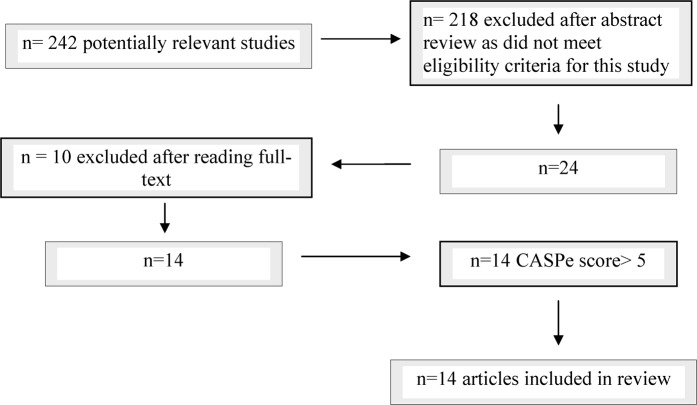
OBJECTIVE: The aim of this article is to review systematically and appraise critically the literature surrounding the research, comparing inertial sensors with any kind of gold standard; this gold standard has to be a tool for measuring human movement (e.g. electrogoniometry, optoelectronic systems, electromagnetic systems, etc.). METHOD: A MEDLINE, EMBASE, CINAHL, PEDRo and SCOPUS search of published English language articles was conducted, which focused on articles that compared inertial sensors to any kind of gold standard (e.g. electrogoniometry, optoelectronic systems, electromagnetic systems, etc.), from 2000 to 2010. Two independent reviewers completed the study selection, quality appraisal and data extraction. The Critical Appraisal Skills Programme Español tool was used to assess study quality, and a reliability comparison between the systems was made. RESULTS: Fourteen out of 242 articles were reviewed, which displayed a similar threat to validity, relating to sample selection and operator blinding. Other study limitations are discussed. A comparison between the different systems showed good agreement across a range of tasks and anatomical regions. CONCLUSIONS: This review concludes that inertial sensors can offer an accurate and reliable method to study human motion, but the degree of accuracy and reliability is site and task specific.
Overview
The claims and statistics of this paper haven’t been checked yet.
Run the check — free, no account needed. It reads the open-access text and checks the sources it cites.
Integrity signals
Registry
Cites
Statistics
Figures
Verification
Claims the paper makes
The claims and statistics of this paper haven’t been checked yet.
Run the check — free, no account needed. It reads the open-access text and checks the sources it cites.
Claims other papers make about this one
Each is checked against this paper’s own text: does it say what the citing paper says it does?
In the citing paper
“Two systematic reviews have been conducted to report on the psychometric evidence relating to M/IMU validity [11,12].”
From Validity and Reliability of Wearable Sensors for Joint Angle Estimation: A Systematic Review (2019) · cites this paper as [12]
In the citing paper
“The other systematic review, published in 2018, focused only on the upper limb and provided only scarce details regarding the complexity of the tasks evaluated, a problem highlighted by the first systematic review as being one of the most challenging aspects for clinical evaluation.”
From Validity and Reliability of Wearable Sensors for Joint Angle Estimation: A Systematic Review (2019) · cites this paper as [12]
In the citing paper
“This is opposite to our results.”
From Validity and Reliability of Wearable Sensors for Joint Angle Estimation: A Systematic Review (2019) · cites this paper as [12]
In the citing paper
“The increasing number of studies in recent years that used complex movements to assess M/IMU validity and the focus made on the upper limb joint partially explain the different conclusions between these two systematic reviews and the present work [12].”
From Validity and Reliability of Wearable Sensors for Joint Angle Estimation: A Systematic Review (2019) · cites this paper as [12]
Self-check
Percentages, sums and reported differences re-computed from the paper’s own numbers.
The self-check needs the paper’s full text.
Citations
Cites
Quality criteria were proposed for measurement properties of health status questionnaires
Terwee, C. B., Bot, S. D. M., de Boer, M. R., van der Windt, D. A. W. M., Knol, D. L., Dekker, J., Bouter, L. M., & de Vet, H. C. W. (2007) · Journal of Clinical Epidemiology · doi:10.1016/j.jclinepi.2006.03.012 · Cited by 10,764
The reliability of three-dimensional kinematic gait measurements: A systematic review
McGinley, J. L., Baker, R. J., Wolfe, R. S., & Morris, M. E. (2008) · Gait & Posture · doi:10.1016/j.gaitpost.2008.09.003 · Cited by 1,155
Mayagoitia, R. E., Nene, A. V., & Veltink, P. H. (2002) · Journal of Biomechanics · doi:10.1016/s0021-9290(01)00231-7 · Cited by 655
Acceleration patterns of the head and pelvis when walking on level and irregular surfaces
Menz, H. B., Lord, S. R., & Fitzpatrick, R. C. (2002) · Gait & Posture · doi:10.1016/s0966-6362(02)00159-5 · Cited by 654
Measuring orientation of human body segments using miniature gyroscopes and accelerometers
Luinge, H. J., & Veltink, P. H. (2005) · Medical & Biological Engineering & Computing · doi:10.1007/bf02345966 · Cited by 647
A practical gait analysis system using gyroscopes
Tong, K., & Granat, M. H. (1999) · Medical Engineering & Physics · doi:10.1016/s1350-4533(99)00030-2 · Cited by 460
Najafi, B., Aminian, K., Loew, F., Blanc, Y., & Robert, P. A. (2002) · IEEE Transactions on Biomedical Engineering · doi:10.1109/tbme.2002.800763 · Cited by 435
A real-time articulated human motion tracking using tri-axis inertial/magnetic sensors package
Zhu, R., & Zhou, Z. (2004) · IEEE Transactions on Neural Systems and Rehabilitation Engineering · doi:10.1109/tnsre.2004.827825 · Cited by 390
Ambulatory Position and Orientation Tracking Fusing Magnetic and Inertial Sensing
Roetenberg, D., Slycke, P., & Veltink, P. H. (2007) · IEEE Transactions on Biomedical Engineering · doi:10.1109/tbme.2006.889184 · Cited by 334
Ambulatory measurement of shoulder and elbow kinematics through inertial and magnetic sensors
Cutti, A. G., Giovanardi, A., Rocchi, L., Davalli, A., & Sacchetti, R. (2008) · Medical & Biological Engineering & Computing · doi:10.1007/s11517-007-0296-5 · Cited by 311
Milne, A. D., Chess, D. G., Johnson, J. A., & King, G. J. W. (1996) · Journal of Biomechanics · doi:10.1016/0021-9290(96)83335-5 · Cited by 299
An inertial and magnetic sensor based technique for joint angle measurement
O’Donovan, K. J., Kamnik, R., O'Keeffe, D. T., & Lyons, G. M. (2007) · Journal of Biomechanics · doi:10.1016/j.jbiomech.2006.12.010 · Cited by 291
Test–retest reliability of trunk accelerometric gait analysis
Henriksen, M., Lund, H., Moe‐Nilssen, R., Bliddal, H., & Danneskiold‐Samsøe, B. (2003) · Gait & Posture · doi:10.1016/s0966-6362(03)00069-9 · Cited by 283
Joint kinematics estimate using wearable inertial and magnetic sensing modules
Picerno, P., Cereatti, A., & Cappozzo, A. (2008) · Gait & Posture · doi:10.1016/j.gaitpost.2008.04.003 · Cited by 279
Moe‐Nilssen, R., & Helbostad, J. L. (2004) · Gait & Posture · doi:10.1016/j.gaitpost.2004.01.013 · Cited by 247
Use of multiple wearable inertial sensors in upper limb motion tracking
Zhou, H., Stone, T., Hu, H., & Harris, N. D. (2007) · Medical Engineering & Physics · doi:10.1016/j.medengphy.2006.11.010 · Cited by 231
Clinical Applications of Sensors for Human Posture and Movement Analysis: A Review
Wong, W. Y., Wong, M. S., & Lo, K. H. (2007) · Prosthetics & Orthotics International · doi:10.1080/03093640600983949 · Cited by 193
Reliability of segmental accelerations measured using a new wireless gait analysis system
Kavanagh, J. J., Morrison, S., James, D. A., & Barrett, R. (2005) · Journal of Biomechanics · doi:10.1016/j.jbiomech.2005.09.012 · Cited by 183
The accuracy of measuring the kinematics of rising from a chair with accelerometers and gyroscopes
Boonstra, M. C., van der Slikke, R. M. A., Keijsers, N., van Lummel, R. C., Malefijt, M. C. D. W., & Verdonschot, N. J. J. (2005) · Journal of Biomechanics · doi:10.1016/j.jbiomech.2004.11.021 · Cited by 157
Trunk posture monitoring with inertial sensors
Wong, W. Y., & Wong, M. S. (2008) · European Spine Journal · doi:10.1007/s00586-008-0586-0 · Cited by 155
Bourke, A. K., O’Donovan, K. J., & OLaighin, G. M. (2008) · Medical Engineering & Physics · doi:10.1016/j.medengphy.2007.12.003 · Cited by 143
Stair climbing detection during daily physical activity using a miniature gyroscope
Coley, B., Najafi, B., Paraschiv-Ionescu, A., & Aminian, K. (2004) · Gait & Posture · doi:10.1016/j.gaitpost.2004.08.008 · Cited by 131
Reducing Drifts in the Inertial Measurements of Wrist and Elbow Positions
Zhou, H., & Hu, H. (2009) · IEEE Transactions on Instrumentation and Measurement · doi:10.1109/tim.2009.2025065 · Cited by 120
Ambulatory human motion tracking by fusion of inertial and magnetic sensing with adaptive actuation
Schepers, H. M., Roetenberg, D., & Veltink, P. H. (2009) · Medical & Biological Engineering & Computing · doi:10.1007/s11517-009-0562-9 · Cited by 110
Three-dimensional measurement of lumbar spine kinematics for fast bowlers in cricket
Burnett, A., Barrett, C., Marshall, B., Elliott, B. C., & Day, R. E. (1998) · Clinical Biomechanics · doi:10.1016/s0268-0033(98)00026-6 · Cited by 108
A real-time gyroscopic system for three-dimensional measurement of lumbar spine motion
Lee, R., Laprade, J., & Fung, E. H. K. (2003) · Medical Engineering & Physics · doi:10.1016/s1350-4533(03)00115-2 · Cited by 106
Estimating orientation with gyroscopes and accelerometers
Luinge, H. J., Veltink, P. H., & Baten, C. T. M. (1999) · Technology and Health Care · doi:10.3233/thc-1999-7612 · Cited by 103
Development of a real-time three-dimensional spinal motion measurement system for clinical practice
Goodvin, C., Park, E. J., Huang, K. I., & Sakaki, K. D. R. (2006) · Medical & Biological Engineering & Computing · doi:10.1007/s11517-006-0132-3 · Cited by 102
Evaluation of a hybrid system for three-dimensional measurement of trunk posture in motion
Plamondon, A., Delisle, A., Larue, C., Brouillette, D., McFadden, D., Desjardins, P., & Larivière, C. (2007) · Applied Ergonomics · doi:10.1016/j.apergo.2006.12.006 · Cited by 102
Unrestrained Measurement of Arm Motion Based on a Wearable Wireless Sensor Network
Lee, G. X., Low, K., & Taher, T. (2010) · IEEE Transactions on Instrumentation and Measurement · doi:10.1109/tim.2010.2043974 · Cited by 82
A comparison of two motion analysis devices used in the measurement of lumbar spinal mobility
Mannion, A. F., & Troke, M. (1999) · Clinical Biomechanics · doi:10.1016/s0268-0033(99)00017-0 · Cited by 79
Unreliable inferences from reliable measurements.
Keating, J. L., & Matyas, T. A. (1998) · PubMed · Cited by 78
Mills, P., Morrison, S., Lloyd, D. G., & Barrett, R. (2006) · Journal of Biomechanics · doi:10.1016/j.jbiomech.2006.06.017 · Cited by 76
Effect of daily physical activity on proximal femur
Jämsä, T. J., Vainionpää, A., Korpelainen, R., Vihriälä, E., & Leppäluoto, J. (2005) · Clinical Biomechanics · doi:10.1016/j.clinbiomech.2005.10.003 · Cited by 73
Wireless orientation sensors: Their suitability to measure head movement for neck pain assessment
Jasiewicz, J. M., Treleaven, J. M., Condie, P., & Jull, G. A. (2006) · Manual Therapy · doi:10.1016/j.math.2006.07.005 · Cited by 66
Miniature Wireless Inertial Sensor for Measuring Human Motions
van Acht, V., Bongers, E., Lambert, N., & Verberne, R. (2007) · Conference proceedings · doi:10.1109/iembs.2007.4353790 · Cited by 65
Inertial sensors for motion detection of human upper limbs
Zhou, H., & Hu, H. (2007) · Sensor Review · doi:10.1108/02602280710731713 · Cited by 56
Model based inertial sensing of human body motion kinematics in sit-to-stand movement
Musić, J., Kamnik, R., & Munih, M. (2008) · Simulation Modelling Practice and Theory · doi:10.1016/j.simpat.2008.05.005 · Cited by 52
Cutti, A. G., Cappello, A., & Davalli, A. (2005) · Clinical Biomechanics · doi:10.1016/j.clinbiomech.2005.09.018 · Cited by 48
Measurement of movements of the lumbar spine
Lee, R. (2002) · Physiotherapy Theory and Practice · doi:10.1080/09593980290058562 · Cited by 24
The application of inertial and magnetic sensors to the monitoring of calf muscle pump activity
O’Donovan, K. J., Bourke, A. K., O'Keeffe, D. T., & OLaighin, G. M. (2008) · Medical Engineering & Physics · doi:10.1016/j.medengphy.2008.04.006 · Cited by 10
Cited by
Sorted by citations
Interactive wearable systems for upper body rehabilitation: a systematic review
Wang, Q., Markopoulos, P., Yu, B., Chen, W., & Timmermans, A. A. A. (2017) · Journal of NeuroEngineering and Rehabilitation · doi:10.1186/s12984-017-0229-y · Cited by 350
Robert-Lachaine, X., Mecheri, H., Larue, C., & Plamondon, A. (2017) · Medical & Biological Engineering & Computing · doi:10.1007/s11517-016-1537-2 · Cited by 329
Validity and Reliability of Wearable Sensors for Joint Angle Estimation: A Systematic Review
Poitras, I., Dupuis, F., Bielmann, M., Campeau-Lecours, A., Mercier, C., Bouyer, L., & Roy, J.-S. (2019) · Sensors · doi:10.3390/s19071555 · Cited by 309
A systematic review of gait analysis methods based on inertial sensors and adaptive algorithms
Caldas, R., Mundt, M., Potthast, W., Neto, F. B. D. L., & Markert, B. A. (2017) · Gait & Posture · doi:10.1016/j.gaitpost.2017.06.019 · Cited by 296
Exploring the Role of Wearable Technology in Sport Kinematics and Kinetics: A Systematic Review
Adesida, Y., Papi, E., & McGregor, A. H. (2019) · Sensors · doi:10.3390/s19071597 · Cited by 288
Metadata
- Authors
- Cuesta-Vargas, A. I., Galán-Mercant, A., & Williams, J. M.
- Affiliations
- Universidad de Málaga (ES)
- University of Roehampton (GB)
- Venue
- Physical Therapy Reviews
- Publisher
- Informa UK Limited
- Published
- 2010-12
- Volume
- 15
- Issue
- 6
- Pages
- 462-473
- ISSN
- 1083-3196 (ISSN-L)
- 1743-288X
- PMC
- PMC3566464
- OpenAlex
- W1994978432
- Cited by
- 369
- References
- 41
- Citations by year
- 2026: 19 · 2025: 23 · 2024: 33 · 2023: 30 · 2022: 33 · 2021: 47 · 2020: 39 · 2019: 35 · 2018: 33 · 2017: 29 · 2016: 10 · 2015: 16 · 2014: 15 · 2013: 5 · 2012: 2
- FWCI
- 2.60
- Type
- journal article
- Language
- en
- Open access
- bronze
- doi.org
- Locations
- Physical Therapy Reviews (publishedVersion)
- Europe PMC (PubMed Central) (publishedVersion, cc-by)
- PubMed Central (publishedVersion, cc-by)
- PubMed (publishedVersion)
- QUT ePrints (Queensland University of Technology) (submittedVersion)
- Topics
- Physical Sciences › Computer Science › Computer Vision and Pattern Recognition › Context-Aware Activity Recognition Systems
- Physical Sciences › Engineering › Aerospace Engineering › Inertial Sensor and Navigation
- Physical Sciences › Engineering › Biomedical Engineering › Lower Extremity Biomechanics and Pathologies
- Keywords
- inertial sensors, human motion analysis, gold standard comparison, electrogoniometry, optical motion capture, measurement validity, gait analysis
About these checks
Registry, retraction, Cites and statistics results are computed, not judged, with one exception: a printed reference that no index lists is read once by a model before it counts as a citation error. Claims are extracted by a model and kept only when their quote appears verbatim in the text; each cited source is then checked, with a model’s help, for whether it says what the claim relies on. Those verdicts can be wrong — read the claim’s quote and the cited source before relying on one.
Statistics and arithmetic are recomputed, not judged.
Confidence bands are shown only for fields calibrated on our annotated test set. None is calibrated yet, so no band is shown.
What counts as a claim ›How we measure confidence ›How we check this ›
Are you an author, or do you see a problem with this page? Request a review
