

Bias in error estimation when using cross-validation for model selection
Open accessThe DOI matches its Crossref record; 13 of the 13 references it cites were found in a registry or an index.
Abstract
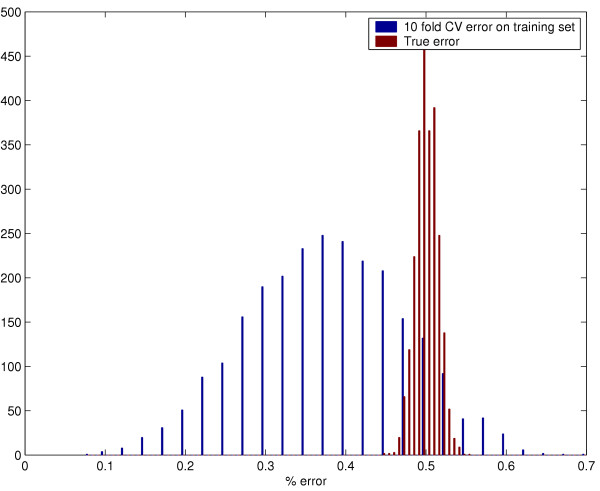
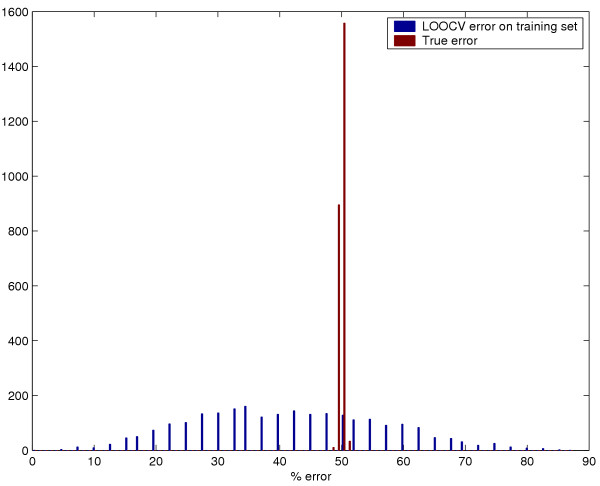
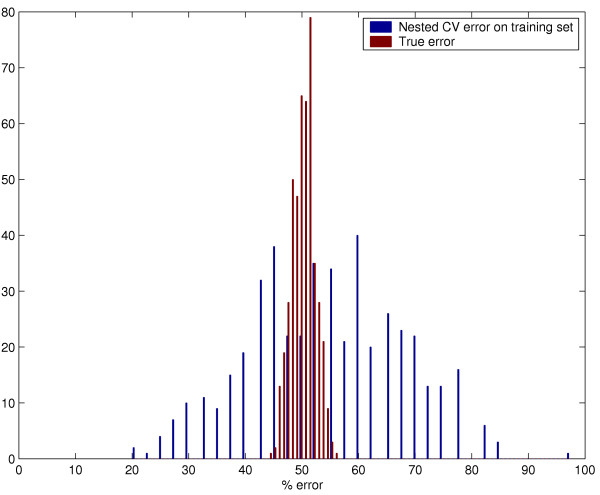
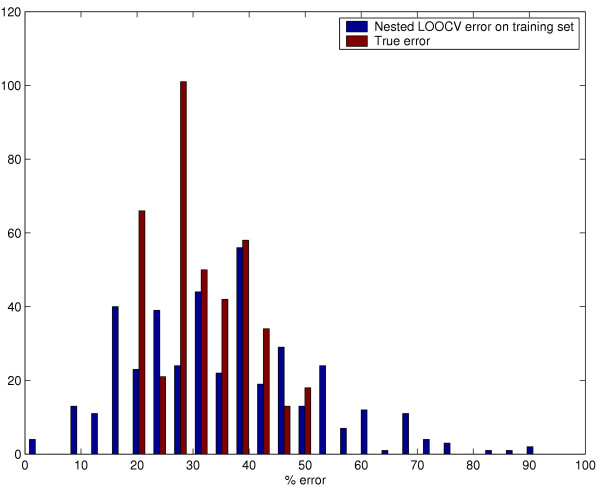
Background: Cross-validation (CV) is an effective method for estimating the prediction error of a classifier. Some recent articles have proposed methods for optimizing classifiers by choosing classifier parameter values that minimize the CV error estimate. We have evaluated the validity of using the CV error estimate of the optimized classifier as an estimate of the true error expected on independent data. Results: We used CV to optimize the classification parameters for two kinds of classifiers; Shrunken Centroids and Support Vector Machines (SVM). Random training datasets were created, with no difference in the distribution of the features between the two classes. Using these "null" datasets, we selected classifier parameter values that minimized the CV error estimate. 10-fold CV was used for Shrunken Centroids while Leave-One-Out-CV (LOOCV) was used for the SVM. Independent test data was created to estimate the true error. With "null" and "non null" (with differential expression between the classes) data, we also tested a nested CV procedure, where an inner CV loop is used to perform the tuning of the parameters while an outer CV is used to compute an estimate of the error. The CV error estimate for the classifier with the optimal parameters was found to be a substantially biased estimate of the true error that the classifier would incur on independent data. Even though there is no real difference between the two classes for the "null" datasets, the CV error estimate for the Shrunken Centroid with the optimal parameters was less than 30% on 18.5% of simulated training data-sets. For SVM with optimal parameters the estimated error rate was less than 30% on 38% of "null" data-sets. Performance of the optimized classifiers on the independent test set was no better than chance. The nested CV procedure reduces the bias considerably and gives an estimate of the error that is very close to that obtained on the independent testing set for both Shrunken Centroids and SVM classifiers for "null" and "non-null" data distributions. Conclusion: We show that using CV to compute an error estimate for a classifier that has itself been tuned using CV gives a significantly biased estimate of the true error. Proper use of CV for estimating true error of a classifier developed using a well defined algorithm requires that all steps of the algorithm, including classifier parameter tuning, be repeated in each CV loop. A nested CV procedure provides an almost unbiased estimate of the true error.
Overview
The claims and statistics of this paper haven’t been checked yet.
Free: it reads the open-access text and checks the first 5 claims that cite a source we can check. Create a free account to check every claim.
Integrity signals
Registry
Cites
Statistics
Figures
Verification
Claims the paper makes
The claims and statistics of this paper haven’t been checked yet.
Free: it reads the open-access text and checks the first 5 claims that cite a source we can check. Create a free account to check every claim.
Self-check
Percentages, sums and reported differences re-computed from the paper’s own numbers.
The self-check needs the paper’s full text.
Citations
Cites
LIBSVM: A library for support vector machines
Chang, C.-C., & Lin, C.-J. (2011) · ACM Transactions on Intelligent Systems and Technology · doi:10.1145/1961189.1961199 · Cited by 40,918
Wu, Y. (1999) · Technometrics · doi:10.1080/00401706.1999.10485951 · Cited by 27,221 · cited 1×
“SVMs were introduced by Vapnik [ 8 ] as linear hyperplanes that separate data belonging to different classes while maximizing the margin, or the distance of the training samples to the linear separating hyperplane.”
Method(2012) · Encyclopedia of the Sciences of Learning · doi:10.1007/978-1-4419-1428-6_5195 · Cited by 19,370
Diagnosis of multiple cancer types by shrunken centroids of gene expression
Tibshirani, R., Hastie, T., Narasimhan, B., & Chu, G. (2002) · Proceedings of the National Academy of Sciences · doi:10.1073/pnas.082099299 · Cited by 2,930 · cited 2×
“This classifier, originally proposed by Tibshirani et al [5], is an extension of the nearest centroid classifier.”
BackgroundMethodImprovements on Cross-Validation: The 632+ Bootstrap Method
Efron, B., & Tibshirani, R. (1997) · Journal of the American Statistical Association · doi:10.1080/01621459.1997.10474007 · Cited by 1,636 · cited 1×
“632 Bootstrap [10] and Bootstrap CV [11].”
Selection bias in gene extraction on the basis of microarray gene-expression data
Ambroise, C., & McLachlan, G. J. (2002) · Proceedings of the National Academy of Sciences · doi:10.1073/pnas.102102699 · Cited by 1,480 · cited 1×
“[2], Ambroise and McLachlan [3] and Reunanen [4], this gives a very biased estimate of the true error; not much better than the resubstitution estimate.”
BackgroundPrediction error estimation: a comparison of resampling methods
Molinaro, A. M., Simon, R., & Pfeiffer, R. M. (2005) · Bioinformatics · doi:10.1093/bioinformatics/bti499 · Cited by 1,339 · cited 1×
“However, low variance methods can also have a large inherent bias [12] (either positive or negative).”
BackgroundSelf-citationPitfalls in the Use of DNA Microarray Data for Diagnostic and Prognostic Classification
Simon, R., Radmacher, M. D., Dobbin, K., & McShane, L. M. (2003) · JNCI Journal of the National Cancer Institute · doi:10.1093/jnci/95.1.14 · Cited by 1,006 · cited 1×
“[2], Ambroise and McLachlan [3] and Reunanen [4], this gives a very biased estimate of the true error; not much better than the resubstitution estimate.”
Self-citationIizuka, N., Oka, M., Yamada-Okabe, H., Nishida, M., Maeda, Y., Mori, N., Takao, T., Tamesa, T., Tangoku, A., Tabuchi, H., et al. (2003) · The Lancet · doi:10.1016/s0140-6736(03)12775-4 · Cited by 511
Peng, S., Xu, Q., Ling, X. B., Peng, X., Du, W., & Chen, L. (2003) · FEBS Letters · doi:10.1016/s0014-5793(03)01275-4 · Cited by 218
Cited by
Items 901–1,000 of 1,006
Shé, X., Robinson, B. S., Flynn, G., Berger, T. W., & Song, D. B. (2022) · Journal of Neuroscience Methods · doi:10.1016/j.jneumeth.2022.109492 · Cited by 13
Machine learning techniques to detect bleeding frame and area in wireless capsule endoscopy video
Vajravelu, A., Selvan, K. S. T., Jamil, M. M. A., Anitha, J., & Díez, I. D. L. T. (2022) · Journal of Intelligent & Fuzzy Systems · doi:10.3233/jifs-213099 · Cited by 11
Büdenbender, B., Höfling, T. T. A., Gerdes, A. B. M., & Alpers, G. W. (2023) · PLoS ONE · doi:10.1371/journal.pone.0281309 · Cited by 17
Green, M., & Ohlsson, M. (2007) · Lund University Publications (Lund University) · Cited by 11
Park, B.-Y., Bethlehem, R. A. I., Paquola, C., Larivière, S., Cruces, R. R., de Wael, R. V., Bullmore, E. T., & Bernhardt, B. C. (2020) · bioRxiv (Cold Spring Harbor Laboratory) · doi:10.1101/2020.06.22.165621 · Cited by 12
Vithanage, D., Yu, P., Xie, Q., Xu, H., Wang, L., & Deng, C. (2025) · Computers in Biology and Medicine · doi:10.1016/j.compbiomed.2025.111013 · Cited by 18
Factors That Can Affect Model Performance
Kühn, M., & Johnson, K. (2013) · Springer eBooks · doi:10.1007/978-1-4614-6849-3_20 · Cited by 12
Zhang, J., Wang, J., Wang, C., Delgado, S. R., Hernandez, J., Hu, H., Cai, X., & Jiang, H. (2020) · IEEE Access · doi:10.1109/access.2020.3041291 · Cited by 9
Laser-induced fluorescence spectroscopy enhancing pistachio nut quality screening
Magnus, I., Abbasi, F., Hugo Thienpont, A., & Smeesters, L. (2023) · Food Control · doi:10.1016/j.foodcont.2023.110192 · Cited by 10
Evaluating the robustness of multimodal task load estimation models
Foltyn, A., Deuschel, J., Lang-Richter, N. R., Holzer, N., & Oppelt, M. P. (2024) · Frontiers in Computer Science · doi:10.3389/fcomp.2024.1371181 · Cited by 13
“This approach helps us identify good hyperparameter settings and create a less biased estimate of the true error (Varma and Simon, 2006).”
Xu, X., Farnós, O., Paes, B. C. M. F., Nesdoly, S., & Kamen, A. (2024) · Biotechnology and Bioengineering · doi:10.1002/bit.28712 · Cited by 10
Discovery of alkaline laccases from basidiomycete fungi through machine learning-based approach
Wan, X., Shahrear, S., Chew, S. W., Vilaplana, F., & Mäkelä, M. (2024) · Biotechnology for Biofuels and Bioproducts · doi:10.1186/s13068-024-02566-6 · Cited by 12
“The nested CV procedure offers an unbiased estimation of a model performance, presenting a more reliable assessment compared to classical CV [29].”
MethodApplicability Domain for Trustable Predictions
Yang, S., & Kar, S. (2024) · Methods in molecular biology · doi:10.1007/978-1-0716-4003-6_6 · Cited by 14
McDonald, A., Matos, J. N., Silva, J., Partington, C., Lo, E. J. Y., Fuentes, V. L., Barron, L., Watson, P., & Agarwal, A. (2024) · Journal of Veterinary Internal Medicine · doi:10.1111/jvim.17224 · Cited by 17
A novel method for fatigue design of FRP-strengthened RC beams based on machine learning
Huang, C., Zhang, R., Zhang, J., Guo, X., Wei, P., Wang, L., Huang, P., Li, W., & Wang, Y. (2025) · Composite Structures · doi:10.1016/j.compstruct.2025.118867 · Cited by 11
Xu, Z., Chen, N., Li, G., Li, J., Zhu, H., & Zhu, Z. (2025) · Expert Systems with Applications · doi:10.1016/j.eswa.2025.128035 · Cited by 13
A robust machine learning framework for stock market classification
Alghamdi, H., & Alqithami, S. (2025) · Expert Systems with Applications · doi:10.1016/j.eswa.2025.128573 · Cited by 10
MicroTarget: MicroRNA target gene prediction approach with application to breast cancer
Torkey, H., Heath, L. S., & ElHefnawi, M. (2017) · Journal of Bioinformatics and Computational Biology · doi:10.1142/s0219720017500135 · Cited by 12
Improving Predictability of Multisensor Data with Nonlinear Statistical Methodologies
Xing, L., Pittman, J. J., Inostroza, L., Butler, T. J., & Muńoz, P. (2018) · Crop Science · doi:10.2135/cropsci2017.09.0537 · Cited by 11
“The estimation of model performance with cross-validation could be biased (Varma and Simon, 2006).”
Augsburger, M., & Galatzer‐Levy, I. R. (2020) · BMC Psychiatry · doi:10.1186/s12888-020-02728-4 · Cited by 15
Edge algorithms for wearables: an overview of a truly multi-disciplinary problem
Beach, C., Balaban, E., & Casson, A. J. (2020) · Elsevier eBooks · doi:10.1016/b978-0-12-819246-7.00014-0 · Cited by 11
Neural Networks, the Treasury Yield Curve, and Recession Forecasting
Puglia, M., & Tucker, A. (2021) · The Journal of Financial Data Science · doi:10.3905/jfds.2021.1.061 · Cited by 12
Prediction of Threshold Sand Rates from Acoustic Monitors Using Artificial Intelligence
Vieira, R. E., Xu, B., Nadeem, A., Nadeem, A., & Shirazi, S. A. (2021) · Abu Dhabi International Petroleum Exhibition & Conference (ADIPEC) · doi:10.2118/208162-ms · Cited by 10
Price, G. D., Heinz, M. V., Nemesure, M., McFadden, J., & Jacobson, N. (2022) · Frontiers in Psychiatry · doi:10.3389/fpsyt.2022.807116 · Cited by 9
“A nested cross-validation framework in machine learning is efficacious in allowing for unbiased performance estimates, regardless of sample size (47).”
BackgroundUsing CatBoost and Other Supervised Machine Learning Algorithms to Predict Alzheimer's Disease
An, J. (2022) · International Conference on Machine Learning and Applications · doi:10.1109/icmla55696.2022.00265 · Cited by 14
“For each training set, 10-fold nested cross-validation (CV) was performed to provide an unbiased evaluation of a model fit on the training dataset [28].”
MethodCollins, A. C., Price, G. D., Woodworth, R. J., & Jacobson, N. C. (2023) · The Journal of Positive Psychology · doi:10.1080/17439760.2023.2254743 · Cited by 11
“Specifically, we used LOOCV and completely separated our training data and test data, which is considered sufficient at any sample size to provide unbiased estimates (Vabalas et al., 2019; Varma & Simon, 2006).”
MethodNovel embeddings improve the prediction of risk perception
Hussain, Z., Mata, R., & Wulff, D. U. (2024) · EPJ Data Science · doi:10.1140/epjds/s13688-024-00478-x · Cited by 13
“This nested strategy is native to the Scikit-Learn API, which we used for our analysis, and is recommended by [45] to prevent data leakage.”
Yang, W.-L. R., Lee, Y.-E., Chen, M., Chao, K., & Huang, C. F. (2012) · Gene · doi:10.1016/j.gene.2012.11.030 · Cited by 12
Sparse regression for selecting fluorescence wavelengths for accurate prediction of food properties
Higashi, H., ElMasry, G. M., & Nakauchi, S. (2016) · Chemometrics and Intelligent Laboratory Systems · doi:10.1016/j.chemolab.2016.03.008 · Cited by 10
Banjar, H. R., Ranasinghe, D. C., Brown, F., Adelson, D. L., Kroger, T., Leclercq, T. M., White, D. L., Hughes, T. P., & Chaudhri, N. A. (2017) · PLoS ONE · doi:10.1371/journal.pone.0168947 · Cited by 10
Guoqiang, X., Yi, Z., Shiyi, X., Miao-fen, H., & Zhang, Y. (2019) · International Journal of Performability Engineering · doi:10.23940/ijpe.19.10.p7.26182627 · Cited by 10
“Cross-validation is a way to reduce the bias caused by the random selection of samples and to verify the stability and generalization ability of the model [8].”
Han, P., Hales, R. K., Lakshminarayanan, P., Cheng, Z., Elledge, C. R., Negron, A., Hazell, S. Z., Hu, C., Friedes, C., Anderson, L., et al. (2020) · Practical Radiation Oncology · doi:10.1016/j.prro.2020.03.002 · Cited by 10
Harris, S., Trippe, A., Challis, D., & Swycher, N. (2020) · World Patent Information · doi:10.1016/j.wpi.2020.101961 · Cited by 12
“However, cross validation suffers from the problem that the scope of the evaluation is bounded by the training set, which is not guaranteed to reflect the domain as a whole [7].”
BackgroundAn analytical toast to wine: Using stacked generalization to predict wine preference
Larkin, T., & McManus, D. J. (2020) · Statistical Analysis and Data Mining The ASA Data Science Journal · doi:10.1002/sam.11474 · Cited by 11
Use of Multispectral and Hyperspectral Satellite Imagery for Monitoring Waterbodies and Wetlands
Hasanlou, M., & Seydi, S. T. (2021) · Coastal research library · doi:10.1007/978-3-030-66238-7_9 · Cited by 10
Shé, X., Berger, T. W., & Song, D. B. (2021) · Neural Computation · doi:10.1162/neco_a_01459 · Cited by 12
“(Varma & Simon, 2006) is used to avoid overfitting and provide an unbiased evaluation of the model goodness-of-fit (see Figure 3).”
MethodHuang, E. P., Pennello, G. A., deSouza, N. M., Wang, X., Buckler, A. J., Kinahan, P. E., Barnhart, H. X., Delfino, J. G., Hall, T. J., Raunig, D. L., et al. (2022) · Academic Radiology · doi:10.1016/j.acra.2022.09.018 · Cited by 11
Wegdam, W., Moerland, P. D., Buist, M. R., van Themaat, E. V. L., Bleijlevens, B., Hoefsloot, H. C. J., de Koster, C. G., & Aerts, J. M. F. G. (2009) · Proteome Science · doi:10.1186/1477-5956-7-19 · Cited by 11
“Such a double cross-validation scheme provides an almost unbiased estimate of the true error [31].”
BackgroundLarge-scale protein function prediction using heterogeneous ensembles
Wang, L., Law, J., Kale, S. D., Murali, T. M., & Pandey, G. S. (2018) · F1000Research · doi:10.12688/f1000research.16415.1 · Cited by 11
Recent Advances in Machine Learning Based Prediction of RNA-protein Interactions
Sagar, A., & Xue, B. (2019) · Protein and Peptide Letters · doi:10.2174/0929866526666190619103853 · Cited by 10
Maione, C., Araújo, E. M., dos Santos-Araujo, S. N., Boim, A. G. F., Barbosa, R., & Alleoni, L. R. F. (2022) · Scientia Agricola · doi:10.1590/1678-992x-2020-0011 · Cited by 11
“When the available data set is relatively small, similar to that analyzed in this study, dividing the data set can be unfeasible, as the resulting subsets can be too small to effectively train a reliable classification model (Varma and Simon, 2006).”
Genetic basis of variation in tenofovir drug susceptibility in HIV-1
Murray, R. J., Lewis, F. I., Miller, M. D., & Brown, A. (2008) · AIDS · doi:10.1097/qad.0b013e32830184a1 · Cited by 12
“To provide an unbiased estimate of the generalization error, we used a nested grid-search to optimize model parameters [ 39 ].”
MethodProceedings of the Workshop on Stylistic Variation
(2017) · doi:10.18653/v1/w17-49 · Cited by 10
Polygenic scores for UK Biobank scale dataPreprint
Mak, T. S. H., Porsch, R. M., Choi, S. W., & Sham, P. C. (2018) · bioRxiv (Cold Spring Harbor Laboratory) · doi:10.1101/252270 · Cited by 11
“We call this procedure cross- 116 prediction (Figure 3(a)), to distinguish it from the more familiar procedure of cross-validation where 117 fold-splitting is used only for choosing tuning parameters [31, 32, 33].”
MethodEnabling End-To-End Machine Learning Replicability: A Case Study in Educational Data MiningPreprint
Gardner, J., Yang, Y., Baker, R. S., & Brooks, C. A. (2018) · arXiv (Cornell University) · doi:10.48550/arxiv.1806.05208 · Cited by 20
“Prior work has demonstrated that cross-validation provides biased estimates of independent generalization performance [30], and in the MOOC domain, that crossvalidation can produce biased estimates of classification performance on a future (unseen) course [31].”
BackgroundMethodUnderstanding travel mode choice: A new approach for city scale simulation
Hillel, T. (2019) · UCL Discovery (University College London) · doi:10.17863/cam.40710 · Cited by 10
Time-varying Minimum Variance PortfolioPreprint
Fan, Q., Wu, R., Yang, Y., & Zhong, W. (2021) · SSRN Electronic Journal · doi:10.2139/ssrn.3956956 · Cited by 10
Database of flanged reinforced concrete squat walls and its utilization based on machine learning
Ma, J., Wang, M., Wang, C., Yu, X., & Li, B. (2023) · Structures · doi:10.1016/j.istruc.2023.105649 · Cited by 11
Xiong, D., Marcus, M., Maida, C. A., Lyu, Y., Hays, R. D., Wang, Y., Shen, J., Spolsky, V. W., Lee, S. Y., Crall, J. J., et al. (2024) · PLoS ONE · doi:10.1371/journal.pone.0299947 · Cited by 12
Machine‐based learning of multidimensional data in bipolar disorder – pilot results
Birner, A., Mairinger, M., Elst, C., Maget, A., Fellendorf, F. T., Platzer, M., Queissner, R., Lenger, M., Tmava‐Berisha, A., Bengesser, S., et al. (2024) · Bipolar Disorders · doi:10.1111/bdi.13426 · Cited by 10
“40,41 The results were compared, and the algorithm with the best F1-scores was selected for further analysis.”
MethodBiomass estimation of abandoned orange trees using UAV-SFM 3D points
Estornell, J., Martí-Gavilá, J., Hadaś, E., Cortés, I. L., Velázquez-Martí, B., & Fernández-Sarría, A. (2024) · International Journal of Applied Earth Observation and Geoinformation · doi:10.1016/j.jag.2024.103931 · Cited by 16
Jardim, L. L., Schieber, T. A., Santana, M. P., Cerqueira, M., Lorenzato, C. S., Franco, V. K. B., Zuccherato, L. W., Santos, B. A. D. S., Chaves, D. G., Ravetti, M. G., et al. (2024) · Journal of Thrombosis and Haemostasis · doi:10.1016/j.jtha.2024.05.017 · Cited by 12
Machine Learning for SRAM Stability Analysis
Bouhlila, J., Last, F., Buchty, R., Bereković, M., & Mulhem, S. (2024) · IEEE International Symposium on Circuits and Systems proceedings · doi:10.1109/iscas58744.2024.10558564 · Cited by 9
“We employ the nested cross-validation (CV) method, which offers an unbiased estimation of a model’s actual generalization error [21].”
MethodBlake, N., Gaifulina, R., Isabelle, M., Dorney, J., Rodriguez‐Justo, M., Lau, K., Ohrel, S., Lloyd, G. R., Shepherd, N. A., Lewis, A. T., et al. (2024) · BJC Reports · doi:10.1038/s44276-024-00080-8 · Cited by 9
“The maximum observed difference in response was between centres 1 and 3 with a slope factor of approximately 15%.”
BackgroundHerbage biomass predictions from UAV data using a derived digital terrain model and machine learning
Aebischer, P., Sutter, M., Birkinshaw, A., Nussbaum, M., & Reidy, B. (2024) · Grass and Forage Science · doi:10.1111/gfs.12694 · Cited by 9
Vachon, J., Buteau, S., Liu, Y., Ryswyk, K. V., Hatzopoulou, M., & Smargiassi, A. (2024) · The Science of The Total Environment · doi:10.1016/j.scitotenv.2024.176523 · Cited by 13
The Application of a Random Forest Classifier to ToF-SIMS Imaging Data
Shamraeva, M. A., Visvikis, T., Zoidis, S., Anthony, I. G. M., & Nuffel, S. V. (2024) · Journal of the American Society for Mass Spectrometry · doi:10.1021/jasms.4c00324 · Cited by 13
Razzouki, A. F., Jeancolas, L., Sambin, S., Mangone, G., Chalançon, A., Gomes, M., Lehéricy, S., Vidailhet, M., Arnulf, I., Corvol, J., et al. (2025) · npj Parkinson s Disease · doi:10.1038/s41531-025-00895-3 · Cited by 13
“Nestedcross-validation (CV) with 5 outerfoldsand 5innerfoldsprovides a fair assessment for evaluating and optimizing model performance 46 .”
Cao, B., Greiner, R., Greenshaw, A. J., & Sui, J. (2025) · Journal of Medical Internet Research · doi:10.2196/66100 · Cited by 13
“Importantly, all selection processes must be performed exclusively within the training stage, using nested cross-validation approaches when necessary, to prevent overfitting and information leakage that could artificially inflate performance metrics [26,44].”
Horváth, K. (2025) · World Electric Vehicle Journal · doi:10.3390/wevj16080426 · Cited by 9
On the open road to universal indexing: OpenAlex and Open Journal Systems
Chavarro, D., Alperín, J. P., & Willinsky, J. M. (2025) · Quantitative Science Studies · doi:10.1162/qss.a.17 · Cited by 24
“This double validation reduces the overfitting of the model ensuring that each cross-validation assesses the accuracy of the model on data that it has not seen during training or hyperparameter tuning (Varma & Simon 2006).”
Ensemble learning approach with explainable AI for improved heart disease prediction
Adekoya, A., Saeed, F., Ghaban, W., & Qasem, S. N. (2025) · Frontiers in Pharmacology · doi:10.3389/fphar.2025.1654681 · Cited by 24
“This design mitigates the risk of over fi tting and data leakage, both of which are common pitfalls in medical AI studies (Varma and Simon, 2006).”
Discriminative local subspaces in gene expression data for effective gene function prediction
Puelma, T., Gutiérrez, R. A., & Soto, Á. (2012) · Bioinformatics · doi:10.1093/bioinformatics/bts455 · Cited by 11
“Cross-validation is useful to assess the relative performance of the methods; however, its results must be considered with caution (Varma and Simon, 2006).”
BackgroundBogaert, S., Davis, J. J., Rossom, S. V., & Vanwanseele, B. (2022) · Sensors · doi:10.3390/s22082860 · Cited by 11
Lösel, H., Shakiba, N., Wenck, S., Tan, P. L., Arndt, M., Seifert, S., Hackl, T., & Fischer, M. J. (2022) · Food Analytical Methods · doi:10.1007/s12161-022-02329-9 · Cited by 11
Lybarger, K., Tauscher, J. S., Ding, X., Ben‐Zeev, D., & Cohen, T. (2022) · Workshop on Computational Linguistics and Clinical Psychology (CLPsych) · doi:10.18653/v1/2022.clpsych-1.11 · Cited by 17
“Model performance was evaluated using a nested cross-validation procedure, to reduce error estimation bias (Varma and Simon, 2006).”
MethodKim, D.-H., & Lee, J.-Y. (2022) · Minerals · doi:10.3390/min12101207 · Cited by 10
Predicting bite rate of grazing cattle from accelerometry data via semi-supervised regression
Hu, S., Arablouei, R., Bishop-Hurley, G. J., Reverter, A., & Ingham, A. B. (2023) · Smart Agricultural Technology · doi:10.1016/j.atech.2023.100256 · Cited by 14
AI-Assisted Cotton Grading: Active and Semi-Supervised Learning to Reduce the Image-Labelling Burden
Fisher, O. J., Rady, A. M., El-Banna, A. A. A., Emaish, H. H., & Watson, N. J. (2023) · Sensors · doi:10.3390/s23218671 · Cited by 13
“This can lead to a plateau in accuracy as the model is not gaining any new insights from the additional data.”
BackgroundMix, T., Janneschütz, J., Ludwig, R., Eichbaum, J., Fischer, M. J., & Hackl, T. (2023) · Journal of Agricultural and Food Chemistry · doi:10.1021/acs.jafc.3c05786 · Cited by 8
Belesis, N. D., Papanastasopoulos, G. A., & Vasilatos, A. M. (2023) · Journal of risk and financial management · doi:10.3390/jrfm16120520 · Cited by 14
Etaati, B., Jahangiri, A., Fernandez, G., Tsou, M., & Machiani, S. G. (2023) · Sustainability · doi:10.3390/su16010048 · Cited by 14
Hewitt, B. C., Smit, L. A. M., van Kersen, W., Wouters, I. M., Heederik, D. J. J., Kerckhoffs, J., Hoek, G., & de Rooij, M. M. T. (2024) · Environmental Pollution · doi:10.1016/j.envpol.2024.123590 · Cited by 10
Techniques for Improving Neural Network-based Aerodynamics Reduced-order Models
Wang, Q., de Medeiros, R. R., Cesnik, C. E. S., Fidkowski, K. J., Brézillon, J., & Bleecke, H. (2019) · AIAA SciTech Forum · doi:10.2514/6.2019-1849 · Cited by 14
Forecasting multiple-well flow rates using a novel space-time modeling approach
Ahmadi, R., Shahrabi, J., & Aminshahidy, B. (2020) · Journal of Petroleum Science and Engineering · doi:10.1016/j.petrol.2020.107027 · Cited by 9
Rahaman, S., Li, X., Yu, J. Q., & Wong, K. (2021) · Bioinformatics · doi:10.1093/bioinformatics/btab044 · Cited by 10
A retrospective look at cross model validation and its applicability in vibrational spectroscopy
Westad, F. (2021) · Spectrochimica Acta Part A Molecular and Biomolecular Spectroscopy · doi:10.1016/j.saa.2021.119676 · Cited by 9
Metabolomic profiling of microbial disease etiology in community-acquired pneumonia
den Hartog, I. J. M., Zwep, L. B., Vestjens, S. M. T., Harms, A. C., Voorn, G. P., de Lange, D. W., Bos, W. J. W., Hankemeier, T., van de Garde, E. M. W., & van Hasselt, J. G. C. (2021) · PLoS ONE · doi:10.1371/journal.pone.0252378 · Cited by 9
The spatial percept of tinnitus is associated with hearing asymmetry: Subgroup comparisons
Genitsaridi, E., Kypraios, T., Edvall, N. K., Trpchevska, N., Canlon, B., Hoare, D. J., Cederroth, C. R., & Hall, D. A. (2021) · Progress in brain research · doi:10.1016/bs.pbr.2021.04.006 · Cited by 11
Chronic Kidney Disease Cohort Studies: A Guide to Metabolome Analyses
Schultheiß, U. T., Kosch, R., Kotsis, F., Altenbuchinger, M., & Zacharias, H. U. (2021) · Metabolites · doi:10.3390/metabo11070460 · Cited by 8
“, cross-validation, where the complete data set is iteratively split into training and test data sets and, within each cross-validation run, the new predictive model is solely trained on the training set and solely tested on the test set, respectively (compare to Figure 1) [190].”
MethodPattalung, T. N., & Chaichulee, S. (2021) · IOP Conference Series Materials Science and Engineering · doi:10.1088/1757-899x/1163/1/012027 · Cited by 11
“…into k distinct parts and one part is iteratively used for validation and the remaining parts are then used for training, may cost information leakage leading to optimistically biased results [23] as it employs the same set of data for both optimizing hyperparameters and evaluating performance.”
MethodUsing deep temporal convolutional networks to just-in-time forecast technical debt principal
Ardimento, P., Aversano, L., Bernardi, M. L., Cimitile, M., & Iammarino, M. (2022) · Journal of Systems and Software · doi:10.1016/j.jss.2022.111481 · Cited by 14
Emphysema classification based on embedded probabilistic PCA
Zulueta-Coarasa, T., Kurugol, S., Ross, J. C., Washko, G. R., & Estépar, R. S. J. (2013) · Annual International Conference of the IEEE Engineering in Medicine and Biology Society (EMBC) · doi:10.1109/embc.2013.6610414 · Cited by 9
“We set dPCA, dLDA and dPPCA to optimize the classification accuracy defined as the distance to the perfect classifier on the training set using a nested 10-fold cross validation [13] with a grid search (dPCA ∈ [20, 100], dLDA ∈ [10, 20] and dPPCA ∈ [2, 10]).”
MethodTracking Cross-Validated Estimates of Prediction Error as Studies Accumulate
Chang, L., & Geman, D. (2015) · Journal of the American Statistical Association · doi:10.1080/01621459.2014.1002926 · Cited by 8
“Finally, whereas the issue of bias in RCV has been considered from the viewpoint of density estimation (Scott and Terrell 1987), model selection (Varma and Simon 2006), tuning parameters in supervised learning (Tibshirani and Tibshirani 2009), and specifically for microarray data (Braga-Neto 2007),…”
MethodTahkola, M., Szücs, Á., Halme, J., Zeb, A., & Keränen, J. (2022) · Energies · doi:10.3390/en15093317 · Cited by 10
“However, often model validation is performed with multi-fold cross-validation (CV) [6–10] or by having one separate validation dataset [11], even though the nested CV can provide less biased performance estimation by separating optimization of the model hyperparameters and model evaluation [12].”
MethodDíaz‐Uriarte, R. (2008) · BMC Bioinformatics · doi:10.1186/1471-2105-9-30 · Cited by 12
“Statistically, and in addition to appropriate analysis of censored data, such a tool should ensure that selection biases [12–15] are accounted for, to prevent overoptimistic assessments of the quality of the final model selected.”
BackgroundStatistical Resampling Techniques for Large Biological Data Analysis
Molinaro, A. M., & Lostritto, K. (2010) · Wiley eBooks · doi:10.1002/9780470567647.ch10 · Cited by 10
Claesen, M., Smet, F. D., Gillard, P., Mathieu, C., & Moor, B. D. (2015) · arXiv (Cornell University) · doi:10.48550/arxiv.1504.07389 · Cited by 18
“We used nested cross-validation to estimate generalization performance of different learning configurations (Varma and Simon, 2006).”
MethodArtificial intelligence for the recognition of benign lesions of vocal folds from audio recordings
Marchese, M. R., Sensoli, F., Campagnini, S., Cianchetti, M., Nacci, A., Ursino, F., D’Alatri, L., Galli, J., Carrozza, M. C., Paludetti, G., et al. (2023) · Acta Otorhinolaryngologica Italica · doi:10.14639/0392-100x-n2309 · Cited by 11
Soares, A. C., Soares, J. C., Neto, M. P., de Mello, S. S., Sanches, E. A., Paulovich, F. V., Oliveira, O. N., & Mattoso, L. H. C. (2024) · International Journal of Biological Macromolecules · doi:10.1016/j.ijbiomac.2024.132460 · Cited by 9
Kadomatsu, Y., Emoto, R., Kubo, Y., Nakanishi, K., Ueno, H., Kato, T., Nakamura, S., Mizuno, T., Matsui, S., & Chen-Yoshikawa, T. F. (2024) · Surgery Today · doi:10.1007/s00595-024-02878-y · Cited by 8
“Nested cross-validation [17] was used to internally validate the new model in the training dataset.”
Kelly, C. M., & McLaughlin, R. L. (2024) · PLoS ONE · doi:10.1371/journal.pone.0308962 · Cited by 9
Schliep, K. C., Thornhill, J., Tschanz, J. T., Facelli, J. C., Østbye, T., Sorweid, M. K., Smith, K. R., Varner, M. W., Boyce, R. D., Brown, C. J. C., et al. (2024) · BMC Medical Informatics and Decision Making · doi:10.1186/s12911-024-02728-4 · Cited by 9
“Nested cross-validation procedures yield robust and unbiased estimates of model performance [28, 29].”
BackgroundMasuda, H., Okada, S., Shiozawa, N., Sakaue, Y., Manno, M., Makikawa, M., & Isaka, T. (2025) · Computers in Biology and Medicine · doi:10.1016/j.compbiomed.2025.109705 · Cited by 16
Screening Dyslexia Using Visual Auditory Computer Games and Machine Learning
Rauschenberger, M., Baeza-Yates, R. A., & Rello, L. (2025) · IEEE Access · doi:10.1109/access.2025.3539719 · Cited by 13
“To avoid the risk of over-fitting, we used 10-fold cross-validation [42], [63] and the default parameters suggested in the Scikit-learn library to avoid training a model by optimizing the parameters specifically for our data [60].”
de Araújo, L. J. P., Özcan, E., Atkin, J., Baumers, M., & Drake, J. H. (2025) · Expert Systems with Applications · doi:10.1016/j.eswa.2025.127661 · Cited by 13
Yaowu, Y., Qidong, C., & Yang, L. (2025) · China Economic Review · doi:10.1016/j.chieco.2025.102422 · Cited by 8
Panahi, B., & Hamid, R. (2025) · Current Plant Biology · doi:10.1016/j.cpb.2025.100503 · Cited by 11
Longitudinal Prediction of Mental Health Outcomes in Vulnerable Youth using Machine Learning
Pujadas, E. R., Díaz‐Caneja, C. M., Stevanović, D., Ferrer-Quintero, M., Martín-Isla, C., Hernández-González, J., Atehortúa, A., Lazrak, N., Pries, L.-K., Delespaul, P., et al. (2025) · Cognitive Computation · doi:10.1007/s12559-025-10509-y · Cited by 9
Shamsi, H. (2025) · Journal of Engineering and Applied Science · doi:10.1186/s44147-025-00821-7 · Cited by 9
“1 , 1 , 10 , 100 } [35–37].”
Metadata
- Authors
- Varma, S., & Simon, R.
- Affiliations
- National Cancer Institute (US)
- Corresponding author
- Varma, Sudhir
- Venue
- BMC Bioinformatics
- Published
- 2006-02-23
- Volume
- 7
- Issue
- 1
- Pages
- 91-91
- ISSN
- 1471-2105 (ISSN-L)
- PMC
- PMC1397873
- OpenAlex
- W2141007997
- Cited by
- 2,485
- References
- 13
- Citations by year
- 2026: 760 · 2025: 246 · 2024: 146 · 2023: 165 · 2022: 178 · 2021: 179 · 2020: 190 · 2019: 110 · 2018: 96 · 2017: 90 · 2016: 49 · 2015: 47 · 2014: 43 · 2013: 42 · 2012: 35
- FWCI
- 7.08
- Type
- journal article
- Language
- en
- Open access
- gold
- doi.org
- Licence
- cc-by
- Locations
- BMC Bioinformatics (publishedVersion, cc-by)
- PubMed Central (publishedVersion, cc-by)
- PubMed (publishedVersion)
- DOAJ (DOAJ: Directory of Open Access Journals) (submittedVersion, cc-by-sa)
- Topics
- Life Sciences › Biochemistry, Genetics and Molecular Biology › Molecular Biology › Gene expression and cancer classification
- Physical Sciences › Computer Science › Artificial Intelligence › Machine Learning and Data Classification
- Physical Sciences › Mathematics › Statistics and Probability › Statistical Methods and Inference
- Keywords
- prediction error estimation, model selection, nested cross-validation, classifier parameter tuning, support vector machine, leave-one-out cross-validation, 10-fold cross-validation
- MeSH terms
- Algorithms, Artificial Intelligence, Computer Simulation, Data Interpretation, Statistical, Models, Genetic, Pattern Recognition, Automated, Sensitivity and Specificity, Reproducibility of Results, Models, Statistical, Bias, Oligonucleotide Array Sequence Analysis, Gene Expression Profiling
About these checks
Registry, retraction, Cites and statistics results are computed, not judged, with one exception: a printed reference that no index lists is read once by a model before it counts as a citation error. Claims are extracted by a model and kept only when their quote appears verbatim in the text; each cited source is then checked, with a model’s help, for whether it says what the claim relies on. Those verdicts can be wrong — read the claim’s quote and the cited source before relying on one.
Statistics and arithmetic are recomputed, not judged.
Confidence bands are shown only for fields calibrated on our annotated test set. None is calibrated yet, so no band is shown.
What counts as a claim ›How we measure confidence ›How we check this ›
Are you an author, or do you see a problem with this page? Request a review
Data sources
Bibliographic data: Semantic Scholar, OpenAlex, Crossref.
Contains information from the Semantic Scholar Academic Graph Datasets, made available under the ODC Attribution License (ODC-BY 1.0).
Semantic Scholar’s data is described in: Kinney, R., et al. (2023). The Semantic Scholar Open Data Platform. arXiv:2301.10140.
