

Bias in error estimation when using cross-validation for model selection
Open accessThe DOI matches its Crossref record; 13 of the 13 references it cites were found in a registry or an index.
Abstract
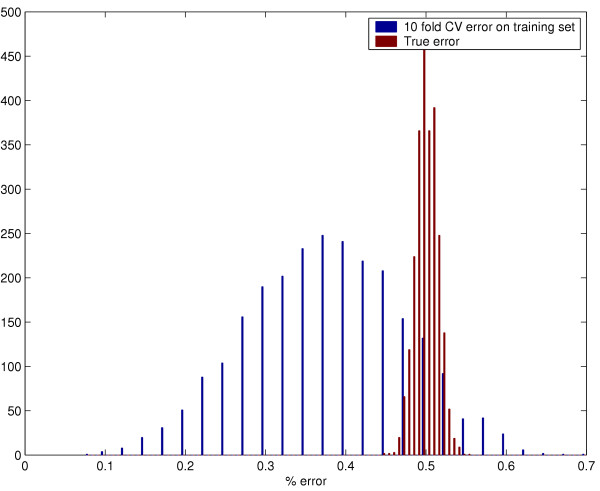
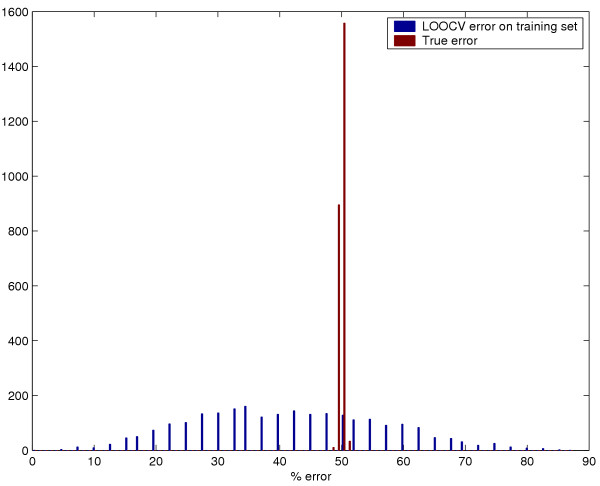
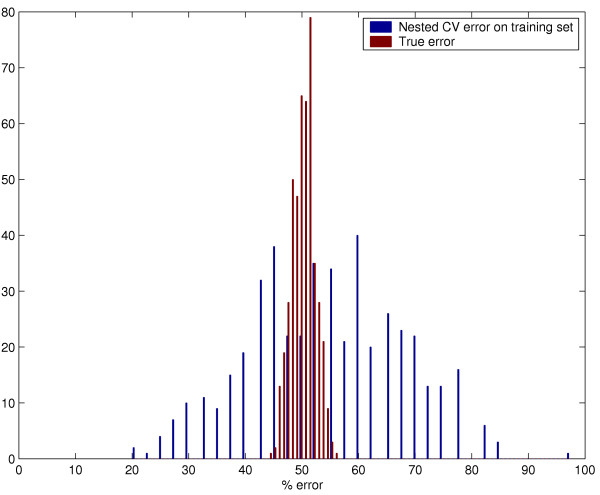
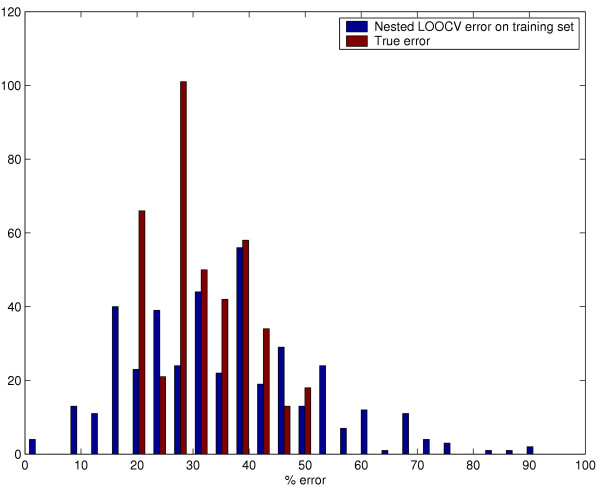
Background: Cross-validation (CV) is an effective method for estimating the prediction error of a classifier. Some recent articles have proposed methods for optimizing classifiers by choosing classifier parameter values that minimize the CV error estimate. We have evaluated the validity of using the CV error estimate of the optimized classifier as an estimate of the true error expected on independent data. Results: We used CV to optimize the classification parameters for two kinds of classifiers; Shrunken Centroids and Support Vector Machines (SVM). Random training datasets were created, with no difference in the distribution of the features between the two classes. Using these "null" datasets, we selected classifier parameter values that minimized the CV error estimate. 10-fold CV was used for Shrunken Centroids while Leave-One-Out-CV (LOOCV) was used for the SVM. Independent test data was created to estimate the true error. With "null" and "non null" (with differential expression between the classes) data, we also tested a nested CV procedure, where an inner CV loop is used to perform the tuning of the parameters while an outer CV is used to compute an estimate of the error. The CV error estimate for the classifier with the optimal parameters was found to be a substantially biased estimate of the true error that the classifier would incur on independent data. Even though there is no real difference between the two classes for the "null" datasets, the CV error estimate for the Shrunken Centroid with the optimal parameters was less than 30% on 18.5% of simulated training data-sets. For SVM with optimal parameters the estimated error rate was less than 30% on 38% of "null" data-sets. Performance of the optimized classifiers on the independent test set was no better than chance. The nested CV procedure reduces the bias considerably and gives an estimate of the error that is very close to that obtained on the independent testing set for both Shrunken Centroids and SVM classifiers for "null" and "non-null" data distributions. Conclusion: We show that using CV to compute an error estimate for a classifier that has itself been tuned using CV gives a significantly biased estimate of the true error. Proper use of CV for estimating true error of a classifier developed using a well defined algorithm requires that all steps of the algorithm, including classifier parameter tuning, be repeated in each CV loop. A nested CV procedure provides an almost unbiased estimate of the true error.
Overview
The claims and statistics of this paper haven’t been checked yet.
Free: it reads the open-access text and checks the first 5 claims that cite a source we can check. Create a free account to check every claim.
Integrity signals
Registry
Cites
Statistics
Figures
Verification
Claims the paper makes
The claims and statistics of this paper haven’t been checked yet.
Free: it reads the open-access text and checks the first 5 claims that cite a source we can check. Create a free account to check every claim.
Self-check
Percentages, sums and reported differences re-computed from the paper’s own numbers.
The self-check needs the paper’s full text.
Citations
Cites
LIBSVM: A library for support vector machines
Chang, C.-C., & Lin, C.-J. (2011) · ACM Transactions on Intelligent Systems and Technology · doi:10.1145/1961189.1961199 · Cited by 40,918
Wu, Y. (1999) · Technometrics · doi:10.1080/00401706.1999.10485951 · Cited by 27,221 · cited 1×
“SVMs were introduced by Vapnik [ 8 ] as linear hyperplanes that separate data belonging to different classes while maximizing the margin, or the distance of the training samples to the linear separating hyperplane.”
Method(2012) · Encyclopedia of the Sciences of Learning · doi:10.1007/978-1-4419-1428-6_5195 · Cited by 19,370
Diagnosis of multiple cancer types by shrunken centroids of gene expression
Tibshirani, R., Hastie, T., Narasimhan, B., & Chu, G. (2002) · Proceedings of the National Academy of Sciences · doi:10.1073/pnas.082099299 · Cited by 2,930 · cited 2×
“This classifier, originally proposed by Tibshirani et al [5], is an extension of the nearest centroid classifier.”
BackgroundMethodImprovements on Cross-Validation: The 632+ Bootstrap Method
Efron, B., & Tibshirani, R. (1997) · Journal of the American Statistical Association · doi:10.1080/01621459.1997.10474007 · Cited by 1,636 · cited 1×
“632 Bootstrap [10] and Bootstrap CV [11].”
Selection bias in gene extraction on the basis of microarray gene-expression data
Ambroise, C., & McLachlan, G. J. (2002) · Proceedings of the National Academy of Sciences · doi:10.1073/pnas.102102699 · Cited by 1,480 · cited 1×
“[2], Ambroise and McLachlan [3] and Reunanen [4], this gives a very biased estimate of the true error; not much better than the resubstitution estimate.”
BackgroundPrediction error estimation: a comparison of resampling methods
Molinaro, A. M., Simon, R., & Pfeiffer, R. M. (2005) · Bioinformatics · doi:10.1093/bioinformatics/bti499 · Cited by 1,339 · cited 1×
“However, low variance methods can also have a large inherent bias [12] (either positive or negative).”
BackgroundSelf-citationPitfalls in the Use of DNA Microarray Data for Diagnostic and Prognostic Classification
Simon, R., Radmacher, M. D., Dobbin, K., & McShane, L. M. (2003) · JNCI Journal of the National Cancer Institute · doi:10.1093/jnci/95.1.14 · Cited by 1,006 · cited 1×
“[2], Ambroise and McLachlan [3] and Reunanen [4], this gives a very biased estimate of the true error; not much better than the resubstitution estimate.”
Self-citationIizuka, N., Oka, M., Yamada-Okabe, H., Nishida, M., Maeda, Y., Mori, N., Takao, T., Tamesa, T., Tangoku, A., Tabuchi, H., et al. (2003) · The Lancet · doi:10.1016/s0140-6736(03)12775-4 · Cited by 511
Peng, S., Xu, Q., Ling, X. B., Peng, X., Du, W., & Chen, L. (2003) · FEBS Letters · doi:10.1016/s0014-5793(03)01275-4 · Cited by 218
Cited by
Items 201–300 of 1,006
Zhao, X., Jia, M., Ding, P., Yang, C., She, D., & Liu, Z. (2020) · IEEE/ASME Transactions on Mechatronics · doi:10.1109/tmech.2020.3004589 · Cited by 83
Making the Most Out of Surrogate Models: Tricks of the Trade
Viana, F. A. C., Gogu, C., & Haftka, R. T. (2010) · ASME International Design Engineering Technical Conferences and Computers and Information in Engineering Conference (IDETC/CIE) · doi:10.1115/detc2010-28813 · Cited by 94
“* Nevertheless, cross validation should be used with caution, since the literature has reported problems such as bias in error estimation [90], [91].”
BackgroundThe liver pharmacological and xenobiotic gene response repertoire
Natsoulis, G., Pearson, C. I., Gollub, J., Eynon, B. P., Ferng, J., Nair, R. V., Idury, R., Lee, M. D., Fielden, M. R., Brennan, R., et al. (2008) · Molecular Systems Biology · doi:10.1038/msb.2008.9 · Cited by 83
“In all cases, a 60/40 split-sample procedure was applied and the performance was reported as the average of the test results for 20 random partitions of the data (Simon et al, 2003; Allison et al, 2006; Varma and Simon, 2006).”
MethodThe effect of preprocessing filters on predictive performance in radiomics
Demircioğlu, A. (2022) · European Radiology Experimental · doi:10.1186/s41747-022-00294-w · Cited by 75
Koçak, B., Durmaz, E. Ş., Kadıoğlu, P., Korkmaz, Ö. P., Çomunoğlu, N., Tanrıöver, N., Koçer, N., Işlak, C., & Kızılkılıç, O. (2018) · European Radiology · doi:10.1007/s00330-018-5876-2 · Cited by 79
“It reduces the bias and gives a similar estimate of the error to that of independent validation [28].”
Zeynalova, A., Koçak, B., Durmaz, E. Ş., Çomunoğlu, N., Özcan, K., Ozcan, G. G., Türk, O., Tanrıöver, N., Koçer, N., Kızılkılıç, O., et al. (2019) · Neuroradiology · doi:10.1007/s00234-019-02211-2 · Cited by 80
Classification based upon gene expression data: bias and precision of error rates
Wood, I. A., Visscher, P. M., & Mengersen, K. L. (2007) · Bioinformatics · doi:10.1093/bioinformatics/btm117 · Cited by 75
“Varma and Simon (2006) investigated the same bias by applying the NSC and SVM to simulated datasets containing two classes of exactly 20 points each.”
BackgroundMethodRobinson, M. C., Glen, R. C., & Lee, A. A. (2020) · Journal of Computer-Aided Molecular Design · doi:10.1007/s10822-019-00274-0 · Cited by 74
Discriminant analysis of multivariate time series: Application to diagnosis based on ECG signals
Maharaj, E. A., & Alonso, A. M. (2013) · Computational Statistics & Data Analysis · doi:10.1016/j.csda.2013.09.006 · Cited by 74
Oh, K., Kim, W., Shen, G., Piao, Y., Kang, N.-I., Oh, I.-S., & Chung, Y. C. (2019) · Schizophrenia Research · doi:10.1016/j.schres.2019.07.034 · Cited by 73
Kath, J. M., Craparo, A., Fong, Y., Byrareddy, V. M., Davis, A. P., King, R., Nguyen‐Huy, T., van Asten, P., Marcussen, T., Mushtaq, S., et al. (2022) · Nature Food · doi:10.1038/s43016-022-00614-8 · Cited by 89
Liu, Y., Yu, Y., Ye, Z., Li, M., Zhang, Y., Zhou, Z., Hu, D., & Zeng, L. (2023) · IEEE Transactions on Human-Machine Systems · doi:10.1109/thms.2023.3235003 · Cited by 77
“First, we carried out three-by-five-fold nested cross validation [35] on the data of trial 1, trial 2, and trial 3.”
MethodStatistical data processing in clinical proteomics
Smit, S., Hoefsloot, H. C. J., & Smilde, A. K. (2007) · Journal of Chromatography B · doi:10.1016/j.jchromb.2007.10.042 · Cited by 76
Development and validation of biomarker classifiers for treatment selection
Simon, R. M. (2007) · Journal of Statistical Planning and Inference · doi:10.1016/j.jspi.2007.06.010 · Cited by 78
“It is important to recognize, however, that if the selection of the stringency parameter is data dependent, then it must be regarded as part of the model development algorithm for purposes of computing cross-validated estimates of prediction error (see below) (Varma and Simon, 2005).”
MethodSelf-citationWang, H., Lee, T.-Y., Tseng, Y., Liu, T.-P., Huang, K., Chang, Y.-T., Chen, C.-H., & Lu, J. (2018) · PLoS ONE · doi:10.1371/journal.pone.0194289 · Cited by 82
Statistical Learning for Biomedical Data
Malley, J. D., Malley, K. G., & Pajevic, S. (2011) · Cambridge University Press eBooks · doi:10.1017/cbo9780511975820 · Cited by 69
Correct machine learning on protein sequences: a peer-reviewing perspective
Walsh, I., Pollastri, G., & Tosatto, S. C. E. (2016) · Briefings in Bioinformatics · doi:10.1093/bib/bbv082 · Cited by 72
Balko, J. M., Potti, A., Saunders, C. P., Stromberg, A. J., Haura, E. B., & Black, E. P. (2006) · BMC Genomics · doi:10.1186/1471-2164-7-289 · Cited by 76
“features are reselected and model parameters are rebuilt at each iteration) is a stringent and relatively unbiased estimate of the model building algorithm error [34,35].”
BackgroundBoulesteix, A., & Strobl, C. (2009) · BMC Medical Research Methodology · doi:10.1186/1471-2288-9-85 · Cited by 83
Maione, C., de Paula, E. S., Gallimberti, M., Batista, B. L., Campiglia, A. D., Barbosa, F., & Barbosa, R. (2015) · Expert Systems with Applications · doi:10.1016/j.eswa.2015.11.024 · Cited by 85
Lötsch, J., Schiffmann, S., Schmitz, K., Brunkhorst, R., Lerch, F., Ferreirós, N., Wicker, S., Tegeder, I., Geißlinger, G., & Ultsch, A. (2018) · Scientific Reports · doi:10.1038/s41598-018-33077-8 · Cited by 79
Tomasik, J., Han, S. Y. S., Barton‐Owen, G., Mirea, D.-M., Martin-Key, N. A., Rustogi, N., Lago, S. G., Olmert, T., Cooper, J. D., Özcan, S., et al. (2021) · Translational Psychiatry · doi:10.1038/s41398-020-01181-x · Cited by 81
Surrogate modeling: tricks that endured the test of time and some recent developments
Viana, F. A. C., Gogu, C., & Goel, T. (2021) · Structural and Multidisciplinary Optimization · doi:10.1007/s00158-021-03001-2 · Cited by 83
da Silveira, A. C. M., Sobrinho, Á., da Silva, L. D., Costa, E. D. B., Perkusich, A., & Pinheiro, M. E. (2022) · Applied Sciences · doi:10.3390/app12073673 · Cited by 87
“We used these methods to investigate whether they satisfactorily control overfitting caused due to the limited size of our dataset [26].”
BackgroundMethodWu, D., Lance, B. J., & Parsons, T. D. (2013) · PLoS ONE · doi:10.1371/journal.pone.0056624 · Cited by 70
Ebadi, A., Dalboni da Rocha, J. L., Nagaraju, D. B., Tovar-Moll, F., Bramati, I., Coutinho, G., Sitaram, R., & Rashidi, P. (2017) · Frontiers in Neuroscience · doi:10.3389/fnins.2017.00056 · Cited by 70
“Thus, NCV helps to obtain an unbiased estimation of the true error and performance of the estimator (Varma and Simon, 2006).”
BackgroundJohnson, K. M., Johnson, H. E., Zhao, Y., Dowe, D. A., & Staib, L. H. (2019) · Radiology · doi:10.1148/radiol.2019182061 · Cited by 79
Marzi, C., Giannelli, M., Barucci, A., Tessa, C., Mascalchi, M., & Diciotti, S. (2024) · Scientific Data · doi:10.1038/s41597-023-02421-7 · Cited by 87
“In contrast, the cross-validation (CV) and its nested version (nested CV) for hyperparameters optimization of the entire workflow 74–76 are frequently preferred.”
MethodHigh-throughput target trial emulation for Alzheimer’s disease drug repurposing with real-world data
Zang, C., Zhang, H., Xu, J., Zhang, H., Fouladvand, S., Havaldar, S., Cheng, F., Chen, K., Chen, Y., Glicksberg, B. S., et al. (2023) · Nature Communications · doi:10.1038/s41467-023-43929-1 · Cited by 69
“We further extended our model selection strategy to the nested cross-validation procedure (with 10-fold outer cross-validation and 5-fold inner cross-validation) 36 .”
Comprehensive Analysis of Applicability Domains of QSPR Models for Chemical Reactions
Rakhimbekova, A., Madzhidov, T., Ирекович, Н. Р., Gimadiev, T. R., Baskin, I. I., & Varnek, A. A. (2020) · International Journal of Molecular Sciences · doi:10.3390/ijms21155542 · Cited by 76
“To obtain a reliable assessment of predictive performance and avoid overfitting, the nested cross-validation procedure [33] was used.”
MethodArtificial intelligence and hybrid imaging: the best match for personalized medicine in oncology
Sollini, M., Bartoli, F., Marciano, A., Zanca, R., Slart, R. H. J. A., & Erba, P. A. (2020) · European Journal of Hybrid Imaging · doi:10.1186/s41824-020-00094-8 · Cited by 88
Forecasting Foreign Exchange Volatility Using Deep Learning Autoencoder‐LSTM Techniques
Jung, G., & Choi, S. (2021) · Complexity · doi:10.1155/2021/6647534 · Cited by 87
“-is allowed errors to be averaged to obtain an unbiased error estimate (Varma and Simon [72]).”
Automotive OEM Demand Forecasting: A Comparative Study of Forecasting Algorithms and Strategies
Rožanec, J. M., Kažič, B., Škrjanc, M., Fortuna, B., & Mladenić, D. (2021) · Applied Sciences · doi:10.3390/app11156787 · Cited by 96
“algorithms consider all features equally important, and shortens ML models’ training times [55].”
BackgroundMachine and Deep Learning Prediction Of Prostate Cancer Aggressiveness Using Multiparametric MRI
Bertelli, E., Mercatelli, L., Marzi, C., Pachetti, E., Baccini, M., Barucci, A., Colantonio, S., Gherardini, L., Lattavo, L., Pascali, M. A., et al. (2022) · Frontiers in Oncology · doi:10.3389/fonc.2021.802964 · Cited by 77
“On the development set 2.0, each model has been trained and validated using a patient-level, strati fi ed 5-fold cross-validation (CV) strategy to perform framework selection along with hyperparameters optimization (65).”
MethodInfluentialGronwald, W., Klein, M. S., Zeltner, R., Schulze, B.-D., Reinhold, S. W., Deutschmann, M., Immervoll, A.-K., Böger, C. A., Banas, B., Eckardt, K., et al. (2011) · Kidney International · doi:10.1038/ki.2011.30 · Cited by 73
“Therefore, in a nested loop, an inner cross-validation was performed for parameter optimization, thus obtaining an almost unbiased estimate of the true classification error.(16) A detailed description of the used nested cross-validation approach is given in the Supplementary Materials online.”
Marafino, B. J., Boscardin, W. J., & Dudley, R. A. (2015) · Journal of Biomedical Informatics · doi:10.1016/j.jbi.2015.02.003 · Cited by 76
“The performance metric used was the area under the ROC curve (AUC), and we performed 10-fold nested cross-validation to estimate AUC for different values of k [25].”
MethodHuang, S.-H., Tung, C.-W., Fülöp, F., & Li, J. (2015) · Food and Chemical Toxicology · doi:10.1016/j.fct.2015.01.020 · Cited by 74
“The nested CV procedure reduces the bias considerably and gives an estimate of the error that is very close to that obtained on the independent testing set (Varma and Simon, 2006).”
ResultGuilloux, J., Bassi, S., Ding, Y., Walsh, C., Turecki, G., Tseng, G. C., Cyranowski, J. M., & Sibille, E. L. (2014) · Neuropsychopharmacology · doi:10.1038/npp.2014.226 · Cited by 75
“To correct for the selection bias of reporting the best model, we added a nested cross-validation step (Tibshirani, 2009; Varma and Simon, 2006).”
Stratification bias in low signal microarray studies
Parker, B. J., Günter, S., & Bedo, J. (2007) · BMC Bioinformatics · doi:10.1186/1471-2105-8-326 · Cited by 68
“Varma and Simon [ 9 ] demonstrated in a simulation study the optimistic hyperparameter selection bias [10] which occurs when reporting the best error rates achieved on the validation set used to tune classifier (hyper)parameters, rather than using a nested CV or separate test set to evaluate the classifier.”
BackgroundYao, D., Calhoun, V. D., Fu, Z., Du, Y., & Sui, J. (2018) · Journal of Neuroscience Methods · doi:10.1016/j.jneumeth.2018.03.008 · Cited by 71
“Overfitting might cause the different performance on training and test set although we used 10-fold CV to avoid this issue (Varma and Simon, 2006).”
MethodLiu, H., & Chen, C. (2020) · Journal of Cleaner Production · doi:10.1016/j.jclepro.2020.121777 · Cited by 67
Tian, F., Zhu, L., Shi, Q., Wang, R., Zhang, L., Dong, Q., Qian, K., Zhao, Q., & Hu, B. (2023) · IEEE Transactions on Biomedical Circuits and Systems · doi:10.1109/tbcas.2023.3292237 · Cited by 74
“EEG data from 70 depressed patients and 108 healthy controls were mixed for training and testing, and the dataset was evaluated using a 10-fold cross-validation procedure to obtain the classification results [67].”
MethodVargas, H. A., Huang, E. P., Lakhman, Y., Ippolito, J. E., Bhosale, P., Mellnick, V. M., Shinagare, A. B., Anello, M. I., Kirby, J., Fevrier-Sullivan, B., et al. (2017) · Radiology · doi:10.1148/radiol.2017161870 · Cited by 77
Cross validation methods: Analysis based on diagnostics of thyroid cancer metastasis
Rafało, M. (2021) · ICT Express · doi:10.1016/j.icte.2021.05.001 · Cited by 84
“It has been proven, that all aspects of training a classifier, like feature selection, type selection or parameter tuning should take place inside each validation loop [24].”
BackgroundImproved Parkinsonism diagnosis using a partial least squares based approach
Segovia, F., Górriz, J. M., Ramírez, J., Álvarez, I., Jiménez-Hoyuela, J. M., & Ortega, S. J. (2012) · Medical Physics · doi:10.1118/1.4730289 · Cited by 68
Papini, S., Pisner, D., Shumake, J., Powers, M. B., Beevers, C. G., Rainey, E. E., Smits, J. A. J., & Warren, A. M. (2018) · Journal of Anxiety Disorders · doi:10.1016/j.janxdis.2018.10.004 · Cited by 76
Predictive Analytics for Smart Parking: A Deep Learning Approach in Forecasting of IoT Data
Piccialli, F., Giampaolo, F., Prezioso, E., Crisci, D., & Cuomo, S. (2021) · ACM Transactions on Internet Technology · doi:10.1145/3412842 · Cited by 77
Aghaabbasi, M., & Chalermpong, S. (2023) · Travel Behaviour and Society · doi:10.1016/j.tbs.2023.100640 · Cited by 70
Quantifying Cognitive Workload in Simulated Flight Using Passive, Dry EEG Measurements
Blanco, J. A., Johnson, M. K., Jaquess, K. J., Oh, H., Lo, L., Gentili, R. J., & Hatfield, B. D. (2016) · IEEE Transactions on Cognitive and Developmental Systems · doi:10.1109/tcds.2016.2628702 · Cited by 67
“unbiased estimate of true test error [36], because feature selection occurs in the inner loop, it does not in general identify a single unique best subset for each classifier.”
BackgroundMethodPromises and pitfalls of deep neural networks in neuroimaging-based psychiatric research
Eitel, F., Schulz, M.-A., Seiler, M., Walter, H., & Ritter, K. (2021) · Experimental Neurology · doi:10.1016/j.expneurol.2021.113608 · Cited by 80
Budget-Based Classification of Parkinson's Disease From Resting State EEG
Railo, H., Suuronen, I., Kaasinen, V., Murtojärvi, M., Pahikkala, T., & Airola, A. (2023) · IEEE Journal of Biomedical and Health Informatics · doi:10.1109/jbhi.2023.3235040 · Cited by 75
“[27] By using the “inner” loop of the nested cross-validation procedure to perform budget-based grouped feature selection,”
MethodCNN-LSTM and post-processing for EMG-based hand gesture recognition
López, L. I. B., Ferri, F. M., Zea, J. A., Caraguay, Á. L. V., & Benalcázar, M. E. (2024) · Intelligent Systems with Applications · doi:10.1016/j.iswa.2024.200352 · Cited by 114
Simon, R. M. (2008) · European Journal of Cancer · doi:10.1016/j.ejca.2008.09.009 · Cited by 70
“That estimate is itself biased, being the minimum of a set of random quantities.(26) The optimisation of tuning parameters or classifier types ideally should be considered part of the classifier development algorithm, and the entire algorithm should be included in each loop of the crossvalidation used to estimate pred…”
MethodSelf-citationAn Automated Classification of Pathological Gait Using Unobtrusive Sensing Technology
Dolatabadi, E., Taati, B., & Mihailidis, A. (2017) · IEEE Transactions on Neural Systems and Rehabilitation Engineering · doi:10.1109/tnsre.2017.2736939 · Cited by 64
Food authentication: Multi-elemental analysis of white asparagus for provenance discrimination
Richter, B., Gurk, S., Wagner, D., Bockmayr, M. L., & Fischer, M. J. (2019) · Food Chemistry · doi:10.1016/j.foodchem.2019.01.105 · Cited by 65
Bomane, A., Gonçalvès, A., & Ballester, P. J. (2019) · Frontiers in Genetics · doi:10.3389/fgene.2019.01041 · Cited by 66
“Employing nested CV on algorithms requiring model selection (those employing OMC) provides an unbiased estimate of model performance, as it has been shown elsewhere (Cawley and Talbot, 2010; Varma and Simon, 2006).”
MethodReducing False-Positive Results in Newborn Screening Using Machine Learning
Peng, G., Tang, Y., Cowan, T. M., Enns, G. M., Zhao, H., & Scharfe, C. (2020) · International Journal of Neonatal Screening · doi:10.3390/ijns6010016 · Cited by 68
Communicating with Warmth in Distributive Negotiations Is Surprisingly Counterproductive
Jeong, M., Minson, J. A., Yeomans, M., & Gino, F. (2019) · Management Science · doi:10.1287/mnsc.2018.3199 · Cited by 77
“The accuracy of the model was evaluated using a “nested cross-validation” procedure (Stone 1974, Varma and Simon 2006).”
MethodPadilha, V. A., Alkhnbashi, O. S., Shah, S. A., de Carvalho, A. C. P. L. F., & Backofen, R. (2020) · GigaScience · doi:10.1093/gigascience/giaa062 · Cited by 70
“Several works, such as (30, 31, 32), investigate the advantages and drawbacks of different methodologies.”
Genome-wide mutational signatures in low-coverage whole genome sequencing of cell-free DNA
Wan, J. C. M., Stephens, D. P., Luo, L., White, J. R., Stewart, C. M., Rousseau, B., Tsui, D. W. Y., & Diaz, L. A. (2022) · Nature Communications · doi:10.1038/s41467-022-32598-1 · Cited by 83
Park, B., Kebets, V., Larivière, S., Hettwer, M. D., Paquola, C., van Rooij, D., Buitelaar, J. K., Franke, B., Hoogman, M., Schmaal, L., et al. (2022) · Communications Biology · doi:10.1038/s42003-022-03963-z · Cited by 73
Manipulating Data and Dimension Reduction Methods: Feature Selection
Liu, H., & Zhao, Z. (2012) · Computational Complexity · doi:10.1007/978-1-4614-1800-9_115 · Cited by 22
Korjus, K., Hebart, M. N., & Vicente, R. (2016) · PLoS ONE · doi:10.1371/journal.pone.0161788 · Cited by 89
“One approach that has been used to overcome this difficulty is “Nested cross-validation” [9] (see Fig 2).”
MethodLi, Q., Kim, J., Balagurunathan, Y., Liu, Y., Latifi, K., Stringfield, O., García, A. L., Moros, E. G., Dilling, T. J., Schabath, M. B., et al. (2017) · Medical Physics · doi:10.1002/mp.12309 · Cited by 74
Lower Limb Motion Estimation Using Ultrasound Imaging: A Framework for Assistive Device Control
Jahanandish, M. H., Fey, N. P., & Hoyt, K. (2019) · IEEE Journal of Biomedical and Health Informatics · doi:10.1109/jbhi.2019.2891997 · Cited by 68
Sakhaee, A., Gebauer, A., Ließ, M., & Don, A. (2022) · SOIL · doi:10.5194/soil-8-587-2022 · Cited by 73
“This includes finding the best parameter sets for the chosen algorithm (Varma and Simon, 2006).”
BackgroundA Large‐Scale Empirical Evaluation of Cross‐Validation and External Test Set Validation in (Q)SAR
Gütlein, M., Helma, C., Karwath, A., & Krämer, S. (2013) · Molecular Informatics · doi:10.1002/minf.201200134 · Cited by 64
Applied machine learning to predict stress hotspots II: Hexagonal close packed materials
Mangal, A., & Holm, E. A. (2018) · International Journal of Plasticity · doi:10.1016/j.ijplas.2018.08.003 · Cited by 70
Planning prompts increase and forecast course completion in massive open online courses
Yeomans, M., & Reich, J. (2017) · Proceedings of the Seventh International Learning Analytics & Knowledge Conference · doi:10.1145/3027385.3027416 · Cited by 61
“To test out-of-sample accuracy using in-course data, we used a nested cross-validation procedure [45, 51].”
MethodWang, H., Chen, C., Lee, T.-Y., Horng, J., Liu, T.-P., Tseng, Y., & Lu, J. (2018) · Frontiers in Microbiology · doi:10.3389/fmicb.2018.02393 · Cited by 69
“Its performance in distinguishing VSSA from hVISA/VISA was validated using nested cross-validation for a minimally biased estimation of performance (Varma and Simon, 2006; Filzmoser et al., 2009; Krstajic et al., 2014).”
MethodOkser, S., Pahikkala, T., & Aittokallio, T. A. (2013) · BioData Mining · doi:10.1186/1756-0381-6-5 · Cited by 73
“This two-level technique is sometimes referred to as the nested cross-validation [42,44].”
MethodHybrid Modeling and Intensified DoE: An Approach to Accelerate Upstream Process Characterization
Bayer, B., Striedner, G., & Duerkop, M. (2020) · Biotechnology Journal · doi:10.1002/biot.202000121 · Cited by 60
Computational models for predicting drug responses in cancer research
Azuaje, F. (2016) · Briefings in Bioinformatics · doi:10.1093/bib/bbw065 · Cited by 59
Predicting acute suicidal ideation on Instagram using ensemble machine learning models
Lekkas, D., Klein, R. J., & Jacobson, N. C. (2021) · Internet Interventions · doi:10.1016/j.invent.2021.100424 · Cited by 71
“Using one model to effectively select notable predictors for a subsequent model on the same dataset leads to bias and an overly optimistic assessment of predictive performance (Reunanen, 2003; Varma and Simon, 2006).”
MethodBraz, D. C., Neto, M. P., Shimizu, F. M., de Sá, A. C., Lima, R. S., Gobbi, Â. L., Melendez, M. E., Arantes, L. M. R. B., Carvalho, A. L., Paulovich, F. V., et al. (2022) · Talanta · doi:10.1016/j.talanta.2022.123327 · Cited by 72
Koutsouleris, N., Gaser, C., Bottlender, R., Davatzikos, C. A., Decker, P., Jäger, M., Schmitt, G., Reiser, M. F., Möller, H., & Meisenzahl, E. M. (2010) · Schizophrenia Research · doi:10.1016/j.schres.2010.08.032 · Cited by 65
“However, this strategy violates the principle of separating the training from the testing data and thus, results in model overfitting and an overly optimistic estimation of the predictor's generalization capacity (Varma and Simon, 2006).”
Machine Learning Protocols in Early Cancer Detection Based on Liquid Biopsy: A Survey
Liu, L., Chen, X., Petinrin, O. O., Zhang, W., Rahaman, S., Tang, Z., & Wong, K. (2021) · Life · doi:10.3390/life11070638 · Cited by 68
“Here, nested cross-validation method [70] will be detail for an example.”
MethodUsing neuroimaging to help predict the onset of psychosis
Gifford, G., Crossley, N. A., Fusar‐Poli, P., Schnack, H. G., Kahn, R. S., Koutsouleris, N., Cannon, T. D., & McGuire, P. K. (2016) · NeuroImage · doi:10.1016/j.neuroimage.2016.03.075 · Cited by 67
“However, any overlap between the training and test data sets will result in the model over-fi tting (Varma and Simon, 2006).”
Pranga, J., Borra‐Serrano, I., Aper, J., Swaef, T. D., Ghesquiere, A., Quataert, P., Roldán-Ruíz, I., Janssens, I. A., Ruysschaert, G., & Lootens, P. (2021) · Remote Sensing · doi:10.3390/rs13173459 · Cited by 70
“Despite all the benefits, the proper use of CV requires that all the steps like parameter tuning and model selection are incorporated in the procedure of data partitioning [84,86].”
BackgroundMethodMatsui, T., Suzuki, K., Ando, K., Kitai, Y., Haga, C., Masuhara, N., & Kawakubo, S. (2022) · Sustainability Science · doi:10.1007/s11625-022-01093-3 · Cited by 78
The use of machine learning and nonlinear statistical tools for ADME prediction
Sakiyama, Y. (2009) · Expert Opinion on Drug Metabolism & Toxicology · doi:10.1517/17425250902753261 · Cited by 58
“The method allows to reduce the bias considerably and to produce the estimated cross validation error quite close to that obtained on the independent validation set [59,60].”
MethodOn the performance of pre-microRNA detection algorithms
Demirci, M. D. S., Baumbach, J., & Allmer, J. (2017) · Nature Communications · doi:10.1038/s41467-017-00403-z · Cited by 65
“The popular approaches like k -fold cross-validation and leave-one-out have many shortcomings 44, 45 .”
MethodA concrete example of construct construction in natural language
Yeomans, M. (2020) · Organizational Behavior and Human Decision Processes · doi:10.1016/j.obhdp.2020.10.008 · Cited by 75
“To do this, we used a procedure, “ nested cross-validation ” , that adds a second cross-validation loop (Varma & Simon, 2006).”
MethodRadiomics in Oncology, Part 1: Technical Principles and Gastrointestinal Application in CT and MRI
Caruso, D., Polici, M., Zerunian, M., Pucciarelli, F., Guido, G., Polidori, T., Landolfi, F., Nicolai, M., Lucertini, E., Tarallo, M., et al. (2021) · Cancers · doi:10.3390/cancers13112522 · Cited by 67
Adaptive learning for reliability analysis using Support Vector Machines
Pepper, N., Crespo, L. G., & Montomoli, F. (2022) · Reliability Engineering & System Safety · doi:10.1016/j.ress.2022.108635 · Cited by 57
Microarray-based cancer prediction using single genes
Wang, X., & Simon, R. M. (2011) · BMC Bioinformatics · doi:10.1186/1471-2105-12-391 · Cited by 57
“In some cases, the number of genes or other aspects of classifier complexity can be regarded as tuning parameters to be optimized by an inner-loop of cross-validation [39].”
BackgroundSelf-citationMendoza-Léon, R., Puentes, J., Uriza, L. F., & Hoyos, M. H. (2019) · Computers in Biology and Medicine · doi:10.1016/j.compbiomed.2019.103527 · Cited by 65
Hendriks, M. M. W. B., Smit, S., Akkermans, W., Reijmers, T. H., Eilers, P. H. C., Hoefsloot, H. C. J., Rubingh, C. M., de Koster, C. G., Aerts, J. M. F. G., & Smilde, A. K. (2007) · PROTEOMICS · doi:10.1002/pmic.200700046 · Cited by 57
Radiomics and Magnetic Resonance Imaging of Rectal Cancer: From Engineering to Clinical Practice
Coppola, F., Giannini, V., Gabelloni, M., Panić, J., Defeudis, A., Monaco, S. L., Cattabriga, A., Cocozza, M. A., Pastore, L. V., Polici, M., et al. (2021) · Diagnostics · doi:10.3390/diagnostics11050756 · Cited by 60
“For creating such unseen data sets, although the hold-out technique seems to be the most appropriate internal validation method, there is also a nested cross-validation technique, which is primarily used for this purpose and might give similar estimates to an independent validation [54].”
MethodAssessing computational predictions of antimicrobial resistance phenotypes from microbial genomes
Hu, K., Meyer, F., Deng, Z.-L., Asgari, E., Kuo, T., Münch, P. C., & McHardy, A. C. (2024) · Briefings in Bioinformatics · doi:10.1093/bib/bbae206 · Cited by 73
“The hyperparameter optimizations and performance evaluations of the models were implemented using nested CV designed to mitigate the bias in the error estimated by CV [76], as well as Figure 1.”
Li, W., Kang, S., Liu, C.-C., Zhang, S., Shi, Y., Liu, Y., & Zhou, X. J. (2013) · Nucleic Acids Research · doi:10.1093/nar/gkt1362 · Cited by 61
Three-Class Differential Diagnosis among Alzheimer Disease, Frontotemporal Dementia, and Controls
Raamana, P. R., Rosen, H., Miller, B., Weiner, M. W., Wang, L., & Beg, M. F. (2014) · Frontiers in Neurology · doi:10.3389/fneur.2014.00071 · Cited by 55
“The performance estimates from CV can result in biased estimates (40), more so when the parameters are optimized using CV (41) and in the presence of small sample sizes (42).”
BackgroundMethodValidation of machine learning algorithms
Burzykowski, T., Geubbelmans, M., Rousseau, A.-J., & Valkenborg, D. (2023) · American Journal of Orthodontics and Dentofacial Orthopedics · doi:10.1016/j.ajodo.2023.05.007 · Cited by 55
Mekruksavanich, S., & Jitpattanakul, A. (2022) · Mathematical Biosciences & Engineering · doi:10.3934/mbe.2022265 · Cited by 60
Zhang, S., Zhang, X., Fan, X.-N., & Li, W. (2020) · Analytical Biochemistry · doi:10.1016/j.ab.2020.113767 · Cited by 55
Deep learning approach to assess damage mechanics of bone tissue
Shen, S. C.-Y., Fernández, M. P., Tozzi, G., & Buehler, M. J. (2021) · Journal of the mechanical behavior of biomedical materials/Journal of mechanical behavior of biomedical materials · doi:10.1016/j.jmbbm.2021.104761 · Cited by 64
Shrinking the Cross SectionPreprint
Kozak, S., Nagel, S., & Santosh, S. (2018) · SSRN Electronic Journal · doi:10.2139/ssrn.3233905 · Cited by 64
Topographic divergence of atypical cortical asymmetry and atrophy patterns in temporal lobe epilepsy
Park, B., Larivière, S., Rodríguez‐Cruces, R., Royer, J., Tavakol, S., Wang, Y., Caciagli, L., Caligiuri, M. E., Gambardella, A., Concha, L., et al. (2021) · Brain · doi:10.1093/brain/awab417 · Cited by 56
A machine learning–based classification approach for phase diagram prediction
Deffrennes, G., Terayama, K., Abe, T., & Tamura, R. (2022) · Materials & Design · doi:10.1016/j.matdes.2022.110497 · Cited by 60
“Note that this metric corresponds to the accuracy calculated by nested cross-validation [41] (also called double cross-validation).”
MethodHigh resolution Physio-chemical Tissue Analysis: Towards Non-invasive In Vivo Biopsy
Xu, G., Meng, Z., Lin, J.-D. D., Deng, C. X., Carson, P. L., Fowlkes, J. B., Tao, C., Liu, X., & Wang, X. (2016) · Scientific Reports · doi:10.1038/srep16937 · Cited by 51
Metadata
- Authors
- Varma, S., & Simon, R.
- Affiliations
- National Cancer Institute (US)
- Corresponding author
- Varma, Sudhir
- Venue
- BMC Bioinformatics
- Published
- 2006-02-23
- Volume
- 7
- Issue
- 1
- Pages
- 91-91
- ISSN
- 1471-2105 (ISSN-L)
- PMC
- PMC1397873
- OpenAlex
- W2141007997
- Cited by
- 2,485
- References
- 13
- Citations by year
- 2026: 760 · 2025: 246 · 2024: 146 · 2023: 165 · 2022: 178 · 2021: 179 · 2020: 190 · 2019: 110 · 2018: 96 · 2017: 90 · 2016: 49 · 2015: 47 · 2014: 43 · 2013: 42 · 2012: 35
- FWCI
- 7.08
- Type
- journal article
- Language
- en
- Open access
- gold
- doi.org
- Licence
- cc-by
- Locations
- BMC Bioinformatics (publishedVersion, cc-by)
- PubMed Central (publishedVersion, cc-by)
- PubMed (publishedVersion)
- DOAJ (DOAJ: Directory of Open Access Journals) (submittedVersion, cc-by-sa)
- Topics
- Life Sciences › Biochemistry, Genetics and Molecular Biology › Molecular Biology › Gene expression and cancer classification
- Physical Sciences › Computer Science › Artificial Intelligence › Machine Learning and Data Classification
- Physical Sciences › Mathematics › Statistics and Probability › Statistical Methods and Inference
- Keywords
- prediction error estimation, model selection, nested cross-validation, classifier parameter tuning, support vector machine, leave-one-out cross-validation, 10-fold cross-validation
- MeSH terms
- Algorithms, Artificial Intelligence, Computer Simulation, Data Interpretation, Statistical, Models, Genetic, Pattern Recognition, Automated, Sensitivity and Specificity, Reproducibility of Results, Models, Statistical, Bias, Oligonucleotide Array Sequence Analysis, Gene Expression Profiling
About these checks
Registry, retraction, Cites and statistics results are computed, not judged, with one exception: a printed reference that no index lists is read once by a model before it counts as a citation error. Claims are extracted by a model and kept only when their quote appears verbatim in the text; each cited source is then checked, with a model’s help, for whether it says what the claim relies on. Those verdicts can be wrong — read the claim’s quote and the cited source before relying on one.
Statistics and arithmetic are recomputed, not judged.
Confidence bands are shown only for fields calibrated on our annotated test set. None is calibrated yet, so no band is shown.
What counts as a claim ›How we measure confidence ›How we check this ›
Are you an author, or do you see a problem with this page? Request a review
Data sources
Bibliographic data: Semantic Scholar, OpenAlex, Crossref.
Contains information from the Semantic Scholar Academic Graph Datasets, made available under the ODC Attribution License (ODC-BY 1.0).
Semantic Scholar’s data is described in: Kinney, R., et al. (2023). The Semantic Scholar Open Data Platform. arXiv:2301.10140.
