

Bias in error estimation when using cross-validation for model selection
Open accessThe DOI matches its Crossref record; 13 of the 13 references it cites were found in a registry or an index.
Abstract
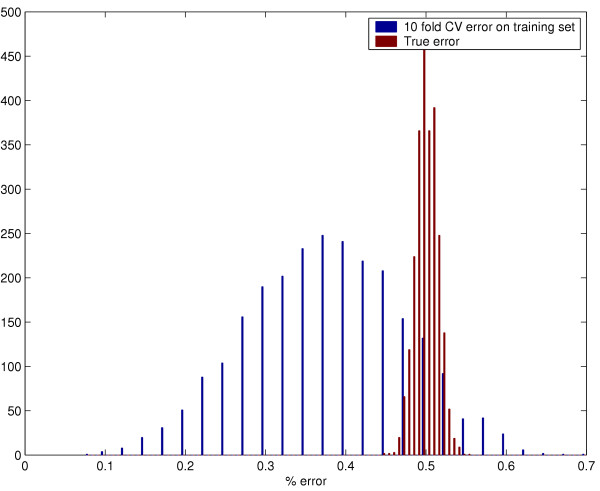
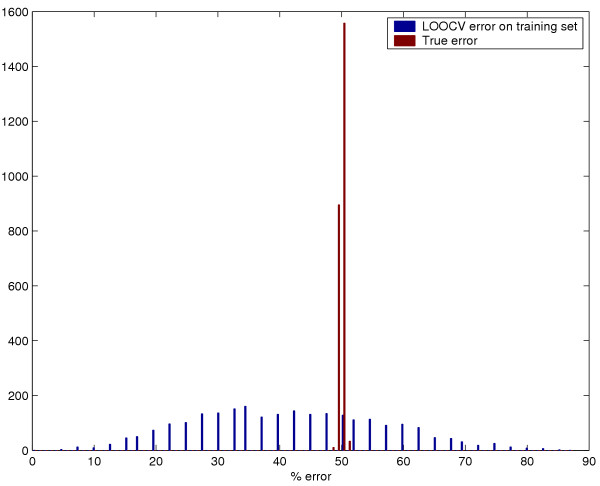
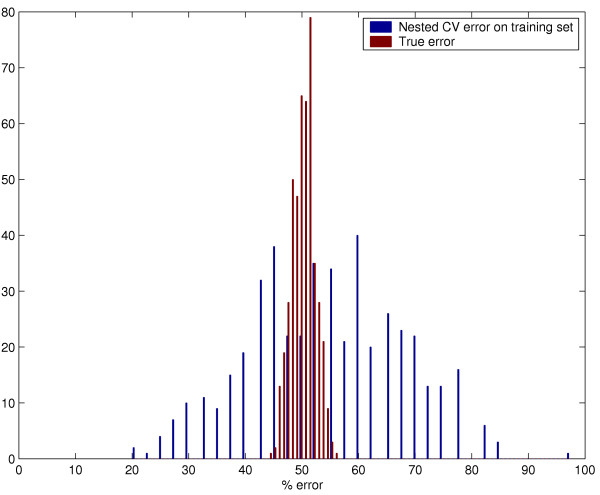
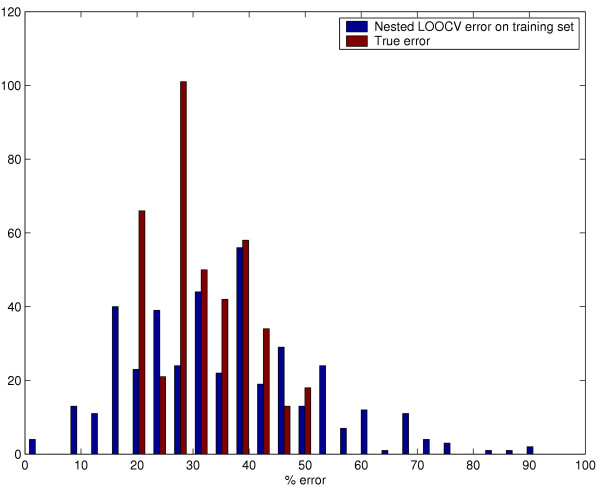
Background: Cross-validation (CV) is an effective method for estimating the prediction error of a classifier. Some recent articles have proposed methods for optimizing classifiers by choosing classifier parameter values that minimize the CV error estimate. We have evaluated the validity of using the CV error estimate of the optimized classifier as an estimate of the true error expected on independent data. Results: We used CV to optimize the classification parameters for two kinds of classifiers; Shrunken Centroids and Support Vector Machines (SVM). Random training datasets were created, with no difference in the distribution of the features between the two classes. Using these "null" datasets, we selected classifier parameter values that minimized the CV error estimate. 10-fold CV was used for Shrunken Centroids while Leave-One-Out-CV (LOOCV) was used for the SVM. Independent test data was created to estimate the true error. With "null" and "non null" (with differential expression between the classes) data, we also tested a nested CV procedure, where an inner CV loop is used to perform the tuning of the parameters while an outer CV is used to compute an estimate of the error. The CV error estimate for the classifier with the optimal parameters was found to be a substantially biased estimate of the true error that the classifier would incur on independent data. Even though there is no real difference between the two classes for the "null" datasets, the CV error estimate for the Shrunken Centroid with the optimal parameters was less than 30% on 18.5% of simulated training data-sets. For SVM with optimal parameters the estimated error rate was less than 30% on 38% of "null" data-sets. Performance of the optimized classifiers on the independent test set was no better than chance. The nested CV procedure reduces the bias considerably and gives an estimate of the error that is very close to that obtained on the independent testing set for both Shrunken Centroids and SVM classifiers for "null" and "non-null" data distributions. Conclusion: We show that using CV to compute an error estimate for a classifier that has itself been tuned using CV gives a significantly biased estimate of the true error. Proper use of CV for estimating true error of a classifier developed using a well defined algorithm requires that all steps of the algorithm, including classifier parameter tuning, be repeated in each CV loop. A nested CV procedure provides an almost unbiased estimate of the true error.
Overview
The claims and statistics of this paper haven’t been checked yet.
Free: it reads the open-access text and checks the first 5 claims that cite a source we can check. Create a free account to check every claim.
Integrity signals
Registry
Cites
Statistics
Figures
Verification
Claims the paper makes
The claims and statistics of this paper haven’t been checked yet.
Free: it reads the open-access text and checks the first 5 claims that cite a source we can check. Create a free account to check every claim.
Self-check
Percentages, sums and reported differences re-computed from the paper’s own numbers.
The self-check needs the paper’s full text.
Citations
Cites
LIBSVM: A library for support vector machines
Chang, C.-C., & Lin, C.-J. (2011) · ACM Transactions on Intelligent Systems and Technology · doi:10.1145/1961189.1961199 · Cited by 40,918
Wu, Y. (1999) · Technometrics · doi:10.1080/00401706.1999.10485951 · Cited by 27,221 · cited 1×
“SVMs were introduced by Vapnik [ 8 ] as linear hyperplanes that separate data belonging to different classes while maximizing the margin, or the distance of the training samples to the linear separating hyperplane.”
Method(2012) · Encyclopedia of the Sciences of Learning · doi:10.1007/978-1-4419-1428-6_5195 · Cited by 19,370
Diagnosis of multiple cancer types by shrunken centroids of gene expression
Tibshirani, R., Hastie, T., Narasimhan, B., & Chu, G. (2002) · Proceedings of the National Academy of Sciences · doi:10.1073/pnas.082099299 · Cited by 2,930 · cited 2×
“This classifier, originally proposed by Tibshirani et al [5], is an extension of the nearest centroid classifier.”
BackgroundMethodImprovements on Cross-Validation: The 632+ Bootstrap Method
Efron, B., & Tibshirani, R. (1997) · Journal of the American Statistical Association · doi:10.1080/01621459.1997.10474007 · Cited by 1,636 · cited 1×
“632 Bootstrap [10] and Bootstrap CV [11].”
Selection bias in gene extraction on the basis of microarray gene-expression data
Ambroise, C., & McLachlan, G. J. (2002) · Proceedings of the National Academy of Sciences · doi:10.1073/pnas.102102699 · Cited by 1,480 · cited 1×
“[2], Ambroise and McLachlan [3] and Reunanen [4], this gives a very biased estimate of the true error; not much better than the resubstitution estimate.”
BackgroundPrediction error estimation: a comparison of resampling methods
Molinaro, A. M., Simon, R., & Pfeiffer, R. M. (2005) · Bioinformatics · doi:10.1093/bioinformatics/bti499 · Cited by 1,339 · cited 1×
“However, low variance methods can also have a large inherent bias [12] (either positive or negative).”
BackgroundSelf-citationPitfalls in the Use of DNA Microarray Data for Diagnostic and Prognostic Classification
Simon, R., Radmacher, M. D., Dobbin, K., & McShane, L. M. (2003) · JNCI Journal of the National Cancer Institute · doi:10.1093/jnci/95.1.14 · Cited by 1,006 · cited 1×
“[2], Ambroise and McLachlan [3] and Reunanen [4], this gives a very biased estimate of the true error; not much better than the resubstitution estimate.”
Self-citationIizuka, N., Oka, M., Yamada-Okabe, H., Nishida, M., Maeda, Y., Mori, N., Takao, T., Tamesa, T., Tangoku, A., Tabuchi, H., et al. (2003) · The Lancet · doi:10.1016/s0140-6736(03)12775-4 · Cited by 511
Peng, S., Xu, Q., Ling, X. B., Peng, X., Du, W., & Chen, L. (2003) · FEBS Letters · doi:10.1016/s0014-5793(03)01275-4 · Cited by 218
Cited by
Moons, K. G. M., Altman, D. G., Reitsma, J. B., Ioannidis, J. P. A., Macaskill, P., Steyerberg, E. W., Vickers, A. J., Ransohoff, D. F., & Collins, G. S. (2015) · Annals of Internal Medicine · doi:10.7326/m14-0698 · Cited by 5,147
Choosing Prediction Over Explanation in Psychology: Lessons From Machine Learning
Yarkoni, T., & Westfall, J. (2017) · Perspectives on Psychological Science · doi:10.1177/1745691617693393 · Cited by 1,916
“…should ideally embed any model selection steps into the cross-validation procedure itself, rather than simply picking the model that gives the best cross-validated result (for further explanation, see Cawley & Talbot, 2010; Krstajic, Buturovic, Leahy, & Thomas, 2014; Varma & Simon, 2006).”
BackgroundMethodMachine learning algorithm validation with a limited sample size
Vabalas, A., Gowen, E., Poliakoff, E., & Casson, A. J. (2019) · PLOS ONE · doi:10.1371/journal.pone.0224365 · Cited by 1,901
“Varma and Simon [7] suggest that Nested CV provides almost unbiased performance estimates.”
BackgroundMethodResultInfluentialMoons, K. G. M., Wolff, R. F., Riley, R. D., Whiting, P. F., Westwood, M., Collins, G. S., Reitsma, J. B., Kleijnen, J., & Mallett, S. (2019) · Annals of Internal Medicine · doi:10.7326/m18-1377 · Cited by 1,669
Cross-validation pitfalls when selecting and assessing regression and classification models
Krstajic, D., Buturovic, L. J., Leahy, D. E., & Thomas, S. (2014) · Journal of Cheminformatics · doi:10.1186/1758-2946-6-10 · Cited by 1,090
“It is important to note that both Stone [2] and Varma and Simon [9] use leave-one-out cross-validation, while we use V-fold cross-validation.”
BackgroundMethodResultInfluentialMachine Learning Approaches for Clinical Psychology and Psychiatry
Dwyer, D. B., Falkai, P., & Koutsouleris, N. (2018) · Annual Review of Clinical Psychology · doi:10.1146/annurev-clinpsy-032816-045037 · Cited by 966
Machine Learning: New Ideas and Tools in Environmental Science and Engineering
Zhong, S., Zhang, K., Bagheri, M., Burken, J. G., Gu, A., Li, B., Ma, X., Marrone, B. L., Ren, Z. J., Schrier, J., et al. (2021) · Environmental Science & Technology · doi:10.1021/acs.est.1c01339 · Cited by 945
Kozak, S., Nagel, S., & Santosh, S. (2020) · Journal of Financial Economics · doi:10.1016/j.jfineco.2019.06.008 · Cited by 750
Model Evaluation, Model Selection, and Algorithm Selection in Machine Learning
Raschka, S. (2018) · arXiv · doi:10.48550/arxiv.1811.12808 · Cited by 735
Toward more realistic drug-target interaction predictions
Pahikkala, T., Airola, A., Pietila, S., Shakyawar, S., Szwajda, A., Tang, J., & Aittokallio, T. (2015) · Briefings in Bioinformatics · doi:10.1093/bib/bbu010 · Cited by 559
“In addition to the aforementioned CV issues, selection of hyper-parameters, such as the regularization [20–23] that if CV estimate is used as a parameter selection tool, the same estimate is no longer reliable for estimating the prediction performance of the model trained with the optimal…”
Cross-Validation: What Does It Estimate and How Well Does It Do It?
Bates, S., Hastie, T., & Tibshirani, R. (2024) · Journal of the American Statistical Association · doi:10.1080/01621459.2023.2197686 · Cited by 442
“To this end, Varma and Simon (2006) and Tibshirani and Tibshirani (2009) suggest a bias-correction for the model selected by cross-validation, Lei (2019) shows how to return a confidence set for the best model parameters, and Yang (2007); Wager (2020) show that for CV, comparing two models is a…”
MethodAlzheimer's disease diagnosis in individual subjects using structural MR images: Validation studies
Vemuri, P., Gunter, J. L., Senjem, M. L., Whitwell, J. L., Kantarci, K., Knopman, D. S., Boeve, B. F., Petersen, R. C., & Jack, C. R. (2008) · NeuroImage · doi:10.1016/j.neuroimage.2007.09.073 · Cited by 454
“Note that for obtaining true unbiased estimates of the error, it is necessary to run the feature reduction step inside the CV loop, so that the CV error is representative of the true error (Varma and Simon, 2006).”
BackgroundTSception: Capturing Temporal Dynamics and Spatial Asymmetry From EEG for Emotion Recognition
Ding, Y., Robinson, N., Zhang, S., Zeng, Q., & Guan, C. (2023) · IEEE Transactions on Affective Computing · doi:10.1109/taffc.2022.3169001 · Cited by 428
“For a more robust evaluation of the networks, nested cross-validation [42] is further adopted with the inner loop being 5-fold cross-validation and the outer loop being leave-one-trial-out cross-validation.”
MethodTargeted Metabolomics for Biomarker Discovery
Griffiths, W. J., Koal, T., Wang, Y., Kohl, M., Enot, D. P., & Deigner, H. (2010) · Angewandte Chemie International Edition · doi:10.1002/anie.200905579 · Cited by 415
Balabin, R. M., & Smirnov, S. V. (2011) · Analytica Chimica Acta · doi:10.1016/j.aca.2011.03.006 · Cited by 398
Machine learning in concrete science: applications, challenges, and best practices
Li, Z., Yoon, J., Zhang, R., Rajabipour, F., Srubar III, W. V., Dabo, I., & Radlińska, A. (2022) · npj Computational Materials · doi:10.1038/s41524-022-00810-x · Cited by 388
Radiomics with artificial intelligence: a practical guide for beginners
Department of Radiology Istanbul Training and Research Hospital, I., Kocak, B., Durmaz, E. S., Department of Radiology, B. M. S. S. H., Ates, E., Department of Radiology Istanbul Training and Research Hospital, I., Kilickesmez, O., & Department of Radiology Istanbul Training and Research Hospital, I. (2019) · Diagnostic and Interventional Radiology · doi:10.5152/dir.2019.19321 · Cited by 366
“For creating such unseen data sets, although the hold-out technique seems to be the most appropriate internal validation method, there is also nested cross-validation technique that is primarily used for this purpose and might give similar estimates to an independent validation (70).”
MethodDetection of COVID-19 Infection from Routine Blood Exams with Machine Learning: A Feasibility Study
Brinati, D., Campagner, A., Ferrari, D., Locatelli, M., Banfi, G., & Cabitza, F. (2020) · Journal of Medical Systems · doi:10.1007/s10916-020-01597-4 · Cited by 362
“This was tackled by performing nested cross-validation in order to control for bias [38], and by”
MethodA survey of Bayesian predictive methods for model assessment, selection and comparison
Vehtari, A., & Ojanen, J. (2012) · Statistics Surveys · doi:10.1214/12-ss102 · Cited by 348
“Even if the procedure is based on an approach giving unbiased expected utility estimates for any particular model, the data-fitted model selection procedure causes the expected utility estimate of the selected model to be biased (see, for example, Stone, 1974; Rencher and Pun, 1980; Reunanen, 2003; Vehtari and Lampine…”
Machine learning approach for pavement performance prediction
Marcelino, P., de Lurdes Antunes, M., Fortunato, E., & Gomes, M. C. (2021) · International Journal of Pavement Engineering · doi:10.1080/10298436.2019.1609673 · Cited by 316
Hong, Y., Downey, T., Eu, K. W., Koh, P. K., & Cheah, P. Y. (2010) · Clinical & Experimental Metastasis · doi:10.1007/s10585-010-9305-4 · Cited by 319
“overestimate the prediction accuracy, the two-level nested cross-validation reduces the bias inherent in the singlelevel cross-validation and gives an error estimate that is very close to that obtained from an independent test set [13].”
ResultJiao, Y., & Du, P. (2016) · Quantitative Biology · doi:10.1007/s40484-016-0081-2 · Cited by 307
“A safe evaluation protocol involving the feature selection is to leave the testing sample out before the feature selection process [60].”
BackgroundDetection of Non-Technical Losses Using Smart Meter Data and Supervised Learning
Buzau, M. M., Tejedor-Aguilera, J., Cruz-Romero, P., & Gomez-Exposito, A. (2019) · IEEE Transactions on Smart Grid · doi:10.1109/tsg.2018.2807925 · Cited by 305
“However, this approach leads to biased error estimates as reported in [21].”
BackgroundResultAutomatic adventitious respiratory sound analysis: A systematic review
Pramono, R. X. A., Bowyer, S., & Rodriguez-Villegas, E. (2017) · PLOS ONE · doi:10.1371/journal.pone.0177926 · Cited by 297
Comparison of Bayesian predictive methods for model selection
Piironen, J., & Vehtari, A. (2017) · Statistics and Computing · doi:10.1007/s11222-016-9649-y · Cited by 294
“However, the topic has been discussed for example by Rencher and Pun (1980), Ambroise and McLachlan (2002), Reunanen (2003), Varma and Simon (2006), and Cawley and Talbot (2010).”
BackgroundMachine Learning for Sociology
Molina, M., & Garip, F. (2019) · Annual Review of Sociology · doi:10.1146/annurev-soc-073117-041106 · Cited by 295
On the overestimation of random forest’s out-of-bag error
Janitza, S., & Hornung, R. (2018) · PLOS ONE · doi:10.1371/journal.pone.0201904 · Cited by 278
Koutsouleris, N., Dwyer, D. B., Degenhardt, F., Maj, C., Urquijo-Castro, M. F., Sanfelici, R., Popovic, D., Oeztuerk, O., Haas, S. S., Weiske, J., et al. (2021) · JAMA Psychiatry · doi:10.1001/jamapsychiatry.2020.3604 · Cited by 275
A Guide to Cross-Validation for Artificial Intelligence in Medical Imaging
Bradshaw, T. J., Huemann, Z., Hu, J., & Rahmim, A. (2023) · Radiology: Artificial Intelligence · doi:10.1148/ryai.220232 · Cited by 250
Efficient global optimization algorithm assisted by multiple surrogate techniques
Viana, F. A. C., Haftka, R. T., & Watson, L. T. (2013) · Journal of Global Optimization · doi:10.1007/s10898-012-9892-5 · Cited by 255
A Fair Comparison of Graph Neural Networks for Graph ClassificationPreprint
Errica, F., Podda, M., Bacciu, D., & Micheli, A. (2019) · arXiv (Cornell University) · doi:10.48550/arxiv.1912.09893 · Cited by 446
“When a test set is not explicitly given, a common way to proceed is to use k-fold Cross Validation (CV) (Stone, 1974; Varma & Simon, 2006; Cawley & Talbot, 2010). k -fold CV uses k different training/test splits to estimate the generalization performance of a model; for each partition, an internal…”
MethodSwan, A. L., Mobasheri, A., Allaway, D., Liddell, S., & Bacardit, J. (2013) · OMICS: A Journal of Integrative Biology · doi:10.1089/omi.2013.0017 · Cited by 249
“Therefore larger datasets would be more suitable, because cross-validation would not be needed to generate training and test sets (Kohavi, 1995; Varma and Simon, 2006).”
BackgroundCriteria for the translation of radiomics into clinically useful tests
Huang, E. P., O’Connor, J. P. B., McShane, L. M., Giger, M. L., Lambin, P., Kinahan, P. E., Siegel, E. L., & Shankar, L. K. (2023) · Nature Reviews Clinical Oncology · doi:10.1038/s41571-022-00707-0 · Cited by 230
Simon, R. M., Subramanian, J., Li, M.-C., & Menezes, S. (2011) · Briefings in Bioinformatics · doi:10.1093/bib/bbr001 · Cited by 227
“If a tuning parameter such as a penalty value for fitting an L1 or L2 penalized proportional hazards model is to be optimized by cross-validation, that crossvalidation for model selection should be performed strictly within the training set T1 [17].”
MethodSelf-citationState-of-the art data normalization methods improve NMR-based metabolomic analysis
Kohl, S. M., Klein, M. S., Hochrein, J., Oefner, P. J., Spang, R., & Gronwald, W. (2012) · Metabolomics · doi:10.1007/s11306-011-0350-z · Cited by 227
“The nested cross-validation approach yields an almost unbiased estimate of the true classification error (Varma and Simon 2006).”
Consensus features nested cross-validation
Parvandeh, S., Yeh, H.-W., Paulus, M. P., & McKinney, B. A. (2020) · Bioinformatics · doi:10.1093/bioinformatics/btaa046 · Cited by 222
Diaz-Uriarte, R. (2007) · BMC Bioinformatics · doi:10.1186/1471-2105-8-328 · Cited by 223
“In this later case we need a nested [4] or double or full cross-validation [5] to estimate the error rate of the rule or procedure.”
BackgroundMethodHaibe-Kains, B., Desmedt, C., Sotiriou, C., & Bontempi, G. (2008) · Bioinformatics · doi:10.1093/bioinformatics/btn374 · Cited by 219
De Bruyne, K., Slabbinck, B., Waegeman, W., Vauterin, P., De Baets, B., & Vandamme, P. (2011) · Systematic and Applied Microbiology · doi:10.1016/j.syapm.2010.11.003 · Cited by 219
Molecular sampling of prostate cancer: a dilemma for predicting disease progression
Sboner, A., Demichelis, F., Calza, S., Pawitan, Y., Setlur, S. R., Hoshida, Y., Perner, S., Adami, H.-O., Fall, K., Mucci, L. A., et al. (2010) · BMC Medical Genomics · doi:10.1186/1755-8794-3-8 · Cited by 218
“This procedure enables the unbiased estimation of the performance of a classifier since the evaluation is performed on an independent data set [18].”
LGGNet: Learning From Local-Global-Graph Representations for Brain–Computer Interface
Ding, Y., Robinson, N., Tong, C., Zeng, Q., & Guan, C. (2024) · IEEE Transactions on Neural Networks and Learning Systems · doi:10.1109/tnnls.2023.3236635 · Cited by 211
“The nested cross-validation [42] is further utilized with its outer loop being leave-one-trial-out and its inner loop being 5-fold cross-validation so that testing data leakage and biased evaluation problems are avoided.”
MethodRepresentation, Pattern Information, and Brain Signatures: From Neurons to Neuroimaging
Kragel, P. A., Koban, L., Barrett, L. F., & Wager, T. D. (2018) · Neuron · doi:10.1016/j.neuron.2018.06.009 · Cited by 215
Bootstrapping the out-of-sample predictions for efficient and accurate cross-validation
Tsamardinos, I., Greasidou, E., & Borboudakis, G. (2018) · Machine Learning · doi:10.1007/s10994-018-5714-4 · Cited by 211
“2005); around the same time (Varma and Simon 2006), report a bias in error estimation when using K-fold crossvalidation, and suggest the use of the NCV protocol as an almost unbiased estimate of the true performance.”
BackgroundMethodRecommendations for Increasing the Transparency of Analysis of Preexisting Data Sets
Weston, S. J., Ritchie, S. J., Rohrer, J. M., & Przybylski, A. K. (2019) · Advances in Methods and Practices in Psychological Science · doi:10.1177/2515245919848684 · Cited by 203
Da-ano, R., Masson, I., Lucia, F., Doré, M., Robin, P., Alfieri, J., Rousseau, C., Mervoyer, A., Reinhold, C., Castelli, J., et al. (2020) · Scientific Reports · doi:10.1038/s41598-020-66110-w · Cited by 204
Korolev, I. O., Symonds, L. L., Bozoki, A. C., & Initiative, A. D. N. (2016) · PLOS ONE · doi:10.1371/journal.pone.0138866 · Cited by 194
It doesn’t hurt to ask: Question-asking increases liking.
Huang, K., Yeomans, M., Brooks, A. W., Minson, J., & Gino, F. (2017) · Journal of Personality and Social Psychology · doi:10.1037/pspi0000097 · Cited by 190
DeepMicro: Deep representation learning for disease prediction based on microbiome data
Oh, M., & Zhang, L. (2020) · Scientific Reports · doi:10.1038/s41598-020-63159-5 · Cited by 190
A blood-based prognostic biomarker in IBD
Biasci, D., Lee, J. C., Noor, N. M., Pombal, D. R., Hou, M., Lewis, N., Ahmad, T., Hart, A., Parkes, M., McKinney, E. F., et al. (2019) · Gut · doi:10.1136/gutjnl-2019-318343 · Cited by 190
Deep learning for small and big data in psychiatry
Koppe, G., Meyer-Lindenberg, A., & Durstewitz, D. (2021) · Neuropsychopharmacology · doi:10.1038/s41386-020-0767-z · Cited by 189
The Cross-Validated Adaptive Signature Design
Freidlin, B., Jiang, W., & Simon, R. (2010) · Clinical Cancer Research · doi:10.1158/1078-0432.ccr-09-1357 · Cited by 189
Self-citationWilimitis, D., & Walsh, C. G. (2023) · JMIR AI · doi:10.2196/49023 · Cited by 185
“…this should mitigate the source of optimistic bias introduced when cross-validation is used to tune model parameters on the same data used for model performance evaluation (ie, observed performance can be spuriously high owing to randomness in the data and the learning algorithm) [28,29].”
MethodCross-Validation: A Method Every Psychologist Should Know
de Rooij, M., & Weeda, W. (2020) · Advances in Methods and Practices in Psychological Science · doi:10.1177/2515245919898466 · Cited by 182
Clinical concept extraction: A methodology review
Fu, S., Chen, D., He, H., Liu, S., Moon, S., Peterson, K. J., Shen, F., Wang, L., Wang, Y., Wen, A., et al. (2020) · Journal of Biomedical Informatics · doi:10.1016/j.jbi.2020.103526 · Cited by 183
“The nested-cross-validation that uses two independent loops of CV for parameter tuning and error estimation can reduce the bias of the true error estimation (192).”
MethodFast automated cell phenotype image classification
Hamilton, N. A., Pantelic, R. S., Hanson, K., & Teasdale, R. D. (2007) · BMC Bioinformatics · doi:10.1186/1471-2105-8-110 · Cited by 180
“By splitting data as described above, cross-validation may be used to avoid over-fitting the training data and give an estimate of the prediction error for unseen data, though care does need to be taken [26].”
Machine learning for ecosystem services
Willcock, S., Martínez-López, J., Hooftman, D. A. P., Bagstad, K. J., Balbi, S., Marzo, A., Prato, C., Sciandrello, S., Signorello, G., Voigt, B., et al. (2018) · Ecosystem Services · doi:10.1016/j.ecoser.2018.04.004 · Cited by 181
“For example, k-fold cross validation allows for fine-tuning of model performance (Varma and Simon, 2006; Wiens et al., 2008).”
MethodETHOS: a multi-label hate speech detection dataset
Mollas, I., Chrysopoulou, Z., Karlos, S., & Tsoumakas, G. (2022) · Complex & Intelligent Systems · doi:10.1007/s40747-021-00608-2 · Cited by 175
“performed nested-cross-validation [57] evaluation, using a variety of parameter setups, for every algorithm except NNs, where we applied tenfold cross-validation [17].”
MethodChemically intuited, large-scale screening of MOFs by machine learning techniques
Borboudakis, G., Stergiannakos, T., Frysali, M., Klontzas, E., Tsamardinos, I., & Froudakis, G. E. (2017) · npj Computational Materials · doi:10.1038/s41524-017-0045-8 · Cited by 180
“Unfortunately, the estimation of this best performing configuration is optimistically biased because numerous models have been tried.(41) The optimistic estimation is equivalent to the problem of multiple testing in statistics, called “the multiple induction problem in Machine Learning”.”
MethodOrganic reactivity from mechanism to machine learning
Jorner, K., Tomberg, A., Bauer, C., Sköld, C., & Norrby, P.-O. (2021) · Nature Reviews Chemistry · doi:10.1038/s41570-021-00260-x · Cited by 175
Lau, S. H., Borden, M. A., Steiman, T. J., Wang, L. S., Parasram, M., & Doyle, A. G. (2021) · Journal of the American Chemical Society · doi:10.1021/jacs.1c08105 · Cited by 174
Li, W., & Becker, D. M. (2021) · Energy · doi:10.1016/j.energy.2021.121543 · Cited by 174
Zhao, X., Yao, J., Deng, W., Jia, M., & Liu, Z. (2022) · Mechanical Systems and Signal Processing · doi:10.1016/j.ymssp.2022.108826 · Cited by 169
Machine Learning for Perovskite Solar Cells and Component Materials: Key Technologies and Prospects
Liu, Y., Tan, X., Liang, J., Han, H., Xiang, P., & Yan, W. (2023) · Advanced Functional Materials · doi:10.1002/adfm.202214271 · Cited by 174
Making Individual Prognoses in Psychiatry Using Neuroimaging and Machine Learning
Janssen, R. J., Mourão-Miranda, J., & Schnack, H. G. (2018) · Biological Psychiatry: Cognitive Neuroscience and Neuroimaging · doi:10.1016/j.bpsc.2018.04.004 · Cited by 168
Baumann, D., & Baumann, K. (2014) · Journal of Cheminformatics · doi:10.1186/s13321-014-0047-1 · Cited by 167
“Double cross-validation [5-19] offers an attractive con-”
InfluentialPredicting Survival From Large Echocardiography and Electronic Health Record Datasets
Samad, M. D., Ulloa, A., Wehner, G. J., Jing, L., Hartzel, D., Good, C. W., Williams, B. A., Haggerty, C. M., & Fornwalt, B. K. (2019) · JACC: Cardiovascular Imaging · doi:10.1016/j.jcmg.2018.04.026 · Cited by 165
Deep metabolome: Applications of deep learning in metabolomics
Pomyen, Y., Wanichthanarak, K., Poungsombat, P., Fahrmann, J., Grapov, D., & Khoomrung, S. (2020) · Computational and Structural Biotechnology Journal · doi:10.1016/j.csbj.2020.09.033 · Cited by 166
“To address this issue, researchers have developed an alternative technique called nested cross-validation [105] (Fig.”
MethodEffect of data leakage in brain MRI classification using 2D convolutional neural networks
Yagis, E., Atnafu, S. W., García Seco de Herrera, A., Marzi, C., Scheda, R., Giannelli, M., Tessa, C., Citi, L., & Diciotti, S. (2021) · Scientific Reports · doi:10.1038/s41598-021-01681-w · Cited by 161
Fine detection of grasp force and posture by amputees via surface electromyography
Castellini, C., Gruppioni, E., Davalli, A., & Sandini, G. (2009) · Journal of Physiology-Paris · doi:10.1016/j.jphysparis.2009.08.008 · Cited by 160
Khodayari-Rostamabad, A., Reilly, J. P., Hasey, G. M., de Bruin, H., & MacCrimmon, D. J. (2013) · Clinical Neurophysiology · doi:10.1016/j.clinph.2013.04.010 · Cited by 161
A Review on Variable Selection in Regression Analysis
Desboulets, L. D. D. (2018) · Econometrics · doi:10.3390/econometrics6040045 · Cited by 159
New insights into hydrogen uptake on porous carbon materials via explainable machine learning
Kusdhany, M. I. M., & Lyth, S. M. (2021) · Carbon · doi:10.1016/j.carbon.2021.04.036 · Cited by 168
“Nested cross validation was chosen instead of a test/train split to minimize bias in the performance metrics caused by the relatively small dataset [55].”
MethodSun, H., Chen, Y., Huang, Q., Lui, S., Huang, X., Shi, Y., Xu, X., Sweeney, J. A., & Gong, Q. (2018) · Radiology · doi:10.1148/radiol.2017170226 · Cited by 158
Personality Research and Assessment in the Era of Machine Learning
Stachl, C., Pargent, F., Hilbert, S., Harari, G. M., Schoedel, R., Vaid, S. S., Gosling, S. D., & Bühner, M. (2020) · European Journal of Personality · doi:10.1002/per.2257 · Cited by 201
Machine learning for genetic prediction of psychiatric disorders: a systematic review
Bracher-Smith, M., Crawford, K., & Escott-Price, V. (2021) · Molecular Psychiatry · doi:10.1038/s41380-020-0825-2 · Cited by 157
Predicting Age From Brain EEG Signals—A Machine Learning Approach
Al Zoubi, O., Ki Wong, C., Kuplicki, R. T., Yeh, H.-W., Mayeli, A., Refai, H., Paulus, M., & Bodurka, J. (2018) · Frontiers in Aging Neuroscience · doi:10.3389/fnagi.2018.00184 · Cited by 154
“To provide un-biased prediction for age, the nested cross validation was adopted in building age prediction models (Varma and Simon, 2006).”
MethodHillel, T., Bierlaire, M., Elshafie, M., & Jin, Y. (2020) · Journal of Choice Modelling · doi:10.1016/j.jocm.2020.100221 · Cited by 204
“This is explored by Varma and Simon (2006), who show that cross-validation provides an upward biased estimate of true performance if it is used for model optimisation.”
Roberts, D. M., Schade, M. M., Mathew, G. M., Gartenberg, D., & Buxton, O. M. (2020) · Sleep · doi:10.1093/sleep/zsaa045 · Cited by 152
“Iterating through model parameters to minimize the test set error generates a biased estimate of model performance, as test set performance is no longer outside of the training procedure [45, 46].”
BackgroundActivating and Relaxing Music Entrains the Speed of Beat Synchronized Walking
Leman, M., Moelants, D., Varewyck, M., Styns, F., van Noorden, L., & Martens, J. (2013) · PLoS ONE · doi:10.1371/journal.pone.0067932 · Cited by 189
“To find the best combination, 9-fold cross-validation is applied to the 9 development folds, as suggested in [17].”
MethodAutomated machine learning: past, present and future
Baratchi, M., Wang, C., Limmer, S., van Rijn, J. N., Hoos, H. H., Bäck, T., & Olhofer, M. (2024) · Artificial Intelligence Review · doi:10.1007/s10462-024-10726-1 · Cited by 209
Scaling Self-Supervised Learning for Histopathology with Masked Image Modeling
Filiot, A., Ghermi, R., Olivier, A., Jacob, P., Fidon, L., Camara, A., Mac Kain, A., Saillard, C., & Schiratti, J.-B. (2023) · doi:10.1101/2023.07.21.23292757 · Cited by 148
“(67–69) report a bias in error estimation when using cross-validation for model selection and model assessment simultaneously.”
BackgroundIdentifying obstructive sleep apnoea patients responsive to supplemental oxygen therapy
Sands, S. A., Edwards, B. A., Terrill, P. I., Butler, J. P., Owens, R. L., Taranto-Montemurro, L., Azarbarzin, A., Marques, M., Hess, L. B., Smales, E. T., et al. (2018) · European Respiratory Journal · doi:10.1183/13993003.00674-2018 · Cited by 147
Seal, S., Mahale, M., García-Ortegón, M., Joshi, C. K., Hosseini-Gerami, L., Beatson, A., Greenig, M., Shekhar, M., Patra, A., Weis, C., et al. (2025) · Chemical Research in Toxicology · doi:10.1021/acs.chemrestox.5c00033 · Cited by 187
Association between negative cognitive bias and depression: A symptom-level approach.
Beevers, C. G., Mullarkey, M. C., Dainer-Best, J., Stewart, R. A., Labrada, J., Allen, J. J. B., McGeary, J. E., & Shumake, J. (2019) · Journal of Abnormal Psychology · doi:10.1037/abn0000405 · Cited by 145
“As noted by other researchers (Cawley & Talbot, 2010; Varma & Simon, 2006), overfitting from model selection will be most severe when the sample of data is small and the number of hyperparameters is large.”
Liu, D., Liu, F., Xie, X., Su, L., Liu, M., Xie, X., Kuang, M., Huang, G., Wang, Y., Zhou, H., et al. (2020) · European Radiology · doi:10.1007/s00330-019-06553-6 · Cited by 148
Mitigating Bias in Radiology Machine Learning: 1. Data Handling
Rouzrokh, P., Khosravi, B., Faghani, S., Moassefi, M., Vera Garcia, D. V., Singh, Y., Zhang, K., Conte, G. M., & Erickson, B. J. (2022) · Radiology: Artificial Intelligence · doi:10.1148/ryai.210290 · Cited by 145
“Nested cross-validation is a variant of the k-fold cross-validation technique that tries to address the issue of overfitting to the hyperparameters (45).”
MethodPredicting driver takeover performance in conditionally automated driving
Du, N., Zhou, F., Pulver, E. M., Tilbury, D. M., Robert, L., Pradhan, A. K., & Yang, X. J. (2020) · Accident Analysis & Prevention · doi:10.1016/j.aap.2020.105748 · Cited by 171
Andreasen, D., Leemput, K. V., Hansen, R. H., Andersen, J. A. L., & Edmund, J. (2015) · Medical Physics · doi:10.1118/1.4914158 · Cited by 148
Graph Neural Networks for Prediction of Fuel Ignition Quality
Schweidtmann, A. M., Rittig, J. G., König, A. A., Grohe, M., Mitsos, A., & Dahmen, M. (2020) · Energy & Fuels · doi:10.1021/acs.energyfuels.0c01533 · Cited by 163
Koromina, M., Pandi, M.-T., & Patrinos, G. P. (2019) · OMICS A Journal of Integrative Biology · doi:10.1089/omi.2019.0151 · Cited by 140
“Then, the procedure is repeated as many times as the data points (Baek et al., 2009; Varma and Simon, 2006).”
A random forest based biomarker discovery and power analysis framework for diagnostics research
Acharjee, A., Larkman, J., Xu, Y., Cardoso, V. R., & Gkoutos, G. V. (2020) · BMC Medical Genomics · doi:10.1186/s12920-020-00826-6 · Cited by 163
Fu, W., Wang, K., Tan, J., & Zhang, K. (2020) · Energy Conversion and Management · doi:10.1016/j.enconman.2019.112461 · Cited by 144
Practical considerations for specifying a super learner
Phillips, R. V., van der Laan, M. J., Lee, H., & Gruber, S. (2023) · International Journal of Epidemiology · doi:10.1093/ije/dyad023 · Cited by 181
“Screening of 𝑋 that considers associations with 𝑌 must be cross validated to avoid biasing the estimate of an algorithm’s predictive performance 28 .”
BackgroundThe current status of risk-stratified breast screening
Clift, A. K., Dodwell, D. J., Lord, S., Petrou, S., Brady, M., Collins, G. S., & Hippisley‐Cox, J. (2021) · British Journal of Cancer · doi:10.1038/s41416-021-01550-3 · Cited by 156
Avoiding common pitfalls in machine learning omic data science
Teschendorff, A. E. (2019) · Nature Materials · doi:10.1038/s41563-018-0241-z · Cited by 132
Anguita, D., Ghio, A., Greco, N., Oneto, L., & Ridella, S. (2010) · International Joint Conference on Neural Networks (IJCNN) · doi:10.1109/ijcnn.2010.5596450 · Cited by 143
Blagus, R., & Lusa, L. (2015) · BMC Bioinformatics · doi:10.1186/s12859-015-0784-9 · Cited by 158
“Others showed that similar problems are encountered when classifier parameter tuning is based on minimizing cross-validated error rates, which is performed outside CV loop [24].”
BackgroundUpton, R., Mumith, A., Beqiri, A., Parker, A., Hawkes, W., Gao, S., Porumb, M., Sarwar, R., Marques, P., Markham, D. H., et al. (2021) · JACC. Cardiovascular imaging · doi:10.1016/j.jcmg.2021.10.013 · Cited by 157
Kühn, M., & Johnson, K. (2013) · Springer eBooks · doi:10.1007/978-1-4614-6849-3_4 · Cited by 174
Infusing theory into deep learning for interpretable reactivity prediction
Wang, S., Pillai, H. S., Wang, S., Achenie, L. E. K., & Xin, H. (2021) · Nature Communications · doi:10.1038/s41467-021-25639-8 · Cited by 145
“2(a), we present the learning curves of the FCNN, CGCNN, and TinNet models, in which the mean absolute error (MAE) of prediction and its standard deviation are estimated by the nested 10-fold cross-validation approach [52] (see Supplementary Table 1 for the hyper-parameters of each model scheme).”
Method
Metadata
- Authors
- Varma, S., & Simon, R.
- Affiliations
- National Cancer Institute (US)
- Corresponding author
- Varma, Sudhir
- Venue
- BMC Bioinformatics
- Published
- 2006-02-23
- Volume
- 7
- Issue
- 1
- Pages
- 91-91
- ISSN
- 1471-2105 (ISSN-L)
- PMC
- PMC1397873
- OpenAlex
- W2141007997
- Cited by
- 2,485
- References
- 13
- Citations by year
- 2026: 760 · 2025: 246 · 2024: 146 · 2023: 165 · 2022: 178 · 2021: 179 · 2020: 190 · 2019: 110 · 2018: 96 · 2017: 90 · 2016: 49 · 2015: 47 · 2014: 43 · 2013: 42 · 2012: 35
- FWCI
- 7.08
- Type
- journal article
- Language
- en
- Open access
- gold
- doi.org
- Licence
- cc-by
- Locations
- BMC Bioinformatics (publishedVersion, cc-by)
- PubMed Central (publishedVersion, cc-by)
- PubMed (publishedVersion)
- DOAJ (DOAJ: Directory of Open Access Journals) (submittedVersion, cc-by-sa)
- Topics
- Life Sciences › Biochemistry, Genetics and Molecular Biology › Molecular Biology › Gene expression and cancer classification
- Physical Sciences › Computer Science › Artificial Intelligence › Machine Learning and Data Classification
- Physical Sciences › Mathematics › Statistics and Probability › Statistical Methods and Inference
- Keywords
- prediction error estimation, model selection, nested cross-validation, classifier parameter tuning, support vector machine, leave-one-out cross-validation, 10-fold cross-validation
- MeSH terms
- Algorithms, Artificial Intelligence, Computer Simulation, Data Interpretation, Statistical, Models, Genetic, Pattern Recognition, Automated, Sensitivity and Specificity, Reproducibility of Results, Models, Statistical, Bias, Oligonucleotide Array Sequence Analysis, Gene Expression Profiling
About these checks
Registry, retraction, Cites and statistics results are computed, not judged, with one exception: a printed reference that no index lists is read once by a model before it counts as a citation error. Claims are extracted by a model and kept only when their quote appears verbatim in the text; each cited source is then checked, with a model’s help, for whether it says what the claim relies on. Those verdicts can be wrong — read the claim’s quote and the cited source before relying on one.
Statistics and arithmetic are recomputed, not judged.
Confidence bands are shown only for fields calibrated on our annotated test set. None is calibrated yet, so no band is shown.
What counts as a claim ›How we measure confidence ›How we check this ›
Are you an author, or do you see a problem with this page? Request a review
Data sources
Bibliographic data: Semantic Scholar, OpenAlex, Crossref.
Contains information from the Semantic Scholar Academic Graph Datasets, made available under the ODC Attribution License (ODC-BY 1.0).
Semantic Scholar’s data is described in: Kinney, R., et al. (2023). The Semantic Scholar Open Data Platform. arXiv:2301.10140.
