

Bias in error estimation when using cross-validation for model selection
Open accessThe DOI matches its Crossref record; 13 of the 13 references it cites were found in a registry or an index.
Abstract
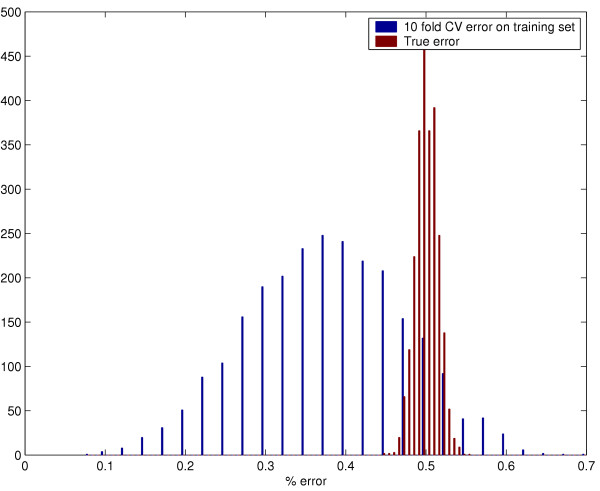
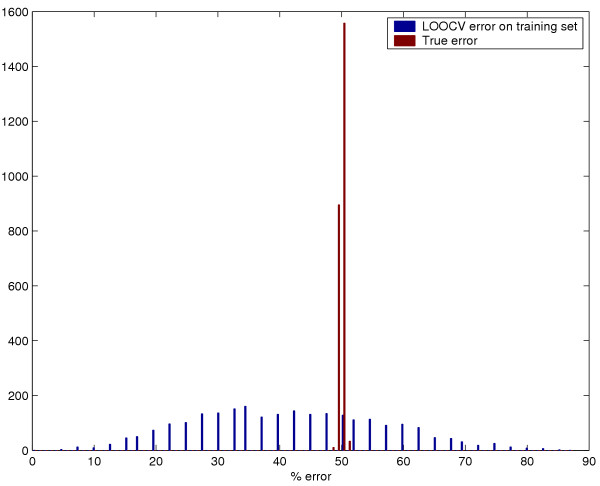
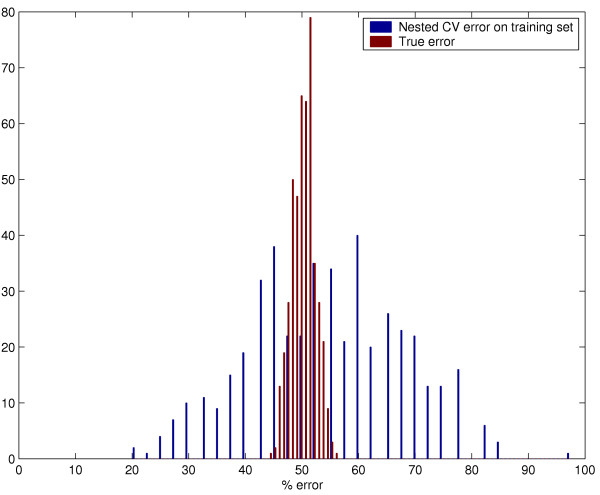
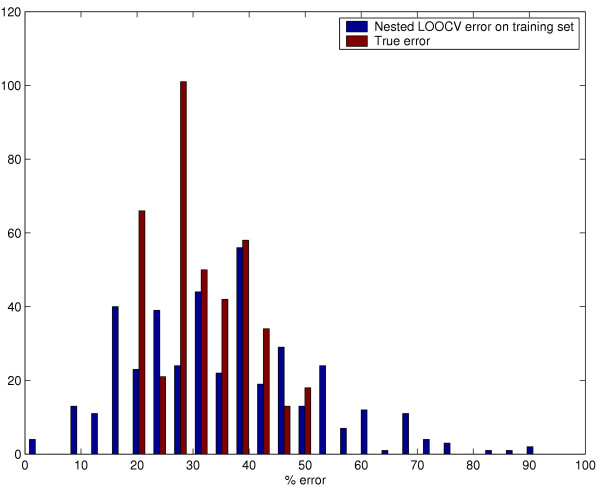
Background: Cross-validation (CV) is an effective method for estimating the prediction error of a classifier. Some recent articles have proposed methods for optimizing classifiers by choosing classifier parameter values that minimize the CV error estimate. We have evaluated the validity of using the CV error estimate of the optimized classifier as an estimate of the true error expected on independent data. Results: We used CV to optimize the classification parameters for two kinds of classifiers; Shrunken Centroids and Support Vector Machines (SVM). Random training datasets were created, with no difference in the distribution of the features between the two classes. Using these "null" datasets, we selected classifier parameter values that minimized the CV error estimate. 10-fold CV was used for Shrunken Centroids while Leave-One-Out-CV (LOOCV) was used for the SVM. Independent test data was created to estimate the true error. With "null" and "non null" (with differential expression between the classes) data, we also tested a nested CV procedure, where an inner CV loop is used to perform the tuning of the parameters while an outer CV is used to compute an estimate of the error. The CV error estimate for the classifier with the optimal parameters was found to be a substantially biased estimate of the true error that the classifier would incur on independent data. Even though there is no real difference between the two classes for the "null" datasets, the CV error estimate for the Shrunken Centroid with the optimal parameters was less than 30% on 18.5% of simulated training data-sets. For SVM with optimal parameters the estimated error rate was less than 30% on 38% of "null" data-sets. Performance of the optimized classifiers on the independent test set was no better than chance. The nested CV procedure reduces the bias considerably and gives an estimate of the error that is very close to that obtained on the independent testing set for both Shrunken Centroids and SVM classifiers for "null" and "non-null" data distributions. Conclusion: We show that using CV to compute an error estimate for a classifier that has itself been tuned using CV gives a significantly biased estimate of the true error. Proper use of CV for estimating true error of a classifier developed using a well defined algorithm requires that all steps of the algorithm, including classifier parameter tuning, be repeated in each CV loop. A nested CV procedure provides an almost unbiased estimate of the true error.
Overview
The claims and statistics of this paper haven’t been checked yet.
Free: it reads the open-access text and checks the first 5 claims that cite a source we can check. Create a free account to check every claim.
Integrity signals
Registry
Cites
Statistics
Figures
Verification
Claims the paper makes
The claims and statistics of this paper haven’t been checked yet.
Free: it reads the open-access text and checks the first 5 claims that cite a source we can check. Create a free account to check every claim.
Self-check
Percentages, sums and reported differences re-computed from the paper’s own numbers.
The self-check needs the paper’s full text.
Citations
Cites
LIBSVM: A library for support vector machines
Chang, C.-C., & Lin, C.-J. (2011) · ACM Transactions on Intelligent Systems and Technology · doi:10.1145/1961189.1961199 · Cited by 40,918
Wu, Y. (1999) · Technometrics · doi:10.1080/00401706.1999.10485951 · Cited by 27,221 · cited 1×
“SVMs were introduced by Vapnik [ 8 ] as linear hyperplanes that separate data belonging to different classes while maximizing the margin, or the distance of the training samples to the linear separating hyperplane.”
Method(2012) · Encyclopedia of the Sciences of Learning · doi:10.1007/978-1-4419-1428-6_5195 · Cited by 19,370
Diagnosis of multiple cancer types by shrunken centroids of gene expression
Tibshirani, R., Hastie, T., Narasimhan, B., & Chu, G. (2002) · Proceedings of the National Academy of Sciences · doi:10.1073/pnas.082099299 · Cited by 2,930 · cited 2×
“This classifier, originally proposed by Tibshirani et al [5], is an extension of the nearest centroid classifier.”
BackgroundMethodImprovements on Cross-Validation: The 632+ Bootstrap Method
Efron, B., & Tibshirani, R. (1997) · Journal of the American Statistical Association · doi:10.1080/01621459.1997.10474007 · Cited by 1,636 · cited 1×
“632 Bootstrap [10] and Bootstrap CV [11].”
Selection bias in gene extraction on the basis of microarray gene-expression data
Ambroise, C., & McLachlan, G. J. (2002) · Proceedings of the National Academy of Sciences · doi:10.1073/pnas.102102699 · Cited by 1,480 · cited 1×
“[2], Ambroise and McLachlan [3] and Reunanen [4], this gives a very biased estimate of the true error; not much better than the resubstitution estimate.”
BackgroundPrediction error estimation: a comparison of resampling methods
Molinaro, A. M., Simon, R., & Pfeiffer, R. M. (2005) · Bioinformatics · doi:10.1093/bioinformatics/bti499 · Cited by 1,339 · cited 1×
“However, low variance methods can also have a large inherent bias [12] (either positive or negative).”
BackgroundSelf-citationPitfalls in the Use of DNA Microarray Data for Diagnostic and Prognostic Classification
Simon, R., Radmacher, M. D., Dobbin, K., & McShane, L. M. (2003) · JNCI Journal of the National Cancer Institute · doi:10.1093/jnci/95.1.14 · Cited by 1,006 · cited 1×
“[2], Ambroise and McLachlan [3] and Reunanen [4], this gives a very biased estimate of the true error; not much better than the resubstitution estimate.”
Self-citationIizuka, N., Oka, M., Yamada-Okabe, H., Nishida, M., Maeda, Y., Mori, N., Takao, T., Tamesa, T., Tangoku, A., Tabuchi, H., et al. (2003) · The Lancet · doi:10.1016/s0140-6736(03)12775-4 · Cited by 511
Peng, S., Xu, Q., Ling, X. B., Peng, X., Du, W., & Chen, L. (2003) · FEBS Letters · doi:10.1016/s0014-5793(03)01275-4 · Cited by 218
Cited by
Items 801–900 of 1,006
A Model to Detect Readability Improvements in Incremental Changes
Roy, D., Fakhoury, S., Lee, J., & Arnaoudova, V. (2020) · International Conference on Program Comprehension · doi:10.1145/3387904.3389255 · Cited by 17
“Model creation was performed incrementally using the training set, employing 10-fold nested cross validation [52].”
MethodAutomated Volume Status Assessment Using Inferior Vena Cava Pulsatility
Mesin, L., Roatta, S., Pasquero, P., & Porta, M. (2020) · Electronics · doi:10.3390/electronics9101671 · Cited by 14
“This specific model was then tested by a leave-one-out approach, to reduce the bias in error estimation (considering our small dataset) [36].”
MethodRigot, S. K., Boninger, M. L., Ding, D., McKernan, G., Field-Fote, E. C., Hoffman, J. M., Hibbs, R., & Worobey, L. A. (2021) · Archives of Physical Medicine and Rehabilitation · doi:10.1016/j.apmr.2021.02.029 · Cited by 16
Tournemenne, R., Petiot, J.-F., Talgorn, B., Kokkolaras, M., & Gilbert, J. (2016) · Journal of Mechanical Design · doi:10.1115/1.4035503 · Cited by 14
eQTLs are key players in the integration of genomic and transcriptomic data for phenotype prediction
Wade, A. R., Duruflé, H., Sánchez, L., & Segura, V. (2022) · BMC Genomics · doi:10.1186/s12864-022-08690-7 · Cited by 18
Bajaj, S., Blair, K. S., Dobbertin, M. D., Patil, K. R., Tyler, P. M., Ringle, J. L., Bashford‐Largo, J., Mathur, A., Elowsky, J., Dominguez, A. J., et al. (2023) · Discover Mental Health · doi:10.1007/s44192-023-00033-6 · Cited by 14
“We used a K 1 x K 2 (here, K 1 = 10 and K 2 = 10) nested cross-validation approach [45, 46], where K 1 and K 2 represent the number of outer and inner loops, respectively.”
MethodClass probability estimation for medical studies
Simon, R. M. (2014) · Biometrical Journal · doi:10.1002/bimj.201300296 · Cited by 14
Self-citationThe predictive accuracy of intertemporal‐choice models
Arfer, K. B., & Luhmann, C. C. (2015) · British Journal of Mathematical and Statistical Psychology · doi:10.1111/bmsp.12049 · Cited by 17
Excess Optimism: How Biased is the Apparent Error of an Estimator Tuned by SURE?
Tibshirani, R. J., & Rosset, S. (2018) · Journal of the American Statistical Association · doi:10.1080/01621459.2018.1429276 · Cited by 29
“A parallel problem is to study the excess optimism associated with parameter tuning by cross-validation, considered in Varma and Simon (2006), Tibshirani and Tibshirani (2009), Bernau, Augustin, and Boulesteix (2013), Krstajic et al. (2014), Tsamardinos, Rakhshani, and Lagani (2015).”
BackgroundSegovia, F., Górriz, J. M., Ramı́rez, J., Martínez-Murcia, F. J., & Salas-Gonzalez, D. (2017) · Frontiers in Aging Neuroscience · doi:10.3389/fnagi.2017.00326 · Cited by 14
“A nested loop was also used to adjust the parameter C of the SVM classifier (Varma and Simon, 2006).”
MethodModeling and Experimental Design for MOOC Dropout Prediction: A Replication Perspective.
Gardner, J., Yang, Y., Baker, R. S., & Brooks, C. A. (2019) · Educational Data Mining · Cited by 14
WiFi-based driver’s activity recognition using multi-layer classification
Akhtar, Z. U. A., & Wang, H. (2020) · Neurocomputing · doi:10.1016/j.neucom.2020.04.133 · Cited by 15
A comprehensive comparison of ML algorithms for gene expression data classification
de Souza, B. F., de Carvalho, A. C. P. L. F., & Soares, C. (2010) · International Joint Conference on Neural Networks (IJCNN) · doi:10.1109/ijcnn.2010.5596651 · Cited by 13
“Finally, Jiang and Simon [25] studied various BT methods and concluded they were not satisfactory for all gene expression datasets, while their own proposed method, named Adjusted Bootstrap, performed more adequately.”
MethodOptimizing Mental Stress Detection via Heart Rate Variability Feature Selection
Behradfar, M., Roy, S., & Nuamah, J. K. (2025) · Sensors · doi:10.3390/s25134154 · Cited by 21
“In terms of model validation, the use of nested LOSO-CV was essential for ensuring that our models generalized well to new subjects, as it prevents information leakage and overfitting [22].”
InfluentialFearn, T., Beleites, C., Pierna, J. A. F., Baeten, V., Lagerholm, M., Roger, J., & Koidis, A. (2025) · TrAC Trends in Analytical Chemistry · doi:10.1016/j.trac.2025.118410 · Cited by 22
“In the context of cross-validation, splitting into separate sets for tuning and testing is known as nested cross-validation [19].”
Artificial intelligence and investment management: Structure, strategy, and governance
Mertzanis, C. (2025) · International Review of Financial Analysis · doi:10.1016/j.irfa.2025.104599 · Cited by 37
Chamseddine, I. M., Kim, Y., De, B. S., Naqa, I. E., Duda, D. G., Wolfgang, J. A., Pursley, J., Paganetti, H., Wo, J. Y.-L., Hong, T. S., et al. (2022) · JCO Clinical Cancer Informatics · doi:10.1200/cci.21.00169 · Cited by 13
Wu, Y., Xiang, C., Jia, M., & Fang, Y. (2022) · BMC Geriatrics · doi:10.1186/s12877-022-03295-x · Cited by 14
Deep learning-based meta-learner strategy for electricity theft detection
Shehzad, F., Ullah, Z., Alhussein, M. A., Aurangzeb, K., & Aslam, S. (2023) · Frontiers in Energy Research · doi:10.3389/fenrg.2023.1232930 · Cited by 19
The key determinants of individual greenhouse gas emissions in Germany are mostly domain-specific
Brandenstein, N., Ackermann, K., Aeschbach, N., & Rummel, J. (2023) · Communications Earth & Environment · doi:10.1038/s43247-023-01092-x · Cited by 15
Aliferis, C., & Simon, G. (2024) · Health informatics · doi:10.1007/978-3-031-39355-6_12 · Cited by 19
Huang, W., Wang, L., Zhu, J., Dong, L., Hu, H., Yao, H., Wang, L., & Lin, Z. (2024) · Environmental Science and Pollution Research · doi:10.1007/s11356-024-32951-5 · Cited by 16
“The tuning of optimal hyperpa-rameters for each ML model was implemented through 100 repeated iterations of 5-fold cross-validation on the training dataset (Varma and Simon 2006; Refaeilzadeh et al. 2009; Cawley and Talbot 2010).”
Ramon, A., Ni, M., Predeina, O., Gaffey, R., Kunz, P., Onuoha, S., & Sormanni, P. (2025) · mAbs · doi:10.1080/19420862.2024.2442750 · Cited by 13
“10 Our analysis with artificial data highlighted the importance of input representation in protein fitness prediction.”
da Silveira, A. C. M., Sobrinho, Á., da Silva, L. D., Santos, D. F. S., Nauman, M. A., & Perkusich, Â. (2025) · Simulation Modelling Practice and Theory · doi:10.1016/j.simpat.2025.103080 · Cited by 16
Chan, S. C., Wu, H. C., & Tsui, K. M. (2012) · IEEE Transactions on Systems Man and Cybernetics - Part A Systems and Humans · doi:10.1109/tsmca.2012.2199302 · Cited by 13
“The two-nested CV procedure adopted in this work is a recent tool that has received considerable attention in the bioinformatics community [20], [23], [30], [31].”
MethodInfluentialInterpretation of Genomic Data: Questions and Answers
Simon, R. M. (2008) · Seminars in Hematology · doi:10.1053/j.seminhematol.2008.04.008 · Cited by 13
Self-citationVijayan, V., Bulsara, N., Gadgil, C. J., & Gadgil, M. (2009) · International Journal of Bioinformatics Research and Applications · doi:10.1504/ijbra.2009.027515 · Cited by 13
A semi-supervised learning approach for model selection based on class-hypothesis testing
Górriz, J. M., Ramı́rez, J., Suckling, J., Martínez-Murcia, F. J., Illán, I. A., Segovia, F., Ortíz, A., Salas-Gonzalez, D., Castillo-Barnés, D., & Puntonet, C. G. (2017) · Expert Systems with Applications · doi:10.1016/j.eswa.2017.08.006 · Cited by 13
“Although the bias of he LOO CV error estimate is not significant for none of the afore- entioned methods on this classification task, we could obtain a lose to unbiased estimate of the actual risk by using the results f several resampling and optimization methods ( Efron & Tibshiani, 1997; Varma & Simon, 2006 ).”
MethodInfluentialThyroid Nodule Malignancy Risk Stratification Using a Convolutional Neural Network
Stib, M. T., Pan, I., Merck, D. L., Middleton, W. D., & Beland, M. D. (2020) · Ultrasound Quarterly · doi:10.1097/ruq.0000000000000501 · Cited by 13
Pfau, M., Walther, G., von der Emde, L. A., Berens, P., Faes, L., Fleckenstein, M., Heeren, T. F. C., Kortuem, K., Künzel, S. H., Müller, P. L., et al. (2020) · Der Ophthalmologe · doi:10.1007/s00347-020-01209-z · Cited by 14
A primer on applying AI synergistically with domain expertise to oncology
Kim, J., Kusko, R. L., Zeskind, B. J., Zhang, J., & Escalante-Chong, R. (2021) · Biochimica et Biophysica Acta (BBA) - Reviews on Cancer · doi:10.1016/j.bbcan.2021.188548 · Cited by 13
Kooner, K., Angirekula, A., Treacher, A., Al-Humimat, G., Marzban, M. F., Chen, A. Y., Pradhan, R., Tunga, N., Wang, C., Ahuja, P., et al. (2022) · Clinical ophthalmology · doi:10.2147/opth.s367722 · Cited by 13
“This further enhances the tendency to yield a classification performance akin to that expected in the clinic.(13) Moreover, by utilizing numerical OCT/A parameters as opposed to raw images we produce interpretable algorithms that explain how the final predictions are made.”
MethodResultZhang, L., Hao, C., Shen, X., Hong, G., Li, H., Zhou, X., Liu, C., & Guo, Z. (2013) · Breast Cancer Research and Treatment · doi:10.1007/s10549-013-2566-2 · Cited by 13
“Because it is possible that the intra-dataset cross validation error estimate for a predictor with the optimal parameters might be a substantially biased estimate of the true error on independent data [28], our method using an additional training dataset could build a more robust predictor.”
MethodRule-Based Knowledge Acquisition Method for Promoter Prediction in Human and Drosophila Species
Huang, W.-L., Tung, C.-W., Liaw, C., Huang, H.-L., & Ho, S. (2014) · The Scientific World JOURNAL · doi:10.1155/2014/327306 · Cited by 14
“The learning dataset is done with the purpose of identifying a small set of DNASDs and finding the best parameters of a SVM to train the complete dataset [57, 58] (see Evaluation Measures).”
MethodViana, F. A. C., Picheny, V., & Haftka, R. T. (2009) · doi:10.1115/detc2009-87053 · Cited by 13
“Nevertheless, cross-validation should be used with caution, since the literature has reported problems such as bias in error estimation [27], [28].”
MethodKumar, S. (2017) · Genomics & Informatics · doi:10.5808/gi.2017.15.4.162 · Cited by 14
Free alignment classification of dikarya fungi using some machine learning methods
Rohani, A., & Mamarabadi, M. (2018) · Neural Computing and Applications · doi:10.1007/s00521-018-3539-5 · Cited by 13
“randomized selection method caused two main problems; the first problem is that, since this method splits data in two sets consequently for the data sets with small number of sample were not feasible [52]; and the second problem is that, the evaluation results and generalization properties of the classifier are highly…”
MethodReplicability of Machine Learning Models in the Social Sciences: A Case Study in Variable Selection
Vijayakumar, R., & Cheung, M. W. ‐. (2018) · Zeitschrift für Psychologie · doi:10.1027/2151-2604/a000344 · Cited by 15
“Since CV error is a biased estimate of prediction error (Cawley & Talbot, 2010; Varma & Simon, 2006), Figure 1.”
BackgroundDevelopment and validation of a retrospective self-report measure of childhood neglect
Carmel, T., & Widom, C. S. (2020) · Child Abuse & Neglect · doi:10.1016/j.chiabu.2020.104555 · Cited by 17
How to Handle Health-Related Small Imbalanced Data in Machine Learning?
Rauschenberger, M., & Baeza-Yates, R. A. (2020) · i-com · doi:10.1515/icom-2020-0018 · Cited by 15
“21.2documentationtoevaluate the changes [46] and to avoid biases [52].”
BackgroundZheng, Y., Zhang, W., Xie, J., & Liu, Q. (2022) · Water · doi:10.3390/w14030329 · Cited by 13
“The Nested Cross-Validation (NCV) method is used to test the model [38].”
MethodDeman, V. M. H., Koppa, A., Waegeman, W., MacLeod, D. A., Singer, M. B., & Miralles, D. G. (2022) · Frontiers in Water · doi:10.3389/frwa.2022.1053020 · Cited by 19
“This procedure is more appropriate than a single split into training and testing data, since the sample size is relatively low (Varma and Simon, 2006; Wainer and Cawley, 2021).”
MethodSchramm, A. R., Mierswa, I., Kaderali, L., Morik, K. J., Eggert, A., & Schulte, J. H. (2009) · Cancer Letters · doi:10.1016/j.canlet.2009.02.052 · Cited by 13
Lu, Y., & Wang, C. (2021) · Process Safety Progress · doi:10.1002/prs.12239 · Cited by 12
“ent verifying methods depending on the FM algorithm, and cross validation is a favorable validation method for this algorithm.(50)”
MethodYamin, M. A., Valsasina, P., Tessadori, J., Filippi, M., Murino, V., Rocca, M. A., & Sona, D. (2023) · Human Brain Mapping · doi:10.1002/hbm.26210 · Cited by 11
“To handle this issue, we have used the nested K-fold cross-validation setup which provides considerably unbiased performance estimates (Varma & Simon, 2006).”
McFarlin, B. L., Liu, Y., Villegas‐Downs, M., Mohammadi, M., Simpson, D. G., Han, A., & O’Brien, W. D. (2023) · Ultrasound in Medicine & Biology · doi:10.1016/j.ultrasmedbio.2022.12.018 · Cited by 14
Piazzalunga, C., Dui, L. G., Termine, C., Bortolozzo, M., Matteucci, M., & Ferrante, S. (2023) · Sensors · doi:10.3390/s23041765 · Cited by 19
“Once identifying the best model by means of accuracy performance, the best one was used in a Nested Cross-Validation algorithm, which is particularly useful when the dataset if fairly small, as in this case [55,56].”
MethodA Gradient Boosting model to predict the milk production
Streefland, G.-J., Herrema, F., & Martini, M. (2023) · Smart Agricultural Technology · doi:10.1016/j.atech.2023.100302 · Cited by 12
Hitsuwari, J., Okano, H., & Nomura, M. (2024) · Scientific Reports · doi:10.1038/s41598-024-59118-z · Cited by 12
“The nested CV has a low bias in estimation accuracy 12 and is particularly effective for machine learning on small samples 13 .”
BackgroundHickman, L., Liff, J., Rottman, C., & Calderwood, C. C. (2024) · Organizational Research Methods · doi:10.1177/10944281241264027 · Cited by 16
“Third, the data are split into training and test datasets, such as in k -fold cross-validation (Varma & Simon, 2006).”
Luttmer, M., Weigold, M., Thaler, H., Dongus, J., & Hopf, A. (2024) · Journal of Manufacturing Systems · doi:10.1016/j.jmsy.2024.10.013 · Cited by 17
Su, T., Wang, X., Ning, S., Sheng, J., Jiang, P., Gao, S., Yang, Q., Zhou, Z., Cui, H., & Li, Z. (2024) · Land · doi:10.3390/land13111837 · Cited by 12
Selecting a classification function for class prediction with gene expression data
Jong, V. L., Novianti, P. W., Roes, K. C. B., & Eijkemans, M. J. C. (2016) · Bioinformatics · doi:10.1093/bioinformatics/btw034 · Cited by 12
“A common practice is comparing several classification functions and selecting the one with the minimum error rate but this has been pointed by Bernau et al. (2013), Ding et al. (2014), Tibshirani and Tibshirani (2009) and Varma and Simon (2006) to lead to selection bias.”
exprso: an R-package for the rapid implementation of machine learning algorithms
Quinn, T. P., Tylee, D., & Glatt, S. J. (2017) · F1000Research · doi:10.12688/f1000research.9893.2 · Cited by 11
Skin Conductance Response to Gradual-Increasing Experimental Pain
Syrjälä, E., Jiang, M., Pahikkala, T., Salanterä, S., & Liljeberg, P. (2019) · Annual International Conference of the IEEE Engineering in Medicine and Biology Society (EMBC) · doi:10.1109/embc.2019.8857776 · Cited by 20
“To obtain an unbiased estimate of the prediction performance, all the hyper-parameter optimization and feature selection were carried out using an inner cross-validation (train and validation sets) and the overall prediction performance was evaluated with an outer cross-validation (test sets) [12], [13].”
MethodCarter, J. A., Sloop, J. T., Harville, T. R., Jones, B. T., & Donati, G. L. (2020) · Journal of Analytical Atomic Spectrometry · doi:10.1039/d0ja00007h · Cited by 12
Yamato, N., Matsuya, M., Niioka, H., Miyake, J., & Hashimoto, M. (2020) · Biomolecules · doi:10.3390/biom10071012 · Cited by 13
Shehzad, A., Rockwood, K. J., Stanley, J., Dunn, T., & Howlett, S. E. (2020) · Journal of Medical Internet Research · doi:10.2196/20840 · Cited by 12
“The inner and outer cross-validation loops were repeated 3 times to account for variance arising from choice of data set splits [34,35].”
BackgroundHart, R., Smith, H., & Zhang, Y. (2021) · Computers in Biology and Medicine · doi:10.1016/j.compbiomed.2021.104779 · Cited by 13
Individualized risk trajectories for iron‐related adverse outcomes in repeat blood donors
Russell, W. A., Scheinker, D., & Custer, B. (2021) · Transfusion · doi:10.1111/trf.16740 · Cited by 13
“To optimize performance while minimizing overfitting, we evaluated multiple parameter configurations via grid search with nested cross validation and resampling (Table S2) [15].”
MethodPeng, M., & de Vries, R. P. (2021) · Microbial Genomics · doi:10.1099/mgen.0.000674 · Cited by 11
Tahkola, M., & Guangrong, Z. (2022) · IEEE Access · doi:10.1109/access.2022.3166525 · Cited by 15
“, how well a model optimized with the algorithm works on data that has not been used in its training [2].”
MethodDutta, D., & Pal, S. K. (2022) · Journal of Data Information and Management · doi:10.1007/s42488-022-00071-9 · Cited by 14
“The K-fold cross-validation technique demonstrates robust performance for the accuracy of any machine learning model (Varma and Simon 2006; Gupta et al.”
MethodModeling Physiological Predictors of Running Velocity for Endurance Athletes
Wiecha, S., Kasiak, P. S., Cieśliński, I., Maciejczyk, M., Mamcarz, A., & Śliż, D. (2022) · Journal of Clinical Medicine · doi:10.3390/jcm11226688 · Cited by 17
“Model performance is presented as R2, along with RMSE and MAE.”
InfluentialGim, J., Kim, W., Kwak, S. H., Choi, H., Park, C., Park, K. S., Kwon, S., Park, T., & Won, S. (2017) · Genetics · doi:10.1534/genetics.117.300283 · Cited by 14
“We adopted a nested cross-validation scheme, which is time-consuming but known to be more reliable (Varma and Simon 2006), to select the model showing the best prediction performance.”
MethodVenugopalan, J., Chanani, N. K., Maher, K., & Wang, M. D. (2017) · Annual International Conference of the IEEE Engineering in Medicine and Biology Society (EMBC) · doi:10.1109/embc.2017.8037382 · Cited by 13
Using penalized regression to predict phenotype from SNP data
Cherlin, S., Howey, R. A. J., & Cordell, H. J. (2018) · BMC Proceedings · doi:10.1186/s12919-018-0149-2 · Cited by 12
Bouts, M. J. R. J., van der Grond, J., Vernooij, M. W., Koini, M., Schouten, T. M., de Vos, F., Feis, R. A., Cremers, L. G. M., Lechner, A., Schmidt, R., et al. (2019) · Human Brain Mapping · doi:10.1002/hbm.24554 · Cited by 15
“Cross-validation aids in determining the optimal set of operational parameters and overall classification performance without introducing bias by using the same subject for training and testing (Kriegeskorte, Simmons, Bellgowan, & Baker, 2009; Varma & Simon, 2006).”
MethodChen, J., Liu, J., & Calhoun, V. D. (2019) · Proceedings of the IEEE · doi:10.1109/jproc.2019.2913145 · Cited by 13
“Apparently, a key factor that affects the effectiveness of nested cross validation is sample size [92].”
An Entropy-Based Machine Learning Algorithm for Combining Macroeconomic Forecasts
Bretó, C., Espinosa, P., Hernández, P., & Pavía, J. M. (2019) · Entropy · doi:10.3390/e21101015 · Cited by 12
“The resulting optimization problem resembles that of regression with regularization [22] and we propose solving it using nested cross-validation [23].”
BackgroundMethodSun, X., Ram, N., & McHale, S. M. (2020) · Journal of Child and Family Studies · doi:10.1007/s10826-020-01775-5 · Cited by 13
“Moreover, nested cross-validation wherein the data used in each training run is again split into training and test sets, provides for additional iterative tuning and optimization of model parameters (Varma and Simon 2006).”
MethodThe -OMP Algorithm for Feature Selection With Application to Gene Expression Data
Tsagris, M., Papadovasilakis, Z., Lakiotaki, K., & Tsamardinos, I. (2020) · IEEE Transactions on Computational Biology and Bioinformatics · doi:10.1109/tcbb.2020.3029952 · Cited by 12
“tionally expensive nested cross-validation [53], while bias correction is equally effective [51].”
Ardimento, P., Aversano, L., Bernardi, M. L., Cimitile, M., & Iammarino, M. (2021) · Neurocomputing · doi:10.1016/j.neucom.2021.08.010 · Cited by 15
Groundwater Flow Rate Prediction From Geo‐Electrical Features Using Support Vector Machines
Kouadio, K. L., Kouame, L. N., Drissa, C., Mi, B., Kouamelan, K. S., Gnoleba, S. P. D., Zhang, H., & Xia, J. (2022) · Water Resources Research · doi:10.1029/2021wr031623 · Cited by 12
“Considering training vectors xi ( 𝐴𝐴 𝒙𝒙𝒊𝒊 ∈ ℝ𝑛𝑛∈ℕ, 𝑖𝑖 = 1, . . . , 𝑚𝑚 ) and predicting vector 𝐴𝐴 𝒚𝒚 ∈ ℝ𝑚𝑚 such as 𝐴𝐴 𝒚𝒚𝒊𝒊 ∈ {1,−1} where 𝐴𝐴 𝐴𝐴 ∈ ℕ is the set of examples, Vapnik and Cortes ( 1995 ) solved the primary SVM constrained optimization problem: min…”
MethodBest Practices in Supervised Machine Learning: A Tutorial for PsychologistsPreprint
Pargent, F., Schoedel, R., & Stachl, C. (2022) · PsyArXiv (OSF Preprints) · doi:10.31234/osf.io/89snd · Cited by 13
Tao, Y., Yu, Z., Chen, T., Jin, W., Jin, W., & Yu, L. (2026) · iScience · doi:10.1016/j.isci.2026.116883 · Cited by 17
“16,17,21,23,27,28 To address this challenge, this study proposes and systematically examines the issue of ‘‘model-dependent optimization un-certainty’’ in phytomedicine extraction-process optimization; that is, the same extraction dataset may yield different predicted optimal responses and optimal…”
Franzo, G., Corso, B., Tucciarone, C. M., Drigo, M., Caldín, M., & Cecchinato, M. (2020) · Veterinary Record · doi:10.1136/vr.105283 · Cited by 12
Antonucci, L. A., Pergola, G., Rampino, A., Rocca, P., Rossi, A., Amore, M., Aguglia, E., Bellomo, A., Bianchini, V., Brasso, C., et al. (2022) · Psychological Medicine · doi:10.1017/s003329172200294x · Cited by 12
Lehmacher, W., Lind, M., Poikonen, J., Meseguer, J., & Cárcel, J. L. (2022) · Journal of Mega Infrastructure & Sustainable Development · doi:10.1080/24724718.2022.2133524 · Cited by 11
“The model hyperparameters were optimised by nested cross-validation (Varma and Simon 2006), which also provided test data for performance evaluation.”
MethodFlevaris, K., Davies, J., Nakai, S., Vučković, F., Lauc, G., Dunlop, M. G., & Kontoravdi, C. (2024) · Computational and Structural Biotechnology Journal · doi:10.1016/j.csbj.2024.03.008 · Cited by 13
“To that end, NCV offers an approach to avoid this pitfall, where, instead of employing a strict, one-time partitioning of the data, it uses a scheme of multiple rounds of partitioning (i.e., folds) so that all folds serve as validation and test sets [79,80].”
MethodEbrahimi, O. V., Sandbakken, E. M., Moss, S. M., Johnson, S. U., Hoffart, A., Bauermeister, S., Solbakken, O. A., Westlye, L. T., & Leonardsen, E. H. (2025) · BMC Medicine · doi:10.1186/s12916-025-03953-y · Cited by 16
“(cid:31) To find optimal hyperparameters, we performed an inner cross-validation in the training set, searching for parameters in a complete grid [43].”
Swimming into the future: Machine learning in zebrafish behavioral research
Fontana, B. D., Canzian, J., & Rosemberg, D. B. (2025) · Progress in Neuro-Psychopharmacology and Biological Psychiatry · doi:10.1016/j.pnpbp.2025.111398 · Cited by 12
Hocker, J. R. S., Mohammed, A., Aston, C. E., Brewer, M. F., Lightfoot, S. A., Rao, C. V., & Hanas, J. S. (2013) · International Journal of Cancer · doi:10.1002/ijc.28285 · Cited by 11
Vijayakumar, R., & Cheung, M. W. ‐. (2019) · Social Science Computer Review · doi:10.1177/0894439319888445 · Cited by 13
Perez, I. M., Jambor, I., Pahikkala, T., Airola, A., Merisaari, H., Saunavaara, J. P., Alinezhad, S., Väänänen, R., Tallgrén, T., Verho, J., et al. (2019) · Journal of Magnetic Resonance Imaging · doi:10.1002/jmri.26945 · Cited by 13
“To evaluate GreedyRLS performance, AUC of the fitted model was estimated with a nested cross-validation scheme in order to eliminate any selection bias in the AUC estimate.(25) Inner leave-pair-out cross-validation (LPOCV)(26) was used by GreedyRLS to select the variables, and outer TLPOCV for estimating how well the…”
MethodSukman, L. J., & Stark, E. (2022) · eNeuro · doi:10.1523/eneuro.0265-22.2022 · Cited by 13
“To achieve good estimation of model performance, a nested cross-validation procedure was applied (Varma and Simon, 2006; Krstajic et al., 2014).”
MethodYang, H., Obrezanova, O., Pointon, A., Stebbeds, W., Francis, J., Beattie, K. A., Clements, P., Harvey, J., Smith, G. F., & Bender, A. (2022) · Toxicology and Applied Pharmacology · doi:10.1016/j.taap.2022.116342 · Cited by 13
Özgül, H. A., Akin, İ. B., Mutlu, U., & Balcı, A. (2023) · Skeletal Radiology · doi:10.1007/s00256-023-04333-4 · Cited by 12
“A nested cross-validation (CV) technique with 10-fold inner (for feature selection and optimization) and 10-fold outer (for model validation) loops was used to avoid overfitting [37, 38].”
MethodMachine Learning Prediction of High-Yield Cobalt- and Nickel-Catalyzed Borylations
Pereira, A., & Trofymchuk, O. S. (2023) · The Journal of Physical Chemistry C · doi:10.1021/acs.jpcc.3c01704 · Cited by 11
Wang, S., & Li, M. (2013) · Statistics in Biosciences · doi:10.1007/s12561-013-9092-y · Cited by 11
Morgado, P. M., & Silveira, M. (2015) · Neurocomputing · doi:10.1016/j.neucom.2014.12.070 · Cited by 12
“In order to obtain unbiased assessments of performance, a k (cid:4) k 0 nested cross-validation procedure [39] was used.”
Allometric equations of select tree species of the Tibetan Plateau, China
Ran, F., Chang, R., Yang, Y., Zhu, W.-Z., Luo, J., & Wang, G. (2017) · Journal of Mountain Science · doi:10.1007/s11629-016-4082-4 · Cited by 12
“Before regression, a logarithmic transformation was applied to correct heterogeneous variation of the regression (Bond-Lamberty et al. 2002; Wang 2006; Wang et al. 2014).”
BackgroundMethodResultInfluentialShi, H., Jia, J., Li, D., Wei, L., Shang, W., & Zheng, Z. (2017) · Journal of International Medical Research · doi:10.1177/0300060517721794 · Cited by 11
“It is an almost unbiased estimator of the true error rate of a classifier if the classifier training algorithm is used on the entire dataset.(18) All analyses were performed using IBM SPSS statistics software (version 22.”
BackgroundMethodSemantic Multi-Classifier Systems for the Analysis of Gene Expression Profiles
Lausser, L. M., Schmid, F. T., Platzer, M., Sillanpää, M. J., & Kestler, H. A. (2016) · Repository KITopen (Karlsruhe Institute of Technology) · doi:10.5445/ksp/1000058747/09 · Cited by 13
“We conduct nested cross-validation experiments to assess their performance (Varma and Simon, 2006) on six different microarray data sets.”
MethodBag of textual graphs (BoTG): A general graph‐based text representation model
Dourado, Í. C., Galante, R., Gonçalves, M. A., & Torres, R. D. S. (2019) · Journal of the Association for Information Science and Technology · doi:10.1002/asi.24167 · Cited by 11
“Given the presence of hyperparameters, we use grid search internally with cross-validation in the training set in order to adjust the classi fi er ’ s parameters, a procedure known as nested cross-validation (Varma & Simon, 2006).”
MethodGurke, R., Etyemez, S., Prvulovic, D., Thomas, D., Fleck, S. C., Reif, A., Geißlinger, G., & Lötsch, J. (2019) · Frontiers in Psychiatry · doi:10.3389/fpsyt.2019.00041 · Cited by 12
“Random forest learning was performed following the concept of a nested cross-validation analysis (44).”
MethodKinematic features of a simple and short movement task to predict autism diagnosis
Vabalas, A., Gowen, E., Poliakoff, E., & Casson, A. J. (2019) · Annual International Conference of the IEEE Engineering in Medicine and Biology Society (EMBC) · doi:10.1109/embc.2019.8857307 · Cited by 12
“Varma and Simon (2006) [8] have demonstrated that nested CV produces almost unbiased performance estimates, while Kfold CV approach, which pools train and test data, can produce significantly overoptimistic results.”
BackgroundMethodMeasuring Text Complexity for Italian as a Second Language Learning Purposes
Forti, L., Milani, A., Piersanti, L., Santarelli, F., Santucci, V., & Spina, S. (2019) · Workshop on Innovative Use of NLP for Building Educational Applications · doi:10.18653/v1/w19-4438 · Cited by 11
“For each dataset, the effectiveness and robustness of each model was evaluated using the nested cross-validation scheme (Varma and Simon, 2006).”
MethodCiocan, A., Hajjar, N. A., Graur, F., Oprea, V., Ciocan, R. A., & Bolboaca, S. D. (2020) · Mathematics · doi:10.3390/math8101741 · Cited by 12
Metadata
- Authors
- Varma, S., & Simon, R.
- Affiliations
- National Cancer Institute (US)
- Corresponding author
- Varma, Sudhir
- Venue
- BMC Bioinformatics
- Published
- 2006-02-23
- Volume
- 7
- Issue
- 1
- Pages
- 91-91
- ISSN
- 1471-2105 (ISSN-L)
- PMC
- PMC1397873
- OpenAlex
- W2141007997
- Cited by
- 2,485
- References
- 13
- Citations by year
- 2026: 760 · 2025: 246 · 2024: 146 · 2023: 165 · 2022: 178 · 2021: 179 · 2020: 190 · 2019: 110 · 2018: 96 · 2017: 90 · 2016: 49 · 2015: 47 · 2014: 43 · 2013: 42 · 2012: 35
- FWCI
- 7.08
- Type
- journal article
- Language
- en
- Open access
- gold
- doi.org
- Licence
- cc-by
- Locations
- BMC Bioinformatics (publishedVersion, cc-by)
- PubMed Central (publishedVersion, cc-by)
- PubMed (publishedVersion)
- DOAJ (DOAJ: Directory of Open Access Journals) (submittedVersion, cc-by-sa)
- Topics
- Life Sciences › Biochemistry, Genetics and Molecular Biology › Molecular Biology › Gene expression and cancer classification
- Physical Sciences › Computer Science › Artificial Intelligence › Machine Learning and Data Classification
- Physical Sciences › Mathematics › Statistics and Probability › Statistical Methods and Inference
- Keywords
- prediction error estimation, model selection, nested cross-validation, classifier parameter tuning, support vector machine, leave-one-out cross-validation, 10-fold cross-validation
- MeSH terms
- Algorithms, Artificial Intelligence, Computer Simulation, Data Interpretation, Statistical, Models, Genetic, Pattern Recognition, Automated, Sensitivity and Specificity, Reproducibility of Results, Models, Statistical, Bias, Oligonucleotide Array Sequence Analysis, Gene Expression Profiling
About these checks
Registry, retraction, Cites and statistics results are computed, not judged, with one exception: a printed reference that no index lists is read once by a model before it counts as a citation error. Claims are extracted by a model and kept only when their quote appears verbatim in the text; each cited source is then checked, with a model’s help, for whether it says what the claim relies on. Those verdicts can be wrong — read the claim’s quote and the cited source before relying on one.
Statistics and arithmetic are recomputed, not judged.
Confidence bands are shown only for fields calibrated on our annotated test set. None is calibrated yet, so no band is shown.
What counts as a claim ›How we measure confidence ›How we check this ›
Are you an author, or do you see a problem with this page? Request a review
Data sources
Bibliographic data: Semantic Scholar, OpenAlex, Crossref.
Contains information from the Semantic Scholar Academic Graph Datasets, made available under the ODC Attribution License (ODC-BY 1.0).
Semantic Scholar’s data is described in: Kinney, R., et al. (2023). The Semantic Scholar Open Data Platform. arXiv:2301.10140.
