

Bias in error estimation when using cross-validation for model selection
Open accessThe DOI matches its Crossref record; 13 of the 13 references it cites were found in a registry or an index.
Abstract
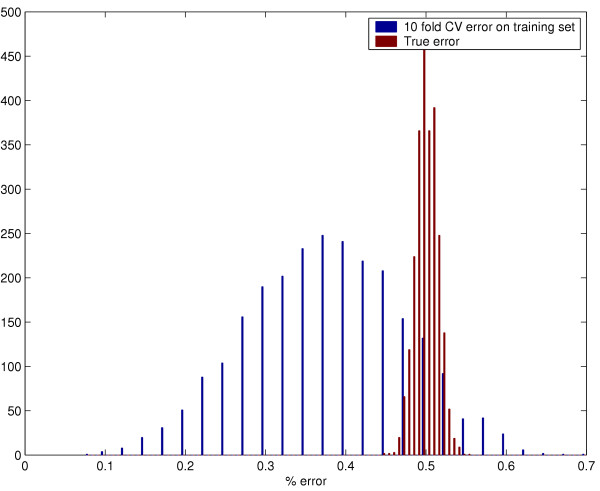
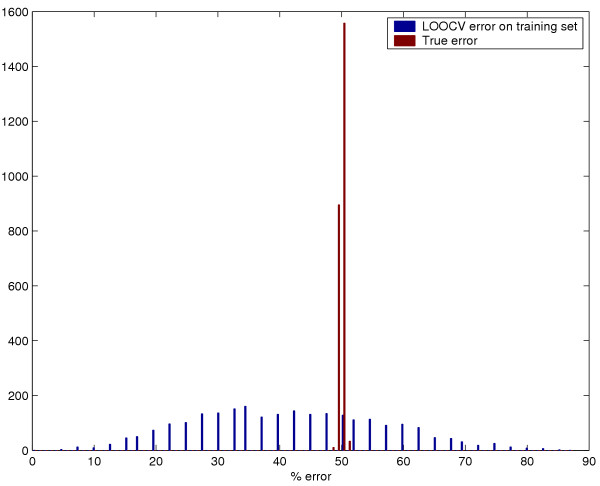
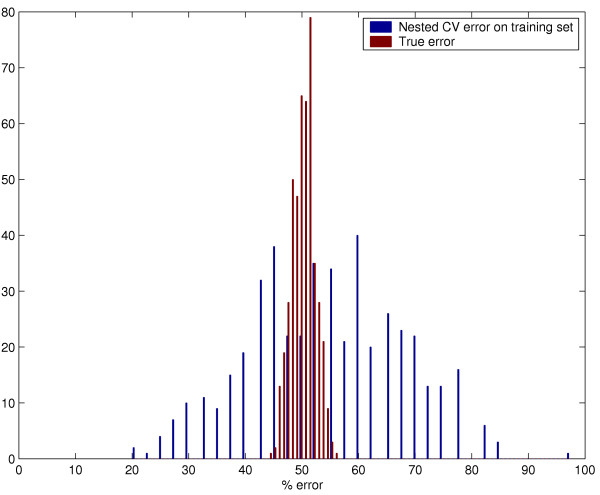
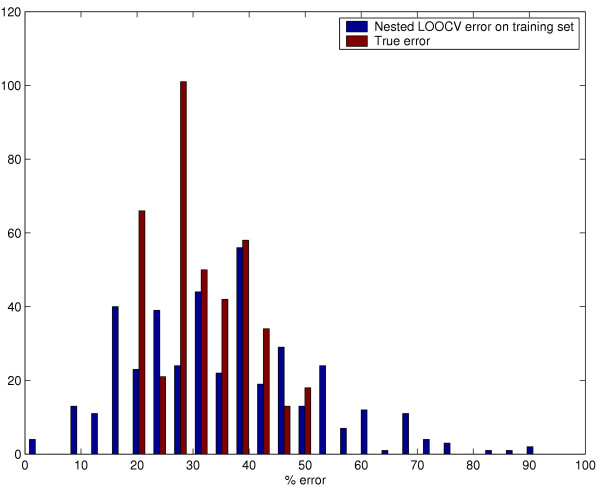
Background: Cross-validation (CV) is an effective method for estimating the prediction error of a classifier. Some recent articles have proposed methods for optimizing classifiers by choosing classifier parameter values that minimize the CV error estimate. We have evaluated the validity of using the CV error estimate of the optimized classifier as an estimate of the true error expected on independent data. Results: We used CV to optimize the classification parameters for two kinds of classifiers; Shrunken Centroids and Support Vector Machines (SVM). Random training datasets were created, with no difference in the distribution of the features between the two classes. Using these "null" datasets, we selected classifier parameter values that minimized the CV error estimate. 10-fold CV was used for Shrunken Centroids while Leave-One-Out-CV (LOOCV) was used for the SVM. Independent test data was created to estimate the true error. With "null" and "non null" (with differential expression between the classes) data, we also tested a nested CV procedure, where an inner CV loop is used to perform the tuning of the parameters while an outer CV is used to compute an estimate of the error. The CV error estimate for the classifier with the optimal parameters was found to be a substantially biased estimate of the true error that the classifier would incur on independent data. Even though there is no real difference between the two classes for the "null" datasets, the CV error estimate for the Shrunken Centroid with the optimal parameters was less than 30% on 18.5% of simulated training data-sets. For SVM with optimal parameters the estimated error rate was less than 30% on 38% of "null" data-sets. Performance of the optimized classifiers on the independent test set was no better than chance. The nested CV procedure reduces the bias considerably and gives an estimate of the error that is very close to that obtained on the independent testing set for both Shrunken Centroids and SVM classifiers for "null" and "non-null" data distributions. Conclusion: We show that using CV to compute an error estimate for a classifier that has itself been tuned using CV gives a significantly biased estimate of the true error. Proper use of CV for estimating true error of a classifier developed using a well defined algorithm requires that all steps of the algorithm, including classifier parameter tuning, be repeated in each CV loop. A nested CV procedure provides an almost unbiased estimate of the true error.
Overview
The claims and statistics of this paper haven’t been checked yet.
Free: it reads the open-access text and checks the first 5 claims that cite a source we can check. Create a free account to check every claim.
Integrity signals
Registry
Cites
Statistics
Figures
Verification
Claims the paper makes
The claims and statistics of this paper haven’t been checked yet.
Free: it reads the open-access text and checks the first 5 claims that cite a source we can check. Create a free account to check every claim.
Self-check
Percentages, sums and reported differences re-computed from the paper’s own numbers.
The self-check needs the paper’s full text.
Citations
Cites
LIBSVM: A library for support vector machines
Chang, C.-C., & Lin, C.-J. (2011) · ACM Transactions on Intelligent Systems and Technology · doi:10.1145/1961189.1961199 · Cited by 40,918
Wu, Y. (1999) · Technometrics · doi:10.1080/00401706.1999.10485951 · Cited by 27,221 · cited 1×
“SVMs were introduced by Vapnik [ 8 ] as linear hyperplanes that separate data belonging to different classes while maximizing the margin, or the distance of the training samples to the linear separating hyperplane.”
Method(2012) · Encyclopedia of the Sciences of Learning · doi:10.1007/978-1-4419-1428-6_5195 · Cited by 19,370
Diagnosis of multiple cancer types by shrunken centroids of gene expression
Tibshirani, R., Hastie, T., Narasimhan, B., & Chu, G. (2002) · Proceedings of the National Academy of Sciences · doi:10.1073/pnas.082099299 · Cited by 2,930 · cited 2×
“This classifier, originally proposed by Tibshirani et al [5], is an extension of the nearest centroid classifier.”
BackgroundMethodImprovements on Cross-Validation: The 632+ Bootstrap Method
Efron, B., & Tibshirani, R. (1997) · Journal of the American Statistical Association · doi:10.1080/01621459.1997.10474007 · Cited by 1,636 · cited 1×
“632 Bootstrap [10] and Bootstrap CV [11].”
Selection bias in gene extraction on the basis of microarray gene-expression data
Ambroise, C., & McLachlan, G. J. (2002) · Proceedings of the National Academy of Sciences · doi:10.1073/pnas.102102699 · Cited by 1,480 · cited 1×
“[2], Ambroise and McLachlan [3] and Reunanen [4], this gives a very biased estimate of the true error; not much better than the resubstitution estimate.”
BackgroundPrediction error estimation: a comparison of resampling methods
Molinaro, A. M., Simon, R., & Pfeiffer, R. M. (2005) · Bioinformatics · doi:10.1093/bioinformatics/bti499 · Cited by 1,339 · cited 1×
“However, low variance methods can also have a large inherent bias [12] (either positive or negative).”
BackgroundSelf-citationPitfalls in the Use of DNA Microarray Data for Diagnostic and Prognostic Classification
Simon, R., Radmacher, M. D., Dobbin, K., & McShane, L. M. (2003) · JNCI Journal of the National Cancer Institute · doi:10.1093/jnci/95.1.14 · Cited by 1,006 · cited 1×
“[2], Ambroise and McLachlan [3] and Reunanen [4], this gives a very biased estimate of the true error; not much better than the resubstitution estimate.”
Self-citationIizuka, N., Oka, M., Yamada-Okabe, H., Nishida, M., Maeda, Y., Mori, N., Takao, T., Tamesa, T., Tangoku, A., Tabuchi, H., et al. (2003) · The Lancet · doi:10.1016/s0140-6736(03)12775-4 · Cited by 511
Peng, S., Xu, Q., Ling, X. B., Peng, X., Du, W., & Chen, L. (2003) · FEBS Letters · doi:10.1016/s0014-5793(03)01275-4 · Cited by 218
Cited by
Items 701–800 of 1,006
Global Crop-Specific Fertilization Dataset from 1961–2019
Coello, F., Decorte, T., Janssens, I., Mortier, S., Sardans, J., Peñuelas, J., & Verdonck, T. (2025) · Scientific Data · doi:10.1038/s41597-024-04215-x · Cited by 29
“For this reason, we used nested CV, as it allowed us to find the optimal set of hyperparameters for a model and provide an unbiased estimate of the model’s performance [182].”
Yang, F.-S., Zhang, Y., Ciucci, F., Wu, Z., Wang, S.-M., Wang, Y.-Q., & Zhang, Z.-X. (2018) · Journal of Alloys and Compounds · doi:10.1016/j.jallcom.2018.01.163 · Cited by 15
A Hybrid Deep Learning Model for Recognizing Actions of Distracted Drivers
Jiao, S., Liu, L.-Y., & Liu, Q. (2021) · Sensors · doi:10.3390/s21217424 · Cited by 21
“So we chose the nested cross-validation technique instead of traditional K-fold cross-validation to optimize the parameters K and the parameters of LSTM in this research [50,51].”
BackgroundMethodLau, C., Ma, W., Law, K. Y., Lacambra, M. D., Wong, K. C., Lee, C., Lee, O. K., Dou, Q., & Kumta, S. M. (2022) · The Analyst · doi:10.1039/d1an01554k · Cited by 18
Bartolomé, J., & Garaizar, P. (2022) · Sustainability · doi:10.3390/su14063392 · Cited by 25
Núñez, J. C., Sánchez-Puente, A., Sampedro-Gómez, J., Vicente-Palacios, V., Jiménez-Navarro, M. F., Manzanas, A. O., Jiménez‐Candil, J., Dorado-Díaz, P. I., & Sanchez, P. L. (2022) · Journal of Clinical Medicine · doi:10.3390/jcm11092636 · Cited by 20
“Since the training of the model also contained a hyperparameter tuning step with its own cross-validation scheme, this resulted in nested cross-validations [31].”
MethodSoares, A. C., Soares, J. C., Santos, D. M. D., Migliorini, F. L., Neto, M. P., Pinto, D. D. S. C., Carvalho, W. A., Brandão, H. D. M., Paulovich, F. V., Correa, D. S., et al. (2023) · ACS Omega · doi:10.1021/acsomega.2c07944 · Cited by 17
Steels classification by machine learning and Calphad methods
Korotaev, P. Y., & Yanilkin, A. V. (2023) · Calphad · doi:10.1016/j.calphad.2023.102587 · Cited by 17
Zainal, N. H., & Newman, M. G. (2024) · Journal of Anxiety Disorders · doi:10.1016/j.janxdis.2024.102825 · Cited by 20
Pazin, W., Furini, L., Braz, D. C., Popolin-Neto, M., Fernandes, J. D., Constantino, C. J. L., & Oliveira, O. N. (2024) · ACS Applied Nano Materials · doi:10.1021/acsanm.3c05848 · Cited by 15
Water consumption time series forecasting in urban centers using deep neural networks
García-Soto, C. G., Torres, J. F., Zamora, M. Á., Palma, J. T., & Troncoso, A. (2024) · Applied Water Science · doi:10.1007/s13201-023-02072-4 · Cited by 24
“In this work, a nested cross-validation technique is used (Varma and Simon 2006).”
Machine learning for predicting colon cancer recurrence
Kayıkçıoğlu, E., Önder, A. H., Bacak, B., & Serel, T. A. (2024) · Surgical Oncology · doi:10.1016/j.suronc.2024.102079 · Cited by 20
Extended Gabor approach applied to classification of emphysematous patterns in computed tomography
Nava, R., Ramírez, B. E., Cristóbal, G., & Estépar, R. S. J. (2014) · Medical & Biological Engineering & Computing · doi:10.1007/s11517-014-1139-9 · Cited by 20
“[28] recommend a nested procedure that divides the data into tenfolds, for each fold, the 398 Med Biol Eng Comput (2014) 52:393–403”
Manelis, A., Reder, L. M., & Hanson, S. J. (2011) · Cerebral Cortex · doi:10.1093/cercor/bhr151 · Cited by 18
“Such adjustment (or ‘‘tuning’’) may result in a bias in error estimation and, consequently, in poor generalizability of results (Varma and Simon 2006).”
ResultLuminometric Label Array for Quantification and Identification of Metal Ions
Pihlasalo, S., Perez, I. M., Hollo, N., Hokkanen, E., Pahikkala, T., & Härmä, H. (2016) · Analytical Chemistry · doi:10.1021/acs.analchem.6b00453 · Cited by 17
Scale-Invariant Biomarker Discovery in Urine and Plasma Metabolite Fingerprints
Zacharias, H. U., Rehberg, T., Mehrl, S., Richtmann, D., Wettig, T., Oefner, P. J., Spang, R., Gronwald, W., & Altenbuchinger, M. (2017) · Journal of Proteome Research · doi:10.1021/acs.jproteome.7b00325 · Cited by 18
Florez, E., Nichols, T. A., Parker, E. E., Lirette, S. T., Howard, C. M., & Fatemi, A. B. (2018) · Cureus · doi:10.7759/cureus.3426 · Cited by 17
Impact of UAS Image Orientation on Accuracy of Forest Inventory Attributes
Jurjević, L., Gašparović, M., Milas, A. Š., & Balenović, I. (2020) · Remote Sensing · doi:10.3390/rs12030404 · Cited by 20
“The LOOCV statistical method [46,47], based on 66 sample plots, was used for the model’s development.”
BackgroundMethodBenchmarking 2D/3D/MD-QSAR Models for Imatinib Derivatives: How Far Can We Predict?
Zin, P. P. K., Borrel, A., & Fourches, D. (2020) · Journal of Chemical Information and Modeling · doi:10.1021/acs.jcim.0c00200 · Cited by 23
Watermann, S., Schmitt, C., Schneider, T., & Hackl, T. (2021) · Metabolites · doi:10.3390/metabo11010039 · Cited by 20
“The process was repeated five times (five-fold outer CV) to assess the model performance [33] and thus, each part was used as a test set once.”
BackgroundMethodCardiovascular Genomics: A Biomarker Identification Pipeline
Phan, J. H., Quo, C. F., & Wang, M. D. (2012) · IEEE Transactions on Information Technology in Biomedicine · doi:10.1109/titb.2012.2199570 · Cited by 18
“The best practice protocol, as well as common pitfalls, for building predictive models has been summarized [111], [112], [113].”
BackgroundOn the empirical mode decomposition applied to the analysis of brain SPECT images
Gallix, A., Górriz, J. M., Ramírez, J., Illán, I. A., & Lang, E. W. (2012) · Expert Systems with Applications · doi:10.1016/j.eswa.2012.05.058 · Cited by 17
“Applied on the previously cited SPECT database, this new procedure achieved scores as high as 100% maximum accuracy over a wide range of operating conditions and 93.52 ± 4.92% on average, but with the above mentioned bias (Varma & Simon, 2006).”
BackgroundMethodInfluentialThe Civic Mission of MOOCs: Engagement across Political Differences in Online Forums
Yeomans, M., Stewart, B., Mavon, K., Kindel, A., Tingley, D. H., & Reich, J. (2017) · International Journal of Artificial Intelligence in Education · doi:10.1007/s40593-017-0161-0 · Cited by 21
Tan, M., Mariapun, S., Yip, C. H., Ng, K. H., & Teo, S. (2018) · Physics in Medicine and Biology · doi:10.1088/1361-6560/aafabd · Cited by 17
“Using LOO cross-validation has the advantage that it reduces bias in case partitions or selection (Li and Doi 2006, Varma and Simon 2006).”
MethodVGG-based BAPL Score Classification of 18F-Florbetaben Amyloid Brain PET
Kang, H. G., Kim, W.-G., Yang, G.-S., Kim, H., Jeong, J., Yoon, H.-J., Cho, K., Jeong, Y.-J., & Kang, D. (2018) · Journal of Experimental & Biomedical Sciences/Biomedical Science Letters · doi:10.15616/bsl.2018.24.4.418 · Cited by 16
Parvandeh, S., Poland, G. A., Kennedy, R. B., & McKinney, B. A. (2019) · Microorganisms · doi:10.3390/microorganisms7030079 · Cited by 19
“Because the gene−gene interaction features from reGAIN incorporate phenotype information, we used a nested CV procedure to avoid biased classification errors and to properly evaluate the generalized performance of classifiers [14].”
MethodFeis, R. A., Bouts, M. J. R. J., Panman, J. L., Jiskoot, L. C., Dopper, E. G. P., Schouten, T. M., de Vos, F., van der Grond, J., Swieten, J. C. V., & Rombouts, S. A. R. B. (2019) · NeuroImage Clinical · doi:10.1016/j.nicl.2019.101718 · Cited by 20
Díaz‐Uriarte, R., Alibés, A., Morrissey, E. R., Canada, A., Rueda, O. M., & Neves, M. L. (2007) · Nucleic Acids Research · doi:10.1093/nar/gkm229 · Cited by 17
Sources of error and its control in studies on the diagnostic accuracy of “‐omics” technologies
Lumbreras, B., Porta, M. S., Márquez, S., Pollán, M., Parker, L. A., & Hernández‐Aguado, I. (2009) · PROTEOMICS - CLINICAL APPLICATIONS · doi:10.1002/prca.200800092 · Cited by 19
Machine Learning of Energetic Material PropertiesPreprint
Barnes, B. C., Elton, D. C., Boukouvalas, Z., Taylor, D. E., Mattson, W. D., Fuge, M., & Chung, P. W. (2018) · arXiv (Cornell University) · doi:10.48550/arxiv.1807.06156 · Cited by 45
Functional gradients reveal cortical hierarchy changes in multiple sclerosis
Rosa, A. P. D., d’Ambrosio, A., Bisecco, A., Altieri, M., Cirillo, M., Gallo, A., & Esposito, F. (2024) · Human Brain Mapping · doi:10.1002/hbm.26678 · Cited by 19
“Specifically, we trained a regression model using XGBoost with fivefold nested cross-validation (Chen & Guestrin, 2016; Tibshirani, 1996; Varma & Simon, 2006).”
MethodEstimating casualties from urban fires: A focus on building and urban environment information
Kim, Y., Cho, Y., Heo, H. K., & Lim, L. (2024) · Sustainable Cities and Society · doi:10.1016/j.scs.2024.105839 · Cited by 22
Ai, Z., Luo, S., Xu, Z., Cao, J., Leng, L., & Li, H. (2024) · Energy · doi:10.1016/j.energy.2024.133707 · Cited by 16
The exposome of brain aging across 34 countries
Legaz, A., Moguilner, S., Barttfeld, P., Cuadros, J., Rial, D. S. G., Migeot, J., Farina, F. R., González-Gómez, R., Salazar‐Londoño, S., Azzi, T. D. S., et al. (2026) · Nature Medicine · doi:10.1038/s41591-026-04302-z · Cited by 31
“For these reasons, nested cross-validation is widely regarded as the gold standard for model evaluation, providing more reliable estimates of performance than simple out-of-sample validation 68 (Fig.”
Participant-Aware Model Validation for Repeated-Measures Data: Comparative Cross-Validation Study
Karbalaie, A., Abtahi, F., & Häger, C. K. (2026) · JMIR AI · doi:10.2196/87728 · Cited by 30
“This approach aligns with established recommendations for unbiased evaluation in supervised learning [15,16,28].”
InfluentialGenauck, A., Matthis, C., Andrejević, M., Ballon, L., Chiarello, F., Duecker, K., Heinz, A., Kathmann, N., & Romanczuk‐Seiferth, N. (2020) · Addiction Biology · doi:10.1111/adb.12951 · Cited by 16
“Nested CV was used for tuning the hyperparameters of the elastic net regression (Varma & Simon, 2006; Zou & Hastie, 2005).”
MethodPosedel, P., Chen, C. Y. T., & Sun, E. W. (2022) · Computational Economics · doi:10.1007/s10614-022-10275-1 · Cited by 23
“…in terms of the mean-squared error, shrinking the values of the regression coef fi cients or setting some coef fi cients to zero introduces some bias, but reduces the variance of the predicted values and hence may improve the overall prediction accuracy (see Varma & Simon, 2006, for example).”
BackgroundA vision-based hand hygiene monitoring approach using self-attention convolutional neural network
Xie, T., Tian, J., & Ma, L. (2022) · Biomedical Signal Processing and Control · doi:10.1016/j.bspc.2022.103651 · Cited by 19
Mallaroni, P., Mason, N. L., Vinckenbosch, F. R. J., & Ramaekers, J. G. (2022) · Psychopharmacology · doi:10.1007/s00213-022-06142-4 · Cited by 19
“One optimal approach to this is nested cross-validation (CV), an equivalent to creating multiple train-test splits to derive robust estimates of model predictive performance in unseen data (Varma and Simon 2006; Krstajic et al. 2014).”
BackgroundMethodA deep learning-based approach for the diagnosis of adrenal adenoma: a new trial using CT
Kusunoki, M., Nakayama, T., Nishie, A., Yamashita, Y., Kikuchi, K., Eto, M., Oda, Y., & Ishigami, K. (2022) · British Journal of Radiology · doi:10.1259/bjr.20211066 · Cited by 19
Mari, T., Asgard, O., Henderson, J. R., Hewitt, D., Brown, C. A., Stančák, A., & Fallon, N. B. (2023) · Scientific Reports · doi:10.1038/s41598-022-27298-1 · Cited by 24
Detecting fatigue of sport horses with biomechanical gait features using inertial sensors
Darbandi, H., Munsters, C., Parmentier, J. I. M., & Havinga, P. (2023) · PLoS ONE · doi:10.1371/journal.pone.0284554 · Cited by 25
D’Antonoli, T. A., Todea, R., Leu, N. H., Datta, A., Stieltjes, B., Prüfer, F., & Wasserthal, J. (2023) · Radiology Artificial Intelligence · doi:10.1148/ryai.220292 · Cited by 17
Hybrid LSTM Model to Predict the Level of Air Pollution in Montenegro
Ratković, K., Kovač, N., & Simeunović, M. (2023) · Applied Sciences · doi:10.3390/app131810152 · Cited by 17
Automatic Optimization of Deep Learning Training through Feature-Aware-Based Dataset Splitting
Shahrabadi, S., Adão, T., Peres, E. S., Morais, R., Magalhães, L., & Alves, V. (2024) · Algorithms · doi:10.3390/a17030106 · Cited by 24
Härtel, T. M., Schuler, B. A., & Back, M. D. (2024) · Journal of Occupational and Organizational Psychology · doi:10.1111/joop.12531 · Cited by 18
Forecasting summer marine heatwaves in the South China Sea using explainable machine learning models
Mi, C., Yi, A., Xue, J., Dong, C., & Shan, H. (2025) · Deep Sea Research Part I Oceanographic Research Papers · doi:10.1016/j.dsr.2025.104457 · Cited by 18
Automatic cardiac rhythm interpretation during resuscitation
Rad, A. B., Engan, K., Katsaggelos, A. K., Kvaløy, J. T., Wik, L., Kramer‐Johansen, J., Irusta, U., & Eftestøl, T. C. (2016) · Resuscitation · doi:10.1016/j.resuscitation.2016.01.015 · Cited by 19
Low, Y. S., Blöcker, C., McPherson, J. R., Tang, S. A., Cheng, Y., Wong, J. Y. S., Chua, C. W. L., Lim, T. K. H., Tang, C. L., Chew, M. H., et al. (2017) · Cancer Letters · doi:10.1016/j.canlet.2017.05.031 · Cited by 16
Emerging trend of big data analytics in bioinformatics: a literature review
Nagaraj, K., Sharvani, G. S., & Sridhar, A. (2017) · International Journal of Bioinformatics Research and Applications · doi:10.1504/ijbra.2018.10009206 · Cited by 34
“Crossvalidation techniques have been used extensively for model selection and refinement in bioinformatics (Varma and Simon, 2006; Mitchell, 2014).”
MethodFannjiang, C., Mooney, T. A., Cones, S., Mann, D. A., Shorter, K. A., & Katija, K. (2019) · Journal of Experimental Biology · doi:10.1242/jeb.207654 · Cited by 24
“Since we want to take full advantage of our annotated dataset for training, a final classifier can then be trained on the complete dataset and deployed for future predictions (Cawley and Talbot, 2010; Varma and Simon, 2006).”
BackgroundMethodInfluentialShinyLearner: A containerized benchmarking tool for machine-learning classification of tabular data
Piccolo, S., Lee, T. J., Suh, E. H., & Hill, K. (2020) · GigaScience · doi:10.1093/gigascience/giaa026 · Cited by 17
“One way to select these options empirically is via nested cross-validation [21].”
Putting the Human Back in the AutoML Loop.
Xanthopoulos, I., Tsamardinos, I., Christophides, V., Simon, E., & Salinger, A. (2020) · EDBT/ICDT Workshops · Cited by 39
An ensemble mixed effects model of sleep loss and performance
Cochrane, C., Ba, D. E., Klerman, E. B., & Hilaire, M. A. S. (2020) · Journal of Theoretical Biology · doi:10.1016/j.jtbi.2020.110497 · Cited by 15
“We utilized nested cross-validation for the tuning of parameters and estimation of error [23].”
BackgroundMethodInfluentialFang, X., Liu, H.-Y., Wang, Z., Yang, Z., Cheng, T.-Y., Hu, C., Hao, H., Meng, F., Guan, Y., Ma, Y., et al. (2021) · Frontiers in Neurology · doi:10.3389/fneur.2021.691328 · Cited by 18
“To avoid choosing dominant features among few subjects, we applied nested cross-validation (CV), where an inner CV loop is used to perform the tuning of the parameters, while an outer CV is used to compute an estimate of the error (39).”
MethodWang, X., Pennello, G. A., deSouza, N. M., Huang, E. P., Buckler, A. J., Barnhart, H. X., Delfino, J. G., Raunig, D. L., Wang, L., Guimarães, A. R., et al. (2022) · Academic Radiology · doi:10.1016/j.acra.2022.10.001 · Cited by 21
A gene expression profile test to resolve head & neck squamous versus lung squamous cancers
Lal, A., Panos, R., Marjanovic, M., Walker, M., Fuentes, E., Kubicek, G. J., Henner, W. D., Buturović, L. J., & Halks‐Miller, M. (2013) · Diagnostic Pathology · doi:10.1186/1746-1596-8-44 · Cited by 19
“To minimize overfitting in the presence of a high number of predictors and a relatively small training set, we applied nested cross-validation approach, which is to the best of our knowledge state-of-the-art method in the context of small sample size/high dimensional problems common in genomics [29].”
MethodHospitalization before and after mini-gastric bypass surgery
Rutledge, R. R. (2006) · International Journal of Surgery · doi:10.1016/j.ijsu.2006.06.026 · Cited by 16
Inductive Transfer Learning for Handling Individual Differences in Affective Computing
Wu, D., & Parsons, T. D. (2011) · Lecture notes in computer science · doi:10.1007/978-3-642-24571-8_15 · Cited by 16
“This must be done through internal I-fold cross-validation [9, 13].”
BackgroundClassifying carpets based on laser scanner data
Waegeman, W., Cottyn, J., Wyns, B., Boullart, L., Bernard De Baets, C., Langenhove, L. V., & Detand, J. (2007) · Engineering Applications of Artificial Intelligence · doi:10.1016/j.engappai.2007.07.010 · Cited by 16
“In a theoretical study on microarray data, Varma and Simon (2006) conclude that the CV-error obtained for the classifier with optimal hyperparameters was particularly biased and they recommend nested cross-validation as the best alternative when dealing with small samples.”
BackgroundMEEG and AT-DGNN: Improving EEG Emotion Recognition with Music Introducing and Graph-based Learning
Xiao, M., Zhu, Z., Xie, K., & Jiang, B. (2024) · IEEE International Conference on Bioinformatics and Biomedicine (BIBM) · doi:10.1109/bibm62325.2024.10821806 · Cited by 17
Wang, C., Reynolds, J. C., Calle, P., Ladymon, A. D., Yan, F., Yan, Y., Ton, S., Fung, K.-M. A., Patel, S., Yu, Z., et al. (2022) · Journal of Biophotonics · doi:10.1002/jbio.202100347 · Cited by 16
Lyu, X., Zhang, D., Pan, H., Zhu, H., Chen, S., & Lü, L. (2023) · Endocrine · doi:10.1007/s12020-023-03341-7 · Cited by 17
“Nested cross-validation (NCV) [25] selected the best algo-rithm to diagnose CD in ACTH-dependent CS.”
MethodHybrid modeling of hetero-agglomeration processes: a framework for model selection and arrangement
Rhein, F., Hibbe, L., & Nirschl, H. (2023) · Engineering With Computers · doi:10.1007/s00366-023-01809-8 · Cited by 17
“If both HPO and model evaluation are performed on the basis of k -fold CV, dual use of the data set can lead to overop-timistic model performances (overfitting) [85].”
Artificial intelligence-driven electrochemical immunosensing biochips in multi-component detection
Zhao, Y., Wang, X., Sun, T., Shan, P., Zhan, Z., Zhao, Z., Jiang, Y., Qu, M., Lv, Q., Wang, Y., et al. (2023) · Biomicrofluidics · doi:10.1063/5.0160808 · Cited by 16
Senaratna, K. Y. K., Bhatia, S., Goh, S. G., Lim, C. M. B., Gangesh, G. R., Peng, L. C., Wong, J. C. C., Ng, L. C., & Gin, K. Y. (2023) · The Science of The Total Environment · doi:10.1016/j.scitotenv.2023.167709 · Cited by 15
Lheureux, Y. (2023) · Journal of Computational Social Science · doi:10.1007/s42001-023-00228-5 · Cited by 23
“The performance is then averaged over the 10 iterations, reducing model variance and providing more reliable results compared to a hold-out method [61].”
Machine learning-based deoxidizer screening for intensified hydrogen production from steam splitting
Wen, Z., Duan, N., Zhang, R., Li, H., Wu, Y., Sun, Z. L., & Sun, Z. (2024) · Journal of Cleaner Production · doi:10.1016/j.jclepro.2024.141779 · Cited by 15
Xie, Q., Zhao, Z., Yang, Y., Wang, X., Wu, W., Jiang, H., Hao, W., Peng, R., & Luo, C. (2024) · Cancer Medicine · doi:10.1002/cam4.7374 · Cited by 20
Supervised machine learning for microbiomics: Bridging the gap between current and best practices
Dudek, N. K., Chakhvadze, M., Kobakhidze, S., Kantidze, O. L., & Gankin, Y. V. (2024) · Machine Learning with Applications · doi:10.1016/j.mlwa.2024.100607 · Cited by 20
“In both cases, the reported performance of a model is likely to be overestimated 29,30 .”
Fonville, J. M., Bylesjö, M., Coen, M., Nicholson, J. K., Holmes, E. C., Lindon, J. C., & Rantalainen, M. (2011) · Analytica Chimica Acta · doi:10.1016/j.aca.2011.04.016 · Cited by 15
Emotion recognition from speech using prosodic features
Väyrynen, E. (2014) · Cited by 21
Wu, H. C., Wei, X.-G., & Chan, S. C. (2017) · IEEE Transactions on Computational Biology and Bioinformatics · doi:10.1109/tcbb.2017.2760827 · Cited by 16
“In each of the outer CV partitions or randomizations, the PLS-based gene selection algorithm is applied to the inner CV partitions for parameter tuning to avoid overfitting [21].”
MethodWeisenthal, S. J., Quill, C. M., Farooq, S. A., Kautz, H., & Zand, M. S. (2018) · PLoS ONE · doi:10.1371/journal.pone.0204920 · Cited by 19
“For learning algorithms with HP, “nested” cross-validation (CV) is recommended [43,44] to provide an un-optimistic performance estimate.”
MethodInterpretable Deep Neural Network to Predict Estrogen Receptor Status from Haematoxylin-Eosin Images
Seegerer, P., Binder, A., Saitenmacher, R., Bockmayr, M. L., Alber, M., Jurmeister, P. S., Klauschen, F., & Müller, K. (2020) · Lecture notes in computer science · doi:10.1007/978-3-030-50402-1_2 · Cited by 17
Prediction of Function in ABCA4-Related Retinopathy Using Ensemble Machine Learning
Müller, P. L., Treis, T., Odainic, A., Pfau, M., Herrmann, P., Tufail, A., & Holz, F. G. (2020) · Journal of Clinical Medicine · doi:10.3390/jcm9082428 · Cited by 17
“For tuning the hyperparameters during model fitting, the F1-score (for classification) and the Root-Mean-Squared-Error (for regression) were optimized through nested cross-validation (for details see Supplementary Figure S1) as it significantly reduces bias when working with small datasets [33].”
MethodAntonucci, L. A., Taurino, A., Laera, D., Taurisano, P., Losole, J., Lutricuso, S., Abbatantuono, C., Giglio, M., Caro, M. F. D., Varrassi, G., et al. (2020) · Pain and Therapy · doi:10.1007/s40122-020-00191-3 · Cited by 19
Vitense, P., Kasbohm, E., Klassen, A., Gierschner, P., Trefz, P., Weber, M., Miekisch, W., Schubert, J. K., Möbius, P., Reinhold, P., et al. (2021) · Frontiers in Veterinary Science · doi:10.3389/fvets.2021.620327 · Cited by 18
“The averaged accuracy of the random forest classifiers is potentially biased, since Boruta was applied out of the crossvalidation scheme (50).”
MethodPredictors of indoor radon levels in the Midwest United States
Carrion-Matta, A., Lawrence, J. E., Kang, C., Wolfson, J. M., Li, L., Vieira, C. L. Z., Schwartz, J. D., Demokritou, P., & Koutrakis, P. (2021) · Journal of the Air & Waste Management Association · doi:10.1080/10962247.2021.1950074 · Cited by 17
Gong, H., Fletcher, J. G., Heiken, J. P., Wells, M. L., Leng, S., McCollough, C. H., & Yu, L. (2021) · Medical Physics · doi:10.1002/mp.15362 · Cited by 20
A Machine Learning Framework for Olive Farms Profit Prediction
Christias, P., & Mocanu, M. (2021) · Water · doi:10.3390/w13233461 · Cited by 19
Predicting total knee arthroplasty from ultrasonography using machine learning
Tiulpin, A., Saarakkala, S. S., Mathiessen, A., Hammer, H. B., Furnes, O. N., Nordsletten, L., Englund, M., & Magnusson, K. (2022) · Osteoarthritis and Cartilage Open · doi:10.1016/j.ocarto.2022.100319 · Cited by 15
“As our dataset has multiple measurements from the same patient, leave-one-patient out cross-validation (LOO-CV) strategy was applied [30].”
Benca, J. P., Carlisle, M. H., Bergen, S. R., & Strömberg, C. A. E. (2014) · American Journal of Botany · doi:10.3732/ajb.1300271 · Cited by 20
Zou, X., Holmes, E. C., Nicholson, J. K., & Loo, R. L. (2014) · Analytical Chemistry · doi:10.1021/ac500161k · Cited by 15
Ghorbanzadeh, S., Daei, A., Armaghani, D. J., & Payan, M. (2026) · Scientific Reports · doi:10.1038/s41598-025-30501-8 · Cited by 15
Determining jumping performance from a single body-worn accelerometer using machine learning
White, M., Bezodis, N. E., Neville, J., Summers, H. D., & Rees, P. C. T. (2022) · PLoS ONE · doi:10.1371/journal.pone.0263846 · Cited by 17
“A 10-fold design was recommended for model evaluation as validation error estimates have low bias [59,73] and to provide a large proportion of the data for the model selection [55].”
MethodHe, K. (2022) · Journal of Cheminformatics · doi:10.1186/s13321-022-00607-6 · Cited by 17
“The nested CV ensure that the data used to validate the classifier is not part of the data used to train it, which provides almost unbiased performance estimates [71].”
MethodIbrahim, E. S., Nendel, C., Kamali, B., Gajere, E. N., & Hostert, P. (2023) · PhytoFrontiers™ · doi:10.1094/phytofr-10-22-0105-r · Cited by 21
Machine Learning Insights: Predicting Hepatic Encephalopathy After TIPS Placement
İnce, O., Önder, H., Gençtürk, M., Golzarian, J., & Young, S. J. (2023) · CardioVascular and Interventional Radiology · doi:10.1007/s00270-023-03593-w · Cited by 13
“In the inner loop, the hyperparameters of the models are optimized by a GridSearch algorithm with fivefold CV, while the best estimator, which contains the best parameters, passes to the outer loop and undergoes another five-fold CV [20].”
MethodBrossard, C., Grèze, J., de Busschère, J.-A., Attyé, A., Richard, M., Tornior, F. D., Acquitter, C., Payen, J., Barbier, E., Bouzat, P., et al. (2023) · Scientific Reports · doi:10.1038/s41598-023-46945-9 · Cited by 15
“Due to the small number of patients in our dataset, we used a state-of-the-art method: a nested cross-validation 31,32 , on the train and validation sub-datasets to assure statistical robustness in the tuning and evaluation of our classifiers.”
MethodDeep Learning-based Brain Age Prediction in Patients With Schizophrenia Spectrum Disorders
Kim, W., Heo, D.-W., Maeng, J., Shen, J., Tsogt, U., Odkhuu, S., Zhang, X., Cheraghi, S., Kim, S., Ham, B., et al. (2023) · Schizophrenia Bulletin · doi:10.1093/schbul/sbad167 · Cited by 16
Gallos, I., Tryfonopoulos, D. J., Shani, G., Amditis, A., Haick, H., & Dionysiou, D. D. (2023) · Diagnostics · doi:10.3390/diagnostics13243673 · Cited by 16
“Fourth, even a loop of CV may not be enough to come up with an unbiased estimate of the model’s performance, especially when feature selection is taking place at the same time inside the same loop [90,123].”
BackgroundWang, C., Johansson, A. L. V., Nyberg, C., Pareek, A., Almqvist, C., Hernández–Díaz, S., & Öberg, A. S. (2024) · Fertility and Sterility · doi:10.1016/j.fertnstert.2024.02.024 · Cited by 25
Jørgensen, R. R. K., Bergström, F., Eloranta, S., Severinsen, M. T., Smeland, K. B., Fosså, A., Christensen, J. H., Hutchings, M., Dahl‐Sørensen, R. B., Kamper, P., et al. (2024) · JCO Clinical Cancer Informatics · doi:10.1200/cci.23.00255 · Cited by 19
“27 To evaluate the ability of the ML models and A-HIPI to identify patients with poor outcomes, patients were ranked on the basis of their predicted 5-year OS and PFS.”
MethodFast and accurate prediction of drug induced proarrhythmic risk with sex specific cardiac emulators
Dominguez-Gomez, P., Zingaro, A., Baldo-Canut, L., Balzotti, C., Darpö, B., Morton, C., Vázquez, M., & Aguado‐Sierra, J. (2024) · npj Digital Medicine · doi:10.1038/s41746-024-01370-8 · Cited by 18
Digital phenotyping of Parkinson’s disease via natural language processing
Aresta, S., Battista, P., Palmirotta, C., Tagliente, S., Lagravinese, G., Santacesaria, P., Benzini, A., Mongelli, D., Minafra, B., Lunetta, C., et al. (2025) · npj Parkinson's Disease · doi:10.1038/s41531-025-01050-8 · Cited by 22
Fernandes, A. M., Utkin, A. B., Eiras-Dias, J. E., Silvestre, J., Cunha, J., & Melo‐Pinto, P. (2018) · Applied Soft Computing · doi:10.1016/j.asoc.2018.07.059 · Cited by 14
“This is equivalent to using a nested n-fold cross-validation [32, 33] in which there is an 364 n-fold cross-validation inside another m-fold cross-validation.”
MethodKringel, D., Kaunisto, M. A., Kalso, E. A., & Lötsch, J. (2019) · Pain · doi:10.1097/j.pain.0000000000001616 · Cited by 14
Effects of the validation set on stock returns forecasting
Jerez, T., & Kristjanpoller, W. (2020) · Expert Systems with Applications · doi:10.1016/j.eswa.2020.113271 · Cited by 19
Support Vector Machines and Affective Science
Miller, C. H., Sacchet, M. D., & Gotlib, I. H. (2020) · Emotion Review · doi:10.1177/1754073920930784 · Cited by 18
“Each of these iterations generates a particular model along with corresponding performance results that are tabulated in order to select a final model that has been trained on the optimal hyper-parameters (Varma & Simon, 2006).”
Metadata
- Authors
- Varma, S., & Simon, R.
- Affiliations
- National Cancer Institute (US)
- Corresponding author
- Varma, Sudhir
- Venue
- BMC Bioinformatics
- Published
- 2006-02-23
- Volume
- 7
- Issue
- 1
- Pages
- 91-91
- ISSN
- 1471-2105 (ISSN-L)
- PMC
- PMC1397873
- OpenAlex
- W2141007997
- Cited by
- 2,485
- References
- 13
- Citations by year
- 2026: 760 · 2025: 246 · 2024: 146 · 2023: 165 · 2022: 178 · 2021: 179 · 2020: 190 · 2019: 110 · 2018: 96 · 2017: 90 · 2016: 49 · 2015: 47 · 2014: 43 · 2013: 42 · 2012: 35
- FWCI
- 7.08
- Type
- journal article
- Language
- en
- Open access
- gold
- doi.org
- Licence
- cc-by
- Locations
- BMC Bioinformatics (publishedVersion, cc-by)
- PubMed Central (publishedVersion, cc-by)
- PubMed (publishedVersion)
- DOAJ (DOAJ: Directory of Open Access Journals) (submittedVersion, cc-by-sa)
- Topics
- Life Sciences › Biochemistry, Genetics and Molecular Biology › Molecular Biology › Gene expression and cancer classification
- Physical Sciences › Computer Science › Artificial Intelligence › Machine Learning and Data Classification
- Physical Sciences › Mathematics › Statistics and Probability › Statistical Methods and Inference
- Keywords
- prediction error estimation, model selection, nested cross-validation, classifier parameter tuning, support vector machine, leave-one-out cross-validation, 10-fold cross-validation
- MeSH terms
- Algorithms, Artificial Intelligence, Computer Simulation, Data Interpretation, Statistical, Models, Genetic, Pattern Recognition, Automated, Sensitivity and Specificity, Reproducibility of Results, Models, Statistical, Bias, Oligonucleotide Array Sequence Analysis, Gene Expression Profiling
About these checks
Registry, retraction, Cites and statistics results are computed, not judged, with one exception: a printed reference that no index lists is read once by a model before it counts as a citation error. Claims are extracted by a model and kept only when their quote appears verbatim in the text; each cited source is then checked, with a model’s help, for whether it says what the claim relies on. Those verdicts can be wrong — read the claim’s quote and the cited source before relying on one.
Statistics and arithmetic are recomputed, not judged.
Confidence bands are shown only for fields calibrated on our annotated test set. None is calibrated yet, so no band is shown.
What counts as a claim ›How we measure confidence ›How we check this ›
Are you an author, or do you see a problem with this page? Request a review
Data sources
Bibliographic data: Semantic Scholar, OpenAlex, Crossref.
Contains information from the Semantic Scholar Academic Graph Datasets, made available under the ODC Attribution License (ODC-BY 1.0).
Semantic Scholar’s data is described in: Kinney, R., et al. (2023). The Semantic Scholar Open Data Platform. arXiv:2301.10140.
