

Bias in error estimation when using cross-validation for model selection
Open accessThe DOI matches its Crossref record; 13 of the 13 references it cites were found in a registry or an index.
Abstract
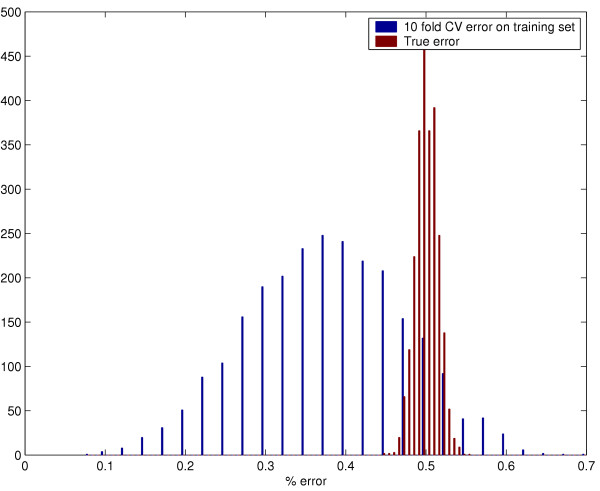
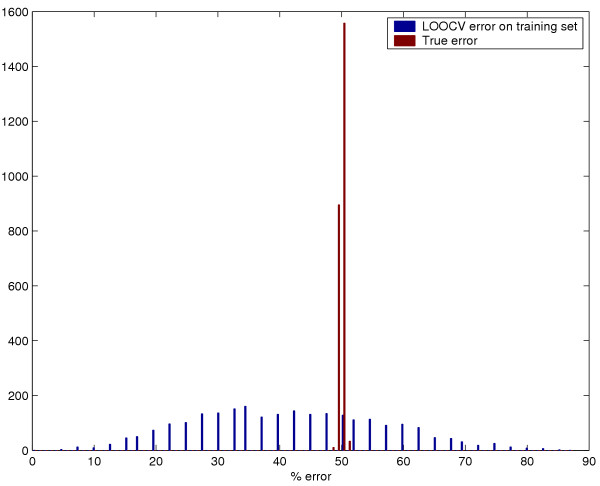
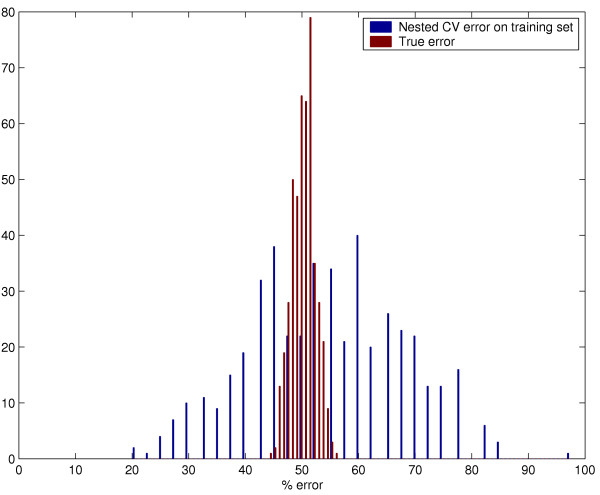
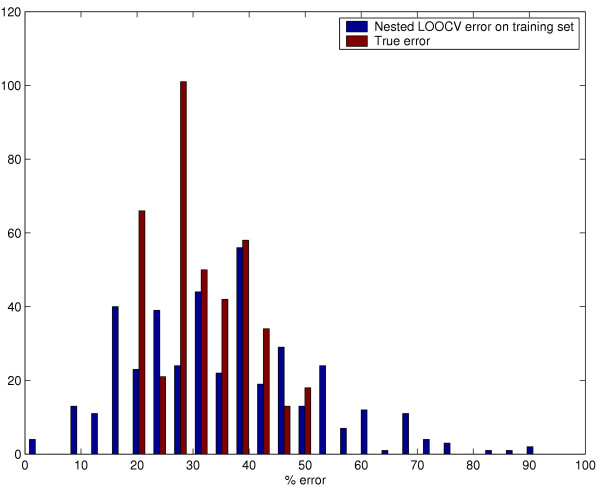
Background: Cross-validation (CV) is an effective method for estimating the prediction error of a classifier. Some recent articles have proposed methods for optimizing classifiers by choosing classifier parameter values that minimize the CV error estimate. We have evaluated the validity of using the CV error estimate of the optimized classifier as an estimate of the true error expected on independent data. Results: We used CV to optimize the classification parameters for two kinds of classifiers; Shrunken Centroids and Support Vector Machines (SVM). Random training datasets were created, with no difference in the distribution of the features between the two classes. Using these "null" datasets, we selected classifier parameter values that minimized the CV error estimate. 10-fold CV was used for Shrunken Centroids while Leave-One-Out-CV (LOOCV) was used for the SVM. Independent test data was created to estimate the true error. With "null" and "non null" (with differential expression between the classes) data, we also tested a nested CV procedure, where an inner CV loop is used to perform the tuning of the parameters while an outer CV is used to compute an estimate of the error. The CV error estimate for the classifier with the optimal parameters was found to be a substantially biased estimate of the true error that the classifier would incur on independent data. Even though there is no real difference between the two classes for the "null" datasets, the CV error estimate for the Shrunken Centroid with the optimal parameters was less than 30% on 18.5% of simulated training data-sets. For SVM with optimal parameters the estimated error rate was less than 30% on 38% of "null" data-sets. Performance of the optimized classifiers on the independent test set was no better than chance. The nested CV procedure reduces the bias considerably and gives an estimate of the error that is very close to that obtained on the independent testing set for both Shrunken Centroids and SVM classifiers for "null" and "non-null" data distributions. Conclusion: We show that using CV to compute an error estimate for a classifier that has itself been tuned using CV gives a significantly biased estimate of the true error. Proper use of CV for estimating true error of a classifier developed using a well defined algorithm requires that all steps of the algorithm, including classifier parameter tuning, be repeated in each CV loop. A nested CV procedure provides an almost unbiased estimate of the true error.
Overview
The claims and statistics of this paper haven’t been checked yet.
Free: it reads the open-access text and checks the first 5 claims that cite a source we can check. Create a free account to check every claim.
Integrity signals
Registry
Cites
Statistics
Figures
Verification
Claims the paper makes
The claims and statistics of this paper haven’t been checked yet.
Free: it reads the open-access text and checks the first 5 claims that cite a source we can check. Create a free account to check every claim.
Self-check
Percentages, sums and reported differences re-computed from the paper’s own numbers.
The self-check needs the paper’s full text.
Citations
Cites
LIBSVM: A library for support vector machines
Chang, C.-C., & Lin, C.-J. (2011) · ACM Transactions on Intelligent Systems and Technology · doi:10.1145/1961189.1961199 · Cited by 40,918
Wu, Y. (1999) · Technometrics · doi:10.1080/00401706.1999.10485951 · Cited by 27,221 · cited 1×
“SVMs were introduced by Vapnik [ 8 ] as linear hyperplanes that separate data belonging to different classes while maximizing the margin, or the distance of the training samples to the linear separating hyperplane.”
Method(2012) · Encyclopedia of the Sciences of Learning · doi:10.1007/978-1-4419-1428-6_5195 · Cited by 19,370
Diagnosis of multiple cancer types by shrunken centroids of gene expression
Tibshirani, R., Hastie, T., Narasimhan, B., & Chu, G. (2002) · Proceedings of the National Academy of Sciences · doi:10.1073/pnas.082099299 · Cited by 2,930 · cited 2×
“This classifier, originally proposed by Tibshirani et al [5], is an extension of the nearest centroid classifier.”
BackgroundMethodImprovements on Cross-Validation: The 632+ Bootstrap Method
Efron, B., & Tibshirani, R. (1997) · Journal of the American Statistical Association · doi:10.1080/01621459.1997.10474007 · Cited by 1,636 · cited 1×
“632 Bootstrap [10] and Bootstrap CV [11].”
Selection bias in gene extraction on the basis of microarray gene-expression data
Ambroise, C., & McLachlan, G. J. (2002) · Proceedings of the National Academy of Sciences · doi:10.1073/pnas.102102699 · Cited by 1,480 · cited 1×
“[2], Ambroise and McLachlan [3] and Reunanen [4], this gives a very biased estimate of the true error; not much better than the resubstitution estimate.”
BackgroundPrediction error estimation: a comparison of resampling methods
Molinaro, A. M., Simon, R., & Pfeiffer, R. M. (2005) · Bioinformatics · doi:10.1093/bioinformatics/bti499 · Cited by 1,339 · cited 1×
“However, low variance methods can also have a large inherent bias [12] (either positive or negative).”
BackgroundSelf-citationPitfalls in the Use of DNA Microarray Data for Diagnostic and Prognostic Classification
Simon, R., Radmacher, M. D., Dobbin, K., & McShane, L. M. (2003) · JNCI Journal of the National Cancer Institute · doi:10.1093/jnci/95.1.14 · Cited by 1,006 · cited 1×
“[2], Ambroise and McLachlan [3] and Reunanen [4], this gives a very biased estimate of the true error; not much better than the resubstitution estimate.”
Self-citationIizuka, N., Oka, M., Yamada-Okabe, H., Nishida, M., Maeda, Y., Mori, N., Takao, T., Tamesa, T., Tangoku, A., Tabuchi, H., et al. (2003) · The Lancet · doi:10.1016/s0140-6736(03)12775-4 · Cited by 511
Peng, S., Xu, Q., Ling, X. B., Peng, X., Du, W., & Chen, L. (2003) · FEBS Letters · doi:10.1016/s0014-5793(03)01275-4 · Cited by 218
Cited by
Items 401–500 of 1,006
WORMHOLE: Novel Least Diverged Ortholog Prediction through Machine Learning
Sutphin, G. L., Mahoney, J. M., Sheppard, K., Walton, D. O., & Korstanje, R. (2016) · PLOS Computational Biology · doi:10.1371/journal.pcbi.1005182 · Cited by 37
“For each combination of query and target species, we employed nested 10-fold cross-validation (nested CV) [40] to choose C.”
MethodTaylor, J. C., & Fenner, J. W. (2017) · EJNMMI Physics · doi:10.1186/s40658-017-0196-1 · Cited by 37
“This form of validation has been shown to provide an almost unbiased estimate of true classifier error [16].”
BackgroundNested and Repeated Cross Validation for Classification Model With High-Dimensional Data
Zhong, Y., He, J., & Chalise, P. (2020) · Revista Colombiana de Estadística · doi:10.15446/rce.v43n1.80000 · Cited by 41
“As mentioned in the introduction section, the commonly used single crossvalidation is not efficient in dealing with overfitting of the data in general (Varma & Simon 2006).”
MethodThe structural similarity index for IMRT quality assurance: radiomics‐based error classification
Ma, C., Wang, R., Zhou, S., Wang, M., Yue, H., Zhang, Y., & Wu, H. (2020) · Medical Physics · doi:10.1002/mp.14559 · Cited by 46
Liu, Z., Wang, C., Cai, X., Jiang, H., & Wang, J. (2021) · IEEE Access · doi:10.1109/access.2021.3056430 · Cited by 45
“The predicted labels of the 81 samples were used to calculate the CV error, and the value of the hyperparameter(s) that yielded the smallest CV error was selected as the optimal value [37].”
MethodAvanzo, M., Gagliardi, V., Stancanello, J., Blanck, O., Pirrone, G., Naqa, I. E., Revelant, A., & Sartor, G. (2021) · Medical Physics · doi:10.1002/mp.15178 · Cited by 43
“66 However,internal validation using CV or other resampling techniques cannot evaluate the selection bias of a study performed retrospectively, and thus our results probably overestimate results of external validation.”
Machine learning methods for prediction of cancer driver genes: a survey paper
de Andrades, R. S., & Recamonde‐Mendoza, M. (2022) · Briefings in Bioinformatics · doi:10.1093/bib/bbac062 · Cited by 47
“Nested cross-validation is a promising alternative for comparing and selecting ML models with size-limited datasets, reducing the bias in the error estimate when both hyperparameter tuning and evaluation are carried out [121, 122].”
MethodDozmorov, M. G., Yang, Q., Wu, W., Wren, J. D., Suhail, M. M., Woolley, C. L., Young, D. G., Fung, K.-M. A., & Lin, H. (2014) · Chinese Medicine · doi:10.1186/1749-8546-9-18 · Cited by 39
“These genes were further filtered to remove those with variability arising from experimental errors by comparing the variability of the residuals in the replicated group of samples with the same variability obtained after excluding the maximum and minimum, one at a time, using a modification of the ‘leave one out’ met…”
MethodHidalgo-Muñoz, A. R., Ramírez, J., Górriz, J. M., & Padilla, P. (2014) · Frontiers in Aging Neuroscience · doi:10.3389/fnagi.2014.00020 · Cited by 44
“Therefore, following the recommendations reported in the literature (Varma and Simon, 2006), validating the complete algorithm was carried out on different subsets from the initial whole sample in order to diminish biased results (see section 2.5). described in the previous section, the feature…”
MethodInfluentialMartinović, M., Đokić, K., & Pudić, D. (2025) · Applied Sciences · doi:10.3390/app15073636 · Cited by 61
Kuhn, M., Sühs, K., Akmatov, M. K., Klawonn, F., Wang, J., Skripuletz, T., Kaever, V., Stangel, M., & Peßler, F. (2018) · Journal of Neuroinflammation · doi:10.1186/s12974-017-1041-0 · Cited by 38
“Leave-one-out cross-validation is recommended as a validation strategy if no independent test dataset is available and sample sizes are limited [34, 35].”
Gong, H., Yu, L., Leng, S., Dilger, S. K. N., Ren, L., Zhou, W., Fletcher, J. G., & McCollough, C. H. (2019) · Medical Physics · doi:10.1002/mp.13500 · Cited by 44
How Are Personality States Associated with Smartphone Data?
Rüegger, D., Stieger, M., Nißen, M., Allemand, M., Fleisch, E., & Kowatsch, T. (2020) · European Journal of Personality · doi:10.1002/per.2309 · Cited by 36
“In order to arrive at an unbiased estimate of the prediction performance despite this problem and following Stachl et al. (2020), we applied nested cross ‐ validation (Varma & Simon, 2006; Yarkoni & Westfall, 2017).”
MethodMultivariate Analysis of 18F-DMFP PET Data to Assist the Diagnosis of Parkinsonism
Segovia, F., Górriz, J. M., Ramírez, J., Martínez-Murcia, F. J., Levin, J., Schuberth, M., Brendel, M., Rominger, A., Bötzel, K., Garraux, G., et al. (2017) · Frontiers in Neuroinformatics · doi:10.3389/fninf.2017.00023 · Cited by 35
“All the systems were based on SVM classification and the parameters (trade-off parameter C and kernel weights qm for MKL approaches) were estimated using a grid search (Varma and Simon, 2006).”
MethodOutcome prediction based on microarray analysis: a critical perspective on methods
Zervakis, M., Blazadonakis, M. E., Tsiliki, G., Danilatou, V., Tsiknakis, M., & Kafetzopoulos, D. (2009) · BMC Bioinformatics · doi:10.1186/1471-2105-10-53 · Cited by 36
“Considerations of the Application Field Even though gene selection initially appears as a standard paradigm of feature selection, the application domain entails several aspects that add certain constraints to the problem [17, 36 ].”
BackgroundKirlić, N., Akeman, E., DeVille, D. C., Yeh, H., Cosgrove, K. T., McDermott, T. J., Touthang, J., Clausen, A. N., Paulus, M. P., & Aupperle, R. L. (2021) · Journal of American College Health · doi:10.1080/07448481.2021.1947841 · Cited by 37
Machine learning for the life-time risk prediction of Alzheimer’s disease: a systematic review
Rowe, T. W., Katzourou, I. K., Stevenson‐Hoare, J. O., Bracher‐Smith, M., Ivanov, D. K., & Escott‐Price, V. (2021) · Brain Communications · doi:10.1093/braincomms/fcab246 · Cited by 44
“Nested-CV has been shown to achieve the best performance of all methods 45 and it operates by using an outer and inner loop of CV.”
Charoenkwan, P., Chumnanpuen, P., Schaduangrat, N., Lió, P., Moni, M. A., & Shoombuatong, W. (2022) · Journal of Computer-Aided Molecular Design · doi:10.1007/s10822-022-00476-z · Cited by 39
NClassG+: A classifier for non-classically secreted Gram-positive bacterial proteins
Restrepo-Montoya, D., Pino, C., Niño, L. F., Patarroyo, M. E., & Patarroyo, M. A. (2011) · BMC Bioinformatics · doi:10.1186/1471-2105-12-21 · Cited by 37
“The results for all test sets are averaged to obtain an estimate of the generalization error [69,70].”
MethodLe, T. T., Simmons, W. K., Misaki, M., Bodurka, J., White, B. C., Savitz, J. B., & McKinney, B. A. (2017) · Bioinformatics · doi:10.1093/bioinformatics/btx298 · Cited by 39
“Nested CV approaches that integrate feature selection have been used to reduce this type of bias (Varma and Simon, 2006).”
MethodCase-Based Statistical Learning: A Non-Parametric Implementation With a Conditional-Error Rate SVM
Górriz, J. M., Ramírez, J., Suckling, J., Illán, I. A., Ortíz, A., Martínez-Murcia, F. J., Segovia, F., Salas-Gonzalez, D., & Wang, S. (2017) · IEEE Access · doi:10.1109/access.2017.2714579 · Cited by 36
Lu, G., Wang, D., Qin, X., Müller, S., Wang, X., Chen, A. Y., Chen, Z. G., & Fei, B. (2017) · Journal of Biophotonics · doi:10.1002/jbio.201700078 · Cited by 38
Kervezee, L., Cuesta, M., Cermakian, N., & Boivin, D. B. (2019) · Journal of Biological Rhythms · doi:10.1177/0748730418821776 · Cited by 33
“We used nested leave-one-participant-out cross-validation (Varma and Simon, 2006) consisting of an outer cross-validation loop to estimate the prediction error and an inner loop to determine the optimal number of latent factors and features.”
MethodRauschenberger, M., Baeza-Yates, R. A., & Rello, L. (2020) · International Web for All Conference (W4A) · doi:10.1145/3371300.3383342 · Cited by 38
“While we have small data, we are not optimizing the input parameters of classifiers until we can hold out a test data set as proposed by scikit-learn 0.21.2 documentation to evaluate the changes [45] and to avoid biases [50].”
MethodInfluentialNi, Y., Bachtel, A., Nause, K., & Beal, S. J. (2021) · Journal of the American Medical Informatics Association · doi:10.1093/jamia/ocab116 · Cited by 41
“40 A descriptive illustration of the cross-validation process is available in Supplementary Appendix C.”
MethodClassification of amyotrophic lateral sclerosis by brain volume, connectivity, and network dynamics
Thome, J., Steinbach, R., Großkreutz, J., Durstewitz, D., & Koppe, G. (2021) · Human Brain Mapping · doi:10.1002/hbm.25679 · Cited by 39
“Both of the latter strategies can bias the PE estimate for instance by causing overfitting (e.g., Koppe et al., 2020; Vabalas, Gowen, Poliakoff, & Casson, 2019; Varma & Simon, 2006).”
BackgroundMethodvon Wuthenau, K., Segelke, T., Müller, M.-S., Behlok, H., & Fischer, M. J. (2021) · Food Control · doi:10.1016/j.foodcont.2021.108689 · Cited by 40
Ear-EEG Measures of Auditory Attention to Continuous Speech
Holtze, B., Rosenkranz, M., Jaeger, M., Debener, S., & Mirkovic, B. (2022) · Frontiers in Neuroscience · doi:10.3389/fnins.2022.869426 · Cited by 49
Genomic Clinical Trials and Predictive Medicine
Simon, R. M. (2013) · Cambridge University Press eBooks · doi:10.1017/cbo9781139026451 · Cited by 38
Self-citationMcKearney, R. M., Bell, S. L., Chesnaye, M. A., & Simpson, D. M. (2022) · PubMed · doi:10.1097/aud.0000000000001151 · Cited by 7
“Nested k-fold cross-validation is a technique for resampling without replacement which is able to achieve this (Varma & Simon 2006).”
MethodVerrou, K., Sfikakis, P. P., & Tektonidou, M. G. (2022) · Journal of Autoimmunity · doi:10.1016/j.jaut.2022.102978 · Cited by 37
A Short Tour of the Predictive Modeling Process
Kühn, M., & Johnson, K. (2013) · Springer eBooks · doi:10.1007/978-1-4614-6849-3_2 · Cited by 40
Identifying endophenotypes of autism: a multivariate approach
Segovia, F., Holt, R., Spencer, M., Górriz, J. M., RamÃrez, J., Puntonet, C. G., Phillips, C., Chura, L., Baron-Cohen, S., & Suckling, J. (2014) · Frontiers in Computational Neuroscience · doi:10.3389/fncom.2014.00060 · Cited by 34
“Specifically, we used a 10-fold scheme that provides similar estimation errors than leave-one-out (Varma and Simon, 2006) with a smaller computational load (an important issue to be taken into account in our experiments since we performed many thousands of CV loops).”
MethodAnisotropic Discrete Dual-Tree Wavelet Transform for Improved Classification of Trabecular Bone
Oulhaj, H., Rziza, M., Amine, A., Toumi, H., Lespessailles, É., Hassouni, M. E., & Jennane, R. (2017) · IEEE Transactions on Medical Imaging · doi:10.1109/tmi.2017.2708988 · Cited by 34
“The 10-fold cross-validation technique was used to prevent overfitting issues [32].”
MethodDetmer, F. J., Chung, B. J., Mut, F., Pritz, M. B., Slawski, M., Hamzei‐Sichani, F., Kallmes, D. F., Putman, C. M., Jiménez, C., & Cebral, J. R. (2018) · Acta Neurochirurgica · doi:10.1007/s00701-018-3595-8 · Cited by 35
“First, the model was internally validated by 160 repetitions of tenfold nested cross-validation [24].”
Biomarkers for posttraumatic epilepsy
Pitkänen, A., Paananen, T., Kyyriäinen, J., Gupta, S. D., Heiskanen, M., Vuokila, N., Bañuelos‐Cabrera, I., Lapinlampi, N., Kajevu, N., Andrade, P., et al. (2020) · Epilepsy & Behavior · doi:10.1016/j.yebeh.2020.107080 · Cited by 41
Long, N. T. M., & Thinh, N. T. (2020) · Applied Sciences · doi:10.3390/app10175775 · Cited by 42
“The ten ‐ fold Nested CV ( NCV ) [21] was used to separate data.”
BackgroundMethodArndt, M., Drees, A., Ahlers, C., & Fischer, M. J. (2020) · Foods · doi:10.3390/foods9121860 · Cited by 34
“In order to obtain a robust model, nested cross-validation (cv) was performed [37,38].”
Chalabianloo, N., Can, Y. S., Umair, M., Sas, C., & Ersoy, C. (2022) · Pervasive and Mobile Computing · doi:10.1016/j.pmcj.2022.101703 · Cited by 42
Performance Evaluation of Algorithms for the Classification of Metabolic 1H NMR Fingerprints
Hochrein, J., Klein, M. S., Zacharias, H. U., Li, J., Wijffels, G. L., Schirra, H. J., Spang, R., Oefner, P. J., & Gronwald, W. (2012) · Journal of Proteome Research · doi:10.1021/pr3009034 · Cited by 35
Machine Learning and Health Science Research: Tutorial
Cho, H., She, J., de Marchi, D., El-Zaatari, H., Barnes, E. L., Kahkoska, A. R., Kosorok, M. R., & Virkud, A. (2024) · Journal of Medical Internet Research · doi:10.2196/50890 · Cited by 43
Remedies for Severe Class Imbalance
Kühn, M., & Johnson, K. (2013) · Springer eBooks · doi:10.1007/978-1-4614-6849-3_16 · Cited by 40
Efficient regularized least-squares algorithms for conditional ranking on relational data
Pahikkala, T., Airola, A., Stock, M., Bernard De Baets, C., & Waegeman, W. (2013) · Machine Learning · doi:10.1007/s10994-013-5354-7 · Cited by 33
“In addition, a 10-fold inner cross validation loop was implemented for estimating the optimal regularization parameter λ , as recommended by Varma and Simon (2006).”
Method2D-SAR and 3D-QSAR analyses for acetylcholinesterase inhibitors
Niu, B., Zhao, M., Su, Q., Zhang, M., Lv, W., Chen, Q., Chen, F., Chu, D., Du, D., & Zhang, Y. (2017) · Molecular Diversity · doi:10.1007/s11030-017-9732-0 · Cited by 32
Detecting bursts in the EEG of very and extremely premature infants using a multi-feature approach
O’Toole, J. M., Boylan, G. B., Lloyd, R. O., Goulding, R. M., Vanhatalo, S., & Stevenson, N. J. (2017) · Medical Engineering & Physics · doi:10.1016/j.medengphy.2017.04.003 · Cited by 33
Modeling Corrosion in Suspension Bridge Main Cables. I: Annual Corrosion Rate
Karanci, E., & Betti, R. (2018) · Journal of Bridge Engineering · doi:10.1061/(asce)be.1943-5592.0001233 · Cited by 41
Modeling and Analyzing Inquiry Strategies in Open-Ended Learning Environments
Käser, T., & Schwartz, D. L. (2020) · International Journal of Artificial Intelligence in Education · doi:10.1007/s40593-020-00199-y · Cited by 45
“As the estimation of model performance during parameter tuning leads to a potential bias (Boulesteix and Strobl 2009; Varma and Simon 2006), we use a nested 10-fold student-stratified cross validation to estimate the predictive performance of the WSM and at the same time to learn the optimal…”
MethodBaumann, P., Lee, J., Behrens, T., Biswas, A., Six, J., McLachlan, G., & Rossel, R. A. V. (2022) · European Journal of Soil Science · doi:10.1111/ejss.13220 · Cited by 34
“We used three repeats of nested 10-fold cross-validation with ten bootstraps on each holdout dataset to separate tuning and final model assessment (Stone, 1974; Varma & Simon, 2006).”
MethodPahikkala, T., Okser, S., Airola, A., Salakoski, T., & Aittokallio, T. A. (2012) · Algorithms for Molecular Biology · doi:10.1186/1748-7188-7-11 · Cited by 40
AI-driven nanomedicine for cancer theranostics
Tiwari, A., Widodo, Krisnawati, D. I., Chen, C.-Y., & Kuo, T. (2026) · Molecular Cancer · doi:10.1186/s12943-025-02563-9 · Cited by 48
Nonlinear Features for Single-Channel Diagnosis of Sleep-Disordered Breathing Diseases
Rathnayake, S. I., Wood, I., Abeyratne, U. R., & Hukins, C. (2010) · IEEE Transactions on Biomedical Engineering · doi:10.1109/tbme.2010.2044175 · Cited by 34
“Estimating error rates with the single-layer cross-validation mentioned earlier may provide a biased estimate of its true error rate if it is done repeatedly and used to optimize some parts of the classifier [25], [29].”
BackgroundToward Automatic Risk Assessment to Support Suicide Prevention
Adamou, M., Antoniou, G., Greasidou, E., Lagani, V., Charonyktakis, P., Tsamardinos, I., & Doyle, M. (2018) · Crisis · doi:10.1027/0227-5910/a000561 · Cited by 34
Dong, Y., Yang, W., Wang, J., Zhao, J., Qiang, Y., Zhao, Z., Kazihise, N. G., Cui, Y., Yang, X., & Liu, S. (2019) · BMC Bioinformatics · doi:10.1186/s12859-019-3172-z · Cited by 37
Classification of Unifloral Honeys from SARDINIA (Italy) by ATR-FTIR Spectroscopy and Random Forest
Ciulu, M., Oertel, E., Serra, R., Farre, R., Spano, N., Caredda, M., Malfatti, L., & Sanna, G. (2020) · Molecules · doi:10.3390/molecules26010088 · Cited by 39
“Although 87% prediction accuracy could be considered, in some data science scenarios, relatively low when k-fold or leave-one-out cross validation is performed, it is important to bear in mind that the above mentioned cross validation approaches tend to overestimate the general model performances when applied on small…”
BackgroundPrognostic Models Predicting Mortality in Preterm Infants: Systematic Review and Meta-analysis
van Beek, P. E., Andriessen, P., Onland, W., & Schuit, E. (2021) · PEDIATRICS · doi:10.1542/peds.2020-020461 · Cited by 34
An Improved Residual Network for Pork Freshness Detection Using Near-Infrared Spectroscopy
Zou, L., Liu, W., Lei, M., & Yu, X. (2021) · Entropy · doi:10.3390/e23101293 · Cited by 40
“Reference [43] demonstrated that the nested cross-validation can give almost unbiased estimation of the true error.”
BackgroundJust-in-time software defect prediction using deep temporal convolutional networks
Ardimento, P., Aversano, L., Bernardi, M. L., Cimitile, M., & Iammarino, M. (2021) · Neural Computing and Applications · doi:10.1007/s00521-021-06659-3 · Cited by 32
“step, nested cross-validation is used [65].”
Bracher‐Smith, M., Rees, E., Menzies, G. E., Walters, J., O’Donovan, M. C., Owen, M. J., Kirov, G., & Escott‐Price, V. (2022) · Schizophrenia Research · doi:10.1016/j.schres.2022.06.006 · Cited by 47
“Training was undertaken by 10-fold nested cross-validation (Vabalas et al., 2019; Varma and Simon, 2006), a resampling approach where training data are divided into 10 train-test set pairs, with models refit in each training split, or fold, and M.”
MethodYu, H., & Mooney, M. A. (2022) · Computers and Geotechnics · doi:10.1016/j.compgeo.2022.105159 · Cited by 37
Metabolomics reveals determinants of weight loss during lifestyle intervention in obese children
Wahl, S., Holzapfel, C., Yu, Z., Breier, M., Kondofersky, I., Fuchs, C., Singmann, P., Prehn, C. P., Adamski, J., Grallert, H., et al. (2013) · Metabolomics · doi:10.1007/s11306-013-0550-9 · Cited by 36
“ased estimates of the true measures in independent data, we chose a nested cross-validation (CV) approach (Varma and Simon 2006) in order to tune the penalization parameter k”
MethodCasanova, R., Whitlow, C. T., Wagner, B., Espeland, M. A., & Maldjian, J. A. (2012) · The Open Neuroimaging Journal · doi:10.2174/1874440001206010001 · Cited by 37
Segovia, F., Illán, I. A., Górriz, J. M., Ramírez, J., Rominger, A., & Levin, J. (2015) · Frontiers in Computational Neuroscience · doi:10.3389/fncom.2015.00137 · Cited by 31
“This strategy has been suggested as an effective method to evaluate the risk of a classification procedure (Varma and Simon, 2006), especially when the database is small.”
MethodWiebe, A., Selaskowski, B., Paskin, M., Asché, L., Pakos, J., Aslan, B., Lux, S., Philipsen, A., & Braun, N. (2024) · Translational Psychiatry · doi:10.1038/s41398-024-03217-y · Cited by 41
Sphere Support Vector Machines for large classification tasks
Strack, R., Kecman, V., Strack, B., & Li, Q. (2012) · Neurocomputing · doi:10.1016/j.neucom.2012.07.025 · Cited by 33
“All results presented in this section were obtained using the double cross-validation procedure, a very rigorous scheme for assessing a classification model’s performance [22,23].”
MethodYamiPred: A Novel Evolutionary Method for Predicting Pre-miRNAs and Selecting Relevant Features
Kleftogiannis, D., Theofilatos, K., Likothanassis, S. D., & Mavroudi, S. P. (2015) · IEEE Transactions on Computational Biology and Bioinformatics · doi:10.1109/tcbb.2014.2388227 · Cited by 32
On Estimating Model in Feature Selection With Cross-Validation
Qi, C., Diao, J., & Qiu, L. (2019) · IEEE Access · doi:10.1109/access.2019.2892062 · Cited by 33
“A method of nested CV(CVnest ) was presented in literature [14].”
MethodPrediksi Data Time Series Saham Bank BRI Dengan Mesin Belajar LSTM (Long ShortTerm Memory)
Karno, A. S. B. (2020) · Journal of Informatics and Information Security · doi:10.31599/jiforty.v1i1.133 · Cited by 55
Imaizumi, K., Bermejo, E., Taniguchi, K., Ogawa, Y., Nagata, T., Kaga, K., Hayakawa, H., & Shiotani, S. (2020) · Forensic Imaging · doi:10.1016/j.fri.2020.200393 · Cited by 35
Schofield, I., Brodbelt, D. C., Kennedy, N., Niessen, S., Church, D. B., Geddes, R. F., & O'Neill, D. G. (2021) · Scientific Reports · doi:10.1038/s41598-021-88440-z · Cited by 41
Comparative performances of machine learning algorithms in radiomics and impacting factors
Decoux, A., Duron, L., Habert, P., Roblot, V., Arsovic, E., Chassagnon, G., Arnoux, A., & Fournier, L. S. (2023) · Scientific Reports · doi:10.1038/s41598-023-39738-7 · Cited by 37
Bahameish, M., Stockman, T., & Carrión, J. R. (2024) · Sensors · doi:10.3390/s24103210 · Cited by 53
“This would eliminate any potential bias or data leakage between the different stages of model selection [50,74].”
BackgroundSelective of informative metabolites using random forests based on model population analysis
Huang, J., Yan, J., Wu, Q.-H., Ferro, M. D., Yi, L., Lü, H., Xu, Q., & Liang, Y. (2013) · Talanta · doi:10.1016/j.talanta.2013.07.070 · Cited by 33
Feis, R. A., Bouts, M. J. R. J., Panman, J. L., Jiskoot, L. C., Dopper, E. G. P., Schouten, T. M., de Vos, F., van der Grond, J., van Swieten, J. C., & Rombouts, S. A. R. B. (2018) · NeuroImage: Clinical · doi:10.1016/j.nicl.2018.07.014 · Cited by 29
Error propagation in spectrometric functions of soil organic carbon
Ellinger, M., Merbach, I., Werban, U., & Ließ, M. (2019) · SOIL · doi:10.5194/soil-5-275-2019 · Cited by 30
“6; e.g. Varma and Simon, 2006, and Guio Blanco et al., 2018).”
BackgroundVisuo-tactile congruency influences the body schema during full body ownership illusion
Rubo, M., & Gamer, M. (2019) · Consciousness and Cognition · doi:10.1016/j.concog.2019.05.006 · Cited by 34
Classifying T cell activity in autofluorescence intensity images with convolutional neural networks
Wang, Z. J., Walsh, A. J., Skala, M. C., & Gitter, A. (2019) · Journal of Biophotonics · doi:10.1002/jbio.201960050 · Cited by 29
Machine learning to predict 30-day quality-adjusted survival in critically ill patients with cancer
dos Santos, H. G., Zampieri, F. G., Normílio-Silva, K., da Silva, G. T., de Lima, A. C. P., Cavalcanti, A. B., & Filho, A. D. P. C. (2019) · Journal of Critical Care · doi:10.1016/j.jcrc.2019.10.015 · Cited by 32
Volatile organic compound breath signatures of children with cystic fibrosis by real-time SESI-HRMS
Weber, R., Haas-Baumann, N., Baghdasaryan, A., Bruderer, T., Inci, D., Micic, S. J., Perkins, N., Spinas, R., Zenobi, R., & Mœller, A. (2020) · ERJ Open Research · doi:10.1183/23120541.00171-2019 · Cited by 31
Middleton, M., Heikkonen, J., Nevalainen, P., Hyvönen, E., & Sutinen, R. (2020) · Geomorphology · doi:10.1016/j.geomorph.2020.107099 · Cited by 31
Mehrang, S., Lahdenoja, O., Kaisti, M., Tadi, M. J., Hurnanen, T., Airola, A., Knuutila, T., Jaakkola, J., Jaakkola, S., Vasankari, T., et al. (2020) · IEEE Sensors Journal · doi:10.1109/jsen.2020.2981334 · Cited by 36
Karuc, J., Mišigoj‐Duraković, M., Šarlija, M., Marković, G., Hadžić, V., Trošt-Bobić, T., & Sorić, M. (2021) · The Journal of Strength and Conditioning Research · doi:10.1519/jsc.0000000000003982 · Cited by 35
Baranger, D. A. A., Halchenko, Y. O., Satz, S., Ragozzino, R., Iyengar, S., Swartz, H. A., & Manelis, A. (2021) · NeuroImage Clinical · doi:10.1016/j.nicl.2021.102790 · Cited by 34
“It has been suggested that model performance with nested cross-validation is close to the accuracy that would be achieved on fully independent data (Varma and Simon, 2006).”
BackgroundMethodNguyen, L. C., Naulaerts, S., Bomane, A., Bruna, A., Ghislat, G., & Ballester, P. J. (2021) · Biomedicines · doi:10.3390/biomedicines9101319 · Cited by 41
“, RF with fixed hyperparameters) are evaluated with standard LOOCV, whereas those employing model selections are evaluated with nested LOOCV to avoid overestimating their performance [51,52].”
MethodIkeda, T., Cooray, U., Hariyama, M., Aida, J., Kondo, K., Murakami, M., & Osaka, K. (2022) · Journal of General Internal Medicine · doi:10.1007/s11606-022-07394-8 · Cited by 35
“41,42 First, the dataset was randomly split into 10 mutually exclusive folds (outer split).”
Doheny, E. P., O’Callaghan, B., Fahed, V. S., Liegey, J., Goulding, C., Ryan, S., & Lowery, M. M. (2022) · Biomedical Signal Processing and Control · doi:10.1016/j.bspc.2022.104318 · Cited by 40
Clues from networks: quantifying relational risk for credit risk evaluation of SMEs
Long, J., Jiang, C., Dimitrov, S., & Wang, Z. (2022) · Financial Innovation · doi:10.1186/s40854-022-00390-1 · Cited by 31
“For the NCV, an inner cross-validation splitter is embedded within an outer cross-validation splitter.”
MethodInfluentialLandschoot, S., Waegeman, W., Audenaert, K., Vandepitte, J., Haesaert, G., & Bernard De Baets, C. (2012) · Plant Disease · doi:10.1094/pdis-08-11-0665 · Cited by 30
Islam, M. N., Nielsen, G. G. B., Stærke, S., Kjær, A., Jørgensen, B., & Edelenbos, M. (2018) · Applied Spectroscopy · doi:10.1177/0003702818792282 · Cited by 30
Ahedo, V., Caro, J., Bortolini, E., Zurro, D., Madella, M., & Galán, J. M. (2019) · PLoS ONE · doi:10.1371/journal.pone.0216302 · Cited by 32
Data-Driven Classification of Dyslexia Using Eye-Movement Correlates of Natural Reading
Szalma, J., & Weiss, B. (2020) · ACM Symposium on Eye Tracking Research and Applications (ETRA) · doi:10.1145/3379156.3391379 · Cited by 31
“To overcome this issue, nested cross-validation can be used [Varma and Simon 2006].”
MethodLi, Z., Li, R., Niu, W., Zheng, X., Wang, Z.-X., Zhong, M., & Qiu, X. (2022) · The Journal of Clinical Pharmacology · doi:10.1002/jcph.2156 · Cited by 29
Wang, L., Wang, Q., Mao, F., Xu, S., Sun, L., Wu, T., Zhou, B., Yin, H., Shi, H., Zhang, Y., et al. (2023) · European Radiology · doi:10.1007/s00330-023-09891-8 · Cited by 29
“The fivefold cross-validation was used to adjust the structural parameters [33].”
MethodAssessment and optimisation of normalisation methods for dual-colour antibody microarrays
Sill, M., Schröder, C., Hoheisel, J. D., Benner, A., & Zucknick, M. (2010) · BMC Bioinformatics · doi:10.1186/1471-2105-11-556 · Cited by 33
“632 bootstrap loop incorporating 100 bootstrap samples ([25,26]).”
BackgroundP300 brainwave extraction from EEG signals: An unsupervised approach
Lafuente, V., Górriz, J. M., Ramírez, J., & Gonzalez, E. (2017) · Expert Systems with Applications · doi:10.1016/j.eswa.2016.12.038 · Cited by 29
Towards New Mappings between Emotion Representation Models
Landowska, A. (2018) · Applied Sciences · doi:10.3390/app8020274 · Cited by 32
“More recent reviews suggest that traditional cross-validation needs to be supplemented with other studies [36].”
ResultJambor, I., Falagario, U. G., Ratnani, P., Perez, I. M., Demir, K., Merisaari, H., Sobótka, S., Haines, G. K., Martini, A., Beksac, A. T., et al. (2019) · Journal of Magnetic Resonance Imaging · doi:10.1002/jmri.26928 · Cited by 33
“AUC ROC values of the fitted models were estimated with a nested cross-validation scheme to eliminate any selection bias in the AUC estimation.(21) Inner loop with LPOCV was used by GreedyRLS to select the variables, while the outer loop TLPOCV was used for estimating how TABLE 2.”
MethodMulti-source transfer learning of time series in cyclical manufacturing
Zellinger, W., Grubinger, T., Zwick, M., Lughofer, E. D., Schöner, H., Natschläger, T., & Saminger‐Platz, S. (2019) · Journal of Intelligent Manufacturing · doi:10.1007/s10845-019-01499-4 · Cited by 33
“For evaluating the performance of regression models trained subsequently to ScITSM we use 10-fold cross-validation (Varma and Simon 2006).”
MethodHu, J.-H., Tsai, W., Cheng, S., & Chang, F. (2020) · Environmental Research · doi:10.1016/j.envres.2020.109262 · Cited by 36
Chejara, P., Prieto, L. P., Ruiz‐Calleja, A., Rodríguez‐Triana, M. J., Shankar, S. K., & Kasepalu, R. (2021) · Sensors · doi:10.3390/s21082863 · Cited by 33
“The use of these methods is neither recommended for model comparison nor selection purposes [30–32].”
MethodExternal validation of Machine Learning models for COVID-19 detection based on Complete Blood Count
Campagner, A., Carobene, A., & Cabitza, F. (2021) · Health Information Science and Systems · doi:10.1007/s13755-021-00167-3 · Cited by 30
“hyper-parameter selection (using grid-search 5-fold nested cross-validation [32]).”
Metadata
- Authors
- Varma, S., & Simon, R.
- Affiliations
- National Cancer Institute (US)
- Corresponding author
- Varma, Sudhir
- Venue
- BMC Bioinformatics
- Published
- 2006-02-23
- Volume
- 7
- Issue
- 1
- Pages
- 91-91
- ISSN
- 1471-2105 (ISSN-L)
- PMC
- PMC1397873
- OpenAlex
- W2141007997
- Cited by
- 2,485
- References
- 13
- Citations by year
- 2026: 760 · 2025: 246 · 2024: 146 · 2023: 165 · 2022: 178 · 2021: 179 · 2020: 190 · 2019: 110 · 2018: 96 · 2017: 90 · 2016: 49 · 2015: 47 · 2014: 43 · 2013: 42 · 2012: 35
- FWCI
- 7.08
- Type
- journal article
- Language
- en
- Open access
- gold
- doi.org
- Licence
- cc-by
- Locations
- BMC Bioinformatics (publishedVersion, cc-by)
- PubMed Central (publishedVersion, cc-by)
- PubMed (publishedVersion)
- DOAJ (DOAJ: Directory of Open Access Journals) (submittedVersion, cc-by-sa)
- Topics
- Life Sciences › Biochemistry, Genetics and Molecular Biology › Molecular Biology › Gene expression and cancer classification
- Physical Sciences › Computer Science › Artificial Intelligence › Machine Learning and Data Classification
- Physical Sciences › Mathematics › Statistics and Probability › Statistical Methods and Inference
- Keywords
- prediction error estimation, model selection, nested cross-validation, classifier parameter tuning, support vector machine, leave-one-out cross-validation, 10-fold cross-validation
- MeSH terms
- Algorithms, Artificial Intelligence, Computer Simulation, Data Interpretation, Statistical, Models, Genetic, Pattern Recognition, Automated, Sensitivity and Specificity, Reproducibility of Results, Models, Statistical, Bias, Oligonucleotide Array Sequence Analysis, Gene Expression Profiling
About these checks
Registry, retraction, Cites and statistics results are computed, not judged, with one exception: a printed reference that no index lists is read once by a model before it counts as a citation error. Claims are extracted by a model and kept only when their quote appears verbatim in the text; each cited source is then checked, with a model’s help, for whether it says what the claim relies on. Those verdicts can be wrong — read the claim’s quote and the cited source before relying on one.
Statistics and arithmetic are recomputed, not judged.
Confidence bands are shown only for fields calibrated on our annotated test set. None is calibrated yet, so no band is shown.
What counts as a claim ›How we measure confidence ›How we check this ›
Are you an author, or do you see a problem with this page? Request a review
Data sources
Bibliographic data: Semantic Scholar, OpenAlex, Crossref.
Contains information from the Semantic Scholar Academic Graph Datasets, made available under the ODC Attribution License (ODC-BY 1.0).
Semantic Scholar’s data is described in: Kinney, R., et al. (2023). The Semantic Scholar Open Data Platform. arXiv:2301.10140.
