

Bias in error estimation when using cross-validation for model selection
Open accessThe DOI matches its Crossref record; 13 of the 13 references it cites were found in a registry or an index.
Abstract
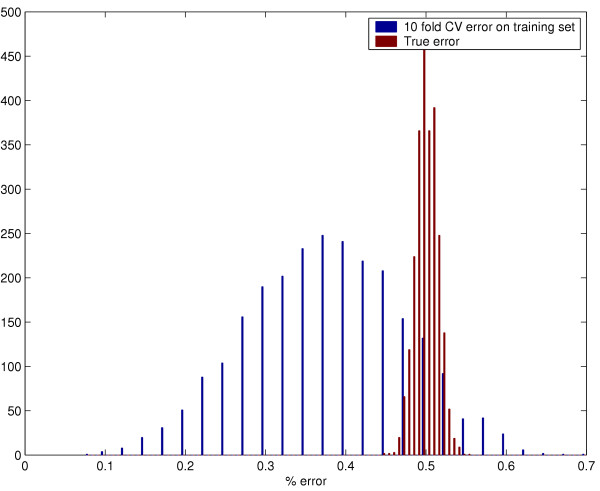
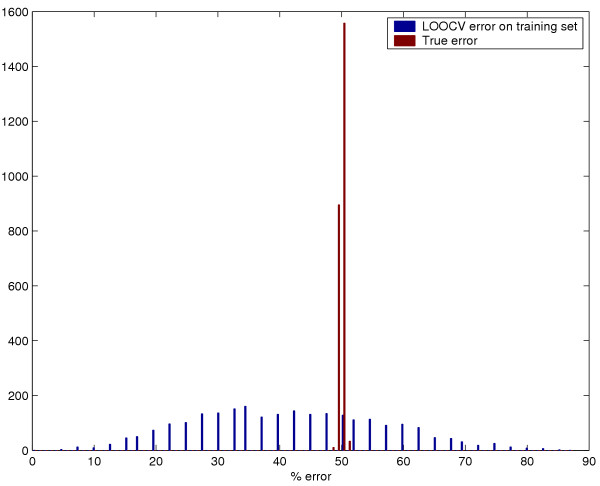
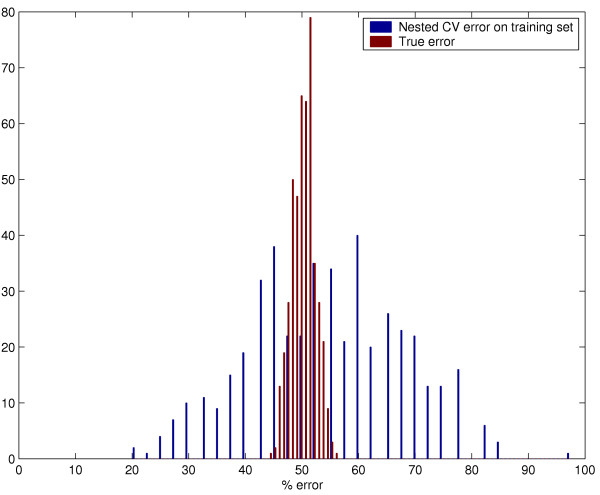
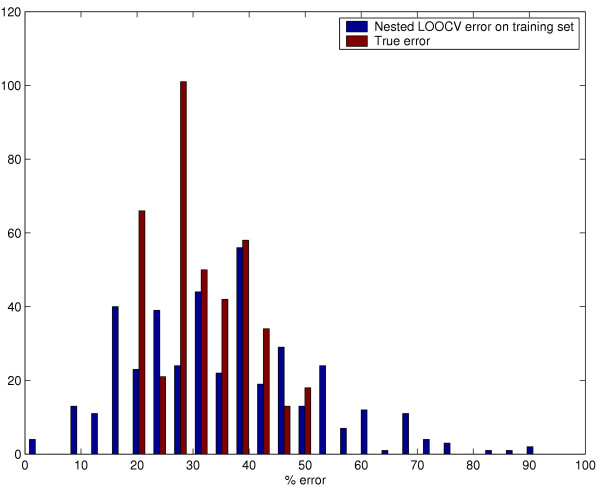
Background: Cross-validation (CV) is an effective method for estimating the prediction error of a classifier. Some recent articles have proposed methods for optimizing classifiers by choosing classifier parameter values that minimize the CV error estimate. We have evaluated the validity of using the CV error estimate of the optimized classifier as an estimate of the true error expected on independent data. Results: We used CV to optimize the classification parameters for two kinds of classifiers; Shrunken Centroids and Support Vector Machines (SVM). Random training datasets were created, with no difference in the distribution of the features between the two classes. Using these "null" datasets, we selected classifier parameter values that minimized the CV error estimate. 10-fold CV was used for Shrunken Centroids while Leave-One-Out-CV (LOOCV) was used for the SVM. Independent test data was created to estimate the true error. With "null" and "non null" (with differential expression between the classes) data, we also tested a nested CV procedure, where an inner CV loop is used to perform the tuning of the parameters while an outer CV is used to compute an estimate of the error. The CV error estimate for the classifier with the optimal parameters was found to be a substantially biased estimate of the true error that the classifier would incur on independent data. Even though there is no real difference between the two classes for the "null" datasets, the CV error estimate for the Shrunken Centroid with the optimal parameters was less than 30% on 18.5% of simulated training data-sets. For SVM with optimal parameters the estimated error rate was less than 30% on 38% of "null" data-sets. Performance of the optimized classifiers on the independent test set was no better than chance. The nested CV procedure reduces the bias considerably and gives an estimate of the error that is very close to that obtained on the independent testing set for both Shrunken Centroids and SVM classifiers for "null" and "non-null" data distributions. Conclusion: We show that using CV to compute an error estimate for a classifier that has itself been tuned using CV gives a significantly biased estimate of the true error. Proper use of CV for estimating true error of a classifier developed using a well defined algorithm requires that all steps of the algorithm, including classifier parameter tuning, be repeated in each CV loop. A nested CV procedure provides an almost unbiased estimate of the true error.
Overview
The claims and statistics of this paper haven’t been checked yet.
Free: it reads the open-access text and checks the first 5 claims that cite a source we can check. Create a free account to check every claim.
Integrity signals
Registry
Cites
Statistics
Figures
Verification
Claims the paper makes
The claims and statistics of this paper haven’t been checked yet.
Free: it reads the open-access text and checks the first 5 claims that cite a source we can check. Create a free account to check every claim.
Self-check
Percentages, sums and reported differences re-computed from the paper’s own numbers.
The self-check needs the paper’s full text.
Citations
Cites
LIBSVM: A library for support vector machines
Chang, C.-C., & Lin, C.-J. (2011) · ACM Transactions on Intelligent Systems and Technology · doi:10.1145/1961189.1961199 · Cited by 40,918
Wu, Y. (1999) · Technometrics · doi:10.1080/00401706.1999.10485951 · Cited by 27,221 · cited 1×
“SVMs were introduced by Vapnik [ 8 ] as linear hyperplanes that separate data belonging to different classes while maximizing the margin, or the distance of the training samples to the linear separating hyperplane.”
Method(2012) · Encyclopedia of the Sciences of Learning · doi:10.1007/978-1-4419-1428-6_5195 · Cited by 19,370
Diagnosis of multiple cancer types by shrunken centroids of gene expression
Tibshirani, R., Hastie, T., Narasimhan, B., & Chu, G. (2002) · Proceedings of the National Academy of Sciences · doi:10.1073/pnas.082099299 · Cited by 2,930 · cited 2×
“This classifier, originally proposed by Tibshirani et al [5], is an extension of the nearest centroid classifier.”
BackgroundMethodImprovements on Cross-Validation: The 632+ Bootstrap Method
Efron, B., & Tibshirani, R. (1997) · Journal of the American Statistical Association · doi:10.1080/01621459.1997.10474007 · Cited by 1,636 · cited 1×
“632 Bootstrap [10] and Bootstrap CV [11].”
Selection bias in gene extraction on the basis of microarray gene-expression data
Ambroise, C., & McLachlan, G. J. (2002) · Proceedings of the National Academy of Sciences · doi:10.1073/pnas.102102699 · Cited by 1,480 · cited 1×
“[2], Ambroise and McLachlan [3] and Reunanen [4], this gives a very biased estimate of the true error; not much better than the resubstitution estimate.”
BackgroundPrediction error estimation: a comparison of resampling methods
Molinaro, A. M., Simon, R., & Pfeiffer, R. M. (2005) · Bioinformatics · doi:10.1093/bioinformatics/bti499 · Cited by 1,339 · cited 1×
“However, low variance methods can also have a large inherent bias [12] (either positive or negative).”
BackgroundSelf-citationPitfalls in the Use of DNA Microarray Data for Diagnostic and Prognostic Classification
Simon, R., Radmacher, M. D., Dobbin, K., & McShane, L. M. (2003) · JNCI Journal of the National Cancer Institute · doi:10.1093/jnci/95.1.14 · Cited by 1,006 · cited 1×
“[2], Ambroise and McLachlan [3] and Reunanen [4], this gives a very biased estimate of the true error; not much better than the resubstitution estimate.”
Self-citationIizuka, N., Oka, M., Yamada-Okabe, H., Nishida, M., Maeda, Y., Mori, N., Takao, T., Tamesa, T., Tangoku, A., Tabuchi, H., et al. (2003) · The Lancet · doi:10.1016/s0140-6736(03)12775-4 · Cited by 511
Peng, S., Xu, Q., Ling, X. B., Peng, X., Du, W., & Chen, L. (2003) · FEBS Letters · doi:10.1016/s0014-5793(03)01275-4 · Cited by 218
Cited by
Items 301–400 of 1,006
Joutsijoki, H., Haponen, M., Rasku, J., Aalto‐Setälä, K., & Juhola, M. (2016) · Computational and Mathematical Methods in Medicine · doi:10.1155/2016/3091039 · Cited by 57
Käser, T., Hallinen, N. R., & Schwartz, D. L. (2017) · International Conference on Learning Analytics and Knowledge (LAK) · doi:10.1145/3027385.3027422 · Cited by 66
“Since the estimation of model performance during parameter tuning leads to a potential bias [6, 38], we use a nested student-stratified cross validation to estimate the predictive performance of the WHM and to at the same time learn the optimal weights wopt for this model.”
MethodLiu, L., Zhang, X., Xu, W. H., Liu, X., Lu, X., Chen, D., Zhang, X., Wang, S., & Zhang, W. (2017) · Remote Sensing of Environment · doi:10.1016/j.rse.2017.07.005 · Cited by 56
“The model is established using the training data and the accuracy of the model performance is evaluated using the validation data (Varma and Simon, 2006).”
MethodInfluentialCarter, J. A., Long, C. S., Smith, B. P., Smith, T. L., & Donati, G. L. (2018) · Expert Systems with Applications · doi:10.1016/j.eswa.2018.08.002 · Cited by 56
Tsamardinos, I., Fanourgakis, G. S., Greasidou, E., Klontzas, E., Gkagkas, K., & Froudakis, G. E. (2020) · Microporous and Mesoporous Materials · doi:10.1016/j.micromeso.2020.110160 · Cited by 57
Statistical Analysis of Microarray Data
Reimers, M. (2005) · Addiction Biology · doi:10.1080/13556210412331327795 · Cited by 61
Shim, M., Lee, S., & Hwang, H. (2021) · Scientific Reports · doi:10.1038/s41598-021-87157-3 · Cited by 62
Combining optical spectroscopy and machine learning to improve food classification
Magnus, I., Virte, M., Thienpont, H., & Smeesters, L. (2021) · Food Control · doi:10.1016/j.foodcont.2021.108342 · Cited by 56
“More specifically, we still evaluated 10 repeats, each one using 464 the average performance over 10 outer folds, but do the feature selection based on 5-fold cross validation in the 465 inner loop (Varma and Simon, 2006).”
MethodHow Validation Methodology Influences Human Activity Recognition Mobile Systems
Bragança, H. L. D. S., Colonna, J. G., Oliveira, H. A. B. F., & Souto, E. (2022) · Sensors · doi:10.3390/s22062360 · Cited by 66
Matsui, S., Simon, R. M., Qu, P., Shaughnessy, J. D., Barlogie, B., & Crowley, J. J. (2012) · Clinical Cancer Research · doi:10.1158/1078-0432.ccr-12-1206 · Cited by 51
Self-citationA Machine Learning Approach to Fault Prediction of Power Distribution Grids under Heatwaves
Atrigna, M., Buonanno, A., Carli, R., Cavone, G., Scarabaggio, P., Valenti, M., Graditi, G., & Dotoli, M. (2023) · IEEE Transactions on Industry Applications · doi:10.1109/tia.2023.3262230 · Cited by 80
“Hence, in order to have an unbiased estimation of the generalization error, a stratified 10 × 5 nested Cross-Validation (CV) approach [46] is employed as shown in Fig.”
MethodIs K-fold cross validation the best model selection method for machine learning?
Górriz, J. M., Martin-Clemente, R., Segovia, F., Ramírez, J., Ortíz, A., & Suckling, J. (2026) · Information Fusion · doi:10.1016/j.inffus.2026.104404 · Cited by 152
Seasonal antigenic prediction of influenza A H3N2 using machine learning
Shah, S. A. W., Palomar, D. P., Barr, I., Poon, L. L. M., Quadeer, A. A., & McKay, M. R. (2024) · Nature Communications · doi:10.1038/s41467-024-47862-9 · Cited by 61
“Unlike prior works 21,46,50,51 that used the entire dataset (including test seasons) for model optimization, our model was optimized solely using the data of past seasons to prevent data leakage issues 52 that could in fl ate model performance 46 .”
MethodCross-Validation, Shrinkage and Variable Selection in Linear Regression Revisited
van Houwelingen, H. C., & Sauerbrei, W. (2013) · Open Journal of Statistics · doi:10.4236/ojs.2013.32011 · Cited by 57
“As pointed out by [15], this is a bad thing to do.”
BackgroundA New Recursive Dynamic Factor Analysis for Point and Interval Forecast of Electricity Price
Wu, H. C., Chan, S. C., Tsui, K. M., & Hou, Y. (2013) · IEEE Transactions on Power Systems · doi:10.1109/tpwrs.2012.2232314 · Cited by 54
“This avoids the optimistic bias of obtaining prediction accuracy that is higher than the actual one [30], which happen when the testing sets are re-used for both evaluation and parameter tuning.”
MethodEstimating the Confidence Interval for Prediction Errors of Support Vector Machine Classifiers
Jiang, B., Zhang, X. H.-F., & Cai, T. (2008) · Journal of Machine Learning Research · doi:10.5555/1390681.1390698 · Cited by 74
Peter, R., Korfiatis, P. D., Blezek, D. J., Beitia, A. O., Buksakowska, I., Hořínek, D., Flemming, K. D., & Erickson, B. J. (2017) · Medical Physics · doi:10.1002/mp.12015 · Cited by 50
Koçak, B., Durmaz, E. Ş., Kaya, O. K., & Kılıçkesmez, Ö. (2019) · Acta Radiologica · doi:10.1177/0284185119881742 · Cited by 53
“This rather complex approach minimizes the bias and gives a similar estimate of the error to that of independent validation (43).”
ResultTowards reproducible radiomics research: introduction of a database for radiomics studies
Akinci D’Antonoli, T., Cuocolo, R., Baessler, B., & Pinto dos Santos, D. (2023) · European Radiology · doi:10.1007/s00330-023-10095-3 · Cited by 49
“If cross-validation is to be used alone, the entire pipeline must be nested, or a test set should be left out of the pipeline to obtain unbiased results; otherwise, the model will be overfitted and cannot be generalized [15, 16].”
MethodOperational solar flare prediction model using Deep Flare Net
Nishizuka, N., Kubo, Y., Sugiura, K., Den, M., & Ishii, M. (2021) · Earth Planets and Space · doi:10.1186/s40623-021-01381-9 · Cited by 65
An efficient model selection for linear discriminant function-based recursive feature elimination
Ding, X., Yang, F., & Ma, F. (2022) · Journal of Biomedical Informatics · doi:10.1016/j.jbi.2022.104070 · Cited by 53
Comparison of Machine Classification Algorithms for Fibromyalgia: Neuroimages Versus Self-Report
Robinson, M. E., O’Shea, A. M., Craggs, J. G., Price, D. D., Letzen, J. E., & Staud, R. M. (2015) · Journal of Pain · doi:10.1016/j.jpain.2015.02.002 · Cited by 50
“We used a nested cross validation approach, in which all tuning steps are repeated in each fold of cross validation, to avoid biased estimates of accuracy 23 .”
MethodComparison of Regularized Regression Methods for ~Omics Data
Acharjee, A. (2012) · Journal of Postgenomics Drug & Biomarker Development · doi:10.4172/2153-0769.1000126 · Cited by 59
“Hence, a double cross validation scheme was used [20,38,39].”
An Ensemble Method to Predict Student Performance in an Online Math Learning Environment.
Stapel, M., Zheng, Z., & Niels Pinkwart, C. (2016) · Educational Data Mining · Cited by 60
Improving polygenic risk prediction from summary statistics by an empirical Bayes approach
So, H., & Sham, P. C. (2017) · Scientific Reports · doi:10.1038/srep41262 · Cited by 53
Multiple graph regularized protein domain ranking
Wang, J. J.-Y., Bensmail, H., & Gao, X. (2012) · BMC Bioinformatics · doi:10.1186/1471-2105-13-307 · Cited by 48
“At the same time, cross-validation [12,13] can be used for parameter selection, but it does not always scale up very well for many of the graph parameters, and sometimes it might over-fit the training and validation set while not generalizing well on the query set.”
MethodMcGregor, D. J., Bimrose, M. V., Shao, C., Tawfick, S., & King, W. P. (2022) · Additive manufacturing · doi:10.1016/j.addma.2022.102848 · Cited by 60
Resampling Strategies for Model Assessment and Selection
Simon, R. M. (2007) · Springer eBooks · doi:10.1007/978-0-387-47509-7_8 · Cited by 48
“Varma and Simon (2006) have studied this bias and indicated that its size depends on the number of classifiers minimized over and the variability of the resampling estimates.”
BackgroundSelf-citationMultiple Kernel Learning for Remote Sensing Image Classification
Niazmardi, S., Demir, B., Bruzzone, L., Safari, A., & Homayouni, S. (2017) · IEEE Transactions on Geoscience and Remote Sensing · doi:10.1109/tgrs.2017.2762597 · Cited by 52
“on cross-validation [6], [7]), which, however, cannot guarantee”
High-wearable EEG-based distraction detection in motor rehabilitation
Apicella, A., Arpaïa, P., Frosolone, M., & Moccaldi, N. (2021) · Scientific Reports · doi:10.1038/s41598-021-84447-8 · Cited by 51
Multi-Objective Parameter Selection for Classifiers
Müssel, C., Lausser, L. M., Maucher, M., & Kestler, H. A. (2012) · Journal of Statistical Software · doi:10.18637/jss.v046.i05 · Cited by 58
“Varma and Simon (2006) suggest a nested cross-validation for the parameter selection.”
BackgroundBouts, M. J. R. J., Möller, C., Hafkemeijer, A., van Swieten, J. C., Dopper, E., van der Flier, W. M., Vrenken, H., Wink, A. M., Pijnenburg, Y. A. L., Scheltens, P., et al. (2018) · Journal of Alzheimer’s Disease · doi:10.3233/jad-170893 · Cited by 47
“…performance, while the second, inner, loop subdivided the training set further to determine the lowest binomial deviance that corresponded with the best operational parameters for the penalty terms (including the optimal number of features) without overestimating classification performance [53, 54].”
Radiomics model predicts granulation pattern in growth hormone-secreting pituitary adenomas
Park, Y. W., Kang, Y., Ahn, S. S., Ku, C. R., Kim, E. H., Kim, S. H., Lee, E. J., Kim, S. H., & Lee, S. (2020) · Pituitary · doi:10.1007/s11102-020-01077-5 · Cited by 49
Piccialli, F., Calabrò, F., Crisci, D., Cuomo, S., Prezioso, E., Mandile, R., Troncone, R., Greco, L., & Auricchio, R. (2021) · Scientific Reports · doi:10.1038/s41598-021-84951-x · Cited by 50
Common Spatio-Time-Frequency Patterns for Motor Imagery-Based Brain Machine Interfaces
Higashi, H., & Tanaka, T. (2013) · Computational Intelligence and Neuroscience · doi:10.1155/2013/537218 · Cited by 47
“We conducted the nested CV [25] with all of the combinations of these parameters and obtained the classification accuracy rates.”
MethodLow-cost bacterial nanocellulose-based interdigitated biosensor to detect the p53 cancer biomarker
Bondancia, T. J., Soares, A. C., Neto, M. P., Gomes, N. O., Raymundo‐Pereira, P. A., Barud, H. D. S., Machado, S. A. S., Ribeiro, S. J. L., Melendez, M. E., Carvalho, A. L., et al. (2022) · Biomaterials Advances · doi:10.1016/j.msec.2022.112676 · Cited by 47
Analysis of EEG entropy during visual evocation of emotion in schizophrenia
Chu, W.-L., Huang, M.-W., Jian, B., & Cheng, K. (2017) · Annals of General Psychiatry · doi:10.1186/s12991-017-0157-z · Cited by 50
“The predictive accuracy was evaluated using the 27‐fold cross validation method [32] with a quadratic kernel, in Part A.”
MethodRecreating passenger mode choice-sets for transport simulation: A case study of London, UK
Hillel, T., Elshafie, M., & Jin, Y. (2018) · Proceedings of the Institution of Civil Engineers - Smart Infrastructure and Construction · doi:10.1680/jsmic.17.00018 · Cited by 92
“Varma and Simon (2006) show that cross-validation provides a biased estimate of true performance if cross-validation is also used for model optimisation.”
BackgroundSampedro-Gómez, J., Dorado-Díaz, P. I., Vicente-Palacios, V., Sánchez-Puente, A., Jiménez-Navarro, M. F., Román, J. A. S., Galindo‐Villardón, P., Sanchez, P. L., & Fernández‐Avilés, F. (2020) · Canadian Journal of Cardiology · doi:10.1016/j.cjca.2020.01.027 · Cited by 51
Xu, X., Li, W., Tao, M., Xie, Z., Gao, X., Yue, L., & Wang, P. (2020) · Frontiers in Neuroscience · doi:10.3389/fnins.2020.577887 · Cited by 51
“In present study, we follow the most commonly used nested cross-validation scheme to evaluate the performance of the proposed multiple kernel method (Varma and Simon, 2006).”
MethodImpact of RNA-seq data analysis algorithms on gene expression estimation and downstream prediction
Li, T., Wu, P.-Y., Phan, J. H., Hassazadeh, H., Jones, W. D., Shi, L. M., Fischer, M., Mason, C. E., Li, S., Xu, J., et al. (2020) · Scientific Reports · doi:10.1038/s41598-020-74567-y · Cited by 51
Tang, B., Guan, Z., Allegaert, K., Wu, Y., Manolis, E., Leroux, S., Yao, B., Shi, H., Li, X., Huang, X., et al. (2021) · Clinical Pharmacokinetics · doi:10.1007/s40262-021-01033-x · Cited by 51
“NeCV has been accepted widely in the machine learning community as ‘state-of-the-art’, as it has been found to be an (almost) unbiased model assessment method when estimating the true error [29, 30].”
MethodMidtfjord, A. D., Bin, R. D., & Huseby, A. B. (2022) · Cold Regions Science and Technology · doi:10.1016/j.coldregions.2022.103556 · Cited by 60
Meng, S., Pang, Y., Zhang, Z., Jia, W., & Li, Z. (2016) · Remote Sensing · doi:10.3390/rs8030230 · Cited by 45
Arndt, M., Rurik, M., Drees, A., Bigdowski, K., Kohlbacher, O., & Fischer, M. J. (2020) · Food Control · doi:10.1016/j.foodcont.2020.107302 · Cited by 45
Segelke, T., von Wuthenau, K., Neitzke, G., Müller, M.-S., & Fischer, M. J. (2020) · Journal of Agricultural and Food Chemistry · doi:10.1021/acs.jafc.0c02334 · Cited by 47
Da‐ano, R., Lucia, F., Masson, I., Abgral, R., Alfieri, J., Rousseau, C., Mervoyer, A., Reinhold, C., Pradier, O., Schick, U., et al. (2021) · PLoS ONE · doi:10.1371/journal.pone.0253653 · Cited by 49
“This absolute difference in performance amongst the ML algorithms can be attributed in part to i) the different feature selection techniques [41] and ii) the way the classifiers combine selected features.”
BackgroundPrediction of Reservoir Storage Anomalies in India
Tiwari, A. D., & Mishra, V. K. (2019) · Journal of Geophysical Research Atmospheres · doi:10.1029/2019jd030525 · Cited by 51
“The forecast skill was estimated using the leave‐one‐out approach (Stone, 1974; Varma & Simon, 2006).”
MethodMäki-Lohiluoma, E., Säkkinen, N., Palomäki, M., Winberg, O., Ta, H. X., Heikkinen, T. T., Kiljunen, E., & Kauppinen, A. (2021) · International Journal of Pharmaceutics · doi:10.1016/j.ijpharm.2021.121146 · Cited by 50
Soares, A. C., Soares, J. C., Neto, M. P., de Mello, S. S., Pinto, D. D. S. C., Carvalho, W. A., Gilmore, M. S., Piazzetta, M. H. O., Gobbi, Â. L., Brandão, H. D. M., et al. (2022) · Chemical Engineering Journal · doi:10.1016/j.cej.2022.138523 · Cited by 52
Price, G. D., Heinz, M. V., Song, S. H., Nemesure, M. D., & Jacobson, N. C. (2023) · Translational Psychiatry · doi:10.1038/s41398-023-02669-y · Cited by 53
“The MAE norm re fl ects an outcome-agnostic representation of the model ’ s mean absolute error by dividing the mean absolute error by the range of the observed outcome, and thus represents the mean percentage error of the prediction.”
BackgroundZheng, H., Kong, S., Zhai, S., Sun, X., Cheng, Y., Yao, L., Song, C., Zheng, Z., Shi, Z., & Harrison, R. M. (2023) · npj Climate and Atmospheric Science · doi:10.1038/s41612-023-00536-7 · Cited by 56
Attallah, O., Karthikesalingam, A., Holt, P., Thompson, M. M., Sayers, R. D., Bown, M. J., Choke, E., & Ma, X. (2017) · BMC Medical Informatics and Decision Making · doi:10.1186/s12911-017-0508-3 · Cited by 45
Microarray-based expression profiling and informatics
Simon, R. M. (2007) · Current Opinion in Biotechnology · doi:10.1016/j.copbio.2007.10.008 · Cited by 44
Self-citationManipulating Data and Dimension Reduction Methods: Feature Selection
Liu, H., & Zhao, Z. (2009) · Springer eBooks · doi:10.1007/978-0-387-30440-3_317 · Cited by 51
Deppner, J., & Cajias, M. (2022) · The Journal of Real Estate Finance and Economics · doi:10.1007/s11146-022-09915-y · Cited by 67
“For cross-validation to yield unbiased prediction error estimates, statistical independence between training and test observations is required (Bishop, 1995; Bren-ning, 2005; Varma and Simon, 2006).”
InfluentialKessler, R. C., Bauer, M. S., Bishop, T. M., Bossarte, R. M., Castro, V. M., Demler, O., Gildea, S. M., Goulet, J. L., King, A. J., Kennedy, C. J., et al. (2023) · JAMA Psychiatry · doi:10.1001/jamapsychiatry.2022.4634 · Cited by 45
Greenhouse Temperature Prediction Based on Time-Series Features and LightGBM
Cao, Q., Wu, Y.-H., Yang, J., & Yin, J. H. (2023) · Applied Sciences · doi:10.3390/app13031610 · Cited by 49
An empirical approach to model selection through validation for censored survival data
Choi, I., Wells, B. J., Yu, C., & Kattan, M. W. (2011) · Journal of Biomedical Informatics · doi:10.1016/j.jbi.2011.02.005 · Cited by 52
“Thus, we need the unbiased estimate of the true performance of a variable selection method, and it can be achieved, using CV, by the fact that all the aspects of the model development such as model selection and parameter tuning should take place in the training sets within the CV [34].”
Method2D-QSAR and 3D-QSAR Analyses for EGFR Inhibitors
Zhao, M., Wang, L., Zheng, L., Zhang, M., Qiu, C., Zhang, Y., Du, D., & Niu, B. (2017) · BioMed Research International · doi:10.1155/2017/4649191 · Cited by 43
Cooperative Spectrum Prediction-Driven Sensing for Energy Constrained Cognitive Radio Networks
Chauhan, P., Deka, S. K., Chatterjee, B. C., & Sarma, N. (2021) · IEEE Access · doi:10.1109/access.2021.3057292 · Cited by 46
“For cross-validation of LSP, a basic model of nested cross-validation [29] is employed since the traditional cross-validation techniques are not suitable for”
MethodPredicting the outcome of renal transplantation
Lasserre, J., Arnold, S., Vingron, M., Reinke, P., & Hinrichs, C. (2011) · Journal of the American Medical Informatics Association · doi:10.1136/amiajnl-2010-000004 · Cited by 45
Willcock, S., Phillips, O. L., Platts, P. J., Balmford, A. P., Burgess, N. D., Lovett, J. C., Ahrends, A., Bayliss, J., Doggart, N. H., Doody, K., et al. (2014) · Carbon Balance and Management · doi:10.1186/1750-0680-9-2 · Cited by 54
“Akaike information criterion (AIC) was used to reduce/ expand the models, with variable selection occurring when the variable reduced the mean squared error (MSE) under ten-fold cross validation [106].”
MethodConvNeXt based semi-supervised approach with consistency regularization for weeds classification
Benchallal, F., Hafiane, A., Ragot, N., & Canals, R. (2023) · Expert Systems with Applications · doi:10.1016/j.eswa.2023.122222 · Cited by 57
Predicting sub-Golgi localization of type II membrane proteins
van Dijk, A. D. J., Bosch, D., ter Braak, C. J. F., van der Krol, A. R., & van Ham, R. C. H. J. (2008) · Bioinformatics · doi:10.1093/bioinformatics/btn309 · Cited by 43
“To obtain an unbiased performance estimation, an independent ‘leave-one-out’ loop, following the nested cross-validation setup, as described previously, was used (Varma and Simon, 2006).”
MethodTechniques to cope with missing data in host–pathogen protein interaction prediction
Kshirsagar, M., Carbonell, J. G., & Klein‐Seetharaman, J. (2012) · Bioinformatics · doi:10.1093/bioinformatics/bts375 · Cited by 46
“We did a 5-fold nested cross validation (Varma and Simon, 2006), the results are reported in the Supplementary Material.”
MethodDeeba, F., Islam, M., Bui, F. M., & Wahid, K. A. (2017) · Biomedical Signal Processing and Control · doi:10.1016/j.bspc.2017.10.011 · Cited by 42
“…selection from “normal” frame (frame containing no bleeding) is an automated segmentation process For the classifier optimization, we have reviewed the problem of biasing and overfitting [19,20] associated with cross-validation and other standard methods used in current literature very carefully .”
Machine learning detection of obstructive hypertrophic cardiomyopathy using a wearable biosensor
Green, E. M., van Mourik, R. A., Wolfus, C., Heitner, S. B., Dur, O., & Semigran, M. J. (2019) · npj Digital Medicine · doi:10.1038/s41746-019-0130-0 · Cited by 42
Cross-validation of predictive models for functional recovery after post-stroke rehabilitation
Campagnini, S., Liuzzi, P., Mannini, A., Basagni, B., Macchi, C., Carrozza, M. C., & Cecchi, F. (2022) · Journal of NeuroEngineering and Rehabilitation · doi:10.1186/s12984-022-01075-7 · Cited by 47
“Thus, an approach as nested cross-validation can ensure a reduction of the cross-validation bias, replicating error estimations similar to those obtained with independent external validation [40, 41, 42].”
BackgroundMethodTsamardinos, I., Rakhshani, A., & Lagani, V. (2014) · Lecture notes in computer science · doi:10.1007/978-3-319-07064-3_1 · Cited by 55
Naulaerts, S., Dang, C. C., & Ballester, P. J. (2017) · Oncotarget · doi:10.18632/oncotarget.20923 · Cited by 41
“First, both model selection and performance estimation have been carried out using the same data folds, which is known to overestimate performance [29, 43].”
MethodLightweight design of vehicle parameters under crashworthiness using conservative surrogates
Zhu, P., Pan, F., Chen, W., & Viana, F. A. C. (2012) · Computers in Industry · doi:10.1016/j.compind.2012.11.004 · Cited by 41
HypernasalityNet: Deep recurrent neural network for automatic hypernasality detection
Wang, X., Yang, S., Tang, M., Yin, H., Huang, H., & He, L. T. (2019) · International Journal of Medical Informatics · doi:10.1016/j.ijmedinf.2019.05.023 · Cited by 46
Castiglioni, I., Gallivanone, F., Soda, P., Avanzo, M., Stancanello, J., Aiello, M., Interlenghi, M., & Salvatore, M. (2019) · European Journal of Nuclear Medicine and Molecular Imaging · doi:10.1007/s00259-019-04414-4 · Cited by 45
“This procedure offers a workaround for small-dataset situations that shows a low bias in practice where reserving data for independent test sets is not feasible [164].”
BackgroundFood Authentication: Truffle (Tuber spp.) Species Differentiation by FT-NIR and Chemometrics
Segelke, T., Schelm, S., Ahlers, C., & Fischer, M. J. (2020) · Foods · doi:10.3390/foods9070922 · Cited by 43
“For optimising the model parameters and for obtaining an unbiased estimate of the model’s performance, stratified nested cross-validation was used [44,45].”
MethodTranscriptome assists prognosis of disease severity in respiratory syncytial virus infected infants
Jong, V. L., Ahout, I. M. L., van den Ham, H., Jans, J., Zaaraoui‐Boutahar, F., Zomer, A., Simonetti, E. R., Bijl, M., Brand, H. K., van IJcken, W. F. J., et al. (2016) · Scientific Reports · doi:10.1038/srep36603 · Cited by 47
A generalised framework for detailed classification of swimming paths inside the Morris Water Maze
Vouros, A., Gehring, T. V., Szydłowska, K., Janusz, A., Tu, Z., Croucher, M., Lukasiuk, K., Konopka, W., Sandi, C., & Vasilaki, E. (2018) · Scientific Reports · doi:10.1038/s41598-018-33456-1 · Cited by 48
“efore generate a number of classiers by providing dierent numbers of target clusters in succession; in the end of this process a pool of classiers is generated. We use the 10-fold cross validation [40] process to evaluate dierent number of target clusters (10 to 100). Only classiers with a validation error lower than…”
MethodTran, H. H., Nguyen-Minh, Q., & Kervyn, M. (2017) · Land Use Policy · doi:10.1016/j.landusepol.2017.12.009 · Cited by 48
Tejada, A. T., Ella, V. B., Lampayan, R. M., & Reaño, C. E. (2022) · Water · doi:10.3390/w14050754 · Cited by 51
Machine Learning for SociologyPreprint
Molina, M. D., & Garip, F. (2019) · SocArXiv (OSF Preprints) · doi:10.31235/osf.io/a6r9g · Cited by 78
Drees, A., Brockelt, J., Cvancar, L., & Fischer, M. J. (2023) · Talanta · doi:10.1016/j.talanta.2023.124310 · Cited by 37
Genomic Biomarkers for Personalized Medicine: Development and Validation in Clinical Studies
Matsui, S. (2013) · Computational and Mathematical Methods in Medicine · doi:10.1155/2013/865980 · Cited by 49
“When selection of genes and predictionmodels are optimized based on cross-validated predictive accuracy, the optimization process should be included in the cross-validation procedure or an independent validation set is needed to have an unbiased estimate of the predictive accuracy [41, 42].”
MethodComputer-aided classification of mammographic masses using visually sensitive image features
Wang, Y., Aghaei, F., Zarafshani, A., Qiu, Y., Qian, W., & Zheng, B. (2016) · Journal of X-Ray Science and Technology · doi:10.3233/xst-16212 · Cited by 39
“Next, we embedded the feature selection process into a leave-one-case-out (LOCO) training and testing method to evaluate classifier performance, which enables to minimize both feature selection and classifier training/testing bias due to the limited image dataset [25].”
MethodLipiäinen, T., Pessi, J., Movahedi, P., Koivistoinen, J., Kurki, L. T., Tenhunen, M., Yliruusi, J. K., Juppo, A. M., Heikkonen, J., Pahikkala, T., et al. (2018) · Analytical Chemistry · doi:10.1021/acs.analchem.8b00298 · Cited by 42
Using Drug Expression Profiles and Machine Learning Approach for Drug Repurposing
Zhao, K., & So, H. (2018) · Methods in molecular biology · doi:10.1007/978-1-4939-8955-3_13 · Cited by 43
Assisted Diagnosis of Parkinsonism Based on the Striatal Morphology
Segovia, F., Górriz, J. M., Ramírez, J., Martínez-Murcia, F. J., & Castillo-Barnés, D. (2019) · International Journal of Neural Systems · doi:10.1142/s0129065719500114 · Cited by 39
Bumes, E., Wirtz, F.-P., Fellner, C., Grosse, J., Hellwig, D., Oefner, P. J., Häckl, M., Linker, R. A., Proescholdt, M. A., Schmidt, N. O., et al. (2020) · Cancers · doi:10.3390/cancers12113406 · Cited by 40
“By this, it was ensured that the training step was not influenced by the test set, thus obtaining a practically unbiased assessment of the true classification error [29].”
BackgroundMethodShandhi, M. M. H., Cho, P. J., Roghanizad, A. R., Singh, K., Wang, W., Enache, O. M., Stern, A., Sbahi, R., Tatar, B., Fiscus, S., et al. (2022) · npj Digital Medicine · doi:10.1038/s41746-022-00672-z · Cited by 49
Zacharias, H. U., Schley, G., Hochrein, J., Klein, M. S., Köberle, C., Eckardt, K., Willam, C., Oefner, P. J., & Gronwald, W. (2012) · Metabolomics · doi:10.1007/s11306-012-0479-4 · Cited by 44
“An inner nested loop was used to determine the optimal number of discriminatory features, thus ensuring an almost unbiased estimate of the true classification error (Varma and Simon 2006).”
MethodSmall Data Can Play a Big Role in Chemical Discovery
Peleg, H. S., & Milo, A. (2023) · Angewandte Chemie International Edition · doi:10.1002/anie.202219070 · Cited by 41
Empirical investigation of multi-source cross-validation in clinical ECG classification
Leinonen, T., Wong, D., Vasankari, A., Wahab, A., Nadarajah, R., Kaisti, M., & Airola, A. (2024) · Computers in Biology and Medicine · doi:10.1016/j.compbiomed.2024.109271 · Cited by 67
“If both model selection and final evaluation are to be performed simultaneously, nested [49] LSO CV could be implemented, though at considerable computational cost.”
Duan, L., Marvdashti, T., Lee, A., Tang, J. Y., & Bowden, A. K. (2014) · Biomedical Optics Express · doi:10.1364/boe.5.003717 · Cited by 38
Why Not Run the Efficient Global Optimization Algorithm with Multiple Surrogates?
Viana, F. A. C., Haftka, R. T., & Watson, L. T. (2010) · AIAA/ASME/ASCE/AHS/ASC Structures, Structural Dynamics, and Materials Conference (SDM) · doi:10.2514/6.2010-3090 · Cited by 38
Wojtaś, B., Pfeifer, A., Oczko‐Wojciechowska, M., Krajewska, J., Czarniecka, A., Kukulska, A., Eszlinger, M., Musholt, T. J., Stokowy, T., Świerniak, M., et al. (2017) · International Journal of Molecular Sciences · doi:10.3390/ijms18061184 · Cited by 40
“The performance of the classifier was evaluated by the doubly nested leave-one-out cross validation (LOOCV) approach in order to obtain an unbiased estimate of the accuracy [46].”
MethodDose/Volume histogram patterns in Salivary Gland subvolumes influence xerostomia injury and recovery
Han, P., Lakshminarayanan, P., Jiang, W., Shpitser, I., Hui, X., Lee, S. H., Cheng, Z., Guo, Y., Taylor, R. H., Siddiqui, S., et al. (2019) · Scientific Reports · doi:10.1038/s41598-019-40228-y · Cited by 46
“No 33 (40) 36 (27) 14 (34) Volume – cc*** (mean ± sd)”
Ríos, E. M. A., Lasheras, F. S., Sánchez, A. S., Rodríguez, F. J. I., & Seguí‐Crespo, M. (2019) · Sensors · doi:10.3390/s19122800 · Cited by 50
“Of these, a single subsample is employed for validation, and the rest for training the model [37].”
MethodDisease detection in infected plant leaf by computational method
Rath, A. K., & Meher, J. K. (2019) · Archives of Phytopathology and Plant Protection · doi:10.1080/03235408.2019.1708546 · Cited by 38
“Each coordinate is called a principal component (Varma and Simon 2006).”
BackgroundMethodA generalised framework for detailed classification of swimming paths inside the Morris Water Maze
Vouros, A., Gehring, T. V., Szydlowska, K., Janusz, A., Tu, Z., Croucher, M., Lukasiuk, K., Konopka, W., Sandi, C., & Vasilaki, E. (2018) · White Rose Research Online (University of Leeds, The University of Sheffield, University of York) · Cited by 38
Improving imbalanced classification using near-miss instances
Tanimoto, A., Yamada, S., Takenouchi, T., Sugiyama, M., & Kashima, H. (2022) · Expert Systems with Applications · doi:10.1016/j.eswa.2022.117130 · Cited by 60
Printed sensing human-machine interface with individualized adaptive machine learning
Wang, G., Tang, Y., Luo, X., Lu, S., Zhou, Y., Lu, Y. C., Sun, G., Liu, P., Ning, J., Jiang, H., et al. (2025) · Science Advances · doi:10.1126/sciadv.adw3725 · Cited by 48
“This approach separated the hyperparameter tuning from the final performance evaluation, ensuring that the model was not evaluated on data it has seen during training ( 48 , 49 ).”
Metadata
- Authors
- Varma, S., & Simon, R.
- Affiliations
- National Cancer Institute (US)
- Corresponding author
- Varma, Sudhir
- Venue
- BMC Bioinformatics
- Published
- 2006-02-23
- Volume
- 7
- Issue
- 1
- Pages
- 91-91
- ISSN
- 1471-2105 (ISSN-L)
- PMC
- PMC1397873
- OpenAlex
- W2141007997
- Cited by
- 2,485
- References
- 13
- Citations by year
- 2026: 760 · 2025: 246 · 2024: 146 · 2023: 165 · 2022: 178 · 2021: 179 · 2020: 190 · 2019: 110 · 2018: 96 · 2017: 90 · 2016: 49 · 2015: 47 · 2014: 43 · 2013: 42 · 2012: 35
- FWCI
- 7.08
- Type
- journal article
- Language
- en
- Open access
- gold
- doi.org
- Licence
- cc-by
- Locations
- BMC Bioinformatics (publishedVersion, cc-by)
- PubMed Central (publishedVersion, cc-by)
- PubMed (publishedVersion)
- DOAJ (DOAJ: Directory of Open Access Journals) (submittedVersion, cc-by-sa)
- Topics
- Life Sciences › Biochemistry, Genetics and Molecular Biology › Molecular Biology › Gene expression and cancer classification
- Physical Sciences › Computer Science › Artificial Intelligence › Machine Learning and Data Classification
- Physical Sciences › Mathematics › Statistics and Probability › Statistical Methods and Inference
- Keywords
- prediction error estimation, model selection, nested cross-validation, classifier parameter tuning, support vector machine, leave-one-out cross-validation, 10-fold cross-validation
- MeSH terms
- Algorithms, Artificial Intelligence, Computer Simulation, Data Interpretation, Statistical, Models, Genetic, Pattern Recognition, Automated, Sensitivity and Specificity, Reproducibility of Results, Models, Statistical, Bias, Oligonucleotide Array Sequence Analysis, Gene Expression Profiling
About these checks
Registry, retraction, Cites and statistics results are computed, not judged, with one exception: a printed reference that no index lists is read once by a model before it counts as a citation error. Claims are extracted by a model and kept only when their quote appears verbatim in the text; each cited source is then checked, with a model’s help, for whether it says what the claim relies on. Those verdicts can be wrong — read the claim’s quote and the cited source before relying on one.
Statistics and arithmetic are recomputed, not judged.
Confidence bands are shown only for fields calibrated on our annotated test set. None is calibrated yet, so no band is shown.
What counts as a claim ›How we measure confidence ›How we check this ›
Are you an author, or do you see a problem with this page? Request a review
Data sources
Bibliographic data: Semantic Scholar, OpenAlex, Crossref.
Contains information from the Semantic Scholar Academic Graph Datasets, made available under the ODC Attribution License (ODC-BY 1.0).
Semantic Scholar’s data is described in: Kinney, R., et al. (2023). The Semantic Scholar Open Data Platform. arXiv:2301.10140.
