

Bias in error estimation when using cross-validation for model selection
Open accessThe DOI matches its Crossref record; 13 of the 13 references it cites were found in a registry or an index.
Abstract
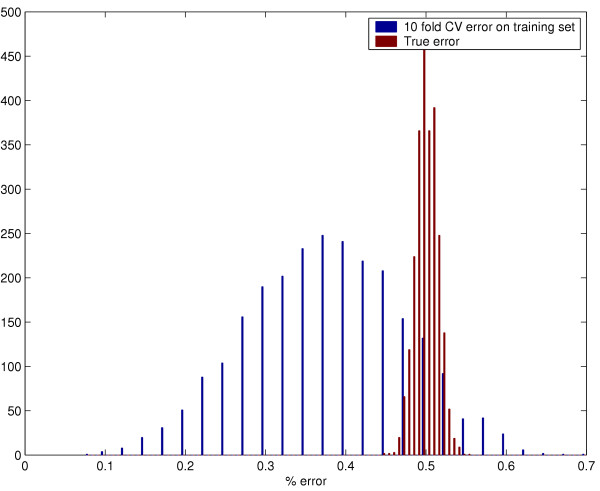
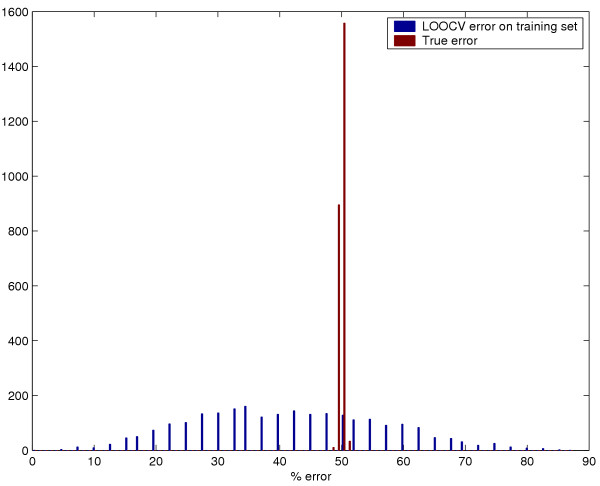
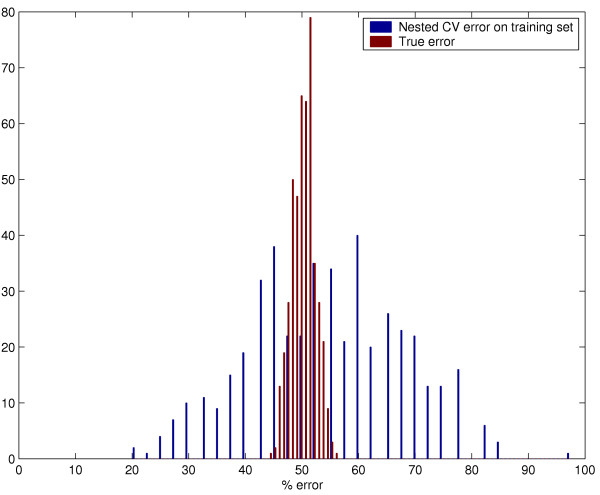
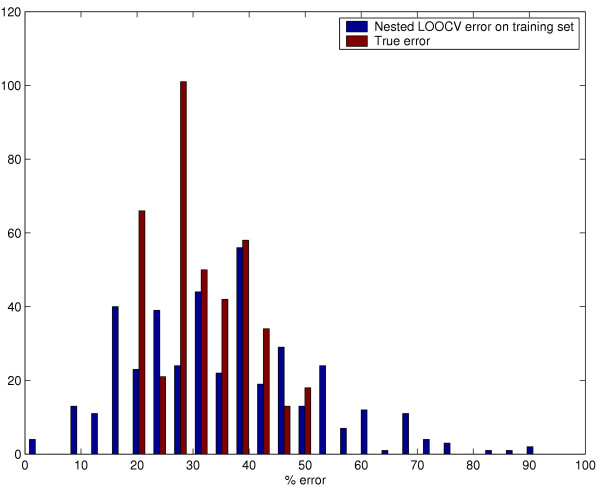
Background: Cross-validation (CV) is an effective method for estimating the prediction error of a classifier. Some recent articles have proposed methods for optimizing classifiers by choosing classifier parameter values that minimize the CV error estimate. We have evaluated the validity of using the CV error estimate of the optimized classifier as an estimate of the true error expected on independent data. Results: We used CV to optimize the classification parameters for two kinds of classifiers; Shrunken Centroids and Support Vector Machines (SVM). Random training datasets were created, with no difference in the distribution of the features between the two classes. Using these "null" datasets, we selected classifier parameter values that minimized the CV error estimate. 10-fold CV was used for Shrunken Centroids while Leave-One-Out-CV (LOOCV) was used for the SVM. Independent test data was created to estimate the true error. With "null" and "non null" (with differential expression between the classes) data, we also tested a nested CV procedure, where an inner CV loop is used to perform the tuning of the parameters while an outer CV is used to compute an estimate of the error. The CV error estimate for the classifier with the optimal parameters was found to be a substantially biased estimate of the true error that the classifier would incur on independent data. Even though there is no real difference between the two classes for the "null" datasets, the CV error estimate for the Shrunken Centroid with the optimal parameters was less than 30% on 18.5% of simulated training data-sets. For SVM with optimal parameters the estimated error rate was less than 30% on 38% of "null" data-sets. Performance of the optimized classifiers on the independent test set was no better than chance. The nested CV procedure reduces the bias considerably and gives an estimate of the error that is very close to that obtained on the independent testing set for both Shrunken Centroids and SVM classifiers for "null" and "non-null" data distributions. Conclusion: We show that using CV to compute an error estimate for a classifier that has itself been tuned using CV gives a significantly biased estimate of the true error. Proper use of CV for estimating true error of a classifier developed using a well defined algorithm requires that all steps of the algorithm, including classifier parameter tuning, be repeated in each CV loop. A nested CV procedure provides an almost unbiased estimate of the true error.
Overview
The claims and statistics of this paper haven’t been checked yet.
Free: it reads the open-access text and checks the first 5 claims that cite a source we can check. Create a free account to check every claim.
Integrity signals
Registry
Cites
Statistics
Figures
Verification
Claims the paper makes
The claims and statistics of this paper haven’t been checked yet.
Free: it reads the open-access text and checks the first 5 claims that cite a source we can check. Create a free account to check every claim.
Self-check
Percentages, sums and reported differences re-computed from the paper’s own numbers.
The self-check needs the paper’s full text.
Citations
Cites
LIBSVM: A library for support vector machines
Chang, C.-C., & Lin, C.-J. (2011) · ACM Transactions on Intelligent Systems and Technology · doi:10.1145/1961189.1961199 · Cited by 40,918
Wu, Y. (1999) · Technometrics · doi:10.1080/00401706.1999.10485951 · Cited by 27,221 · cited 1×
“SVMs were introduced by Vapnik [ 8 ] as linear hyperplanes that separate data belonging to different classes while maximizing the margin, or the distance of the training samples to the linear separating hyperplane.”
Method(2012) · Encyclopedia of the Sciences of Learning · doi:10.1007/978-1-4419-1428-6_5195 · Cited by 19,370
Diagnosis of multiple cancer types by shrunken centroids of gene expression
Tibshirani, R., Hastie, T., Narasimhan, B., & Chu, G. (2002) · Proceedings of the National Academy of Sciences · doi:10.1073/pnas.082099299 · Cited by 2,930 · cited 2×
“This classifier, originally proposed by Tibshirani et al [5], is an extension of the nearest centroid classifier.”
BackgroundMethodImprovements on Cross-Validation: The 632+ Bootstrap Method
Efron, B., & Tibshirani, R. (1997) · Journal of the American Statistical Association · doi:10.1080/01621459.1997.10474007 · Cited by 1,636 · cited 1×
“632 Bootstrap [10] and Bootstrap CV [11].”
Selection bias in gene extraction on the basis of microarray gene-expression data
Ambroise, C., & McLachlan, G. J. (2002) · Proceedings of the National Academy of Sciences · doi:10.1073/pnas.102102699 · Cited by 1,480 · cited 1×
“[2], Ambroise and McLachlan [3] and Reunanen [4], this gives a very biased estimate of the true error; not much better than the resubstitution estimate.”
BackgroundPrediction error estimation: a comparison of resampling methods
Molinaro, A. M., Simon, R., & Pfeiffer, R. M. (2005) · Bioinformatics · doi:10.1093/bioinformatics/bti499 · Cited by 1,339 · cited 1×
“However, low variance methods can also have a large inherent bias [12] (either positive or negative).”
BackgroundSelf-citationPitfalls in the Use of DNA Microarray Data for Diagnostic and Prognostic Classification
Simon, R., Radmacher, M. D., Dobbin, K., & McShane, L. M. (2003) · JNCI Journal of the National Cancer Institute · doi:10.1093/jnci/95.1.14 · Cited by 1,006 · cited 1×
“[2], Ambroise and McLachlan [3] and Reunanen [4], this gives a very biased estimate of the true error; not much better than the resubstitution estimate.”
Self-citationIizuka, N., Oka, M., Yamada-Okabe, H., Nishida, M., Maeda, Y., Mori, N., Takao, T., Tamesa, T., Tangoku, A., Tabuchi, H., et al. (2003) · The Lancet · doi:10.1016/s0140-6736(03)12775-4 · Cited by 511
Peng, S., Xu, Q., Ling, X. B., Peng, X., Du, W., & Chen, L. (2003) · FEBS Letters · doi:10.1016/s0014-5793(03)01275-4 · Cited by 218
Cited by
Items 101–200 of 1,006
Maione, C., Batista, B. L., Campiglia, A. D., Barbosa, F., & Barbosa, R. (2015) · Computers and Electronics in Agriculture · doi:10.1016/j.compag.2015.11.009 · Cited by 147
The effect of distinct mental strategies on classification performance for brain–computer interfaces
Friedrich, E. V. C., Scherer, R., & Neuper, C. (2012) · International Journal of Psychophysiology · doi:10.1016/j.ijpsycho.2012.01.014 · Cited by 148
“The use of an inner crossvalidation would allow an even better estimation of the true discriminative power and thus of the best classifier, as the method intrinsically compares multiple classifiers (Varma and Simon, 2006).”
MethodAbraham, G., Kowalczyk, A., Zobel, J., & Inouye, M. (2012) · Genetic Epidemiology · doi:10.1002/gepi.21698 · Cited by 134
“The estimates of best AUC derived from cross-validation may be upwardly biased, in the sense of being systematically higher than expected on an independent testing dataset, because the estimates of best AUC were based on the same dataset as the AUC was estimated in (optimization bias) [Varma and Simon, 2006; Wood et a…”
MethodMarafino, B. J., Park, M., Davies, J. M., Thombley, R., Luft, H. S., Sing, D. C., Kazi, D. S., DeJong, C., Boscardin, W. J., Dean, M. L., et al. (2018) · JAMA Network Open · doi:10.1001/jamanetworkopen.2018.5097 · Cited by 118
Jiang, M., Sun, D., Guo, Y., Guo, Y., Xiao, J., Wang, L., & Yao, X. (2019) · Academic Radiology · doi:10.1016/j.acra.2019.04.016 · Cited by 130
Stochastic earned value analysis using Monte Carlo simulation and statistical learning techniques
Acebes, F., Pereda, M., Poza, D., Pajares, J., & Galán, J. M. (2015) · International Journal of Project Management · doi:10.1016/j.ijproman.2015.06.012 · Cited by 120
“Although cross ‐ validation can be used for model selection and model assessment, recent studies (Anderssen et al., 2006, Varma and Simon, 2006) warn about an optimistic bias in error estimation when the error obtained during model selection is reported as an estimation of the model performance.”
MethodA generalizable 29-mRNA neural-network classifier for acute bacterial and viral infections
Mayhew, M. B., Buturović, L. J., Luethy, R., Midic, U., Moore, A. R., Roque, J., Shaller, B. D., Asuni, T., Rawling, D., Remmel, M., et al. (2020) · Nature Communications · doi:10.1038/s41467-020-14975-w · Cited by 126
A methodology to generate design allowables of composite laminates using machine learning
Furtado, C., Pereira, L. F., Tavares, R. P., Salgado, R. M., Otero, F., Catalanotti, G., Arteiro, A., Bessa, M. A., & Camanho, P. P. (2021) · International Journal of Solids and Structures · doi:10.1016/j.ijsolstr.2021.111095 · Cited by 128
“The choice of the best hyperparameters for a given algorithm must be performed without access to the test set (Cawley and Talbot, 2010; Varma and Simon, 2006), i.e. the hyperparameter selection must be viewed as an integral part of the learning process (Cawley and Talbot, 2010).”
BackgroundGene expression profiling of peripheral blood cells for early detection of breast cancer
Aarøe, J., Lindahl, T., Dumeaux, V., Sæbø, S., Tobin, D., Hagen, N., Skaane, P., Lönneborg, A., Sharma, P., & Børresen‐Dale, A. (2010) · Breast Cancer Research · doi:10.1186/bcr2472 · Cited by 126
“Finally, the analysis described above is incorporated in an independent loop of LOO-CV in order to test classifier accuracy [22].”
Schouten, T. M., Koini, M., de Vos, F., Seiler, S., van der Grond, J., Lechner, A., Hafkemeijer, A., Möller, C., Schmidt, R., de Rooij, M., et al. (2016) · NeuroImage: Clinical · doi:10.1016/j.nicl.2016.01.002 · Cited by 117
“To determine the parameters for the optimal size of this penalty without overestimating the classification performance we used an additional nested cross validation loop (Varma and Simon, 2006; Kriegeskorte et al., 2009).”
Basler, L., Gabryś, H. S., Hogan, S. A., Pavic, M., Bogowicz, M., Vuong, D., Tanadini‐Lang, S., Forster, R. E., Kudura, K., Huellner, M. W., et al. (2020) · Clinical Cancer Research · doi:10.1158/1078-0432.ccr-20-0020 · Cited by 126
Diniz, B. S., Sibille, E., Ding, Y., Tseng, G., Aizenstein, H. J., Lotrich, F., Becker, J. T., Lopez, O. L., Lotze, M. T., Klunk, W. E., et al. (2015) · Molecular Psychiatry · doi:10.1038/mp.2014.76 · Cited by 116
Breast cancer diagnosis in digitized mammograms using curvelet moments
Dhahbi, S., Barhoumi, W., & Zagrouba, E. (2015) · Computers in Biology and Medicine · doi:10.1016/j.compbiomed.2015.06.012 · Cited by 129
“However, to estimate correctly the generalization error for the classifier, the data used for selecting tuning parameters must be independent of data used for assessment [37].”
MethodCortés-Ciriano, I., Ain, Q. U., Subramanian, V., Lenselink, E. B., Méndez-Lucio, O., IJzerman, A. P., Wohlfahrt, G., Prusis, P., Malliavin, T. E., van Westen, G. J. P., et al. (2015) · MedChemComm · doi:10.1039/c4md00216d · Cited by 116
Automated 3D volumetric reconstruction of multiple-room building interiors for as-built BIM
Jung, J., Stachniss, C., Ju, S., & Heo, J. (2018) · Advanced Engineering Informatics · doi:10.1016/j.aei.2018.10.007 · Cited by 116
Toivonen, J., Perez, I. M., Movahedi, P., Merisaari, H., Pesola, M., Taimen, P., Boström, P. J., Pohjankukka, J., Kiviniemi, A., Pahikkala, T., et al. (2019) · PLoS ONE · doi:10.1371/journal.pone.0217702 · Cited by 128
LaPierre, N., Ju, C. J.-T., Zhou, G., & Wang, W. (2019) · Methods · doi:10.1016/j.ymeth.2019.03.003 · Cited by 114
“As for which cross-validation method is ideal for this setting, there is no obvious best choice, but LOOCV has been shown to have low bias and strong generalization to new data [15, 70, 71], with the main drawback being computational cost [15].”
MethodLiu, H., & Chen, C. (2019) · Applied Energy · doi:10.1016/j.apenergy.2019.113686 · Cited by 114
Evaluating Microarray-based Classifiers: An Overview
Boulesteix, A., Strobl, C., Augustin, T., & Däumer, M. (2008) · Cancer Informatics · doi:10.4137/cin.s408 · Cited by 130
“Studies and discussions on the bias induced by this approach can be found in Varma and Simon (2006); Wood et al. (2007).”
BackgroundA Gene Expression Pattern in Blood for the Early Detection of Alzheimer's Disease
Booij, B. B., Lindahl, T., Wetterberg, P., Skaane, N. V., Sæbø, S., Feten, G., Rye, P. D., Kristiansen, L. I., Hagen, N., Jensen, M., et al. (2011) · Journal of Alzheimer’s Disease · doi:10.3233/jad-2010-101518 · Cited by 113
“A double cross validation approach minimizing data over-fit [25] was then used to estimate the efficacy of the variable selection method and the following performance data was calculated using the clinical diagnosis as reference: accuracy, specificity, sensitivity, AUC from the ROC curve and a positive likelihood rati…”
McTwo: a two-step feature selection algorithm based on maximal information coefficient
Ge, R., Zhou, M., Luo, Y., Meng, Q., Mai, G., Ma, D., Wang, G., & Zhou, F. (2016) · BMC Bioinformatics · doi:10.1186/s12859-016-0990-0 · Cited by 126
“External cross validations are recommended to evaluate whether a feature selection algorithm has a selection bias for small datasets [44–46].”
BackgroundPrognostic Value of Quantitative Stress Perfusion Cardiac Magnetic Resonance
Sammut, E. C., Villa, A. D. M., Giovine, G. D., Dancy, L., Bosio, F., Gibbs, T., Jeyabraba, S., Schwenke, S., Williams, S. E., Marber, M. S., et al. (2017) · JACC. Cardiovascular imaging · doi:10.1016/j.jcmg.2017.07.022 · Cited by 124
“Left ventricular ejection fraction, revascularization within 90 days, and prescan revascularization (34) also entered the baseline model and were subject to penalization.”
BackgroundApplied machine learning to predict stress hotspots I: Face centered cubic materials
Mangal, A., & Holm, E. A. (2018) · International Journal of Plasticity · doi:10.1016/j.ijplas.2018.07.013 · Cited by 125
“on folds from the microstructures in the holdout (test) dataset. This helps in getting an estimate of the generalization error on unseen data. This technique is also known as nested cross-validation (Varma and Simon (2006)). The generalization error can be understood by dividing it into bias and variance errors. If th…”
MethodBest Practices in Supervised Machine Learning: A Tutorial for Psychologists
Pargent, F., Schoedel, R., & Stachl, C. (2023) · Advances in Methods and Practices in Psychological Science · doi:10.1177/25152459231162559 · Cited by 166
“Another prevalent example of over-optimistic predictive performance estimates by not considering data-dependent model decisions in performance evaluation is biased variable selection (Varma & Simon, 2006).”
Tsamardinos, I., Rakhshani, A., & Lagani, V. (2015) · International Journal on Artificial Intelligence Tools · doi:10.1142/s0218213015400230 · Cited by 99
“Varma [27] demonstrated the optimism of the CVM protocol and instead suggests the use of the NCV protocol.”
MethodBaker, S., Ali, I., Silins, I., Pyysalo, S., Guo, Y., Högberg, J., Stenius, U., & Korhonen, A. (2017) · Bioinformatics · doi:10.1093/bioinformatics/btx454 · Cited by 110
“We use nested crossvalidation to avoid sampling bias, as recommended for small datasets (Statnikov et al., 2008; Varma and Simon, 2006).”
MethodMachine learning approach for risk-based inspection screening assessment
Rachman, A., & Ratnayake, R. M. C. (2019) · Reliability Engineering & System Safety · doi:10.1016/j.ress.2019.02.008 · Cited by 121
McElvaney, O. J., Hobbs, B. D., Qiao, D., McElvaney, O. F., Moll, M. R., McEvoy, N. L., Clarke, J., O’Connor, E., Walsh, S., Cho, M. H., et al. (2020) · EBioMedicine · doi:10.1016/j.ebiom.2020.103026 · Cited by 116
“It has been proposed that such nested CV provides almost unbiased performance estimates [33].”
Park, B., Hong, S., Valk, S. L., Paquola, C., Benkarim, O. M., Bethlehem, R. A. I., Martino, A. D., Milham, M. P., Gozzi, A., Yeo, B. T. T., et al. (2021) · Nature Communications · doi:10.1038/s41467-021-21732-0 · Cited by 125
Evans, T. M., Kochalka, J., Ngoon, T. J., Wu, S. S., Qin, S., Battista, C., & Menon, V. (2015) · The Journal of Neuroscience · doi:10.1523/jneurosci.0216-15.2015 · Cited by 107
An, C., Park, Y. W., Ahn, S. S., Han, K., Kim, H., & Lee, S. (2021) · PLoS ONE · doi:10.1371/journal.pone.0256152 · Cited by 143
“Several methods have been proposed to obtain the reliable estimates of true model performance [8, 9, 22, 23, 31], supported by our results that using some of these methods—nested CV or bootstrapping—could reduce the optimism in estimating model performance.”
MethodLi, F., Zhou, Y., Zhang, Y., Yin, J., Qiu, Y., Gao, J., & Zhu, F. (2022) · Briefings in Bioinformatics · doi:10.1093/bib/bbac040 · Cited by 113
Ellett, F. E., Jorgensen, J. A., Marand, A. L., Liu, Y. M., Martinez, M., Sein, V., Butler, K. L., Lee, J., & Irimia, D. (2018) · Nature Biomedical Engineering · doi:10.1038/s41551-018-0208-z · Cited by 122
Rauber, T. W., Loca, A. L. D. S., Boldt, F. D. A., Rodrigues, A. L., & Varejão, F. M. (2020) · Expert Systems with Applications · doi:10.1016/j.eswa.2020.114022 · Cited by 124
Topographic Cortico-cerebellar Networks Revealed by Visual Attention and Working Memory
Brissenden, J. A., Tobyne, S. M., Osher, D. E., Levin, E. J., Halko, M. A., & Somers, D. C. (2018) · Current Biology · doi:10.1016/j.cub.2018.08.059 · Cited by 111
Accurate and Robust Genomic Prediction of Celiac Disease Using Statistical Learning
Abraham, G., Tye-Din, J. A., Bhalala, O. G., Kowalczyk, A., Zobel, J., & Inouye, M. (2014) · PLoS Genetics · doi:10.1371/journal.pgen.1004137 · Cited by 103
“External Validation between Datasets While cross-validation provides an estimate of the model’s ability to generalize to unseen datasets, choosing the model with the highest AUC may lead to so-called ‘‘optimization bias’’ (also called ‘‘winner’s curse’’) [33,34], potentially manifesting as lower performance in indepen…”
Fu, W., Zhang, K., Wang, K., Wen, B., Fang, P., & Zou, F. (2020) · Renewable Energy · doi:10.1016/j.renene.2020.09.078 · Cited by 102
Bayesian maximum entropy approach and its applications: a review
He, J., & Kolovos, A. (2017) · Stochastic Environmental Research and Risk Assessment · doi:10.1007/s00477-017-1419-7 · Cited by 106
“In general, it is recommended to keep validation data as a separate set from training observations, so that cross-validation produces a nearly unbiased estimate of the true error expected on an independent test set (e.g., Efron 1983; Varma and Simon 2006).”
MethodEfficiency of different measures for defining the applicability domain of classification models
Klingspohn, W., Mathea, M., ter Laak, A., Heinrich, N., & Baumann, K. (2017) · Journal of Cheminformatics · doi:10.1186/s13321-017-0230-2 · Cited by 115
Vieira, S., Gong, Q.-Y., Pinaya, W. H. L., Scarpazza, C., Tognin, S., Crespo-Facorro, B., Tordesillas-Gutierrez, D., Ortiz-García, V., Setien-Suero, E., Scheepers, F. E., et al. (2020) · Schizophrenia Bulletin · doi:10.1093/schbul/sby189 · Cited by 99
Sun, Y., Cheng, H., Zhang, S., Mohan, M. K., Ye, G., & Schutter, G. D. (2023) · Construction and Building Materials · doi:10.1016/j.conbuildmat.2023.131519 · Cited by 112
A bias correction for the minimum error rate in cross-validation
Tibshirani, R. J., & Tibshirani, R. (2009) · The Annals of Applied Statistics · doi:10.1214/08-aoas224 · Cited by 73
“Varma and Simon (2006) suggest a method using “nested” cross-validation to estimate the true error rate.”
MethodAn empirical assessment of validation practices for molecular classifiers
Castaldi, P. J., Dahabreh, I. J., & Ioannidis, J. P. A. (2011) · Briefings in Bioinformatics · doi:10.1093/bib/bbq073 · Cited by 96
Clauw, P., Coppens, F., Korte, A., Herman, D., Slabbinck, B., Dhondt, S., Daele, T. V., Milde, L. D., Vermeersch, M., Maleux, K., et al. (2016) · The Plant Cell · doi:10.1105/tpc.16.00483 · Cited by 103
“To ensure generalization properties and obtain an unbiased performance estimation, a stratified nested 10-fold cross-validation was performed (Kohavi, 1995; Varma and Simon, 2006).”
MethodClift, A. K., Dodwell, D., Lord, S., Petrou, S., Brady, M., Collins, G. S., & Hippisley-Cox, J. (2023) · BMJ · doi:10.1136/bmj-2022-073800 · Cited by 97
CMA – a comprehensive Bioconductor package for supervised classification with high dimensional data
Slawski, M., Däumer, M., & Boulesteix, A. (2008) · BMC Bioinformatics · doi:10.1186/1471-2105-9-439 · Cited by 107
“validation, as commonly recommended (10; 11 ).”
BackgroundAn Introduction to Feature Selection
Kühn, M., & Johnson, K. (2013) · Springer eBooks · doi:10.1007/978-1-4614-6849-3_19 · Cited by 119
Computationally modeling interpersonal trust
Lee, J. J., Knox, W. B., Wormwood, J. B., Breazeal, C., & DeSteno, D. (2013) · Frontiers in Psychology · doi:10.3389/fpsyg.2013.00893 · Cited by 96
“Weevaluate the trust models through leave-one-out nested CV and follow the nested implementation as described by Varma and Simon (2006).”
MethodCross-study validation for the assessment of prediction algorithms
Bernau, C., Riester, M., Boulesteix, A.-L., Parmigiani, G., Huttenhower, C., Waldron, L., & Trippa, L. (2014) · Bioinformatics · doi:10.1093/bioinformatics/btu279 · Cited by 94
“The perils of inflated prediction-accuracy estimations by incorrectly or incompletely performed cross-validation are well known (Molinaro et al., 2005; Subramanian and Simon, 2010; Simon et al., 2011; Varma and Simon, 2006).”
BackgroundKhodayari-Rostamabad, A., Hasey, G., MacCrimmon, D. J., Reilly, J. P., & de Bruin, H. (2010) · Clinical Neurophysiology · doi:10.1016/j.clinph.2010.05.009 · Cited by 103
“The number of latent variables in the KPLSR approach and the variance parameter associated with the Gaussian kernel are determined using a simple multi-dimensional grid search optimization within the crossvalidation loop, in a manner consistent with the methodology of (Varma et al., 2006).”
Nik, M. A., Fayazbakhsh, K., Pasini, D., & LESSARD, L. B. (2013) · Composite Structures · doi:10.1016/j.compstruct.2013.08.023 · Cited by 94
“Yet, cross-validation error was found to potentially lead to a biased estimate of the error [25,26].”
BackgroundNiepel, M., Hafner, M., Pace, E. A., Chung, M., Chai, D. H., Zhou, L., Schoeberl, B., & Sorger, P. K. (2013) · Science Signaling · doi:10.1126/scisignal.2004379 · Cited by 95
Major depressive disorder assessment via enhanced k-nearest neighbor method and EEG signals
Saeedi, M., Saeedi, A., & Maghsoudi, A. (2020) · Physical and Engineering Sciences in Medicine · doi:10.1007/s13246-020-00897-w · Cited by 111
“The purpose of this technique is to assess the potential of the model to predict new data that were not used during evaluating of the model [36, 37].”
MethodTree species classification using structural features derived from terrestrial laser scanning
Terryn, L., Calders, K., Disney, M. I., Origo, N., Malhi, Y. S., Newnham, G. J., Raumonen, P., kerblom, M. Å., & Verbeeck, H. (2020) · ISPRS Journal of Photogrammetry and Remote Sensing · doi:10.1016/j.isprsjprs.2020.08.009 · Cited by 112
“5) was applied to determine the accuracy of each classifier using fully independent data (Varma and Simon, 2006).”
MethodZhdanov, A., Atluri, S., Wong, W., Vaghei, Y., Daskalakis, Z. J., Blumberger, D. M., Frey, B. N., Giacobbe, P., Lam, R. W., Milev, R., et al. (2020) · JAMA Network Open · doi:10.1001/jamanetworkopen.2019.18377 · Cited by 93
Dynamic ensemble wind speed prediction model based on hybrid deep reinforcement learning
Chen, C., & Liu, H. (2021) · Advanced Engineering Informatics · doi:10.1016/j.aei.2021.101290 · Cited by 91
Loss of nucleus accumbens low-frequency fluctuations is a signature of chronic pain
Makary, M. M., Polosecki, P. I., Cecchi, G., DeAraujo, I. E., Barron, D. S., Constable, R. T., Whang, P. G., Thomas, D.-A. M., Mowafi, H. O., Small, D. M., et al. (2020) · Proceedings of the National Academy of Sciences · doi:10.1073/pnas.1918682117 · Cited by 108
“…than one measure, we learned the relative weights of each measure using a linear SVM. Free hyperparameters were first chosen from a grid of proposed values using cross-validation within the training set (86), and then models were fit to the full training dataset using the optimal hyperparameters.”
Autoregressive Hidden Markov Models for the Early Detection of Neonatal Sepsis
Stanculescu, I., Williams, C. K. I., & Freer, Y. (2014) · IEEE Journal of Biomedical and Health Informatics · doi:10.1109/jbhi.2013.2294692 · Cited by 92
Opsin switch reveals function of the ultraviolet cone in fish foraging
Flamarique, I. N. (2012) · Proceedings of the Royal Society B Biological Sciences · doi:10.1098/rspb.2012.2490 · Cited by 104
Jung, J., Hong, S., Yoon, S., Kim, J., & Heo, J. (2015) · Journal of Computing in Civil Engineering · doi:10.1061/(asce)cp.1943-5487.0000556 · Cited by 92
Boublia, A., Lemaoui, T., Hatab, F. A., Darwish, A. S., BANAT, F. A., Benguerba, Y., & AlNashef, I. M. (2022) · Journal of Molecular Liquids · doi:10.1016/j.molliq.2022.120225 · Cited by 89
Richter, B., Rurik, M., Gurk, S., Kohlbacher, O., & Fischer, M. J. (2019) · Food Control · doi:10.1016/j.foodcont.2019.04.032 · Cited by 91
Kühl, N., Mühlthaler, M., & Goutier, M. (2019) · Electronic Markets · doi:10.1007/s12525-019-00351-0 · Cited by 117
Statistical analysis in metabolic phenotyping
Blaise, B. J., Correia, G. D. S., Haggart, G. A., Surowiec, I., Sands, C. J., Lewis, M. R., Pearce, J. T. M., Trygg, J., Nicholson, J. K., Holmes, E. C., et al. (2021) · Nature Protocols · doi:10.1038/s41596-021-00579-1 · Cited by 105
Overview of leakage scenarios in supervised machine learning
Sasse, L., Nicolaisen‐Sobesky, E., Dukart, J., Eickhoff, S. B., GOETZ, M. A., Hamdan, S., Komeyer, V., Kulkarni, A. J., Lahnakoski, J. M., Love, B. C., et al. (2025) · Journal Of Big Data · doi:10.1186/s40537-025-01193-8 · Cited by 151
“While previous works have addressed several pitfalls in ML-based analysis [5, 45, 59, 61, 70, 73, 74, 79], only a few have covered the wide range of threats posed by leakage [36, 38] (also see John Langford: https://hunch.net/?p=22).”
BackgroundMcDonagh, J. L., Nath, N., Ferrari, L. D., van Mourik, T., & Mitchell, J. B. O. (2014) · Journal of Chemical Information and Modeling · doi:10.1021/ci4005805 · Cited by 104
“50 In the 10-fold cross-validation, the dataset is randomly split into 10 partitions, where the training set consists of 90% of the data and the test set consists of 10% of the data.”
MethodTseng, Y.-J., Wang, H.-Y., Lin, T.-W., Lu, J.-J., Hsieh, C.-H., & Liao, C.-T. (2020) · JAMA Network Open · doi:10.1001/jamanetworkopen.2020.11768 · Cited by 89
Abraham, G., Kowalczyk, A., Loi, S., Haviv, I., & Zobel, J. (2010) · BMC Bioinformatics · doi:10.1186/1471-2105-11-277 · Cited by 105
Computational identification of protein-protein interactions in model plant proteomes
Ding, Z., & Kihara, D. (2019) · Scientific Reports · doi:10.1038/s41598-019-45072-8 · Cited by 101
Forecasting student achievement in MOOCs with natural language processing
Robinson, C. D., Yeomans, M., Reich, J., Hulleman, C. S., & Gehlbach, H. (2016) · International Conference on Learning Analytics and Knowledge (LAK) · doi:10.1145/2883851.2883932 · Cited by 111
“To accomplish this in our dataset, we used a “nested cross-validation” loop, separate from the cross-validation used to estimate the lasso parameter [20].”
MethodChen, C., & Liu, H. (2020) · Energy Conversion and Management · doi:10.1016/j.enconman.2020.112492 · Cited by 91
Rodríguez-Pérez, R., Fernández, L., & Marco, S. (2018) · Analytical and Bioanalytical Chemistry · doi:10.1007/s00216-018-1217-1 · Cited by 98
Piccialli, F., Giampaolo, F., Prezioso, E., Camacho, D., & Acampora, G. (2021) · Information Fusion · doi:10.1016/j.inffus.2021.03.004 · Cited by 109
Zhao, K., & So, H. (2018) · IEEE Journal of Biomedical and Health Informatics · doi:10.1109/jbhi.2018.2856535 · Cited by 97
Validation strategies for target prediction methods
Mathai, N., Chen, Y., & Kirchmair, J. (2019) · Briefings in Bioinformatics · doi:10.1093/bib/bbz026 · Cited by 101
“In cases where CV is used not only to estimate the performance of a model but also to determine the best parameters for the final model, the CV is first repeated over the different values of the parameters so as to minimize the CV error, and the parameters with the lowest validation error rates are selected for the fi…”
MethodPark, B., Bethlehem, R. A. I., Paquola, C., Larivière, S., Rodríguez‐Cruces, R., de Wael, R. V., Bullmore, E. T., Dolan, R. J., Goodyer, I. M., Fonagy, P., et al. (2021) · eLife · doi:10.7554/elife.64694 · Cited by 93
“5) with optimized regularization parameters (L1 and L2 penalty terms) via nested ten-fold crossvalidation (Cawley and Talbot, 2010; Parvandeh et al., 2020; Tenenbaum et al., 2000; Varma and Simon, 2006; Zou and Hastie, 2005).”
Ding, S., Huang, W., Xu, W., Wu, Y., Zhao, Y., Fang, P., Hu, B., & Lou, L. (2022) · Bioresource Technology · doi:10.1016/j.biortech.2022.127606 · Cited by 88
Novielli, P., Romano, D., Magarelli, M., Bitonto, P. D., Diacono, D., Chiatante, A., Lopalco, G., Sabella, D. V. A., Venerito, V., Filannino, P., et al. (2024) · Frontiers in Microbiology · doi:10.3389/fmicb.2024.1348974 · Cited by 106
“An hyperparameter tuning was conducted with a random search by using the RandomizedSearchCV function of the python library scikit-learn (Bergstra and Bengio, 2012), implemented with a nested 3-fold cross-validation to avoid bias in the estimation of test error (Varma and Simon, 2006).”
Race Differentiation by Raman Spectroscopy of a Bloodstain for Forensic Purposes
Mistek, E., Halámková, L., Doty, K. C., Muro, C. K., & Lednev, I. K. (2016) · Analytical Chemistry · doi:10.1021/acs.analchem.6b01173 · Cited by 85
Batch Effect Confounding Leads to Strong Bias in Performance Estimates Obtained by Cross-Validation
Soneson, C., Gerster, S., & Delorenzi, M. (2014) · PLoS ONE · doi:10.1371/journal.pone.0100335 · Cited by 84
“The performance of each classifier is evaluated on the training data by the means of nested cross-validation [12,18–20] as well as on external data.”
MethodECG-Based Classification of Resuscitation Cardiac Rhythms for Retrospective Data Analysis
Rad, A. B., Eftestol, T., Engan, K., Irusta, U., Kvaloy, J. T., Kramer-Johansen, J., Wik, L., & Katsaggelos, A. K. (2017) · IEEE Transactions on Biomedical Engineering · doi:10.1109/tbme.2017.2688380 · Cited by 84
Vabalas, A., Gowen, E., Poliakoff, E., & Casson, A. J. (2020) · Scientific Reports · doi:10.1038/s41598-020-65384-4 · Cited by 97
“…recent study 40 , in which we asked participants to perform a very simple and short pointing task, we used nested cross-validation, which fully separates training and validation data and has been shown to provide an “ almost unbiased estimate [of performance]” 33 , even with small sample sizes 36 .”
BackgroundMethodResultInfluentialA tutorial on open-source large language models for behavioral science
Hussain, Z., Binz, M., Mata, R., & Wulff, D. U. (2024) · Behavior Research Methods · doi:10.3758/s13428-024-02455-8 · Cited by 141
“Using ridge regression with automatic (nested) tuning of the regularization penalty hyper-parameter (Varma & Simon, 2006), feature extraction with DistilBERT on average explains over half of the variance in health perceptions ( R 2 = .”
MethodMarafino, B. J., Davies, J. M., Bardach, N. S., Dean, M. L., & Dudley, R. A. (2014) · Journal of the American Medical Informatics Association · doi:10.1136/amiajnl-2014-002694 · Cited by 83
“28 Moreover, the use of 10 folds of cross-validation minimizes the variance of such an estimate, which also serves to further minimize the risk of over fi tting.”
Kazerooni, A. F., Saxena, S., Toorens, E., Tu, D., Bashyam, V., Akbari, H., Mamourian, E., Sako, C., Koumenis, C., Verginadis, I. I., et al. (2022) · Scientific Reports · doi:10.1038/s41598-022-12699-z · Cited by 97
Crashworthiness design of vehicle structure with tailor rolled blank
Duan, L., Sun, G., Cui, J., Chen, T., Cheng, A., & Li, G. (2015) · Structural and Multidisciplinary Optimization · doi:10.1007/s00158-015-1315-z · Cited by 86
Pearson, R., Pisner, D., Meyer, B., Shumake, J., & Beevers, C. G. (2019) · Psychological Medicine · doi:10.1017/s003329171800315x · Cited by 81
“Nonetheless, to obtain an unbiased estimate of test error, we used a nested crossvalidation procedure (Varma and Simon, 2006), which will be explained further in the Prediction metrics section.”
BackgroundMethodInfluentialKoçak, B., Durmaz, E. Ş., Kuş, E. A., Kaya, O. K., & Kılıçkesmez, Ö. (2019) · American Journal of Roentgenology · doi:10.2214/ajr.18.20742 · Cited by 87
Accurate and fast feature selection workflow for high-dimensional omics data
Pérez‐Riverol, Y., Kühn, M., Vizcaíno, J. A., Hitz, M., & Audain, E. (2017) · PLoS ONE · doi:10.1371/journal.pone.0189875 · Cited by 81
“, the validation dataset), in order to limit problems like overfitting [29].”
Westhues, C. C., Mahone, G. S., Silva, S. D., Thorwarth, P., Schmidt, M., Richter, J.-C., Simianer, H., & Beissinger, T. M. (2021) · Frontiers in Plant Science · doi:10.3389/fpls.2021.699589 · Cited by 95
“Machine learning models often require an elaborated hyperparameter optimization strategy, implying for example a nested cross-validation approach which can be computationally expensive (Varma and Simon, 2006), since it involves a series of train/validation/test set splits to prevent data leakage.”
Tan, M., Zheng, B., Leader, J. K., & Gur, D. (2016) · IEEE Transactions on Medical Imaging · doi:10.1109/tmi.2016.2527619 · Cited by 82
“Third, to minimize the potential training and testing bias, we used a LOCO cross-validation method in which a feature selection method was embedded [31] to replace a 10-fold crossvalidation method used in our previous studies [10], [13].”
MethodIndividual classification of Alzheimer's disease with diffusion magnetic resonance imaging
Schouten, T. M., Koini, M., de Vos, F., Seiler, S., de Rooij, M., Lechner, A., Schmidt, R., van den Heuvel, M. P., van der Grond, J., & Rombouts, S. A. R. B. (2017) · NeuroImage · doi:10.1016/j.neuroimage.2017.03.025 · Cited by 90
“Therefore, we take a nested-cross validation approach to estimate the hyperparameters (Varma and Simon, 2006), i.e., we perform an additional crossvalidation within the training set to estimate the hyperparameters, and then use those settings to train a model on the entire training set in order to…”
Detmer, F. J., Chung, B. J., Mut, F., Slawski, M., Hamzei‐Sichani, F., Putman, C. M., Jiménez, C., & Cebral, J. R. (2018) · International Journal of Computer Assisted Radiology and Surgery · doi:10.1007/s11548-018-1837-0 · Cited by 88
Albizu, A., Fang, R., Indahlastari, A., O’Shea, A., Stolte, S. E., See, K. B., Boutzoukas, E. M., Kraft, J. N., Nissim, N. R., & Woods, A. J. (2020) · Brain Stimulation · doi:10.1016/j.brs.2020.10.001 · Cited by 79
“Whil e efforts have been made to avoid over-estimating the performance due to “double-dipp ing” in the choice of model hyperparameters [83] through nested cross-validatio n, results should be validated on an independent, larger cohort.”
ResultComprehensive performance indicators for road pavement condition assessment
Marcelino, P., Antunes, M. D. L., & Fortunato, E. (2018) · Structure and Infrastructure Engineering · doi:10.1080/15732479.2018.1446179 · Cited by 87
“One of the approaches recommended by previous studies to define robust models is the nested cross-validation (Krstajic, Buturovic, Leahy, & Thomas, 2014; Varma & Simon, 2006).”
MethodSimon, R. M. (2006) · JNCI Journal of the National Cancer Institute · doi:10.1093/jnci/djj364 · Cited by 79
Self-citationLemmens, S., Craenendonck, T. V., Eijgen, J. V., Groef, L. D., Bruffaerts, R., Jesus, D. A. D., Charle, W., Jayapala, M., Sunaric‐Mégevand, G., Standaert, A., et al. (2020) · Alzheimer s Research & Therapy · doi:10.1186/s13195-020-00715-1 · Cited by 87
“[49] used single-level CV to perform both model selection and evaluation, which may have resulted in over-optimistic performance estimates [43].”
MethodBroomé, S., Feighelstein, M., Zamansky, A., Lencioni, G. C., Andersen, P. H., Pessanha, F., Mahmoud, M., Kjellström, H., & Salah, A. A. (2022) · International Journal of Computer Vision · doi:10.1007/s11263-022-01716-3 · Cited by 106
“For non-deep methods, Varma and Simon (2006) studied validation techniques suggesting that Nested Cross-Validation (Koskimäki, 2015) has minimally biased performance estimates.”
MethodPOPISK: T-cell reactivity prediction using support vector machines and string kernels
Tung, C.-W., Ziehm, M., Kämper, A., Kohlbacher, O., & Ho, S.-Y. (2011) · BMC Bioinformatics · doi:10.1186/1471-2105-12-446 · Cited by 78
“In this study, a nested 10-fold cross-validation (10-CV) procedure was adopted to evaluate the prediction performance of our string kernel-based SVM classifier as it provides an almost unbiased estimate of the prediction error [67].”
MethodSalvatore, C., Cerasa, A., & Castiglioni, I. (2018) · Frontiers in Aging Neuroscience · doi:10.3389/fnagi.2018.00135 · Cited by 78
“Wrapper feature selection and optimization were performed using a fivefold Nested-Cross-Validation (Nested CV) approach (Varma and Simon, 2006).”
Metadata
- Authors
- Varma, S., & Simon, R.
- Affiliations
- National Cancer Institute (US)
- Corresponding author
- Varma, Sudhir
- Venue
- BMC Bioinformatics
- Published
- 2006-02-23
- Volume
- 7
- Issue
- 1
- Pages
- 91-91
- ISSN
- 1471-2105 (ISSN-L)
- PMC
- PMC1397873
- OpenAlex
- W2141007997
- Cited by
- 2,485
- References
- 13
- Citations by year
- 2026: 760 · 2025: 246 · 2024: 146 · 2023: 165 · 2022: 178 · 2021: 179 · 2020: 190 · 2019: 110 · 2018: 96 · 2017: 90 · 2016: 49 · 2015: 47 · 2014: 43 · 2013: 42 · 2012: 35
- FWCI
- 7.08
- Type
- journal article
- Language
- en
- Open access
- gold
- doi.org
- Licence
- cc-by
- Locations
- BMC Bioinformatics (publishedVersion, cc-by)
- PubMed Central (publishedVersion, cc-by)
- PubMed (publishedVersion)
- DOAJ (DOAJ: Directory of Open Access Journals) (submittedVersion, cc-by-sa)
- Topics
- Life Sciences › Biochemistry, Genetics and Molecular Biology › Molecular Biology › Gene expression and cancer classification
- Physical Sciences › Computer Science › Artificial Intelligence › Machine Learning and Data Classification
- Physical Sciences › Mathematics › Statistics and Probability › Statistical Methods and Inference
- Keywords
- prediction error estimation, model selection, nested cross-validation, classifier parameter tuning, support vector machine, leave-one-out cross-validation, 10-fold cross-validation
- MeSH terms
- Algorithms, Artificial Intelligence, Computer Simulation, Data Interpretation, Statistical, Models, Genetic, Pattern Recognition, Automated, Sensitivity and Specificity, Reproducibility of Results, Models, Statistical, Bias, Oligonucleotide Array Sequence Analysis, Gene Expression Profiling
About these checks
Registry, retraction, Cites and statistics results are computed, not judged, with one exception: a printed reference that no index lists is read once by a model before it counts as a citation error. Claims are extracted by a model and kept only when their quote appears verbatim in the text; each cited source is then checked, with a model’s help, for whether it says what the claim relies on. Those verdicts can be wrong — read the claim’s quote and the cited source before relying on one.
Statistics and arithmetic are recomputed, not judged.
Confidence bands are shown only for fields calibrated on our annotated test set. None is calibrated yet, so no band is shown.
What counts as a claim ›How we measure confidence ›How we check this ›
Are you an author, or do you see a problem with this page? Request a review
Data sources
Bibliographic data: Semantic Scholar, OpenAlex, Crossref.
Contains information from the Semantic Scholar Academic Graph Datasets, made available under the ODC Attribution License (ODC-BY 1.0).
Semantic Scholar’s data is described in: Kinney, R., et al. (2023). The Semantic Scholar Open Data Platform. arXiv:2301.10140.
