

Bias in error estimation when using cross-validation for model selection
Open accessThe DOI matches its Crossref record; 13 of the 13 references it cites were found in a registry or an index.
Abstract
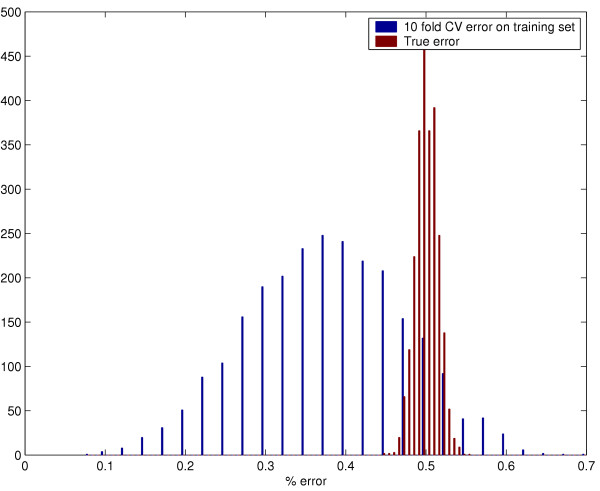
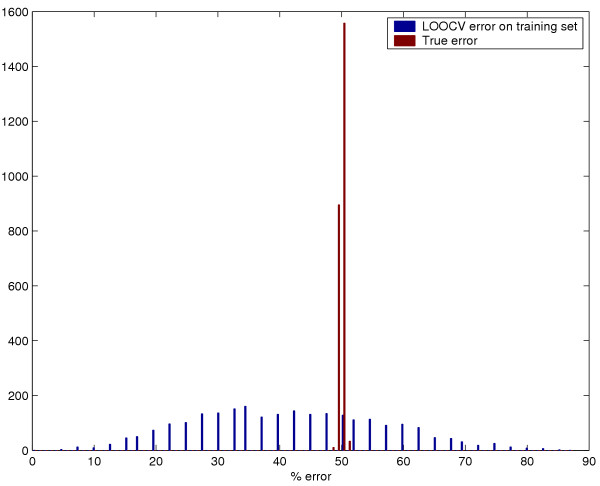
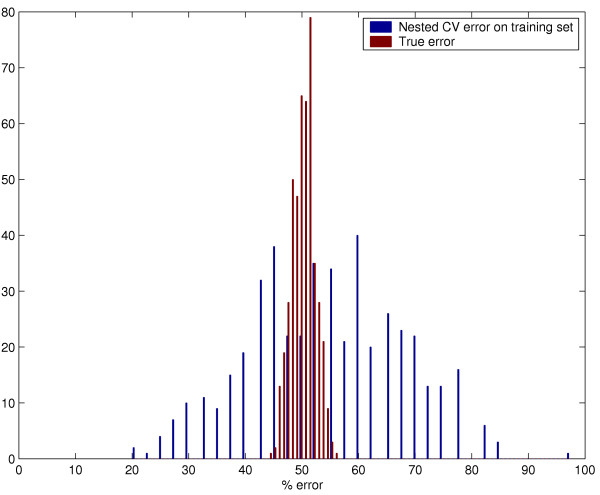
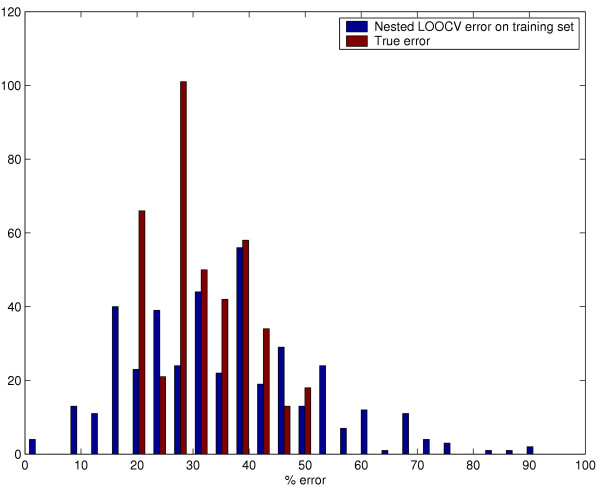
Background: Cross-validation (CV) is an effective method for estimating the prediction error of a classifier. Some recent articles have proposed methods for optimizing classifiers by choosing classifier parameter values that minimize the CV error estimate. We have evaluated the validity of using the CV error estimate of the optimized classifier as an estimate of the true error expected on independent data. Results: We used CV to optimize the classification parameters for two kinds of classifiers; Shrunken Centroids and Support Vector Machines (SVM). Random training datasets were created, with no difference in the distribution of the features between the two classes. Using these "null" datasets, we selected classifier parameter values that minimized the CV error estimate. 10-fold CV was used for Shrunken Centroids while Leave-One-Out-CV (LOOCV) was used for the SVM. Independent test data was created to estimate the true error. With "null" and "non null" (with differential expression between the classes) data, we also tested a nested CV procedure, where an inner CV loop is used to perform the tuning of the parameters while an outer CV is used to compute an estimate of the error. The CV error estimate for the classifier with the optimal parameters was found to be a substantially biased estimate of the true error that the classifier would incur on independent data. Even though there is no real difference between the two classes for the "null" datasets, the CV error estimate for the Shrunken Centroid with the optimal parameters was less than 30% on 18.5% of simulated training data-sets. For SVM with optimal parameters the estimated error rate was less than 30% on 38% of "null" data-sets. Performance of the optimized classifiers on the independent test set was no better than chance. The nested CV procedure reduces the bias considerably and gives an estimate of the error that is very close to that obtained on the independent testing set for both Shrunken Centroids and SVM classifiers for "null" and "non-null" data distributions. Conclusion: We show that using CV to compute an error estimate for a classifier that has itself been tuned using CV gives a significantly biased estimate of the true error. Proper use of CV for estimating true error of a classifier developed using a well defined algorithm requires that all steps of the algorithm, including classifier parameter tuning, be repeated in each CV loop. A nested CV procedure provides an almost unbiased estimate of the true error.
Overview
The claims and statistics of this paper haven’t been checked yet.
Free: it reads the open-access text and checks the first 5 claims that cite a source we can check. Create a free account to check every claim.
Integrity signals
Registry
Cites
Statistics
Figures
Verification
Claims the paper makes
The claims and statistics of this paper haven’t been checked yet.
Free: it reads the open-access text and checks the first 5 claims that cite a source we can check. Create a free account to check every claim.
Self-check
Percentages, sums and reported differences re-computed from the paper’s own numbers.
The self-check needs the paper’s full text.
Citations
Cites
LIBSVM: A library for support vector machines
Chang, C.-C., & Lin, C.-J. (2011) · ACM Transactions on Intelligent Systems and Technology · doi:10.1145/1961189.1961199 · Cited by 40,918
Wu, Y. (1999) · Technometrics · doi:10.1080/00401706.1999.10485951 · Cited by 27,221 · cited 1×
“SVMs were introduced by Vapnik [ 8 ] as linear hyperplanes that separate data belonging to different classes while maximizing the margin, or the distance of the training samples to the linear separating hyperplane.”
Method(2012) · Encyclopedia of the Sciences of Learning · doi:10.1007/978-1-4419-1428-6_5195 · Cited by 19,370
Diagnosis of multiple cancer types by shrunken centroids of gene expression
Tibshirani, R., Hastie, T., Narasimhan, B., & Chu, G. (2002) · Proceedings of the National Academy of Sciences · doi:10.1073/pnas.082099299 · Cited by 2,930 · cited 2×
“This classifier, originally proposed by Tibshirani et al [5], is an extension of the nearest centroid classifier.”
BackgroundMethodImprovements on Cross-Validation: The 632+ Bootstrap Method
Efron, B., & Tibshirani, R. (1997) · Journal of the American Statistical Association · doi:10.1080/01621459.1997.10474007 · Cited by 1,636 · cited 1×
“632 Bootstrap [10] and Bootstrap CV [11].”
Selection bias in gene extraction on the basis of microarray gene-expression data
Ambroise, C., & McLachlan, G. J. (2002) · Proceedings of the National Academy of Sciences · doi:10.1073/pnas.102102699 · Cited by 1,480 · cited 1×
“[2], Ambroise and McLachlan [3] and Reunanen [4], this gives a very biased estimate of the true error; not much better than the resubstitution estimate.”
BackgroundPrediction error estimation: a comparison of resampling methods
Molinaro, A. M., Simon, R., & Pfeiffer, R. M. (2005) · Bioinformatics · doi:10.1093/bioinformatics/bti499 · Cited by 1,339 · cited 1×
“However, low variance methods can also have a large inherent bias [12] (either positive or negative).”
BackgroundSelf-citationPitfalls in the Use of DNA Microarray Data for Diagnostic and Prognostic Classification
Simon, R., Radmacher, M. D., Dobbin, K., & McShane, L. M. (2003) · JNCI Journal of the National Cancer Institute · doi:10.1093/jnci/95.1.14 · Cited by 1,006 · cited 1×
“[2], Ambroise and McLachlan [3] and Reunanen [4], this gives a very biased estimate of the true error; not much better than the resubstitution estimate.”
Self-citationIizuka, N., Oka, M., Yamada-Okabe, H., Nishida, M., Maeda, Y., Mori, N., Takao, T., Tamesa, T., Tangoku, A., Tabuchi, H., et al. (2003) · The Lancet · doi:10.1016/s0140-6736(03)12775-4 · Cited by 511
Peng, S., Xu, Q., Ling, X. B., Peng, X., Du, W., & Chen, L. (2003) · FEBS Letters · doi:10.1016/s0014-5793(03)01275-4 · Cited by 218
Cited by
Items 601–700 of 1,006
Meisner, A., Kerr, K. F., Thiessen‐Philbrook, H., Coca, S. G., & Parikh, C. R. (2015) · Kidney International · doi:10.1038/ki.2015.283 · Cited by 24
Williamson, B. D., Magaret, C. A., Gilbert, P. B., Nizam, S., Simmons, C., & Benkeser, D. C. (2021) · Bioinformatics · doi:10.1093/bioinformatics/btab398 · Cited by 22
Democratizing business intelligence and machine learning for air traffic management safety
Patriarca, R., Gravio, G. D., Cioponea, R., & Licu, A. (2021) · Safety Science · doi:10.1016/j.ssci.2021.105530 · Cited by 31
Lin, Y., Palaniappan, R., Wilde, P. D., & Li, L. (2022) · IEEE Transactions on Neural Systems and Rehabilitation Engineering · doi:10.1109/tnsre.2022.3141593 · Cited by 28
“A standard cross-validation (CV) procedure may cause biased results when assessing classification models [45], [46].”
Methodİnce, O., Önder, H., Gençtürk, M., Cebeci, H., Golzarian, J., & Young, S. J. (2022) · Journal of Vascular and Interventional Radiology · doi:10.1016/j.jvir.2022.11.004 · Cited by 22
Al-Mekhlafi, A., Waqas, F. H., Krueger, M., Klawonn, F., Akmatov, M. K., Müller‐Vahl, K., Trebst, C., Skripuletz, T., Stangel, M., Sühs, K., et al. (2023) · Journal of Translational Medicine · doi:10.1186/s12967-023-04637-y · Cited by 24
“Candidate biomarkers were then subjected to leave-one-out (jackknife) internal cross validation [23, 24].”
MethodMultiple surrogates for prediction and optimization
Viana, F. A. C. (2011) · Cited by 22
Fact or fiction: reducing the proportion and impact of false positives
Stahl, D. R., & Pickles, A. R. (2017) · Psychological Medicine · doi:10.1017/s003329171700294x · Cited by 25
Mining Free-Text Medical Notes for Suicide Risk Assessment
Adamou, M., Antoniou, G., Greasidou, E., Lagani, V., Charonyktakis, P., & Tsamardinos, I. (2018) · Proceedings of the 10th Hellenic Conference on Artificial Intelligence · doi:10.1145/3200947.3201020 · Cited by 22
“It has been shown, both theoretically as well as empirically [28–30] that the cross-validated estimation of performance of the best classifier is optimistic.”
BackgroundMORF: A Framework for Predictive Modeling and Replication At Scale With Privacy-Restricted MOOC Data
Gardner, J., Brooks, C. A., Andres, J. M. L., & Baker, R. S. (2018) · IEEE International Conference on Big Data (BigData) · doi:10.1109/bigdata.2018.8621874 · Cited by 31
“Methodological challenges include the use of biased model evaluation procedures [21], [22], the use of improperly-calibrated statistical tests for classifier comparison [23], or “large-scale hypothesis testing” where thousands of hypotheses or models are tested at once, despite the fact that most multiple testing corr…”
BackgroundMethodragp: Pipeline for mining of plant hydroxyproline-rich glycoproteins with implementation in R
Dragićević, M. B., Paunović, D. M., Bogdanović, M. D., Todorović, S., & Simonović, A. D. (2019) · Glycobiology · doi:10.1093/glycob/cwz072 · Cited by 24
Mayne, G. C., Woods, C. M., Dharmawardana, N., Wang, T., Krishnan, S., Hodge, J. C., Foreman, A., Boase, S., Carney, A. S., Sigston, E. A. W., et al. (2020) · Journal of Translational Medicine · doi:10.1186/s12967-020-02446-1 · Cited by 22
Carter, J. A., O’Brien, L. M., Harville, T. R., Jones, B. T., & Donati, G. L. (2020) · Talanta · doi:10.1016/j.talanta.2020.121665 · Cited by 23
Hornung, R., Bernau, C., Truntzer, C., Wilson, R., Stadler, T., & Boulesteix, A. (2015) · BMC Medical Research Methodology · doi:10.1186/s12874-015-0088-9 · Cited by 26
“Similarly, it has been suggested that parameter tuning should be performed using the training dataset only [6–8].”
Reverse engineering biomolecular systems using -omic data: challenges, progress and opportunities
Quo, C. F., Kaddi, C. D., Phan, J. H., Zollanvari, A., Xu, M., Wang, M. D., & Alterovitz, G. (2012) · Briefings in Bioinformatics · doi:10.1093/bib/bbs026 · Cited by 23
Predicting ratings of perceived exertion in Australian football players: methods for live estimation
Carey, D. L., Ong, K., Morris, M. E., Crow, J. F., & Crossley, K. M. (2016) · Int. J. Comput. Sci. Sport · doi:10.1515/ijcss-2016-0005 · Cited by 30
“Nested cross validation was used to evaluate the accuracy of each predictive model (10-fold outer cross validation) and to tune model parameters (5-fold inner cross validation) (Varma & Simon, 2006).”
MethodNear-Optimal Offline Reinforcement Learning via Double Variance ReductionPreprint
Yin, M., Bai, Y., & Wang, Y.-X. (2021) · arXiv (Cornell University) · doi:10.48550/arxiv.2102.01748 · Cited by 56
Machine learning prediction models for postpartum depression: A multicenter study in Japan
Matsuo, S., Ushida, T., Emoto, R., Moriyama, Y., Iitani, Y., Nakamura, N., Imai, K., Nakano‐Kobayashi, T., Yoshida, S., Yamashita, M., et al. (2022) · Journal of obstetrics and gynaecology research · doi:10.1111/jog.15266 · Cited by 22
“under the receiver operating characteristic curve (AUROC) to assess the predictive accuracy of each model using the nested CV of the derivation dataset.(33)”
MethodYu, H., Saffaran, S., Tonelli, R., Laffey, J. G., Esquinas, A. M., de Lima, L. M., Kawano-Dourado, L. B., Maia, I. S., Cavalcanti, A. B., Clini, E. M., et al. (2025) · Critical Care · doi:10.1186/s13054-025-05336-4 · Cited by 25
“…for model selection and performs feature selection prior to validation, nested repeated cross-validation mitigates the risk of overfitting, reduces performance overestimation, and provides more stable and reliable performance estimates with lower variance, particularly for small datasets [39, 40].”
Current Experimental, Bioinformatic and Statistical Methods used in NMR Based Metabolomics
Zacharias, H. U., Hochrein, J., Klein, M. S., Samol, C., Oefner, P. J., & Gronwald, W. (2013) · Current Metabolomics · doi:10.2174/2213235x113019990001 · Cited by 22
“It has been previously shown that with a nested cross-validation approach an almost unbiased assessment of the true classification error is obtained [75].”
BackgroundMcKeigue, P. (2018) · Statistical Methods in Medical Research · doi:10.1177/0962280218776989 · Cited by 23
“A common malpractice is to 376 use the full dataset for variable selection, before the split into test/training folds 377 (40).”
Statistical learning approaches in the genetic epidemiology of complex diseases
Boulesteix, A., Wright, M. N., Hoffmann, S., & König, I. R. (2019) · Human Genetics · doi:10.1007/s00439-019-01996-9 · Cited by 23
“2008; Varma and Simon 2006; Boulesteix and Strobl 2009) for more details on nested cross-validation and the bias which it allows to avoid.”
BackgroundRothe, S., Kudszus, B., & Söffker, D. (2019) · Entropy · doi:10.3390/e21090866 · Cited by 23
“According to Reference [30], the resulting mean value (here of gain of accuracy) is used to compare the performances.”
MethodDobias, M., Sugarman, M. B., Mullarkey, M. C., & Schleider, J. L. (2021) · Administration and Policy in Mental Health and Mental Health Services Research · doi:10.1007/s10488-021-01146-2 · Cited by 23
Stauder, M., & Kühl, N. (2021) · Flexible Services and Manufacturing Journal · doi:10.1007/s10696-021-09430-x · Cited by 29
Ma, H., Zhang, D., Sun, D., Wang, H., & Yang, J. (2022) · BMC Medical Imaging · doi:10.1186/s12880-022-00892-5 · Cited by 22
“Features that were selected in more iterations than would be expected to occur at random were identified as significantly relevant feature [31, 32].”
BackgroundMethodGan, W., Zhang, Y., Xu, J., Yang, R., Xiao, A., & Hu, X. (2023) · Sustainability · doi:10.3390/su151310043 · Cited by 25
Vargas, R., Abbott, L. E., Bower, D., Frahm, N., Shaffer, M., & Yu, W. (2023) · PLoS Computational Biology · doi:10.1371/journal.pcbi.1010770 · Cited by 30
Barnett, E. J., Onete, D. G., Salekin, A., & Faraone, S. V. (2023) · IEEE Transactions on Computational Biology and Bioinformatics · doi:10.1109/tcbb.2023.3343808 · Cited by 23
“hyperparameter optimization, leads to biased performance in the compromised dataset[51].”
BackgroundBernau, C., Augustin, T., & Boulesteix, A. (2013) · Biometrics · doi:10.1111/biom.12041 · Cited by 21
“Note that, as Varma and Simon (2006) have already stressed in their article, the ICV procedure estimates the error rate of a so-called wrapper algorithm including the tuning process and not the error rate of a specific tuning parameter value.”
BackgroundMethodInfluentialLearning Machine Identification of Ferromagnetic UXO Using Magnetometry
Bray, M., & Link, C. A. (2014) · IEEE Journal of Selected Topics in Applied Earth Observations and Remote Sensing · doi:10.1109/jstars.2014.2362920 · Cited by 23
“each learning machine to find the optimum parameters for each training set [24].”
BackgroundStelfox, M. R., Bulling, M. T., & Sweet, M. J. (2019) · Endangered Species Research · doi:10.3354/esr00990 · Cited by 27
“To overcome this bias, a nested cross validation was conducted which allowed for hyperparameter tuning in the inner loop and an estimate of the overall model generalisation to be made on the outer loop (Varma & Simon 2006).”
MethodBibi, M., Nadeem, M. S. A., Khan, I. H., Shim, S., Khan, I. R., Naqvi, U., & Aziz, W. (2019) · IEEE Access · doi:10.1109/access.2019.2942112 · Cited by 24
“In various studies, it is argued that cross validation is suitable when datasets are small [67], [68].”
BackgroundSelecting Doping Elements by Data Mining for Advanced Magnets
Liu, D., Guo, K., Tang, F., Mao, F., Liu, X., Hou, C. R., Wang, H., Lü, H., & Song, X. (2019) · Chemistry of Materials · doi:10.1021/acs.chemmater.9b03379 · Cited by 21
Polosecki, P. I., Castro, E., Rish, I., Pustina, D., Warner, J. H., Wood, A., Sampaio, C., & Cecchi, G. (2020) · Scientific Reports · doi:10.1038/s41598-020-58074-8 · Cited by 25
Akter, M. S., Islam, M. R., Tanaka, T., Iimura, Y., Mitsuhashi, T., Sugano, H., Wang, D., & Molla, M. K. I. (2020) · Entropy · doi:10.3390/e22121415 · Cited by 23
Driver Workload Detection in On-Road Driving Environment Using Machine Learning
Yang, Y. T., Sun, H., Liu, T., Huang, G.-B., & Sourina, O. (2014) · Proceedings in adaptation, learning and optimization · doi:10.1007/978-3-319-14066-7_37 · Cited by 22
“Nested cross validation was conducted within the 3 partitions for the parameter selection [23], to avoid over-training and to optimize the model performance.”
MethodNovielli, P., Romano, D., Magarelli, M., Diacono, D., Monaco, A., Amoroso, N., Vacca, M., Angelis, M. D., Bellotti, R., & Tangaro, S. (2024) · iScience · doi:10.1016/j.isci.2024.110709 · Cited by 22
Prediction models for self-harm and suicide: a systematic review and critical appraisal
Seyedsalehi, A., Bailey, J. P. M., Ogonah, M. G. T., Fanshawe, T. R., & Fazel, S. (2025) · BMC Medicine · doi:10.1186/s12916-025-04367-6 · Cited by 30
“Such approaches can underestimate the amount of optimism in model performance [29, 81].”
Stock trend prediction relying on text mining and sentiment analysis with tweets
Meesad, P., & Li, J. (2014) · World Congress on Information and Communication Technologies · doi:10.1109/wict.2014.7077275 · Cited by 21
“It tries to find a weight which can maximize a margin while the error is minimized [15].”
BackgroundGupta, A., Kulkarni, M., & Mukherjee, A. (2021) · Patterns · doi:10.1016/j.patter.2021.100329 · Cited by 21
Schmitt, C., Schneider, T., Rumask, L., Fischer, M. J., & Hackl, T. (2020) · Journal of Agricultural and Food Chemistry · doi:10.1021/acs.jafc.0c05827 · Cited by 21
von Wuthenau, K., Müller, M.-S., Cvancar, L., Oest, M., & Fischer, M. J. (2022) · Journal of Agricultural and Food Chemistry · doi:10.1021/acs.jafc.2c01088 · Cited by 21
Atrial fibrillation prediction by combining ECG markers and CMR radiomics
Pujadas, E. R., Raisi‐Estabragh, Z., Szabó, L. E., Izquierdo, C., Campello, V. M., Martín-Isla, C., Vágó, H., Merkely, B. P., Harvey, N. C., Petersen, S. E., et al. (2022) · Scientific Reports · doi:10.1038/s41598-022-21663-w · Cited by 23
Using machine learning to predict UK and Japanese secondary students' life satisfaction in PISA 2018
Pan, Z., & Cutumisu, M. (2023) · British Journal of Educational Psychology · doi:10.1111/bjep.12657 · Cited by 27
A Case Study of Data Quality in Text Mining Clinical Progress Notes
Berndt, D. J., McCart, J. A., Finch, D. K., & Luther, S. L. (2015) · ACM Transactions on Management Information Systems · doi:10.1145/2669368 · Cited by 26
“Cross-Validation Versus Nested Cross-Validation The use of nested cross-validation is often suggested for modeling when working with smaller datasets [Varma and Simon 2006].”
MethodClinical proteomics: the promises and challenges of mass spectrometry-based biomarker discovery.
deVera, I. E., Katz, J. E., & Agus, D. B. (2006) · PubMed · Cited by 27
A Brief Introduction to the Use of Machine Learning Techniques in the Analysis of Agent-Based Models
Pereda, M., Santos, J. I., & Galán, J. M. (2017) · Lecture notes in management and industrial engineering · doi:10.1007/978-3-319-55889-9_11 · Cited by 24
A Machine Learning Application for Latency Prediction in Operational 4G Networks
Khatouni, A. S., Soro, F., & Giordano, D. (2019) · Immunotechnology · Cited by 36
Algebraic shortcuts for leave-one-out cross-validation in supervised network inference
Stock, M., Pahikkala, T., Airola, A., Waegeman, W., & Baets, B. D. (2018) · Briefings in Bioinformatics · doi:10.1093/bib/bby095 · Cited by 29
Xue, J., Pu, Y., Smith, J. T., Gao, X., Wang, C., & Wu, B. (2021) · Scientific Reports · doi:10.1038/s41598-021-81945-7 · Cited by 20
Identifying User-Input Privacy in Mobile Applications at a Large Scale
Nan, Y., Yang, Z., Yang, M., Zhou, S., Zhang, Y., Gu, G., Wang, X., & Sun, L. (2016) · IEEE Transactions on Information Forensics and Security · doi:10.1109/tifs.2016.2631949 · Cited by 20
Schleif, F.-M., Lindemann, M., Diaz, M., Maaß, P., Decker, J., Elßner, T., Kuhn, M., & Thiele, H. (2008) · Computing and Visualization in Science · doi:10.1007/s00791-008-0087-z · Cited by 21
“Especially for the RBF kernel according to the results from [44] a dual loop cross validation would be required to reduce the bias and to optimize the prediction capability at the same time.”
MethodBerrar, D. (2024) · Elsevier eBooks · doi:10.1016/b978-0-323-95502-7.00032-4 · Cited by 31
Predicting circRNA-RBP Binding Sites Using a Hybrid Deep Neural Network
Liu, L., Wei, Y., Tan, Z., Zhang, Q., Sun, J., & Zhao, Q. (2024) · Interdisciplinary Sciences Computational Life Sciences · doi:10.1007/s12539-024-00616-z · Cited by 21
“This study conducted experiments on 16 circRNA datasets using fivefold cross-validation [37].”
Optimal use of β-lactams in neonates: machine learning-based clinical decision support system
Tang, B., Yao, B., Zhang, W., Zhang, X.-F., Fu, S., Hao, G., Zhou, Y., Sun, D., Liu, G., van den Anker, J. N., et al. (2024) · EBioMedicine · doi:10.1016/j.ebiom.2024.105221 · Cited by 25
“25,26 The inner cross-validation selected the best hyper-parameters, and the performance of the model was assessed by the outer cross-validation, utilizing the best parameters from the inner cross-validation selection.”
Saber, S. M., Thowai, K. Z., Rahman, M., Hassan, M. M., Bari, A. B. M. M., & Raihan, A. (2025) · Maritime Transport Research · doi:10.1016/j.martra.2025.100133 · Cited by 34
Mănescu, D. C., & Mănescu, A. M. (2025) · Applied Sciences · doi:10.3390/app15189918 · Cited by 34
OLLAWV: OnLine Learning Algorithm using Worst-Violators
Melki, G., Kecman, V., Ventura, S., & Cano, A. (2018) · Applied Soft Computing · doi:10.1016/j.asoc.2018.02.040 · Cited by 20
Metric learning on expression data for gene function prediction
Makrodimitris, S., Reinders, M. J. T., & van Ham, R. C. H. J. (2019) · Bioinformatics · doi:10.1093/bioinformatics/btz731 · Cited by 18
“For the cross validation experiment, we used nested crossvalidation (Varma and Simon, 2006), using the inner loop to optimize the parameters and the outer loop to evaluate performance on previously unseen genes (Supplementary Fig.”
Methodvon Wuthenau, K., Segelke, T., Kuschnereit, A., & Fischer, M. J. (2021) · Talanta · doi:10.1016/j.talanta.2021.122686 · Cited by 23
Karvelis, P., Charlton, C. E., Allohverdi, S. G., Bedford, P., Hauke, D. J., & Diaconescu, A. O. (2022) · Network Neuroscience · doi:10.1162/netn_a_00233 · Cited by 26
“The least biased method, nested CV, adds an additional layer of validation for testing the model on an unseen portion of the data (Vabalas et al., 2019; Varma & Simon, 2006; Varoquaux et al., 2017).”
MethodStatistical methods for validation of predictive models
Diniz, M. A. (2022) · Journal of Nuclear Cardiology · doi:10.1007/s12350-022-02994-7 · Cited by 24
“Some authors 52,53 have shown that nested cross-validation have small bias in simulation studies.”
BackgroundMahler, D. G., Aguilar, R. A. C., & Newhouse, D. (2022) · The World Bank Economic Review · doi:10.1093/wber/lhac017 · Cited by 24
Li, Z., Holzgreve, A., Unterrainer, L. M., Ruf, V., Quach, S., Bartos, L. M., Suchorska, B., Niyazi, M., Wenter, V., Herms, J. W., et al. (2022) · European Journal of Nuclear Medicine and Molecular Imaging · doi:10.1007/s00259-022-05988-2 · Cited by 27
“The reliability of the reported scores was additionally evaluated using nested cross-validation [59] with five random splits in the outer loop, yielding a high AUC variability of 10% for the TTP model, 15% for the TBR model, and 11% for the clinical model (Supplementary material S4).”
MethodBhattacharjee, B., Kumar, R., & Senthilkumar, A. (2022) · International Review of Financial Analysis · doi:10.1016/j.irfa.2022.102384 · Cited by 23
Incorporating Wind Modeling Into Electric Grid Outage Risk Prediction and Mitigation Solution
Baembitov, R., Kezunović, M., Brewster, K. A., & Zoran Obradovic, A. (2023) · IEEE Access · doi:10.1109/access.2023.3234984 · Cited by 19
“A nested CV is known to provide a virtually unbiased measure of performance [40].”
Doherty, T., Dempster, E. L., Hannon, E. J., Mill, J. S., Poulton, R., Corcoran, D. L., Sugden, K., Williams, B., Caspi, A., Moffitt, T. E., et al. (2023) · BMC Bioinformatics · doi:10.1186/s12859-023-05282-4 · Cited by 25
“…process, which includes hyperparameter tuning, was utilised for model comparison which has been suggested as a more appropriate approach when assessing a model, providing a reliable estimate of the true error [56, 57], and avoiding information leakage from test data into the training process.”
MethodRau, F., Soto, I., Zabala‐Blanco, D., Azurdia-Meza, C. A., Ijaz, M., Ekpo, S., & Gutiérrez, S. (2023) · Sensors · doi:10.3390/s23114997 · Cited by 27
“This problem can be addressed using a technique called stacked cross-validation, as described by [66].”
MethodSannachi, L., Osapoetra, L. O., DiCenzo, D., Halstead, S., Wright, F. C., Look-Hong, N., Slodkowska, E. A., Gandhi, S., Curpen, B. N., Kolios, M. C., et al. (2023) · Scientific Reports · doi:10.1038/s41598-023-49478-3 · Cited by 21
“To develop a tumour response prediction model, a nested cross-validation was performed on the parameters determined from ultrasound data 31,32 .”
MethodZhang, J., Yu, D., Wang, T., Gao, N., Shi, L., Wang, Y., Huo, Y., Ji, Z., Li, J., Zhang, X., et al. (2024) · Microbiology Spectrum · doi:10.1128/spectrum.02480-23 · Cited by 22
“In general, the data used for validation should be distinguished from the training sets to avoid overfitting (39).”
MethodStructural Measures for Network Biology Using QuACN
Mueller, L. A. J., Kugler, K., Graber, A., Emmert‐Streib, F., & Dehmer, M. (2011) · BMC Bioinformatics · doi:10.1186/1471-2105-12-492 · Cited by 23
“In particular, we performed the selection process within each CV-loop [48].”
MethodChen, M., Shi, L. M., Kelly, R. J., Perkins, R., Fang, H., & Tong, W. (2011) · BMC Bioinformatics · doi:10.1186/1471-2105-12-s10-s3 · Cited by 22
“Thus, there exists a great uncertainty that an accuracy-based model selection procedure will choose the best microar-ray-based classifier [12,15].”
MethodWegdam, W., Moerland, P. D., Meijer, D., de Jong, S. M., Hoefsloot, H. C. J., Kenter, G. G., Buist, M. R., & Aerts, J. M. F. G. (2012) · Proteome Science · doi:10.1186/1477-5956-10-45 · Cited by 19
“Such a double cross-validation scheme provides an almost unbiased estimate of the true error [33].”
BackgroundTaş, C., Mogulkoc, H., Eryılmaz, G., Göğcegöz, I., Erguzel, T. T., Metin, B., & Tarhan, N. (2016) · Neural Computing and Applications · doi:10.1007/s00521-016-2451-0 · Cited by 19
“In addition, a separate k-fold CV within the k - 1-fold during training is performed [51].”
A Novel Multiple Kernel Learning Framework for Multiple Feature Classification
Niazmardi, S., Safari, A., & Homayouni, S. (2017) · IEEE Journal of Selected Topics in Applied Earth Observations and Remote Sensing · doi:10.1109/jstars.2017.2697417 · Cited by 20
“Then, by using a model-selection method, such as a cross-validation technique, the best performing kernel is selected [13].”
MethodImplicit dimension identification in user-generated text with LSTM networks
Makarenkov, V., Guy, I., Hazon, N., Meisels, T., Shapira, B., & Rokach, L. (2019) · Information Processing & Management · doi:10.1016/j.ipm.2019.02.007 · Cited by 21
“In order to obtain statistically valid results in our cross-validation experiments (Salzberg & Fayyad, 1997; Varma & Simon, 2006) we did not perform any further hyper-parameter tuning.”
ResultPredicting Response to the Antidepressant Bupropion Using Pretreatment fMRI
Nguyen, K. P., Fatt, C. C., Treacher, A., Mellema, C., Trivedi, M. H., & Montillo, A. (2019) · Lecture notes in computer science · doi:10.1007/978-3-030-32281-6_6 · Cited by 21
ML4FF: A machine-learning framework for flash flood forecasting applied to a Brazilian watershed
Soares, J. A. J. P., Ozelim, L. C. D. S. M., Bacelar, L. C. S. D., Ribeiro, D. B., Stephany, S., & Santos, L. B. L. (2025) · Journal of Hydrology · doi:10.1016/j.jhydrol.2025.132674 · Cited by 25
Prediction of Unconfined Compressive Strength in Cement-Treated Soils: A Machine Learning Approach
Teodoru, I.-B., Owusu-Yeboah, Z., Aniculăesi, M., Dascălu, A. V., Hörtkorn, F., Amelio, A., & Lungu, I. (2025) · Applied Sciences · doi:10.3390/app15137022 · Cited by 25
Seidlitz, S., Hölzl, K., von Garrel, A., Sellner, J., Katzenschlager, S., Hölle, T., Fischer, D. P., von der Forst, M., Schmitt, F. C. F., Studier‐Fischer, A., et al. (2025) · Science Advances · doi:10.1126/sciadv.adw1968 · Cited by 24
Machine Learning Models for Classification of Cushing's Syndrome Using Retrospective Data
Isci, S., Kalender, D. S. Y., Bayraktar, F., & Yaman, A. (2021) · IEEE Journal of Biomedical and Health Informatics · doi:10.1109/jbhi.2021.3054592 · Cited by 24
Confronting Machine Learning with Financial Research
Lommers, K., Harzli, O. E., & Kim, J. (2021) · The Journal of Financial Data Science · doi:10.2139/ssrn.3788349 · Cited by 30
Shi, Z., Langleben, D. D., O’Brien, C. P., Childress, A. R., & Wiers, C. E. (2021) · NeuroImage Clinical · doi:10.1016/j.nicl.2021.102806 · Cited by 18
Kim, H. B., Nguyen, H. T., Jin, Q., Tamby, S., Gelaf Romer, T., Sung, E., Liu, R., Greenstein, J. L., Suarez, J. I., Storm, C., et al. (2022) · Anaesthesia Critical Care & Pain Medicine · doi:10.1016/j.accpm.2021.101015 · Cited by 18
“The nested cross-validation resampling strategy has been shown to be an unbiased estimator of the true error [22,24].”
MethodYeung, R. C., & Fernandes, M. A. (2022) · Behavior Research Methods · doi:10.3758/s13428-022-01801-y · Cited by 21
“Estimates of ML model performance may also be made more reliable by using nested cross-validation instead of the flat cross-validation used in our present study (Varma & Simon, 2006).”
MethodBernoux, G., Brunet, A., Buchlin, É., Janvier, M., & Sicard, A. (2022) · Journal of Geophysical Research Space Physics · doi:10.1029/2022ja030868 · Cited by 28
“In particular, this avoids some of the (positive) biases that arise when using simple cross-validation (Stone, 1974; Varma & Simon, 2006).”
BackgroundEvaluating Behavior Recognition Pipeline of Laying Hens Using Wearable Inertial Sensors
Fujinami, K., Takuno, R., Sato, I., & Shimmura, T. (2023) · Sensors · doi:10.3390/s23115077 · Cited by 26
“To avoid overfitting the entire dataset, we adopt the nested CV approach [50,51]; the inner CV was applied to obtain the most suitable combination of hyperparameters, and the outer CV was used to evaluate the classifier model trained with the selected parameters.”
MethodTanabe, T. S., & Dahl, C. (2023) · Molecular Ecology Resources · doi:10.1111/1755-0998.13848 · Cited by 18
“The optimized cutoff was computed during a nested cross-validation procedure with a 10-fold outer loop and a five-fold inner loop (Varma & Simon, 2006).”
MethodRadiomics of pericardial fat: a new frontier in heart failure discrimination and prediction
Szabó, L. E., Salih, A. M., Pujadas, E. R., Bard, A., McCracken, C., Ardissino, M., Antoniades, C. A., Vágó, H., Maurovich‐Horvat, P., Merkely, B. P., et al. (2023) · European Radiology · doi:10.1007/s00330-023-10311-0 · Cited by 20
“Averaging these iterations provides an unbiased measure of the model’s ability to generalise to unseen data [32].”
BackgroundLalawat, R. S., Bajaj, V., & Padhy, P. K. (2025) · Applied Acoustics · doi:10.1016/j.apacoust.2024.110478 · Cited by 19
Delineating the impact of machine learning elements in pre-microRNA detection
Demirci, M. D. S., & Allmer, J. (2017) · PeerJ · doi:10.7717/peerj.3131 · Cited by 18
“The FastFS feature set represents features which can be calculated quickly and from previous experiments it was known that such features can help distinguishing between positive and negative class to a degree.”
BackgroundLi, Y., Fan, M., Cheng, H., Zhang, P., Zheng, B., & Li, L. (2017) · Physics in Medicine and Biology · doi:10.1088/1361-6560/aaa096 · Cited by 18
“This feature selection process was embedded within each LOCO-based cross-validation cycle to avoid case selection bias during the GLM optimization task (Varma and Simon 2006).”
MethodIdentifying Smoking Environments From Images of Daily Life With Deep Learning
Engelhard, M., Oliver, J. A., Henao, R., Hallyburton, M., Carin, L., Conklin, C. A., & McClernon, F. J. (2019) · JAMA Network Open · doi:10.1001/jamanetworkopen.2019.7939 · Cited by 18
Automatic Verification of Beam Apertures for Cervical Cancer Radiation Therapy
Kisling, K. D., Cardenas, C. E., Anderson, B., Zhang, L., Jhingran, A., Simonds, H. M., Balter, P. A., Howell, R. M., Schmeler, K. M., Beadle, B. M., et al. (2020) · Practical Radiation Oncology · doi:10.1016/j.prro.2020.05.001 · Cited by 18
Molecular tumor classification using DNA methylome analysis
Sill, M., Plass, C., Pfister, S. M., & Lipka, D. B. (2020) · Human Molecular Genetics · doi:10.1093/hmg/ddaa147 · Cited by 20
DroidPDF: The Obfuscation Resilient Packer Detection Framework for Android Apps
Sun, C., Zhang, H., Qin, S., Qin, J., Shi, Y., & Wen, Q. (2020) · IEEE Access · doi:10.1109/access.2020.3010588 · Cited by 20
“According to research [37], the Nested CV yields a nearly unbiased estimate of the true error.”
MethodBedon, L., Cecchin, E., Fabbiani, E., Bo, M. D., Buonadonna, A., Polano, M., & Toffoli, G. (2021) · Clinical Pharmacology & Therapeutics · doi:10.1002/cpt.2511 · Cited by 21
“28 Our approach employs a nested CV, meaning that a portion of data was repetitively split at each CV iteration and the model was then developed inside the CV process on the reduced training set from scratch, including feature selection and parameter tuning (Figure 2), providing robust and unbiased performance estimat…”
MethodSonnenblick, A., Salgado, R., e, S. B. ⁄., Zahavi, T., Peretz, T., den Eynden, G. V., Rouas, G., Salmon, A. Y., Francis, P. A., Leo, A. D., et al. (2017) · International Journal of Oncology · doi:10.3892/ijo.2017.4212 · Cited by 21
“While the parameters were selected in a 10-fold cross validation, the procedure itself was assessed using a nested cross validation (21).”
van Hasselt, H. P. (2013) · arXiv (Cornell University) · doi:10.48550/arxiv.1302.7175 · Cited by 36
“2 For instance, Varma and Simon [2006] note that the ME results in overlyoptimistic prediction errors and propose to use nested CV.”
BackgroundInfluential
Metadata
- Authors
- Varma, S., & Simon, R.
- Affiliations
- National Cancer Institute (US)
- Corresponding author
- Varma, Sudhir
- Venue
- BMC Bioinformatics
- Published
- 2006-02-23
- Volume
- 7
- Issue
- 1
- Pages
- 91-91
- ISSN
- 1471-2105 (ISSN-L)
- PMC
- PMC1397873
- OpenAlex
- W2141007997
- Cited by
- 2,485
- References
- 13
- Citations by year
- 2026: 760 · 2025: 246 · 2024: 146 · 2023: 165 · 2022: 178 · 2021: 179 · 2020: 190 · 2019: 110 · 2018: 96 · 2017: 90 · 2016: 49 · 2015: 47 · 2014: 43 · 2013: 42 · 2012: 35
- FWCI
- 7.08
- Type
- journal article
- Language
- en
- Open access
- gold
- doi.org
- Licence
- cc-by
- Locations
- BMC Bioinformatics (publishedVersion, cc-by)
- PubMed Central (publishedVersion, cc-by)
- PubMed (publishedVersion)
- DOAJ (DOAJ: Directory of Open Access Journals) (submittedVersion, cc-by-sa)
- Topics
- Life Sciences › Biochemistry, Genetics and Molecular Biology › Molecular Biology › Gene expression and cancer classification
- Physical Sciences › Computer Science › Artificial Intelligence › Machine Learning and Data Classification
- Physical Sciences › Mathematics › Statistics and Probability › Statistical Methods and Inference
- Keywords
- prediction error estimation, model selection, nested cross-validation, classifier parameter tuning, support vector machine, leave-one-out cross-validation, 10-fold cross-validation
- MeSH terms
- Algorithms, Artificial Intelligence, Computer Simulation, Data Interpretation, Statistical, Models, Genetic, Pattern Recognition, Automated, Sensitivity and Specificity, Reproducibility of Results, Models, Statistical, Bias, Oligonucleotide Array Sequence Analysis, Gene Expression Profiling
About these checks
Registry, retraction, Cites and statistics results are computed, not judged, with one exception: a printed reference that no index lists is read once by a model before it counts as a citation error. Claims are extracted by a model and kept only when their quote appears verbatim in the text; each cited source is then checked, with a model’s help, for whether it says what the claim relies on. Those verdicts can be wrong — read the claim’s quote and the cited source before relying on one.
Statistics and arithmetic are recomputed, not judged.
Confidence bands are shown only for fields calibrated on our annotated test set. None is calibrated yet, so no band is shown.
What counts as a claim ›How we measure confidence ›How we check this ›
Are you an author, or do you see a problem with this page? Request a review
Data sources
Bibliographic data: Semantic Scholar, OpenAlex, Crossref.
Contains information from the Semantic Scholar Academic Graph Datasets, made available under the ODC Attribution License (ODC-BY 1.0).
Semantic Scholar’s data is described in: Kinney, R., et al. (2023). The Semantic Scholar Open Data Platform. arXiv:2301.10140.
