

PepBank - a database of peptides based on sequence text mining and public peptide data sources.
Open accessThe DOI matches its Crossref record; 72 of the 77 references it cites were found in a registry or an index.
Abstract
BACKGROUND: Peptides are important molecules with diverse biological functions and biomedical uses. To date, there does not exist a single, searchable archive for peptide sequences or associated biological data. Rather, peptide sequences still have to be mined from abstracts and full-length articles, and/or obtained from the fragmented public sources. DESCRIPTION: We have constructed a new database (PepBank), which at the time of writing contains a total of 19,792 individual peptide entries. The database has a web-based user interface with a simple, Google-like search function, advanced text search, and BLAST and Smith-Waterman search capabilities. The major source of peptide sequence data comes from text mining of MEDLINE abstracts. Another component of the database is the peptide sequence data from public sources (ASPD and UniProt). An additional, smaller part of the database is manually curated from sets of full text articles and text mining results. We show the utility of the database in different examples of affinity ligand discovery. CONCLUSION: We have created and maintain a database of peptide sequences. The database has biological and medical applications, for example, to predict the binding partners of biologically interesting peptides, to develop peptide based therapeutic or diagnostic agents, or to predict molecular targets or binding specificities of peptides resulting from phage display selection. The database is freely available on http://pepbank.mgh.harvard.edu/, and the text mining source code (Peptide::Pubmed) is freely available above as well as on CPAN (http://www.cpan.org/).
Overview
The claims and statistics of this paper haven’t been checked yet.
Free: it reads the open-access text and checks the first 5 claims that cite a source we can check. Create a free account to check every claim.
Integrity signals
Registry
Cites
Statistics
Figures
Verification
Claims the paper makes
The claims and statistics of this paper haven’t been checked yet.
Free: it reads the open-access text and checks the first 5 claims that cite a source we can check. Create a free account to check every claim.
Claims other papers make about this one
Each is checked against this paper’s own text: does it say what the citing paper says it does?
The source backs part of the claim, not all of it — or backs it for a different population, condition or comparison.
In the citing paper
“An even larger target is supplied by BIOPEP, Pep Bank, and Peptide DB, also classifying peptide hormones, growth factors and cytokines (Shtatland et al., 2007).”
From Bioactive Molecules Released in Food by Lactic Acid Bacteria: Encrypted Peptides and Biogenic Amines (2016) · cites this paper as Shtatland et al., 2007
Experimental — accuracy not yet measured
Self-check
Percentages, sums and reported differences re-computed from the paper’s own numbers.
The self-check needs the paper’s full text.
Citations
Cites
Basic local alignment search tool
Altschul, S. F., Gish, W., Miller, W., Myers, E. W., & Lipman, D. J. (1990) · Journal of Molecular Biology · doi:10.1006/jmbi.1990.9999 · Cited by 98,669 · cited 11×
“The web-based user interface to PepBank offers text search (both Quick and Advanced), as well as sequence similarity search (BLAST and Smith-Waterman algorithms).”
MethodInfluentialGapped BLAST and PSI-BLAST: a new generation of protein database search programs
Altschul, S. (1997) · Nucleic Acids Research · doi:10.1093/nar/25.17.3389 · Cited by 73,302
Database resources of the National Center for Biotechnology Information: update
Wheeler, D. L. (2004) · Nucleic Acids Research · doi:10.1093/nar/gkh073 · Cited by 10,641
Identification of common molecular subsequences
Smith, T. F., & Waterman, M. S. (1981) · Journal of Molecular Biology · doi:10.1016/0022-2836(81)90087-5 · Cited by 9,940 · cited 2×
“The Smith-Waterman search was implemented using the SSEARCH program from the FASTA3 distribution [27,28,47].”
MethodSmith, G. P. (1985) · Science · doi:10.1126/science.4001944 · Cited by 4,143 · cited 1×
“First, most of their sequences are of biological origin, while many phage display [29,30] or combinatorial screens yield non-biological sequence hits.”
BackgroundDrugBank: a comprehensive resource for in silico drug discovery and exploration
Wishart, D. S. (2006) · Nucleic Acids Research · doi:10.1093/nar/gkj067 · Cited by 3,892
SH2 domains recognize specific phosphopeptide sequences
Zhou, S. (1993) · Cell · doi:10.1016/0092-8674(93)90404-e · Cited by 2,631
Rapid generation of functional human IgG antibodies derived from Fab-on-phage display libraries
Jostock, T., Vanhove, M., Brepoels, E., van Gool, R., Daukandt, M., Wehnert, A., van Hegelsom, R., Dransfield, D., Sexton, D., Devlin, M., et al. (2004) · Journal of Immunological Methods · doi:10.1016/j.jim.2004.03.014 · Cited by 2,584
SYFPEITHI: database for MHC ligands and peptide motifs
Rammensee, H. G., Bachmann, J., Emmerich, N. P. N., Bachor, O. A., & Stevanović, S. (1999) · Immunogenetics · doi:10.1007/s002510050595 · Cited by 2,314 · cited 1×
“Other peptide databases have different purposes and are more specialized by design, for example antimicrobial (the Antimicrobial Peptide Database (APD) [13], and others [12,34,35]), phosphorylation sites (Scansite [36]), or major histocompatibility complex related (SYFPEITHI [37], EPIMHC [38], and others [39-42]).”
BackgroundEntrez Gene: gene-centered information at NCBI
Maglott, D., Ostell, J., Pruitt, K. D., & Tatusova, T. (2011) · Nucleic Acids Research · doi:10.1093/nar/gkq1237 · Cited by 2,094
Xenarios, I. (2002) · Nucleic Acids Research · doi:10.1093/nar/30.1.303 · Cited by 1,741
Scansite 2.0: proteome-wide prediction of cell signaling interactions using short sequence motifs
Obenauer, J. C. (2003) · Nucleic Acids Research · doi:10.1093/nar/gkg584 · Cited by 1,596 · cited 2×
“There is a useful resource, Scansite, dedicated specifically to the phosphorylated peptides [36], which can be used for this application.”
BackgroundSmith, G. P., & Petrenko, V. A. (1997) · Chemical Reviews · doi:10.1021/cr960065d · Cited by 1,548
Method for Determination of the Amino Acid Sequence in Peptides.
Edman, P., Högfeldt, E., Sillén, L. G., & Kinell, P.-O. (1950) · Acta Chemica Scandinavica · doi:10.3891/acta.chem.scand.04-0283 · Cited by 1,395 · cited 1×
“The older abstracts, which were published prior to the development of Edman degradation [52], did not contain peptide sequences.”
BackgroundThe Universal Protein Resource (UniProt): an expanding universe of protein information
Wu, C. H. (2006) · Nucleic Acids Research · doi:10.1093/nar/gkj161 · Cited by 1,110
MINT: the Molecular INTeraction database
Chatr-aryamontri, A., Ceol, A., Palazzi, L. M., Nardelli, G., Schneider, M. V., Castagnoli, L., & Cesareni, G. (2007) · Nucleic Acids Research · doi:10.1093/nar/gkl950 · Cited by 1,026 · cited 2×
“While many excellent databases exist that provide protein sequence data [1-3], protein interaction data [4-9], and peptide data [10-13], a substantial fraction of literature data remains untapped.”
BackgroundAPD: the Antimicrobial Peptide Database
Wang, Z. (2004) · Nucleic Acids Research · doi:10.1093/nar/gkh025 · Cited by 808 · cited 3×
“Other peptide databases have different purposes and are more specialized by design, for example antimicrobial (the Antimicrobial Peptide Database (APD) [13], and others [12,34,35]), phosphorylation sites (Scan-site [36]), or major histocompatibility complex related (SYFPEITHI [37], EPIMHC [38], and others [39-42]).”
BackgroundIntAct--open source resource for molecular interaction data
Kerrien, S., Alam-Faruque, Y., Aranda, B., Bancarz, I., Bridge, A., Derow, C., Dimmer, E., Feuermann, M., Friedrichsen, A., Huntley, R., et al. (2007) · Nucleic Acids Research · doi:10.1093/nar/gkl958 · Cited by 800 · cited 2×
“While many excellent databases exist that provide protein sequence data [1-3], protein interaction data [4-9], and peptide data [10-13], a substantial fraction of literature data remains untapped.”
Database resources of the National Center for Biotechnology Information
Wheeler, D. L., Barrett, T., Benson, D. A., Bryant, S. H., Canese, K., Chetvernin, V., Church, D. M., DiCuccio, M., Edgar, R., Federhen, S., et al. (2007) · Nucleic Acids Research · doi:10.1093/nar/gkl1031 · Cited by 734
MIPS: analysis and annotation of proteins from whole genomes
Mewes, H. W. (2004) · Nucleic Acids Research · doi:10.1093/nar/gkh092 · Cited by 713
The International Protein Index: An integrated database for proteomics experiments
Kersey, P. J., Duarte, J., Williams, A., Karavidopoulou, Y., Birney, E., & Apweiler, R. (2004) · PROTEOMICS · doi:10.1002/pmic.200300721 · Cited by 693
Entrez Gene: gene-centered information at NCBI
Maglott, D., Ostell, J., Pruitt, K. D., & Tatusova, T. (2007) · Nucleic Acids Research · doi:10.1093/nar/gkl993 · Cited by 633
Hermjakob, H., Montecchi-Palazzi, L., Bader, G., Wojcik, J., Salwinski, L., Ceol, A., Moore, S., Orchard, S., Sarkans, U., von Mering, C., et al. (2004) · Nature Biotechnology · doi:10.1038/nbt926 · Cited by 630 · cited 1×
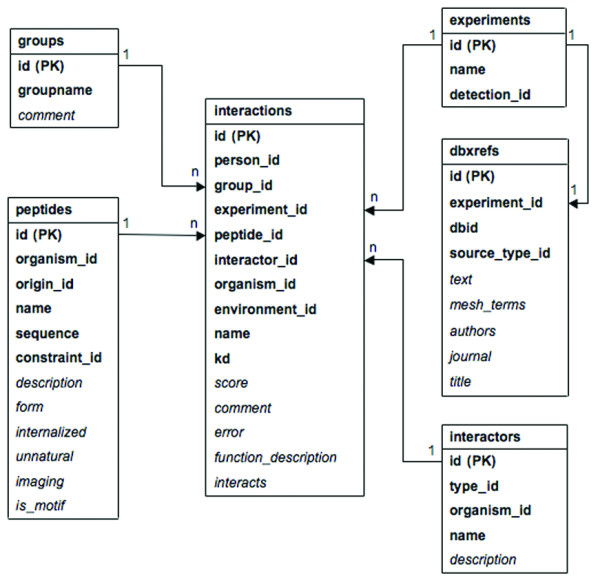
“The database model (Figure 1) was adopted from the Proteomics Standards Initiative Molecular Interactions (PSI MI) model for storage of biological interactions [43] and was extended to facilitate secure access to curate entries.”
MethodHuman protein reference database--2006 update
Mishra, G. R. (2006) · Nucleic Acids Research · doi:10.1093/nar/gkj141 · Cited by 601 · cited 1×
“While many excellent databases exist that provide protein sequence data [1-3], protein interaction data [4-9], and peptide data [10-13], a substantial fraction of literature data remains untapped.”
BackgroundThe Biomolecular Interaction Network Database and related tools 2005 update
Alfarano, C. (2004) · Nucleic Acids Research · doi:10.1093/nar/gki051 · Cited by 587 · cited 1×
“While many excellent databases exist that provide protein sequence data [1-3], protein interaction data [4-9], and peptide data [10-13], a substantial fraction of literature data remains untapped.”
BackgroundPearson, W. R. (1991) · Genomics · doi:10.1016/0888-7543(91)90071-l · Cited by 576 · cited 2×
“The Smith-Waterman search was implemented using the SSEARCH program from the FASTA3 distribution [27,28,47].”
MethodMedicine, N. L. O. (2008) · Journal of Pain & Palliative Care Pharmacotherapy · doi:10.1080/15360280801989377 · Cited by 468
Detection of Vascular Adhesion Molecule-1 Expression Using a Novel Multimodal Nanoparticle
Kelly, K. A., Allport, J. R., Tsourkas, A., Shinde-Patil, V. R., Josephson, L., & Weissleder, R. (2005) · Circulation Research · doi:10.1161/01.res.0000155722.17881.dd · Cited by 449 · cited 2×
“Prior knowledge can be used to predict or shorten the list of possible binding partners of a given peptide of interest, provided a peptide shares significant sequence similarity with other peptides or proteins whose binding partners are known [20,23].”
BackgroundSelf-citationMIPS: analysis and annotation of proteins from whole genomes in 2005
Mewes, H. W. (2006) · Nucleic Acids Research · doi:10.1093/nar/gkj148 · Cited by 430
Donaldson, I., Martin, J., de Bruijn, B., Wolting, C., Lay, V., Tuekam, B., Zhang, S., Baskin, B., Bader, G. D., Michalickova, K., et al. (2003) · BMC Bioinformatics · doi:10.1186/1471-2105-4-11 · Cited by 340 · cited 1×
“The text mining code was written in Perl, a language selected due to its text processing capabilities, and widely used in many important biomedical literature text mining applications [49-51].”
(1990) · Royal Society of Chemistry eBooks · doi:10.1039/9781847557483 · Cited by 298
Dosimetry in Peptide radionuclide receptor therapy: a review.
Cremonesi, M., Ferrari, M. E., Bodei, L., Tosi, G., & Paganelli, G. (2006) · PubMed · Cited by 263
The HUGO Gene Nomenclature Database, 2006 updates
Eyre, T. A. (2006) · Nucleic Acids Research · doi:10.1093/nar/gkj147 · Cited by 224 · cited 1×
“The list of gene names and symbols was derived from Entrez Gene [55], UniProt [1] and Human Gene Nomenclature (HGNC) [ 56 ] databases.”
MethodMHCBN: a comprehensive database of MHC binding and non-binding peptides
Bhasin, M., Singh, H., & Raghava, G. P. S. (2003) · Bioinformatics · doi:10.1093/bioinformatics/btg055 · Cited by 201 · cited 1×
“…have different purposes and are more specialized by design, for example antimicrobial (the Antimicrobial Peptide Database (APD) [13], and others [12,34,35]), phosphorylation sites (Scan-site [36]), or major histocompatibility complex related (SYFPEITHI [37], EPIMHC [38], and others [39-42]).”
BackgroundGUEGUEN, Y., GARNIER, J., ROBERT, L., LEFRANC, M., MOUGENOT, I., DELORGERIL, J., JANECH, M., GROSS, P., WARR, G., & CUTHBERTSON, B. (2006) · Developmental & Comparative Immunology · doi:10.1016/j.dci.2005.04.003 · Cited by 201 · cited 1×
“Other peptide databases have different purposes and are more specialized by design, for example antimicrobial (the Antimicrobial Peptide Database (APD) [13], and others [12, 34 ,35]), phosphorylation sites (Scansite [36]), or major histocompatibility complex related (SYFPEITHI [37], EPIMHC [38], and others [39-42]).”
BackgroundBächle, M., & Kirchberg, P. (2007) · IEEE Software · doi:10.1109/ms.2007.176 · Cited by 199
Peptidomics The Comprehensive Analysis of Peptides in Complex Biological Mixtures
Schulz-Knappe, P., Hans-Dieter, Z., Heine, G., Jurgens, M., & Schrader, M. (2012) · Combinatorial Chemistry & High Throughput Screening · doi:10.2174/1386207013331246 · Cited by 195
Pullman, B., & Jortner, J. (1983) · The Jerusalem Symposia on Quantum Chemistry and Biochemistry · doi:10.1007/978-94-009-7225-4_43 · Cited by 192
Candidates for peptide receptor radiotherapy today and in the future.
Reubi, J. C., Mäcke, H. R., & Krenning, E. P. (2005) · PubMed · Cited by 182
Wiesehan, K., Buder, K., Linke, R. P., Patt, S., Stoldt, M., Unger, E., Schmitt, B., Bucci, E., & Willbold, D. (2003) · ChemBioChem · doi:10.1002/cbic.200300631 · Cited by 171 · cited 1×
“The exact same sequence was isolated in phage display selection for peptides binding to human monoclonal IgM [69], and to the mirror image of Alzheimer's disease amyloid peptide Abeta(1–42) [70].”
Background(1984) · Biochemical Journal · doi:10.1042/bj2190345 · Cited by 164
Seebah, S., Suresh, A., Zhuo, S., Choong, Y. H., Chua, H., Chuon, D., Beuerman, R., & Verma, C. (2007) · Nucleic Acids Research · doi:10.1093/nar/gkl866 · Cited by 149 · cited 1×
“Other peptide databases have different purposes and are more specialized by design, for example antimicrobial (the Antimicrobial Peptide Database (APD) [13], and others [12,34,35]), phosphorylation sites (Scansite [36]), or major histocompatibility complex related (SYFPEITHI [37], EPIMHC [38], and others [39-42]).”
BackgroundJenPep: a database of quantitative functional peptide data for immunology
Blythe, M. J., Doytchinova, I. A., & Flower, D. R. (2002) · Bioinformatics · doi:10.1093/bioinformatics/18.3.434 · Cited by 143
Menéndez, A., & Scott, J. K. (2004) · Analytical Biochemistry · doi:10.1016/j.ab.2004.09.048 · Cited by 138 · cited 2×
“The sequence has also been identified in a recent excellent review [24] which covers the important topic of target-unrelated sequences in phage display.”
BackgroundUnderiner, T. L., Ruggeri, B., & Gingrich, D. E. (2004) · Current Medicinal Chemistry · doi:10.2174/0929867043455756 · Cited by 127 · cited 1×
“To illustrate the utility of PepBank, we use the example of identifying peptides with affinity to VEGFR1, an important therapeutic target [58].”
MethodMandava, S., Makowski, L., Devarapalli, S., Uzubell, J., & Rodi, D. J. (2004) · PROTEOMICS · doi:10.1002/pmic.200300680 · Cited by 115
Development of Efficient Viral Vectors Selective for Vascular Smooth Muscle Cells
Work, L. M., Nicklin, S. A., Brain, N. J. R., Dishart, K. L., Von Seggern, D. J., Hallek, M., Büning, H., & Baker, A. H. (2004) · Molecular Therapy · doi:10.1016/j.ymthe.2003.11.006 · Cited by 115 · cited 1×
“06 to an isolate from phage display selection of peptides that bind human saphenous vein smooth muscle cells [62].”
BackgroundA Novel Method for Imaging Apoptosis Using a Caspase-1 Near-Infrared Fluorescent Probe
Messerli, S. M., Prabhakar, S., Tang, Y., Shah, K., Cortes, M. L., Murthy, V., Weissleder, R., Breakefield, X. O., & Tung, C.-H. (2004) · Neoplasia · doi:10.1593/neo.03214 · Cited by 113 · cited 1×
“Examples of diagnostic uses include membrane-translocating agents [19], receptor targeting agents [20], and enzyme substrates [ 21 ].”
BackgroundSelf-citationHMGB1 Interacts with Many Apparently Unrelated Proteins by Recognizing Short Amino Acid Sequences
Dintilhac, A., & Bernués, J. (2002) · Journal of Biological Chemistry · doi:10.1074/jbc.m108417200 · Cited by 108
In Vivo Imaging of Molecularly Targeted Phage
Kelly, K. A., Waterman, P., & Weissleder, R. (2006) · Neoplasia · doi:10.1593/neo.06610 · Cited by 105 · cited 1×
“One of the surprises was the discovery of an exact match to sequence 'GETRAPL' from phage display selection for peptides that bind to secreted protein acidic and rich in cysteine (SPARC) [61].”
BackgroundSelf-citationProtamine as an Efficient Membrane-Translocating Peptide
Reynolds, F., Weissleder, R., & Josephson, L. (2005) · Bioconjugate Chemistry · doi:10.1021/bc0501451 · Cited by 100
Self-citationBarrett, G. C., & Elmore, D. T. (1998) · Cambridge University Press eBooks · doi:10.1017/cbo9781139163828 · Cited by 100
The role of structure in antibody cross-reactivity between peptides and folded proteins
Craig, L., Sanschagrin, P. C., Rozek, A., Lackie, S. J., Kuhn, L. A., & Scott, J. K. (1998) · Journal of Molecular Biology · doi:10.1006/jmbi.1998.1907 · Cited by 98 · cited 1×
“The same sequence may have different binding properties when displayed on a phage versus when presented as part of the native protein [32].”
BackgroundADAM: another database of abbreviations in MEDLINE
Zhou, W., Torvik, V. I., & Smalheiser, N. R. (2006) · Bioinformatics · doi:10.1093/bioinformatics/btl480 · Cited by 95 · cited 1×
“The list of abbreviations was derived from the comprehensive ADAM database [54].”
MethodEPIMHC: a curated database of MHC-binding peptides for customized computational vaccinology
Reche, P. A., Zhang, H., Glutting, J.-P., & Reinherz, E. L. (2005) · Computer applications in the biosciences · doi:10.1093/bioinformatics/bti269 · Cited by 90
An, P., Lei, H., Zhang, J., Song, S., He, L., Jin, G., Liu, X., Wu, J., Meng, L., Liu, M., et al. (2004) · International Journal of Cancer · doi:10.1002/ijc.20214 · Cited by 70 · cited 1×
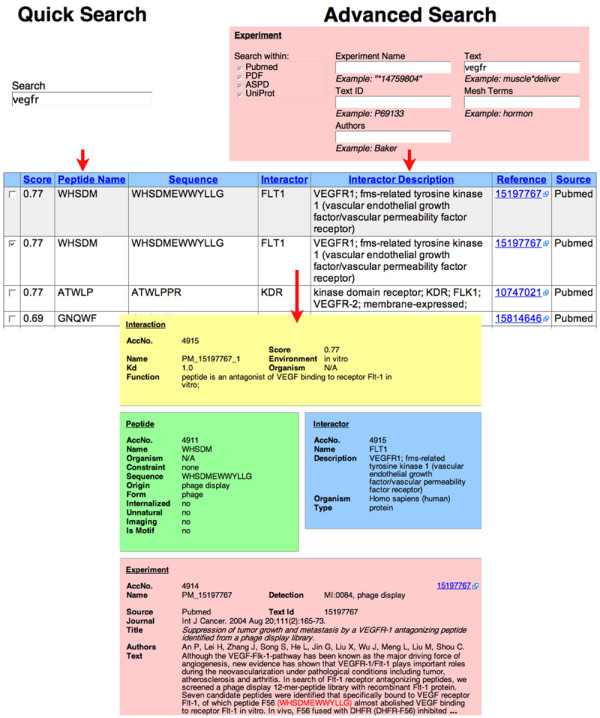
“In the example shown in Figure 2, sequence 'WHSDMEWWYLLG' is identified [59].”
In Vivo Interrogation of the Molecular Display of Atherosclerotic Lesion Surfaces
Liu, C., Bhattacharjee, G., Boisvert, W. A., Dilley, R. B., & Edgington, T. S. (2003) · American Journal Of Pathology · doi:10.1016/s0002-9440(10)63545-6 · Cited by 69 · cited 1×
“Prior knowledge can be used to predict or shorten the list of possible binding partners of a given peptide of interest, provided a peptide shares significant sequence similarity with other peptides or proteins whose binding partners are known [20,23].”
BackgroundSmall Molecules, Big Players: the National Cancer Institute's Initiative for Chemical Genetics
Tolliday, N., Clemons, P. A., Ferraiolo, P., Koehler, A. N., Lewis, T. A., Li, X., Schreiber, S. L., Gerhard, D. S., & Eliasof, S. (2006) · Cancer Research · doi:10.1158/0008-5472.can-06-2552 · Cited by 69 · cited 1×
“There is no large repository of chemically generated unnatural sequences, similar to what PubChem [2] or ChemBank [31] are for compounds.”
BackgroundDesigning scaffolds of peptides for phage display libraries
Uchiyama, F., Tanaka, Y., Minari, Y., & Tokui, N. (2005) · Journal of Bioscience and Bioengineering · doi:10.1263/jbb.99.448 · Cited by 64
Population of the HLA Ligand Database
Sathiamurthy, M., Hickman, H. D., Cavett, J. W., Zahoor, A. F., Prilliman, K. R., Metcalf, S., Fernández-Viña, M., & Hildebrand, W. H. (2003) · Tissue Antigens · doi:10.1034/j.1399-0039.2003.610102.x · Cited by 54 · cited 1×
“Other peptide databases have different purposes and are more specialized by design, for example antimicrobial (the Antimicrobial Peptide Database (APD) [13], and others [12,34,35]), phosphorylation sites (Scansite [36]), or major histocompatibility complex related (SYFPEITHI [37], EPIMHC [38], and others [39-42]).”
BackgroundHigh- versus Low-Dose Oxytocin for Augmentation or Induction of Labor
Patka, J., Lodolce, A. E., & Johnston, A. K. (2004) · Annals of Pharmacotherapy · doi:10.1345/aph.1e037 · Cited by 38 · cited 1×
“Both naturally occurring and synthetic peptides are used in therapeutic applications [15], for example somatostatin analogs in tumor radiotherapy [16,17] and oxytocin to induce labor [18].”
BackgroundGovindarajan, K. R., Kangueane, P., Tan, T. W., & Ranganathan, S. (2003) · Bioinformatics · doi:10.1093/bioinformatics/19.2.309 · Cited by 38
Synthetic Antibiotic Peptides Database
Wade, D., & Englund, J. (2002) · Protein & Peptide Letters · doi:10.2174/0929866023408986 · Cited by 36 · cited 2×
“While many excellent databases exist that provide protein sequence data [1-3], protein interaction data [4-9], and peptide data [10-13], a substantial fraction of literature data remains untapped.”
BackgroundValuev, V. P. (2002) · Nucleic Acids Research · doi:10.1093/nar/30.1.200 · Cited by 32
Bajdik, C. D., Kuo, B. Y.-L., Rusaw, S., Jones, S. J. M., & Brooks-Wilson, A. R. (2005) · BMC Bioinformatics · doi:10.1186/1471-2105-6-78 · Cited by 30 · cited 1×
“The text mining code was written in Perl, a language selected due to its text processing capabilities, and widely used in many important biomedical literature text mining applications [49-51].”
Messmer, B. T., Sullivan, J. J., Chiorazzi, N., Rodman, T. C., & Thaler, D. S. (1999) · The Journal of Immunology · doi:10.4049/jimmunol.162.4.2184 · Cited by 28 · cited 1×
“The exact same sequence was isolated in phage display selection for peptides binding to human monoclonal IgM [69], and to the mirror image of Alzheimer's disease amyloid peptide Abeta(1–42) [70].”
BackgroundArnáiz, B., Madrigal-Estebas, L., Todryk, S. M., James, T. C., Doherty, D. G., & Bond, U. (2006) · Journal of Immune Based Therapies and Vaccines · doi:10.1186/1476-8518-4-2 · Cited by 25
Selection by Phage Display of Peptides Targeting the HIV-1 TAR Element
Kolb, G., & Boiziau, C. (2005) · RNA Biology · doi:10.4161/rna.2.1.1681 · Cited by 24 · cited 1×
“(page number not for citation purposes) remarkable sequence in their own and other, unrelated, experiments [73,74].”
BackgroundText Mining Neuroscience Journal Articles to Populate Neuroscience Databases
Crasto, C. J., Marenco, L. N., Migliore, M., Mao, B.-Q., Nadkarni, P. M., Miller, P. L., & Shepherd, G. M. (2003) · Neuroinformatics · doi:10.1385/ni:1:3:215 · Cited by 20 · cited 1×
“The text mining code was written in Perl, a language selected due to its text processing capabilities, and widely used in many important biomedical literature text mining applications [49-51].”
Markov model recognition and classification of DNA/protein sequences within large text databases
Wren, J. D., Hildebrand, W. H., Chandrasekaran, S., & Melcher, U. (2005) · Computer applications in the biosciences · doi:10.1093/bioinformatics/bti657 · Cited by 19 · cited 1×
“The pioneering method to identify DNA and protein sequences in text, based on Markov models was described by Wren and co-workers [57].”
MethodA DNA-BINDING PEPTIDE FROM A PHAGE DISPLAY LIBRARY
Wölcke, J., & Weinhold, E. G. (2001) · Nucleosides Nucleotides & Nucleic Acids · doi:10.1081/ncn-100002526 · Cited by 14
Sankovich, S. E., Koleski, D., Baell, J. B., Matthews, B. R., Azad, A. A., & Macreadie, I. G. (1998) · SLAS DISCOVERY · doi:10.1177/108705719800300409 · Cited by 4 · cited 1×
“GETRAPL was found in phage display selections of peptides that bind human immunodeficiency virus type 1 (HIV-1) accessory viral protein (Vpr) [63], chromatin high mobility group protein 1, box A (HMGB1) from rat [64], mouse skeletal muscle tissue in vivo [65], and mouse brain cells in vivo [66].”
Research works printed but not linked: 5
- The National Library of Medicine (NLM) ftp site 28792816
- Smith BF Samoilova T Methods and compositions for targeting compounds to muscle. United States Patent 6399575 2001
- Smith BF Samoilova T Baker HJ Methods and compositions for targeting compounds to the central nervous system. United States Patent 6399575 2002
- Atkinson HJ McPherson MJ Winter MD Control of crop pests & animal parasites through direct neuronal uptake. United States Patent 20030181376 2003
- Robbins PD Mi Z Frizzell R Glorioso JC Gambotto A Mai JC Identification of peptides that facilitate uptake and cytoplasmic and/or nuclear transport of proteins, DNA and viruses. United States Patent 20030219826 2003
Cited by
Human Protein Reference Database--2009 update
Keshava Prasad, T. S., Goel, R., Kandasamy, K., Keerthikumar, S., Kumar, S., Mathivanan, S., Telikicherla, D., Raju, R., Shafreen, B., Venugopal, A., et al. (2009) · Nucleic Acids Research · doi:10.1093/nar/gkn892 · Cited by 3,234
“CutDB, a database of proteolytic events (21), PepBank, a database of peptides (22) and T1Dbase, a database for type 1 diabetes research (23) are other resources that also incorporate curated proteomic data from HPRD.”
BackgroundBIOPEP-UWM Database of Bioactive Peptides: Current Opportunities
Minkiewicz, P., Iwaniak, A., & Darewicz, M. (2019) · International Journal of Molecular Sciences · doi:10.3390/ijms20235978 · Cited by 958
“Examples of peptides inscribing into this concept may be found in the BIOPEP-UWM (e.g., hemorphins or ACE inhibitors from caseins) and in other peptide databases such as EROP-Moscow [20], PepBank [67], SATPdb [70] or AHTPDB [45].”
BackgroundAnchor peptide captures, targets, and loads exosomes of diverse origins for diagnostics and therapy
Gao, X., Ran, N., Dong, X., Zuo, B., Yang, R., Zhou, Q., Moulton, H. M., Seow, Y., & Yin, H. (2018) · Science Translational Medicine · doi:10.1126/scitranslmed.aat0195 · Cited by 426
“T. Shtatland, D. Guettler, M. Kossodo, M. Pivovarov, R. Weissleder, PepBank -”
BackgroundBioactive Molecules Released in Food by Lactic Acid Bacteria: Encrypted Peptides and Biogenic Amines
Pessione, E., & Cirrincione, S. (2016) · Frontiers in Microbiology · doi:10.3389/fmicb.2016.00876 · Cited by 333
“An even larger target is supplied by BIOPEP, Pep Bank, and Peptide DB, also classifying peptide hormones, growth factors and cytokines (Shtatland et al., 2007).”
BackgroundMethodMachine intelligence in peptide therapeutics: A next‐generation tool for rapid disease screening
Basith, S., Manavalan, B., Hwan Shin, T., & Lee, G. (2020) · Medicinal Research Reviews · doi:10.1002/med.21658 · Cited by 312
Metadata
- Authors
- Shtatland, T., Guettler, D., Kossodo, M., Pivovarov, M., & Weissleder, R.
- Affiliations
- Harvard University (US)
- Northern Essex Community College (US)
- Corresponding author
- Shtatland, Timur
- ORCID
- Weissleder, Ralph
- Venue
- BMC Bioinformatics
- Published
- 2007-08-01
- Volume
- 8
- Issue
- 1
- Pages
- 280-280
- ISSN
- 1471-2105 (ISSN-L)
- PMC
- PMC1976427
- OpenAlex
- W2113617961
- Cited by
- 181
- References
- 77
- Citations by year
- 2026: 2 · 2025: 12 · 2024: 9 · 2023: 10 · 2022: 7 · 2021: 16 · 2020: 13 · 2019: 15 · 2018: 11 · 2017: 12 · 2016: 9 · 2015: 7 · 2014: 10 · 2013: 11 · 2012: 3
- FWCI
- 2.91
- Type
- journal article
- Language
- en
- Open access
- gold
- doi.org
- Licence
- cc-by
- creativecommons.org/licenses/by/2.0 (tdm)
- Locations
- BMC Bioinformatics (publishedVersion, cc-by)
- Europe PMC (PubMed Central) (publishedVersion, cc-by)
- PubMed Central (publishedVersion, cc-by)
- PubMed (publishedVersion)
- Digital Access to Scholarship at Harvard (DASH) (Harvard University) (submittedVersion, cc-by)
- DOAJ (DOAJ: Directory of Open Access Journals) (submittedVersion, cc-by-sa)
- Funders
- National Institutes of Health (P50-CA86355, CA86355, CA126515, U54-CA126515)
- National Cancer Institute (P50-CA-86355, P50CA086355, U54CA126515)
- National Institute of Allergy and Infectious Diseases (P01-AI54904, P01AI054904)
- Topics
- Health Sciences › Medicine › Health Informatics › Biomedical Text Mining and Ontologies
- Life Sciences › Biochemistry, Genetics and Molecular Biology › Molecular Biology › Genomics and Phylogenetic Studies
- Physical Sciences › Chemistry › Organic Chemistry › Chemical Synthesis and Analysis
- Keywords
- MEDLINE abstracts, phage display, UniProt, peptide therapeutics
- MeSH terms
- Amino Acid Sequence, Database Management Systems, Molecular Sequence Data, Natural Language Processing, Peptides, Periodicals as Topic, User-Computer Interface, Information Storage and Retrieval, Internet, Sequence Analysis, Protein, Databases, Protein
About these checks
Registry, retraction, Cites and statistics results are computed, not judged, with one exception: a printed reference that no index lists is read once by a model before it counts as a citation error. Claims are extracted by a model and kept only when their quote appears verbatim in the text; each cited source is then checked, with a model’s help, for whether it says what the claim relies on. Those verdicts can be wrong — read the claim’s quote and the cited source before relying on one.
Statistics and arithmetic are recomputed, not judged.
Confidence bands are shown only for fields calibrated on our annotated test set. None is calibrated yet, so no band is shown.
What counts as a claim ›How we measure confidence ›How we check this ›
Are you an author, or do you see a problem with this page? Request a review
Data sources
Bibliographic data: Semantic Scholar, OpenAlex, Crossref.
Contains information from the Semantic Scholar Academic Graph Datasets, made available under the ODC Attribution License (ODC-BY 1.0).
Semantic Scholar’s data is described in: Kinney, R., et al. (2023). The Semantic Scholar Open Data Platform. arXiv:2301.10140.
