

Lactobacillus plantarum MB452 enhances the function of the intestinal barrier by increasing the expression levels of genes involved in tight junction formation
Open accessThe DOI matches its Crossref record; 57 of the 57 references it cites were found in a registry or an index.
Abstract
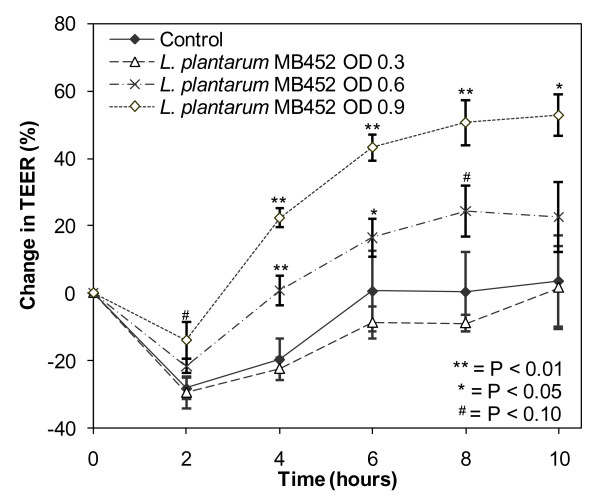
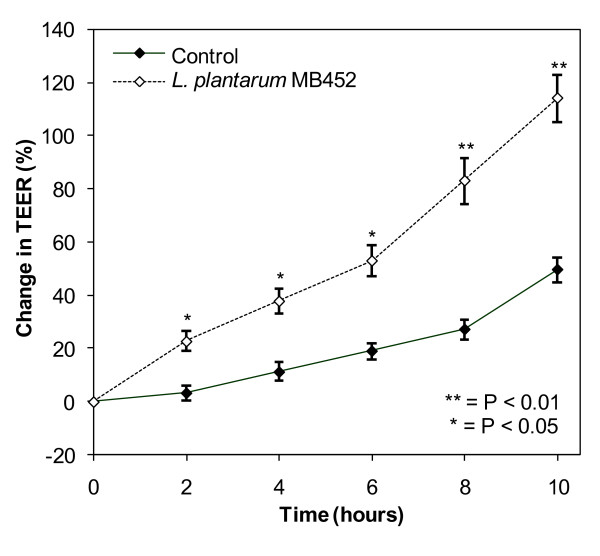
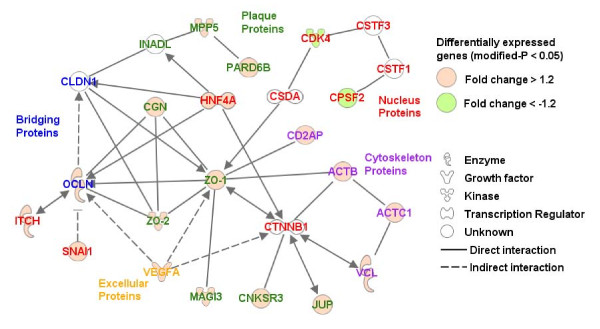
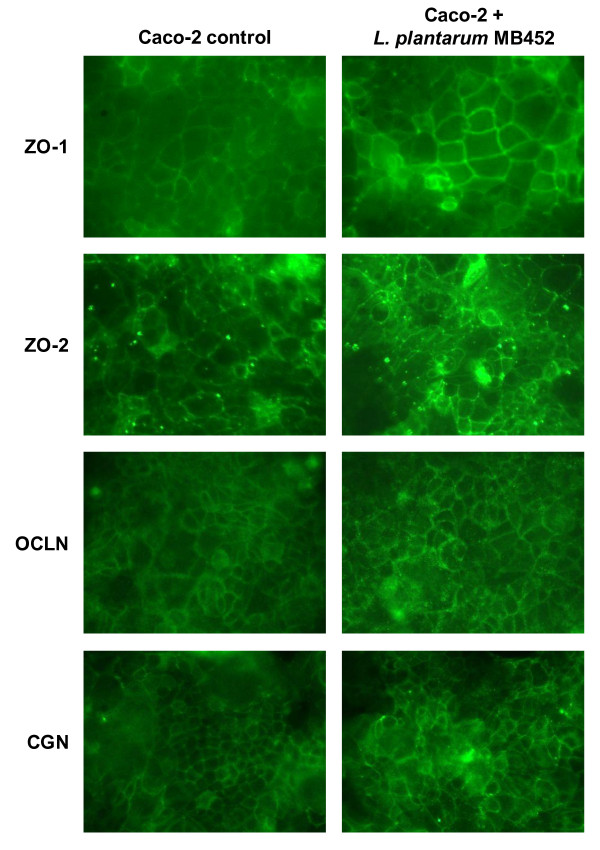
BACKGROUND: Intestinal barrier function is important for preserving health, as a compromised barrier allows antigen entry and can induce inflammatory diseases. Probiotic bacteria can play a role in enhancing intestinal barrier function; however, the mechanisms are not fully understood. Existing studies have focused on the ability of probiotics to prevent alterations to tight junctions in disease models, and have been restricted to a few tight junction bridging proteins. No studies have previously investigated the effect of probiotic bacteria on healthy intestinal epithelial cell genes involved in the whole tight junction signalling pathway, including those encoding for bridging, plaque and dual location tight junction proteins. Alteration of tight junction signalling in healthy humans is a potential mechanism that could lead to the strengthening of the intestinal barrier, resulting in limiting the ability of antigens to enter the body and potentially triggering undesirable immune responses. RESULTS: The effect of Lactobacillus plantarum MB452 on tight junction integrity was determined by measuring trans-epithelial electrical resistance (TEER) across Caco-2 cell layers. L. plantarum MB452 caused a dose-dependent TEER increase across Caco-2 cell monolayers compared to control medium. Gene expression was compared in Caco-2 cells untreated or treated with L. plantarum MB452 for 10 hours. Caco-2 cell RNA was hybridised to human oligonucleotide arrays. Data was analysed using linear models and differently expressed genes were examined using pathway analysis tools. Nineteen tight junction-related genes had altered expression levels in response to L. plantarum MB452 (modified-P < 0.05, fold-change > 1.2), including those encoding occludin and its associated plaque proteins that anchor it to the cytoskeleton. L. plantarum MB452 also caused changes in tubulin and proteasome gene expression levels which may be linked to intestinal barrier function. Caco-2 tight junctions were visualised by fluorescent microscopy of immuno-stained occludin, zona occludens (ZO)-1, ZO-2 and cingulin. Caco-2 cells treated with L. plantarum MB452 had higher intensity fluorescence of each of the four tight junction proteins compared to untreated controls. CONCLUSIONS: This research indicates that enhancing the expression of genes involved in tight junction signalling is a possible mechanism by which L. plantarum MB452 improves intestinal barrier function.
Overview
The claims and statistics of this paper haven’t been checked yet.
Free: it reads the open-access text and checks the first 5 claims that cite a source we can check. Create a free account to check every claim.
Integrity signals
Registry
Cites
Statistics
Figures
Verification
Claims the paper makes
The claims and statistics of this paper haven’t been checked yet.
Free: it reads the open-access text and checks the first 5 claims that cite a source we can check. Create a free account to check every claim.
Claims other papers make about this one
Each is checked against this paper’s own text: does it say what the citing paper says it does?
In the citing paper
“Microbes(Figure 3) can directly alter expression of tight junction proteins such as claudin-380 and zonula occludens-181 or enhance expression of genes involved in tight junction signaling82.”
From The gut Microbiome in adult and pediatric functional gastrointestinal disorders (2019) · cites this paper as [82]
In the citing paper
“enhancing epithelial barrier function (98,99)”
From Sex steroid deficiency-associated bone loss is microbiota dependent and prevented by probiotics (2016) · cites this paper as [98]
Self-check
Percentages, sums and reported differences re-computed from the paper’s own numbers.
The self-check needs the paper’s full text.
Citations
Cites
Vandesompele, J., De Preter, K., Pattyn, F., Poppe, B., Van Roy, N., De Paepe, A., & Speleman, F. (2002) · Genome Biology · doi:10.1186/gb-2002-3-7-research0034 · Cited by 20,038 · cited 1×
“The reference genes (GAPD, SDHA and YWHAZ) were chosen based on the findings of Vandesompele et al [52] and their log ratios in the microarray data (close to 1; not differentially expressed).”
MethodSelf-citationPfaffl, M. W. (2002) · Nucleic Acids Research · doi:10.1093/nar/30.9.e36 · Cited by 7,376 · cited 1×
“The analysis was carried out as described in Additional File 3 and the data was analysed using Relative Expression Software Tool 2008 (version 2.0.7) with efficiency correction [ 53 ].”
MethodInfluentiallimma: Linear Models for Microarray Data
Smyth, G. K. (2005) · Statistics for Biology and Health · doi:10.1007/0-387-29362-0_23 · Cited by 5,796 · cited 1×
“The Limma package in Bioconductor was used to analyse the microarray data [ 50 ].”
MethodJUNCTIONAL COMPLEXES IN VARIOUS EPITHELIA
Farquhar, M. G., & Palade, G. E. (1963) · The Journal of Cell Biology · doi:10.1083/jcb.17.2.375 · Cited by 3,635 · cited 1×
“These intercellular complexes consist of tight junctions, adherens junctions, desmosomes and gap junctions [11].”
BackgroundBioinformatics and Computational Biology Solutions Using R and Bioconductor
(2005) · Statistics for Biology and Health · doi:10.1007/0-387-29362-0 · Cited by 3,289
Ford Alexander, C., Paul, M., Hanauer Steven, B., 谭蓓, & Dong, W. Z. (2001) · Cited by 3,020
Identifying biological themes within lists of genes with EASE
Hosack, D. A., Dennis, G., Sherman, B. T., Lane, H. C., & Lempicki, R. A. (2003) · Genome Biology · doi:10.1186/gb-2003-4-10-r70 · Cited by 1,950 · cited 1×
“Differentially expressed genes were clustered into functional groups and pathways using Ingenuity Pathway Analysis (IPA version 7.1; Ingenuity Systems Inc., Redwood City, CA, USA), and Gene Ontology categories and KEGG pathways using EASE (version 2.0)[ 51 ].”
MethodInfluentialGionchetti, P., Rizzello, F., Venturi, A., Brigidi, P., Matteuzzi, D., Bazzocchi, G., Poggioli, G., Miglioli, M., & Campieri, M. (2000) · Gastroenterology · doi:10.1053/gast.2000.9370 · Cited by 1,486 · cited 1×
“VLS#3, which is a mixture of eight bacteria including L. plantarum MB452, has previously been reported to enhance tight junction integrity in vitro [18], reduce colitis in rodent models [19,20] and improve human intestinal health [ 21-23 ].”
BackgroundFanning, A. S., Jameson, B. J., Jesaitis, L. A., & Anderson, J. M. (1998) · Journal of Biological Chemistry · doi:10.1074/jbc.273.45.29745 · Cited by 1,432 · cited 1×
“The zonula occludens bind to the cytoplasmic end of occludin and form the scaffolding to link occludin to the actin cytoskeleton [26].”
BackgroundKelly, D., Campbell, J. I., King, T. P., Grant, G., Jansson, E. A., Coutts, A. G. P., Pettersson, S., & Conway, S. (2004) · Nature Immunology · doi:10.1038/ni1018 · Cited by 1,003 · cited 1×
“L. plantarum MB452 did not alter the expression levels of other genes and pathways that have been affected by some probiotic bacteria, such as the NF-B pathway [33], PPARg [ 40 ,41], innate immune response”
Background
Cited by
Items 401–500 of 512
Gluten‑hydrolyzing probiotics: An emerging therapy for patients with celiac disease (Review)
Gayathri, D., & Alurappa, R. (2020) · World Academy of Sciences Journal · doi:10.3892/wasj.2020.55 · Cited by 5
Molecular analysis of candidate probiotic effector molecules of Lactobacillus plantarum
Remus, D. M. (2012) · doi:10.18174/232424 · Cited by 3
Impacts of gut microbiota on human health and diseases
Sardar, D., & Hossain, T. (2022) · GSC Biological and Pharmaceutical Sciences · doi:10.30574/gscbps.2022.21.3.0471 · Cited by 3
Leng, X., Luo, J., Jia, Z., Wu, J., Qiao, X., Xiong, W., Liu, Z., & Du, H. (2025) · Aquaculture Reports · doi:10.1016/j.aqrep.2025.102857 · Cited by 1
Goyal, S. P., Chandratre, G. A., Rawat, A., Kondepudi, K. K., Badgujar, P. C., & Chakkaravarthi, S. (2025) · Current Microbiology · doi:10.1007/s00284-025-04411-x · Cited by 1
“Moreover, both LAB and quercetin can regulate intestinal tight junctions [41, 42], which could further limit para-cellular B[a]P uptake and increase its binding to LAB in the lumen, thereby enhancing fecal excretion.”
Current insights into neonatal calf diarrheal etiology and the therapeutic role of probiotics
Zhu, S., Bian, S., Li, L., Iqbal, M., Kiani, F. A., Farooq, A. A., Dong, H., Zhang, X., Dai, H., Liu, F., et al. (2025) · Journal of Integrative Agriculture · doi:10.1016/j.jia.2025.07.028 · Cited by 2
Ibrahimoglu, O. O., Çelebi, L. T., Dikbıyık, D. E., Gökçe, H. B., Çakıcı, B., Türkoğlu, Z., Atsü, A. N., & Aslan, İ. (2025) · Life · doi:10.3390/life15111652 · Cited by 1
“Mechanistic studies further demonstrate that postbiotics accelerate wound closure in ex vivo human skin and enhance tight-junction protein expression, reinforcing epithelial resilience [29–31].”
Wang, Y., Bai, X., Jing, Y., Feng, X., Guo, Y., Hao, Y., Su, D., & Zhai, Z. (2026) · Foods · doi:10.3390/foods15030417 · Cited by 1
“Previous studies have shown that L. plantarum strains can produce metabolites, such as SCFAs, that enhance epithelial barrier integrity and promote goblet cell function [29,30,36–38].”
The interplay between probiotics and mast cells in gut inflammation: a mini-review
Herrera-Saldivar, M. F., Hernandez-Bautista, N. C., Quiroga-Garza, J. M., Vázquez-Guillén, J. M., Chacón‐Salinas, R., Rojas-Contreras, M., Vázquez‐Juárez, R., Reséndez‐Pérez, D., Tamez-Guerra, R. S., & Rodríguez-Padilla, C. (2026) · Frontiers in Cellular and Infection Microbiology · doi:10.3389/fcimb.2026.1772010 · Cited by 1
Zhang, Y., He, X., Zhao, Q., Li, H., Qin, R., Zuo, W., & Han, B. (2026) · Frontiers in Immunology · doi:10.3389/fimmu.2026.1828376 · Cited by 1
Aleksandrzak‐Piekarczyk, T., Tymoszewska, A., Radkiewicz, M., Szczepankowska, A. K., Samborowska, E., Koryszewska-Bagińska, A., & Cukrowská, B. (2026) · Probiotics and Antimicrobial Proteins · doi:10.1007/s12602-026-11269-3 · Cited by 1
Attenuation of Myocardial Ischemia-Reperfusion Injury by Probiotic Bacteria
Licciardi, P. V., Ververis, K., Toh, Z. Q., & Karagiannis, T. C. (2013) · CRC Press eBooks · doi:10.1201/b14663-7 · Cited by 1
Gholam, S.-R., Segers, C., Mysara, M., Coolkens, A., Baatout, S., Leys, N., & Mastroleo, F. (2023) · Applied Microbiology · doi:10.3390/applmicrobiol3020031 · Cited by 1
“plantarum, MB452 a probiotic strain was investigated for its capacity to enhance the intestinal barrier function and was found to promote the expression of proteins involved in the signaling occurring at the tight junction level [29,30].”
BackgroundBenefits and safety of probiotics in gastrointestinal diseases
Profir, M., Roşu, O. A., Ionescu, R. F., Pavelescu, L. A., & Creţoiu, S. M. (2024) · Elsevier eBooks · doi:10.1016/b978-0-12-824472-2.00011-7 · Cited by 5
Gut Microbiome Metabolites and the Intestinal Homeostasis
Metwally, H., & Kishimoto, T. (2024) · Journal of Clinical Research and Reports · doi:10.31579/2690-1919/371 · Cited by 3
Update Review of the Relationship Between Gut Microbiota and Neurodegenerative Diseases
Wang, Y., Jing, G., Fu, Y., Li, Y., & Wu, C. (2024) · Diseases & Research · doi:10.54457/dr.202401007 · Cited by 1
Hussain, S., & Bhattacharyya, N. (2024) · Springer eBooks · doi:10.1007/978-3-031-72757-3_21 · Cited by 2
Topouzova-Hristova, T., Stephanova, E., Stoitsova, S. R., Biology, F. O., & St, A. G. B. (2012) · HAL · Cited by 1
Negi, D., Gururani, P., & Goswami, M. (2020) · The Pharma Innovation · doi:10.22271/tpi.2020.v9.i6a.4770 · Cited by 1
“…with motioning through epithelial is a potential method of upgrading hindrance work for example lactobacilli directed Quality that encodes for adherence Intersection proteins proteins, for example, cadherin and proteins, for example E cadherin and β-catenin (Anderson et al., 2010) [3].”
MethodProbiotics for prevention of acute respiratory infections in children: therapeutic potential.
Zakharova, I. N., & Григорьевна, С. Н. (2021) · Meditsinskiy sovet = Medical Council · doi:10.21518/2079-701x-2021-1-254-260 · Cited by 1
EASTERN OYSTER LARVAL TRANSCRIPTOMES IN RESPONSE TO PROBIOTIC AND PATHOGENIC BACTERIA
Modak, T. H. (2018) · Digital Commons - URI (University of Rhode Island) · doi:10.23860/diss-modak-tejashree-2018 · Cited by 1
Naudin, C. R., Owens, J. A., Askew, L. C., Khan, R. N., Scharer, C. D., Matthews, J. D., Luo, L., Kim, J.-Y., Reedy, A. R., Barbian, M. E., et al. (2021) · bioRxiv (Cold Spring Harbor Laboratory) · doi:10.1101/2021.12.02.471025 · Cited by 1
“Indeed, beneficial microbes, that induce an advantage to health [29, 30] can prompt a change in the diversity and metabolic activity of the gut microbiota [31], modulate innate and adaptive immune responses [32, 33], or significantly improve epithelial barrier function [34, 35].”
BackgroundDistant Immune and Microbiome Regulation
Pacifici, R. (2019) · Elsevier eBooks · doi:10.1016/b978-0-12-801238-3.11232-2 · Cited by 1
Wu, F., Cheng, Y., Zhou, J., Ye, P., Liu, X., Zhang, L., Lin, R., Xiang, S., Liu, Z., & Wang, C. (2022) · bioRxiv (Cold Spring Harbor Laboratory) · doi:10.1101/2022.10.14.512337 · Cited by 1
“Besides, Lactobacillus can 81 strengthen the intestinal barrier by regulating the expression of tight junction protein 82 and the body's immune response (28, 29), playing an important role in maintaining the 83 balance of intestinal flora (30).”
BackgroundModulation nutritionnelle du développement postnatal des fonctions neuro-digestives
Vanhaecke, T. (2016) · theses.fr (ABES) · doi:10.70675/314bdbdfz4219z4db8zacd3z796751145682 · Cited by 2
Ethanol and intestinal barrier : human intervention and mechanistic in vitro studies
Elamin, E. E. (2014) · Research Publications (Maastricht University) · doi:10.26481/dis.20140123ee
Insulin resistance pathogenesis in visceral fat and gut organisms
Lam, Y. Y., Ha, C. W. Y., & Holmes, A. J. (2012) · The Sydney eScholarship Repository (The University of Sydney)
Dietary effects on human fecal microbiota
Simões, C. (2013) · Helda - University of Helsinki Institutional Repository
Les ferments lactiques et les laits fermentés: nature et effets
Antoine, J. (2011) · Phytothérapie · doi:10.1007/s10298-011-0616-7
The impact of host-microbe interactions on murine colonic secretomotor function
Lomasney, K. W. (2014) · Cork Open Research Archive (University College Cork, Ireland)
Packey, C. D. (2014) · Carolina Digital Repository (University of North Carolina at Chapel Hill) · doi:10.13140/rg.2.2.22562.63686
Iraporda, C. (2016) · El Servicio de Difusión de la Creación Intelectual (National University of La Plata) · doi:10.35537/10915/51913 · Cited by 2
Probiotics: Helping Out the Normal Flora
Stone, S., Edmonds, R., & Rosenthal, K. S. (2013) · Infectious Diseases in Clinical Practice · doi:10.1097/ipc.0b013e318297d780
Presentation of Microbial Signals via Maternal Cells: An Evolutionary Advantage of Mammals
Schiffrin, E. J., Marteau, P. R., & Brassart, D. (2014) · CRC Press eBooks · doi:10.1201/b16442-4
Gastrointesnal Tract: Microflora and Transit Aspects
Silva, J. P. S. E., & Freitas, A. C. (2014) · doi:10.1201/b15676-5
Peng, J. (2014) · The Atrium (University of Guelph) · Cited by 5
An Overview of the Therapeutic Aspect of Living Drugs Probiotics
Patravale, V. B., & Joshi, A. (2018) · Advances in human services and public health (AHSPH) book series · doi:10.4018/978-1-5225-3267-5.ch001
Studies of the aetiopathogenesis of pouchitis
Landy, J. (2014) · doi:10.25560/25735
Aburjaile, F. F., Jan, G., Loir, Y. L., Azevedo, V., & Carvalho, R. D. D. O. (2019) · Journal of Pharmacy and Pharmacology · doi:10.17265/2328-2150/2019.04.004 · Cited by 1
“junctions of intestinal epithelial cells such as claudins and occludins [30-32].”
BackgroundPrisciandaro, L. D. (2013) · Adelaide Research & Scholarship (AR&S) (University of Adelaide)
Maes, C., Bouillon, R., & Martin, T. J. (2019) · Bone · doi:10.1016/j.bone.2019.04.018
Pugh, J. N. (2019) · Liverpool John Moores University · doi:10.24377/ljmu.t.00010815 · Cited by 1
Defining Microbial Signatures of Gut Dysbiosis in Models of Anxiety-related Disorders
Fields, C. T. (2019) · Digital Archive @ GSU · doi:10.57709/14866301
Review on Lactic Acid Bacteria us Probiotics mechanisms and its Health Advantages
Endale, G., & Sinha, V. B. (2019) · Journal of Biotechnology and Bioengineering · doi:10.22259/2637-5362.0302004
Biomarkers of intestinal epithelial damage in children with food allergies
Rycyk, A., Lebensztejn, D. M., & Cudowska, B. (2019) · Pediatria Polska · doi:10.5114/polp.2019.88042
“First of all, some probiotics, like Lactobacillus plantarum MB452, have been proven to directly alter tight junction protein expression [8].”
BackgroundBiotransformation of Food-Related Phytochemicals by the Gut Bacteria
Deo, D., Rale, V. B., Shetty, K., & Kulkarni, R. S. (2020) · CRC Press eBooks · doi:10.1201/9781003003793-3
Probióticos no Controle da Pré-diabetes e Diabetes tipo 2
de Barros, Y. C., Sivieri, K., & Costa, G. N. (2020) · Ensaios e Ciência C Biológicas Agrárias e da Saúde · doi:10.17921/1415-6938.2020v24n2p194-200
Intestinal Microbiota and Osteoporosis
Xu, X., Jia, X., Mo, L., Liu, C., Zheng, L., Yuan, Q., & Zhou, X. (2020) · Springer eBooks · doi:10.1007/978-981-15-7899-1_10
Intestino permeable en síndrome de intestino irritable: enfoque terapéutico
Amieva‐Balmori, M., & Cano-Contreras, A. D. (2023) · NeuroGastroLATAM Reviews · doi:10.24875/ngl.20000022 · Cited by 2
Bradley, B. H. R., & O’Sullivan, T. A. (2018) · MDPI eBooks · doi:10.3390/books978-3-03897-369-0
Fernandez, K. P. (2020) · Repositorio Institucional (Pontificia Universidad Javeriana) · doi:10.11144/javeriana.10554.15428
Treatment of Diarrhoea in Humans Using Lactobacillus salivarius PROBIOTIC Isolated from Human Saliva
Ezeumeh, E. N., Eleanya, L. C., Onwuasoanya, U. F., & Ezeoke, F. C. (2022) · Advances in Infectious Diseases · doi:10.4236/aid.2022.123040
Batatinha, H. (2021) · Digital Library of Theses and Dissertations (Universidade de São Paulo) · doi:10.11606/t.42.2021.tde-03082021-110552
Rocha, C. M. (2022) · Digital Library of Theses and Dissertations (Universidade de São Paulo) · doi:10.11606/d.23.2022.tde-30012023-111435
Yarlagadda, T. (2023) · Queensland University of Technology · doi:10.5204/thesis.eprints.244715
Integrated analyses of the intestinal microbiome and transcriptome in NingXiang pigletsPreprint
Hu, Z., Yao, Y., Chen, F., Feng, L., Yuan, Z., Deng, J., Huang, L., Tang, X., & Yin, Y. (2024) · Research Square · doi:10.21203/rs.3.rs-3888036/v1
Integrated analyses of the intestinal microbiome and transcriptome in NingXiang pigletsPreprint
Hu, Z., Yao, Y., Chen, F., Feng, L., Yuan, Z., Deng, J., Huang, L., Yin, Y., & Tang, X. (2024) · Research Square · doi:10.21203/rs.3.rs-3888036/v2
Integrated Analyses of the Intestinal Microbiome and Transcriptome in Ningxiang PigletsPreprint
Tang, X., Hu, Z., Yao, Y., Chen, F., Feng, L., Yuan, Z., Deng, J., Huang, L., & Yin, Y. (2024) · SSRN Electronic Journal · doi:10.2139/ssrn.4821757
Coca, M. R., Pérez-Fernández, C., Ruiz‐Sobremazas, D., Morales‐Navas, M., Colomina, M. T., López-Granero, C., & Sánchez-Santed, F. (2024) · bioRxiv (Cold Spring Harbor Laboratory) · doi:10.1101/2024.11.04.621894
Yan, C., Huang, S.-H., Ding, H., He, W., Zhu, H., & Chen, Z. (2024) · Journal of Food Bioactives · doi:10.26599/jfb.2024.95028391
Review Article: Probiotics and Oncogenesis: Clinical Implications
Leyva, B. K., & Bonavida, B. (2025) · Critical Reviews™ in Oncogenesis · doi:10.1615/critrevoncog.2025058336
Maury, J., Albina, P., Abot, A., & Pradelles, R. (2025) · bioRxiv (Cold Spring Harbor Laboratory) · doi:10.1101/2025.05.21.655247
“In HT-29 cells, these probiotics have been shown to upregulate ZO-1 and occludin expression, decrease LPS-induced permeability, and suppress pro-inflammatory cytokine production via NF-κB inhibition [51,52].”
Precision medicine approaches to personalized probiotic therapy
Dinda, A., Banik, S., Kirtania, P., & Bhowmik, P. (2025) · Elsevier eBooks · doi:10.1016/b978-0-443-27594-4.00015-2
Hu, J., Chen, J., Xu, X., Hou, Q., Ren, J., & Yan, X. (2023) · Figshare · doi:10.6084/m9.figshare.22790393
Hu, J., Chen, J., Xu, X., Hou, Q., Ren, J., & Yan, X. (2023) · Figshare · doi:10.6084/m9.figshare.22790387
Hu, J., Chen, J., Xu, X., Hou, Q., Ren, J., & Yan, X. (2023) · Figshare · doi:10.6084/m9.figshare.22790384
Hu, J., Chen, J., Xu, X., Hou, Q., Ren, J., & Yan, X. (2023) · Figshare · doi:10.6084/m9.figshare.22790399
Hu, J., Chen, J., Xu, X., Hou, Q., Ren, J., & Yan, X. (2023) · Figshare · doi:10.6084/m9.figshare.22790420
Hu, J., Chen, J., Xu, X., Hou, Q., Ren, J., & Yan, X. (2023) · Figshare · doi:10.6084/m9.figshare.22790396
Kaur, S., Sharma, P., Mayer, M. J., Neuert, S., Narbad, A., & Kaur, S. (2023) · Figshare · doi:10.6084/m9.figshare.24797828
Hu, J., Chen, J., Xu, X., Hou, Q., Ren, J., & Yan, X. (2023) · Figshare · doi:10.6084/m9.figshare.22790381
Hu, J., Chen, J., Xu, X., Hou, Q., Ren, J., & Yan, X. (2023) · Figshare · doi:10.6084/m9.figshare.22790411
Hu, J., Chen, J., Xu, X., Hou, Q., Ren, J., & Yan, X. (2023) · Figshare · doi:10.6084/m9.figshare.22790402
Hu, J., Chen, J., Xu, X., Hou, Q., Ren, J., & Yan, X. (2023) · Figshare · doi:10.6084/m9.figshare.22790408
Hu, J., Chen, J., Xu, X., Hou, Q., Ren, J., & Yan, X. (2023) · Figshare · doi:10.6084/m9.figshare.22790390
Hu, J., Chen, J., Xu, X., Hou, Q., Ren, J., & Yan, X. (2023) · Figshare · doi:10.6084/m9.figshare.22790417
Hu, J., Chen, J., Xu, X., Hou, Q., Ren, J., & Yan, X. (2023) · Figshare · doi:10.6084/m9.figshare.22790405
Hu, J., Chen, J., Xu, X., Hou, Q., Ren, J., & Yan, X. (2023) · Figshare · doi:10.6084/m9.figshare.22790414
Ndembo, M. K. (2025) · Zoological Synthesis · doi:10.64229/ejbvqp12
“[7]”
Smit, B., Hatje, E., Coulson, S., Finlayson, W., Kuballa, A., & Katouli, M. (2026) · SSRN Electronic Journal · doi:10.2139/ssrn.6145987
Meachasompop, P., Chokmangmeepisarn, P., Kumwan, B., Phrompanya, P., Thangsunan, P., Srisapoome, P., Thangsunan, P., Saenphet, K., Saenphet, S., Paankhao, N., et al. (2026) · Aquaculture Reports · doi:10.1016/j.aqrep.2026.103407 · Cited by 1
Health benefits of dietary live microbes: A narrative review
Shen, C., Wu, J., Sun, X., Fan, B., & Xiang, X. (2026) · Food Bioscience · doi:10.1016/j.fbio.2026.108725 · Cited by 1
Modi, K., Gohil, S., Khan, T. A., Jobby, R., & Jha, P. (2026) · Elsevier eBooks · doi:10.1016/b978-0-443-40483-2.00042-x
Raveschot, C. (2018) · theses.fr (ABES) · doi:10.70675/291faa77z86dez473ez9917z89ac5cc0ccfe
Loiselet, A. (2019) · theses.fr (ABES) · doi:10.70675/8960b3ecz4598z4c60za01cz9399c6404ab8
Stanley, C., Ogbonnaya, U. C., Ibezim, C. N. E., & Alex-Wele, M. A. (2026) · IntechOpen eBooks · doi:10.5772/intechopen.1014300 · Cited by 1
Ulluwishewa, D., Purba, A., Fegan, V., Na, N., O’Carroll, S. J., & Anderson, R. C. (2026) · Frontiers in Physiology · doi:10.3389/fphys.2026.1808663
Self-citationSon, Y. S., Park, J.-Y., Jeon, S., Yang, H., Jeong, Y.-J., Kim, D.-Y., Yu, W. D., Son, N., Park, J.-H., Lee, S.-G., et al. (2026) · Cell Communication and Signaling · doi:10.1186/s12964-026-02945-6
“Among them, Lactiplantibacillus plantarum has demonstrated the ability to reinforce barrier integrity, compete for epithelial adhesion sites, and modulate immune responses, supporting its use as an adjunct for maintaining gastric health and preventing infection-associated damage [18, 19].”
Prebiotics, Probiotics, and Postbiotics in Therapy
Sobti, R. C., Negi, R. K., & Rana, A. (2026) · Springer eBooks · doi:10.1007/978-981-95-9031-5_6
Mucosal barriers and gut microbiota: Traditional concepts and recent advances
Yu, L. C.-H. (2026) · Elsevier eBooks · doi:10.1016/b978-0-443-40306-4.00003-x
Tunjungseto, A., Hadi, O. A., Pratiwi, I. W., Iffatunnisa, F., Ahsan, F., & Santoso, B. (2026) · Diagnostics · doi:10.3390/diagnostics16132041
“…genera, Lactobacillus , Bifidobacterium , and Prevotella are biologically plausible exploratory targets because prior studies, mainly in intestinal ecosystems, link these genera to barrier function, host metabolic regulation, dietary patterns, immune signaling, and inflammatory tone [34–40].”
Gut-protective efficacy of red algal galactans: The role of structure and molecular weight
Humayun, S., Justine, E. E., Rjabovs, V., Lee, H., Darko, C. N. S., Reile, I., Kim, Y.-J., & Tuvikene, R. (2026) · Carbohydrate Polymers · doi:10.1016/j.carbpol.2026.125609
Liang, W., Tang, L., Fan, J., Huang, R., Chen, J., & LiChun, Q. (2026) · Nutrients · doi:10.3390/nu18142390
“Ligilactobacillus belongs to lactic acid bacteria-related taxa, and previous evidence suggests that these bacteria may strengthen intestinal epithelial tight junctions and barrier function [55].”
Metadata
- Authors
- Anderson, R. C., Cookson, A. L., McNabb, W. C., Park, Z., McCann, M. J., Kelly, W. J., & Roy, N. C.
- Affiliations
- AgResearch (NZ)
- Corresponding author
- Anderson, Rachel C
- Venue
- BMC Microbiology
- Published
- 2010
- Volume
- 10
- Issue
- 1
- Pages
- 316
- ISSN
- 1471-2180 (ISSN-L)
- PMC
- PMC3004893
- OpenAlex
- W1972441174
- Cited by
- 510
- References
- 57
- Citations by year
- 2026: 33 · 2025: 42 · 2024: 54 · 2023: 56 · 2022: 45 · 2021: 44 · 2020: 36 · 2019: 45 · 2018: 26 · 2017: 21 · 2016: 15 · 2015: 22 · 2014: 22 · 2013: 21 · 2012: 17
- FWCI
- 24.02
- Type
- journal article
- Language
- en
- Open access
- gold
- doi.org
- Licence
- cc-by
- Locations
- BMC Microbiology (publishedVersion, cc-by)
- PubMed Central (publishedVersion, cc-by)
- PubMed (publishedVersion)
- DOAJ (DOAJ: Directory of Open Access Journals) (submittedVersion)
- Funders
- AgResearch
- Topics
- Life Sciences › Agricultural and Biological Sciences › Food Science › Probiotics and Fermented Foods
- Health Sciences › Medicine › Gastroenterology › Gastrointestinal motility and disorders
- Life Sciences › Biochemistry, Genetics and Molecular Biology › Molecular Biology › Gut microbiota and health
- Keywords
- probiotics, intestinal barrier function, tight junctions, tight junction gene expression, occludin, ZO-1, ZO-2, cingulin, transepithelial electrical resistance, Caco-2 cells, tubulin, proteasome
- MeSH terms
- Epithelial Cells, Humans, Intestines, Signal Transduction, Gene Expression, Electric Impedance, Caco-2 Cells, Tight Junctions, Lactiplantibacillus plantarum
About these checks
Registry, retraction, Cites and statistics results are computed, not judged, with one exception: a printed reference that no index lists is read once by a model before it counts as a citation error. Claims are extracted by a model and kept only when their quote appears verbatim in the text; each cited source is then checked, with a model’s help, for whether it says what the claim relies on. Those verdicts can be wrong — read the claim’s quote and the cited source before relying on one.
Statistics and arithmetic are recomputed, not judged.
Confidence bands are shown only for fields calibrated on our annotated test set. None is calibrated yet, so no band is shown.
What counts as a claim ›How we measure confidence ›How we check this ›
Are you an author, or do you see a problem with this page? Request a review
Data sources
Bibliographic data: Semantic Scholar, OpenAlex, Crossref.
Contains information from the Semantic Scholar Academic Graph Datasets, made available under the ODC Attribution License (ODC-BY 1.0).
Semantic Scholar’s data is described in: Kinney, R., et al. (2023). The Semantic Scholar Open Data Platform. arXiv:2301.10140.
